
Submitted:
24 April 2026
Posted:
27 April 2026
You are already at the latest version
Abstract
Cardiovascular disease (CVD), the leading cause of global mortality, is intrinsically linked to atherosclerosis. Recent research suggests that respiratory function may be associated with the development of atherosclerosis. Alterations in the composition of the respiratory microbiome can negatively affect pulmonary function, which in turn may impact cardiovascular health through mechanisms that remain incompletely understood. To analyze the upper airway microbiome abundance and diversity in adults with subclinical atherosclerosis. A case–control study was conducted for atherosclerosis. Oropharyngeal swab samples were collected from participants in the CaRes cohort, for whom carotid Doppler, spirometry, blood chemistry, and clinical history data were available. Sequencing of the 16S ribosomal RNA gene was performed, followed by comparative analyses between subjects with and without atherosclerosis. A total of 100 subjects were analyzed (50 cases and 50 controls). The phylum Bacteroidetes was the most prevalent in both groups, followed by Firmicutes and Proteobacteria. Family Enterobacteriaceae was more abundant among case group, which included species such as Serratia, Klebsiella spp., and Campylobacter. Evaluation of alpha diversity indices revealed lower levels for cases group, with a Shannon diversity index of 2.61 compared to 4.07 in controls (p = 0.006). Differences in microbiota composition were observed between cases and controls. Specifically, the family Enterobacteriaceae was associated with the presence of atherosclerosis, suggesting its potential involvement in the progression of cardiovascular disease.
Keywords:
upper airway
; microbiome
; atherosclerosis
Introduction
Cardiovascular disease (CVD) is the leading cause of mortality worldwide [1]. According to the Global Burden of Disease (GBD) report in 2020, it accounted for more than 7.7 million deaths globally, representing 16.8% of all adult mortality [2]. This burden is reflected in the loss of disability-adjusted life years (DALYs) and premature deaths, which in that same year reached 40.8 million DALYs and 36.4 million years of life lost due to premature mortality [3].
There is a substantial overlap of risk factors common to both CVD and chronic pulmonary disease, such as smoking, unbalanced diet, and others [4], which may partly explain the link between cardiovascular and respiratory disorders. According to recent findings, microbiome may also be one of these factors. It is well established that changes in the composition of the respiratory tract microbiome are associated with pronounced decline in pulmonary function [5,6], making it plausible that through this pathway, cardiovascular deterioration may also be promoted.
With respect to the association between the respiratory tract microbiome and atherosclerosis, few studies have been published to date. Most investigations have focused on the relationship between atherosclerosis and the gut or oral microbiota [7,8,9]. Some of the most notable analyses have suggested that microbiomes enriched in genera such as Lachnoclostridium and Clostridium [10], or species such as Chlamydia pneumoniae and Mycoplasma pneumoniae, are associated with higher prevalence and severity of atherosclerosis [11]. Other authors have found that patients with greater bacterial diversity in the oral cavity exhibited lower presence of carotid atherosclerotic plaques, suggesting that oral health may be linked to cardiovascular health [9].
In Colombia, DALYs attributed to CVD have been estimated in 2800 per 100,000 habitants, with an age-standardized incidence of 502.5 per 100,000 habitants [12]. Respiratory disease are also highly prevalent, accounting for 8.9% of adults with remarkable subnational variations [13,14,15]. Since cardiovascular and respiratory diseases are concomitant issues in this population, synergic interaction is a plausible scenario, as seen in other regions [16]. Considering that microbiota dysbiosis might be a linking factor between respiratory and cardiovascular health, we hypothesized that airway microbiome abundance and diversity index could be associated with atherosclerosis prevalence in a sample of Colombian adults. To evaluate this hypothesis, we analyzed a sample of adults enrolled in the Cartagena Cohort Study -CaReS-, conducting a nested case–control study for atherosclerosis. Hence, this analysis was aimed to analyze the upper airway microbiome abundance and diversity in adults with subclinical atherosclerosis.
Materials and Methods
Subjects were selected from the CaReS cohort, for whom carotid doppler, spirometry, blood chemistry, and clinical history data were available. Prior to sample collection, participants were instructed to perform dental brushing two hours before sampling, to refrain from food intake for at least three hours and from liquids for at least one hour before the examination, and to avoid exposure to antibiotics for at least one month prior to testing.
For microbiome sampling, a sterile Dacron or polypropylene swab was introduced through the palatal arches, avoiding contact with the uvula, cheeks, teeth, and tongue, until reaching the posterior wall of the oropharynx. The swab was rotated 4 to 6 times, then placed into a 1.5 mL microtube, immediately frozen after collection, and stored at −80 ℃ until DNA extraction. Informed consent was obtained from all participants, and the procedures described were approved by the Ethics Committee of the University of Cartagena.
DNA Extraction and Microbiome Sequencing
DNA was extracted from oropharyngeal samples using the Saliva DNA Isolation Kit (Norgen Biotek, Thorold, Ontario, Canada), following the manufacturer’s instructions. The quality and quantity of the extracted DNA were assessed spectrophotometrically using a NanoDrop One instrument (Thermo Scientific). The obtained DNA was amplified by polymerase chain reaction (PCR) employing primers targeting the hypervariable V3–V4 regions of the 16S ribosomal RNA (rRNA) gene (Amplicon PCR Forward Primer 5′ TCGTCGGCAGCGTCAGATGTGTATAAGAGACAGCCTACGGGNGGCWGCAG 3′; Amplicon PCR Reverse Primer 5′ GTCTCGTGGGCTCGGAGATGTGTATAAGAGACAGGACTACHVGGGTATCTAATCC 3′), thereby enabling the discrimination of bacterial species present in the microbiome. Amplification of the 16S rRNA gene was performed using a StepOne thermocycler (Thermo Fisher Scientific).
Libraries were prepared according to the 16S Metagenomic Sequencing Library Preparation protocol (Illumina, San Diego, CA, USA). Sequencing was conducted using the ISeq100 reagent kit (Illumina). Raw sequencing data underwent quality control to remove chimeric sequences, human genomic sequences, food-derived genomic sequences, and low-quality reads. Processed sequences were clustered into operational taxonomic units (OTUs) defined at a 97% similarity threshold. Representative sequences for each OTU were assigned by comparison against the integrated reference database. Taxonomic classification and relative abundance values at all taxonomic levels, as well as alpha and beta diversity indices and intergroup comparisons, were obtained using EzBioCloud software with default settings.
Statistical Analysis
Statistical analyses were performed using R software (version 4.3.1). Initially, the Shapiro–Wilk test was applied to assess the normality of the distribution of quantitative variables. Subsequently, the Mann–Whitney U test was used to compare medians between two independent groups. Categorical variables were analyzed using the chi-square test. This non-parametric test is particularly suitable for evaluating differences in microbiome sequence distributions across groups, providing a robust approach when data do not follow a normal distribution.
Results
A total of 100 subjects were included in the study. The sample size comprised 50 individuals in the control group and 50 individuals in the case group. The mean age was 59.7±13.4 years in the case group and 44.9 ± 16.2 years in the control group. The median income was USD $250 for cases and USD $325 for controls. Sociodemographic data is presented in Table 1.
Regarding serological variables, differences were noted in triglyceride and glucose levels, with subjects diagnosed with atherosclerosis exhibiting higher values, even exceeding clinical reference ranges, although these differences were not statistically significant. Cardiovascular variables also differed between groups, particularly in carotid intima-media thickness and cardiovascular risk. Additionally, differences were evident in pulmonary function parameters between cases and controls.
Upper Airway Microbiome
From the sequences obtained for the control group, 94.2% of valid reads were retained. Among the discarded sequences, 7.81% corresponded to low-quality reads, 0.001% to non-bacterial sequences, and 1.03% to chimeric sequences. The mean read fragment length was 248 bp, with a species-level discrimination rate of 25.61%. For the case group, 94.2% of valid reads were retained. Among the discarded sequences, 4.62% corresponded to low-quality reads, 0.04% to non-bacterial sequences, and 0.36% to chimeric sequences. The mean read fragment length was 250 bp, with a species-level discrimination rate of 20.38%.
When comparing genus, in the case group, the predominant presence of Prevotella was observed, accounting for 36.23%, followed by Veillonella at 8.84%, Pasteurellaceae_uc at 7.17%, and Alloprevotella at 5.42%. Conversely, in the control group, Prevotella was also the predominant genus, representing 35.93%, followed by Fusobacterium at 7.28%. Additionally, Alloprevotella was present at 6.29%, and Haemophilus at 2.37%. Unclassified bacteria were detected in both groups, though at different proportions: 6.54% in cases and 0.19% in controls. The presence of Porphyromonas was notably higher in the control group (4.74%) compared to the case group (1.19%). The remaining microorganisms accounted for less than 2% in each study group (Figure 1).
At the species level, in the case group, a dominant presence of Prevotella_uc was observed, representing 28.17%, followed by Veillonella_uc at 8.17% and Alloprevotella_uc at 5.10%. Unclassified bacteria accounted for 22.90% in this group. In the control group, Prevotella_uc remained prominent, representing 23.64%, followed by Fusobacterium_uc at 6.74% and Veillonella_uc at 6.81%. The proportion of unclassified bacteria was lower, at 14.48%. Notable differences in species distribution were observed between groups; for instance, Prevotella_uc was more abundant in the case group compared to controls. Moreover, unique species were identified in each group, such as Serratia_uc in cases and Porphyromonas endodontalis in controls. The presence of Neisseria_uc was higher in the control group (2.65%) compared to the case group (1.00%) (Figure 2).
The richness between groups, assessed using the abundance-based coverage estimator (ACE) method (p = 0.631), showed no statistically significant differences. However, when evaluating the alpha diversity index between groups, subjects with atherosclerosis exhibited lower diversity levels, with a Shannon index of 2.61 compared to control subjects, who presented a diversity index of 4.07 (p = 0.006) (Figure 3).
Discussion
The present study conducted a microbiological characterization of the oropharyngeal microbiome in subjects with and without carotid atherosclerosis using next-generation sequencing (NGS). Our preliminary findings suggest differences in microbiota composition between the analyzed groups, implying that microbiome composition may condition the presence of systemic pathologies. According to our results, the most abundant phylum was Bacteroidetes, followed by Proteobacteria and Firmicutes, which have been reported in other studies of the oropharyngeal mucosa [17,18,19].
Taxonomic distribution differed between groups: Bacteroidetes were observed in both cases and controls, Firmicutes predominated in controls, whereas Proteobacteria were more abundant in cases. These variations are consistent with previous descriptions, suggesting a relationship between microorganisms belonging to these phyla—particularly Proteobacteria—and the development of atherosclerosis [20,21,22]. Schenkein et al. (2016) reviewed associations between bacteria involved in atherosclerotic plaque formation and coronary artery disease, integrating results from 63 independent studies including 1791 patients [22]. This review confirmed the presence of 23 oral commensal bacteria within atherosclerotic plaques in patients undergoing carotid endarterectomy or similar procedures. Some were well-known periodontal pathogens (A. actinomycetemcomitans, P. gingivalis, T. forsythia, P. intermedia, F. nucleatum), others were oral bacteria associated with dental caries (S. gordonii, S. mutans, S. oralis), and additional uncultivable members of Proteobacteria, Chlamydiae, Fusobacteria, Tenericutes, Bacteroidetes, and Firmicutes [22]. The detection of odontopathogens in coronary artery plaques suggests that these microorganisms invade endothelial cells and induce chronic vascular inflammation [21]. Furthermore, evidence indicates that other oral anaerobes can degrade immunoglobulins, inhibit the complement system, and produce toxic components such as lipopolysaccharides and exotoxins [23].
Current evidence suggests that atheromas harbor a complex microbiome with organisms cohabiting in different anatomical sites. Proteobacteria constitute the largest phylum within the bacterial kingdom. Based on phylogenetic analysis of the 16S rRNA gene, Proteobacteria are subdivided into six classes: Alphaproteobacteria, Betaproteobacteria, Gammaproteobacteria, Deltaproteobacteria, Epsilonproteobacteria, and Zetaproteobacteria [24]. In humans, Proteobacteria are present in diverse sites such as the skin, oral cavity, tongue, vaginal tract, intestine, and feces [24,25]. Notably, several common human pathogens belong to this phylum: Brucella and Rickettsia (Alphaproteobacteria); Bordetella and Neisseria (Betaproteobacteria); and Escherichia, Shigella, Salmonella, and Yersinia (Gammaproteobacteria). Guan et al. (2018) analyzed the association between Proteobacteria community composition and bronchiectasis severity, finding significant differences between patients and controls (p < 0.001). The relative abundance of Haemophilus spp. (p = 0.002), Pseudomonas spp. (p < 0.001), and Moraxella spp. (p = 0.005) correlated positively with disease severity [26]. Similarly, Wang et al. (2016) reported increased abundance of Proteobacteria in COPD patients during exacerbations, associated with reduced lung function and increased symptom severity [27].
A relevant finding was the identification of the family Enterobacteriaceae with higher abundance in subjects with atherosclerosis, encompassing species such as Escherichia coli, Klebsiella spp., and Enterobacter—pathogens linked to systemic diseases in previous studies [28,29,30]. This may explain the predisposition of patients with atherosclerosis to cardiovascular disease progression. Jie et al. (2017) reported increased Enterobacteriaceae in patients with atherosclerosis compared to healthy controls, suggesting a possible connection between intestinal dysbiosis and atherosclerosis pathogenesis [31]. Jia et al. (2018) similarly identified increased Streptococcus and Enterobacteriaceae species in heart failure patients, accompanied by reduced abundance of Faecalibacterium prausnitzii and Roseburia intestinalis [32]. Zhu et al. (2018) reported increased Enterococcus, Escherichia, and Shigella, along with decreased Roseburia, Faecalibacterium, and Eubacterium rectale, all known butyrate producers [33].
Another notable result was the association between atherosclerosis and variations in oropharyngeal microbiota richness. Faith’s phylogenetic diversity index was high in both groups, suggesting adequate capture of oropharyngeal microbiota diversity. Genera such as Neisseria spp., Rothia spp., and anaerobes including Veillonella spp., Prevotella spp., and Leptotrichia spp. are described as part of the commensal microbiota of the upper respiratory tract [34,35]. However, median Faith’s index was higher in cases (429.00) than in controls (351.00), with statistical significance (p = 0.029). This suggests greater phylogenetic diversity in atherosclerosis cases, potentially reflecting dysbiosis [36,37,38].
Bach et al. (2021) characterized the oropharyngeal microbiome of 18 healthy adults sampled weekly for 40 weeks using NGS, reporting high alpha diversity, uniformity, and temporal stability. Interindividual variation was greater than intraindividual variation [39]. Similarly, Kato et al. (2022) conducted a cross-sectional case-control study comparing oral microbiome composition between subjects with atherosclerotic cardiovascular disease and healthy individuals. Saliva samples analyzed by NGS (V1–V2 regions) revealed lower diversity in patients with atherosclerosis and higher abundance of periodontal-associated bacteria compared to controls [40]. Thus, a higher Faith’s index in atherosclerosis cases may reflect a more diverse but potentially less functional microbiome, consistent with dysbiosis. Chen et al. (2021) evaluated intestinal microbiota variations in carotid atherosclerosis (CAS) patients (n = 82; 31 cases, 51 controls). Risk factors were significantly higher in CAS patients, with enrichment of 21 species and 142 metabolic pathways in cases, versus 10 species and 1 pathway in controls. Bacteroides eggerthii, Escherichia coli, and Klebsiella pneumoniae were most abundant in CAS, whereas Parabacteroides spp., Prevotella copri, Bacteroides sp3_1_19, and Haemophilus parainfluenzae predominated in controls [41].
The comparative analysis of the number of OTUs identified in each group did not reveal statistical differences. Similarly, when comparing richness using the abundance-based coverage estimator (ACE) method (p = 0.631), no significant differences were observed. However, when evaluating alpha diversity indices between groups, subjects with atherosclerosis exhibited lower levels, with a Shannon diversity index of 2.61 compared to 4.07 in controls (p = 0.006) [42]. This finding is consistent with results reported by Cuesta-Zuluaga et al. (2018), who investigated the relationship between fecal short-chain fatty acids (SCFAs), intestinal microbiome dysbiosis, and cardiometabolic risk factors. Elevated fecal SCFA concentrations in subjects with metabolic syndrome were inversely associated with microbiota diversity, correlating with increased cardiovascular risk [43]. This relationship between microbiome diversity and disease development has been highlighted in numerous studies [44,45,46].
A noteworthy observation was the comparison of beta diversity indices between cases and controls. In contrast to Shannon’s index, Simpson’s index revealed lower diversity values in controls (D = 0.06) compared to cases (D = 0.16). The boxplot for controls showed reduced dispersion and a median close to the first quartile, whereas cases exhibited greater dispersion and a central median. One possible explanation is Simpson’s sensitivity to dominant species within the community [47]. When dominant species are present, Simpson’s index tends to be lower, indicating reduced diversity. In controls, the lower Simpson’s index (D = 0.06) may reflect the predominance of one or a few species at disproportionately high abundance, suggesting a less diverse or more uniform community. Conversely, in cases, the higher Simpson’s index (D = 0.16) indicates reduced dominance and greater heterogeneity [47,48,49]. This variability may be influenced by sample size limitations or specific factors associated with atherosclerosis, resulting in a more diverse and heterogeneous microbial community [50,51].
Among the strengths of this study, it is important to highlight that the data originated from a standardized NGS protocol implemented de novo in a research and development laboratory. Samples were collected, processed, and analyzed under controlled conditions, and sequence quality was maintained at appropriate standards for interpretation. Limitations include the fact that samples were collected at a single time point. Longitudinal data could provide broader insights into individual microbiome variations influenced by extrinsic factors and shared characteristics across subjects, allowing discrimination of microbiome-driven differences. Despite this temporal limitation, the results offer an intriguing perspective on the complexity and dynamics of the oropharyngeal microbiome, incorporating the cardiovascular variable related to atherosclerosis and underscoring the need for longitudinal studies to capture extrinsic and shared influences over time.
In conclusion, this study addressed the microbiological characterization of the oropharyngeal microbiome in subjects with and without carotid atherosclerosis. Differences in microbiota composition were observed between the two groups, with Proteobacteria being more abundant in cases. Specifically, the family Enterobacteriaceae showed a significant association with the presence of atherosclerosis, suggesting its possible implication in the progression of cardiovascular diseases. Although no differences in richness were observed between groups, the reduction in alpha diversity in subjects with atherosclerosis points to a potential cardiovascular risk marker. These findings underscore the importance of the microbiome in the pathogenesis of cardiovascular diseases and highlight the need for future longitudinal investigations in this area.
Author Contributions
Conceptualization, Diana Mena-Yi, Josefina Zakzuk, Marlon Munera-Gomez, Gustavo Mora-Garcia, Fernando Manzur-Jattin and Maria Stephany Ruiz-Diaz; Methodology, Diana Mena-Yi, Alejandra Puerto-Lopez, Sara Mestra, Gustavo Mora-Garcia and Maria Stephany Ruiz-Diaz; Formal analysis, Diana Mena-Yi, Gustavo Mora-Garcia and Maria Stephany Ruiz-Diaz; Investigation, Diana Mena-Yi, Alejandra Puerto-Lopez, Sara Mestra and Gustavo Mora-Garcia; Data curation, Diana Mena-Yi, Alejandra Puerto-Lopez, Sara Mestra, Gustavo Mora-Garcia and Maria Stephany Ruiz-Diaz; Writing – original draft, Diana Mena-Yi and Gustavo Mora-Garcia; Writing – review & editing, Josefina Zakzuk, Marlon Munera-Gomez, Gustavo Mora-Garcia, Fernando Manzur-Jattin and Maria Stephany Ruiz-Diaz; Supervision, Josefina Zakzuk, Marlon Munera-Gomez, Gustavo Mora-Garcia, Fernando Manzur-Jattin and Maria Stephany Ruiz-Diaz; Project administration, Gustavo Mora-Garcia and Maria Stephany Ruiz-Diaz; Funding acquisition, Josefina Zakzuk, Marlon Munera-Gomez, Gustavo Mora-Garcia, Fernando Manzur-Jattin and Maria Stephany Ruiz-Diaz.
Funding
This study was funded by the Ministerio de Ciencia, Tecnología e Innovación (Grant. 580-2022).
Institutional Review Board Statement
The procedures were approved by the Ethics Committee of the University of Cartagena (protocol code 156-02-05-22-5-9, date of approval May 2nd, 2022).
Informed Consent Statement
Informed consent was obtained from all participants.
Data Availability Statement
The data presented in this study are available on request from the corresponding author.
Acknowledgments
The researchers are grateful to the study participants, who were consistently willing to maintain communication whenever required.
Conflicts of Interest
The authors declare no conflict of interest.
References
- Chong, B.; Jayabaskaran, J.; Jauhari, S.M.; Chan, S.P.; Goh, R.; Kueh, M.T.W.; Li, H.; Chin, Y.H.; Kong, G.; Anand, V.V.; et al. Global Burden of Cardiovascular Diseases: Projections from 2025 to 2050. Eur. J. Prev. Cardiol. 2024. [CrossRef]
- Mensah, G.A.; Habtegiorgis Abate, Y.; Abbasian, M.; Abd-Allah, F.; Abdollahi, A.; Abdollahi, M.; Morad Abdulah, D.; Abdullahi, A.; Abebe, A.M.; Abedi, A.; et al. Global Burden of Cardiovascular Diseases and Risks, 1990-2022. J. Am. Coll. Cardiol. 2023, 82, 2350–2473. [CrossRef]
- Roth, G.A.; Mensah, G.A.; Johnson, C.O.; Addolorato, G.; Ammirati, E.; Baddour, L.M.; Barengo, N.C.; Beaton, A.; Benjamin, E.J.; Benziger, C.P.; et al. Global Burden of Cardiovascular Diseases and Risk Factors, 1990-2019: Update From the GBD 2019 Study. J. Am. Coll. Cardiol. 2020, 76, 2982–3021.
- Morgan, A.D.; Zakeri, R.; Quint, J.K. Defining the Relationship between COPD and CVD: What Are the Implications for Clinical Practice? Ther. Adv. Respir. Dis. 2018, 12, 1753465817750524. [CrossRef]
- Garcia-Nuñez, M.; Millares, L.; Pomares, X.; Ferrari, R.; Pérez-Brocal, V.; Gallego, M.; Espasa, M.; Moya, A.; Monsó, E. Severity-Related Changes of Bronchial Microbiome in Chronic Obstructive Pulmonary Disease. J. Clin. Microbiol. 2014, 52, 4217–4223. [CrossRef]
- Lee, J.J.; Kim, S.H.; Lee, M.J.; Kim, B.K.; Song, W.J.; Park, H.W.; Cho, S.H.; Hong, S.J.; Chang, Y.S.; Kim, B.S. Different Upper Airway Microbiome and Their Functional Genes Associated with Asthma in Young Adults and Elderly Individuals. Allergy 2019, 74, 709–719. [CrossRef]
- Koren, O.; Spor, A.; Felin, J.; Fåk, F.; Stombaugh, J.; Tremaroli, V.; Behre, C.J.; Knight, R.; Fagerberg, B.; Ley, R.E.; et al. Human Oral, Gut, and Plaque Microbiota in Patients with Atherosclerosis. Proc. Natl. Acad. Sci. U. S. A. 2011, 108 Suppl 1, 4592–4598. [CrossRef]
- Nazari, Z.; Abiri, R.; Mohajerani, H.R. Comparison of the Oral Microbiota of Patients with Atherosclerosis and Healthy Controls by Denaturing Gradient Gel Electrophoresis. Cell. Mol. Biol. 2024, 70, 201–206. [CrossRef]
- Fåk, F.; Tremaroli, V.; Bergström, G.; Bäckhed, F. Oral Microbiota in Patients with Atherosclerosis. Atherosclerosis 2015, 243, 573–578. [CrossRef]
- Cai, Y.Y.; Huang, F.Q.; Lao, X.; Lu, Y.; Gao, X.; Alolga, R.N.; Yin, K.; Zhou, X.; Wang, Y.; Liu, B.; et al. Integrated Metagenomics Identifies a Crucial Role for Trimethylamine-Producing Lachnoclostridium in Promoting Atherosclerosis. NPJ Biofilms Microbiomes 2022, 8. [CrossRef]
- Ramirez, J.A. Isolation of Chlamydia Pneumoniae from the Coronary Artery of a Patient with Coronary Atherosclerosis. The Chlamydia Pneumoniae/Atherosclerosis Study Group. Ann. Intern. Med. 1996, 125, 979–982. [CrossRef]
- Stark, B.A.; DeCleene, N.K.; Desai, E.C.; Hsu, J.M.; Johnson, C.O.; Lara-Castor, L.; LeGrand, K.E.; A, P.B.; Aalipour, M.A.; Aalruz, H.; et al. Global, Regional, and National Burden of Cardiovascular Diseases and Risk Factors in 204 Countries and Territories, 1990-2023. J. Am. Coll. Cardiol. 2025, 86, 2167–2243. [CrossRef]
- Rojas, Y.G.; Duque, C.A.T.; Figueredo, M. del C.; Hernández, F.; Cardona, C.C.; Lasalvia, P.; Rosselli, D. Estimación de La Prevalencia de EPOC En Colombia a Partir Del Registro Individual de Prestaciones de Servicios de Salud (RIPS). Revista Colombiana de Neumología 2019, 31, 5–15. [CrossRef]
- Caballero, A.; Torres-Duque, C.A.; Jaramillo, C.; Bolívar, F.; Sanabria, F.; Osorio, P.; Orduz, C.; Guevara, D.P.; Maldonado, D. Prevalence of COPD in Five Colombian Cities Situated at Low, Medium, and High Altitude (PREPOCOL Study). Chest 2008, 133, 343–349. [CrossRef]
- Ospina, J.; Garcia-Morales, O.M.; Gaviria, M.C. Beyond Reported Rates: Detection-Adjusted COPD Prevalence and Underdiagnosis Patterns in Colombia. Int. J. Chron. Obstruct. Pulmon. Dis. 2026, 21, 1–13. [CrossRef]
- Hou, D.; Liu, Z.; Li, X.; Shen, P.; Li, W.; Zhang, M.; Cheang, I.F.; Lin, H.; Zhan, S.; Sun, F.; et al. Impacts of COPD Exacerbation History on Mortality and Severe Cardiovascular Events among Patients with COPD in China: A Retrospective Cohort Study. Respir. Res. 2025, 26, 252. [CrossRef]
- Aas JA, Paster BJ, Stokes LN, Olsen I, Dewhirst FE. Defining the normal bacterial flora of the oral cavity. J Clin Microbiol. 2005;43(11):5721–32. [CrossRef]
- Al Bataineh MT, Hamoudi RA, Dash NR, Ramakrishnan RK, Almasalmeh MA, Sharif HA, et al. Altered respiratory microbiota composition and functionality associated with asthma early in life. BMC Infect Dis. 2020;20(1):697. [CrossRef]
- Zaura E, Keijser BJ, Huse SM, Crielaard W. Defining the healthy "core microbiome" of oral microbial communities. BMC Microbiol. 2009;9:259. [CrossRef]
- Li B, Xia Y, Hu B. Infection and atherosclerosis: TLR-dependent pathways. Cell Mol Life Sci. 2020;77(14):2751–69. [CrossRef]
- Kurita-Ochiai T, Yamamoto M. Periodontal pathogens and atherosclerosis: implications of inflammation and oxidative modification of LDL. Biomed Res Int. 2014;2014:595981. [CrossRef]
- Schenkein HA, Papapanou PN, Genco R, Sanz M. Mechanisms underlying the association between periodontitis and atherosclerotic disease. Periodontol 2000. 2020;83(1):90–106. [CrossRef]
- Velsko IM, Chukkapalli SS, Rivera-Kweh MF, Zheng D, Aukhil I, Lucas AR, et al. Periodontal pathogens invade gingiva and aortic adventitia and elicit inflammasome activation in αvβ6 integrin-deficient mice. Infect Immun. 2015;83(12):4582–93. [CrossRef]
- Human Microbiome Project Consortium. Structure, function and diversity of the healthy human microbiome. Nature. 2012;486(7402):207–14. [CrossRef]
- Dickson RP, Erb-Downward JR, Martinez FJ, Huffnagle GB. The microbiome and the respiratory tract. Annu Rev Physiol. 2016;78:481–504. [CrossRef]
- Guan WJ, Yuan JJ, Li HM, Gao YH, Huang Y, Chen CL, et al. Proteobacteria community compositions correlate with bronchiectasis severity. Int J Tuberc Lung Dis. 2018;22(9):1095–105. [CrossRef]
- Wang Z, Bafadhel M, Haldar K, Spivak A, Mayhew D, Miller BE, et al. Lung microbiome dynamics during COPD exacerbations. Am J Respir Crit Care Med. 2016;194(8):916–27. [CrossRef]
- Jie Z, Xia H, Zhong SL, Feng Q, Li S, Liang S, et al. The gut microbiome in atherosclerotic cardiovascular disease. Nat Commun. 2017;8(1):845. [CrossRef]
- Jia W, Li H, Zhao L, Nicholson JK. Gut microbiota: a potential new territory for drug targeting. Nat Rev Drug Discov. 2008;7(2):123–9. [CrossRef]
- Zhu Q, Gao R, Wu W, Qin H. The role of gut microbiota in atherosclerosis and related diseases. Front Pharmacol. 2018;9:454. [CrossRef]
- Liu Z, Liu H-Y, Zhou H, Zhan Q, Lai W, Zeng Q, et al. Moderate-intensity exercise affects gut microbiome composition and influences cardiac function in myocardial infarction mice. Front Microbiol. 2017;8:1687. [CrossRef]
- Gebrayel P, Nicco C, Al Khodor S, Bilinski J, Caselli E, Comelli EM, et al. Microbiota medicine: towards clinical revolution. J Transl Med. 2022;20(1):111. [CrossRef]
- Lynch SV, Pedersen O. The human intestinal microbiome in health and disease. N Engl J Med. 2016;375(24):2369–79. [CrossRef]
- Lee JT, Kim CM, Ramakrishnan V. Microbiome and disease in the upper airway. Curr Opin Allergy Clin Immunol. 2019;19(1):1–6. [CrossRef]
- Yuan Y, Wang C, Wang G, Guo X, Jiang S, Zuo X, et al. Airway microbiome and serum metabolomics analysis identify differential candidate biomarkers in allergic rhinitis. Front Immunol. 2022;12:771136. [CrossRef]
- Park SC, Park I-H, Lee JS, Park SM, Kang SH, Hong S-M, et al. Microbiome of unilateral chronic rhinosinusitis: a controlled paired analysis. Int J Environ Res Public Health. 2021;18(18):9878. [CrossRef]
- Stearns JC, Davidson CJ, McKeon S, Whelan FJ, Fontes ME, Schryvers AB, et al. Culture and molecular-based profiles show shifts in bacterial communities of the upper respiratory tract that occur with age. ISME J. 2015;9(5):1246–59. [CrossRef]
- Grice EA, Segre JA. The skin microbiome. Nat Rev Microbiol. 2011;9(4):244–53. [CrossRef]
- Xu Y, Huang Y, Shen Z, Shi L. The nasal microbiome predicting bronchopulmonary dysplasia in preterm infants. Sci Rep. 2022;12(1):7727. [CrossRef]
- Bianco MR, Ralli M, Modica DM, Amata M, Poma S, Mattina G, et al. The role of probiotics in chronic rhinosinusitis treatment: an update of the current literature. Healthcare (Basel). 2021;9(12):1715. [CrossRef]
- Henares D, Brotons P, de Sevilla MF, Fernandez-Lopez A, Hernandez-Bou S, Perez-Argüello A, et al. Differential nasopharyngeal microbiota composition in children according to respiratory health status. Microb Genom. 2021;7(10):000661. [CrossRef]
- Charlson ES, Chen J, Custers-Allen R, Bittinger K, Li H, Sinha R, et al. Disordered microbial communities in the upper respiratory tract of cigarette smokers. PLoS One. 2010;5(12):e15216. [CrossRef]
- de Steenhuijsen Piters WAA, Huijskens EGW, Wyllie AL, Biesbroek G, van den Bergh MR, Veenhoven RH, et al. Dysbiosis of upper respiratory tract microbiota in elderly pneumonia patients. ISME J. 2016;10(1):97–108. [CrossRef]
- Ubags ND, Marsland BJ. Mechanistic insight into the function of the microbiome in lung diseases. Eur Respir J. 2017;50(3):170–89. [CrossRef]
- Human Microbiome Project Consortium. Structure, function and diversity of the healthy human microbiome. Nature. 2012;486(7402):207–14. [CrossRef]
- Dickson RP, Erb-Downward JR, Martinez FJ, Huffnagle GB. The microbiome and the respiratory tract. Annu Rev Physiol. 2016;78:481–504. [CrossRef]
- Abusleme L, Dupuy AK, Dutzan N, Silva N, Burleson JA, Strausbaugh LD, et al. The subgingival microbiome in health and periodontitis and its relationship with community biomass and inflammation. ISME J. 2013;7(5):1016–25. [CrossRef]
- Abreu A, Milke-García M, Argüello-Arévalo G, Calderón-de la Barca A, Carmona-Sánchez R, Consuelo-Sánchez A, et al. Fibra dietaria y microbiota, revisión narrativa de un grupo de expertos de la Asociación Mexicana de Gastroenterología. Rev Gastroenterol Mex. 2021;86(3):287–304. [CrossRef]
- Li W, Ma Z. FBA ecological guild: trio of firmicutes-bacteroidetes alliance against actinobacteria in human oral microbiome. Sci Rep. 2020;10(1):287. [CrossRef]
- Tsay J-CJ, Wu BG, Sulaiman I, Gershner K, Schluger R, Li Y, et al. Lower airway dysbiosis affects lung cancer progression. Cancer Discov. 2021;11(2):293–307. [CrossRef]
- Huang YJ, Nariya S, Harris JM, Lynch SV, Choy DF, Arron JR, et al. The airway microbiome in patients with severe asthma: associations with disease features and severity. J Allergy Clin Immunol. 2015;136(4):874–84. [CrossRef]
Figure 1.
Relative abundance of the main bacterial taxa between cases and controls at the species level. The X-axis represents the case and control groups, while the Y-axis indicates the percentage distribution of the bars for each taxonomic composition. The color of each bar denotes the corresponding bacterial taxon, with grey bars representing taxa unclassified at this level. An abundance threshold of 1.0% was applied; therefore, only taxa representing more than 1% of the total bacterial community are shown. In the case group, Prevotella_uc was predominant, accounting for 28.17% of the total, followed by unclassified bacteria at 22.90%. A significant presence of Veillonella_uc (8.17%) and Alloprevotella_uc (5.10%) was also observed. Conversely, in the control group, Prevotella_uc remained prominent, representing 23.64%, while the proportion of unclassified bacteria was lower, at 14.48%.
Figure 1.
Relative abundance of the main bacterial taxa between cases and controls at the species level. The X-axis represents the case and control groups, while the Y-axis indicates the percentage distribution of the bars for each taxonomic composition. The color of each bar denotes the corresponding bacterial taxon, with grey bars representing taxa unclassified at this level. An abundance threshold of 1.0% was applied; therefore, only taxa representing more than 1% of the total bacterial community are shown. In the case group, Prevotella_uc was predominant, accounting for 28.17% of the total, followed by unclassified bacteria at 22.90%. A significant presence of Veillonella_uc (8.17%) and Alloprevotella_uc (5.10%) was also observed. Conversely, in the control group, Prevotella_uc remained prominent, representing 23.64%, while the proportion of unclassified bacteria was lower, at 14.48%.
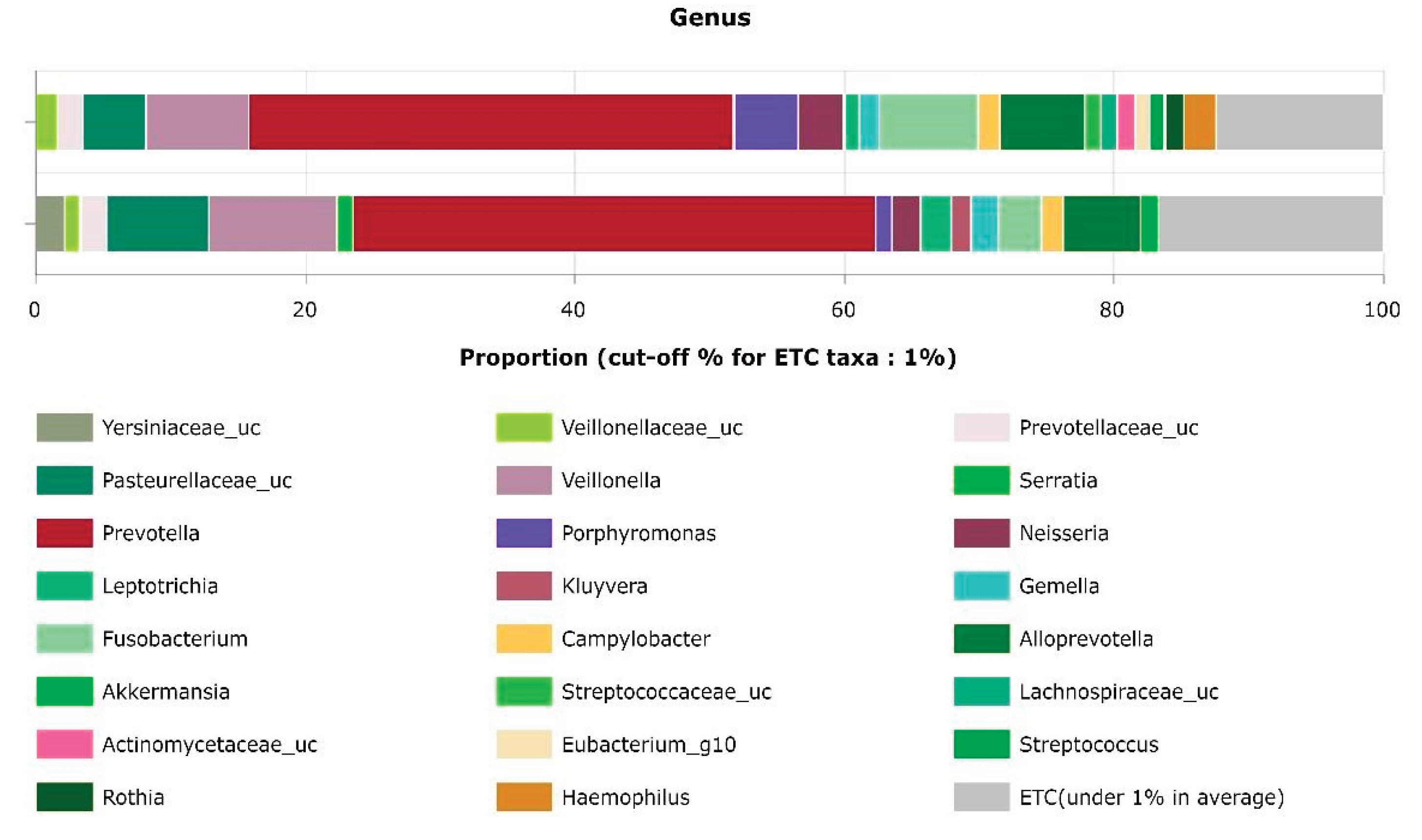
Figure 2.
Relative abundance of the main bacterial taxa between cases and controls at the species level. The X-axis represents the case and control groups, while the Y-axis indicates the percentage distribution of the bars for each taxonomic composition. The color of each bar denotes the corresponding bacterial taxon, with grey bars representing taxa unclassified at this level. An abundance threshold of 1.0% was applied; therefore, only taxa representing more than 1% of the total bacterial community are shown. In the case group, Prevotella_uc was predominant, accounting for 28.17% of the total, followed by unclassified bacteria at 22.90%. A significant presence of Veillonella_uc (8.17%) and Alloprevotella_uc (5.10%) was also observed. Conversely, in the control group, Prevotella_uc remained prominent, representing 23.64%, while the proportion of unclassified bacteria was lower, at 14.48%.
Figure 2.
Relative abundance of the main bacterial taxa between cases and controls at the species level. The X-axis represents the case and control groups, while the Y-axis indicates the percentage distribution of the bars for each taxonomic composition. The color of each bar denotes the corresponding bacterial taxon, with grey bars representing taxa unclassified at this level. An abundance threshold of 1.0% was applied; therefore, only taxa representing more than 1% of the total bacterial community are shown. In the case group, Prevotella_uc was predominant, accounting for 28.17% of the total, followed by unclassified bacteria at 22.90%. A significant presence of Veillonella_uc (8.17%) and Alloprevotella_uc (5.10%) was also observed. Conversely, in the control group, Prevotella_uc remained prominent, representing 23.64%, while the proportion of unclassified bacteria was lower, at 14.48%.
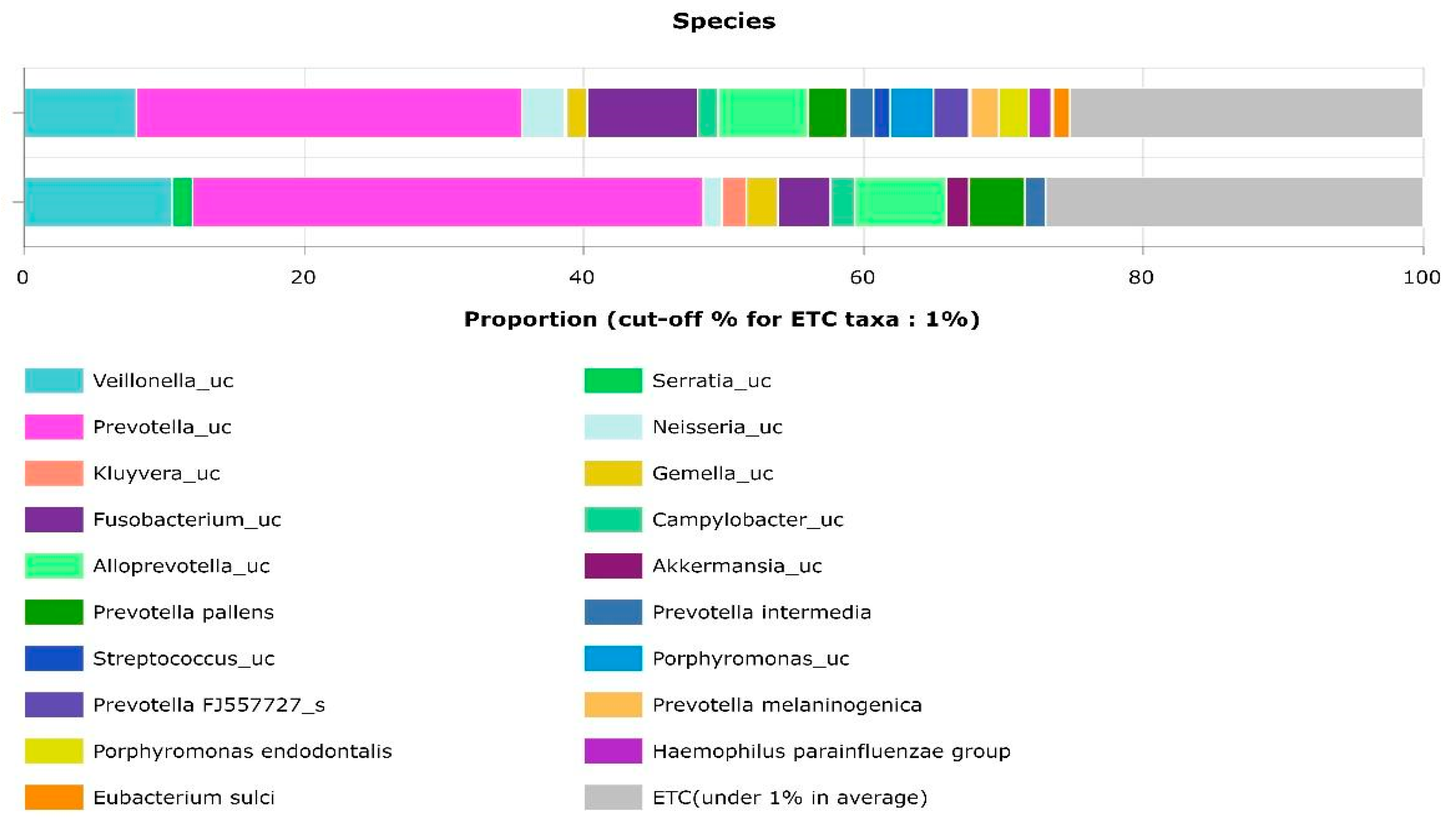
Figure 3.
Comparison of species richness and diversity metrics between subjects with atherosclerosis and controls. (A) Species richness estimated by the abundance-based coverage estimator (ACE) (p = 0.335); (B) Shannon diversity index, showing significantly lower values in cases compared to controls (p = 0.006); (C) Phylogenetic diversity, also reduced in cases (p = 0.029); (D) Simpson index, indicating decreased diversity in controls (p = 0.004).
Figure 3.
Comparison of species richness and diversity metrics between subjects with atherosclerosis and controls. (A) Species richness estimated by the abundance-based coverage estimator (ACE) (p = 0.335); (B) Shannon diversity index, showing significantly lower values in cases compared to controls (p = 0.006); (C) Phylogenetic diversity, also reduced in cases (p = 0.029); (D) Simpson index, indicating decreased diversity in controls (p = 0.004).
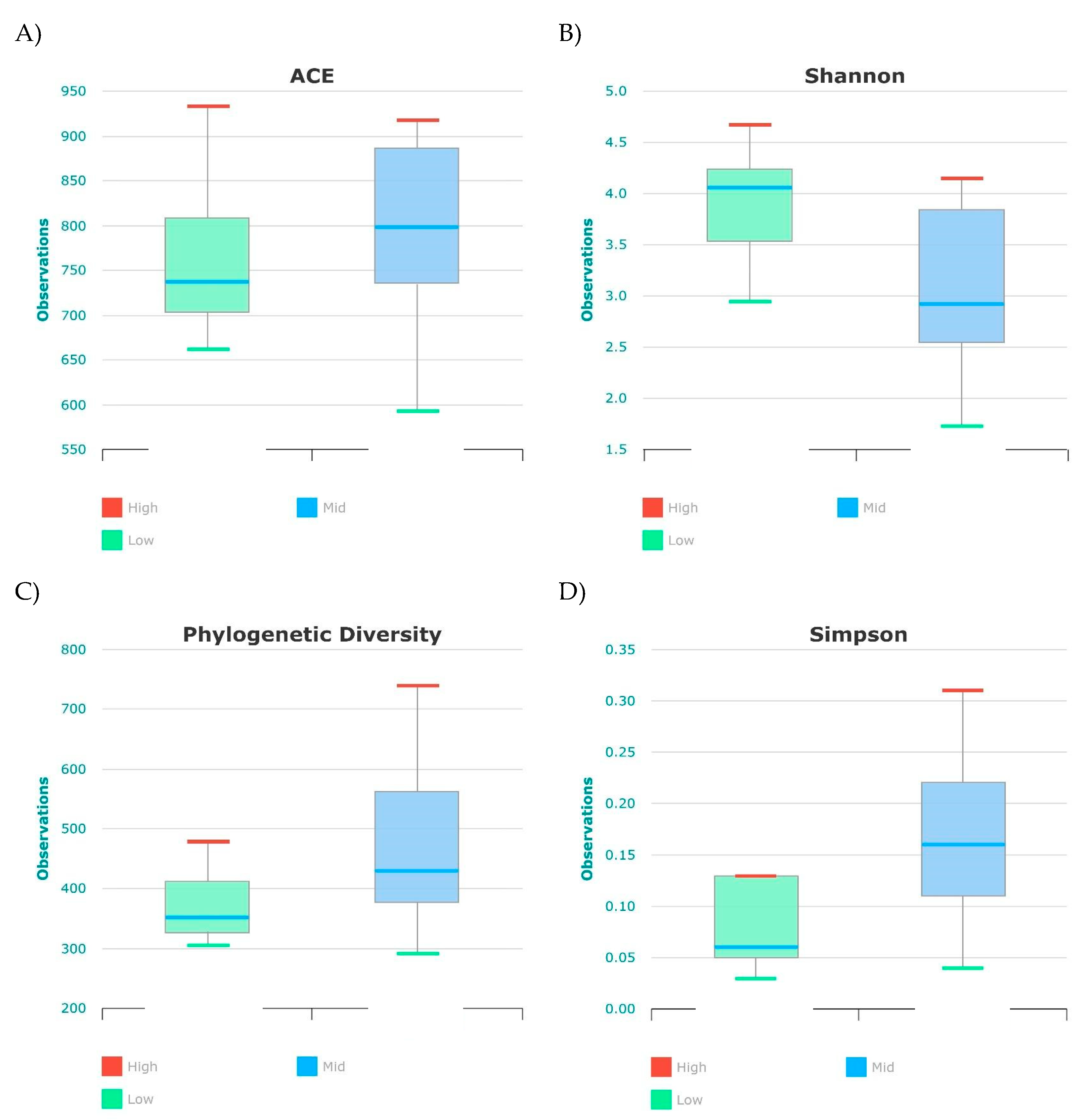

Table 1.
Demographic, socioeconomic and clinical characteristics for cases and controls.
| Variable | Controls (n=50) |
Cases (n=50) |
|---|---|---|
| Age, y.o. mean ± SD | 44.9 ± 16.2 | 59.7 ± 13.4 |
| Sex, % (n) | ||
| Women | 34.2 (17) | 46.4 (23) |
| Men | 65.8 (33) | 53.6 (27) |
| Economic activity, % (n) | ||
| Housewives | 20.8 (10) | 31.0 (16) |
| Retired | 10.8 (5) | 8.3 (4) |
| Unemployed | 13.1 (7) | 11.9 (6) |
| Employee | 51.9 (26) | 47.0 (24) |
| Unspecified | 3.4 (2) | 1.8 (1) |
| Monthly income, USD median [IQR] | 325 [150; 600] | 250 [125; 381.3] |
| Smoking status, % (n) | ||
| Never | 81.2 (41) | 71.4 (36) |
| Former | 14.5 (7) | 22.0 (11) |
| Current | 4.3 (2) | 6.5 (3) |
| Pack-years median [IQR] | 4.35 [2.3; 10.6] | 8.6 [2.7; 17.9] |
| Pulmonary function (Pre-bronchodilator), mean ± SD | ||
| FVC (L) | 3.22 ± 0.67 | 2.85 ± 0.65 |
| FEV₁ (L) | 2.51 ± 0.54 | 2.05 ± 0.48 |
| FEV₁/FVC | 78.36 ± 6.65 | 72.7 ± 7.89 |
| Pulmonary function (Post-bronchodilator), mean ± SD | ||
| CVF (L) | 3.18 ± 0.63 | 2.74 ± 0.58 |
| VEF₁ (L) | 2.59 ± 0.54 | 2.11 ± 0.49 |
| FEV₁/FVC | 81.82 ± 6.22 | 76.85 ± 6.20 |
| Carotid Intima-Media Thickness, mean ± SD | 0.52 ± 0.19 | 0.91 ± 0.33 |
| Framingham 10-year risk, mean ± SD | 18.78 ± 20.22 | 42.37 ± 22.05 |
Disclaimer/Publisher’s Note: The statements, opinions and data contained in all publications are solely those of the individual author(s) and contributor(s) and not of MDPI and/or the editor(s). MDPI and/or the editor(s) disclaim responsibility for any injury to people or property resulting from any ideas, methods, instructions or products referred to in the content. |
© 2026 by the authors. Licensee MDPI, Basel, Switzerland. This article is an open access article distributed under the terms and conditions of the Creative Commons Attribution (CC BY) license (http://creativecommons.org/licenses/by/4.0/).
Copyright: This open access article is published under a Creative Commons CC BY 4.0 license, which permit the free download, distribution, and reuse, provided that the author and preprint are cited in any reuse.


