

Submitted:
23 April 2026
Posted:
24 April 2026
You are already at the latest version
Abstract
Acute respiratory failure (ARF) often leads to ICU admission, ventilatory support, illness, and death. The usual classification into hypoxemic and hypercapnic types does not capture its full complexity. Precision medicine uses the idea of “treatable traits” to guide care based on traits that are clinically relevant, identifiable, measurable, and possibly changeable. Arterial carbon dioxide pressure (PaCO₂) reflects factors like alveolar ventilation, dead space, respiratory mechanics, and how patients respond to ventilatory support. This makes it a clinically relevant variable in selected situations in certain situations. We carried out a scoping review using PRISMA-ScR and JBI guidelines (OSF post hoc protocol https://osf.io/vszkg) to summarize evidence on hypocapnia and hypercapnia as prognostic, stratification, or clinically relevant variables during respiratory support. We searched PubMed/MEDLINE, ScienceDirect, and Web of Science (1994–2025), and checked references by hand. Thirty-four studies met our criteria and were grouped into four areas: pre-intubation or early acute presentation, non-invasive support (NIV/HFNC), invasive mechanical ventilation, and weaning or post-extubation. In summary, hypocapnia was linked to worse outcomes or failure of support in hypoxemic or cardiogenic cases. Hypercapnia helped identify patients who benefited from NIV, such as those with COPD or obesity-hypoventilation. For invasive mechanical ventilation, the effects depended on the presence and severity of acidosis and how long it lasted. We found that PaCO₂ is measurable and clinically important, but whether it can be targeted for treatment depends on the situation. More research is needed to set safe limits and practical targets.
Keywords:
PaCO₂
; dyscapnia
; acute respiratory failure
; non-invasive ventilation
; high-flow nasal cannula
; mechanical ventilation
; weaning
; scoping review
1. Introduction
Acute respiratory failure (ARF) is one of the most prevalent and clinically relevant syndromes in critical care medicine and represents a major cause of admission to intensive care units (ICUs), the need for ventilatory support, and significant hospital morbidity and mortality [1]. Although its classic approach has been based on the distinction between hypoxemic and hypercapnic forms, this classification offers an incomplete view of a heterogeneous, dynamic pathophysiological process that is strongly dependent on the clinical setting [2]. In this context, the growing interest in precision medicine strategies has favored the incorporation of the concept of “treatable traits,” which, in operational terms, must be clinically relevant, identifiable, measurable, and potentially modifiable through intervention [3,4,5]. Within this framework, arterial carbon dioxide pressure (PaCO₂) emerges as a candidate of particular interest, as it integrates information on alveolar ventilation, physiological dead space, respiratory mechanics, and response to ventilatory support. Furthermore, it may be involved in biological pathways with potential immunomodulatory relevance, lending mechanistic plausibility to its consideration as a potentially treatable trait in selected scenarios of ARF [6,7].
Recent clinical evidence suggests that PaCO₂ alterations, including hypocapnia and hypercapnia, are associated with clinically important outcomes across the respiratory support continuum, from non-invasive ventilation (NIV) to invasive mechanical ventilation (IMV) and the weaning or post-extubation phase [8,9,10,11,12,13]. In this regard, PaCO₂ could provide valuable information not only as a physiological marker, but also as a variable with potential utility for clinical stratification and therapeutic guidance in selected ARF scenarios [6]. Additionally, particularly complex situations, such as refractory hypercapnia, illustrate both the complexity of ventilatory management and the need for operational physiological frameworks to guide decision-making [14]. However, the available evidence remains heterogeneous in terms of the populations studied, clinical contexts, and operational definitions of PaCO₂ alterations, which limits an integrated understanding of its role as a potential treatable trait in ARF.
In this context, we conducted a scoping review with the aim of mapping the available evidence and identifying knowledge gaps regarding the role of PaCO₂ as a potential treatable trait in adults with ARF, with particular emphasis on the clinical scenarios in which it has been studied (pre-intubation, NIV/high-flow nasal cannula [HFNC], IMV, and weaning/post-extubation), identifying its association with relevant outcomes and its potential usefulness for prognostic stratification and therapeutic decision-making [15,16]. Therefore, the question that guided this review was: What evidence is there on the role of PaCO₂ as a possible treatable trait in adults with ARF, and what gaps remain for its use in risk stratification and therapeutic decision-making?
2. Materials and Methods
We developed and reported this scoping review according to the PRISMA-ScR guidelines (Preferred Reporting Items for Systematic Reviews and Meta-Analyses extension for Scoping Reviews) [15,16] and followed methodological recommendations for scoping reviews. We registered the protocol on the Open Science Framework (OSF; https://osf.io/vszkg) on March 18, 2026. Because registration took place after the study period and initial strategy were set, it was considered post hoc. We documented any later changes in a decision log (Supplementary Table S1). The PRISMA-ScR checklist is available in Supplementary Table S2.
2.1. Eligibility Criteria
This scoping review was structured according to the PCC framework (Population, Concept, Context), as recommended for JBI scoping reviews. The population comprised adult patients with ARF or acute respiratory deterioration; the concept was the clinical interpretation of PaCO₂, hypercapnia, hypocapnia, or related CO₂ derangements as exposure, stratification, monitoring, or prognostic variables; and the context included pre-intubation, non-invasive respiratory support, IMV, and weaning/post-extubation settings.
Original studies in adult patients with ARF or acute respiratory deterioration were included, in which PaCO₂, hypercapnia, hypocapnia, or CO₂ dysfunction were assessed as exposure, stratification, monitoring, or prognostic variables. Prospective or retrospective observational studies, randomized controlled trials, and comparative studies reporting clinically relevant outcomes, including mortality, non-invasive ventilation failure, need for intubation, duration of mechanical ventilation, extubation failure, reintubation, or length of hospital stay, were considered. Studies published in English or Spanish were considered eligible. We excluded studies in pediatric populations, animal models, narrative reviews, editorials, letters to the editor, and publications without sufficient clinical data for extraction. Studies focused exclusively on stable chronic populations without acute exacerbations or episodes of acute respiratory failure were also excluded.
2.2. Information Sources and Search Strategy
A structured literature search was conducted in PubMed/MEDLINE, ScienceDirect, and Web of Science to identify studies on PaCO₂ alterations across the clinical continuum of acute respiratory failure. The strategy combined controlled terms and free-text words related to: “PaCO₂,” “hypercapnia,” “hypocapnia,” “dyscapnia,” “hypercapnic acidosis,” “acute respiratory failure,” “non-invasive ventilation,” “high-flow nasal cannula,” “mechanical ventilation,” “weaning,” and “extubation.” The complete strategy is reported in Supplementary Table S3. Additionally, a manual search of references was performed using the selected articles to identify potentially relevant studies not captured in the electronic search. Duplicates were managed in EndNote X8.
2.3. Study Selection
The retrieved records were exported to a reference manager for duplicate removal. Subsequently, the selection was carried out in two phases: (i) screening by title and abstract according to the previously defined eligibility criteria and (ii) full-text review of potentially relevant studies. Screening was conducted independently by two reviewers. Disagreements were resolved by discussion and, when necessary, by consultation with a third reviewer. Articles that explicitly addressed the role of PaCO₂ in any of the scenarios defined for mapping were ultimately included: early acute presentation/pre-intubation, non-invasive respiratory support, invasive mechanical ventilation, ventilator weaning, or the post-extubation period.
2.4. Data Extraction
Data extraction was performed independently by two reviewers. Extracted variables included author and year, study design, sample size, population and clinical setting, operational definitions of hypercapnia/hypocapnia (including cut-off values when available), primary objective, and relevant outcomes (mortality, treatment failure, intubation, duration of mechanical ventilation, weaning, extubation/reintubation, and length of stay). The role assigned to PaCO₂ in each study was also recorded (prognostic marker, physiological monitoring variable, stratification criterion, or context-dependent variable with potential clinical relevance). Discrepancies in extracted data were resolved by consensus, with adjudication by a third reviewer when required.
2.5. Evidence Synthesis and Mapping
Given the exploratory nature of this scoping review and the clinical and methodological heterogeneity of the included studies, a meta-analysis was not performed. The evidence was synthesized narratively and organized into predefined clinical domains: (1) pre-intubation/early acute presentation, (2) non-invasive respiratory support, (3) invasive mechanical ventilation, and (4) weaning/post-extubation. This approach allowed us to map how PaCO₂ has been used in different clinical scenarios and to identify patterns of association between hypocapnia, hypercapnia, and relevant outcomes.
2.6. Transparency and Data Availability
All analyzed data were obtained from previously published studies accessible in the consulted databases. The search strategy, selection criteria, and extraction variables were explicitly defined to promote reproducibility. We deposited the decision log (Supplementary Table S1), the PRISMA-ScR checklist, and the complete search strategies (Supplementary Tables S2 and S3) on OSF.
3. Results
The electronic search found 4442 records. After removing 344 duplicates, 4098 unique references remained for the initial screening. Reviewing titles and abstracts excluded 3839 records. We then evaluated 259 full texts and excluded 234 that did not address the research question. In the end, 25 studies were chosen from the primary search, and 9 more were added from the secondary search. Altogether, 34 studies met the inclusion criteria (Figure 1). Table 1 summarizes the general characteristics, including author, year, country, and study design.
3.1. Characteristics of the Included Studies
The 34 included studies, published between 1994 and 2025, evaluated the clinical implications of PaCO2 alterations across different stages of acute respiratory failure and during respiratory support. Sample sizes ranged from 13 to 252,812 participants. Collectively, the included studies comprised 268,123 patients, excluding one study for which the sample size was not available in the preliminary extraction table. Most studies were observational (n = 27), including retrospective and prospective cohorts, while 7 were randomized controlled trials.
The evidence is distributed across four main clinical domains: pre-intubation phase or early acute presentation (n = 4), non-invasive respiratory support including NIV and HFNC (n = 12), IMV and assessment of CO2 dysfunction in the ICU (n = 9), and ventilatory weaning or post-extubation management (n = 9).
3.2. Mapping of Evidence by Clinical Domain
3.2.1. Pre-Intubation and Early Acute Presentation
Four studies looked at how changes in PaCO2 affect patients during the early stages of ARF or acute cardiopulmonary decompensation [8,9,10,44]. In these studies, low PaCO2, or hypocapnia, often signaled worse outcomes. For patients with acute heart failure, cardiogenic acute pulmonary edema (APE), hypoxemic respiratory failure, and cardiogenic shock, lower PaCO2 levels were linked to higher mortality [8,44] and, in some groups, a greater risk of non-invasive ventilation failure [9,10]. Overall, these findings suggest that hypocapnia may help identify patients with a more severe form of acute respiratory failure early on. See Table 2.
3.2.2. Non-Invasive Respiratory Support
Twelve studies evaluated PaCO2 in the context of NIV or HFNC, primarily in patients with acute exacerbations of COPD, obesity hypoventilation syndrome, or APE [20,29]. In acute hypercapnic respiratory failure, NIV was consistently associated with favorable outcomes, including reduced intubation rates and high therapeutic success rates in several observational cohorts and clinical trials [20,29]. In contrast, studies in hypercapnic COPD have evaluated alternatives, such as HFNC, compared with standard strategies, suggesting variable efficacy depending on severity and context [37]. Taken together, these studies support the clinical relevance of hypercapnia as a marker of a phenotype in which non-invasive ventilatory support may be particularly beneficial. See Table 2.
3.2.3. Invasive Mechanical Ventilation and CO2 Dysfunction in the ICU
Nine studies evaluated the association between PaCO2 alterations and outcomes in patients undergoing IMV, including cohorts with ARDS, COVID-19, acute brain injury, and general ICU populations [11,12,38,41]. In this domain, the relationship between PaCO2 and outcomes varied by clinical context. Several studies have shown that both hypocapnia and marked hypercapnia are associated with worse outcomes, including increased mortality, ventilator load, and prolonged IMV [12,41]. Hypercapnic acidosis during the first 24–48 hours of mechanical ventilation appears to be particularly consistently associated with adverse outcomes [11]. However, not all studies demonstrated excess mortality associated with hypercapnia, suggesting that the prognostic impact of elevated PaCO2 may depend on its magnitude, temporal profile, degree of compensation, and underlying clinical phenotype [38]. See Table 2.
3.2.4. Ventilatory Weaning and Post-Extubation
Nine studies focused on the role of PaCO2 during weaning from mechanical ventilation and the post-extubation period [13,28]. In this context, hypercapnia was associated with a risk of post-extubation respiratory failure and more complex weaning trajectories, supporting preventive or rescue strategies with non-invasive support [13]. Furthermore, another study reported that NIV reduced post-extubation respiratory failure and reintubation in selected hypercapnic patients [13]. These findings suggest that PaCO2 not only functions as a physiological marker in the post-extubation phase but also as a clinically actionable variable for risk stratification and optimization of respiratory support strategies. See Table 2.
4. Discussion
4.1. PaCO2 in Hypoxemic Respiratory Failure
In patients with hypoxemic respiratory failure, PaCO₂ should not be interpreted as a defining diagnostic criterion, but rather as a contextual physiological variable. In this setting, low or low-normal PaCO₂ values may reflect increased respiratory drive, greater ventilatory demand, or evolving respiratory distress [10,45]. Recent guidelines and meta-analyses support the early use of HFNC over conventional oxygen therapy and NIV in selected forms of acute hypoxemic respiratory failure [46,47]. In APE, recent evidence also supports the use of HFNC [48,49]; However, current guidelines continue to recommend NIV as the first-line strategy in this scenario [50,51,52]. In this population, PaCO₂ appears to function primarily as a prognostic marker. Consequently, in patients with acute heart failure/APE, a PaCO₂ < 31 mmHg was associated with increased mortality, and the risk increased as PaCO₂ decreased [8]. Hypocapnia has also been consistently linked to NIV failure and an increased risk of mortality in patients with APE [9].
Beyond APE, an association has been described between PaCO₂ ≤ 32 mmHg and NIV failure in hypoxemic respiratory failure, with an inverse relationship between PaCO₂ and the risk of failure above this threshold [10]. From a physiological perspective, hypocapnia may reflect increased minute ventilation and/or elevated tidal volumes, variables associated with NIV failure in de novo hypoxemia [53], and may indicate increased respiratory drive, vigorous inspiratory effort, and marked negative oscillations in pleural pressure [54]. These mechanisms may promote self-induced lung injury (SILI), as supported by experimental evidence showing that intense spontaneous exertion is associated with elevated transpulmonary pressures and worsening lung damage [55]. Overall, in acute hypoxemia, PaCO₂ is a readily available and clinically relevant signal that helps identify a high-exertion phenotype and a higher risk of non-invasive support failure. See Figure 2.
4.2. PaCO2 in Hypercapnic Respiratory Failure
In hypercapnic respiratory failure (pH ≤ 7.35 and PaCO₂ > 45 mmHg), evidence supports NIV as a first-line intervention [52,56]. In APE, hypercapnia is relatively common in a clinically relevant subgroup of patients and may help identify individuals more likely to require or benefit from NIV; however, APE itself should not be equated with hypercapnic respiratory failure. In this subgroup, NIV has been associated with a lower need for intubation and lower in-hospital mortality [9], and randomized evidence supports its efficacy in APE [22]. Furthermore, in patients with pulmonary edema treated with NIV, severe hypercapnia (PaCO₂ > 60 mmHg) has been associated with a longer duration of NIV, without a proportional increase in the risk of intubation [57].
In other etiologies, hypercapnia accompanied by severe acidosis may still warrant NIV and may be successfully managed in selected patients, including those treated in intermediate respiratory care units [58]. Some observational studies have also reported the use of NIV in selected cases of hypercapnic encephalopathy or even hypercapnic coma [23,59]. However, these findings should be interpreted with caution, as impaired consciousness may compromise airway protection and increase aspiration risk; therefore, intubation remains necessary when airway safety cannot be assured. Similarly, in acute hypercapnic respiratory failure associated with obesity and alveolar hypoventilation, NIV has shown clinical benefit [29], and PaCO₂ remains a useful marker to support clinical assessment and modality selection according to the underlying cause and overall patient status.
Although there is growing interest in HFNC in hypercapnic respiratory failure, comparative literature suggests that NIV remains the gold standard, and meta-analytic evidence comparing HFNC vs. NIV in acute hypercapnic respiratory failure supports careful patient selection [60]. In line with this, a randomized trial in acute COPD exacerbation showed a higher progression rate to IMV with HFNC than to NIV in acute-to-moderate hypercapnic respiratory failure [42]. After initiating NIV, the early trajectory of PaCO₂ provides useful clinical information: a decrease is a favorable predictor of success and may support weaning, whereas the absence of early improvement suggests a higher risk of failure. Overall, in hypercapnic respiratory failure, PaCO₂ is identifiable and measurable, and in selected hypercapnic phenotypes it may help support modality selection; however, its direct treatability remains context-dependent. See Figure 2.
4.3. PaCO2 in Patients on Invasive Mechanical Ventilation
Once the patient is intubated, PaCO2 remains a key variable for monitoring and prognosis. A large, multicenter, retrospective study (252,812 patients) found that hypercapnic acidosis (PaCO2 > 45 mmHg; pH < 7.35) in the first 24 hours was more strongly associated with higher in-hospital mortality than compensated hypercapnia or normocapnia [11]. In moderate-to-severe ARDS, marked hypercapnia during the first 48 hours has also been associated with higher ICU mortality [12]. Importantly, in patients with COVID-19 on IMV, hypercapnia was associated with longer ventilation duration and longer ICU/hospital stays [39]. However, the clinical impact of a given PaCO₂ level depends on the underlying mechanism and the ventilation strategy. A meta-analysis in ARDS assessed acute hypercapnia and its relationship to short-term mortality and physiology [61], and early changes in PaCO₂ have also been proposed as predictors of prolonged ventilation [43]. In parallel, integrating variables such as mechanical power and ventilator ratio have been associated with mortality during IMV [62,63,64]. Furthermore, dyscapnia has been associated with mortality in ARDS cohorts [40], and the LUNG SAFE study showed higher ICU mortality in patients with sustained hypocapnia in mild-to-moderate ARDS [38]. In cardiogenic shock, hypocapnia has consistently been associated with increased 30-day mortality [44].
In neurocritical patients, prophylactic hyperventilation to very low PaCO₂ levels is discouraged in modern head trauma guidelines [65]. In acute kidney injury under mechanical ventilation, both severe hypocapnia and hypercapnia were associated with increased in-hospital mortality [41], reinforcing the notion of “risk zones” at the extremes of PCO₂. On the other hand, prone positioning is an intervention with strong recommendations for ARDS [66,67]. In a retrospective analysis, responders to prone positioning, defined as a PaCO₂ decrease ≥ 1 mmHg after 6 hours, showed improved 28-day survival [21]. Physiological studies suggest that PaCO₂ and dead space metrics may better capture the response to prone positioning than oxygenation alone [68]. See Figure 2.
4.4. PaCO2 in Extubation and Post-Extubation Outcomes
Finally, in the weaning and post-extubation phase, hypercapnia during the spontaneous breathing trial has been associated with prolonged weaning and extubation failure [27,31]. Following extubation, NIV has shown efficacy in preventing post-extubation respiratory failure and intubation in hypercapnic patients [13,28,69]. In high-risk patients, HFNC combined with NIV has also been evaluated against HFNC alone; it was associated with a reduction in reintubation [36]. This effect appears to be concentrated in high-risk populations, so its extrapolation to low-risk patients should be approached with caution. Regarding advanced therapies, extracorporeal CO₂ removal has been evaluated as a strategy to correct severe hypercapnia and facilitate protective ventilation [70], and its evidence has been synthesized in recent meta-analyses [71,72], although its clinical role still requires confirmation. See Figure 2.
Taken together, the evidence suggests that the interpretation of PaCO2 is highly context- and mechanism-dependent: in acute hypoxemia, hypocapnia often reflects a high respiratory drive phenotype and a greater risk of non-invasive support failure; in hypercapnic failure due to COPD/obesity-hypoventilation, hypercapnia identifies a phenotype in which NIV is particularly effective and where early PaCO2 changes signal a response. In IMV, both sustained hypocapnia and hypercapnia accompanied by acidosis have been associated with worse outcomes in various settings, suggesting the need to define safety margins based on pH and exposure time. Thus, rather than a “universal target,” PaCO2 can be conceptualized as a potential stratification variable whose clinical utility lies in integrating physiology, prognosis, and strategy selection along the continuum of ventilatory failure.
Table 3 summarizes the main clinical contexts in which PaCO₂ may have prognostic value, support monitoring, or help inform respiratory support decisions in selected patients.
4.5. Limitations
Several limitations must be considered when interpreting the findings. First, as a scoping review, this study was designed to map the extent and characteristics of the available evidence rather than to estimate effect sizes, establish causality, or determine whether targeted modification of PaCO₂ improves patient-centered outcomes. In addition, although a structured search strategy was applied in indexed databases ((PubMed/MEDLINE, ScienceDirect, and Web of Science) and supplemented by manual reference review, some relevant studies may have been missed, particularly in grey literature, conference abstracts, non-indexed publications, or when PaCO₂ was embedded within related physiological constructs rather than explicitly indexed as a primary variable. Because the search strategy was intentionally centered on PaCO₂ and direct dyscapnia-related terminology, studies focused on related constructs such as dead space, ventilatory ratio, minute ventilation, or non-invasive ventilation failure may not have been captured.
Second, the included evidence was markedly heterogeneous across populations, clinical settings, respiratory support modalities, timing of PaCO₂ assessment, operational definitions, and outcomes. Most studies were observational, and many were retrospective and single-center, increasing susceptibility to selection bias, residual confounding, and limited external validity. A formal risk-of-bias assessment was not performed, in keeping with the exploratory purpose of a scoping review. Therefore, the observed associations between PaCO₂ alterations and clinical outcomes should be interpreted cautiously and should not, by themselves, be considered sufficient to justify PaCO₂-targeted practice changes across ARF scenarios.
4.6. Clinical Implications and Future Directions
Taken together, current evidence suggests that PaCO₂ is a clinically informative, context-dependent physiological variable in ARF. Its main value appears to lie in prognosis assessment early evaluation of treatment response, and support for clinical stratification in scenarios such as non-invasive ventilation, weaning, extubation, and invasive mechanical ventilation. However, substantial heterogeneity across populations, cut-off values, timing of measurement, and reported outcomes limits the development of standardized clinical algorithms. Future prospective studies should evaluate PaCO₂-defined subgroups, temporal trajectories, and intervention thresholds to determine whether PaCO₂ can be used safely and effectively beyond its current role as a marker of physiological stress and risk. At present, the available evidence supports PaCO₂ primarily as a prognostic and stratification variable rather than as an independent therapeutic target. Accordingly, PaCO₂ abnormalities should not be interpreted as causal or, by themselves, sufficient to justify protocolized treatment changes across ARF scenarios.
5. Conclusions
PaCO₂ is increasingly used to classify acute respiratory failure, support non-invasive respiratory management, and inform prognosis and the risk of treatment failure. In intubated patients, PaCO₂ also contributes to monitoring and to the individualized interpretation of ventilatory strategies, including protective ventilation and prone positioning, while helping contextualize the prognostic relevance of related physiological variables such as ventilatory ratio and mechanical power. PaCO₂ remains clinically relevant before, during, and after weaning from mechanical ventilation, where it may help identify patients at higher risk of extubation failure and support the selection of non-invasive post-extubation strategies in selected settings. Overall, current evidence suggests that PaCO₂ is best understood as a context-dependent clinical and physiological marker in critically ill patients with ventilatory failure. In most acute respiratory failure scenarios, PaCO₂ currently functions better as a marker of physiological stress, prognosis, or treatment-response stratification than as a direct therapeutic target. Its potential “treatability” appears to be limited to narrower and better-defined phenotypes, and further research is needed to determine in which scenarios PaCO₂-directed interventions can safely improve patient-centered outcomes. Future studies should also define clinically meaningful safety margins for PaCO₂, particularly in relation to pH, the magnitude of dyscapnia, and exposure time.
Supplementary Materials
The following supporting information can be downloaded at the website of this paper posted on Preprints.org, Table S1. Decision log (post-hoc protocol clarifications); Table S2. Preferred Reporting Items for Systematic reviews and Meta-Analyses extension for Scoping Reviews (PRISMA-ScR) Checklist; Table S3. Search strategy summary.
Author Contributions
Conceptualization, C.D.-C. and J.C.-G.; data curation, J.C.-G., D.R.-B. and E.O.-R.; formal analysis, E.O.-R.; methodology, J.C.-G. and E.O.-R.; project administration, C.D.-C.; visualization, C.D.-C., J.C.-G., E.O.-R.; writing—original draft preparation, C.D.-C., J.C.-G., D.R.-B., L.V.-O., C.V.-B., D.B.-N., A.A.-H., and E.O.-R.; writing—review and editing, C.D.-C., J.C.-G., D.R.-B., L.V.-O., C.V.-B., D.B.-N., A.A.-H., and E.O.-R.; The corresponding author attests that all listed authors meet authorship criteria and that no others meeting the criteria have been omitted. All authors have read and agreed to the published version of the manuscript.
Funding
This research received no external funding.
Institutional Review Board Statement
Not applicable.
Informed Consent Statement
Not applicable.
Data Availability Statement
No new primary data were generated in this study. All data analyzed were derived from previously published studies included in this scoping review. The decision log, PRISMA-ScR checklist, and full search strategies are openly available in the Open Science Framework (OSF) repository at: https://osf.io/vszkg.
Acknowledgments
During the preparation of this manuscript, the authors used AI to assist with language editing. The authors reviewed and edited the output and take full responsibility for the content of this publication.
Conflicts of Interest
The authors declare no conflict of interest.
References
- Kempker, J.A.; Abril, M.K.; Chen, Y.; Kramer, M.R.; Waller, L.A.; Martin, G.S. The Epidemiology of Respiratory Failure in the United States 2002–2017: A Serial Cross-Sectional Study. Crit. Care Explor. 2020, 2, e0128, . [CrossRef]
- Chen, L.; Rackley, C.R. Diagnosis and Epidemiology of Acute Respiratory Failure. Crit. Care Clin. 2024, 40, 221–233, . [CrossRef]
- McDonald, V.M.; Fingleton, J.; Agusti, A.; Hiles, S.A.; Clark, V.L.; Holland, A.E.; Marks, G.B.; Bardin, P.P.; Beasley, R.; Pavord, I.D.; et al. Treatable Traits: A New Paradigm for 21st Century Management of Chronic Airway Diseases: Treatable Traits Down Under International Workshop Report. Eur. Respir. J. 2019, 53, 1802058, . [CrossRef]
- Agusti, A.; Bel, E.; Thomas, M.; Vogelmeier, C.; Brusselle, G.; Holgate, S.; Humbert, M.; Jones, P.; Gibson, P.G.; Vestbo, J.; et al. Treatable Traits: Toward Precision Medicine of Chronic Airway Diseases. Eur. Respir. J. 2016, 47, 410–419, . [CrossRef]
- Agustí, A.; Bafadhel, M.; Beasley, R.; Bel, E.H.; Faner, R.; Gibson, P.G.; Louis, R.; McDonald, V.M.; Sterk, P.J.; Thomas, M.; et al. Precision Medicine in Airway Diseases: Moving to Clinical Practice. Eur. Respir. J. 2017, 50, 1701655, . [CrossRef]
- Jonkman, A.H.; de Vries, H.J.; Heunks, L.M.A. Physiology of the Respiratory Drive in ICU Patients: Implications for Diagnosis and Treatment. Crit. Care 2020, 24, 104, . [CrossRef]
- Osorio-Rodríguez, E.; Correa-Guerrero, J.; Rodelo-Barrios, D.; Bonilla-Llanos, M.; Rebolledo-Maldonado, C.; Patiño-Patiño, J.; Viera-Torres, J.; Arias-Gómez, M.; Gracia-Ordoñez, M.; González-Betancur, D.; et al. Hypercapnia as a Double-Edged Modulator of Innate Immunity and Alveolar Epithelial Repair: A PRISMA-ScR Scoping Review. Int. J. Mol. Sci. 2025, 26, 9622, . [CrossRef]
- Kato, T.; Kasai, T.; Suda, S.; Sato, A.; Ishiwata, S.; Yatsu, S.; Matsumoto, H.; Shitara, J.; Shimizu, M.; Murata, A.; et al. Prognostic Effects of Arterial Carbon Dioxide Levels in Patients Hospitalized into the Cardiac Intensive Care Unit for Acute Heart Failure. Eur. Hear. Journal. Acute Cardiovasc. Care 2021, 10, 497–502, . [CrossRef]
- Carrillo-Aleman, L.; Carrasco-Gónzalez, E.; Araújo, M.J.; Guia, M.; Alonso-Fernández, N.; Renedo-Villarroya, A.; López-Gómez, L.; Higon-Cañigral, A.; Sanchez-Nieto, J.M.; Carrillo-Alcaraz, A. Is Hypocapnia a Risk Factor for Non-Invasive Ventilation Failure in Cardiogenic Acute Pulmonary Edema? J. Crit. Care 2022, 69, 153991, . [CrossRef]
- Xu, X.; Ma, M.; Min, Y.; Hu, W.; Bai, L.; Duan, J. PaCO2 Is Nonlinearly Associated with NIV Failure in Patients with Hypoxemic Respiratory Failure. BMC Pulm. Med. 2024, 24, 228, . [CrossRef]
- Tiruvoipati, R.; Pilcher, D.; Buscher, H.; Botha, J.; Bailey, M. Effects of Hypercapnia and Hypercapnic Acidosis on Hospital Mortality in Mechanically Ventilated Patients*. Crit. Care Med. 2017, 45, e649–e656, . [CrossRef]
- Nin, N.; Muriel, A.; Peñuelas, O.; Brochard, L.; Lorente, J.A.; Ferguson, N.D.; Raymondos, K.; Ríos, F.; Violi, D.A.; Thille, A.W.; et al. Severe Hypercapnia and Outcome of Mechanically Ventilated Patients with Moderate or Severe Acute Respiratory Distress Syndrome. Intensive Care Med. 2017, 43, 200–208, . [CrossRef]
- Ferrer, M.; Sellarés, J.; Valencia, M.; Carrillo, A.; Gonzalez, G.; Badia, J.R.; Nicolas, J.M.; Torres, A. Non-Invasive Ventilation after Extubation in Hypercapnic Patients with Chronic Respiratory Disorders: Randomised Controlled Trial. Lancet 2009, 374, 1082–1088, . [CrossRef]
- Algarin-Lara, H.; Osorio-Rodríguez, E.; Patiño-Patiño, J.; Solano-Ropero, J.; Rodado-Villa, R. Hipercapnia Refractaria En Paciente Con Síndrome de Obesidad-Hipoventilación Maligno Y COVID-19. Reporte de Caso Y Propuesta de Manejo. Acta Colomb. Cuid. Intensivo 2022, 22, S117–S122, . [CrossRef]
- Peters, M.D.J.; Marnie, C.; Tricco, A.C.; Pollock, D.; Munn, Z.; Alexander, L.; McInerney, P.; Godfrey, C.M.; Khalil, H. Updated Methodological Guidance for the Conduct of Scoping Reviews. JBI Evid. Synth. 2020, 18, 2119–2126, . [CrossRef]
- Tricco, A.C.; Lillie, E.; Zarin, W.; O’Brien, K.K.; Colquhoun, H.; Levac, D.; Moher, D.; Peters, M.D.J.; Horsley, T.; Weeks, L.; et al. PRISMA Extension for Scoping Reviews (PRISMA-ScR): Checklist and Explanation. Ann. Intern. Med. 2018, 169, 467–473, . [CrossRef]
- Piper, A.J.; Sullivan, C.E. Effects of Short-Term NIPPV in the Treatment of Patients With Severe Obstructive Sleep Apnea and Hypercapnia. Chest 1994, 105, 434–440, . [CrossRef]
- Rabec, C.; Merati, M.; Baudouin, N.; Foucher, P.; Ulukavac, T.; Reybet-Degat, O. [Management of Obesity and Respiratory Insufficiency. The Value of Dual-Level Pressure Nasal Ventilation]. Rev. Mal. Respir. 1998, 15, 269–278.
- Hilbert, G.; Gruson, D.; Portel, L.; Gbikpi-Benissan, G.; Cardinaud, J. Noninvasive Pressure Support Ventilation in COPD Patients with Postextubation Hypercapnic Respiratory Insufficiency. Eur. Respir. J. 1998, 11, 1349–1353, . [CrossRef]
- Plant, P.; Owen, J.; Elliott, M. Early Use of Non-Invasive Ventilation for Acute Exacerbations of Chronic Obstructive Pulmonary Disease on General Respiratory Wards: A Multicentre Randomised Controlled Trial. Lancet 2000, 355, 1931–1935, . [CrossRef]
- Gattinoni, L.; Vagginelli, F.; Carlesso, E.; Taccone, P.; Conte, V.; Chiumello, D.; Valenza, F.; Caironi, P.; Pesenti, A. Decrease in Paco2 with Prone Position Is Predictive of Improved Outcome in Acute Respiratory Distress Syndrome*. Crit. Care Med. 2003, 31, 2727–2733, . [CrossRef]
- Nava, S.; Carbone, G.; DiBattista, N.; Bellone, A.; Baiardi, P.; Cosentini, R.; Marenco, M.; Giostra, F.; Borasi, G.; Groff, P. Noninvasive Ventilation in Cardiogenic Pulmonary Edema. Am. J. Respir. Crit. Care Med. 2003, 168, 1432–1437, . [CrossRef]
- Díaz, G.G.; Alcaraz, A.C.; Talavera, J.C.P.; Pèrez, P.J.; Rodriguez, A.E.; Cordoba, F.G.; Hill, N.S. Noninvasive Positive-Pressure Ventilation To Treat Hypercapnic Coma Secondary to Respiratory Failure. Chest 2005, 127, 952–960, . [CrossRef]
- Ferrer, M.; Valencia, M.; Nicolas, J.M.; Bernadich, O.; Badia, J.R.; Torres, A. Early Noninvasive Ventilation Averts Extubation Failure in Patients at Risk. Am. J. Respir. Crit. Care Med. 2006, 173, 164–170, . [CrossRef]
- González, Á.O.; Romero, G.P.-B.; Ormaechea, I.F.; Flores, R.C.; de Frutos, N.C.; Mangado, N.G. Evolution of Patients With Chronic Obstructive Pulmonary Disease, Obesity Hypoventilation Syndrome, or Congestive Heart Failure Undergoing Noninvasive Ventilation in a Respiratory Monitoring Unit. Arch. Bronconeumol. ((English Ed. 2006, 42, 423–429, . [CrossRef]
- Duarte, A.G.; Justino, E.; Bigler, T.; Grady, J. Outcomes of Morbidly Obese Patients Requiring Mechanical Ventilation for Acute Respiratory Failure*. Crit. Care Med. 2007, 35, 732–737, . [CrossRef]
- Sellares, J.; Ferrer, M.; Cano, E.; Loureiro, H.; Valencia, M.; Torres, A. Predictors of Prolonged Weaning and Survival during Ventilator Weaning in a Respiratory ICU. Intensive Care Med. 2011, 37, 775–784, . [CrossRef]
- Girault, C.; Bubenheim, M.; Abroug, F.; Diehl, J.L.; Elatrous, S.; Beuret, P.; Richecoeur, J.; L’Her, E.; Hilbert, G.; Capellier, G.; et al. Noninvasive Ventilation and Weaning in Patients with Chronic Hypercapnic Respiratory Failure. Am. J. Respir. Crit. Care Med. 2011, 184, 672–679, . [CrossRef]
- Carrillo, A.; Ferrer, M.; Gonzalez-Diaz, G.; Lopez-Martinez, A.; Llamas, N.; Alcazar, M.; Capilla, L.; Torres, A. Noninvasive Ventilation in Acute Hypercapnic Respiratory Failure Caused by Obesity Hypoventilation Syndrome and Chronic Obstructive Pulmonary Disease. Am. J. Respir. Crit. Care Med. 2012, 186, 1279–1285, . [CrossRef]
- Marik, P.E.; Desai, H. Characteristics of Patients With the “Malignant Obesity Hypoventilation Syndrome” Admitted to an ICU. J. Intensive Care Med. 2013, 28, 124–130, . [CrossRef]
- Pu, L.; Zhu, B.; Jiang, L.; Du, B.; Zhu, X.; Li, A.; Li, G.; He, Z.; Chen, W.; Ma, P.; et al. Weaning Critically Ill Patients from Mechanical Ventilation: A Prospective Cohort Study. J. Crit. Care 2015, 30, 862.e7-862.e13, . [CrossRef]
- Çiftci, F.; Çiledağ, A.; Erol, S.; Öz, M.; Acar, D.; Kaya, A. Evaluation of the Feasibility of Average Volume-Assured Pressure Support Ventilation in the Treatment of Acute Hypercapnic Respiratory Failure Associated with Chronic Obstructive Pulmonary Disease: A Pilot Study. J. Crit. Care 2017, 39, 232–237, . [CrossRef]
- Fuller, B.M.; Mohr, N.M.; Drewry, A.M.; Ferguson, I.T.; Trzeciak, S.; Kollef, M.H.; Roberts, B.W. Partial Pressure of Arterial Carbon Dioxide and Survival to Hospital Discharge among Patients Requiring Acute Mechanical Ventilation: A Cohort Study. J. Crit. Care 2017, 41, 29–35, . [CrossRef]
- Sellares, J.; Ferrer, M.; Anton, A.; Loureiro, H.; Bencosme, C.; Alonso, R.; Martinez-Olondris, P.; Sayas, J.; Peñacoba, P.; Torres, A. Discontinuing Noninvasive Ventilation in Severe Chronic Obstructive Pulmonary Disease Exacerbations: A Randomised Controlled Trial. Eur. Respir. J. 2017, 50, 1601448, . [CrossRef]
- Bry, C.; Jaffré, S.; Guyomarc’h, B.; Corne, F.; Chollet, S.; Magnan, A.; Blanc, F.-X. Noninvasive Ventilation in Obese Subjects After Acute Respiratory Failure. Respir. Care 2018, 63, 28–35, . [CrossRef]
- Thille, A.W.; Muller, G.; Gacouin, A.; Coudroy, R.; Decavèle, M.; Sonneville, R.; Beloncle, F.; Girault, C.; Dangers, L.; Lautrette, A.; et al. Effect of Postextubation High-Flow Nasal Oxygen With Noninvasive Ventilation vs High-Flow Nasal Oxygen Alone on Reintubation Among Patients at High Risk of Extubation Failure. JAMA 2019, 322, 1465, . [CrossRef]
- Li, X.-Y.; Tang, X.; Wang, R.; Yuan, X.; Zhao, Y.; Wang, L.; Li, H.-C.; Chu, H.-W.; Li, J.; Mao, W.-P.; et al. High-Flow Nasal Cannula for Chronic Obstructive Pulmonary Disease with Acute Compensated Hypercapnic Respiratory Failure: A Randomized, Controlled Trial. Int. J. Chron. Obstruct. Pulmon. Dis. 2020, Volume 15, 3051–3061, . [CrossRef]
- Madotto, F.; Rezoagli, E.; McNicholas, B.A.; Pham, T.; Slutsky, A.S.; Bellani, G.; Laffey, J.G. Patterns and Impact of Arterial CO2 Management in Patients With Acute Respiratory Distress Syndrome. Chest 2020, 158, 1967–1982, . [CrossRef]
- Tsonas, A.M.; Botta, M.; Horn, J.; Morales-Quinteros, L.; Artigas, A.; Schultz, M.J.; Paulus, F.; Neto, A.S. Clinical Characteristics, Physiological Features, and Outcomes Associated with Hypercapnia in Patients with Acute Hypoxemic Respiratory Failure due to COVID–19---Insights from the PRoVENT–COVID Study. J. Crit. Care 2022, 69, 154022, . [CrossRef]
- Braunsteiner, J.; Castro, L.; Wiessner, C.; Grensemann, J.; Schroeder, M.; Burdelski, C.; Sensen, B.; Kluge, S.; Fischer, M. Association Between Dyscapnia, Ventilatory Variables, and Mortality in Patients With Acute Respiratory Distress Syndrome—A Retrospective Cohort Study. J. Intensive Care Med. 2024, 39, 1099–1108, . [CrossRef]
- Robba, C.; Battaglini, D.; Abbas, A.; Sarrió, E.; Cinotti, R.; Asehnoune, K.; Taccone, F.S.; Rocco, P.R.; Schultz, M.J.; Citerio, G.; et al. Clinical Practice and Effect of Carbon Dioxide on Outcomes in Mechanically Ventilated Acute Brain-Injured Patients: A Secondary Analysis of the ENIO Study. Intensive Care Med. 2024, 50, 234–246, . [CrossRef]
- Tan, D.; Wang, B.; Cao, P.; Wang, Y.; Sun, J.; Geng, P.; Walline, J.H.; Wang, Y.; Wang, C. High Flow Nasal Cannula Oxygen Therapy versus Non-Invasive Ventilation for Acute Exacerbations of Chronic Obstructive Pulmonary Disease with Acute-Moderate Hypercapnic Respiratory Failure: A Randomized Controlled Non-Inferiority Trial. Crit. Care 2024, 28, 250, . [CrossRef]
- Villar, J.; González-Martín, J.M.; Fernández, C.; Soler, J.A.; Ambrós, A.; Pita-García, L.; Fernández, L.; Ferrando, C.; Arocas, B.; González-Vaquero, M.; et al. Predicting the Length of Mechanical Ventilation in Acute Respiratory Disease Syndrome Using Machine Learning: The PIONEER Study. J. Clin. Med. 2024, 13, 1811, . [CrossRef]
- Rusnak, J.; Schupp, T.; Weidner, K.; Ruka, M.; Egner-Walter, S.; Schmitt, A.; Akin, M.; Mashayekhi, K.; Ayoub, M.; Behnes, M.; et al. Partial Arterial Carbon Dioxide and Oxygen Pressure in Patients with Cardiogenic Shock. Intern. Emerg. Med. 2025, 20, 1077–1086, . [CrossRef]
- Brochard, L.; Slutsky, A.; Pesenti, A. Mechanical Ventilation to Minimize Progression of Lung Injury in Acute Respiratory Failure. Am. J. Respir. Crit. Care Med. 2017, 195, 438–442, . [CrossRef]
- Helms, J.; Catoire, P.; Abensur Vuillaume, L.; Bannelier, H.; Douillet, D.; Dupuis, C.; Federici, L.; Jezequel, M.; Jozwiak, M.; Kuteifan, K.; et al. Oxygen Therapy in Acute Hypoxemic Respiratory Failure: Guidelines from the SRLF-SFMU Consensus Conference. Ann. Intensive Care 2024, 14, 140, . [CrossRef]
- Seow, D.; Khor, Y.H.; Khung, S.-W.; Smallwood, D.M.; Ng, Y.; Pascoe, A.; Smallwood, N. High-Flow Nasal Oxygen Therapy Compared with Conventional Oxygen Therapy in Hospitalised Patients with Respiratory Illness: A Systematic Review and Meta-Analysis. BMJ Open Respir. Res. 2024, 11, e002342, . [CrossRef]
- Marjanovic, N.; Piton, M.; Lamarre, J.; Alleyrat, C.; Couvreur, R.; Guenezan, J.; Mimoz, O.; Frat, J.-P. High-Flow Nasal Cannula Oxygen versus Noninvasive Ventilation for the Management of Acute Cardiogenic Pulmonary Edema: A Randomized Controlled Pilot Study. Eur. J. Emerg. Med. 2024, 31, 267–275, . [CrossRef]
- Marjanovic, N.; Couvreur, R.; Lamarre, J.; Piton, M.; Guenezan, J.; Mimoz, O. High-Flow Nasal Cannula Oxygen Therapy versus Noninvasive Ventilation in Acute Respiratory Failure Related to Suspected or Confirmed Acute Heart Failure: A Systematic Review with Meta-Analysis. Eur. J. Emerg. Med. 2024, 31, 388–397, . [CrossRef]
- Masip, J.; Peacock, W.F.; Price, S.; Cullen, L.; Martin-Sanchez, F.J.; Seferovic, P.; Maisel, A.S.; Miro, O.; Filippatos, G.; Vrints, C.; et al. Indications and Practical Approach to Non-Invasive Ventilation in Acute Heart Failure. Eur. Heart J. 2018, 39, 17–25, . [CrossRef]
- Berbenetz, N.; Wang, Y.; Brown, J.; Godfrey, C.; Ahmad, M.; Vital, F.M.; Lambiase, P.; Banerjee, A.; Bakhai, A.; Chong, M. Non-Invasive Positive Pressure Ventilation (CPAP or Bilevel NPPV) for Cardiogenic Pulmonary Oedema. Cochrane Database Syst. Rev. 2019, 2019, . [CrossRef]
- Rochwerg, B.; Brochard, L.; Elliott, M.W.; Hess, D.; Hill, N.S.; Nava, S.; Navalesi, P.; Antonelli, M.; Brozek, J.; Conti, G.; et al. Official ERS/ATS Clinical Practice Guidelines: Noninvasive Ventilation for Acute Respiratory Failure. Eur. Respir. J. 2017, 50, 1602426, . [CrossRef]
- Carteaux, G.; Millán-Guilarte, T.; De Prost, N.; Razazi, K.; Abid, S.; Thille, A.W.; Schortgen, F.; Brochard, L.; Brun-Buisson, C.; Mekontso Dessap, A. Failure of Noninvasive Ventilation for De Novo Acute Hypoxemic Respiratory Failure. Crit. Care Med. 2016, 44, 282–290, . [CrossRef]
- Matthay, M.A. Saving Lives with High-Flow Nasal Oxygen. N. Engl. J. Med. 2015, 372, 2225–2226, . [CrossRef]
- Yoshida, T.; Uchiyama, A.; Matsuura, N.; Mashimo, T.; Fujino, Y. Spontaneous Breathing during Lung-Protective Ventilation in an Experimental Acute Lung Injury Model. Crit. Care Med. 2012, 40, 1578–1585, . [CrossRef]
- Osadnik, C.R.; Tee, V.S.; Carson-Chahhoud, K. V; Picot, J.; Wedzicha, J.A.; Smith, B.J. Non-Invasive Ventilation for the Management of Acute Hypercapnic Respiratory Failure due to Exacerbation of Chronic Obstructive Pulmonary Disease. Cochrane Database Syst. Rev. 2017, 2017, . [CrossRef]
- Contou, D.; Fragnoli, C.; Córdoba-Izquierdo, A.; Boissier, F.; Brun-Buisson, C.; Thille, A.W. Severe but Not Mild Hypercapnia Affects the Outcome in Patients with Severe Cardiogenic Pulmonary Edema Treated by Non-Invasive Ventilation. Ann. Intensive Care 2015, 5, 14, . [CrossRef]
- Masa, J.F.; Utrabo, I.; Gomez de Terreros, J.; Aburto, M.; Esteban, C.; Prats, E.; Núñez, B.; Ortega-González, Á.; Jara-Palomares, L.; Martin-Vicente, M.J.; et al. Noninvasive Ventilation for Severely Acidotic Patients in Respiratory Intermediate Care Units. BMC Pulm. Med. 2016, 16, 97, . [CrossRef]
- Scala, R.; Naldi, M.; Archinucci, I.; Coniglio, G.; Nava, S. Noninvasive Positive Pressure Ventilation in Patients With Acute Exacerbations of COPD and Varying Levels of Consciousness. Chest 2005, 128, 1657–1666, . [CrossRef]
- Xu, C.; Yang, F.; Wang, Q.; Gao, W. Comparison of High Flow Nasal Therapy with Non-Invasive Ventilation and Conventional Oxygen Therapy for Acute Hypercapnic Respiratory Failure: A Meta-Analysis of Randomized Controlled Trials. Int. J. Chron. Obstruct. Pulmon. Dis. 2023, Volume 18, 955–973, . [CrossRef]
- Gendreau, S.; Geri, G.; Pham, T.; Vieillard-Baron, A.; Mekontso Dessap, A. The Role of Acute Hypercapnia on Mortality and Short-Term Physiology in Patients Mechanically Ventilated for ARDS: A Systematic Review and Meta-Analysis. Intensive Care Med. 2022, 48, 517–534, . [CrossRef]
- Serpa Neto, A.; Deliberato, R.O.; Johnson, A.E.W.; Bos, L.D.; Amorim, P.; Pereira, S.M.; Cazati, D.C.; Cordioli, R.L.; Correa, T.D.; Pollard, T.J.; et al. Mechanical Power of Ventilation Is Associated with Mortality in Critically Ill Patients: An Analysis of Patients in Two Observational Cohorts. Intensive Care Med. 2018, 44, 1914–1922, . [CrossRef]
- Coppola, S.; Caccioppola, A.; Froio, S.; Formenti, P.; De Giorgis, V.; Galanti, V.; Consonni, D.; Chiumello, D. Effect of Mechanical Power on Intensive Care Mortality in ARDS Patients. Crit. Care 2020, 24, 246, . [CrossRef]
- Monteiro, A.C.C.; Vangala, S.; Wick, K.D.; Delucchi, K.L.; Siegel, E.R.; Thompson, B.T.; Liu, K.D.; Sapru, A.; Sinha, P.; Matthay, M.A. The Prognostic Value of Early Measures of the Ventilatory Ratio in the ARDS ROSE Trial. Crit. Care 2022, 26, 297, . [CrossRef]
- Carney, N.; Totten, A.M.; O’Reilly, C.; Ullman, J.S.; Hawryluk, G.W.J.; Bell, M.J.; Bratton, S.L.; Chesnut, R.; Harris, O.A.; Kissoon, N.; et al. Guidelines for the Management of Severe Traumatic Brain Injury, Fourth Edition. Neurosurgery 2017, 80, 6–15, . [CrossRef]
- Grasselli, G.; Calfee, C.S.; Camporota, L.; Poole, D.; Amato, M.B.P.; Antonelli, M.; Arabi, Y.M.; Baroncelli, F.; Beitler, J.R.; Bellani, G.; et al. ESICM Guidelines on Acute Respiratory Distress Syndrome: Definition, Phenotyping and Respiratory Support Strategies. Intensive Care Med. 2023, 49, 727–759, . [CrossRef]
- Qadir, N.; Sahetya, S.; Munshi, L.; Summers, C.; Abrams, D.; Beitler, J.; Bellani, G.; Brower, R.G.; Burry, L.; Chen, J.-T.; et al. An Update on Management of Adult Patients with Acute Respiratory Distress Syndrome: An Official American Thoracic Society Clinical Practice Guideline. Am. J. Respir. Crit. Care Med. 2024, 209, 24–36, . [CrossRef]
- Charron, C.; Repesse, X.; Bouferrache, K.; Bodson, L.; Castro, S.; Page, B.; Jardin, F.; Vieillard-Baron, A. PaCO2 and Alveolar Dead Space Are More Relevant than PaO2/FiO2 Ratio in Monitoring the Respiratory Response to Prone Position in ARDS Patients: A Physiological Study. Crit. Care 2011, 15, R175, . [CrossRef]
- Nava, S.; Gregoretti, C.; Fanfulla, F.; Squadrone, E.; Grassi, M.; Carlucci, A.; Beltrame, F.; Navalesi, P. Noninvasive Ventilation to Prevent Respiratory Failure after Extubation in High-Risk Patients*. Crit. Care Med. 2005, 33, 2465–2470, . [CrossRef]
- McNamee, J.J.; Gillies, M.A.; Barrett, N.A.; Perkins, G.D.; Tunnicliffe, W.; Young, D.; Bentley, A.; Harrison, D.A.; Brodie, D.; Boyle, A.J.; et al. Effect of Lower Tidal Volume Ventilation Facilitated by Extracorporeal Carbon Dioxide Removal vs Standard Care Ventilation on 90-Day Mortality in Patients With Acute Hypoxemic Respiratory Failure. JAMA 2021, 326, 1013, . [CrossRef]
- Zhou, Z.; Li, Z.; Liu, C.; Wang, F.; Zhang, L.; Fu, P. Extracorporeal Carbon Dioxide Removal for Patients with Acute Respiratory Failure: A Systematic Review and Meta-Analysis. Ann. Med. 2023, 55, 746–759, . [CrossRef]
- Stommel, A.-M.; Herkner, H.; Kienbacher, C.L.; Wildner, B.; Hermann, A.; Staudinger, T. Effects of Extracorporeal CO2 Removal on Gas Exchange and Ventilator Settings: A Systematic Review and Meta-Analysis. Crit. Care 2024, 28, 146, . [CrossRef]
Figure 1.
PRISMA-ScR flow diagram.
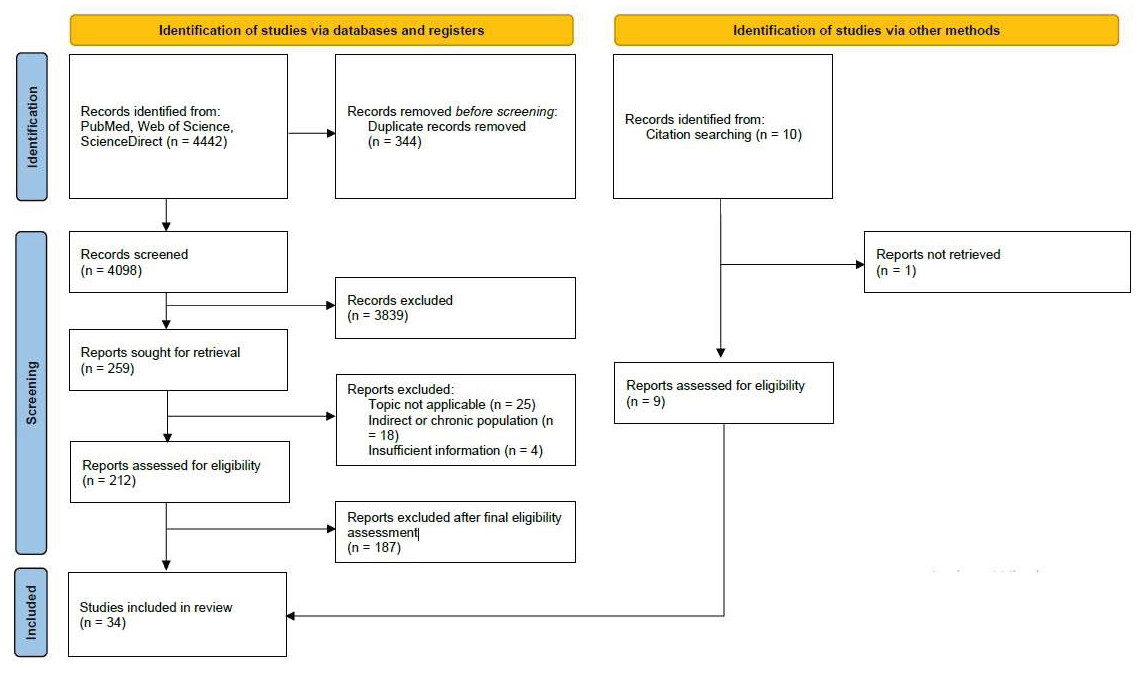
Figure 2.
Proposed conceptual framework for the clinical interpretation of PaCO₂ in acute respiratory failure. The figure summarizes the context-dependent associations identified across the included studies. Similar PaCO₂ values may have different clinical implications depending on the respiratory support strategy, timing of assessment, acid-base status, and stage of care. In most scenarios, PaCO₂ functions primarily as a prognostic or stratification marker; only in selected contexts may it help support modality selection or monitoring of response. The figure is intended as a conceptual summary rather than a treatment algorithm. Created by the authors.
Figure 2.
Proposed conceptual framework for the clinical interpretation of PaCO₂ in acute respiratory failure. The figure summarizes the context-dependent associations identified across the included studies. Similar PaCO₂ values may have different clinical implications depending on the respiratory support strategy, timing of assessment, acid-base status, and stage of care. In most scenarios, PaCO₂ functions primarily as a prognostic or stratification marker; only in selected contexts may it help support modality selection or monitoring of response. The figure is intended as a conceptual summary rather than a treatment algorithm. Created by the authors.
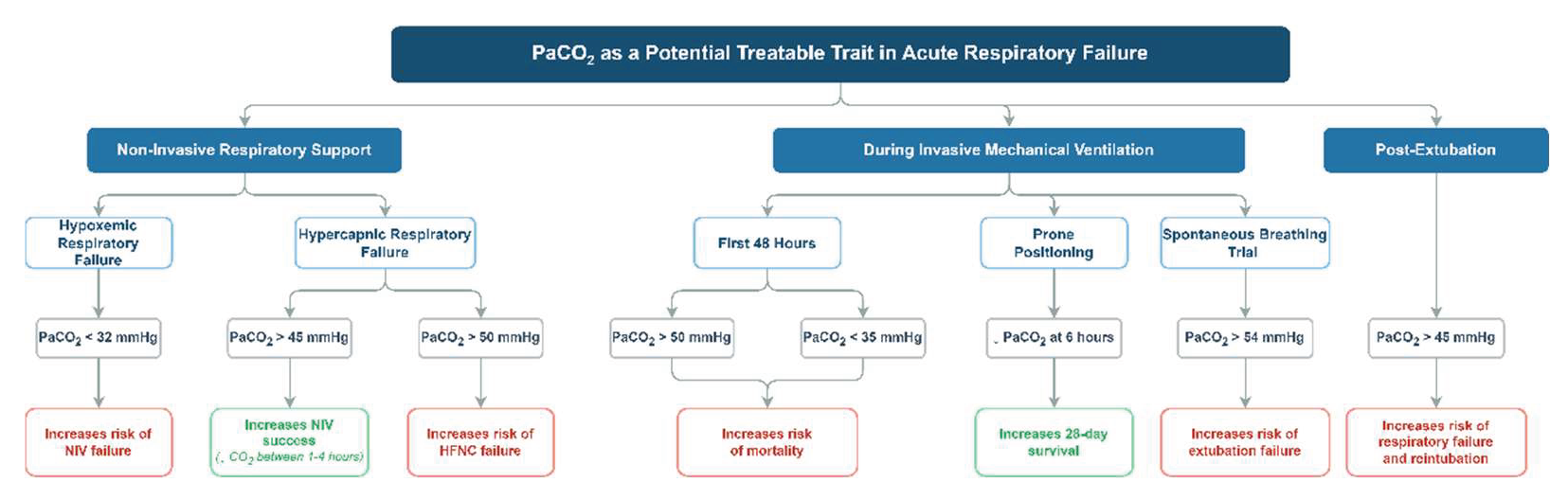

Table 1.
General characteristics of included studies (chronological order by year of publication).
| Citation | Year | Country | Type of study |
| Piper AJ [17] | 1994 | Australia | Retrospective observational study |
| Rabec C [18] | 1998 | France | Prospective observational study |
| Hilbert G [19] | 1998 | France | Observational case–control study |
| Plant PK [20] | 2000 | United Kingdom | Multicenter randomized controlled trial |
| Gattinoni L [21] | 2003 | Italy | Retrospective analysis of a randomized controlled trial |
| Nava S [22] | 2003 | Italy | Multicenter randomized controlled trial |
| Diaz GG [23] | 2005 | Spain | Prospective, open-label, uncontrolled observational study |
| Ferrer M [24] | 2006 | Spain | Prospective observational study |
| Ortega González [25] | 2006 | Spain | Prospective observational study |
| Duarte AG [26] | 2007 | USA | Retrospective observational study |
| Ferrer M [13] | 2009 | Spain | Randomized clinical trial |
| Sellarés J [27] | 2011 | Spain | Prospective cohort study |
| Girault C [28] | 2011 | France | Randomized clinical trial (multicenter) |
| Carrillo A [29] | 2012 | Spain | Prospective observational study |
| Marik PE [30] | 2013 | USA | Retrospective observational study |
| Pu L [31] | 2015 | China | Multicenter prospective cohort study |
| Tiruvoipati R [11] | 2017 | Australia/New Zealand | Retrospective multicenter observational study |
| Nin N [12] | 2017 | Multinational* | Prospective cohort study |
| Çiftci F [32] | 2017 | Turkey | Prospective observational study |
| Fuller BM [33] | 2017 | USA | Prospective observational study |
| Sellarés J [34] | 2017 | Spain | Randomized controlled trial |
| Bry C [35] | 2018 | France | Retrospective observational study |
| Thille AW [36] | 2019 | France | Randomized clinical trial |
| Li X [37] | 2020 | China | Randomized clinical trial |
| Madotto F [38] | 2020 | Multinational* | Multicenter observational study |
| Kato T [8] | 2021 | Japan | Retrospective observational study |
| Carrillo-Alemán L [9] | 2022 | Spain | Retrospective observational study |
| Tsonas AM [39] | 2022 | Netherlands | Retrospective multicenter observational study |
| Xu X [10] | 2024 | China | Retrospective observational study |
| Braunsteiner J [40] | 2024 | Germany | Retrospective observational study |
| Robba C [41] | 2024 | Multinational* | Multicenter prospective observational study |
| Tan D [42] | 2024 | China | Randomized controlled trial |
| Villar J [43] | 2024 | Multinational* | Prospective cohort study |
| Rusnak J [44] | 2025 | Germany | Prospective observational study |
* Multinational indicates studies conducted across multiple countries/intensive care units.
Table 2.
Evidence mapping by clinical domain.
| Citation | Design | n | Context | PaCO₂ definition/strata | Key outcome |
| Pre-intubation and early acute presentation | |||||
| Kato T et al., 2021 [8] |
Retrospective observational | 435 | Acute heart failure | PaCO₂ as continuous; cut-offs 31 and 40 mmHg | PaCO₂ <31 associated with higher mortality (HR 1.71) |
| Carrillo-Alemán L et al., 2022 [9] |
Retrospective observational | 1,138 | Cardiogenic pulmonary edema (NIV) | Hypocapnia/eucapnia/hypercapnia (hypercapnia threshold NR) | Hypocapnia: higher NIV failure and in-hospital mortality |
| Xu X et al., 2024 [10] |
Retrospective observational | 1,029 | Hypoxemic respiratory failure (NIV) | Hypocapnia ≤32 mmHg | Hypocapnia: higher NIV failure (adjusted HR 1.23) |
| Rusnak J et al., 2025 [44] |
Prospective observational | 238 | Cardiogenic shock | Hypocapnia ≤33 mmHg; hypercapnia >48.13 mmHg | Hypocapnia: higher 30-day mortality; hypercapnia not associated |
| Non-invasive respiratory support: NIV/HFNC | |||||
| NIV in hypercapnic acute respiratory failure (COPD / OHS / OSA–OHS) | |||||
| Piper AJ et al., 1994 [17] |
Retrospective observational | 13 | Obesity, BMI >35; nocturnal nasal ventilation | PaCO₂ >45 mmHg | NIV success ~64–69% |
| Rabec C et al., 1998 [18] |
Prospective observational | 41 | Sleep apnea + respiratory acidosis (NIV) | pH <7.35; PaCO₂ >45 mmHg | Intubation avoided in 95% |
| Diaz GG et al., 2005 [23] |
Prospective observational (open-label) | 681 | Hypercapnic coma (NIV) | PaCO₂ >45 mmHg | NIV success 80% |
| Ortega González et al., 2006 [25] | Prospective observational (open-label) | 53 | COPD, OHS, AHF (NIV) | pH >7.25; PaCO₂ >45 mmHg | At 3 h: pH ↑ and PaCO₂ ↓ |
| Duarte AG et al., 2007 [26] |
Retrospective observational | 50 | Morbid obesity, BMI >35 kg/m² (NIV) | PaCO₂ >50 mmHg | NIV success 64% |
| Çiftci F et al., 2007 [32] |
Prospective observational | 106 | Hypercapnic respiratory failure (assured volume PS) | pH <7.35; PaCO₂ >45 mmHg | NIV success 76.4% |
| Carrillo A et al., 2012 [29] |
Prospective observational | 716 | ARF episodes due to OHS and COPD | pH <7.35; PaCO₂ >45 mmHg | NIV success 88.4% |
| Marik PE et al., 2013 [30] |
Prospective observational | 61 | OHS, BMI >40 kg/m² (BiPAP) | PaCO₂ >45 mmHg | 37.7% progressed to IMV |
| Sellarés J et al., 2017 [34] |
Randomized clinical trial | 120 | NIV prolongation after ARF resolution | pH <7.35; PaCO₂ >45 mmHg | ARF recurrence 13% |
| Bry C et al., 2018 [35] |
Retrospective observational | 53 | BMI >30; long-term NIV after ARF hospitalization | PaCO₂ >45 mmHg | NIV success 90% |
| HFNC vs NIV trials/strategies in hypercapnic COPD | |||||
| Plant PK et al., 2000 [20] |
Multicenter randomized clinical trial | 236 | AECOPD: NIV | pH 7.25–7.35; PaCO₂ >45 mmHg | 15% progressed to IMV |
| Li X et al., 2020 [37] |
Randomized clinical trial | 320 | COPD: HFNC | pH >7.35; PaCO₂ >45 mmHg | 19% progressed to IMV |
| Tan D et al., 2024 [42] |
Randomized clinical trial | 225 | COPD: HFNC vs NIV | pH 7.25–7.35; PaCO₂ >50 mmHg | IMV: 25.7% (HFNC) vs 14.3% (NIV) |
| IMV and ICU CO₂ derangements | |||||
| Gattinoni L et al., 2003 [21] |
Retrospective analysis of an RCT | 225 | ALI/ARDS (prone) | Prone responders: PaCO₂ decrease ≥ 1 mmHg after 6 h | Responders had higher 28-day survival |
| Tiruvoipati R et al., 2017 [11] |
Retrospective multicenter observational | 252,812 | IMV patients | Hypercapnia >45 mmHg; hypercapnic acidosis: pH <7.35 | Hypercapnia/hypercapnic acidosis associated with higher mortality |
| Nin N et al., 2017 [12] |
Prospective non-interventional cohort | 889 | ARDS <48 h | Hypercapnia >40 mmHg; >50 mmHg emphasized | PaCO₂ >50 is associated with higher mortality (first 48 h) |
| Fuller BM et al., 2017 [33] |
Prospective observational | 1,491 | IMV (first 48 h) | Hypocapnia <35 mmHg; hypercapnia >45 mmHg | Higher survival with hypercapnia vs hypocapnia |
| Madotto F et al., 2020 [38] |
Multicenter observational | 2,813 | Early ARDS | Hypocapnia <35 mmHg; hypercapnia >45 mmHg | Mortality: hypercapnia 36%; hypocapnia 38.1% |
| Tsonas AM et al., 2022 [39] |
Retrospective multicenter observational | 824 | COVID-19 on IMV | Hypercapnia >45 mmHg | Longer MV duration and ICU/hospital LOS |
| Braunsteiner J et al., 2024 [40] |
Retrospective observational | 435 | Mechanical power + dyscapnia | Hypocapnia <35 mmHg; hypercapnia >50 mmHg | Hypocapnia is associated with higher mortality; hypercapnia>50 is not associated |
| Robba C et al., 2024 [41] |
Multicenter prospective observational | 1,476 | Acute brain injury | Hypocapnia <35 mmHg; hypercapnia >45 mmHg | Both hypo- and hypercapnia associated with higher mortality |
| Villar J et al., 2024 [43] |
Prospective cohort | 253 | Moderate-to-severe ARDS | Hypercapnia >45 mmHg; early PaCO₂ changes | Early PaCO₂ changes predict MV duration >14 days |
| Weaning and post-extubation | |||||
| Predictors of prolonged weaning/extubation failure | |||||
| Ferrer M et al., 2006 [24] |
Prospective observational | 162 | Weaning | Hypercapnia >45 mmHg | Higher orotracheal re-intubation |
| Sellarés J et al., 2011 [27] |
Prospective cohort | 181 | SBT/weaning | Hypercapnia >45 mmHg; ≥54 mmHg | Associated with prolonged weaning and extubation failure |
| Pu L et al., 2015 [31] |
Multicenter prospective cohort | 343 | First SBT | Hypercapnia >50 mmHg | Associated with prolonged mechanical ventilation |
| Post-extubation interventions (NIV/HFNC) in hypercapnic patients | |||||
| Hilbert G et al., 1998 [19] |
Case–control observational | 30 | COPD post-extubation | PaCO₂ ↑ 20% + pH <7.35 | NIV reduced re-intubation |
| Nava S et al., 2003 [22] |
Multicenter randomized clinical trial | 122 | NIV ≥8 h/day for 48 h | Hypercapnia >45 mmHg | NIV prevented post-extubation ventilatory failure |
| Ferrer M et al., 2009 [13] |
Randomized clinical trial | 164 | NIV vs standard oxygen | Hypercapnia >45 mmHg | NIV reduced ventilatory failure and 90-day mortality |
| Girault C et al., 2011 [28] |
Randomized clinical trial | 388 | NIV as a bridge to wean from IMV | Hypercapnia >45 mmHg or PaCO₂ ↑ >10% vs pre-extubation | NIV reduced re-intubation |
| Thille AW et al., 2019 [36] |
Prospective observational | NR | Post-extubation HFNC or NIV | Hypercapnia >45 mmHg | Lower re-intubation rate |
Abbnreviations: ABI: acute brain injury; AECOPD: acute exacerbation of chronic obstructive pulmonary disease; AHF: acute heart failure; APE: acute pulmonary edema; ARDS: acute respiratory distress syndrome; BMI: body mass index; BiPAP: bilevel positive airway pressure; COT: conventional oxygen therapy; COPD: chronic obstructive pulmonary disease; CO₂: carbon dioxide; CPAP: continuous positive airway pressure; CPE: cardiogenic pulmonary edema; ECMO: extracorporeal membrane oxygenation; ECCO₂R: extracorporeal carbon dioxide removal; ED: emergency department; ETCO₂: end-tidal carbon dioxide; FiO₂: fraction of inspired oxygen; HFNC: high-flow nasal cannula; HR: hazard ratio; ICU: intensive care unit; IMV: invasive mechanical ventilation; LOS: length of stay; NIV: non-invasive ventilation; NR: not reported; OHS: obesity hypoventilation syndrome; OSA: obstructive sleep apnea; PaCO₂: arterial partial pressure of carbon dioxide; PaO₂: arterial partial pressure of oxygen; PEEP: positive end-expiratory pressure; RCT: randomized controlled trial; RR: respiratory rate; SBT: spontaneous breathing trial; SD: standard deviation; SILI: self-inflicted lung injury; TBI: traumatic brain injury; Vt: tidal volume.
Table 3.
Pragmatic interpretation of PaCO₂ in acute respiratory failure.
| Clinical context | PaCO₂ pattern | Main role | Practical message |
| Acute hypoxemia / pre-intubation | Low or low-normal | Prognostic / stratification | Hypocapnia may suggest higher respiratory drive and greater risk of non-invasive support failure, but it should not be used alone to determine support modality. |
| Cardiogenic pulmonary edema / acute heart failure / cardiogenic shock | Often low | Prognostic / monitoring | Hypocapnia has been associated with worse outcomes in some studies, but it is not, by itself, a treatment target. |
| Acute hypercapnic respiratory failure (COPD/OHS) | >45 mmHg, often with acidemia | Modality selection / monitoring | This is the clearest setting in which PaCO₂ helps identify patients likely to benefit from NIV; early improvement may also support response assessment. |
| IMV | Hypocapnia, hypercapnia, or hypercapnic acidosis | Monitoring / prognostic | Dyscapnia is associated with outcomes, but often reflects disease severity, ventilatory strategy, or dead space rather than an independent therapeutic target. |
| ARDS / lung-protective ventilation | Hypercapnia may be tolerated | Contextual physiological variable | Direct correction of PaCO₂ may conflict with lung-protective ventilation, and safe thresholds remain uncertain. |
| Prone positioning | Trend more important than isolated value | Response monitoring | A decrease in PaCO₂ may support physiological response assessment, but should not be interpreted as a stand-alone treatment target. |
| Neurocritical care | Avoid marked hypocapnia | Safety / monitoring | PaCO₂ is particularly important to avoid extremes, especially excessive hypocapnia. |
| Weaning and post-extubation | Persistent hypercapnia | Stratification / support selection | Hypercapnia may identify patients at higher risk of extubation failure and help support non-invasive strategies in selected cases. |
Abbreviations: ARDS: acute respiratory distress syndrome; COPD: chronic obstructive pulmonary disease; IMV: Invasive mechanical ventilation; NIV: non-invasive ventilation; OHS: obesity hypoventilation syndrome; PaCO₂: arterial partial pressure of carbon dioxide.
Disclaimer/Publisher’s Note: The statements, opinions and data contained in all publications are solely those of the individual author(s) and contributor(s) and not of MDPI and/or the editor(s). MDPI and/or the editor(s) disclaim responsibility for any injury to people or property resulting from any ideas, methods, instructions or products referred to in the content. |
© 2026 by the authors. Licensee MDPI, Basel, Switzerland. This article is an open access article distributed under the terms and conditions of the Creative Commons Attribution (CC BY) license (http://creativecommons.org/licenses/by/4.0/).
Copyright: This open access article is published under a Creative Commons CC BY 4.0 license, which permit the free download, distribution, and reuse, provided that the author and preprint are cited in any reuse.


