

Submitted:
23 April 2026
Posted:
24 April 2026
You are already at the latest version
Abstract
Background. Alzheimer's disease (AD) is a progressive neurodegenerative disorder with a complex etiology, often diagnosed late in its course. Early detection of AD biomarkers could aid in timely intervention and management. Single-cell RNA sequencing (scRNA-seq) offers a powerful tool to unravel cellular heterogeneity and identify molecular signatures associated with disease states. Here, we employ scRNA-seq on peripheral blood samples to investigate potential predictive biomarkers for AD. Methods. We analyzed the publicly available scRNA-seq dataset GSE181279, comprising peripheral blood cells from three individuals with Alzheimer’s disease and two healthy controls. Single-cell RNA sequencing was performed on these samples to profile the transcriptomic landscape of individual cells. Bioinformatics analyses were employed to identify differentially expressed genes and cellular subtypes associated with AD pathology. Machine learning algorithms were utilized to develop predictive models based on gene expression patterns, aiming to discriminate between AD patients and healthy controls. Results. Our scRNA-seq (GSE181279) analysis revealed distinct gene expression profiles and cellular subtypes in peripheral blood samples from AD patients compared to healthy controls. We identified several dysregulated genes and cell populations associated with AD pathology, including immune cell activation and neuroinflammatory processes. Differential-expression and enrichment analyses identified candidate genes and pathways associated with immune activation, stress-response signaling, and altered cellular homeostasis in AD. In an exploratory leave-one-out analysis, a two-gene model incorporating BTG1 and DUSP1 separated AD from healthy controls within this very small dataset; these findings require validation in larger independent cohorts. Conclusions. This exploratory analysis suggests that peripheral-blood scRNA-seq may help identify candidate biomarkers associated with AD. The identified gene expression signatures and cellular subtypes associated with AD pathology provide valuable insights into the underlying molecular mechanisms of the disease. Furthermore, the development of accurate predictive models based on scRNA-seq data suggests a promising avenue for early diagnosis and intervention in AD. Further validation and prospective studies are warranted to assess the clinical utility and generalizability of these findings in larger cohorts.
Keywords:
Alzheimer's disease
; single-cell RNA sequencing (scRNA-seq)
; peripheral blood biomarkers
; early detection
; cellular heterogeneity
; differential gene expression
; machine learning models
; immune activation
; neuroinflammation
; BTG1 DUSP1
Introduction
AD is a progressive neurodegenerative disorder characterized by the deterioration of cognitive function and memory. It is the most common cause of dementia among older adults, affecting millions globally and posing significant challenges to individuals, families, and healthcare systems. The pathological hallmarks of Alzheimer's include the accumulation of amyloid-beta plaques and tau protein tangles in the brain, leading to neuronal loss and brain atrophy. However, the exact mechanisms behind its onset and progression remain incompletely understood. Early diagnosis of Alzheimer's is crucial for managing the disease and potentially slowing its progression. Currently, definitive diagnosis relies heavily on neuroimaging and cerebrospinal fluid analysis, which are often invasive, expensive, and not widely accessible. This has prompted researchers to explore more accessible and minimally invasive biomarkers, especially those detectable in peripheral blood (liquid biopsy biomarkers). Recent advancements in single-cell RNA sequencing (scRNA-seq) have opened new avenues for understanding complex diseases like Alzheimer's at unprecedented resolution [1]. scRNA-seq allows the analysis of gene expression at the individual cell level, providing insights into cellular heterogeneity and the dynamic states of cells. Applying this technology to peripheral blood cells offers a promising approach to uncovering blood-based biomarkers for Alzheimer's disease. This approach may help identify accessible blood-based signatures associated with AD and generate hypotheses for future validation studies.
Data
We obtained the publicly available single-cell RNA-sequencing dataset GSE181279 from the NIH Gene Expression Omnibus/NIH portal (Figure 1). The dataset included five peripheral-blood samples in total: three from individuals with AD and two from healthy controls.
Data Analysis
Integrating the GSE181279 dataset that includes peripheral blood samples from three AD patients and two healthy controls (Figure 2), this study employs a rigorous scRNA-seq pipeline to identify genomic biomarkers for Alzheimer’s disease. Our analytical framework leverages t-tests, Wilcoxon tests, and zero-inflated models to perform differential-expression analyses at the cell level, complemented by pathway and gene-ontology enrichment to map shifts in cellular composition and interaction networks. Moreover, we utilized logistic regression and XGBoost for predictive modeling, using leave-one-out cross-validation to assess performance, ultimately aiming to uncover the molecular drivers and biomarkers that define the AD landscape.
Differential Gene Expression
In the gene expression analysis, a striking pattern emerged showing significant alterations in both upregulated and downregulated genes. Among the most downregulated genes (Table 1), it has been suggested that GSTM1 null genotype is a risk factor for AD in Italian patients [2]. It has been speculated that TYROBP plays a key role in the microglial sensome and the emergence of the disease-associated microglia (DAM) phenotype and also may play a key role in the loss of markers of synaptic integrity [3]. One study highlighted KLF6 and KLF7 overexpression increased neurite growth by 35% and 60%, respectively [4]. CFAP20 encodes a highly conserved protein involved in the post-translational modification of Tubulin subunits of microtubules. Such modifications might be essential for microtubule function and stability in ciliated cells, such as sperm, and in neurons [5]. YPEL5 is a member of the YPEL gene family that is highly conserved in the eukaryotic species and apparently involved in a certain cell division-related function. YPEL5 protein has been shown to be involved in the cell cycle progression. Human YPEL5 has been reported to play a pro-apoptotic role and is also involved in DNA damage induced apoptosis [6]. TSC22D3 encodes a putative anti-inflammatory transcription factor and has been shown to express high mRNA levels in brain-infiltrating CD8+ T cells in AD mice [7]. Shwachman-Diamond syndrome is a rare recessive genetic disease caused by mutations in SBDS gene, at chromosome 7q11. Phenotypically, the syndrome is characterized by exocrine pancreatic insufficiency, bone marrow dysfunction, skeletal dysplasia, and variable cognitive impairments [8]. Diseases associated with ARHGEF10 include Slowed Nerve Conduction Velocity, Autosomal Dominant and Axonal Neuropathy [9].
Conversely, the upregulated genes revealed a pronounced activation in pathways associated with cell proliferation and immune responses. BTG1 belongs to a family of antiproliferative genes and is highly expressed in adult neurogenic niches [10]. In human cortex, DUSP1 protein expression correlates with tau phosphorylation, synaptic defects and cognitive decline in subjects diagnosed with AD [11]. NK cells from patients with AD displayed upregulation of DUSP1 and DUSP2 that are regulators of the ERK signaling pathway and the RNA-binding protein ZFP36L2 that is related to immunosuppression as well as TBX21 involved in NK cell maturation [12]. It has been suggested that YB-1 interaction with β-amyloid prevents formation of filaments that are responsible for neurotoxicity and neuronal death [13]. Upregulation of ATP5F1D might demonstrate dysfunction of the mitochondrial ATP synthase in AD [14]. The heightened expression of RPS2 and NOP53 underscores an escalation in ribosome biogenesis and protein synthesis [15]. A variant of HLA-C was found to be associated with AD [16].
Pathway Analysis
The pathway analysis (Table 2) has uncovered significant shifts in cellular activities, evidenced by the top ten downregulated and upregulated pathways. Among the downregulated pathways, there is a notable decline in the Biosynthesis of DHA-derived sulfido conjugates and Biosynthesis of maresin conjugates in tissue regeneration (MCTR), consistent with altered pathways related to anti-inflammatory and tissue repair processes [17]. Additionally, the pathway Reversible hydration of carbon dioxide is linked to carbonic anhydrase biology, which is a potential target against neurovascular unit dysfunction in AD [18]. Studies in AD mouse models have shown that EGFR inhibitors can attenuate amyloid-beta (Aβ) pathology and improve cognitive function [19]. The decreased activity in Defective B3GALTL causing Peters-plus syndrome (PpS) and O-glycosylation of TSR domain-containing proteins pathways may reflect altered glycosylation-related pathway enrichment, which could affect protein stability and function. In neurons, the number of glycosylation sites on neuronal and synaptic proteins is altered in AD brains, leading to aberrant neuronal adhesion and synaptic transmission [20]. One study identified that NOXA (PMAIP1) was a potential candidate gene that may affect mitochondrial function in hippocampal neuronal cells [21].
In contrast, upregulated pathways highlight enhanced regulatory and proliferative mechanisms. The FOXO-mediated transcription of cell cycle genes and FOXO-mediated transcription pathways are prominently upregulated, indicating a robust activation of transcriptional responses critical for cell cycle control, apoptosis, and stress resistance [22]. The aberrant MAPK pathway may facilitate the development of amyloid-beta (Aβ) and Tau pathology, oxidative stress, neuroinflammation, and brain cell death [23]. Additionally, NOTCH3 mutations trigger changes in vascular smooth muscle cells and the overall cerebral microvasculature, which may play a role in increased amyloid accumulation [24]. The colocalization of the presenilins with kinetochores on the nucleoplasmic surface of the inner nuclear membrane, together with other results, suggests that they may play a role in chromosome organization and segregation, perhaps as kinetochore binding proteins/receptors [25]. Upregulation of Mitotic Spindle Checkpoint pathways and EML4 and NUDC in mitotic spindle formation pathways indicates a strong emphasis on mitotic machinery. It has been postulated that there should be alterations in the mitotic spindle apparatus or in mitosis-related proteins in Alzheimer’s disease cells that could lead to chromosome mis-segregation [26].
Gene Ontology Analysis
Table 3 shows the downregulated and upregulated gene ontology cell components (CC), biological processes (BP) and molecular functions (MF). The downregulated processes predominantly reflect a decline in cellular maintenance and detoxification activities. Protein kinase C (PKC) has been classified as one of the cognitive kinases controlling memory and learning. By regulating several signaling pathways involved in amyloid and tau pathologies, it also plays an inhibitory role in AD pathophysiology [27]. Abnormalities in cellular junctions and junctional components contribute to impaired neuronal signaling and increased cerebrovascular permeability, which are closely associated with AD advancement [28]. Metabolic processes are also impacted, as indicated by the downregulation of nitrobenzene metabolic process and detoxification of nitrogen compound, highlighting a diminished capacity to handle toxic substances and byproducts [29].
On the other hand, the upregulated processes illustrate a marked enhancement in developmental and regulatory activities. Key among these is the positive regulation of endothelial cell differentiation and positive regulation of myoblast differentiation, which indicate robust promotion of vascular and muscle cell development. The positive regulation of ubiquitin-protein transferase activity suggests increased protein modification activities, which are vital for cellular stress responses and protein quality control [30]. Furthermore, clonal hematopoiesis of indeterminate potential (CHIP), a condition that changes the DNA of some blood cells and increases the risk for blood cancers and cardiovascular disease, may reduce a person’s risk of developing Alzheimer's disease [31].
Exploratory Classification of AD Using Peripheral-Blood Single-cell Transcriptomics
Peripheral blood single-cell transcriptomic data may provide a minimally invasive source of candidate biomarkers for AD. In this exploratory analysis of GSE181279 (three AD samples and two healthy controls), a two-gene model based on BTG1 and DUSP1 (Figure 3 and Figure 4) achieved complete separation of the groups under leave-one-out cross-validation using logistic regression and XGBoost. However, given the extremely small sample size and lack of external validation, these findings should be considered hypothesis-generating rather than evidence of robust predictive performance.
Discussion
We analyzed publicly available peripheral-blood scRNA-seq data to explore candidate transcriptomic signatures associated with AD. The findings underscore significant alterations in gene expression profiles between AD patients and healthy controls, highlighting the intricate molecular landscape of the disease. Notably, the differential expression of genes such as GSTM1, TYROBP, and KLF6, which are implicated in cellular stress responses, immune function, and neuronal integrity, provides crucial insights into the pathophysiology of AD. These genes, alongside others like CFAP20 and TSC22D3, point to disruptions in neuronal structure and immune regulation, suggesting their potential as biomarkers for early AD detection.
Furthermore, the pathway analysis reveals profound shifts in cellular activities, with downregulated pathways such as the Biosynthesis of DHA-derived sulfido conjugates and Reversible hydration of carbon dioxide suggesting diminished anti-inflammatory responses and metabolic dysregulation in AD. Conversely, upregulated pathways like FOXO-mediated transcription and Mitotic Spindle Checkpoint highlight enhanced cellular stress responses and alterations in cell cycle control, which are critical in the context of neurodegeneration and AD progression. These findings align with the hypothesis that AD pathogenesis involves a complex interplay of impaired cellular maintenance, metabolic dysfunction, and heightened stress responses.
The gene ontology analysis further complements these observations by showing decreased cellular maintenance activities, such as cell-cell junction maintenance and membrane raft organization, which are essential for maintaining neuronal and synaptic integrity. This decline mirrors the structural and functional deterioration seen in AD. In contrast, upregulated processes related to endothelial cell differentiation and ubiquitin-protein transferase activity reflect an adaptive increase in cellular repair and stress response mechanisms, potentially as a compensatory effort to counteract AD pathology.
A noteworthy exploratory finding was that a two-gene model using BTG1 and DUSP1 separated AD from healthy controls within this small dataset. The model’s ability to identify AD with 100% accuracy by analyzing the expression of just two genes, BTG1 and DUSP1, underscores the potential of single-cell transcriptomics in improving AD diagnostics. Although encouraging, this observation is preliminary and may reflect overfitting given the limited number of samples.
This study has several important limitations. It is a secondary analysis of a public dataset with only five individuals, which substantially limits statistical power and generalizability. The large number of cells does not substitute for the small number of independent patient samples. In addition, the absence of an external validation cohort and the exploratory use of leave-one-out cross-validation create a substantial risk of overfitting. Finally, peripheral-blood transcriptomic changes may reflect non-specific systemic or inflammatory processes rather than AD-specific biology.
Conclusion
In summary, this exploratory analysis of a public peripheral-blood scRNA-seq dataset identified candidate genes, pathways, and gene-ontology signatures associated with AD. A preliminary two-gene classifier based on BTG1 and DUSP1 separated AD from healthy controls within this dataset, but the findings are limited by the very small sample size and lack of external validation. Larger, prospectively characterized cohorts will be needed to determine whether these signals have true diagnostic value.
Institutional Review Board Statement
Not applicable.
Informed Consent Statement
Not applicable.
Conflicts of Interest
The authors declare no conflict of interest.
References
- Xu H, Jia J. Single-Cell RNA Sequencing of Peripheral Blood Reveals Immune Cell Signatures in Alzheimer's Disease. Front Immunol. 2021 Aug 9;12:645666.
- Piacentini S, Polimanti R, Squitti R, Ventriglia M, Cassetta E, Vernieri F, Rossini PM, Manfellotto D, Fuciarelli M. GSTM1 null genotype as risk factor for late-onset Alzheimer's disease in Italian patients. J Neurol Sci. 2012 Jun 15;317(1-2):137-40.
- Haure-Mirande JV, Audrain M, Ehrlich ME, Gandy S. Microglial TYROBP/DAP12 in Alzheimer's disease: Transduction of physiological and pathological signals across TREM2. Mol Neurodegener. 2022 Aug 24;17(1):55.
- Loera-Valencia R, Piras A, Ismail MAM, Manchanda S, Eyjolfsdottir H, Saido TC, Johansson J, Eriksdotter M, Winblad B, Nilsson P. Targeting Alzheimer's disease with gene and cell therapies. J Intern Med. 2018 Jul;284(1):2-36.
- Nazarian A, Yashin AI, Kulminski AM. Summary-Based Methylome-Wide Association Analyses Suggest Potential Genetically Driven Epigenetic Heterogeneity of Alzheimer's Disease. J Clin Med. 2020 May 15;9(5):1489.
- Daneshafrooz N, Bagherzadeh Cham M, Majidi M, Panahi B. Identification of potentially functional modules and diagnostic genes related to amyotrophic lateral sclerosis based on the WGCNA and LASSO algorithms. Sci Rep. 2022 Nov 22;12(1):20144.
- Ali M, Garcia P, Lunkes LP, Sciortino A, Thomas M, Heurtaux T, Grzyb K, Halder R, Coowar D, Skupin A, Buée L, Blum D, Buttini M, Glaab E. Single cell transcriptome analysis of the THY-Tau22 mouse model of Alzheimer's disease reveals sex-dependent dysregulations. Cell Death Discov. 2024 Mar 7;10(1):119.
- Perobelli S, Alessandrini F, Zoccatelli G, Nicolis E, Beltramello A, Assael BM, Cipolli M. Diffuse alterations in grey and white matter associated with cognitive impairment in Shwachman-Diamond syndrome: evidence from a multimodal approach. Neuroimage Clin. 2015 Feb 27;7:721-31.
- Boora GK, Kulkarni AA, Kanwar R, Beyerlein P, Qin R, Banck MS, Ruddy KJ, Pleticha J, Lynch CA, Behrens RJ, Züchner S, Loprinzi CL, Beutler AS. Association of the Charcot-Marie-Tooth disease gene ARHGEF10 with paclitaxel induced peripheral neuropathy in NCCTG N08CA (Alliance). J Neurol Sci. 2015 Oct 15;357(1-2):35-40.
- Farioli-Vecchioli S, Micheli L, Saraulli D, Ceccarelli M, Cannas S, Scardigli R, Leonardi L, Cinà I, Costanzi M, Ciotti MT, Moreira P, Rouault JP, Cestari V, Tirone F. Btg1 is Required to Maintain the Pool of Stem and Progenitor Cells of the Dentate Gyrus and Subventricular Zone. Front Neurosci. 2012 Aug 30;6:124.
- Arango-Lievano M, Peguet C, Catteau M, Parmentier ML, Wu S, Chao MV, Ginsberg SD, Jeanneteau F. Deletion of Neurotrophin Signaling through the Glucocorticoid Receptor Pathway Causes Tau Neuropathology. Sci Rep. 2016 Nov 16;6:37231.
- Qi C, Liu F, Zhang W, Han Y, Zhang N, Liu Q, Li H. Alzheimer's disease alters the transcriptomic profile of natural killer cells at single-cell resolution. Front Immunol. 2022 Nov 2;13:1004885.
- Bobkova NV, Lyabin DN, Medvinskaya NI, Samokhin AN, Nekrasov PV, Nesterova IV, Aleksandrova IY, Tatarnikova OG, Bobylev AG, Vikhlyantsev IM, Kukharsky MS, Ustyugov AA, Polyakov DN, Eliseeva IA, Kretov DA, Guryanov SG, Ovchinnikov LP. The Y-Box Binding Protein 1 Suppresses Alzheimer's Disease Progression in Two Animal Models. PLoS One. 2015 Sep 22;10(9):e0138867.
- Ebanks B, Ingram TL, Chakrabarti L. ATP synthase and Alzheimer's disease: putting a spin on the mitochondrial hypothesis. Aging (Albany NY). 2020 Aug 27;12(16):16647-16662.
- Jiao L, Liu Y, Yu XY, Pan X, Zhang Y, Tu J, Song YH, Li Y. Ribosome biogenesis in disease: new players and therapeutic targets. Signal Transduct Target Ther. 2023 Jan 9;8(1):15.
- Lehmann DJ, Barnardo MC, Fuggle S, Quiroga I, Sutherland A, Warden DR, Barnetson L, Horton R, Beck S, Smith AD. Replication of the association of HLA-B7 with Alzheimer's disease: a role for homozygosity? J Neuroinflammation. 2006 Dec 18;3:33.
- Astarita G, Jung KM, Berchtold NC, Nguyen VQ, Gillen DL, Head E, Cotman CW, Piomelli D. Deficient liver biosynthesis of docosahexaenoic acid correlates with cognitive impairment in Alzheimer's disease. PLoS One. 2010 Sep 8;5(9):e12538.
- Lemon N, Canepa E, Ilies MA, Fossati S. Carbonic Anhydrases as Potential Targets Against Neurovascular Unit Dysfunction in Alzheimer's Disease and Stroke. Front Aging Neurosci. 2021 Nov 16;13:772278.
- Choi HJ, Jeong YJ, Kim J, Hoe HS. EGFR is a potential dual molecular target for cancer and Alzheimer's disease. Front Pharmacol. 2023 Aug 2;14:1238639.
- Tang, X., Tena, J., Di Lucente, J. et al. Transcriptomic and glycomic analyses highlight pathway-specific glycosylation alterations unique to Alzheimer’s disease. Sci Rep 13, 7816 (2023).
- Ling Y, Hu L, Chen J, Zhao M, Dai X. The mechanism of mitochondrial metabolic gene PMAIP1 involved in Alzheimer's disease process based on bioinformatics analysis and experimental validation. Clinics (Sao Paulo). 2024 Apr 30;79:100373.
- Du S, Zheng H. Role of FoxO transcription factors in aging and age-related metabolic and neurodegenerative diseases. Cell Biosci. 2021 Nov 2;11(1):188.
- Raffaele I, Silvestro S, Mazzon E. MicroRNAs and MAPKs: Evidence of These Molecular Interactions in Alzheimer's Disease. Int J Mol Sci. 2023 Mar 1;24(5):4736.
- Kapoor A, Nation DA. Role of Notch signaling in neurovascular aging and Alzheimer's disease. Semin Cell Dev Biol. 2021 Aug;116:90-97.
- Li J, Xu M, Zhou H, Ma J, Potter H. Alzheimer presenilins in the nuclear membrane, interphase kinetochores, and centrosomes suggest a role in chromosome segregation. Cell. 1997 Sep 5;90(5):917-27.
- Potter H. Cell Cycle and Chromosome Segregation Defects in Alzheimer's Disease. In: Madame Curie Bioscience Database [Internet]. Austin (TX): Landes Bioscience; 2000-2013.
- Talman V, Pascale A, Jäntti M, Amadio M, Tuominen RK. Protein Kinase C Activation as a Potential Therapeutic Strategy in Alzheimer's Disease: Is there a Role for Embryonic Lethal Abnormal Vision-like Proteins? Basic Clin Pharmacol Toxicol. 2016 Aug;119(2):149-60.
- Asghari K, Niknam Z, Mohammadpour-Asl S, Chodari L. Cellular junction dynamics and Alzheimer's disease: a comprehensive review. Mol Biol Rep. 2024 Feb 1;51(1):273.
- Oladele JO, Oyeleke OM, Oladele OT, Olaniyan M. Neuroprotective mechanism of Vernonia amygdalina in a rat model of neurodegenerative diseases. Toxicol Rep. 2020 Sep 14;7:1223-1232.
- Oddo S. The ubiquitin-proteasome system in Alzheimer's disease. J Cell Mol Med. 2008 Apr;12(2):363-73.
- Bouzid, H., Belk, J.A., Jan, M. et al. Clonal hematopoiesis is associated with protection from Alzheimer’s disease. Nat Med 29, 1662–1670 (2023).
Figure 1.
GSE181279 comprises 13,506 normal control (“NC”) single cells and 21,861 AD single cells. Gene annotations were obtained from GeneCards, pathway annotations from Reactome, and gene ontology data from QuickGO.
Figure 1.
GSE181279 comprises 13,506 normal control (“NC”) single cells and 21,861 AD single cells. Gene annotations were obtained from GeneCards, pathway annotations from Reactome, and gene ontology data from QuickGO.
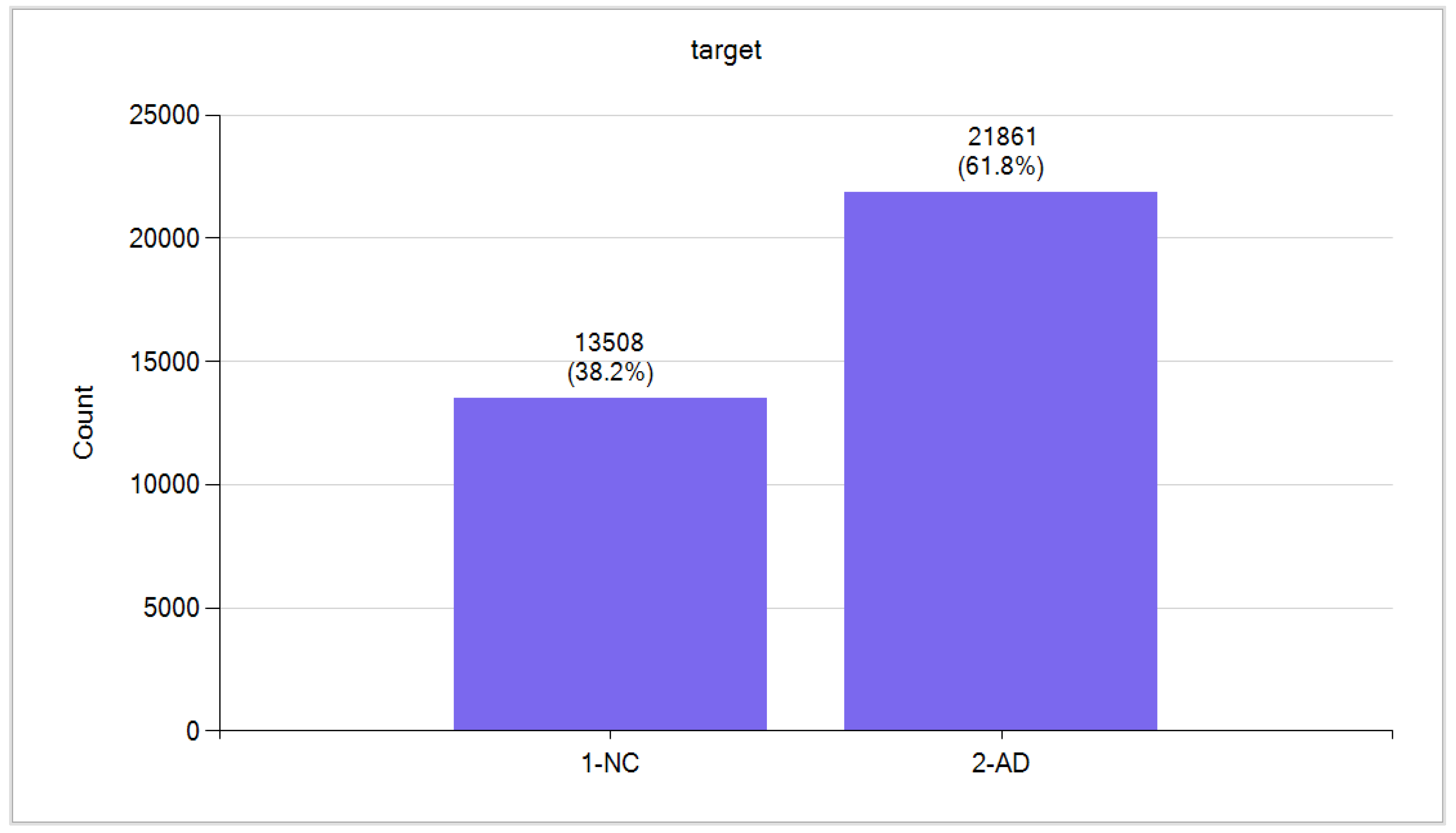
Figure 2.
GSE181279 comprises five samples including three AD patients and two normal controls (“NC”). The y-axis shows the number of cells for each sample.
Figure 2.
GSE181279 comprises five samples including three AD patients and two normal controls (“NC”). The y-axis shows the number of cells for each sample.
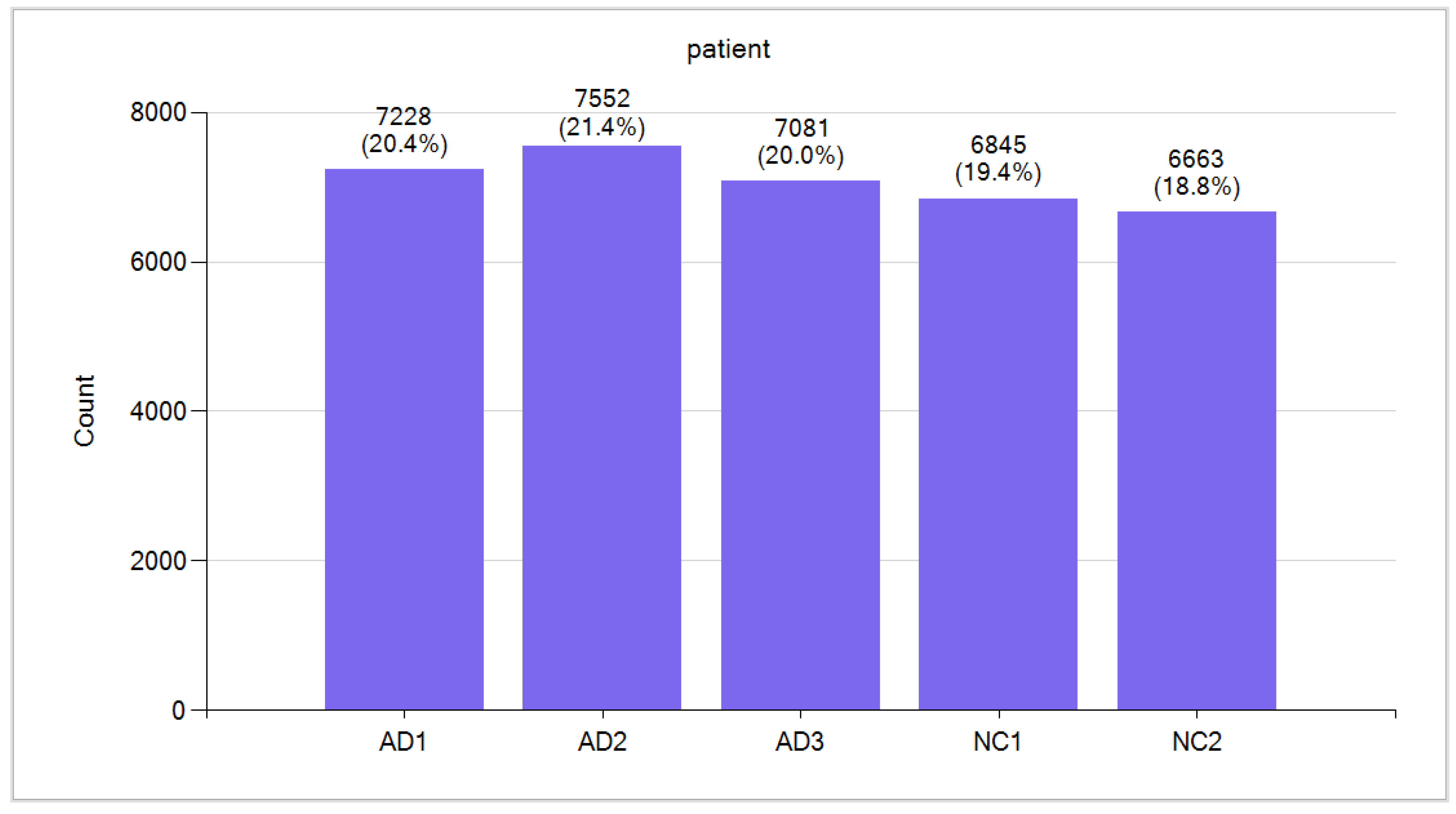
Figure 3.
BTG1 boxplots for the two groups of normal controls (“NC”) and Alzheimer’s disease (“AD”).
Figure 3.
BTG1 boxplots for the two groups of normal controls (“NC”) and Alzheimer’s disease (“AD”).
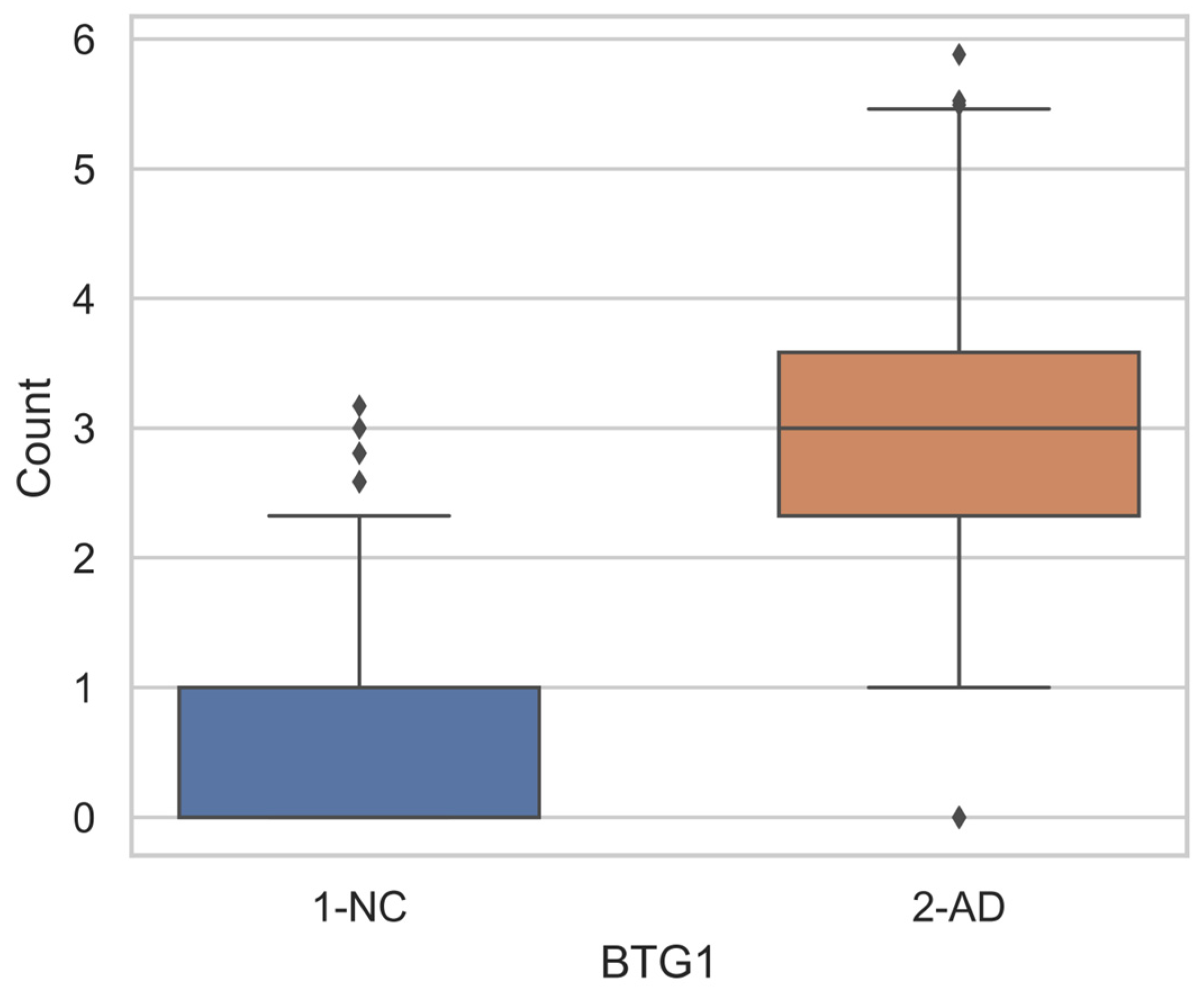
Figure 4.
DUSP1 boxplots for the two groups of normal controls (“NC”) and Alzheimer’s disease (“AD”).
Figure 4.
DUSP1 boxplots for the two groups of normal controls (“NC”) and Alzheimer’s disease (“AD”).
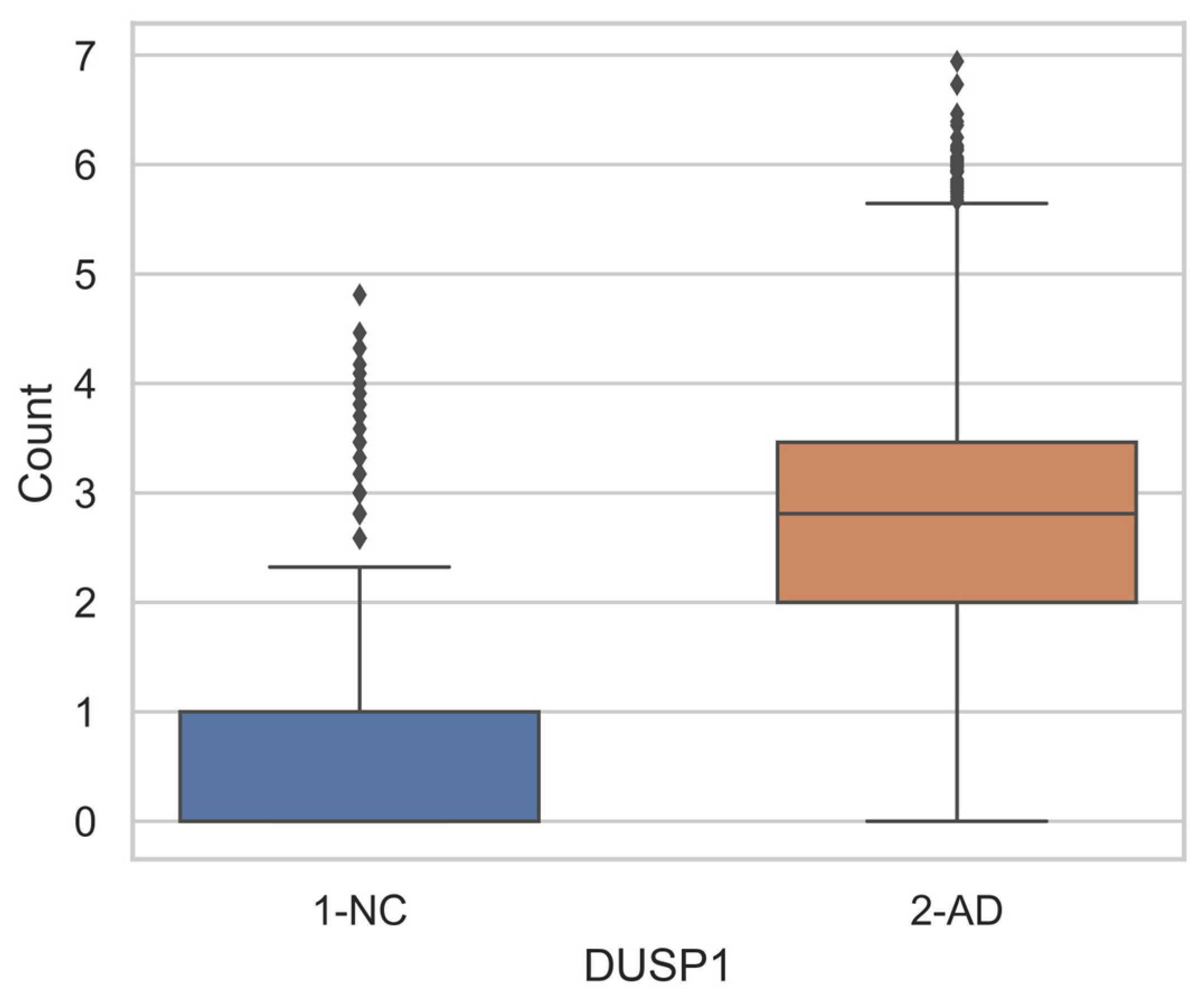

Table 1.
Top 10 downregulated and upregulated genes through single-cell gene expression analysis.
| Downregulated | Upregulated | ||
| Gene Symbol | Gene Name | Gene Symbol | Gene Name |
| GSTM1 | Glutathione S-Transferase Mu 1 | BTG1 | BTG Anti-Proliferation Factor 1 |
| MYADM | Myeloid Associated Diff. Marker | DUSP1 | Dual Specificity Phosphatase 1 |
| MTRNR2L2 | MT-RNR2 Like 2 (Pseudogene) | PNRC1 | Proline Rich Nuclear Receptor Coactivator 1 |
| TYROBP | Transmembrane Immune Signaling Adaptor TYROBP | ZFP36L2 | ZFP36 Ring Finger Protein Like 2 |
| KLF6 | KLF Transcription Factor 6 | RPS2 | Ribosomal Protein S2 |
| CFAP20 | Cilia And Flagella Associated Protein | YBX1 | Y-Box Binding Protein 1 |
| YPEL5 | Yippee Like 5 | ATP5F1D | ATP Synthase F1 Subunit Delta |
| TSC22D3 | TSC22 Domain Family Member 3 | NOP53 | NOP53 Ribosome Biogenesis Factor |
| SBDS | SBDS Ribosome Maturation Factor | HLA-C | Major Histocompatibility Complex, Class I, C |
| ARHGEF10 | Rho Guanine Nucleotide Exchange Factor 10 | TRIR | Telomerase RNA Component Interacting RNase |
Table 2.
Top 10 downregulated and upregulated pathways through single-cell gene enrichment analysis.
Table 2.
Top 10 downregulated and upregulated pathways through single-cell gene enrichment analysis.
| Downregulated | Upregulated |
| Biosynthesis of DHA-derived sulfido conjugates | FOXO-mediated transcription of cell cycle genes |
| Biosynthesis of maresin conjugates in tissue regeneration (MCTR) | RMTs methylate histone arginines |
| Reversible hydration of carbon dioxide | RAF-independent MAPK1/3 activation |
| Inhibition of Signaling by Overexpressed EGFR | FOXO-mediated transcription |
| Signaling by Overexpressed Wild-Type EGFR in Cancer | PTK6 Regulates Proteins Involved in RNA Processing |
| Activation, myristolyation of BID and translocation to mitochondria | Noncanonical activation of NOTCH3 |
| Defective B3GALTL causes Peters-plus syndrome (PpS) | Amplification of signal from the kinetochores |
| O-glycosylation of TSR domain-containing proteins | Amplification of signal from unattached kinetochores via a MAD2 |
| Activation of NOXA and translocation to mitochondria | Mitotic Spindle Checkpoint |
| Assembly of Viral Components at the Budding Site | EML4 and NUDC in mitotic spindle formation |
Table 3.
Top 10 downregulated and upregulated GO terms through single-cell gene enrichment analysis.
Table 3.
Top 10 downregulated and upregulated GO terms through single-cell gene enrichment analysis.
| Downregulated | Upregulated |
| (BP) negative regulation of protein kinase C signaling | (BP) positive regulation of endothelial cell differentiation |
| (BP) cell-cell junction maintenance | (BP) positive regulation of fibroblast apoptotic process |
| (BP) membrane raft organization | (BP) positive regulation of myoblast differentiation |
| (BP) nitrobenzene metabolic process | (BP) positive regulation of ubiquitin-protein transferase activity |
| (BP) positive regulation of feeding behavior | (BP) negative regulation of mitotic cell cycle |
| (BP) negative regulation of activation-induced cell death of T cells | (BP) definitive hemopoiesis |
| (BP) positive regulation of translational initiation in response to stress | (BP) somatic stem cell division |
| (BP) positive regulation of endoplasmic reticulum stress-induced eIF2 alpha dephosphorylation | (BP) negative regulation of mitotic cell cycle phase transition |
| (BP) positive regulation of peptidyl-serine dephosphorylation | (BP) negative regulation of stem cell differentiation |
| (BP) cellular detoxification of nitrogen compound | (BP) negative regulation of fat cell differentiation |
Disclaimer/Publisher’s Note: The statements, opinions and data contained in all publications are solely those of the individual author(s) and contributor(s) and not of MDPI and/or the editor(s). MDPI and/or the editor(s) disclaim responsibility for any injury to people or property resulting from any ideas, methods, instructions or products referred to in the content. |
© 2026 by the authors. Licensee MDPI, Basel, Switzerland. This article is an open access article distributed under the terms and conditions of the Creative Commons Attribution (CC BY) license (http://creativecommons.org/licenses/by/4.0/).
Copyright: This open access article is published under a Creative Commons CC BY 4.0 license, which permit the free download, distribution, and reuse, provided that the author and preprint are cited in any reuse.


