
Submitted:
22 April 2026
Posted:
23 April 2026
You are already at the latest version
Abstract
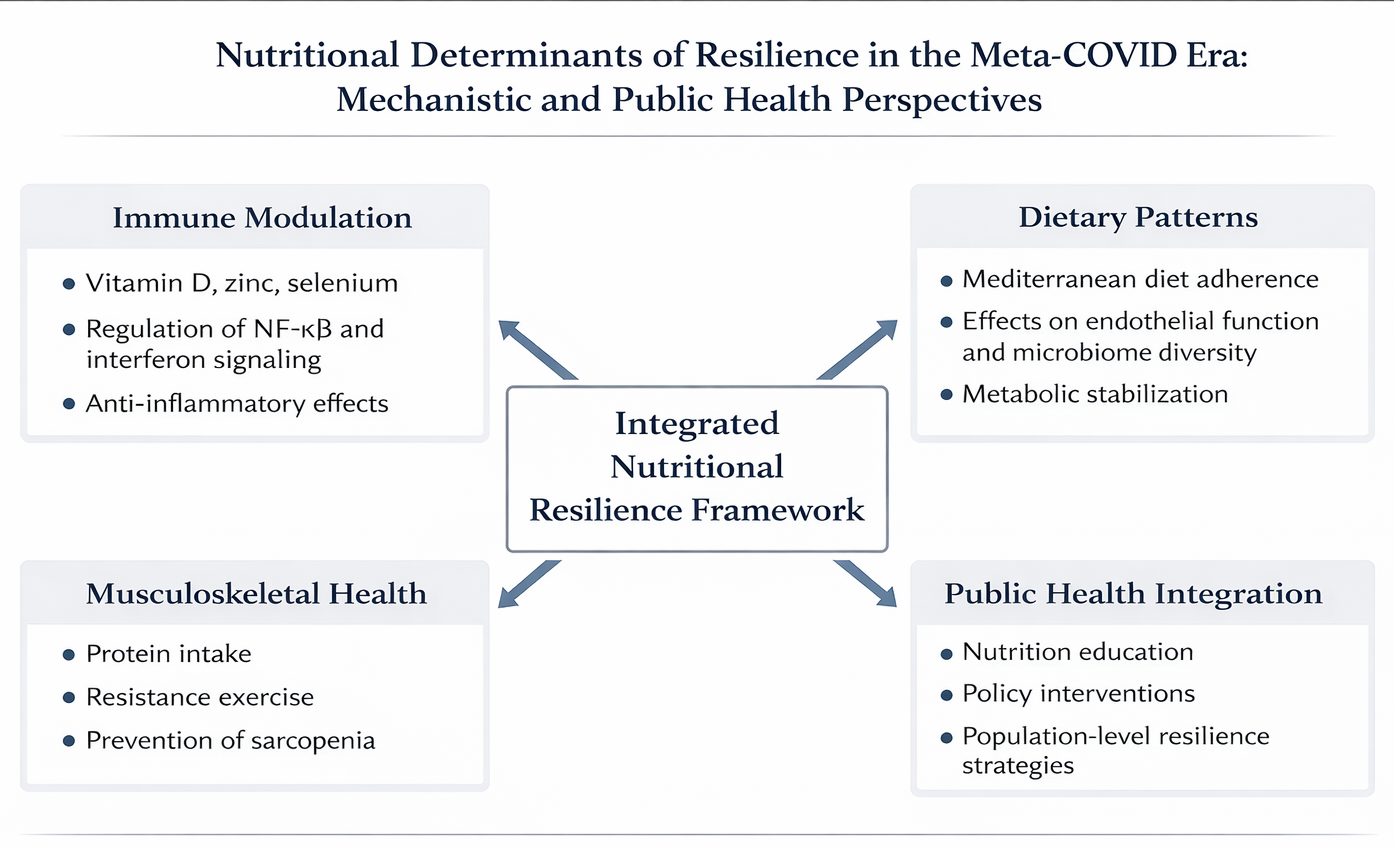
The COVID-19 pandemic highlighted the interplay between metabolic health and infectious disease outcomes, with conditions such as obesity, insulin resistance, micronutrient deficiencies, endothelial dysfunction, and sarcopenia associated with increased risk of severe illness and mortality. This study synthesizes evidence from immunology, metabolic medicine, clinical nutrition, microbiome research, and public health to examine the role of nutrition in supporting resilience in the post-COVID (“Meta-COVID”) context. Mechanistic pathways, including inflammatory signaling (e.g., NF-κB, NLRP3), immune regulation, mitochondrial function, and gut-lung axis interactions, are reviewed to illustrate how nutritional status may influence host defense. Key nutrients, including vitamin D, zinc, selenium, vitamin C, and omega-3 fatty acids, are discussed for their roles in modulating immune and inflammatory responses. Dietary patterns such as the Mediterranean diet are associated with improved metabolic health, reduced inflammation, and enhanced microbiome diversity. In addition, adequate protein intake and resistance exercise are considered important for mitigating sarcopenia and supporting immune function. The findings suggest that integrating nutritional strategies into clinical and public health frameworks may contribute to improved resilience against infectious and chronic diseases.
Keywords:
COVID-19
; inflammation
; Mediterranean diet
; immune modulation
; sarcopenia
; metabolic syndrome
; public health nutrition
Copyright: This open access article is published under a Creative Commons CC BY 4.0 license, which permit the free download, distribution, and reuse, provided that the author and preprint are cited in any reuse.


