
Submitted:
21 April 2026
Posted:
23 April 2026
You are already at the latest version
Abstract
The article examines, on the basis of a comparative study, the place and scientific significance of Cyclopean structures located within the territory of the Nakhchivan Autonomous Republic in the context of Azerbaijani archaeology. The research focuses on the distribution area, chronology, and architectural features of these monuments in Nakhchivan. It has been determined that the fortress-type Cyclopean structures of Nakhchivan are monuments of great scientific and historical importance in Azerbaijani archaeology. These constructions reflect the formation and development of defensive architecture in the region and make it possible to study their chronology and evolutionary processes. The study demonstrates that these fortresses, built of large unworked stones without the use of mortar, reveal the military–strategic thinking of ancient tribes, their level of social organization, and the importance they attached to the protection of residential spaces. Their wide distribution across the territory of Nakhchivan proves that the region was located on important trade and migration routes and functioned as an active political and economic center. These monuments serve as invaluable sources for the study of early urbanization processes, cultural interactions, and stages of regional development within the territory of Azerbaijan.
Keywords: Nakhchivan, Cyclopean structures, fortress, defensive fortification, architectural structure.
Keywords:
Nakhchivan
; cyclopean structures
; fortress
; defensive fortification
; architectural structure
Introduction
Nakhchivan, one of the ancient centers of civilization, is rich in historical monuments. These monuments constitute invaluable sources for studying both the pre-literate period and the era following the emergence of writing. The scientific results obtained from the study of these monuments are of exceptional importance not only for Azerbaijani archaeology but also for world archaeology as a whole. Among the archaeological monuments recorded in the Nakhchivan Autonomous Republic, a distinct group consists of fortress-type settlements surrounded by defensive walls. These sites stand out among the cyclopean constructions of the South Caucasus due to their construction techniques and carry significant scientific value for a deeper understanding of the ancient history of Azerbaijan. Although various sources provide scattered information on this issue, it has not previously been examined in a comprehensive and systematic manner. For this reason, the monuments located within the territory of the Nakhchivan Autonomous Republic have been systematically studied by us. During the research, comparative analysis, as well as analytical and synthetic methods, were employed.
Information in the Sources on the Function of Fortress-Type Settlements
The sources provide diverse and sometimes conflicting information regarding the emergence and functions of fortresses. Among the researchers, I.M. Jafarzade (Djafarzade, 1938, p. 15) and J.A.Khalilov (Khalilov, 1959, p. 67) date their origin to the 2nd millennium BC, while V.H. Aliyev and A.Q.Seyidov attribute them to the end of the 2nd millennium BC and the beginning of the 1st millennium BC (Aliyev, 1975, p. 22; Seyidov, 2003, p. 196). In contrast, I.I. Meshaninov assigns them to the 1st millennium BC (Meşhaninov, 1944, pp. 65). Fortress-type settlements have been examined by classifying them according to construction techniques into two (Kerimov, 1998, p. 120), three (Meşşaninov, 1932, pp. 145; Aliyev, 1985, pp. 56), four (Djafarzade, 1938, p. 37–40), or six (Abilova, 1953, p. 12) groups, with the aim of determining their functional purposes.
Based on the observation that the majority of such settlements were established along major trade routes, I.I.Meshaninov concluded that fortress-type settlements—cyclopean constructions—were built primarily to protect trade routes (Meşşaninov, 1944, pp. 55). V.I. Karimov proposed that these ancient defensive structures, namely fortress-type settlements and cyclopean constructions, were mainly used as permanent residential sites. Some of them were constructed with two rows of large stones, while others consisted of a single row. During periods of intertribal military confrontation, these cyclopean structures also functioned as defensive refuges (Kerimov, 1998, pp. 175). In his study of cyclopean constructions, T.R.Aliyev noted that they were used not only as shelters but also as habitation sites and for keeping livestock (Aliyev, 1985, pp. 55–57). R.B. Bagirov included a number of these settlements among the fortress-cities of Nakhchivan and emphasized their scientific importance for understanding the emergence and evolution of early class society, tribal confederations, and state institutions in Azerbaijan (Aliyev, Bagirov, 2012, p. 25; Bagirov, 2005, p. 5).
Fortress-type monuments—Cyclopean constructions although differing from one another in their architectural and structural characteristics as well as in the natural geographical settings in which they are located, are identical in terms of their function. That is, both communities practicing seasonal mobility and those leading a sedentary way of life made use of such settlements. As in all regions of Azerbaijan, the fortress-type Cyclopean structures in Nakhchivan also functioned as habitation sites. Their specific purposes varied according to the lifestyles of the populations that used them. A group of these monuments served defensive purposes and were used primarily as refuges; such sites were generally small, fortress-like constructions. Another group, however, covered extensive areas and thus constituted true fortresses, where communities resided permanently rather than on a seasonal basis (Khalilov, 2014, pp.120-130)
Distribution Area and Chronology of the Fortresses
The fortresses located within the territory of the Nakhchivan Autonomous Republic date to the Middle Bronze Age, Late Bronze Age, Iron Age, Antiquity, and the Medieval period. Although scholars differ in their interpretations of the purposes, architectural characteristics, and construction techniques of fortress-type settlements—cyclopean constructions—there are logical connections among certain aspects of their arguments. As in other regions of Azerbaijan, cyclopean-type settlements in Nakhchivan were predominantly established in mountainous and foothill areas and were constructed in accordance with the natural relief, taking rectangular, trapezoidal, oval, and other forms. In terms of construction techniques, they differ from sedentary and seasonal settlements. These settlements were built of large stones, laid dry without binding mortar, and adapted to the local topography. With regard to their external appearance and construction techniques, these settlements exhibit both similarities and differences. Such habitation sites are distributed across both lowland and mountainous areas. The lowland zone of the autonomous republic primarily follows the Araz river basin, extending from the northwest to the southeast. In the southeast, it is bounded by the Araz River and includes the Araz plain, while in the north it encompasses the sections where the Arpachay, Nakhchivanchay, and Gilanchay valleys converge with the Araz. This zone includes the plains of Sadarak, Sharur, Boyukduz, Julfa, Ordubad, and the inclined plain of Nakhchivan. The mountainous zones are distinguished as middle- and high-mountain belts. The middle-mountain belt occupies the northwestern, central, and southeastern parts of the autonomous republic. The high-mountain belt forms a relatively narrow strip extending along the Zangezur range. In the mountainous belt, the relief rises from 1200–1300 meters to 2000–2300 meters above sea level. Subalpine meadows form a narrow belt at elevations of 2300–2600 meters, extending from the Kukuçay basin to the Alinjaçay basin. Alpine meadows are mainly distributed across the Salvarti, Agdaban, Kukudag, Agdag, and Gapijig mountains (Babayev, 1999, p. 43–44).
Distribution Area and Chronology of Fortresses in Nakhchivan
Among the Bronze and Iron Age fortresses located within the territory of the Nakhchivan Autonomous Republic are Vaykhir Fortress (Babek District), Gazanchigala (Julfa District), Giz Galasi (Maiden’s Fortress), Garasu Fortress, Oglangala (Sharur District), Garabaghlar Govurgala, I Bazekli Fortress, II Bazekli Fortress (Kangarli District), Chalkhangala (Babek District), Sumbatan (Ordubad District), and a number of other sites (Table I). At several of these monuments—such as Oglangala, Vaykhir Fortress, Giz Galasi, Chalkhangala, Kharaba Gilan Fortress, Delma Fortress, and Sumbatan Fortress—archaeological excavations have been conducted, while many others have been investigated through reconnaissance surveys. As a result of these studies, important scientific conclusions concerning the history of Nakhchivan have been obtained (Khalilov, 2013, p. 32-43; Khalilov, 2014, pp.120-130).
Vaykhir Fortress (Figure 1). t is located north of II Kultepe, near Vaykhyr village, on the left bank of the Nakhchivanchay River, above the Qizilboghaz pass. Its area exceeds 2 hectares. The surrounding area, rich in vegetation, is suitable for the development of animal husbandry. The monument has a hexagonal layout (Figure 1). Although it is naturally protected on all sides by deep ravines and steep rocks, it was further reinforced with additional defensive structures. The western side of the settlement is more rugged and steep compared to other areas, so defensive walls were not constructed on this side. Although most of the defensive fortifications (castle walls) within the settlement have been destroyed, some sections remain relatively intact (width 5 m, height 2–2.5 m).
The defensive walls (southern wall length 150 m, northern wall length 140 m) were built in a zigzag pattern using large, unworked stones according to the terrain, and were completed with rectangular towers and angled protrusions. The entrance to the fortress was on the eastern side and was reinforced with towers of defensive importance on both sides. Along the northern wall, three castle towers were constructed, two of which have the same design, while the third differs slightly in construction. Houses within the settlement (9 X5 m) had rectangular plans. No large-scale archaeological excavations have been conducted at the monument. It has been studied through reconnaissance surveys. Architect V.I.Karimov, when examining the settlement in terms of construction techniques, noted that the walls (4–5 m wide) were made of large unworked stones without any binding mortar (Karimov, 1985, p. 175). D.A. Akhundov (Akhundov, 1986, p. 192) and V.H.Aliyev (Aliyev, 1991, p. 55) studied the construction technique of the monument and suggested that the fortress dates to the late 2nd millennium BCE – early 1st millennium BCE. In terms of construction technique, the settlement is similar to Chalxanqala and Oglanqala. No large-scale archaeological excavations have been carried out; the study is based solely on surface materials. The surface archaeological materials obtained from the site include fragments of gray and black pottery and bronze ornaments dating to the Late Bronze – Early Iron Age (Khalilov, 2013, p. 42; Khalilov, 2014, pp.125).
Garabaghlar Govurgala. Garabaghlar Govurgala is situated about 3 km northeast of Garabaghlar village in the Kangarli District, at the foothills of the Lesser Caucasus Mountains, near the Damlama settlement. The site covers an area of nearly 2 hectares and is surrounded by steep cliffs to the north, south, and west. The defensive walls were built of large unworked stones without the use of binding mortar. The fortress walls, approximately 200 m long and 3–3.5 m wide, had an entrance gate on the southern side measuring about 3.2 m in width. No extensive archaeological excavations have been conducted at the site; it has been investigated through reconnaissance surveys. During these studies, gray and black ceramic fragments dating to the end of the 2nd millennium BC and the beginning of the 1st millennium BC were collected (Aliyev, Seyidov, 1973, pp. 8–9; Khalilov, 2013, p. 34).
I Bazekli Fortress. I Bazekli Fortress is located north of the Bazekli kahriz in the Kangarli District, on a high, elongated hill in a strategically advantageous position along the road leading to the settlement. The site covers an area of 1,125 m². The monument was recorded by V. B. Bakhshaliyev and studied through reconnaissance investigations (Bakhshaliyev, 2008, p. 230). At the center of the settlement is the citadel (Naringala), which has a triangular layout. The site is surrounded on all sides by walls built of large stone blocks, some of which are preserved to a height of about 1 m. The walls were constructed with large stones along the sides, while the interior was filled with smaller stone fragments. The southern side of the fortress was reinforced with a double wall. The layout and construction technique of the monument are characteristic of Early Iron Age sites (Khalilov, 2013, p. 40; Khalilov, 2014, pp.129).
Giz Galasi. The Giz Galasi is located southeast of Ashagi Yayji village in the Sharur District, at the point where the Uzunqaya mountain range descends toward the Arpachay River. The site is bordered by the Arpachay valley to the east, plains to the south, and mountains rich in vegetation to the north and west. Consequently, the area offered very favorable conditions for the development of animal husbandry. Most of the architectural remains at the settlement are destroyed. Relatively well-preserved wall remains are found on the southwestern side of the site. Rectangular depressions covered with grass mark the locations of collapsed residential buildings. In terms of construction technique, the defensive walls resemble those of Oglangala, Vaykhir Fortress, and other similar monuments. As with other fortresses, they were built of large unworked stones adapted to the natural relief. No large-scale archaeological excavations have been carried out at the site; it has been studied through reconnaissance research. Investigations revealed that the cultural layer is poorly preserved. Ceramic fragments, stone tools, and other surface archaeological materials were collected (Khalilov, 2013, p. 36; Khalilov, 2014, pp.122).
Garasu Fortress. Garasu Fortress is located on a high hill north of the Gumushlu settlement. The area consists of several terraces enclosed by walls built of roughly worked large stones. The fortress walls on the upper terrace are divided into two sections, and the citadel is situated at the center of the settlement. No large-scale archaeological investigations have been conducted at the site; it has been studied based on surface archaeological materials. It has been established that some of the ceramic fragments recovered from the site date to the Early Iron Age.
Chalkhangala Fortress (Figure 2). The Chalkhangala Fortress. settlement is located north of Payiz village, west of the Jahri River, approximately 22 km northeast of the city of Nakhchivan. Its strategic geographical position made it well suited for controlling the valleys of the Nakhchivanchay and Jahri rivers. The settlement is surrounded on all sides by rocky terrain and areas rich in vegetation, providing favorable conditions for the development of animal husbandry. Within the fortress, stone reservoirs were constructed for collecting rainwater, similar to those at Alinja Fortress. According to researchers, there is also a cave that functioned as an underground passage (Aliyev, 1975, p. 16). This cave served both as an underground shelter and as a secret route leading to the fortress. During intertribal military conflicts, the inhabitants of Chalkhangala used this passage to bring water and food supplies into the fortress. Although precise information about the exact location of this cave—known locally as “Valibaba”—within the settlement is still lacking, a considerable amount of ethnographic material related to it has been collected (Kadirzadeh, 2007, p. 20–21). Archaeological investigations at the settlement have shown that the walls were constructed in a zigzag pattern adapted to the natural relief. At intervals of every 10–15 m, the walls form angular outward projections. Since part of the site is enclosed by steep rocky cliffs and thus enjoys natural protection, no fortress walls were built on that side, whereas strong defensive walls were constructed on the remaining sides (Figure 3). In terms of construction technique, the remains of the defensive walls discovered at the settlement show close similarities to those of Oglangala, Vaykhir Fortress, and Gazanchi Fortress. The main entrance to the fortress was from the southeast, from the right bank of the Jahri River. In the preserved sections of the fortress walls running in an east–west direction, their length reaches about 450 m, with a height of approximately 2.5 m and a width of around 2.7 m. The gates located on the southeastern and southwestern sides measure 2.7–3 m in width and 1–1.2 m in thickness. In the construction of these walls, large rock blocks—measuring 1.6–2.55 m in length and 0.45–0.80 m in thickness and requiring several people to lift—were used. Although the remains of residential buildings within the fortress vary in size, all were constructed on rectangular plans. The monument was first recorded in 1969 by O. H. Habibullayev and V. H. Aliyev and studied through reconnaissance investigations (Aliyev, 1970: 74–75). V. H. Aliyev included the fortress among the cyclopean constructions of Azerbaijan and, based on the collected gray-colored ceramics, proposed a construction date for the site. He dated the settlement to the first half of the 2nd millennium BC, approximately to the 17th century BC (Aliyev, 1991, p. 52–54; Abibullayev, 1982, p. 185). As a result of archaeological research conducted by O. Belli and .Sevin, the construction date of the fortress was revised to the middle of the 2nd millennium BC (Belli, Sevin, 1998, p. 24). During these investigations, various ceramic samples and stone tools were collected, and it was determined that only a very thin cultural layer has been preserved at the site. Architectural remains dating to the Late Bronze–Early Iron Age were identified at the settlement not only by V.H.Aliyev but also by V. I. Kerimov. Kerimov noted that the citadel (Naringala) at the site had a rectangular plan and was reinforced with risalits (Kerimov, 1998, p. 55). In 2001, archaeological investigations conducted by V.B.Bakhshaliyev documented the precise dimensions of the defensive walls and yielded ceramic materials dating to the Early Iron Age (Bakhshaliyev, 2004, p. 136). Although large-scale excavations have not been carried out at the site, the rich vegetation of the surrounding areas and the weak development of cultural stratification indicate that the inhabitants of the settlement were primarily engaged in pastoralism and practiced a semi-nomadic way of life.
Jannat Qayasi Fortress. The Jannat Qayasi settlement is located on a hill near the site known as “Agh Zirat,” east of Tanenem village in the Sharur District. It covers an area of nearly 6 hectares and is surrounded on all sides by mountains. As these mountains are rich in vegetation, the area provided favorable conditions for the development of animal husbandry. Most of the architectural remains at the settlement are destroyed; stone accumulations and grass-covered depressions remain in their place. Based on the preserved structural remains, it is clear that the houses at the settlement were built on rectangular plans. The site has been studied through reconnaissance investigations. These studies revealed that only a very thin cultural layer (about 50 cm) has been preserved. Gray and pink ceramic fragments, quern stones, and other surface materials were collected (Khalilov, 2013, p. 35; Khalilov, 2014, pp.124).
Gazanchi Fortress (Figure 3). Gazanchi Fortress is located in the territory of Gazanchi village in the Julfa District, on the right bank of the Alinja River. The monument is surrounded on all sides by steep ravines and covers an area of approximately 5–6 hectares. The settlement occupies a favorable strategic geographical position, and extensive lands suitable for agriculture and animal husbandry are located in its vicinity. The settlement consisted of two main parts: the citadel (Naringala) built on the mountain summit, and the defensive structures located along the bank of the Alinja River. Although much of the defensive walls have been destroyed, some sections are preserved to a height of 1–2 m. Since the settlement was naturally less protected from the north and northwest, the walls in these areas were constructed with greater thickness (2.5–3 m). The first part of the fortress was separated from the second by double walls constructed along a ravine. Unlike the defensive walls, clay was used as a binding material in the masonry of the citadel, whereas the defensive walls were built of large rock blocks without any binding mortar (Figure 2). In terms of construction technique, the citadel of the settlement shows close similarities to Vaykhir Fortress. The defensive structures built in the southern and western parts of the site had semi-circular plans and were interconnected by passages. The side and lower courses of the defensive walls were built with relatively large stones, while the interior was filled with medium- and small-sized stones. The stones were skillfully interlocked, which ensured the long-term durability of these walls. Archaeological investigations at the site have been conducted at various times by V.H.Aliyev, V.B.Bakhshaliyev, A.I.Novruzlu, O.Belli, and V.Sevin. During reconnaissance research carried out by V. H.Aliyev, the right-bank part of the settlement was studied and its plan was documented (Aliyev, 1991, p. 56). In 1991, V. B.Bakhshaliyev and A. I. Novruzlu documented the plans of both parts of the site and collected ceramic materials dating to the Middle Bronze Age as well as the Late Bronze–Early Iron Age (Novruzlu, Bakhshaliyev, 1993, p. 35). In 1998–1999, excavations conducted by O. Belli and V. Bakhshaliyev exposed the remains of the citadel and defensive walls located on the left bank of the Alinja River. It was determined that the wall remains dating to the beginning of the 1st millennium BC differ completely in construction technique from those of the Middle Bronze Age. These walls were built of elongated stone blocks with tooth-shaped external projections and show similarities in construction technique to the walls of Oglangala and Chalkhangala (Belli, Bakhshaliyev, 2001, p. 30). Archaeological investigations conducted at various times revealed that only a thin cultural layer (0.5–1.5 m) has been preserved at the site, while numerous material culture remains dating to the Middle Bronze Age and the Late Bronze–Early Iron Age were discovered.
Gulum-Gulum Fortress. The Gulum-Gulum settlement is located on the southwestern slopes of a mountain near Nasirvaz village in the Ordubad District. The site was recorded in 2008 by V. B. Bakhshaliyev and studied through reconnaissance investigations (Bakhshaliyev, 2008, p. 142). Archaeological research revealed the remains of defensive walls dating to the 1st millennium BC (35 m in length and 1.2–1.5 m in thickness), as well as the remains of a residential building. It was determined that the defensive walls of the settlement were constructed of large rock blocks, with the gaps filled by smaller stones.
Qalacıg Fortress. The Qalacıg settlement is located in the Kangarli district, to the north-east of the village of Qarabaglar, on a hill composed of several terraces. The monument covers an area of nearly 30 hectares. The settlement is divided into two parts by the Asni River; at its center lies the citadel (Narinqala), while the surrounding area contains the remains of residential buildings and defensive walls. The architectural remains both within the citadel and in its environs are rectangular and circular in plan. These structures were built without the use of any binding mortar. The main entrance to the settlement was situated on the southern side. The fortress walls constructed around it served defensive purposes during military conflicts and intertribal warfare that took place in the Bronze Age. The inhabitants used these walls as places of refuge and resistance against enemies. The corners where the fortress walls intersect were built in an oval form. As construction material, large unworked boulders and stones were used. The architectural features of the fortress walls are similar to those of Oğlanqala, Çalxanqala, and other comparable monuments. The site was first recorded in the 1970s by V.H. Aliyev and M.M. Seyidov. As a result of investigations carried out between 1970 and 1980, a cultural layer approximately 3 m thick was identified, and the dimensions of the fortress walls were documented. The research established that stones measuring 1.5–3 m in length and 1–2 m in thickness were used in the masonry of the walls. The preserved sections of the walls reach a height of 1.5–2 m (Aliyev, 1991, p. 46; Seyidov, 1985, p. 320–321). The cultural layer of the settlement spans a period from the Middle Bronze Age to the Early Iron Age. At the site, the thickness of the cultural layer dating to the Late Bronze–Early Iron Age varies between 1.5 and 3 m depending on the relief of the terrain. Excavations revealed various stone tools of different forms (grinding stones and polishers, chisels, pestles), ceramic vessels, osteological remains, and other examples of material culture belonging to this period.
Oghlanqala Fortress (Figure 4).. The Oghlanqala settlement is located on a mountain called Garatepe at the northern edge of Oghlanqala village. The Narinqala (inner fortress) is situated at the highest point of the settlement. The area of the Narinqala is about 320 square meters, while the total area of the settlement is approximately 40 hectares. Several rows of defensive walls were built around the Narinqala along the terraces. The fortress walls were strengthened in some places with semicircular structures and in others with recessed and projecting zigzag forms. In the construction of the walls, stones weighing several tons were sometimes used. A large portion of the fortress walls has collapsed, and only the remains of some sections have been preserved. In certain places, the height of the walls reaches up to 3 meters. Inside the fortress walls, there are remains of rectangular buildings adjoining the walls. The walls attached to the fortress walls also served defensive purposes. The settlement was first recorded in 1936 by A. K.Alekberov , who conducted exploratory research at the site and noted the presence of painted pottery and column bases. In 1979–1980, V.H.Aliyev carried out reconnaissance research at Oghlanqala and measured sections of the fortress wall. In 1988–1989, an expedition of the Azerbaijan National Academy of Sciences Nakhchivan Scientific Center, led by V.B.Bakhshaliyev, conducted excavations over an area of 280 square meters at Oghlanqala. During the excavations, four construction layers were identified. The first construction layer dates to the 9th–8th centuries BC, the second to the 8th–7th centuries BC, the third to the 7th–6th centuries BC, and the fourth to the 6th–4th centuries BC. In 2008, new material cultural remains related to the history of Oghlanqala were discovered during joint research conducted by the Nakhchivan Division of the Azerbaijan National Academy of Sciences and University of Georgia under the leadership of V.B. Bakhshaliyev. Particularly noteworthy was the discovery of a cuneiform inscription related to the construction of the fortress-city. Research has shown that the painted pottery widely found among the surface materials belongs to the Iron Age. The conducted investigations indicate that the main period of activity of the Oghlanqala settlement dates to the 9th–4th centuries BC.
Sumbatan Fortress. The Sumbatan settlement is located in the Ordubad district, to the south-west of the village of Sabirkend, on the right bank of the Gilan River. It is surrounded on three sides by high mountains and, on the side facing the Gilan River, by a double defensive wall. The Gilan River flows along its eastern side, while the Yaycı canal runs to the west. The main part of the settlement is situated on a mountain summit and covers an area of approximately 5 hectares. The monument was recorded in 1976 by the Haraba Gilan team of the Nakhchivan Archaeological Expedition. Archaeological excavations conducted in the mid-1980 uncovered the remains of a residential building dating to the beginning of the 1st millennium BC, constructed of unworked rock fragments with a rectangular foundation. Finds from the settlement include grinding stones, mortars and pestles, stone hammers, obsidian blades, and other material culture remains. Archaeological investigations of the site were continued in 2008–2009 and in subsequent years (Ibrahimli, Babayev, Badalov, 2008, p. 113–114). Excavations carried out on the north-eastern slope of Mount Sumbatan revealed the remains of a Cyclopean wall built of massive mountain stones, measuring 23.5 m in length and 3–3.5 m in width. Since the eastern part of the wall faces the mountain slope, it has suffered greater destruction. During archaeological research at the settlement, an ash layer 40–50 cm thick was identified (İbrahimli, 2012, pp. 173-180. Within this ash layer, river pebbles, ceramic fragments, and osteological remains were found. Among the osteological finds, bones belonging to large horned animals predominated .Началo фoрмы
Within the territory of the Nakhchivan Autonomous Republic, numerous fortresses dating to the Antique and Medieval periods have been identified, including Danyeri Fortress, Dana Fortress, Yaycı Fortress, Shahbulaq Fortress, Maiden Fortress (Sharur district), Sadarak Fortress (Sadarak district), Babek Fortress, Bilev Fortress, Garapir Fortress, Kereyil Fortress, Sinagan Fortress, Afghan Fortress, Pilepan Fortress, Haraba Gilan Fortress, Duyulun Fortress (Ordubad district), Shapurqala (Shahbuz district), Delme Fortress, Berdi Fortress, Shujut Fortress (Julfa district), Alinjaqala, Goynuk Fortress, Nahajir Fortress (Julfa district), Girmizidash Fortress, Bash Fortress (Kangarli district), Sum Fortress, Maiden Fortress, Donuz Fortress, and Guyuludag Fortress (Babek district), among others. With the exception of Delme Fortress and Haraba Gilan Fortress large-scale archaeological excavations have not been conducted at these sites; instead, they have been studied primarily through reconnaissance and survey-based investigations.
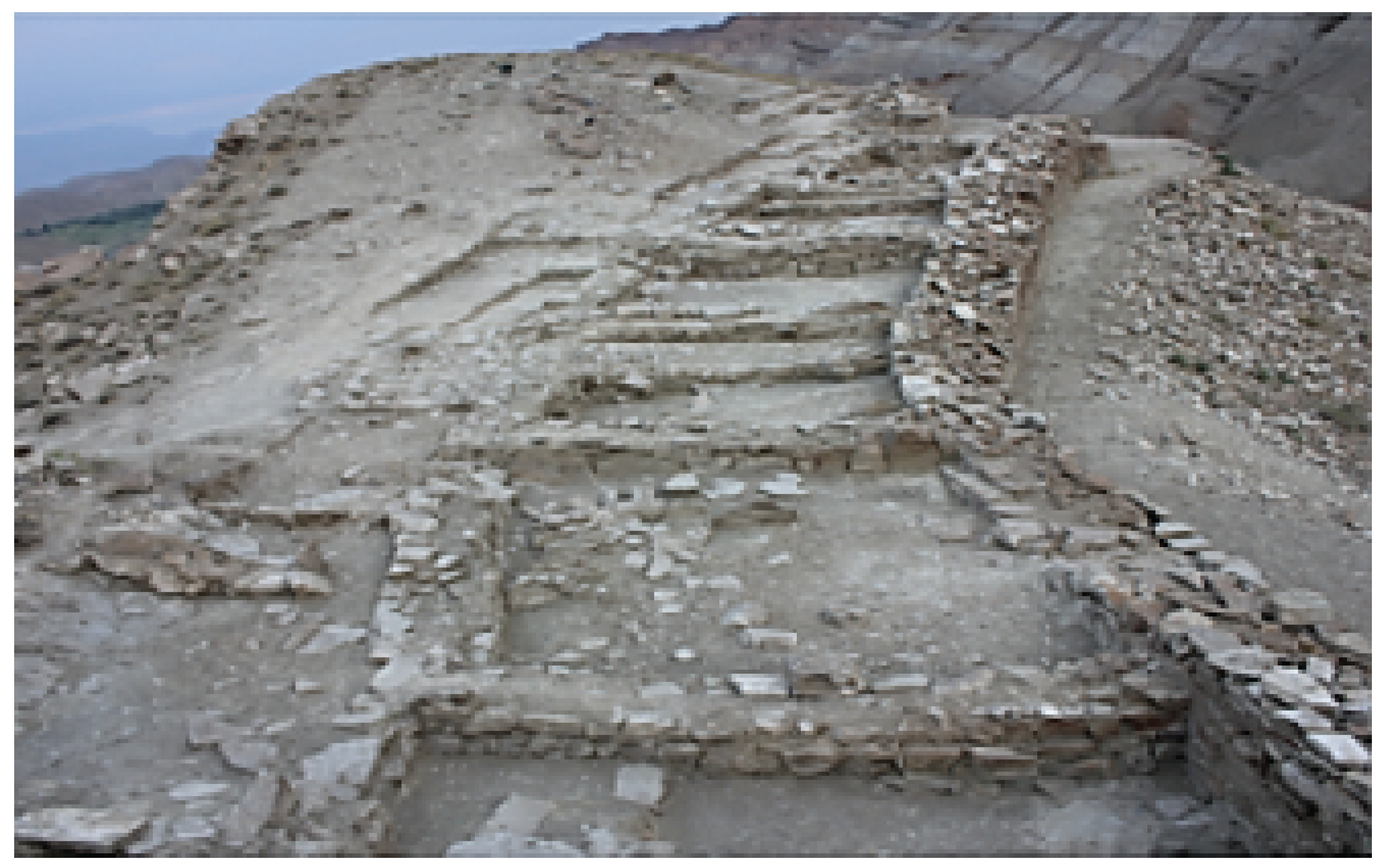
Delma Fortress (Figure 5).. Delma Fortress is located in the Ordubad district, near the village of Sabirkend, on the summit of a mountain, approximately 700–750 meters west of the Delma necropolis. The width of the eastern wall of the fortress reaches up to 2 meters. Archaeological research at the fortress has been almost completely finished. Only conservation work and several protective measures remain to be carried out. Archaeological excavations at the fortress were conducted between 2012 and 2015 under the leadership of researcher B. I. Ibrahimli. During the investigations, the fortress walls and the structures within the site were fully uncovered; their plans were drawn and measurements were taken. Ceramic vessels, ornaments, and other archaeological materials discovered at the site were inventoried, and their graphic documentation was prepared. During the 2015 excavation season, two kilns located 30 meters below the western wall of the fortress, at the foot of the mountain on which the fortress stands, were investigated. Each kiln covers an area of more than 100 square meters. Research has shown that the lime used in the construction of the monumental mausoleums, public buildings, and other prominent structures built in Kharaba Gilan during the 9th–12th centuries was produced in these kilns. During the excavations carried out at the site, lime remains were also discovered in rooms No. 3, 4, and 5 of the fortress. This indicates that the fortress was also used as a storage facility for a certain period during the medieval era. Archaeological excavations at the site revealed numerous artifacts belonging not only to the late 2nd millennium BC – early 1st millennium BC, but also to the medieval period. Based on the copper coin minted in the name of the local governor of the Abbasid Caliphs, a spindle whorl bearing the tribal tamga of the Salur tribe, the architectural features of the rooms, and other evidence, it has been determined that the fortress was reused during the 10th–12th centuries.
Gilan Fortress (Figure 6). Gilan Fortress is located in the city of Kharaba Gilan. The remains of the fortress walls, with their distinctive appearance, create a unique atmosphere within the large urban ruins. The eastern defensive walls were constructed at some distance from the residential quarters of the city. Different sections of the eastern walls vary in thickness depending on the terrain in which they were built. For example, the thickness of the wall that closes the deepest part of a ravine and functioned as a dam for a water reservoir reaches 15.4 meters. In general, the minimum thickness of the walls is close to 2 meters. Of the six towers along the eastern wall, one is hexagonal, while the remaining five are circular in shape. Their foundations were built of stone, while the upper parts were constructed of mudbrick. The ruins of the towers rise to a height of nearly 8 meters. Seven towers of the fortress have survived to the present day. Of these, four are rectangular and three are circular in form. During the construction of the fortress walls, thin rectangular slab stones, measuring 0.3–0.4 meters in width, were used. In modern times, the materials from the collapsed sections of the walls have accumulated around the fortress both inside and outside the walls, forming a significant part of the cultural deposits within the city area. The fortress dates to the 12th–14th centuries.
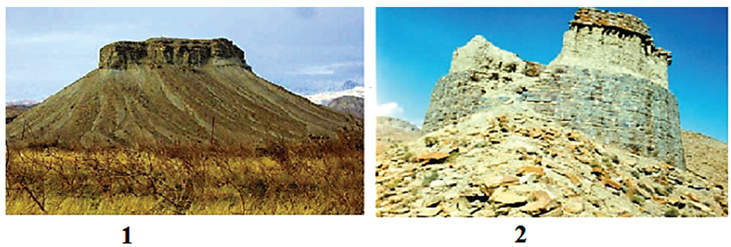
The palace remains, column bases, and a fragment of a storage jar bearing cuneiform signs discovered at Oghlanqala have made it possible to study the ancient and rich history of Nakhchivan in greater depth. As a result of the research conducted, it has been determined that this monument served as the center of a small polity encompassing the Sharur Plain. This city maintained trade relations with Urartu as well as with communities in Iran and Georgia (Bakhshaliyev, 2012, pp. 273). Among the archaeological materials obtained from the Antique and Medieval fortresses of Nakhchivan, items of particular scientific significance include 10th–11th century copper coins from Delme Fortress, a ram’s-head finial bearing the tamga of the Salur tribe, and glass flasks decorated with relief appliqué ornaments (İbrahimli, et al., 2015, pp. 76–77), copper coins dating to the Seljuk and Ilkhanid periods found at Haraba Gilan (İbrahimli, 2015,, pp. 32–33); and a religious–administrative architectural complex identified at Sumbatan (İbrahimli, 2012, pp. 177), among others. The discovery of painted vessels alongside plain wares among the materials dating to the Antique period has demonstrated that the “Painted Pottery Culture” continued in Nakhchivan up to this time. The production technology of glazed ceramic wares uncovered at Medieval fortresses encompassed not only all the technological processes necessary for the manufacture of unglazed pottery, but also a number of additional stages, such as the preparation of slip (engobe), glaze, and pigments, as well as the application of decoration using appropriate techniques. Vessels belonging to each group display variations in both their technical characteristics and artistic treatment. Glazing was applied primarily to tableware. Open forms (bowls, plates, saltcellars, etc.) were generally glazed on the interior, while vessels whose interiors were not visible (cups, lamps, etc.) were glazed on the exterior. Some large vessels with wide mouths were glazed on both sides. The main body of artistic glazed ceramics consisted of bowls and plates. Many of the technical methods and decorative motifs—geometric, vegetal, and zoomorphic—used in the production and artistic treatment of glazed wares were common throughout the Middle and Near East, as well as the South Caucasus, during this period. The wide variety of both glazed (engobed, faience, etc.) and unglazed vessels is associated with their use for different purposes. Although local potters drew upon broader Eastern ceramic traditions, they also preserved features characteristic of the Nakhchivan ceramic school. Analogues of both glazed and unglazed pottery have been found in considerable quantities at other contemporary sites across Azerbaijan.
Conclusion
The comparative study conducted ultimately allows us to conclude that the fortresses of Nakhchivan occupy a special place in Azerbaijani archaeology, both in terms of chronological depth and their strategic–cultural functions. They stand out in Azerbaijani archaeology for their chronological continuity, strategic roles, and cultural complexity, representing one of the main archaeological foundations for the history of statehood and urban development. These fortresses were not merely military-defensive structures; they also serve as archaeological indicators of traditions of governance, settlement culture, and regional political processes. In Nakhchivan, many fortresses belong to the fortress-city type, incorporating not only fortifications but also elements of shahristan, narinkala, and rabad (Xaraba Gilan, Oghlanqala). They provide an archaeological perspective for tracing the formation of early urban culture, the spatial organization of state administration, and social stratification. Their scientific significance and relevance to contemporary archaeology lie in the fact that these sites serve as a foundational basis for developing the typology of fortress-type settlements in Azerbaijan. They contribute to the formation of a regional archaeological school and offer rich material for multidisciplinary research, including archaeology, history, architecture, and topography. Moreover, they enable a deeper understanding of the development of defensive architecture within the Turkic–Caucasian cultural area.
References
- Abibullaev, O.A. The Eneolithic and Bronze Period in the Territory of the Nakhchivan ASSR; Elm: Baku, 1982; p. 314 p. [Google Scholar]
- Abilova, G.A. Megalithic Monuments of the Transcaucasus. Author’s Abstract for Candidate of Historical Sciences Dissertation; Baku, 1953; p. 23 p. [Google Scholar]
- Aliyev, V.H. The Ancient Fortress of Chalxanqala, Archaeological Discoveries of 1969; Nauka: Moscow, 1970; pp. 74–75. [Google Scholar]
- Aliyev, V.H.; Seidov, M.M. Monuments of Karabaghlar of the Bronze and Early Iron Age. In Abstracts of the All-Union Archaeological Conference; Elm: Baku, 1973; pp. 8–9. [Google Scholar]
- Aliyev, V. H. the Footsteps of History; Ganjlik Publishing House: Baku, 1975; p. 77 p. [Google Scholar]
- Aliyev, T.R. Archaeological Investigations of Cyclopean Structures in Azerbaijan in 1983–1984. Abstracts of the All-Union Archaeological Conference, Baku; Elm, 1985; pp. 55–57. [Google Scholar]
- Aliyev, V.H. The Culture of the Middle Bronze Age in Azerbaijan; Elm: Baku, 1991; p. 256 p. [Google Scholar]
- Bagirov, R.B. Ancient Fortress Cities of Nakhchivan; Elm: Baku, 2012; p. 192 p. [Google Scholar]
- Akhundov, D.A. Architecture of Ancient and Early Medieval Azerbaijan; Azerneshr: Baku, 1986; p. 311 p. [Google Scholar]
- Babayev, S.Y. Geography of the Nakhchivan Autonomous Republic; Elm: Baku, 1999; p. 293 p. [Google Scholar]
- Belli, O.; Sevin, V. Archaeological Research in Nakhchivan; Archaeology and Art: Istanbul, 1998; p. 80 p. [Google Scholar]
- Belli, O; Bahşeliyev, V. Painted Pottery Culture of the Middle and Late Bronze Age in the Nakhchivan Region; Archaeology and Art Publications: Istanbul, 2001; p. 120 pp. [Google Scholar]
- Bakhshaliyev, V.B. Spiritual Culture of Ancient Tribes of Nakhchivan; Elm: Baku, 2004; p. 320 pp. [Google Scholar]
- Bakshaliyev, V.B. Oglanqala: A City of the Iron Age, Materials of the International Symposium “First Settlements and Urbanization” (20–24 July 2011); Acemi NPB: Nakhchivan, 2012; pp. 271–276. [Google Scholar]
- Ibrahimli, B.I. Ancient Cities of Nakhchivan: Sumbatan-Dize. Materials of the International Symposium “First Settlements and Urbanization” (20–24 July 2011), Nakhchivan; 2012; pp. 173–180. [Google Scholar]
- Ibrahimli, B. I.; Babayev, I.A.; Badalov, A.H. Archaeological Investigations at the Sumbatan Settlement. In Archaeological Research in Azerbaijan; Khazar University: Baku, 2008; pp. 69–75. [Google Scholar]
- Ibrahimli, B.I. Report of the Xaraba-Gilan Archaeological Expedition; Baku, 2015. [Google Scholar]
- Ibrahimli, B.I.; Safarli, F.Y.; Yusifova, S.Q. Archaeological Research of Delme Fortress, Materials of the Scientific Session Dedicated to the Results of Archaeological and Ethnographic Research in Azerbaijan in 2014; Baku, 2015; pp. 76–77. [Google Scholar]
- Jafarzade, I.M. Expedition for Surveying Cyclopean Fortifications of Azerbaijan. In Izvestiya of the AS of the Azerbaijan SSR No. 3; 1938; pp. 37–40. [Google Scholar]
- Kadirzade, H.Q. The Jahrichay Valley: From the 4th Millennium BCE to the Present (Historical-Ethnographic Study); Qizildag: Nakhchivan, 2007; p. 160 p. [Google Scholar]
- Khalilov, C.E. Monuments of Western Azerbaijan Dating to the Bronze and Early Iron Ages; Azerbaijan SSR Academy of Sciences: Baku, 1959; p. 171 pp. [Google Scholar]
- Khalilov, T.F. Culture of Agricultural and Pastoral Tribes of Nakhchivan in the Late Bronze–Early Iron Age; Elm ve Tehsil: Baku, 2013; p. 200 p. [Google Scholar]
- Khalilov, T.F. Fortress-Type Settlements of the Late Bronze–Early Iron Age in Nakhchivan. Iğdır University Journal of Social Sciences 5 2014, 117–133. [Google Scholar]
- Kerimov, V.I. Defensive Structures of Azerbaijan; Oguz Eli: Baku, 1998; p. 132 pp. [Google Scholar]
- Kerimov, V.I. Research on Cyclopean Structures of Bronze Age Nakhchivan in 1983–1984. Abstracts of the All-Union Archaeological Conference, Baku, Elm; 1985; pp. 174–176. [Google Scholar]
- Meshaninov, I.I. History of Azerbaijan According to Archaeological Monuments. In Izvestiya of the AS of the Azerbaijan SSR; 1994; Volume No. 7, pp. 65–67. [Google Scholar]
- Seyidov, A.Q. Nakhchivan in the 7th–2nd Millennia BCE; Elm: Baku, 2003; p. 339. [Google Scholar]
Figure 1.
Restoration project of the 1-Vaykhir Fortress (D. Akhundov).
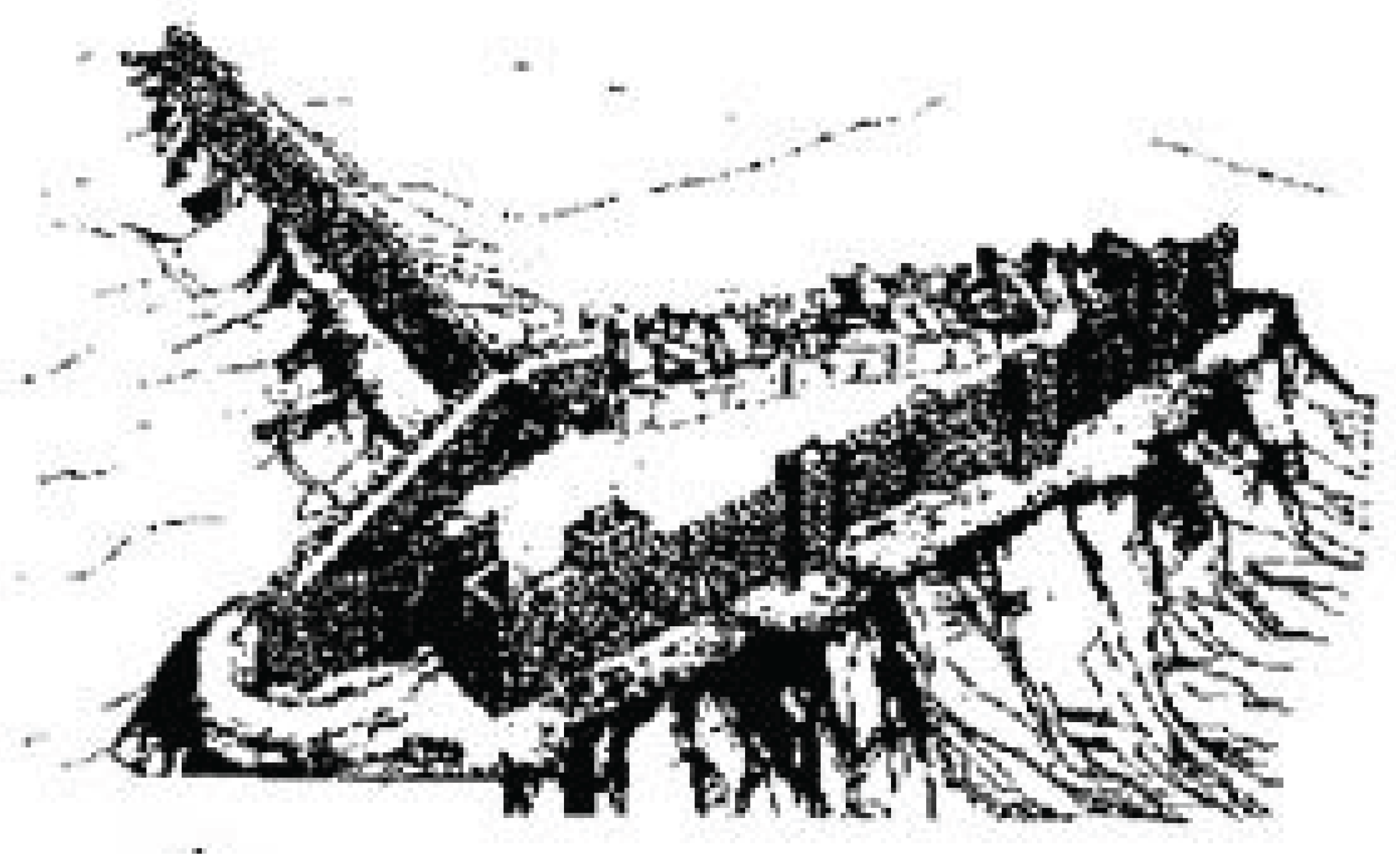
Figure 2.
Plan and restoration project of the Chalkhangala Fortress (D. Akhundov).
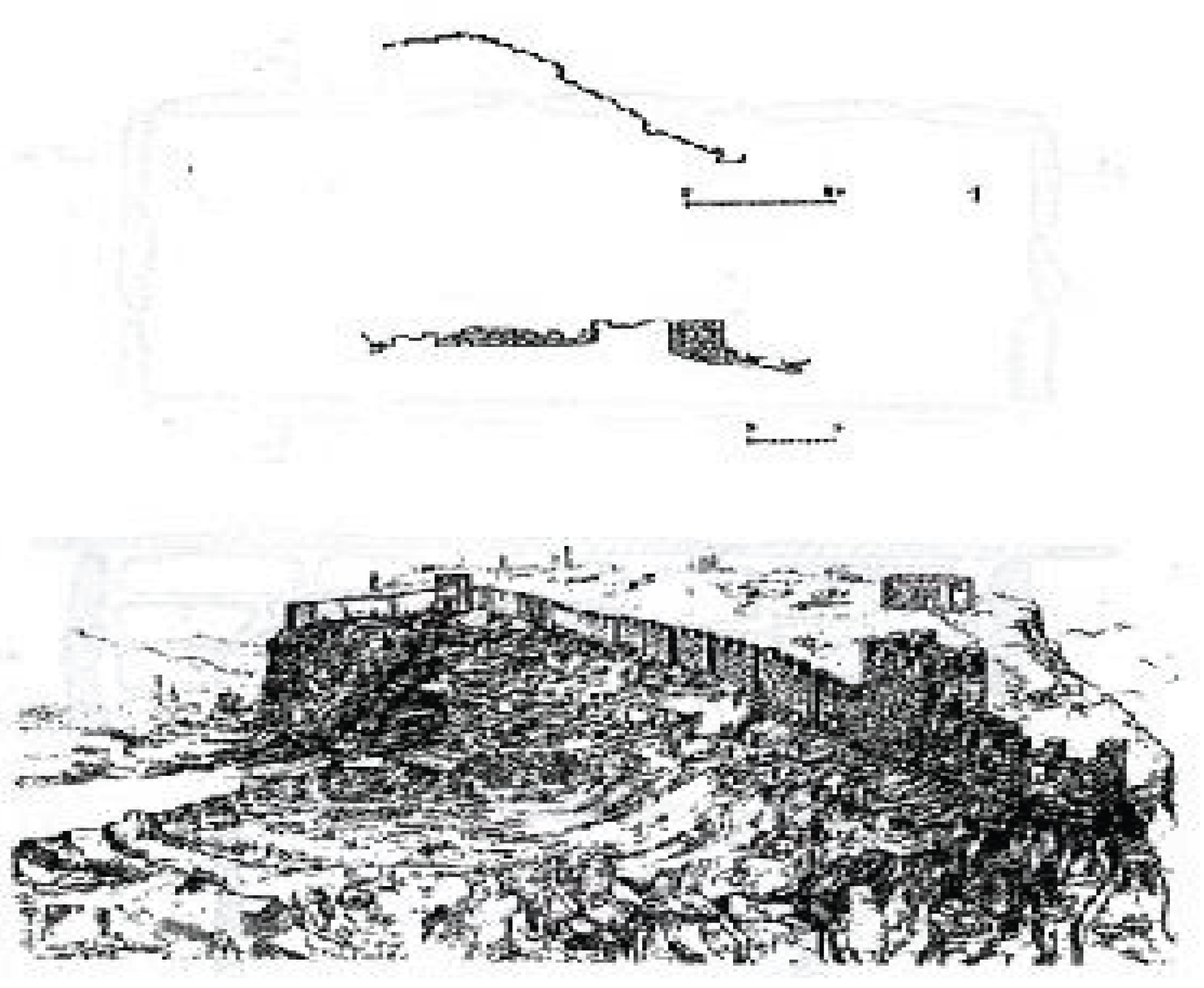
Figure 3.
Plan and restoration project of the Gazanchi Fortress (V. Karimov).
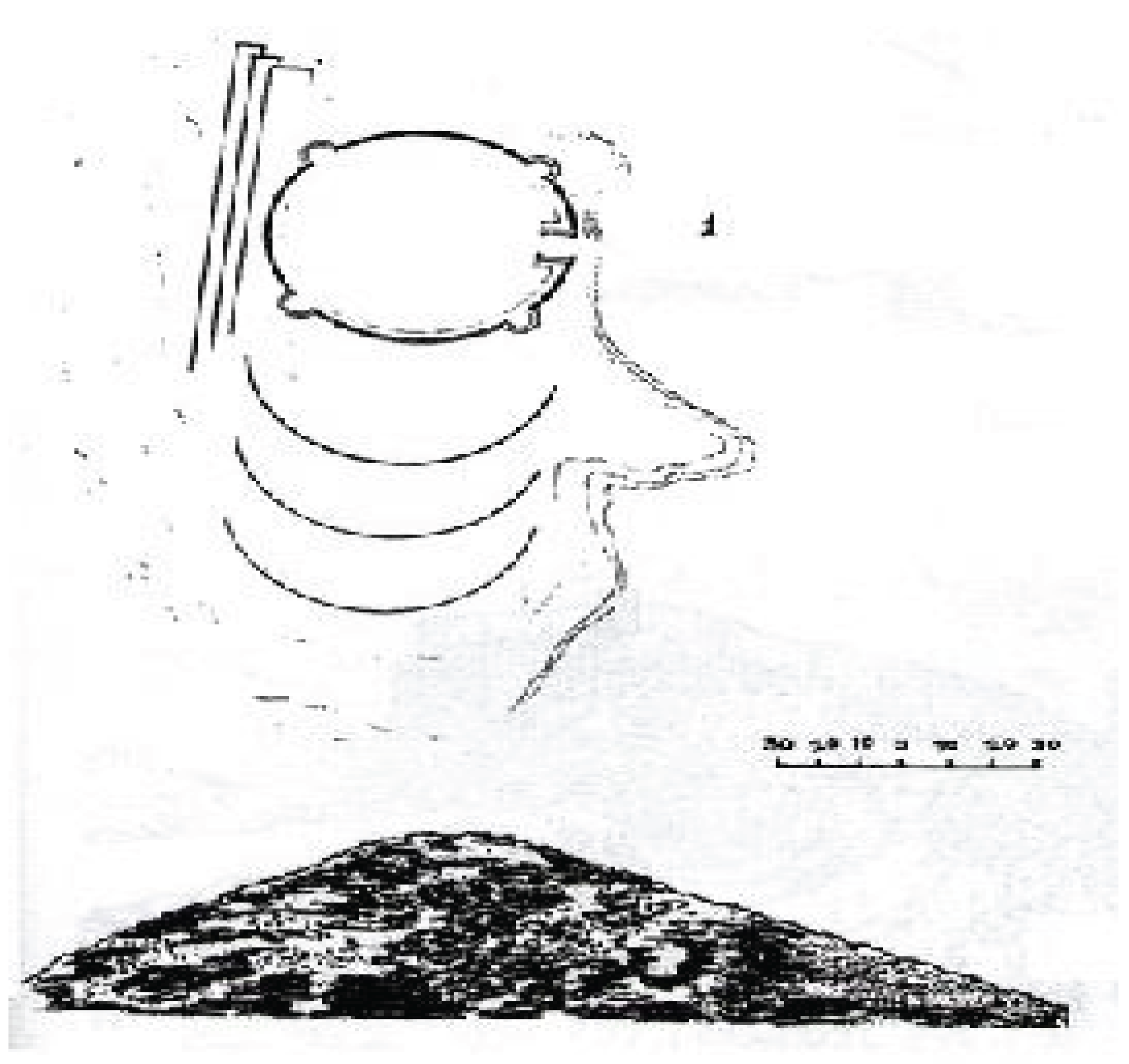
Figure 4.
Plan of Oghlanqala (Seyidov).
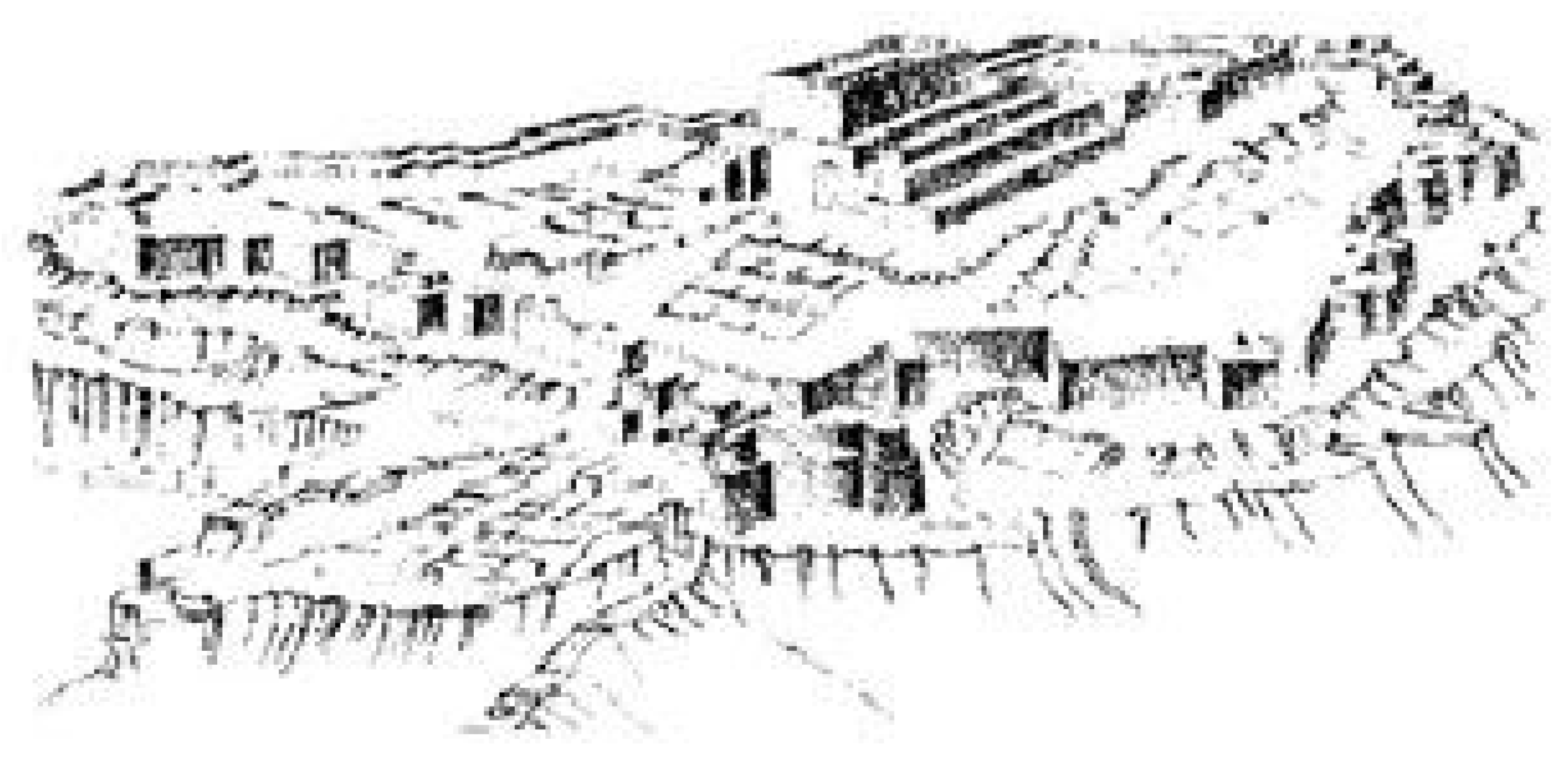
Figure 5.
Delme Fortress (İbrahimli).
Disclaimer/Publisher’s Note: The statements, opinions and data contained in all publications are solely those of the individual author(s) and contributor(s) and not of MDPI and/or the editor(s). MDPI and/or the editor(s) disclaim responsibility for any injury to people or property resulting from any ideas, methods, instructions or products referred to in the content. |
© 2026 by the authors. Licensee MDPI, Basel, Switzerland. This article is an open access article distributed under the terms and conditions of the Creative Commons Attribution (CC BY) license (http://creativecommons.org/licenses/by/4.0/).
Copyright: This open access article is published under a Creative Commons CC BY 4.0 license, which permit the free download, distribution, and reuse, provided that the author and preprint are cited in any reuse.