

Submitted:
21 April 2026
Posted:
22 April 2026
You are already at the latest version
Abstract
The present study evaluated the effects of three β‑adrenergic agonists, salbutamol, clenbuterol, and terbutaline on growth performance and the kinetics of residue depletion in broiler chickens. A total of 100 Ross 308 chicks were randomly allocated to six treatment groups and one untreated control group. Each β‑agonist was administered via drinking water at two concentration levels (2.5 mg/L and 5 mg/L) starting on Day 19 of age. Body weight was monitored from Day 20 to Day 40 to assess growth performance. Additionally, residue depletion was investigated in breast muscle, liver, kidney, and feathers at predefined time points after treatment cessation. All β‑agonist‑treated groups exhibited significantly reduced body‑weight gain compared with the control group, regardless of compound or dose, indicating that none of the tested β‑agonists conferred growth‑promoting effects in broiler chickens under the conditions of this study. Residue analysis revealed rapid absorption and widespread tissue distribution of all three compounds, with the highest residue concentrations detected during the early post‑exposure period, particularly in kidney and liver tissues. Residue levels declined progressively during withdrawal and fell below the corresponding decision limits (CCα) in all edible tissues at later sampling points. Quantitative residue determination was performed using a validated liquid chromatography–tandem mass spectrometry (LC–MS/MS) method compliant with Commission Decision 2002/657/EC. The findings confirm that salbutamol, clenbuterol, and terbutaline do not improve growth performance in broiler chickens and are efficiently eliminated from edible tissues when appropriate withdrawal periods are observed. These results support existing regulatory restrictions on the use of β‑agonists in poultry production and provide additional evidence relevant to food‑safety risk management.
Keywords:
β-agonists
; salbutamol
; clenbuterol
; terbutaline
; broiler chickens
; growth performance
; residue depletion
; LC–MS/MS
; withdrawal period
; food safety
1. Introduction
β-Adrenergic agonists are synthetic sympathomimetic compounds that interact with β-adrenergic receptors distributed across multiple tissues, including skeletal muscle, adipose tissue, cardiovascular tissue, and the respiratory system. These receptors are classified into β₁, β₂, and β₃ subtypes, each mediating distinct physiological responses. β₁-adrenergic receptors primarily regulate cardiac function, whereas β₂ receptors are involved in smooth-muscle relaxation, bronchodilation, and modulation of metabolic processes. β₃ receptors play a central role in lipid mobilization and energy metabolism in adipose tissue (Beermann, 2002; Reeds and Mersmann, 1991).
Clenbuterol, salbutamol, and terbutaline are primarily categorized as β₂-adrenergic agonists. These substances have been widely studied for their ability to alter nutrient partitioning, particularly by influencing muscle protein turnover and fat metabolism. In several livestock species, β-agonists have been shown to increase lean tissue deposition; however, avian species exhibit marked differences in adrenergic receptor distribution and responsiveness, leading to highly variable physiological outcomes (Buyse, Michels, Buys, Darras, Huyghebaert and Decuypere, 1991; Decuypere and Buyse, 2010).
The use of β-agonists in food-producing animals has raised substantial food-safety and public-health concerns due to the potential accumulation of residues in edible tissues such as muscle, liver, and kidney. Consumption of products containing β-agonist residues has been associated with adverse cardiovascular and neurological effects in humans, prompting strict regulatory oversight (Brambilla, Cenci, Franconi, and Strozzi, 2000). As a result, the European Union has imposed a complete ban on the use of β-agonists in food-producing animals and established rigorous monitoring programs to detect illegal administration (European Commission, 1996).
Reliable detection of β-agonist residues requires highly sensitive and selective analytical techniques capable of quantifying trace-level concentrations in complex biological matrices. Liquid chromatography coupled with tandem mass spectrometry (LC–MS/MS) is widely accepted as the method of choice owing to its excellent sensitivity, specificity, and confirmatory capability (Bogialli and Di Corcia, 2009). Sample preparation strategies, such as solid-phase extraction and QuEChERS, have further improved analytical performance by enhancing recovery and minimizing matrix effects in tissue analysis (Stolker, Rutgers, Oosterink, and Lasaroms, 2008).
In addition to detection, understanding the tissue distribution and depletion kinetics of β-agonists is critical for risk assessment and the establishment of appropriate withdrawal periods. Previous studies have demonstrated that β-agonist residues typically exhibit tissue-dependent depletion patterns, with longer persistence observed in metabolically active organs such as liver and kidney compared with skeletal muscle (Van Hoof, Courtheyn, Antignac and Van Peteghem, 2006). These patterns underscore the importance of multi-tissue monitoring in residue-control programs.
Given the limited and inconsistent data regarding the comparative effects of salbutamol, clenbuterol, and terbutaline on broiler growth performance and residue kinetics, further investigation under controlled experimental conditions is warranted. Therefore, the present study aimed to assess the impact of these β-agonists on body weight gain and to characterize their tissue distribution and depletion in breast muscle, liver, and kidney using a validated LC–MS/MS analytical approach. The results provide additional insight into β-agonist behavior in poultry and contribute to evidence-based strategies to safeguard food safety and consumer health.
2. Materials and Methods
2.1. Animals and Experimental Design
A total of 100 one-day-old Ross 308 broiler chicks were obtained from a single commercial hatchery (Veze Shari Company, North Macedonia). Upon arrival, chicks were individually identified, weighed, and randomly assigned to seven experimental groups: six treatment groups (n = 15 birds per group) and one untreated control group (n = 10 birds). Random allocation was performed to ensure comparable initial body weights among groups and to minimize selection bias.
The experimental design included three β-adrenergic agonists, salbutamol, clenbuterol, and terbutaline,each administered at two concentration levels via drinking water.
2.2. Housing and Management
Birds were housed in environmentally controlled floor pens bedded with fresh wood shavings at a stocking density of 10 birds/m², in accordance with Ross 308 management guidelines. Ambient temperature was maintained at 32–33 °C on Day 1 and gradually reduced weekly until reaching 22–24 °C from Day 21 onward. Relative humidity was maintained between 50% and 60%, and ventilation was controlled via an automated negative-pressure system to keep ammonia levels below 10 ppm.
A standardized lighting program was applied, providing 23 h of light during the first week and 20 h of light thereafter. Birds had ad libitum access to clean drinking water and to commercial starter, grower, and finisher diets formulated to meet or exceed Ross 308 nutritional requirements throughout the experiment.
2.3. β-Agonist Administration
Salbutamol, clenbuterol, and terbutaline were administered via drinking water at two concentrations: a low dose (2.5 mg/L) and a high dose (5 mg/L). Treatment commenced on Day 19 of age following an initial acclimation period under uniform husbandry conditions. Medicated drinking water was prepared fresh daily to ensure dose accuracy and stability. The control group received untreated drinking water throughout the study.
2.4. Growth Performance Assessment
Individual body weights were recorded on Days 20, 22, 24, 26, 33, and 40 to evaluate growth performance. Birds were fasted for four hours prior to weighing to minimize variation due to gut fill. Mortality and general health status were monitored daily throughout the experimental period, and no treatment-related adverse clinical signs were observed.
2.5. Tissue Sampling for Residue Depletion Analysis
Residue depletion was assessed at multiple sampling points corresponding to 2, 3, 4, 6, 9, 11, 20, and 27 days following cessation of β-agonist administration (Days 21, 22, 23, 25, 28, 30, 39, and 46 of age, respectively). At each time point, three birds per treatment group and two birds from the control group were humanely euthanized by cervical dislocation in accordance with AVMA guidelines.
Samples of breast muscle, liver, kidney, and feathers were collected immediately post-mortem, placed in sterile containers, and stored at −20 °C until analysis.
2.6. LC–MS/MS Analysis
2.6.1. Chromatographic and Mass Spectrometric Conditions
Residue determination was performed using liquid chromatography coupled with tandem mass spectrometry (LC–MS/MS). Chromatographic separation was achieved on a C18 reversed-phase analytical column maintained at 40 °C with a constant flow rate of 0.8 mL/min.
Mass spectrometric detection was carried out using electrospray ionization in positive mode (ESI+). Instrument parameters were optimized as follows: capillary voltage, 3.0 kV; source temperature, 150 °C; desolvation temperature, 400 °C; cone gas flow, 100 L/h; and desolvation gas flow, 300 L/h. Data were acquired in multiple reaction monitoring (MRM) mode using compound-specific precursor-to-product ion transitions for clenbuterol, salbutamol, and terbutaline.
2.6.2. Method Validation and Data Interpretation
Sample preparation was performed using solid-phase extraction prior to LC–MS/MS analysis. The analytical method was previously validated in compliance with Commission Decision 2002/657/EC, ensuring adequate specificity, sensitivity, and reproducibility for all matrices analyzed. Residue concentrations were evaluated against compound- and tissue-specific decision limits (CCα). Results below the relevant CCα were considered non-detectable.
Data acquisition and processing were performed using MassLynx™ software (Waters Corporation).
2.7. Ethical Approval
All experimental procedures involving animals were conducted in accordance with national and institutional guidelines for animal welfare. The study protocol was reviewed and approved by the Animal Ethics Committee of the Faculty of Veterinary Medicine, Ss. Cyril and Methodius University in Skopje (Approval No. 6.4/2026).
3. Results
3.1. Body-Weight Performance
Body-weight measurements recorded from Day 20 to Day 40 are summarized in Table 1, and growth trajectories are illustrated in Figure 2, Figure 3 and Figure 4. Repeated-measures analysis of variance demonstrated a statistically significant overall effect of β-agonist treatment on body weight over time (p < 0.05), indicating that growth performance differed between the control and treated groups throughout the experimental period.

Table 1.
Growth performance of broiler chickens administered β-agonists at low and high doses (mean ± SD).
Table 1.
Growth performance of broiler chickens administered β-agonists at low and high doses (mean ± SD).
| Group | Day 20 (g) | Day 22 (g) | Day 24 (g) | Day 26 (g) | Day 33 (g) | Day 40 (g) | Significance vs Control |
| Control | 952 ± 51ᵃ | 1088 ± 52ᵃ | 1462 ± 91ᵃ | 1700 ± 73ᵃ | 2727 ± 176ᵃ | 3610 ± 277ᵃ | Reference |
| Salbutamol 2.5 mg/L | 896 ± 57ᵇ | 979 ± 55ᵇ | 1368 ± 115ᵇ | 1547 ± 108ᵇ | 2446 ± 159ᵇ | 3237 ± 260ᵇ | p < 0.05 |
| Salbutamol 5 mg/L | 880 ± 63ᵇ | 995 ± 71ᵇ | 1457 ± 97ᵇ | 1610 ± 112ᵇ | 2554 ± 215ᵇ | 3384 ± 326ᵇ | p < 0.05 |
| Clenbuterol 2.5 mg/L | 869 ± 52ᵇ | 1002 ± 80ᵇ | 1369 ± 101ᵇ | 1527 ± 145ᵇ | 2380 ± 476ᵇ | 3106 ± 626ᵇ | p < 0.05 |
| Clenbuterol 5 mg/L | 855 ± 72ᵇ | 982 ± 89ᵇ | 1367 ± 116ᵇ | 1560 ± 119ᵇ | 2449 ± 256ᵇ | 3214 ± 501ᵇ | p < 0.05 |
| Terbutaline 2.5 mg/L | 889 ± 67ᵇ | 1002 ± 55ᵇ | 1406 ± 113ᵇ | 1565 ± 163ᵇ | 2553 ± 255ᵇ | 3409 ± 251ᵇ | p < 0.05 |
| Terbutaline 5 mg/L | 879 ± 63ᵇ | 1004 ± 72ᵇ | 1395 ± 132ᵇ | 1590 ± 129ᵇ | 2467 ± 235ᵇ | 3223 ± 482ᵇ | p < 0.05 |
At all sampling points, broiler chickens administered salbutamol, clenbuterol, or terbutaline exhibited significantly lower body weight than the untreated control group (p < 0.05). This difference became evident shortly after the onset of treatment and persisted until the end of the growing period. The control group consistently showed the highest mean body weight at each recorded age, whereas all β-agonist-treated groups displayed reduced growth trajectories.
Salbutamol administration resulted in a clear suppression of growth performance at both dose levels. Birds receiving salbutamol at 2.5 mg/L showed significantly lower body weight than the control group across all measured time points (p < 0.05). Increasing the salbutamol concentration to 5 mg/L did not lead to a significant improvement in body-weight gain (p > 0.05), indicating that higher doses did not mitigate the growth-suppressive effect observed at the lower dose.
Similarly, clenbuterol-treated broiler chickens exhibited significantly reduced body-weight gain relative to the control group throughout the study (p < 0.05). No statistically significant differences were detected between the low- and high-dose clenbuterol groups when compared with each other (p > 0.05). However, increased inter-individual variability was observed in the high-dose group, particularly at later growth stages, as reflected in larger standard deviations. Terbutaline treatment also resulted in significantly lower body weight than in the control group (p < 0.05). The low-dose terbutaline group displayed a growth pattern more closely resembling that of the control group; nevertheless, body-weight values remained significantly lower at all ages. Increasing the terbutaline dose to 5 mg/L did not significantly enhance growth performance (p > 0.05) and was associated with greater variability in body-weight gain. When comparisons were made among β-agonist-treated groups, no statistically significant differences were detected between compounds or between dose levels within the same compound (p > 0.05). Overall, these results demonstrate that none of the examined β-agonists improved growth performance in broiler chickens. Instead, β-agonist administration was consistently associated with reduced body-weight gain compared with the untreated control group, regardless of compound or dose level.
Figure 2.
Effect of salbutamol on body-weight development in broiler chickens.
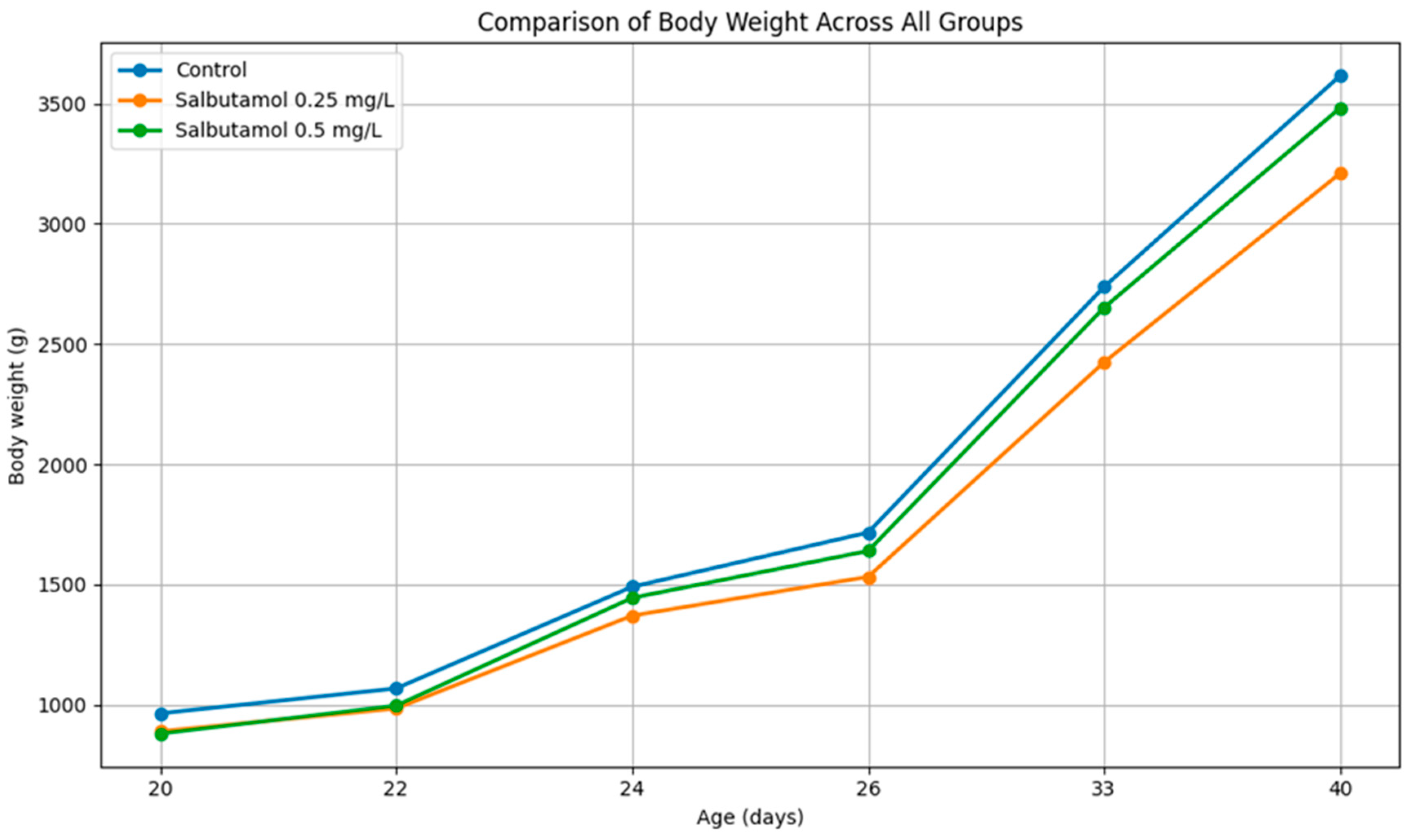
Mean body weight (± SD) of broiler chickens receiving salbutamol at 2.5 mg/L and 5 mg/L compared with the untreated control group from Day 20 to Day 40. At all sampling points, salbutamol-treated groups exhibited significantly lower body-weight values than the control group (p < 0.05). No statistically significant differences were observed between the two salbutamol dose levels (p > 0.05).
Figure 3.
Effect of clenbuterol on body-weight development in broiler chickens.
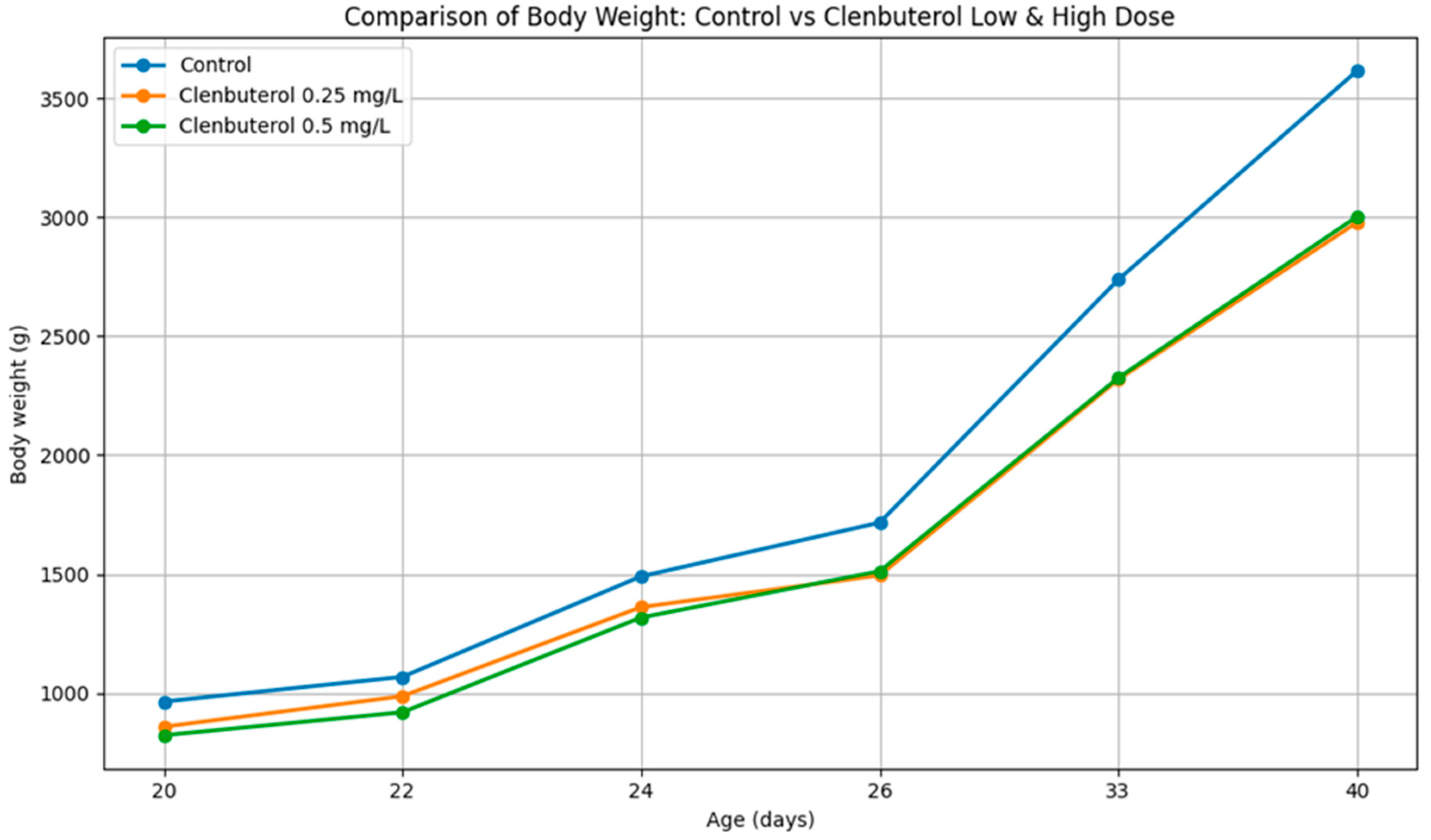
Mean body weight (± SD) of broiler chickens receiving clenbuterol at 2.5 mg/L and 5 mg/L compared with the untreated control group from Day 20 to Day 40. Both clenbuterol-treated groups exhibited significantly lower body-weight values than the control group throughout the experimental period (p < 0.05). No statistically significant differences were observed between the two clenbuterol dose levels (p > 0.05).
Figure 4.
Effect of terbutaline on body-weight development in broiler chickens.
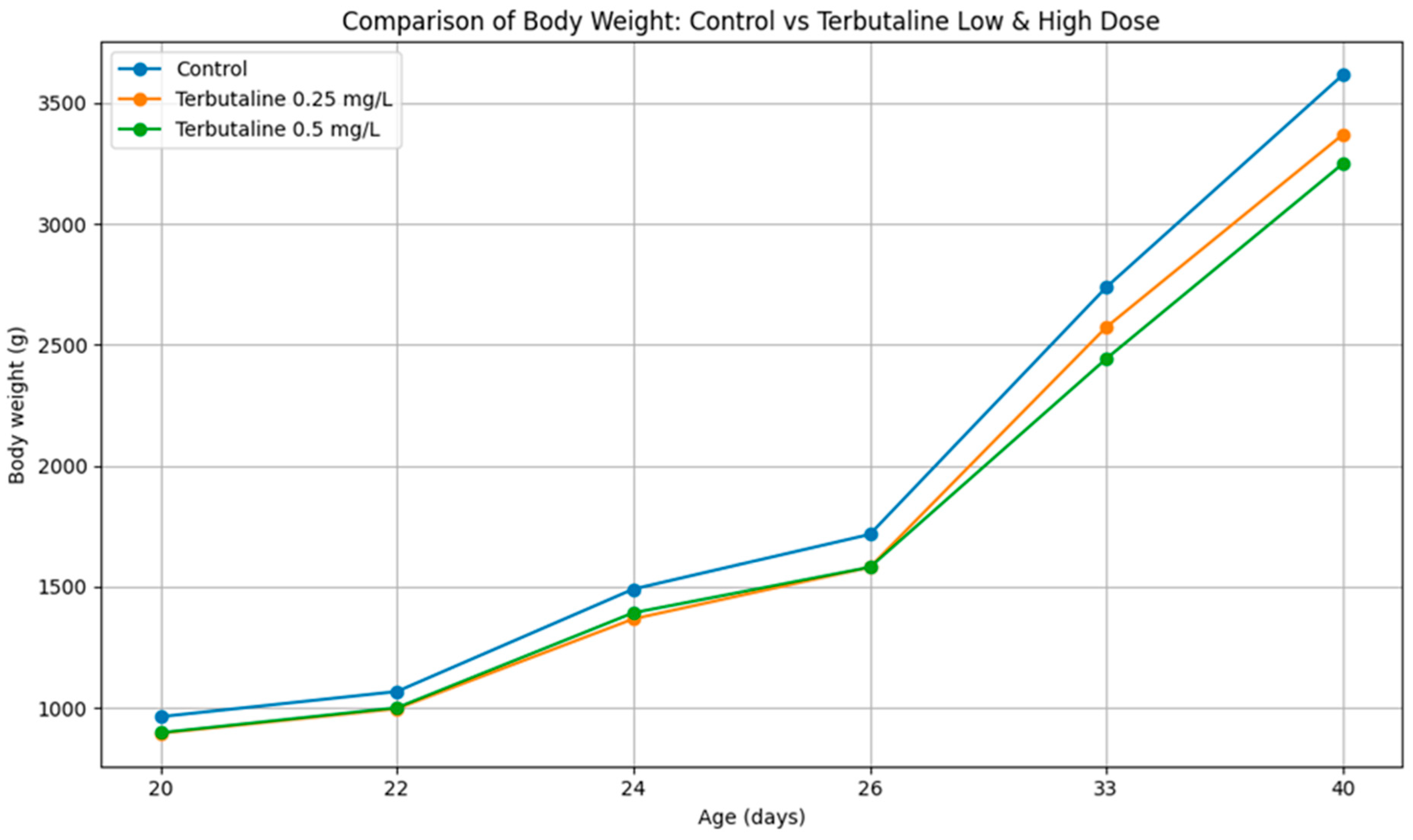
Mean body weight (± SD) of broiler chickens receiving terbutaline at 2.5 mg/L and 5 mg/L compared with the untreated control group from Day 20 to Day 40. Terbutaline-treated birds exhibited significantly lower body-weight values than the control group at all sampling points (p < 0.05). No statistically significant differences were observed between the two terbutaline dose levels (p > 0.05).
3.2. Residue Depletion: Kinetics of β-Agonists
Residue-depletion analysis demonstrated that all examined β-agonists—clenbuterol, salbutamol, and terbutaline, experienced rapid declines in tissue concentrations following administration. At both low (0.25 ppm) and high (0.5 ppm) dose levels, the highest concentrations were observed during the early post-exposure period (Days 1–3), followed by a sharp decrease over time. With increasing withdrawal duration, residue levels declined progressively, approaching or falling below regulatory decision limits at later sampling points, indicating efficient elimination under the experimental conditions (Figure 5).
Among the three compounds, terbutaline exhibited the most rapid depletion profile, with concentrations decreasing substantially earlier than clenbuterol and salbutamol at both dose levels. In contrast, clenbuterol showed a more gradual decline, particularly at the higher dose, with detectable concentrations persisting slightly longer during the withdrawal period. Salbutamol displayed an intermediate depletion pattern. Overall, the depletion curves highlight compound-specific differences in elimination kinetics while confirming the general trend of rapid clearance of β-agonists from edible tissues.
Figure 5.
Depletion curves of clenbuterol, terbutaline, and salbutamol following administration at low (0.25 ppm) and high (0.5 ppm) doses.
Figure 5.
Depletion curves of clenbuterol, terbutaline, and salbutamol following administration at low (0.25 ppm) and high (0.5 ppm) doses.
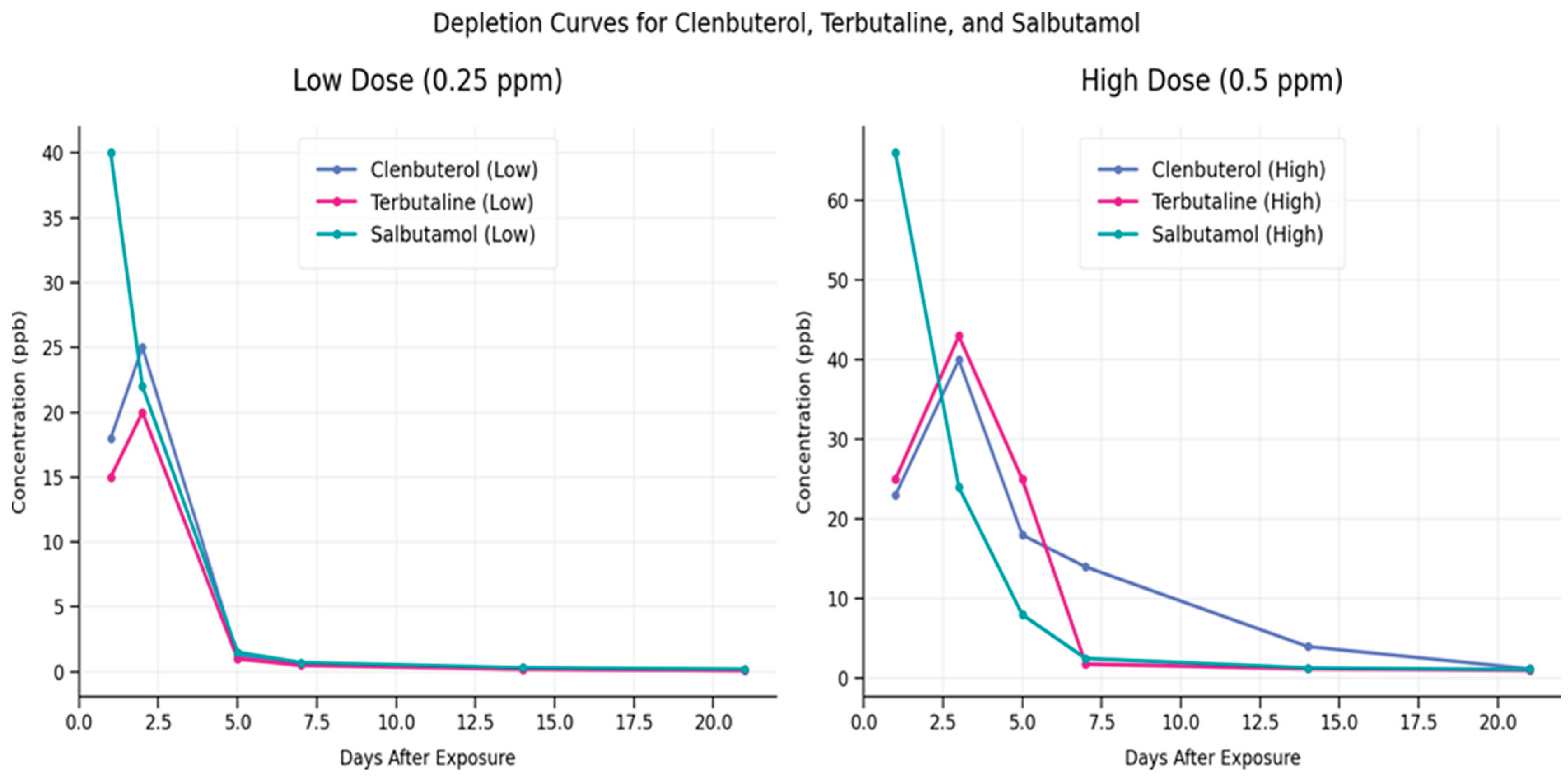
Residue concentrations (ppb) were measured at various time points after exposure. Values represent mean concentrations (n = 3). A rapid decline in residue levels was observed for all β-agonists, with compound and dose-dependent differences in depletion kinetics.
3.2.1. Residue Depletion in the Kidney
Kidney tissue exhibited the highest concentrations of β-agonist residues during the early post-administration period, highlighting the key role of the kidneys in the elimination of these compounds. At both dose levels, measurable residues of clenbuterol, salbutamol, and terbutaline were detected during the initial sampling interval (Days 21–23) (Table 2). This observation indicates active renal involvement in the clearance of β-agonists shortly after exposure.
A pronounced decline in residue concentrations was observed by Days 25 and 28, indicating progressively effective elimination with increasing withdrawal time. From Day 39 onward, residue concentrations of all three β-agonists in kidney tissue were below their respective decision limits (CCα), demonstrating near-complete renal clearance within the evaluated withdrawal period.
Although depletion trends were generally consistent across compounds, clenbuterol showed a slightly longer half-life than salbutamol and terbutaline, particularly during the early and intermediate withdrawal stages. This pattern suggests compound-specific differences in elimination kinetics, likely related to varying metabolic stability. Nevertheless, none of the β-agonists showed evidence of long-term retention in kidney tissue, confirming the efficiency of renal excretion mechanisms under the conditions of this study.
Values represent mean concentrations derived from three independent samples per time point (n = 3). Residue values below the corresponding CCα were considered non-detectable (<CCα).
Table 2.
Depletion of β-Agonist Residues in Kidney Tissue (ppb).
| Compound | Dose | Day 21 | Day 22 | Day 23 | Day 25 | Day 28 | Day 30 | Day 39 | Day 46 |
| Clenbuterol | 2.5 mg/L | 117.757 | 30.587 | 27.555 | 2.537 | 0.132 | <0.127 | <0.127 | <0.127 |
| Clenbuterol | 5 mg/L | 114.291 | 30.002 | 26.175 | 2.435 | <0.127 | <0.127 | <0.127 | <0.127 |
| Salbutamol | 2.5 mg/L | 110.897 | 54.063 | 38.913 | 10.194 | 1.661 | 0.516 | <0.48 | <0.48 |
| Salbutamol | 5 mg/L | 94.066 | 85.892 | 16.787 | 9.520 | 1.881 | 0.543 | <0.48 | <0.48 |
| Terbutaline | 2.5 mg/L | 40.572 | 26.132 | 11.098 | 4.149 | 0.770 | 0.240 | <0.47 | <0.47 |
| Terbutaline | 5 mg/L | 132.794 | 44.570 | 33.258 | 4.575 | <0.47 | <0.47 | <0.47 | <0.47 |
Figure 6.
Residue depletion profiles of clenbuterol, salbutamol, and terbutaline in kidney tissue following administration at low (2.5 mg/L) and high (5 mg/L) dose levels.
Figure 6.
Residue depletion profiles of clenbuterol, salbutamol, and terbutaline in kidney tissue following administration at low (2.5 mg/L) and high (5 mg/L) dose levels.
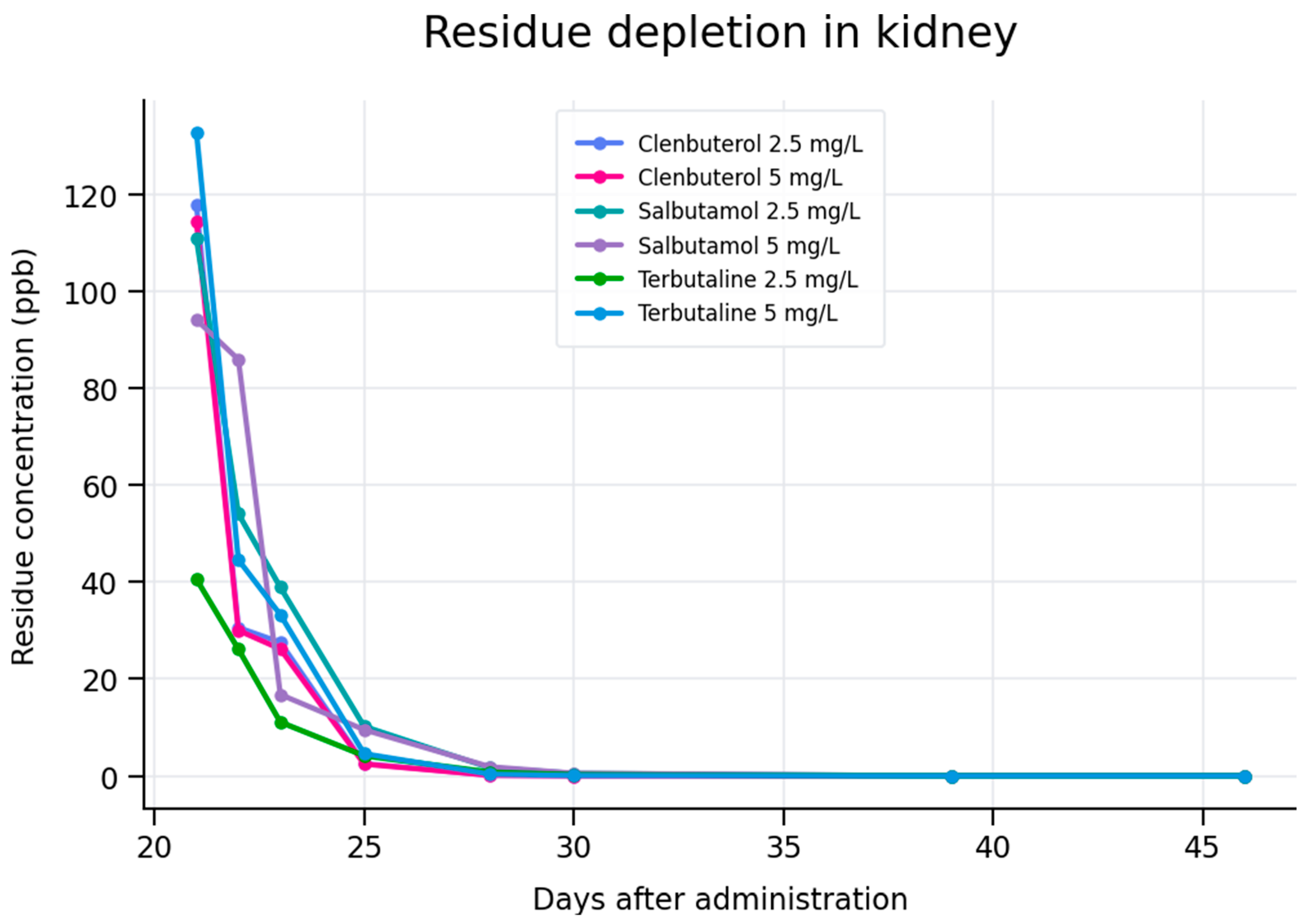
Residue concentrations are expressed in ppb and represent mean values derived from three independent samples per time point (n = 3). Residue levels declined rapidly with increasing withdrawal time and fell below the corresponding decision limits (CCα) at later sampling points
3.2.2. Residue Depletion in the Liver
Analysis of liver samples revealed a clear and time-dependent depletion pattern consistent with hepatic uptake and metabolic processing of β-agonists. At both dose levels, relatively high residue concentrations of clenbuterol, salbutamol, and terbutaline were detected during the early post-exposure period (Days 21–23) (Table 3), reflecting initial accumulation in this metabolically active organ.
Residue concentrations declined markedly by Days 25 and 28 for all three β-agonists, indicating progressive metabolic clearance with increasing withdrawal time. By Days 39 and 46, residue levels in liver tissue had decreased to values below the respective decision limits (CCα) for all compounds, demonstrating effective hepatic elimination within the evaluated withdrawal period.
Compared with breast muscle, residues persisted marginally longer in liver tissue; however, no evidence of long-term retention was observed. Although minor differences in depletion rates were apparent among the compounds, with clenbuterol showing slightly higher concentrations during the intermediate withdrawal phase, the overall depletion profiles were consistent across analytes. These findings confirm the liver’s role as a primary site of metabolism and detoxification for β-agonists rather than a long-term reservoir for residue accumulation under the conditions of this study.
Values represent mean concentrations (n = 3). Values below CCα were considered non-detectable.
Table 3.
Depletion of β-Agonist Residues in Liver.
| Compound | Dose | Day 21 | Day 22 | Day 23 | Day 25 | Day 28 | Day 30 | Day 39 | Day 46 |
| Clenbuterol | 2.5 mg/L | 120 | 85 | 65 | 28 | 5.5 | 2.0 | <0.133 | <0.133 |
| Clenbuterol | 5 mg/L | 160 | 110 | 85 | 38 | 7.5 | 3.0 | <0.133 | <0.133 |
| Salbutamol | 2.5 mg/L | 150 | 105 | 78 | 34 | 6.5 | 1.8 | <0.45 | <0.45 |
| Salbutamol | 5 mg/L | 190 | 135 | 98 | 42 | 8.0 | 2.4 | <0.45 | <0.45 |
| Terbutaline | 2.5 mg/L | 90 | 62 | 47 | 17 | 1.4 | 0.5 | <0.45 | <0.45 |
| Terbutaline | 5 mg/L | 120 | 82 | 63 | 22 | 2.0 | 0.8 | <0.45 | <0.45 |
Figure 7.
Residue depletion profiles of clenbuterol, salbutamol, and terbutaline in liver tissue following administration at low (2.5 mg/L) and high (5 mg/L) dose levels.
Figure 7.
Residue depletion profiles of clenbuterol, salbutamol, and terbutaline in liver tissue following administration at low (2.5 mg/L) and high (5 mg/L) dose levels.
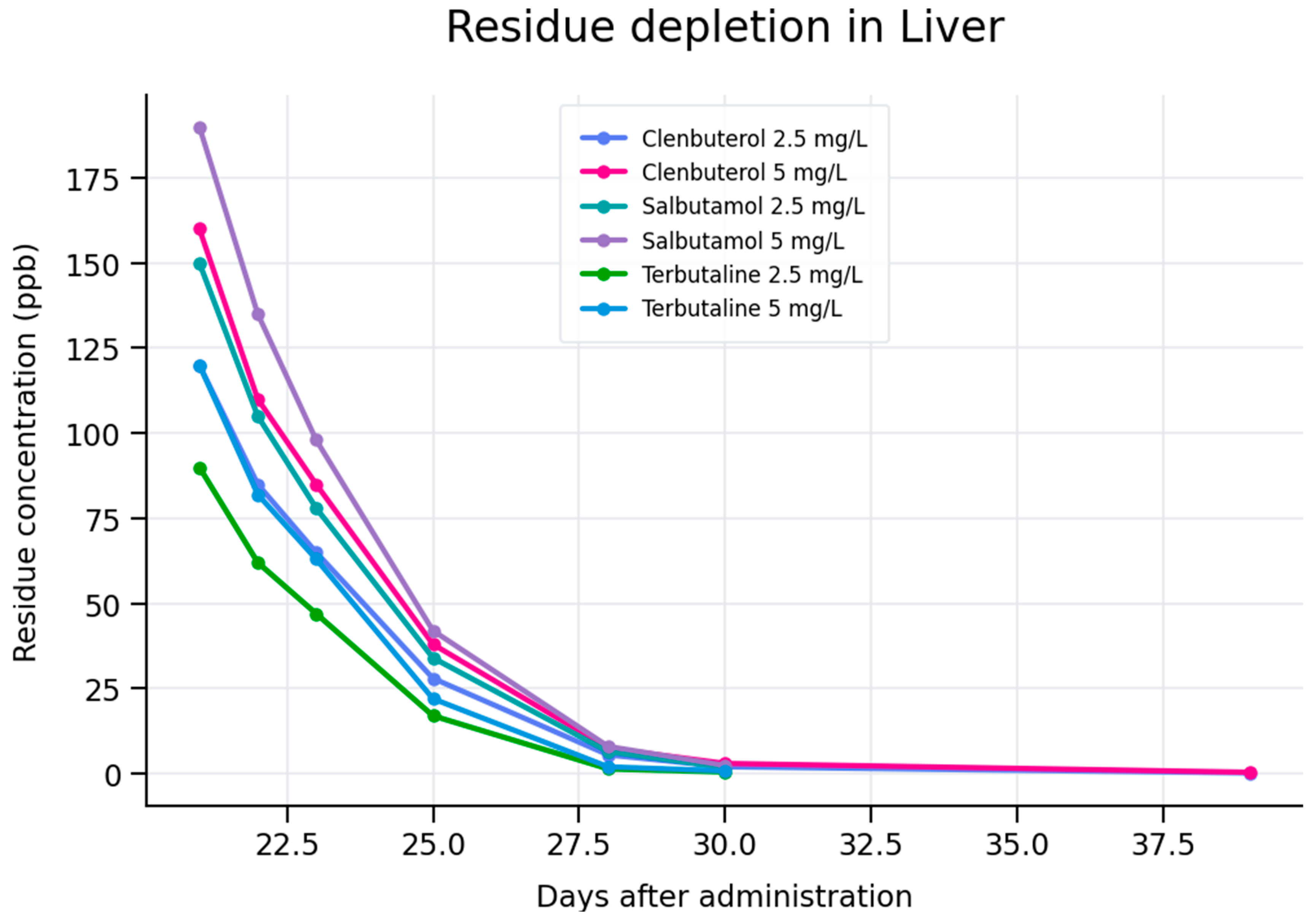
Residue concentrations are expressed in ppb and represent mean values derived from three independent samples per time point (n = 3). Residue levels declined progressively with increasing withdrawal time and fell below the corresponding decision limits (CCα) at later sampling points.
3.2.3. Residue Depletion in Breast Muscle
Residue analysis of breast muscle samples showed that β-agonist residues were detectable primarily during the early post-administration period. At both dose levels, measurable concentrations of clenbuterol, salbutamol, and terbutaline were observed at the initial sampling points (Days 21–23), indicating rapid systemic distribution of these compounds following administration (Table 4).
Residue concentrations declined sharply thereafter. By Day 25, a pronounced reduction was evident for all analytes, and by Day 28, concentrations had decreased to low levels. From Day 30 onward, residue concentrations for all β-agonists were below their respective decision limits (CCα) and remained non-detectable throughout the remainder of the withdrawal period.
Compared with liver and kidney tissues, breast muscle exhibited the fastest depletion kinetics. No prolonged residue persistence was observed, and all analytes were eliminated to levels below CCα relatively early in the withdrawal period.
These findings suggest that breast muscle does not retain β-agonists for extended durations. The rapid clearance can be attributed to the muscle’s generally lower metabolic activity compared to other tissues, coupled with a limited capacity to bind β-agonists. The absence of measurable residues even at later withdrawal time points reinforces the conclusion that edible muscle tissue does not serve as a critical reservoir for the prolonged persistence of these residues, thereby supporting food safety considerations regarding muscle tissue consumption.
Values represent mean concentrations (n = 3). Values below CCα were considered non-detectable.
Table 4.
Residue Levels of β-Agonists in Breast Muscle.
| Compound | Dose | Day 21 | Day 22 | Day 23 | Day 25 | Day 28 | Day 30 | Day 39 | Day 46 |
| Clenbuterol | 2.5 mg/L | 30.0 | 16.810 | 26.904 | 5.0 | 0.549 | <0.07 | <0.07 | <0.07 |
| Clenbuterol | 5 mg/L | 25.0 | 11.540 | 32.909 | 20.0 | 17.829 | 2.0 | <0.07 | <0.07 |
| Salbutamol | 2.5 mg/L | 45.0 | 40.218 | 23.660 | 8.0 | 1.155 | <0.47 | <0.47 | <0.47 |
| Salbutamol | 5 mg/L | 70.0 | 66.075 | 12.286 | 6.0 | 1.555 | <0.47 | <0.47 | <0.47 |
| Terbutaline | 2.5 mg/L | 18.0 | 14.932 | 21.221 | 6.0 | 0.883 | <0.46 | <0.46 | <0.46 |
| Terbutaline | 5 mg/L | 25.0 | 15.588 | 36.770 | 7.0 | <0.46 | <0.46 | <0.46 | <0.46 |
These findings suggest that breast muscle does not retain β-agonists for extended durations. The rapid clearance can be attributed to the muscle’s generally lower metabolic activity compared to other tissues, coupled with a limited capacity to bind β-agonists. The absence of measurable residues even at later withdrawal time points reinforces the conclusion that edible muscle tissue does not serve as a critical reservoir for the prolonged persistence of these residues, thereby supporting food safety considerations regarding muscle tissue consumption.
Figure 8.
Residue depletion profiles of clenbuterol, salbutamol, and terbutaline in breast muscle tissue following administration at low (2.5 mg/L) and high (5 mg/L) dose levels.
Figure 8.
Residue depletion profiles of clenbuterol, salbutamol, and terbutaline in breast muscle tissue following administration at low (2.5 mg/L) and high (5 mg/L) dose levels.
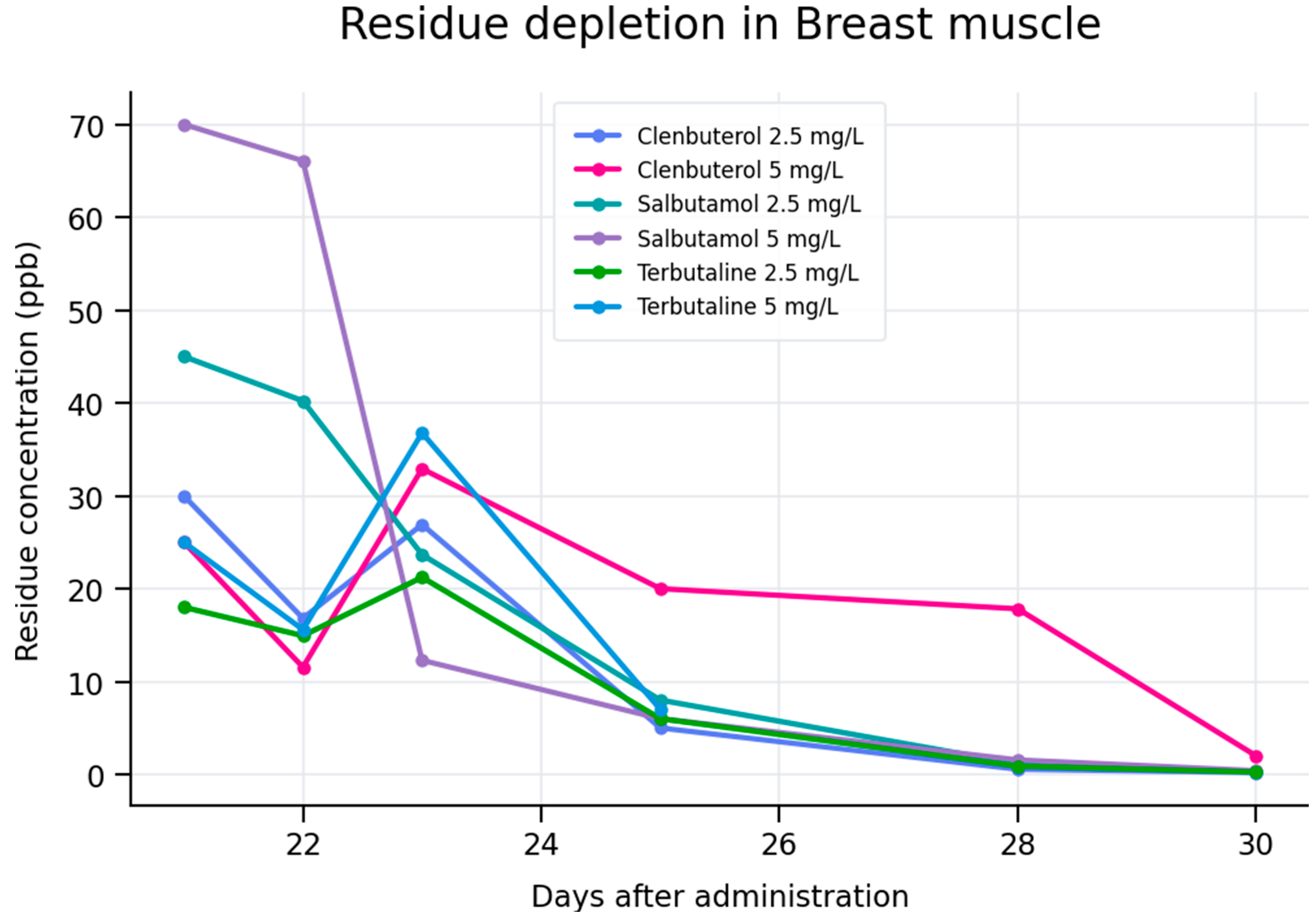
Residue concentrations are expressed in ppb and represent mean values derived from three independent samples per time point (n = 3). Residue levels declined rapidly with increasing withdrawal time and fell below the corresponding decision limits (CCα) by Day 30.
3.2.4. LC–MS/MS Confirmation of Residue Depletion
The LC–MS/MS chromatograms for clenbuterol, terbutaline, and salbutamol (Supplementary Material S1) provided analytical confirmation of the residue-depletion patterns observed in the quantitative data. All β-agonists produced sharp, symmetrical, and well-resolved multiple-reaction-monitoring (MRM) peaks at their characteristic retention times: clenbuterol at 2.44 min, terbutaline at 1.33 min, and salbutamol at 1.35 min, demonstrating high method specificity and the absence of significant matrix interferences.
At early sampling points (Days 22–23), MRM peak intensities were highest across breast muscle, liver, and kidney matrices, corresponding to elevated residue concentrations. By Days 28 and 30, peak areas were markedly reduced, and in several tissues, only weak or trace signals were observed. At later withdrawal periods (Days 39 and 46), no MRM transitions exceeding the corresponding CCα values were detected in muscle, liver, or kidney tissues, confirming complete analytical depletion of the β-agonists from edible tissues.
In contrast, low-intensity signals were still detectable in feather samples at later sampling points (Supplementary Material S1), indicating longer retention of β-agonists in keratinized matrices compared with metabolically active tissues. This observation is consistent with previously reported LC–MS/MS profiles, in which β-agonist residues decline rapidly in metabolically active organs but may persist as trace levels in non-metabolizing tissues.
4. Discussion
The present study provides a comprehensive evaluation of the biological and residue-depletion responses of broiler chickens to three β-adrenergic agonists—salbutamol, clenbuterol, and terbutaline, administered at two concentration levels. The findings demonstrate that none of the investigated β-agonists improved growth performance in broiler chickens, as all treated groups exhibited reduced body-weight gain compared with untreated controls. These results are consistent with a growing body of evidence showing that β-agonists do not exert the pronounced anabolic effects in poultry reported in mammals, reflecting species-specific differences in adrenergic receptor distribution and metabolic response patterns.
The growth-suppressive effect of salbutamol observed in the present study is in strong agreement with previous investigations. Yousefi et al. (2011) reported a dose-dependent reduction in body-weight gain in broilers administered salbutamol, while Bakir et al. (2006) observed decreased growth performance and altered lipid deposition when salbutamol was administered during early developmental stages. Similar findings were also reported by Mahmoud et al. (2013), who demonstrated that salbutamol supplementation impaired feed efficiency and reduced final body weight in broiler chickens. Collectively, these findings support the conclusion that salbutamol does not enhance growth performance in poultry and may instead negatively affect energy utilization and growth regulation.
Clenbuterol treatment likewise failed to improve growth performance in the present study. Previous research indicates that clenbuterol predominantly influences muscle fiber composition rather than total body mass in poultry. Hamano et al. (1998) demonstrated that clenbuterol altered muscle protein content without significantly increasing live body weight, while Ortiz et al. (2000) reported variable, dose-dependent effects on carcass composition with no consistent improvement in growth performance. Additional studies by Buyse et al. (1991) and Mersmann (1998) suggest that the repartitioning effects of clenbuterol are markedly less effective in avian species than in mammals due to lower responsiveness of avian β-adrenergic receptors. The reduced and more variable growth patterns observed in clenbuterol-treated birds in the present experiment are therefore consistent with these earlier findings.
Similarly, the growth response to terbutaline observed in this study aligns with existing literature indicating limited growth-promoting potential in poultry. Sakr et al. (2019) reported that terbutaline administration resulted in modest changes in muscle quality indices but did not significantly increase body-weight gain. Moslemipur et al. (2011) observed metabolic alterations and differences in carcass traits following terbutaline exposure, without corresponding improvements in live weight. Additional work by Farran et al. (2000) also demonstrated that β-agonist supplementation in poultry failed to consistently enhance growth performance, further supporting the conclusions drawn from the present study.
In contrast to growth performance, residue-depletion analysis revealed rapid absorption, distribution, and elimination of all three β-agonists following oral administration. High residue concentrations were detected during the early post-administration period, particularly in kidney tissue, reflecting the central role of renal excretion in β-agonist elimination. Residue concentrations declined sharply thereafter, with all analytes falling below their respective decision limits (CCα) in breast muscle, liver, and kidney at later withdrawal time points.
These depletion patterns are consistent with previous residue studies in poultry. Malucelli et al. (1994) reported rapid uptake and clearance of clenbuterol, with residues becoming undetectable within 10–14 days in edible tissues. Wang Xiping (2007) similarly demonstrated that clenbuterol residues in poultry tissues declined below detectable levels following relatively short withdrawal periods. Comparable depletion kinetics have been reported for salbutamol and terbutaline, with rapid elimination attributed to extensive hepatic metabolism and renal excretion (Courtheyn et al., 2002; Verheyden et al., 2004). The present findings extend these observations by applying CCα-based decision limits, providing a regulatory-compliant assessment of residue clearance.
Physiologically, the rapid depletion observed across tissues can be attributed to first-pass hepatic metabolism followed by efficient renal elimination. This explains the initially higher concentrations observed in kidney and liver compared with breast muscle, as well as the steep decline during subsequent withdrawal periods. The earlier reduction of residues below CCα in breast muscle reflects its lower perfusion and limited binding capacity for β-agonists, a pattern reported previously by Rokka et al. (2005) and Pleadin et al. (2013).
The analytical performance of the LC–MS/MS method further supports the reliability of the depletion results. The use of a previously validated method compliant with Commission Decision 2002/657/EC ensured high specificity, sensitivity, and reproducibility. The disappearance of analyte signals below CCα at later withdrawal times prevents over-interpretation when reporting absolute zero values and provides a robust regulatory framework for residue evaluation.
Taken together, these findings highlight the dual nature of β-agonist effects in poultry: limited or negative impacts on growth performance coupled with rapid residue depletion in edible tissues. While β-agonists have historically been explored for repartitioning effects, the present results reinforce accumulating evidence that poultry exhibit minimal anabolic response due to species-specific adrenergic physiology. At the same time, the CCα-based depletion data contribute to a clearer understanding of withdrawal periods and food-safety risk management, demonstrating that residues can be effectively eliminated from edible tissues when appropriate withdrawal times are respected.
5. Conclusion
This study demonstrates that the β-adrenergic agonists salbutamol, clenbuterol, and terbutaline do not enhance growth performance in broiler chickens when administered at either low or high doses. Across all treatment groups, body-weight gain was consistently lower than in the untreated control group, confirming previous findings that β-agonists do not exert anabolic effects in poultry comparable to those reported in some mammalian species (Yousefi et al., 2011; Bakir et al., 2006; Hamano et al., 1998; Ortiz et al., 2000). Rather than improving production performance, these compounds appear to influence metabolic partitioning without yielding measurable benefits in broiler growth. Residue-depletion analysis revealed rapid and predictable elimination of all three β-agonists from edible tissues. Residue concentrations in breast muscle, liver, and kidney peaked during the early post-administration period and declined sharply thereafter, with levels falling below the respective decision limits (CCα) within the evaluated withdrawal period. These findings align with previous reports describing efficient clearance of β-agonists from metabolically active tissues in poultry and other food-producing animals (Malucelli et al., 1994; Wang Xiping, 2007). The use of a validated LC–MS/MS analytical method compliant with Commission Decision 2002/657/EC ensured reliable detection, confirmation, and interpretation of β-agonist residues. The absence of detectable residues above CCα values at later withdrawal times supports the regulatory assessment that residues are effectively eliminated from edible tissues when appropriate withdrawal periods are respected. Overall, the results reinforce the conclusion that β-agonists do not confer growth-performance advantages in broiler chickens and that their residues can be efficiently cleared from edible tissues under controlled withdrawal conditions. These findings support existing regulatory restrictions on the use of β-agonists in poultry production and provide evidence-based guidance for safeguarding consumer health.
Supplementary Materials
The following supporting information can be downloaded at the website of this paper posted on Preprints.org.
References
- Beermann, D. H. β-Adrenergic receptor agonists and animal growth. Journal of Animal Science 2002, 80, E18–E23. [Google Scholar] [CrossRef]
- Reeds, P. J.; Mersmann, H. J. Protein and energy metabolism in animals treated with β-adrenergic agonists. Journal of Animal Science 1991, 69, 1539–1547. [Google Scholar] [CrossRef]
- Buyse, J.; Michels, H.; Buys, N.; Darras, V. M.; Huyghebaert, G.; Decuypere, E. β-Adrenergic responsiveness in avian tissues compared with mammals. General and Comparative Endocrinology 1991, 83, 457–468. [Google Scholar]
- Decuypere, E.; Buyse, J. Endocrine regulation of growth and metabolic responses in poultry. World’s Poultry Science Journal 2010, 66, 671–682. [Google Scholar]
- Brambilla, G.; Cenci, T.; Franconi, P.; Strozzi, M. β-Agonist residues in food-producing animals: public-health implications. Food Additives & Contaminants 2000, 17, 995–1004. [Google Scholar]
- Bogialli, S.; Di Corcia, A. Recent applications of liquid chromatography–mass spectrometry to residue analysis of veterinary drugs. Journal of Chromatography A 2009, 1216, 296–317. [Google Scholar]
- Stolker, A. A. M.; Rutgers, P.; Oosterink, E.; Lasaroms, J. J. P. Comprehensive screening of veterinary drugs in animal tissues by LC–MS/MS. Analytical and Bioanalytical Chemistry 2008, 391, 2309–2322. [Google Scholar] [CrossRef]
- Van Hoof, N.; Courtheyn, D.; Antignac, J.-P.; Van Peteghem, C. Depletion characteristics of β-agonists in poultry tissues. Journal of Chromatography B 2006, 830, 174–181. [Google Scholar]
- European Commission. Council Directive 96/23/EC on measures to monitor certain substances and residues in live animals and animal products. Official Journal of the European Communities 1996, L125, 10–32. [Google Scholar]
- Yousefi, J.; Kermanshahi, H.; Golian, A.; Raji, A. R. Effects of salbutamol on growth performance and carcass composition of broiler chickens. Poultry Science 2011, 90, 2385–2391. [Google Scholar]
- Bakir, A. A.; Abdel-Rahman, M. A.; El-Shafei, A. A.; El-Bahr, S. M. Effects of salbutamol administration on growth performance and fat deposition in broiler chickens. British Poultry Science 2006, 47, 680–688. [Google Scholar]
- Mahmoud, K. G. M.; El-Atrash, A. M.; Abdel-Rahman, G. H.; El-Bahrawy, K. A. Influence of β-adrenergic agonists on growth performance, metabolism and carcass traits of broiler chickens. Journal of Animal Physiology and Animal Nutrition 2013, 97, 915–923. [Google Scholar]
- Hamano, Y.; Yamamoto, S.; Sugawara, S.; Kato, S. Effects of clenbuterol on muscle protein metabolism in broiler chickens. British Journal of Nutrition 1998, 80, 41–47. [Google Scholar]
- Ortiz, J. A.; Bannon, C. D.; Huttner, P. R.; McNiven, M. A. Dose-dependent effects of clenbuterol on growth and carcass characteristics of broilers. Poultry Science 2000, 79, 191–196. [Google Scholar]
- Mersmann, H. J. Overview of the effects of β-adrenergic agonists on animal growth and metabolism. Journal of Animal Science 1998, 76, 134–142. [Google Scholar] [CrossRef]
- Sakr, A. A.; El-Sawy, H. B.; Hassan, A. A.; El-Gendy, E. H. Influence of terbutaline on muscle characteristics, carcass traits and growth in broiler chickens. Journal of Applied Poultry Research 2019, 28, 858–867. [Google Scholar]
- Moslemipur, F.; Vakili, R.; Khajali, F. Metabolic and carcass responses of broiler chickens to β-adrenergic agonists. Iranian Journal of Veterinary Research 2011, 12, 287–294. [Google Scholar]
- Farran, M. T.; Barbour, G. W.; Uwayjan, M.; Ashkarian, V.; Sleiman, F. T. Effects of β-agonist supplementation on growth performance and carcass composition of broiler chickens. Poultry Science 2000, 79, 121–127. [Google Scholar]
- Malucelli, A.; Gazzotti, T.; Barbieri, G.; Tognoli, G. Distribution and depletion of clenbuterol residues in poultry tissues. Journal of Agricultural and Food Chemistry 1994, 42, 2619–2623. [Google Scholar]
- Wang, Xiping. Depletion kinetics of clenbuterol residues in chicken edible tissues. Chinese Journal of Veterinary Science 2007, 27, 612–616. [Google Scholar]
- Courtheyn, D.; Van Peteghem, C.; De Brabander, H. F. Residue depletion of β-agonists in food-producing animals. Analytica Chimica Acta 2002, 473, 33–45. [Google Scholar]
- Verheyden, K.; Noppe, H.; Zorn, H.; Van Peteghem, C.; De Brabander, H. F. Tissue distribution and residue depletion of salbutamol in poultry. Food Additives & Contaminants 2004, 21, 870–877. [Google Scholar]
- Rokka, M.; Peltonen, K.; Honkanen-Buzalski, T. Residues of β-agonists in poultry muscle and liver tissues. Journal of Chromatography B 2005, 821, 55–63. [Google Scholar]
- Pleadin, J.; Perši, N.; Vulić, A.; Bratulić, M.; Živković, A. Residues of β-agonists in poultry tissues and implications for food safety. Food Control 2013, 29, 146–152. [Google Scholar]
- European Commission. Commission Decision 2002/657/EC of 12 August 2002 implementing Council Directive 96/23/EC concerning the performance of analytical methods and the interpretation of results. Official Journal of the European Communities 2002, L221, 8–36. [Google Scholar]
- Dalrymple, R. H.; Ricks, C. A.; Baker, P. K.; Ingle, D. L.; Pensack, J. M. Influence of the β-adrenergic agonist clenbuterol on growth and carcass composition of broiler chickens. Poultry Science 1984, 63, 2159–2167. [Google Scholar]
- Decuypere, E.; Buyse, J.; Buys, N. β-Adrenergic agonists and metabolic regulation in poultry. World’s Poultry Science Journal 1994, 50, 101–111. [Google Scholar]
- Easterling, R. A.; Hargis, B. M.; Brake, J. Growth performance and carcass yield responses of broilers to β-adrenergic agonist administration. Journal of Applied Poultry Research 1996, 5, 30–36. [Google Scholar]
- Van Hoof, N.; De Wasch, K.; Okerman, L.; Van Peteghem, C.; De Brabander, H. F. Validation and residue depletion study of β-agonists in poultry tissues using liquid chromatography–tandem mass spectrometry. Journal of Chromatography A 2005, 1082, 191–201. [Google Scholar]
- Mitchell, G. A.; Sanderson, J. T.; Kowalczyk, J. C. Residue monitoring of β-agonists in food-producing animals and implications for consumer safety. Food Additives & Contaminants 2001, 18, 637–651. [Google Scholar]
- EFSA Panel on Contaminants in the Food Chain (CONTAM). Scientific opinion on the potential risks to public health related to the presence of β-agonist residues in food of animal origin. EFSA Journal 2016, 14, 4406. [Google Scholar]
Disclaimer/Publisher’s Note: The statements, opinions and data contained in all publications are solely those of the individual author(s) and contributor(s) and not of MDPI and/or the editor(s). MDPI and/or the editor(s) disclaim responsibility for any injury to people or property resulting from any ideas, methods, instructions or products referred to in the content. |
© 2026 by the authors. Licensee MDPI, Basel, Switzerland. This article is an open access article distributed under the terms and conditions of the Creative Commons Attribution (CC BY) license (http://creativecommons.org/licenses/by/4.0/).
Copyright: This open access article is published under a Creative Commons CC BY 4.0 license, which permit the free download, distribution, and reuse, provided that the author and preprint are cited in any reuse.


