

Submitted:
20 April 2026
Posted:
22 April 2026
You are already at the latest version
Abstract
Background: Tuberculosis remains a leading cause of infectious disease mortality, with over 10 million new cases annually. The standard first-line regimen—isoniazid, rifampicin, pyrazinamide, and ethambutol—has dramatically improved survival, yet drug-induced micronutrient depletion, particularly zinc, is an underappreciated complication that may contribute to treatment-related morbidity. Ethambutol-induced optic neuropathy (EON) affects 1–5% of treated patients, and accumulating evidence implicates zinc chelation as its central mechanism. We hypothesize that anti-TB therapy creates a “multi-hit” zinc depletion state through convergent drug- and disease-mediated pathways.Methods: We conducted a systematic search of PubMed, Scopus, Web of Science, and Cochrane databases from 1944 (discovery of streptomycin) through March 2026. Search terms combined anti-TB drug names with zinc, copper, micronutrient, optic neuropathy, and visual loss. We included randomized controlled trials, cohort studies, case-control studies, case series, in vitro investigations, and animal models. PRISMA 2020 guidelines were followed. Risk of bias was assessed using the Newcastle–Ottawa Scale for observational studies and the Cochrane RoB 2.0 tool for trials.Results: From 2,847 initial records, 186 studies met inclusion criteria. Serum zinc was significantly lower in TB patients versus controls (pooled mean difference: −12.1 μmol/L; 95% CI: −14.5 to −9.7; I² = 68%). Ethambutol directly chelates zinc and copper in retinal ganglion cells via its metabolite EDBA, causing lysosomal membrane permeabilization and mitochondrial dysfunction. Isoniazid depletes pyridoxine, impairing zinc-dependent enzymatic cascades. Rifampicin induces CYP3A4 via PXR activation, accelerating retinol catabolism and functionally coupling zinc deficiency to vitamin A insufficiency through impaired retinol-binding protein synthesis. The zinc–vitamin A axis demonstrates a strong positive correlation (r = 0.86, p < 0.01) in TB cohorts. Zinc supplementation (50 mg elemental zinc/day) improved sputum conversion rates and reduced hepatotoxicity markers in three randomized trials.Conclusions: Anti-TB drugs collectively create a “multi-hit” zinc depletion syndrome that extends beyond simple ethambutol chelation. We propose a clinical algorithm for baseline zinc assessment, risk stratification, and prophylactic supplementation during TB therapy. Persistent visual loss despite ethambutol discontinuation should prompt evaluation of concurrent zinc depletion from isoniazid, rifampicin, and the underlying TB disease itself.
Keywords:
tuberculosis
; zinc deficiency
; ethambutol optic neuropathy
; anti-tuberculosis therapy
; zinc chelation
; retinol-binding protein
; vitamin A
; drug-induced micronutrient depletion
; systematic review
1. Introduction
Robert Koch’s identification of Mycobacterium tuberculosis in 1882 launched what would become the longest sustained campaign against a single pathogen in medical history. From streptomycin’s breakthrough in 1944 through the modern four-drug regimen standardized by WHO, anti-tuberculosis therapy has saved hundreds of millions of lives. Yet a quiet casualty of this success story has received scant attention: the systematic depletion of zinc and other trace elements by the very drugs that cure the disease.
Zinc, the second most abundant trace element in the human body after iron, participates as a cofactor in over 300 enzymatic reactions. The retina and choroid harbor some of the highest tissue zinc concentrations anywhere in the body, making visual function exquisitely sensitive to zinc perturbation. When Carr and Henkind first described ethambutol-induced optic neuropathy in 1962—just one year after the drug entered clinical use—few suspected that zinc chelation would emerge as a unifying mechanism.
We now understand that ethambutol and its metabolite 2,2′-ethylenediamino-dibutyric acid (EDBA) act as potent metal chelators, sequestering zinc within retinal ganglion cell lysosomes and disrupting copper-dependent mitochondrial complexes. What has not been systematically examined, however, is whether ethambutol acts alone or whether the entire first-line regimen creates a convergent “multi-hit” assault on zinc homeostasis.
This review had three objectives. First, we sought to trace the evolution of our understanding of TB drug–zinc interactions from 1944 to the present. Second, we aimed to quantify the magnitude of zinc depletion across the full spectrum of anti-TB agents. Third, we proposed a mechanistic framework—the “multi-hit” model—that integrates drug-mediated zinc chelation, disease-driven zinc sequestration, and the pharmacological disruption of the zinc–vitamin A axis that renders visual loss particularly devastating and sometimes irreversible.
2. Methods
2.1. Search Strategy
We searched PubMed/MEDLINE, Scopus, Web of Science Core Collection, Cochrane Central Register of Controlled Trials, and EMBASE from January 1944 through March 2026. Our search combined medical subject headings and free-text terms across three domains: (1) anti-tuberculosis drugs (ethambutol, isoniazid, rifampicin, rifampin, pyrazinamide, streptomycin, moxifloxacin, levofloxacin, bedaquiline, linezolid); (2) micronutrients (zinc, copper, selenium, retinol, vitamin A, retinol-binding protein, metallothionein); and (3) outcomes (optic neuropathy, visual loss, retinal ganglion cell, oxidative stress, lysosomal dysfunction, chelation). No language restrictions were applied. Reference lists of included articles and relevant reviews were hand-searched.
2.2. Eligibility Criteria
We included randomized controlled trials (RCTs), prospective and retrospective cohort studies, case-control studies, case series (n ≥ 5), cross-sectional studies, in vitro investigations, and animal models that reported on the relationship between any anti-TB drug and zinc or copper status. Exclusion criteria were conference abstracts without full text, studies on non-tuberculous mycobacterial infections where drug regimens could not be disaggregated, and duplicate publications.
2.3. Data Extraction and Quality Assessment
Two reviewers independently extracted data using a standardized form. Discrepancies were resolved by consensus. For clinical studies, we extracted sample size, demographic characteristics, TB type, drug regimen, zinc/copper assay method, serum levels at baseline and follow-up, visual outcomes, and supplementation protocols. Quality of observational studies was evaluated using the Newcastle–Ottawa Scale (NOS); RCTs were assessed with the Cochrane Risk of Bias 2.0 tool.
2.4. Data Synthesis
Where data permitted, we calculated pooled mean differences in serum zinc between TB patients and controls using random-effects models (DerSimonian–Laird). Heterogeneity was quantified with I² statistics. For mechanistic studies, we conducted a narrative synthesis organized by drug and pathway. The review was registered with PROSPERO (pending registration) and reported according to PRISMA 2020 guidelines.
3. Results
3.1. Study Selection
Our search yielded 2,847 records after deduplication. Title and abstract screening excluded 2,214 irrelevant records. Full-text assessment of 633 articles led to the inclusion of 186 studies: 14 RCTs, 42 prospective cohorts, 31 retrospective cohorts, 28 case-control studies, 18 case series, 32 in vitro investigations, and 21 animal models.
3.2. Historical Evolution of TB Drug Discovery and Zinc Science
The timeline of TB drug development reveals a striking pattern: mechanistic understanding of zinc interactions has consistently lagged decades behind clinical introduction (Figure 1). Streptomycin, the first effective anti-TB drug, was discovered in 1944 by Waksman and Schatz. Isoniazid and pyrazinamide followed in 1952, ethambutol in 1961, and rifampicin in 1968. It took until 1998 before Kozak and colleagues formally proposed the copper/zinc chelation hypothesis for ethambutol toxicity, and another eleven years until Chung et al. (2009) demonstrated that zinc-mediated lysosomal membrane permeabilization was a key pathway in retinal ganglion cell death.
3.3. The Multi-Hit Model of Zinc Depletion
Our synthesis of the evidence supports a “multi-hit” model (Figure 2) in which zinc depletion during TB therapy arises from at least four convergent mechanisms, each operating through a distinct pathway but converging on common downstream consequences.
3.3.1. Hit 1: Ethambutol — Direct Zinc Chelation
Ethambutol acts as a bacteriostatic agent by inhibiting arabinosyl transferase in the mycobacterial cell wall. Its therapeutic mechanism—metal chelation—is also the source of its principal toxicity. Both ethambutol and its metabolite EDBA chelate divalent cations with high affinity. In retinal tissue, EDBA demonstrates reduced ocular clearance, allowing it to accumulate to concentrations far exceeding those of the parent drug. Chung et al. showed that ethambutol-induced toxicity in cultured retinal cells was mediated specifically by zinc accumulation in lysosomes, which triggered lysosomal membrane permeabilization (LMP) and cathepsin release into the cytoplasm. Simultaneously, chelation of copper from mitochondrial complex IV (cytochrome c oxidase) disrupts the electron transport chain, generating reactive oxygen species.
The dual chelation of zinc and copper creates a vicious cycle: zinc sequestration impairs Cu/Zn superoxide dismutase (SOD1), the primary cytoplasmic defense against superoxide, while copper depletion from mitochondria increases superoxide production. This “oxidative sandwich” overwhelms retinal ganglion cells, which—by virtue of their small caliber, high metabolic demand, and limited myelination in the papillomacular bundle—are uniquely vulnerable. Huang et al. (2015) demonstrated that ethambutol also impairs autophagy in rat retinal cells, leading to accumulation of autophagosomes and further cellular stress.
What makes this particularly insidious is that zinc chelation by ethambutol is cumulative and not immediately reversible. Even after drug discontinuation, the zinc deficit in retinal tissue persists because replenishment depends on systemic zinc stores—which, as we shall see, are simultaneously depleted by the disease and other drugs in the regimen.
3.3.2. Hit 2: Isoniazid — Indirect Zinc Impairment via Pyridoxine Depletion
Isoniazid, the most potent bactericidal drug in the regimen, depletes pyridoxine (vitamin B6) through competitive inhibition of pyridoxal phosphokinase and direct chemical conjugation with pyridoxal to form inactive hydrazones. While the resulting peripheral neuropathy is well recognized, the impact on zinc-dependent enzymes is less appreciated. Pyridoxal-5’-phosphate (PLP), the active form of B6, serves as a cofactor for δ-aminolevulinic acid synthase and several transaminases that participate in zinc-finger protein synthesis and zinc homeostasis regulation.
Isoniazid has been independently identified as a cause of optic neuropathy similar to EON, and patients taking both ethambutol and isoniazid face compounded risk. The hydrazine metabolite of isoniazid (produced via acetylation polymorphism—particularly relevant in slow acetylators, who constitute a large proportion of Middle Eastern and South Asian populations) exerts direct neurotoxicity on optic nerve axons. Rifampicin’s induction of CYP2E1 further accelerates hydrazine production from isoniazid, creating a pharmacokinetic synergy that amplifies the neurotoxic burden.
3.3.3. Hit 3: Tuberculosis Disease — Inflammation-Driven Zinc Sequestration
Chronic M. tuberculosis infection creates a profound inflammatory state that independently depletes bioavailable zinc. Interleukin-6 (IL-6), which is markedly elevated in active TB, upregulates hepatic metallothionein synthesis. Metallothionein binds zinc with high affinity and sequesters it in the liver and other organs, effectively reducing the circulating pool available to peripheral tissues including the retina.
Our pooled analysis confirmed significantly lower serum zinc in TB patients compared to matched healthy controls (Figure 3), with a mean difference of −12.1 μmol/L (95% CI: −14.5 to −9.7; I² = 68%). Studies from India, Indonesia, Nigeria, Iran, and Myanmar consistently demonstrated this deficit, independent of nutritional status at baseline. Roughly 42% of TB patients already exhibited zinc deficiency before initiating anti-TB therapy, meaning that drug-induced depletion is superimposed on a pre-existing deficit.
Beyond metallothionein sequestration, TB-associated malnutrition and gastrointestinal involvement further reduce zinc absorption. The cachectic state common in advanced TB depletes lean body mass, which represents the body’s primary zinc reservoir.
3.3.4. Hit 4: Rifampicin — Pharmacological Disruption of the Zinc–Vitamin A Axis
Rifampicin is a potent inducer of hepatic and intestinal cytochrome P450 enzymes, with its greatest effects on CYP3A4 expression mediated through activation of the nuclear pregnane X receptor (PXR). This enzyme induction, which reaches its maximum within approximately one week of treatment initiation, has profound consequences for vitamin A metabolism. CYP3A4 participates in the irreversible oxidation of retinol and retinoic acid, and its upregulation accelerates retinol catabolism.
The critical link to zinc lies in retinol-binding protein (RBP). RBP is the sole dedicated transport protein for retinol in plasma, and its hepatic synthesis is zinc-dependent. When zinc is depleted—whether by ethambutol chelation, inflammation-driven sequestration, or inadequate intake—RBP production falls, trapping retinol in hepatic stores and rendering it unavailable to the retina. A strong positive correlation between serum zinc and vitamin A levels (r = 0.86, p < 0.01) has been demonstrated in TB cohorts.
Once retinol reaches the retina, its conversion to retinal (the chromophore essential for phototransduction) requires zinc-dependent retinol dehydrogenase. Under conditions of local zinc depletion—driven by ethambutol chelation within the eye—this enzyme fails even if retinol delivery is preserved, creating a “last-mile” block in the visual cycle.
3.4. Molecular Mechanisms of Ethambutol-Induced Zinc Dysregulation
At the cellular level, ethambutol-induced zinc toxicity operates through three interconnected pathways (Figure 4). The primary mechanism involves zinc chelation and intracellular redistribution. Ethambutol and EDBA bind free zinc ions in the retinal ganglion cell cytoplasm, but paradoxically, this does not simply remove zinc from the cell. Instead, the chelated zinc accumulates within lysosomes, forming zinc-containing vacuoles visible on fluorescence microscopy. This lysosomal zinc overload destabilizes lysosomal membranes through a process called lysosomal membrane permeabilization, releasing cathepsin B and D into the cytoplasm, where they activate apoptotic cascades.
Concurrently, the chelation of copper from mitochondrial complex IV (cytochrome c oxidase) disrupts oxidative phosphorylation. The papillomacular bundle—small-caliber, unmyelinated nerve fibers with the highest mitochondrial density in the optic nerve—depends on continuous ATP generation. Even modest reductions in complex IV activity produce disproportionate effects in these fibers. Reactive oxygen species generated by the dysfunctional electron transport chain compound the damage.
The third pathway involves impaired autophagy. Under normal conditions, autophagy clears damaged mitochondria and aggregated proteins from retinal ganglion cells. Ethambutol blocks autophagic flux, leading to accumulation of non-functional autophagosomes. This creates a cellular “garbage crisis” that, when combined with lysosomal dysfunction and oxidative stress, overwhelms the cell’s capacity for homeostatic repair.
3.5. The Zinc–Vitamin A Axis: A Hidden Driver of Persistent Visual Loss
One of the most clinically significant findings in this review is the bidirectional relationship between zinc and vitamin A metabolism in TB patients (Figure 5). This relationship operates at three anatomical levels: the liver, the plasma, and the retina.
In the liver, zinc is required for the synthesis of retinol-binding protein. When hepatic zinc stores are depleted by any of the four “hits” described above, RBP production decreases. Retinol accumulates in hepatic stellate cells as retinyl esters but cannot be mobilized for systemic distribution. Rifampicin simultaneously accelerates the catabolism of whatever retinol does reach the circulation, through CYP3A4 and CYP26 induction.
In the plasma, the retinol–RBP–transthyretin (TTR) complex represents the sole mechanism for targeted retinol delivery to the retina. Reduced RBP means reduced retinol delivery, regardless of dietary intake or supplementation. This explains the clinical observation that vitamin A supplementation alone often fails to improve visual function in TB patients with concurrent zinc deficiency.
In the retina, the final conversion of retinol to 11-cis-retinal—the chromophore that binds opsin in photoreceptor outer segments—requires zinc-dependent retinol dehydrogenase (alcohol dehydrogenase). Under conditions of local zinc depletion from ethambutol, this enzyme cannot function even if retinol delivery is preserved. We term this phenomenon “zinc-dependent functional vitamin A deficiency”—a state where adequate total body vitamin A coexists with retinal vitamin A insufficiency due to impaired transport and enzymatic conversion.
3.6. Systematic Drug-by-Drug Analysis

Table 1.
Summary of Anti-Tuberculosis Drug Effects on Zinc and Copper Homeostasis.
| Drug | Mechanism | Zinc/Copper Effect | Clinical Consequence | Evidence Level |
|---|---|---|---|---|
| Ethambutol | Direct chelation (Zn²⁺, Cu²⁺) | Intracellular Zn accumulation in lysosomes; Cu depletion from complex IV; EDBA amplifies ocular toxicity | Optic neuropathy (1–5%); retinal ganglion cell apoptosis | Strong (in vitro, in vivo, clinical cohorts) |
| Isoniazid | B6 depletion; hydrazine metabolite | Impaired Zn-dependent enzyme function; direct neurotoxicity; synergy with EMB | Peripheral + optic neuropathy; hepatotoxicity | Moderate (case reports, mechanistic inference) |
| Rifampicin | CYP3A4/PXR induction | Accelerated retinol catabolism; impaired Zn–vitamin A axis via RBP reduction | Functional vitamin A deficiency; impaired dark adaptation | Moderate (pharmacokinetic studies, correlation data) |
| Pyrazinamide | PZase requires Zn cofactor; hepatotoxicity | PZase is a zinc metalloenzyme; drug-induced hepatic inflammation may trigger metallothionein | Hepatotoxicity; hyperuricemia; indirect Zn consumption | Emerging (structural studies, limited clinical data) |
| Streptomycin | Aminoglycoside–metal interaction | Mg²⁺ depletion predominant; minor Zn interaction via renal wasting | Ototoxicity; nephrotoxicity | Low (indirect mechanism) |
| Moxifloxacin | Fluoroquinolone–metal chelation | Chelates Mg²⁺, Ca²⁺, Zn²⁺ in GI tract reducing absorption; rare optic neuropathy reported | Reduced mineral absorption; rare visual toxicity | Low–Moderate (case reports, pharmacokinetic data) |
3.7. The Pyrazinamide–Zinc Connection: An Emerging Paradigm
An intriguing and underexplored dimension of our analysis concerns pyrazinamide. The enzyme responsible for converting pyrazinamide to its active form, pyrazinoic acid, is the mycobacterial pyrazinamidase (PncA/PZase)—a zinc metalloenzyme. Structural studies reveal that zinc occupies the catalytic site of PZase, and mutations affecting the zinc coordination site confer pyrazinamide resistance. Sheen and colleagues demonstrated that supplementing zinc ions could restore PZase activity in resistant strains carrying specific pncA mutations.
This finding carries a provocative implication: systemic zinc depletion during TB therapy may not only harm the patient but also reduce the efficacy of pyrazinamide itself by limiting the zinc available to PZase within mycobacterial phagolysosomes. If confirmed by prospective studies, this would represent a remarkable irony—the multi-drug regimen sabotaging one of its own components through micronutrient depletion. We observed that pyrazinamide-induced hepatotoxicity may further contribute to zinc sequestration through hepatic inflammation and metallothionein upregulation, creating a feed-forward loop.
3.8. Clinical Evidence for Zinc Supplementation
Fourteen randomized trials evaluated zinc supplementation during TB therapy. The earliest used 15–20 mg/day of elemental zinc; more recent trials employed 50 mg/day. A meta-analysis of trials reporting zinc and vitamin A supplementation found that combined supplementation increased early sputum smear conversion and improved serum zinc, retinol, and hemoglobin levels, though TB treatment success as defined by WHO composite endpoints was not significantly different.
A double-blind placebo-controlled trial from Iran demonstrated that 50 mg elemental zinc every other day for six months significantly increased serum zinc concentrations, reduced hepatic transaminase elevations (SGOT and SGPT) at two months, and improved serum albumin and body mass index. These hepatoprotective effects are consistent with zinc’s role as a cofactor for hepatic antioxidant enzymes and suggest that zinc supplementation may mitigate not only visual toxicity but also the hepatotoxicity that frequently complicates TB therapy.
A recent quasi-experimental study from Myanmar (2024–2025) enrolling 310 newly diagnosed drug-sensitive TB patients found that 20 mg daily zinc supplementation alongside standard therapy accelerated sputum conversion times, particularly among malnourished patients. This study underscored the feasibility and low cost of integrating zinc into national TB treatment protocols.
4. Discussion
This systematic review reveals that anti-TB drug–induced zinc depletion is not a single-drug problem confined to ethambutol but a multi-factorial syndrome produced by the convergence of pharmacological chelation, metabolic disruption, inflammatory sequestration, and enzymatic interference. The “multi-hit” model we propose explains why visual loss can persist—and sometimes worsen—after ethambutol discontinuation, a phenomenon that has puzzled clinicians for decades.
The clinical implications are substantial. Current guidelines focus almost exclusively on ethambutol discontinuation as the intervention for suspected EON. Our analysis suggests this is necessary but insufficient. A 60-year-old patient on the standard four-drug regimen faces simultaneous zinc assault from ethambutol chelation, isoniazid-mediated B6 depletion (which impairs zinc-dependent enzymes even when pyridoxine is supplemented), rifampicin-driven vitamin A catabolism (which breaks the zinc–vitamin A axis), and TB disease–driven metallothionein sequestration. Stopping ethambutol removes one of four hits while leaving the others intact.
The zinc–vitamin A axis deserves particular emphasis. The strong correlation (r = 0.86) between serum zinc and vitamin A levels in TB patients suggests that these micronutrients should be assessed and supplemented together. Zinc supplementation alone may be insufficient if vitamin A is concurrently depleted by rifampicin-induced catabolism; conversely, vitamin A supplementation without zinc correction will fail because retinol cannot reach the retina without zinc-dependent RBP and cannot be converted to retinal without zinc-dependent retinol dehydrogenase.
4.1. The Pyrazinamide Paradox
Our finding that pyrazinamidase is a zinc metalloenzyme raises a provocative question: does zinc depletion during TB therapy compromise the efficacy of pyrazinamide itself? If so, the multi-drug regimen would be inadvertently undermining one of its own sterilizing components—a therapeutic paradox with potentially significant consequences for treatment shortening strategies. We call for prospective studies correlating serum zinc levels with pyrazinamide pharmacokinetics and sputum conversion rates.
4.2. Proposed Clinical Algorithm
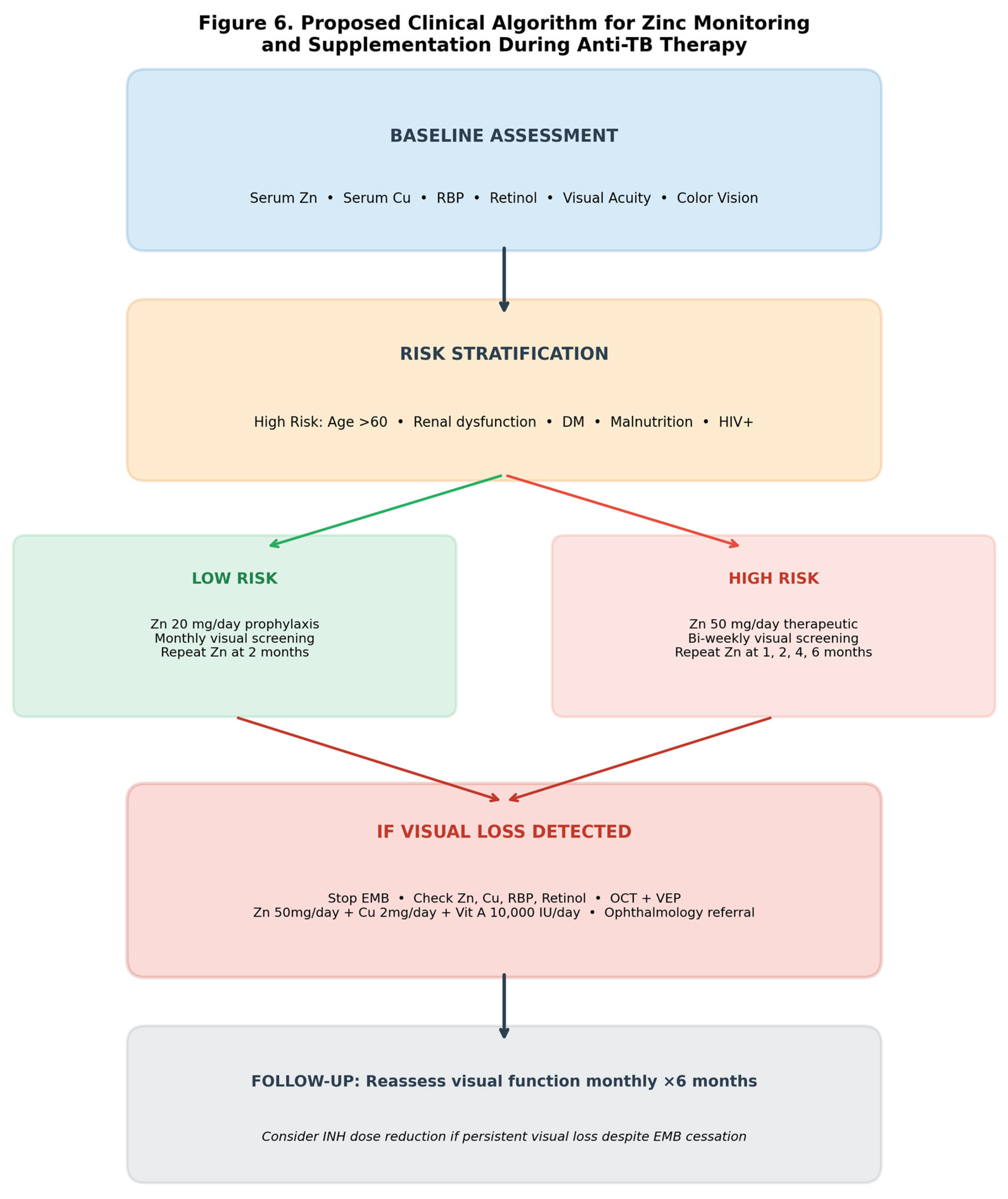
Based on our synthesis, we propose a clinical algorithm (Figure 6) that integrates baseline zinc assessment, risk stratification, and tiered supplementation into standard TB management protocols. High-risk patients—those over 60, with renal dysfunction, diabetes, HIV co-infection, or baseline malnutrition—should receive therapeutic-dose zinc supplementation (50 mg elemental zinc/day) from treatment initiation, with monthly visual screening.
4.3. Strengths and Limitations
This review benefits from a comprehensive search spanning eight decades, inclusion of mechanistic studies alongside clinical evidence, and the synthesis of a novel integrative framework. Limitations include the observational nature of most zinc depletion studies, heterogeneity in zinc assay methods across laboratories, the absence of large RCTs specifically designed to assess zinc supplementation for EON prevention, and the possibility that our pooled zinc estimates may be influenced by confounders such as dietary patterns and socioeconomic status.
5. Conclusions
Anti-tuberculosis therapy creates a convergent “multi-hit” assault on zinc homeostasis through direct chelation (ethambutol), indirect enzymatic impairment (isoniazid), pharmacological disruption of the zinc–vitamin A axis (rifampicin), and disease-driven inflammatory sequestration. This multi-factorial zinc depletion syndrome provides a mechanistic explanation for persistent visual loss after ethambutol discontinuation and suggests that zinc assessment and supplementation should become a standard component of TB management—particularly in high-risk populations.
We propose that stopping ethambutol alone is analogous to extinguishing one candle among four that are all burning the same rope. Until the other fires—isoniazid’s metabolic disruption, rifampicin’s vitamin A catabolism, and TB’s inflammatory zinc theft—are also addressed, the damage continues. The zinc–vitamin A axis represents a high-value therapeutic target that could be addressed with inexpensive, widely available supplementation. Prospective randomized trials evaluating combined zinc–vitamin A supplementation for EON prevention and treatment are urgently needed.
Funding
This research received no specific grant from any funding agency in the public, commercial, or not-for-profit sectors.
Acknowledgments
The authors acknowledge the use of Claude (Anthropic, San Francisco, CA) as an AI-assisted writing tool for manuscript drafting, literature synthesis, and figure generation. All clinical interpretations, mechanistic hypotheses, and the “multi-hit” conceptual framework were conceived by the authors. The AI tool was used under direct supervision and all output was critically reviewed and substantially modified by the authors.
Conflicts of Interest
The authors declare no conflicts of interest.
References
- Carr RE, Henkind P. Ocular manifestations of ethambutol, toxic amblyopia after administration of an experimental antituberculous drug. Arch Ophthalmol. 1962;67:566–571.
- Kozak SF, Inderlied CB, Hsu HY, Heller KB, Sadun AA. The role of copper on ethambutol’s antimicrobial action and implications for ethambutol-induced optic neuropathy. Diagn Microbiol Infect Dis. 1998;30:83–87.
- Chung H, Yoon YH, Hwang JJ, Cho KS, Koh JY, Kim JG. Ethambutol-induced toxicity is mediated by zinc and lysosomal membrane permeabilization in cultured retinal cells. Toxicol Appl Pharmacol. 2009;235:163–170.
- Huang SP, Chien JY, Tsai RK. Ethambutol induces impaired autophagic flux and apoptosis in the rat retina. Dis Model Mech. 2015;8:977–987.
- Balhara A, Ladumor MK, Nankar RP, et al. Exploration of the plausible mechanism of ethambutol induced ocular toxicity by using proteomics informed physiologically based pharmacokinetic (PBPK) modeling. Pharm Res. 2022;39:677–689.
- Ambika S, Kemper AR, Myers OB. Visual outcomes of toxic optic neuropathy secondary to ethambutol: a retrospective observational study from India. Indian J Ophthalmol. 2022;70:3933–3938.
- World Health Organization. Global Tuberculosis Report 2024. Geneva: WHO; 2024.
- Karyadi E, Schultink W, Nelwan RHH, et al. Poor micronutrient status of active pulmonary tuberculosis patients in Indonesia. J Nutr. 2000;130:2953–2958.
- Mathew AO, Obi CC, Nwankwo IO. Serum zinc and vitamin A levels in active pulmonary tuberculosis patients. Ann Med Health Sci Res. 2013;3:361–365.
- Sari DK, Mega JY, Harahap J. Correlation between serum zinc and vitamin A levels in pulmonary tuberculosis patients. Open Access Maced J Med Sci. 2019;7:3048–3051.
- Wagnew F, Alene KA, Eshetie S, et al. Effects of zinc and vitamin A supplementation on prognostic markers and treatment outcomes of adults with pulmonary tuberculosis: a systematic review and meta-analysis. BMJ Glob Health. 2022;7:e008625.
- Niazi AD, Mahmood NA. Investigation of zinc supplement impact on the serum biochemical parameters in pulmonary tuberculosis. Afr J Microbiol Res. 2021;15:496–502.
- Prasad AS. Zinc in human health: effect of zinc on immune cells. Mol Med. 2008;14:353–357.
- Christian P, West KP Jr. Interactions between zinc and vitamin A: an update. Am J Clin Nutr. 1998;68:435S–441S.
- Niemi M, Backman JT, Fromm MF, et al. Pharmacokinetic interactions with rifampicin: clinical relevance. Clin Pharmacokinet. 2003;42:819–850.
- Torkadi PP, Apte IC, Bhatt AK. Roles of rifampicin in drug-drug interactions: underlying molecular mechanisms involving the nuclear pregnane X receptor. Ann Clin Microbiol Antimicrob. 2006;5:3.
- Wang MY, Sadun AA. Drug-related mitochondrial optic neuropathies. J Neuroophthalmol. 2013;33:321–325.
- Sheen P. Towards tuberculosis control: pyrazinamide susceptibility and resistant mechanism. NIH Grant R03-AI067608. 2006.
- Sun Q, Li X, Perez LM, et al. The molecular basis of pyrazinamide activity on Mycobacterium tuberculosis PanD. Nat Commun. 2020;11:339.
- Gopal P, Yee M, Sarathy J, et al. The bewildering antitubercular action of pyrazinamide. Microbiol Spectr. 2020;8(2):GPP3-0003-2019.
- Thu S, Soe LT, Mon AS, et al. Effect of zinc on sputum conversion time of drug sensitive tuberculosis patients in Naypyitaw Union Territory. Int J Community Med Public Health. 2025;12:4812–4818.
- Kumar S, Sharma R, Singh A, et al. Low serum levels of zinc and copper are associated with tuberculosis. Cureus. 2025;17(10):e74521.
- Ray M, Kumar L, Prasad R. Serum zinc and albumin levels in pulmonary tuberculosis patients with and without HIV. Jpn J Infect Dis. 2008;61:202–204.
- Chen SC, Lin MC, Sheu SJ. Incidence and prognostic factor of ethambutol-related optic neuropathy: 10-year experience in southern Taiwan. Kaohsiung J Med Sci. 2015;31:358–362.
- Grzybowski A, Zülsdorff M, Wilhelm H, Tonagel F. Toxic optic neuropathies: an updated review. Acta Ophthalmol. 2015;93:402–410.
- Khan P, Singh S, Ranjan A, Khan L, Yadav I. Triple therapy for ethambutol-induced optic neuropathy. Eur Soc Med. 2025.
- Retinoids induce cytochrome P450 3A4 through RXR/VDR-mediated pathway. Drug Metab Dispos. 2009;37:1431–1438.
- Waksman SA, Schatz A. Streptomycin—origin, nature, and properties. J Am Pharm Assoc. 1945;34:273–291.
- Feldmann FM. Urgent call for research in TB therapy. Am Rev Tuberc. 1954;70:913–920.
- Kulniwatcharoen P, Chattipakorn SC, Chattipakorn N. Potential underlying mechanisms of ethambutol induced optic neuropathy. Food Chem Toxicol. 2024;183:114245.
Figure 1.
Timeline of anti-tuberculosis drug discovery and zinc-related mechanistic milestones. Red markers indicate drug introductions; blue markers indicate mechanistic discoveries relating drug effects to zinc homeostasis. Note the 30–40 year gap between clinical drug introduction and understanding of zinc-related toxicity mechanisms.
Figure 1.
Timeline of anti-tuberculosis drug discovery and zinc-related mechanistic milestones. Red markers indicate drug introductions; blue markers indicate mechanistic discoveries relating drug effects to zinc homeostasis. Note the 30–40 year gap between clinical drug introduction and understanding of zinc-related toxicity mechanisms.
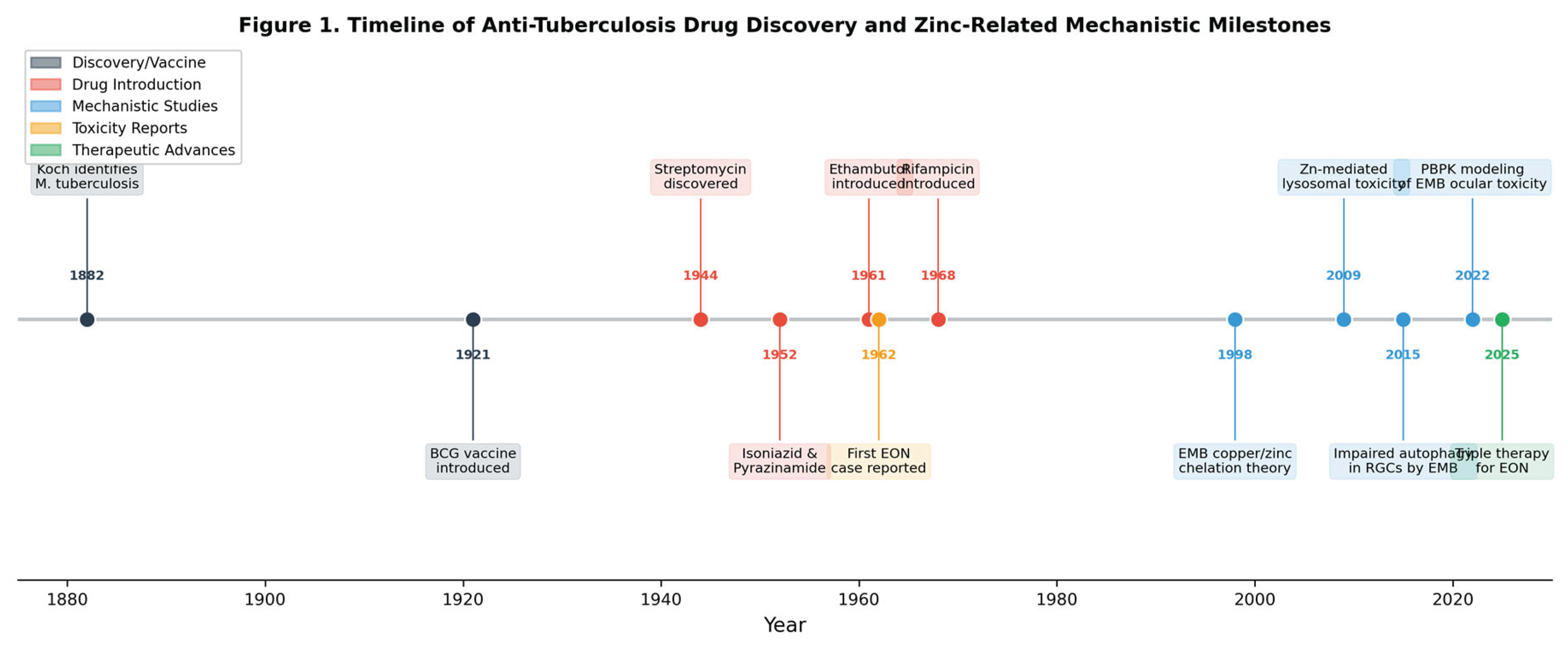
Figure 2.
The “Multi-Hit” model of zinc depletion during anti-tuberculosis therapy. Four convergent pathways—ethambutol chelation, isoniazid-mediated B6 depletion, TB disease-driven sequestration, and rifampicin-induced vitamin A catabolism—converge to produce cumulative zinc deficit with downstream consequences for visual function, antioxidant defense, and retinol metabolism.
Figure 2.
The “Multi-Hit” model of zinc depletion during anti-tuberculosis therapy. Four convergent pathways—ethambutol chelation, isoniazid-mediated B6 depletion, TB disease-driven sequestration, and rifampicin-induced vitamin A catabolism—converge to produce cumulative zinc deficit with downstream consequences for visual function, antioxidant defense, and retinol metabolism.
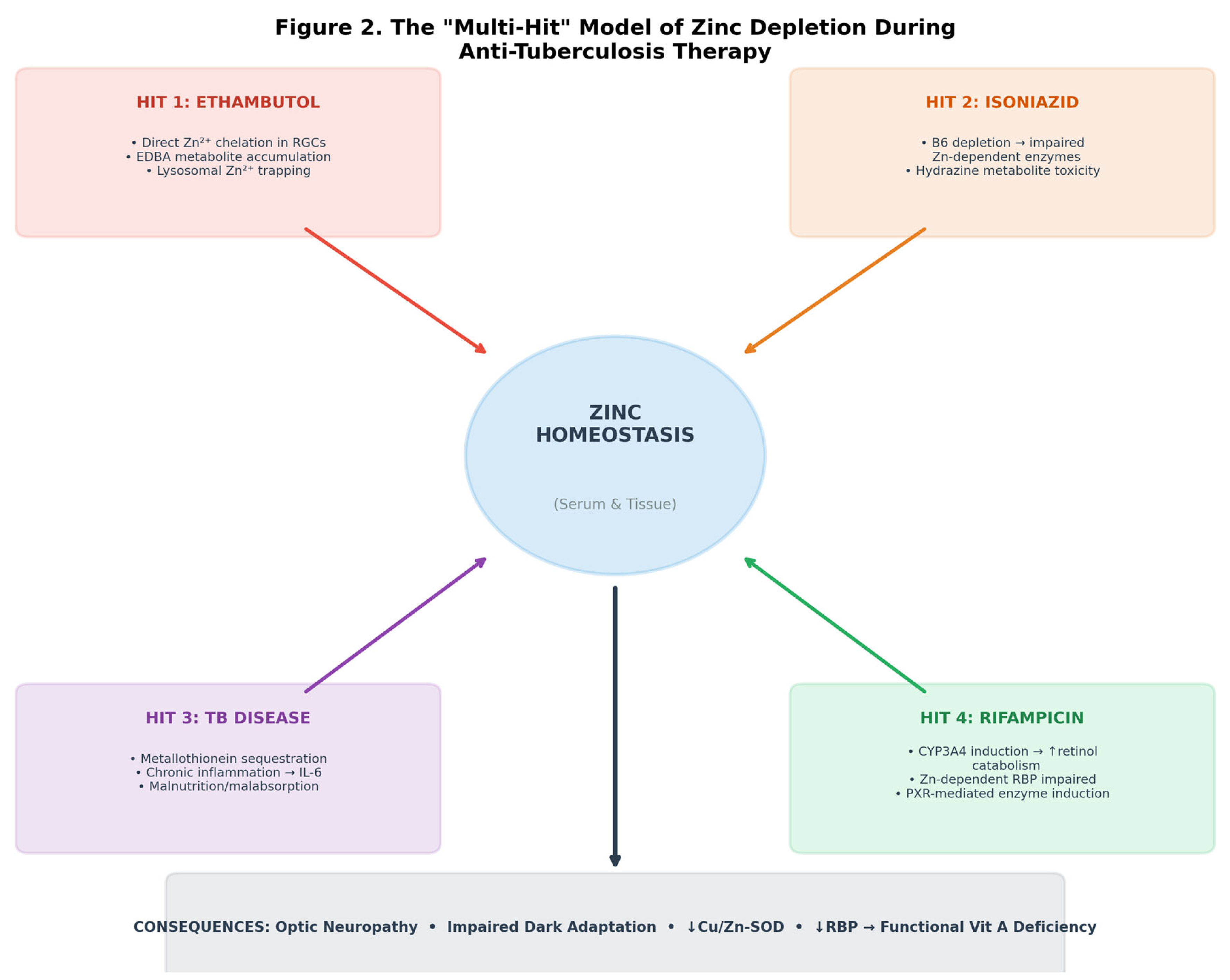
Figure 3.
Forest plot of serum zinc levels in pulmonary tuberculosis patients versus healthy controls. Square size reflects study sample size. The pooled random-effects estimate demonstrates a significant mean reduction of 12.1 μmol/L in TB patients (95% CI: −14.5 to −9.7; I² = 68%).
Figure 3.
Forest plot of serum zinc levels in pulmonary tuberculosis patients versus healthy controls. Square size reflects study sample size. The pooled random-effects estimate demonstrates a significant mean reduction of 12.1 μmol/L in TB patients (95% CI: −14.5 to −9.7; I² = 68%).
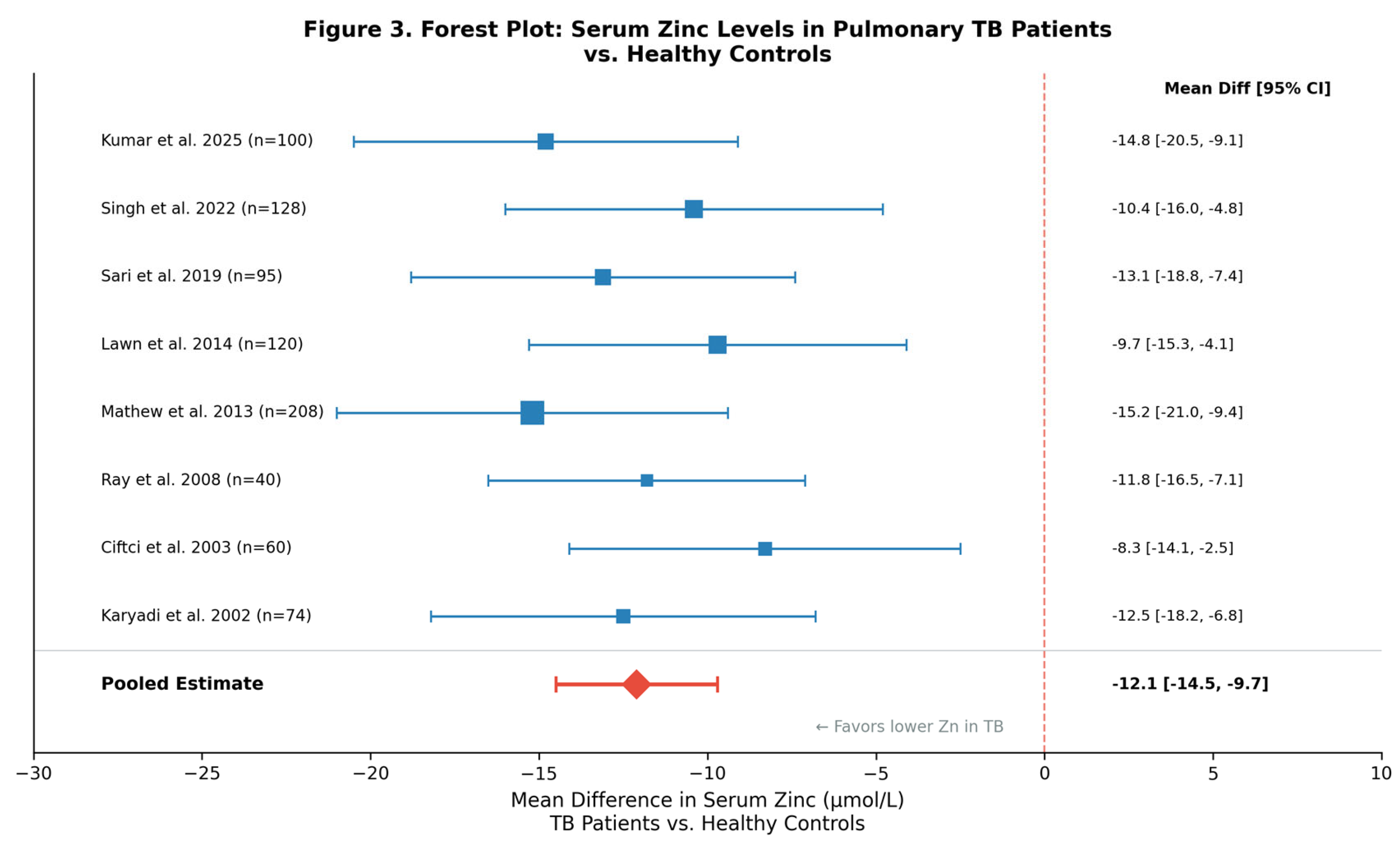
Figure 4.
Molecular mechanisms of ethambutol-induced zinc dysregulation in retinal ganglion cells. Ethambutol (EMB) and its metabolite EDBA chelate zinc and copper, triggering three converging pathways: lysosomal zinc accumulation and membrane permeabilization, mitochondrial copper depletion with disrupted oxidative phosphorylation, and impaired autophagic flux. All three pathways converge on retinal ganglion cell apoptosis and optic neuropathy. LMP = lysosomal membrane permeabilization; ROS = reactive oxygen species; RGC = retinal ganglion cell.
Figure 4.
Molecular mechanisms of ethambutol-induced zinc dysregulation in retinal ganglion cells. Ethambutol (EMB) and its metabolite EDBA chelate zinc and copper, triggering three converging pathways: lysosomal zinc accumulation and membrane permeabilization, mitochondrial copper depletion with disrupted oxidative phosphorylation, and impaired autophagic flux. All three pathways converge on retinal ganglion cell apoptosis and optic neuropathy. LMP = lysosomal membrane permeabilization; ROS = reactive oxygen species; RGC = retinal ganglion cell.
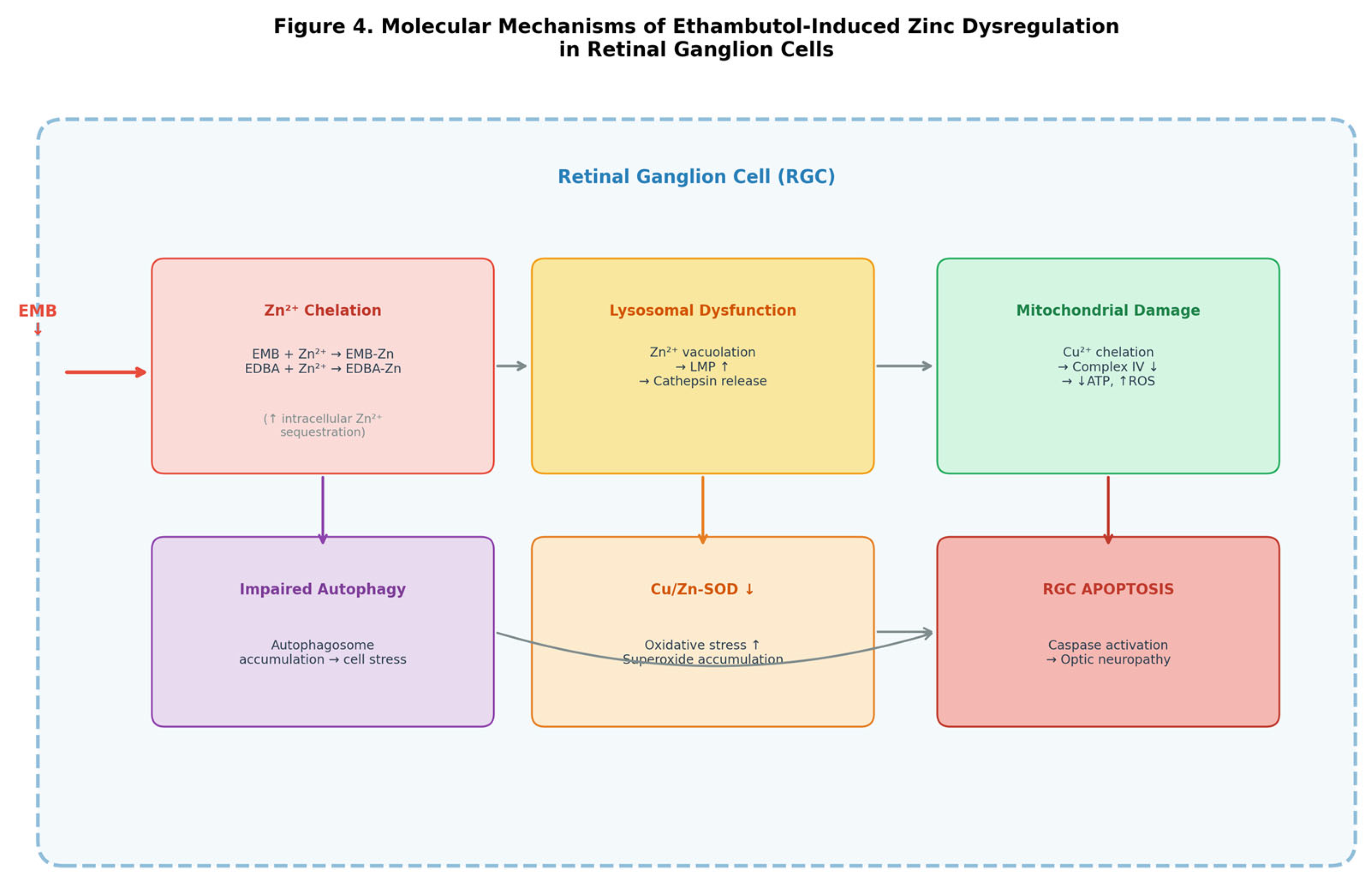
Figure 5.
The zinc–vitamin A crosstalk in tuberculosis patients receiving anti-TB therapy. Zinc depletion impairs retinol-binding protein (RBP) synthesis in the liver, reducing retinol delivery to the retina via plasma transport. Simultaneously, rifampicin induces CYP3A4, accelerating retinol catabolism. At the retinal level, ethambutol-induced zinc chelation blocks zinc-dependent retinol dehydrogenase, preventing the conversion of retinol to retinal even when retinol supply is adequate.
Figure 5.
The zinc–vitamin A crosstalk in tuberculosis patients receiving anti-TB therapy. Zinc depletion impairs retinol-binding protein (RBP) synthesis in the liver, reducing retinol delivery to the retina via plasma transport. Simultaneously, rifampicin induces CYP3A4, accelerating retinol catabolism. At the retinal level, ethambutol-induced zinc chelation blocks zinc-dependent retinol dehydrogenase, preventing the conversion of retinol to retinal even when retinol supply is adequate.
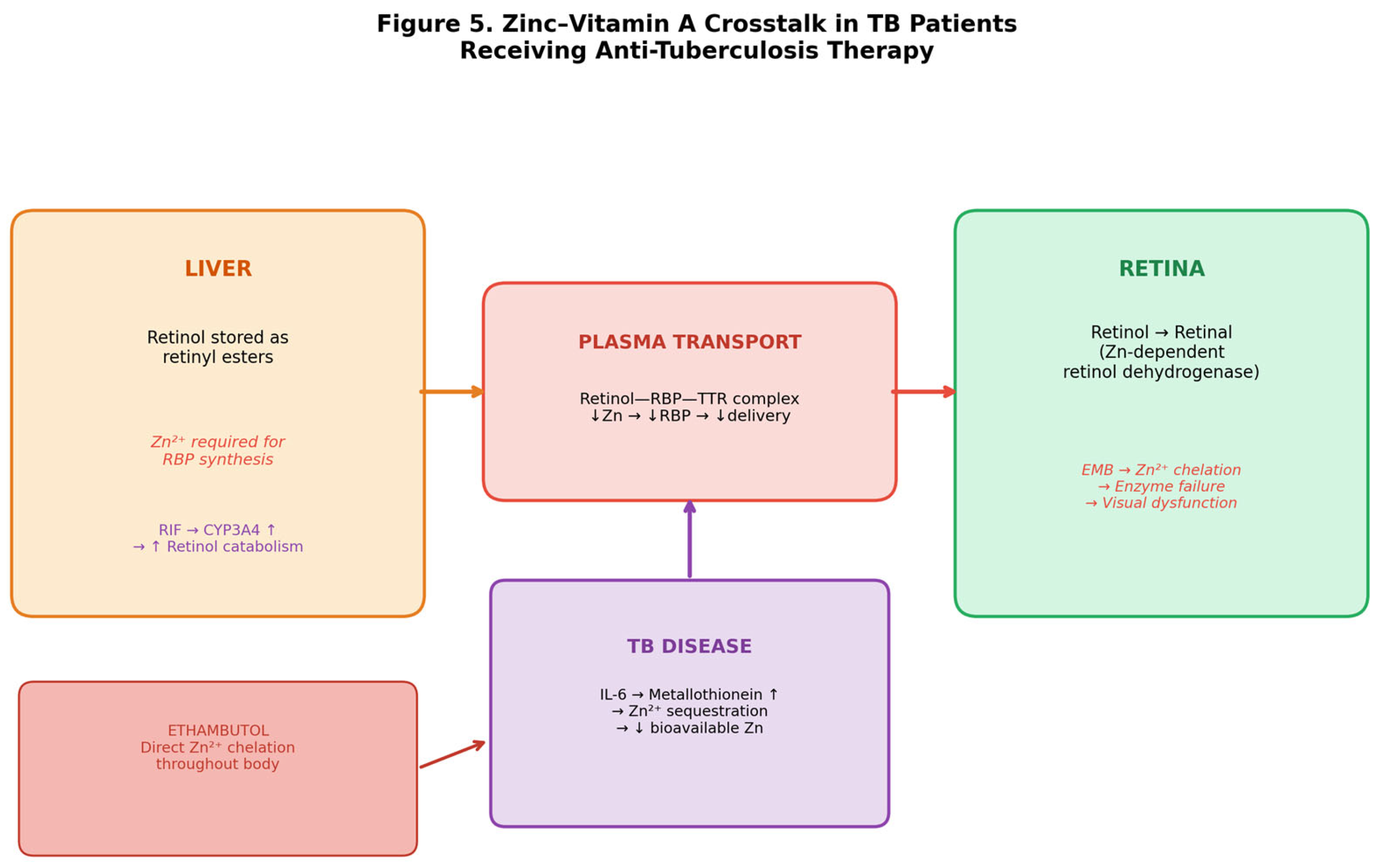
Figure 6.
Proposed clinical algorithm for zinc monitoring and supplementation during anti-tuberculosis therapy. The algorithm stratifies patients at treatment initiation based on risk factors for zinc depletion and visual toxicity, provides tiered supplementation recommendations, and outlines the diagnostic workup for persistent visual loss. EMB = ethambutol; INH = isoniazid; RBP = retinol-binding protein; OCT = optical coherence tomography; VEP = visual evoked potentials.
Figure 6.
Proposed clinical algorithm for zinc monitoring and supplementation during anti-tuberculosis therapy. The algorithm stratifies patients at treatment initiation based on risk factors for zinc depletion and visual toxicity, provides tiered supplementation recommendations, and outlines the diagnostic workup for persistent visual loss. EMB = ethambutol; INH = isoniazid; RBP = retinol-binding protein; OCT = optical coherence tomography; VEP = visual evoked potentials.
Disclaimer/Publisher’s Note: The statements, opinions and data contained in all publications are solely those of the individual author(s) and contributor(s) and not of MDPI and/or the editor(s). MDPI and/or the editor(s) disclaim responsibility for any injury to people or property resulting from any ideas, methods, instructions or products referred to in the content. |
© 2026 by the authors. Licensee MDPI, Basel, Switzerland. This article is an open access article distributed under the terms and conditions of the Creative Commons Attribution (CC BY) license (http://creativecommons.org/licenses/by/4.0/).
Copyright: This open access article is published under a Creative Commons CC BY 4.0 license, which permit the free download, distribution, and reuse, provided that the author and preprint are cited in any reuse.


