

Submitted:
20 April 2026
Posted:
22 April 2026
You are already at the latest version
Abstract
The concept of Industry 5.0 is gaining wide recognition both in academia and in business practice. On the other hand, the assessment of maturity using the maturity model for the implementation of the 5.0 concept is characterized by a much lower degree of recognition. In the face of the increasing complexity of global supply chains and the need to ensure the efficient flow of materials, the authors postulate a model of maturity for the implementation of the Industry 5.0 concept, which will become a key subject of scientific research, and the solutions developed within it will be gradually implemented by companies striving to increase their competitiveness. This study presents the conceptual framework of the maturity model for the implementation of the Industry 5.0 concept in logistics industry enterprises, the aim of which is to enable organizations to assess the current level of advancement in the implementation of the elements of the Industry 5.0 concept and to develop a strategic improvement action plan. This model was created on the basis of a review of the literature on the subject, covering both industry issues and existing models of organizational maturity. Its structure has been designed and empirically verified in such a way as to form the foundation for the development of a set of practical guidelines supporting the logistics transformation towards the concept of Industry 5.0.
Keywords:
industry 5.0
; industry 4.0
; maturity model
; maturity assessment
; logistics 5.0
1. Introduction
Nowadays, to survive in an increasingly demanding environment, companies have to undergo significant transformations. As a result of the social, economic and technological transformations taking place, turbulent changes in the environment can be observed, which are important for the functioning of enterprises. Competitive advantage is gained by those companies that base their operations on creating innovative processes and implement modern technological solutions that increase the efficiency of their production processes. The implementation of organizational and technical solutions is crucial to increase flexibility, respond quickly and efficiently to customer needs, and remain competitive (Lichtblau, K. and others). The available solutions, the most technologically advanced, are part of the Industry 5.0 concept. Industry 5.0 offers a wide range of options, and choosing the most appropriate one requires the company to define its goals at a strategic level.
The concept of Industry 5.0 is increasingly appearing in scientific and business discussions. It is seen as the next phase of development, in which human-machine collaboration and sustainability will play a key role. While Industry 4.0 focuses on automation and efficiency, Industry 5.0 seeks to strengthen the interaction between humans and technology, with a focus on individualizing production, humanizing technological processes, and taking greater account of social and ecological values (Nowacki, 2025)
It is now believed that business models, as a complement to the strategy, should be implemented as a navigating instrument towards sustainable success in the market. The assumptions of the maturity model for the implementation of the Industry 5.0 concept are based on the idea of integrating intelligent machines and systems with the human sphere and introducing changes in production processes aimed at increasing production efficiency and introducing the possibility of flexible changes in the assortment. Industry 5.0 is not only concerned with increasing efficiency and production, but also with solving major global challenges related to sustainability and environmental protection. So the maturity model is not only about technology, but also about new ways of working and the role of people in industry.
Maturity models were created in the mid-twentieth century to systematically improve organizational performance, ensure consistency, and meet customer expectations. These are tools used to assess the level of advancement of an organization in key areas, such as management, technologies or business processes. They allow you to identify strengths and weaknesses, set development goals and monitor progress, as well as compare yourself with other players in the industry. The maturity model enables organizations to accurately understand their current situation and identify areas that need improvement or investment. This allows organizations to identify gaps and weaknesses, develop growth strategies, and take action to increase their efficiency. These models help assess readiness for smart manufacturing deployment based on pillars such as sustainability, resilience, and human focus, enabling a smooth transition to Industry 5.0 practices. Additionally, the combination of sustainability maturity models with digitalization aspects helps define strategic improvement measures for companies transitioning to green and digital technologies, ultimately contributing to economic, environmental, and social sustainability in manufacturing operations. (Martusewicz i inni, 2024) (Oleśków-Szłapka i inni, 2024)
The dynamic nature of modern business, characterized by rapid digital transformation, requires robust management systems that use advanced technologies such as artificial intelligence (AI) and robotic analysis of big data. These technologies are critical to increasing efficiency and innovation, enabling organizations to remain competitive. Digital transformation is a tool of Industry 5.0 (the fifth industrial revolution), as well as a vision of the future for most companies. It is the concept of connecting the world of production machinery with the world of the Internet, information technology and people (Martusewicz i inni, 2024) (Martusewicz et al., 2020). Industry 5.0, semantically linked to the Fifth Industrial Revolution, ushers in a new era of manufacturing that is based on the combination of digital technologies, automation, and data analytics with the human sphere. The introduction of the Industry 5.0 concept is associated with numerous challenges for organizations that want to adapt to the new industrial reality and use its potential. In this context, the maturity model can be a valuable tool that enables organizations to assess and improve their readiness to implement Industry 5.0 concepts. (Szewczyk, 2024)
As part of the pilot research conducted on a research sample in manufacturing companies from the automotive industry, the authors noted that in the logistics industry, maturity models are used to a low degree to assess companies for the implementation of elements of the Industry 5.0 concept, and the proposed model can serve as a valuable source of knowledge about the company. The authors thus defined a research gap on the use of maturity models for the implementation of the Industry 5.0 concept in logistics companies. Therefore, they propose a maturity model that allows companies to assess the current level of implementation and plan further actions in the areas of: strategy, employees, production processes and technologies, logistics processes, the company’s technical infrastructure, products and business results. The proposed maturity model enables organizations to systematically assess their readiness to adopt Industry 5.0. Industries can thus use the model to implement innovative, customer-centric and sustainable logistics processes.
The research work was divided into two parts. This study is only the first part, which aims to propose a comprehensive maturity model that has been empirically proven in the automotive industry, which can be used in the logistics industry and thus tested and improved. It should be added that the model has been modified in some aspects and adapted to the logistics industry. The second part will include testing the proposed in logistics companies and will be the basis for a separate publication.
2. Literature Analysis
Industry 5.0, which is an evolution of the Industry 4.0 concept, emphasizes a human-centered approach to designing innovative solutions. While Industry 4.0 focuses on automation and efficiency, Industry 5.0 seeks to strengthen the interaction between humans and technology, with an emphasis on individualizing production, humanizing technological processes, and taking greater account of social and environmental values. Humans occupy a central place in the production process, playing the role of a creative partner for machines, which opens new opportunities and challenges for enterprises. Industry 5.0, with a focus on human, organizational resilience, and sustainability, emphasizes the integration of advanced technologies such as big data, artificial intelligence, IoT, and cobots in manufacturing. (Hamera, 2024)(Aquilani i inni, 2020)(Bajic i inni, 2023)
In recent years, especially after 2020, there has been a significant increase in interest in the concept of Industry 5.0. Figure 1 shows the number of publications related to the topic of Industry 5.0 over the years.
A low level of interest is noticeable initially, with few publications. Since 2018, a significant increase in the number of publications has been observed, which indicates the growing popularity of this topic in recent years. The peak growth can be observed in 2021-2024, when the number of publications doubled, suggesting a growing interest in the topic in the scientific community and indicating an intensive development of research related to Industry 5.0.
In the opinion of the authors, the analysis of existing maturity models for use in Industry 4.0 is also justified. In the literature, the authors found numerous examples of business process maturity models, as well as Industry 4.0 (Phrases in the inside) (Banyani in Inside, 2010) (Schumacher in Inside, 2016). In addition, several models were found that directly relate to the application of the Industry 5.0 concept. The usefulness of maturity models is highly appreciated by companies operating both in local and global markets. This is confirmed by a study conducted by D. Dikhanbayeva, S. Shaikholl, Z. Suleiman and A. Turkyilmaz, who made a detailed analysis referring to the terms related to maturity models in Industry 4.0. Researchers also detailed models of the Industry 5.0 concept and made a comprehensive synthesis, as shown in Table 1.
The models presented above have been subjected to a qualitative analysis in detail. Three categories of gaps occurring in these models have been defined, which can be described as a lack of comprehensiveness for the implementation of Industry 5.0. The first gap is the significant theorization of models and their low degree of practicality. According to the analysis, many maturity models are based on strictly theoretical factors with low practical usefulness for companies wishing to develop their processes based on the concept of Industry 5.0. Moreover, the authors unequivocally state that many available maturity models should be improved based on maturity model development strategies. The disadvantage of the analyzed models is the small number of industrial (commercial) and logistics models and the lack of full access to them, especially to the methodology of creation and research surveys. In this case, there is an additional availability gap to this group of models, which is associated with financial expenses and the purchase of licenses. The EFQM model deserves special attention as one of the most popular due to its complexity in application. The EFQM 2020 model is a tool that was created in response to the current management challenges. It strongly refers to the need to integrate sustainability activities into the company’s operations, both at the strategic and operational levels. The EFQM model can be an important guide to creating, implementing, and monitoring a company’s strategy in this area (Martusewicz et al., 2022). The EFQM model is one of the methods supporting the holistic preparation of organizations for Industry 5.0. The Model of Excellence helps modern organizations measure, predict, monitor the needs and requirements of stakeholders, and track the achievements of other organizations. The achieved results are the basis for the implementation of improvement activities in the organization (EFQM). A. A. AlAdeedi argues that EFQM improves customer performance and satisfaction and focuses on employee engagement and sustainability, which consequently significantly weakens its long-term effectiveness (AlAdeedi, 2025).
As a result of the analysis of the literature, it was found that there is a gap in Logistics, i.e., a comprehensive approach to the implementation of Industry 5.0, including solutions for the design and management of value flows in modern economic systems (global value chains). To fill the gap, the authors present a maturity model for the implementation of the Industry 5.0 concept in logistics companies. This model was developed to provide companies with a methodology that allows them to both assess their current maturity status and outline an action plan for improvement, considering seven key areas: strategy, employees, production processes, logistics processes, resources, products, business outcomes.
3. Dimensions of the Model
The analysis of the models presented above allows us to determine the most common organizational areas that are the basis for the modular construction of the maturity model. An analysis of basic organizational models can also be helpful in determining the scope and future modules of the designed solution. In the literature, you can find several types of models that present an organization as a set of constituent elements. The most used models in research of enterprises and their management systems are: the 7S model, Weisbrod (Weisbord, 1976) and the organization model developed by R.H. Waterman, T.J. Peters and J.R. Philips, called the 7S model (Waterman et al., 1980).
Analyzing the presented models, the following similarities in the concept of the functioning of the organization can be indicated. An important issue is the method and scope of defining areas of the organization in individual models. This is particularly important from the perspective of adapting the management system to the Industry 5.0 concept. The analysis of both available maturity models and organizational models allows to define the basic functional areas of the company. These areas are also important for the implementation of the Industry 5.0 concept. These are:
- A strategy that includes a mission, vision and strategic goals is not just abstract concepts. The strategy in the Industry 5.0 maturity model focuses on the use of modern technologies, innovation and operational flexibility to achieve competitiveness and adaptation to a rapidly changing market environment.
- Employees (their actions, attitudes and values, competencies, scope of cooperation, leadership) are an important element of the organization and are the driving force of the company. In the era of Industry 5.0, where technology is playing an increasingly important role, the importance of people is not decreasing, but on the contrary - it is becoming even more important. Their adaptability, collaboration and effective leadership are crucial to success in a dynamic and uncertain business environment.
- Processes of preparing goods for sale are an important part of the activities of logistics distribution centers. Within these processes, the key role is played by the workflow, procedures, methods and coordination systems, including both management processes and technologies used in the organization. Companies should invest in the development and improvement of these processes, using modern technologies and best management practices to ensure the reliability and correctness of order execution as well as eliminate errors. In the context of Industry 5.0, technologies that not only automate processes, but also enable adaptation to changing market conditions play an important role.
- Transport processes, including comprehensive management of the flow of materials and information, integrate suppliers and customers. In the era of Industry 5.0, logistics is becoming an even more crucial element, due to the increasing complexity of the supply chain and the need to react quickly to market changes. The model should therefore include a comprehensive approach to cooperation with suppliers and customers, as part of Industry 5.0 IT tools, used in logistics processes. Cooperation with suppliers and customers is not only becoming crucial for the effective functioning of the supply chain, but also for ensuring flexibility and responsiveness to market changes. IT tools play a fundamental role in streamlining and optimizing logistics processes, enabling more accurate forecasting, monitoring, and management of the flow of materials and information. This approach will allow companies to effectively adapt to new market requirements and achieve a competitive advantage, as well as measure utility. It is worth adding that greater logistical flexibility of the company (e.g., diversification of means of transport, increasing the role of railways and inland navigation) is associated with greater use of ecological solutions. As a result, it can lead to an increase in the company’s image in the market.
- Resources (infrastructure and cybersecurity), both infrastructural and digital, are the foundation of a company’s operations. Infrastructure provides the physical space and tools to execute processes, while digital assets, along with the cybersecurity aspect, enable data and communication management. In the era of Industry 5.0, a comprehensive maturity model should consider the resource aspect. It is crucial because modern digital technologies and infrastructure are integral elements of the transformation of modern production plants.
- Logistics products or services are the result of the activities of a logistics company. In today’s dynamic business environment, the process of product design and development plays a key role, determining the innovation and competitiveness of the company. In the era of Industry 5.0, where the pace of change is extremely fast, this process is becoming even more complex and dynamic, requiring constant adaptation and sometimes complete redefinition to meet new challenges and customer expectations.
- The business results module includes the results for each of the previous modules. The assessment of the workforce criterion was not considered due to their limited measurability. There are difficulties in objectively measuring employee achievement or performance, which means that an organization may choose not to include this data and focus on other areas during the assessment. The strategy module uses financial and non-financial indicators to measure the strategic and operational results of the implementation of the Industry 4.0 concept. Examples of organizational KPIs may include: revenue, book profit, operating profit (EBITDA), investments, rate of return on investment of the Industry 5.0 tool, costs of Industry 5.0 projects, and compliance with the budget of Industry 5.0 implementations. It is best to take a 5-year perspective of indicators, covering the current year (n), the previous year (n-1) and two years back (n-2). On the other hand, planning should refer to the next year (n+1) and the period in 2 years (n+2). In the results section of Logistics, business results will be about increasing delivery precision. By using transport systems based on Industry 4.0 technologies, organizations can increase the precision and reliability of their deliveries, leading to increased customer satisfaction. The key indicator is On-Time Delivery. It is an indicator used in logistics to measure the degree of completion of the delivery of products or services according to the set deadlines. In addition, this indicator is also used in production and distribution. Companies try to maintain the highest possible level of on-time delivery, as delays in deliveries can lead to customer dissatisfaction, financial losses, and problems related to production and resource planning.
When defining individual levels of maturity, general descriptions from the maturity model of the functioning of the organization according to ISO 9004, which is used to evaluate quality management systems in enterprises, were used. This model consists of five progressive levels: (1) No formal approach, (2) Reactive approach, (3) Stable, formal systems approach, (4) Emphasis on continuous improvement, (5) Best-in-class performance. In the authors’ opinion, this model can be used to measure the continuous improvement of enterprises, which is undoubtedly an element of the implementation of innovations. Therefore, the above scale is a very good basis for assessing the maturity of the implementation of the Industry 5.0 concept. Based on this scale, the following general descriptions of maturity levels were developed, which were used in a comprehensive maturity model to implement the Industry 5.0 concept. The maturity scale includes:
- Lack of approach - the company does not apply any elements of the Industry 4.0 concept or there are isolated cases of informal application of a given criterion.
- There is a need for application - to start formally applying a given criterion with varying degrees of success.
- Applied tool - a criterion implemented in a systematic way in the company. The first positive effects resulting from the implementation are visible, the beginnings of standardization
- Reliability in approach - a criterion fully applied in the company. Elements of improvement are visible.
- Benchmark, Best in the Industry - all areas successfully apply a given criterion with visible positive effects. The implemented solutions are an example of best-in-class and are constantly being improved.
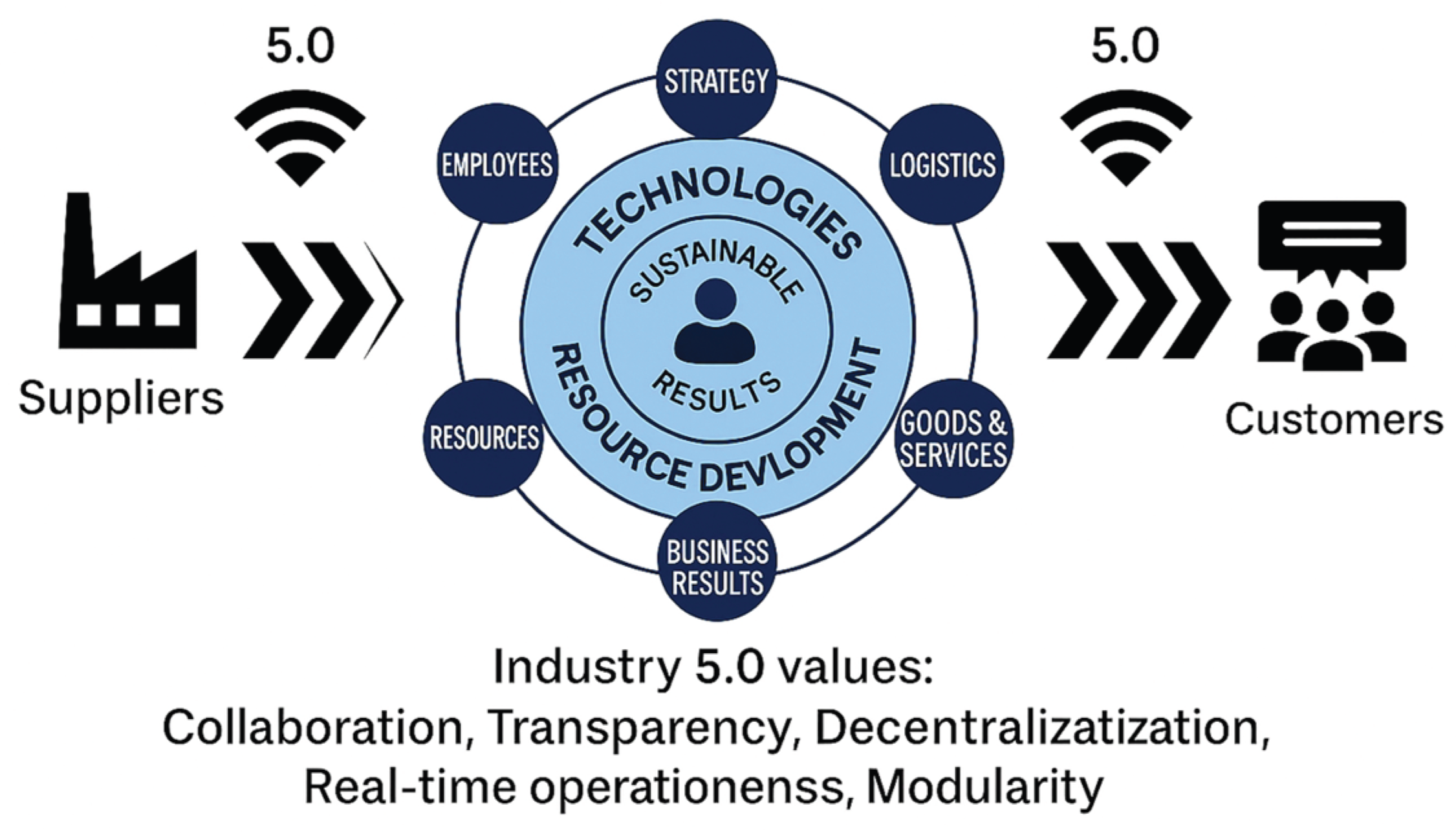
In the last step, a detailed description of the guidance is specified for each of the criteria. Their form takes affirmative sentences that describe mature organizations. The degree of maturity is measured based on an assessment of the fulfilment of individual levels of maturity, which have been determined based on a literature review. At this stage, the process of constructing a comprehensive maturity model for implementation was completed. Figure 2 below presents the dimensions of the maturity model for the implementation of the Industry 5.0 concept in logistics companies. Figure 3, on the other hand, presents a graphically presented model of maturity.
Figure 2.
7S Organization Model.
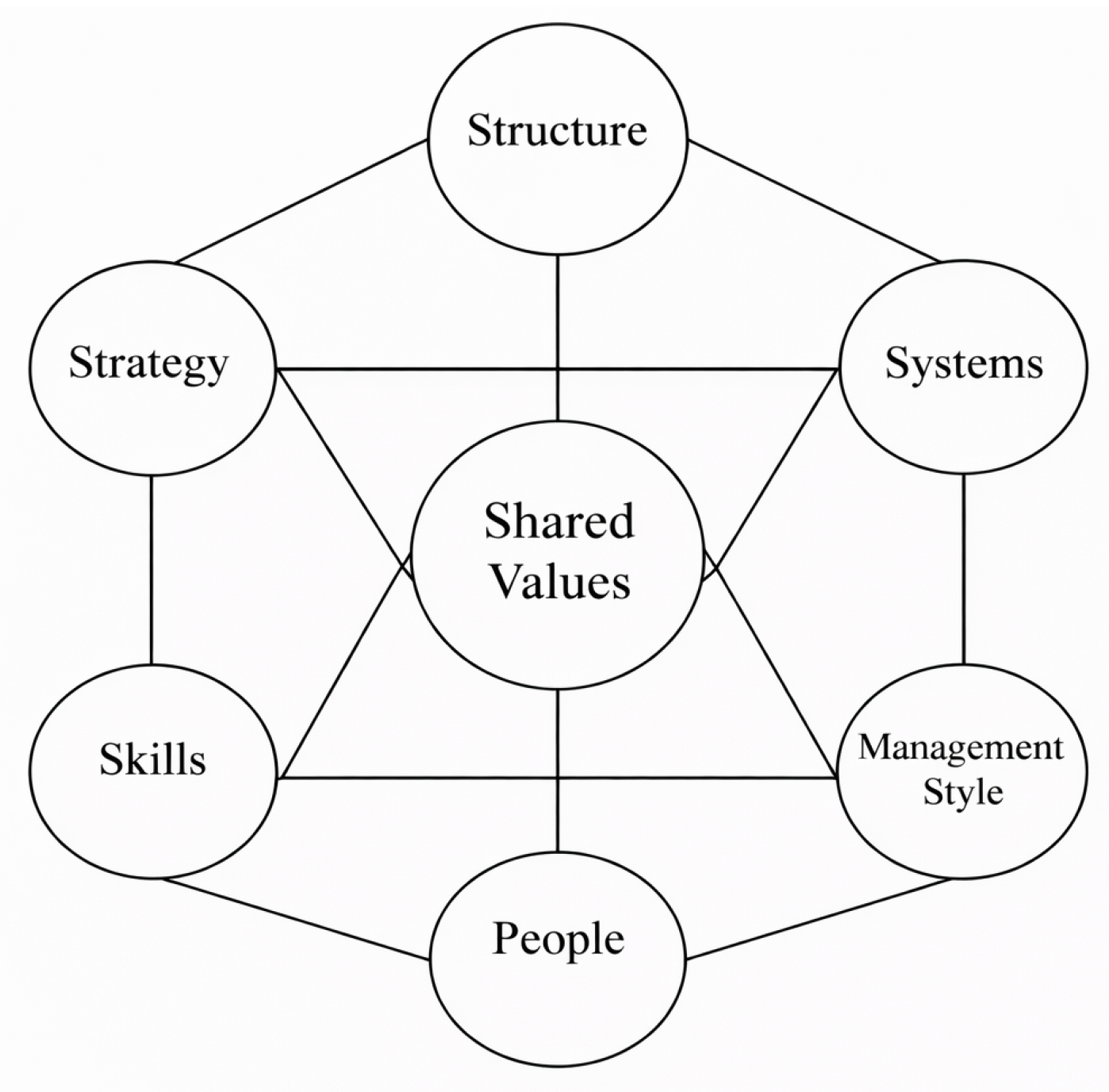
Figure 3.
Dimensions of the maturity model for the implementation of the Industry 4.0 concept.
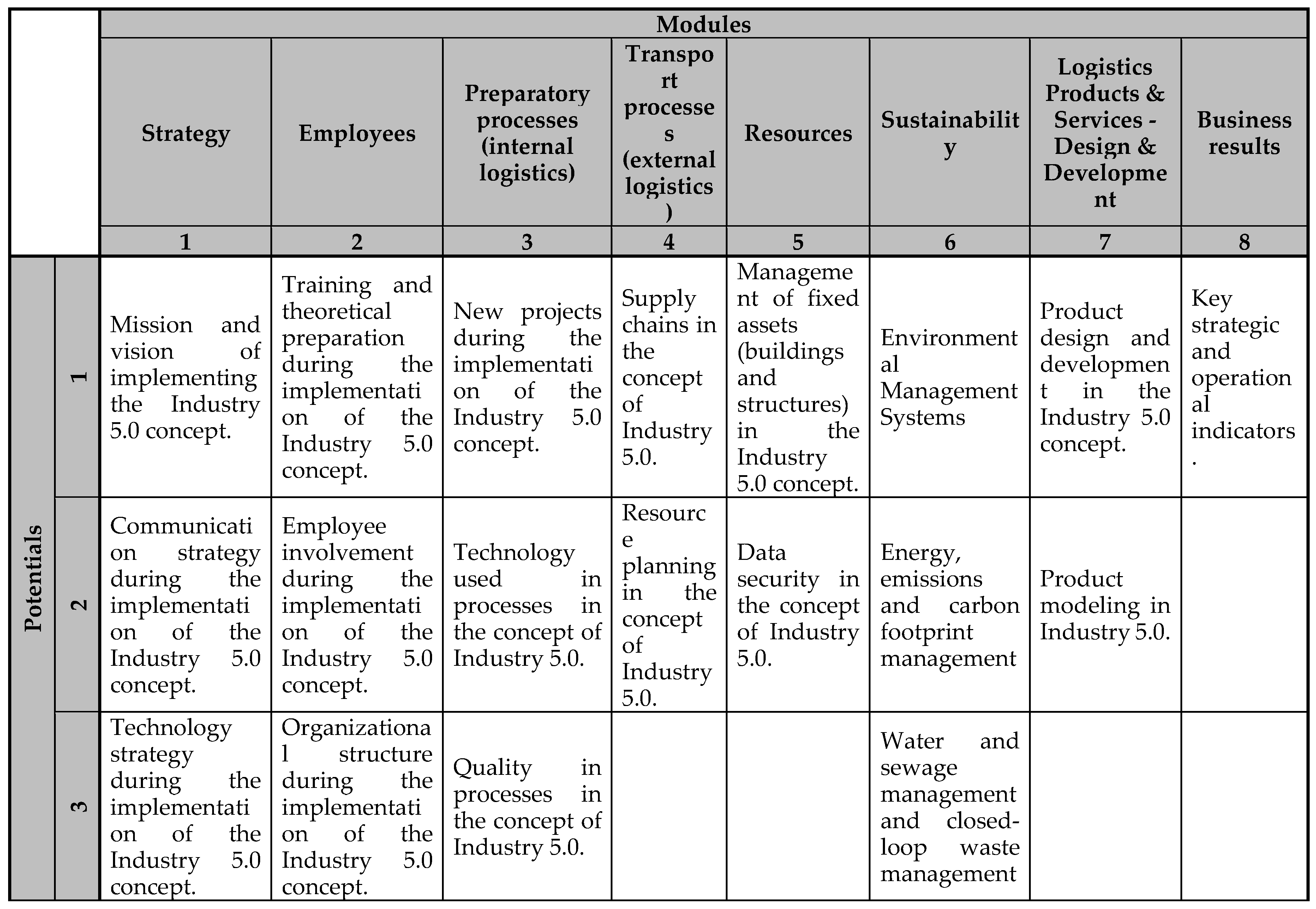
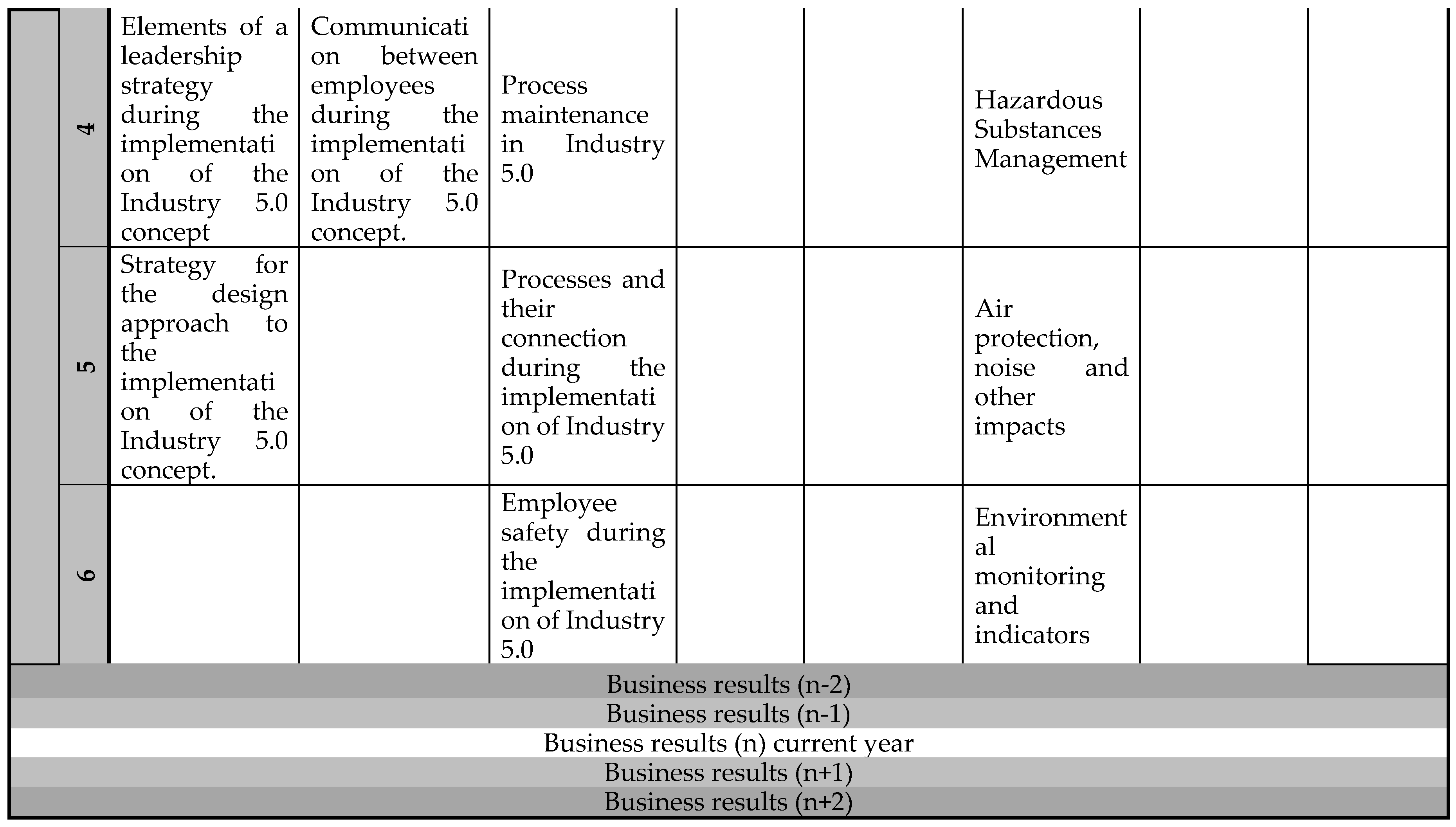
Figure 4.
Maturity model for the implementation of the Industry 5.0 concept in logistics companies.
4. Advantages of the Maturity Model
Based on the defined basic parts of the model and the criteria and guidelines assigned to them, the developed model should provide a comprehensive measurement of the level of advancement of Industry 5.0 of the examined company. Verification of results and the ability to distinguish between companies with different levels of maturity will be made possible by using the maturity levels specified for each criterion. Their descriptive nature should also guarantee a quick and easy self-assessment, based on data and facts. Finally, unambiguous characteristics of maturity levels should allow to identify gaps and potential improvement actions. This model is distinguished by its comprehensiveness, considering the key business results that have been described earlier. It is particularly effective when a company is starting to implement the Industry 5.0 concept.
The advantages of the maturity model of the organization in the context of implementing this concept in a manufacturing company include:
- Assessment of the current state: the model allows the company to assess its current state before and during the implementation of the Industry 5.0 concept. This is a key aspect to understand where the company is located and what steps are needed to grow;
- Understanding the needs: The first step is to fully understand the needs and goals of the company related to Industry 5.0, which allows the model to be properly adapted. With a flexible approach, the model can be tailored to the specific needs and conditions of the enterprise, allowing you to personalize your deployment strategy.
- Identifying areas for improvement: through analysis, the model helps identify areas that need improvement and investment, allowing you to focus on key areas. A company can increase production efficiency, resource management and product quality using new technologies.
- The model supports change management, which is crucial when introducing new technologies and processes in the company. It helps minimize resistance and makes it easier to move to new solutions. It also helps to involve employees at different organizational levels in the process of evaluating and implementing the model is crucial for success.
- It allows you to track the progress of the implementation of Industry 5.0, which allows you to adapt the strategy to the needs and results achieved on an ongoing basis. The model should be updated regularly to reflect changes in technologies, the market, and the needs of the company. Continuous monitoring and measurement of progress in model implementation allows for more effective decision-making and strategy adjustments. The improvement process should be continuous, and the model must support an organizational culture focused on continuous improvement.
- The use of intelligent storage systems allows for better control and management of inventory, which can lead to a reduction in inventory levels and costs associated with storage. The main indicator can be the level of inventory or the stock level. It means the amount of products or goods that are in stock now. Inventory levels are an important aspect for businesses because it affects product availability, the ability to handle customer orders, and storage costs. Organizations strive to manage their inventory levels in such a way as to meet customer demand while minimizing storage costs and the risk of product loss.
- The Inventory Outstanding Period Indicator or Days Inventory Outstanding DIO is used in inventory management. It measures the average number of days that a company keeps its inventory before it is sold or consumed. This indicator helps to assess how long a company keeps products in stock, which has an impact on storage costs and the company’s financial liquidity. The lower the DIO, the shorter the inventory turnover period, and therefore the more effective management.
- With the flexibility of logistics systems, organizations can respond more quickly to changes in orders and customer preferences, leading to reduced order fulfillment times. The Customer Service Level (CSL) indicator shows how effectively a company delivers products or services in line with customer expectations.
5. Conclusion
Using the organizational maturity model to implement the Industry 5.0 concept in a manufacturing company requires an understanding of the model, its advantages and an appropriate approach, considering the specific needs and conditions of the company. Its versatility is manifested in its extensive consideration of key business indicators (business results), which makes it an excellent tool for companies that strive to effectively implement the concept of Industry 5.0. It is recommended to use this model as a foundation for the improvement process, based on its comprehensive analysis and adaptation to the individual needs of the organization. In addition to integrating Industry 5.0, supply chain and procurement leaders will also need to redistribute roles and responsibilities between humans and machines, adopting the right guidance and best practices from different industries, as these also evolve with the fourth industrial revolution. Most companies associate digitalization with the goal of greater supply reliability. Digitalization provides various levers for this purpose, such as greater transparency, better predictability and planning, risk reduction or customer-specific products.
Unfortunately, many companies have little knowledge about the characteristics of the Industry 5.0 concept, the solutions it proposes, as well as the benefits of using the latest methods of digitizing processes. The above thesis is confirmed by research conducted by the Ministry of Development and Siemens in 2016-2017, collected as part of the Smart Industry Polska Report (Ministry of Regional Development, 2017). By knowing where businesses are currently located, they can easily find their future destination – and how they will get there. Assessing the maturity for the implementation of the Industry 5.0 concept in logistics companies will help visualize the way forward for companies and set priorities for process improvement.
This maturity model is the first step in the study of the successful implementation of the Industry 5.0 concept in logistics companies, by adapting the existing maturity model to the conditions of implementation in the logistics company. In the second step, the authors will attempt to use this model in empirical conditions in logistics enterprises.
In the opinion of the author of this dissertation, it is strongly recommended to use the developed model of maturity of organizations to assess the effective implementation of the Industry 5.0 concept in enterprises. Due to documented empirical research and the key feature of taking into account recommendations and the selection of business indicators in the process of evaluating results. This is an important element in a comprehensive assessment of the state of enterprises, which makes this model attractive when used in practice.
References
- Maier, A. M.; Moultrie, J.; Clarkson, P. J. Assessing Organizational Capabilities: Reviewing and Guiding the Development of Maturity Grids [Article]. IEEE Trans. Eng. Manag. 2012, - Vols. vol. 59(no. 1), 138–159. [Google Scholar] [CrossRef]
- Pöppelbuß, J.; Röglinger, M. What makes a useful maturity model? A framework of general design principles for maturity models and its demonstration in business process management [Conference]. 19th Eur. Conf. Inf. Syst. ECIS 2011, - June 2011. [Google Scholar]
- García-Mireles, G. A.; Ángeles Moraga, M.; García, F. Development of maturity models: a systematic literature review [Conference] // 16th International Conference on Evaluation & Assessment in Software Engineering (EASE 2012). 2012; pp. 279–283. [Google Scholar] [CrossRef]
- Rojko, A. ndustry 4.0 Concept: Background and Overview [Article]. Int. J. Interact. Mob. Technol. - 2017, - no 5: Vol. vol 11. -, 77–97. [Google Scholar] [CrossRef]
- Fraser, P.; Moulitrie, J.; Gregory, M. The use of maturity models/grids as a tool in assessing product development capability [Conference]. IEEE Int. Eng. Manag. Conf., 2002: [s.n. [Google Scholar]
- Banyani, M. A.; Then, D. S.S. Development of the industry maturity framework facilities manage- ment [Conference]. Proceedings 5th Built Environment Conference, 2010. [Google Scholar]
- Schumacher, A.; Erol, S.; Sihn, W. A Maturity Model for Assessing Industry 4.0 Readiness and Ma- turity of Manufacturing Enterprises [Article]. Procedia CIRP 2016, Vol. vol. 52., 161–166. [Google Scholar] [CrossRef]
- Strandhagen, J. O.; Vallandingham, L. R.; Fragapane, G. Logistics 4.0 and emerging sustainable business models [Article]. Adv.Manuf. 2017, Vol. 359. [Google Scholar]
- Dikhanbayeva, D. et al.] Assessment of Industry 4.0 Maturity Models by Design Principles [Book; School of Engineering and Digital Sciences Nazarbayev University: Nur-Sultan, 2020. [Google Scholar]
- Schuh, G. ndustry 4.0 Maturity Index: Managing the Digital Transformation of Companies [Book]; Herbert Utz Verlag: Munich, 2018. [Google Scholar]
- De Carolis, A. Maturity Model for Assessing the Digital Readiness of Manufacturing Companies, [Conference] // Proceedings of the IFIP International Conference on Advances in Production Management Systems. s.n, Hamburg, 2017; vol. 513, p. Vols. 3–7.08. - pp. 13-20. [Google Scholar]
- Szewczyk, K. Maturity model for the implementation of the Industry 4.0 concept in automotive industry enterprises [Book]; Wrocław University of Economics: Wrocław, 2024. [Google Scholar]
- Lichtblau, K. Impuls: Industrie 4.0 Readiness [Book]; VDMA: Cologne, 2015. [Google Scholar]
- Rockwell Automation The Connected Enterprise Maturity Model [Book]; Rockwell Automation: Milwaukee, 2014.
- Gökalp, E.; Sener, U.; Eren, P. E. Development of an Assessment Model for Industry 4.0: Industry 4.0-MM [Conference] // Proceedings of the International Conference on Software Process Improvement and Capability Determination. - alma de Mallorca, : [s.n.], 4–5.10.2017. - Vol. vol. 1. - pp. 30-42.
- Schumacher, A.; Erol, S.; Sihn, W. Maturity Model for Assessing Industry 4.0 Readiness and Maturity of Manufacturing Enterprises [Article]. Procedia CIRP 2016. - 52/2016. -, 161–166. [Google Scholar] [CrossRef]
- Akdil, K. Y.; Ustundag, A. Maturity and Readiness Model for Industry 4.0 Strategy [Book Section] // Industry 4.0: Managing the Digital Transformation / book auth; Cevikcan, E., Ed.; Springer: Cham, 2018. [Google Scholar]
- Bitkom, V.D.M.A. ZVEI Implementation Strategy Industrie 4.0: Report on the results of the Industrie 4.0 Platform [Report]; Berlin, 2016. [Google Scholar]
- Leyh, C. SIMMI 4.0 A maturity model for classifying the enterprise-wide it and software landscape focusing on Industry 4.0 [Conference] // Proceedings of the 2016 Federated Conference on Computer Science and Information Systems. s.n, Gdańsk, 11–14.08.2016. [Google Scholar]
- Ganzarain, J.; Errasti, N. Three stage maturity model in SME’s towards industry 4.0 [Article]. Journal Enginering. Managazine 2016, Vol. 9. [Google Scholar]
- Waterman, R. H.; Peters, T. J.; Phillips, J. R. Structure is not organization [Article]. In Business Horizons; 1980; p. 18. [Google Scholar]
- Weisbord, M. B. Organizational diagnosis: Six places to look for trouble with or without a theory [Article]. In Group and Organization Studies; 1976; Vol. 1, 4, pp. 430–447. [Google Scholar]
- Ministry of Regional Development Smart Industry Polska 2017 [Report]. Siemens Sp. z. o. o.: Warszawa, 2017.
- Martusewicz, J.; Szewczyk, K.; Wierzbic, A. The Environmental Protection and Effective Energy Consumption in the Light of the EFQM Model 2020—Case Study [Journal]. s.l.]: Energies 2022, 15, 7260. [Google Scholar] [CrossRef]
- Martusewicz, J.; Szewczyk, K.; Wierzbic, A. The EFQM Radar-Based Assessment Of Industry 4.0 Solutions – The Plan of Research [Journal]. - [s.l.]: A 2025 Vision to Sustain Economic Development during Global Challenges; Soliman Khalid, S., Ed.; International Business Information Management Association (IBIMA), 2020; ISBN 9780999855141. - pp. pp. 18547-18554. [Google Scholar]
- EFQM he EFQM Excellence Model 2013 - he EFQM Excellence Model 2013. 2025.
- AlAdeedi, A. A. Investigating The Use of GEM2.1 Excellence Model in Contributing to Sustainability in The UAE [Journal]. International Journal of Accounting and Economics Studies 2025, 12(2), 2025. - pp. 429-436. [Google Scholar] [CrossRef]
- Martusewicz, J.; Wierzbic, A.; Łukaszewicz, M. Strategic Transformation and Sustainability: Unveiling the EFQM Model 2025 [Journal]. Sustainability 2024, 16, 9106, 2024.–Vol. [Google Scholar] [CrossRef]
- Aquilani, B. The Role of Open Innovation and Value Co- -creation in the Challenging Transition from Industry 4.0 to Society 5.0: Toward a Theoretical Framework [Journal]; Sustainability, 2020; Volume 12, p. 8943. [Google Scholar]
- Hamera, A. The role of user experience in the era of Industry 5.0 [Journal]. Enterprise Management, Enterprise Management. December 2024; Volume 2: Vol. Nb. 2, p. - pp. pp. 7-15. [Google Scholar]
- Bajic, B.; Moraca, S.; Rikalovic, A. uzzy maturity model for smart manufacturing readiness: Industry 5.0 perspective [Conference] // Zooming Innovation in Consumer Technologies Conference (ZINC). - 2023. - Vols. 142-147; IEEE. [CrossRef]
- Oleśków-Szłapka, J.; Kretkowska, L.; Zielińska, A. Industry 5.0 Maturity Models: Towards Sustainable Development – Theoretical Review and Case Study in a Selected Company [Journal]; European Research Studies Journal, 2024; - Vols. Volume XXVII, p. 1. [Google Scholar]
- Ericson Öberg, A.; Goncalves Machado, C.; Stålberg, L. Diagnostics of Opportunitie s - A Dialogue Tool for Addressing Digital Factory Maturity [Article]. In Sustainable Production through Advanced Manufacturing, Intelligent Automation and Work Integrated Learning; IOS Press, 2024; pp. 395–406. [Google Scholar] [CrossRef]
- Hein-Pensel. Maturity assessment for Industry 5.0: A review of existing maturity models [Online]. September 2025. Available online: https://www.sciencedirect.com/science/article/pii/S027861252200228X?via%3Dihub.
- Zizic, M. C. From Industry 4.0 towards Industry 5.0: A Review and Analysis of Paradigm Shift for the People, Organization and Technology [Journal]. Energies. MDPI, 2022; Vol. 5221. [Google Scholar]
Figure 1.
Number of publications related to Industry 5.0 in web of science.
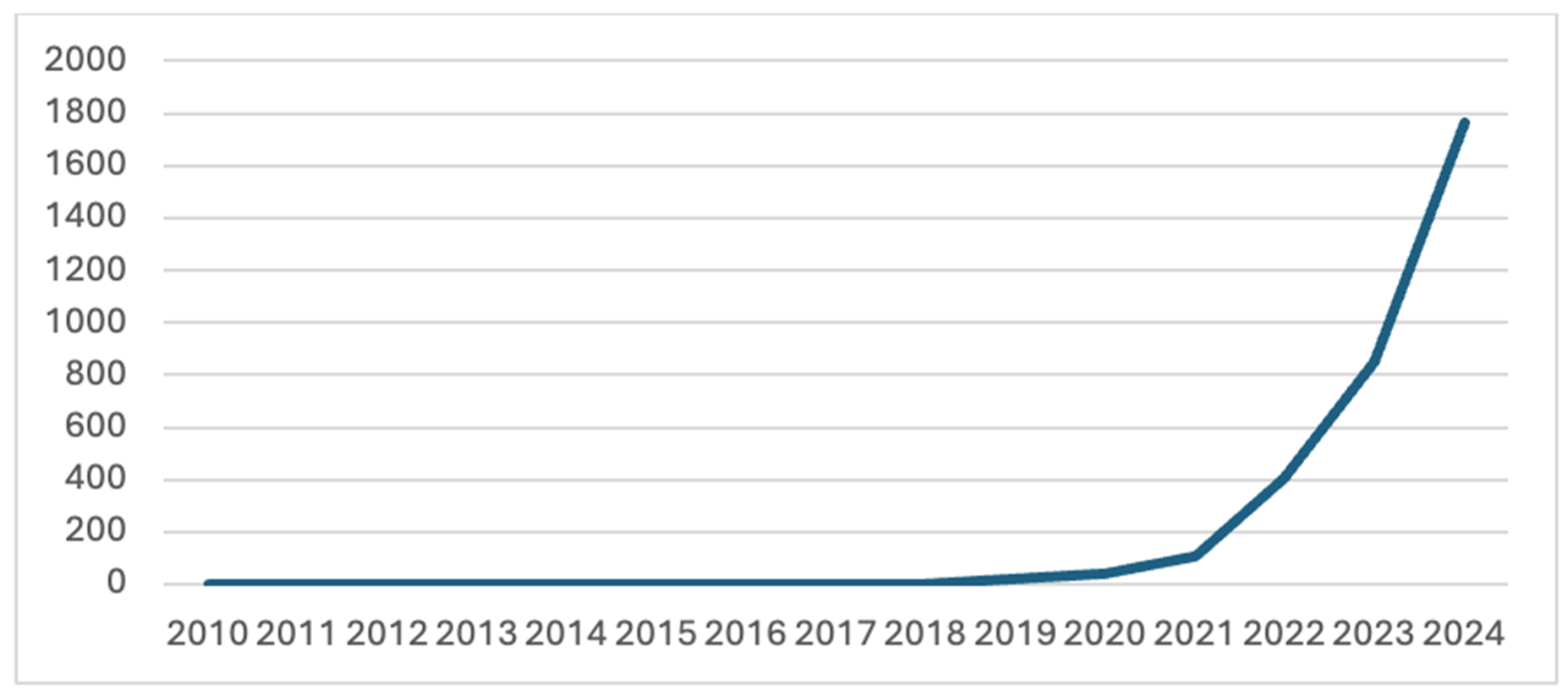

Table 1.
Comparison of maturity models for the implementation of the Industry 5.0 concept.
| Model Number | Model Name | Authors | Model Description |
|---|---|---|---|
| MD01 | Diagnostics of Opportunities – A Dialogue Tool for Addressing Digital Factory Maturity | Ericson Öberg,A. Goncalves Machado, C. Stålberg, L. |
The model includes 10 degrees of maturity. It focuses on a development approach, from a lack of knowledge to a highly developed expert approach and becoming a role model for other organizations. |
| MD02 | Maturity assessment for Industry 5.0: A review of existing maturity models | Hein-Pensel, F., Winkler, H., Brückner, A., Wölke, M., Jabs, I., Mayan I.J., Kirschenbaum, A., Friedrich, J., Zinke-Wehlmann, Ch. | The model contains 4 levels of maturity. It puts the human at the center, for whom a system of advanced technology has been built to comprehensively support their activities and needs in their daily work. |
| MD03 | From Industry 4.0 towards Industry 5.0: A Review and Analysis of Paradigm Shift for the People, Organization and Technology | Zizic, M.C. Mladineo, M. Gjeldum, N. Celent, L. | It focuses on detailing the differences between Industry 4.0 and Industry 5.0. |
*Source: own study.
Disclaimer/Publisher’s Note: The statements, opinions and data contained in all publications are solely those of the individual author(s) and contributor(s) and not of MDPI and/or the editor(s). MDPI and/or the editor(s) disclaim responsibility for any injury to people or property resulting from any ideas, methods, instructions or products referred to in the content. |
© 2026 by the authors. Licensee MDPI, Basel, Switzerland. This article is an open access article distributed under the terms and conditions of the Creative Commons Attribution (CC BY) license (http://creativecommons.org/licenses/by/4.0/).
Copyright: This open access article is published under a Creative Commons CC BY 4.0 license, which permit the free download, distribution, and reuse, provided that the author and preprint are cited in any reuse.


