

Submitted:
20 April 2026
Posted:
21 April 2026
You are already at the latest version
Abstract
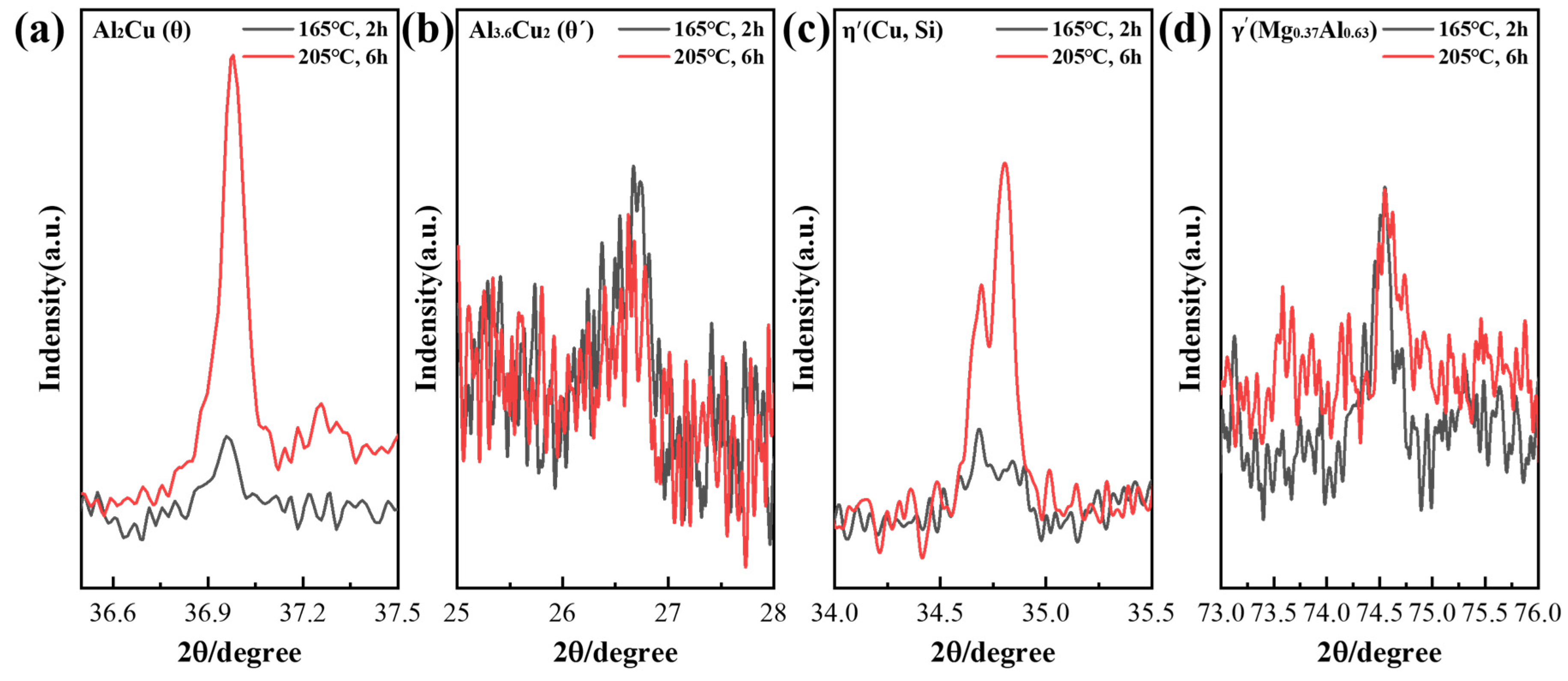
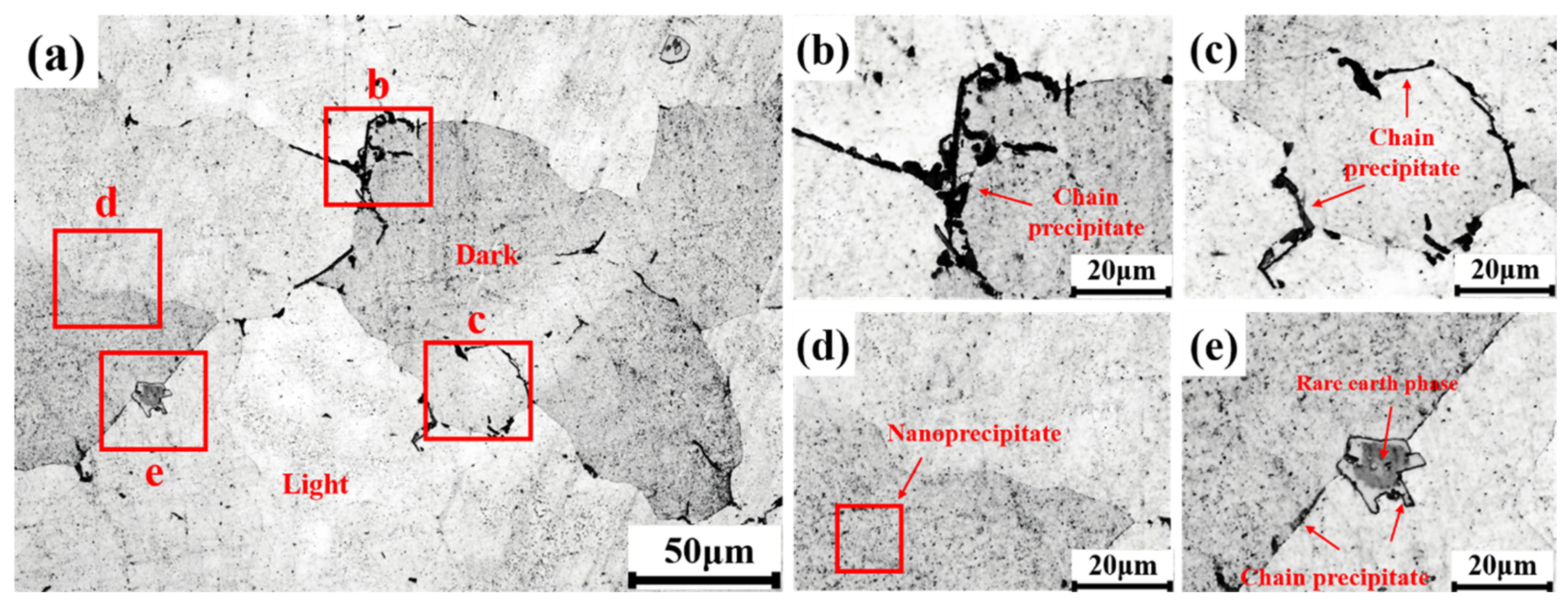
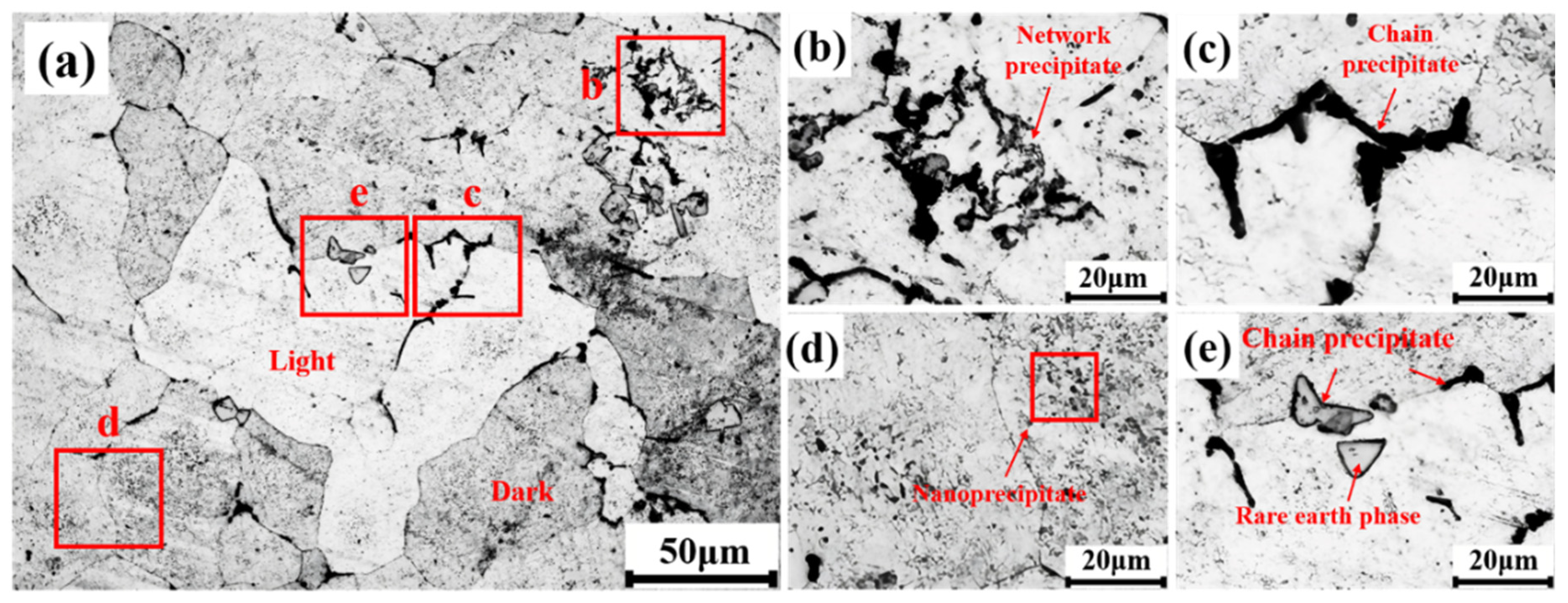
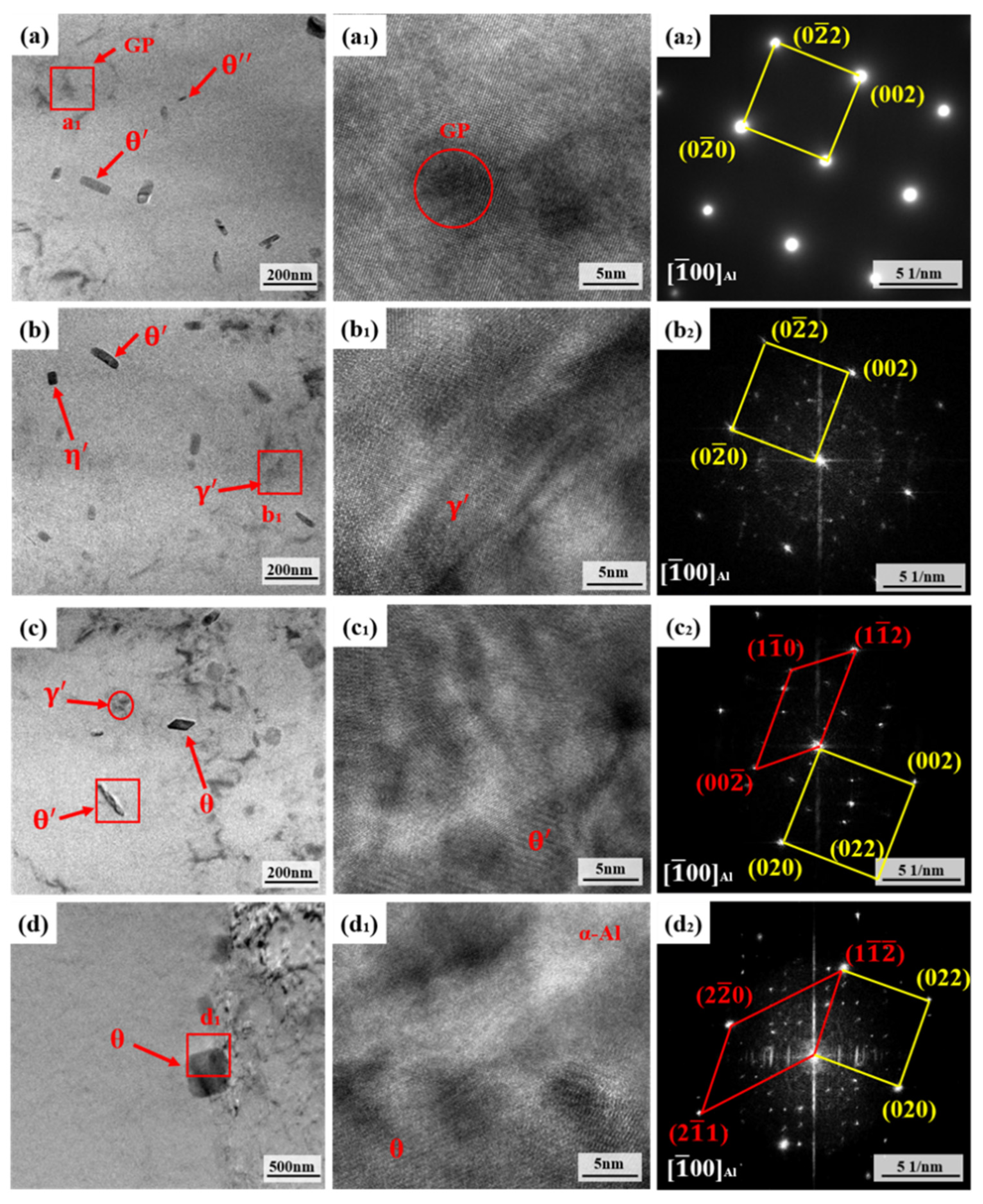
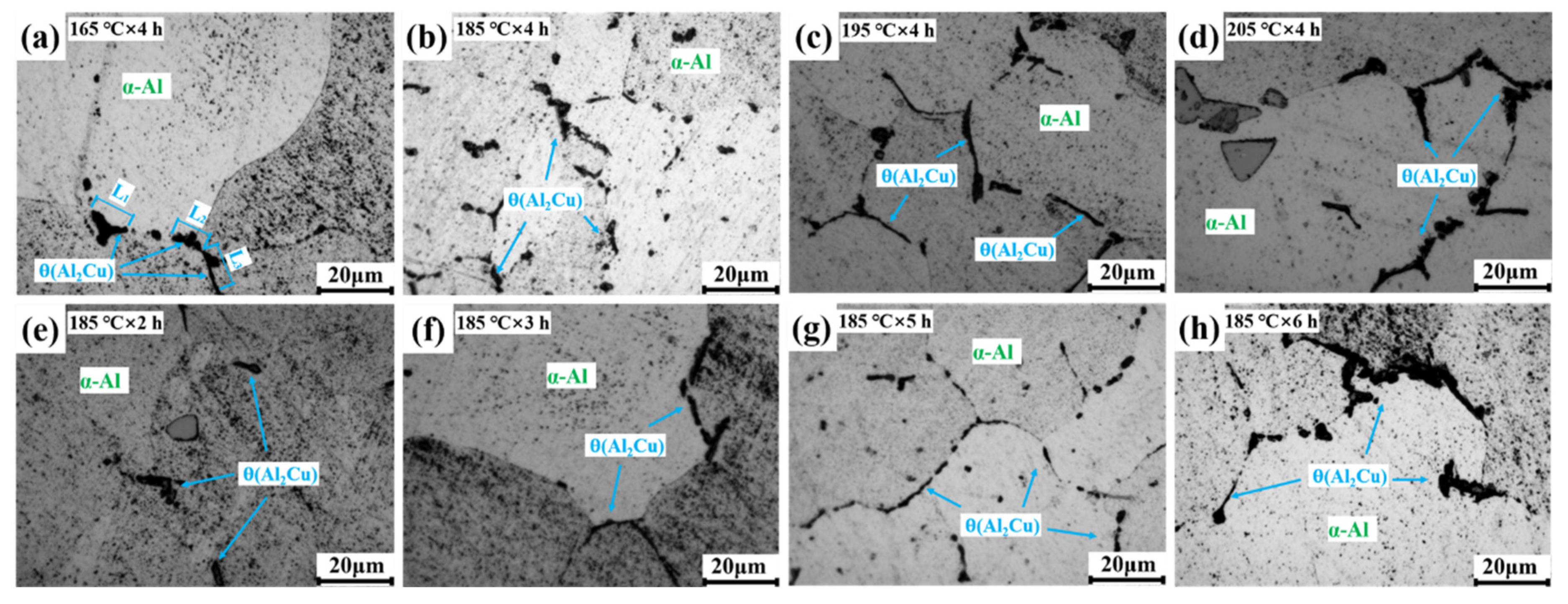
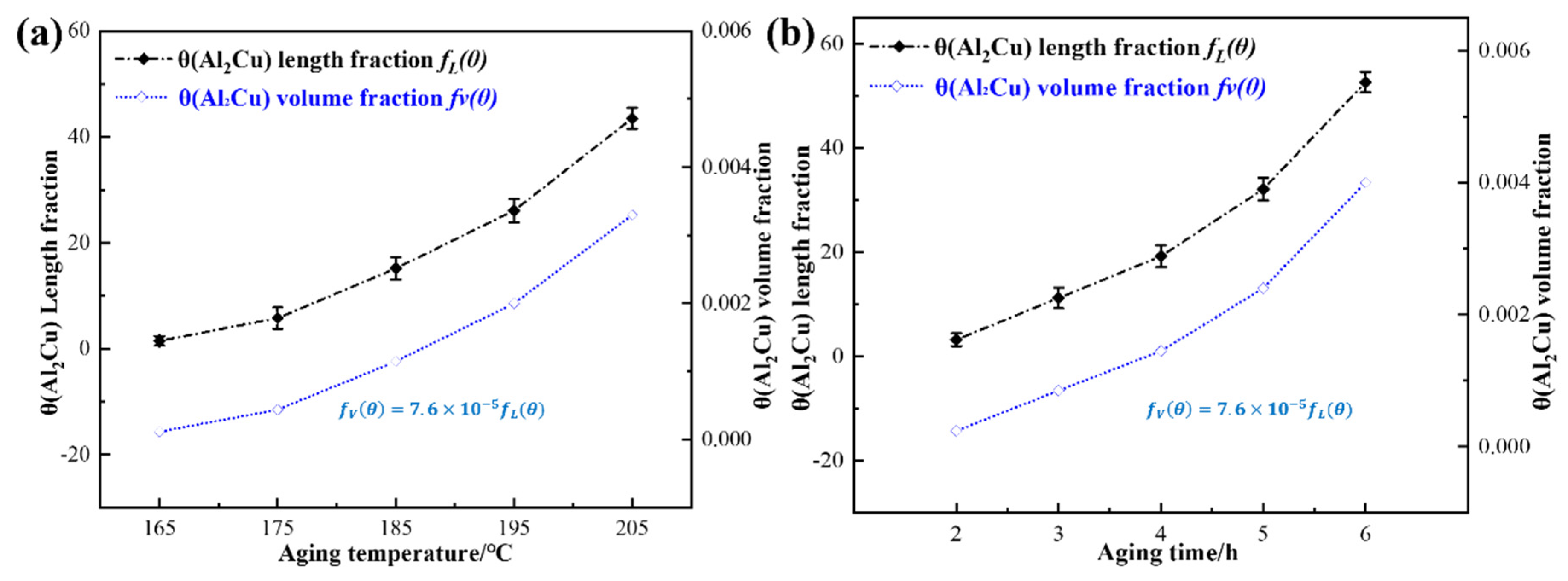
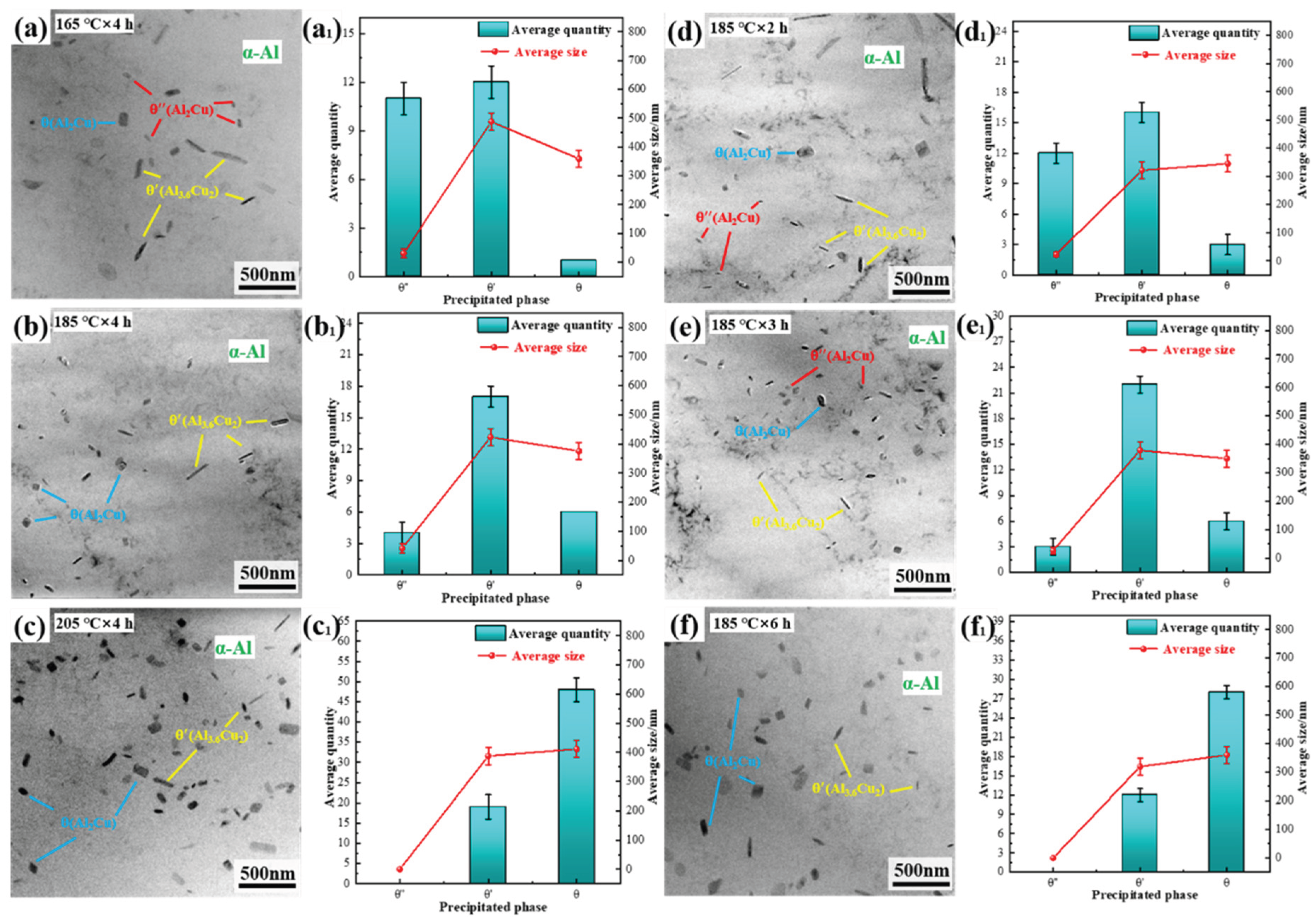
In this paper, the supersaturated solid solution of Al-Cu3-Si-Mg alloy prepared by molten metal die forging (MMDF) was used as the research object. The formation and evolution of precipitates during aging treatment were investigated through experiments at different temperatures and times, and the precipitation mechanisms and sequences of various precipitates were analyzed. The main precipitated phases formed in the supersaturated solid solution of Al-Cu3-Si-Mg alloy after aging treatment are θ(Al2Cu), θ'(Al3.6Cu2), γ'(Al0.63Mg0.37) and η'(Cu, Si). Based on XRD and TEM analysis under different aging treatment conditions, the precipitation sequence is determined as follows: SSS → GP0 → GP0+γ'→GP0+(γ'+γ)+θ''+η'→(γ'+γ)+(θ''+θ')+(η'+η)→(γ'+γ)+(θ+θ')+(η'+η)→(γ'+γ)+(θ+θ')+η→γ+θ+η. With increasing aging temperature and time, precipitates tend to accumulate at the α-Al grain boundaries. After aging treatment at 165-185 °C for 4 h, chain-like θ(Al2Cu) precipitates are discontinuously distributed at the α-Al grain boundaries, disk‑shaped θ'(Al3.6Cu2) and θ''(Al2Cu) phases mainly precipitate within the grains. When the temperature exceeds 185 °C, the chain-like θ(Al2Cu) precipitates at the grain boundaries gradually become continuous, the amount of θ(Al2Cu) phase in the grains increases significantly, θ''(Al2Cu) disappears completely, and the size of θ'(Al3.6Cu2) decreases obviously. After aging treatment at 185 °C for 5-6 h, the chain-like θ(Al2Cu) precipitates at the grain boundaries become more continuous, and their length fraction continues to increase with prolonged aging time.
Keywords:
1. Introduction
2. Materials and Methods
2.1. Experimental Materials and Preparation Methods
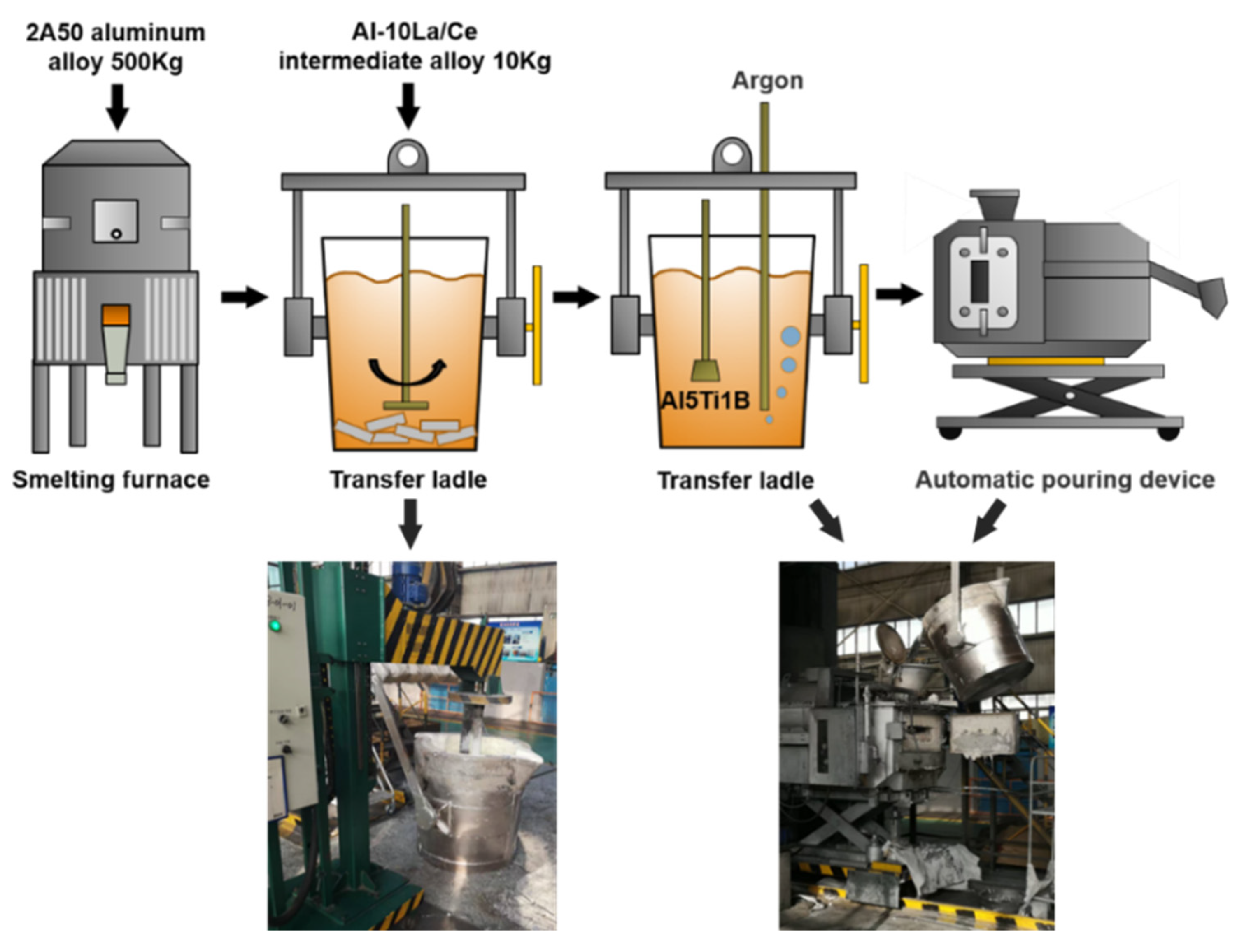
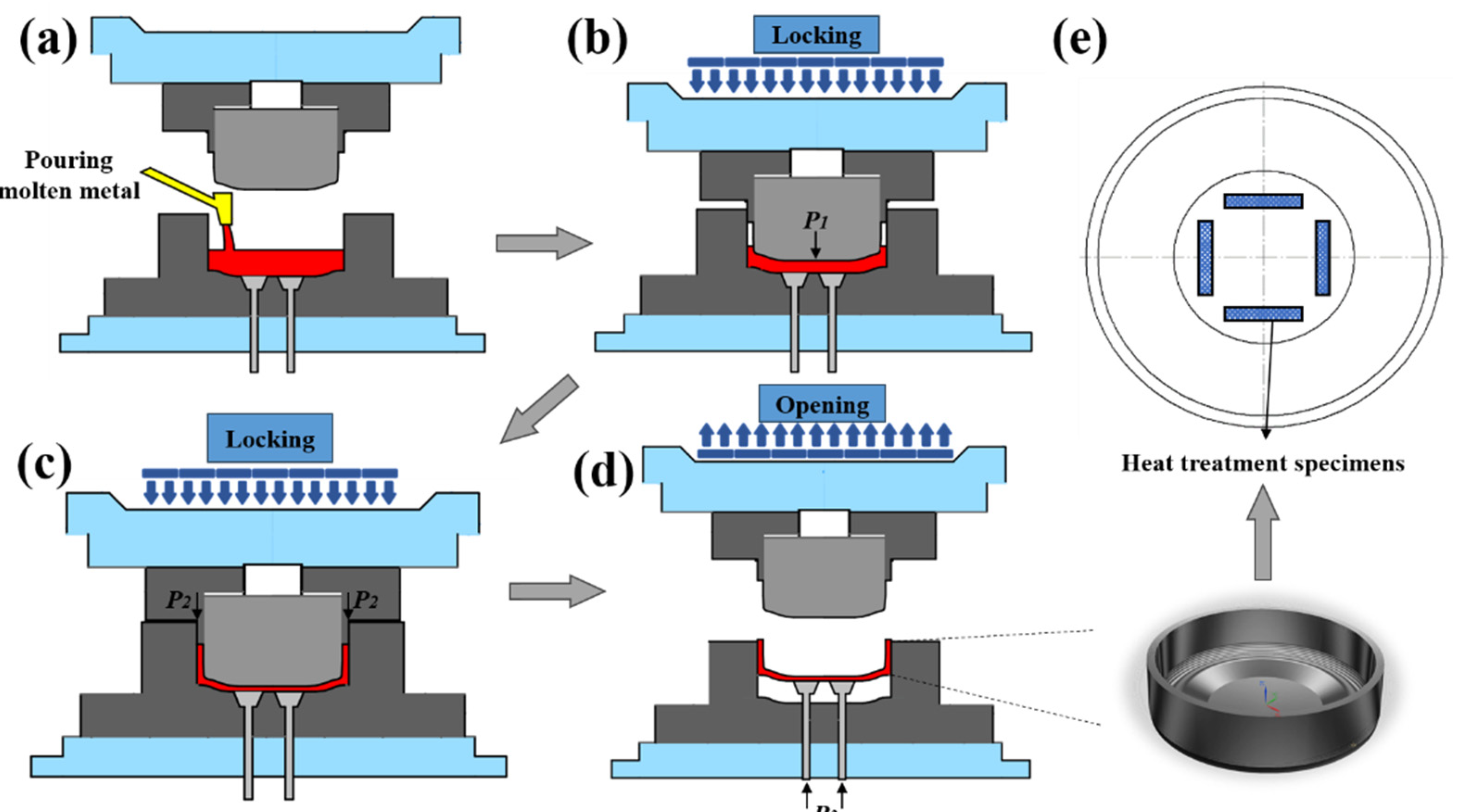
2.2. Experimental Equipment and Process
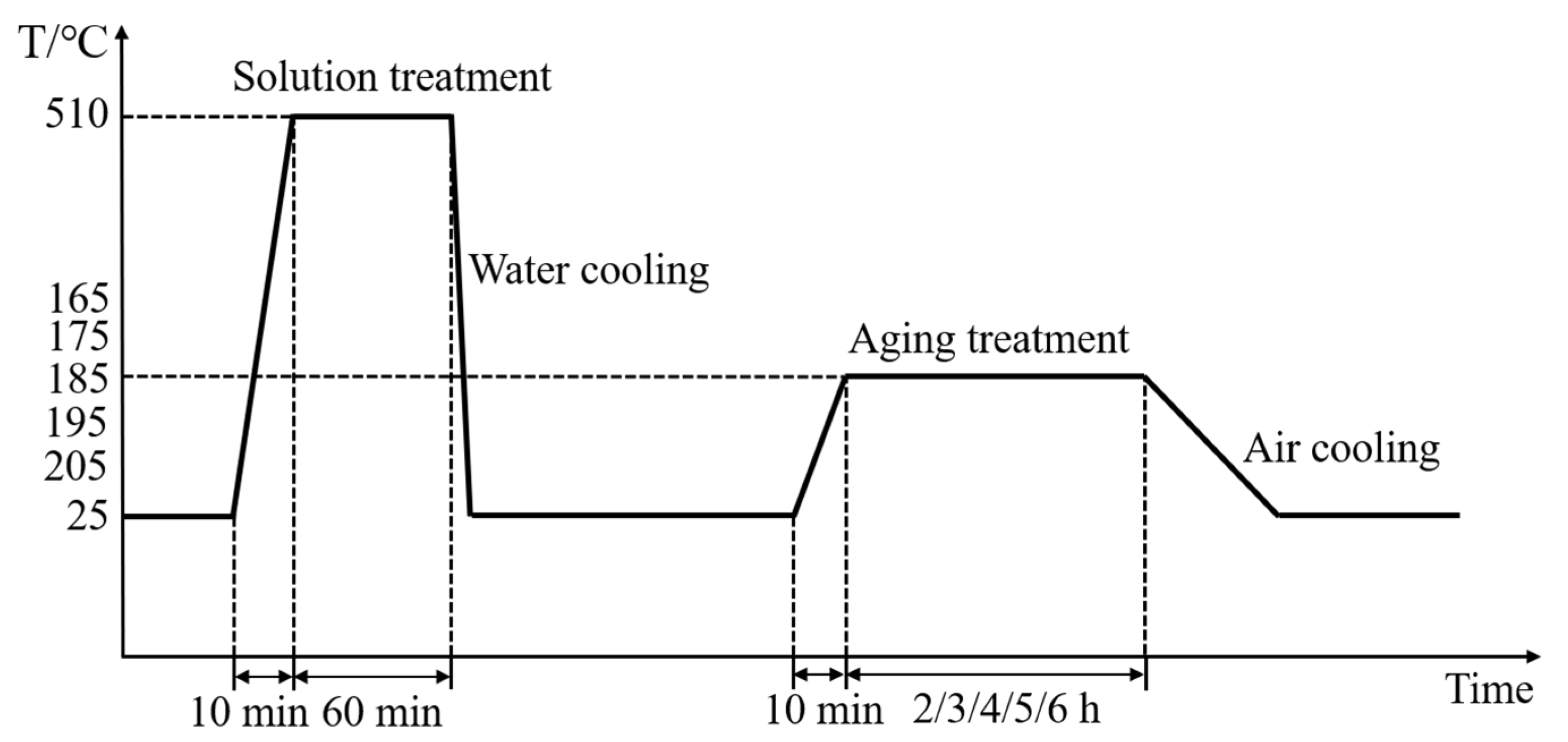
2.3. Heat Treatment Experiments
2.4. Analysis Instruments
3. Results
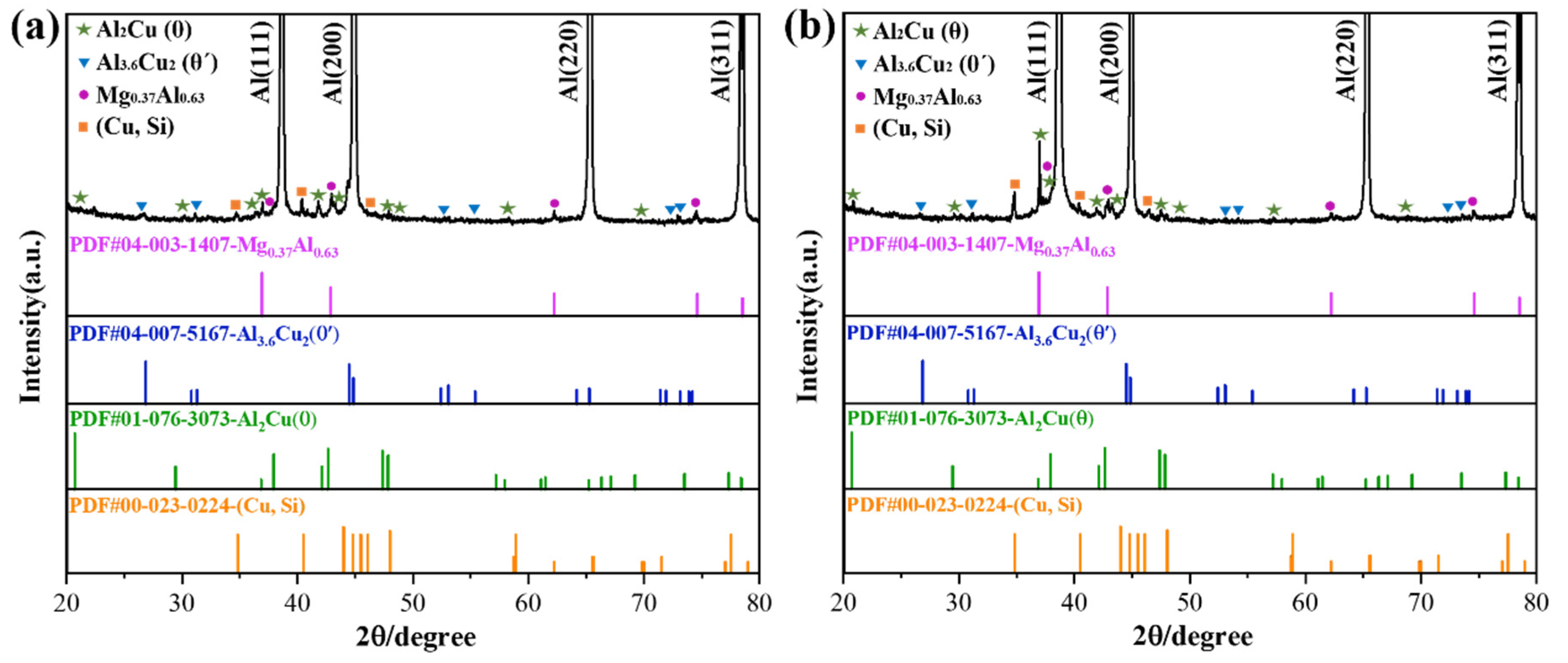
3.1. Formation Mechanism of Precipitated Phases During Aging Treatment
3.2. Effect of Aging Process Parameters on Precipitates at α-Al Grain Boundaries
3.3. Effect of Aging Process Parameters on Precipitates within α-Al Grains
4. Conclusions
- (1)
- After aging treatment, the supersaturated solid solution of the Al-Cu3-Si-Mg alloy precipitates phases dominated by θ(Al2Cu), θ'(Al3.6Cu2), γ'(Al0.63Mg0.37) and η'(Cu, Si). Based on XRD and TEM analyses under different aging treatment conditions, the precipitation sequence of the precipitated phases is summarized as follows SSS → GP0 → GP0+γ' → GP0+(γ'+γ)+θ''+η' → (γ'+γ)+(θ''+θ')+(η'+η) → (γ'+γ)+(θ+θ')+(η'+η) → (γ'+γ)+(θ+θ')+η → γ+θ+η.
- (2)
- With increasing aging temperature and aging time, θ(Al2Cu) precipitates aggregate at α-Al grain boundaries, forming chain-like phases. The precipitation of nanoscale phases leads to the formation of bright and dark contrasts in α-Al grains, and the number of dark-colored grains increases significantly with increasing aging temperature and time. After aging treatment of 165-185 °C×4 h, the chain-like θ(Al2Cu) precipitates at grain boundaries are discontinuously distributed along α-Al grain boundaries. When the temperature exceeds 185 °C, the chain-like θ(Al2Cu) precipitates at grain boundaries gradually become continuous. With increasing temperature, the length fraction of chain-like θ(Al2Cu) precipitates along α-Al grain boundaries increases. Under the aging treatment of 185 °C×5-6 h, the chain-like θ(Al2Cu) precipitates at grain boundaries gradually become more continuous, and their length fraction along α-Al grain boundaries continues to increase with prolonged aging time.
- (3)
- After aging treatment of 165-185 °C×4 h, disc-shaped θ'(Al3.6Cu2) and θ''(Al2Cu) are mainly precipitated within the grains. When the temperature exceeds 185 °C, the amount of spherical equilibrium θ(Al2Cu) phase in the grains increases significantly, θ''(Al2Cu) disappears completely, and the size of θ'(Al3.6Cu2) decreases obviously. After the aging treatment of 185 °C×5-6 h, a large number of θ'(Al3.6Cu2) transform into θ(Al2Cu), and their aspect ratio decreases markedly, indicating the transformation from disc-shaped to spherical morphology.
Author Contributions
Data Availability Statement
Acknowledgments
Conflicts of Interest
Abbreviations
| MMDF | Molten Metal Die Forging |
References
- Gan, Y.; Zhang, D.; Zhang, W.; Li, Y. Effect of cooling rate on microstructure and mechanical properties of squeeze cast Al-Cu-Mg alloy. Int. J. Cast Met. Res. 2015, 28, 50–58. [Google Scholar] [CrossRef]
- Li, J. Y.; Lu, S. L.; Chen, L.; Liao, Q.; Guo, W.; Wu, S. S. Influence of squeeze casting pressure on nanoparticle distribution and mechanical properties of nano-SiCp/Al-Cu composites assisted with ultrasonic vibration. Trans. Nonferrous Met. Soc. China 2023, 33, 1977–1987. [Google Scholar] [CrossRef]
- Lin, B.; Xia, S. C.; Li, H. Y.; Lou, Z. H.; Liu, K.; Zhang, W. W. Improved creep resistance of Al-Cu-Mn-Fe-Ni alloys through squeeze casting. Mater. Charact. 2019, 158, 109935. [Google Scholar] [CrossRef]
- Jiang, H.; Zhang, L. F.; Zhao, B. W.; Sun, M.; He, M. F. Microstructure and mechanical properties of ZL205A aluminum alloy produced by squeeze casting after heat treatment. Metals 2022, 12, 2037. [Google Scholar] [CrossRef]
- Gopalakrishnan, T.; Sankaranarayanan, S. R.; Babu, S. P. K. Investigating the effect of calcium addition on the microstructural and mechanical properties of a Zn-Al-Cu-Mg alloy via squeeze casting. Metals 2025, 15, 922. [Google Scholar] [CrossRef]
- Zhu, S.; Yang, Y.; Sui, Y. D.; Jiang, Y. H.; Wang, Q. D.; Ji, Q.; Liu, F. The effect of wall thickness on the microstructure and tensile properties on squeeze casting of Al-5Mg-2.2Si-0.6Mn-0.1Ce alloy. Int J Metalcast 2024, 18, 113–122. [Google Scholar] [CrossRef]
- Zhang, C. X.; Liao, W. N.; Shan, Z. D.; Song, W. Z.; Dong, X. X. Squeeze casting of 4032 aluminum alloy and the synergetic enhancement of strength and ductility via Al-Ti-Nb-B grain refiner. Mater. Sci. Eng. A 2024, 896, 146233. [Google Scholar] [CrossRef]
- Li, F.; Zhang, X. Z.; Xiong, B. J. Squeeze casting of aluminum alloy A380: Microstructure and tensile behavior. China Foundry 2015, 12, 367–374. [Google Scholar]
- Lee, H.; Bang, J.; Yoon, P.; Lee, E. Effects of combined Cr, Mn, and Zr additions on the microstructure and mechanical properties of Al-6Cu alloys under various heat treatment conditions. Metals 2026, 16, 143. [Google Scholar] [CrossRef]
- Dar, M. S.; Liao, H. C.; Xu, A. Q. Effect of Cu and Mn content on solidification microstructure, T-phase formation and mechanical property of Al-Cu-Mn alloys. J. Alloys Compd. 2018, 774, 758–767. [Google Scholar] [CrossRef]
- Gazizov, M.; Marioara, D. C.; Friis, J.; Wenner, S.; Holmestad, R.; Kaibyshev, R. Precipitation behavior in an Al-Cu-Mg-Si alloy during ageing. Mater. Sci. Eng. A 2019, 767, 138369. [Google Scholar] [CrossRef]
- Kim, K.; Roy, A.; Gururajan, M. P.; Wolverton, C.; Voorhees, P. W. First-principles/Phase-field modeling of θ' precipitation in Al-Cu alloys. Acta Mater. 2017, 140, 344–354. [Google Scholar] [CrossRef]
- Tohid, N.; Daniel, L.; Pierre, H.; Remi, M.; Francis, B.; Denis, M. Multiphase modelling of the growth kinetics of precipitates in Al-Cu alloys during artificial aging. Philos. Mag. 2021, 101, 1–24. [Google Scholar]
- Wu, T.; Xing, S. M.; Liu, X. Study on non-equilibrium solidification microstructure of Al-Cu3-Si-Mg alloy by MMDF. Mater. Res. Express 2022, 9, 046509. [Google Scholar] [CrossRef]
- Maksimovic, V.; Tolley, A.; Jovanovic, M. T.; Radmilovic, V. Aging of a commercial Al-Cu-Si based alloy modified with germanium. Mater. Sci. Forum 2004, 490, 323–328. [Google Scholar] [CrossRef]
- Shin, D.; Shyam, A.; Lee, S.; Yamamoto, Y.; Haynes, J. Solute segregation at the Al/θ′-Al2Cu interface in Al-Cu alloys. Acta Mater. 2017, 141, 327–340. [Google Scholar] [CrossRef]
- Jia, Z. H.; Ding, L. P.; Cao, L. F.; Sanders, R.; Li, S. C.; Liu, Q. The influence of composition on the clustering and precipitation behavior of Al-Mg-Si-Cu alloys. Metall. Mater. Trans. 2017, 48, 459–473. [Google Scholar] [CrossRef]
- Elsebaie, O.; Samuel, M. A.; Samuel, F. H.; Doty, H.W. Impact toughness of Al-Si-Cu-Mg-Fe cast alloys: Effects of minor additives and aging conditions. Mater. Des. 2014, 60, 496–509. [Google Scholar] [CrossRef]
- Zhang, M. S.; Liu, K. L.; Wang, B.; Liang, T. T.; Han, J. Q.; Wang, J. S. Accelerating pore nucleation and eutectic Si growth kinetics by increasing Cu and Sc for Al-Si-Mg alloys: In-situ observation. J. Alloys Compd. 2021, 869, 159173. [Google Scholar] [CrossRef]
- Wang, X. Y.; Hou, J. P.; Gong, B. S.; Qu, Z.; Liu, H. Z.; Wang, Q.; Zhang, Z. J.; Zhang, Z. F. Simultaneously improving strength and plasticity of Al-Cu alloy by introducing spherical precipitates. Adv. Eng. Mater. 2023, 26, 2301575. [Google Scholar] [CrossRef]

| Grade | Composition (wt%) | ||||||||
|---|---|---|---|---|---|---|---|---|---|
| Cu | Si | Mg | Mn | Ti | Ni | Zn | Fe | Al | |
| 2A50 | 1.8-2.6 | 0.5-0.7 | 0.7-0.8 | 0.42-0.57 | 0.05-0.01 | 0.001-0.009 | 0.012-0.020 | 0.07-0.20 | Bal |
| Sample | Composition (wt%) | ||||||||
| Cu | Si | Mg | Mn | Ti | Fe | La/Ce | Zn | Al | |
| 1 | 2.39 | 0.69 | 0.8 | 0.48 | 0.07 | 0.009 | 0.15 | 0.18 | Bal |
| Sample No. | Aging treatment parameters | ||
| Temperature (℃) | time (h) | Cooling method | |
| 1 | 165 | 4 | Air cooling |
| 2 | 175 | 4 | Air cooling |
| 3 | 185 | 2 | Air cooling |
| 4 | 185 | 3 | Air cooling |
| 5 | 185 | 4 | Air cooling |
| 6 | 185 | 5 | Air cooling |
| 7 | 185 | 6 | Air cooling |
| 8 | 195 | 4 | Air cooling |
| 9 | 205 | 4 | Air cooling |
Disclaimer/Publisher’s Note: The statements, opinions and data contained in all publications are solely those of the individual author(s) and contributor(s) and not of MDPI and/or the editor(s). MDPI and/or the editor(s) disclaim responsibility for any injury to people or property resulting from any ideas, methods, instructions or products referred to in the content. |
© 2026 by the authors. Licensee MDPI, Basel, Switzerland. This article is an open access article distributed under the terms and conditions of the Creative Commons Attribution (CC BY) license.


