
Submitted:
18 April 2026
Posted:
20 April 2026
You are already at the latest version
Abstract
Background: Women with polycystic ovary syndrome (PCOS) have a substantially increased risk of endometrial cancer (EC), yet the biological mechanisms underpinning this association remain incompletely understood. Insulin-like growth factor (IGF)-associated signaling has been implicated, but existing evidence is conflicting. Methods: This feasibility and hypothesis-generating study combined a small clinical cohort with exploratory transcriptomics, in vitro and in silico analyses. Serum IGF1 and IGFBP-3 were measured in women with PCOS (n = 12 for IGF-1 and n = 6 for IGFBP-3) and controls (n = 24 for IGF1 and n = 7 for IGFBP-3). Pooled serum, stratified by IGF bioactivity, was applied to a human endometrial cancer cell line (HEC1A) to further assess effects on cell viability, cell cycle distribution, and downstream signaling, in addition to exploratory RNA sequencing (n=1 biological replicate per condition). Computational analysis of publicly available endometrial cancer datasets was used to contextualize experimental findings. Results: Serum IGF1 and IGFBP-3 levels did not differ significantly between PCOS and control groups. However, pooled PCOS serum increased EC cell viability and altered cell cycle progression compared with control serum. Pharmacological inhibition of IGF1R partially attenuated these effects, suggesting that IGF-associated pathways may contribute but are unlikely to act in isolation. Exploratory transcriptomic profiling of serum-treated EC cells supported enrichment of IGF-associated metabolic and growth programs (including mTORC1, PI3K/AKT/mTOR, glycolysis and oxidative phosphorylation), consistent with context-dependent modulation rather than IGF-only dependence. In silico analyses demonstrated frequent alterations in PI3K/AKT/mTOR-related genes in endometrial cancer, consistent with pathway-level vulnerability rather than IGF1-specific dependence. Conclusion: As a feasibility study, these findings suggest that PCOS serum contains factors that promote EC cell growth, with partial involvement of IGF signaling. However, multiple metabolic and hormonal pathways are likely to contribute. Larger, better-controlled studies incorporating insulin, sex steroids, and multiple EC models are required before causal inferences can be made.
Keywords:
polycystic ovary syndrome
; insulin like growth factor one
; IGF1
; endometrial
; cancer
Introduction
Endometrial cancer (EC) is the second most diagnosed gynaecological cancer in women globally and its incidence has risen by 132% in the past 30 years [1,2]. Polycystic ovary syndrome (PCOS) is the most diagnosed endocrine disorder in women globally. While the exact cause of PCOS is not fully understood, it is believed to be a multifactorial disorder involving genetic, metabolic, endocrine, and environmental components. It can impact a woman's life, manifesting in puberty with menstrual irregularities, and continuing through reproductive years leading to infertility, obesity and insulin resistance[3]. Early diagnosis is crucial to minimize long-term complications like type 2 diabetes, hypertension, and EC. PCOS is specifically associated with a 3 to 5 times increase in the risk of EC [4,5,6]. Notably, many affected women are diagnosed at a young age and require hysterectomy, resulting in permanent sterility—a significant concern in countries with declining fertility rates[7]. Despite this, effective screening and prevention strategies for EC remain lacking[8], unlike cervical cancer, which benefits from well-established protocols[9]. Major EC risk factors—besides PCOS—include obesity, diabetes, nulliparity, and chronic anovulation[10]. However, how to effectively translate these into a clinical screening tool remains uncertain. Given the global prevalence of PCOS, understanding how it increases EC risk could have a substantial public health impact.
Suggested mechanisms for the increased EC risk in PCOS, include obesity, unopposed high estrogen levels, raised testosterone levels[11], anovulation and raised insulin like growth factor-1 (IGF1) [12,13]. However, the degree to which these mechanisms increase EC risk or interact with each other to cause EC in PCOS is unknown [14]. New genes and proteins that might cause EC in PCOS and upregulate genes associated with the insulin signaling pathway in PCOS have also been identified[15]. Evidence suggests that insulin resistance and elevated IGF1 levels may play a key role in the association between PCOS and EC, as women with PCOS develop insulin resistance and these factors have been linked to endometrial dysfunction and miscarriages [16]. Additionally, IGF1 and IGF2 have been found to stimulate cell growth in human EC cell lines[17]. Mutations in the PI3K pathway are common in type 1 EC, and elevated levels of IGF1 and insulin can promote cell proliferation through this pathway. Furthermore, other molecular pathways, such as the TP53 and ERK pathways, also contribute to EC progression. Dysfunction in the TP53 pathway is well known in type 2 EC [18], while overactivation of ERK pathway can stimulate cell growth and migration [19]. These pathways interact with the IGF1 signaling pathway, and certain IGF1 gene promoter polymorphisms have been linked to EC[13]. However, the exact relationship between serum IGF1 and EC remains unclear, with conflicting results from different studies. Understanding the role of the IGF1 pathway in the association between EC and PCOS is crucial, as the PI3K pathway, which is often dysregulated in EC, is a key part of insulin and IGF1 signaling. It would also provide a stronger basis for the use of Metformin, a drug which targets the insulin signaling pathway in the treatment of endometrial hyperplasia, a potentially premalignant condition common in PCOS [20].
In a previous study, serum and endometrial gene expression of IGF1 levels were raised in women with PCOS and EC compared with controls, but the women with EC had a higher body mass index and age [12]limiting interpretation of whether these differences were attributable to malignancy, metabolic factors, or age-related effects. Given the complexity of PCOS and the heterogeneity of EC, we designed this study explicitly as a feasibility and hypothesis-generating investigation. Our aim was not to establish causality, but to explore whether serum from women with PCOS exerts differential biological effects on EC cells compared with controls, and whether IGF-associated signaling might contribute to these effects within a broader network of metabolic and hormonal influences. This approach moves beyond association to functional mechanism and provides a translational basis for improved risk stratification and targeted prevention strategies in the PCOS-EC clinical context.
Methods
The methodological approach to this study has previously been published in a protocol paper [21] (International Registered Report Identifier (IRRID) DERR1-10.2196/48127).
Research Ethics Approval
Ethics approval for this study was obtained from the Mohammed Bin Rashid University of Medicine and Health Sciences (MBRU IRB-2022-149) and Kings College London, Dubai (Research and Ethics Committee - 12/10/2022) research ethics committees. An amendment was sought and received from the MBRU and the Dubai Scientific Research and Ethics Committee to recruit additional patients from Latifa Women and Children’s Hospital (DSREC-11/2023_25) on 30th November 2023. All experiments were performed in accordance with relevant guidelines and regulations.
Consent to Participant Declaration
Informed consent was obtained from all individual participants included in this study. All procedures performed in this study involving human participants were in accordance with the ethical standards of the institution and/or national research committee.
Study Design and Participant Recruitment
This was a cross-sectional study at Kings College Hospital, London, Dubai Hills and Latifa Women and Children’s Hospital, Dubai, with 12 women with PCOS and 24 women without PCOS (controls). Physicians were requested to refer women with PCOS, for inclusion in the study if they had made a diagnosis of PCOS based on the Rotterdam Criteria [22], which include two or more of the following: clinical or biochemical evidence of hyperandrogenism, chronic oligo-or anovulation, polycystic ovaries on ultrasound with other causes of chronic oligo or anovulation excluded (e.g., hyperprolactinaemia and hyperthyroidism). Inclusion criteria for controls were regularly menstruating women without a diagnosis of polycystic ovaries on ultrasound scan. Women identified as PCOS, or control were identified by gynaecologists and residents in participating hospitals and provided a patient information sheet. The principal investigator of the study or one of the research assistants based in the laboratory at Mohamed Bin Rashid University (MBRU), Dubai, was then informed by the clinician (gynaecologist or resident) who had identified a suitable participant for inclusion in the study and arrangements were made for the participant to come into the hospital for a blood test following written consent. Informed consent was obtained from all the patients. With the permission of the participants, we also reviewed their electronic medical records (EMR) to obtain details on their medical and gynaecological history, including the reason for clinical presentation, menstrual history, date of last menstrual period before sample collection, past medical/surgical history, medication, allergies, and smoking history. The most recent height, weight, and blood pressure in the EMR was recorded and the details of their last pelvic ultrasound scan were also recorded to confirm if their ovaries did or did not look polycystic. Hormonal assays, including LH and FSH, were not available for all participants due to real-world clinical testing constraints; denominators are therefore reported where applicable. This reflects routine clinical practice and is acknowledged as a limitation of this feasibility study. Women with known malignancy were excluded. However, minor gynecological comorbidities (e.g., small benign ovarian cysts, anemia) were not excluded in order to capture the clinical heterogeneity of PCOS; their potential influence is addressed in the Discussion.
Blood Samples; Processing and Storage
Fasting blood samples were then obtained from the participants, following the exclusion of pregnancy. Where possible, samples from control participants were obtained in the early follicular phase; PCOS samples were collected opportunistically due to cycle irregularity. Estradiol, insulin, and glucose were not systematically measured and therefore could not be controlled for; this limitation is explicitly acknowledged. The sample of blood was obtained from the participant’s arm and collected into one vacutainer for the study. Samples were transported from the hospitals to the laboratory at MBRU within 6 hours of whole blood collection, tubes in specimen bags were transported on dry ice at temperatures between 2-8˚C. Whole blood was allowed to clot either for 15-30 minutes at room temperature or left at 4˚C for up to 24 hours. After clotting, the blood was centrifuged at 1000 g for 10 minutes in a refrigerated centrifuge at 4˚C to separate the serum. The serum was carefully extracted with a fine-bore pipette to prevent red cell contamination and transferred to a sterile vial in an aseptic manner. Samples were kept at 2–8°C during handling and stored at -80˚C in 0.5mL aliquots until thawed for analysis.
Enzyme-Linked Immunosorbent Assay (ELISA) for Serum IGF1 and IGFBP-3 Levels
Serum IGF1 and IGFBP-3 were measured using validated ELISA kits within the detectable range specified by the manufacturer. Extreme values were retained to reflect biological variability; distributions are described in the Results rather than relying solely on mean comparisons. The Human IGF1 ELISA Kit (ab100545; Abcam, USA) and human IGFBP-3 ELISA Kit (ab211652; Abcam, USA) were used according to the manufacturer’s protocol to determine the IGF1 and IGFBP-3 levels in serum. The serum samples were diluted with the sample diluent (1:2 for IGF1 and 1:1500 for IGFBP-3) and incubated with primary antibody specific to IGF1 and IGFBP-3 protein, followed by the secondary antibody conjugated with HRP. The reaction was developed using TMB substrate and plate was read out at 450 nm and the mean value was calculated from the reactions done in triplicate.
Exploratory RNA Sequencing and Analysis
The human EC cells, HEC1A, were maintained in Dulbecco's Modified Eagle Medium (DMEM) medium containing 10% FBS and 1% penicillin-streptomycin. Cells were seeded onto 6 wells and were incubated for 24 hours in DMEM/10% FBS followed by serum starvation in serum free media for 2 hours prior to adding different treatment conditions. EC cells were treated exogenously with IGF1 (ProspecBio CYT-216) alone (10 ng/mL) or IGF1R inhibitor (ab141077) alone (10 uM) or co-treated with both IGF1 and IGF1R inhibitor (10 ng/mL and 10 μM). EC cells cultured in serum-free media with or without DMSO (matched drug solvent) were used as controls. Pooled patient serum from different PCOS and control groups (stratified by IGF bioactivity Control High/Low, PCOS High/Low) were diluted 1:10 and added to the EC cells alone or with 10 μM IGF1R inhibitor for 24 hours. Total RNA was extracted using column-based purification (Qiagen) according to manufacturer’s protocol. RNA quality was assessed prior to library preparation. 5 µg total RNA per sample was subjected to poly(A)+ RNA enrichment using the Dynabeads™ mRNA DIRECT™ Purification Kit (Invitrogen). 100ng of purified poly(A)+ RNA was used as input for cDNA synthesis to generate full-length cDNA using strand-switching reverse transcription (Thermo Scientific). Libraries were prepared using Oxford Nanopore Technologies (ONT) native barcoding (SQK-NBD114.96). 50 fmol of the barcoded double-stranded cDNA library was loaded onto an independent PromethION R10.4.1 flow cell (FLO-PRO114M) and sequenced on a PromethION 24 platform. All sequencing workflows were carried out at the Centre for Applied and Translational Genomics (CATG), Mohammed Bin Rashid University of Medicine and Health Sciences (MBRU), Dubai Health, Dubai, UAE. Reads were basecalled with Dorado, demultiplexed, filtered with NanoFilt, aligned to the human genome (GRCh38) using minimap2, sorted with quality control with samtools, and transcript expression was estimated by NanoCount and converted for gene expression
RNA-seq Pathway Analysis
Expression data from RNA-seq (TPM-normalised) were log2-transformed with a pseudocount of 1. Differential expression was analysed using limma [23] with a design matrix including chemistry (batch) and treatment as covariates. Unsupervised principal component analysis (PCA) and rank-based pathway analyses was performed. Gene set enrichment analysis (GSEA) was performed using the fgsea package with pre-ranked gene lists derived from -log10(P) × sign (log2 fold change). Hallmark gene sets from MSigDB were obtained via the msigdbr package and filtered to pathways with 10–500 genes represented in the expression matrix. Single-sample GSEA (ssGSEA) scores were computed using GSVA to estimate pathway activity per sample. To visualise insulin/IGF signalling pathways, KEGG pathway maps were overlaid with log2 fold change data using the pathview package. Pathway analyses were performed across contrasts including IGF-responsive conditions (IGF-10 vs noFBS, FBS vs noFBS, inhibitor vs DMSO), disease state (PCOS vs control, high vs low IGF serum), and inhibitor effects (each group ± IGF1R inhibitor). Batch correction (removeBatchEffect) was applied only for visualisation, not for statistical testing. All analyses were conducted in R (version 4.x). Given n = 2 replicates (one per chemistry), RNA-seq results are exploratory and hypothesis-generating.
MTS Cell Viability/Proliferation Assay
HEC1A cells were used as a well-characterized EC model harboring PI3K pathway alteration. Cell viability was assessed using MTS assays as a screening tool, recognizing that this reflects metabolic activity rather than direct cell counts. Cell cycle analysis and western blotting were used as supportive exploratory endpoints rather than definitive quantitative measures. IGF1R inhibition was employed as a pharmacological probe; given known cross-reactivity with insulin receptors, findings were interpreted cautiously as pathway-associated rather than IGF1-specific. 18000 cells/well were seeded in a 96 well-flat bottom plate and incubated for 24 hours at 37°C followed by serum starvation for 2 hours prior to the treatment of EC cells with different treatment conditions (triplicates) as described above. Additionally, exogenous IGF1 (100 ng/mL) and an IGF1R inhibitor (100 μM) were used to mimic the effects of the patient’s physiological IGF1 levels on EC cells. After 24 hours, 20ul/well MTS reagent (ab197010, Abcam, UK) was added to each well, and the plate was incubated for 3 h at 37°C. The optical density was measured on Luminex Microplate reader (Tecan, Switzerland) at 490nm according to the manufacturer’s protocol to quantify cell proliferation.
Cell Cycle Analysis via Flow Cytometry
Cell cycle was evaluated using Propidium Iodide (PI) Flow kit (ab139418; Abcam, UK) according to the manufacturer’s protocol. HEC1A cells (7x10⁵ cells/condition) were seeded onto 6 wells and were incubated for 24 hours in DMEM/10%FBS followed by serum starvation in serum free media for 2 hours prior to adding different treatment conditions to the EC cells as previously described. After 24h treatment, cells were trypsinized, centrifuged at 1500 rpm for 5 minutes and washed with 1X cold PBS. Subsequently, cells were fixed by adding ice-cold ethanol (70%) dropwise and incubated at 4°C. Post fixation, cells were washed with 1x PBS and resuspended into 200 µl 1x PI solution for 30 minutes at 37°C in the dark to enable staining. Before quantifying the number of PI-stained cells via flow cytometry, the cells were counted via trypan blue. Analysis was conducted using a flow cytometer (Amnis® CellStream® Flow Cytometer). Flow cytometry data were collected and analyzed using CellStream® Analysis 1.3.384 software.
Western Blot
HEC1A cells (2.25 x10⁶ cells/condition) were cultured on a 10 cm dish containing DMEM supplemented with 10% FBS for 24 hours. Next day, cells were starved for 2 hours in serum free media prior to adding different treatments as mentioned previously and incubated for 24 hours. Cells were washed and harvested in ice cold PBS for protein extraction using 1x Lysis buffer (Cell Signaling, USA) containing Protease and Phosphatase inhibitor cocktail (78441, ThermoFisher Scientific). Cell suspensions were sonicated to lyse, centrifuged at 14,000 rpm for 10 minutes at 4°C and supernatants were collected. Protein concentration was determined by Pierce BCA protein assay (cat# 23227 Thermo Fisher). 30 µg protein was separated by 8–12% SDS-polyacrylamide gel electrophoresis (SDS-PAGE) and transferred to a nitrocellulose membrane using Trans Blot Turbo Transfer system (Bio-Rad, USA). The membranes were blocked for 2 hours at room temperature using 5% BSA in Tris buffer saline (TBS) with Tween 20 (0.1%) and incubated with primary antibodies against Phospho-GSK-3β (Ser9)(1:1000); Phospho AKT (Ser473) (1:1500); phosphor-mTOR (1:700) (Cell Signaling, Danver, USA) at 4 °C overnight. The membranes were washed with TBS-T three times for 30 min each at room temperature, followed by 1 hour incubation with Horseradish peroxidase (HRP)-conjugated secondary antibodies (1:3000). After washing, the membranes were developed using the enhanced chemiluminescence (ECL) Western blotting substrate kit (Cat# 1705061, Bio-Rad-USA) as per the manufacturer’s instructions, and images were taken with the Azure Biosystems System. Glyceraldehyde 3-phosphate dehydrogenase (GAPDH) was used as the loading control. ImageJ software (NIH) was used to quantify the protein levels on western blot.
In-Silico Study of Publicly Available Genomic Data to Capture the IGF1 Signaling Axis
Publicly available EC datasets were interrogated to assess the frequency and co-occurrence of alterations in IGF-associated and downstream signaling pathways. This analysis was intended to contextualize experimental findings rather than establish prognostic relevance. Genomic data was retrieved from cBioPortal (https://www.cbioportal.org/), combining 17 datasets from MSK, TCGA, CPTAC, and other consortia, which included samples from various cancer subtypes such as endometrioid, serous, carcinosarcoma, and clear cell. To focus on EC, a subtype filter identified 4,076 patients, including those with endometrial carcinoma and uterine endometrioid carcinoma. A curated gene panel of 30 genes was selected, targeting the IGF1 signaling axis and its associated pathways, including PI3K/AKT/mTOR and MAPK. Alterations were found in 80% of the queried patients, and co-occurrence and mutual exclusivity analyses were conducted using Fisher's exact test and Benjamini-Hochberg FDR correction, with significant results visualized as a symmetric matrix.
Statistical Analysis
For the demographic data, continuous variables were summarized as means and standard deviations (SD) and discrete variables as percentages. Statistical comparisons were done using appropriate methods (e.g., t-tests for continuous variables and chi-square tests for discrete variables). For the ELISA assay, statistical significance was assessed using an unpaired t-test to compare mean differences (PCOS-Control ± SD), with p-values < 0.05 considered significant. Error bars represent the SD. For comparing 3 or more groups (MTS assay and different control and PCOS serum groups), statistical significance was calculated by using one-way ANOVA test followed by Tukey’s multiple comparison test, where a p-value less than 0.05 was considered significant. As this was a pilot study, no baseline sample size calculations were made. Experiments were conducted in triplicate, and the values are presented as mean ± SD. We recognize that opinions differ about the ideal sample size for cell culture experiments [24].
Results
Participant Characteristics
PCOS participants were younger than controls and had similar BMI, although the BMI distribution differed from that reported in population-based PCOS cohorts. LH/FSH ratios were elevated in a subset of PCOS participants; some control participants also showed higher ratios, highlighting diagnostic overlap and real-world heterogeneity. Table 1 outlines the demographic characteristics of the women who participated in the study (N=24 control and N=12 PCOS). Women in the PCOS group were younger (27 vs 35 years, p=0.003) and 25% of them had had a previous pregnancy compared to 71% of women in the control group (p=0.009). There was, however, no significant difference in mean body mass index (BMI) or blood pressure. LH/FSH ratios were overall higher (>2) in the PCOS group with 6 out of 11 women compared to the control group with 2 out of 15 women (p=0.024). To minimize any bias between the control and PCOS groups, a clinically matched subgroup of women was selected for further analysis (N=7 control and N=6 PCOS). There was no statistically significant difference in age, proportion of those with a previous pregnancy, BMI and blood pressure. The LH/FSH ratio was measured in 3 control women, none of whom exhibited a higher ratio compared to the PCOS group, where 2 out of 6 women showed an elevated LH/FSH ratio. Furthermore, based on their IGF1/IGFBP-3 ratios, both control and PCOS patients were categorized into four groups (Table 2). The details of the demographic characteristics of these patients are outlined in Table 2, and samples from these patients were used in subsequent experiments. No significant differences were observed in age, BMI, ethnicity, previous pregnancy history, smoking, or drinking habits across the groups. All the women in the PCOS group had a positive ovarian USS diagnosis. However, there was a significant difference in menstrual regularity: none of the women in the control group had irregular menstruation, while only one woman in the PCOS low IGF1/IGFBP-3 group had regular periods. Additionally, control groups with low IGF1/IGFBP-3 showed lower systolic blood pressure compared to the other groups. Testosterone levels were assessed in 1 control patient (Group B with Low IGF1/IGFBP-3), who had slightly elevated levels (1.9 nmol/L) compared to 2 out of 6 PCOS patients with high testosterone (each in PCOS group with low and high IGF1/IGFBP-3). One control patient had a small dermoid cyst. Among the PCOS group, one patient had asthma, and two had iron deficiency anemia, whereas only one control patient had anemia due to chronic blood loss.
Serum IGF1 and IGFBP-3
Serum IGF1 levels were analyzed in blood samples from 24 non-PCOS control women and 12 PCOS women. No statistically significant difference was observed between the two groups (117.8 ± 55.2 ng/mL vs. 149.6 ± 65.0 ng/mL, p = 0.13; Figure 1). Considerable inter-individual variability was observed, and subgroup analyses were exploratory only. A subset of clinically matched controls was selected (N=6 PCOS, N=7 control). Consistent with the broader dataset, IGF1 levels remained similar between these subgroups (88.6 ± 1.7 ng/mL vs. 87.4 ± 0.5 ng/mL, p = 0.12; Figure 2A). Mean IGFBP-3 levels did not differ significantly between control (5684 ± 1620 ng/mL) and PCOS groups (6072 ± 2417 ng/mL; p = 0.73; Figure 2B).
However, both groups contained patients with distinctly high or low IGFBP-3 levels, revealing significant intra-group variability (Control Low: 4067 ± 243.4 ng/mL, Control High: 6897 ± 793.7 ng/mL; PCOS Low: 3892 ± 496.2 ng/mL, PCOS High: 8251 ± 324.4 ng/mL; p = 0.001; Figure 2B, Table 2). Based on the IGF1/IGFBP-3 ratio, patients were stratified into four distinct subgroups: Control High Ratio (N=3), Control Low Ratio (N=4), PCOS High Ratio (N=3), and PCOS Low Ratio (N=3) (Table 2; Figure 2C).
PCOS Serum Enhances EC Cell Metabolic/Proliferative Activity and Alters Cell Cycle Progression, Partially via IGF-Associated Signaling
Pooled PCOS serum increased EC cell metabolic activity compared with control serum (p<0.001; Figure 3A), suggesting perhaps an oncogenic influence of PCOS serum. Partial attenuation by IGF1R inhibition was observed in the PCOS group but not in controls, indicating that IGF-associated signaling may contribute, but is unlikely to be the sole mediator. Overall, PCOS serum induced greater EC cell viability than Control Serum. This effect persisted under serum-deprived conditions, suggesting the presence of growth-promoting factors within PCOS serum. In addition, EC cells were treated with pooled patient serum from each subgroup (1:10 dilution) stratified by IGF-1 bioactivity (Control High/Low and PCOS High/Low). Cells were also treated with exogenous IGF1 at 10 ng/mL (experimental equivalent) and 100 ng/mL (physiological equivalent), with or without IGF1R inhibitor (10 µM or 100 µM, respectively). Serum-free, FBS-supplemented, and DMSO controls were included (Figure 3B). IGF1 treatment increased EC cell viability, while IGF1R inhibition reduced it. Notably, co-treatment with IGF1 and IGF1R inhibitor did not further decrease viability beyond IGF1 treatment alone, consistent with partial pathway dependence.
We further investigated the impact of PCOS serum on the cell cycle distribution across various treatment groups in EC cells (Figure 4). Cell cycle analysis revealed a normal distribution in EC cells treated with FBS+, with most cells in the G0/G1 growth phase. A slight increase in the G1 phase and a decrease in the S phase (DNA synthesis) were observed in cells treated with FBS- and DMSO, likely due to serum withdrawal. EC cells treated with IGF (IGF-10 ng/mL and IGF-100 ng/mL) showed a higher percentage of cells in the S phase, indicating that IGF may promote cell cycle progression. In contrast, cells treated with inhibitors (10 µM and 100 µM) exhibited a reduction in the S phase and a higher proportion of cells in the G0/G1 phase, suggesting a potential cell cycle arrest. In control serum groups, EC cells displayed a relatively uniform cell cycle distribution, with approximately 50% of cells in G0/G1, 14% in S, and 30% in G2/M, suggesting normal cell cycle progression. Both PCOS High and Low groups showed notable differences with an increase in S phase (around 21% of the cells) and a decrease in G2/M phase (around 24%) compared to controls (Figure 8). This exploratory cell cycle analysis suggested increased S-phase representation in PCOS serum-treated cells. Blocking IGF1R reversed the PCOS-associated cell cycle shift resulting in a decrease in S phase (around 14%) and a sharp increase in G2/M phase (around 34%) compared to controls.
Differential Modulation of AKT/GSK3β/mTOR Signaling Under PCOS Conditions
Western blot analyses demonstrated variable activation of AKT, GSK3β, and mTOR, with inconsistent responses to IGF1R inhibition, underscoring pathway complexity rather than linear IGF1 dependence. IGF stimulation increased AKT phosphorylation in a dose-dependent manner with partial attenuation following IGF1R inhibition, confirming pathway engagement in this model (Figure 5A). Under serum treated conditions, signaling responses were heterogenous and context dependent. Both control and PCOS groups with high IGF bioactivity exhibited increased phosphorylation of GSK3β (p-GSK3β) and mTOR (p-mTOR), suggesting enhanced IGF1 signaling (Figure 5B, C). Notably, PCOS serum with high IGF bioactivity induced particularly strong activation of p-GSK3β and p-mTOR relative to matched control serum (Figure 5B, C). Inhibition of IGF1 signaling led to a marked decrease in p-GSK3β in the PCOS high group (Figure 5B), but not in the control high group. This supports a possible model in which PCOS serum enhances EC cell survival and growth via these pathways. IGF1R inhibition more consistently reduced p-GSK3β and p-mTOR levels in PCOS serum–treated cells than in control conditions, whereas p-AKT responses were variable. In low IGF bioactivity contexts, IGF1R inhibition produced divergent effects, including paradoxical increases in p-GSK3β, underscoring pathway crosstalk and compensatory signaling. Contrary to our expectation, PCOS high displayed lower levels of pAKT protein than the control high group while PCOS low showed increased levels of pAKT than the control suggesting differential activation of IGF1 signaling within PCOS subgroups. IGF1 inhibition moderately reduced p-AKT levels across all groups except Control Low, where inhibition paradoxically increased p-AKT. Collectively, these findings support a contributory, context-dependent role of IGF signaling in PCOS serum-driven EC cell growth, rather than a linear or IGF-exclusive mechanism.
Exploratory Transcriptomic Analysis Contextualizes Functional Growth Responses Observed in PCOS Serum–Treated EC Cells
To complement the functional assays and generate mechanistic insights into the transcriptional programs underlying phenotypic effects, we performed exploratory RNA sequencing in parallel under matched experimental conditions. Because each treatment condition contained two observations (one per library chemistry), transcriptomics analysis was interpreted primarily at the pathway level and considered hypothesis-generating rather than a definitive causal relationship. Principal component analysis (PCA) was primarily used to assess global transcriptional relationships rather than reproducibility across technical replicates, after adjusting for library chemistries using removeBatchEffect for visualization (Figure S1). Consistent with the functional findings, inhibition of IGF1 signaling in PCOS serum-treated cells partially shifted transcriptional profiles but did not fully converge them toward control states, supporting a model in which IGF-dependent and IGF-independent mechanisms jointly contribute to PCOS-associated transcriptional remodeling (Figure S1).
Pathway Enrichment Links Transcriptomics Changes with Functional Phenotypes
The IGF/RTK pathway heatmap summarized Normalized Enrichment Scores (NES) across curated IGF-related and metabolic pathways (mTORC1, PI3K–AKT–mTOR, glycolysis, oxidative phosphorylation, E2F targets, G2M checkpoint, MYC targets) for all contrasts (Figure 6). Transcriptomic enrichment of these programs is consistent with the proliferation and metabolic activity measured by MTS assays, as mTORC1, glycolysis, and cell-cycle (E2F, G2M) programs are directly linked to growth and metabolic output. Overall, transcriptional enrichment of these programs generally aligned with the metabolic and proliferative responses observed experimentally in MTS assays. Pathways associated with cellular growth, energy metabolism, and cell-cycle progression showed increased enrichment in conditions that also demonstrated elevated metabolic activity. Conversely, IGF1R inhibition showed a tendency toward reduced enrichment of glycolysis and mTOR-associated pathways (Figure 6).
E2F and G2M gene sets capture genes involved in S-phase entry and mitotic progression. Enrichment of E2F targets and G2M checkpoint pathways in the same conditions where flow cytometry showed increased S-phase or G2/M shift provided a mechanistic bridge between transcriptomic and cell-cycle phenotypes. Their up-regulation was concordant with functional evidence of accelerated proliferation (Figure S2). Pathway-level enrichment of mTORC1 and PI3K–AKT–mTOR programs was consistent with increased phosphorylation of mTOR and GSK3β observed in Western blots under the same conditions. GSEA running-sum plots for HALLMARK_MTORC1_SIGNALING, HALLMARK_PI3K_AKT_MTOR_SIGNALING, HALLMARK_GLYCOLYSIS and HALLMARK_OXIDATIVE_PHOSPHORYLATION showed directional enrichment pattern that aligned with phospho-protein activation in the IGF/mTOR axis (Figure S3). These transcriptomic findings support the notion that metabolic and growth-promoting programs were co-ordinately up-regulated in conditions where p-mTOR and p-GSK3β were elevated.
To further contextualize transcriptional changes at the sample level, we calculated single sample pathway activity (ssGSEA) scores for key pathways including mTORC1, PI3K–AKT–mTOR signaling, E2F targets, G2M checkpoint and glycolysis (Figure 7). Across samples, pathways aligned directionally with treatment effects. Higher pathway activity scores tended to correspond with conditions demonstrating increased metabolic activity and proliferative responses in functional assays. Conversely, conditions involving IGF1R inhibition generally suggested reduced pathway activity for these growth-associated programs. When overlaid with MTS viability and percentage S-phase, a consistent pattern emerged: samples with higher pathway activity tended to show higher metabolic activity and proliferation. This integrated view contextualizes the functional assays within a systems-level transcriptomic signature.
In-Silico Study of Publicly Available Genomic Data to Capture the IGF1 Signaling Axis
Genomic analysis demonstrated frequent alterations in PI3K/AKT/mTOR pathway genes across endometrial cancers, consistent with broad pathway activation by multiple upstream inputs. A large number of significant co-occurrences were observed between genes within the IGF1 pathway, suggesting that multiple nodes are frequently co-activated in endometrial tumors (detailed in supplementary table S1). Examples include: IGF1–IGF1R, IGF1R–IRS1/2, and IGF1–IRS1/2, highlighting simultaneous activation at the ligand–receptor–adaptor levels. Frequent co-occurrence between IGF1R and MAPK/PI3K-pathway components such as MAP2K1, RAF1, PIK3CB, and MTOR indicates dual pathway signaling in many tumors (supplementary table S2). These combinations imply a cooperative signaling effect where enhanced growth and survival signals converge from both MAPK and PI3K/AKT axes, reinforcing the robustness of IGF-driven oncogenic activity. A significant mutual exclusivity between AKT1 and PTEN in EC was also identified, with tumors typically selecting one of these two pathways for AKT signaling activation—either by activating AKT1 or losing PTEN. This mutual exclusivity is due to redundant downstream effects.
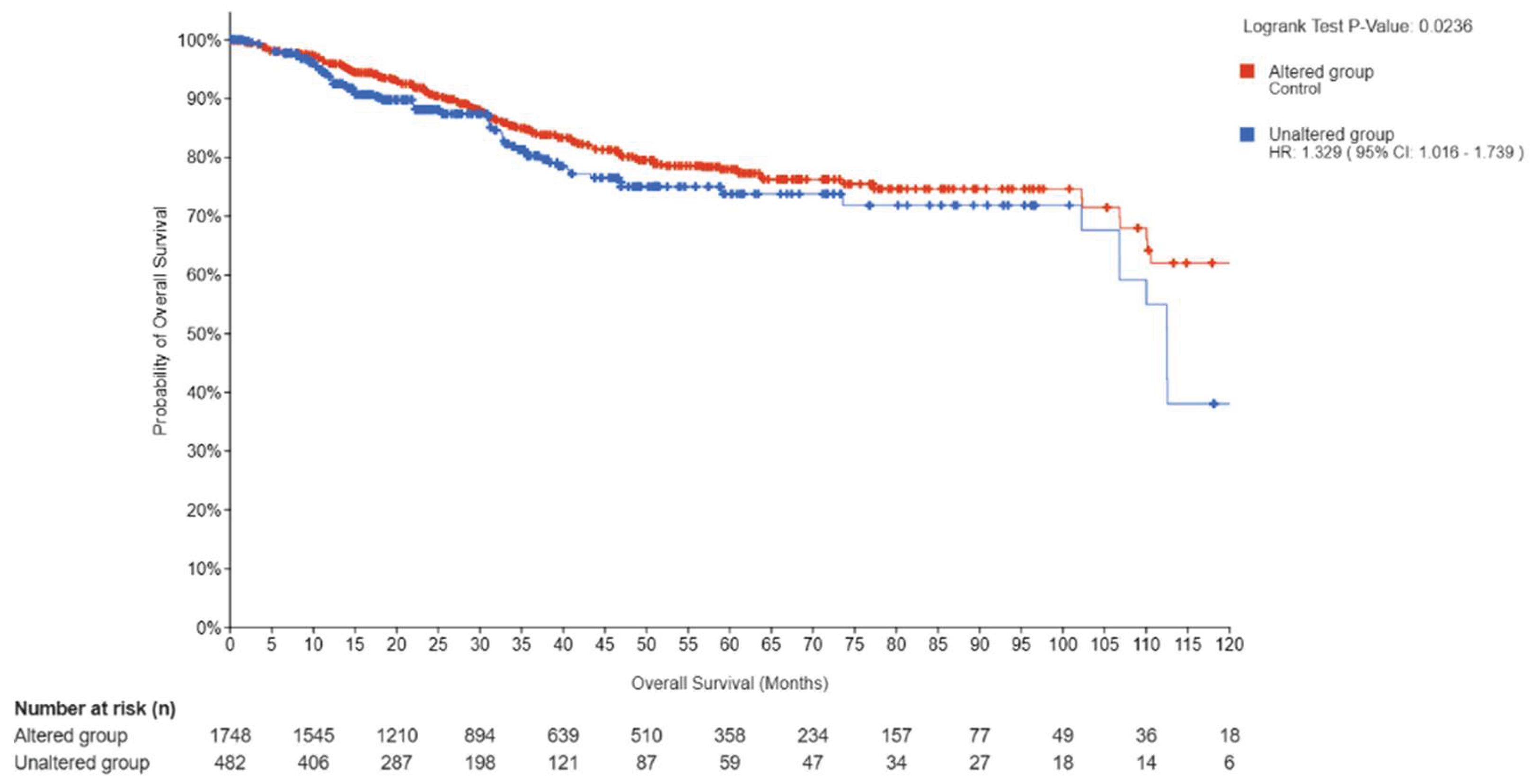
A survival analysis (Figure 8) comparing patients with and without genetic alterations in key IGF signaling pathway genes revealed significant differences in overall survival (OS). Patients with tumors harboring at least one alteration in IGF pathway genes (such as IGF1, IGF1R, IRS1/2, and PIK3CA) showed better OS outcomes compared to those without these alterations. The unaltered group had a 32.9% higher risk of death (Hazard Ratio = 1.329), and the difference was statistically significant (P-value = 0.0236). Further analysis of the clinical and molecular characteristics of IGF pathway-altered and unaltered tumors revealed several key trends. Tumors with IGF pathway alterations were enriched in genomically stable or hypermutated subtypes, such as POLE and MSI-H, and more frequently showed lower-grade histology (G1 and G2). In contrast, the unaltered group had a higher proportion of aggressive, poorly differentiated tumors (G3), often associated with serous histology. An investigation of the clinical & molecular feature distribution in IGF Pathway-Altered vs Unaltered Groups also found that that IGF-pathway alterations were enriched in endometrial tumors which were lower grade, endometrioid, MSI-H / POLE / CNV-low and of a better prognosis molecular subtype.
Figure 8.
Survival analysis comparing patients with and without genetic alterations in key IGF signaling pathway genes.
Figure 8.
Survival analysis comparing patients with and without genetic alterations in key IGF signaling pathway genes.
Discussion
This pilot, hypothesis-generating study sought to explore the feasibility of investigating the association between PCOS and EC risk through the lens of IGF1 signaling. Rather than testing a single definitive mechanism, our aim was to generate preliminary biological insights that could inform future, adequately powered studies examining the role of the IGF axis in PCOS-associated EC risk. By integrating exploratory transcriptomics with targeted functional assays, pathway signaling, and in silico analyses, we demonstrate that PCOS serum can promote EC cell growth by partially engaging IGF signaling. A central finding was that circulating IGF1 and IGFBP-3 levels did not differ significantly between PCOS and control groups at the population level. However, substantial inter-individual variability enabled stratification by estimated IGF bioactivity, which proved more informative for biological effects than absolute ligand concentrations. This observation suggests that dysregulation of the IGF system, rather than elevated IGF1 alone, may be relevant to PCOS-associated EC biology and underscores the limitations of relying on mean serum levels in heterogeneous endocrine disorders associated pathways within a broader, disease-specific metabolic context.
We observed no significant difference in circulating serum IGF1 levels between women with PCOS and controls. Transcriptomic profiling revealed that PCOS and control sera remain distinct even at equivalent IGF bioactivity, indicating additional IGF-independent contributions. However, functional cell-based assays demonstrated that EC cell proliferation was consistently higher when cells were treated with serum from women with PCOS compared to controls. While preliminary, this finding aligns with epidemiological data reporting a 3–5-fold increased risk of EC among women with PCOS and supports the feasibility of using patient-derived serum to model disease-relevant biological effects in vitro in this context. Importantly, the absence of differences in total serum IGF1 suggests that IGF1 alone is unlikely to fully explain the observed proliferative effects, highlighting the need to consider regulatory components of the IGF system. In this context, IGFBP-3, a key modulator of IGF1 bioavailability and activity[25,26], emerged as a potentially important factor. As part of this pilot work, we therefore examined IGFBP-3 levels and stratified participants by IGF1/IGFBP-3 ratio as a surrogate for bioactive IGF1. Although limited by small subgroup sizes, this stratification suggested that PCOS serum—irrespective of high or low IGF1/IGFBP-3 ratio—was associated with increased EC cell viability and proliferation relative to controls, whereas this effect was not observed in control sera with lower ratios. These observations suggest that IGF1 regulation, rather than absolute IGF1 concentration, may be relevant in PCOS-associated EC biology and merit further investigation in larger cohorts. Inter-individual variability within the control group likely influenced some of the unexpected findings, underscoring the challenges inherent in small pilot studies. For example, one control participant had mildly elevated testosterone levels and another had a small dermoid cyst, both of which may alter IGF signaling. Additionally, slightly higher IGFBP-3 levels in one control sample may have disproportionately affected group-level proliferation outcomes. These observations highlight the importance of individual-level analyses and careful phenotyping in future feasibility-to-definitive study transitions. Prior evidence that IGFBP expression can be regulated by both IGF1 and testosterone[27] supports the biological plausibility of such variability and reinforces the complexity of IGF system regulation in PCOS. Together with prior reports of IGF1 and IGFBP imbalance in PCOS pathophysiology[28], our findings support the feasibility and potential value of assessing IGFBPs alongside IGF1 in future mechanistic studies.
To further explore whether IGF1 signaling contributes to the observed proliferative phenotype, we employed pharmacologic inhibition of the IGF1 receptor (IGF1R). Although reductions in proliferation did not reach statistical significance—consistent with the exploratory nature and limited power of this pilot—a reproducible trend toward decreased EC cell viability was observed in PCOS serum-treated cells following IGF1R inhibition. Pooled serum analyses supported this observation, showing that PCOS serum enhanced EC cell proliferation, which was partially attenuated by IGF1R blockade. These findings suggest that IGF1 signaling may contribute to, but does not solely drive, PCOS-associated EC cell proliferation. Cell cycle analyses further supported a contributory role for IGF1 signaling, with PCOS serum increasing the proportion of cells in S phase and decreasing those in G2/M phase—changes that were reversed by IGF1R inhibition. This pattern is consistent with IGF1-mediated cell cycle progression via PI3K and/or MAPK pathways, as reported in other cellular models [29,30,31]. While preliminary, these findings indicate that IGF1R inhibition can partially restore cell cycle regulation in this model system.
To generate mechanistic hypotheses, we examined downstream components of the AKT/GSK3β/mTOR signaling axis in EC cells treated with PCOS and control sera. Both PCOS and control groups with high IGF1/IGFBP-3 ratios demonstrated increased phosphorylation of AKT, GSK3β, and mTOR, consistent with increased IGF1 bioavailability. Unexpectedly, p-AKT levels were higher in the control high-ratio group than in the PCOS counterpart. Although this contrasts with reports of increased endometrial p-AKT expression in PCOS[32], it likely reflects biological heterogeneity, small sample size, and the exploratory nature of this study rather than a true absence of AKT pathway involvement in PCOS. In contrast, PCOS serum with high IGF1/IGFBP-3 ratio induced the strongest activation of p-GSK3β and p-mTOR, supporting enhanced proliferative signaling. IGF1R inhibition suppressed these signals in PCOS-treated cells but not in controls, suggesting partial IGF1 dependence in the PCOS context. In the PCOS-Low subgroup, IGF1R inhibition reduced p-mTOR but paradoxically increased p-GSK3β, potentially reflecting compensatory activation of alternate pathways such as MAPK and highlighting complex crosstalk between AKT-mTOR and GSK3β-mTOR signaling[33,34]. These findings suggest that metabolic factors common in PCOS, including insulin resistance and hyperinsulinemia, may modulate pathway activation independently of IGF1 signaling. Given the established roles of GSK3β and mTOR in metabolism, cell survival, and oncogenesis[35,36,37,38,39], these preliminary observations underscore the heterogeneity of PCOS phenotypes and suggest that IGF1R inhibition alone may be insufficient in certain metabolic contexts.
Furthermore, exploratory pathway-level RNA-seq analyses were consistent with Western blot (p-AKT, p-mTOR, p-GSK3β), MTS (metabolic/growth activity) and flow cytometry (cell-cycle) readouts. Findings were concordant with functional assays and supported the hypothesis that IGF/mTOR signaling drives coordinated metabolic and proliferative programs in this model. RNA-seq analyses are exploratory; chemistry was included as a covariate; pathway visualizations are presented to contextualise functional readouts. Although these trends should be interpreted cautiously due to the exploratory nature of the dataset, the pathway heatmap provides a systems-level view suggesting that metabolic and proliferative transcriptional programs are modulated in directions consistent with the functional assays. With only two observations per treatment and no within chemistry replicates, results are considered exploratory and hypothesis generating. Independent replication with multiple biological replicates per treatment within each chemistry (or a single harmonized chemistry across all samples) will be required to further validate these findings.
To contextualize our experimental and RNA-seq findings, we performed an in-silico analysis of publicly available genomic datasets, which demonstrated a high frequency of mutations in the PI3K/AKT/mTOR pathway—particularly PTEN and PIK3CA—in EC. These findings support the biological relevance of the pathways examined experimentally and may explain some of the paradoxical signaling responses observed in vitro. Notably, improved overall survival in IGF-altered tumors observed in our in silico analysis is consistent with the predominance of less aggressive, type I EC frequently associated with PCOS[40].Taken together, these computational and experimental data suggest that altered IGF1 signaling contributes to EC cell growth in a context-dependent manner and that PCOS may modulate this pathway in complex and heterogeneous ways.
Together, these integrated findings suggest that RNA-seq identified pathway programs are functionally manifested at metabolic, cell-cycle, and signaling levels, reinforcing a model in which IGF contributes to PCOS-associated EC cell growth while interacting with additional IGF-independent, PCOS-specific factors. The principal strength of this study lies in its translational, hypothesis-generating design, bridging clinical serum profiles with functional and molecular EC cell assays—an approach that complements prior epidemiological studies. However, as a pilot feasibility study, our findings are limited by a small sample size and inter-individual variability and should be interpreted as exploratory rather than definitive. These results nonetheless demonstrate the feasibility of this experimental approach and provide a rationale for larger, well-powered studies incorporating detailed metabolic phenotyping and individual-level serum analyses to more definitively define the role of IGF1 dysregulation in PCOS-associated EC risk.
Supplementary Materials
The supporting information can be downloaded at the website of this paper posted on Preprints.org.
Author Contributions
WA, MH, and FA conceptualized the study. WA, MH, and FA designed the methodology. SI, TA, FBK, AH, IE, AG, UO and KH assisted with patient recruitment and sample collection. NS, BS, MH, SR and FA conducted the ELISA, cell culture and laboratory experiments and analyzed the results. WA, KH, MT and F.G.M. provided overall supervision for patient recruitment at Latifa Hospital. WA prepared and wrote the original draft. ST, KD, NN and MU performed RNA-seq experiments. MH performed RNA-seq Analysis. All authors contributed to the writing; they also reviewed and edited the manuscript. All authors have read and agreed to the published version of the manuscript.
Funding
This project was funded by a research grant from Mohamed Bin Rashid University of Medicine and Health Sciences, Dubai, United Arab Emirates. MBRU-CM-RG2022-14.
Institutional Review Board Statement
Ethics approval for this study was obtained from the Mohammed Bin Rashid University of Medicine and Health Sciences (MBRU IRB-2022-149) and Kings College London, Dubai (Research and Ethics Committee - 12/10/2022) research ethics committees. An amendment was sought and received from the MBRU and the Dubai Scientific Research and Ethics Committee to recruit additional patients from Latifa Women and Children’s Hospital (DSREC-11/2023_25) on 30th November 2023. All experiments were performed in accordance with relevant guidelines and regulations.
Informed Consent Statement
Informed consent was obtained from all subjects involved in the study.
Data Availability Statement
Data supporting the results reported in the article will be made available by the authors on request. RNA-seq data will be deposited upon acceptance. cBioPortal data are publicly available. All queries can be directed to the corresponding author William Atiomo.
Acknowledgments
We would like to thank Sara Albasha, Shirley Luciap and other colleagues in the Al Jalila Foundation building laboratories, for their help with the study and all the participants who consented to participate in the study.
Conflicts of Interest
The authors declare no conflict of interest.
References
- Baker-Rand, H.; Kitson, S.J. Recent Advances in Endometrial Cancer Prevention, Early Diagnosis and Treatment. Cancers (Basel) 2024, 16, 1028. [Google Scholar] [CrossRef]
- Sung, H.; Ferlay, J.; Siegel, R.L.; Laversanne, M.; Soerjomataram, I.; Jemal, A.; et al. Global Cancer Statistics 2020: GLOBOCAN Estimates of Incidence and Mortality Worldwide for 36 Cancers in 185 Countries. In CA Cancer J Clin.; Wiley, 2021; Volume 71, pp. 209–49. [Google Scholar] [CrossRef]
- Armanini, D.; Boscaro, M.; Bordin, L.; Sabbadin, C. Controversies in the Pathogenesis, Diagnosis and Treatment of PCOS: Focus on Insulin Resistance, Inflammation, and Hyperandrogenism. Int J Mol Sci. 2022, 23. [Google Scholar] [CrossRef]
- Ding, D.C.; Chen, W.; Wang, J.H.; Lin, S.Z. Association between polycystic ovarian syndrome and endometrial, ovarian, and breast cancer: A population-based cohort study in Taiwan. In Medicine (United States); Lippincott Williams and Wilkins, 2018; p. 97. [Google Scholar] [CrossRef]
- Haoula, Z.; Salman, M.; Atiomo, W. Evaluating the association between endometrial cancer and polycystic ovary syndrome. In Human Reproduction; Oxford University Press, 2012; Volume 27, pp. 1327–31. [Google Scholar] [CrossRef]
- Johnson, J.-E.; Daley, D.; Tarta, C.; Stanciu, P.I. Risk of endometrial cancer in patients with polycystic ovarian syndrome: A meta-analysis. Oncol Lett. 2023, 25, 168. [Google Scholar] [CrossRef]
- Stewart, E.A.; Shuster, L.T.; Rocca, W.A. Reassessing hysterectomy. Minn Med. 2012, 95, 36–9. [Google Scholar]
- Costas, L.; Frias-Gomez, J.; Guardiola, M.; Benavente, Y.; Pineda, M.; Pavón, M.Á; et al. New perspectives on screening and early detection of endometrial cancer. Int J Cancer 2019, 145, 3194–206. [Google Scholar] [CrossRef]
- Perkins, R.B.; Guido, R.L.; Saraiya, M.; Sawaya, G.F.; Wentzensen, N.; Schiffman, M.; et al. Summary of Current Guidelines for Cervical Cancer Screening and Management of Abnormal Test Results: 2016–2020. J Womens Health 2021, 30, 5–13. [Google Scholar] [CrossRef]
- Hardiman, P.; Pillay, O.C.; Atiomo, W. Polycystic ovary syndrome and endometrial carcinoma. In Lancet [Internet]; Elsevier, 2003; Volume 361, pp. 1810–2. [Google Scholar] [CrossRef]
- Mullee, A.; Dimou, N.; Allen, N.; O’Mara, T.; Gunter, M.J.; Murphy, N. Testosterone, sex hormone-binding globulin, insulin-like growth factor-1 and endometrial cancer risk: observational and Mendelian randomization analyses. Br J Cancer 2021, 125, 1308–17. [Google Scholar] [CrossRef]
- Shafiee, M.N.; Seedhouse, C.; Mongan, N.; Chapman, C.; Deen, S.; Abu, J.; et al. Up-regulation of genes involved in the insulin signalling pathway (IGF1, PTEN and IGFBP1) in the endometrium may link polycystic ovarian syndrome and endometrial cancer. Mol Cell Endocrinol [Internet] 2016, 424, 94–101. [Google Scholar] [CrossRef]
- Kwasniewski, W.; Gozdzicka-Jozefiak, A.; Wolun-Cholewa, M.; Polak, G.; Sierocinska-Sawa, J.; Kwasniewska, A.; et al. Microsatellite polymorphism in the P1 promoter region of the IGF-1 gene is associated with endometrial cancer. Mol Med Rep. 2016, 13, 4950–8. [Google Scholar] [CrossRef]
- Hardiman, P.; Pillay, O.C.; Atiomo, W. Polycystic ovary syndrome and endometrial carcinoma. Lancet [Internet]. Elsevier; 2003 [cited 2022 Mar 9];361:1810–2. [CrossRef]
- Galazis, N.; Pang, Y.-L.; Galazi, M.; Haoula, Z.; Layfield, R.; Atiomo, W. Proteomic biomarkers of endometrial cancer risk in women with polycystic ovary syndrome: a systematic review and biomarker database integration. Gynecological Endocrinology 2013, 29, 638–44. [Google Scholar] [CrossRef]
- Luo, L.; Wang, Q.; Chen, M.; Yuan, G.; Wang, Z.; Zhou, C. IGF-1 and IGFBP-1 in peripheral blood and decidua of early miscarriages with euploid embryos: comparison between women with and without PCOS. In Gynecological Endocrinology [Internet]; Taylor & Francis, 2016 [cited 2022 Mar 9]; Volume 32, pp. 538–42. [Google Scholar] [CrossRef]
- Pearl, M.L.; Talavera, F.; Gretz, H.F.; Roberts, J.A.; Menon, K.M. Mitogenic activity of growth factors in the human endometrial adenocarcinoma cell lines HEC-1-A and KLE. Gynecol Oncol. 1993, 49, 325–32. [Google Scholar] [CrossRef]
- Nakamura, M.; Obata, T.; Daikoku, T.; Fujiwara, H. The Association and Significance of p53 in Gynecologic Cancers: The Potential of Targeted Therapy. Int J Mol Sci. 2019, 20, 5482. [Google Scholar] [CrossRef]
- Gentilini, D.; Busacca, M.; Di Francesco, S.; Vignali, M.; Viganò, P.; Di Blasio, A.M. PI3K/Akt And ERK1/2 signalling pathways are involved in endometrial cell migration induced by 17β-estradiol and growth factors. MHR: Basic science of reproductive medicine 2007, 13, 317–22. [Google Scholar] [CrossRef]
- Shiwani, H.; Clement, N.S.; Daniels, J.P.; Atiomo, W. Metformin for endometrial hyperplasia. Cochrane Database of Systematic Reviews 2024, 2024. [Google Scholar] [CrossRef]
- Atiomo, W.; Alqutami, F.; Albasha, S.; Hachim, M. Deciphering the Role of Insulin-Like Growth Factor 1 in Endometrial Cancer in Patients With Polycystic Ovary Syndrome: Protocol for a Methodological Approach Using Cell Culture Experiments. JMIR Res Protoc. 2023, 12, e48127. [Google Scholar] [CrossRef]
- Rotterdam ESHRE/ASRM-Sponsored PCOS consensus workshop group. Revised 2003 consensus on diagnostic criteria and long-term health risks related to polycystic ovary syndrome (PCOS). Hum Reprod. 2004;19:41–7. [CrossRef]
- Ritchie, M.E.; Phipson, B.; Wu, D.; Hu, Y.; Law, C.W.; Shi, W.; et al. limma powers differential expression analyses for RNA-sequencing and microarray studies. Nucleic Acids Res. 2015, 43, e47. [Google Scholar] [CrossRef]
- Lazic, S.E.; Clarke-Williams, C.J.; Munafò, M.R. What exactly is ‘N’ in cell culture and animal experiments? PLoS Biol. 2018, 16, e2005282. [Google Scholar] [CrossRef]
- Varma Shrivastav, S.; Bhardwaj, A.; Pathak, K.A.; Shrivastav, A. Insulin-Like Growth Factor Binding Protein-3 (IGFBP-3): Unraveling the Role in Mediating IGF-Independent Effects Within the Cell. Front Cell Dev Biol. 2020, 8, 286. [Google Scholar] [CrossRef]
- Martin, J.L.; Baxter, R.C. Signalling pathways of insulin-like growth factors (IGFs) and IGF binding protein-3. Growth Factors 2011, 29, 235–44. [Google Scholar] [CrossRef]
- Yoshizawa, A.; Clemmons, D.R. Testosterone and insulin-like growth factor (IGF) I interact in controlling IGF-binding protein production in androgen-responsive foreskin fibroblasts. J Clin Endocrinol Metab. 2000, 85, 1627–33. [Google Scholar] [CrossRef]
- Jin, Y.; Sun, F.; Yang, A.; Yu, X.; Li, Y.; Liang, S.; et al. Insulin-like growth factor binding protein-1 and insulin in polycystic ovary syndrome: a systematic review and meta-analysis. Front Endocrinol (Lausanne) 2023, 14, 1279717. [Google Scholar] [CrossRef]
- Ren, M.; Zhong, X.; Ma, C.; Sun, Y.; Guan, Q.; Cui, B.; et al. Insulin-like growth factor-1 promotes cell cycle progression via upregulation of cyclin D1 expression through the phosphatidylinositol 3-kinase/nuclear factor-κB signaling pathway in FRTL thyroid cells. Acta Pharmacol Sin. 2009, 30, 113–9. [Google Scholar] [CrossRef]
- Mairet-Coello, G.; Tury, A.; DiCicco-Bloom, E. Insulin-like growth factor-1 promotes G(1)/S cell cycle progression through bidirectional regulation of cyclins and cyclin-dependent kinase inhibitors via the phosphatidylinositol 3-kinase/Akt pathway in developing rat cerebral cortex. J Neurosci. 2009, 29, 775–88. [Google Scholar] [CrossRef]
- Min, J.; Singh, S.; Fitzgerald-Bocarsly, P.; Wood, T.L. Insulin-like growth factor I regulates G2/M progression through mammalian target of rapamycin signaling in oligodendrocyte progenitors. Glia 2012, 60, 1684–95. [Google Scholar] [CrossRef]
- Zhang, H.; Zhang, Y.; Han, Y.; Xue, F.; Zhao, X.; Zhang, X. [Activation and significance of the PI3K/Akt pathway in endometrium with polycystic ovary syndrome patients]. Zhonghua Fu Chan Ke Za Zhi 2012, 47, 19–23. [Google Scholar]
- Hermida, M.A.; Dinesh Kumar, J.; Leslie, N.R. GSK3 and its interactions with the PI3K/AKT/mTOR signalling network. Adv Biol Regul. 2017, 65, 5–15. [Google Scholar] [CrossRef]
- Evangelisti, C.; Chiarini, F.; Paganelli, F.; Marmiroli, S.; Martelli, A.M. Crosstalks of GSK3 signaling with the mTOR network and effects on targeted therapy of cancer. Biochim Biophys Acta Mol Cell Res. 2020, 1867, 118635. [Google Scholar] [CrossRef]
- Das, A.; Bhattacharya, B.; Roy, S. Decrypting a path based approach for identifying the interplay between PI3K and GSK3 signaling cascade from the perspective of cancer. Genes Dis. 2022, 9, 868–88. [Google Scholar] [CrossRef]
- Takahashi-Yanaga, F. Activator or inhibitor? GSK-3 as a new drug target. Biochem Pharmacol. 2013, 86, 191–9. [Google Scholar] [CrossRef]
- Yaba, A.; Demir, N. The mechanism of mTOR (mammalian target of rapamycin) in a mouse model of polycystic ovary syndrome (PCOS). J Ovarian Res. 2012, 5, 38. [Google Scholar] [CrossRef] [PubMed]
- Song, W.-J.; Shi, X.; Zhang, J.; Chen, L.; Fu, S.-X.; Ding, Y.-L. Akt-mTOR Signaling Mediates Abnormalities in the Proliferation and Apoptosis of Ovarian Granulosa Cells in Patients with Polycystic Ovary Syndrome. Gynecol Obstet Invest. 2018, 83, 124–32. [Google Scholar] [CrossRef]
- Liu, J.; Wu, D.-C.; Qu, L.-H.; Liao, H.-Q.; Li, M.-X. The role of mTOR in ovarian Neoplasms, polycystic ovary syndrome, and ovarian aging. Clin Anat. 2018, 31, 891–8. [Google Scholar] [CrossRef] [PubMed]
- Gottschau, M.; Kjaer, S.K.; Jensen, A.; Munk, C.; Mellemkjaer, L. Risk of cancer among women with polycystic ovary syndrome: a Danish cohort study. Gynecol Oncol. 2015, 136, 99–103. [Google Scholar] [CrossRef] [PubMed]
Figure 1.
Quantification of Serum IGF1 levels. ELISA was performed to quantify the levels of IGF1 protein in serum of Control (n=24) and PCOS (n=12) patients. Statistical significance was calculated by using unpaired t-test by comparing the difference of means (PCOS-Control, where p-value less than 0.05 considered as significant and error bar represents the SD. Where ng/mL = nanograms per milliliter, ns=not statistically significant.
Figure 1.
Quantification of Serum IGF1 levels. ELISA was performed to quantify the levels of IGF1 protein in serum of Control (n=24) and PCOS (n=12) patients. Statistical significance was calculated by using unpaired t-test by comparing the difference of means (PCOS-Control, where p-value less than 0.05 considered as significant and error bar represents the SD. Where ng/mL = nanograms per milliliter, ns=not statistically significant.
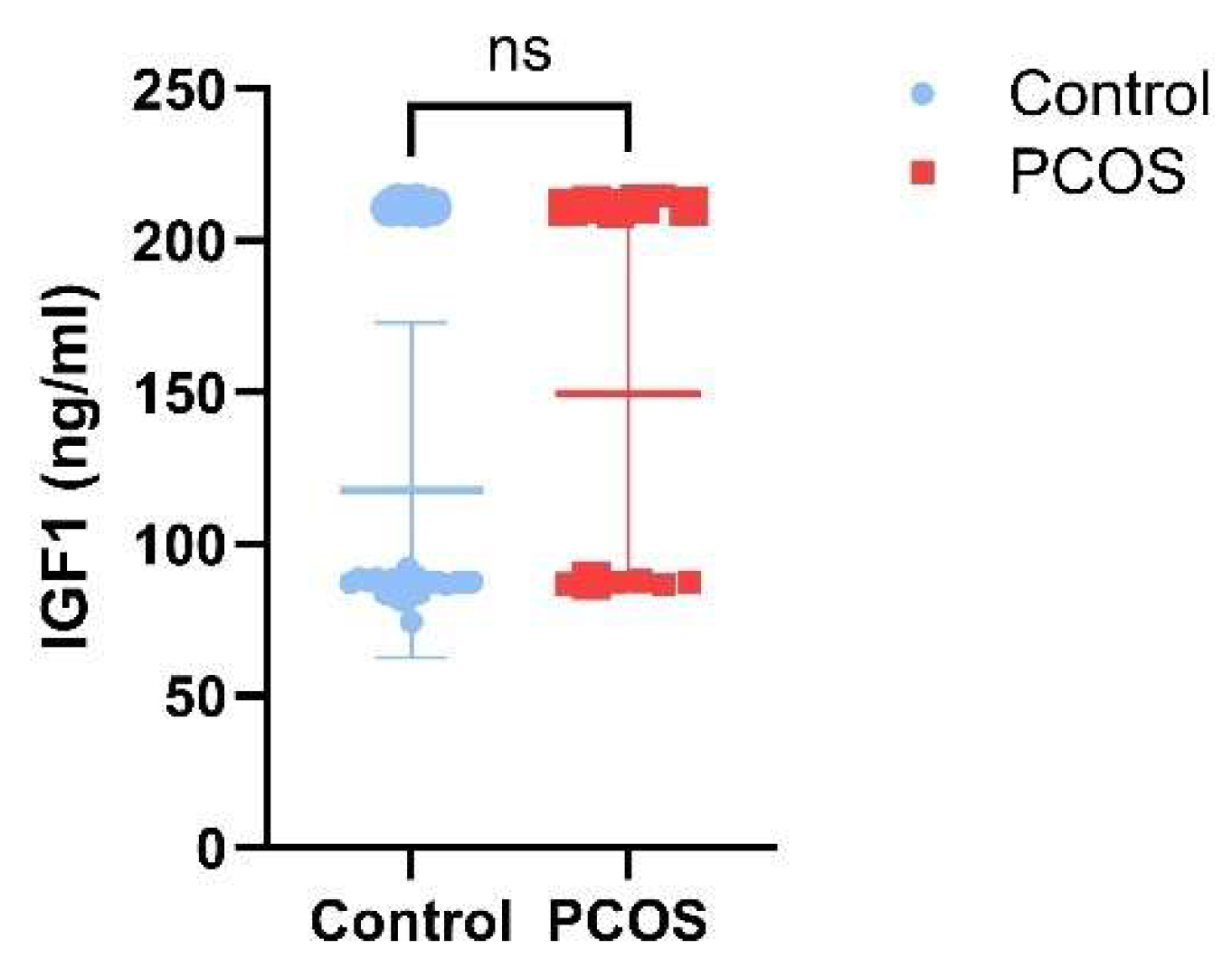
Figure 2.
Quantification of Serum IGF1 and IGFBP-3 and stratification of Control and PCOS groups based on IGF1/IGFBP-3 ratio. ELISA was performed to quantify the levels of A) IGF1 and B) IGFBP-3 in Control (n=7) and PCOS patients (n=6). Statistical significance was calculated by using an unpaired t-test. C) Serum IGF1/IGFBP-3 ratios were quantified into 4 different groups as Control high IGF-1/IGFBP-3 (N=3), Control Low IGF-1/IGFBP-3 (N=4), PCOS High IGF-1/IGFBP-3 (N=3) and PCOS Low IGF-1/IGFBP-3 (N=4) respectively based on their significantly different IGF-1/IGFBP-3 ratio. Statistical significance was calculated using one-way ANOVA followed by Tukey’s multiple comparison test where p-value less than 0.05 considered as significant and error bar represents SD. *** <0.001, ns- not statistically significant.
Figure 2.
Quantification of Serum IGF1 and IGFBP-3 and stratification of Control and PCOS groups based on IGF1/IGFBP-3 ratio. ELISA was performed to quantify the levels of A) IGF1 and B) IGFBP-3 in Control (n=7) and PCOS patients (n=6). Statistical significance was calculated by using an unpaired t-test. C) Serum IGF1/IGFBP-3 ratios were quantified into 4 different groups as Control high IGF-1/IGFBP-3 (N=3), Control Low IGF-1/IGFBP-3 (N=4), PCOS High IGF-1/IGFBP-3 (N=3) and PCOS Low IGF-1/IGFBP-3 (N=4) respectively based on their significantly different IGF-1/IGFBP-3 ratio. Statistical significance was calculated using one-way ANOVA followed by Tukey’s multiple comparison test where p-value less than 0.05 considered as significant and error bar represents SD. *** <0.001, ns- not statistically significant.
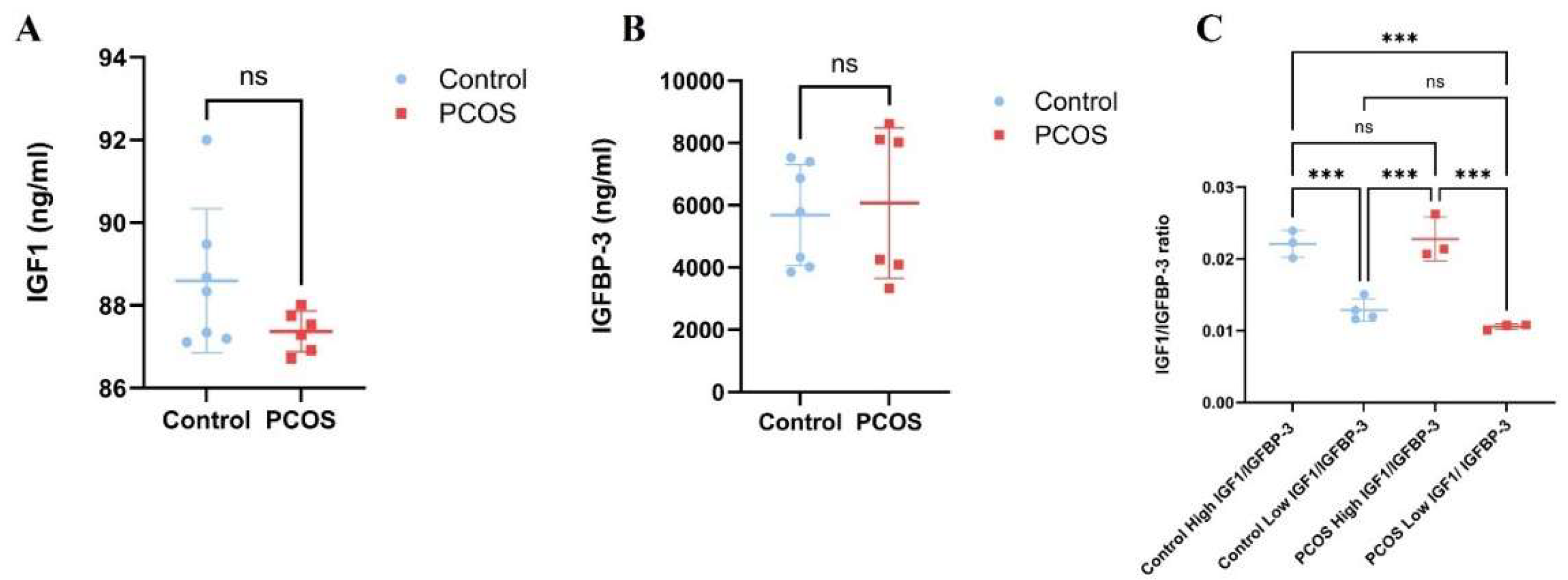
Figure 3.
Effect of Control and PCOS serum on proliferation of EC cells. X-axis display different treatment conditions over 24 hours and y-axis represents absorbance (at 490nm), which correlates with cell viability or proliferation. A) Direct comparison of effect of Control and PCOS serum on EC cell viability/proliferation. B) EC cells were treated with IGF1 (10 ng/mL and 100 ng/mL), IGF1R inhibitor (10 µM and 100 µM respectively) and both IGF1 and IGF1R together with FBS (FBS+) or without FBS (FBS-) and DMSO as controls Control and PCOS High represents groups with High IGF1/IGFBP-3 ratio whereas Control and PCOS Low represents Low IGF1/IGFBP-3 ratio. All groups were treated with 10 µM IGF1R inhibitor (Inh). Statistical significance was calculated by using one-way ANOVA followed by Tukey’s multiple comparison test where p < 0.05 considered as significant and error bar represents the SD. ****<0.0001, ***<0.001, **<0.01 and *<0.01 ns- not statistically significant.
Figure 3.
Effect of Control and PCOS serum on proliferation of EC cells. X-axis display different treatment conditions over 24 hours and y-axis represents absorbance (at 490nm), which correlates with cell viability or proliferation. A) Direct comparison of effect of Control and PCOS serum on EC cell viability/proliferation. B) EC cells were treated with IGF1 (10 ng/mL and 100 ng/mL), IGF1R inhibitor (10 µM and 100 µM respectively) and both IGF1 and IGF1R together with FBS (FBS+) or without FBS (FBS-) and DMSO as controls Control and PCOS High represents groups with High IGF1/IGFBP-3 ratio whereas Control and PCOS Low represents Low IGF1/IGFBP-3 ratio. All groups were treated with 10 µM IGF1R inhibitor (Inh). Statistical significance was calculated by using one-way ANOVA followed by Tukey’s multiple comparison test where p < 0.05 considered as significant and error bar represents the SD. ****<0.0001, ***<0.001, **<0.01 and *<0.01 ns- not statistically significant.
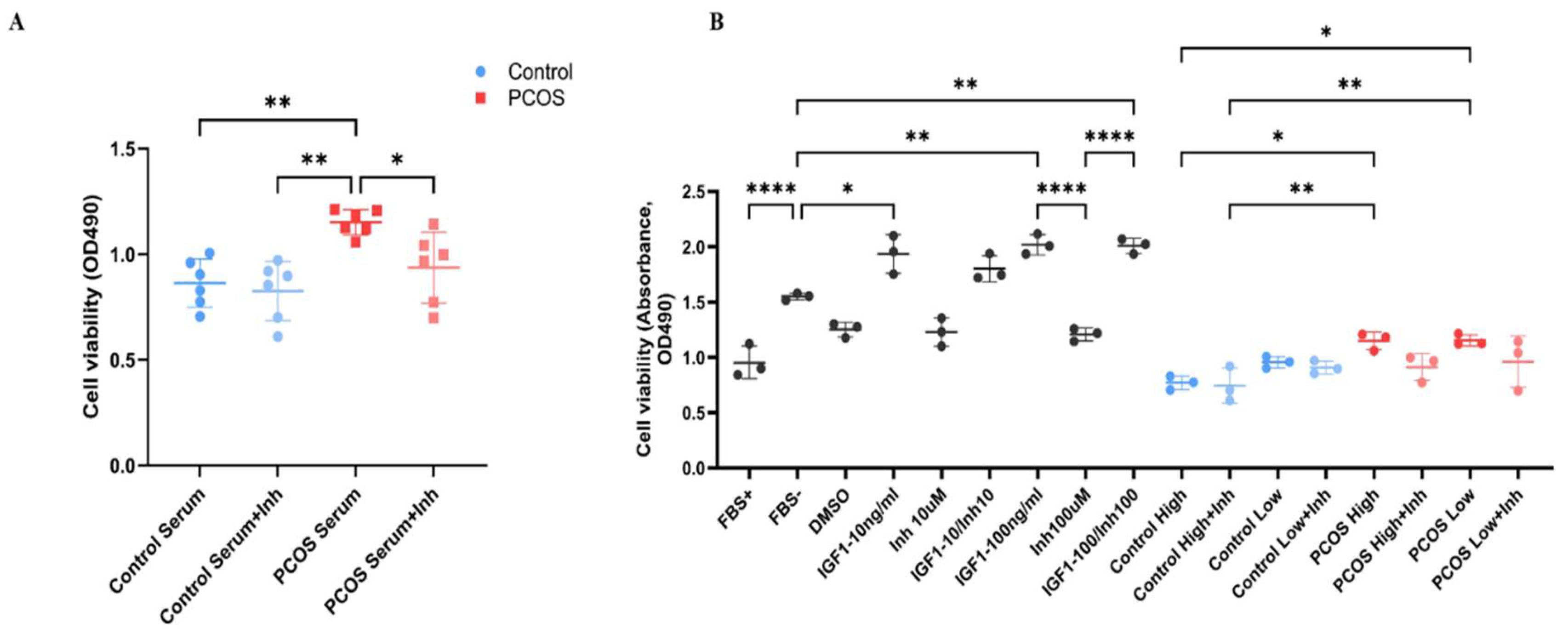
Figure 4.
Effect of Control and PCOS serum treatment on cell cycle phases of EC cells. HEC1-A cells were treated with serum from control and PCOS groups in addition to IGF1 (10 ng/mL and 100 ng/mL), IGF1R inhibitor (10 µM and 100 µM respectively) and both IGF1 and IGF1R together. Control and PCOS High represents groups with High IGF1/IGFBP-3 ratio whereas Control and PCOS Low represents Low IGF1/IGFBP-3 ratio. All groups were treated with 10 µM IGF1R inhibitor (Inh). EC cells with FBS (FBS+) or without FBS (FBS-) and DMSO were used as controls. EC cells were fixed and stained with PI-dye, counted based on their DNA content using flow cytometer and plotted in a graph representing the cell count in each condition. A) X-axis display different treatment conditions over 24 hours and y-axis represents % of cells in cell cycle phases. B) Representative Histograms of different Control and PCOS groups.
Figure 4.
Effect of Control and PCOS serum treatment on cell cycle phases of EC cells. HEC1-A cells were treated with serum from control and PCOS groups in addition to IGF1 (10 ng/mL and 100 ng/mL), IGF1R inhibitor (10 µM and 100 µM respectively) and both IGF1 and IGF1R together. Control and PCOS High represents groups with High IGF1/IGFBP-3 ratio whereas Control and PCOS Low represents Low IGF1/IGFBP-3 ratio. All groups were treated with 10 µM IGF1R inhibitor (Inh). EC cells with FBS (FBS+) or without FBS (FBS-) and DMSO were used as controls. EC cells were fixed and stained with PI-dye, counted based on their DNA content using flow cytometer and plotted in a graph representing the cell count in each condition. A) X-axis display different treatment conditions over 24 hours and y-axis represents % of cells in cell cycle phases. B) Representative Histograms of different Control and PCOS groups.
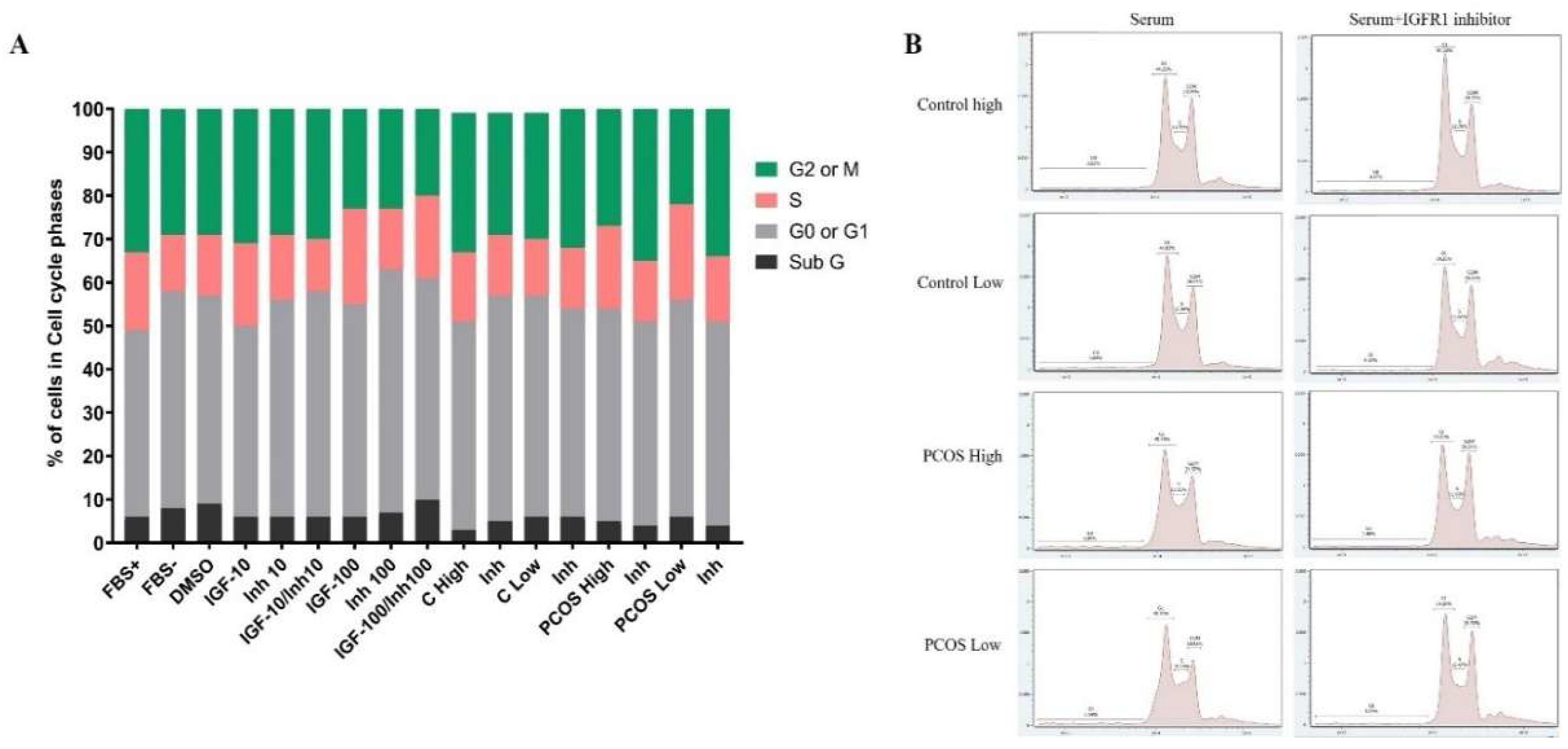
Figure 5.
Protein Quantification using Western Blot. EC cells were treated with different treatments and serum from 4 different groups of Control and PCOS. EC cells with FBS (FBS+) or without FBS (FBS-) and DMSO were used as controls. Additionally, EC cells were treated with IGF1 (10 ng/mL and 100 ng/mL), IGF1R inhibitor (10 µM and 100 µM respectively) and both IGF1 and IGF1R together. Control and PCOS High represent groups with High IGF1/IGFBP-3 ratio whereas Control and PCOS Low represent Low IGF1/IGFBP-3 ratio. All groups were treated with 10 µM IGF1R inhibitor (Inh). Proteins were immunoblotted for A) pAKT, B) pGSK3β and C) p-mTOR. GAPDH was used as a loading control for each blot, and the protein levels were quantified after normalization to the GAPDH. Bands after the delineated lines are merged from a separate blot run in parallel under identical conditions due to space limitations in capturing all samples on a single blot. Original blots are presented in Supplementary Figure 1. D) Quantified protein levels of pAKT, pGSK3β and p-mTOR were combined and represented together.
Figure 5.
Protein Quantification using Western Blot. EC cells were treated with different treatments and serum from 4 different groups of Control and PCOS. EC cells with FBS (FBS+) or without FBS (FBS-) and DMSO were used as controls. Additionally, EC cells were treated with IGF1 (10 ng/mL and 100 ng/mL), IGF1R inhibitor (10 µM and 100 µM respectively) and both IGF1 and IGF1R together. Control and PCOS High represent groups with High IGF1/IGFBP-3 ratio whereas Control and PCOS Low represent Low IGF1/IGFBP-3 ratio. All groups were treated with 10 µM IGF1R inhibitor (Inh). Proteins were immunoblotted for A) pAKT, B) pGSK3β and C) p-mTOR. GAPDH was used as a loading control for each blot, and the protein levels were quantified after normalization to the GAPDH. Bands after the delineated lines are merged from a separate blot run in parallel under identical conditions due to space limitations in capturing all samples on a single blot. Original blots are presented in Supplementary Figure 1. D) Quantified protein levels of pAKT, pGSK3β and p-mTOR were combined and represented together.
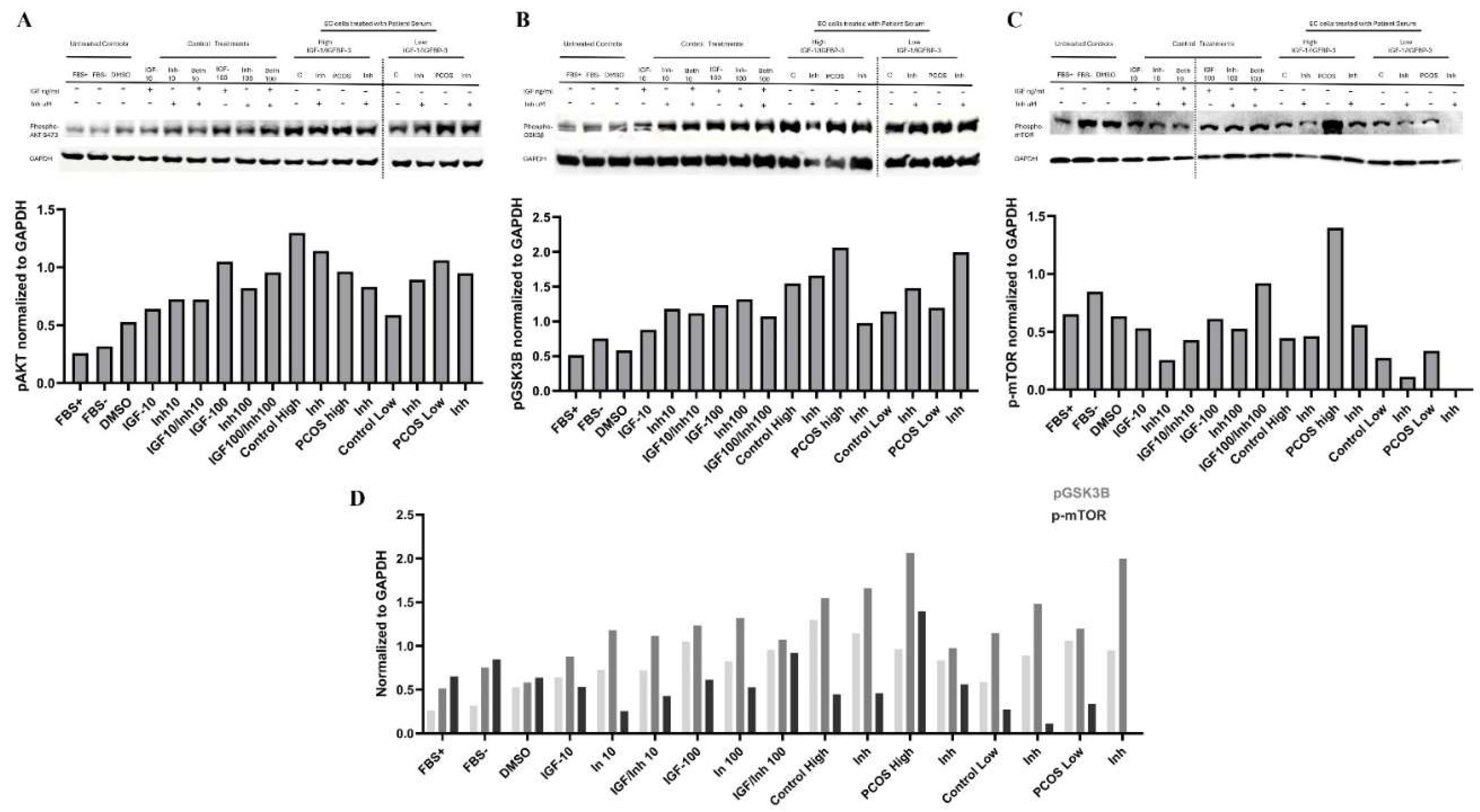
Figure 6.
IGF/RTK program NES across contrasts. Heatmap showing normalized enrichment scores (NES) from gene set enrichment analysis (GSEA) for selected Hallmark pathways associated with IGF/RTK signaling, metabolism, and cell-cycle regulation. Transcriptomic enrichment supported proliferation/metabolic findings. Red indicates positive enrichment (upregulation) of a pathway in the indicated contrast, whereas blue indicates negative enrichment (relative downregulation). EC cells with FBS (FBS+) or without FBS (noFBS) and DMSO were used as controls. Additionally, EC cells were treated with IGF1 (10 ng/mL), IGF1R inhibitor (10 µM) and both IGF1 and IGF1R together (Both). Control High (GrpA) and PCOS High (GrpC) represent groups with High IGF1/IGFBP-3 ratio whereas Control Low (GrpB) and PCOS Low (GrpD) represent Low IGF1/IGFBP-3 ratio. All groups were treated with 10 µM IGF1R inhibitor (Inh).
Figure 6.
IGF/RTK program NES across contrasts. Heatmap showing normalized enrichment scores (NES) from gene set enrichment analysis (GSEA) for selected Hallmark pathways associated with IGF/RTK signaling, metabolism, and cell-cycle regulation. Transcriptomic enrichment supported proliferation/metabolic findings. Red indicates positive enrichment (upregulation) of a pathway in the indicated contrast, whereas blue indicates negative enrichment (relative downregulation). EC cells with FBS (FBS+) or without FBS (noFBS) and DMSO were used as controls. Additionally, EC cells were treated with IGF1 (10 ng/mL), IGF1R inhibitor (10 µM) and both IGF1 and IGF1R together (Both). Control High (GrpA) and PCOS High (GrpC) represent groups with High IGF1/IGFBP-3 ratio whereas Control Low (GrpB) and PCOS Low (GrpD) represent Low IGF1/IGFBP-3 ratio. All groups were treated with 10 µM IGF1R inhibitor (Inh).
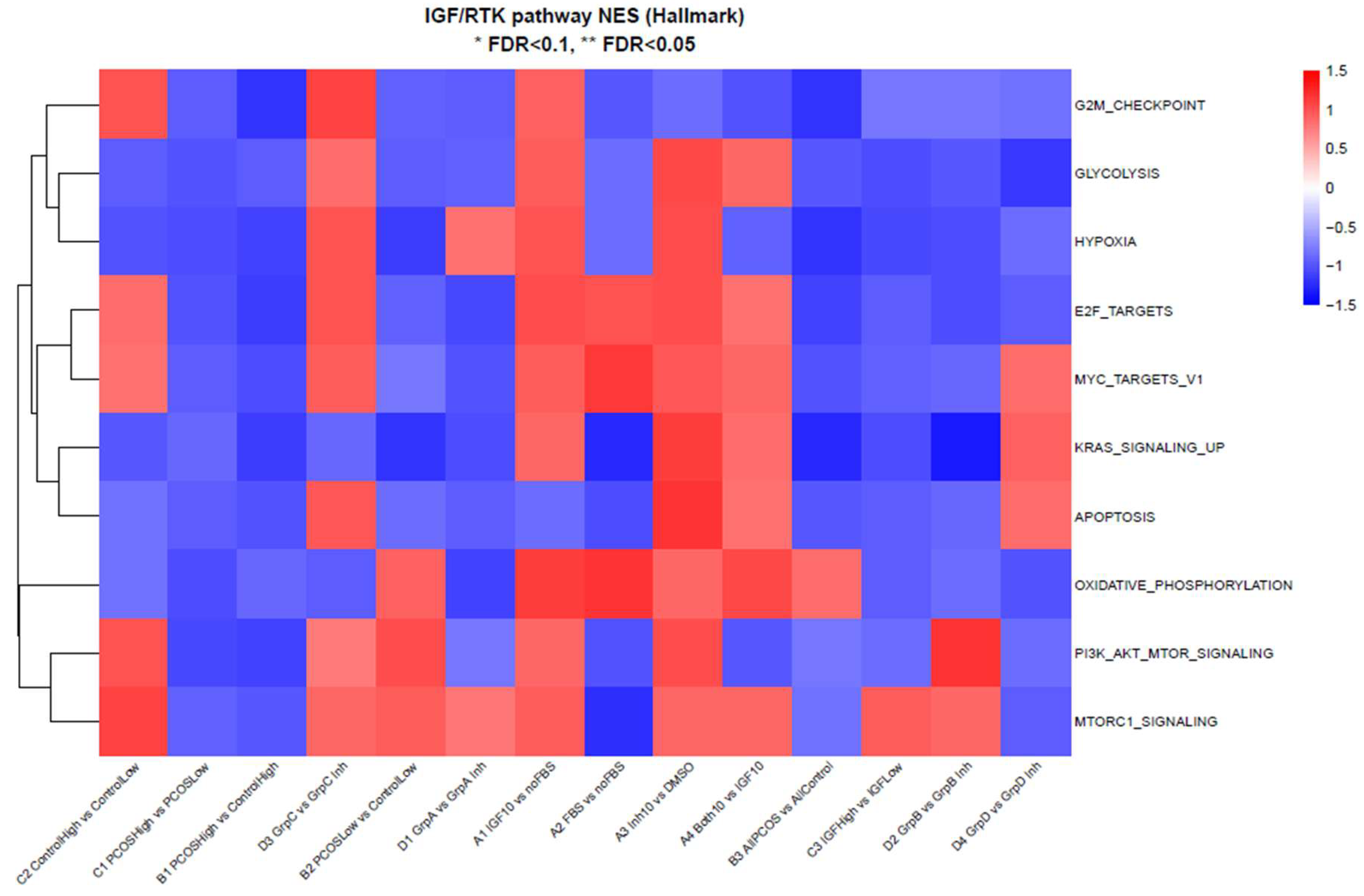
Figure 7.
Single-sample GSEA (ssGSEA) analysis of pathway activity across experimental conditions. Transcriptional programs associated with IGF signaling, metabolism, and cell-cycle regulation vary across treatment conditions in directions broadly consistent with the functional assay. RNA-seq analyses are exploratory; chemistry was included as a covariate; pathway visualizations are presented to contextualize functional readouts.). EC cells with FBS (FBS+) or without FBS (noFBS) and DMSO were used as controls. Additionally, EC cells were treated with IGF1 (10 ng/mL), IGF1R inhibitor (10 µM) and both IGF1 and IGF1R together (Both). Control High (GrpA) and PCOS High (GrpC) represent groups with High IGF1/IGFBP-3 ratio whereas Control Low (GrpB) and PCOS Low (GrpD) represent Low IGF1/IGFBP-3 ratio. All groups were treated with 10 µM IGF1R inhibitor (Inh).
Figure 7.
Single-sample GSEA (ssGSEA) analysis of pathway activity across experimental conditions. Transcriptional programs associated with IGF signaling, metabolism, and cell-cycle regulation vary across treatment conditions in directions broadly consistent with the functional assay. RNA-seq analyses are exploratory; chemistry was included as a covariate; pathway visualizations are presented to contextualize functional readouts.). EC cells with FBS (FBS+) or without FBS (noFBS) and DMSO were used as controls. Additionally, EC cells were treated with IGF1 (10 ng/mL), IGF1R inhibitor (10 µM) and both IGF1 and IGF1R together (Both). Control High (GrpA) and PCOS High (GrpC) represent groups with High IGF1/IGFBP-3 ratio whereas Control Low (GrpB) and PCOS Low (GrpD) represent Low IGF1/IGFBP-3 ratio. All groups were treated with 10 µM IGF1R inhibitor (Inh).
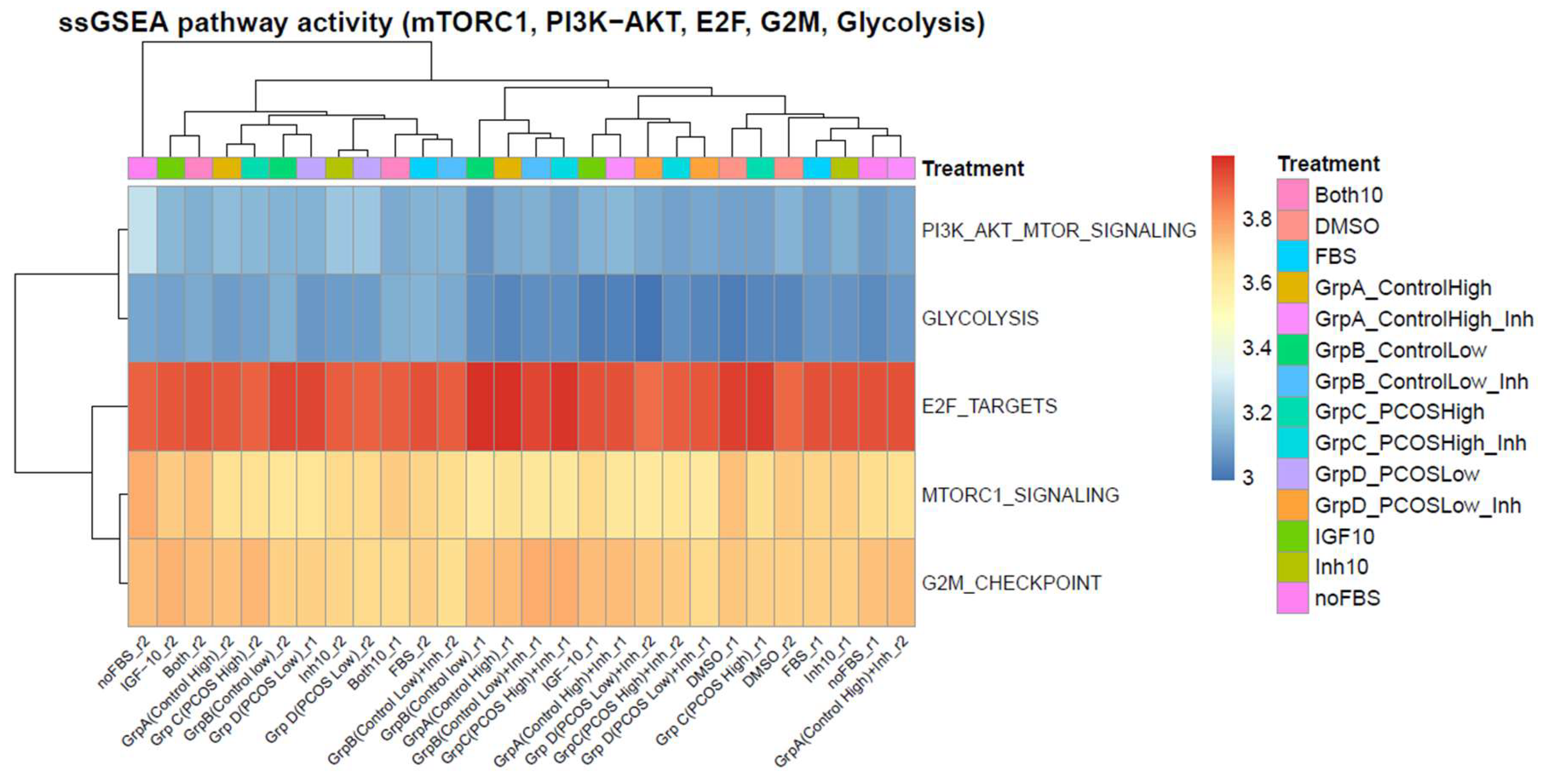

Table 1.
Demographic characteristics of the women who participated in the study. PCOS=polycystic ovary syndrome; SD=standard deviation, BMI=body mass index, SBP=systolic blood pressure, DBP=diastolic blood pressure.
Table 1.
Demographic characteristics of the women who participated in the study. PCOS=polycystic ovary syndrome; SD=standard deviation, BMI=body mass index, SBP=systolic blood pressure, DBP=diastolic blood pressure.
| Controls (n=24) | PCOS (n=12) | p value | |
| Mean Age in years (SD) | 35 (8) | 27 (6) | 0.0034 |
| Number of women with previous pregnancy (%) | 17 (71%) | 3 (25%) | 0.009 |
| Mean BMI (SD) | 27.4 (6.5) | 24.5 (4.3) | 0.18 |
| Mean SBP (SD) | 111 (11) | 115 (9) | 0.26 |
| Mean DBP (SD) | 72 (6) | 71 (8) | 0.57 |
| Number of women with high LH/FSH ratio >2 | 2/15 | 6/11 | 0.024 |
| Serum IGF1 level (ng/mL) | 117.8 (55) | 149.6 (65) | 0.13 |
Table 2.
Demographic characteristics of the women stratified by IGF1/IGFBP-3 ratio in both control and PCOS group. PCOS=polycystic ovary syndrome; SD=standard deviation, BMI=body mass index, SBP=systolic blood pressure, DBP=diastolic blood pressure.
Table 2.
Demographic characteristics of the women stratified by IGF1/IGFBP-3 ratio in both control and PCOS group. PCOS=polycystic ovary syndrome; SD=standard deviation, BMI=body mass index, SBP=systolic blood pressure, DBP=diastolic blood pressure.
| Group A- Control (High IGF1/IGFBP-3) N=3 Mean +/- SD |
Group B- Control (Low IGF1/IGFBP-3) N=4 Mean +/- SD |
Group C- PCOS (High IGF1/IGFBP-3) N=3 Mean +/- SD |
Group D- PCOS (Low IGF1/IGFBP-3) N=3 Mean +/- SD |
ANOVA p value |
|
| Age (years) | 33 (8.1) | 31 (9.4) | 29.3 (10.0) | 23.3 (1.5) | 0.5 |
| BMI | 26.3 (2.3) | 21.13 (3.9) | 22 (5.5) | 27.31 (5.3) | 0.26 |
| Number of women with UAE Ethnicity (%) | 3 (100%) | 3 (75%) | 3 (100%) | 2 (67%) | NS |
| Number of women with previous pregnancy (%) | 2 (33.3%) | 2 (50%) | 2 (33.3%) | 3 (100%) | 2.04 NS |
| Number of women with regular menstrual Cycle | 3 (100%) | 4 (100%) | 0 (0%) | 1(33.3%) | * p < 0.05 |
| Systolic BP | 116.7 (5.7) | 95.2 (6.4) | 124.3 (6.3) | 112.3 (13.2) | 0.007*** |
| Diastolic BP | 74 (0) | 64.2 (1.7) | 64 (9) | 75.3 (11.0) | 0.11 |
| IGF1 (ng/mL) | 89.53 (2.4) | 87.89 (0.7) | 87.61 (0.36) | 87.13 (0.54) | 0.1 |
| IGFBP-3 (ng/mL) | 4067 (243.4) | 6897 (793.7) | 3892 (496.2) | 8251 (324.4) | <0.001**** |
| IGF1/IGFBP-3 | 0.02 (0.0018) | 0.01 (0.0015) |
0.022 (0.003) |
0.01 (0.0004) | 0.001**** |
Disclaimer/Publisher’s Note: The statements, opinions and data contained in all publications are solely those of the individual author(s) and contributor(s) and not of MDPI and/or the editor(s). MDPI and/or the editor(s) disclaim responsibility for any injury to people or property resulting from any ideas, methods, instructions or products referred to in the content. |
© 2026 by the authors. Licensee MDPI, Basel, Switzerland. This article is an open access article distributed under the terms and conditions of the Creative Commons Attribution (CC BY) license (http://creativecommons.org/licenses/by/4.0/).
Copyright: This open access article is published under a Creative Commons CC BY 4.0 license, which permit the free download, distribution, and reuse, provided that the author and preprint are cited in any reuse.


