

Submitted:
18 April 2026
Posted:
20 April 2026
You are already at the latest version
Abstract
Background: Cancer remains the second leading cause of mortality worldwide, currently with 10 million annual deaths and projected prevalence of 32.6 million by 2045. Given the severe side effects of conventional treatments like chemotherapy and radiation, nanotechnology offers a promising new approach. Silver has a long-standing reputation in biomedicine. Nono silver has received significant attention as a potential therapeutic agent in various ailments including cancer. SilverSol®, a patented colloidal nano silver is a safe and potent multidimensional therapeutic agent. It is marketed for wound healing, vaginal infections, and various skin and oral-dental conditions over two decades. This vast clinical experience of its use prompted the present evaluation for its anticancer activity in vitro. We also further critically appraise its anticancer potential as a possible repurposing agent. Material and Method: Anticancer activity was tested in vitro and IC50 values were determined against ten cancer cell lines, covering seven cancer types. Results: Six of the ten cell lines exhibited higher sensitivity to SilverSol® (IC50 – 0.5 to 15.1 μg/ml) than the standard drugs. Four of these – Caco2 human colon adenocarcinoma cells, C6 glioblastoma, A549 lung adenocarcinoma, and the cervical cancers HeLa and SiHa – demonstrated IC50 values below 5 μg/ml. Conclusion: SilverSol® demonstrates significant anticancer potential in vitro. Salient features of SilverSol® and established multidimensional efficacy and remarkable safety profiles in several ailments, collectively provide a reasonable grounding for further exploration as a potential repurposing agent.
Keywords:
cancer
; anticancer
; drug discovery
; nanotechnology
; silver nanoparticles
1. Introduction
Cancer continues to be the second leading cause of mortality worldwide, accounting for approximately 10 million deaths each year. According to the Global Cancer Observatory (GCO), the prevalence of cancer was reported to be 20 million in 2022, with projections estimating it will rise to 32.6 million by 2045. [1] Ongoing efforts in cancer drug discovery; driven by an enhanced understanding of cancer biology and advancements in technology, offer hope to combat this significant health challenge. Various promising approaches are being explored, targeting particularly cancer cells. These approaches include the inhibition of specific enzymes, vital metabolic processes, angiogenesis, DNA replication, immune pathways, hormonal pathways, and the modulation of drug resistance. [2,3]
These strategies are envisaged as an opportunity for personalized drug therapy that may help in minimizing side effects. However, despite the success of these newer drugs to an extent, their widespread application is still a distant reality due to high therapy costs and uncertain outcomes, besides persistent safety concerns. As a result, conventional treatment options – such as chemotherapy, radiation therapy, and surgical intervention for advanced malignancies – remain the primary management strategies. These conventional options, however, come with significant limitations, including poor selectivity, severe side effects, high treatment costs, and the potential development of drug resistance in tumor cells. Overall, current cancer management strategies continue to adversely affect patients’ psycho-socioeconomic well-being. This scenario reinforces the critical need for new therapies that can effectively eliminate cancerous cells without harming normal cells.
In the present paper we give an overview of metallic anticancer drugs, therapeutic potential of silver and silver nano particles, in cancer. Further we investigate the anticancer activity of SilverSol®, a unique patented colloidal nano silver solution developed by American Biotech Labs (ABL), USA (U.S. Patent No. 7,135,195). [4] SilverSol® is already marketed and it exhibits multidimensional therapeutic benefits, and likely to be a potential anticancer agent.
1.1. Metal-Based Anticancer Drugs and Metallic Nanoparticles
The development of metal-based anticancer drugs gained prominence following the introduction of cisplatin and other platinum-based derivatives into clinical practice in 1970s [5,6]. Despite the remarkable therapeutic advantages across a range of cancers, their severe side effects posed significant challenges. Researchers have explored several other metals – such as ruthenium, copper, gold, zinc, palladium, and iridium – as candidates for new anticancer metallic drugs, although these options are still undergoing clinical investigation. [7]
In this context, the innovative use of nanotechnology platforms has gained considerable traction in the development of novel cancer therapies. Intensive fundamental and translational research on nanomedicines offers the potential for successful applications in oncology.[8] Nanotechnology involves the science and engineering of nanoscale materials (ranging from 1 to 1000 nm) that exhibit unique physical, chemical, and biological properties distinct from those of bulk materials. These nanoscale materials can penetrate deeper into tissues and operate at the molecular level, offering improved pharmacokinetic and pharmacodynamic properties that enable precise targeting. As a result, nanomaterials are expected to have fewer undesirable side effects and reduce the risk of drug resistance. Various forms of nanoparticles (NPs), classified by their composition, are being investigated, including magnetic nanoparticles, carbon nanotubes, liposomes, dendrimers, polymeric nanoparticles, and metallic nanoparticles.
The anticancer potential of various metallic nanoparticles (NPs) has been explored for both the treatment and diagnosis of cancer. These NPs activate key cellular pathways, leading to autophagic, apoptotic, and necrotic cell death through the generation of reactive oxygen species (ROS) in cellular compartments. [9] Among the different metallic NPs, silver, gold, zinc, and copper are the most extensively studied.
1.2. Therapeutic Potential of Silver and Silver Nano Particles
Silver has a long-standing reputation as an antimicrobial, anti-inflammatory, and detoxifying agent, which provides significant therapeutic potential in biomedicine, including cancer treatment. [10] Several mechanisms have been proposed to explain the antimicrobial and antitumor activities of silver ions and metallic silver. Additionally, silver's safety profile gives it an advantage over platinum-based anticancer drugs. However, concerns about its bioavailability persist, as silver ions can form silver chloride or silver-protein complexes, loose their efficacy [11]. To overcome this issue, researchers are looking into nanotechnology for the preparation of silver nanoparticles (AgNPs) [12,13].
A variety of AgNPs are engineered with different shapes, sizes, and compositions for diverse applications in commercial, industrial, medicinal, energy storage, and agricultural fields. Their nanoscale size (below 100 nm) and specific crystallographic patterns enhance their antimicrobial properties compared to bulk silver and silver ions. In addition to their antimicrobial effects, AgNPs show promise in anti-diabetic applications, wound and bone healing, biosensing, vaccine enhancements, and cancer therapies in biomedicine. [12]
Numerous AgNPs have been synthesized through various methods, including physical, chemical, and green synthesis, and their pharmacological activities have been studied.[14] However, clinical applications of these nanoparticles remain limited. Recent studies highlight the significant gap between substantial preclinical success and constrained clinical translation. [15,16] Despite a wealth of in vitro and in vivo research indicating the therapeutic potential of AgNPs, concerns regarding their safety continue to be a significant issue.
1.3. SilverSol®: Can It Be a Potential Repurposing Candidate for Cancer?
SilverSol® features a specialized tetrahedral structure, enabling it to exhibit multidimensional therapeutic potential even at very low concentrations (up to 32 ppm), in contrast to other colloidal silver solutions.[4] The efficacy and safety of SilverSol® have been clinically validated in applications such as wound healing, vaginal infections, and various skin and oral-dental conditions, supported by multiple in vitro and in vivo studies. [17,18,19,20,21,22] The silver nanoparticles (AgNPs) in SilverSol® utilize their resonance and electrostatic properties to eliminate pathogens through a continuous electrocution. This mechanism has been shown to effectively kill a wide array of pathogens, including drug-resistant strains, in several in vitro and in vivo investigations. [23,24,25]
Viridis Biopharma in Mumbai has licensed SilverSol® from ABL, and it has been available on the market in gel form for various indications for several years. The remarkable therapeutic effects of SilverSol® at lower concentrations prompted the current in vitro studies to explore its anticancer potential. In this study, we present preliminary findings from two independent studies conducted with SilverSol® using diverse cancer cell lines. Further, we critically evaluate the existing data and propose it as a potential repurposing candidate for cancer with the emphasis on further in-depth studies
2. Materials and Methods
2.1. Study Locations
Studies were conducted at SVKM’s Dr. Bhanuben College of Pharmacy, SVKM’s-BNCP, Mumbai (Study 1 - June 2019) and at Medical Research center MRC- KHS, Mumbai - now established as Kasturba Integrative Health Sciences-Medical Research Foundation - KIHS-MRF (Study 2 - January 2021).
2.2. Cell Lines
All cell lines were obtained from the National Center for Cell Science (NCCS), Pune, India. In Study 1, five cell lines were utilized: C6 glioblastoma cells, L929 mouse fibroblast cells, A549 lung adenocarcinoma cells, HeLa cervical cancer cells, and SiHa cervical cancer cells. In Study 2, six cell lines were used, which included PA-1 human ovarian terato-carcinoma cells, RPMI 7951 human skin malignant melanoma cells, HL-60 human promyelocytic leukemia cells, H-9 human cutaneous T-lymphocyte cells (a clonal derivative of HuT 78), Caco2 human colon adenocarcinoma cells, MCF-7 human breast adenocarcinoma cells, and human peripheral blood mononuclear cells (hPBMCs) isolated from blood collected from healthy volunteers.
2.3. Test Materials
SilverSol® water, manufactured by Viridis Biopharma, was provided to SVKM’s-BNCP and KIHS-MRF at concentrations of 40 ppm and 100 ppm, respectively. The higher concentration of 100 ppm was used in Study 2 to accommodate a broader range of test concentrations. Standard anticancer drugs were selected based on the type of cancer: Doxorubicin (DOXO) was used for PA-1 and RPMI 7951, Temozolomide (TMZ) for C6 glioblastoma, and Gemcitabine (GMB) for the remaining cell lines.
2.4. Chemicals and Reagents
A complete cell growth medium along with all tissue culture-grade chemicals and reagents were obtained from HiMedia, Thane, India
2.5. Culturing and Maintenance of Cells
Cells were processed after receiving them, according to the protocol provided by NCCS, Pune, immediately. Basic methods of culturing and subculturing in EMEM media were followed. After culturing several flasks for each cell line, aliquots of the culture were cryopreserved under liquid nitrogen for future use. A small number of cells continued to be maintained for cytotoxicity assays. Cell viability was monitored at each procedure using the standard Trypan blue exclusion method.
2.6. Cytotoxicity Assay
The assay was performed in 96-well plates. Cells were suspended in EMEM medium supplemented with 10% foetal calf serum at a concentration of 5-8 x 10^4 cells/ml. A volume of 100 µl of this cell suspension was seeded into each well. The plates were then incubated at 37°C in a humidified incubator with 5% CO2 for 24 hours.
The next day, the medium was removed from each well, and 100 µl of fresh medium containing the required concentration of the test or standard material was added to the designated wells in triplicate. Cells were further incubated for an additional 24 hours in Study 1, where cell growth was monitored using the MTT assay. In Study 2, cells were incubated for 24 and 48 hours, and the MTS or SRB assays were employed to assess cytotox-icity.
2.7. MTT/MTS and SRB Assay
Both the MTT and MTS assays are based on the same underlying principle. Mitochondrial succinate dehydrogenase enzymes from metabolically active (live) cells reduce MTT (3-(4,5-dimethylthiazol-2-yl)-2,5-diphenyltetrazolium bromide), a yellow tetrazole, into insoluble purple formazan crystals. These formazan crystals are then solubilized in DMSO.
At the end of the incubation period, either 100 µl of MTT working solution or 20 µl of MTS solution (at a final concentration of 0.5 mg/ml) was added to each well, and the plates were incubated for 4 hours. The color density of the resulting formazan was measured at 490 nm.
The SRB assay was employed specifically for the PA-1 and RPMI 7951 cell lines due to the interference caused by doxorubicin, which is dark yellow and affects formazan measurement. The SRB (sulforhodamine B) assay is also a colorimetric method. SRB dye binds to basic amino acids in the cellular proteins forming a precipitate.
To perform the SRB assay, at the end of the incubation period, assay wells were treated with 25 µl of ice-cold trichloroacetic acid (TCA). The plates were incubated for 1 hour at 4°C and washed 3-4 times with distilled water to remove any traces of TCA. After air-drying the plates, 50 μl of 0.04% (wt/vol) SRB solution was added to each well. The plates were incubated for 1 hour at room temperature, after which the dye was removed, and the plates were washed 3-4 times with 1% (vol/vol) acetic acid until all traces of free dye were eliminated.
Once the plates were air-dried, 100 μl of 10 mM Tris base solution (pH 10.5) was added to dissolve the protein-bound dye. The released dye imparted a pink color to the solution, and the optical density (absorbance) was measured at 510 nm.
The OD data was calculated to estimate % viability using Formula
The data were analyzed and IC50 values were determined using GraphPad Prism software. The percentage viability data was normalized to 100% for the highest concentration of the drug and to 0% for the lowest concentration. The normalized data were transformed by converting the X-axis values (concentration) to Log (X).
Dose-response curves were then plotted using the ‘log(inhibitor) vs. normalized response’ format, and variable slope models were utilized to estimate the IC50 values.
3. Results
3.1. Study 1
This study utilized SilverSol® 40 ppm. It was tested against four cancer cell lines: C6 Glioblastoma, A549 Lung Adenocarcinoma, HeLa Cervical Cancer, and SiHa Cervical Cancer, at concentrations ranging from 0.1 to 10 μg/ml, following the established procedure. The L929 Mouse Fibroblast cell line was used to evaluate the toxicity of SilverSol® to non-cancerous cells. A microwell plate was seeded with 5x10³ cells per well and treated with either the test material or a standard drug for 24 hours. Cytotoxicity was assessed using the MTT assay.
3.1.1. C6 Glioblastoma- Rat Glial Tumor
Based on the results from the MTT assay, the 50% Inhibitory Concentration (IC50) of Sil-verSol® on the C6 Glioblastoma cell line was determined to be 3.57 µg/ml. In contrast, the C6 cells exhibited resistance to Temozolomide (TMZ), showing no inhibition, and a dose-response curve could not be established within the selected range of 50 to 500 ng/ml, indicating a high IC50 value of greater than 500 ng/ml.
3.1.2. A549 Lung Adenocarcinoma Cells
3.1.3. HeLa and SiHa Cervical Cancer Cells
SilverSol® was also tested against two cervical cancer cell lines, HeLa and SiHa. Gemcitabine exhibited lower activity against these cell lines, with IC50 values of 194.7 µg/ml and 85.98 µg/ml, respectively. In contrast, both cancer cell lines were sensitive to SilverSol®, which displayed lower IC50 values of 3.44 µg/ml for HeLa and 6.14 µg/ml for SiHa (refer to Figure 3 and Figure 4 and Table 3 and Table 4).
3.1.4. L929 Mouse Fibroblast
The MTT assay indicated that the IC50 value of SilverSol® against L929 Mouse Fibroblast cells exceeded the highest tested concentration. In comparison, Gemcitabine had an IC50 value of 85.39 µg/ml (Figure 5 and Figure S1: Table 5).
In summary, SilverSol® was tested against five cell lines, with IC50 values ranging from 3.39 to 5.46 µg/ml. In comparison, the IC50 values for the respective standard drugs varied from 8.22 to 85.98 µg/ml. The data is summarized in Table 13.
3.2. Study 2
In this study, 100 ppm SilverSol® was evaluated for its effects on six different cancer cell lines: PA-1 (human ovarian teratocarcinoma cells), MCF-7 (human breast adenocarcinoma cells), Caco2 (human colon adenocarcinoma cells), HL-60 (human promyelocytic leukemia cells), H-9 (human cutaneous T-lymphocyte cells, a clonal derivative of HuT 78), and RPMI 7951 (human skin malignant melanoma cells).
A total of 8 x 10³ cells received treatment in microwells with either the test material or a standard drug for durations of 24 and 48 hours. Normal human peripheral blood mononuclear cells (hPBMCs) were also utilized in the study. To assess cytotoxicity, SRB (sulforhodamine B) assay was conducted for PA-1 and RPMI 7951 cell lines to avoid color interference in MTS assay from doxorubicin (DOXO). For the remaining cell lines, an MTS (3-(4,5-dimethylthiazol-2-yl)-5-(3-carboxymethoxyphenyl)-2-(4-sulfophenyl)-2H-tetrazolium) assay was employed.
3.2.1. PA-1 Human Ovarian Teratocarcinoma Cell Line
SilverSol® exhibited higher IC50 values of 15.1 μg/ml and 6.8 μg/ml at 24 and 48 hours, respectively, when tested against human ovarian cancer cells. In contrast, doxorubicin (Doxo) demonstrated significantly lower IC50 values of 0.309 μg/ml and 0.104 μg/ml at the same time points. This comparison is illustrated in Figure 6 and Figure S1: Table 6.
3.2.2. MCF-7 Human Breast Adenocarcinoma
SilverSol® demonstrated higher activity against human breast cancer cells (MCF-7), exhibiting lower C50 values of 11.5 μg/ml and 5.34 μg/ml at 24 and 48 hours, respectively. In contrast, the standard drug GMB did not show any inhibition of these cells. These data are represented in Figure 7 and Table 7.
3.2.3. Caco2 Human Colon Adenocarcinoma
3.2.4. HL-60 Leukaemia and H-9 Lymphoma
3.2.5. RPMI 7951 Human Melanoma
3.2.6. Human Peripheral Blood Mononuclear Cells (hPBMCs)
SilverSol® was found to be less toxic to human peripheral blood mononuclear cells (hPBMCs) obtained from healthy volunteers compared to GMB. The IC50 values for SilverSol® were 9.86 μg/ml and 10.67 μg/ml at 24 and 48 hours, respectively, whereas GMB had IC50 values of 1.29 μg/ml and 0.241 μg/ml at the same time points (Figure 12 and Figure S1: Table 12).
Table 13 gives complied data of study 1 and 2, expressed as IC50 in μg/ml.
4. Discussion
Cancer continues to be the second leading cause of mortality worldwide. The current cancer management strategies – chemo and radiation therapies, due to their significant limitations, adversely challenge patients’ psycho-socioeconomic well-being. A variety of approaches, including metal-based anticancer drugs emerged over the decades of efforts with the limited success. Innovative nanotechnology platform is one of the newer approaches that is being considered promising in terms of foreseen specificity and safety.
As mentioned in the introduction, we investigated the anticancer activity of SilverSol®, a unique patented colloidal nano silver solution, that is already established as a multidimensional therapeutic agent. In the preliminary in vitro screening studies, SilverSol® was tested against seven types of cancer. A representative of 7 cancers, i.e. ten cancer cell lines were chosen for the study, including two cervical cancers – SiHa and HeLa – two blood cancers – HL-60 promyelocytic leukemia and H-9 (H9/HUT-78 derivative) T-cell lymphoma—and one each of ovarian cancer (PA-1), lung cancer (A549 adenocarcinoma), skin cancer (RPMI 7951 melanoma), colon cancer (Caco2), breast cancer (MCF-7), and brain cancer (C6 glioblastoma). The initial encouraging results are summarized in this paper.
The salient features of SilverSol® as described below, prompted this preliminary screening study, against various types of cancers. Out of the ten cell lines tested, six exhibited higher sensitivity to SilverSol® with lower IC50 values compared to the respective standard drugs. Specifically, four of these six sensitive cell lines demonstrated IC50 values below 5 μg/ml. Additionally, two cell lines – SiHa cervical and MCF-7 breast cancer cells – showed IC50 values of 6.5 and 11.5 μg/ml, respectively. SilverSol® exhibited reduced activity in three specific cell lines: the ovarian cancer line (PAI-1) and two blood cancer lines (HL-60 and H-9). The IC50 values for SilverSol® in these cell lines were higher compared to those of the respective standard drugs. Nonetheless, the fact that remarkable safety of SilverSol®, even at the higher concentration (32 ppm when taken orally), still holds promise, as against toxic effects with severe side effects of known anticancer drugs. Importantly, SilverSol® showed no activity only against one cell melanoma cell line – RPMI 7951, among the 10 cell lines tested.
The standard drugs used in this study are widely recognized as cancer therapeutic agents. Temozolomide (TMZ) is notable for its ability to cross the blood-brain barrier, making it the first-line chemotherapeutic agent for various brain tumors. [26] Goellner EM et al. reported in 2011 that TMZ had an EC50 value of approximately 15 µM (2.91 µg/ml) against LN428 glioblastoma cells. [27] However, TMZ is known to be toxic and can lead to hematological complications. Over the years, resistance to TMZ has developed, prompting exploration of its use as part of combination therapies.[28]
Gemcitabine (GMB) is a broad-spectrum anticancer drug effective against breast, lung, pancreatic, and ovarian cancers, and it is primarily used as a treatment for advanced pancreatic cancer.[29] Reports indicate that GMB's in vitro anticancer activity exhibits IC50 values ranging from 8–20 µM in MCF-7 (breast cancer) cells, 10–25 µM in A549 (lung cancer) cells, and 15–30 µM in PC3 (prostate cancer) cells. [30] However, a significant limitation in the use of GMB is the development of resistance in patients.
SilverSol® is distinctly different from numerous other colloidal silver nanoparticles (AgNPs) in several key aspects, such as its purity, composition, stability, efficacy, and, most importantly, safety. The production of SilverSol® involves the application of high voltage (103 volts) to pure silver and water, resulting in a colloidal solution of AgNPs that features a crystalline solid phase .[4] Characterization of the AgNPs using scanning electron microscopy, transmission electron microscopy, Raman spectroscopy, and UV/visible spectrometry revealed that each AgNP consists of a central core of zero-valent metallic silver, encased by a thin layer of various silver oxides. This configuration contributes to the highly stable colloidal nature of SilverSol®. The AgNPs formed in SilverSol® are sized between 20-40 nm and remain suspended in water, as the water molecules keep them dispersed and prevent aggregation. [4,31]
This unique structure makes SilverSol® a potent antimicrobial agent, even effective against multi-drug-resistant microbes. It resonates at a frequency of 890–910 THz (similar to UV) and operates through a catalytic action by continuously stealing electrons from pathogens, effectively killing them through a process akin to electrocution. In this manner, it regenerates itself and continues to eliminate pathogens like a rapid-fire machine gun. [18]
Beyond its strong antimicrobial properties, SilverSol® also possesses remarkable wound-healing capabilities. [18] Clinically, formulations containing SilverSol® at concentrations of 10-40 ppm have demonstrated multidimensional efficacy in healing wounds of various etiologies and severities. [18] Clinical studies have been conducted across a range of conditions, including skin and oro-dental infections, diabetic and accidental wounds, and vaginal infections. [17,19,20,21,22]
Through its repetitive action, SilverSol® embarks its microbicidal effect at much lower concentrations compared to other silver nanoparticles (AgNPs). This provides additional advantages: it is non-toxic, lacks adverse side effects, exhibits high potency against pathogens while sparing healthy microbes, and lastly, pathogens do not develop resistance to SilverSol®. Moreover, the risk of Argyria has been eliminated as SilverSol® does not accumulate in the body.[18]
The anticancer potential of silver nanoparticles (AgNPs) in various forms has been documented; however, concerns regarding safety are not adequately addressed. In the present study, two healthy cell types – the L929 mouse fibroblast cell line and human peripheral blood mononuclear cells (hPBMC) – were utilized to assess whether SilverSol® has any toxic effects on normal cells. When compared to gemcitabine (GMB), SilverSol® displayed no or fewer toxic effects. Furthermore, the safety of SilverSol® has been demonstrated in multiple in vitro and in vivo studies, and its topical formulations are already available on the market. [18]
SilverSol® in water form can also be administered orally and is available in the U.S. market as an immune booster. The effectiveness of orally administered 10 ppm SilverSol® water (at doses of 2-25 ml taken 3-5 times a day) has been demonstrated in numerous patients with various ailments.[4] Munger et al. conducted a study on SilverSol® water at concentrations of 10 and 32 ppm involving 60 healthy volunteers. The administration included a dose and time escalation regimen: 15 ml of 10 ppm daily for 3, 7, and 14 days, and 15 ml of 32 ppm daily for 14 days.[32] The study involved extensive metabolic, hematological, urine, and sputum analysis, along with the monitoring of chest and abdomen magnetic resonance imaging in a crossover-controlled design. No clinically significant changes were observed in comparison to the placebo group. Serum levels of silver measured 1.6 ± 0.4 mcg/L with the 10ppm dosing and 6.8 ± 4.5 mcg/L with the 32ppm dosing, both measured after 14 days of oral administration. Notably, no silver was detected in the urine at these doses or during the study period. These findings suggest that approximately 0.4 to 0.5% of silver is absorbed in a healthy human when taken orally.
In summary, the in vitro data shows promising anticancer activity of SilverSol®. However, further in-depth studies are essential to its potential. It may be beneficial to focus on particular cancer type(s) where SilverSol® is likely to be most effective. Ensuring the bioavailability of SilverSol® at the targeted site – whether administered orally or through other routes such as intravenous (IV) or intraperitoneal (IP) – is crucial. While the poor absorption of oral SilverSol® contributes to its safety, demonstrating its bioavailability at the site and cellular uptake by cancerous cells is necessary for achieving the anticipated clinical efficacy. Evidence indicates that nanomedicines can be selectively delivered to tumors via the newly developed vasculature surrounding them, a process known as neo-angiogenesis. This vascular network is fenestrated, leading to enhanced permeability and retention (EPR) of the therapeutic agents at the tumor site. [11]
Once silver nanoparticles (AgNPs) reach cancerous cells or tumors, their uptake becomes equally crucial. Internalized AgNPs can interact with stromal components in cancer and modulate cancer evolution. While the uptake of SilverSol® by pathogens has been documented, [33] it remains to be demonstrated in cancerous cells. Research has shown that silver-coated gold nanoparticles can suppress metastasis through stromal interactions in vivo. AgNPs that reach the tumor microenvironment may also influence anti-tumor immunity by modulating macrophage polarization from the M2 phenotype to M1. [11,34]
In this context, we have previously demonstrated that gold nanoparticles can modulate the tumor microenvironment in a 3D spheroidal culture of breast cancer cells (under publication). Conducting similar studies with SilverSol® would provide further insights into its anticancer potential. We have also investigated potential of SilverSol® for cell cycle arrest and apoptosis (data not shown) in some of the cell lines, however, these studies need to be repeated at lower concentrations to understand the mechanism of action.
As to the antimicrobial property, we have identified molecular mechanisms of SilverSol®. In Pseudomonas aeruginosa, it triggers dysregulation of iron homeostasis and nitrogen metabolism.[35] Whereas, in Staphylococcus aureus transcriptome analysis showed that SilverSol® disrupts its pathology by modulating expression of various genes.[36] Such studies may be done in cancer cells to understand mechanism of action in cancer.
SilverSol® thus has the potential to be developed as an anticancer drug or possibly used as an adjuvant or combination treatment alongside current anticancer therapies. Combining conventional anticancer drugs and silver nano particles is an emerging strategy for the improvement of therapeutic response. [37,38] Munger et al. have demonstrated, in their clinical safety studies, that SilverSol® does not inhibit or activate certain Cytochrome P450 enzymes. [39] Ultimately, the clinical efficacy and safety of SilverSol®, along with its exact mechanism of action in cancer patients, must be established. These comprehensive studies will aid in the repurposing of SilverSol® for cancer treatment, which is among the newer strategies currently being explored in the field of cancer drug discovery. [40,41]
5. Conclusions
In summary, SilverSol® demonstrates promising anticancer potential in current in vitro study. Though the low IC50 (<5µg/ml) against some cell lines is promising. Further, its unique efficacy in addressing various ailments, coupled with remarkable safety profile, and the critical appraisal of existing data, collectively provides a reasonable grounding for further in-depth studies of SilverSol® for its possible repurposing in cancer treatment.
Supplementary Materials
The following supporting information can be downloaded at the website of this paper posted on Preprints.org.
Author Contributions
Conceptualization, DM and AD; Methodology, CB and RD.; Formal analysis CB and RD; Data Curation CG, RD; Writing, original draft preparation,— CG.; writing, review and editing — DM, CM, KM; visualization, project administration, DM, CG; All authors have read and agreed to the published version of the manuscript.
Funding
This research received no external funding.
Data Availability Statement
The data generated in this study are included in the article. Additional inquiries can be directed to the corresponding author
Acknowledgments
The authors acknowledge the guidance and technical support by Late Dr. Ashok Vaidya KIHS-MRF.
Conflicts of Interest
SilverSol® is a patented technology by the team at Silverceuticals INC, USA and various products of SilverSol® are manufactured and globally marketed by Viridis BioPharma Pvt. Ltd., Mumbai, India. DM, AD, SM and CG are associated with Viridis BioPharma Pvt. Ltd., Mumbai, India and KM, CM, are associated with Silverceuticals, INC, USA. However, none of these authors had any role in the study.
Abbreviations
The following abbreviations are used in this manuscript:
| ABL | American Biotech Labs, USA |
| AgNPs | Silver nano particles |
| DMSO | Dimethyl Sulfoxide |
| DOXO | Doxorubicin |
| EMEM | Eagle's Minimal Essential Medium |
| GCO | Global Cancer Observatory |
| GMB | Gemcitabine |
| IC50 | 50% inhibitory concentration |
| KIHS-MRF | Kasturba Integrative Health Sciences-Medical Research Foundation |
| MTS | 3-(4,5-dimethylthiazol-2-yl)-5-(3-carboxymethoxyphenyl)-2-(4-sulfophenyl)-2H-tetrazolium |
| MTT | 3-(4,5-dimethylthiazol-2-yl)-2,5-diphenyltetrazolium bromide |
| NPs | Nano particles |
| SRB | Sulforhodamine B |
| SVKM’s-BNCP | SVKM’s Dr. Bhanuben College of Pharmacy |
| TCA | Trichloro acetic acid |
| TMZ | Temozolomide |
References
- Group, N.C.R.P.I. Cancer Incidence and Mortality Across 43 Cancer Registries in India. JAMA Network Open 2025, 8, e2527805–e2527805. [Google Scholar] [CrossRef]
- Anand, U.; Dey, A.; Chandel, A.K.S.; Sanyal, R.; Mishra, A.; Pandey, D.K.; De Falco, V.; Upadhyay, A.; Kandimalla, R.; Chaudhary, A.; et al. Cancer chemotherapy and beyond: Current status, drug candidates, associated risks and progress in targeted therapeutics. Genes & Diseases 2023, 10, 1367–1401. [Google Scholar] [CrossRef]
- Spagnolo, F.; Brugiapaglia, S.; Perin, M.; Intonti, S.; Curcio, C. Anti-Cancer Drugs: Trends and Insights from PubMed Records. Pharmaceutics 2025, 17, 610. [Google Scholar] [CrossRef]
- Robert J. Holladay, H.C., William D. Moeller. TREATMENT OF HUMANS WITH COLLODAL. SILVER COMPOSITION. us PATENT 2006, 7(135), 195 B2.
- Lucaciu, R.L.; Hangan, A.C.; Sevastre, B.; Oprean, L.S. Metallo-Drugs in Cancer Therapy: Past, Present and Future. Molecules 2022, 27, 6485. [Google Scholar] [CrossRef] [PubMed]
- Romani, A.M.P. Cisplatin in cancer treatment. Biochem Pharmacol 2022, 206, 115323. [Google Scholar] [CrossRef]
- Bernal, G.; Aquea, G.; RamÍRez-Rivera, S. Metal-based molecules in the treatment of cancer: From bench to bedside. Oncology Research 2025, 33, 759–779. [Google Scholar] [CrossRef]
- Sevastre, A.-S.; Horescu, C.; Carina Baloi, S.; Cioc, C.E.; Vatu, B.I.; Tuta, C.; Artene, S.A.; Danciulescu, M.M.; Tudorache, S.; Dricu, A. Benefits of Nanomedicine for Therapeutic Intervention in Malignant Diseases. Coatings 2019, 9, 628. [Google Scholar] [CrossRef]
- Andleeb, A.; Andleeb, A.; Asghar, S.; Zaman, G.; Tariq, M.; Mehmood, A.; Nadeem, M.; Hano, C.; Lorenzo, J.M.; Abbasi, B.H. A Systematic Review of Biosynthesized Metallic Nanoparticles as a Promising Anti-Cancer-Strategy. Cancers 2021, 13, 2818. [Google Scholar] [CrossRef] [PubMed]
- Medici, S.; Peana, M.; Crisponi, G.; Nurchi, V.M.; Lachowicz, J.I.; Remelli, M.; Zoroddu, M.A. Silver coordination compounds: A new horizon in medicine. Coordination Chemistry Reviews 2016, 327-328, 349–359. [Google Scholar] [CrossRef]
- Kovács, D.; Igaz, N.; Gopisetty, M.K.; Kiricsi, M. Cancer Therapy by Silver Nanoparticles: Fiction or Reality? International Journal of Molecular Sciences 2022, 23. [Google Scholar] [CrossRef]
- Meher, A.; Tandi, A.; Moharana, S.; Chakroborty, S.; Mohapatra, S.S.; Mondal, A.; Dey, S.; Chandra, P. Silver nanoparticle for biomedical applications: A review. Hybrid Advances 2024, 6, 100184. [Google Scholar] [CrossRef]
- Takáč, P.; Michalková, R.; Čižmáriková, M.; Bedlovičová, Z.; Balážová, Ľ; Takáčová, G. The Role of Silver Nanoparticles in the Diagnosis and Treatment of Cancer: Are There Any Perspectives for the Future? Life (Basel) 2023, 13. [Google Scholar] [CrossRef]
- Xu, L.; Wang, Y.Y.; Huang, J.; Chen, C.Y.; Wang, Z.X.; Xie, H. Silver nanoparticles: Synthesis, medical applications and biosafety. Theranostics 2020, 10, 8996–9031. [Google Scholar] [CrossRef] [PubMed]
- Dias, M.; Zhang, R.; Lammers, T.; Pallares, R.M. Clinical translation and landscape of silver nanoparticles. Drug Delivery and Translational Research 2025, 15, 789–797. [Google Scholar] [CrossRef]
- Sati, A.; Ranade, T.N.; Mali, S.N.; Ahmad Yasin, H.K.; Pratap, A. Silver Nanoparticles (AgNPs): Comprehensive Insights into Bio/Synthesis, Key Influencing Factors, Multifaceted Applications, and Toxicity─A 2024 Update. ACS Omega 2025, 10, 7549–7582. [Google Scholar] [CrossRef] [PubMed]
- Dani, S.; Godbole, A.; Mehta, A. A multicentre, randomized, double blind, placebo controlled pilot study to evaluate the efficacy and safety of colloidal Nano silver gel (SilverSol) in the treatment of bacterial vaginosis, vulvovaginal candidiasis and trichomoniasis. Indian Journal of Obstetrics and Gynecology Research 2024, 11, 83–89. [Google Scholar] [CrossRef]
- de Souza, A.; Vora, A.H.; Mehta, A.D.; Moeller, K.; Moeller, C.; Willoughby, A.J.M.; Godse, C.S. SilverSol® a Nano-Silver Preparation: A Multidimensional Approach to Advanced Wound Healing. In Wound Healing Research: Current Trends and Future Directions; Kumar, P., Kothari, V., Eds.; Springer Singapore: Singapore, 2021; pp. 355–396. [Google Scholar]
- Poojary, S.; Rao, K.; Jadhav, A.; Purohit, S.; Kondadi, P.; Mehta, A. Efficacy and safety of SilverNovaTM skin cream in post-aesthetic skin procedures. International Journal of Research in Medical Sciences 2023, 11, 3273–3279. [Google Scholar] [CrossRef]
- S. Jadhav, D.S. An Open Labeled Multicentric Pilot Trial to Study the Safety and Efficacy of Colloidal Nano Silver Skin Cream in Patients with Various Skin Diseases. Biomedical Journal of Scientific & Technical Research 2022, 46. [Google Scholar] [CrossRef]
- Talathi, A.; Jadhav, A.; Purohit, S.; Mehta, A. Efficacy and safety of SilverNovaTM skin cream as adjuvant to oral and topical antifungals in treatment of fungal skin infections. International Journal of Research in Medical Sciences 2023, 11, 3376–3386. [Google Scholar] [CrossRef]
- Tiwari, S.; Mahale, S.A.; Walvekar, A.K.; Patil, R.D.; Harish, S.; Mehta, A.; Jadhav, S.S. Efficacy of Colloidal Nanosilver Tooth Gel in the Management of Orodental Conditions: A Prospective, Randomized, Triple Arm, Parallel, Double-blind Controlled Interventional Clinical Study. Journal of Oral Health and Community Dentistry 2023, 17, 49–56. [Google Scholar] [CrossRef]
- Gajera, G.; Godse, C.; DeSouza, A.; Mehta, D.; Kothari, V. Potent anthelmintic activity of a colloidal nano-silver formulation (Silversol®) against the model worm Caenorhabditis elegans. BMC Research Notes 2023, 16, 130. [Google Scholar] [CrossRef]
- Tran, P.; Kopel, J.; Luth, K.; Dong, H.; Dev, A.; Mehta, D.; Mitchell, K.; Moeller, K.W.; Moeller, C.D.; Reid, T. The in vitro efficacy of betadine antiseptic solution and colloidal silver gel combination in inhibiting the growth of bacterial biofilms. Am J Infect Control 2023, 51, 23–28. [Google Scholar] [CrossRef]
- Tran, P.; Luth, K.; Dong, H.; Dev, A.; Mehta, D.; Mitchell, K.; Moeller, K.; Moeller, C.; Reid, T. The in vitro Efficacy of Betadine Antiseptic Solution and Colloidal Silver Gel Combination in Inhibiting the Growth of Bacterial Biofilms. Preprints 2020, 2020020419 2020. [Google Scholar] [CrossRef]
- Jezierzański, M.; Nafalska, N.; Stopyra, M.; Furgoł, T.; Miciak, M.; Kabut, J.; Gisterek-Grocholska, I. Temozolomide (TMZ) in the Treatment of Glioblastoma Multiforme—A Literature Review and Clinical Outcomes. Current Oncology 2024, 31, 3994–4002. [Google Scholar] [CrossRef] [PubMed]
- Goellner, E.M.; Grimme, B.; Brown, A.R.; Lin, Y.C.; Wang, X.H.; Sugrue, K.F.; Mitchell, L.; Trivedi, R.N.; Tang, J.B.; Sobol, R.W. Overcoming temozolomide resistance in glioblastoma via dual inhibition of NAD+ biosynthesis and base excision repair. Cancer Res 2011, 71, 2308–2317. [Google Scholar] [CrossRef] [PubMed]
- Ni, Q.; Fan, Y.; Zhang, X.; Fan, H.; Li, Y. In vitro and in vivo Study on Glioma Treatment Enhancement by Combining Temozolomide with Calycosin and Formononetin. Journal of Ethnopharmacology 2019, 242, 111699. [Google Scholar] [CrossRef]
- Barton-Burke, M. Gemcitabine: A pharmacologic and clinical overview. Cancer Nursing 1999, 22, 176–183. [Google Scholar] [CrossRef] [PubMed]
- Radhi, A.J.; Fahad, M.M.; Alrubaie, I.; Shafiq, N.; Afzal, K. In silico and in vitro studies of gemcitabine derivatives as anticancer agents. Pharmacia 2025, 72, 1–16. [Google Scholar] [CrossRef]
- Roy, R.; Hoover, M.R.; Bhalla, A.S.; Slawecki, T.; Dey, S.; Cao, W.; Li, J.; Bhaskar, S. Ultradilute Ag-aquasols with extraordinary bactericidal properties: role of the system Ag–O–H2O. Materials Research Innovations 2007, 11, 3–18. [Google Scholar] [CrossRef]
- Munger, M.A.; Radwanski, P.; Hadlock, G.C.; Stoddard, G.; Shaaban, A.; Falconer, J.; Grainger, D.W.; Deering-Rice, C.E. In vivo human time-exposure study of orally dosed commercial silver nanoparticles. Nanomedicine: nanotechnology, biology, and medicine 2014, 10, 1–9. [Google Scholar] [CrossRef]
- Revelli, D.A.; Lydiksen, C.G.; Smith, J.D.; Leavitt, R.W. A UNIQUE SILVERSOL WITH SURPRISINGLY 1 BROAD ANTIMICROBIAL PROPERTIES. Antimicrobial 2011, 3, 5–16. [Google Scholar]
- Reichel, D.; Tripathi, M.; Perez, J.M. Biological Effects of Nanoparticles on Macrophage Polarization in the Tumor Microenvironment. Nanotheranostics 2019, 3, 66–88. [Google Scholar] [CrossRef]
- Gajera, G.; Thakkar, N.; Godse, C.; DeSouza, A.; Mehta, D.; Kothari, V. Sub-lethal concentration of a colloidal nanosilver formulation (Silversol®) triggers dysregulation of iron homeostasis and nitrogen metabolism in multidrug resistant Pseudomonas aeruginosa. BMC Microbiol 2023, 23, 303. [Google Scholar] [CrossRef]
- Thakkar, N.; Gajera, G.; Mehta, D.; Kothari, V. Silversol(®) (a Colloidal Nanosilver Formulation) Inhibits Growth of Antibiotic-Resistant Staphylococcus aureus by Disrupting Its Physiology in Multiple Ways. Pharmaceutics 2024, 16. [Google Scholar] [CrossRef]
- Yuan, Y.-G.; Zhang, S.; Hwang, J.-Y.; Kong, I.-K. Silver Nanoparticles Potentiates Cytotoxicity and Apoptotic Potential of Camptothecin in Human Cervical Cancer Cells. Oxidative Medicine and Cellular Longevity 2018, 2018, 6121328. [Google Scholar] [CrossRef]
- Rajib Das., e.a. Silver Nanoparticles in Combination Cancer Therapy: Enhancing Efficacy and Overcoming Resistance 9.11 (2025): 15-24. Acta Scientific Pharmaceutical Sciences 2025, 9.11, 15-24.
- Munger, M.; Hadlock, G.; Stoddard, G.; Slawson, M.H.; Wilkins, D.G.; Cox, N.; Rollins, D. Assessing orally bioavailable commercial silver nanoparticle product on human cytochrome P450 enzyme activity. Nanotoxicology 2015, 9, 474–481. [Google Scholar] [CrossRef] [PubMed]
- Kim, J.; Park, S.; Kim, S.-J.; Yoo, I.; Kim, H.; Hwang, S.; Sim, K.M.; Kim, I.; Jun, E. High-throughput drug screening using a library of antibiotics targeting cancer cell lines that are resistant and sensitive to gemcitabine. Biochemical and Biophysical Research Communications 2024, 730, 150369. [Google Scholar] [CrossRef] [PubMed]
- Zhang, Z.; Zhou, L.; Xie, N.; Nice, E.C.; Zhang, T.; Cui, Y.; Huang, C. Overcoming cancer therapeutic bottleneck by drug repurposing. Signal Transduction and Targeted Therapy 2020, 5, 113. [Google Scholar] [CrossRef]
Figure 1.
C6 glioblastoma cells 5000/well were incubated for 24 hrs. and were treated for additional 24hrs. with different concentration of SilverSol® or Temozolomide (TMZ). Cell viability was monitored using MTT assay and IC50 was determined using GraphPad Prism. SilverSol® showed IC50 at 3.5 μg/ml, whereas Glioblastoma treated cells showed similar growth at all concentrations selected hence, glioblastoma cells can be resistant to TMZ.
Figure 1.
C6 glioblastoma cells 5000/well were incubated for 24 hrs. and were treated for additional 24hrs. with different concentration of SilverSol® or Temozolomide (TMZ). Cell viability was monitored using MTT assay and IC50 was determined using GraphPad Prism. SilverSol® showed IC50 at 3.5 μg/ml, whereas Glioblastoma treated cells showed similar growth at all concentrations selected hence, glioblastoma cells can be resistant to TMZ.
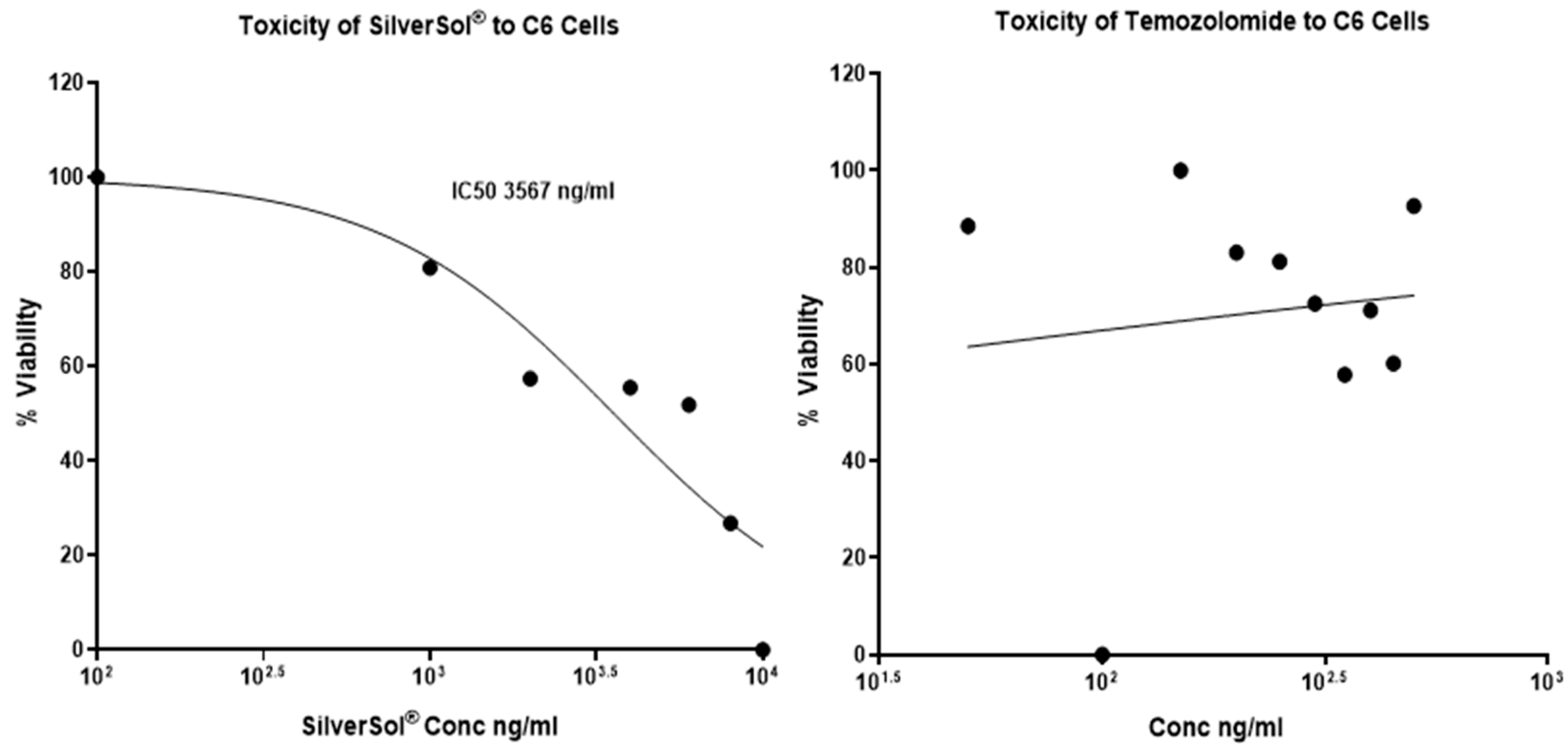
Figure 2.
A549 Lung Adenocarcinoma cells were incubated for 24 hrs. and were treated for additional 24hrs. with different concentration of SilverSol® or Gemcitabine (GMB). Cell viability was monitored using MTT assay and IC50 was determined using GraphPad Prism. IC50 of SilverSol® against A549 cells was 4.8 μg/ml, whereas GMB showed IC50 at 8.2 μg/ml.
Figure 2.
A549 Lung Adenocarcinoma cells were incubated for 24 hrs. and were treated for additional 24hrs. with different concentration of SilverSol® or Gemcitabine (GMB). Cell viability was monitored using MTT assay and IC50 was determined using GraphPad Prism. IC50 of SilverSol® against A549 cells was 4.8 μg/ml, whereas GMB showed IC50 at 8.2 μg/ml.
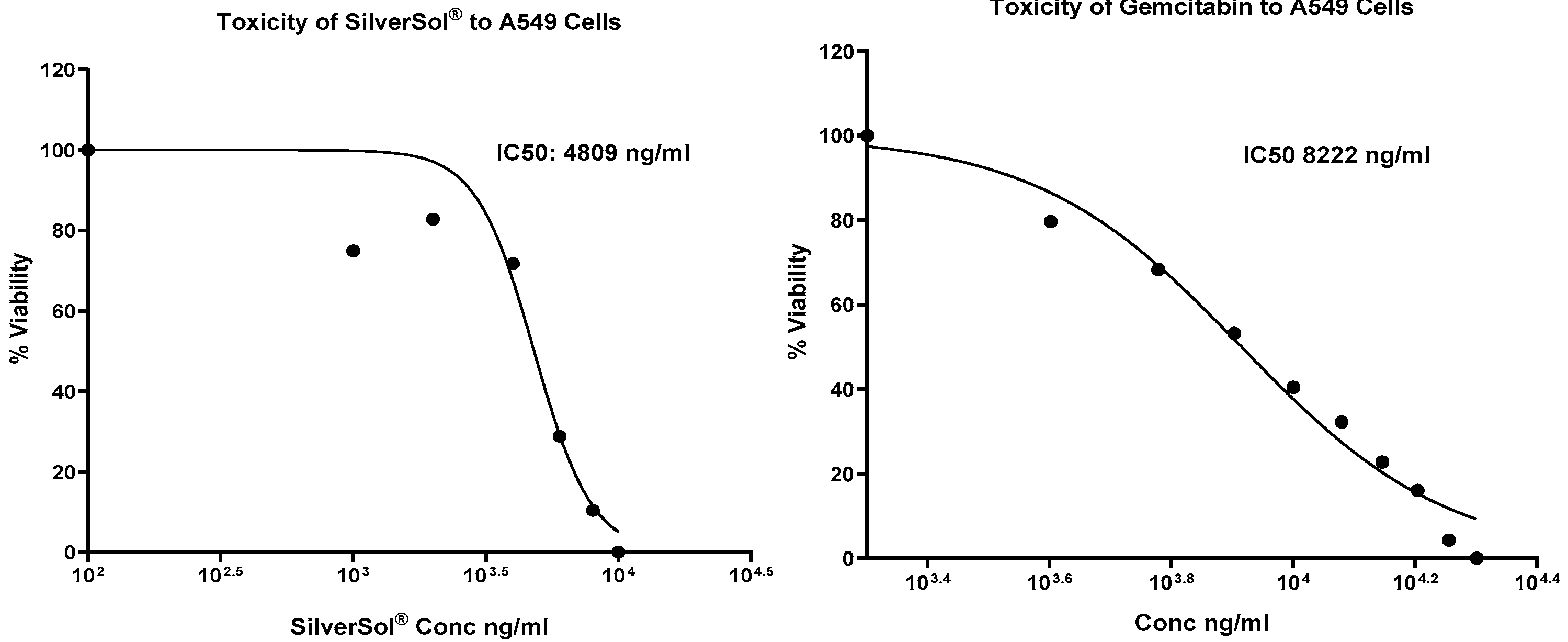
Figure 3.
HeLa cervical cancer cells were incubated for 24 hrs. and were treated for additional 24hrs. with different concentration of SilverSol® or Gemcitabine (GMB). Cell viability was monitored using MTT assay and IC50 was determined using GraphPad Prism. IC50 of SilverSol® against HeLa cervical cancer cells was 3.4 μg/ml, whereas GMB showed IC50 at 194.7 μg/ml.
Figure 3.
HeLa cervical cancer cells were incubated for 24 hrs. and were treated for additional 24hrs. with different concentration of SilverSol® or Gemcitabine (GMB). Cell viability was monitored using MTT assay and IC50 was determined using GraphPad Prism. IC50 of SilverSol® against HeLa cervical cancer cells was 3.4 μg/ml, whereas GMB showed IC50 at 194.7 μg/ml.
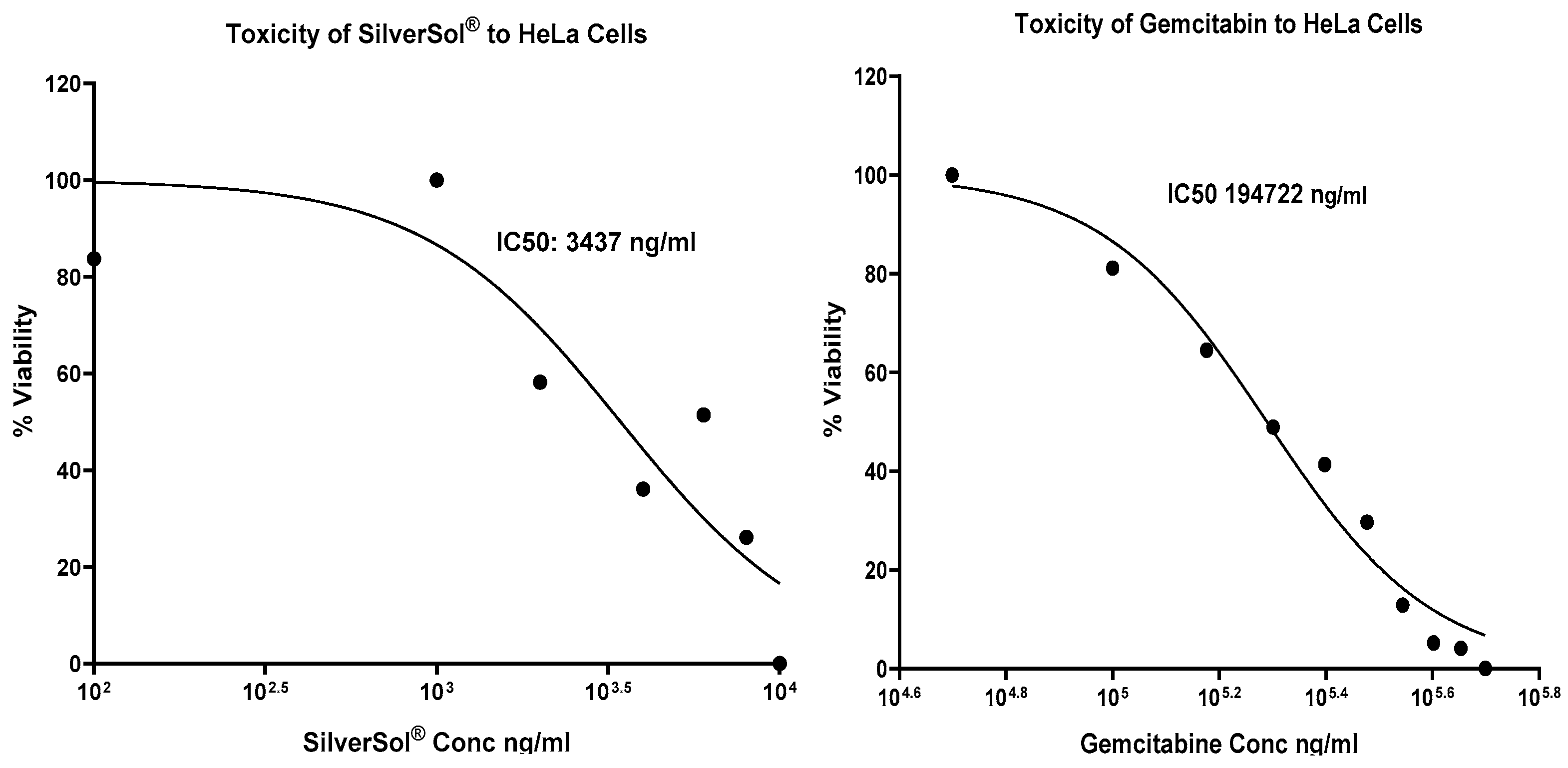
Figure 4.
SiHa cervical cancer cells were incubated for 24 hrs. and were treated for additional 24hrs. with different concentration of SilverSol® or Gemcitabine (GMB). Cell viability was monitored using MTT assay and IC50 was determined using GraphPad Prism. IC50 of SilverSol® against SiHa cervical cancer cells was 6.1 μg/ml, whereas GMB showed IC50 at 85.6 μg/ml.
Figure 4.
SiHa cervical cancer cells were incubated for 24 hrs. and were treated for additional 24hrs. with different concentration of SilverSol® or Gemcitabine (GMB). Cell viability was monitored using MTT assay and IC50 was determined using GraphPad Prism. IC50 of SilverSol® against SiHa cervical cancer cells was 6.1 μg/ml, whereas GMB showed IC50 at 85.6 μg/ml.
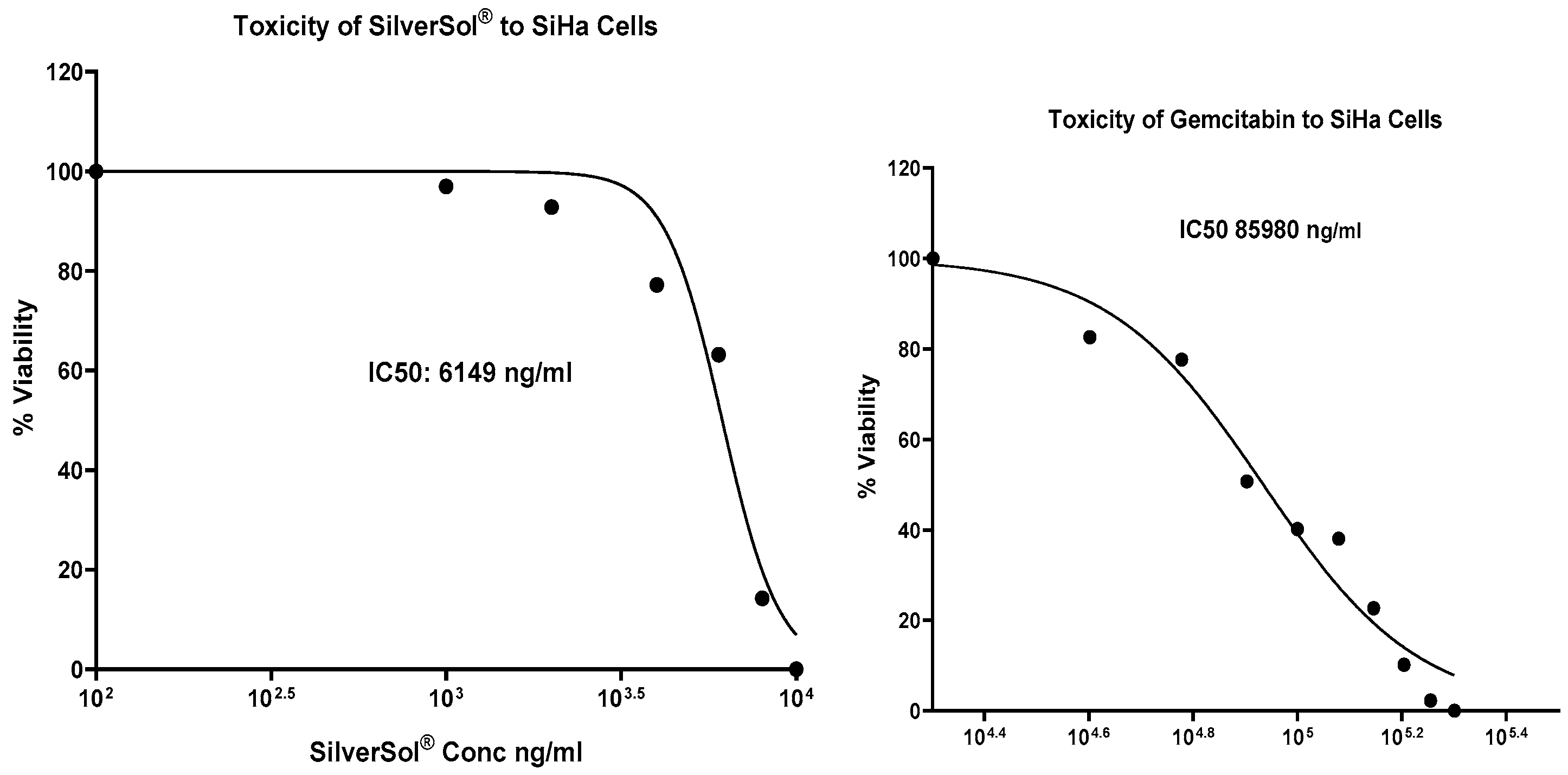
Figure 5.
L929 Fibroblast cells were incubated for 24 hrs. and were treated for additional 24hrs. with different concentration of SilverSol® or Gemcitabine (GMB). Cell viability was monitored using MTT assay and IC50 was determined using GraphPad Prism. IC50 of SilverSol® against L929 Fibroblast cells was >10 μg/ml, whereas GMB showed IC50 at 85.6 μg/ml.
Figure 5.
L929 Fibroblast cells were incubated for 24 hrs. and were treated for additional 24hrs. with different concentration of SilverSol® or Gemcitabine (GMB). Cell viability was monitored using MTT assay and IC50 was determined using GraphPad Prism. IC50 of SilverSol® against L929 Fibroblast cells was >10 μg/ml, whereas GMB showed IC50 at 85.6 μg/ml.
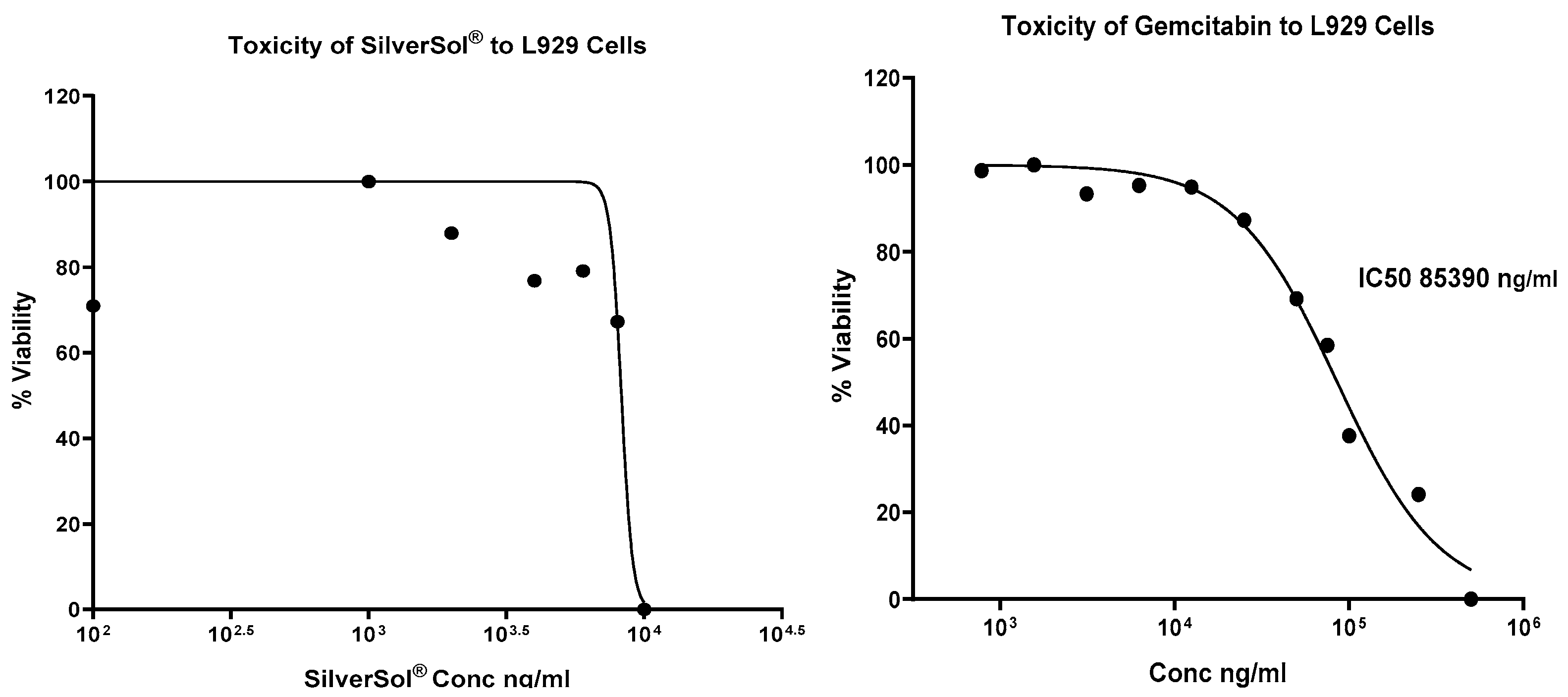
Figure 6.
PA-1 Human ovarian teratocarcinoma cells were incubated for 24 hrs. and were treated for additional 24hrs and 48 hrs. with different concentration of SilverSol® or Doxorubicin (DOXO). Cell viability was monitored using SRB assay and IC50 was determined using GraphPad Prism. IC50 of SilverSol® against PAI-1 cells was 15.1μg/ml and 6.8 μg/ml at 24 and 48 hrs. respectively, whereas DOXO showed better activity with lower IC50.
Figure 6.
PA-1 Human ovarian teratocarcinoma cells were incubated for 24 hrs. and were treated for additional 24hrs and 48 hrs. with different concentration of SilverSol® or Doxorubicin (DOXO). Cell viability was monitored using SRB assay and IC50 was determined using GraphPad Prism. IC50 of SilverSol® against PAI-1 cells was 15.1μg/ml and 6.8 μg/ml at 24 and 48 hrs. respectively, whereas DOXO showed better activity with lower IC50.
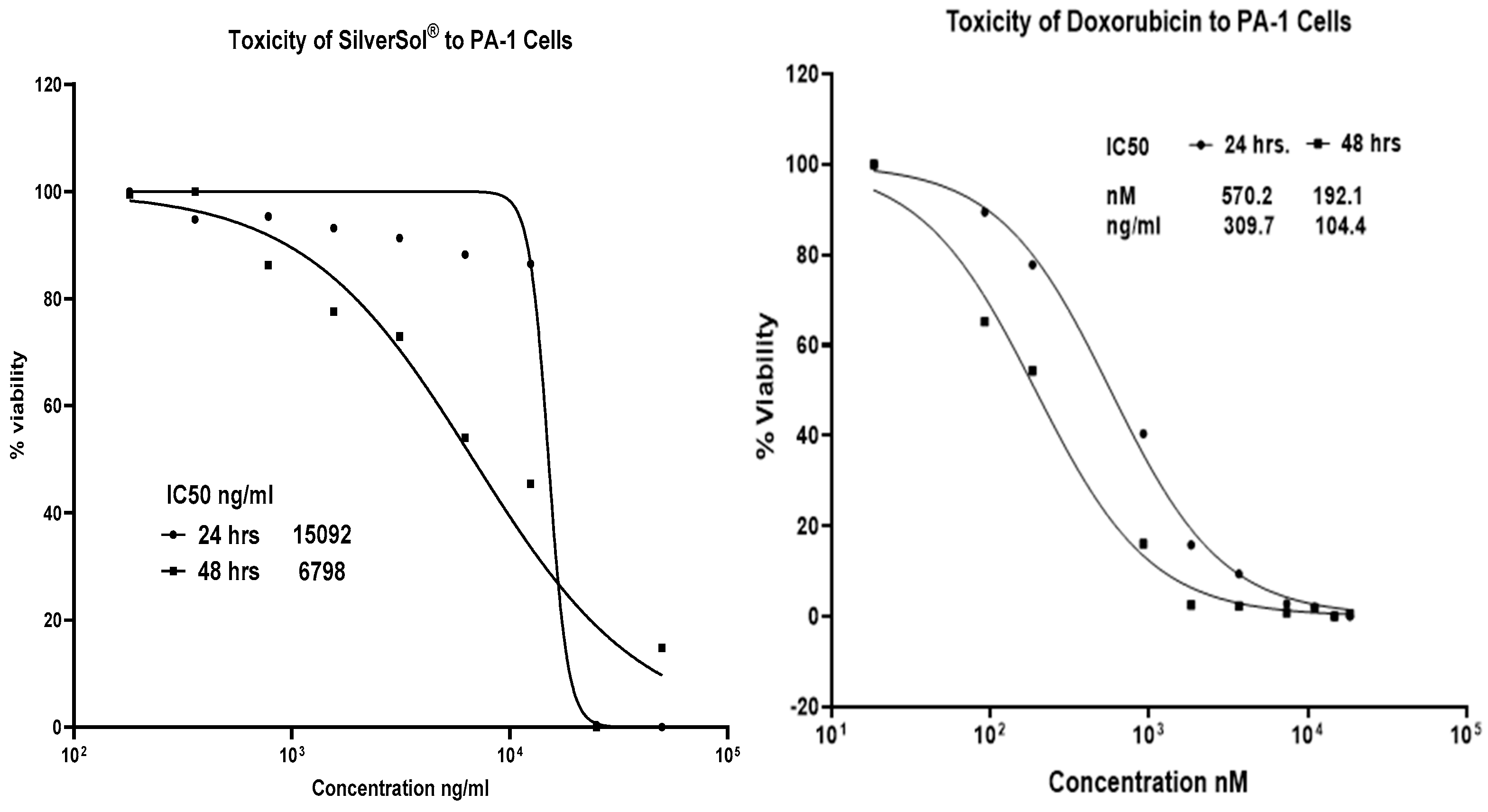
Figure 7.
MCF-7 human breast cancer cells were incubated for 24 hrs. and were treated for additional 24hrs and 48 hrs. with different concentration of SilverSol® or Gemcitabine (GMB). Cell viability was monitored using MTT assay and IC50 was determined using GraphPad Prism. IC50 of SilverSol® against MCF-7 cells was 11.5 μg/ml and 5.3 μg/ml at 24 and 48 hrs. respectively, whereas these cells were found to be resistant to GMB.
Figure 7.
MCF-7 human breast cancer cells were incubated for 24 hrs. and were treated for additional 24hrs and 48 hrs. with different concentration of SilverSol® or Gemcitabine (GMB). Cell viability was monitored using MTT assay and IC50 was determined using GraphPad Prism. IC50 of SilverSol® against MCF-7 cells was 11.5 μg/ml and 5.3 μg/ml at 24 and 48 hrs. respectively, whereas these cells were found to be resistant to GMB.
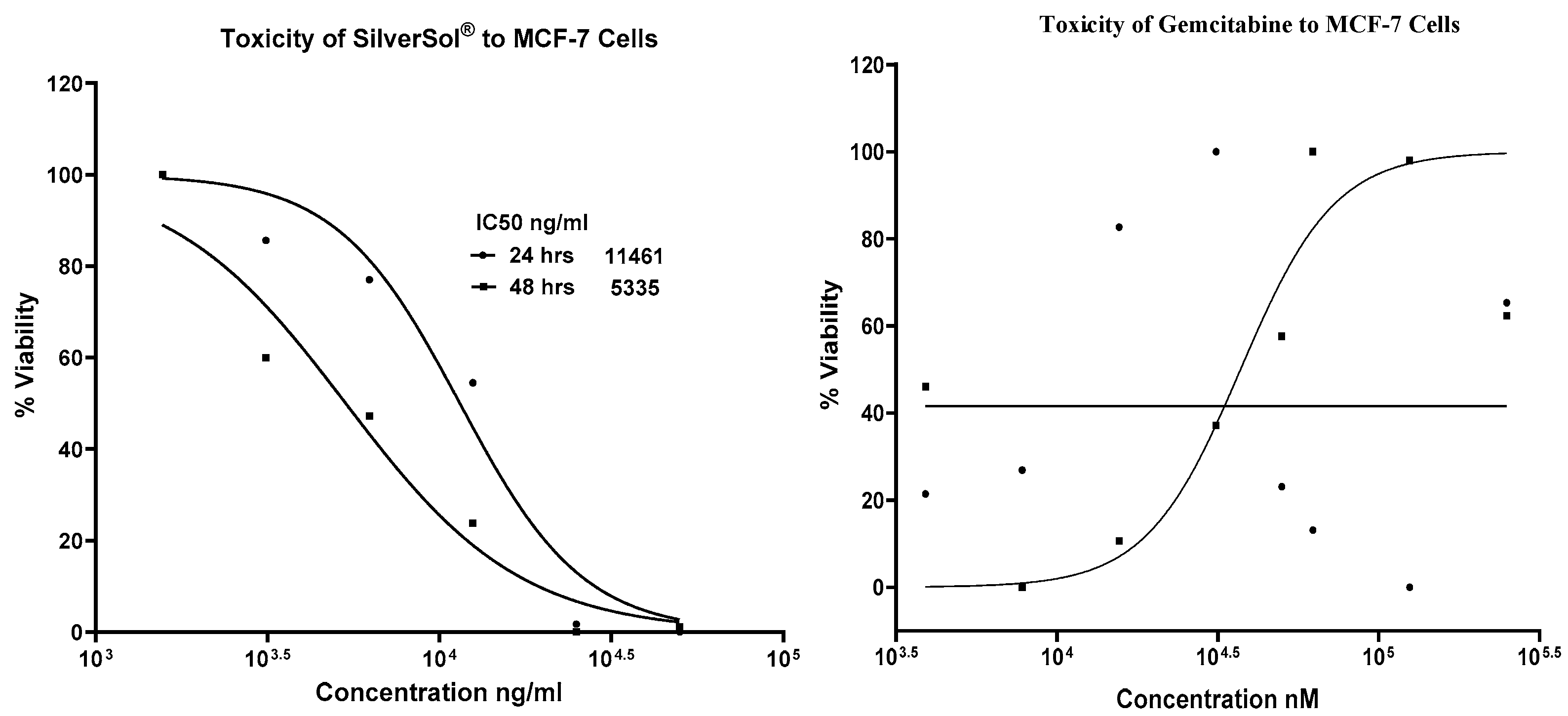
Figure 8.
Caco2 Human colon adenocarcinoma cells were incubated for 24 hrs. and were treated for additional 24hrs and 48 hrs. with different concentration of SilverSol® or Gemcitabine (GMB). Cell viability was monitored using MTT assay and IC50 was determined using GraphPad Prism. IC50 of SilverSol® against Caco2 cells was 0.55 μg/ml and 2.35 μg/ml at 24 and 48 hrs. respectively, whereas Caco2 cells were found to be resistant to GMB.
Figure 8.
Caco2 Human colon adenocarcinoma cells were incubated for 24 hrs. and were treated for additional 24hrs and 48 hrs. with different concentration of SilverSol® or Gemcitabine (GMB). Cell viability was monitored using MTT assay and IC50 was determined using GraphPad Prism. IC50 of SilverSol® against Caco2 cells was 0.55 μg/ml and 2.35 μg/ml at 24 and 48 hrs. respectively, whereas Caco2 cells were found to be resistant to GMB.
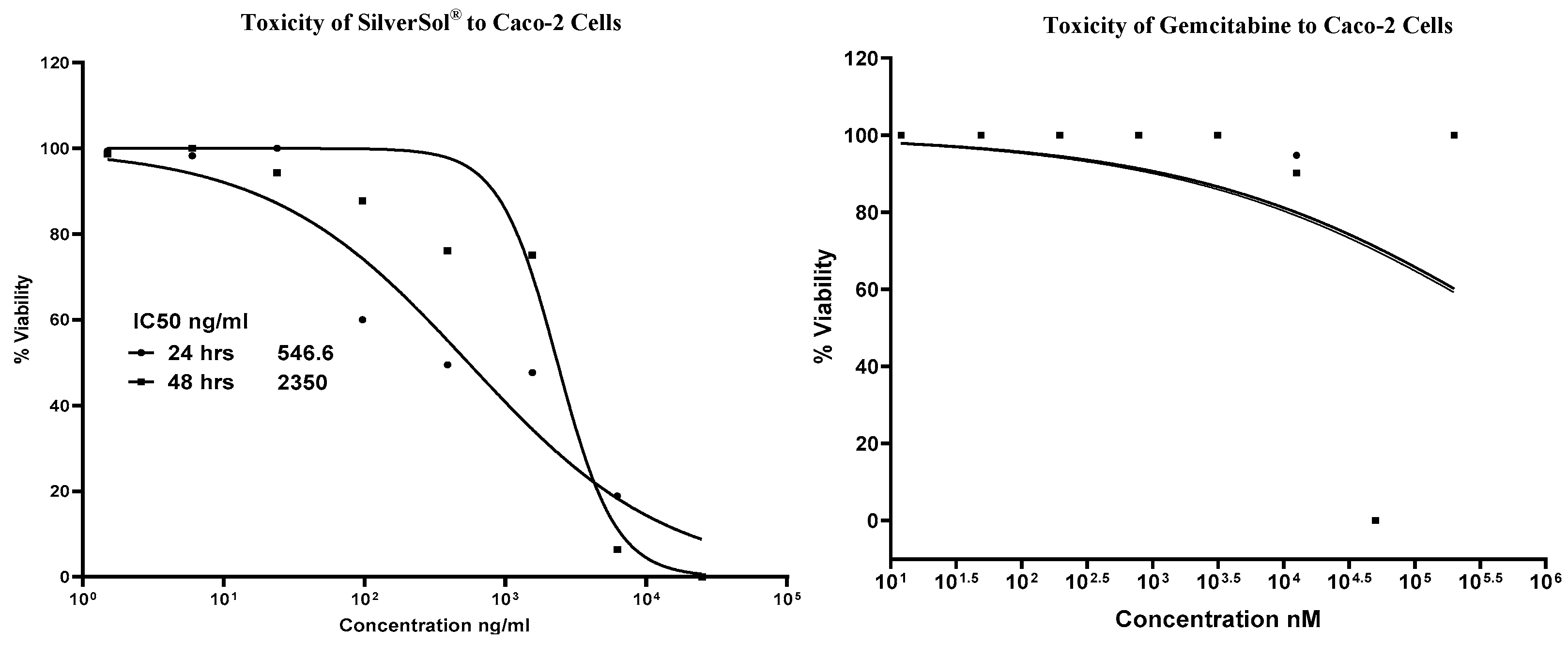
Figure 9.
HL-60_Human promyelocytic leukemia cells were incubated for 24 hrs. and were treated for additional 24hrs and 48 hrs. with different concentration of SilverSol® or Gemcitabine (GMB). Cell viability was monitored using MTT assay and IC50 was determined using GraphPad Prism. IC50 of SilverSol® against HL-60 cells was 29.4 μg/ml and 28.9 μg/ml at 24 and 48 hrs. respectively, whereas IC50 of GMB against HL-60 was very low as 0.0092 μg/ml and 0.0047 μg/ml at 24 and 48 hrs.
Figure 9.
HL-60_Human promyelocytic leukemia cells were incubated for 24 hrs. and were treated for additional 24hrs and 48 hrs. with different concentration of SilverSol® or Gemcitabine (GMB). Cell viability was monitored using MTT assay and IC50 was determined using GraphPad Prism. IC50 of SilverSol® against HL-60 cells was 29.4 μg/ml and 28.9 μg/ml at 24 and 48 hrs. respectively, whereas IC50 of GMB against HL-60 was very low as 0.0092 μg/ml and 0.0047 μg/ml at 24 and 48 hrs.
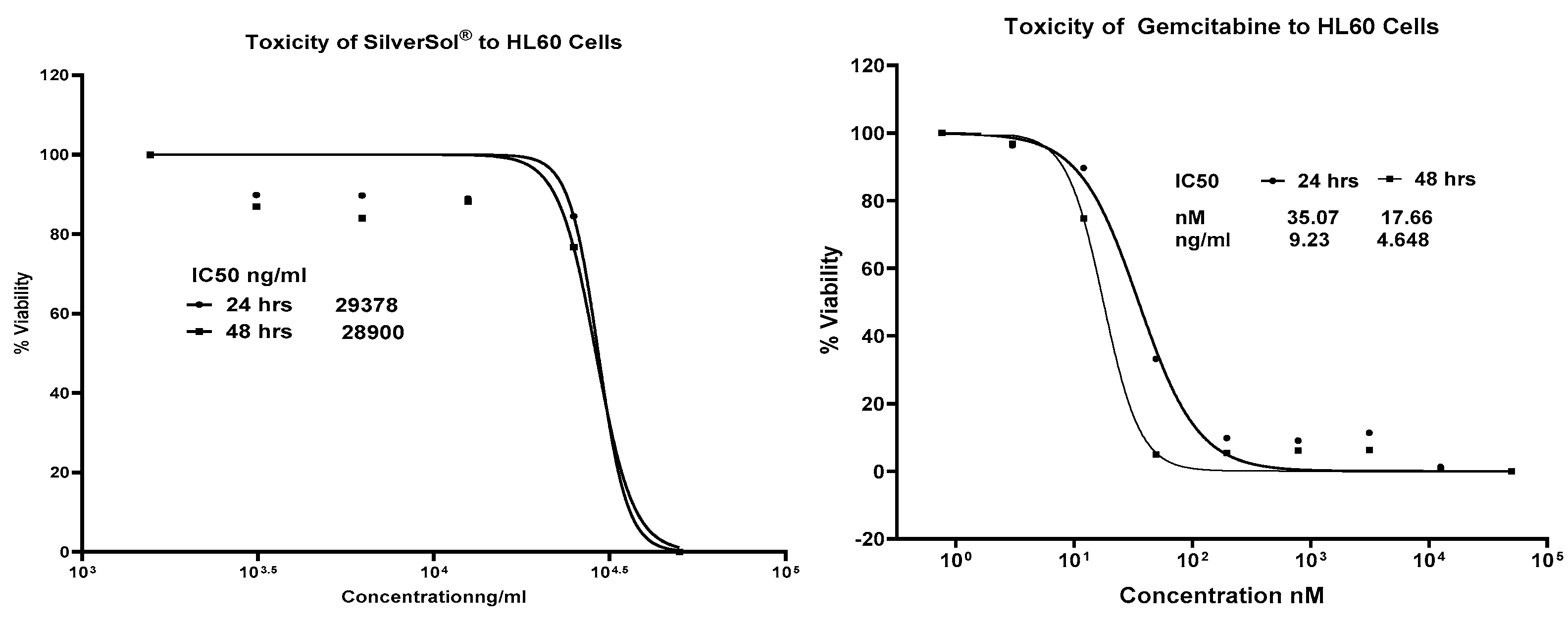
Figure 10.
H9_ Human cutaneous T-lymphocyte cells were incubated for 24 hrs. and were treated for additional 24hrs and 48 hrs. with different concentration of SilverSol® or Gemcitabine (GMB). Cell viability was monitored using MTT assay and IC50 was determined using GraphPad Prism. IC50 of SilverSol® against H9 cells was 27.9 μg/ml and 27.3 μg/ml at 24 and 48 hrs. respectively, whereas IC50 of GMB against H9 cells was very low as 0.33 μg/ml and 0.16 μg/ml at 24 and 48 hrs.
Figure 10.
H9_ Human cutaneous T-lymphocyte cells were incubated for 24 hrs. and were treated for additional 24hrs and 48 hrs. with different concentration of SilverSol® or Gemcitabine (GMB). Cell viability was monitored using MTT assay and IC50 was determined using GraphPad Prism. IC50 of SilverSol® against H9 cells was 27.9 μg/ml and 27.3 μg/ml at 24 and 48 hrs. respectively, whereas IC50 of GMB against H9 cells was very low as 0.33 μg/ml and 0.16 μg/ml at 24 and 48 hrs.
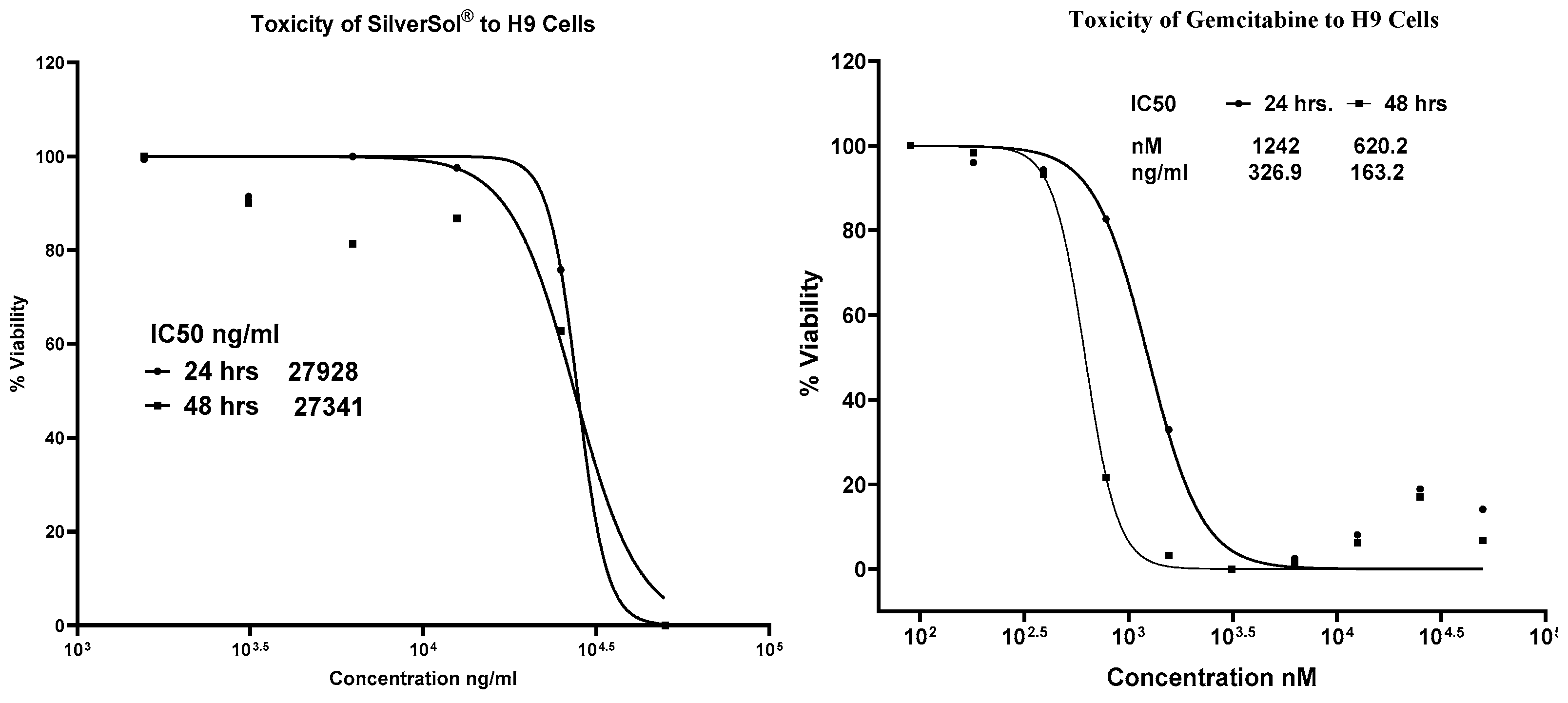
Figure 11.
RPMI 7951 human skin malignant melanoma cells were incubated for 24 hrs. and were treated for additional 24hrs and 48 hrs. with different concentration of SilverSol® or Gemcitabine (GMB). Cell viability was monitored using MTT assay and IC50 was determined using GraphPad Prism. IC50 of Doxo against RPMI 7951 cells was 3.2 μg/ml and 0.61 μg/ml at 24 and 48 hrs. respectively, whereas RPMI 7951 cells were found to be resistant to SilverSol®.
Figure 11.
RPMI 7951 human skin malignant melanoma cells were incubated for 24 hrs. and were treated for additional 24hrs and 48 hrs. with different concentration of SilverSol® or Gemcitabine (GMB). Cell viability was monitored using MTT assay and IC50 was determined using GraphPad Prism. IC50 of Doxo against RPMI 7951 cells was 3.2 μg/ml and 0.61 μg/ml at 24 and 48 hrs. respectively, whereas RPMI 7951 cells were found to be resistant to SilverSol®.
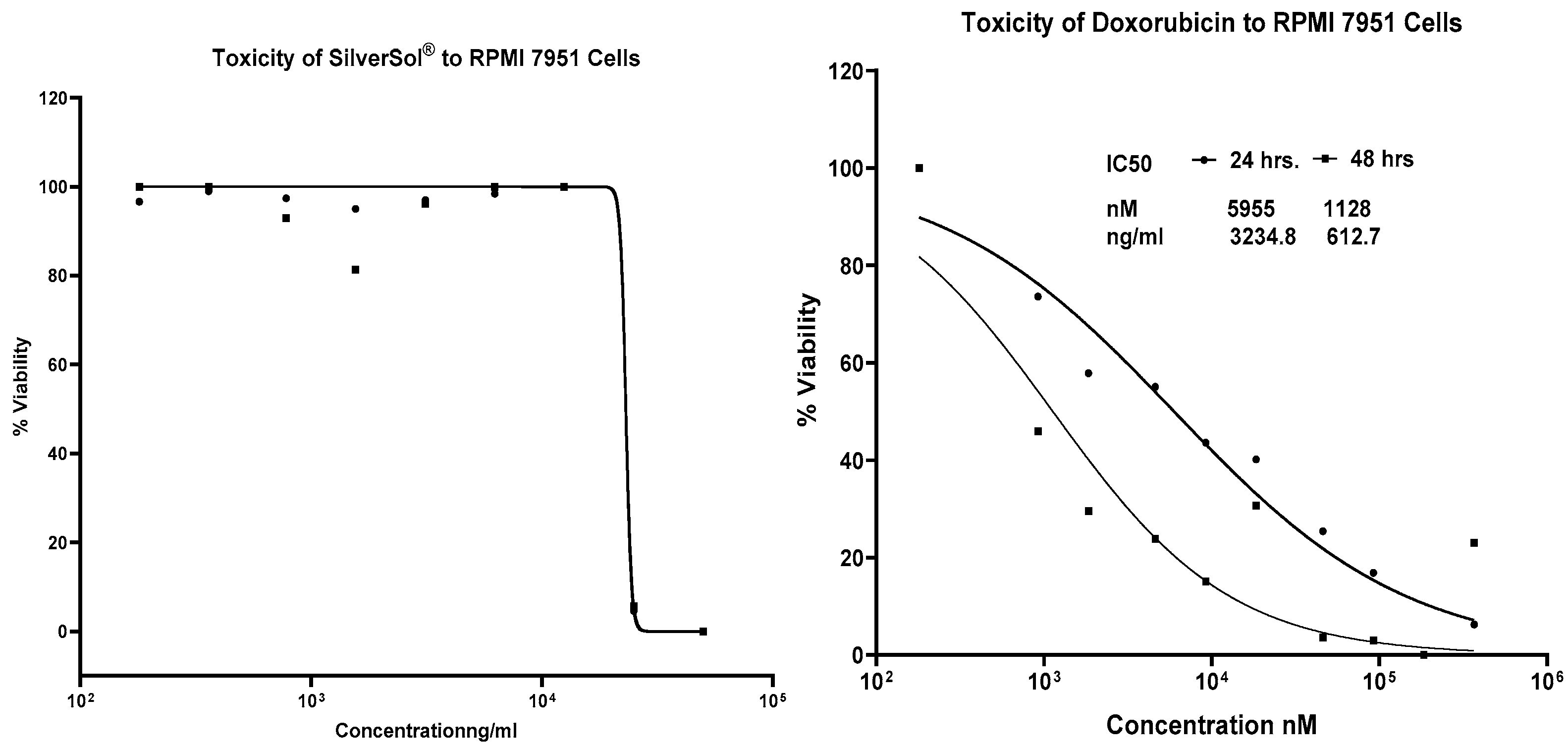
Figure 12.
Human peripheral blood mononuclear cells (hPBMCs) cells were incubated for 24 hrs. and were treated for additional 24hrs and 48 hrs. with different concentration of SilverSol® or Gemcitabine (GMB). Cell viability was monitored using MTT assay and IC50 was determined using GraphPad Prism. IC50 of SilverSol® against hPBMCs was 9.9 μg/ml and 10.7 μg/ml at 24 and 48 hrs. respectively, whereas GMB showed no inhibition of PBMC after 24 hrs. of exposure, but at 48 hrs of incubation it was highly toxic to these cells with the IC50 0.241 μg/ml.
Figure 12.
Human peripheral blood mononuclear cells (hPBMCs) cells were incubated for 24 hrs. and were treated for additional 24hrs and 48 hrs. with different concentration of SilverSol® or Gemcitabine (GMB). Cell viability was monitored using MTT assay and IC50 was determined using GraphPad Prism. IC50 of SilverSol® against hPBMCs was 9.9 μg/ml and 10.7 μg/ml at 24 and 48 hrs. respectively, whereas GMB showed no inhibition of PBMC after 24 hrs. of exposure, but at 48 hrs of incubation it was highly toxic to these cells with the IC50 0.241 μg/ml.
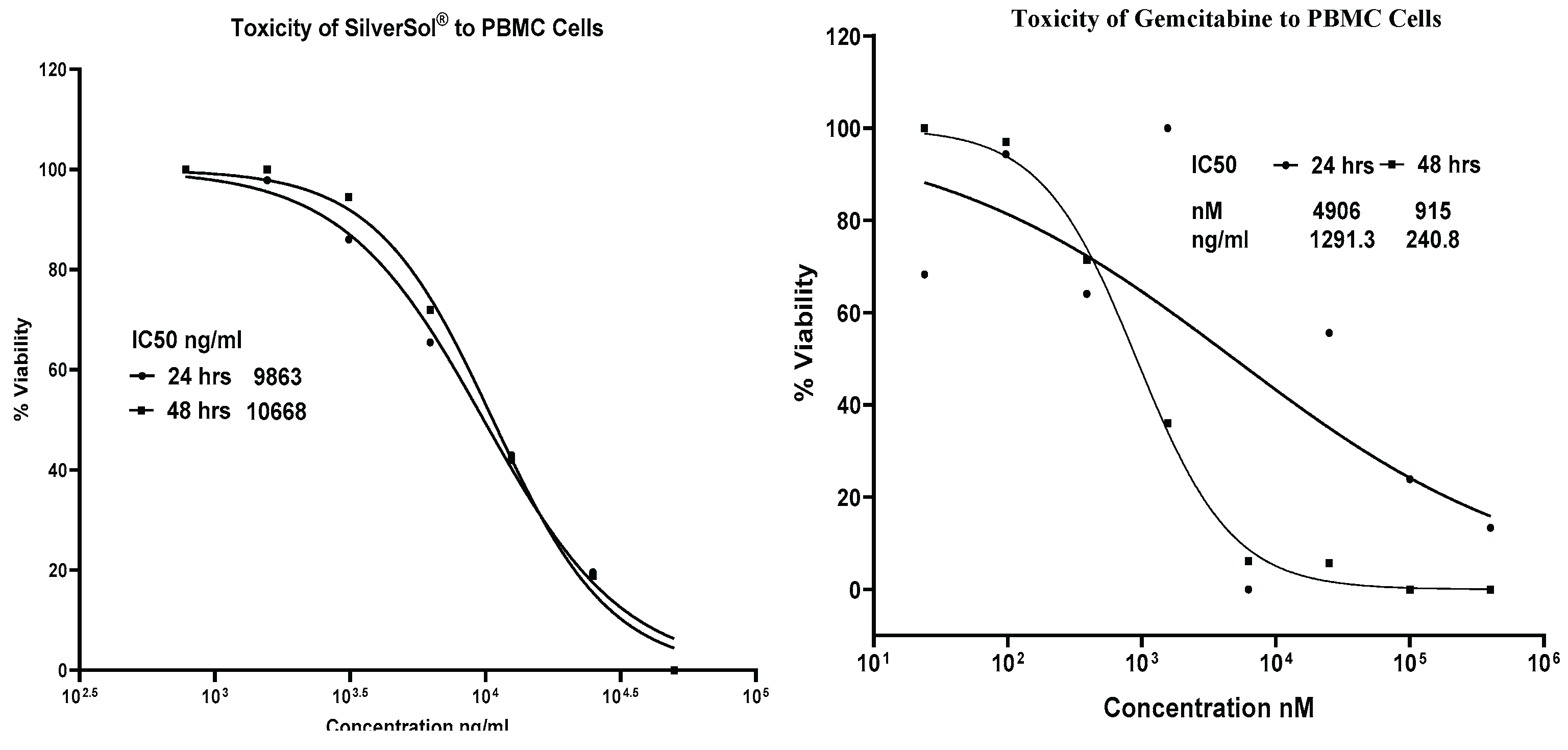

Table 1.
MTT assay for C6 glioblastoma cell in presence of SilverSol® or TMZ.
| Concentration SilverSol® ng/ml | % Viability | Concentration of TMZ (ng/ml) | % Viability | |
|---|---|---|---|---|
| 10000 | 51.13 | 500 | 59.4 | |
| 8000 | 65.53 | 450 | 49.87 | |
| 6000 | 78.97 | 400 | 53.09 | |
| 4000 | 80.91 | 350 | 49.19 | |
| 2000 | 81.93 | 300 | 53.49 | |
| 1000 | 94.52 | 250 | 56.04 | |
| 100 | 104.81 | 200 | 56.58 | |
| 150 | 61.55 | |||
| 100 | 32.25 | |||
| 50 | 58.19 | |||
| IC50 ng/ml | 3567 | IC50 ng/ml | No inhibition | |
Table 2.
MTT assay of A549 Lung Adenocarcinoma cells in presence of SilverSol® or Gemcitabine.
| Concentration SilverSol® ng/ml | % Viability | Concentration of Gemcitabine ng/ml | % Viability |
|---|---|---|---|
| 10000 | 40.69 | 20000 | 13.96 |
| 8000 | 47.46 | 18000 | 17.64 |
| 6000 | 59.48 | 16000 | 27.68 |
| 4000 | 87.50 | 14000 | 33.39 |
| 2000 | 94.71 | 12000 | 41.46 |
| 1000 | 89.58 | 10000 | 48.51 |
| 100 | 105.92 | 8000 | 59.41 |
| 6000 | 72.32 | ||
| 4000 | 82.01 | ||
| 2000 | 99.36 | ||
| IC50 ng/ml | 4809 | IC50 ng/ml | 8222 |
Table 3.
MTT assay of HeLa Cervical Cancer cells in presence of SilverSol® or Gemcitabine.
| Concentration SilverSol® (ng/ml) | % Viability | Concentration of Gemcitabine (ng/ml) | % Viability |
|---|---|---|---|
| 10000 | 62.79 | 500000 | 24.44 |
| 8000 | 74.57 | 450000 | 27.25 |
| 6000 | 86.02 | 400000 | 28.01 |
| 4000 | 79.09 | 350000 | 33.24 |
| 2000 | 89.07 | 300000 | 44.78 |
| 1000 | 107.95 | 250000 | 52.80 |
| 100 | 100.60 | 200000 | 58.01 |
| 150000 | 68.69 | ||
| 100000 | 80.11 | ||
| 50000 | 93.03 | ||
| IC50 ng/ml | 3437 | IC50 ng/ml | 194722 |
Table 4.
MTT assay of SiHa Cervical Cancer cell line in presence of SilverSol® or Gemcitabine.
| Concentration SilverSol® (ng/ml) | % Viability | Concentration of Gemcitabine (ng/ml) | % Viability |
|---|---|---|---|
| 10000 | 23.60 | 200000 | 17.51 |
| 8000 | 33.80 | 180000 | 19.30 |
| 6000 | 68.85 | 160000 | 25.59 |
| 4000 | 78.89 | 140000 | 35.53 |
| 2000 | 90.09 | 120000 | 47.73 |
| 1000 | 93.04 | 100000 | 49.43 |
| 100 | 95.21 | 80000 | 57.79 |
| 60000 | 79.19 | ||
| 40000 | 83.11 | ||
| 20000 | 96.95 | ||
| IC50 ng/ml | 6149 | IC50 ng/ml | 85980 |
Table 5.
MTT assay of L929 Mouse Fibroblast cell in presence of SilverSol® or Gemcitabine.
| Concentration SilverSol® ng/ml | % Viability | Concentration of Gemcitabine ng/ml | % Viability |
|---|---|---|---|
| 10000 | 64.91 | 500000 | 18.43 |
| 8000 | 84.33 | 250000 | 37.69 |
| 6000 | 87.75 | 100000 | 48.50 |
| 4000 | 87.09 | 75000 | 65.16 |
| 2000 | 90.29 | 50000 | 73.69 |
| 1000 | 93.78 | 25000 | 88.16 |
| 100 | 85.39 | 12500 | 94.27 |
| 6250 | 94.57 | ||
| 3125 | 93.01 | ||
| 1562.5 | 98.36 | ||
| 781.25 | 97.30 | ||
| IC50 ng/ml | >10 ng/ml | IC50 ng/ml | 85390 |
Table 6.
SRB assay of PA-I human ovarian cancer cells in presence of SilverSol® or Doxorubicin.
| Concentration SilverSol® (ng/ml) | % viability | Concentration Doxorubicin (nM) | % viability | |||
|---|---|---|---|---|---|---|
| 24 hrs. | 48 hrs. | 24 hrs. | 48 hrs. | |||
| 50000 | 14.1 | 18.3 | 18400 | 23.4 | 8.3 | |
| 25000 | 14.4 | 5 | 14718 | 23.4 | 7.8 | |
| 12500 | 78.7 | 46 | 11039 | 24.9 | 9.5 | |
| 6250 | 80 | 53.7 | 7359 | 25.5 | 8.5 | |
| 3125 | 82.3 | 70.8 | 3679 | 30.4 | 9.9 | |
| 1560 | 83.7 | 75 | 1840 | 35.2 | 10.1 | |
| 780 | 85.3 | 82.8 | 919 | 53.6 | 22.6 | |
| 360 | 84.9 | 95.2 | 184 | 81.6 | 57.9 | |
| 180 | 88.8 | 94.7 | 91.9 | 90.3 | 67.9 | |
| 18.4 | 98.2 | 100 | ||||
| IC50 ng/ml | 15092 | 6798 |
IC50 nM (ng/ml) |
570.2 (309.73) | 192.1 (104.38) | |
Table 7.
MTT assay of MCF-7_ Human breast adenocarcinoma cells in presence of SilverSol® or Gemcitabine.
Table 7.
MTT assay of MCF-7_ Human breast adenocarcinoma cells in presence of SilverSol® or Gemcitabine.
| SilverSol® Concentration (ng/ml) | % viability | Concentration GMB (nM) | % viability | ||
|---|---|---|---|---|---|
| 24 hrs. | 48 hrs. | 24 hrs. | 48 hrs. | ||
| 50000 | 5.9 | 4.3 | 50000 | 80.18 | 76.2 |
| 25000 | 7.5 | 3.3 | 25000 | 88.48 | 77.16 |
| 12500 | 57.2 | 25.6 | 12500 | 75.65 | 84.43 |
| 6250 | 78.4 | 47.5 | 6250 | 78.23 | 84.85 |
| 3125 | 86.5 | 59.5 | 3125 | 95.28 | 72.02 |
| 1562.5 | 100 | 97 | 1562.5 | 91.88 | 66.61 |
| 781.25 | 80.93 | 64.44 | |||
| 390.625 | 79.86 | 73.84 | |||
| IC50 ng/ml | 11461 | 5335 | IC50 nM (ng/ml) | No inhibition | |
Table 8.
MTT assay of Caco2 Human colon adenocarcinoma cells in presence of SilverSol® or Gemcitabine.
Table 8.
MTT assay of Caco2 Human colon adenocarcinoma cells in presence of SilverSol® or Gemcitabine.
| Concentration SilverSol® (ng/ml) | % viability | Concentration GMB (nM) | % viability | ||
|---|---|---|---|---|---|
| 24 hrs. | 48 hrs. | 24 hrs. | 48 hrs. | ||
| 25000 | 2.7 | 2.7 | 200000 | 100 | 100 |
| 6250 | 21.1 | 8.8 | 50000 | 91.06 | 90.85 |
| 1560 | 49.1 | 74.3 | 12500 | 99.53 | 99.1 |
| 390 | 50.9 | 75.3 | 3125 | 100 | 100 |
| 97 | 61.1 | 86.4 | 780 | 100 | 100 |
| 24 | 100 | 92.7 | 195 | 100 | 100 |
| 6 | 98.3 | 98.1 | 49 | 100 | 100 |
| 1.5 | 99.4 | 96.9 | 12 | 100 | 100 |
| IC50 ng/ml | 545.6 | 2350 |
IC50 nM (ng/ml) |
No inhibition | |
Table 9.
MTT assay of HL-60_Human promyelocytic leukaemia cells in presence of SilverSol® or Gemcitabine.
Table 9.
MTT assay of HL-60_Human promyelocytic leukaemia cells in presence of SilverSol® or Gemcitabine.
| Concentration SilverSol® (ng/ml) | % viability | Concentration GMB (nM) |
% viability | ||
|---|---|---|---|---|---|
| 24 hrs. | 48 hrs. | 24 hrs. | 48 hrs. | ||
| 50000 | 12.1 | 5.8 | 50000 | 21.5 | 6.4 |
| 25000 | 78 | 73.6 | 12500 | 22.5 | 6.9 |
| 12500 | 81.5 | 83.8 | 3125 | 30.4 | 12.2 |
| 6250 | 82.1 | 80.1 | 780 | 28.6 | 12.0 |
| 3125 | 82.2 | 82.7 | 195 | 29.2 | 11.3 |
| 1560 | 90.1 | 94.2 | 49 | 47.6 | 10.9 |
| 12 | 91.9 | 75.8 | |||
| 3 | 97.1 | 96.2 | |||
| 0.76 | 100 | 99.1 | |||
| IC50 ng/ml | 29378 | 28900 |
IC50 nM (ng/ml) |
35.07 9.23 |
17.66 4.648 |
Table 10.
MTT assay of H9_ Human cutaneous T-lymphocyte cell line (Clonal derivative of HuT 78) in presence of SilverSol® or Gemcitabine.
Table 10.
MTT assay of H9_ Human cutaneous T-lymphocyte cell line (Clonal derivative of HuT 78) in presence of SilverSol® or Gemcitabine.
| Concentration SilverSol® (ng/ml) | % viability | Concentration Gemcitabine (nM) |
% viability | ||
|---|---|---|---|---|---|
| 24 hrs. | 48 hrs. | 24 hrs. | 48 hrs. | ||
| 50000 | 5.7 | 4.2 | 50000 | 40.5 | 13.0 |
| 25000 | 71.2 | 63.1 | 25000 | 43.8 | 22.5 |
| 12500 | 90 | 85.7 | 12500 | 36.4 | 12.5 |
| 6250 | 92.1 | 80.6 | 6250 | 32.6 | 8.1 |
| 3125 | 84.7 | 88.8 | 3125 | 30.9 | 6.7 |
| 1560 | 91.6 | 98.1 | 1560 | 53.3 | 9.7 |
| 780 | 87.2 | 26.8 | |||
| 390 | 95.1 | 93.3 | |||
| 180 | 96.3 | 98.0 | |||
| 90 | 99 | 99.6 | |||
| IC50 ng/ml | 27928 | 27341 |
IC50 nM (ng/ml) |
1242 326.9 |
620.2 163.2 |
Table 11.
SRB assay of RPMI 7951 human skin malignant melanoma cell line in presence of SilverSol® or Doxorubicin.
Table 11.
SRB assay of RPMI 7951 human skin malignant melanoma cell line in presence of SilverSol® or Doxorubicin.
| Concentration SilverSol® (ng/ml) | % viability | Concentration Doxorubicin (nM) | % viability | ||
|---|---|---|---|---|---|
| 24 hrs. | 48 hrs. | 24 hrs. | 48 hrs. | ||
| 50000 | 49.9 | 31.7 | 368000 | 41.0 | 33.3 |
| 25000 | 52.2 | 35.6 | 184000 | 37.2 | 18.1 |
| 12500 | 100 | 100 | 91990 | 47.5 | 20.1 |
| 6250 | 99.2 | 100 | 46000 | 52.7 | 20.5 |
| 3125 | 98.5 | 97.4 | 18400 | 61.7 | 38.4 |
| 1560 | 97.5 | 87.3 | 9200 | 63.8 | 28.1 |
| 780 | 98.7 | 95.2 | 4600 | 70.8 | 33.8 |
| 360 | 99.5 | 100 | 1840 | 72.5 | 37.6 |
| 180 | 98.3 | 100 | 920 | 82.1 | 48.4 |
| IC50 ng/ml | No inhibition |
IC50 nM (ng/ml) |
5955 (3234.7) |
1128 (612.7) |
|
Table 12.
MTT assay of hPBMC_ human Peripheral blood mononuclear cells in presence of SilverSol® or Gemcitabine.
Table 12.
MTT assay of hPBMC_ human Peripheral blood mononuclear cells in presence of SilverSol® or Gemcitabine.
| Concentration SilverSol® (ng/ml) | % viability | Concentration Gemcitabine (nM) | % viability | ||
|---|---|---|---|---|---|
| 24 hrs. | 48 hrs. | 24 hrs. | 48 hrs. | ||
| 50000 | 4.5 | 5.9 | 400000 | 86.7 | 0 |
| 25000 | 23 | 23.6 | 100000 | 88.2 | 0 |
| 12500 | 45.1 | 45.5 | 25000 | 92.7 | 2.1 |
| 6250 | 66.4 | 73.6 | 6250 | 84.8 | 2.3 |
| 3125 | 85.8 | 94.9 | 1560 | 99 | 13.3 |
| 1562.5 | 97 | 100 | 390 | 93.9 | 26.4 |
| 780 | 99 | 100 | 97 | 98.2 | 35.8 |
| 24 | 94.5 | 36.9 | |||
| IC50 ng/ml | 9863 | 10668 |
IC50 nM (ng/ml) |
No Inhibition |
915 240.8 |
Table 13.
IC50 µg/ml of SilverSol® and standard drugs against cancer cell lines.
| Cell Lines - Study 1 | SilverSol® | Standard drug | ||||
|---|---|---|---|---|---|---|
| 24 hrs. | 24 hrs. | |||||
| C6 glioblastoma | 3.57 | No inhibition | TMZ | |||
| A549 Lung Adenocarcinoma | 4.81 | 8.22 | GMB | |||
| HeLa Cervical Cancer cells | 3.44 | 194.7 | GMB | |||
| SiHa Cervical Cancer | 6.15 | 85.98 | GMB | |||
| L929 Mouse Fibroblast | >10 | 85.39 | GMB | |||
| Cell Lines - Study 2 | SilverSol® | Standard Drug | ||||
| 24 hrs. | 48 hrs. | 24 hrs. | 48 hrs. | |||
| PA-1 Human ovarian teratocarcinoma | 15.1 | 6.8 | 0.309 | 0.104 | DOXO | |
| MCF-7 Human breast adenocarcinoma | 11.5 | 5.34 | No inhibition | GMB | ||
| Caco2 Human colon adenocarcinoma | 0.546 | 2.35 | No inhibition | GMB | ||
| HL-60 Human promyelocytic leukaemia | 29.4 | 28.9 | 0.0092 | 0.0047 | GMB | |
| H-9 Human cutaneous T-lymphocyte cell line (Clonal derivative of HuT 78) | 27.93 | 27.31 | 0.327 | 0.163 | GMB | |
| RPMI 7951 Human skin malignant melanoma | No inhibition | 3.23 | 0.613 | DOXO | ||
| Normal human Peripheral blood mononuclear cells hPBMCs | 9.86 | 10.67 | No inhibition |
0.24 | GMB | |
Disclaimer/Publisher’s Note: The statements, opinions and data contained in all publications are solely those of the individual author(s) and contributor(s) and not of MDPI and/or the editor(s). MDPI and/or the editor(s) disclaim responsibility for any injury to people or property resulting from any ideas, methods, instructions or products referred to in the content. |
© 2026 by the authors. Licensee MDPI, Basel, Switzerland. This article is an open access article distributed under the terms and conditions of the Creative Commons Attribution (CC BY) license (http://creativecommons.org/licenses/by/4.0/).
Copyright: This open access article is published under a Creative Commons CC BY 4.0 license, which permit the free download, distribution, and reuse, provided that the author and preprint are cited in any reuse.


