Preprint
Review

This version is not peer-reviewed.

The Prevalence of the Symptom of Burning Pain That Worsens When the Stomach Is Empty in Patients with H. pylori Infection (Diagnostic Measure)

Submitted:

17 April 2026

Posted:

20 April 2026

You are already at the latest version

Abstract

Helicobacter pylori infection is a common gastrointestinal condition, more often seen in people living in crowded or less sanitary environments. In many cases, it is not detected until symptoms develop, rather than through routine screening. In this retrospective study, we reviewed patient records from a private laboratory to examine the relationship between gastrointestinal symptoms and H. pylori stool antigen (HpSAg) test results. Patients were also grouped by age to better understand how symptoms present across different life stages. The main aim of this study was to examine whether specific symptoms—particularly burning upper abdominal pain that worsens on an empty stomach—could help clinicians better identify patients who are more likely to benefit from testing. The idea was to support more targeted testing strategies, reduce unnecessary investigations, and ultimately help lower healthcare costs without compromising diagnostic accuracy. We assessed a range of gastrointestinal symptoms, including bloating, belching, nausea, vomiting, difficulty swallowing, early satiety, loss of appetite, weight loss, diarrhea, constipation, and melena, and compared them between infected and non-infected patients and across age groups. Burning epigastric pain was seen more often in patients with H. pylori, and overall, infected patients tended to report more symptoms, although this varies depending on age. It is important to emphasize that this study does not propose using symptoms as a replacement for diagnostic testing. Since the study was retrospective and did not include comparison with gold-standard methods such as the urea breath test or endoscopic biopsy, the findings should be interpreted as associations rather than definitive diagnostic conclusions. Still, the results suggest that certain symptom patterns—particularly burning epigastric pain on an empty stomach—may be useful for identifying patients more likely to benefit from testing. Further prospective studies are needed to confirm these observations. Materials and Methods: This retrospective observational study was conducted at Wilson Laboratory (Shush Square) in Tehran, Iran, using existing patient records. A total of 589 patients were included and classified as Helicobacter pylori–positive or Helicobacter pylori–negative based on stool antigen test (SAT) results. To better explore how symptoms differed across age groups, patients were divided into predefined age categories. These groups were selected to ensure a balanced distribution of cases and to make the comparisons clearer and easier to interpret. All stool antigen tests were performed using a commercially available enzyme immunoassay kit. Because the study was retrospective, detailed information about the assay characteristics—such as whether monoclonal or polyclonal antibodies were used, or the specific antigen targets (e.g., CagA or UreC) was not available. It is also recognized that test performance may vary depending on these factors, with monoclonal-based assays generally showing higher sensitivity and specificity. Gastrointestinal symptoms were extracted from patient records and compared between the H. pylori–positive and H. pylori–negative groups. The relationship between symptom patterns and infection status was then explored across different age groups using descriptive statistical analysis. Results: Of the 589 participants included in the study, 353 (59.9%) were Helicobacter pylori–positive and 236 (40.1%) were H. pylori–negative based on stool antigen test (SAT) results. H. pylori infection was significantly associated with burning epigastric pain that worsens on an empty stomach (p < 0.00001). Other gastrointestinal symptoms also showed significant associations with positive SAT results, including bloating (p = 0.012), persistent vomiting (p = 0.029), dysphagia (p < 0.00001), diarrhea (p = 0.0003), constipation (p = 0.0001), and melena (black, tarry stools) (p < 0.00001). The magnitude of these associations varied across age groups. Burning epigastric pain that worsens on an empty stomach demonstrated a sensitivity of 76.2% and a specificity of 95.8% for identifying H. pylori infection. The positive predictive value (PPV) was 96.4%, and the negative predictive value (NPV) was 72.9%. Conclusions: Overall, having at least one gastrointestinal symptom was strongly associated with Helicobacter pylori infection across all age groups. Among the symptoms studied, burning epigastric pain that worsens when the stomach is empty showed the strongest association with infection. Its relatively high specificity and positive predictive value suggests that it may be helpful in guiding clinicians when deciding which patients should be prioritized for testing. At the same time, because this was a retrospective study, these findings should be interpreted with caution. Further prospective studies are needed to better understand and confirm how useful symptom-based approaches can be in routine clinical practice.

Keywords: 
;  ;  ;  ;  ;  

1. Introduction

Helicobacter pylori (H. pylori) is a spiral-shaped Gram-negative bacterium that colonizes the gastric and duodenal mucosa and affects more than half of the world’s population [1]. It is usually transmitted through fecal–oral, oral–oral, and gastro–oral routes, often via contaminated food, water, saliva, or vomitus. The infection is more common in crowded environments and areas with poor sanitation and lower socioeconomic conditions [2,3,4,5]. Long-standing infection is strongly linked to gastritis and peptic ulcer disease and may eventually lead to more serious outcomes such as gastric cancer and mucosa-associated lymphoid tissue (MALT) lymphoma [3,8,9]. Because of these risks, early diagnosis and treatment are important.
In everyday clinical practice, testing for H. pylori is generally considered when patients present with upper gastrointestinal complaints suggestive of dyspepsia or peptic ulcer disease [4,7]. Several diagnostic options are available, including invasive methods such as endoscopy with biopsy-based tests (histology, culture, rapid urease test, and molecular assays), as well as noninvasive approaches like serology, urea breath testing, and stool antigen tests [10,11,12,13,14,15,16,17]. Although these methods are reliable, their cost, limited availability, and, in some cases, invasive nature can make routine use challenging, especially in low-resource settings. This often leads to delays in diagnosis and treatment, allowing the infection to persist and increasing the risk of transmission and complications.
A number of studies have tried to use symptoms to guide decisions about testing for H. pylori, with most focusing on dyspepsia [15,16,21,22]. However, dyspepsia is a very broad term that includes non-specific symptoms such as bloating, epigastric discomfort, and nausea, which can also be seen in many other gastrointestinal or systemic conditions. This limits its usefulness as a reliable clinical indicator.
Current guidelines recommend treating all patients with confirmed active H. pylori infection. However, due to increasing antibiotic resistance, treatment guided by susceptibility testing is preferred when eradication rates with standard regimens fall below 90% or after initial treatment failure [8,24].
Despite this, it is still unclear whether more specific symptom patterns can help distinguish between patients who are infected and those who are not. Burning epigastric pain that worsens on an empty stomach is traditionally considered a characteristic feature of H. pylori–related disease, but its true diagnostic value has not been clearly established.
For this reason, the present study examined how often burning epigastric pain occurs in H. pylori–positive and –negative patients and also looked at how other gastrointestinal symptoms vary across different age groups. The aim was to better understand whether specific symptom patterns could help clinicians identify patients more likely to be infected and support more targeted and cost-effective testing strategies, particularly in settings with limited resources.

2. Literature Review

Helicobacter pylori (H. pylori) is a Gram-negative, spiral-shaped bacterium that colonizes the gastric and duodenal mucosa and affects more than half of the global population [1,2,3,4]. Transmission mainly occurs through person-to-person contact or ingestion of contaminated food and water, and its prevalence is higher in areas with crowded living conditions, poor sanitation, and limited resources [2,3,4,5]. Chronic infection is a well-established cause of gastritis and peptic ulcer disease and is also strongly linked to more serious outcomes, including gastric adenocarcinoma and mucosa-associated lymphoid tissue (MALT) lymphoma [3,5,6,7,8,9]. For this reason, timely diagnosis and appropriate treatment remain essential to reduce the risk of long-term complications.
Diagnosis may use invasive methods, like endoscopic biopsy-based testing, or noninvasive tests including serology, urea breath tests (UBT), and stool antigen testing (SAT) [10,11,12,13,14]. These diagnostic modalities vary in accuracy. Sensitivity and specificity values reported include 81% and 73% for saliva antibody testing, 86% and 91% for urine assays, 85% and 79% for serologic kits, 94.7% and 95.7% for UBT, and 93.1% and 92.8% for SAT, which is currently considered the noninvasive gold standard [14,15,16,17,18,19]. Despite their diagnostic usefulness, these tests are not always easily accessible in routine practice, as they may be costly, invasive, or unavailable in resource-limited settings [3,10]. This issue is particularly relevant in underserved populations, where socioeconomic conditions strongly influence infection rates. In fact, studies have shown that H. pylori infection is nearly twice as common among individuals from the poorest households and about 19% higher in larger families living in crowded conditions [21,23]. At the community level, H. pylori infection and its associated outcomes, such as gastric cancer, as well as other factors, including alcohol consumption, source of drinking water, and type of sanitation facility, need further investigation to reduce prevalence and transmission. Public health strategies such as health education programs emphasizing hand hygiene and hand washing, improved access to safe water, and routine screening at primary healthcare centers may help reduce the disease burden [21,23]. Because of these barriers, many individuals postpone or avoid testing, which can lead to ongoing infection, continued transmission within households, and a higher risk of developing more difficult-to-treat strains over time. Although the overall global prevalence of H. pylori infection in adults has declined over the past three decades, this improvement has not been mirrored in younger populations, where rates among children and adolescents have remained relatively stable. These findings suggest that public health strategies that reduce H. pylori prevalence as a means of lowering gastric cancer incidence should be further evaluated in large-scale clinical trials [10,20].
Several studies have examined the use of symptoms to help the diagnosis of H. pylori, showing links between symptom burden and infection rates [21,22]. However, most investigations have focused on nonspecific dyspeptic symptoms, which are common in many gastrointestinal and systemic conditions and therefore lack diagnostic specificity [8,24]. The objective of this study was to evaluate the prevalence of gastrointestinal symptoms particularly burning epigastric pain that worsens on an empty stomach and to assess their association with Helicobacter pylori stool antigen positivity among patients undergoing testing. The study further aimed to explore whether specific symptom patterns may help guide more targeted and cost-effective use of diagnostic testing, rather than replace confirmatory diagnostic approaches.

3. Materials and Methods

3.1. Study Design and Setting

This was a single-center retrospective observational study conducted in Tehran, Iran, using patient records from the Wilson Laboratory (Shush Square). The study covered the period from 22 May 2021 to 11 June 2022.

3.2. Data Collection and Study Population

Patient records were reviewed to collect relevant demographic and clinical information, including age, sex, medical and medication history, presenting complaint, and Helicobacter pylori test results. Only patients who had undergone the H. pylori stool antigen test (SAT), a widely used non-invasive diagnostic method, were included in the analysis.
In total, 719 records were screened. Records were excluded if essential information, such as age, sex, medical or medication history, or presenting complaint, was missing (n = 130). Additional exclusion criteria included a history of liver, renal, or hematological disease, malignancy, or pregnancy. Patients were also excluded if they had used proton pump inhibitors, H2-receptor antagonists, bismuth compounds, antibiotics (including amoxicillin, metronidazole, or clarithromycin), or nonsteroidal anti-inflammatory drugs within the past 4 weeks prior to testing. Individuals with known allergies to these medications were also excluded. To reduce potential bias in symptom reporting, patients younger than 18 years were excluded. After applying all criteria, 589 patients remained in the final study population.
The minimum required sample size was estimated using a standard formula, with a calculated minimum of 185 participants.

3.3. Case Definition and Grouping

Patients were categorized as either H. pylori-positive or H. pylori-negative based on stool antigen test results. The SAT was performed using a commercially available enzyme immunoassay kit.

3.4. Variables and Outcomes

Descriptive analysis was used for all variables. The main focus was on gastrointestinal symptoms documented in patient records. These included absence of symptoms, bloating, nausea, persistent vomiting, burning epigastric pain that worsens on an empty stomach, dysphagia, unintentional weight loss (>3 kg in the past month), early satiety or loss of appetite, diarrhea, constipation, and melena (black, tarry stools). The frequency of each symptom was calculated separately for the H. pylori-positive and -negative groups.

3.5. Statistical Analysis

Associations between categorical variables were evaluated using the Chi-square test, with statistical significance set at p < 0.05 and a 95% confidence level.
For a more detailed assessment of burning epigastric pain that worsens on an empty stomach, patients were divided into seven age groups: 18–25, 26–33, 34–41, 42–49, 50–57, 58–65, and ≥65 years. The frequency of this symptom within each age group was calculated as a percentage and presented as a graphical display.

4. Results

4.1. Demographic and Clinical Characteristics

A total of 589 participants were included in the analysis. Of these, 353 (59.9%) were positive for Helicobacter pylori, while 236 (40.1%) tested negative based on stool antigen test (SAT) results.
Overall, H. pylori infection was significantly associated with burning epigastric pain that worsens on an empty stomach (p < 0.00001). Several other gastrointestinal symptoms were also more common in the positive group, including bloating (p = 0.012), persistent vomiting (p = 0.029), dysphagia (p < 0.00001), diarrhea (p = 0.0003), constipation (p = 0.0001), and melena (black, tarry stools) (p < 0.00001). It is important to note that SAT results can be affected by factors such as low bacterial load or recent medication use, which may lead to false-negative findings and influence observed associations Table 1.
The strength of these associations also varied across different age groups.
Burning epigastric pain that worsens on an empty stomach showed a sensitivity of 76.2% and a specificity of 95.8% for detecting H. pylori infection. The positive predictive value (PPV) was 96.4%, while the negative predictive value (NPV) was 72.9%. A summary of the diagnostic performance of this symptom is presented in Table 2.
Odds Ratio (OR) Calculation
Burning Pain That Worsens on an Empty Stomach
  • Positive: 269/353 → a = 269, b = 353 - 269 = 84
  • Negative: 10/236 → c = 10, d = 236 - 10 = 226
O R = 269 226 84 10 = 60794 840 72.4
Interpretation:

4.2. Prevalence of Symptoms in H. Pylori-Positive and -Negative Patients (Table 10, Figure 2)
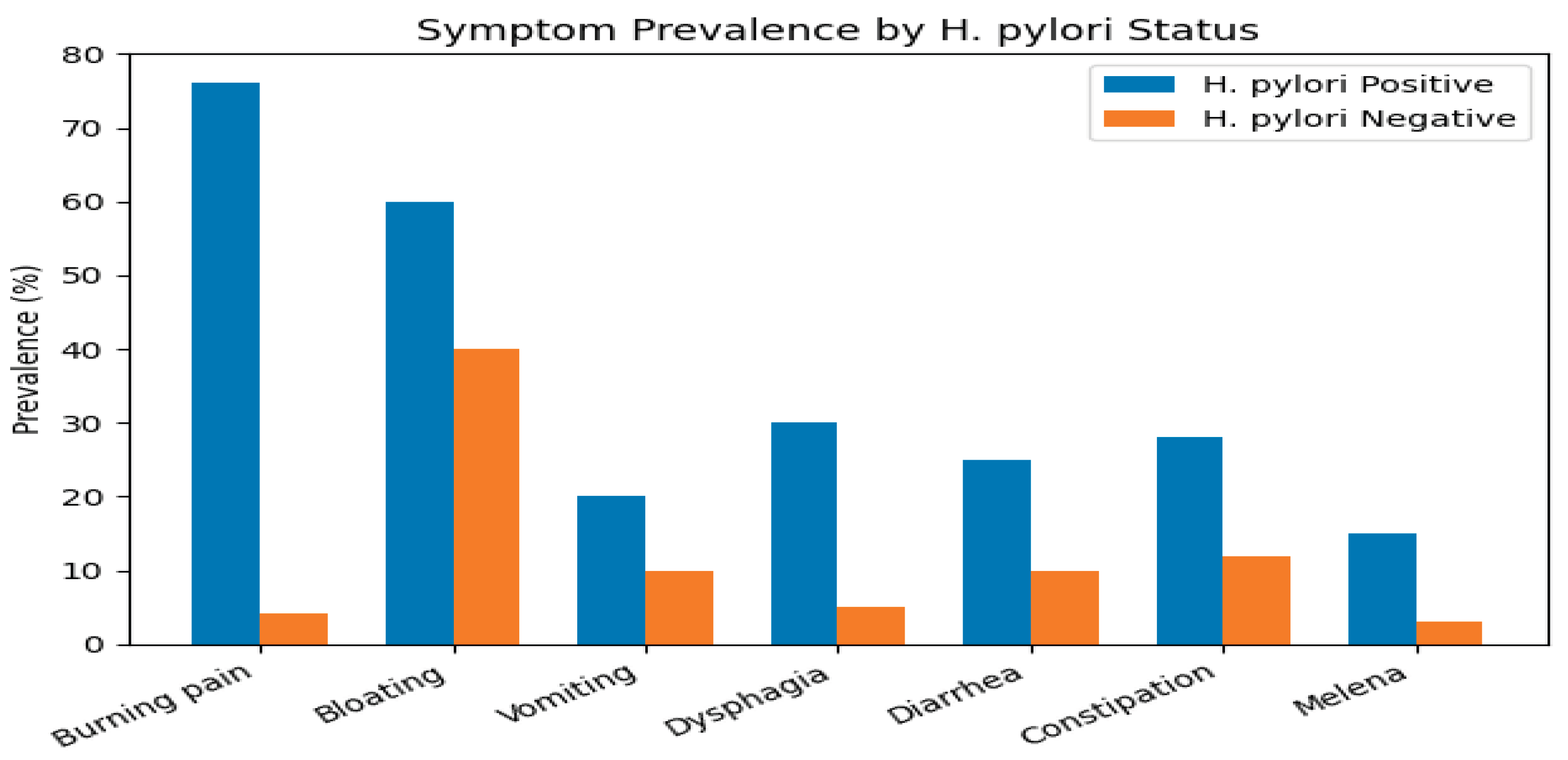
Among the 589 participants, 353 were H. pylori-positive, and 236 were H. pylori-negative based on stool antigen test (SAT) results. Almost all patients in the positive group (352/353, 99.7%) reported at least one gastrointestinal symptom, compared with 83/236 (35.2%) in the negative group. This difference was statistically significant (p < 0.00001).
Burning epigastric pain that worsens on an empty stomach was reported in 269/353 (76.2%) of H. pylori-positive patients, compared with 10/236 (4.2%) in the negative group (p < 0.00001). Other symptoms were also significantly more frequent in infected patients, including bloating (p = 0.012), persistent vomiting (p = 0.029), dysphagia (p < 0.00001), diarrhea (p = 0.0003), constipation (p = 0.0001), and melena (black, tarry stools) (p < 0.00001). (Figure 1)
In contrast, nausea (p = 0.093), unintentional weight loss ≥3 kg within one month (p = 0.100), and early satiety or loss of appetite (p = 0.791) did not show statistically significant differences between the two groups.
Figure 1. Prevalence of gastrointestinal symptoms in H. pylori–positive and negative patients.
Preprints 208988 g001

4.3. Prevalence of H. pylori–Associated Symptoms Across Age Groups (Table 4, Table 5, Table 6, Table 7, Table 8, Table 9 and Table 10)

4.3.1. Age Group 18–25 Years (Table 4)

In the 18–25-year age group, 67 patients were included, of whom 33 tested positive for H. pylori and 34 tested negative. No significant difference in infection rates was observed between males and females (p = 0.067).
In this age group, burning epigastric pain that worsens on an empty stomach (p < 0.00001) and melena (black, tarry stools) (p = 0.018) were significantly associated with infection. The remaining symptoms, including bloating (p = 1.00), nausea (p = 0.57), persistent vomiting (p = 0.54), dysphagia (p = 0.06), unintentional weight loss ≥3 kg/month (p = 0.96), early satiety or loss of appetite (p = 0.08), diarrhea (p = 0.96), and constipation (p = 0.08), did not reach statistical significance.

4.3.2. Age Group 26–33 Years (Table 5)

Of the 97 patients aged 26–33 years, 57 were H. pylori–positive and 40 were H. pylori–negative. No statistically significant difference in infection prevalence between males and females was observed (p = 0.67).
Burning epigastric pain that worsens on an empty stomach (p < 0.00001), dysphagia (p = 0.002), and melena (black, tarry stools) (p = 0.03) were significantly associated with H. pylori infection in this age group. Diarrhea showed a borderline association (p = 0.054). Other symptoms, including bloating (p = 0.77), nausea (p = 0.50), persistent vomiting (p = 0.20), unintentional weight loss ≥3 kg within one month (p = 0.55), early satiety or loss of appetite (p = 0.36), and constipation (p = 0.21), were not statistically significant.

4.3.3. Age Group 34–41 (Table 6)

Among 125 patients, 70 tested positive, and 55 tested negative. No significant difference was found between males and females (p = 0.17). “Burning pain that worsens when the stomach is empty” (p < 0.00001), dysphagia (p = 0.029), diarrhea (p = 0.015), unintentional weight loss >3 kg/month (p = 0.009), and bloody/black tarry stools (p = 0.003) were significantly associated with infection. Other symptoms, including bloating (p = 0.44), nausea (p = 0.50), persistent vomiting (p = 0.27), feeling of fullness/loss of appetite (p = 0.24), and constipation (p = 0.17), were not significant.

4.3.4. Age Group 42–49 (Table 7)

Of 87 patients, 56 tested positive, and 31 tested negative. A significant gender difference was observed (p = 0.018). Only “burning pain that worsens when the stomach is empty” (p < 0.00001) was statistically significant. Nausea (p = 0.0589) and bloody/black, tarry stools (p = 0.0589) were more common among positive patients but did not reach statistical significance. Other symptoms, including bloating (p = 0.19), persistent vomiting (p = 0.29), dysphagia (p = 0.10), unintentional weight loss >3 kg/month (p = 0.82), feeling of fullness/loss of appetite (p = 0.24), diarrhea (p = 0.10), and constipation (p = 0.64), were not significant.

4.3.5. Age Group 50–57 (Table 8)

Among 104 patients, 66 tested positive, and 38 tested negative. No significant gender difference was found (p = 0.46). Significant symptoms included bloating (p = 0.025), burning pain that worsens when the stomach is empty (p < 0.00001), dysphagia (p = 0.006), and diarrhea (p = 0.025). Other symptoms, such as nausea (p = 0.72), persistent vomiting (p = 0.91), unintentional weight loss >3 kg/month (p = 0.61), feeling of fullness/loss of appetite (p = 0.48), constipation (p = 0.10), and bloody/black tarry stools (p = 0.12), were not significant.

4.3.6. Age Group 58–65 (Table 9)

Among 42 patients, 33 tested positive and 22 tested negative. No significant gender difference was observed (p = 0.54). Only “burning pain that worsens when the stomach is empty” (p < 0.00001) was significantly associated with H. pylori. Other symptoms, including bloating (p = 0.22), nausea (p = 0.52), persistent vomiting (p = 0.52), dysphagia (p = 0.22), unintentional weight loss >3 kg/month (p = 0.78), feeling of fullness/loss of appetite (p = 0.77), diarrhea (p = 0.52), constipation (p = 0.52), and bloody/black tarry stools (p = 0.72), were not significant.
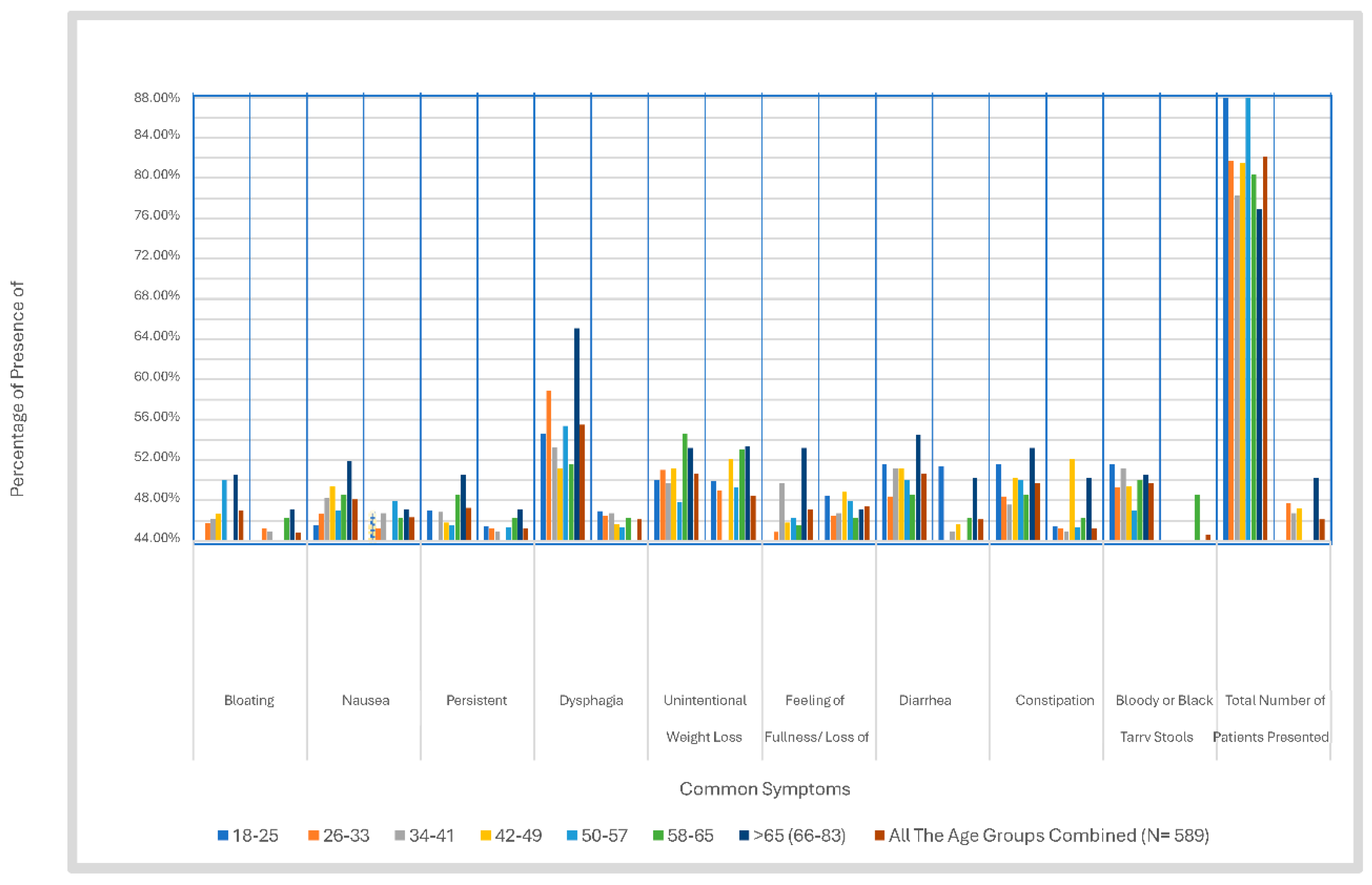
Table 10. The Prevalence of H. pylori’s Most Common Symptoms in All the Different Age Groups.
Age Groups/ Presented Symptoms 18-25 26-33 34-41 42-49 50-57 58-65 >65 (66-83) Combined (N= 589)
Positive For H.
pylori
Negative For H.
pylori
Positive For H.
pylori
Negative For H.
pylori
Positive For H.
pylori
Negative For H.
pylori
Positive For H.
pylori
Negative For H.
pylori
Positive For H.
pylori
Negative For H.
pylori
Positive For H.
pylori
Negative For H.
pylori
Positive For H.
pylori
Negative For H.
pylori
Positive For H.
pylori
Negative For H.
pylori
Bloating 0.00% 0.00% 3.51% 2.50% 4.29% 1.82% 5.36% 0.00% 12.12%* 0.00% 0.00% 4.55% 13.16% 6.25% 5.95%* 1.69%
Nausea 3.03% 5.88% 5.26% 2.50% 8.57% 5.45% 10.71% 0.00% 6.06% 7.89% 9.09% 4.55% 15.79% 6.25% 8.22% 4.66%
Persistent Vomiting 6.06% 2.94% 0.00% 2.50% 5.71% 1.82% 3.57% 0.00% 3.03% 2.63% 9.09% 4.55% 13.16% 6.25% 6.52%* 2.54%
Burning Pain That Worsens When the Stomach Is Empty 87.88%* 0.00% 75.44%* 7.50% 68.57%* 5.45% 75.00%* 6.45% 87.88%* 0.00% 72.73%* 0.00% 65.79%* 12.50% 76.20%* 4.24%
Dysphagia 21.21% 5.88% 29.82%* 5.00% 18.57%* 5.45% 14.29% 3.23% 22.73%* 2.63% 15.15% 4.55% 42.11%* 0.00% 22.95%* 4.24%
Unintentional Weight Loss (Over 3 kg in Past Month) 12.12% 11.76% 14.04% 10.00% 11.43%* 0.00% 14.29% 16.13% 7.58% 10.53% 21.21% 18.18% 18.42% 18.75% 13.31% 8.90%
Feeling of Fullness/ Loss of Appetite 0.00% 8.82% 1.75% 5.00% 11.43% 5.45% 3.57% 9.68% 4.55% 7.89% 3.03% 4.55% 18.42% 6.25% 6.23% 6.78%
Diarrhea 15.15% 14.71% 8.77%* 0.00% 14.29%* 1.82% 14.29% 3.23% 12.12%* 0.00% 9.09% 4.55% 21.05% 12.50% 13.31%* 4.24%
Constipation 15.15% 2.94% 8.77% 2.50% 7.14% 1.82% 12.50% 16.13% 12.12% 2.63% 9.09% 4.55% 18.42% 12.50% 11.33%* 2.54%
Bloody or Black Tarry Stools 15.15%* 0.00% 10.53%* 0.00% 14.29%* 0.00% 10.71% 0.00% 6.06% 0.00% 12.12% 9.09% 13.16% 0.00% 11.33%* 1.27%
Total Number of Patients Presented with Symptoms 96.97%* 47.06% 100.00%* 32.50% 100.00%* 27.27% 100.00%* 35.48% 100.00%* 34.21% 100.00%* 40.91% 100.00%* 37.50% 99.72%* 35.17%
* Indicates that there is a statistically significant association between the prevalence of the symptom and H. pylori positive test result.
Figure 2. The Prevalence of H. pylori’s Most Common Symptoms in All the Different Age Groups.
Preprints 208988 g002

5. Discussion

In this retrospective study, we examined the relationship between Helicobacter pylori infection and gastrointestinal symptoms in patients undergoing stool antigen testing. Several symptoms were observed more frequently in H. pylori–positive patients, particularly burning epigastric pain that worsened on an empty stomach. These findings are consistent with previous studies reporting an association between dyspeptic symptoms and H. pylori infection, although most earlier work has focused on broader symptom groups rather than on individual clinical features [15,16,21,22].
In contrast, this study placed emphasis on a single, clinically recognizable symptom and assessed both its association with infection and its practical diagnostic performance in a real-world setting. Alongside symptom prevalence, we also reported measures such as sensitivity, specificity, and predictive values. Age-based comparisons were included to describe how symptom patterns varied across different groups. Nevertheless, these findings should be viewed as observational associations rather than evidence of diagnostic accuracy.
Burning epigastric pain showed an association with H. pylori positivity and demonstrated high specificity (95.8%) and positive predictive value (96.4%). However, its moderate sensitivity (76.2%) and negative predictive value (72.9%) suggest that the absence of this symptom cannot reliably exclude infection. For this reason, it may be useful in raising clinical suspicion and guiding decisions about testing, but it should not be used on its own as a diagnostic tool or as a substitute for confirmatory testing [8,24].
The relatively high odds ratio for this symptom (OR ≈ 72) should be interpreted carefully. It is likely influenced by the low frequency of the symptom among H. pylori–negative patients, which can exaggerate effect estimates in retrospective studies. In addition, the study population consisted of individuals already referred for testing, which may have further strengthened the observed association. As such, this result reflects a strong association within a selected clinical population rather than a generalizable risk estimate.
It is also important to recognize that burning epigastric pain is not specific to H. pylori infection. Similar symptoms can be seen in conditions such as peptic ulcer disease, gastroesophageal reflux disease, functional dyspepsia, cardiac ischemia, and pancreatic disorders. Therefore, clinical symptoms alone cannot reliably distinguish H. pylori infection from other underlying causes without appropriate diagnostic testing [8,24].
Other symptoms, including dysphagia, diarrhea, constipation, and melena, were also more frequently reported in H. pylori–positive patients, supporting previous observations that infected individuals may present with a higher symptom burden [21,22]. Differences across age groups further suggest that clinical presentation may vary depending on patient characteristics and should be interpreted in context.
Several limitations should be considered when interpreting these results. The retrospective design limited control over data quality and introduced the possibility of incomplete or inconsistent documentation. In addition, the study population consisted only of patients referred for testing, which may introduce selection bias and limit generalizability [3,10]. Symptom data were also extracted from routine clinical records rather than standardized assessment tools.
Another limitation is that stool antigen testing was the sole diagnostic method used. Although it is widely accepted and non-invasive, its accuracy may be lower than that of urea breath testing in some settings. Without confirmatory testing, there is a possibility of misclassification, particularly false-negative results. Factors such as low bacterial load or recent use of certain medications may also reduce test sensitivity, meaning that some infected patients may have been classified as negative [8,10].
In addition, detailed information regarding the assay characteristics, such as whether monoclonal or polyclonal antibodies were used, was not available. This may have introduced some variability in diagnostic performance and should be considered when interpreting the findings.
The statistical analysis was also limited to univariate methods. Since multivariate analysis was not performed, potential confounding factors such as age, sex, and comorbidities could not be adjusted for [3,10]. Future studies should address this using more robust statistical models.
Socioeconomic and environmental variables, including sanitation, household crowding, and access to healthcare, were not available in the dataset and therefore could not be evaluated. These factors are known to influence H. pylori infection rates and may contribute to residual confounding [21,23].
Although patients were grouped by age, these categories were used for descriptive purposes rather than based on a formal statistical framework, which may limit the interpretation of age-related trends.
Overall, this study should be viewed as an observational analysis of symptom patterns rather than a diagnostic validation study. Burning epigastric pain that worsens on an empty stomach may help increase clinical suspicion and support more targeted testing, particularly in resource-limited settings, but it should not replace established diagnostic approaches [8,24].
Future prospective multicenter studies with standardized symptom assessment, multivariate analysis, and multiple diagnostic methods are needed to confirm and expand on these findings.

6. Conclusions

This study found a clear link between burning epigastric pain that worsens on an empty stomach and Helicobacter pylori infection in a selected group of patients who underwent stool antigen testing. The symptom showed high specificity and a strong positive predictive value, but its moderate sensitivity means that many infected patients may not present with it, so its absence cannot rule out infection.
Taken together, these findings suggest that certain symptom patterns can still be helpful in everyday clinical practice by raising suspicion and guiding clinicians in deciding who may benefit from testing. At the same time, symptoms on their own are not enough to make a diagnosis and should not replace standard diagnostic methods. Current guidelines still support a test-and-treat approach to ensure accurate diagnosis and proper management of H. pylori.
If symptoms are used alone, there is a real risk of missing infections or making incorrect clinical decisions, which may also lead to unnecessary treatment and contribute to antibiotic resistance. For this reason, the results of this study should be seen as supportive information that can assist clinical judgment, not as a diagnostic tool by itself.
More well-designed prospective studies, with consistent symptom recording and multiple validated diagnostic tests, are needed to confirm these findings and better understand how symptom-based assessment can be used in practice.

Author Contributions

All authors (M.I., A.M., and S.S.) contributed equally to the conceptualization, methodology, software, validation, inves-tigation, resources, and data curation of this study. They were also involved in drafting and reviewing the original manuscript. In addition, all authors participated in visualization, project administration, and funding acquisition. All authors have read and approved the final version of the manuscript.

Funding

This research did not receive any external funding.

Institutional Review Board Statement

Ethical review and approval were waived by the Institutional Review Board of Keiser University (protocol code IRB-FY2025-212; approved on December 5, 2025).

Data Availability Statement

The raw data supporting the conclusions of this article will be made available by the authors on request.

Acknowledgments

No administrative, funding, or other support is received for this article, and the authors have reviewed and edited the output and take full responsibility for the content of this publication.

Conflicts of Interest

The author Shiva Shafabakhsh was employed by the company the Pharmacy, Walgreens Boots Alliance (United States). The remaining authors declare that the research was conducted in the absence of any commercial or financial relationships that could be construed as a potential conflict of interest.

References

  1. World Gastroenterology Organisation. World Gastroenterology Organisation Global Guideline: Helicobacter pylori in developing countries. J Clin Gastroenterol. 2011, 45(5), 383–8. [Google Scholar] [CrossRef] [PubMed]
  2. Epidemiology of, and risk factors for, Helicobacter pylori infection among 3194 asymptomatic subjects in 17 populations. The EUROGAST Study Group. Gut 1993, 34(12), 1672–6. [CrossRef] [PubMed] [PubMed Central]
  3. Eusebi, L.H.; Zagari, R.M.; Bazzoli, F. Epidemiology of Helicobacter pylori infection. Helicobacter 2014, 19 Suppl 1, 1–5. [Google Scholar] [CrossRef] [PubMed]
  4. De Brito, B.B.; da Silva, F.A.F.; Soares, A.S.; Pereira, V.A.; Santos, M.L.C.; Sampaio, M.M.; Neves, P.H.M.; de Melo, F.F. Pathogenesis and clinical management of Helicobacter pylori gastric infection. World J Gastroenterol 2019, 25(37), 5578–5589. [Google Scholar] [CrossRef] [PubMed] [PubMed Central]
  5. Franceschi, F.; Annalisa, T.; Teresa, D.R.; Giovanna, D.; Ianiro, G.; Franco, S.; Viviana, G.; Valentina, T.; Riccardo, L.L.; Antonio, G. Role of Helicobacter pylori infection on nutrition and metabolism. World J Gastroenterol 2014, 20(36), 12809–17. [Google Scholar] [CrossRef] [PubMed] [PubMed Central]
  6. Holmes, L., Jr.; Rios, J.; Berice, B.; Benson, J.; Bafford, N.; Parson, K.; Halloran, D. Predictive Effect of Helicobacter pylori in Gastric Carcinoma Development: Systematic Review and Quantitative Evidence Synthesis. Medicines (Basel) 2021, 8(1), 1. [Google Scholar] [CrossRef] [PubMed] [PubMed Central]
  7. Choi, I.J.; Kook, M.C.; Kim, Y.I.; Cho, S.J.; Lee, J.Y.; Kim, C.G.; Park, B.; Nam, B.H. Helicobacter pylori Therapy for the Prevention of Metachronous Gastric Cancer. N Engl J Med 2018, 378(12), 1085–1095. [Google Scholar] [CrossRef] [PubMed]
  8. Mestrovic, A.; Bozic, J.; Vukojevic, K.; Tonkic, A. Impact of Different Helicobacter pylori Eradication Therapies on Gastrointestinal Symptoms. Medicina (Kaunas) 2021, 8 57(8), 803. [Google Scholar] [CrossRef] [PubMed] [PubMed Central]
  9. Suerbaum, S.; Michetti, P. Helicobacter pylori infection. N Engl J Med 2002, 347(15), 1175–1186. [Google Scholar] [CrossRef] [PubMed]
  10. Hunt, R.H.; Xiao, S.D.; Megraud, F.; Leon-Barua, R.; Bazzoli, F.; van der Merwe, S.; Vaz Coelho, L.G.; Fock, M.; Fedail, S.; Cohen, H.; Malfertheiner, P.; Vakil, N.; Hamid, S.; Goh, K.L.; Wong, B.C.; Krabshuis, J.; Le Mair, A.; World Gastroenterology Organization. Helicobacter pylori in developing countries. World Gastroenterology Organisation Global Guideline. J Gastrointestin Liver Dis. 2011, 20(3), 299–304. [Google Scholar] [PubMed]
  11. Kabir, S. Detection of Helicobacter pylori in faeces by culture, PCR and enzyme immunoassay. J Med Microbiol. 2001, 50(12), 1021–1029. [Google Scholar] [CrossRef] [PubMed]
  12. Khalifehgholi, M.; Shamsipour, F.; Ajhdarkosh, H.; Ebrahimi Daryani, N.; Pourmand, M.R.; Hosseini, M.; Ghasemi, A.; Shirazi, M.H. Comparison of five diagnostic methods for Helicobacter pylori. Iran J Microbiol 2013, 5(4), 396–401. [Google Scholar] [PubMed] [PubMed Central]
  13. Sabbagh, P.; Mohammadnia-Afrouzi, M.; Javanian, M.; Babazadeh, A.; Koppolu, V.; Vasigala, V.R.; Nouri, H.R.; Ebrahimpour, S. Diagnostic methods for Helicobacter pylori infection: ideals, options, and limitations. Eur J Clin Microbiol Infect Dis 2019, 38(1), 55–66. [Google Scholar] [CrossRef] [PubMed]
  14. Vaira, D.; Vakil, N. Blood, urine, stool, breath, money, and Helicobacter pylori. Gut 2001, 48(3), 287–9. [Google Scholar] [CrossRef] [PubMed] [PubMed Central]
  15. Gisbert, J.P.; Pajares, J.M. Review article: 13C-urea breath test in the diagnosis of Helicobacter pylori infection -- a critical review. Aliment Pharmacol Ther 2004, 20(10), 1001–17. [Google Scholar] [CrossRef] [PubMed]
  16. Van Doorn, O.J.; Bosman, D.K.; van't Hoff, B.W.; Taminiau, J.A.; ten Kate, F.J.; van der Ende, A. Helicobacter pylori Stool Antigen test: a reliable non-invasive test for the diagnosis of Helicobacter pylori infection in children. Eur J Gastroenterol Hepatol 2001, 13(9), 1061–5. [Google Scholar] [CrossRef] [PubMed]
  17. Gisbert, J.P.; Pajares, J.M. Stool antigen test for the diagnosis of Helicobacter pylori infection: a systematic review. Helicobacter 2004, 9(4), 347–68. [Google Scholar] [CrossRef] [PubMed]
  18. Vaira, D.; Vakil, N.; Menegatti, M.; van't Hoff, B.; Ricci, C.; Gatta, L.; Gasbarrini, G.; Quina, M.; Pajares Garcia, J.M.; van Der Ende, A.; van Der Hulst, R.; Anti, M.; Duarte, C.; Gisbert, J.P.; Miglioli, M.; Tytgat, G. The stool antigen test for detection of Helicobacter pylori after eradication therapy. Ann Intern Med. 2002, 136(4), 280–7. [Google Scholar] [CrossRef] [PubMed]
  19. Demiray, E.; Yilmaz, O.; Sarkis, C.; Soyturk, M.; Simsek, I. Comparison of invasive methods and two different stool antigen tests for diagnosis of H pylori infection in patients with gastric bleeding. World J Gastroenterol 2006, 12(26), 4206–10. [Google Scholar] [CrossRef] [PubMed] [PubMed Central]
  20. Hunt, R.H.; Xiao, S.D.; Megraud, F.; Leon-Barua, R.; Bazzoli, F.; van der Merwe, S.; Vaz Coelho, L.G.; Fock, M.; Fedail, S.; Cohen, H.; Malfertheiner, P.; Vakil, N.; Hamid, S.; Goh, K.L.; Wong, B.C.; Krabshuis, J.; Le Mair, A.; World Gastroenterology Organization. Helicobacter pylori in developing countries. World Gastroenterology Organisation Global Guideline. J Gastrointestin Liver Dis. 2011, 20(3), 299–304. [Google Scholar] [PubMed]
  21. Santos, I.S.; Boccio, J.; Santos, A.S.; Valle, N.C.; Halal, C.S.; Bachilli, M.C.; Lopes, R.D. Prevalence of Helicobacter pylori infection and associated factors among adults in Southern Brazil: a population-based cross-sectional study. BMC Public Health 2005, 5, 118. [Google Scholar] [CrossRef] [PubMed] [PubMed Central]
  22. Werdmuller, B.F.; van der Putten, T.B.; Balk, T.G.; Lamers, C.B.; Loffeld, R.J. Clinical presentation of Helicobacter pylori-positive and -negative functional dyspepsia. J Gastroenterol Hepatol. 2000, 15(5), 498–502. [Google Scholar] [CrossRef] [PubMed]
  23. Abbas, M.; Sharif, F.A.; Osman, S.M.; Osman, A.M.; El Sanousi, S.M.; Magzoub, M.; Ibrahim, M.E. Prevalence and Associated Symptoms of Helicobacter pylori Infection among Schoolchildren in Kassala State, East of Sudan. Interdiscip Perspect Infect Dis 2018, 2018, 4325752. [Google Scholar] [CrossRef] [PubMed] [PubMed Central]
  24. Stenström, B.; Mendis, A.; Marshall, B. Helicobacter pylori--the latest in diagnosis and treatment. Aust Fam Physician 2008, 37(8), 608–12. [Google Scholar] [PubMed]
Table 1. Combined Results of The Prevalence of Symptoms in All the Patients Based on Negative and Positive H. Pylori Lab Results.
Tested Negative for H. pylori Tested Positive for H. pylori
Symptoms (N=589) Number of Patients Evaluated Number of Patients with
Symptom
% of patients with
Symptom
Number of Patients Evaluated Number of Patients with
Symptom
% of patients with
Symptom
p value
Gender 236
F (145)
M (91)
353
F (206)
M (147)

0.45484
Bloating 236 4 1.69% 353 21 5.95% 0.01209
Nausea 236 11 4.66% 353 29 8.22% 0.09294
Persistent Vomiting 236 6 2.54% 353 23 6.52% 0.02896
Burning Pain That Worsens When the Stomach Is Empty 236 10 4.24% 353 269 76.20% 0.00001*
Dysphagia 236 10 4.24% 353 81 22.95% 0.00001*
Unintentional Weight Loss (Over 3 kg in Past Month) 236 21 8.90% 353 47 13.31% 0.10028
Feeling of Fullness/ Loss of Appetite 236 16 6.78% 353 22 6.23% 0.79103
Diarrhea 236 10 4.24% 353 47 13.31% 0.00026
Constipation 236 6 2.54% 353 40 11.33% 0.00010
Bloody or Black Tarry Stools 236 3 1.27% 353 40 11.33% 0.00001*
Total Number of Patients Presented with Symptoms 236 83 35.17% 353 352 99.72% 0.00001*
Table 2. summarizes the diagnostic performance of burning epigastric pain.
Metric Value
Sensitivity 76.2%
Specificity 95.8%
Positive Predictive Value (PPV) 96.4%
Negative Predictive Value (NPV) 72.9%
Table 3. Other Symptoms (ORs Approximate).
Symptom a b c d OR
Dysphagia 81 272 10 226 6.7
Diarrhea 47 306 10 226 3.5
Constipation 40 313 6 230 4.9
Bloody/Black Stools 40 313 3 233 9.97
Table 4. The Prevalence of Symptoms in Patients Based on Negative and Positive H. pylori Lab Results (Ages between 18-25).
Tested Positive for H. pylori Tested Negative for H. pylori
Age Group 18-25 Number of
Patients Evaluated
Number of Patients
with Symptom
% Of Patients
with Symptom
Number of Patients Evaluated Number of Patients
with Symptom
% Of Patients with Symptom p value
Gender 14 (F)
19 (M)
22 (F)
12 (M)
0.06744
Bloating 33 0 0.00% 34 0 0.00% 1.00000
Nausea 33 1 3.03% 34 2 5.88% 0.57252
Persistent Vomiting 33 2 6.06% 34 1 2.94% 0.53707
Burning Pain That Worsens When the Stomach Is Empty 33 29 87.88% 34 0 0.00% 0.00001*
Dysphagia 33 7 21.21% 34 2 5.88% 0.06582
Unintentional Weight Loss (Over 3 kg in Past Month) 33 4 12.12% 34 4 11.76% 0.96411
Feeling of Fullness/ Loss of Appetite 33 0 0.00% 34 3 8.82% 0.08082
Diarrhea 33 5 15.15% 34 5 14.71% 0.95918
Constipation 33 5 15.15% 34 1 2.94% 0.08013
Bloody or Black Tarry Stools 33 5 15.15% 34 0 0.00% 0.01830
Total Number of Patients Presented with Symptoms 33 32 96.97% 34 16 47.06% 0.00001*
Table 5. The Prevalence of Symptoms in Patients Based on Negative and Positive H. Pylori Lab Results (Ages between 26-33).
Tested Positive for H. pylori Tested Negative for H. pylori
Age Group 26-33 Number of Patients Evaluated Number of Patients with Symptom % of Patients with Symptom Number of Patients Evaluated Number of Patients with Symptom % of Patients with Symptom p value
Gender 31 (F)
26 (M)
20 (F)
20 (M)
0.67022
Bloating 57 2 3.51% 40 1 2.50% 0.77756
Nausea 57 3 5.26% 40 1 2.50% 0.50048
Persistent Vomiting 57 0 0.00% 40 1 2.50% 0.23016
Burning Pain That Worsens When the Stomach Is Empty 57 43 75.44% 40 3 7.50% 0.00001*
Dysphagia 57 17 29.82% 40 2 5.00% 0.00242
Unintentional Weight Loss (Over 3 kg in Past Month) 57 8 14.04% 40 4 10.00% 0.55240
Feeling of Fullness/ Loss of Appetite 57 1 1.75% 40 2 5.00% 0.36339
Diarrhea 57 5 8.77% 40 0 0.00% 0.05443
Constipation 57 5 8.77% 40 1 2.50% 0.20685
Bloody or Black Tarry Stools 57 6 10.53% 40 0 0.00% 0.03413
Total Number of Patients Presented with Symptoms 57 57 100.00% 40 13 32.50% 0.00001*
Table 6. The Prevalence of Symptoms in Patients Based on Negative and Positive H. Pylori Lab Results (Ages 34-41).
Tested Positive for H. pylori Tested Negative for H. pylori
Age Group 34-41 Number of Patients Evaluated Number of Patients with Symptom % of Patients with Symptom Number of Patients Evaluated Number of Patients with Symptom % of Patients with Symptom p value
Gender 43 (F)
27 (M)
27 (F)
28 (M)
0.16777
Bloating 70 3 4.29% 55 1 1.82% 0.43652
Nausea 70 6 8.57% 55 3 5.45% 0.50337
Persistent Vomiting 70 4 5.71% 55 1 1.82% 0.26985
Burning Pain That Worsens When the Stomach Is Empty 70 48 68.57% 55 3 5.45% 0.00001*
Dysphagia 70 13 18.57% 55 3 5.45% 0.02934
Unintentional Weight Loss (Over 3 kg in Past Month) 70 8 11.43% 55 0 0.00% 0.00956
Feeling of Fullness/ Loss of Appetite 70 8 11.43% 55 3 5.45% 0.24187
Diarrhea 70 10 14.29% 55 1 1.82% 0.01459
Constipation 70 5 7.14% 55 1 1.82% 0.16685
Bloody or Black Tarry Stools 70 10 14.29% 55 0 0.00% 0.00347
Total Number of Patients Presented with Symptoms 70 70 100.00% 55 15 27.27% 0.00001*
Table 7. The Prevalence of Symptoms in Patients Based on Negative and Positive H. Pylori Lab Results (Ages between 42-49).
Tested Positive for H. pylori Tested Negative for H. pylori
Age Group 42-49 Number of Patients Evaluated Number of Patients with Symptom % of Patients with Symptom Number of Patients Evaluated Number of Patients with Symptom % of Patients with Symptom p value
Gender 27 (F)
29 (M)
23 (F)
8 (M)
0.01891
Bloating, 56 3 5.36% 31 0 0.00% 0.18969
Nausea 56 6 10.71% 31 0 0.00% 0.05892
Persistent Vomiting 56 2 3.57% 31 0 0.00% 0.28710
Burning Pain That
Worsen When Stomach Is Empty
56 42 75.00% 31 2 6.45% 0.00001*
Dysphagia 56 8 14.29% 31 1 3.23% 0.10475
Unintentional Weight Loss (Over 3 kg in the Past
Month)
56 8 14.29% 31 5 16.13% 0.81734
Feeling of Fullness/ Loss of Appetite 56 2 3.57% 31 3 9.68% 0.24123
Diarrhea 56 8 14.29% 31 1 3.23% 0.10475
Constipation 56 7 12.50% 31 5 16.13% 0.63827
Bloody or Black Tarry Stools 56 6 10.71% 31 0 0.00% 0.05892
Total Number of Patients Presented with Symptoms 56 56 100.00% 31 11 35.48% 0.00001*
Table 8. The Prevalence of Symptoms in Patients Based on Negative and Positive H. Pylori Lab Results (Ages between 50-57).
Tested Positive for H. pylori Tested Negative for H. pylori
Age Group 50-57 Number of Patients Evaluated Number of Patients with Symptom % of Patients with Symptom Number of Patients Evaluated Number of Patients with Symptom % of Patients with Symptom p value
Gender 48 (F)
18 (M)
25 (F)
13 (M)
0.45637
Bloating 66 8 12.12% 38 0 0.00% 0.02550
Nausea 66 4 6.06% 38 3 7.89% 0.71924
Persistent Vomiting 66 2 3.03% 38 1 2.63% 0.90687
Burning Pain That Worsens When the Stomach Is Empty 66 58 87.88% 38 0 0.00% 0.00001*
Dysphagia 66 15 22.73% 38 1 2.63% 0.00624
Unintentional Weight Loss (Over 3 kg in Past Month) 66 5 7.58% 38 4 10.53% 0.60631
Feeling of Fullness/ Loss of Appetite 66 3 4.55% 38 3 7.89% 0.48055
Diarrhea 66 8 12.12% 38 0 0.00% 0.02550
Constipation 66 8 12.12% 38 1 2.63% 0.09742
Bloody or Black Tarry Stools 66 4 6.06% 38 0 0.00% 0.12171
Total Number of Patients Presented with Symptoms 66 66 100.00% 38 13 34.21% 0.00001*
Table 9. The Prevalence of Symptoms in Patients Based on Negative and Positive H. pylori Lab Results (Ages between 58-65).
Tested Positive for H. pylori Tested Negative for H. pylori
Age Group 58-65 Number of Patients Evaluated Number of Patients with Symptom % Of Patients with Symptom Number of Patients Evaluated Number of Patients with Symptom % Of Patients with Symptom p value
Gender 25 (F)
8 (M)
15 (F)
7 (M)
0.53656
Bloating, 33 0 0.00% 22 1 4.55% 0.21645
Nausea 33 3 9.09% 22 1 4.55% 0.52482
Persistent Vomiting 33 3 9.09% 22 1 4.55% 0.52482
Burning Pain That Worsen When Stomach Is Empty 33 24 72.73% 22 0 0.00% 0.00001*
Dysphagia 33 5 15.15% 22 1 4.55% 0.21645
Unintentional Weight Loss (Over 3 kg in Past Month) 33 7 21.21% 22 4 18.18% 0.78313
Feeling of Fullness/ Loss of Appetite 33 1 3.03% 22 1 4.55% 0.76870
Diarrhea 33 3 9.09% 22 1 4.55% 0.52482
Constipation 33 3 9.09% 22 1 4.55% 0.52482
Bloody or Black Tarry Stools 33 4 12.12% 22 2 9.09% 0.72397
Total Number of Patients Presented with Symptoms 33 33 100.00% 22 9 40.91% 0.00001*
Disclaimer/Publisher’s Note: The statements, opinions and data contained in all publications are solely those of the individual author(s) and contributor(s) and not of MDPI and/or the editor(s). MDPI and/or the editor(s) disclaim responsibility for any injury to people or property resulting from any ideas, methods, instructions or products referred to in the content.
Copyright: This open access article is published under a Creative Commons CC BY 4.0 license, which permit the free download, distribution, and reuse, provided that the author and preprint are cited in any reuse.
Prerpints.org logo

Preprints.org is a free preprint server supported by MDPI in Basel, Switzerland.

Subscribe

Disclaimer

Terms of Use

Privacy Policy

Privacy Settings

© 2026 MDPI (Basel, Switzerland) unless otherwise stated