
Submitted:
16 April 2026
Posted:
17 April 2026
You are already at the latest version
Preprints on COVID-19 and SARS-CoV-2
Abstract
The COVID-19 pandemic has disrupted the lives of the world's population, resulting in over 7 million deaths. It was immediately noted that obese and/or diabetic subjects and frail elderly individuals with multiple comorbidities were more likely to have a more severe disease course. The cause of the increased morbidity and mortality in obese and/or diabetic subjects was found to be related to the presence of insulin resistance in these individuals. Furthermore, it was also discovered that COVID-19, particularly in its more severe forms, was capable of causing de novo type 1 and type 2 diabetes as well as worsening the disease course, if already present. This review aims to highlight the most accredited possible mechanisms by which subjects with insulin resistance may have a more severe disease course and those by which SARS-CoV-2 infection may cause new onset of diabetes or worsening of existing diabetes. To write this manuscript, the authors independently reviewed and compared the results of peer-reviewed and impacted journal publications, written in English, selected from the most well-known search platforms such as PubMed, Scopus, Science Direct, Google Scholar, and ResearchGate, using the following keywords: SARS-CoV-2, COVID-19, Insulin resistance, Glucose metabolism, Obesity, Diabetes, Hospitalization, Mortality.
Keywords:
SARS-CoV-2
; COVID 19
; glucose
; metabolism
1. Introduction
The COVID-19 pandemic, particularly during the first two waves, characterized by more virulent variants, has produced a very high number of hospitalizations and deaths [1,2]. This occurred mainly in elderly, frail subjects and those with multiple comorbidities. Among the latter, it was immediately noted that obesity and, particularly, type 2 diabetes mellitus played a significant role in worsening the progression of the disease, leading to more serious outcomes [3,4]. On the other hand, it was also noted that, conversely, COVID-19 could also lead to the onset of both type 1 and, particularly, type 2 diabetes [5,6]. Emerging data indicate that patients who have recovered from the acute phase of COVID-19 are also more susceptible to developing a broad spectrum of symptoms collectively referred to as "Long COVID syndrome", among which the worsening of previous cases and the development of new cases of diabetes mellitus are frequent [7]. A systematic review and meta-analysis including 40 million participants showed that the incidence of new-onset diabetes was 15.53 (7.91-25.64) per 1000 person-years, and that the relative risk of diabetes after SARS-CoV-2 infection was elevated (RR=1.62). The relative risk of type 1 diabetes was RR=1.48 while that of type 2 diabetes was RR=1.70. Furthermore, it was showed that patients with more severe COVID-19 were at higher risk of diabetes (RR=1.67) and that the risk of diabetes was higher in the first 3 months after infection (RR=1.95) [8].
Scientific literature demonstrates that SARS-CoV-2 not only affects more severely patients who already have diabetes more severely, but also can cause metabolic alterations in previously healthy people. Several biological mechanisms have been identified to explain how COVID-19 can disrupt glucose balance:
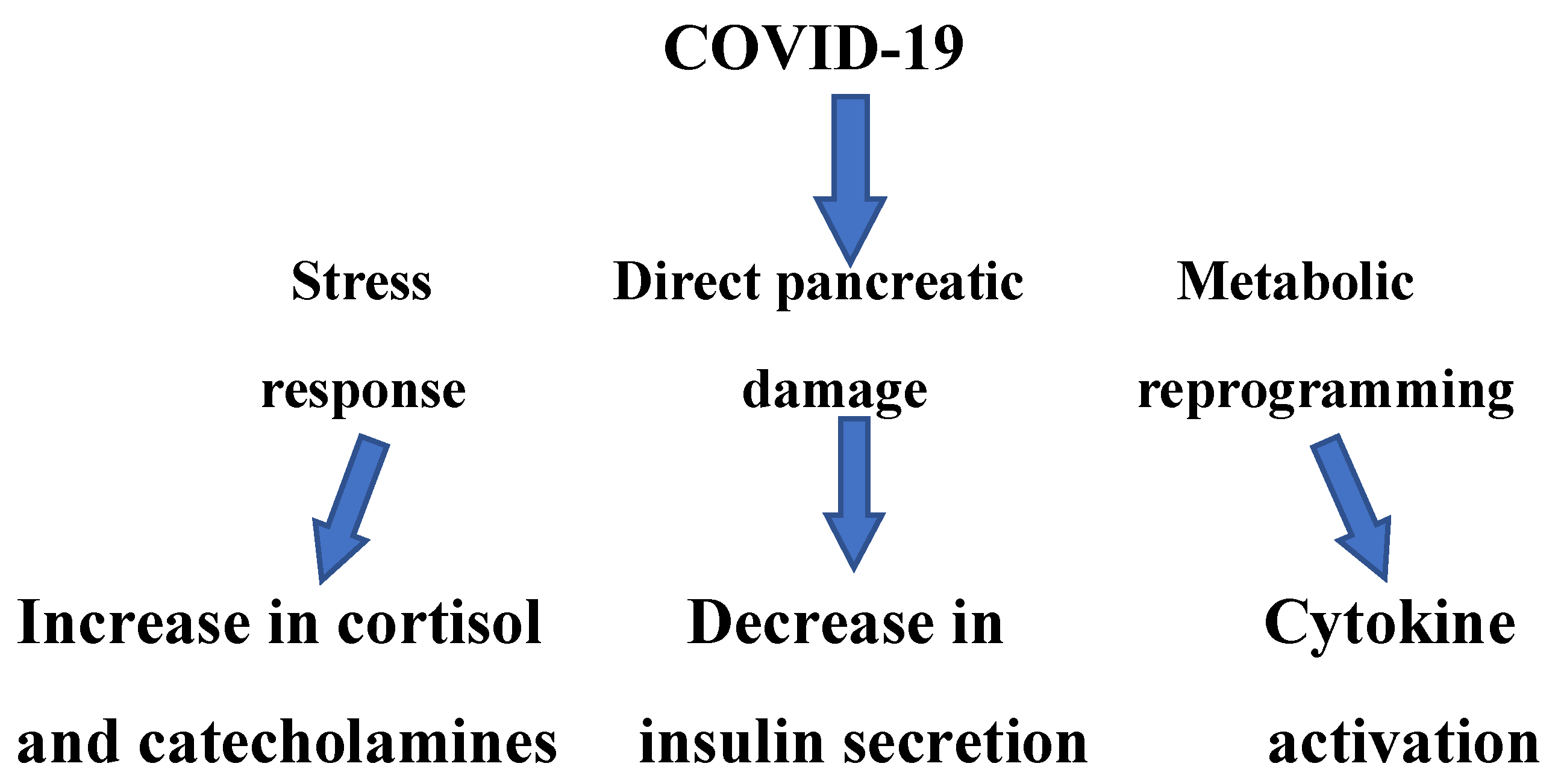
1. Insulin resistance and inflammation: The cytokine storm and systemic inflammation triggered by the virus lead to significant insulin resistance, making it difficult for sensitive cells to utilize glucose [9,10,11,12,13]. 2. Stress response: The infection stimulates the release of stress hormones such as cortisol, catecholamines, and growth hormone (GH), which are highly diabetogenic hormones that increase glucose production in the liver (gluconeogenesis) and reduce its use in peripheral tissues [12,13]. 3. Direct pancreatic damage: The virus can directly infect pancreatic cells that produce insulin, since these express the ACE2 receptor, used by the virus to enter into the cells [14]. 4. Metabolic reprogramming: SARS-CoV-2 hijacks cellular metabolism toward glycolysis (a rapid way to produce energy using glucose) to promote its own replication [15]. Also, COVID-19 vaccinations, particularly boosters, can also cause an increase in insulin resistance and alterations in glucose metabolism, generally transient and mainly in subjects with pre-existing or genetic predisposition to diabetes [16].
2. Method
This review aims to analyze and highlight the profound and often bidirectional impact that SARS-CoV-2 infection has on glucose metabolism, attempting to revise and identify which could be the most accredited and actual pathophysiological mechanisms in determining the alterations in glucose homeostasis. To write this manuscript, the authors independently reviewed and compared the results of peer-reviewed and impacted journal publications, written in English, selected from the most well-known search platforms such as PubMed, Scopus, Science Direct, Google Scholar, and ResearchGate, using the following keywords: SARS-CoV-2, COVID-19, Insulin resistance, Glucose metabolism, Obesity, Diabetes, Hospitalization, Mortality.
1.2.1. COVID-19, Insulin Resistance and Inflammation Interaction
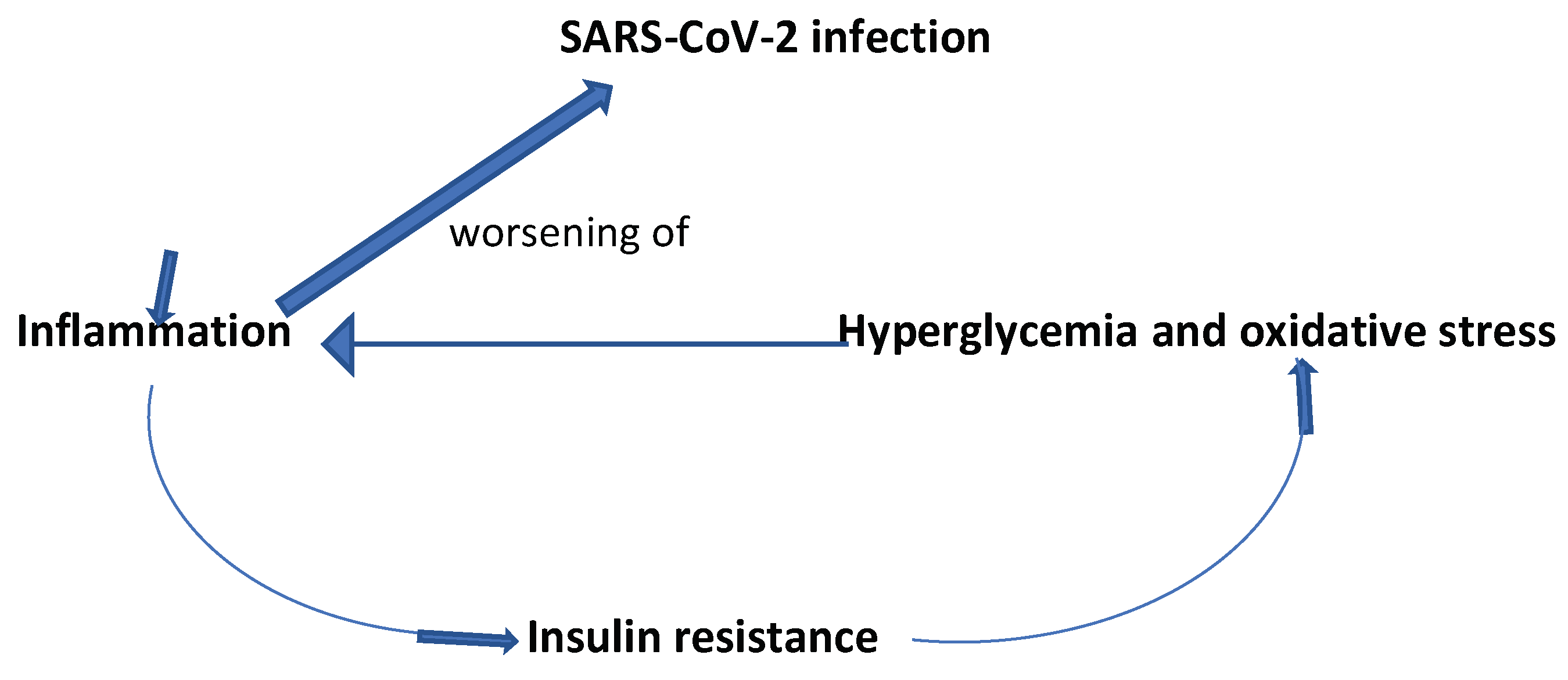
SARS-CoV-2 infection can trigger new-onset hyperglycemia, worsen pre-existing diabetes and, in some cases, produce hyperglycemic emergencies. Some studies have associated the degree of hyperglycemia with the severity of viral infection, since high glucose levels may promote viral replication with stimulation of cytokine production and T-cell dysfunction [17,18]. SARS-CoV-2 infection can trigger a systemic immune response characterized by elevated production of pro-inflammatory cytokines (such as IL-6, TNF-α, and IL-1), which, in extreme cases, determines what is defined as cytokine storm [19]. These cytokines activate intracellular signaling pathways that directly interfere with insulin receptors, preventing cells from responding properly to the hormone (insulin resistance).
This leads to the onset of acute insulin resistance, which causes hyperglycemia even in patients who were not previously diabetic [20]. Insulin resistance is not only a consequence, but also an amplifier of the inflammatory state [11].
Figure 1.
The vitious circle among SARS-CoV-2 infection, inflammation, insulin resistance, hyperglycemia and oxidative stress, further inflammation which, in turn can worsen the course of the disease.
Figure 1.
The vitious circle among SARS-CoV-2 infection, inflammation, insulin resistance, hyperglycemia and oxidative stress, further inflammation which, in turn can worsen the course of the disease.
Among other things, the virus can also directly infect fat cells, significantly reducing the production of adiponectin, an important hormone secreted by adipose tissue with multiple beneficial effects: insulin-sensitizing, anti-inflammatory and anti-atherosclerotic, and stimulating fatty acid oxidation [21,22] (Figure 2).
Figure 2.
SARS-CoV-2 infection of far cells causes a reduction in adiponectin secretion by these cells, with a reduction in ita insulin-sensitizing and ant-inflammatory effects.
Figure 2.
SARS-CoV-2 infection of far cells causes a reduction in adiponectin secretion by these cells, with a reduction in ita insulin-sensitizing and ant-inflammatory effects.
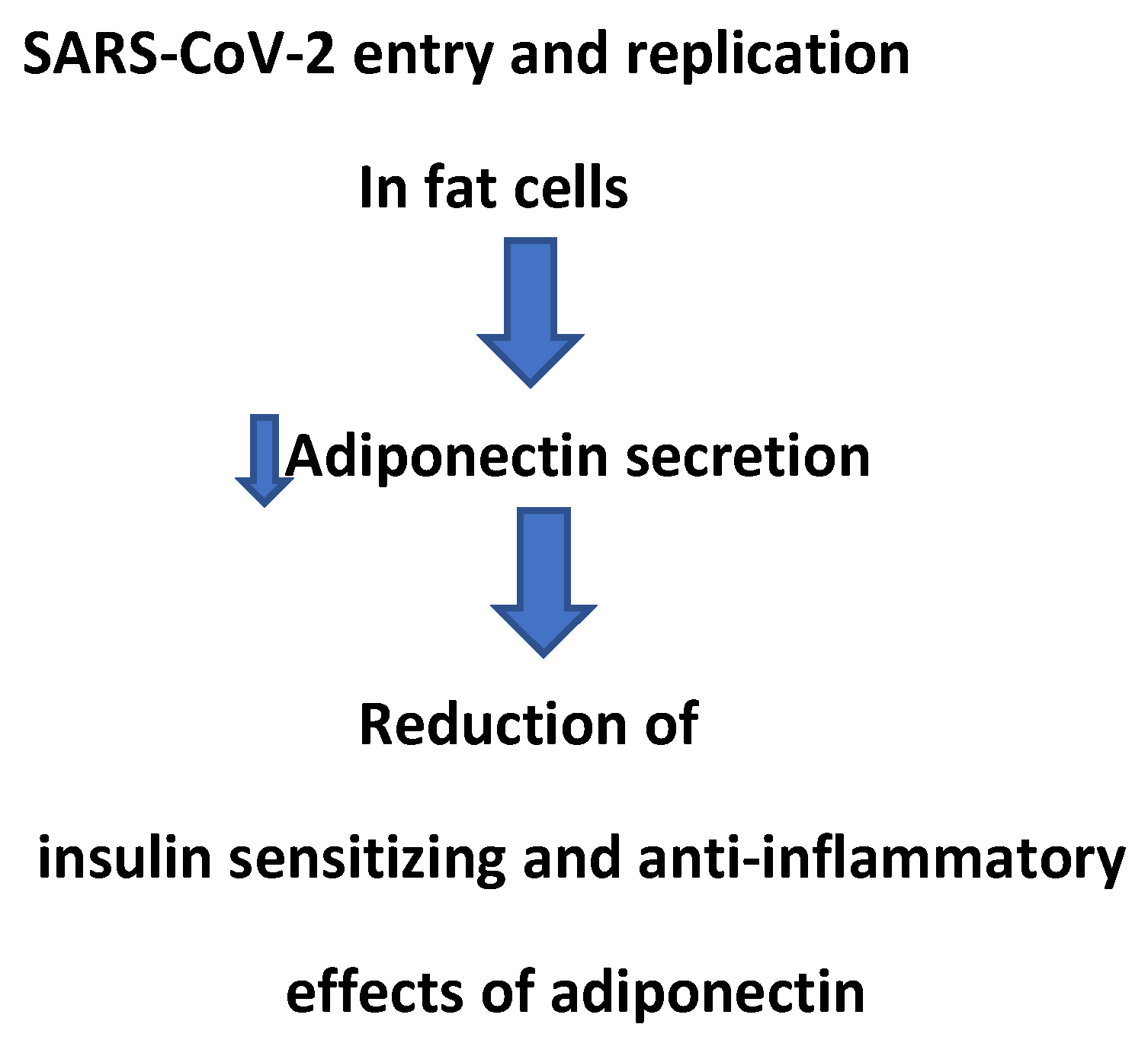
Adiponectin’s insulin-sensitizing effects in the liver and skeletal muscle are important, as they reduce gluconeogenesis and increase glucose uptake and utilization. Furthermore, it reduces inflammation in macrophages, endothelial cells, and muscles by reducing reactive oxygen species (ROS). This hormone also stimulates fatty acid oxidation in the liver and muscles through activation of AMP-activated protein kinase (AMPK) and peroxisome proliferator-activated receptor alpha (PPAR-α) [23].
2.2. COVID-19 and Stress Response
2.2.1. Cortisol
During the acute phase of the disease, cortisol levels serve as a key indicator of the severity of the infection. Patients with severe COVID-19 often have significantly higher blood cortisol levels than those with mild symptoms. This increase is a natural response to the extreme physical stress caused by the virus.
Studies have shown that very high cortisol concentrations on hospital admission are associated with an increased risk of death [24].
Figure 3.
COVID-19 can cause stress response with consequent increase in diabetogenic hormones (cortisol and catecholamines), direct pancreatic damage with consequent decrease in insulin secretion and metabolic reprogramming with consequent cytokine.
Figure 3.
COVID-19 can cause stress response with consequent increase in diabetogenic hormones (cortisol and catecholamines), direct pancreatic damage with consequent decrease in insulin secretion and metabolic reprogramming with consequent cytokine.
Adrenal insufficiency in critical cases plays a pivotal role in some patients in intensive care. In some cases, the adrenal glands can become "exhausted," leading to unusually low cortisol levels, which worsens the prognosis. Cortisol excess (hypercortisolemia) is a well-known cause of insulin resistance and hyperglycemia [25]. Patients with more severe infection symptoms or increased anxiety as a result of isolation experience greater stress and respond with excessive cortisol secretion, which can undoubtedly promote insulin resistance and hyperglycemia. Furthermore, excessive secretion of cortisol by the adrenal gland, together with the adrenal localization of the virus, can ultimately lead to severe adrenal insufficiency with worsening of clinical conditions and prognosis [26].
2.2.2. Catecholamines
The interaction between COVID-19, stress, and catecholamines (such as adrenaline and noradrenaline) represents a key mechanism in the severity of the disease and its long-term complications [27]. Catecholamines (epinephrine, norepinephrine, and dopamine) are hormones and neurotransmitters that serve as primary mediators of the biological response to stress. When the brain perceives a stressor, such as the perception and/or development of a highly fatal disease like COVID-19, the sympathetic nervous system and the adrenal medulla secrete catecholamines into the bloodstream and central nervous system to induce immediate physiological changes in response to the stress [28,29].
In addition to their known effects on the cardiovascular and respiratory systems, and on cognitive function, catecholamines affect metabolism, particularly by stimulating the breakdown of glycogen into glucose and the mobilization of fats to provide rapid energy. However, in the presence of insulin resistance associated with viral disease, the glucose formed is not adequately utilized by the insulin-sensitive organs and therefore remains in circulation, causing blood sugar levels to rise [30,31]. Therefore, the increase in catecholamine secretion resulting from stress in association with the presence of insulin resistance, both caused by COVID-19, certainly becomes a diabetogenic condition.
2.2.3. Growth Hormone
Stress has a complex, dual relationship with GH, depending on both the type and duration of stress. In fact, while acute physical and emotional stress can stimulate an immediate rise in GH secretion to mobilize energy, long duration and chronic stresses often suppress the GH/IGF-1 axis via high cortisol levels. Chronic stress produces an increase of neuropeptide Y, which can inhibit the release of GH releasing hormone, reducing overall GH secretion [32]. Therefore, COVID-19, according to the duration of stress produced by the disease can produce high GH or GH deficiency depending on whether it is an acute episode of stress or a long-lasting stress. However, since the stress associated with the pandemic situation is predominantly chronic, GH deficiency is more likely to occur, particularly in patient groups prone to more severe infection such as the frail elderly, diabetics, and obese patients [33]. Research suggests a possible link between the severity of the infection and decrease in GH levels, particularly in hospitalized patients [33]. Therefore, a diabetogenic action of GH in most of the COVID-19 patients is highly improbable.
2.3. Direct Pancreatic Damage
SARS-CoV-2 infection can directly affect the pancreas, potentially contributing to the development of new-onset diabetes or the worsening of a pre-existing condition [14,34]. SARS-CoV-2 mRNA has been found in pancreas islets of patients died for COVID-19 [35]. Evidence of microthrombi of the pancreatic venules, fibrosis and inflammation were found in autoptic pancreas examination of subjects died from COVID-19 [36]. COVID-19 vaccines are another possible cause of pancreatic damage. However, although rare acute pancreatic adverse events have been reported after vaccine injection, such as acute pancreatitis, it is not yet fully understood whether the damage causes temporary or permanent changes in the pancreas and glucose metabolism [37,38,39,40]. Rare cases of autoimmune pancreatitis have been reported in temporal association with COVID-19 vaccination, and the proposed mechanism for the development of this pathology is that of molecular mimicry, meaning antibodies generated against the SARS-CoV-2 spike protein can cross-react with the patient's own pancreatic cells, generating an immune response against them [41,42]. Regarding direct pancreatic damage during SARS-CoV-2 infection, the virus can enter pancreatic cells through specific receptors, causing structural and functional damage. Virus entry into cells occurs through the ACE2 and NRP1 receptors. The ACE2 receptor is expressed in both exocrine and endocrine cells (Langerhans cells) of the pancreas [43,44,45,46]. Some studies hypothesize that the NRP1 receptor also facilitates viral entry into β cells [47]. SARS-CoV-2 can infect and replicate in pancreatic β cells, resulting in a reduction in insulin secretion in response to glucose levels. Infection can directly lead to pancreatic cell death [14]. Furthermore, viral entry into cells reduces the expression of ACE2 on cell membranes through a receptor downregulation. This latter leads to a systemic RAAS imbalance resulting in excess angiotensin II, which can further impede insulin secretion [48,49,50].
The association between SARS-CoV-2 infection and autoimmune pancreatitis is a topic of growing interest, although cases reported in the literature are still quite limited [51,52].
It has been hypothesized that the infection may trigger an abnormal immune response in susceptible individuals, leading to the production of autoantibodies that attack pancreatic tissue. Cases of new-onset autoimmune diabetes or worsening of pre-existing conditions have been documented in conjunction with infection, suggesting significant functional damage to the organ.
2.4. Metabolic Reprogramming
SARS-CoV-2 infection induces significant metabolic reprogramming in host cells to increase viral replication and fuel the inflammatory response. By hijacking cellular pathways, the virus shifts host cellular energy production from efficient oxygen-based processes to rapid, but less efficient, methods that serve to construct essential "building blocks" for viral replication [53]. The virus can manipulate pancreatic cells and alter glycation processes, creating an environment favorable to its spread [54,55]. This interference is linked to the onset of diabetes or the worsening of pre-existing conditions. Under normal oxygenation, glucose is converted to pyruvate, producing large amounts of energy. However, under hypoxic conditions, pyruvate is converted directly to lactate, and hypoxia-inducible factor-1 shifts metabolism toward anaerobic glycolysis [56].
Infection induces significant changes in the management of cholesterol and fatty acids, essential for the formation of viral membranes, and of amino acids, essential for the synthesis of viral proteins.
There is a close relationship between the immune response and metabolic alternation. Metabolic reprogramming plays a key role in activating the "cytokine storm" and regulating innate and adaptive defenses. These metabolic changes and systemic inflammation can damage blood vessels, the heart, liver, and kidneys, also contributing to Long COVID symptoms such as chronic fatigue and "brain fog" [57,58]. Pre-existing metabolic diseases such as obesity and diabetes cause immune dysfunction that significantly increases the severity of the infection [59].
3. Discussion
Obesity, insulin resistance, and type 2 diabetes form a vicious cycle that significantly compromises the body's ability to fight infections. This interaction, often referred to as meta-inflammation (metabolic inflammation), alters both innate and adaptive immune responses [60,61]. Excess adipose tissue is not just a fat deposit, but an active endocrine organ that, in obesity, becomes dysfunctional. Fat cells release pro-inflammatory cytokines and free fatty acids that activate macrophages, leading to a state of low-grade inflammation. This inflammatory state blocks insulin signals, preventing cells (especially in the liver and muscles) from properly absorbing glucose [62]. When the pancreas can no longer produce enough insulin to compensate for this resistance, blood sugar levels steadily rise, leading to type 2 diabetes [63,64].
The link between these metabolic disorders and increased vulnerability to germs (bacteria, viruses, and fungi) is due to several biological mechanisms. Hyperglycemia (high blood sugar) and insulin resistance impair the function of white blood cells, particularly the ability of macrophages and neutrophils to migrate to the site of infection and destroy pathogens [65,66]. Pre-existing chronic inflammation "exhausts" the immune system, making it less effective in responding to new threats or, conversely, triggering excessive and harmful reactions (such as the "cytokine storm" observed in COVID-19) [67]. Insulin resistance and obesity, in particular visceral obesity, are strictly related, although it not yet well clear if obesity or insulin resistance appears first [68]. Unfortunately, both are increasing in developed and developing countries. In 2022, 43% of men and 44% of women aged 18 and over were overweight, and approximately 16% were frankly obese. Unfortunately, obesity is increasing, even in childhood [69]. The prevalence of insulin resistance is also steadily rising, and in the United States stands around 40%, depending on the regions examined [70]. Type 2 diabetes is the final stage of insulin resistance and, in fact, occurs when the pancreatic Langerhans cells are no longer able to secrete sufficient amounts of insulin to overcome insulin resistance and maintain blood glucose levels within a normal range. Insulin resistance precedes the development of diabetes by many years, even up to 15, simultaneously leading to a chronic increase in circulating insulin levels [63,69]. These chronically elevated insulin levels are the cause of many cardiovascular and other health problems [71]. Among other things, hyperinsulinemia and inflammation share a close, self-reinforcing bidirectional relationship that produces metabolic dysfunction. Chronically elevated insulin levels associated with insulin resistance trigger inflammation by increasing pro-inflammatory immune cells (macrophages) and oxidative stress. Inflammation, in turn, leads to a marked reduction in insulin sensitivity in sensitive organs and tissues, increasing insulin requirements [72]. Hyperinsulinemia associated with insulin resistance, with its chronic low-grade inflammation, is a significant risk factor that, when COVID-19 develops, creates a vicious cycle that, on the one hand, worsens insulin resistance and progresses toward worsening disease, resulting in a greater likelihood of death. SARS-CoV-2 infection can also cause new-onset insulin resistance, hyperglycemia, and even new-onset diabetes, even in individuals with no prior metabolic abnormalities [73]. The inflammation that develops following SARS-CoV-2 infection leads to a massive release of inflammatory mediators (including IL-6 and TNF-α), and the pre-existing chronic inflammation from hyperinsulinemia makes patients more susceptible to the development of a cytokine storm. Therefore, pre-existing insulin resistance, creating a state of chronic, low-grade inflammation, is a significant negative prognostic risk factor for severe COVID-19. SARS-CoV-2 infection worsens insulin resistance through direct pancreatic β-cell damage, stress induced hormonal changes (for example increased cortisol and catecholamine secretion) and overactive response [74,75].
For these reasons, it was hypothesized that metformin, an insulin-sensitizing antidiabetic drug, could be helpful in the treatment of COVID-19, particularly in obese subjects with insulin resistance. Unfortunately, however, a recent systematic review and meta-analysis of randomized controlled trials concluded that the current scientific evidence suggests there is no significant effect of metformin treatment on acute clinical outcomes in patients with non-severe COVID-19, while metformin may reduce the incidence of long COVID when used to treat this type of patient [76,77].
4. Conclusions
This review examines the most certain mechanisms that determine the vicious circle that is established between SARS-CoV-2 infection and alteration of glucose metabolism and, vice versa, the mechanisms that in obese or diabetic patients can determine worsening of the disease with worse outcomes. Insulin resistance associated with obesity and diabetes is a risk factor predisposing to worsening COVID-19. This is primarily due to the presence of chronic low-grade inflammation, which is aggravated and exacerbated to the point of producing a cytokine storm during infection. SARS-CoV-2 infection, on the other hand, can itself lead to the development of insulin resistance and diabetes even in individuals without predisposing metabolic disorders.
Funding
This research received no external funding.
Institutional Review Board Statement
Not applicable.
Informed Consent Statement
Not applicable.
Data Availability Statement
No new data were created or analyzed in this study.
Conflicts of Interest
The authors declare no conflict of interest.
References
- Alessandria, M.; Malatesta, G.; Di Palmo, G.; Cosentino, M.; Donzelli, A. All-cause mortality according to COVID-19 vaccination status: An analysis of the UK office for National statistics public data. F1000Res 2025, 13, 886. [Google Scholar] [CrossRef] [PubMed] [PubMed Central]
- Oliva, C.; Di Maddaloni, F.; Marcellusi, A.; Favato, G. Cross-regional variations of Covid-19 mortality in Italy: an ecological study. J. Public Health (Oxf) 2021, 43(2), 261–269. [Google Scholar] [CrossRef] [PubMed] [PubMed Central]
- Zhou, Y.; Chi, J.; Lv, W.; Wang, Y. Obesity and diabetes as high-risk factors for severe coronavirus disease 2019 (Covid-19). Diabetes Metab. Res. Rev. 2021, 37(2), e3377. [Google Scholar] [CrossRef] [PubMed] [PubMed Central]
- Holt, R.I.G.; Cockram, C.S.; Ma, R.C.W.; Luk, A.O.Y. Diabetes and infection: review of the epidemiology, mechanisms and principles of treatment. Diabetologia 2024, 67(7), 1168–1180. [Google Scholar] [CrossRef] [PubMed] [PubMed Central]
- Lima-Martínez, M.M.; Carrera Boada, C.; Madera-Silva, M.D.; Marín, W.; Contreras, M. COVID-19 and diabetes: A bidirectional relationship. Clin. Investig. Arterioscler.;Engl. Span. 2021, 33(3), 151–157. [Google Scholar] [CrossRef] [PubMed] [PubMed Central]
- Kim, S.H.; Arora, I.; Hsia, D.S.; Knowler, W.C.; LeBlanc, E.; Mylonakis, E.; Pratley, R.; Pittas, A.G. New-Onset Diabetes After COVID-19. J. Clin. Endocrinol. Metab. 2023, 108(11), e1164–e1174. [Google Scholar] [CrossRef] [PubMed] [PubMed Central]
- Bellia, C.; Andreadi, A.; D'Ippolito, I.; Scola, L.; Barraco, S.; Meloni, M.; Lauro, D.; Bellia, A. Prevalence and risk of new-onset diabetes mellitus after COVID-19: a systematic review and meta-analysis. Front Endocrinol. 2023, 14, 1215879. [Google Scholar] [CrossRef] [PubMed] [PubMed Central]
- Zhang, T.; Mei, Q.; Zhang, Z.; Walline, J.H.; Liu, Y.; Zhu, H.; Zhang, S. Risk for newly diagnosed diabetes after COVID-19: a systematic review and meta-analysis. BMC Med. 2022, 20(1), 444. [Google Scholar] [CrossRef] [PubMed] [PubMed Central]
- Michalakis, K.; Ilias, I. COVID-19 and hyperglycemia/diabetes. World J. Diabetes 2021, 12(5), 642–650. [Google Scholar] [CrossRef] [PubMed] [PubMed Central]
- Mehraeen, E.; Abbaspour, F.; Banach, M.; SeyedAlinaghi, S.; Zarebidoki, A.; Tamehri Zadeh, S.S. The prognostic significance of insulin resistance in COVID-19: a review. J. Diabetes Metab. Disord. 2024, 23(1), 305–322. [Google Scholar] [CrossRef] [PubMed] [PubMed Central]
- Fierro, P.; Martín, D.; Pariente-Rodrigo, E.; Pini, S.F.; Basterrechea, H.; Tobalina, M.; et al. Post-COVID-19 syndrome, inflammation and insulin resistance: a retrospective cohort study. Minerva Endocrinol. (Torino) 2025, 50(2), 172–181. [Google Scholar] [CrossRef] [PubMed]
- Ramezani, M.; Simani, L.; Karimialavijeh, E.; Rezaei, O.; Hajiesmaeili, M.; Pakdaman, H. The Role of Anxiety and Cortisol in Outcomes of Patients With Covid-19. Basic Clin. Neurosci. 2020, 11(2), 179–184. [Google Scholar] [CrossRef] [PubMed] [PubMed Central]
- Dammassa, V.; Voltini, M.; Colombo, C.N.J.; Siano, G.M.; Lo Coco, C.; Rizzo, V.; et al. Endogenous Catecholamine Release in COVID-19 Related Acute Respiratory Distress Syndrome: Link between Enhanced Sympathetic Stimulation, Cardiac Dysfunction and Outcome. J. Clin. Med. 2023, 12(4), 1557. [Google Scholar] [CrossRef]
- Mine, K.; Nagafuchi, S.; Mori, H.; Takahashi, H.; Anzai, K. SARS-CoV-2 Infection and Pancreatic β Cell Failure. Biology 2021, 11(1), 22. [Google Scholar] [CrossRef] [PubMed] [PubMed Central]
- Shen, T.; Wang, T. Metabolic Reprogramming in COVID-19. Int. J. Mol. Sci. 2021, 22(21), 11475. [Google Scholar] [CrossRef]
- Zhai, L.; Zhuang, M.; Wong, H.K.; Lin, C.; Ying, H.; Zhang, J.; et al. SARS-CoV-2 Spike Protein as a Target of the COVID-19 Vaccine Disrupts Insulin Signaling in Type 2 Diabetes. MedComm (2020) 2025, 6(11), e70469. [Google Scholar] [CrossRef] [PubMed] [PubMed Central]
- Man, D.E.; Andor, M.; Buda, V.; Kundnani, N.R.; Duda-Seiman, D.M.; Craciun, L.M.; et al. Insulin Resistance in Long COVID-19 Syndrome. J. Pers. Med. 2024, 14(9), 911. [Google Scholar] [CrossRef]
- Ramchandani, B.P.; Azmath, M.F.; Bendaram, S.R.; Mirza, F.S. A Sweet Paradox: Severe Insulin Resistance and Hyperglycemia in Asymptomatic COVID-19 Infection. Cureus 2023, 15, e40477. [Google Scholar] [CrossRef]
- Zhao, X.; Jiang, L.; Sun, W.; Tang, S.; Kang, X.; Gao, Q.; et al. Understanding the interplay between COVID-19 and diabetes: insights for the post-pandemic era. Front Endocrinol. 2025, 16, 1599969. [Google Scholar] [CrossRef] [PubMed] [PubMed Central]
- Reiterer, M.; Rajan, M.; Gómez-Banoy, N.; Lau, J.D.; Gomez-Escobar, L.G.; Ma, L.; et al. Hyperglycemia in acute COVID-19 is characterized by insulin resistance and adipose tissue infectivity by SARS-CoV-2. Cell. Metab. Erratum in: Cell Metab. 2021 Dec 7;33(12):2484. doi: 10.1016/j.cmet.2021.10.014. PMID: 34599884; PMCID: PMC8443335.). 2021, 33(11), 2174–2188.e5. [Google Scholar] [CrossRef] [PubMed]
- Martínez-Colón, G.J.; Ratnasiri, K.; Chen, H.; Jiang, S.; Zanley, E.; Rustagi, A.; Verma, R.; et al. SARS-CoV-2 infection drives an inflammatory response in human adipose tissue through infection of adipocytes and macrophages. Sci. Transl. Med. 2022, 14(674), eabm9151. [Google Scholar] [CrossRef] [PubMed] [PubMed Central]
- Flikweert, A.W.; Kobold, A.C.M.; van der Sar-van der Brugge, S.; Heeringa, P.; Rodenhuis-Zybert, I.A.; Bijzet, J.; et al. Circulating adipokine levels and COVID-19 severity in hospitalized patients. Int. J. Obes. (Lond) 2023, 47(2), 126–137. [Google Scholar] [CrossRef] [PubMed] [PubMed Central]
- Yanai, H.; Yoshida, H. Beneficial Effects of Adiponectin on Glucose and Lipid Metabolism and Atherosclerotic Progression: Mechanisms and Perspectives. Int. J. Mol. Sci. 2019, 20(5), 1190. [Google Scholar] [CrossRef]
- Tan, T.; Khoo, B.; Mills, E.G.; Phylactou, M.; Patel, B.; Eng, P.C.; et al. Association between high serum total cortisol concentrations and mortality from COVID-19. Lancet Diabetes Endocrinol. 2020, 8(8), 659–660. [Google Scholar] [CrossRef]
- Joseph, J.J.; Golden, S.H. Cortisol dysregulation: the bidirectional link between stress, depression, and type 2 diabetes mellitus. Ann. N Y Acad. Sci. 2017, 1391(1), 20–34. [Google Scholar] [CrossRef] [PubMed] [PubMed Central]
- Durcan, E.; Hacioglu, A.; Karaca, Z.; Unluhizarci, K.; Gonen, M.S.; Kelestimur, F. Hypothalamic-Pituitary Axis Function and Adrenal Insufficiency in COVID-19 Patients. Neuroimmunomodulation 2023, 30(1), 215–225. [Google Scholar] [CrossRef] [PubMed]
- Hyoju, S.K. Modification of Sympathetic and Hypothalamic Responses to Prevent Complications of COVID-19: “Dam and Wall Concept”. Stresses 2023, 3(1), 153–166. [Google Scholar] [CrossRef]
- Goldstein, D.S. Catecholamines and stress. Endocr. Regul. 2003, 37(2), 69–80. [Google Scholar] [PubMed]
- Sabban, E.L. Catecholamines and Stress. In Stress - From Molecules to Behavior; Soreq, H., Friedman, A., Kaufer, D., Eds.; 2009. [Google Scholar] [CrossRef]
- Porte, D., Jr. A receptor mechanism for the inhibition of insulin release by epinephrine in man. J. Clin. Invest. 1967, 46(1), 86–94. [Google Scholar] [CrossRef] [PubMed] [PubMed Central]
- Barth, E.; Albuszies, G.; Baumgart, K.; Matejovic, M.; Wachter, U.; Vogt, J.; Radermacher, P.; Calzia, E. Glucose metabolism and catecholamines. Crit. Care Med. 2007, 35((9) Suppl, S508–18. [Google Scholar] [CrossRef]
- Jezova, D.; Radikova, Z.; Vigas, M. Growth hormone response to different consecutive stress stimuli in healthy men: is there any difference? Stress 2007, 10(2), 205–11. [Google Scholar] [CrossRef] [PubMed]
- Baykan, E.K.; Baykan, A.R.; Utlu, M.; Deve, E.; Yildiz, F.; Birdal, C.; et al. Growth hormone level in COVID-19 patients. North Clin. Istanb. 2022, 9(5), 470–475. [Google Scholar] [CrossRef] [PubMed] [PubMed Central]
- Deng, W.; Bao, L.; Song, Z.; Zhang, L.; Yu, P.; Xu, Y.; et al. Infection with SARS-CoV-2 can cause pancreatic impairment. Signal Transduct. Target Ther. 2024, 9(1), 98. [Google Scholar] [CrossRef] [PubMed] [PubMed Central]
- Steenblock, C.; Richter, S.; Berger, I.; Barovic, M.; Schmid, J.; Schubert, U.; et al. Viral infiltration of pancreatic islets in patients with COVID-19. Nat. Commun. 2021, 12(1), 3534. [Google Scholar] [CrossRef] [PubMed] [PubMed Central]
- Qadir, M.M.F.; Bhondeley, M.; Beatty, W.; Gaupp, D.D.; Doyle-Meyers, L.A.; Fischer, T.; et al. SARS-CoV-2 infection of the pancreas promotes thrombofibrosis and is associated with new-onset diabetes. JCI Insight 2021, 6(16), e151551. [Google Scholar] [CrossRef] [PubMed] [PubMed Central]
- Cieślewicz, A.; Dudek, M.; Krela-Kaźmierczak, I.; Jabłecka, A.; Lesiak, M.; Korzeniowska, K. Pancreatic Injury after COVID-19 Vaccine-A Case Report. Vaccines 2021, 9(6), 576. [Google Scholar] [CrossRef] [PubMed] [PubMed Central]
- Ozaka, S.; Kodera, T.; Ariki, S.; Kobayashi, T.; Murakami, K. Acute pancreatitis soon after COVID-19 vaccination: A case report. Medicine 2022, 101(2), e28471. [Google Scholar] [CrossRef] [PubMed] [PubMed Central]
- Parkash, O.; Sharko, A.; Farooqi, A.; Ying, G.W.; Sura, P. Acute Pancreatitis: A Possible Side Effect of COVID-19 Vaccine. Cureus 2021, 13(4), e14741. [Google Scholar] [CrossRef] [PubMed] [PubMed Central]
- N, A.M.; Saleh, A.M.; Khalid, A.; Alshaya, A.K.; Alanazi, S.M.M. Systemic lupus erythematosus with acute pancreatitis and vasculitic rash following COVID-19 vaccine: a case report and literature review. Clin. Rheumatol. 2022, 41(5), 1577–1582. [Google Scholar] [CrossRef] [PubMed] [PubMed Central]
- Becker, E.C.; Siddique, O.; Kapur, D.; Patel, K.; Mehendiratta, V. Type 1 Autoimmune Pancreatitis Unmasked by COVID-19 Vaccine. ACG Case Rep. J. 2023, 10(1), e00950. [Google Scholar] [CrossRef] [PubMed] [PubMed Central]
- Chahed, F.; Ben Fadhel, N.; Maamri, K.; Abdelali, M.; Ben Romdhane, H.; Chadli, Z.; et al. An unusual occurrence of autoimmune pancreatitis after gam-Covid-Vac (Sputnik V): A case report and literature review. Br. J. Clin. Pharmacol. 2023, 89(9), 2915–2919. [Google Scholar] [CrossRef] [PubMed]
- Khreefa, Z.; Barbier, M.T.; Koksal, A.R.; Love, G.; Del Valle, L. Pathogenesis and Mechanisms of SARS-CoV-2 Infection in the Intestine, Liver, and Pancreas. Cells 2023, 12(2), 262. [Google Scholar] [CrossRef] [PubMed] [PubMed Central]
- Taneera, J.; El-Huneidi, W.; Hamad, M.; Mohammed, A.K.; Elaraby, E.; Hachim, M.Y. Expression Profile of SARS-CoV-2 Host Receptors in Human Pancreatic Islets Revealed Upregulation of ACE2 in Diabetic Donors. Biology 2020, 9(8), 215. [Google Scholar] [CrossRef] [PubMed] [PubMed Central]
- Steenblock, C.; Toepfner, N.; Beuschlein, F.; Perakakis, N.; Mohan Anjana, R.; Mohan, V.; et al. SARS-CoV-2 infection and its effects on the endocrine system. Best. Pract. Res. Clin. Endocrinol. Metab. 2023, 37(4), 101761. [Google Scholar] [CrossRef] [PubMed] [PubMed Central]
- Hollstein, T.; Schulte, D.M.; Schulz, J.; Glück, A.; Ziegler, A.G.; Bonifacio, E.; et al. Autoantibody-negative insulin-dependent diabetes mellitus after SARS-CoV-2 infection: a case report. Nat. Metab. 2020, 2(10), 1021–1024. [Google Scholar] [CrossRef] [PubMed]
- Szlachcic, W.J.; Dabrowska, A.; Milewska, A.; Ziojla, N.; Blaszczyk, K.; Barreto-Duran, E.; et al. SARS-CoV-2 infects an in vitro model of the human developing pancreas through endocytosis. iScience 2022, 25(7), 104594. [Google Scholar] [CrossRef] [PubMed] [PubMed Central]
- Alves, A.M.; Yvamoto, E.Y.; Marzinotto, M.A.N.; Teixeira, A.C.S.; Carrilho, F.J. SARS-CoV-2 leading to acute pancreatitis: an unusual presentation. Braz. J. Infect. Dis. 2020, 24(6), 561–564. [Google Scholar] [CrossRef] [PubMed] [PubMed Central]
- Gheblawi, M.; Wang, K.; Viveiros, A.; Nguyen, Q.; Zhong, J.C.; Turner, A.J.; et al. Angiotensin-Converting Enzyme 2: SARS-CoV-2 Receptor and Regulator of the Renin-Angiotensin System: Celebrating the 20th Anniversary of the Discovery of ACE2. Circ. Res. 2020, 126(10), 1456–1474. [Google Scholar] [CrossRef] [PubMed] [PubMed Central]
- Muniyappa, R.; Yavuz, S. Metabolic actions of angiotensin II and insulin: a microvascular endothelial balancing act. Mol. Cell. Endocrinol. 2013, 378(1-2), 59–69. [Google Scholar] [CrossRef] [PubMed] [PubMed Central]
- Liaquat, H.; Shupp, B.; Kapoor, S.; Matin, A. High-Dose Prednisone for Treatment of Autoimmune Pancreatitis in a Patient with Coronavirus Disease 2019 (COVID-19) due to Infection with Severe Acute Respiratory Syndrome Coronavirus 2 (SARS-CoV-2). Am. J. Case Rep. 2020, 21, e926475. [Google Scholar] [CrossRef] [PubMed] [PubMed Central]
- Chang, R.; Yen-Ting Chen, T.; Wang, S.I.; Hung, Y.M.; Chen, H.Y.; Wei, C.J. Risk of autoimmune diseases in patients with COVID-19: A retrospective cohort study. EClinicalMedicine 2023, 56, 101783. [Google Scholar] [CrossRef] [PubMed] [PubMed Central]
- Camps, J.; Iftimie, S.; Jiménez-Franco, A.; Castro, A.; Joven, J. Metabolic Reprogramming in Respiratory Viral Infections: A Focus on SARS-CoV-2, Influenza, and Respiratory Syncytial Virus. Biomolecules 2025, 15(7), 1027. [Google Scholar] [CrossRef]
- Moolamall, S.T.R.; Balasubramanian, R.; Chauhan, R.; Priyakumar, U.D.; Vinod, P.K. Host metabolic reprogramming in response to SARS-CoV-2 infection: A systems biology approach. Microb. Pathog. 2021, 158, 105114. [Google Scholar] [CrossRef] [PubMed] [PubMed Central]
- Martínez-Gómez, L.E.; Ibarra-González, I.; Fernández-Lainez, C.; Tusie, T.; Moreno-Macías, H.; Martinez-Armenta, C.; et al. Suarez Mex-Gen-COVID Initiative Group. Metabolic Reprogramming in SARS-CoV-2 Infection Impacts the Outcome of COVID-19 Patients. Front Immunol. 2022, 13, 936106. [Google Scholar] [CrossRef] [PubMed] [PubMed Central]
- Shen, T.; Wang, T. Metabolic Reprogramming in COVID-19. Int. J. Mol. Sci. 2021, 22(21), 11475. [Google Scholar] [CrossRef] [PubMed] [PubMed Central]
- Allen, C.N.S.; Santerre, M.; Arjona, S.P.; Ghaleb, L.J.; Herzi, M.; Llewellyn, M.D.; et al. SARS-CoV-2 Causes Lung Inflammation through Metabolic Reprogramming and RAGE. Viruses 2022, 14(5), 983. [Google Scholar] [CrossRef] [PubMed] [PubMed Central]
- Rudiansyah, M.; Jasim, S.A.; Mohammad Pour, Z.G.; Athar, S.S.; Jeda, A.S.; Doewes, R.I.; et al. Coronavirus disease 2019 (COVID-19) update: From metabolic reprogramming to immunometabolism. J. Med. Virol. 2022, 94(10), 4611–4627. [Google Scholar] [CrossRef] [PubMed] [PubMed Central]
- Holly, J.M.P.; Biernacka, K.; Maskell, N.; Perks, C.M. Obesity, Diabetes and COVID-19: An Infectious Disease Spreading From the East Collides With the Consequences of an Unhealthy Western Lifestyle. Front Endocrinol. 2020, 11, 582870. [Google Scholar] [CrossRef] [PubMed] [PubMed Central]
- Wondmkun, Y.T. Obesity, Insulin Resistance, and Type 2 Diabetes: Associations and Therapeutic Implications. Diabetes Metab. Syndr. Obes. 2020, 13, 3611–3616. [Google Scholar] [CrossRef] [PubMed] [PubMed Central]
- Chauhan, P.; Saha, B. Metabolic regulation of infection and inflammation. Cytokine 2018, 112, 1–11. [Google Scholar] [CrossRef] [PubMed]
- Pugliese, G.; Liccardi, A.; Graziadio, C.; Barrea, L.; Muscogiuri, G.; Colao, A. Obesity and infectious diseases: pathophysiology and epidemiology of a double pandemic condition. Int. J. Obes. (Lond) 2022, 46(3), 449–465. [Google Scholar] [CrossRef] [PubMed]
- Wondmkun, Y.T. Obesity, Insulin Resistance, and Type 2 Diabetes: Associations and Therapeutic Implications. Diabetes Metab. Syndr. Obes. 2020, 13, 3611–3616. [Google Scholar] [CrossRef] [PubMed] [PubMed Central]
- Lebovitz, H.E. Insulin resistance: definition and consequences. Exp. Clin. Endocrinol. Diabetes 2001, 109 Suppl 2, S135–48. [Google Scholar] [CrossRef] [PubMed]
- Deng, H.P.; Chai, J.K. The effects and mechanisms of insulin on systemic inflammatory response and immune cells in severe trauma, burn injury, and sepsis. Int. Immunopharmacol. 2009, 9(11), 1251–9. [Google Scholar] [CrossRef] [PubMed]
- Weinberg Sibony, R.; Segev, O.; Dor, S.; Raz, I. Overview of oxidative stress and inflammation in diabetes. J. Diabetes 2024, 16(10), e70014. [Google Scholar] [CrossRef] [PubMed] [PubMed Central]
- Miossec, P. Understanding the cytokine storm during COVID-19: Contribution of preexisting chronic inflammation. Eur. J. Rheumatol. 2020, 7 (Suppl 2), S97–S98. [Google Scholar] [CrossRef] [PubMed] [PubMed Central]
- Ros Pérez, M.; Medina-Gómez, G. Obesidad, adipogénesis y resistencia a la insulina [Obesity, adipogenesis and insulin resistance]. Endocrinol. Nutr.;Spanish 2011, 58(7), 360–9. [Google Scholar] [CrossRef] [PubMed]
- World Health Organization. Obesity and overweight. 8 December 2025. Available online: https://www.who.int/news-room/fact-sheets/detail/obesity-and-overweight (accessed on 23 February 2026).
- Freeman, A.M.; Acevedo, L.A.; Pennings, N. Insulin Resistance. In StatPearls [Internet]; StatPearls Publishing: Treasure Island (FL), 17 Aug 2023. [Google Scholar] [PubMed]
- Fazio, S.; Pucci, G.; Tibullo, L.; Fazio, V.; Mercurio, V. Editorial: Addressing insulin resistance and hyperinsulinemia for cardiovascular disease prevention. Front. Cardiovasc. Med. 2026, 13, 1802226. [Google Scholar] [CrossRef] [PubMed]
- Zhang, A.M.Y.; Wellber, E.A.; Kopp, J.L.; Johnson, J.D. Hyperinsulinemia in Obesity, Inflammation, and Cancer. Diabetes Metab. J. Erratum in: Diabetes Metab J. 2021 Jul;45(4):622. doi: 10.4093/dmj.2021.0131. PMID: 33775061; PMCID: PMC8164941. 2021, 45(3), 285–311. [Google Scholar] [CrossRef]
- Liu, Y.; Lou, X. The Bidirectional Association Between Metabolic Syndrome and Long-COVID-19. Diabetes Metab. Syndr. Obes. 2024, 17, 3697–3710. [Google Scholar] [CrossRef] [PubMed] [PubMed Central]
- Bigdelou, B.; Sepand, M.R.; Najafikhoshnoo, S.; Negrete, J.A.T.; Sharaf, M.; Ho, J.Q.; et al. COVID-19 and Preexisting Comorbidities: Risks, Synergies, and Clinical Outcomes. Front Immunol. 2022, 13, 890517. [Google Scholar] [CrossRef] [PubMed] [PubMed Central]
- Gangadharan, C.; Ahluwalia, R.; Sigamani, A. Diabetes and COVID-19: Role of insulin resistance as a risk factor for COVID-19 severity. World J. Diabetes 2021, 12(9), 1550–1562. [Google Scholar] [CrossRef] [PubMed] [PubMed Central]
- Chowdhury, S.R.; Islam, N.; Zhou, Q.; Hasan, M.K.; Chowdhury, M.R.; Siemieniuk, R.A.; et al. Metformin for covid-19: systematic review and meta-analysis of randomised controlled trials. BMJ Med. 2025, 4(1), e001126. [Google Scholar] [CrossRef] [PubMed] [PubMed Central]
- EMJ European Medical Journal. Metformin Reduces Long COVID Risk After Acute Infection - EMJ. 6 Feb 2026. Available online: https://www.emjreviews.com/microbiology-infectious-disease/news/metformin-reduces-long-covid-risk-after-acute-infection/ (accessed on 20 March 2026).
Disclaimer/Publisher’s Note: The statements, opinions and data contained in all publications are solely those of the individual author(s) and contributor(s) and not of MDPI and/or the editor(s). MDPI and/or the editor(s) disclaim responsibility for any injury to people or property resulting from any ideas, methods, instructions or products referred to in the content. |
© 2026 by the authors. Licensee MDPI, Basel, Switzerland. This article is an open access article distributed under the terms and conditions of the Creative Commons Attribution (CC BY) license (http://creativecommons.org/licenses/by/4.0/).
Copyright: This open access article is published under a Creative Commons CC BY 4.0 license, which permit the free download, distribution, and reuse, provided that the author and preprint are cited in any reuse.


