

Submitted:
17 April 2026
Posted:
17 April 2026
You are already at the latest version
Abstract
The purpose of this investigation was to analyze the effect of financial structure and fruit-fly control on the development of Small and Medium Enterprises (SMEs) of citrus in the Central Jungle of Peru. Using a quantitative design and a balanced sample of 54 observations, the analysis estimates complementary linear models with interaction terms and restricted cubic spline specifications to capture direct, synergistic, and nonlinear effects. The baseline results show that both financing structure and fruit-fly control exert positive and statistically significant effects on business growth. The interaction term is also positive and significant, indicating that the returns to improved financing rise when phytosanitary management is stronger, and that effective pest control becomes more productive when firms operate with more stable and diversified financial resources. Flexible spline estimates further reveal that these relationships are not constant across the explanatory range, but vary according to firms’ positions within the financial and technological space. Overall, the findings suggest that sustainable growth in citrus SMEs depends on the simultaneous strengthening of rural finance and phytosanitary capabilities under conditions of production risk and market constraints. The study contributes to the agricultural development literature by linking crop protection, farm-level managerial capacity, and enterprise performance in a single empirical framework.
Keywords:
SME growth
; financing structure
; fruit-fly control
; agricultural economics
; citrus production
1. Introduction
Small and medium-sized enterprises (SMEs) in the agricultural sector play a fundamental role in economic development, employment generation, and food security in emerging economies [1]. In Latin America, and particularly in Peru, citrus-producing SMEs constitute a strategic component of regional value chains, contributing significantly to rural income, export potential, and local market stability [2]. However, despite their economic relevance, these enterprises continue to face structural limitations that constrain their long-term growth and competitiveness [3].
One of the most persistent challenges affecting agricultural SMEs is restricted access to adequate financial resources [4]. The financing structure of agricultural SMEs is correlated with their productivity, level of innovation and sales [5]. Previous studies have shown that the firm’s financial structure has a positive impact on its productivity, R&D and sales. Thus, it is important to study the financial structure in developing countries like Pakistan, which faces a lot of challenges including the poor institutional environment and low financial literacy of the entrepreneurs [6].
In tropical and subtropical regions phytosanitary risks represent a serious threat for agriculture. Fruit fly pests, for example, represent a very high threat for citrus crops [7]. In fact, the presence of these insects determines a decrease in the production of the fruit, a decrease in fruit quality and a closure of some foreign markets due to stricter phytosanitary controls. In Peru’s Central Jungle, where climatic conditions favor pest proliferation, insufficient pest management systems exacerbate production losses and income volatility for SMEs [8].
Although financial constraints and phytosanitary challenges have been widely studied independently, empirical research integrating both dimensions remain limited [9]. Most existing studies analyze access to finance or pest control as isolated determinants of firm performance, overlooking their combined and interactive effects on business growth [10]. This fragmentation restricts a comprehensive understanding of how financial capacity conditions firms’ ability to implement effective pest management strategies and, consequently, achieve sustainable growth [11].
From a theoretical perspective, this research is grounded in resource-based theory and financial constraint theory, which emphasize that organizational resources and financial structures determine firms’ strategic capabilities and competitive advantages [12]. Adequate financing enables investment in preventive technologies, training programs, and monitoring systems that mitigate biological risks, while deficient financial structures limit adaptive capacity and resilience [13].
In this context, the Central Jungle of Peru constitutes a relevant empirical setting, characterized by high agricultural potential, growing SME participation, and persistent institutional and environmental challenges [14]. Citrus-producing enterprises in this region operate under conditions of market uncertainty, climatic variability, and financial vulnerability, making them an appropriate case for multivariate analysis [15].
The purpose of this study is to analyze multivariately the financial structure and fruit fly pest control variables that have an impact on the growth of Small and Medium Enterprises, SMEs, that cultivate citrus fruits in Central Jungle, Peru. This research, using quantitative methodology with multivariate statistical analysis, identifies the direct and indirect positive and/or negative relations that exist in SMEs between the financial variables, the pest control variables and the performance variables.
This study contributes to the literature on the impact of financial and phytosanitary risk factors on the growth of agricultural SMEs in Cameroon. The contributions of this study are threefold. First, this is the first empirical study to provide a comprehensive investigation of the interlinkages between financial and phytosanitary risk factors affecting the performance of agricultural SMEs. Second, the study introduces for the first time a methodology that uses multivariate analysis to identify the relationships between financial and phytosanitary risk factors. Third, the study has significant policy, practical and strategic implications for policymakers, banks and agricultural development agencies seeking to strengthen the competitiveness and sustainability of SMEs in the agricultural sector.
2. Theoretical Framework
2.1. Financing Structure and SME Growth
The financing structure of small and medium-sized enterprises reflects the composition and cost of internal and external financial resources used to support business operations and investments [16]. The theory of financial constraint argue that firms are constrained by the access to the banking system, high interest rates and insufficient collateral for investment and research and development activities [17]. Financial constraint is evident in the agricultural SMEs in developing countries, as firms in the agricultural sector experience a high degree of income instability and uncertainty in relation to their production activities, which make them to be credit constrained [18].
Applying capital structure theory, firms have to balance their internal capital, debt capital and external capital in order to achieve optimal risk and performance [19]. The majority of small and medium scale enterprises (SMEs) in the agricultural sector are still highly dependent on alternative forms of finance such as; informal financing, short term loans and personal savings, which disrupts long term planning and adoption of technology [20]. A literature review carried out indicated that firms that have a diversified and stable capital structure experience improved performance, better risk management and sustainability.
Access to finance for SMEs improves their competitive abilities and therefore enables them to participate in the value chains. Investments in equipment, storage facilities, quality certification and technology are some of the opportunities that SMEs have when they have access to finance. A finance system that is weak leaves SMEs open to shocks from market price volatility, weather and pests.
2.2. Fruit-Fly Pest Control and Agricultural Performance
Phytosanitary management is one of the factors that affect agricultural production and productivity as well as agricultural market access. Fruit flies are considered one of the most important pests of citrus worldwide, causing direct damage to the host plant and also indirect damage due to the phytosanitary measures that are imposed to citrus growing countries [21].
Integrated Pest Management (IPM) theory emphasizes the coordinated use of biological, chemical, cultural, and technological control strategies to minimize pest populations while reducing environmental impacts [22]. Effective fruit-fly control requires continuous monitoring, technical knowledge, specialized inputs, and collective action among producers [23].
In SMEs with restricted resources a lack of sufficient financial means for investment in pest control is quite common, which may lead to unplanned and less than optimal control measures resulting in a generally lower level of pest control and more frequent pest outbreaks. Only larger farm resources can secure more planned and creative methods of pest control such as through pest control networks, using new techniques (for example pheromone traps or apps in precision farming) etc. Thus, the level of pest control management is determined not only by technological possibilities, but also by the financial and managerial resources available on a farm.
2.3. Interaction Between Financing and Pest Management
Recent theoretical developments highlight the interdependence between financial resources and risk management strategies in agricultural enterprises [24,25]. According to dynamic capability theory, firms’ ability to integrate, reconfigure, and deploy resources determines their capacity to respond to environmental threats and market opportunities [26].
Adequate financing enhances SMEs’ adaptive capacity by facilitating investments in training, extension services, and preventive infrastructure [27]. This, in turn, strengthens pest control systems and reduces production uncertainty. Conversely, persistent financial constraints weaken learning processes and limit participation in cooperative control schemes.
The mutual influence of the factors affecting the financial structure of the agricultural firm and pest control methods has a lasting impact on the firm’s performance. The financial stability of the firm is necessary for the biological control of the pest risk to be adequate, and pest control has a positive impact on the firm’s profitability, thereby increasing its creditworthiness and generating a virtuous development cycle.
2.4. SME Growth and Performance in Agricultural Contexts
SME growth in agricultural sectors is a multidimensional phenomenon encompassing increases in production volume, sales revenue, market diversification, technological adoption, and organizational maturity [28]. Growth theory suggests that firms expand when internal capabilities and external opportunities are aligned [29].
In rural economies, growth is strongly conditioned by institutional support, infrastructure quality, and access to extension services [30]. For citrus-producing SMEs, growth depends not only on market demand but also on compliance with sanitary standards and financial sustainability [31].
Studies on agribusiness performance indicate that enterprises combining sound financial management with effective phytosanitary practices exhibit higher survival rates, stronger export potential, and greater capacity for value addition.
2.5. Conceptual Model
Based on the theoretical foundations discussed, this study proposes an integrated conceptual model in which financing structure and fruit-fly pest control jointly influence SME growth [32]. Financing structure is expected to exert both direct effects on business performance and indirect effects through its impact on pest management capacity.
Pest control practices are conceptualized as mediating mechanisms linking financial resources to growth outcomes. Additionally, environmental and institutional conditions may moderate these relationships, shaping firms’ adaptive responses [33]. This framework provides a basis for examining complex interactions among financial, biological, and organizational factors within agricultural SMEs in Peru’s Central Jungle.
3. Literature Review
3.1. Financing Constraints and Agricultural SME Development
Previous research has consistently emphasized that financial constraints represent one of the main barriers to agricultural SME development in emerging economies [34]. Limited access to formal banking systems, high transaction costs, and weak institutional support restrict firms’ ability to accumulate productive capital and expand market participation [35]. As a result, many rural enterprises rely on informal credit mechanisms, which often entail higher risks and limited scalability.
Studies have shown that enterprises with stable and diversified financing sources tend to exhibit higher productivity levels, stronger technological adoption, and improved resilience to external shocks [36]. In contrast, financially constrained firms frequently postpone investment decisions, reduce maintenance expenditures, and operate below optimal capacity [37]. These limitations hinder long-term competitiveness and increase vulnerability to market volatility and climate-related disruptions.
Moreover, financial literacy and managerial capabilities have been identified as critical mediating factors between access to finance and business performance. Entrepreneurs with stronger financial management skills are more likely to negotiate favorable credit conditions, allocate resources efficiently, and implement strategic planning processes that support sustainable growth.
3.2. Phytosanitary Risks and Citrus Production Performance
Phytosanitary risks remain a persistent threat to agricultural productivity, particularly in tropical and subtropical regions [38]. Fruit-fly infestations have been associated with significant yield losses, reduced product quality, and restricted access to international markets. These biological risks impose both direct economic costs and indirect reputational damages on producers and exporters [39].
Research indicates that preventive and integrated pest management strategies are more effective than reactive control measures. Continuous monitoring, early detection systems, and coordinated regional actions contribute to maintaining pest populations below economic damage thresholds. However, the adoption of such practices varies substantially across enterprises, depending on financial capacity, technical knowledge, and institutional support [40].
Small-scale producers often face difficulties in accessing specialized inputs, diagnostic services, and extension programs [41]. Consequently, pest control efforts are frequently fragmented and inconsistent, leading to recurrent infestations and production instability. Conversely, enterprises with better access to resources tend to implement systematic and preventive management approaches that enhance long-term productivity.
3.3. Integrated Perspectives on Finance, Risk Management, and Growth
Recent literature has increasingly recognized the need for integrated analytical frameworks that capture the interaction between financial resources, risk management practices, and business performance [42]. Isolated analyses of financing or phytosanitary management fail to account for the cumulative and reinforcing effects that emerge when these dimensions are jointly considered.
Financial resources play a central role in enabling firms to invest in preventive infrastructure, staff training, and technological innovations that reduce biological and operational risks [43]. At the same time, effective risk management improves income stability and strengthens firms’ credit profiles, facilitating access to future financing. This reciprocal relationship contributes to the formation of virtuous cycles of growth and resilience.
Empirical evidence suggests that enterprises capable of aligning financial strategies with operational risk management achieve superior performance outcomes [44]. These firms exhibit greater adaptability to environmental changes, stronger participation in value chains, and higher capacity for value creation. In contrast, enterprises that fail to integrate these dimensions remain trapped in low-investment and high-risk equilibria.
3.4. Innovation, Market Access, and Competitive Positioning
Innovation and market integration have been identified as key drivers of agricultural SME competitiveness [45]. Technological adoption, product differentiation, and compliance with quality standards facilitate entry into high-value domestic and international markets [46]. However, innovation processes in rural enterprises are often constrained by limited financial resources and insufficient technical support.
Market access is closely linked to compliance with phytosanitary regulations and certification requirements [47]. Enterprises that consistently meet sanitary standards are more likely to establish stable commercial relationships and obtain premium prices [48]. Conversely, recurrent sanitary problems undermine buyer confidence and restrict expansion opportunities.
The literature indicates that financial investment in innovation and quality assurance systems enhances firms’ reputational capital and strengthens their bargaining power within value chains. These factors contribute to long-term sustainability and growth potential.
3.5. Research Gap and Contribution
Despite the growing body of research on agricultural finance, pest management, and SME performance, limited attention has been given to their combined and interactive effects. Most existing studies analyze these dimensions separately, overlooking the structural interdependencies that shape business outcomes in complex rural environments.
In particular, empirical evidence on how financing structures condition pest management capacity and influence growth trajectories in citrus-producing SMEs remains scarce. Furthermore, few studies apply multivariate analytical approaches capable of capturing mediating and moderating mechanisms within integrated models.
This study addresses these gaps by examining the multivariate relationships among financing structure, fruit-fly pest control, and SME growth in Peru’s Central Jungle. By adopting an integrated analytical perspective, the research contributes to a more comprehensive understanding of agricultural enterprise development in emerging economies.
4. Methodology
4.1. Sample
The study sample consisted of 54 observations. Data were gathered using a structured questionnaire, in which the items associated with the study constructs were measured on a five-point Likert-type scale. This methodological design aligns with recent empirical research in Peru that has employed quantitative, cross-sectional, and non-experimental approaches based on structured questionnaires and multivariate statistical techniques [49].
Table 1 presents a clear conceptual and operational definition of the study’s central variables. The dependent variable, business growth, is conceived as a multidimensional phenomenon that is not limited to increased sales, but also incorporates market expansion, productivity improvements, adoption of innovations, and organizational strengthening. This delimitation is methodologically sound because it allows us to capture business growth as a comprehensive process of economic and managerial consolidation of citrus SMEs.
Regarding independent variables, the financing structure is operationalized through dimensions that encompass both the availability of resources and their quality and sustainability. Access to financing, financial cost, diversification of sources, resource stability, and financial literacy constitute a broad approach that links business performance with the ability to manage capital efficiently. This suggests that growth depends not only on obtaining credit but also on using it under viable conditions and with adequate financial skills.
Fruit fly control, for its part, is approached from a technical and preventative perspective, integrating actions for prevention, monitoring, treatment, training, and coordination. This structure demonstrates that pest management is not an isolated event, but rather a continuous system of productive intervention and institutional collaboration. Analytically, the table suggests that business growth can be explained by the interaction between financial factors and sanitary control capabilities, both of which are crucial for the continuity, competitiveness, and profitability of production units.
4.2. Regression Models
To examine how financing structure and fruit-fly control relate to business growth, our baseline regression is a linear specification of the model with the interaction term, as well as two flexible forms in which the non-linearity in the impact of some variables is introduced by means of Restricted Cubic Splines (RCS).
To assess the relationship between financing structure, fruit-fly control, and business growth, this study estimates a sequence of complementary regression models. We apply a sequence of complementary regressions that successively augment a baseline linear model with main effects and interactions by non-linear terms RCS in search of the most appropriate specification. This approach is consistent with the study’s integrated framework, which assumes that financial capacity and pest-management practices may exert not only direct effects on SME performance, but also joint and range-dependent effects. The dependent variable is Business growth , while the key explanatory variables are Financing structure and Fruit-fly control . An additional binary indicator is incorporated in an augmented linear specification to control for a relevant observable condition affecting firm performance.
The baseline model is specified as follows:
where is the intercept, and capture the partial effects of financing structure and fruit-fly control, respectively, and measures whether both dimensions operate in a complementary manner. A positive and statistically significant interaction coefficient would indicate that the effect of improved financing conditions on business growth becomes stronger when pest-management practices are also more effective, and vice versa. To examine the robustness of this specification, the model is extended by including a binary control term:
This augmented specification allows us to verify whether the estimated complementarity between financing and pest control remains stable once a relevant observable condition is accounted for.
Because the impact of managerial and productive practices may not be constant over the entire support of the explanatory variables, two additional models are estimated using restricted cubic splines. In the first flexible specification, non-linearity is allowed in financing structure while fruit-fly control enters linearly:
In the second specification, the non-linear component is assigned to fruit-fly control while financing structure remains linear:
Where denotes the j-th spline basis function. The spline knots are located at the 5th, 27.5th, 50th, 72.5th, and 95th percentiles of the corresponding explanatory variable, which allows sufficient flexibility in the central part of the distribution while preserving smoothness and stability in the tails. This specification is particularly appropriate when the marginal effect of financing or pest control is expected to vary across low, intermediate, and high levels of the regressor, rather than remaining constant under a purely linear assumption.
Taken together, the linear and spline specifications provide a more complete representation of the association between financial conditions, phytosanitary management, and firm performance, enabling the analysis to distinguish between additive, complementary, and non-linear effects within the same empirical framework. This empirical strategy is consistent with recent quantitative evidence from Peru that has employed structured survey instruments, and multivariate econometric models to analyze complex behavioral relationships in applied settings [50,51].
4.3. Research Hypothesis
This study tests whether the agricultural firm’s finance and fruit fly control have direct, indirect or interaction effects on firm growth. In addition, this study examines the relationships between the variables using a more general, non-linear model and calculates the marginal effects around the mean, and also determines the degree of non-linearity.
: Financing structure exerts a positive effect on business growth. The expected positive sign of follows from the proposition that greater access, lower cost, higher diversification, and stronger stability of financing expand firms’ capacity to invest, plan, and sustain productive operations. Under the linear model, this implies a positive marginal contribution of financing structure to expected business growth, conditional on the remaining regressors.
: Fruit-fly control exerts a positive effect on business growth. This hypothesis states that stronger prevention, monitoring, treatment, and training in pest management improve productive stability and therefore support superior firm performance. In marginal terms, the effect of fruit-fly control on business growth is expected to be positive over the relevant range of the sample.
: Financing structure and fruit-fly control are complementary in explaining business growth. A positive interaction coefficient implies complementarity between both explanatory variables. Formally, under the linear interaction model,
and
so that
A finding of would indicate that the growth effect of better financing becomes stronger when pest control is more effective, and that the return to pest-management efforts rises when financing conditions are more favorable.
: The effects of financing structure and fruit-fly control are not necessarily linear across their full range. For the restricted cubic spline specification in which financing structure, the null of linearity is:
Similarly, for the spline specification in which fruit-fly control, the corresponding null is:
Rejection of either null would indicate that the corresponding regressor affects business growth in a range-dependent manner, thereby justifying the use of restricted cubic splines rather than a globally linear approximation.
Taken together, these four hypotheses evaluate whether business growth in citrus-producing SMEs is shaped by the independent contribution of financing structure, the independent contribution of fruit-fly control, the complementarity between both dimensions, and the possibility that their effects vary across different levels of exposure rather than remaining constant throughout the sample.
5. Empirical Results
5.1. Statistical Analysis
Descriptive statistics were calculated from a balanced sample of 54 observations for each variable, ensuring homogeneity in the analysis base and allowing for consistent comparison.
Table 2 shows that Business Growth exhibits relatively stable behavior and is well-concentrated around its central tendency. Mean value of the variable is 2.941 and median ( = 3.025) is very close to the mean value of the variable which indicates that the dependent variable is not distorted by any extreme value. The range of the variable is 1.2 and 4.8, which indicates that there is heterogeneity between the companies in the sample, but the dispersion is not too high (SD is 0.990; variance 0.981). The coefficient of skewness is -0.031 which indicates that the variable is almost symmetric. Kurtosis is 1.880 which is platykurtic, flattened relative to the normal distribution. There are no signs of outliers which is an essential condition for any econometric study.
The means of the values for Financing structure and Fruit-fly control variables were 0.000, showing that the variables were centered or standardized, and thus were suitable for the multivariate analysis. The medians of -0.044 and 0.044 also supported the idea that the variables were centered and distributed symmetrically around the mean. The standard deviations were 0.928 and 0.969 respectively, showing moderate degree of variation, which was quite similar in both cases. The slight negative skewness values of -0.193 and -0.197 verified that the variables were free from any bias and were properly distributed. The kurtosis of 2.318 and 2.063 for the variables financing structure and fruit fly control also indicated that the variables were flat tailed with no excess kurtosis. The Kolmogorov-Smirnov test values were 0.395, 0.994 and 0.946 respectively confirming that the variables were free from large distortions relative to normal distribution.
Table 3 presents the bivariate correlation structure among the study variables. Business growth shows a moderately strong positive correlation with both financing structure (r=0.644) and fruit-fly control (r=0.615), indicating that firms with more favorable financing arrangements and stronger pest-control practices tend to report higher growth outcomes. In addition, financing structure and fruit-fly control are themselves positively correlated (r=0.559), which is consistent with a plausible complementarity in practice: better-financed firms may be more able to adopt or sustain effective pest-management actions.
The interaction term (finance × pest) correlates positively with business growth (r=0.326), suggesting that the joint presence of stronger financing and pest control is associated with improved performance beyond their separate pairwise relationships. Importantly, the interaction term exhibits very weak correlations with the main regressors (r=0.076 with financing structure and r=−0.004 with fruit-fly control), which reduces concerns that including the interaction will mechanically inflate collinearity. Overall, the matrix supports proceeding with multivariate models that test both direct effects and synergistic (interaction) effects, while still verifying multicollinearity formally (e.g., via VIF) in the regression results.
Figure 1 provides an initial inspection of pairwise relationships between variables included in the model. The scatter panels reveal a positive relationship between business growth and the other two variables in the model. As each of the explanatory variables increases, the observations appear to be clustering at higher levels of business growth. There is a moderate positive relationship between financial structure and fruit-fly control indicating that higher levels of financial control are associated with better pest control practices.
The interaction plots for finance - pest are a bit more complicated. The coefficient for business growth appears to be positive and smaller in magnitude than the main effect coefficients, which is what we would expect for an interaction term - the interaction term only captures the joint relationship between the two variables, and not the linear relationship with each variable separately. It also looks like the non-linear shape of the interaction term isn’t highly correlated with the main variables (finance and pest) which is a good sign that we are including the interaction for a good reason, rather than it just being a proxy for one of the main variables. The scatterplot matrix confirms the correlations, and it looks like we should include the direct effects of finance and pest as well as their interaction.
5.2. Model Results
Table 4 shows, firstly, that the BG-OLS and BG-OLS-D linear models provide a consistent empirical signal regarding the determinants of business growth. In both specifications, Financing structure and Fruit-fly control have positive and statistically significant coefficients, indicating that a better financing structure and greater fruit-fly control are associated with higher business growth. More importantly, the finance-pest interaction term is also positive and significant in models (1) and (2), suggesting a complementary effect between the two dimensions: the impact of one on growth does not operate in isolation but is strengthened when the other also improves. In model (2), the inclusion of the dummy D also yields a positive and significant coefficient, indicating the presence of an additional structural or contextual component that increases the level of business growth once the other factors are controlled for.
Nonlinear models, estimated using cubic splines, qualify this interpretation and show that the relationship between the explanatory variables and growth cannot be adequately summarized by constant slopes. As can be seen, in model (3) the coefficient of Financing structure (which had a positive slope in the main models) is no longer significant and it is even negative, while the coefficients of the splines are positive and significant. That means that the effect of Financing structure varies with the position of the company in the structure of the variable. The same occurs with Fruit-fly control in model (4), where the coefficient is also negative but not significant, while the coefficients of the splines are positive and significant. Therefore, heterogeneous returns are confirmed, but with a varying intensity and possibly with a change in the signs of the marginal effects at different initial values of the variables.
As indicated by the econometric performance criteria, all four models are found to be adequately specified. Adjusted R² values lie in the acceptable range of 0.4934 to 0.6128 in all four models. The highest adjusted value is provided by model (2). F-statistics in all the equations confirm the joint statistical significance of the included regressors. Furthermore, heteroscedasticity, autocorrelation and normality tests, whose all p-values are far higher than their respective critical values, do not raise any cause for concern. The average VIF values are low in all cases, ruling out serious concerns about multicollinearity. However, the identification test requires closer examination in model (1), whose value of 0.0356 falls below the 5% threshold, while the results in the other models are more favorable or at least marginally acceptable. Taken together, the evidence suggests that the business growth of citrus SMEs responds to both direct effects and non-linear interactions and thresholds, making a flexible specification particularly useful for capturing the complexity of the phenomenon.
Figure 2 displays, by means of kernel densities, Q-Q plots and box plots, the residual distribution for Models 1 and 2. The empirical residual density for the two models is very close to the theoretical normal density function. The small differences between the two curves are small in the tails and in some regions of the body of the distribution and not large enough to be a cause for concern in terms of non-normality.
The Q-Q plots confirm this reading. In both plots most of the points lie roughly on the diagonal. This means that the empirical quantiles of the residuals are close to the theoretical quantiles of the normal distribution. The small deviations occur in the tails and are few and relatively small (which is also common in empirical Q-Q plots). The small deviations can be due to all sorts of things: a bit of marginal skewness in the regressors, non-normal errors with only a very slightly different kurtosis than normal and so on. The important thing is that the center part of the plots, where the data points lie, given no indication of serious violations of the normality assumption, so that we can safely assume that the normality condition is satisfied for the bulk of the data.
This is confirmed by the fact that the residual box plots look approximately bell-shaped and centered around zero without any outliers. In both cases we can also calculate the IQR and the whiskers do not appear to be distorted which suggests that the errors have been kept to reasonable levels. For example, the residuals for Model 2 look more evenly spread than those for Model 1, which appeared to have more variability in the spreads of the residuals with the tails appearing slightly more volatile. However, other than minor concerns with the behavior of the tails for both models, all plots give us sufficient visual confidence that the residuals for both of our models behave sufficiently well for the purpose of inference, and so do not pose any major concerns as to the robustness of the models.
Figure 3 reports restricted cubic spline (natural cubic) fits of non-linear relations to business growth conditional on setting the other regressor equal to zero. In the left panel, financing structure, conditional on fruit-fly control is equal to 0. The fitted curve indicates a distinctly non-monotonic relationship with business growth. Growth increases rapidly in low levels of financing, then remains broadly unchanged as it passes through the middle values (approximately around −0.7 and −0.3) before increasing as the level of financing improves. Again, this suggests the presence of range-dependent returns: where the marginal gain from improving the level of financing is larger at the extremities than in the middle values of the financing scale. A linear relationship is not therefore sufficient to explain the data.
In the right panel the spline for fruit-fly control conditional on the financing structure given that the financing structure coefficient is equal to 0. The initial slope is upward to the left, then it is flat in the middle and then slopes upward to the right. The 95% confidence band is wider at the ends as there is less information available, but it is much tighter around the peak (where there is more information). This confirms the importance of using flexible functional forms in modelling the relationship and that the effects of financing structure and fruit fly control are non-linear. This is more detail in the results section with the marginal effects for the spline and the joint tests for significance of the spline terms (see Appendix A).
6. Discussion
The study of determinants of citrus grove expansion in SMEs in the Central Jungle of Peru, shows that several factors, including financial variables and phytosanitary management influence the decision of SMEs to increase the area under citrus cultivation. We confirm and , since the coefficients for the variables of financial structure and fruit-fly control are positive and statistically significant in the baseline linear models. Therefore, those SMEs with a better access to stable and diversified sources of financing, and with better pest management practices, tend to increase more their area under cultivation. This way, we confirm the expected effects of financial constraints and of poor phytosanitary management on business growth, and we are in line with the literature about financial constraints and agricultural and agribusiness development, which points to the barriers to investments, to technology and to firm expansion. In this case, our results confirm the commercial determinants of SMEs’ expansion in the agricultural sector, while at the same time including the variables related to access to financing and the phytosanitary management, which allow a better understanding of the complex factors that affect the long-term sustainability of a firm’s growth in this specific sector.
The coefficient on the interaction term in models (1) and (2) offers some new insights in relation to . It is positive and statistically significant. This means that the marginal impact of one input is complemented by the other. Thus, improving financial management increases the positive impact on the dynamic of the farm business further when the pest control input is more effective, and improving pest control increases its positive impact on the dynamic of the farm business when financial management is better. This complementarity is in line with the integrated perspective on the role of financial management that is provided by the theoretical framework and the literature review. As we have already mentioned, financial management can be seen as a prerequisite to efficient use of inputs for preventive measures, for training staff for pest control and monitoring, and for prompt reactions to pest outbreaks. Recent studies by [42,43,44] are in line with this result as they all find that the performance of a farm business is higher when the activities related to financial decision-making and risk-management are highly interconnected.
The fact that the spline specifications include the term means that the effect of financial structure and fruit fly control is not constant over the data sample. The coefficients for the linear term of financial structure in Equation (3) and for fruit fly control in Equation (4) are both insignificant while the corresponding terms in the spline are positive and highly significant. The figures 6 and 7 are strong indicators that the variables included in the model give rise to non-linear marginal effects with a relatively flat middle section and steep outer sections. This pattern of non-linearities is theoretically plausible in the context of agricultural SMEs. A firm with insufficient financial structure and/or fruit fly control may not have sufficient amounts of relevant production resources and/or knowledge to be able to utilize the incremental effect of a small marginal increase in the variables. It is only when the firm has reached a minimum level of financial structure and fruit fly control that the small marginal increases in the variables have a material effect on the level of business growth. The non-linear results of the current study may therefore be seen as being more refined than the linear results of the previous section. The non-linear effects of financial structure and fruit fly control are clearly more complex than that of a linear relationship with a straight marginal effect.
From an econometric standpoint, the results display a satisfactory degree of internal consistency. All four models are jointly significant, adjusted values remain within a reasonable range for firm-level evidence, and the diagnostic tests do not reveal serious problems of heteroscedasticity, autocorrelation, or residual non-normality. In addition, the reported VIF values suggest that multicollinearity is not materially distorting the estimated coefficients. Model (2) achieves the highest explanatory power, which indicates that the inclusion of the additional control variable improves the empirical representation of business growth. At the same time, the identification statistic in model (1) calls for a measured interpretation of the simplest linear specification, particularly because its p-value falls below the conventional threshold. For that reason, the strongest conclusion is not that one isolated model definitively explains the phenomenon, but that the overall pattern of results—linear, interactive, and nonlinear—converges toward the same substantive interpretation.
Our study fills the gap of research on the linkages between agricultural finance and plant health management in small and medium-sized enterprises (SMEs). To the best of our knowledge, this is the first study that analyses this complex and highly neglected relationship. As explained above, current studies are either incomplete for the analysis of plant health management in SMEs or they overlook the important linkages between agricultural finance and plant health management. Our study confirms the interlinkages between agricultural finance and plant health management, and therefore the need for an integrated policy and management approach for growth-promoting strategies for citrus SMEs in the Peruvian Amazon, specifically in the Central Jungle region. Access to financial services for agricultural producers does not automatically translate into higher productivity, if the producers’ ability to implement effective fruit fly management practices and to learn and implement new practices is not enhanced. In the same way, plant health management practices may not have the desired impact, if access to financial services is not improved. Our findings support the need for an integrated approaches that deal with rural finance, extension, capacity-building and phytosanitary infrastructure. They also strongly support the contingency approach that the competitiveness of agricultural SMEs depends on the combined and complementary use of financial, technical and organizational resources.
7. Conclusions
The main purpose of this investigation was to determine the relevance of financial structure and fruit fly management to the business development of Peruvian citrus SMEs in the Central Jungle of Peru. Based on the analysis of the empirical data from the survey carried out in the region, the general results indicate that those SMEs that have access to a more favorable financial structure and more efficient management of phytosanitary planning have higher business development. Thus, the main purpose of the investigation is totally supported, as well as and , since a firm’s access to more favorable financial conditions and more efficient control of pests that affect citrus plantations allows it to have a higher firm development, stability and organizational development.
The second result derived from the analysis is not related to the explanatory variables of the model but rather to the form of the relationship between the variables that make up the model. The interaction term between the variables financing structure and fruit-fly control is positive and highly significant in the linear models. This means that these two variables are complementary (). More details are provided in the text of the article. This complementarity means that the direct beneficial effects on the development of agricultural SMEs resulting from better financing are not only current but also cumulative: higher financial performance is not only associated with higher investment in phytosanitary products but also with higher capacities for fruit-fly control and, reciprocally, that higher capacities for fruit-fly control are associated with greater productive use of the financial resources available to the agricultural SME.
Third, it is clear from the spline regressions that the effect of credit and fruit-fly control is not linear, which confirms . Indeed, while the linear relationship is globally close to linear with only a slightly positive curvature, the spline relationships indicate the existence of non-linear marginal effects. Thus, there are regions where the slopes are almost zero while others have a very steep slope. Such type of non-linearity suggests that the impact of policies or firm actions may depend on the initial state of the firm, an aspect that is lost with linear specifications. A non-linear, flexible specification, as that delivered by the spline regressions, is clearly more appropriate in this case than a simple linear one.
Operationally the findings suggest that there is a need to link the improvement of the agricultural SMEs with access to rural finance and phytosanitary management through the design of a common operational framework. Increasing access to credit may not be enough to improve the performance of the agricultural SMEs in the absence of acquired skills by farmers to manage, monitor and carry out fruit flies’ eradication activities. Similarly, efforts to manage pests may not yield long term results in the absence of financially stable agricultural SMEs with access to affordable credit. Hence, there is need to have integrated strategies that promote financial inclusion, technical support, skills development and infrastructure in agriculture to promote competitive and sustainable SMEs in the agriculture sector.
Finally, although the econometric evidence is broadly consistent and the models present acceptable diagnostic properties, the results should be interpreted with reasonable caution. The sample size is limited, and one of the baseline specifications shows a weaker identification result than the remaining models, which suggests that future research should expand the empirical base and test the same relationships in larger samples, alternative agricultural chains, and comparative regional settings. Even so, the overall pattern is robust enough to sustain the article’s main contribution: business growth in citrus-producing SMEs is shaped by the joint, complementary, and non-linear influence of financing structure and fruit-fly control, making their integration essential for both theory and policy.
Author Contributions
Conceptualization, Mariños-Alfaro, J.C.; data curation, Mariños-Alfaro, J.C.; formal analysis, Mariños-Alfaro, J.C.; investigation, Aliaga-Miranda, A.; methodology, Aliaga-Miranda, A.; writing—review and editing, Aliaga-Miranda, A.; project administration, Flores-Vilcapoma, L.R.; validation, Flores-Vilcapoma, L.R.; writing—original draft preparation, Flores-Vilcapoma, L.R.; supervision, Callupe-Cueva, P.C., Visurraga-Camargo, L.A., Rivas-Meza, A., and Yanase-Rojas, Y.; software, Callupe-Cueva, P.C., and Visurraga-Camargo, L.A.; resources, Rivas-Meza, A.; visualization, Aliaga-Miranda A., and Yanase-Rojas, Y. All authors have read and agreed to the published version of the manuscript.
Funding
This research received no external funding.
Institutional Review Board Statement
The study was approved by the Institutional Review Board (Ethics Committee) of UNISCJSA.
Informed Consent Statement
Informed consent was obtained from all subjects involved in the study.
Data Availability Statement
The raw data supporting the conclusions of this article will be made available by the authors on request.
Conflicts of Interest
The authors declare no conflicts of interest.
Abbreviations
The following abbreviations are used in this manuscript:
| SMEs | Small and Medium Enterprises |
| IPM | Integrated Pest Management |
| RCS | Restricted Cubic Splines |
| SD | Standard Deviation |
| BS | Business Growth |
| FS | Finance Structure |
| FC | Fruit-fly Control |
| OLS | Ordinary Least Square |
| HC3 | The third Heteroskedasticity-Consistent robust standard error correction |
Appendix A. Interaction and Marginal-Effect Plots
Figure A1.
Predicted interaction effects of financing structure and fruit-fly control on business growth (95% confidence intervals).
Figure A1.
Predicted interaction effects of financing structure and fruit-fly control on business growth (95% confidence intervals).
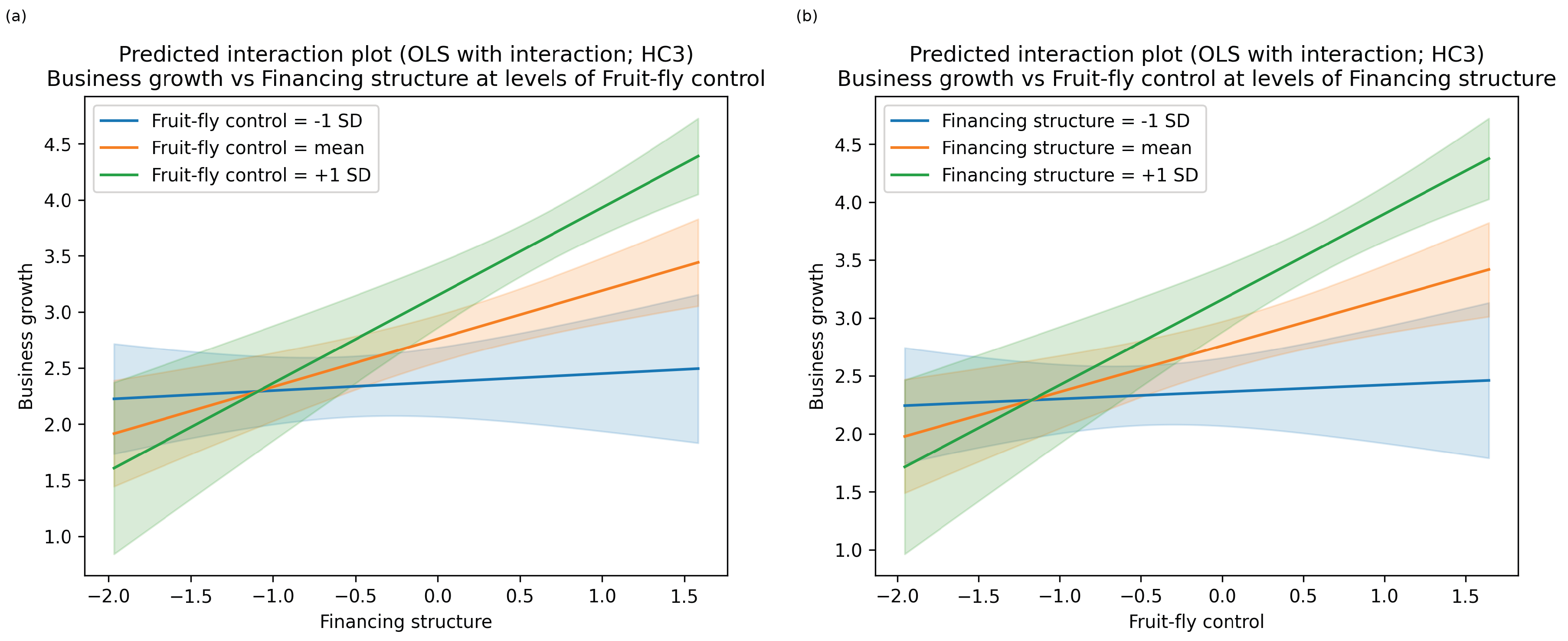
Figure A1 reports predicted interaction effects from the OLS model with the Financing structure × Fruit-fly control term (95% confidence bands). Panel (a) shows that the association between financing structure and business growth is conditional on the level of fruit-fly control. When fruit-fly control is higher, the predicted growth–financing gradient becomes steeper, indicating that improvements in financing structure translate into larger expected gains in business growth. Conversely, at lower levels of fruit-fly control, the predicted slope flattens, suggesting that financial strengthening yields more limited growth responses when pest-management capacity is comparatively weak.
Panel (b) provides the symmetric result: the marginal contribution of fruit-fly control to business growth is larger when financing structure is stronger. At higher levels of financing structure, the predicted growth response to improvements in fruit-fly control is more pronounced, whereas at lower financing levels the expected gains from improved control are smaller. Taken together, the two panels are consistent with complementarity between financial capacity and pest-management capability: business growth is maximized when both dimensions improve jointly, rather than through isolated changes in either financing structure or fruit-fly control alone.
References
- Tshikovhi, N.; More, K.; Cele, Z. Driving Sustainable Growth for Small and Medium Enterprises in Emerging Urban–Rural Economies. Sustainability 2023, 15, 15337. [Google Scholar] [CrossRef]
- Carbajal, L.M.B.; Tovar, L.A.R.; Zimmerman, H.F.L. Model of associativity in the production chain in Agroindustrial SMEs. Contaduría Adm. 2017, 62, 1118–1135. [Google Scholar] [CrossRef]
- Vîrjan, D.; Manole, A.M.; Stanef-Puică, M.R.; Chenic, A.S.; Papuc, C.M.; Huru, D.; Bănacu, C.S. Competitiveness—the engine that boosts economic growth and revives the economy. Frontiers in Environmental Science 2023, 11. [Google Scholar] [CrossRef]
- Huong, D.T.; Anh, N.T. Factors affecting access to finance for small and medium-sized agricultural enterprises in Vietnam. Asian Econ. Financ. Rev. 2024, 14, 437–455. [Google Scholar] [CrossRef]
- Dorasamy, N.; Kikasu, E.T. SMEs’ Information Infrastructure and Access to Finance. In SMEs Perspective in Africa; Springer Nature Switzerland, 2024; pp. 121–166. [Google Scholar] [CrossRef]
- Farooq, M.; Humayon, A.A.; Khan, M.I.; Ali, S. Ownership structure and financial constraints – Evidence from an emerging market. Manag. Financ. 2022, 48, 1007–1028. [Google Scholar] [CrossRef]
- Maqsood, A.; Zahid, M.T.B.; Usman, H.M.; Sattar, W.; Raza, U.; Aslam, K.; Bilal, M.; Masood, F. Integrated Ecological Strategies for the Management of Fruit Flies (Bactrocera dorslis spp.) in Citrus Agroecosystems. Planta Animalia 2026, 4, 421–433. [Google Scholar] [CrossRef]
- Aluja, M.; Ovruski, S.M.; Garcia, F.R.M.; Hurtado, M.; Enkerlin, W. Fruit Fly (Tephritidae) Management in the Neotropical Region: History, State of the Art, and Perspectives. In Management of Fruit Flies in the Americas; Springer International Publishing, 2024; pp. 11–66. [Google Scholar] [CrossRef]
- Mabunda, G.P.; Nemukondeni, N.; Selaledi, L. Sanitary and phytosanitary (SPS) measures and their implications for international agricultural trade: challenges and opportunities; comprehensive review. Discover Agriculture 2025, 3, 117. [Google Scholar] [CrossRef]
- Sekabira, H.; Tepa-Yotto, G.T.; Djouaka, R.; Clottey, V.; Gaitu, C.; Tamò, M.; Kaweesa, Y.; Ddungu, S.P. Determinants for Deployment of Climate-Smart Integrated Pest Management Practices: A Meta-Analysis Approach. Agriculture 2022, 12, 1052. [Google Scholar] [CrossRef]
- Lin, J.; Liu, K.; Wu, S. Artificial Intelligence for Sustainable Development in Chinese Agricultural Firms: The Roles of Sustainable Supply Chain Integration, Innovation, and Government Intervention. Sustainable Development 2025. [Google Scholar] [CrossRef]
- Nayak, B.; Bhattacharyya, S.S.; Krishnamoorthy, B. Integrating the dialectic perspectives of resource-based view and industrial organization theory for competitive advantage – a review and research agenda. Journal of Business & Industrial Marketing 2023, 38, 656–679. [Google Scholar] [CrossRef]
- Granata, F.; Nunno, F.D. Financing the Future of Water: Unlocking Investment, Innovation, and Governance for Resilient Infrastructure in a Changing Climate. Earth Systems and Environment 2025, 9, 2117–2141. [Google Scholar] [CrossRef]
- Gallego-Schmid, A.; Rebolledo-Leiva, R.; Vásquez-Ibarra, L.; Elorrieta-Mendoza, A.; Cotohuanca, D.M.P.; Henninger, C.E.; Guerrero, A.B. Circular Economy Transition in an Emerging Economy: Current Status and Priorities in Peru. Circ. Econ. Sustain. 2026, 6, 67. [Google Scholar] [CrossRef]
- Hammad, A. Investment Decision in Citrus Orchards of Punjab, Pakistan: A Socioeconomic and Financial Perspective. Journal of Economic Impact 2025, 7. [Google Scholar] [CrossRef]
- Sawitri, N.N. Financial Funding for Small and Medium-sized Enterprises (SMEs). East Asian Journal of Multidisciplinary Research 2023, 2, 4605–4614. [Google Scholar] [CrossRef]
- Santos, A.; Cincera, M. Determinants of financing constraints. Small Business Economics 2022, 58, 1427–1439. [Google Scholar] [CrossRef]
- Aminkeng, T.A.; Huaming, S.; Mukete, N.B.; Mwalupaso, G.E. Impact of Credit Constraints on Financial Performance of Small and Medium Size Enterprises. The European Journal of Development Research 2024, 36, 868–896. [Google Scholar] [CrossRef]
- Filatova, H.; Kulyk, V.; Kravchenko, O. Optimization of a company’s capital structure based on the criterion of minimizing the level of financial risk. Accounting and Financial Control 2024, 5, 46–56. [Google Scholar] [CrossRef]
- Mpofu, O.; Sibindi, A.B. Informal Finance: A Boon or Bane for African SMEs? Journal of Risk and Financial Management 2022, 15, 270. [Google Scholar] [CrossRef]
- Torres, E.; Álvarez Acosta, C.; del Pino, M.; Wong, M.E.; Boyero, J.R.; Hernández-Suárez, E.; Vela, J.M. Economic Impact of the Persea Mite in Spanish Avocado Crops. Agronomy 2023, 13, 668. [Google Scholar] [CrossRef]
- Angon, P.B.; Mondal, S.; Jahan, I.; Datto, M.; Antu, U.B.; Ayshi, F.J.; Islam, M.S. Integrated Pest Management (IPM) in Agriculture and Its Role in Maintaining Ecological Balance and Biodiversity. Advances in Agriculture 2023, 2023, 1–19. [Google Scholar] [CrossRef]
- Niassy, S.; Murithii, B.; Omuse, E.R.; Kimathi, E.; Tonnang, H.; Ndlela, S.; Mohamed, S.; Ekesi, S. Insight on Fruit Fly IPM Technology Uptake and Barriers to Scaling in Africa. Sustainability 2022, 14, 2954. [Google Scholar] [CrossRef]
- Sheyoputri, A.C.A. Theorethical Review: Financial Management in The Agribusiness Sector and That Implications for Economic Growth. Atestasi: Jurnal Ilmiah Akuntansi 2024, 7, 828–851. [Google Scholar] [CrossRef]
- Polukhin, A.A.; Panarina, V.I. Financial Risk Management for Sustainable Agricultural Development Based on Corporate Social Responsibility in the Interests of Food Security. Risks 2022, 10, 17. [Google Scholar] [CrossRef]
- ur Rehman, A.; Jajja, M.S.S. The interplay of integration, flexibility and coordination: a dynamic capability view to responding environmental uncertainty. International Journal of Operations & Production Management 2023, 43, 916–946. [Google Scholar] [CrossRef]
- Otokiti, B.O.; Igwe, A.N.; Ewim, C.P.M.; Ibeh, A.I.; Sikhakhane-Nwokediegwu, Z. A Framework for developing resilient business models for Nigerian SMES in response to economic disruptions. International Journal of Multidisciplinary Research and Growth Evaluation 2022, 3, 647–659. [Google Scholar] [CrossRef]
- Onegina, V.; Kucher, L.; Kucher, A.; Krupin, V.; Kłodziński, M.; Logos, V. Unlocking Innovation Capacity: Strategies for Micro-, Small, and Medium Enterprises in Ukrainian Agriculture. Agriculture 2024, 15, 65. [Google Scholar] [CrossRef]
- Jo, H. Internal capabilities and business confirmation: trajectories of emerging ventures. Management Decision 2025, 1–30. [Google Scholar] [CrossRef]
- Gebresilasse, M. Rural roads, agricultural extension, and productivity. Journal of Development Economics 2023, 162, 103048. [Google Scholar] [CrossRef]
- Phologane, S.A.; Valentine, L.; Yan, B.; Tambovceva, T. Towards Effective Integrated Risk Management: Enhancing Compliance and Competitiveness for Sustainable Access to the EU Citrus Market. Sustainability 2024, 16, 10891. [Google Scholar] [CrossRef]
- He, Y.; Xu, Y.; Chen, X. Biology, Ecology and Management of Tephritid Fruit Flies in China: A Review. Insects 2023, 14, 196. [Google Scholar] [CrossRef] [PubMed]
- Qiao, D.; Luo, L.; Zhou, C.; Fu, X. The influence of social learning on Chinese farmers’ adoption of green pest control: mediation by environmental literacy and moderation by market conditions. Environment, Development and Sustainability 2023, 25, 13305–13330. [Google Scholar] [CrossRef]
- Khan, F.U.; Nouman, M.; Negrut, L.; Abban, J.; Cismas, L.M.; Siddiqi, M.F. Constraints to agricultural finance in underdeveloped and developing countries: a systematic literature review. International Journal of Agricultural Sustainability 2024, 22. [Google Scholar] [CrossRef]
- Boudreaux, C.; Clarke, G.; Jha, A. Social capital and small informal business productivity: the mediating roles of financing and customer relationships. Small Business Economics 2022, 59, 955–976. [Google Scholar] [CrossRef]
- Nguyen, T.B.C.; Nguyen, Q.N. Strategic resilience: Exploring diversification’s impact on R&D investment during economic crises. Heliyon 2024, 10, e40582. [Google Scholar] [CrossRef]
- Abdeljawad, I.; Alia, M.A.; Demaidi, M. Financing constraints and corporate investment decision: evidence from an emerging economy. Competitiveness Review: An International Business Journal 2024, 34, 208–228. [Google Scholar] [CrossRef]
- Ali, S.; Hameed, A.; Muhae-Ud-Din, G.; Ikhlaq, M.; Ashfaq, M.; Atiq, M.; Ali, F.; Zia, Z.U.; Naqvi, S.A.H.; Wang, Y. Citrus Canker: A Persistent Threat to the Worldwide Citrus Industry—An Analysis. Agronomy 2023, 13, 1112. [Google Scholar] [CrossRef]
- Rolls, D.A.; Kean, J.M.; Flynn, A.; Kompas, T.; Robinson, A.P. Estimating the realised economic value of a historic Mediterranean fruit fly eradication. Scientific Reports 2025, 15, 45290. [Google Scholar] [CrossRef] [PubMed]
- Valentim, L.; Lisboa, J.V.; Franco, M. Knowledge management practices and absorptive capacity in small and medium-sized enterprises: is there really a linkage? R&D Management 2016, 46, 711–725. [Google Scholar] [CrossRef]
- Manono, B.O. Small-Scale Farming in the United States: Challenges and Pathways to Enhanced Productivity and Profitability. Sustainability 2025, 17, 6752. [Google Scholar] [CrossRef]
- Hristov, I.; Camilli, R.; Chirico, A.; Mechelli, A. The integration between enterprise risk management and performance management system: managerial analysis and conceptual model to support strategic decision-making process. Production Planning & Control 2024, 35, 842–855. [Google Scholar] [CrossRef]
- Mishchenko, S.; Naumenkova, S.; Mishchenko, V.; Dorofeiev, D. Innovation risk management in financial institutions. Investment Management and Financial Innovations 2021, 18, 190–202. [Google Scholar] [CrossRef]
- Singh, N.; Hong, P. CSR, Risk Management Practices, and Performance Outcomes: An Empirical Investigation of Firms in Different Industries. Journal of Risk and Financial Management 2023, 16, 69. [Google Scholar] [CrossRef]
- Peón, D.; Martínez-Filgueira, X. Determinants of investing in innovative activities by agri-food and KIBS firms in rural areas: An exploratory analysis. Journal of Small Business Management 2020, 58, 1155–1186. [Google Scholar] [CrossRef]
- Gao, X.; Li, C.; Elahi, E.; Abro, M.I.; Cui, Z. Technological Innovation, Product Quality and Upgrading of Manufacturing Value Chain: Empirical Evidence from China. Sustainability 2023, 15, 7289. [Google Scholar] [CrossRef]
- Lengai, G.M.W.; Fulano, A.M.; Muthomi, J.W. Improving Access to Export Market for Fresh Vegetables through Reduction of Phytosanitary and Pesticide Residue Constraints. Sustainability 2022, 14, 8183. [Google Scholar] [CrossRef]
- Kandpal, V.; Jaswal, A.; Gonzalez, E.D.R.S.; Agarwal, N. Corporate Social Responsibility (C.S.R.) and E.S.G. Reporting: Redefining Business in the Twenty-First Century; 2024; pp. 239–272. [Google Scholar] [CrossRef]
- Callupe-Cueva, P.C.; Aliaga-Miranda, A.; Flores-Vilcapoma, L.R.; Raqui-Ramirez, C.E.; Vila-Hinojo, B.T.; Chavarry-Becerra, W.S. Digital transformation in market research in Peru. Brazilian Journal of Operations & Production Management 2025, 22, 2555. [Google Scholar] [CrossRef]
- Bronisz, K.; Mehtätalo, L. Seemingly Unrelated Mixed-Effects Biomass Models for Young Silver Birch Stands on Post-Agricultural Lands. Forests 2020, 11, 381. [Google Scholar] [CrossRef]
- Chávez-Díaz, J.M.; Migo, A.B.; Unuysuncco, N.I.M.; Romero-Carazas, R. Gestión para la recaudación de impuestos municipales: diagnóstico y propuesta. Revista Venezolana de Gerencia 2023, 28, 1052–1067. [Google Scholar] [CrossRef]
Figure 1.
Scatterplot matrix.
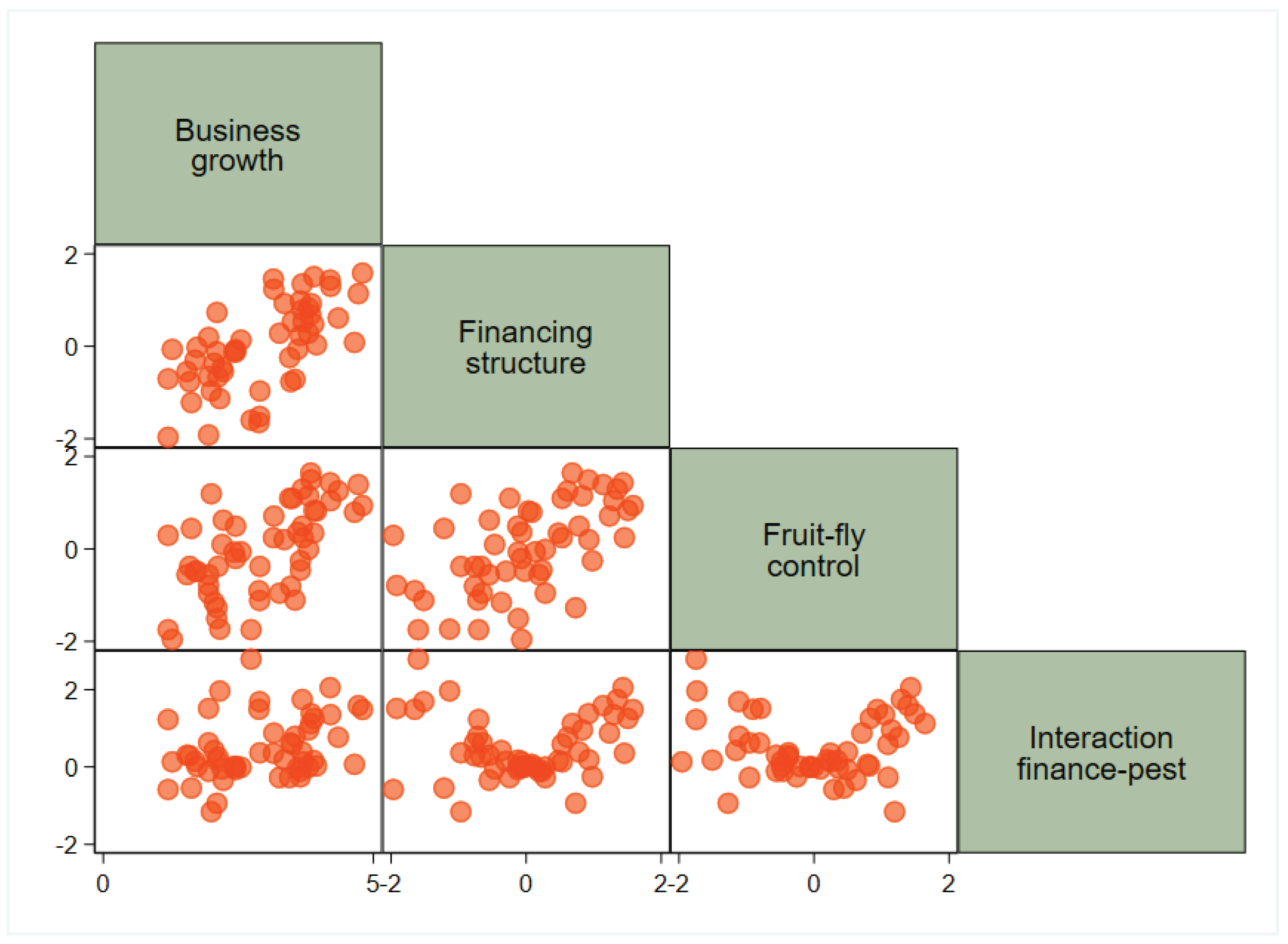
Figure 2.
Estimated kernel density, Q-Q plots and Box plots. Grid lines are 5, 10, 25, 50, 75, 90, and 95 percentiles. The normal density is represented by the red line.
Figure 2.
Estimated kernel density, Q-Q plots and Box plots. Grid lines are 5, 10, 25, 50, 75, 90, and 95 percentiles. The normal density is represented by the red line.
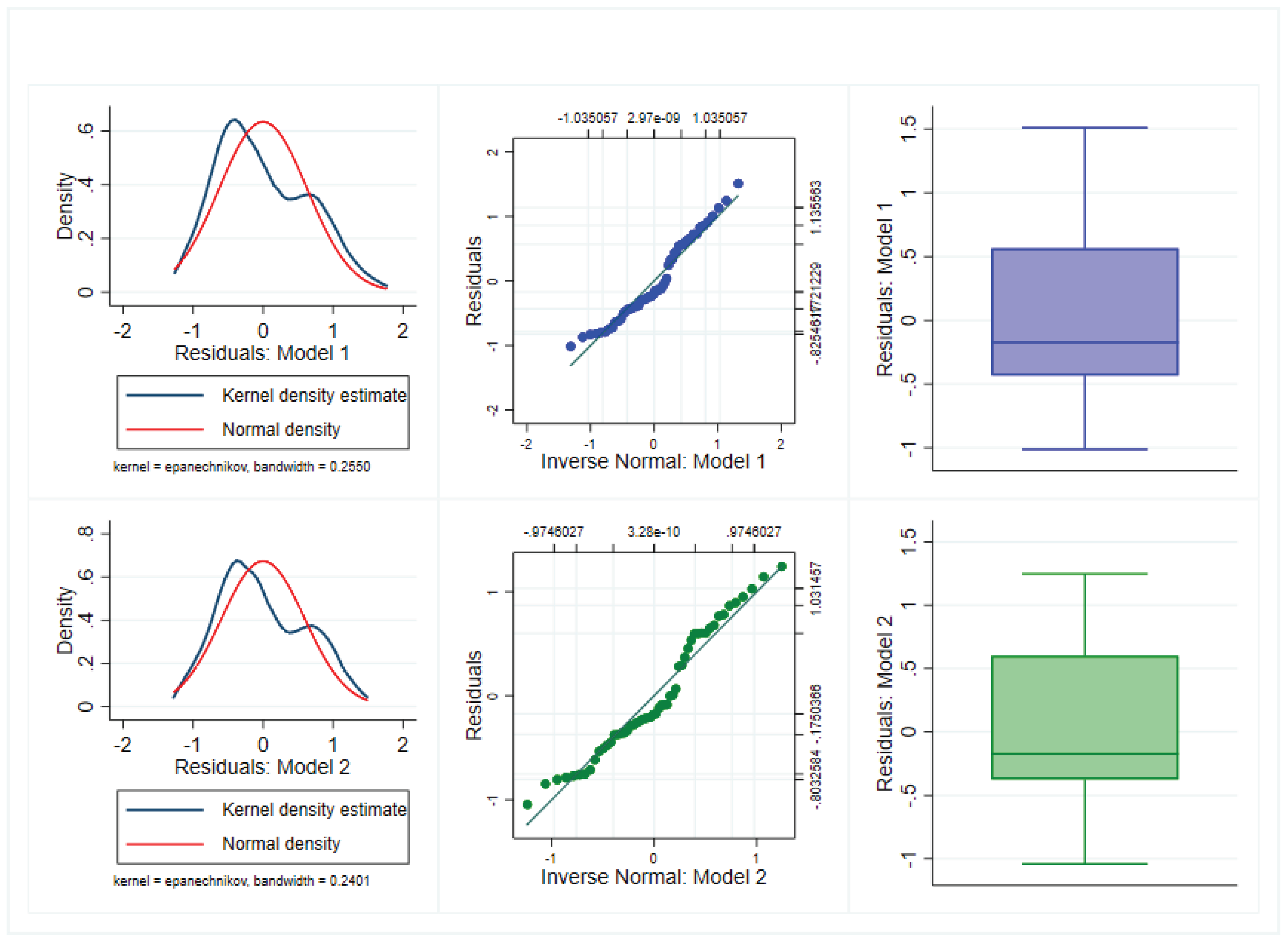
Figure 3.
Restricted cubic spline (natural cubic).
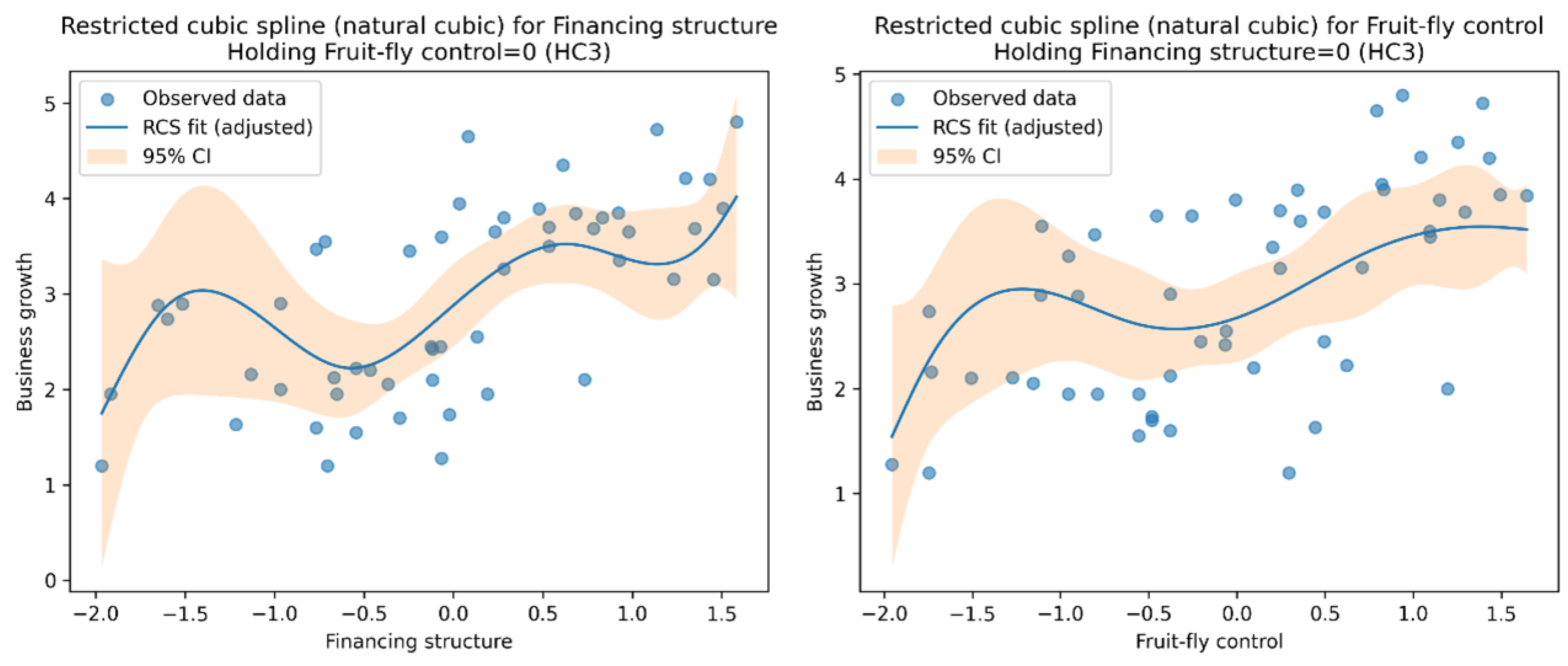

Table 1.
Main variables.
| Variable role | Variable | Dimensions | Indicator |
|---|---|---|---|
| Dependent | Business growth | Sales and profitability | Increase in sales volume and profit margins during the last years |
| Market expansion | Entry into new markets or increase in customer base | ||
| Productivity | Improvement in output efficiency and use of productive resources | ||
| Innovation | Adoption of new practices, products, or processes in the business | ||
| Organization | Strengthening of internal management, planning, and organizational capabilities | ||
| Independent | Financing Structure | Access to finance | Availability of credit, loans, or external financial resources for business operations |
| Cost of finance | Perceived affordability of interest rates, fees, and other financing expenses | ||
| Diversification | Use of multiple financing sources to support business activities | ||
| Stability | Continuity and predictability of financial resources over time | ||
| Financial education | Knowledge and skills for managing financial decisions and instruments | ||
| Fruit-fly control | Prevention | Implementation of preventive measures to reduce fruit-fly infestation | |
| Monitoring | Regular inspection and surveillance of pest presence in production areas | ||
| Treatment | Application of effective control measures once the pest is detected | ||
| Training | Participation in technical training on pest management practices | ||
| Coordination | Collaboration with institutions, technicians, or producers for pest control actions |
Table 2.
Descriptive statistics.
| Stats | Business growth | Financing structure | Fruit-fly control |
|---|---|---|---|
| Max | 4.8 | 1.583 | 1.644 |
| Min | 1.2 | -1.967 | -1.956 |
| Mean | 2.941 | 0.000 | 0.000 |
| Standard Deviation (SD) | 0.99 | 0.928 | 0.969 |
| Variance | 0.981 | 0.862 | 0.939 |
| 3.025 | -0.044 | 0.044 | |
| Skewness | -0.031 | -0.193 | -0.197 |
| Kurtosis | 1.880 | 2.318 | 2.063 |
| K-S test | 0.395 | 0.994 | 0.946 |
Table 3.
Pearson correlation matrix.
| Business growth | Financing structure | Fruit-fly control | Interaction finance-pest | |
|---|---|---|---|---|
| Business growth | 1.000 | - | - | - |
| Financing structure | 0.644 | 1.000 | - | - |
| Fruit-fly control | 0.615 | 0.559 | 1.000 | - |
| Interaction finance-pest | 0.326 | 0.076 | -0.004 | 1.000 |
Table 4.
Regression model results.
| (1) BG-OLS |
(2) BG-OLS-D |
(3) BG Cubic spline-FS |
(4) BG Cubic spline-FC |
|
|---|---|---|---|---|
| Financing structure | 0.430** | 0.445*** | -0.848 | 0.473** |
| (3.70) | (4.03) | (-1.179) | (2.848) | |
| Fruit-fly control | 0.400** | 0.366** | 0.375* | -0.897 |
| (3.60) | (3.44) | (2.255) | (-1.694) | |
| Interaction finance-pest | 0.366** | 0.384** | - | - |
| (3.28) | (3.61) | |||
| - | - | 0.924*** | 0.867** | |
| (3.968) | (3.036) | |||
| - | - | 1.017*** | 1.104*** | |
| (3.839) | (3.941) | |||
| - | - | 1.419** | 1.078*** | |
| (2.968) | (4.978) | |||
| D | - | 1.574** | - | - |
| -2.5 | ||||
| Constant | 2.761*** | 2.723*** | 2.598*** | 2.441*** |
| (26.58) | (27.24) | (16.345) | (18.255) | |
| F statistic | 24.62 | 21.97 | 9.9595 | 8.3739 |
| Adjusted | 0.5721 | 0.6128 | 0.542 | 0.4934 |
| Heteroscedasticitya | 0.6357 | 0.2604 | 0.3596 | 0.1659 |
| Autocorrelation (BG)a | 0.7845 | 0.6016 | 0.87 | 0.55 |
| Normality (JB)a | 0.182 | 0.2058 | 0.579 | 0.2286 |
| Identificationa | 0.0356 | 0.0732 | 0.5494 | 0.0749 |
| Mean VIF | 1.31 | 1.25 | 2.556 | 2.518 |
Note: t statistics in parentheses, * p<0.05, ** p<0.01, *** p<0.001. a p-values in diagnostic test.
Disclaimer/Publisher’s Note: The statements, opinions and data contained in all publications are solely those of the individual author(s) and contributor(s) and not of MDPI and/or the editor(s). MDPI and/or the editor(s) disclaim responsibility for any injury to people or property resulting from any ideas, methods, instructions or products referred to in the content. |
© 2026 by the authors. Licensee MDPI, Basel, Switzerland. This article is an open access article distributed under the terms and conditions of the Creative Commons Attribution (CC BY) license (http://creativecommons.org/licenses/by/4.0/).
Copyright: This open access article is published under a Creative Commons CC BY 4.0 license, which permit the free download, distribution, and reuse, provided that the author and preprint are cited in any reuse.


