
Submitted:
14 April 2026
Posted:
15 April 2026
You are already at the latest version
Abstract
Mucopolysaccharidosis (MPS) are a group of inherited lysosomal storage genetic disorders that affect the body's ability to break down glycosaminoglycans (GAGs) due to the deficiency of required enzymes. This leads to depositions of these GAGs in various tissues and organs resulting in multi-systemic manifestations including pulmonary and sleep related issues. In recent years, there have been significant advancements in therapeutic options and supportive management which has led to overall improvement in respiratory care culminating in improved quality of life for MPS patients. Management of pulmonary and sleep disorders in mucopolysaccharidosis requires a multidisciplinary approach due to the multi-systemic affectation of the genetic disorders. Therapeutic options such as enzyme replacement therapy (ERT) and hematopoietic stem cell transplantation (HSCT) have yielded varying success in mitigating respiratory complications. Emerging treatments such as gene therapies have shown exciting and promising results thus far. Supportive therapies such as airway clearance, regular vaccination and use of positive airway pressure devices are also essential. Pre-operative airway and anesthesia planning is critical to mitigate peri-operative and post-operative complications. Early diagnosis, close monitoring and a patient focused individualized approach are essential for respiratory optimization and overall improvement in clinical outcomes. This review article aims to discuss these advancements in a comprehensive format, making it accessible to medical providers who care for this subset of patients.
Keywords:
mucopolysaccharidosis
; pulmonary disorders
; sleep disorders
; advances in treatment
1. Introduction
Mucopolysaccharidosis (MPS) also known as lysosomal storage diseases (LSD) characterized by accumulation of GAGs in tissues and organs due caused by genetic disorders leading to deficiency in enzymes required for their degradation1,2. GAGs are long chains of polysaccharides found in cells and tissues which are required in cellular functional processes such as cellular signaling and adhesion1. Deposition of these GAGs in the lysosomes of cells is the primary cause of MPS resulting in multi-systemic manifestations including respiratory, airway and sleep related disorders3.
MPS were first described in 1917 by Charles Hunter when he observed the clinical manifestation of the disease in two brothers which was eventually recognized as MPS II (Hunter syndrome)4. In 1917, Gertrud Hurler, a German pediatrician described similar condition in another patient, now recognized as MPS I (Hurler syndrome). The biochemical basis of the disease was not hypothesized until the middle of the 20th century. Identification of GAGs in the urine and tissues of MPS patients helped in the pathogenesis of the disease1,5−8. Subsequent studies on the quantity and types of GAGs accumulation helped with accurate classification of the disease types. Pierre Maroteaux and Maurice Lamy made the first clinical description of MPS VI (Maroteaux-Lamy syndrome)9. MPS IX also known as Natowicz disease, was first noted in 199610.
The several types of MPS are associated with peculiar enzyme deficiency and resultant characteristic symptoms (See Table 1).
This accumulation manifests as a spectrum of clinical features, including skeletal dysplasia, cardiac involvement, and neurological impairment, with pulmonary and sleep disorders emerging as critical complications that significantly impact morbidity and mortality. In MPS, GAG deposition in airway tissues, chest wall, and lungs results in upper and lower airway obstruction, restrictive pulmonary disease, and obstructive sleep apnea (OSA), often presenting early in life and exacerbating with disease progression. These multi-systemic issues are complicated by structural abnormalities like macroglossia, adenotonsillar hypertrophy, and chest wall deformities, which impair ventilation and sleep quality, ultimately affecting overall survival and health-related quality of life.
2. Methods
2.1. Search Strategy
A systematic search of major medical databases (PubMed, Embase, Cochrane Library) was conducted for articles published between January 1960 and October 2025 to identify studies, and review papers on diagnosis and management of pulmonary and sleep disorders in MPS disease. Keywords (e.g., ‘mucopolysaccharidosis’, ‘pulmonary disorders’, ‘sleep disorders’, ‘advances in treatment’) were combined using Boolean operators. Titles and abstracts were screened, followed by full-text review to ensure focus on therapeutic options for pulmonary and sleep disorders in MPS disease.
Initial database searching identified 400 records. After duplicate removal and relevance-based filtering, 200 records were screened against eligibility criteria. Of these, 100 papers were excluded, resulting in 100 papers being included in the final synthesis.
Eligibility criteria included:
MPS Focus: Does the paper specifically address mucopolysaccharidosis
Pulmonary or Sleep Content: Does the paper discuss pulmonary, airway, or sleep disorders in MPS?
Management Discussion: Does the paper cover management, treatment, or interventions for pulmonary or sleep disorders in MPS?
Clinical Relevance: Is the content clinically relevant (e.g., case studies, trials, reviews) Outcome Reporting: Does the paper report outcomes or efficacy of management strategies?
Review Type: Is the paper a review, guideline, or consensus statement?

Table 1.
MPS types and enzyme deficiency.
| MPS type | Syndrome name | Enzyme deficiency | OMIM |
|---|---|---|---|
| 1 (H, HS, S) | Hurler, Hurler-Scheie, Scheie | Dermatan sulphate, Heparan sulphate | 607014, 607015, 607016 |
| II | Hunter | Dermatan sulphate, Heparan sulphate | 309900 |
| III (A,B,C,D) | Sanfilippo | Heparan sulphate | 252900, 252920, 252930, 252940 |
| IVa | Morquio | Keratan Sulphate, Chondroitin sulphate | 253000 |
| VI | Maroteaux-Lamy | Dermatan sulphate, Chondroitin sulphate | 253200 |
| VII | Sly | Dermatan sulphate, Heparan sulphate, Chondroitin sulphate | 253220 |
| IX | Natowicz | Hyaluronidase | 601492 |
| X | MPS10 | Mutation in gene ARSK | 619698 |
| MPS Plus Syndrome | MPSPS | Mutation in the VPS33A gene | 617303 |
2.2. Relevant Section
Physiology of pulmonary and sleep complications in MPS
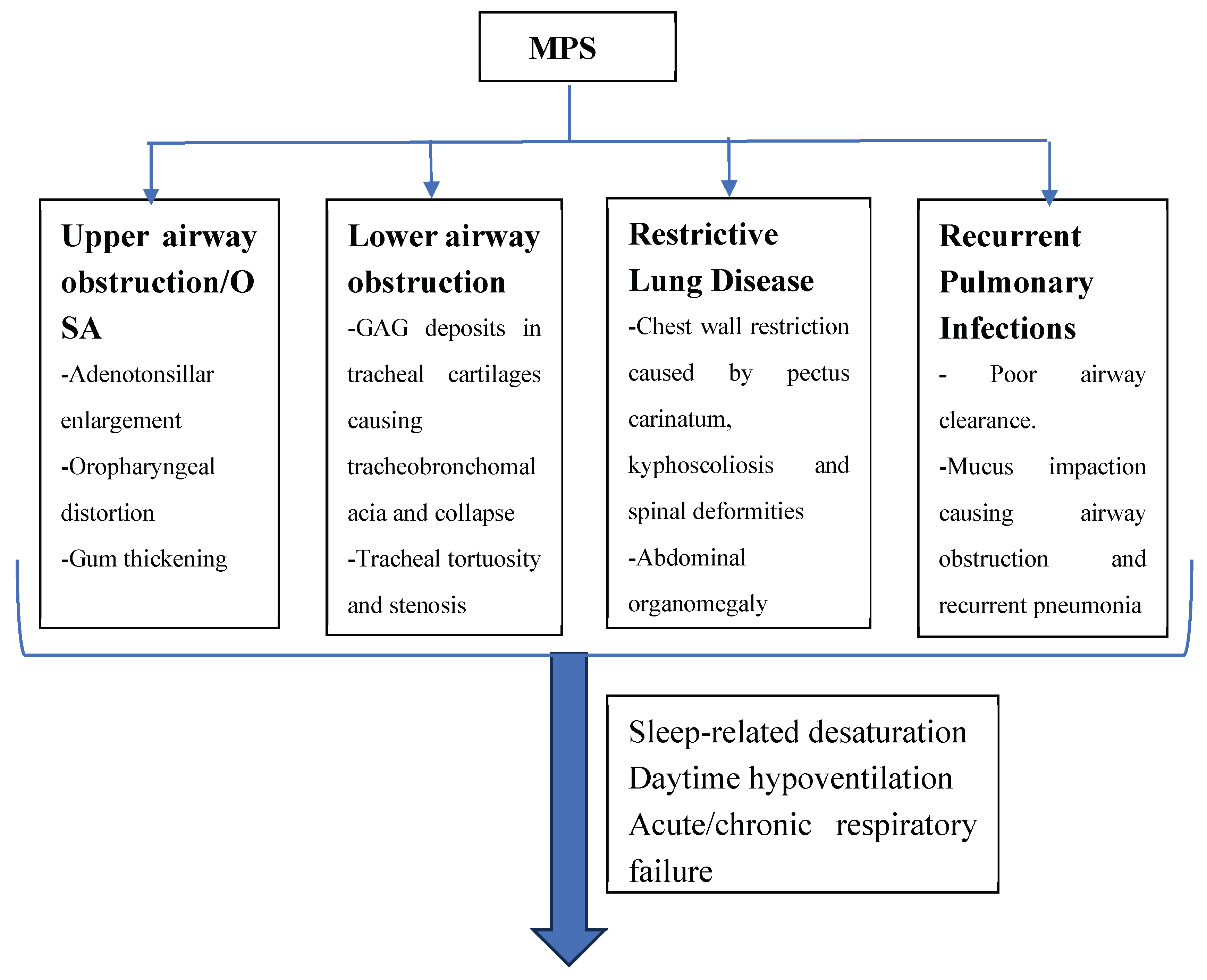
Sleep and pulmonary involvement are usually progressive and have varying manifestation depending on the specific type of MPS. The various mechanisms (see Figure 1) in which MPS causes sleep disordered breathing and pulmonary issues include:
Tracheal collapse and airway obstruction:
Pulmonary involvement in MPS is characterized by upper airway obstruction due to GAG deposition causing adenotonsillar hypertrophy, macroglossia, and tracheal narrowing. Functional and structural changes occur in the upper and lower airway due to deposition of GAGs11−14. These results in tonsillar and adenoidal enlargement, macroglossia and tracheobronchomalacia. Resultant oropharyngeal, supraglottic airway collapse and tracheal changes (tracheal stenosis and tortuosity) can also lead to airway obstruction and collapse respectively15−19. In MPS I and II, these features manifest early, with neonatal respiratory distress in 32% of MPS II cases20 and progressive multilevel obstruction in MPS II contributing to mortality via tracheal collapse. In adults, airway tortuosity and narrowing persist, quantified by the Salford MPS Airway Score correlating poorly with BMI16
Sleep disordered breathing (SDB)
Physiologic changes that occur during sleep lead to pharyngeal muscular relaxation leading to worsening airway obstruction. This causes obstructive sleep apnea, sleep hypoxemia and hypoventilation. Untreated significant SDB may lead to neuro-cardiac complications such as strokes, hypertension, coronary artery disease and pulmonary hypertension. SDB is highly prevalent in MPS patients with some studies reporting about 80%2,13,21,22.The MPS types most affected include I and II11,22−24. Pretreatment rates of OSA in a particular study was 81% with a mean apnea-hypopnea index (AHI) of 10.4 events/hour overall, escalating to 16.6 in MPS I where 75% experienced moderate-to-severe disease25. Almost all MPS patients have adenotonsillar hypertrophy but the cause of OSA is usually multifactorial. Other causes of sleep disordered breathing include GAG deposition in upper airway, crowded retroglossal and retropalatal spaces, small chest wall, macroglossia and short neck26,27.
Restrictive Lung Disease
Pulmonary involvement in MPS is characterized by restrictive lung disease from skeletal deformities and reduced chest wall compliance, leading to recurrent infections and impaired gas exchange. Restrictive patterns predominate, with reduced forced vital capacity linked to thoracic kyphosis in MPS I28. Hurler Chest wall restriction caused by kyphoscoliosis, broad spatulate ribs with reduced intercostal space, pectus carinatum, spinal disorders are common in MPS patients. There can be complicated with ventilatory failure due to reduced lung volumes. Abdominal enlargement due to hepatosplenomegaly can cause diaphragmatic dysfunction due to compressive effects2,14,23,29.
2.3. Disease-Targeting Therapies
Enzyme replacement therapy (ERT): ERT can be an effective therapeutic option in MPS types 1, II, IVA, VI and VII30−34 (See Table 2). It involves intermittent administration of intravenous recumbent enzymes to address the deficiency of lysosomal enzymes in these patients32,33,35. This aims to reduce the GAG burden and accumulation in the tissues of the respiratory tract. ERT has shown varying levels of benefits in pulmonary function, sleep disordered breathing and airway obstruction31,34,36,37. ERT can cause patients to develop anti-drug antibodies (ADA) in response to treatment. Some of these ADAs can be inhibitory and negatively affect the overall efficacy of ERT25. A study showed that ERT improved obstructive sleep apnea in MPS patients with low levels of inhibitory antibodies25. Another study showed no positive effect of ERT on OSA in MPS II38. The effect of ERT on reducing adenotonsillar enlargement was negligible38−40. Overall, there is a paucity of data available on the long-term effect of ERT on OSA in MPS patients.
Spirometry evaluations in MPS usually involve measurements of forced expiratory volume in 1s (FEV1) and forced vital capacity (FVC) in clinical and research settings23,24,41,42. The 6 min-walk test (6MWT) is the most common respiratory parameter used to evaluate endurance in MPS patients7,31,32,43,44. ERT also has varied and limited success in improving lung volumes, usually reaching a plateau within 2 years of starting therapy45,46. Several studies have shown short term improvement in endurance after ERT, but long-term effects are limited30,31,34,39,47,48. ERT with laronidase (100 U/kg weekly) improves pulmonary function in MPS I, increasing forced vital capacity by 11% and 6-minute walk distance by 38 meters over 26 weeks, alongside urinary GAG reductions from 63.4 mg/mmol creatinine baseline to 16.3 mg/mmol at 24 months49.
In MPS 1 and IVA, ERT has shown some improvements in these measures up to 5%, usually limited to the first year of treatment50. In other MPS types, there was no clinically significant improvement31,51. In prospective, longitudinal studies, the FVC and FEV1 overall changes in the long term were limited to less than 20%35,38,47,52. Galsulfase ERT has been recommended as the first line treatment therapy for MPS VI for over 20 years. In a recent 15 year-analytic clinical surveillance program for MPS VI, ERT-treated patients demonstrated persistent decrease in urinary GAG levels with associated improvements in pulmonary function and endurance over a prolonged follow-up timeframe53. Harmatz and colleagues demonstrated a sustained improvement in walking distance for an extended period in an open-label extension study in MPS VI patients31. In MPS II, idursulfase ERT showed limited improvement in pulmonary fucntion, with function tests unhelpful due to disabilities, though growth dynamics indicate anabolic effects in <50% mild cases54. Respiratory dysfunction in MPS is usually multi-factorial: GAG accumulation in the soft tissues of the pharyngeal and upper airway with resultant obstruction; tracheobronchomalacia and stenosis causing lower airway narrowing and collapse respectively; and restrictive thoracic disorders due to chest wall, rib and spinal deformities. Since the major principle for the therapeutic efficacy of ERT is based on the reduction in GAG deposition, therefore it appears to be relatively more effective on soft tissues and upper airway obstruction12,13,16,23,27. Conventional ERT is largely ineffective in treating skeletal and cartilage abnormalities related to MPS due to poor circulation in these tissues which makes it less effective in chest wall and tracheal deformities. Additionally, structural changes in cartilages and bony structures are usually less reversible12,19,33,38,47,55. Pre-clinical studies showed that using a long-circulating form of enzymes (Pert-GUS) significantly improved bone lesions due to enhanced circulation56. Similarly, due to the inability of ERT to cross the blood-brain barrier (BBB), it is ineffective in treating neurological manifestations due to MPS. A recent therapy for MPS II - Hunter syndrome (Pabinafusp Alfa) using fusion of transferrin receptor antibody with idursulfase enzyme improves delivery across the BBB therefore improving efficacy for treatment of neurological symptoms57.
In summary, these studies show that ERT significantly improves lung function with endurance, reduces AHI, and improves sleep quality. Early initiation of ERT is crucial, as it is most effective at reducing GAG storage in soft tissues and stabilizing pulmonary and sleep disorders before irreversible anatomical damage occurs.
Hematopoietic Stem Cell Transplantation (HSCT): HSCT is a proven long-term treatment for certain MPS types including MPS 1, MPS II, MPS IVA, MPS VI and MPS VII47,58−62 (See table 2). It involves transplanting matched donor stem cells to provide the deficient enzyme. The efficacy of HSCT is dependent on factors such as patient age, MPS type, donor selection and overall functional status. The age at which HSCT is performed affects the overall efficacy of treatment with outcomes vary by timing, with early HSCT (<2 years) improving survival58,60,63. Several studies have shown that cord blood transplantation usually is more effective and has a relatively lower rate of draft versus host disease (GVHD) compared to traditional bone marrow transplantation (BMT)64,65. The latter option may be more suitable for adult and older MPS patients due to less incidence of GVHD.
Unlike ERT where the infused deficient enzymes are unable to cross the BBB, donor stem cells in HSCT are able to cross the barrier hence providing neurologic improvements.
HSCT has shown promise in the treatment of respiratory and airway issues, especially in young patients with MPS 1. Walker et al revealed a significant reduction in the incidence of airway complications in MPS 1 patients treated with HSCT compared to ERT (14% vs. 57%)66. A retrospective study reported no intubation failures in MPS 1 patients previously managed with HSCT59. Another study showed improved respiratory outcomes in a small number of MPS 1H patients67. These findings suggest that there is clinically significant improvement in airway management, intubation success as well as the overall safety of anesthesia.
Yabe and colleagues reported cessation of orthopnea, snoring and improved respiratory function in four MPS IVA patients after HSCT68. Careful selection for MPS IVA patients is necessary as they have severely narrowed airway due to tracheobronchial distortion which leads to difficult intubation, peri-intubation respiratory complications and reduced success of ventilator liberation overall69. In the largest non-pharmaceutically supported retrospective study, pediatric MPS 1 who received either ERT or HSCT, serial spirometric evaluations demonstrated a universal degree of restrictive lung function irrespective of the therapeutic intervention. During the follow up, the level of restrictive lung disease stabilized in 67% of post HSCT and 57% in post ERT in MPS 1 patients41.There has been varying success in improvement in sleep disordered breathing, airway obstruction and lung function improved lung function in other MPS types.
In summary, early use of HSCT can diminish upper airway obstruction and reduce OSA, but late complications may still require additional treatments such as surgeries.
Gene and Cell Therapy: ERT and HSCT provide replacement enzymes exogenously however neither is fully effective and both have inherent challenges. Gene therapy is an emerging therapeutic option currently undergoing several studies in pre-clinical and clinical stages70−72. Many of these trials have been designated as fast track, orphan drug emphasizing the much-needed therapeutic options for the disease. Each type of MPS is caused by a faulty gene and gene therapy may slow the progression of the disease. These faulty genes affect the production of needed enzymes for the breakdown of GAGs leading to accumulation. Gene and cell therapy involves the introduction of a gene into the cells needed for producing enzymes. The working version of the gene is introduced via a vector which are usually viral derivatives73.
Investigational gene therapies for different MPS types are in various stages of development – RegenXbio (MPS1, MPS II), Orchard therapeutics (MPS III A and B), Magenta therapeutics (MPS1), Lysogene (MPS III A and B) and Abeona Therapeutics (MPS III A and B)72.
Gene editing with the help of CRISPR technology is also being researched in various stages of development74. Gene editing involves removal and correction of faulty DNA within the gene unlike gene therapy which involves introduction of a new gene. A recent study using delivery of HSPC gene into a patient’s own hematopoietic stem cells resulted in significant metabolic correction in peripheral tissues and central nervous system.75
Gene therapy and editing hold the promise of sustained supply of the deficient enzymes and may address the limitations of pulmonary and airway involvement that current therapeutic options face.
2.4. Surgical Interventions
Surgical interventions play a fundamental role in managing upper and lower airway obstruction in MPS patients
Adenotonsillectomy (AT): Adenotonsillectomy is the first line treatment for OSA in pediatric MPS patients and about half of this subset of patients undergo the surgery76. Few studies have reviewed the efficacy of AT and the outcomes are usually non-lasting likely due to the multifactorial pathogenesis, progressive nature of MPS disease as well as recurrence of adenoid hypertrophy. The recurrence rate of adenoid hypertrophy has been reported to be up to 56% versus 1.9% in healthy counterparts77,78.
Lee et al showed more than 50% reduction in AHI in about a quarter of patients (15 patients)17.
Tracheostomy: Tracheostomy is a surgical intervention which can be feasible and helpful for isolated upper airway obstruction. Ten percent of MPS patients usually undergo tracheostomy for airway issues79. 47% of cases of MPS II were reported to undergo tracheostomy which was the most frequent subtype of MPS79. This underscores the fact that this subset of patients is at a higher risk of respiratory failure due to progressive airway obstruction secondary to GAG deposition. Patients may develop lower or multi-level airway obstruction which makes finding the right tracheostomy tube for a patient with MPS very challenging79. AT and other surgeries are usually unsuccessful for permanently alleviating airway obstruction11,14,15,66. It may be necessary to undergo tracheostomy when other surgeries have failed. Tracheostomy may be challenging in MPS patients due to peculiar anatomical features such as stiff short neck, low hanging cricoid ring, multi-level tracheal obstruction and large protruding mandible79. Airway obstruction may persist despite tracheostomy due to airway collapse distal to the tip of the tube80.
Tracheal resection and reconstruction: This is applicable in cases when there are significant narrowing and collapse of a segment of the trachea for which tracheostomy may not be applicable. MPS IVA can have very significant tracheal narrowing, and this procedure can significantly improve pulmonary function and quality of life in this subset of patients.6,12,18,58,62,69 Pizarro et al81 and Hack et al82 described tracheal resection via median sternotomy with post operative improvement in patient-reported outcomes and quality of life.
Kenth et al evaluated sixteen patients with severe MPS IVA and radiological evidence of advanced airway obstruction who underwent tracheal resection with combined manubrial resection. Post operatively, there were significant spirometric improvements including a mean increase of 0.68 liters in forced expiratory lung volume in 1 second (FEV1)83. There were no reported long-term complications. These findings highlighted the significant improvements in patient-reported outcomes and overall quality of life.
Tracheobronchial stents: The use of airway stents have been established in adult malignant airway disease. Pediatric use of these stents has been sparse but slowly increasing. Airway stent placement is usually performed in the United States by experienced interventional pulmonologists and thoracic surgeons. The reported use of airway stents in MPS patients are sparse with only a handful of cases84. Stents are prone to accumulation of biofilms, mucus plugging, granulation formation and migration. Insertion and replacement of these stents are extremely challenging in MPS patients84. Stents may be very beneficial with short-term success as a bridge to other permanent solutions such as tracheal resection84. They are very feasible for palliative care given the short-term improvement in quality of life.
2.5. Supportive Therapies
Supportive therapies are crucial for optimizing respiratory function, endurance and overall wellbeing in MPS patients.
Prevention of Anesthetic and post-operative complications- As a result of the multi-systemic and complex nature of the disease, MPS patients usually require several procedures and surgical interventions. MPS patients carry the highest reported intra and peri-operative mortality because of airway, pulmonary, cardiac and neurologic issues11,47,66,85,86. MPS I, II, IV have the highest rates of airway complication due to the relatively high prevalence of adenotonsillar hypertrophy, copious thick secretions, macroglossia, facial dysmorphism and airway collapse due to laryngomalacia. The airway mucosa is very friable with easy bleeding. MPS 1 and IV may have unstable atlanto-axial joint, short neck and decreased mobility of the temporo-mandibular joint which makes intubation very difficult with increased complications47,85−87.
A team approach for anesthesia is essential for pre-operative assessment for MPS patients. A pre-operative evaluation with an individualized plan is important to reduce these risks. Patients deemed to be high risk should have a pre-operative evaluation jointly by the anaesthetic, ENT and pulmonary team and risks of the airway intervention should be discussed across the benefits of surgery. A collective multidisciplinary approach is strongly recommended.66,86. A thorough evaluation should be done by detailed history and where possible- nasal endoscopy, CT scans and PFTs should be obtained. Airway intervention risks can be based on previous anesthetics and holistic lip-to-lung assessments. Post-operative complications are reduced by staged extubation, optimal use of opiates, early physiotherapy and mucolytics66,88. Patients with a history of difficult intubations should be flagged on electronic medical records for easy identification. Awake flexible fiberoptic airway examination and bronchoscopic intubations may lead to lesser airway injury compared to standard video laryngoscopy47,85. 3D airway reconstruction, virtual endoscopy and the use of the Salford MPS airway score can also help mitigate airway intervention risks.16
Positive airway pressure devices- There are several therapeutic options for the treatment of OSA and sleep disordered breathing in MPS patients including adenotonsillectomy, ERT, HSCT and tracheostomy. Given the non-invasive approach and the likely sustained efficacy with multi-level upper airway obstruction, CPAP is advantageous compared to the other options21,25,27. Tolerance may be an issue particularly with MPS patients due to behavioral issues23,25,27.PAP mask tolerance may be affected by facial dysmorphism, large tongue and oropharyngeal changes21,23,29. Using a nasal mask may be better tolerable. Use of bi-level PAP devices may be needed if CPAP is unable to effectively treat nocturnal hypoventilation and desaturation. There is increasing use of 3D- printing to help with customized mask production for this sub-set of patients to improve adherence89. Close team working with long term ventilation team and respiratory physiotherapists, pulmonologists and sleep specialists is important to find the right CPAP equipment which fits the MPS patients21.
3. Insomnia
Insomnia can lead to increased morbidity and reduced overall wellbeing of MPS patients90−92. It may be related to circadian misalignment due to involvement of the retina and central nervous system. Melatonin has been used to treat sleep disturbance with significant success in MPS patients90. It also has a superior side effect profile compared to other sleep aides such as benzodiazepine90,92. Benzodiazepines are better avoided due to underlying complex airway and sleep disordered breathing.93
Secretion Management and Airway Clearance Techniques- Due to excessive and thick lung secretions, airway clearance techniques such as manual chest physiotherapy, chest wall oscillatory percussion devices and mechanical devices may be needed to improve secretion mobilization as well as clearance66. The use of nebulized mucolytics is also very helpful66.Inhaled corticosteroids, bronchodilators, nasal decongestants may be used to address airway inflammation and associated symptoms such as nasal congestion, postnasal drip, chest congestion and wheezing14,47. Mucolytics such as acetylcysteine, saline and hypertonic saline nebulization, steam inhalation are all other useful methods94.
Regular vaccination- Vaccinations against respiratory syncytial virus (RSV), influenza, SARS-COV2 and pneumococcal are essential to reduce the risk of respiratory infections95.
Aggressive management of respiratory infection and pneumonia- Timely diagnosis of respiratory infections and aggressive treatment is critical in preventing complications of respiratory failure14.
Pulmonary rehabilitation- MPS patients with chest wall disease, spinal deformities and neuromuscular weakness should be referred to pulmonary rehab programs to help maximize respiratory muscular strength and functionality96.
Spinal Decompression Surgery- All MPS patients undergoing anesthetic intervention should be treated as unstable spine avoiding any hyper extension. MPS IV patients have odontoid dysplasia and hypermobility of the spine97. MPS patients with critical spinal cord compression affecting respiratory muscular functionality should be referred for surgical decompression which may help improve pulmonary function98.
Table 2.
Types of pulmonary manifestations in MPS with management strategies.
| Pulmonary Manifestation | Description | MPS types involved | Management Strategies |
|---|---|---|---|
| Upper airway obstruction | Adenotonsillar enlargement, oropharyngeal distortion, leading to sleep disordered breathing. Abnormal teeth protrusion, mouth opening, high Mallampati class affects airway. |
MPS 1, II, IVA, VI, VII Minimal involvement in MPS III |
Adenotonsillectomy, nasal steroid (more effective in young patients), tracheostomy (in recalcitrant cases), ERT, HSCT |
| Lower Airway Obstruction | GAG accumulation in tracheal cartilages causing collapse and tracheobronchomalacia. Tracheal stenosis and tortuosity MPS IVA has a peculiarity for severely narrowed airways due to tracheobronchial distortion. | MPS 1, 11, IVA Minimal involvement in MPS III and other subtypes of MPS IV |
PAP therapy particularly at night, use of tracheal and bronchial stents in very selected patients, inhaled steroids (airway inflammation), ERT/HSCT (less effective compared to upper airway obstruction), tracheostomy (for severe cases) |
| Restrictive Lung Disease | Chest wall restriction caused by pectus carinatum, broad spatulate ribs, reduced intercostal space, kyphoscoliosis and spinal deformities. Reduced lung volumes due to abdominal organomegaly. Atelectasis with resultant hypoxemia | MPS IV, VI Minimal involvement in MPS III |
Spinal and chest wall surgeries (if applicable), ERT, HSCT (less effective for chest wall disorders compared to upper airway obstruction). |
| Sleep Disordered Breathing | Obstructive sleep apnea (OSA) and sleep hypoxemia/hypoventilation | MPS I. II | Weight loss, adenotonsillectomy, CPAP or Bilevel PAP devices, supplemental oxygen (may worsen hypoventilation), ERT, HSCT. Tracheostomy (in severe cases) |
| Recurrent Pulmonary Infection | Poor airway clearance causing upper respiratory infections, bronchitis and pneumonia. Reduced immunity. | All MPS types | Appropriately recommended vaccinations, use of mucolytics and cough assistance devices and maneuvers. |
Importance of a Multidisciplinary Approach- The MPS Team
The multi-systemic involvement, complex and progressive nature of the disease requires a dedicated multidisciplinary team including consultants in pulmonology, neurology, general pediatrics, genetics, otolaryngologist and anesthesia (See table 3). An MPS program is needed for collaborative care across specialties to address the individualized needs of MPS patients and to maximize the quality of life and overall long-term health99,100.
This narrative review is subject to several limitations, primarily stemming from the rarity of the disease which results in a reliance on small study populations rather than large prospective randomized controlled trials. The therapeutic landscape, including ERT and HSCT, presents challenges in evaluating long-term efficacy due to the progressive nature of airway obstruction and the potential for treatment benefits to wane over time. Finally, as a narrative review, this does not provide a systematic meta-analysis, making it difficult to firmly establish the impact of new therapies on disease progression.
Table 3.
MPS team members and roles.
| MPS Team Member | Role in MPS Management |
|---|---|
| Pulmonologist | Provide respiratory care to MPS patients which may include positive airway pressure devices, airway clearance and cough assist devices, prescription of medications to address airway inflammation and help with secretion mobilization. Assessment and monitoring of lung function. |
| Otolaryngologist | Addressing complicated airway obstruction, performing adenotonsillectomy for sleep disordered breathing, airway planning prior to surgical interventions, management of recurrent otitis media and hearing issues |
| Anesthesiologist | Pre- and Peri-operative airway assessment plans and management |
| Neurologist | Evaluation and management of neurological complications, including and nerve impingement affecting overall mobility and functionality |
| Orthopedic/Spinal Surgeon | Management of skeletal deformities, chest wall and restrictive thoracic disorders, addressing spinal cord compression to improve functionality |
| Clinical Geneticist | Diagnosis of MPS type, understanding disease progression and implications for treatment |
| Cardiologist | Optimizing cardiac health to prevent complications particularly during vulnerable periods such as during anesthesia for surgical interventions |
4. Limitations
This review has several limitations. Studies encompass predominant case series and retrospective data which are prone to selection bias, with small samples limiting generalizability; polysomnography metrics vary (e.g., AHI vs. desaturation index), hindering direct comparisons, and few address adult patients. Mechanistic insights are sparse beyond GAG deposition.
5. Conclusions
Therapeutic advances in the management of respiratory and sleep disorders have improved clinical outcomes in MPS diseases. The integration of early-stage ERT, improved HSCT techniques, and early surgical intervention for airway obstruction have significantly altered the disease course allowing patients to live longer and with better quality of life. However, management of advanced airway structural changes remains a critical challenge, requiring a multidisciplinary, long-term approach to minimize mortality and improve quality of life.
6. Gaps and Future Directions
Future clinical studies should conduct prospective, multicenter trials in exact MPS populations (e.g., severe vs. attenuated) using synchronized polysomnography and pulmonary function tests and modalities to quantify long-term intervention effects. Methodological advances like 3D airway imaging could strengthen subtype comparisons, while targeted research in underrepresented adults and low-resource contexts would address access biases.
Funding
This research received no external funding.
Institutional Review Board Statement
Not applicable.
Informed Consent Statement
Not applicable.
Data Availability Statement
Data sharing is not applicable to this article as no datasets were generated or analyzed during the current study.
Conflicts of Interest
The author declares no conflict of interest.
List of Abbreviations
| MPS | mucopolysaccharidosis |
| GAG | Glycosaminoglycans |
| ERT | enzyme replacement therapy |
| HSCT | hematopoietic stem cell therapy |
| OSA | obstructive sleep apnea |
| CPAP | continuous positive airway pressure |
| PAP | positive airway pressure |
| FEV1 | forced vital capacity in first second |
| FVC | forced vital capacity |
| 6 MWT | 6-minute walk test |
| BMT | bone marrow transplant |
| AT | adenotonsillectomy |
| LSD | lysosomal storage disease |
| AHI | apnea hypopnea index |
| SDB | sleep disordered breathing |
References
- Muenzer J. Overview of the mucopolysaccharidoses. Rheumatology (Oxford). Dec 2011;50 Suppl 5:v4-12. [CrossRef]
- Kubaski F, de Oliveira Poswar F, Michelin-Tirelli K, et al. Mucopolysaccharidosis Type I. Diagnostics (Basel). Mar 16 2020;10(3)doi:10.3390/diagnostics10030161.
- Beck M. Mucopolysaccharidosis Type II (Hunter Syndrome): clinical picture and treatment. Curr Pharm Biotechnol. Jun 2011;12(6):861-6. [CrossRef]
- Hunter C. A Rare Disease in Two Brothers. Proc R Soc Med. 1917;10(Sect Study Dis Child):104-16. [CrossRef]
- Żuber Z, Kieć-Wilk B, Kałużny Ł, Wierzba J, Tylki-Szymańska A. Diagnosis and Management of Mucopolysaccharidosis Type II (Hunter Syndrome) in Poland. Biomedicines. Jun 08 2023;11(6)doi:10.3390/biomedicines11061668.
- Northover H, Cowie RA, Wraith JE. Mucopolysaccharidosis type IVA (Morquio syndrome): a clinical review. J Inherit Metab Dis. 1996;19(3):357-65. [CrossRef]
- Beck M, Muenzer J, Scarpa M. Evaluation of disease severity in mucopolysaccharidoses. J Pediatr Rehabil Med. 2010;3(1):39-46. [CrossRef]
- Raymond GV, Pasquali M, Polgreen LE, et al. Elevated cerebral spinal fluid biomarkers in children with mucopolysaccharidosis I-H. Sci Rep. Dec 02 2016;6:38305. [CrossRef]
- MAROTEAUX P, LEVEQUE B, MARIE J, LAMY M. [A NEW DYSOSTOSIS WITH URINARY ELIMINATION OF CHONDROITIN SULFATE B]. Presse Med (1893). Sep 25 1963;71:1849-52.
- Natowicz MR, Short MP, Wang Y, et al. Clinical and biochemical manifestations of hyaluronidase deficiency. N Engl J Med. Oct 03 1996;335(14):1029-33. [CrossRef]
- Sjøgren P, Pedersen T, Steinmetz H. Mucopolysaccharidoses and anaesthetic risks. Acta Anaesthesiol Scand. Apr 1987;31(3):214-8. [CrossRef]
- Shih SL, Lee YJ, Lin SP, Sheu CY, Blickman JG. Airway changes in children with mucopolysaccharidoses. Acta Radiol. Jan 2002;43(1):40-3. [CrossRef]
- John A, Fagondes S, Schwartz I, et al. Sleep abnormalities in untreated patients with mucopolysaccharidosis type VI. Am J Med Genet A. Jul 2011;155A(7):1546-51. [CrossRef]
- Muhlebach MS, Wooten W, Muenzer J. Respiratory manifestations in mucopolysaccharidoses. Paediatr Respir Rev. Jun 2011;12(2):133-8. [CrossRef]
- Rutten M, Ciet P, van den Biggelaar R, et al. Severe tracheal and bronchial collapse in adults with type II mucopolysaccharidosis. Orphanet J Rare Dis. Apr 26 2016;11:50. [CrossRef]
- Gadepalli C, Stepien KM, Sharma R, Jovanovic A, Tol G, Bentley A. Airway Abnormalities in Adult Mucopolysaccharidosis and Development of Salford Mucopolysaccharidosis Airway Score. J Clin Med. Jul 24 2021;10(15)doi:10.3390/jcm10153275.
- Lee CL, Lee KS, Chuang CK, et al. Otorhinolaryngological Management in Taiwanese Patients with Mucopolysaccharidoses. Int J Med Sci. 2021;18(15):3373-3379. [CrossRef]
- Lee YH, Su CH, Lin CY, et al. Endoscopic and Image Analysis of the Airway in Patients with Mucopolysaccharidosis Type IVA. J Pers Med. Mar 09 2023;13(3)doi:10.3390/jpm13030494.
- Ufuk F. Tracheobronchial Involvement of Mucopolysaccharidosis Type VI. Pediatr Pulmonol. Feb 2025;60(2):e71007. [CrossRef]
- Dodsworth C, Burton BK. Increased incidence of neonatal respiratory distress in infants with mucopolysaccharidosis type II (MPS II, Hunter syndrome). Mol Genet Metab. Feb 2014;111(2):203-4. [CrossRef]
- Rapoport DM, Mitchell JJ. Pathophysiology, evaluation, and management of sleep disorders in the mucopolysaccharidoses. Mol Genet Metab. Dec 2017;122S:49-54. [CrossRef]
- Asir N, Al-Naimi AR. Polysomnographic Analysis of Sleep-Disordered Breathing In Children With Mucopolysaccharidoses in Qatar: A Retrospective Study. Cureus. Feb 2025;17(2):e79773. [CrossRef]
- Berger KI, Fagondes SC, Giugliani R, et al. Respiratory and sleep disorders in mucopolysaccharidosis. J Inherit Metab Dis. Mar 2013;36(2):201-10. [CrossRef]
- Wooten WI, Muenzer J, Vaughn BV, Muhlebach MS. Relationship of sleep to pulmonary function in mucopolysaccharidosis II. J Pediatr. Jun 2013;162(6):1210-5. [CrossRef]
- Pal AR, Langereis EJ, Saif MA, et al. Sleep disordered breathing in mucopolysaccharidosis I: a multivariate analysis of patient, therapeutic and metabolic correlators modifying long term clinical outcome. Orphanet J Rare Dis. Apr 10 2015;10:42. [CrossRef]
- Kasapkara Ç, Tümer L, Aslan AT, et al. Home sleep study characteristics in patients with mucopolysaccharidosis. Sleep Breath. Mar 2014;18(1):143-9. [CrossRef]
- Ademhan Tural D, Emiralioglu N, Dogru D, et al. Evaluation of sleep-disordered breathing and its relationship with respiratory parameters in children with mucopolysaccharidosis Type IVA and VI. Am J Med Genet A. Aug 2021;185(8):2306-2314. [CrossRef]
- MURRAY JF. Pulmonary disability in the Hurler syndrome (lipochondrodystrophy): a study of two cases. N Engl J Med. Aug 20 1959;261:378-82. [CrossRef]
- Mitchell J, Berger KI, Borgo A, et al. Unique medical issues in adult patients with mucopolysaccharidoses. Eur J Intern Med. Oct 2016;34:2-10. [CrossRef]
- Giugliani R, Federhen A, Muñoz Rojas MV, et al. [Enzyme replacement therapy for mucopolysaccharidoses I, II and VI: recommendations from a group of Brazilian F experts]. Rev Assoc Med Bras (1992). 2010;56(3):271-7. [CrossRef]
- Harmatz PR, Lampe C, Parini R, et al. Enzyme replacement therapy outcomes across the disease spectrum: Findings from the mucopolysaccharidosis VI Clinical Surveillance Program. J Inherit Metab Dis. May 2019;42(3):519-526. [CrossRef]
- Muenzer J. Early initiation of enzyme replacement therapy for the mucopolysaccharidoses. Mol Genet Metab. Feb 2014;111(2):63-72. [CrossRef]
- Politei J, Schenone A, Blanco M, Szlago M. [Mucopolysaccharidosis type VI: clinical aspects, diagnosis and treatment with enzyme replacement therapy]. Arch Argent Pediatr. Jun 2014;112(3):258-62. [CrossRef]
- Brunelli MJ, Atallah Á, da Silva EM. Enzyme replacement therapy with galsulfase for mucopolysaccharidosis type VI. Cochrane Database Syst Rev. Mar 04 2016;3:CD009806. [CrossRef]
- Wraith JE. The first 5 years of clinical experience with laronidase enzyme replacement therapy for mucopolysaccharidosis I. Expert Opin Pharmacother. Mar 2005;6(3):489-506. [CrossRef]
- Nan H, Park C, Maeng S. Mucopolysaccharidoses I and II: Brief Review of Therapeutic Options and Supportive/Palliative Therapies. Biomed Res Int. 2020;2020:2408402. [CrossRef]
- Lee CL, Chuang CK, Chiu HC, et al. Clinical Utility of Elosulfase Alfa in the Treatment of Morquio A Syndrome. Drug Des Devel Ther. 2022;16:143-154. [CrossRef]
- Parini R, Rigoldi M, Tedesco L, et al. Enzymatic replacement therapy for Hunter disease: Up to 9 years experience with 17 patients. Mol Genet Metab Rep. Jun 2015;3:65-74. [CrossRef]
- Horovitz DD, Magalhães TS, Acosta A, et al. Enzyme replacement therapy with galsulfase in 34 children younger than five years of age with MPS VI. Mol Genet Metab. May 2013;109(1):62-9. [CrossRef]
- Tomanin R, Zanetti A, D'Avanzo F, et al. Clinical efficacy of enzyme replacement therapy in paediatric Hunter patients, an independent study of 3.5 years. Orphanet J Rare Dis. Sep 18 2014;9:129. [CrossRef]
- Broomfield A, Sims J, Mercer J, et al. The evolution of pulmonary function in childhood onset Mucopolysaccharidosis type I. Mol Genet Metab. Feb 2021;132(2):94-99. [CrossRef]
- Bernardo Figueirêdo B, Reinaux C, Oliveira TG, Cavalcanti G, Fernandes J, Dornelas DE Andrade A. Respiratory muscular strength in children with mucopolysacaridosis: comparison with predictive equations. Minerva Pediatr (Torino). Aug 2024;76(4):507-516. [CrossRef]
- Rochester DF, Arora NS. Respiratory muscle failure. Med Clin North Am. May 1983;67(3):573-97. [CrossRef]
- Mitchell JJ, Burton BK, Bober MB, et al. Findings from the Morquio A Registry Study (MARS) after 6 years: Long-term outcomes of MPS IVA patients treated with elosulfase alfa. Mol Genet Metab. 2022;137(1-2):164-172. [CrossRef]
- Hendriksz CJ, Berger KI, Parini R, et al. Impact of long-term elosulfase alfa treatment on respiratory function in patients with Morquio A syndrome. J Inherit Metab Dis. Nov 2016;39(6):839-847. [CrossRef]
- Clarke LA, Wraith JE, Beck M, et al. Long-term efficacy and safety of laronidase in the treatment of mucopolysaccharidosis I. Pediatrics. Jan 2009;123(1):229-40. [CrossRef]
- Adam MP, Feldman J, Mirzaa GM, Pagon RA, Wallace SE, Amemiya A. GeneReviews. 1993.
- Burrow TA, Leslie ND. Review of the use of idursulfase in the treatment of mucopolysaccharidosis II. Biologics. Jun 2008;2(2):311-20.
- Allen JL. Treatment of respiratory system (not just lung!) abnormalities in Mucopolysaccharidosis I. J Pediatr. May 2004;144(5):561-2. [CrossRef]
- Kılıç M, Dursun A, Coşkun T, et al. Genotypic-phenotypic features and enzyme replacement therapy outcome in patients with mucopolysaccharidosis VI from Turkey. Am J Med Genet A. Nov 2017;173(11):2954-2967. [CrossRef]
- Muenzer J, Wraith JE, Beck M, et al. A phase II/III clinical study of enzyme replacement therapy with idursulfase in mucopolysaccharidosis II (Hunter syndrome). Genet Med. Aug 2006;8(8):465-73. [CrossRef]
- Wraith JE, Clarke LA, Beck M, et al. Enzyme replacement therapy for mucopolysaccharidosis I: a randomized, double-blinded, placebo-controlled, multinational study of recombinant human alpha-L-iduronidase (laronidase). J Pediatr. May 2004;144(5):581-8. [CrossRef]
- Burton BK, Harmatz PR, Horvathova V, et al. Long-term enzyme replacement therapy: Findings from the mucopolysaccharidosis VI clinical surveillance program after 15 years follow-up. Mol Genet Metab. Jul 2025;145(3):109135. [CrossRef]
- Lampe C, Bosserhoff AK, Burton BK, et al. Long-term experience with enzyme replacement therapy (ERT) in MPS II patients with a severe phenotype: an international case series. J Inherit Metab Dis. Sep 2014;37(5):823-9. [CrossRef]
- Tomatsu S, Alméciga-Díaz CJ, Montaño AM, et al. Therapies for the bone in mucopolysaccharidoses. Mol Genet Metab. Feb 2015;114(2):94-109. [CrossRef]
- Rowan DJ, Tomatsu S, Grubb JH, et al. Long circulating enzyme replacement therapy rescues bone pathology in mucopolysaccharidosis VII murine model. Mol Genet Metab. Sep 2012;107(1-2):161-72. [CrossRef]
- Okuyama T, Eto Y, Sakai N, et al. A Phase 2/3 Trial of Pabinafusp Alfa, IDS Fused with Anti-Human Transferrin Receptor Antibody, Targeting Neurodegeneration in MPS-II. Mol Ther. Feb 03 2021;29(2):671-679. [CrossRef]
- Clarke LA, Harmatz P, Fong EW. Implementing evidence-driven individualized treatment plans within Morquio A Syndrome. Mol Genet Metab. Feb 2016;117(2):217. [CrossRef]
- Kirkpatrick K, Ellwood J, Walker RW. Mucopolysaccharidosis type I (Hurler syndrome) and anesthesia: the impact of bone marrow transplantation, enzyme replacement therapy, and fiberoptic intubation on airway management. Paediatr Anaesth. Aug 2012;22(8):745-51. [CrossRef]
- Rodgers NJ, Kaizer AM, Miller WP, Rudser KD, Orchard PJ, Braunlin EA. Mortality after hematopoietic stem cell transplantation for severe mucopolysaccharidosis type I: the 30-year University of Minnesota experience. J Inherit Metab Dis. Mar 2017;40(2):271-280. [CrossRef]
- Selvanathan A, Ellaway C, Wilson C, Owens P, Shaw PJ, Bhattacharya K. Effectiveness of Early Hematopoietic Stem Cell Transplantation in Preventing Neurocognitive Decline in Mucopolysaccharidosis Type II: A Case Series. JIMD Rep. 2018;41:81-89. [CrossRef]
- Tomatsu S, Mackenzie WG, Theroux MC, et al. Current and emerging treatments and surgical interventions for Morquio A syndrome: a review. Res Rep Endocr Disord. Dec 2012;2012(2):65-77. [CrossRef]
- Chen J, Jiang H, Dong L, et al. [Treatment of 2 children with mucopolysaccharidosis by allogeneic hematopoietic stem cell transplantation]. Zhonghua Yi Xue Yi Chuan Xue Za Zhi. Dec 2008;25(6):675-7.
- Orchard PJ, Gupta AO, Eisengart JB, et al. Hematopoietic stem cell transplant for Hurler syndrome: does using bone marrow or umbilical cord blood make a difference? Blood Adv. Dec 13 2022;6(23):6023-6027. [CrossRef]
- Boelens JJ, Aldenhoven M, Purtill D, et al. Outcomes of transplantation using various hematopoietic cell sources in children with Hurler syndrome after myeloablative conditioning. Blood. May 09 2013;121(19):3981-7. [CrossRef]
- Walker R, Belani KG, Braunlin EA, et al. Anaesthesia and airway management in mucopolysaccharidosis. J Inherit Metab Dis. Mar 2013;36(2):211-9. [CrossRef]
- Frawley G, Fuenzalida D, Donath S, Yaplito-Lee J, Peters H. A retrospective audit of anesthetic techniques and complications in children with mucopolysaccharidoses. Paediatr Anaesth. Aug 2012;22(8):737-44. [CrossRef]
- Yabe H, Tanaka A, Chinen Y, et al. Hematopoietic stem cell transplantation for Morquio A syndrome. Mol Genet Metab. Feb 2016;117(2):84-94. [CrossRef]
- Theroux MC, Nerker T, Ditro C, Mackenzie WG. Anesthetic care and perioperative complications of children with Morquio syndrome. Paediatr Anaesth. Sep 2012;22(9):901-7. [CrossRef]
- Bidone J, Schuh RS, Farinon M, et al. Intra-articular nonviral gene therapy in mucopolysaccharidosis I mice. Int J Pharm. Sep 05 2018;548(1):151-158. [CrossRef]
- Schuh RS, Gonzalez EA, Tavares AMV, et al. Neonatal nonviral gene editing with the CRISPR/Cas9 system improves some cardiovascular, respiratory, and bone disease features of the mucopolysaccharidosis I phenotype in mice. Gene Ther. Feb 2020;27(1-2):74-84. [CrossRef]
- Wood SR, Bigger BW. Delivering gene therapy for mucopolysaccharide diseases. Front Mol Biosci. 2022;9:965089. [CrossRef]
- Wang D, Tai PWL, Gao G. Adeno-associated virus vector as a platform for gene therapy delivery. Nat Rev Drug Discov. May 2019;18(5):358-378. [CrossRef]
- Broeders M, Herrero-Hernandez P, Ernst MPT, van der Ploeg AT, Pijnappel WWMP. Sharpening the Molecular Scissors: Advances in Gene-Editing Technology. iScience. Jan 24 2020;23(1):100789. [CrossRef]
- Gentner B, Tucci F, Galimberti S, et al. Hematopoietic Stem- and Progenitor-Cell Gene Therapy for Hurler Syndrome. N Engl J Med. Nov 18 2021;385(21):1929-1940. [CrossRef]
- Mendelsohn NJ, Harmatz P, Bodamer O, et al. Importance of surgical history in diagnosing mucopolysaccharidosis type II (Hunter syndrome): data from the Hunter Outcome Survey. Genet Med. Dec 2010;12(12):816-22. [CrossRef]
- Keilmann A, Läßig AK, Pollak-Hainz A, Mann WJ, Beck M, Hainz M. Adenoids of patients with mucopolysaccharidoses demonstrate typical alterations. Int J Pediatr Otorhinolaryngol. Feb 2015;79(2):115-8. [CrossRef]
- Gönüldaş B, Yılmaz T, Sivri HS, et al. Mucopolysaccharidosis: Otolaryngologic findings, obstructive sleep apnea and accumulation of glucosaminoglycans in lymphatic tissue of the upper airway. Int J Pediatr Otorhinolaryngol. Jun 2014;78(6):944-9. [CrossRef]
- Galluzzi F, Garavello W. Tracheostomy in children with mucopolysaccharidosis: A systematic review. Int J Pediatr Otorhinolaryngol. Dec 2024;187:112167. [CrossRef]
- Bianchi PM, Gaini R, Vitale S. ENT and mucopolysaccharidoses. Ital J Pediatr. Nov 16 2018;44(Suppl 2):127. [CrossRef]
- Pizarro C, Davies RR, Theroux M, Spurrier EA, Averill LW, Tomatsu S. Surgical Reconstruction for Severe Tracheal Obstruction in Morquio A Syndrome. Ann Thorac Surg. Oct 2016;102(4):e329-31. [CrossRef]
- Hack H, Chapman I, Finucane K, Barber C. Anaesthesia and orphan disease: Tracheal reconstruction in two children with Morquio disease. Eur J Anaesthesiol. Feb 2020;37(2):132-137. [CrossRef]
- Kenth JJ, Thompson G, Fullwood C, Wilkinson S, Jones S, Bruce IA. The characterisation of pulmonary function in patients with mucopolysaccharidoses IVA: A longitudinal analysis. Mol Genet Metab Rep. Sep 2019;20:100487. [CrossRef]
- Karl R, Carola S, Regina E, Thomas N, Huber RM. Tracheobronchial stents in mucopolysaccharidosis. Int J Pediatr Otorhinolaryngol. Apr 2016;83:187-92. [CrossRef]
- Lao HC, Lin YC, Liang ML, et al. The Anesthetic Strategy for Patients with Mucopolysaccharidoses: A Retrospective Cohort Study. J Pers Med. Aug 21 2022;12(8)doi:10.3390/jpm12081343.
- Machado A, Rodrigues D, Ferreira A, Dias J, Santos P. Anaesthetic Management in Mucopolysaccharidoses Patients: Clinical Experience in a Tertiary Hospital. Cureus. Jul 2022;14(7):e27474. [CrossRef]
- Belani KG, Krivit W, Carpenter BL, et al. Children with mucopolysaccharidosis: perioperative care, morbidity, mortality, and new findings. J Pediatr Surg. Mar 1993;28(3):403-8; discussion 408-10. [CrossRef]
- Moretto A, Bosatra MG, Marchesini L, Tesoro S. Anesthesiological risks in mucopolysaccharidoses. Ital J Pediatr. Nov 16 2018;44(Suppl 2):116. [CrossRef]
- Tong BK, Cistulli PA, Ledger S, Chan ASL. A novel three-dimensional-printed customized nasal mask for improving CPAP adherence and satisfaction for the treatment of obstructive sleep apnea. J Clin Sleep Med. Jan 01 2025;21(1):9-16. [CrossRef]
- Fraser J, Wraith JE, Delatycki MB. Sleep disturbance in mucopolysaccharidosis type III (Sanfilippo syndrome): a survey of managing clinicians. Clin Genet. Nov 2002;62(5):418-21. [CrossRef]
- Fraser J, Gason AA, Wraith JE, Delatycki MB. Sleep disturbance in Sanfilippo syndrome: a parental questionnaire study. Arch Dis Child. Dec 2005;90(12):1239-42. [CrossRef]
- Guerrero JM, Pozo D, Diaz-Rodriguez JL, Martinez-Cruz F, Vela-Campos F. Impairment of the melatonin rhythm in children with Sanfilippo syndrome. J Pineal Res. Mar 2006;40(2):192-3. [CrossRef]
- Escolar ML, Jones SA, Shapiro EG, Horovitz DDG, Lampe C, Amartino H. Practical management of behavioral problems in mucopolysaccharidoses disorders. Mol Genet Metab. Dec 2017;122S:35-40. [CrossRef]
- Stepien KM, Bentley A, Chen C, et al. Non-cardiac Manifestations in Adult Patients With Mucopolysaccharidosis. Front Cardiovasc Med. 2022;9:839391. [CrossRef]
- Ramos BCF, Aranda CS, Cardona RSB, et al. Vaccination strategies for people living with inborn errors of metabolism in Brazil. J Pediatr (Rio J). 2023;99 Suppl 1(Suppl 1):S70-S80. [CrossRef]
- Gnasso R, Corrado B, Iommazzo I, et al. Assessment, pharmacological therapy and rehabilitation management of musculoskeletal pain in children with mucopolysaccharidoses: a scoping review. Orphanet J Rare Dis. Jul 08 2022;17(1):255. [CrossRef]
- Nelson J, Thomas PS. Clinical findings in 12 patients with MPS IV A (Morquio's disease). Further evidence for heterogeneity. Part III: Odontoid dysplasia. Clin Genet. Feb 1988;33(2):126-30. [CrossRef]
- Pantel T, Lindschau M, Luebke AM, et al. Spinal cord compression in patients with mucopolysaccharidosis. Eur Spine J. Jul 2022;31(7):1693-1699. [CrossRef]
- Akyol MU, Alden TD, Amartino H, et al. Recommendations for the management of MPS VI: systematic evidence- and consensus-based guidance. Orphanet J Rare Dis. May 29 2019;14(1):118. [CrossRef]
- Solano VM, Mandujano CYC, Avila-Rejon CA, Espin VH, Montaño HPQ. Disease burden, management patterns and multidisciplinary clinical approaches for patients with MPS IVA and VI in selected Latin American Countries. Mol Genet Metab Rep. Sep 2021;28:100769. [CrossRef]
Figure 1.
Pathophysiology of respiratory and sleep disorders in MPS.
Disclaimer/Publisher’s Note: The statements, opinions and data contained in all publications are solely those of the individual author(s) and contributor(s) and not of MDPI and/or the editor(s). MDPI and/or the editor(s) disclaim responsibility for any injury to people or property resulting from any ideas, methods, instructions or products referred to in the content. |
© 2026 by the authors. Licensee MDPI, Basel, Switzerland. This article is an open access article distributed under the terms and conditions of the Creative Commons Attribution (CC BY) license (http://creativecommons.org/licenses/by/4.0/).
Copyright: This open access article is published under a Creative Commons CC BY 4.0 license, which permit the free download, distribution, and reuse, provided that the author and preprint are cited in any reuse.


