
Submitted:
14 April 2026
Posted:
15 April 2026
You are already at the latest version
Abstract
Background: Cold agglutinin-associated hemolysis (CAH) occurs in diverse clinical con-texts, including primary cold agglutinin disease (pCAD) and Waldenström macroglobu-linemia-associated cold agglutinin syndrome (WM-CAS). The differentiation of these enti-ties is often challenging, particularly in MYD88 L265P-negative cases. Since studies that examined the effects of chemoimmunotherapy (CIT) frequently predated routine molecular testing, it remains unclear whether the disease classification has an impact on treatment responses and durability. Methods: We retrospectively analyzed patients with pCAD, WM-CAS, and WM without CAS (WM-only) treated at a single center between April 2010 and November 2025. Diagnoses followed the revised fifth edition of the WHO Classifica-tion of Haematolymphoid Tumours. Clinicopathological features and outcomes were compared. Treatment responses were assessed using CAD-specific criteria based on he-moglobin and hemolysis markers. Time to next treatment (TTNT) and overall survival (OS) were analyzed using Kaplan-Meier methods. Results: Ten patients had CAH (5 pCAD, 5 WM-CAS) and 29 had WM-only. CAH cases showed higher lactate dehydrogenase and total bilirubin levels, whereas WM-only cases had higher serum IgM levels and greater bone marrow involvement. Rituximab-based CIT predominated as the first-line therapy for both pCAD and WM-CAS. Overall response rates were 100% in pCAD and 80% in WM-CAS, with similar kinetics. TTNT did not significantly differ between pCAD and WM-CAS. Elevated FDP was more frequent in CAH, while no overt thrombotic events or grade ≥3 infections were observed. Conclusions: Rituximab-based CIT effectively con-trolled CAH in both pCAD and WM-CAS, with similar durability. When hemolysis is the dominant clinical issue and the disease classification is unclear, tumor-directed therapy represents a treatment strategy.
Keywords:
cold agglutinin disease
; cold agglutinin syndrome
; waldenström macroglobulinemia
; chemoimmunotherapy
Introduction
Cold agglutinins (CA) are autoantibodies (typically immunoglobulin (Ig) M-κ) that bind red blood cell antigens at low temperatures and trigger complement-mediated hemolysis (1). CA-associated hemolysis (CAH) occurs across diverse clinical contexts, including lymphoid malignancies, infections, and autoimmune diseases (2-6). In addition, CAH may increase the incidence of thrombotic events as well as mortality (7-9).
In the fifth edition of the World Health Organization (WHO) Classification of Haematolymphoid Tumours, primary CA disease (pCAD) is defined as a neoplastic CA-producing condition arising from clonal B-cell proliferation that does not meet the diagnostic criteria for a specific B-cell lymphoma (10), whereas CAH associated with other underlying disorders, including B-cell lymphomas, is classified as CA syndrome (CAS) (11). However, difficulties are associated with differentiating between pCAD and Waldenström macroglobulinemia-associated CAS (WM-CAS) in routine practice. Although MYD88 L265P mutation (MYD88L265P) testing and IGHV4-34 usage are considered informative because MYD88L265P is detected in approximately 90% of WM cases (12), while IGHV4-34 usage is reported in the vast majority of CAD cases (13, 14), these molecular assessments are not always available, and diagnoses often rely on an integrated clinical and pathological evaluation (14). In clinical practice, strict categorization may not be always feasible.
Despite these diagnostic challenges, therapies targeting the underlying clonal disorder are widely used in clinical practice for patients with CAH. In WM-CAS, CAH is regarded as a symptomatic manifestation of WM (15) and is managed according to WM treatment recommendations (16); in contrast, pCAD may be managed with B-cell or plasma cell clone-directed therapy, including rituximab-based regimens (17-22), Bruton tyrosine kinase inhibitors (23), and anti-CD38 monoclonal antibodies, such as daratumumab (24), and/or complement-directed therapy, including sutimlimab (25).
However, many studies that evaluated chemoimmunotherapy (CIT) for CAD missed routine molecular testing and, thus, were unable to reliably distinguish pCAD from WM-CAS. Consequently, it remains unclear whether the disease classification affects the clinical presentation, responses to CIT, and outcomes of patients with CAH.
Therefore, we retrospectively analyzed patients with CAH (pCAD and WM-CAS) and WM without CAS (WM-only) to compare clinicopathological features, responses to CIT, long-term outcomes, and adverse events (AE), including thrombotic events.
Methods
Patients and Study Design
We conducted a retrospective review of consecutive patients diagnosed with pCAD and WM (with or without CAS) who were treated at the National Hospital Organization Disaster Medical Center between April 2010 and November 2025. The diagnoses of pCAD and WM were established in accordance with the revised fifth edition of the WHO Classification of Hematolymphoid Tumors: Lymphoid Neoplasms (10, 26).
Cases of CAS secondary to infections or malignant disorders other than WM were excluded. These exclusions were based on a comprehensive evaluation including clinical presentation, laboratory findings, a pathological assessment, and MYD88L265P analysis.
Data Collection
Clinical information was obtained from electronic medical records and included demographic characteristics (age and sex) and the performance status (27). Hematological and biochemical parameters included the levels of hemoglobin, total bilirubin, lactate dehydrogenase (LDH), serum IgM, and fibrin degradation products (FDP). Additional clinical variables included CA titers; the presence of splenomegaly, lymphadenopathy, hyperviscosity syndrome, and B symptoms; and transfusion requirements. Bone marrow (BM)-based variables included cytogenetic abnormalities, the mutational status of MYD88L265P and CXCR4WHIM, and the percentages of lymphocytes and plasma cells in BM specimens. Treatment-related variables included treatment regimens, treatment responses, times to responses, treatment-related AE graded according to the Common Terminology Criteria for Adverse Events (28), time to next treatment (TTNT), and overall survival (OS). TTNT was defined as the time from the initiation of first-line systemic therapy to the initiation of the next systemic therapy or death, whichever occurred first; in pCAD, next-line therapy was triggered by the need for additional treatment for recurrent or persistent hemolysis, in WM-only by the International Workshop on Waldenström’s Macroglobulinemia (IWWM) response criteria (29), and in WM-CAS by hemolysis and/or the IWWM response criteria. OS was defined as the time from the initiation of first-line systemic therapy to death. The data cut-off date was 30 November 2025.
Pathological and Genetic Analyses
BM aspirates and biopsy specimens were reviewed to classify CAH cases as pCAD or WM-CAS, in accordance with the revised fifth edition of the WHO Classification of Hematolymphoid Tumors: Lymphoid Neoplasms (10, 26).
All cases harboring MYD88L265P were classified as WM in this clinical context (26). In MYD88L265P-negative cases presenting with CAH, the disease classification was primarily based on BM biopsy findings, with BM aspiration findings being used as supportive information.
Cases were classified as pCAD when BM biopsy showed intraparenchymal nodular infiltrates without overt tumor infiltration, composed predominantly of small lymphoid cells with limited diffuse plasma cell involvement. In contrast, cases were classified as WM when BM biopsy revealed various infiltration patterns, including diffuse involvement, with admixed populations of small B cells, lymphoplasmacytic cells, and plasma cells, consistent with previously reported pathological features (14). BM aspiration findings showing overt tumor cell infiltration were considered to be supportive of a diagnosis of WM.
A conventional chromosome banding analysis was performed on BM aspirates obtained at the time of the initial diagnosis. Genetic analyses were conducted using droplet digital PCR (ddPCR) with the QX200 AutoDG Droplet Digital PCR System (Bio-Rad). Commercial ddPCR mutation detection assays (Bio-Rad) were used to identify MYD88L265P and CXCR4 mutations, including T318 frameshift, S338 nonsense, and S338 frameshift variants, as previously described (30).
Treatment and Response Assessment
Initial treatment regimens were selected at the discretion of the treating physicians according to contemporaneous clinical practice.
Treatment responses in patients with CAH (pCAD and WM-CAS) were assessed using CAH response criteria, as applied in previous clinical studies on ibrutinib and daratumumab (23, 24). In WM-CAS, tumor responses were also assessed using IWWM response criteria (29); WM-only responses were assessed using the IWWM criteria. According to CAH response criteria (23, 24), a CAH-complete response (CAH-CR) was defined as a hemoglobin level >12 g/dL, resolution of the clinical signs of hemolysis, independence from red blood cell transfusion, and the normalization of total bilirubin and LDH levels. A CAH-partial response (CAH-PR) was defined as a hemoglobin level of 10-12 g/dL or an increase of ≥2 g/dL from baseline without recent transfusion, accompanied by improvements in hemolytic markers without complete normalization. Patients who did not meet these criteria were classified as having no response. The overall response rate (ORR) was calculated as the percentage of patients achieving CAH-CR or CAH-PR.
Statistical Analysis
TTNT and OS were analyzed using the Kaplan-Meier method, and differences between groups were assessed using the Log-rank test. Comparisons of categorical variables between two groups were performed using Fisher’s exact test, and comparisons of continuous variables were conducted using the Wilcoxon rank-sum test. In Figure 1, 95% confidence intervals around the median trajectories were estimated using bootstrap resampling. All statistical analyses were performed using Stata version 18 (StataCorp [LLC], College Station, TX, USA).
Results
Patient Characteristics
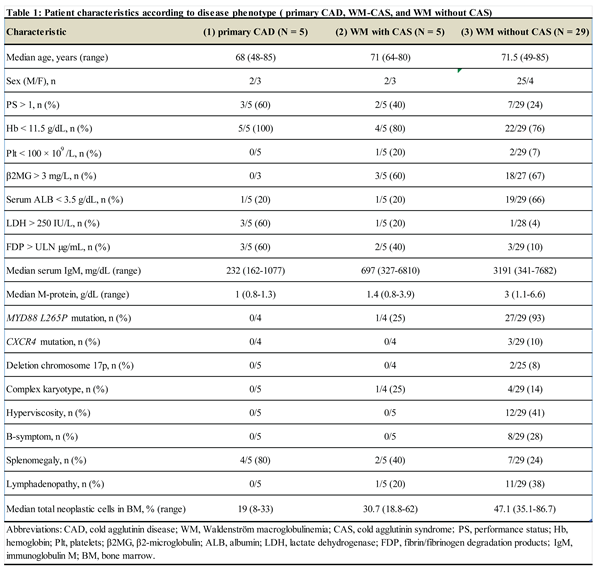
Five patients had pCAD, five had WM-CAS, and 29 had WM-only. Baseline characteristics are summarized in Table 1. Characteristics stratified by the presence or absence of CAH are shown in Supplementary Table S1.
Median serum IgM levels were 232 mg/dL in pCAD, 697 mg/dL in WM-CAS, and 3,191 mg/dL in WM-only. FDP elevation was more frequent in pCAD and WM-CAS than in WM-only, being observed in 3/5 patients (60%), 2/5 patients (40%), and 3/29 patients (10%), respectively. In contrast, MYD88 L265P was detected predominantly in WM-only, being absent in pCAD, present in 1/4 WM-CAS patients (25%), and detected in 27/29 WM-only patients (93%).
 |
Individual Characteristics of CAH
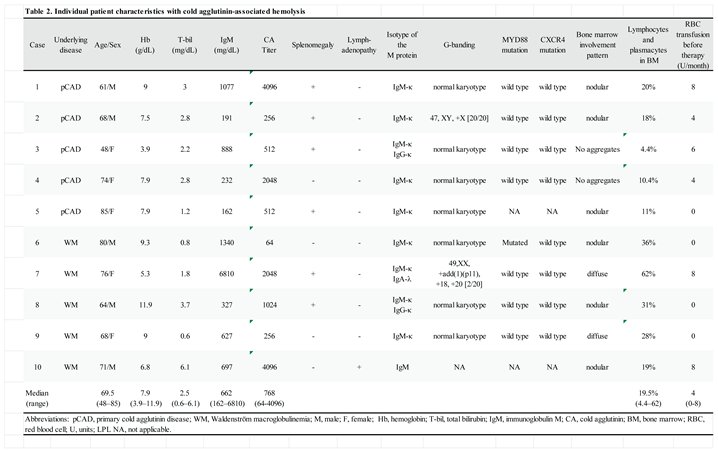
Table 2. The underlying diagnoses were pCAD in 5, which had been previously classified as symptomatic pCAD (19), and WM-CAS in 5 patients.
In the pCAD group, the MYD88L265P analysis was performed on four patients and none had the mutation. Regarding marrow infiltration patterns, three patients (Case 1, 2, 5) showed a nodular pattern, whereas no overt neoplastic infiltration was identified in the remaining cases.
In the WM-CAS group, the MYD88L265P analysis was available for four patients and was positive in 1/4 (Case 6). Case 10 had lymphadenopathy. Cases 7 and 9 showed diffuse BM infiltration on biopsy. Case 8 showed a nodular pattern on biopsy; however, 31% of tumor cell infiltration was confirmed in a BM aspirate, and the case was diagnosed as LPL.
 |
Treatment Regimens
Treatment regimens were distributed as follows. In the pCAD group, four patients received rituximab, cyclophosphamide, doxorubicin, vincristine, and prednisone (R-CHOP), and one received bendamustine plus rituximab (BR) (22). In the WM-CAS group, R-CHOP was administered to five patients (31). In the WM-only group, R-CHOP was the most frequently used regimen (n=20), followed by BTK inhibitors (n=5), BR (n=1), rituximab monotherapy (n=1), bortezomib-based regimens (n=1), and other treatments (n=1).
Response of Hemolytic Anemia Assessed by CAH Response Criteria
Figure 1a shows chronological changes in hemoglobin and total bilirubin levels, reflecting the treatment responses of hemolytic anemia in patients with pCAD and WM-CAS.
In the pCAD group, all patients (5/5) achieved at least CAH-PR (ORR 100%). The median time to CAH-PR was 3 weeks (range, 1-24). In addition, 4/5 patients achieved CAH-CR, with a median time to CAH-CR of 21.5 weeks (range, 4-41).
In the WM-CAS group, 4/5 patients achieved at least CAH-PR, yielding an ORR of 80%. The median time to CAH-PR was 5 weeks (range, 2-6). In addition, 2/5 patients subsequently achieved CAH-CR, with a median time to CAH-CR of 29.5 weeks (range, 21-38).
Tumor Response Assessed by IWWM Response Criteria
Based on IWWM response criteria (29), the best overall responses were CR (n=2), PR (n=2), and SD (n=1) in the WM-CAS group, and CR (n=4), VGPR (n=8), PR (n=10), and SD (n=7) in the WM-only group.
Survival Outcomes
Comparisons of TTNT and OS in patients with CAH (pCAD and WM-CAS) versus WM-only are shown in Figure 2a and Figure 2b, respectively. The median follow-up was 81 months. Median TTNT was not reached in the CAH group and was 65 months in the WM-only group, with a significant difference between the groups (Log-rank p = 0.0417).
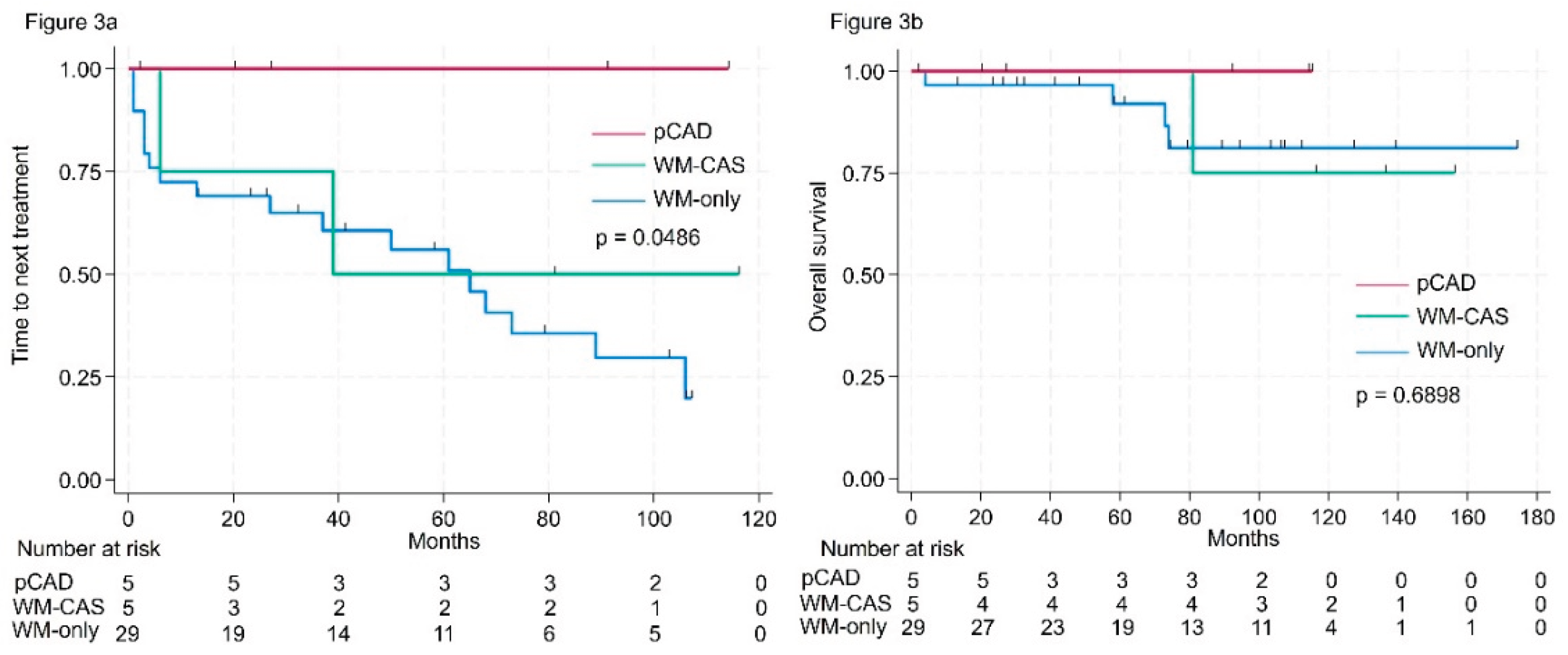
TTNT is shown in Figure 3a and OS in Figure 3b for pCAD, WM-CAS, and WM-only. Median TTNT was not reached in the pCAD group, was 39 months in the WM-CAS group, and was 65 months in the WM-only group. TTNT did not significantly differ between pCAD and WM-CAS (Log-rank p = 0.1343).
No deaths occurred in the pCAD group. In the WM-CAS group, one patient died by suicide. In the WM-only group, three patients died of disease progression and one of complications during the follow-up. Median OS was not reached in any group.
AE
Grade 3-4 neutropenia occurred in four pCAD patients and two WM-CAS patients. Two pCAD patients developed grade 2 infections. No thrombotic events occurred among the 10 CAH cases during the follow-up.
Discussion
The accurate differentiation of pCAD from WM-CAS remains challenging in routine clinical practice; however, previous studies indicated the potential of the MYD88L265P status, Ig gene usage (e.g., IGHV4-34), and BM infiltration patterns to support the disease classification (14). Somatic hypermutation of the Ig genes is observed in all cases of CAD (13), and MYD88L265P is typically absent in CAD (14). In the present study, Ig gene repertoire analysis could not be performed because the analysis was not easily examined in Japan. Similarly, many previous reports did not routinely include IGHV analysis (17-22). In contrast, MYD88L265P was negative in all pCAD cases tested (0/4) and was only detected in one of the WM-CAS cases (1/4). Importantly, MYD88 wild-type (MYD88WT) cases have been reported even among WM-CAS; in a multicenter retrospective series on cold autoimmune hemolytic anemia, 2 of 5 WM-associated cases were MYD88WT (23). At the same time, available evidence remains insufficient to define the true frequency of MYD88L265P positivity or IGHV4-34 usage specifically in WM-CAS, and the BM pathology may be non-discriminatory when the tumor burden is low; therefore, a misclassification, particularly among MYD88WT cases, cannot be fully excluded (32, 33). Due to these diagnostic limitations, an important practical question is whether pCAD and WM-CAS show marked differences in treatment responses and durability.
Although pCAD and WM-CAS represent distinct disease concepts and therapeutic paradigms differ in principle, treatment selection in routine clinical practice often overlaps. This may reflect clinically significant hemolysis being a shared driver for interventions in both pCAD and WM-CAS. In WM-CAS, CAH is a symptomatic manifestation of WM (16) and typically prompts WM-directed systemic therapy according to established algorithms (15). On the other hand, in pCAD, treatment options include complement inhibition and clone-directed therapy. Complement inhibition may rapidly control hemolysis, but generally requires ongoing, costly treatment (22, 25, 34) and does not target the underlying B-cell clone. Before the advent of complement inhibition, treatment was therefore largely based on clone-directed approaches, including rituximab monotherapy and rituximab-based CIT. Berentsen et al. reported a median response duration of 11 months with rituximab monotherapy, suggesting limited durability (17). In contrast, responses appear to be more durable with fixed-duration rituximab-based CIT (18, 19, 22); in a Nordic prospective multicenter study on BR in CAD, the median observed response duration was 32 months (19). During the study period, complement inhibitors were not yet available, and R-CHOP was one of the major CIT options available for untreated WM in Japan (31). In this context, CIT predominated as the first-line therapy in our cohort, including both pCAD and WM-CAS, and durability appeared broadly similar between groups: TTNT was not reached in pCAD and was 39 months in WM-CAS (Log-rank p = 0.1343). The overall response rate was 100% in the pCAD group and 80% in the WM-CAS group; however, these response rates should be interpreted with caution because of the very small sample size. These findings should also be interpreted in the context of historical treatment availability in Japan. Taken together, these results suggest that when hemolysis is the dominant clinical issue and strict categorization is unclear, fixed-duration tumor-directed therapy may be a pragmatic option for both pCAD and WM-CAS.
Patients with CAH are known to have an increased risk of thromboembolic events, likely related to complement activation and hemolysis-associated hypercoagulability (7-9). Furthermore, thromboembolic events may occur regardless of the seasons (9). In an IgM monoclonal gammopathy-associated CAD/cryoglobulinemia series (n=11), transfusion-independent hemoglobin improvement (≥2 g/dL) was achieved in 63.6% of patients; however, mortality remained high (63.6%), potentially related to advanced disease at presentation, associated with a median diagnostic delay of 12 months (6). Accordingly, CIT for CAH requires careful monitoring for thromboembolic and infectious complications. In our cohort, elevated FDP at presentation was more frequent in CAH cases than in WM-only cases, which is consistent with a prothrombotic tendency, whereas no overt thrombotic events were observed. Neutropenia occurred with rituximab-based CIT; however, no grade ≥3 infections were documented.
Limitations
This study is limited by its single-center retrospective design and small sample size, which restricts statistical power and precision for AE and event-time estimates. Molecular stratification was incomplete because an IGHV gene usage analysis (including IGHV4-34) was not performed and MYD88L265P testing was missing in one case each of pCAD and WM-CAS, leaving residual diagnostic uncertainty.
Conclusion
In this retrospective single-center cohort, rituximab-based CIT attenuated CAH in both pCAD and WM-CAS, and TTNT was not significantly different between these groups. Although diagnostic overlap remains, particularly among MYD88L265P-negative cases, the present results suggest the potential benefit of CIT when CAH is clinically dominant; however, the sample size was small, and further studies are warranted.
Supplementary Materials
The following supporting information can be downloaded at the website of this paper posted on Preprints.org.
Author Contributions
Conceptualization, KI, TK, SM, KH, and NS; Methodology, TK and NS; Formal Analysis, KI and NS; Investigation, KI, SM, and KH; Data Curation, KI; Writing - Original Draft Preparation, KI; Writing - Review & Editing, KI, TK, SM, KH, and NS; Supervision, NS; Project Administration, NS. All authors have read and approved the final manuscript.
Funding
This research received no specific grant or funding from agencies in the public, commercial, or not-for-profit sectors.
Institutional Review Board Statement
This study was performed in line with the principles of the Declaration of Helsinki and was approved by the Institutional Review Board at our hospital (Disaster Medical Center IRB 2025-42).
Informed Consent Statement
Informed consent was obtained through an opt-out process on the website, and individuals who declined participation were excluded.
Data Availability Statement
All data generated or analyzed during this study are included in this article. Further inquiries may be directed to the corresponding author.
Acknowledgments
There are no acknowledgments to declare.
Conflicts of Interest
Naohiro Sekiguchi has received honoraria from Janssen, Ono, and BeOne Medicines and research funding from Incyte Biosciences Japan, Janssen, Tanabe Pharma Corporation, MSD, and Ono.
References
- Berentsen S, Ulvestad E, Langholm R, et al. Primary chronic cold agglutinin disease: a population based clinical study of 86 patients. Haematologica. 2006;91(4):460-6.
- Crisp D, Pruzanski W. B-cell neoplasms with homogeneous cold-reacting antibodies (cold agglutinins). Am J Med. 1982;72(6):915-22. [CrossRef]
- Berentsen S, Tjønnfjord GE. Diagnosis and treatment of cold agglutinin mediated autoimmune hemolytic anemia. Blood Rev. 2012;26(3):107-15. [CrossRef]
- Barcellini W, Fattizzo B. The Changing Landscape of Autoimmune Hemolytic Anemia. Front Immunol. 2020;11:946. [CrossRef]
- Berentsen S, Röth A, Randen U, Jilma B, Tjønnfjord GE. Cold agglutinin disease: current challenges and future prospects. J Blood Med. 2019;10:93-103. [CrossRef]
- Zidaru L, Barbu S, Draghici R, Timotei SN, Coriu D, Badelita SN. Clinical diversity and treatment outcomes in IgM monoclonal gammopathy associated with cold agglutinin disease and cryoglobulinemia: a single center study. Documenta Haematologica - Revista Romana de Hematologie. 2025;3(2):61-66. [CrossRef]
- Broome CM, Cunningham JM, Mullins M, et al. Increased risk of thrombotic events in cold agglutinin disease: A 10-year retrospective analysis. Res Pract Thromb Haemost. 2020;4(4):628-35. [CrossRef]
- Delvasto-Nuñez L, Jongerius I, Zeerleder S. It takes two to thrombosis: Hemolysis and complement. Blood Rev. 2021;50:100834. [CrossRef]
- Kamesaki T, Nishimura J, Wada H, et al. Demographic characteristics, thromboembolism risk, and treatment patterns for patients with cold agglutinin disease in Japan. Int J Hematol. 2020; 112(3): 307-315. [CrossRef]
- Neresh KN, Barentsen S, Chen X, Randen U, Rossi D. Cold agglutinin disease. In: The WHO Classification of Tumours Editorial Board, Eds. World Health Organization classification of tumours. 5th ed. Haematolymphoid tumours. Lyon, IARC Press. 2024; pp.599–601.
- Berentsen S, Randen U, Tjønnfjord GE. Cold agglutinin-mediated autoimmune hemolytic anemia. Hematol Oncol Clin North Am. 2015;29(3):455-71. [CrossRef]
- Treon SP, Xu L, Yang G, et al. MYD88 L265P somatic mutation in Waldenström’s macroglobulinemia. N Engl J Med. 2012;367(9):826–33.
- Małecka A, Trøen G, Tierens A, et al. Immunoglobulin heavy and light chain gene features are correlated with primary cold agglutinin disease onset and activity. Haematologica. 2016;101(9):e361-4. [CrossRef]
- Randen U, Trøen G, Tierens A, et al. Primary cold agglutinin-associated lymphoproliferative disease: a B-cell lymphoma of the bone marrow distinct from lymphoplasmacytic lymphoma. Haematologica. 2014;99(3):497-504. [CrossRef]
- Leblond V, Kastritis E, Advani R, et al. Treatment recommendations from the Eighth International Workshop on Waldenström’s Macroglobulinemia. Blood. 2016;128(10):1321-8. [CrossRef]
- Buske C, Castillo JJ, Abeykoon JP, et al. Report of consensus panel 1 from the 11(th) International Workshop on Waldenstrom’s Macroglobulinemia on management of symptomatic, treatment-naïve patients. Semin Hematol. 2023;60(2):73-9. [CrossRef]
- Berentsen S, Ulvestad E, Gjertsen BT, et al. Rituximab for primary chronic cold agglutinin disease: a prospective study of 37 courses of therapy in 27 patients. Blood. 2004;103(8):2925-2928. [CrossRef]
- Berentsen S, Randen U, Vågan AM, et al. High response rate and durable remissions following fludarabine and rituximab combination therapy for chronic cold agglutinin disease. Blood. 2010;116(17):3180-4. [CrossRef]
- Berentsen S, Randen U, Oksman M, et al. Bendamustine plus rituximab for chronic cold agglutinin disease: results of a Nordic prospective multicenter trial. Blood. 2017;130(4):537-41. [CrossRef]
- Rossi G, Gramegna D, Paoloni F, et al. Short course of bortezomib in anemic patients with relapsed cold agglutinin disease: a phase 2 prospective GIMEMA study. Blood. 2018;132(5):547-50. [CrossRef]
- Jia MN, Qiu Y, Wu YY, et al. Rituximab-containing therapy for cold agglutinin disease: a retrospective study of 16 patients. Sci Rep. 2020;10(1):12694. [CrossRef]
- Ito K, Kitagawa T, Motohashi S, Hirano K, Sekiguchi N. Durable responses and favorable cost-effectiveness of rituximab-based chemoimmunotherapy for primary cold agglutinin disease. Blood Res. 2025;60(1):59. [CrossRef]
- Jalink M, Berentsen S, Castillo JJ, et al. Effect of ibrutinib treatment on hemolytic anemia and acrocyanosis in cold agglutinin disease/cold agglutinin syndrome. Blood. 2021;138(20):2002-5. [CrossRef]
- Jalink M, Jacobs CF, Khwaja J, et al. Daratumumab monotherapy in refractory warm autoimmune hemolytic anemia and cold agglutinin disease. Blood Adv. 2024;8(11):2622-2634. Blood Adv. 2024;8(24):6267. [CrossRef]
- Röth A, Berentsen S, Barcellini W, et al. Sutimlimab in patients with cold agglutinin disease: results of the randomized placebo-controlled phase 3 CADENZA trial. Blood. 2022;140(9):980-91. [CrossRef]
- Montes- Moreno S, Geddie WR, Kersten MJ, et al. “Lymphoplasmacytic Lymphoma,” in World Health Organization Classification of Tumours, 5th ed., ed. The WHO Classification of Tumours Editorial Board (Haematolymphoid tumours. IARC Press, 2024), 394–398.
- Oken MM, Creech RH, Tormey DC, Horton J, Davis TE, McFad den ET, Carbone PP (1982) Toxicity and response criteria of the Eastern Cooperative Oncology Group. Am J Clin Oncol 5(6):649–655.
- National Cancer Institute. Common Terminology Criteria for Adverse Events (CTCAE), version 5.0. Bethesda (MD): U.S. Department of Health and Human Services; 2017.
- Treon SP, Tedeschi A, San-Miguel J, Garcia-Sanz R, Anderson KC, Kimby E, et al. Report of consensus Panel 4 from the 11th International Workshop on Waldenstrom’s macroglobulinemia on diagnostic and response criteria. Semin Hematol. 2023;60(2):97-106. [CrossRef]
- Ito K, Kitagawa T, Harada K, Hirano K, Sekiguchi N. Impact of chromosomal aberrations detected by chromosome banding analysis in symptomatic Waldenström’s macroglobulinemia. Ann Hematol. 2025;104(1):713–20. [CrossRef]
- Treon SP, Tedeschi A, San-Miguel J, Garcia-Sanz R, Anderson KC, Kimby E, et al. Report of consensus Panel 4 from the 11th International Workshop on Waldenstrom’s macroglobulinemia on diagnostic and response criteria. Semin Hematol. 2023;60(2):97-106. [CrossRef]
- Sekiguchi N, Hamano A, Kitagawa T, et al. Impact of rituximab and half-dose CHOP as primary therapy for untreated symptomatic Waldenström Macroglobulinemia: review of a combined regimen of rituximab with an alkylating agent. Blood Res. 2018;53(2):117-22. [CrossRef]
- Berentsen S, Barcellini W, D’Sa S, et al. Cold agglutinin disease revisited: a multinational, observational study of 232 patients. Blood. 2020;136(4):480-8. [CrossRef]
- Bozzi S, Umarje S, Hawaldar K, et al. Prevalence and incidence of primary autoimmune hemolytic anemia and cold agglutinin disease in the United States, 2016-2023. PLoS One. 2025;20(6):e0323843. [CrossRef]
- Ito S, Wang D, Purcell A, et al. Cost-effectiveness of sutimlimab in cold agglutinin disease. Am J Hematol. 2024;99(8):1475-84. [CrossRef]
Figure 1.
Chronological changes in laboratory findings after treatment. (a) Hemoglobin and (b) total bilirubin over time. The x-axis indicates weeks, with week 0 marking treatment initiation and negative weeks indicating pretreatment measurements. Red and blue lines show median values for primary cold agglutinin disease (pCAD) and Waldenström macroglobulinemia-associated cold agglutinin syndrome (WM-CAS), respectively, with the shaded areas indicating the 95% confidence intervals. Light- and dark-gray lines represent individual patient trajectories for pCAD and WM-CAS.
Figure 1.
Chronological changes in laboratory findings after treatment. (a) Hemoglobin and (b) total bilirubin over time. The x-axis indicates weeks, with week 0 marking treatment initiation and negative weeks indicating pretreatment measurements. Red and blue lines show median values for primary cold agglutinin disease (pCAD) and Waldenström macroglobulinemia-associated cold agglutinin syndrome (WM-CAS), respectively, with the shaded areas indicating the 95% confidence intervals. Light- and dark-gray lines represent individual patient trajectories for pCAD and WM-CAS.
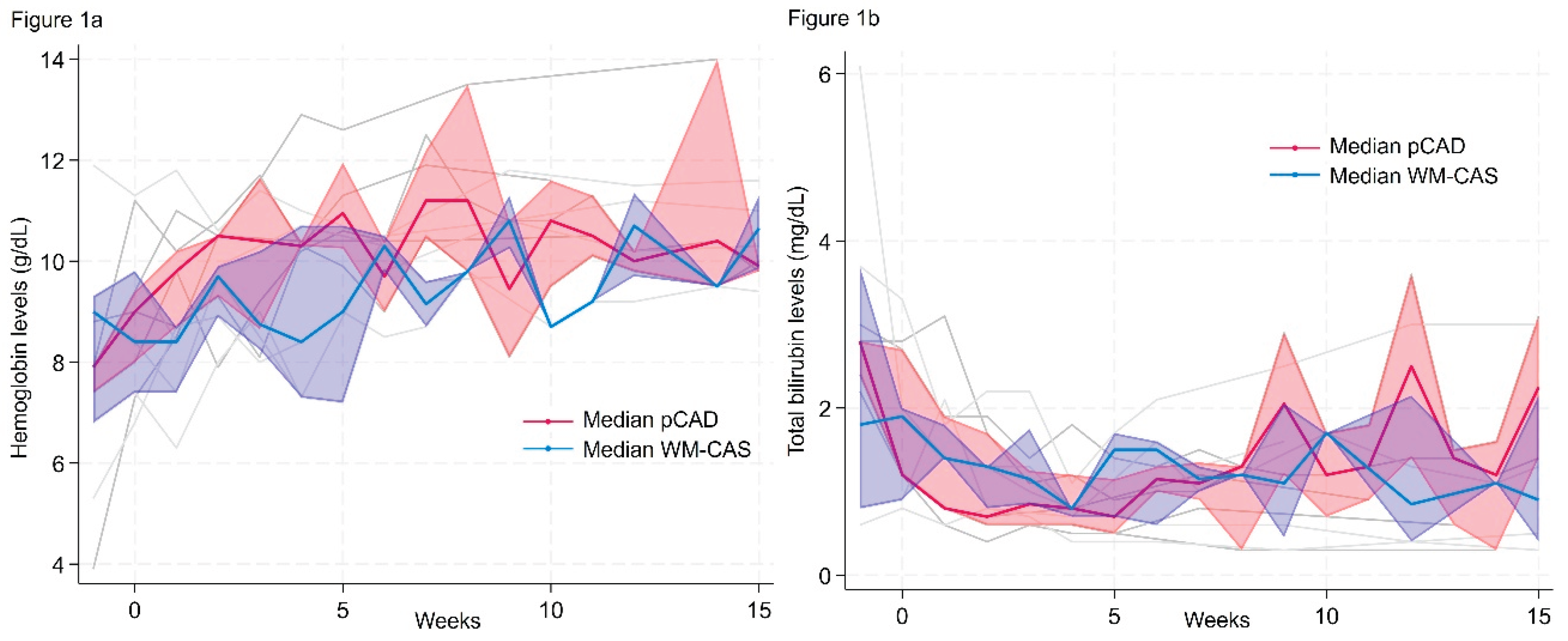
Figure 2.
Survival analyses. (a) Time to next treatment (TTNT) and (b) overall survival (OS). The x-axis shows time in months. Kaplan–Meier curves compare patients with cold agglutinin–associated hemolysis (CAH; primary cold agglutinin disease and Waldenström macroglobulinemia–associated cold agglutinin syndrome) (red) versus patients with Waldenström macroglobulinemia without cold agglutinin syndrome (WM-only) (blue).
Figure 2.
Survival analyses. (a) Time to next treatment (TTNT) and (b) overall survival (OS). The x-axis shows time in months. Kaplan–Meier curves compare patients with cold agglutinin–associated hemolysis (CAH; primary cold agglutinin disease and Waldenström macroglobulinemia–associated cold agglutinin syndrome) (red) versus patients with Waldenström macroglobulinemia without cold agglutinin syndrome (WM-only) (blue).
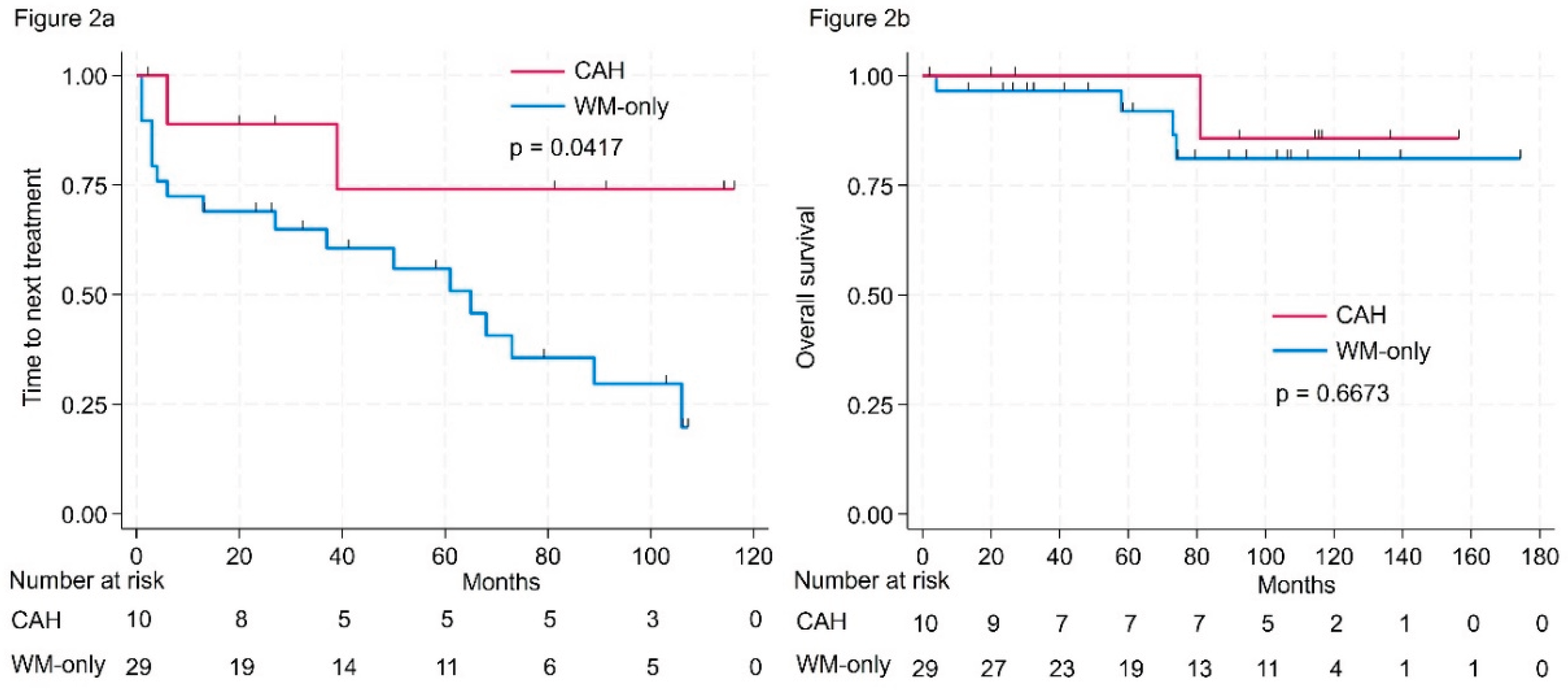
Figure 3.
Survival analyses. (a) Time to next treatment and (b) overall survival. The x-axis indicates months. Red, green, and blue curves represent primary cold agglutinin disease (pCAD), Waldenström macroglobulinemia-associated cold agglutinin syndrome (WM-CAS), and Waldenström macroglobulinemia without cold agglutinin syndrome (WM-only), respectively.
Figure 3.
Survival analyses. (a) Time to next treatment and (b) overall survival. The x-axis indicates months. Red, green, and blue curves represent primary cold agglutinin disease (pCAD), Waldenström macroglobulinemia-associated cold agglutinin syndrome (WM-CAS), and Waldenström macroglobulinemia without cold agglutinin syndrome (WM-only), respectively.
Disclaimer/Publisher’s Note: The statements, opinions and data contained in all publications are solely those of the individual author(s) and contributor(s) and not of MDPI and/or the editor(s). MDPI and/or the editor(s) disclaim responsibility for any injury to people or property resulting from any ideas, methods, instructions or products referred to in the content. |
© 2026 by the authors. Licensee MDPI, Basel, Switzerland. This article is an open access article distributed under the terms and conditions of the Creative Commons Attribution (CC BY) license (http://creativecommons.org/licenses/by/4.0/).
Copyright: This open access article is published under a Creative Commons CC BY 4.0 license, which permit the free download, distribution, and reuse, provided that the author and preprint are cited in any reuse.


