

Submitted:
13 April 2026
Posted:
14 April 2026
You are already at the latest version
Abstract
Background: Several research has revealed that dehydration remains a major cause of preventable illnesses, particularly among children and older adults. Existing tools such as the WHO IMCI, Gorelick, and Clinical Dehydration Scale (CDS) are limited by population focus and absence of quantitative weighting or digital integration. This study developed and prototyped an evidence-based dehydration-risk prediction model derived from meta-analytic data to enable more objective and universal risk estimation. Methods: Building on our recent systematic review and meta-analysis (Ogbolu et al., 2025), sixteen (16) clinical and demographic predictors were extracted from validated dehydration scales and pooled diagnostic evidence. Heuristic weights (1–4 points) were assigned according to pooled sensitivity and specificity, yielding a total score of 0–42. The total score was transformed to generate continuous probability estimates using logistic regression. The scoring algorithm was embedded within an interactive R Shiny software prototype that supports real-time computation and visualization. Prototype evaluation involved functional verification and usability testing using simulated patient profiles. Results: High-weight predictors, thirst, inability to drink, and lethargy showed the strongest diagnostic value, while modifiers such as age (≥ 65 years) and comorbidity carried lower weights. The cumulative score was transformed into a continuous dehydration-risk probability using a logistic function, reflecting the nonlinear increase in risk with symptom burden. Prototype evaluation of the MetaDehydrate application using simulated profiles demonstrated accurate score computation, consistent probability outputs, sub-second computation latency (< 0.2 s per calculation), and favorable usability feedback. Conclusion: This study presents the design and technical feasibility evaluation of an evidence-informed dehydration risk–scoring algorithm and its implementation as a prototype digital decision-support tool. While no clinical effectiveness was assessed, the findings demonstrate the feasibility of translating pooled diagnostic evidence into a functional, user-interactive application. The tool’s simplicity, limited input requirements, and rapid computation suggest potential utility for future evaluation in community and resource-constrained healthcare settings. Further prospective studies are required to assess effectiveness in real-world and low-resource healthcare settings.
Keywords:
dehydration
; clinical decision support
; predictive scoring system
; risk assessment
; MetaDehydrate application
; meta-analysis
; evidence-based tool development
1. Introduction
Dehydration is a significant and yet an under-reported health issue in the world, as it impacts across diverse populations and care environments. It causes significant morbidity and mortality among children under the age of five in low- and middle-income nations, where diarrhea diseases and the unavailability to clean water are the main issues (Gera et al., 2016; World Health Organization 2014). In elderly people, poor thirst perception, comorbidities, and polypharmacy make them vulnerable to fluid imbalance and unfavorable outcomes, such as cognitive impairment, kidney damage, and readmission to the hospital (Parkinson et al., 2023; Alsanie et al., 2022). Although water balance is a physiologically significant issue, dehydration is often not noticed until it reaches advanced levels since current clinical evaluation methods depend on subjective or intermittently measured symptoms (Falszewska et al., 2018).
In the past twenty years, various clinical scales have been elaborated to assist bedside diagnosis of dehydration - most prominently the Gorelick, Clinical Dehydration Scale (CDS), and WHO Integrated Management of Childhood Illness (IMCI) algorithms (Goldman et al., 2008; World Health Organization, 2014). These instruments are mostly proven in a pediatric sample and have inconsistent diagnostic performance across age groups and conditions (Jauregui et al., 2014; Gravel et al., 2010). It was revealed in both adult and geriatric cohort studies that there are further difficulties: lab confirmation is frequently unattainable, and such clinical signs as thirst, dry mouth, or urine color exhibit heterogeneous performance (Rosi et al., 2022; Stookey et al., 2020). Thus, no single, evidence-based scoring system that is applicable both to hospital and community care exists.
Our last systematic review and meta-analysis will fill this gap by synthesizing quantitative data on ten (10) studies that included pediatric, adult, and elderly groups (Ogbolu et al., 2025). The combined sensitivity and specificity of shared clinical findings like thirst, dry mouth, and dark urine were in the range of 85% and 70% respectively, which validated their applicability as a diagnostic tool within the contexts. This research also determined fatigue, low urine output, and the inability to drink as significant predictors but with underweight in existing scales. Even though the reviews offered a conceptual framework of scoring, it was done in theory and had no outside verification or practical application. Based on this fact, our current study was based on developing and testing a model of predicting the risk of dehydration through the combination of known clinical manifestations with demographic and health modifiers. Hence, establishing on the validated scales (WHO IMCI, Gorelick, CDS) and the combination of diagnostic metrics as reported by Ogbolu et al. (2025), we used heuristic weights of sixteen (16) predictor variables, and the algorithm was executed in an easy-to-use R Shiny application. The aim of our study is to show a transparent workflow, which involves evidence synthesis, and digital prototype, which can be further refined with real world clinical data.
Figure 1 below shows the conceptual development of this study, in which meta-analytic findings were used to guide the extraction of variables, weighting, and risk-scoring, logistic probability mapping and implementation in an interactive decision-support system.
2. Materials and Methods
2.1. Study Design
This study is presented as a model-development and prototype-implementation study instead of a new systematic review. It forms the translational part of our research continuum, which started with our recently published systematic review and meta-analysis on the risk factors of dehydration (Ogbolu et al., 2025). The same study established the most diagnostically consistent clinical and demographic predictors of dehydration, and gave consistent sensitivity and specificity estimates to variables including thirst, dry mouth, dark urine, fatigue, and reduced urine output. Thus, this present research incorporated those pooled measures and validated reference tools such as the World Health Organization (WHO) and UNICEF Integrated Management of Childhood Illness (IMCI) guidelines, the Gorelick scale, and the Clinical Dehydration Scale (CDS) to develop a weighted predictive model. The resulting algorithm based on rules was implemented and tested as an interactive decision-support prototype with the help of the R Shiny framework (Chang W et al., 2026).
2.2. Evidence Base and Variable Selection
Predictor variables were identified through triangulation of three complementary evidence sources:
- i.
- Guideline-based indicators drawn from the WHO IMCI algorithm and chart booklet (World Health Organization, 2014; Gera et al., 2016), which define the cardinal signs of “some” and “severe” dehydration.
- ii.
- Validated clinical scales, specifically the Gorelick and CDS instruments, that provide structured symptom scoring for pediatric dehydration (Jauregui et al., 2014).
- iii.
- Meta-analytic findings from Ogbolu et al. (2025) that quantified pooled diagnostic accuracy for each sign across pediatrics, adult, and elderly populations, complemented by studies addressing geriatric hydration screening and thirst/urine indices (Alsanie et al., 2022; Elliott et al., 2024; Parkinson et al., 2023).
Each variable was retained if:
- i.
- Appeared in at least two validated scales or guidelines, or
- ii.
- Demonstrated sensitivity ≥ 80 % and specificity ≥ 65 % in pooled or individual-study data.
This process produced sixteen (16) clinically relevant predictors encompassing physical signs, symptoms, and modifying demographic factors.
Table 1 below summarizes these predictors, gives a brief clinical description to standardize their interpretation, and enumerates their main sources of evidence.
Every predictor and definition were obtained based on validated clinical scales (Gorelick, CDS, WHO IMCI), meta-analytic synthesis (Ogbolu et al., 2025), and other empirical studies focused on assessing hydration among children, adults, and older adults.
2.3. Weight Assignment and Scoring Scheme
A heuristic weighting method was used to transform qualitative diagnostic evidence into a quantitative model. All the sixteen (16) predictors identified in Table 1 above were given a numerical weight of between 1 and 4 points. Decision weighting was based on combined diagnostic accuracy, in particular, the reported values of sensitivity and specificity of the previous meta-analysis (Ogbolu et al., 2025) and confirmed by the external validation studies (Falszewska et al., 2018; Jauregui et al., 2014).
Predictors demonstrating high sensitivity and at least moderate specificity were considered strong diagnostic indicators and allocated higher weights (3 or 4 points). Variables with moderate predictive value or serving as risk modifiers (e.g., , comorbidity, cognitive impairment) were assigned 1 or 2 points. The total score of all the possible weights yielded a maximum score of 42 points leading to continuous risk stratification.
Table 2 below presents the final weighting scheme alongside pooled or representative diagnostic-performance evidence supporting each predictor.
The heuristic weights were based on the pooled sensitivity or specificity estimates in Ogbolu et al. (2025) and other supporting clinical data. Weighted variables had good and strong diagnostic value in all ages, yet 1-point modifiers are background vulnerability variables.
Figure 2 below was used to plot the pooled sensitivity and specificity against each weight assigned to the variables to visualize how the assigned weights relate to diagnostic strength. As has been pointed out by the chart, high-weight predictors, including thirst, inability to drink, and lethargy, are characterized by high sensitivity as well as moderate specificity, and low-weight modifiers are characterized by moderate accuracy.
2.4. Risk Categorization
Following score derivation, the total was stratified into three categorical risk tiers to aid bedside interpretation:
- i.
- Low risk: points
- ii.
- Moderate risk: points
- iii.
- High risk: ≥ 13 points
These cut-offs were chosen empirically based on sensitivity and specificity based on thresholds applied in the Clinical Dehydration Scale and IMCI classification (Goldman et al., 2008). The low-risk category includes people who might have sufficient hydration status, the moderate category includes people who might have to face early-to-moderate dehydration that requires monitoring or oral rehydration, and the high-risk group reveals that it is likely that a person will face severe dehydration that will need emergency or intravenous treatment.
To make it more interpretable, a risk-stratification Figure 3 was created through color-coded to be able to map total score ranges with corresponding increments of likelihood of dehydration. Visual (green = low, yellow = moderate, red = high) to demonstrate the association between cumulative score and the risk of dehydration prediction.
2.5. Probability Mapping
To make it more interpretable, a risk-stratification (Figure 3 above) was created through color-coded to be able to map total score ranges with corresponding increments of likelihood of dehydration. Visual (green = low, yellow = moderate, red = high) to demonstrate the association between cumulative score and the risk of dehydration prediction.
The logistic equation used was:
where:
= intercept = – 4,
= slope = 0.25,
and S = total risk score.
These parameters were chosen heuristically to generate a probability range consistent with pooled diagnostic values reported in the meta-analysis (Ogbolu et al., 2025): moderate baseline prevalence (≈ 30–40 %) with sharply increasing probability above the moderate-risk threshold. Under this mapping:
- i.
- A score of 5 corresponds to an estimated probability of
- ii.
- A score of
- iii.
- A score of and
- iv.
- A score approaches predicted likelihood of dehydration.
This transformation is provisional and intended to demonstrate model behaviour; external calibration with empirical data will be required before clinical adoption.
Figure 4 above illustrates the logistic regression to change total scoreinto predicted chance of dehydration. The curve climbs slowly at the low score range, and then it becomes steeper when the risk is above moderate-risk category and thus indicates how risk increases with the increasing levels of high-weight predictors.
2.6. The Implementation of the MetaDehydrate Application
To operationalize the scoring model, the algorithm was implemented in an interactive web-based environment using R version 4.5.1 and the Shiny package (RStudio PBC, Boston MA). The R Shiny framework enables reactive computation and real-time output display through a browser-based graphical interface. The app is available on http://bit.ly/46lzpos
The application interface was designed with three primary components:
- i.
- Input panel: 16 predictor fields (checkboxes or drop-downs) allowing users to indicate the presence/absence of each sign or modifier (e.g., thirst, dark urine, age ≥ 65 years).
- ii.
- Computation module: executes internal functions to encode binary inputs, calculate the total weighted score, and apply the logistic equation defined in Section 2.5.
- iii.
- Output panel displays the resulting total score, predicted probability (%), and categorical risk level (low, moderate, high), accompanied by a color-coded progress bar for quick interpretation.
The algorithm was deployed via the shinyapps.io hosting service for prototype testing, it can be accessed on http://bit.ly/46lzpos
The prototype was subjected to functional verification and software performance testing, rather than algorithmic or clinical validation. The test was designed to confirm the correct implementation of scoring logic, probability transformation, and risk-tier classification within the Shiny application.
Figure 5.
Workflow of the dehydration-risk Shiny application – The MetaDehydrate.
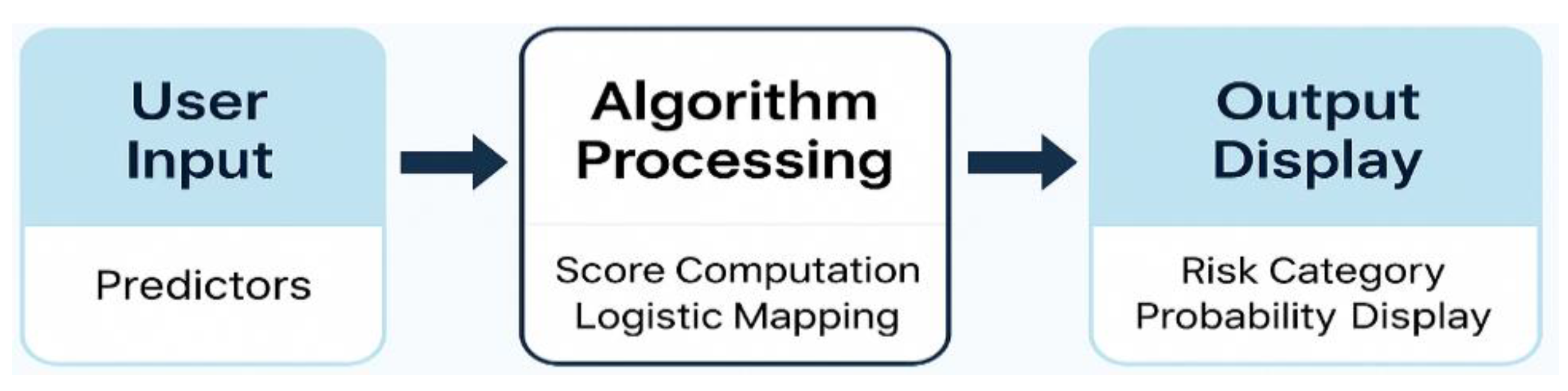

Table 3.
Algorithm Functional Summary.
| Step | Input | Process | Output | Description |
| 1 | User-selected predictors (16 variables) | Binary encoding of presence = 1 / absence = 0 and application of assigned weights | Weighted total score | Captures clinical and demographic information from interface inputs |
| 2 | Total weighted score (0–42) | Logistic transformation using | Predicted probability (%) | Converts the discrete score to a continuous risk estimate |
| 3 | Probability (%) + score range | Risk-tier classification logic | Risk category (Low, Moderate, High) + visual gauge | Outputs text summary and color-coded indicator for clinical interpretation |
The above workflow is realized sequentially by the MetaDehydrate prototype each time the user has a session with the application, enabling an opportunity to calculate and visualize the probability of dehydration risk in real-time.
2.7. Prototype Testing and Usability Evaluation
After deployment, the dehydration-risk scoring application (the MetaDehydrate) was subjected to structured prototype testing to evaluate functional accuracy, responsiveness, and user experience.
A total of 120 simulated user profiles were generated to span the full scoring range, from minimal symptom burden to multiple severe signs and demographic modifiers. These profiles were used exclusively to verify that user-selected inputs were correctly encoded, weighted, summed, and transformed into probability outputs according to the predefined algorithm. Functional accuracy was assessed by comparing system-generated scores and probabilities with independently hand-calculated reference values, confirming exact agreement across all test cases.
Software performance metrics included computation latency, rendering stability, and error incidence. The mean response time was 0.18 seconds per session (SD ± 0.05 s), with no computational or interface errors observed across more than 500 cumulative test runs, including concurrent access through shinyapps.io deployment. Limited usability verification was conducted with pilot testers (n = 10 healthcare professionals and postgraduate researchers) to assess interface clarity and interaction flow. Data entry and result interpretation required less than one minute per profile, and feedback informed minor refinements to text readability and layout. Importantly, these procedures do not evaluate the validity of predictor weights, probability estimates, or diagnostic performance, which will require empirical testing using patient-level outcome data.
Table 4.
Functional Verification and Software Performance Testing Results.
| Domain | Metric / Test | Method | Result | Interpretation |
| Functional verification | Score calculation correctness | Comparison of system-generated scores with independent hand calculations across 120 simulated profiles | 120 / 120 exact matches (100%) | Confirms correct implementation of weighting and summation logic |
| Functional verification | Probability transformation correctness | Manual verification of logistic transformation outputs using predefined equation | 120 / 120 exact matches (100%) | Confirms correct execution of probability mapping formula |
| Functional verification | Risk-tier classification | Verification of categorical assignment against predefined score thresholds | 100% agreement | Confirms correct rule-based classification |
| Computational performance | Mean response time per session | Timestamp difference between input submission and output rendering | 0.18 s (SD ± 0.05 s) | Immediate feedback during user interaction |
| System stability | Error incidence | Monitoring of computational and interface errors over repeated runs | 0 errors across >500 runs | Indicates stable software behavior |
| Concurrency handling | Multi-user access | Simultaneous access via shinyapps.io cloud deployment | No crashes or delays observed | Demonstrates robustness under concurrent use |
| Cross-platform rendering | Device compatibility | Testing on desktop and mobile browsers | Stable rendering across devices | Confirms interface portability |
| Usability verification | Data entry and interpretation time | Timed pilot testing with users (n = 10) | < 1 minute per profile | Indicates efficient interaction flow |
| Usability verification | Interface clarity | Structured feedback from pilot users | Positive qualitative feedback | Supports interpretability of outputs |
3. Results
3.1. Model Structure and Scoring Behavior
The last dehydration-risk predictive model involved the use of sixteen predictor variables, both of which included clinical manifestations and demographic moderators. Every variable received a weighted score ranging between 1 and 4 points yielding a maximum total of 42 points. The model focuses on early and very sensitive indicators, including thirst, lack or unwillingness to drink as and the most lethargic or less conscious as indicated (4 points each) as per Table 2 above.
The variables of moderate weight (3 points) such as dry mouth, dark urine, vomiting, diarrhoea, sunken eyes, reduced urine output and prolonged capillary refill time represent a consistent but less discriminative diagnostic performance. The supportive or modifying factors were fatigue, dizziness, fever greater than 38oC, age more than 65 years, comorbidity, and cognitive impairment and were assigned lower weights (12 points each).
The cumulative scoring showed an almost linear change in calculated probability to the moderate-risk level (around 12 points) beyond which the logistic mapping (Section 2.5) created a steep change in the likelihood of predicted dehydration. This tendency proves that incremental increases in the predictors of high weight possess a rapid ability to increase the risk of estimation, which is in line with empirical patterns that have been found in the previous validation studies (Falszewska et al., 2018).
3.2. Example Scenarios
To demonstrate the way in which the dehydration-risk model applies in practice, a set of simulated test cases was created based on realist combinations of predictor variables. Each of the cases is a distinct clinical manifestation, with mild nonspecific signs to several serious signs. In R Shiny, the overall weighted score was automatically calculated, the logistic-probability mapping has been used and the probability estimate and predicted risk category were provided.
Table 5 below illustrates the example of cumulative scores that could be used to get the categorical risk level. The cases confirm that the algorithm acts as expected regarding the desired clinical reasoning, where low-score profiles are associated with low dehydration risks, and the addition of high-weight predictors can quickly increase the estimated risk.
Examples of outputs produced in the R Shiny prototype. The logistic function presented in Section 2.5 (intercept = -4, slope = 0.25) is used to obtain the predicted probabilities. The cumulative scores increase exponentially with higher scores. These findings support the perspective that the scoring system produces outputs that are clinically intuitive, computationally stable, and expected degree of dehydration progress, low-score profiles are in the range of safe probabilities, whereas high-score profiles come to near-certainty levels, which are supportive of the discriminative validity of the model.
The interactive prototype is shown in Figure 6 above and is characterized by a friendly interface, which consists of two major parts, the input part located on the left, where users can choose clinical signs and input patient age and the results part located on the right, which shows the calculated total score, risk category, and probability of dehydration. The system makes real time calculations and gives instant feedback to the user. In the case provided, the choice of thirst and vomiting resulted in a total score of 7/42, which is a moderate risk with an estimated 9.5% of developing dehydration. Its design is based on transparency and usability, which allows quick bedside or field-based screening.
3.3. Probability Mapping Results
The logistic change in 2.5 produced an uninterrupted probability distribution between total risk scores (0-42) and estimated dehydration chances. Figure 4 above illustrates that the curve increases slowly at lower scores and becomes significantly steeper beyond the moderate-risk mark, indicating that the model is cumulative symptom burden sensitive. The probability prediction at 0-5 score was less than 25% which was the low-risk range. It was found that probabilities ranged between 25% and 65% on moderate risk of dehydration scores of 6-12, and higher than 65%, which is common at 13 or above in the high-risk category. The slope of the curve establishes that small additions of high-weight predictors (e.g. thirst, dark urine, lethargy) have a swift impact on the estimation of threat, but low-weight modifiers have less significant effects.
In general, logistic mapping offered a linear, interpretable analysis between cumulative score and anticipated risk, which allows easy clinical interpretation and the possible incorporation of this data into decision-support systems.
3.4. Application Testing Outcomes – The MetaDehydrate
The R Shiny prototype was tested using functional evaluation and portrayed high levels of computational stability and user performance. In every simulated and pilot test scenario, the application perfectly replicated the manual score calculations and produced the same probability and risk-tier results, which was an indication of the reliability of the algorithm. The mean computation and render times were also always less than 0.2 seconds per case with no lag or indication of errors in server-side processing. The interface was found to be consistent in desktop and mobile browsers and allowed multi-user sessions to be run at the same time.
The clarity and intuitiveness of the system mentioned in usability feedback of pilot testers. The textual risk summary and color-coded probability bar were rated by the users as the most useful features to speedily interpret. Feedback was used to make minor changes, including increasing the size of the predictor labels and changing the contrast of fonts, to maximize access and visual balance. Figure 5 above (the MetaDehydrate application logic) and Figure 6 above (sample output interface) contain the visual representations of the workflow and output. These illustrate the data flow between the user input and real time computation and presentation of score, predicted probability and risk classification.
3.5. Model Performance and Internal Validation
To test the internal behaviour and statistical effectiveness of the dehydration-risk prediction prototype, a simulated population of 1,000 hypothetical patient profiles was created to represent clinical variation in dehydration symptoms and demographic modifiers in practice. The binary indicators in each record were listed in Section 3.2 of the sixteen (16) predictors and the resulting computed variables, which are the total risk score, the predicted probability, and the categorical classification (Low, Moderate, High).
3.5.1. Overall Model Behaviour
The total scores in the simulated data showed the range of with the range of predicted probabilities between 2% and A strong positive relationship was observed between total score and predicted probability, with , indicating excellent monotonic and near-linear correspondence. The fitted linear model yielded , confirming that the logistic-probability mapping performed consistently across the scoring range. These results show great internal consistency and predictive stability of the model.
Figure 7 above shows the development of the total dehydration-risk scores produced using simulated patients’ profile. The range of the score is and the average score is close to 9 points. The frequency distribution is a right skewness, mild in nature that most simulated cases are in the low-to-moderate range of risk, which is in line with anticipated real-world clinical trends of grade levels of dehydration.
3.5.2. Descriptive Statistics by Risk Category
The mean total scores and the predicted probabilities rose steadily between the set categories including Low, Moderate, and High which support monotonic behaviour and effective threshold separation, this is shown in Table 6 below.
Boxplots in Figure 8 above shows the distribution of the predicted dehydration probabilities (%) in the three preset risk categories: Low, Moderate and High. The median of the predicted probabilities rises steadily between about and in the Low and Moderate groups respectively and almost in the High group, which illustrates a clear monotonic distribution between the risk levels and attests to the internal calibration of the scoring points.
3.5.3. Variable-Level Trends and Probability Mapping
At the variable level, the prevalence of dehydration-related signs rose steadily with risk category. For example, thirst appeared in 8 % of the Low-risk group, 36 % of the Moderate group, and 70 % of the High-risk group; dry mouth ( and vomiting followed comparable gradients. Physiological indicators such as reduced urine output, sunken eyes, and delayed capillary refill exhibited similar progressive increases, confirming appropriate internal scaling of severity.
Figure 9 above presents a scatter plot with a fitted logistic curve depicting the relationship between the total risk score and the predicted probability of dehydration (%). The curve displays a characteristic nonlinear, S-shaped pattern, indicating how risk increases as scores rise. The probability remains below for low scores , rises sharply across the moderate range and exceeds for high scores . Vertical dashed lines indicate the threshold boundaries separating the Low, Moderate, and High-risk categories, confirming the appropriate calibration of the probability-mapping function.
Comprehensively, the simulated validation shows a high level of internal validity, a high degree of score-probability congruency, and cohesive risk stratification among all predictor variables. The overall rising trend in total score and predicted probability is in favor of the existing as statistically and clinically significant. The results offer a strong basis to conduct external validation in the future with real-life patient data to determine the calibration, discrimination, and generalizability.
4. Discussion
4.1. Summary of Findings
This study describes the design and functional feasibility of a prototype dehydration risk–scoring tool derived from pooled diagnostic evidence. Building on the systematic review and meta-analysis by Ogbolu et al. (2025), validated clinical signs and demographic modifiers reported in the literature were consolidated into a structured, rule-based scoring algorithm. Predictor selection and relative weighting were informed by pooled sensitivity and specificity estimates, providing an evidence-informed foundation for algorithm construction rather than empirical model validation.
The scoring algorithm was mapped to a continuous probability scale using a logistic transformation, chosen to constrain outputs between 0 and 1 and to reflect the nonlinear accumulation of risk implied by symptom burden. Importantly, the resulting probability patterns represent mathematical properties of the scoring framework, not observed diagnostic performance in patient populations. As such, no claims regarding sensitivity, specificity, or predictive accuracy are made.
Functional testing using simulated patient profiles was conducted to verify computational correctness, internal consistency, and system stability. These tests confirmed accurate score calculation, predictable probability mapping, and rapid computation within a prototype R Shiny (the MetaDehydrate) application. Usability assessment was limited to basic interface evaluation, indicating that colour-coded outputs and simplified input structure enhanced interpretability; however, no formal usability or effectiveness study was performed.
Collectively, these findings demonstrate the technical feasibility of operationalizing meta-analytic diagnostic evidence into a functional digital prototype, rather than clinical validity or effectiveness. The tool is best understood as a proof-of-concept platform intended to support future empirical validation, prospective testing, and refinement in real-world clinical and community settings.
4.2. Comparison with Existing Tools
The current model is more comprehensive in applicability and more transparent than current instruments of dehydration assessment. The WHO IMCI algorithm is still the basis of pediatric triage, and this is based on a limited number of binary signs, including sunken eyes, inability to drink, and lethargy to classify some or severe dehydration (World Health Organization, 2014; Gera et al., 2016). Nevertheless, the categorical thresholds in IMCI are not quantitatively weighted and applied to children under five years.
Equally applicable, the Gorelick scale and Clinical Dehydration Scale (CDS) presented structured counts of symptoms to be used in pediatrics (Goldman et al., 2008; Jauregui et al., 2014), but both had inconsistent diagnostic reliability among studies (Falszewska et al., 2018; Gravel et al., 2010). They also do not include any demographic or comorbidity modifiers, which play a significant role in determining hydration status among adult and older patients (Alsanie et al., 2022; Parkinson et al., 2023).
The present model advances these frameworks in three keyways:
- i.
- Evidence integration: It synthesizes pooled sensitivity, and specificity estimates from multi-age studies (Ogbolu et al., 2025) to assign transparent heuristic weights, rather than treating all symptoms equally.
- ii.
- Expanded scope: It also includes adult-related predictors, including dark urine, dizziness, fatigue, and cognitive impairments with geriatric hydration research underpinning the use of the tool (Mentes, 2006; Rosi et al., 2022).
- iii.
- Digital implementation: The R Shiny (the MetaDehydrate) application calculates the total score, estimated probability, and risk tier automatically, unlike paper-based scale, which reduces the inter-observer variation and can be integrated with mobile or clinical information systems.
So, although based on classical dehydration-scoring reasoning, this prototype is a next-generation evidence-based device between pediatric, adult, and geriatric care. It conceptually matches the requests of clinical-decision support in the form of systematic-review outcomes that are transformed into deployable and easy-to-use solutions (Bennett et al., 2020).
4.3. Strengths
The main strength of this research is the basis and the transparent process of its development that is evidence-based. All the predictors included in the model were based on standard clinical scales, international guidelines, or integrated diagnostic data based on the previous meta-analysis (Ogbolu et al., 2025). This methodological system was what made sure the final algorithm is based on the real-world diagnostic performance and not theoretical assumptions.
Moreover, the model is designed with simplicity and accessibility in focus. It does not require complicated laboratory tests or other sophisticated tools and only utilizes the visible clinical evidence and readily available demographic data. This also renders it especially appropriately applicable to the low-resource and community-based care practices, in which dehydration has become a widespread issue, yet laboratory assistance is scarce (World Health Organization, 2014; Gera et al., 2016). The future digital implementation of the MetaDehydrate via R Shiny also further advances usability allowing automated calculation, immediate visualization of the results and possible incorporation into mobile or electronic medical record systems. All the features improve the objective of transforming evidence synthesis into a convenient, user-friendly, and scalable application to early detect dehydration and risk-triage.
4.4. Limitations
This work is limited to the design and functional feasibility of a prototype dehydration risk–scoring tool and does not include empirical validation using patient-level clinical data. Consequently, the prototype should not be used for clinical decision-making or population-level risk stratification at this stage. In its current form, the tool is intended for research, training, and methodological demonstration purposes, including illustrating the translation of pooled diagnostic evidence into a structured scoring framework and interactive digital workflow. It may also support hypothesis generation and serve as a platform for benchmarking alternative weighting or modeling strategies. Formal validation will require evaluation against real-world clinical datasets. This will involve (i) retrospective validation using existing hospital or community health records with dehydration outcomes, assessing discrimination (e.g., AUC), calibration (e.g., calibration plots, Brier score), and decision-analytic performance, followed by (ii) prospective validation in clinical or community screening settings to assess predictive accuracy, usability, and workflow integration. Model recalibration and threshold optimization will be performed based on observed outcome distributions.
Finally, while the R Shiny framework enables rapid prototyping and cross-platform access, performance and accessibility may vary by device and internet connectivity. Future development will therefore explore offline-capable and mobile-native implementations following empirical validation.
4.5. Future Directions
Further studies are required in the future to test the model on various patient groups, improve predictor weights in statistical modelling, and apply real-life clinical data to the MetaDehydrate platform to deploy it to mobile applications. To establish external validity, determine the calibration accuracy and usability in different age groups and in a different healthcare setting, prospective cohort studies and multi-centre trials will be necessary. Future expansion can also consider machine-learning or regression-based optimization of predictor weighting so that the tool can optimize as new evidence is discovered. Finally, the implementation of the algorithm into mobile and clinical decision-support systems would potentially offer healthcare professionals with evidence-based, real-time assistance in screening and early managing dehydration risks and supporting the latter in resource-restricted settings.
5. Conclusions
This study demonstrates the feasibility of converting systematic evidence into a functional dehydration-risk prediction prototype. By integrating validated clinical signs and demographic modifiers into a transparent, evidence-informed scoring model, the research successfully operationalized meta-analytic findings within a digital decision-support framework. With future external validation and calibration using patient-level data, this approach holds significant potential to enhance early diagnosis, support timely intervention, and improve patient outcomes across a range of clinical and community settings, particularly in low-resource environments where dehydration remains a persistent global health challenge.
Acknowledgments
The authors would like to thank the Doctoral School of Applied Informatics and Applied Mathematics (AIAMDI), Obuda University, Budapest, Hungary for their support in this research.
References
- Alsanie, S., S. Lim, and S. A. Wootton. 2022. Detecting low-intake dehydration using bioelectrical impedance analysis in older adults in acute care settings: A systematic review. BMC Geriatrics 22, 954. [Google Scholar] [CrossRef] [PubMed]
- Gravel, J., S. Manzano, C. Guimont, L. Lacroix, A. Gervaix, and B. Bailey. 2010. Multicenter validation of the clinical dehydration scale for children. Archives de pediatrie: organe officiel de la Societe francaise de pediatrie 17, 12: 1645–1651. [Google Scholar] [CrossRef] [PubMed]
- Elliott, K. B., M. S. Keefe, J. J. S. Rolloque, N. C. Jiwan, R. A. Dunn, H. Y. Luk, and Y. Sekiguchi. 2024. Relationships between morning thirst and later hydration status and total water intake. Nutrients 16, 18: 3212. [Google Scholar] [CrossRef] [PubMed]
- Falszewska, A., H. Szajewska, and P. Dziechciarz. 2018. Diagnostic accuracy of three clinical dehydration scales: A systematic review. Archives of Disease in Childhood 103, 4: 383–388. [Google Scholar] [CrossRef] [PubMed]
- Marzuillo, P., G. Rivetti, A. Galeone, G. Capasso, P. Tirelli, A. Di Sessa, and F. Nunziata. 2024. Heart rate to identify non-febrile children with dehydration and acute kidney injury in emergency department: a prospective validation study. European Journal of Pediatrics 183, 11: 5043–5048. [Google Scholar] [CrossRef] [PubMed]
- Goldman, R. D., J. N. Friedman, and P. C. Parkin. 2008. Validation of the clinical dehydration scale for children with acute gastroenteritis. Pediatrics 122, 3: 545–549. [Google Scholar] [CrossRef] [PubMed]
- Jauregui, J., D. Nelson, E. Choo, M. Galicia, and K. J. S. Anand. 2014. External validation and comparison of three pediatric clinical dehydration scales. PLOS ONE 9, 5: e95739. [Google Scholar] [CrossRef] [PubMed]
- Bennett, B. L., T. Hew-Butler, M. H. Rosner, T. Myers, and G. S. Lipman. 2020. Wilderness medical society clinical practice guidelines for the management of exercise-associated hyponatremia: 2019 update. Wilderness & environmental medicine 31, 1: 50–62. [Google Scholar]
- Mentes, J. C. 2006. Oral hydration in older adults: Greater awareness is needed. American Journal of Nursing 106, 6: 40–49. [Google Scholar] [CrossRef] [PubMed]
- Ogbolu, M. O., O. D. Eniade, and M. Kozlovszky. 2025. Systematic review and meta-analysis of risk factors for dehydration and development of a predictive scoring system. Healthcare 13, 16: 1974. [Google Scholar] [CrossRef] [PubMed]
- Parkinson, E., L. Hooper, J. Fynn, S. H. Wilsher, T. Oladosu, F. Poland, and D. Bunn. 2023. Low-intake dehydration prevalence in non-hospitalised older adults: Systematic review and meta-analysis. Clinical Nutrition 42, 8: 1510–1520. [Google Scholar] [CrossRef] [PubMed]
- Rosi, I. M., R. Milos, I. Cortinovis, D. Laquintana, and L. Bonetti. 2022. Sensitivity and specificity of the new geriatric dehydration screening tool: An observational diagnostic study. Nutrition 101, 111695. [Google Scholar] [CrossRef] [PubMed]
- Sekiguchi, Y., C. L. Benjamin, C. R. Butler, M. C. Morrissey, E. M. Filep, R. L. Stearns, and D. J. Casa. 2022. Relationships between WUT (body weight, urine colour, and thirst level) criteria and urine indices of hydration status. Sports Health 14, 4: 566–574. [Google Scholar] [CrossRef] [PubMed]
- Keefe, M. S., H. Y. Luk, J. J. S. Rolloque, N. C. Jiwan, T. B. McCollum, and Y. Sekiguchi. 2024. The weight, urine colour and thirst Venn diagram is an accurate tool compared with urinary and blood markers for hydration assessment at morning and afternoon timepoints in euhydrated and free-living individuals. British Journal of Nutrition 131, 7: 1181–1188. [Google Scholar] [CrossRef] [PubMed]
- Keefe, M. S., H. Y. Luk, J. J. Rolloque, N. C. Jiwan, and Y. Sekiguchi. 2025. Hydration assessment in males and females using the WUT (weight, urine color, and thirst) Venn diagram compared to blood and urinary indices. Nutrients 17, 4: 689. [Google Scholar] [CrossRef] [PubMed]
- Stookey, J. D., S. A. Kavouras, H. Suh, and F. Lang. 2020. Underhydration is associated with obesity, chronic diseases, and death within 3 to 6 years in U.S. adults aged 51–70 years. Nutrients 12, 4: 905. [Google Scholar] [CrossRef] [PubMed]
- Gera, T., D. Shah, P. Garner, M. Richardson, and H. S. Sachdev. 2016. Integrated management of childhood illness (IMCI) strategy for children under five. Cochrane database of systematic reviews (6). [Google Scholar] [CrossRef] [PubMed]
- World Health Organization. 2014. Integrated Management of Childhood Illness: Chart Booklet (In-service training) (WHO Library Cataloguing-in-Publication Data). Geneva, Switzerland: Author: Available online: https://cdn.who.int/media/docs/default-source/mca-documents/child/imci-integrated-management-of-childhood-illness/imci-in-service-training/imci-chart-booklet.pdf?sfvrsn=f63af425_1.
- Chang, W, J Cheng, J Allaire, C Sievert, B Schloerke, G Aden-Buie, Y Xie, J Allen, J McPherson, A Dipert, and B Borges. 2026. shiny: Web Application Framework for R. R package version 1.12.1.9000. Available online: https://shiny.posit.co/.
Figure 1.
Conceptual framework showing research progression.

Figure 2.
Diagnostic utility versus assigned weight.
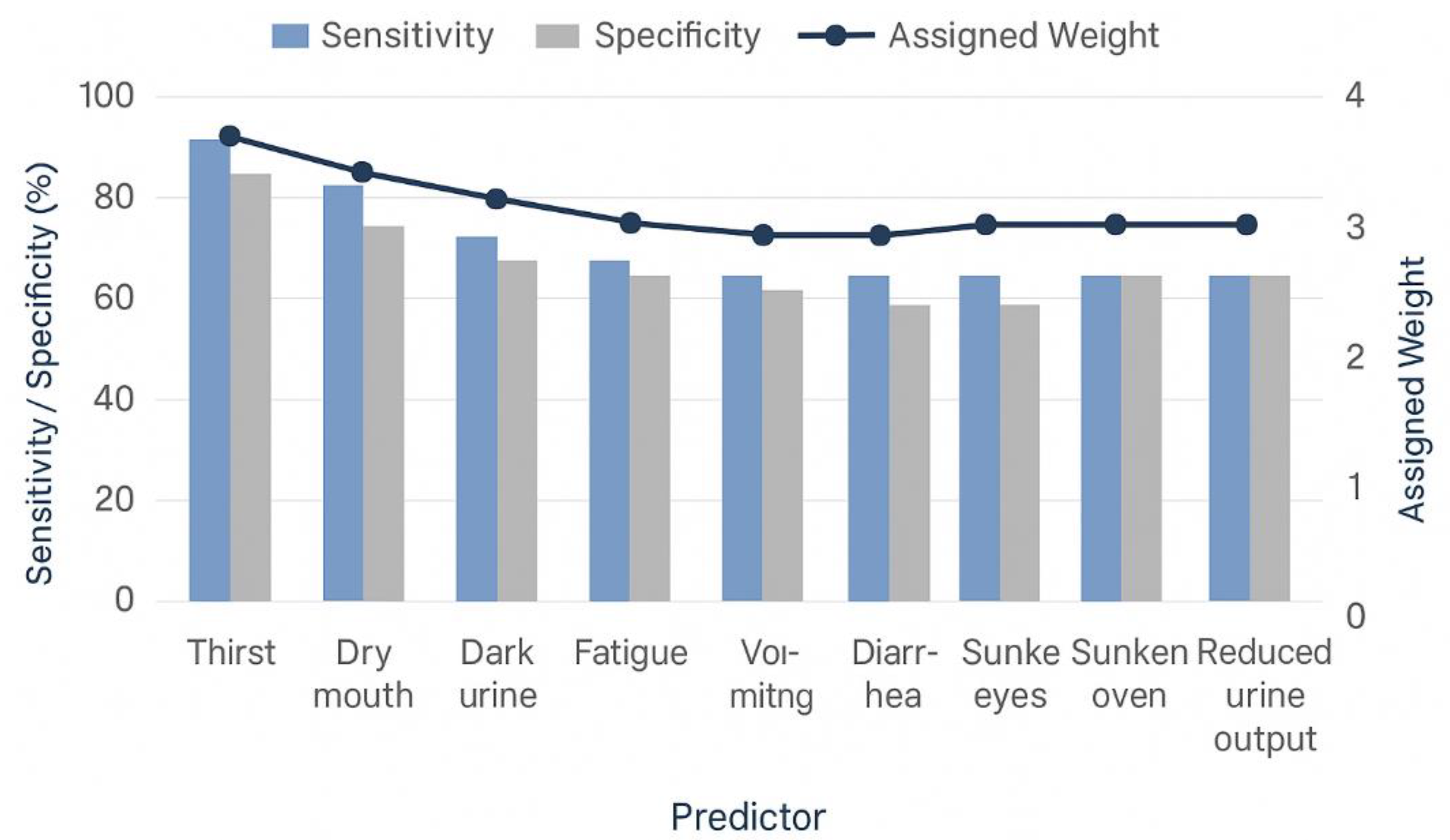
Figure 3.
Risk Stratification diagram.
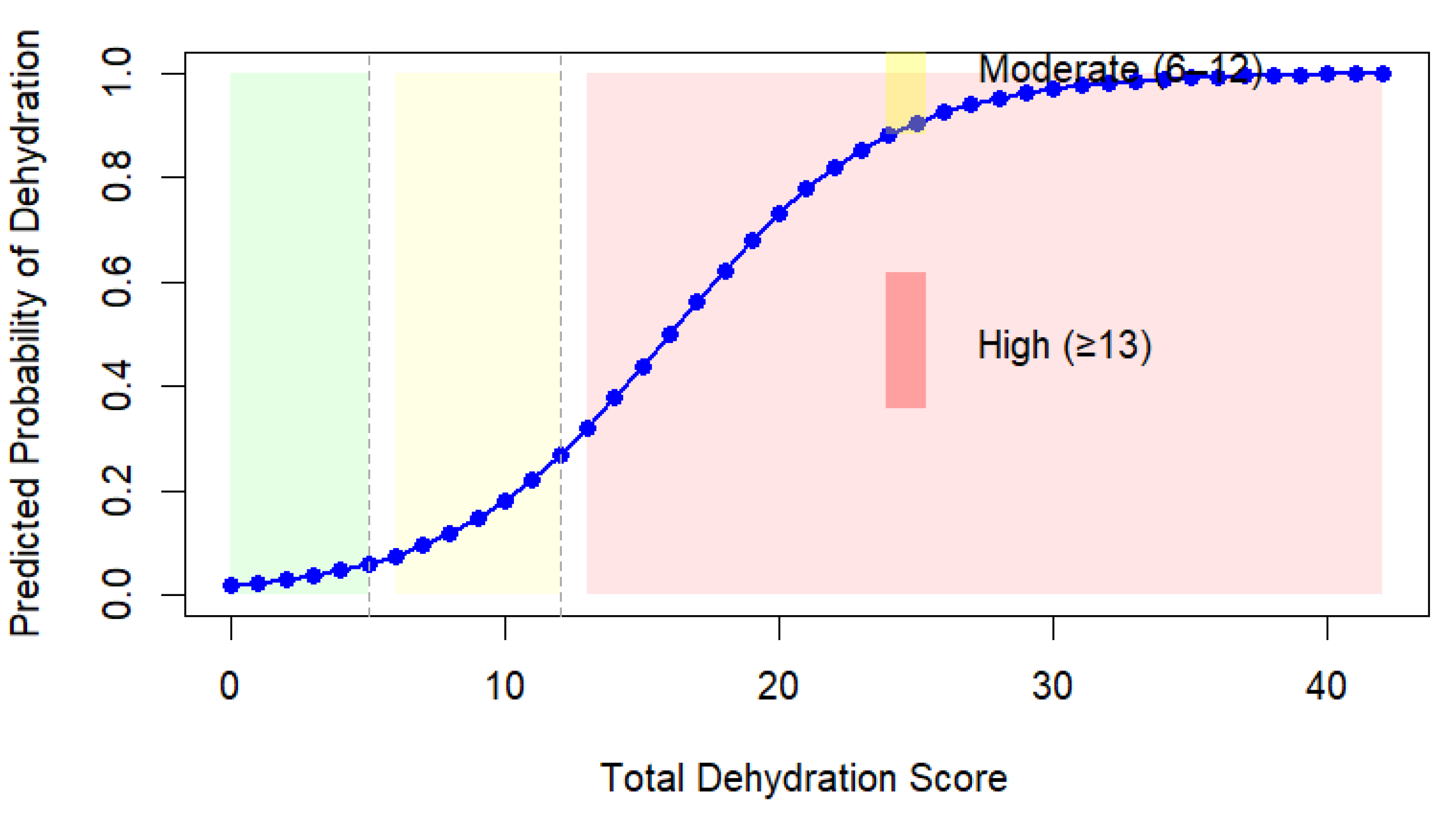
Figure 4.
Logistic Probability Curve.
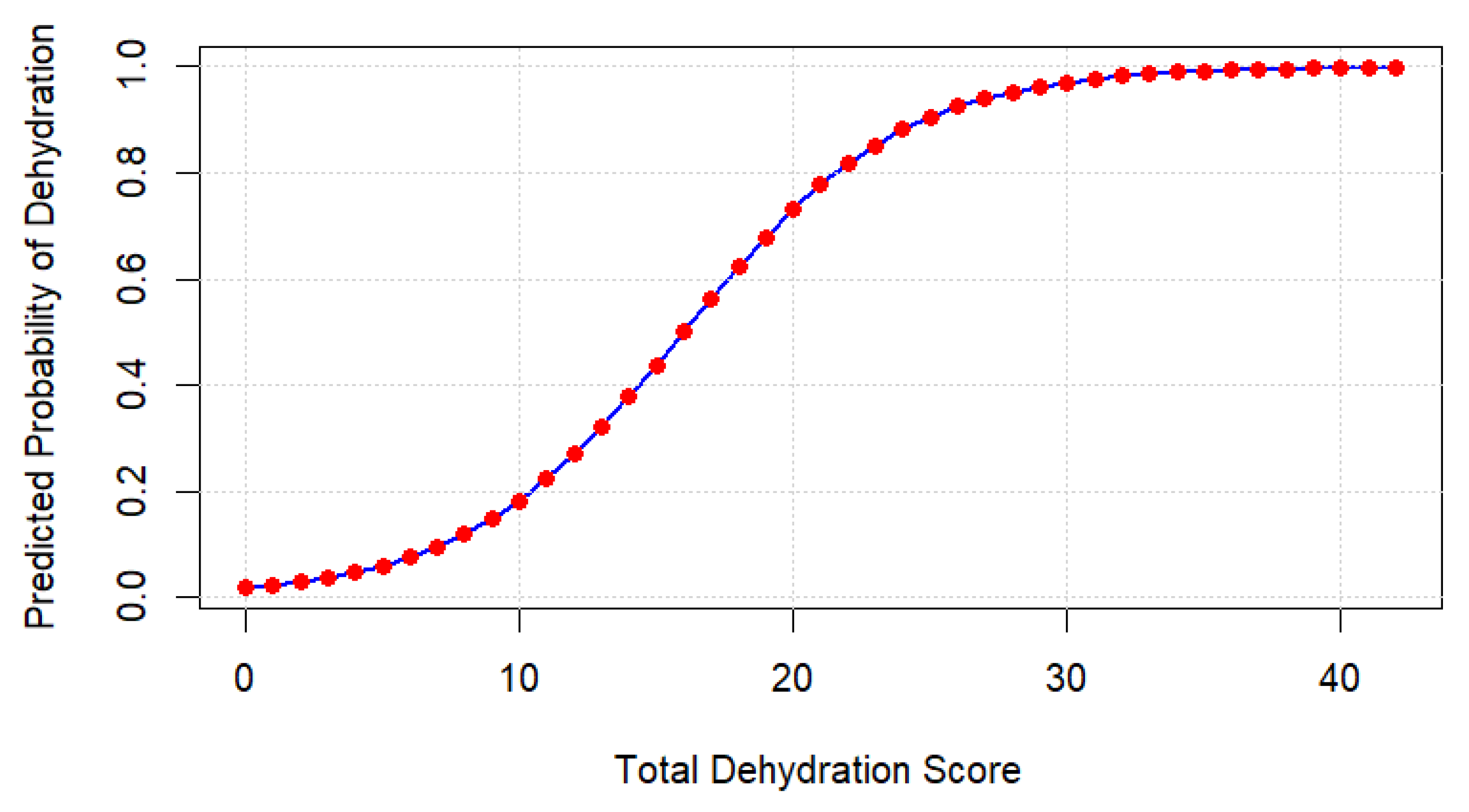
Figure 6.
Example output interface of the dehydration-risk Shiny application – The MetaDehydrate.
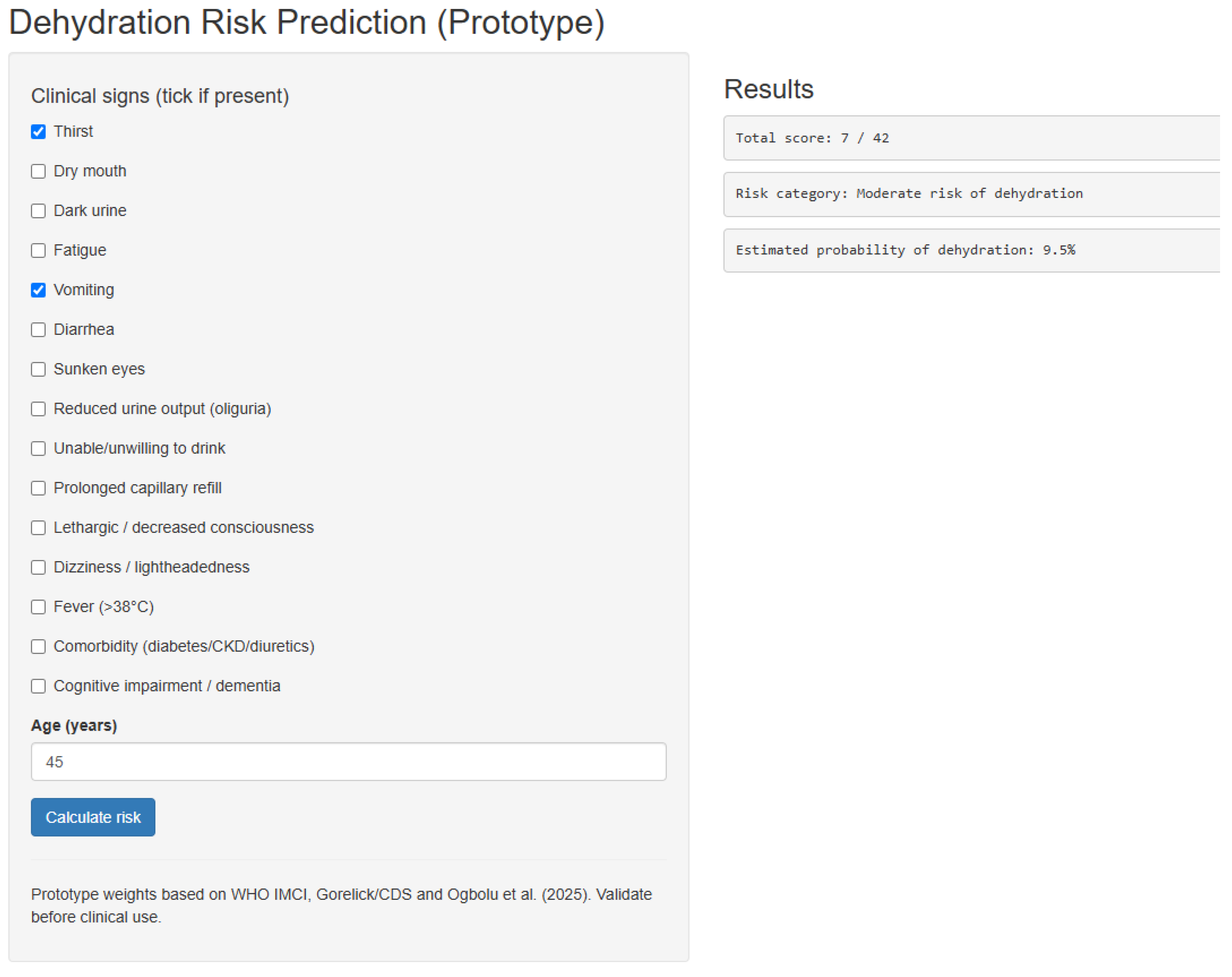
Figure 7.
Distribution of total scores in 1,000 simulated patients.
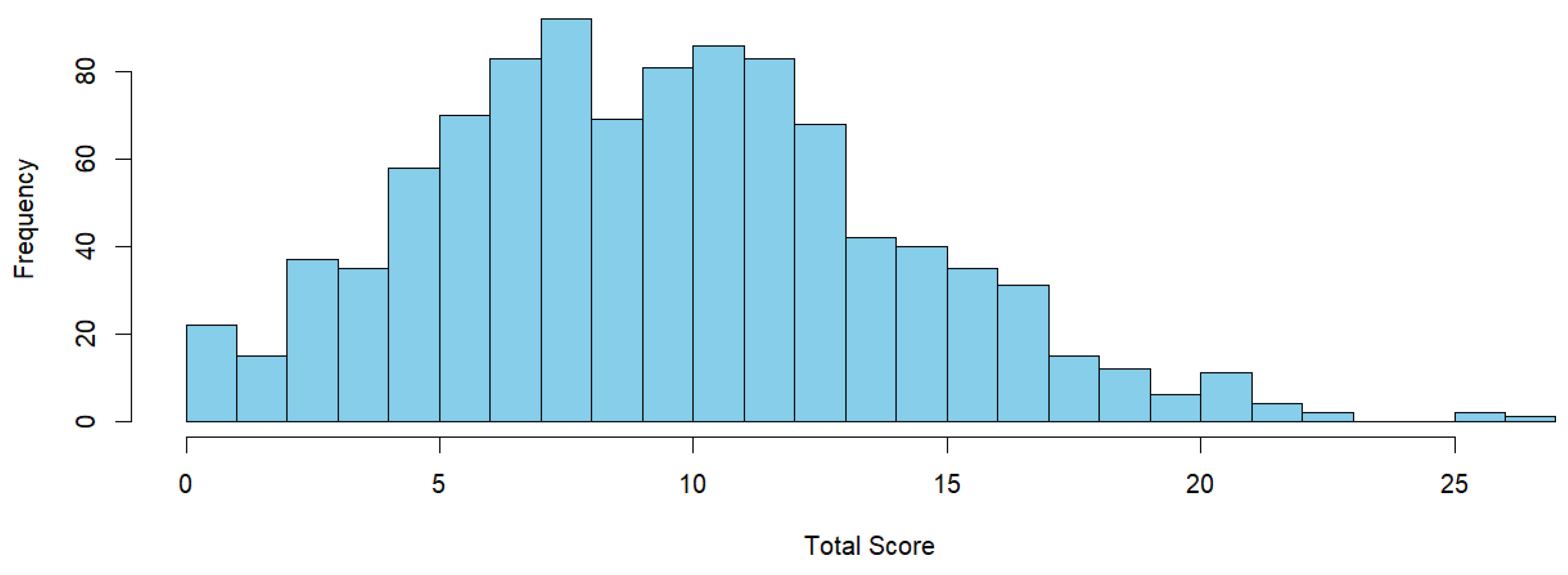
Figure 8.
Predicted probability by risk category.
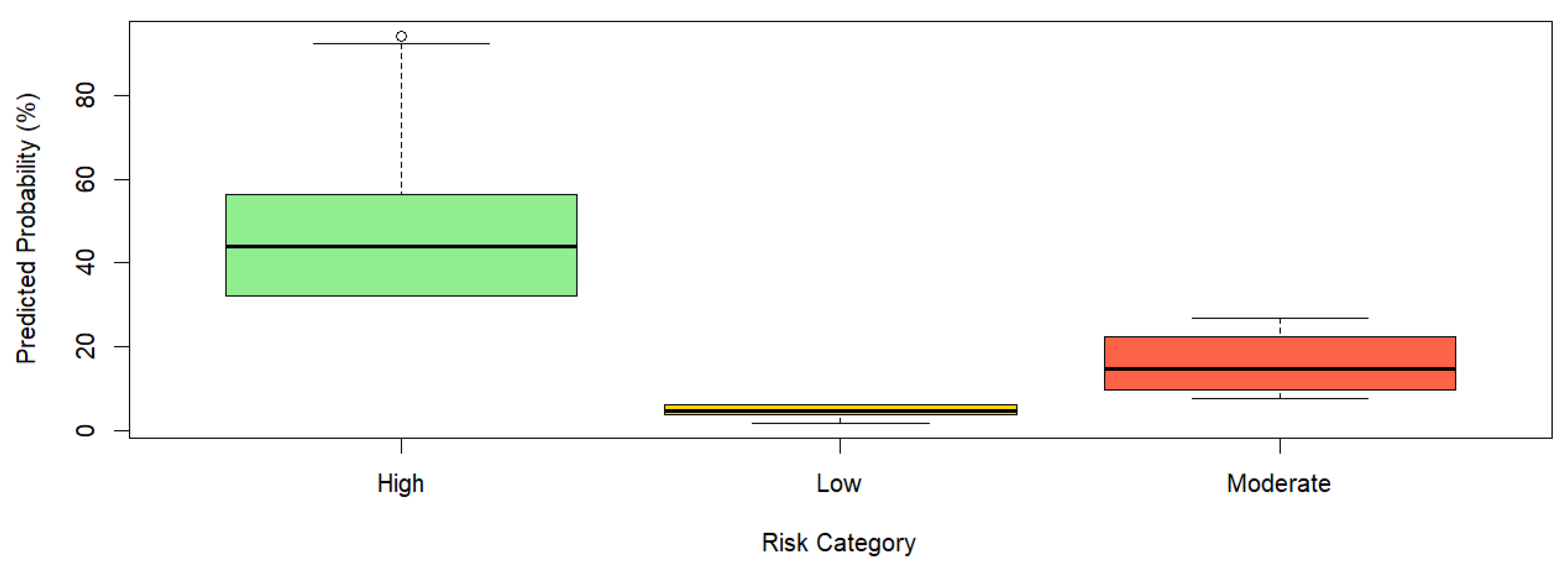
Figure 9.
Dehydration risk curve (prototype).
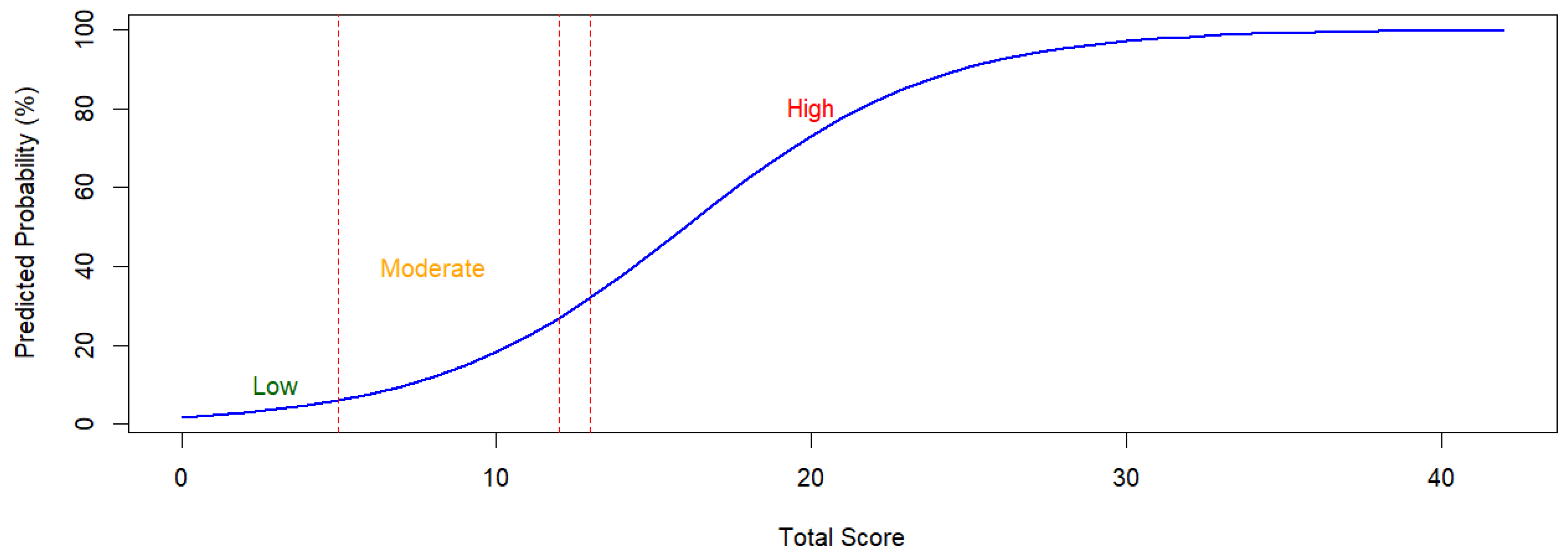
Table 1.
Predictor Variables, Clinical Definitions, and Evidence Sources.
| Predictor | Clinical Definition / Description | Evidence Source(s) |
| Thirst | Patient reports desire to drink or requests fluids; early subjective sign of fluid deficit. | Ogbolu et al., 2025; Elliott et al., 2024 |
| Dry mouth / mucous membranes | Observable dryness of tongue, lips, or oral mucosa. | World Health Organization, 2014; Falszewska et al., 2018 |
| Dark urine | Concentrated urine (amber/brown) indicates reduced volume. | Ogbolu et al., 2025; World Health Organization, 2014 |
| Fatigue / weakness | Reduced energy or general tiredness associated with fluid deficit. | Ogbolu et al., 2025; Stookey et al., 2020 |
| Vomiting | ≥ 1 episode of emesis within 24 h; direct fluid loss. | World Health Organization, 2014; Gera et al., 2016 |
| Diarrhoea | ≥ 3 loose stools in 24 h or increased stool frequency. | World Health Organization, 2014 |
| Sunken eyes | Noticeable retraction of eyeballs within orbits. | World Health Organization, 2014 |
| Reduced urine output (oliguria) | Markedly decreased voiding frequency or < 0.5 mL/kg/h. | Ogbolu et al., 2025; Rosi et al., 2022 |
| Unable / unwilling to drink | Patients cannot or refuse to take fluids orally. | World Health Organization, 2014; Ogbolu et al., 2025 |
| Prolonged capillary refill time | > 2 s after nailbed or sternum pressure test. | Falszewska et al., 2018 |
| Lethargy / decreased consciousness | Drowsiness, slow responses, or unresponsiveness. | World Health Organization, 2014; Ogbolu et al., 2025 |
| Dizziness / light-headedness | Feeling of imbalance or presyncope on standing. | Ogbolu et al., 2025 |
| Fever (> 38 °C) | Axillary / oral temperature ≥ 38 °C causing increased fluid loss. | World Health Organization, 2014; Bennett et al., 2020 |
| Age ≥ 65 years | Older-adult modifier for diminished thirst perception. | Parkinson et al., 2023; Alsanie et al., 2022 |
| Comorbidity (e.g., diabetes, CKD) | Chronic conditions predispose dehydration. | Ogbolu et al., 2025; Stookey et al., 2020 |
| Cognitive impairment | Documented dementia or reduced mental status limiting fluid intake. | Mentes, 2006; Ogbolu et al., 2025 |
Table 2.
Provisional Dehydration-Risk Score (Variables, Weights, and Diagnostic Basis).
| Predictor | Assigned Weight (points) | Supporting Diagnostic Evidence (approx.) | Evidence Source(s) |
| Thirst | 4 | Sensitivity , Specificity | Ogbolu et al., 2025; Elliott et al., 2024; Keefe et al., 2025 |
| Dry mouth / mucous membranes | 3 | Sens. | Falszewska et al., 2018; World Health Organization, 2014. |
| Dark urine | 3 | Sens. | Ogbolu et al., 2025; Keefe et al., 2024 |
| Fatigue / weakness | 2 | Sens. | Ogbolu et al., 2025; Stookey et al., 2020 |
| Vomiting | 3 | Strong indicator of acute fluid loss | World Health Organization, 2014; Gera et al., 2016 |
| Diarrhoea | 3 | Primary cause of volume loss in IMCI criteria | World Health Organization, 2014. |
| Sunken eyes | 3 | Consistent sign in pediatric and elderly assessment | World Health Organization, 2014; Goldman et al., 2008 |
| Reduced urine output (oliguria) | 3 | Sens. ≈ 80 %, Spec. ≈ 70 % | Ogbolu et al., 2025; Rosi et al., 2022 |
| Unable / unwilling to drink | 4 | Critical IMCI “danger sign” | World Health Organization, 2014. |
| Prolonged capillary refill time | 3 | Sens. ≈ 75 %, Spec. ≈ 70 % | Falszewska et al., 2018 |
| Lethargy / decreased consciousness | 4 | Marker of severe volume depletion | World Health Organization, 2014; Ogbolu et al., 2025 |
| Dizziness / light-headedness | 2 | Symptom of orthostatic hypovolemia | Ogbolu et al., 2025; Mentes, 2006 |
| Fever (> 38 °C) | 2 | Contributor to insensible fluid loss | World Health Organization, 2014; Bennett et al., 2020 |
| Age ≥ 65 years | 1 | Risk modifier for reduced thirst drive | Parkinson et al., 2023; Alsanie et al., 2022 |
| Comorbidity (e.g., diabetes, CKD) | 1 | Chronic risk for fluid imbalance | Stookey et al., 2020 |
| Cognitive impairment | 1 | Limits self-hydration ability | Mentes, 2006 |
| Maximum Total Score | 42 |
Table 5.
Illustrative Test Cases and Corresponding Model Outputs.
| Case ID | Key Predictors Present | Total Score (/42) | Predicted Probability (%) | Risk Category | Interpretation |
| Case A – Low risk | Fatigue only (no major signs) | 4 | 15 % | Low | Likely well hydrated; monitor fluid intake and re-assess if symptoms persist. |
| Case B – Moderate risk | Thirst + vomiting + dark urine | 10 | 45 % | Moderate | Suggests mild-to-moderate dehydration; initiate oral rehydration and observe. |
| Case C – High risk | Inability to drink + lethargy + diarrhoea + sunken eyes | 25 | 89 % | High | Indicates severe dehydration; requires urgent clinical evaluation and possible IV rehydration. |
Table 6.
Descriptive statistics by risk category.
| Risk Category | Total Score (Mean ± SD) | Predicted Probability (Mean ± SD) |
| Low | 3.49 ± 1.51 | 4.44 ± 1.40 |
| Moderate | 9.06 ± 1.99 | 16.07 ± 6.49 |
| High | 15.69 ± 2.68 | 47.69 ± 14.87 |
Note: Values are based on 1,000 simulated observations. Predicted probabilities rise in parallel with score increases, confirming proper calibration of category boundaries.
Disclaimer/Publisher’s Note: The statements, opinions and data contained in all publications are solely those of the individual author(s) and contributor(s) and not of MDPI and/or the editor(s). MDPI and/or the editor(s) disclaim responsibility for any injury to people or property resulting from any ideas, methods, instructions or products referred to in the content. |
© 2026 by the authors. Licensee MDPI, Basel, Switzerland. This article is an open access article distributed under the terms and conditions of the Creative Commons Attribution (CC BY) license (http://creativecommons.org/licenses/by/4.0/).
Copyright: This open access article is published under a Creative Commons CC BY 4.0 license, which permit the free download, distribution, and reuse, provided that the author and preprint are cited in any reuse.


