

Submitted:
24 May 2026
Posted:
26 May 2026
You are already at the latest version
Abstract
Maternal diet during pregnancy may influence fetal brain development and is an important factor in the occurrence of neurodevelopmental disorders including Attention Deficit Hyperactivity Disorder (ADHD) and Autism Spectrum Disorders (ASD). To our knowledge, very few reviews have comprehensively examined the association between maternal dietary quality during pregnancy and offspring ADHD and ASD. This posed the need for a comprehensive synthesis of observational cohort studies investigating maternal dietary quality during pregnancy and offspring ADHD and ASD outcomes. To achieve this, a systematic review and meta-analysis was conducted in accordance with the PRISMA and MOOSE guidelines using an inverse variance-weighted random-effects model. Results are presented as odds ratios (ORs) and 95% confidence intervals (CIs). Statistical heterogeneity was assessed by the Higgins’ I2 statistic. The review protocol was preregistered on PROSPERO (CRD420251137377). The risk of bias for all included studies was independently assessed using the ROBINS-E tool, and the overall certainty of evidence was assessed using the GRADE framework. The systematic review included 9 studies and 22 cohorts. For pro-inflammatory dietary pattern and offspring ADHD (8 studies including 17,114 samples), no significant association was observed (OR = 1.07, 95% CI 0.96 to 1.20; p = 0.232, I² = 88%). For pro-inflammatory dietary pattern and offspring ASD (3 studies including 6,511 samples), a statistically significant association was observed (OR = 1.55, 95% CI 1.10 to 2.19; p = 0.012, I² = 33%). For anti-inflammatory dietary pattern and offspring ADHD (6 studies including 17,028 samples), higher maternal adherence was associated with reduced risk of ADHD (OR = 0.97, 95% CI 0.95 to 0.99; p = 0.004, I² = 29%). For anti-inflammatory dietary pattern and offspring ASD (5 studies including 100,908 samples), higher adherence was associated with reduced risk (OR 0.79, 95% CI 0.69 to 0.91, p = 0.007, I² = 0%). Across the included studies, anti-inflammatory dietary patterns were associated with lower odds of neurodevelopmental disorders, while pro-inflammatory dietary patterns were associated with increased odds of ASD. These findings suggest that maternal dietary quality during pregnancy may influence offspring neurodevelopment, and dietary pattern-level analyses may provide clearer insights than nutrient-specific analyses alone.
Keywords:
maternal diet
; dietary patterns
; neurodevelopmental disorders
; pregnancy
Introduction
The Developmental Origins of Health and Disease (DOHaD) postulates that exposure to specific environmental influences during the crucial phase of foetal growth and development may significantly contribute to the long-term health status of offspring [1]. Within this body of research, a significant focus has been on the impact of maternal diet during pregnancy on neurodevelopmental disorders such as Attention-deficit Hyperactivity Disorder (ADHD) and Autism Spectrum Disorder (ASD) [1,2,3,4,5]. ADHD and ASD are chronic neurodevelopmental conditions that occur mostly in children and may persist into adulthood. Although most cases are underreported, particularly in the low- and middle-income countries, global pooled prevalence of ADHD and ASD in children are 3.4% and 1%, respectively [1,6]. These two neurodevelopmental disorders share characteristics bordering on problems with attention, impulsivity, communication, and frequently occur concurrently [7,8], with collective prevalence rate at 6-14% [9]. They have also been found to negatively affect children’s self-esteem, academic performance and relationships with others [10). Among the myriads of genetic, physiological and environmental factors that contribute to ADHD and ASD, a significant focus has been on the impact of prenatal exposures [3,4,5,11].
Emerging evidence suggests that the intrauterine environment plays a critical role in shaping neurodevelopmental trajectories. Maternal nutrition during pregnancy represents a key modifiable exposure within this environment, yet the extent to which prenatal dietary quality influences neurodevelopmental outcomes in children remains incompletely understood. Although several systematic reviews have synthesised aspects of the literature, most have focused on individual nutrient exposures rather than dietary patterns, resulting in a fragmented understanding of how maternal diet as a whole may influence neurodevelopment. Maternal diet during pregnancy has profound effect on brain and cognitive development of the child and thus an important risk factor in the occurrence of childhood neurodevelopmental disorders [12,13,14,15,16]. Adequate maternal diet is very essential during the rapid phase of cell differentiation, myelination and DNA methylation of the developing fetal brain [17]. Empirical studies have found that maternal diet in pregnancy influences offsprings’ neurodevelopmental disorders via processes involving maternal immune activation (MIA), oxidative stress (OS), and fetal programming [18,19], neuroinflammation [13,15] and gut-microbiome [20]. For example, a high-quality diet and multivitamin supplementation among women with low quality diet were associated with improved cognitive and language scores in the offspring [21].
Till date, evidence from research has mostly focused on associations between maternal intake of specific foods and nutrients including multivitamins, iron, vitamin D [22], vitamin B12, folate, calcium, magnesium, omega 3 fatty acids, fish [23] and ADHD and ASD in children [24,25]. While these findings are significant and plausible, their impact and applicability are however undermined by several important limitations. First, the scarcity of studies examining prenatal dietary quality as a holistic exposure has been repeatedly highlighted across existing reviews. Second, the majority of studies focus on individual nutrient exposures rather than holistic dietary patterns, despite increasing recognition that diet functions as a complex system of interacting components. Notably, there is substantial heterogeneity in how dietary quality is measured, with studies employing a wide range of indices and pattern derivation approaches.
To our knowledge, very few reviews exist on the synthesis of maternal dietary quality and offspring ADHD and ASD, simultaneously. To date, four systematic reviews examining maternal dietary quality or dietary patterns in relation to child neurodevelopment have been published between 2017 and 2024, including three meta-analyses [14,22,24] and one narrative review [26]. Across these reviews, the prevailing conclusion is that poorer prenatal dietary quality may be associated with adverse neurodevelopmental outcomes in offspring. However, across the four systematic reviews discussed above, only fourteen studies examined prenatal dietary quality in relation to neurodevelopmental outcomes among over one hundred studies synthesised. These studies are yet to be systematically synthesised into a single body of research.
Given that relevant studies remain dispersed across multiple systematic reviews and emerging primary research, a comprehensive synthesis of the available evidence is needed. Thus, this present study therefore undertakes a systematic review and meta-analysis of observational studies on the association between maternal dietary quality in pregnancy and offspring ADHD and ASD, integrating previously reviewed studies with more recent evidence to provide a clearer and comprehensive assessment of this relationship thereby enabling the recommendation of evidence-based dietary patterns [33].
Methodology
Protocol and Registration
This systematic review and meta-analysis were conducted in accordance with the general recommendations of the Preferred Reporting Items for Systematic Reviews and Meta-Analyses (PRISMA) and Meta-analysis Of Observational Studies in Epidemiology (MOOSE) guidelines (Stroup) [28,29]. The review protocol was preregistered on PROSPERO with an ID: CRD420251137377. The original PROSPERO protocol focused on ADHD outcomes. However, during the review process, ASD outcomes were additionally incorporated due to the limited number of eligible ADHD studies identified and the substantial conceptual overlap in neurodevelopmental pathways examined across the included literature. This amendment was made to strengthen the comprehensiveness and interpretability of the evidence synthesis. Title and abstract screening and full-text review were conducted on Covidence, a web-based software designed to organise and manage systematic review workflows. Data extraction was conducted on Microsoft Excel.
Search Strategy
A preliminary scoping search was conducted to identify relevant keywords and synonyms related to maternal diet and offspring ADHD and ASD outcomes. These keywords were utilised in the development of the initial search string. The search string was executed on Embase, MEDLINE, PsycINFO and Google scholar from inception to November 2025. The search strategy combined terms for maternal exposure, dietary factors, neurodevelopmental outcomes, and observational study designs using Boolean operators (AND, OR), with truncation (*) applied where appropriate. The search strategy included: maternal OR prenatal OR pregnancy OR gestational OR mother) AND (diet* OR nutri* OR “dietary pattern*” OR “dietary quality” OR “dietary habit*” OR “dietary status”) AND (neurodevelopment* OR autism OR ASD OR ADHD OR “attention deficit” OR “developmental disorder*” OR “cognitive impairment” OR “cognitive function” OR IQ OR “intelligence quotient” OR “academic achievement” OR literacy OR numeracy) AND (cohort OR “case-control” OR longitudinal OR prospective OR retrospective OR “cross-sectional” OR epidemiologic). Records retrieved from all searches were combined and deduplicated prior to screening.
Eligibility Criteria and Study Selection
To be eligible for inclusion in the review (Table 1), studies were required to be empirical observational studies employing study designs commonly used in aetiological research, including longitudinal, case-control and cohort study designs [30]. Eligible studies were qualified if they focused on pregnant women with singleton pregnancies and recorded or analysed maternal dietary quality any time before the last menstrual period (LMP) and childbirth. Maternal dietary quality was defined by holistic dietary pattern rather than intake of specific food. Only studies with offspring ASD or ADHD outcomes ascertained through diagnoses retrieved from validated health register records, clinical diagnoses based on formal diagnostic criteria, or parent report of medical diagnosis [14]. Studies published in English and assessing offspring outcome at any age were included, while studies comprising of multiple pregnancies, animal models, and preterm populations were excluded. In total, 9 studies met the inclusion criteria and were included in the systematic Review and meta-analysis.
Data Collection Process
All records retrieved from the database searches were exported into the Zotero bibliographic software package 2022 for deduplication. The deduplicated records were then uploaded into Covidence, a web-based systematic review manager. Title and abstract screening were undertaken blinded by two reviewers independently. Discrepancies were addressed through discussion and consensus. Articles satisfying the inclusion criteria progressed to full-text screening, where assessed blindly by another two reviewers for eligibility. Data extraction was performed using a data extraction form piloted in Excel. Extracted data includes study author names, article titles, publication year, sample size, study design, country, region, age range and mean age of participants, maternal dietary quality, exposure measurement tool, offspring outcome, measurement method and effect estimate (Odds ratios).
Variable Extraction and Classification
Dietary exposures were classified a priori according to expected inflammatory potential. Proinflammatory dietary patterns included higher Dietary Inflammatory Index (DII), Energy adjusted DII (E-DII), Empirical Dietary Inflammatory Pattern (EDIP), and Western or processed food patterns characterised by high intake of refined carbohydrates, saturated fats, and ultra-processed foods. Anti-inflammatory healthy dietary patterns included higher adherence to Dietary Approaches to Stop Hypertension (DASH), Mediterranean-style diets, and other validated dietary quality indices such as Alternative Healthy Eating Index (AHEI), characterised by greater consumption of fruits, vegetables, whole grains, legumes, and unsaturated fats. Separate random-effects meta-analyses were conducted for ADHD and ASD within each dietary classification.
Risk of Bias Assessment
The risk of bias (RoB) for all included studies was independently assessed by two reviewers using the ROBINS-E (Risk of Bias in Non-randomized Studies - of Exposure) tool which was piloted prior to formal assessment [31]. In contrast to commonly used tools such as the Newcastle-Ottawa Scale and Joanna Briggs Institute checklists which primarily assess study quality, ROBINS-E was specifically designed to evaluate bias risk across broad domains in non-randomised studies of exposure. With its domain-specific judgement, ROBINS-E supports causal inference by capturing bias arising from confounding, exposure measurement, outcome measurement, missing data and selective reporting. The ROBINS-E tool offers a more rigorous risk of bias evaluation compared to other tools employed in previous studies. Across the seven ROBINS-E domains, studies were rated as having low, moderate, serious or critical risk of bias. Overall judgement of critical or serious risk was categorised as high risk of bias, moderate risk as some concerns, and low risk as low risk of bias. Discrepancies between reviewers were resolved through discussion and consensus.
Data Analysis
First, a narrative synthesis was conducted to provide a summary of study characteristics and findings across all included studies (n=9) and study cohorts (n=22). Following this, a meta-analysis was conducted to quantitatively synthesise all eligible studies according to exposure and outcome definitions including.
- Maternal pro-inflammatory diet and offspring ADHD
- Maternal pro-inflammatory diet and offspring ASD
- Maternal anti-inflammatory and offspring ADHD
- Maternal anti-inflammatory diet and offspring ASD
The meta-analysis was undertaken in R (version 4.4.2) and RStudio with inverse variance-weighted random-effects models. Results are pooled and presented as odds ratio (OR) and 95% confidence intervals (CIs). Statistical heterogeneity was assessed by the Higgins I2 statistic [31]. Interpretation followed Cochrane Handbook guidance and was based on the magnitude of I2 statistics alongside the direction and consistency of the estimates. Results from the meta-analysis are visually presented using forest plots. Formal assessment of publication bias and small-study effects using funnel plots or Egger’s regression test was not conducted due to the limited number of studies (Fewer than 10 studies) included in each meta-analysis. The “Grading of Recommendations Assessment, Development, and Evaluation (GRADE)” framework was used to assess the overall certainty and accuracy of evidence [32]. The GRADE ratings generally range from high, moderate, low to very low. Since all included studies were observational, certainty of evidence for each outcome was initially rated as low in accordance with GRADE guidance.
Results
Study Selection
The predefined database search string identified 211 eligible records which were retrieved and uploaded to Covidence. After duplicates were automatically removed, 210 studies proceeded to the title and abstract screening which was handled by two independent reviewers. Out of these, 196 were deemed ineligible thereby leaving 14 studies eligible for inclusion in the full text screening. Following the full text screening, 5 studies were excluded leaving a total of 9 studies which proceeded to the data extraction phase. From all 9 studies in the systematic review, we retrieved a total of 22 effect estimates as some studies contributed multiple effect estimates from different cohort studies. This was primarily driven by different dietary quality indices or multiple cohorts within the same study. All nine studies included in the systematic review have been narratively synthesised (Section 4.4 below). Figure 1 provides a summary of all eligible studies included at each screening stage.
Study Characteristics
Table 2 summarises the characteristics of all included studies, all published between 2021 and 2025. Of all included studies, four studies evaluated the effect of maternal dietary quality on ASD, three studies on ADHD and two on both ASD and ADHD. All of the included studies were prospective cohort studies except one retrospective cohort study. As some studies included multiple cohorts (n=22), study geographical location differed across studies and was based on individual cohort location. Seven cohorts were conducted in Europe (Denmark n =1, United Kingdom n=1, Italy n=1, France n=1, Netherlands = 1, Poland = 1, Spain and Greece n=1), five cohorts were conducted in the Americas (United States n =4), and one study in the Western Pacific Region (China, n=1). Overall, all 9 included studies were conducted across 14 cohorts from 10 countries, yielding 22 effect estimates. They comprised approximately of 124,129 participants, with individual sample sizes ranging from 316 to 84,548.
Narrative Synthesis of All Included Studies
Substantial variability was observed across studies, attributable to exposure definition and study sample size (Table 3). Sample sizes ranged from 316 participants in smaller cohorts like the Polish Mother and Child Cohort Study (REPRO_P) study [33] to over 84,000 participants in larger cohorts like the MoBa [34].
Maternal dietary quality was defined based on inflammation in seven studies, based on DASH diet in 4 studies, based on mediterranean style diet in 4 studies, based on healthy dietary pattern in 4 studies, based on western diet in 4 studies and based on AHEI in 2 studies. Due to the variability, two exposure variables derived based on the exposure definitions provided across all studies. First was the pro-inflammatory dietary pattern and the anti-inflammatory dietary pattern. Classification method is described in the Data Synthesis paragraph below.
Across all 6 cohorts in the anti-inflammatory group for ADHD, reported effect estimates ranged from 0.86 to 1.05. Most confidence intervals included null value, indicating little consistent evidence of a strong association between maternal anti-inflammatory diet and offspring ADHD. Across all 6 cohorts in the anti-inflammatory group for ASD, reported effect estimates ranged 0.51 to 1.20. Although two studies reported statistically significant protective associations, other estimates either included null value or had wide confidence interval. This suggests limited consistency across studies in this group.
Across all 7 cohorts in the pro-inflammatory group for ADHD, reported effect estimates ranged from 0.85 to 1.66. Most studies reported odds ratios above 1, with several statistically significant associations suggesting a modest increased risk of ADHD with pro-inflammatory maternal diet. Across all 3 cohorts in the pro-inflammatory group for ASD, reported effect estimates ranged from 0.36 to 2.22. While one study reported a strong positive association and another a significant inverse association, most estimates were imprecise and crossed the null value indicating considerable heterogeneity in the direction and magnitude of the effect.
Risk of Bias Rating for All Studies
The risk of bias assessment, as displayed in Figure 2, was conducted using the ROBINS-E risk of bias tool. Most of the studies were judged at moderate risk of bias (n=9) with three studies being judged at low risk of bias.
Data Synthesis
A total of 13 study cohorts from 9 eligible studies were included in the quantitative synthesis and were analysed using a random effect meta-analysis. Characteristics of all 13 study cohorts yielding 22 effect estimates have been detailed in Table 3. Overall pooled effect estimates were calculated across all 22 studies within four predefined subgroups:
- 1)
- The association between maternal pro-inflammatory diet and offspring ADHD
- 2)
- The association between maternal pro-inflammatory diet and offspring ASD
- 3)
- The association between maternal anti-inflammatory and offspring ADHD
- 4)
- The association between maternal anti-inflammatory diet and offspring ASD
Influence analysis could not be conducted for all subgroups and publication bias was not explored due to insufficient number of studies (<10).
The Effect of Maternal Pro-Inflammatory Diet on Offspring ADHD
Across eight cohorts, no significant association was observed between higher pro-inflammatory dietary patterns and the risk of offspring ADHD (OR = 1.07, 95% CI 0.96 to 1.20) (Figure 3). There was substantial between-study heterogeneity (I² = 88%) indicating strong variation in effect estimates across cohort studies. The pooled estimate suggests a very small increase in odds, about 3 percent, but the confidence interval includes 1 and ranges from a small decrease to a small increase. The meta-analysis shows no evidence of an overall association between pro-inflammatory maternal diet and ADHD in this subset of seven studies. However, heterogeneity is high, indicating substantial variability in effect estimates across studies. Influence analysis was performed and no study was identified.
The Effect of Maternal Pro-Inflammatory Diet on Offspring ASD
Across three cohorts, random-effects meta-analysis including three cohorts showed a statistically significant association between pro-inflammatory dietary patterns and ASD (OR = 1.55, 95% CI 1.10 to 2.19) (Figure 4). There was moderate between-study heterogeneity (I² = 33%) indicating mild variation in effect estimates across cohort studies. The pooled estimate indicates about 55% higher odds of ASD associated with more pro-inflammatory dietary patterns. Heterogeneity observed was modest and not statistically significant. However, given the small number of contributing cohorts, the precision and generalisability of this estimate remain limited. Influence diagnostics suggested individual studies exerted notable influence on the pooled estimate, which is expected given the small number of studies. Leave-one-out analyses showed the direction of effect remained consistent. Leave-one-out analyses indicated that the direction of association remained consistent across all models; however, statistical significance was attenuated when individual studies were removed, reflecting the limited number of available cohorts.
The Effect of Maternal Anti-Inflammatory Diet on Offspring ADHD
Across six cohorts, random-effects meta-analysis found that greater adherence to anti-inflammatory dietary patterns was associated with lower odds of ADHD (OR = 0.97, 95% CI 0.95 to 0.99) (Figure 5). There was moderate between-study heterogeneity (I² = 29%) indicating mild variation in effect estimates across cohort studies. The pooled estimate indicates about 3% lower odds of ADHD associated with more anti-inflammatory dietary patterns. Heterogeneity observed was modest and not statistically significant.
The Effect of Maternal Anti-Inflammatory Diet on Offspring ASD
Across five cohorts, random-effects meta-analysis found that greater adherence to anti-inflammatory dietary patterns was associated with lower odds of ASD (OR = 0.79, 95% CI 0.69 to 0.91) (Figure 6). There was zero between-study heterogeneity (I² = 0.00%) indicating no variation in effect estimates across cohort studies. The pooled estimate indicates about 21% lower odds of ASD associated with more anti-inflammatory dietary patterns. Heterogeneity observed was low and not statistically significant.
GRADE Certainty of Evidence
Across all outcome groups, the certainty of evidence was rated as very low (Table 4). Downgrading was primarily driven by inconsistency due to moderate between-study heterogeneity and by imprecision due to paucity of studies. While the direction of association is significant and consistent, the low certainty of evidence limits confidence in the reported effect estimates.
Discussion
This meta-analysis of 22 effect estimates from 9 observational studies examined the association between maternal dietary quality during pregnancy and neurodevelopmental outcomes in children, focusing on ASD and ADHD. Overall, evidence suggested that prenatal dietary pattern characterised by maternal anti-inflammatory diet was associated with lower odds of both ASD and ADHD in offspring, while prenatal dietary pattern characterised by maternal pro-inflammatory diet was associated with increased odds in ASD and not ADHD.
These findings are broadly consistent with previous systematic reviews [14,22,24], which have reported associations between maternal diet and child neurodevelopment. Recent evidence suggests that higher-quality prenatal diets are associated with improved cognitive and behavioural outcomes, while Western or processed dietary patterns are linked to adverse neurodevelopmental profiles. However, existing reviews are limited by substantial heterogeneity in dietary assessment methods and outcome definitions, as well as the predominance of nutrient-focused analyses.
Importantly, our findings extend the existing literature by quantitatively synthesising studies examining overall dietary patterns, thereby addressing a key gap identified in earlier reviews. While prior work has highlighted the potential importance of maternal diet, the limited number of studies examining dietary quality as a holistic exposure has constrained inference. By integrating these studies, this meta-analysis provides more robust evidence that maternal dietary patterns, particularly those characterised by inflammatory potential, may play a role in shaping neurodevelopmental risk.
Nevertheless, the observed associations should be interpreted cautiously. Variability in dietary assessment approaches, outcome measurement, and residual confounding across studies may influence effect estimates. In addition, the relatively small number of studies for certain analyses, particularly for ADHD, limits the strength of conclusions that can be drawn.
Our findings suggest that prenatal dietary quality may play a role in shaping neurodevelopmental risk, with anti-inflammatory dietary patterns potentially offering protective effects and pro-inflammatory dietary patterns associated with increased risk, particularly for ASD.
Strengths and Limitations
Compared with previous meta-analyses with mixed effect estimates from varying exposure definitions, our meta-analysis is the first to provide a systematic synthesis of studies measuring maternal dietary quality. One key distinction in our meta-analysis is the extraction of effect estimates from all eligible cohorts within each study. Another key distinction in our meta-analysis is the synthesis of effect estimates indicative of both anti-inflammatory dietary pattern and pro-inflammatory dietary pattern, resulting in four pooled estimates in total for both ASD and ADHD. This provided a more refined understanding of previously nuanced prenatal dietary exposures obscured in previous systematic reviews.
However, one limitation identified in our meta-analysis is the overall paucity of papers evaluating ADHD and ASD outcomes using overall maternal dietary quality. This limitation meant we did not have sufficient studies to conduct subgroup analyses, sensitivity analyses and meta-regression.
Research Implication
While causal inference cannot be established from observational evidence, the findings of this meta-analysis suggest that maternal dietary quality during pregnancy may represent a modifiable factor influencing offspring neurodevelopment. In particular, dietary patterns characterised by higher consumption of anti-inflammatory foods appear to be associated with lower odds of ASD, while pro-inflammatory dietary patterns are associated with increased risk.
Dietary quality represents a modifiable exposure and these findings support current public health recommendations encouraging balanced dietary patterns during pregnancy that emphasise whole grains, fruits, vegetables, and healthy fats while limiting highly processed and pro-inflammatory foods. Beyond providing single nutrient recommendation for women of reproductive age, offering holistic dietary guidance and support may therefore represent a potentially important strategy for improving maternal and child health outcomes.
Overall, these findings highlight maternal dietary quality as a potentially important prenatal correlate of neurodevelopmental outcomes. Understanding how maternal diet shapes early neurodevelopment may contribute to the development of more comprehensive nutritional recommendations aimed at supporting both maternal health and optimal neurodevelopment in offspring.
Research Recommendation
Several research gaps remain that warrant further investigation. First, the current evidence base examining maternal dietary quality and neurodevelopment is relatively small, particularly for pro-inflammatory dietary patterns and ADHD outcomes. Future studies should therefore prioritise large prospective cohort designs with repeated dietary assessments across pregnancy to improve exposure measurement and reduce recall bias.
Second, greater consistency in the operationalisation of dietary quality is needed. Existing studies employ a wide range of dietary indices and pattern derivation methods, which limits comparability across studies. The development and adoption of harmonised dietary quality metrics for use in pregnancy research would facilitate more robust cross-study synthesis. Finally, future research should prioritise well-designed intervention studies that evaluate whole dietary patterns rather than isolated nutrients.
Conclusions
This systematic review and meta-analysis examined the association between maternal dietary quality during pregnancy and neurodevelopmental outcomes in offspring. In contrast to previous reviews that largely synthesised evidence on isolated nutrients or specific food components, this study focused specifically on overall maternal dietary patterns. Across the included studies, anti-inflammatory dietary patterns were associated with lower odds of neurodevelopmental disorders, while pro-inflammatory dietary patterns were associated with increased odds of ASD. These findings suggest that the overall inflammatory profile and quality of the maternal diet may be relevant to offspring neurodevelopment.
The present results extend existing evidence by demonstrating that examining maternal diet at the level of dietary patterns may provide clearer insights than nutrient-specific analyses alone. Most previous systematic reviews have pooled studies assessing individual nutrients such as folate, vitamin D, fish intake, or omega-3 fatty acids. While such approaches are valuable, they do not fully capture the cumulative and interactive effects of foods as they are consumed in real-world diets. By focusing specifically on dietary quality and patterns, this review reflects the broader nutritional environment of pregnancy and therefore provides evidence that is potentially more ecologically valid and clinically interpretable.
Funding
None
Authors contributions
The authors confirm their contribution to the paper as follows: Study conception and design: T.T. Literature search, screening of articles based on the inclusion and exclusion criteria: T.T. and A.C. Data extraction: T.T and A.C. Data Analysis or Interpretation: T.T and D.A. Validation: J.A. Draft manuscript: T.T. Manuscript review: T.T, D.A, A.C and J.A. All authors reviewed the results and approved the final version of the manuscript.
Data availability
The synthesized data and all other data are available upon reasonable request.
Conflict of Interest
Declared None
List of Abbreviations
DOHaD: Developmental Origins of Health and Disease (DOHaD)
ADHD: Attention-deficit Hyperactivity Disorder (ADHD)
ASD: Autism Spectrum Disorder (ASD)
LMP: Last menstrual period (LMP)
AHEI-P: Alternative Healthy Eating Index - Pregnancy
EDIP: Empirical dietary inflammatory pattern
E-DII: Energy-Adjusted Dietary Inflammatory Index
HPDP: Healthy Prenatal Dietary Pattern
MSDS: Mediterranean-style diet score
GRADE: Grading of Recommendations Assessment, Development, and Evaluation
ROBINS-E: Risk Of Bias In Non-randomized Studies of Exposure
DII: Dietary Inflammatory Index (DII)
E-DII: Energy adjusted DII
PRISMA: Preferred Reporting Items for Systematic Reviews and Meta-Analyses
MOOSE: Meta-analysis Of Observational Studies in Epidemiology
LC-PUFA: Long chain polyunsaturated fatty acid
DHA: Docosahexaenoic acid
DASH: Dietary Approaches to Stop Hypertension
References
- Kyozuka, H.; Murata, T.; Fukuda, T.; et al. Association between preconception dietary inflammatory index and neurodevelopment of offspring at 3 years of age: the Japan Environment and Children’s Study. Nutr. 102 2022, 111708. [Google Scholar] [CrossRef]
- Polanczyk, G.V.; Salum, G.A.; Sugaya, L.S.; et al. Annual research review: a meta-analysis of the worldwide prevalence of mental disorders in children and adolescents. J. Child. Psychol. Psychiatry 56 2015, 345–365. [Google Scholar] [CrossRef]
- Rijlaarsdam, J.; Cecil, C.A.; Walton, E.; et al. Prenatal unhealthy diet, insulin-like growth factor 2 gene methylation and attention deficit hyperactivity disorder symptoms in youth with early-onset conduct problems. J. Child. Psychol. Psychiatry 58 2017, 19–27. [Google Scholar] [CrossRef]
- Borge, T.C.; Biele, G.; Papadopoulou, E.; et al. The associations between maternal and child diet quality and child ADHD: findings from a large Norwegian pregnancy cohort study. BMC Psychiatry 21 2021, 139. [Google Scholar] [CrossRef]
- Vecchione, R.; Westlake, M.; Bragg, G.; et al. Maternal dietary patterns during pregnancy and child autism-related traits in the Environmental Influences on Child Health Outcomes Consortium. Nutr. 16 2024, 1–6. [Google Scholar] [CrossRef] [PubMed]
- Zeidan, J.; Fombonne, E.; Scorah, J.; et al. Global prevalence of autism: a systematic review update. Autism Res. 15 2022, 778–790. [Google Scholar] [CrossRef]
- Leitner, Y. The co-occurrence of autism and attention deficit hyperactivity disorder in children: what do we know? Front Hum. Neurosci. 8 2014, 268. [Google Scholar] [CrossRef]
- Antshel, K.M.; Russo, N. Autism spectrum disorders and ADHD: overlapping phenomenology, diagnostic issues, and treatment considerations. Curr. Psychiatry Rep. 21 2019, 34. [Google Scholar] [CrossRef] [PubMed]
- Simonoff, E.; Pickles, A.; Charman, T.; et al. Psychiatric disorders in children with autism spectrum disorders: prevalence, comorbidity, and associated factors in a population-derived sample. J. Am. Acad. Child. Adolesc. Psychiatry 47 2008, 921–929. [Google Scholar] [CrossRef]
- Harpin, V.; Mazzone, L.; Raynaud, J.P.; et al. Long-term outcomes of ADHD: a systematic review of self-esteem and social function. J. Atten. Disord. 20 2016, 295–305. [Google Scholar] [CrossRef] [PubMed]
- Galera, C.; Heude, B.; Forhan, A.; et al. Prenatal diet and children’s trajectories of hyperactivity-inattention and conduct problems from 3 to 8 years: the EDEN mother-child cohort. J. Child. Psychol. Psychiatry 59 2018, 1003–1011. [Google Scholar] [CrossRef]
- Chen, C.; Xu, X.; Yan, Y. Estimated global overweight and obesity burden in pregnant women based on panel data model. PLoS ONE 13 2018, e0202183. [Google Scholar] [CrossRef]
- Sauer, A.K.; Grabrucker, A.M. Zinc deficiency during pregnancy leads to altered microbiome and elevated inflammatory markers in mice. Front Neurosci. 13 2019, 1295. [Google Scholar] [CrossRef] [PubMed]
- Li, M.; Francis, E.; Hinkle, S.N.; et al. Preconception and prenatal nutrition and neurodevelopmental disorders: a systematic review and meta-analysis. Nutr. 11 2019, 1628. [Google Scholar] [CrossRef] [PubMed]
- Bordeleau, M.; Fernández de Cossío, L.; Chakravarty, M.M.; Tremblay, M.E. From maternal diet to neurodevelopmental disorders: a story of neuroinflammation. Front Cell Neurosci. 14 2021, 612705. [Google Scholar] [CrossRef] [PubMed]
- Yu, Y.; Liu, H.; Feng, C.; et al. Maternal diet quality and multivitamin intake during pregnancy interact in the association with offspring neurodevelopment at 2 years of age. Nutr. 17 2025, 2020. [Google Scholar] [CrossRef]
- Thapar, A.; et al. What causes attention deficit hyperactivity disorder? Arch. Dis. Child. 97 2012, 260–265. [Google Scholar] [CrossRef]
- Godfrey, K.M.; Reynolds, R.M.; Prescott, S.L.; et al. Influence of maternal obesity on the long-term health of offspring. Lancet Diabetes Endocrinol. 5 2017, 53–64. [Google Scholar] [CrossRef]
- Urbonaite, G.; Knyzeliene, A.; Bunn, F.S.; et al. The impact of maternal high-fat diet on offspring neurodevelopment. Front Neurosci. 16 2022, 909762. [Google Scholar] [CrossRef]
- Thion, M.S.; Low, D.; Silvin, A.; et al. Microbiome influences prenatal and adult microglia in a sex-specific manner. Cell 172 2018, 500–516.e16. [Google Scholar] [CrossRef]
- Xu, Y.; Liu, H.; Feng, C.; et al. Maternal diet quality and multivitamin intake during pregnancy and offspring neurodevelopment. Nutr. 17 2025, 2020. [Google Scholar]
- Zhong, C.; Tessing, J.; Lee, B.K.; Lyall, K. Maternal dietary factors and the risk of autism spectrum disorders: a systematic review of existing evidence. Autism Res. 13 2020, 1634–1658. [Google Scholar] [CrossRef]
- Julvez, J.; Méndez, M.; Fernandez-Barres, S.; et al. Maternal consumption of seafood in pregnancy and child neuropsychological development: a longitudinal study based on a population with high consumption levels. Am. J. Epidemiol. 183 2016, 169–182. [Google Scholar] [CrossRef] [PubMed]
- Borge, T.C.; et al. The importance of maternal diet quality during pregnancy on cognitive and behavioural outcomes in children: a systematic review and meta-analysis. BMJ Open 7 2017, e016777. [Google Scholar] [CrossRef]
- Saeeda, W.; Subuhi, A.; Sharique, A. Attention deficit hyperactivity disorder: the role of maternal health. RJMS 15 2025, 89–96. [Google Scholar]
- Zupo, R.; et al. Processed foods and diet quality in pregnancy may affect child neurodevelopment disorders: a narrative review. Nutr. Neurosci. 27 2024, 1–7. [Google Scholar] [CrossRef]
- Mahmassani, H.A.; Switkowski, K.M.; Scott, T.M.; et al. Maternal diet quality during pregnancy and child cognition and behavior in a US cohort. Am. J. Clin. Nutr. 115 2022, 128–141. [Google Scholar] [CrossRef]
- Stroup, D.F.; Berlin, J.A.; Morton, S.C.; et al. Meta-analysis of observational studies in epidemiology: a proposal for reporting. JAMA 283 2000, 2008–2012. [Google Scholar] [CrossRef]
- Page, M.J.; McKenzie, J.E.; Bossuyt, P.M.; et al. The PRISMA 2020 statement: an updated guideline for reporting systematic reviews. BMJ 372 2021, n71. [Google Scholar] [CrossRef]
- Moola, S.; Munn, Z.; Sears, K.; et al. Conducting systematic reviews of association (etiology): the Joanna Briggs Institute’s approach. Int. J. Evid. Based Healthc. 13 2015, 163–169. [Google Scholar] [CrossRef]
- Higgins, J.; et al. A tool to assess risk of bias in non-randomized studies of exposures: ROBINS-E. Env. Int. 186 2024, 108602. [Google Scholar] [CrossRef]
- Guyatt, G.H.; Oxman, A.D.; Vist, G.E.; et al. GRADE: an emerging consensus on rating quality of evidence and strength of recommendations. BMJ 336 2008, 924–926. [Google Scholar] [CrossRef] [PubMed]
- Li, Y.M.; Shen, Y.D.; Li, Y.J.; et al. Maternal dietary patterns, supplements intake and autism spectrum disorders: a preliminary case-control study. Medicine 97 2018, e13902. [Google Scholar] [CrossRef] [PubMed]
- Friel, C.; Leyland, A.H.; Anderson, J.J.; et al. Healthy prenatal dietary pattern and offspring autism. JAMA Netw. Open 7 2024, e2422815. [Google Scholar] [CrossRef] [PubMed]
Figure 1.
Flowchart of study selection.
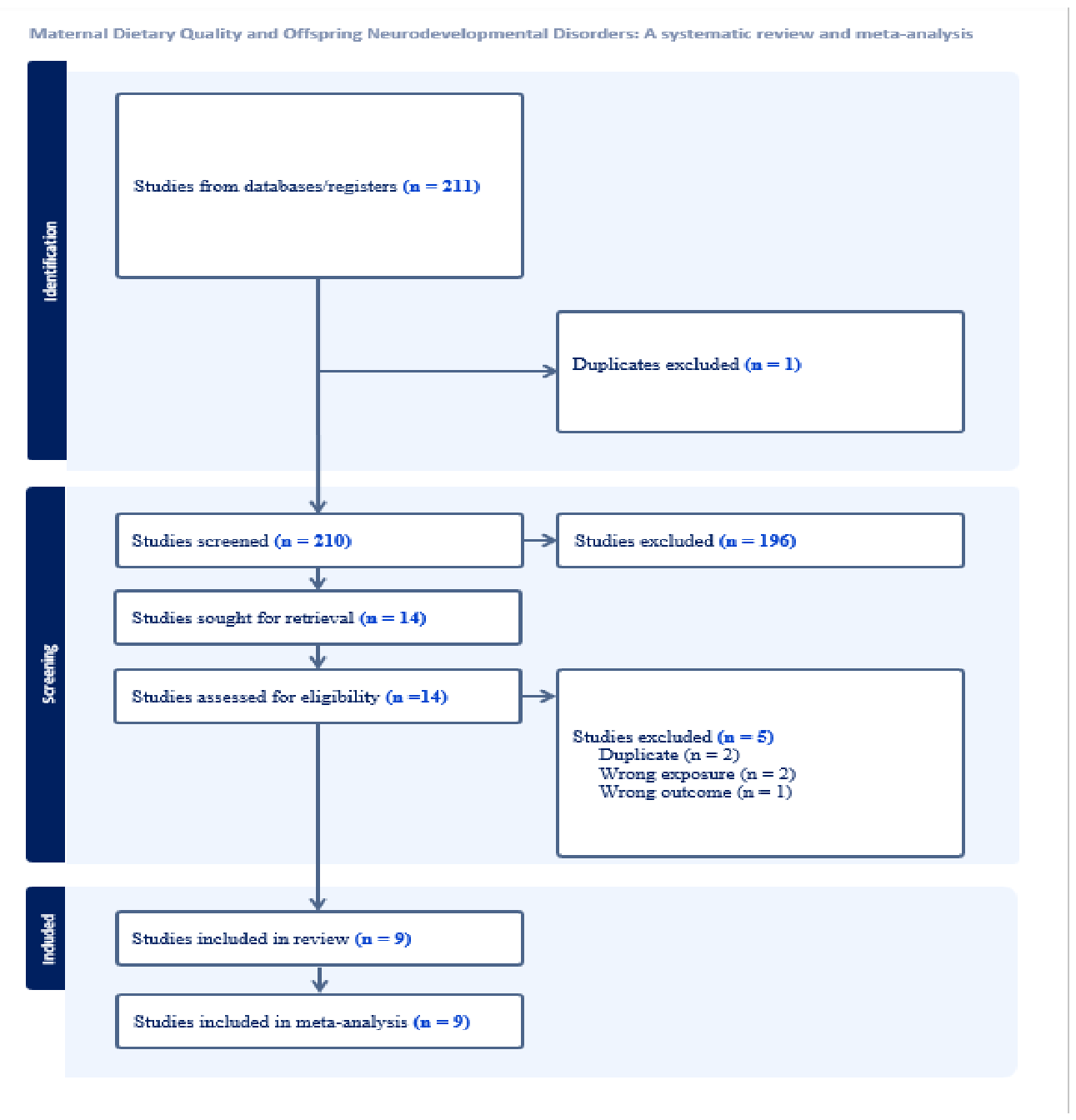
Figure 2.
The ROBINS-E risk of bias tool for risk of bias assessment.
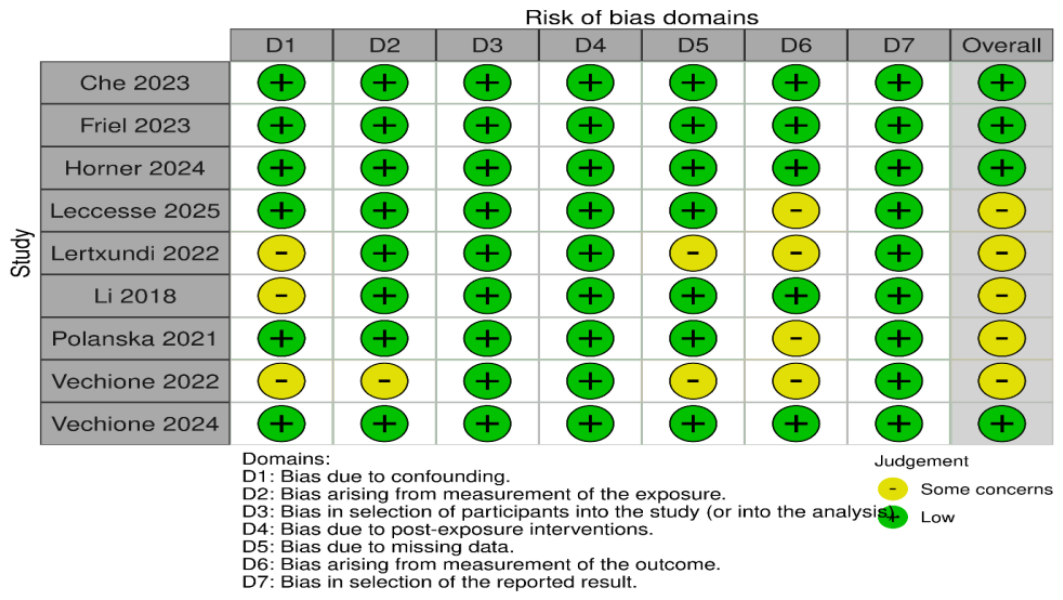
Figure 3.
Forest plot of maternal pro-inflammatory diet on offspring ADHD.
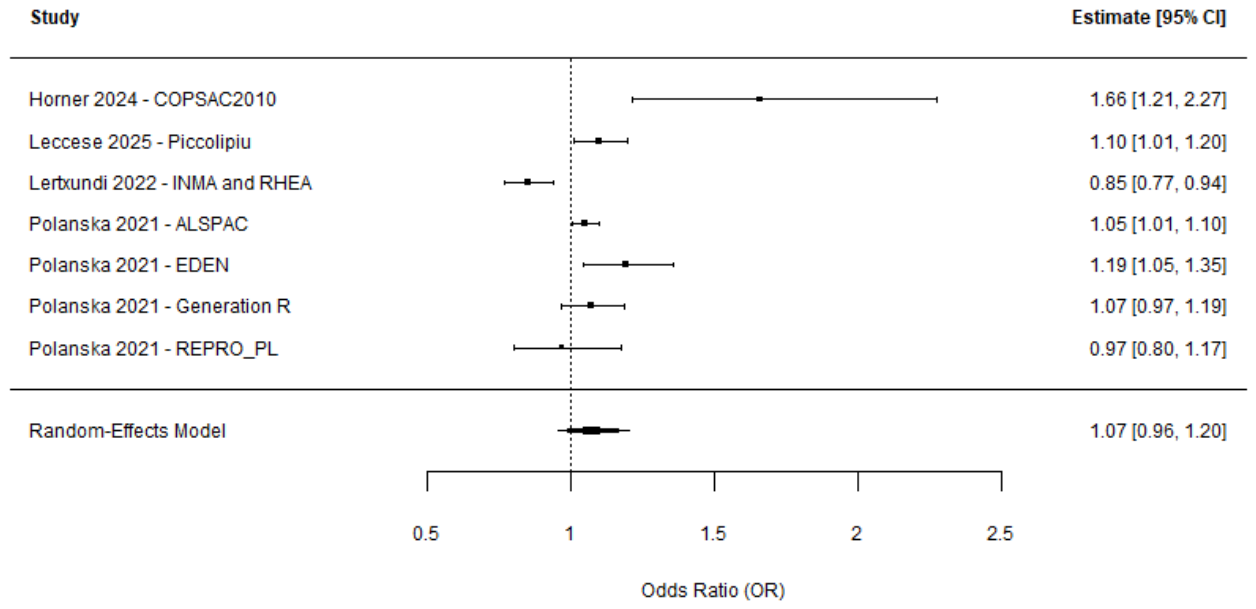
Figure 4.
Forest plot of maternal pro-inflammatory diet on offspring ASD.
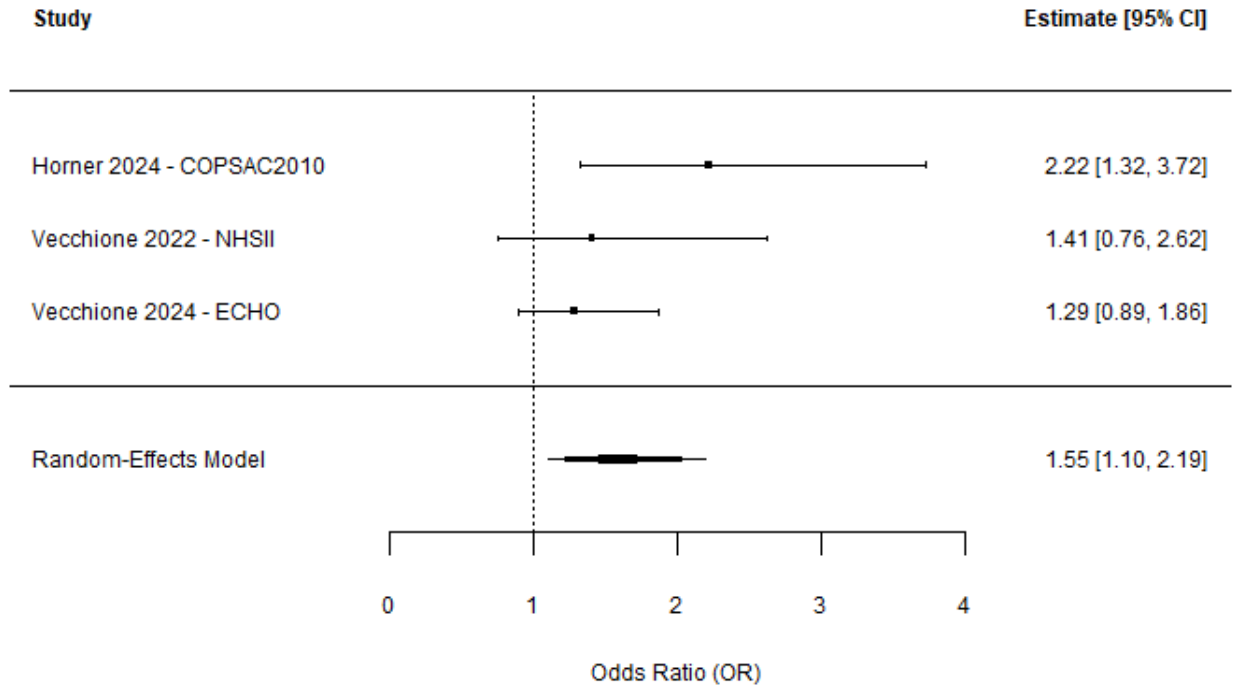
Figure 5.
Forest plot of maternal anti-inflammatory diet on offspring ADHD.
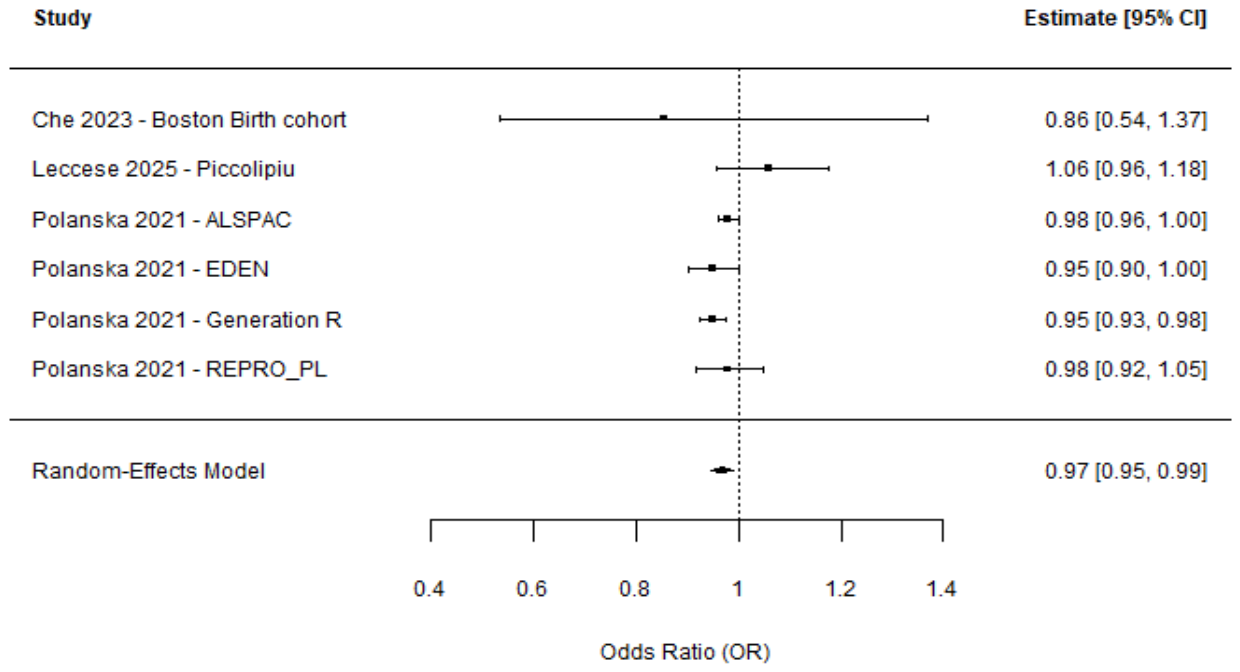
Figure 6.
Forest plot of maternal anti-inflammatory diet on offspring ASD.
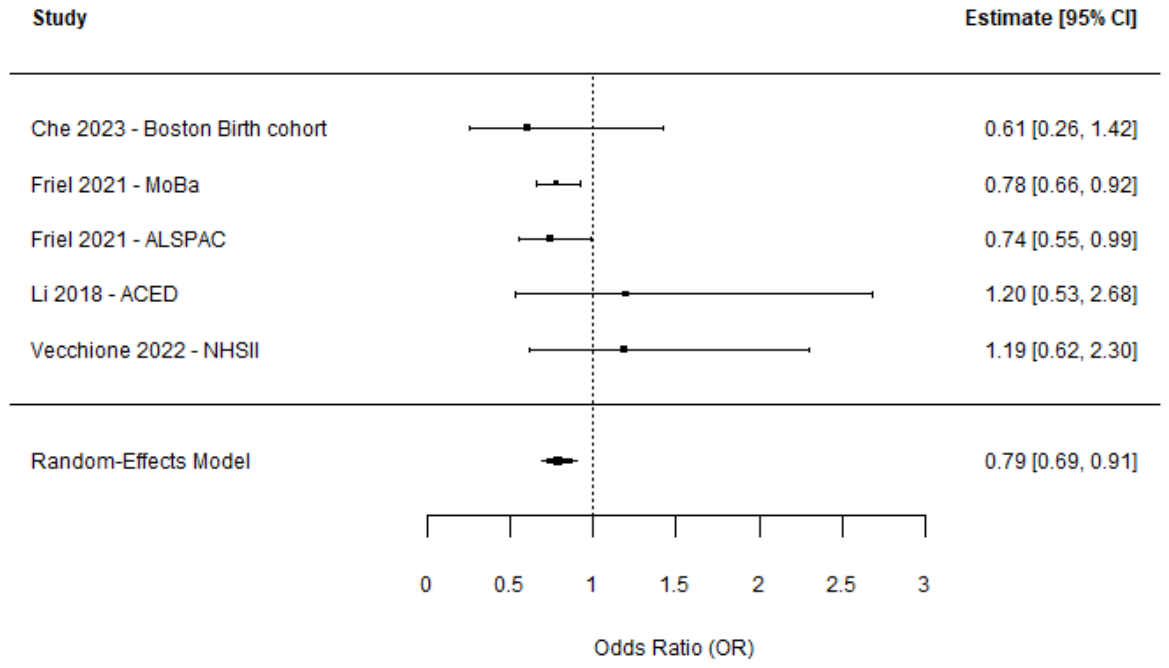

Table 1.
Guideline for the systematic literature search based on Population, Exposure and Outcome (PEO) framework.
Table 1.
Guideline for the systematic literature search based on Population, Exposure and Outcome (PEO) framework.
| PEO | DESCRIPTION |
| Population | Pregnant women |
| Exposure | Maternal dietary quality defined by holistic dietary pattern rather than intake of specific food |
| Outcome | Attention deficit hyperactivity disorder (ADHD) and Autism spectrum disorders (ASD) in offspring |
| Study design | Studies of cohort, cross-sectional and case-control design |
Table 2.
Overview of studies included in the systematic review.
| Study author | Country | Study design | Study data source | Study sample | Exposure definition | Outcome type | ROB |
|---|---|---|---|---|---|---|---|
| Che et al. 2023 [38] | USA | Prospective cohort study | Boston Birth Cohort (BBC) | 3165 | Mediterranean-style diet score (MSDS) |
ASD ADHD | Low |
| Friel et al. 2024 [30] | USA | Prospective cohort study | Norwegian Mother, Father, and Child Cohort Study (MoBa), Avon Longitudinal Study of Parents and Children (ALSPAC) | 84,548 and 11,760 | Healthy Prenatal Dietary Pattern (HPDP) | ASD | Low |
| Horner et al. 2025 [29] | Denmark | Prospective cohort study | COPSAC2010 mother–child cohort |
700 | Western Dietary Pattern | ASD and ADHD | Low |
| Leccese et al. 2025 [39] | Italy | Prospective cohort study | Piccolipiù Italian birth cohort |
2006 | Processed and High-Fat Foods and Fresh food and fish | ADHD | Some concerns |
| Lertxundi et al. 2022 [40] | Spain and Greece | Prospective cohort study | INMA and RHEA | 2541 | Dietary Inflammatory Index | ADHD | Some concerns |
| Li et al. 2018 [41] | China | Retrospective cohort study | Autism Clinical and Environmental Database (ACED) | 728 | Balanced dietary pattern (Mostly vegetable) | ASD | Some concerns |
| Polanska et al. 2021 [42] | Poland | Prospective cohort study | ALSPAC, EDEN, Generation R, and REPRO_PL | 7177, 806, 3571, and 316 | Healthy dietary quality according to DASH score, Dietary Inflammatory potential (E-DII score) | ADHD | Some concerns |
| Vecchione et al. 2022 [43] | USA | Prospective cohort study | NHSII |
727 | Empirical dietary inflammatory pattern (EDIP), Alternative Healthy Eating Index (AHEI)-2010, Alternative Healthy Eating Index (AHEI)-P, Western dietary patterns, Prudent dietary patterns, and alternative Mediterranean Diet (aMED) score |
ASD | Some concerns |
| Vecchione et al. 2024 [10] | USA | Prospective cohort study | ECHO | 6084 | Empirical dietary inflammatory pattern (EDIP), Alternative Healthy Eating Index (AHEI)-P, Healthy Eating Index (AHEI) |
ASD | Low |
Table 3.
Overview of studies included in meta-analysis.
| Study Author | Outcome | Study Cohort | Exposure definition | Derived exposure variable code | Effect estimate |
| Che et al. 2023 [38] | ASD |
Boston Birth cohort | Highest adherence to Mediterranean-style diet score (MSDS) |
Anti-inflammatory dietary pattern | 0.608 (0.255 – 1.398) |
| Che et al. 2023 [38] | ADHD | Boston Birth cohort | Highest adherence to Mediterranean-style diet score (MSDS) |
Anti-inflammatory dietary pattern | 0.856 (0.534 – 1.364) |
| Che et al. 2023 [38] | ASD | Boston Birth cohort | Lowest adherence to Mediterranean-style diet score (MSDS) | Pro-inflammatory dietary pattern | 0.961 (0.488-1.932) |
| Che et al. 2023 [38] | ADHD | Boston Birth cohort | Lowest adherence to Mediterranean-style diet score (MSDS) | Pro-inflammatory dietary pattern | 1.012 (0.676 – 1.52) |
| Friel et al. 2024 [30] | ASD | Norwegian Mother Child Cohort (MoBa) | Highest adherence to Healthy Prenatal Dietary Pattern (HPDP) | Anti-inflammatory dietary pattern | 0.78 (0.66 – 0.920 |
| Friel et al. 2024 [30] | ASD | ALSPAC dataset | Highest adherence to Healthy Prenatal Dietary Pattern (HPDP) | Anti-inflammatory dietary pattern | 0.74 (0.55 – 0.98) |
| Horner et al. 2025 [29] | ASD | COPSAC2010 mother–child cohort | Western dietary pattern | Pro-inflammatory dietary pattern | 2.22 (1.33 – 3.74) |
| Horner et al. 2025 [29] | ADHD | COPSAC2010 mother–child cohort | Western dietary pattern | Pro-inflammatory dietary pattern | 1.66 (1.21 – 2.27) |
| Leccese et al. 2025 [39] | ADHD | Piccolipiù Italian birth cohort | Processed and High-Fat Foods |
Pro-inflammatory dietary pattern | 1.1 (1.01 – 1.2) |
| Leccese et al. 2025 [39] | ADHD | Piccolipiù Italian birth cohort | Fresh food and fish |
Anti-inflammatory dietary pattern | 1.06 (0.96 – 1.18) |
| Lertxundi et al. 2022 [40] | ADHD | INMA and RHEA | Dietary Inflammatory Index | Pro-inflammatory dietary pattern | 0.85 (0.74 – 0.97) |
| Li et al. 2018 [41] | ASD | Autism Clinical and Environmental Database (ACED) | Balanced dietary pattern (Mostly vegetable) | Anti-inflammatory dietary pattern | 2.234 (1.009 – 4.946) |
| Polanska et al. 2021[42] | ADHD | ALSPAC | Healthy dietary quality according to DASH score | Anti-inflammatory dietary pattern | 0.98 (0.96 – 1) |
| Polanska et al. 2021 [42] | ADHD | EDEN | Healthy dietary quality according to DASH score | Anti-inflammatory dietary pattern | 0.95 (0.9 – 1) |
| Polanska et al. 2021 [42] | ADHD | Generation R | Healthy dietary quality according to DASH score | Anti-inflammatory dietary pattern | 0.95 (0.93 – 0.98) |
| Polanska et al. 2021 [42] | ADHD | REPRO_PL | Healthy dietary quality according to DASH score | Anti-inflammatory dietary pattern | 0.98 (0.91 – 1.04) |
| Polanska et al. 2021 [42] | ASD | ALSPAC | Dietary Inflammatory potential (E-DII score) | Pro-inflammatory dietary pattern | 1.05 (1 – 1.09) |
| Polanska et al. 2021 [42] | ASD | EDEN | Dietary Inflammatory potential (E-DII score) | Pro-inflammatory dietary pattern | 1.19 (1.05 – 1.36) |
| Polanska et al. 2021 [42] | ASD | Generation R | Dietary Inflammatory potential (E-DII score) | Pro-inflammatory dietary pattern | 1.07 (0.96 – 1.18) |
| Polanska et al. 2021 [42] | ASD | REPRO_PL | Dietary Inflammatory potential (E-DII score) | Pro-inflammatory dietary pattern | 0.97 (0.8 – 1.17) |
| Vecchione et al. 2022 [43] | ASD | NHSII | Empirical dietary inflammatory pattern (EDIP) | Pro-inflammatory dietary pattern | 1.41 (0.76 – 2.62) |
| Vecchione et al. 2024 [10] | ASD | ECHO | Western dietary patterns | Pro-inflammatory dietary pattern | 1.29 (0.89 – 1.86) |
Table 4.
GRADE Certainty of evidence.
| Outcome | Exposure | Number of studies | Participants | Pooled OR (95% CI) | Certainty of evidence | p-value | Reasons for downgrading |
|---|---|---|---|---|---|---|---|
| ASD | Anti-inflammatory diet | 5 | 100,908 |
0.79(0.69 - 0.91) | Low | 0.007 | No serious concerns for risk of bias, inconsistency, indirectness, or imprecision. |
| ASD | Pro-inflammatory diet | 3 | 6,511 |
1.55(1.10 - 2.19) | Low | 0.012 | No serious concerns for risk of bias, inconsistency, indirectness, or imprecision. |
| ADHD | Anti-inflammatory diet | 6 | 17,028 |
0.97(0.95 - 0.99) | Low | 0.004 | No serious concerns for risk of bias, inconsistency, indirectness, or imprecision. |
| ADHD | Pro-inflammatory diet | 8 | 17,114 |
1.07(0.96 - 1.20) | Very low | 0.232 | Downgraded due to imprecision and for inconsistency due to moderate between-study heterogeneity. |
Disclaimer/Publisher’s Note: The statements, opinions and data contained in all publications are solely those of the individual author(s) and contributor(s) and not of MDPI and/or the editor(s). MDPI and/or the editor(s) disclaim responsibility for any injury to people or property resulting from any ideas, methods, instructions or products referred to in the content. |
© 2026 by the authors. Licensee MDPI, Basel, Switzerland. This article is an open access article distributed under the terms and conditions of the Creative Commons Attribution (CC BY) license.
Copyright: This open access article is published under a Creative Commons CC BY 4.0 license, which permit the free download, distribution, and reuse, provided that the author and preprint are cited in any reuse.


