

Submitted:
12 April 2026
Posted:
14 April 2026
You are already at the latest version
Abstract
Organophosphate-induced delayed neuropathy (OPIDN) is a rare, serious neurological consequence of organophosphate poisoning. Unlike acute toxicity, which causes cholinergic crises, OPIDN develops insidiously, often weeks after exposure, leading to progressive sensorimotor deficits. 44-year-old African male pesticide applicator with nine years of organophosphate exposure presented with progressive lower limb weakness, gait disturbances, and paresthesia. The patient exhibited no signs of acute cholinergic symptoms. Neurological examination revealed symmetrical limb weakness, diminished deep tendon reflexes, and distal sensory deficits. Serum cholinesterase levels were decreased. Electrophysiological studies demonstrated axonal degeneration with demyelination, and MRI showed mild spinal cord atrophy. Other causes of neuropathy were excluded. He received supportive care, including physical therapy, pain and spasticity management, antioxidants, vitamins, and off-label intravenous methylprednisolone. Over four months, he regained partial functional improvement, with residual weakness and mild gait disturbance. Chronic low-level organophosphate exposure can cause OPIDN even without acute poisoning. Diagnosis relies on occupational history, neurological examination, and electrophysiological findings. Management is primarily supportive; off-label therapies such as methylprednisolone may reduce neuroinflammation and oxidative stress but are not part of standard care. Early recognition, timely preventive measures, and long-term rehabilitation are essential to improve functional outcomes and quality of life.
Keywords:
organophosphate poisoning
; delayed neuropathy
; pesticide exposure
; neurotoxicity
; peripheral neuropathy
; acetylcholinesterase inhibition
; occupational exposure
Introduction
Organophosphate (OP) poisoning is a major global concern [1], affecting nearly 3 million people annually and causing approximately 300,000 deaths [2]. Organophosphate-induced delayed neuropathy (OPIDN) is a rare but serious neurological consequence of OP exposure, commonly associated with pesticide use [3]. Unlike acute OP poisoning, which causes a cholinergic crisis via acetylcholinesterase (AChE) inhibition, OPIDN develops after a latent period of days to weeks [4]. It leads to distal axonal degeneration and progressive motor and sensory deficits, especially in the lower limbs. Chronic pesticide applicators are particularly vulnerable due to repeated exposure and inadequate protective measures [5]. The risk is further increased by frequent contact with OP pesticides, poor ventilation, improper handling, and insufficient decontamination practices [4]. Long-term occupational exposure poses a distinct risk for OPIDN development [6], as cumulative toxicity can lead to delayed neuropathic symptoms, complicating early diagnosis and timely intervention [7].
The underlying mechanism of OPIDN involves inhibition of neuropathy target esterase (NTE), resulting in axonal injury and myelin disruption [8]. Diagnosis is based on clinical presentation, exposure history, and electrophysiological testing, and treatment remains supportive, focusing on symptom relief and rehabilitation [9]. This case report is the first to highlight neurological complications arising from long-term, low-level organophosphate exposure in an agricultural worker. Unlike most previously reported cases, in which OPIDN develops within weeks to months following an acute poisoning symptom. This long-latency presentation underscored the diagnostic challenges in low-resource settings.
Case Presentation
A 44-year-old African male pesticide applicator presented with a four-month history of progressive lower limb weakness, tingling, burning pain, and difficulty walking. According to his caregiver, the patient also experienced fatigue, occasional dizziness, and worsening balance, which affected his daily activities and work performance. According to the caregiver, there were no reported acute poisoning symptoms such as excessive salivation, vomiting, diarrhea, or muscle twitching. Over nine years, the caregiver reported that symptoms progressed from mild sensory disturbances and fatigue (years 1–5) to motor weakness, cramps, leg weakness, and pain (years 6–8). Memory and concentration problems appeared by year 9 (Table 1). There was no history of acute toxic exposure or sudden health deterioration, and he did not use any traditional or home remedies.
The caregiver reported that the patient had worked as a pesticide applicator for nine years, routinely handling OP pesticides (chlorpyrifos, malathion, and diazinon). He did so without personal protective equipment (PPE), often for 6–9 hours daily in poorly ventilated agricultural settings. He lived in a rural area with limited access to occupational health services and safety training, which increased his vulnerability. According to the caregiver, he smoked two to five cigarettes per day for seven years and occasionally consumed alcohol. His diet was mainly carbohydrate-rich, with limited protein and vitamins. Although these factors alone are unlikely to cause severe motor and sensory deficits, they may have contributed to increased susceptibility to nerve damage. In combination with prolonged OP exposure, they may also have contributed to delayed recovery. His medical history was unremarkable, with no history of neurological, metabolic, cardiovascular, or autoimmune disorders, hospitalizations, or prior pesticide poisoning. There was no family history of neurodegenerative or hereditary neuropathies, and no relatives reported similar symptoms.
On general examination, the patient was comatose and severely unconscious. Vital signs were: blood pressure 117/78 mmHg, heart rate 76 beats per minute, respiratory rate 17 breaths per minute, temperature 37.2°C, and oxygen saturation (SpO₂) was 88% on room air, requiring urgent monitoring. Neurological examination revealed bilateral lower limb weakness, more pronounced proximally, with calf muscle atrophy. Lower limb reflexes were absent, and Babinski’s sign was negative. Sensory testing showed loss of vibration sense in the feet and reduced pinprick and temperature sensations. His gait was unsteady with foot drop and spasticity, requiring assistance. This atypical but plausible finding likely reflects compensatory tone changes rather than true upper motor neuron involvement. However, the predominant neurological pattern remains that of lower motor neuropathy, typical of OPIDN. Cranial nerves were intact.
The Medical Research Council (MRC) muscle strength assessment of the lower limbs demonstrated weakness in the proximal muscles, with hip flexion (iliopsoas) and knee extension (quadriceps) both graded at 2/5. Distal muscle strength was also reduced, with ankle dorsiflexion (tibialis anterior) graded at 3/5 and toe extension (extensor hallucis longus) graded at 2/5. This distal weakness contributed to foot drop, weak toe extension, an unstable gait, and an increased risk of tripping and falling. MRC grading of the upper limbs showed shoulder abduction (deltoid) at 4/5 and elbow flexion (biceps) at 4/5 in the proximal muscles. Wrist extension (extensor carpi radialis) and finger adduction (first dorsal interosseous) were also graded 4/5, indicating relatively preserved upper limb strength. The Modified Ashworth Scale (MAS) revealed muscle spasticity in the hip adductors (grade 3), knee flexors (grade 3), knee extensors (grade 2), and ankle plantar flexors (grade 3). These results indicate moderate-to-severe spasticity.
The patient had a Glasgow Coma Scale (GCS) score of 8 (E3M2V3), indicating severe impairment of consciousness. He opened his eyes only in response to verbal commands (E3), had a verbal response limited to inappropriate words (V3), and exhibited abnormal motor extension (decerebrate posturing) (M2). Routine blood tests, including complete blood count, liver and renal function tests, fasting blood glucose, and thyroid function, were normal. Serum vitamin B12 and folate levels were also normal. However, serum erythrocyte cholinesterase activity was markedly reduced at 1,800 U/L (normal range: 5,320–12,920 U/L) on day 1 of admission, strongly suggesting OP toxicity.
A motor nerve conduction study revealed reduced compound muscle action potential (CMAP) amplitude, slowed conduction velocity, and prolonged distal latency in the right median, right ulnar, and left tibial nerves. Sensory studies showed decreased sensory nerve action potential (SNAP) amplitude and conduction velocity, along with prolonged distal latency in the same nerves (Table 2), indicating axonal degeneration with demyelination in the lower limbs.
Magnetic resonance imaging (MRI) of the brain and spinal cord showed mild spinal cord atrophy, possibly reflecting chronic axonal degeneration following prolonged OP exposure, consistent with OPIDN. Differential diagnoses considered for OPIDN included Guillain–Barré syndrome, acute disseminated encephalomyelitis, transverse myelitis, and inflammatory myelopathy. Myelopathies due to vitamin B12 or copper deficiency were also included in the differential diagnosis (Table 3).
The patient received oxygen at 3 L/min until SpO₂ exceeded 95%. He was treated with gabapentin (300 mg/day, titrated to 900 mg/day) for neuropathic pain and baclofen (5 mg three times daily, increased to 20 mg/day) for spasticity. The doses were gradually escalated to optimize symptom control and tolerability. Physiotherapy focused on strength training, gait rehabilitation, and the use of an ankle-foot orthosis to improve mobility and prevent falls. Vitamin E (400 IU/day) and vitamin C (500 mg/day) were also administered as antioxidant supplementation. Additionally, a short course of methylprednisolone (500 mg IV for five days) was administered to attenuate neuroinflammation and oxidative stress [10]; this is off-label use and not considered standard treatment for OPIDN. He was advised to cease pesticide spraying or consistently use PPE when handling pesticides.
The patient was alive and showed significant functional improvement. He was discharged with oral prednisolone (tapered from 60 mg/day), baclofen 10 mg three times daily, gabapentin 300 mg/day, and physiotherapy. A monthly neurology follow-up was recommended. At one month, he reported mild pain relief and stabilization of symptoms, but remained dependent on walking aids. In two months, he showed moderate improvement in walking ability, reduced stiffness, and better pain control. After four months, he exhibited significant functional recovery, though mild gait disturbances persisted. He was enrolled in long-term rehabilitation focusing on strengthening exercises and occupational training. No new neurological deficits were observed during follow-up. The patient demonstrated progressive improvement in lower limb strength, spasticity, and pain over the 16-week follow-up period (Table 4).
Discussion
Organophosphates are widely used pesticides, and chronic exposure among agricultural workers increases the risk of neurotoxicity [2,9]. The World Health Organization (WHO) reported approximately three million OP poisoning cases annually [3]. OPIDN is a rare but severe condition that typically develops days to weeks after exposure [11]. It involves both the peripheral and central nervous systems, leading to progressive weakness, sensory deficits, and paralysis. Acute OP poisoning is well documented in the literature [12]; however, OPIDN remains less extensively studied. This case highlights that prolonged occupational exposure can lead to neuropathy even in the absence of acute poisoning. OPIDN-linked compounds include chlorpyrifos, leptophos, malathion, mipafox, merphos, trichlorfon, triorthocresyl phosphate, and tricresyl phosphate [13]. Clinical presentation varies depending on the type and duration of exposure [13]. Delayed symptoms typically include progressive lower limb weakness, gait disturbances, distal sensory loss, and muscle cramps [14]. In advanced stages, patients may develop spasticity, hyperreflexia, ataxia, and foot drop [13,14]. The clinical manifestations in this case are consistent with those previously reported by Acharya et al., 2016 [13] and Prasai et al., 2022 [14].
In previously reported cases, OPIDN typically followed acute OP ingestion and initially presented with cholinergic symptoms. Neuropathy generally developed within 2–6 weeks after exposure (Kobayashi et al., 2017 [12]; Akçay et al., 2017 [15]; Rao et al., 2024 [2]; Gautam et al., 2022 [11]; Acharya et al., 2016 [13]; Chhabra et al., 2024 [9]; Viswanath, 2023 [3]; Chowdhury et al., 2024 [16]; Ansal Mundu et al., 2016 [1]; Prasai et al., 2022 [14]; Vasconcellos et al., 2002 [18]). In contrast, the present case demonstrated a different pattern, emphasizing a unique clinical course (Table 5). In this patient, OPIDN developed after nine years of chronic occupational exposure via skin contact and inhalation, without any prior acute cholinergic symptoms. Unlike acute ingestion cases, in which neuropathic symptoms appear within weeks, this case illustrated that long-term, low-level exposure can also result in delayed neuropathy. Acharya et al. (2016) [13] reported a case of OPIDN without an acute cholinergic syndrome, with neuropathy developing after 20 days. In contrast, the present patient developed neuropathy following an unusually prolonged period of pesticide exposure.
OP poisoning causes three major toxic effects. Type 1 (cholinergic toxicity) occurs within minutes to hours after exposure and is characterized by miosis, sweating, rhinorrhoea, and involuntary urination and defecation [19]. Central nervous system manifestations include dizziness, confusion, seizures, coma, and respiratory failure [19]. Type 2 OP poisoning (intermediate syndrome) develops within 24–96 hours in 20–50% of cases [20]. It may lead to acute ventilatory insufficiency due to paralysis of the respiratory muscles. Type 3 (organophosphate ester–induced delayed neuropathy) occurs from one week up to six months post-exposure [3,21]. Organophosphate-induced chronic neurotoxicity can cause memory and cognitive deficits, which were not reported by Viswanath et al. (2023) [3]. In contrast, the present case exhibited mild memory and concentration difficulties without significant cognitive impairment.
OPIDN progresses through four phases: latent (10 days to 3 weeks of delay), progressive (rapid motor-sensory polyneuropathy), stationary (persistent symptoms), and improvement [11]. During the improvement phase, sensory recovery typically precedes motor recovery, and spasticity may appear as underlying spinal cord lesions are unmasked [11]. Sensory symptoms include cramping, tingling, burning pain, and glove-and-stocking–type loss, whereas motor signs include foot drop and possible flaccid paralysis. This case contrasts with previous OPIDN reports, in which neuropathy developed over days to weeks following acute ingestion, as reported by Gautam et al., 2023 [11], Rao et al., 2024 [2], and Chhabra et al., 2024 [9]. In contrast, this patient’s neuropathy progressed gradually over a long period of chronic occupational exposure without prior acute cholinergic symptoms. Similar to the case reported by Rao et al., 2024 [2], which described upper and lower limb involvement with autonomic dysfunction, this patient also had deficits in both upper and lower limbs. Sensory disturbances accompanied the motor deficits.
OPIDN is associated with inhibition of neuropathy target esterase (NTE), leading to axonal degeneration, mitochondrial dysfunction, neuroinflammation, and impaired axonal transport [9,12,16,17]. Organophosphates have also been shown to activate Transient Receptor Potential Ankyrin 1 (TRPA1) channels, resulting in Ca²⁺ influx and myelin damage, which may contribute to neurodegeneration [11]. The patient’s clinical symptoms and electrophysiological findings indicate that TRPA1-mediated pathways contribute to organophosphate-induced neuropathy (Figure 1). In this patient, TRPA1 activation may have led to Ca²⁺ influx, resulting in axonal injury, myelin damage, and neuropathic symptoms, which may have contributed to the spasticity and delayed motor responses. However, a direct causal link between specific molecular pathways and the clinical findings cannot be established in this single case.
Diagnosis relies on clinical history, neurological examination, and laboratory findings [13]. Diagnostic evaluation involves a detailed exposure history, assessment of muscle strength, reflexes, gait, and sensory function, and electrophysiological studies to confirm axonal neuropathy [17]. In this case, follow-up with repeat EMG and cholinesterase measurements was planned but could not be performed due to financial constraints, limiting the availability of objective data for guiding occupational safety measures. Serum acetylcholinesterase and butyrylcholinesterase levels help assess the extent of organophosphate exposure, and MRI assists in excluding other neurological disorders [2,11]. Prior studies focused mainly on NCS [3,14]. This case highlights the role of MRI in ruling out structural abnormalities, supporting an integrated diagnostic approach that combines neuroimaging and advanced electrophysiology for early management and supportive care of OPIDN.
Treatment of OPIDN is mainly supportive, as no specific antidote exists [12]. Immediate management typically includes decontamination, administration of atropine for muscarinic symptoms, pralidoxime (2-PAM) to reactivate AChE, and benzodiazepines for seizure control [11,16]. Management of delayed neuropathy focuses on physical therapy, pain control (NSAIDs, gabapentinoids, or opioids), spasticity treatment (baclofen or tizanidine), and psychosocial support [2,11]. Methylprednisolone has been used off-label to reduce neuroinflammation in OPIDN, although its effectiveness has not yet been fully established [10]. Previous studies by Kobayashi et al., 2017 [12]; Rao et al., 2024 [2]; and Ansal Mundu et al., 2016 [1] emphasized the acute management of organophosphate poisoning using atropine and pralidoxime. In contrast, this case highlights the chronic nature of OPIDN and underscores the importance of long-term rehabilitation. In this case, IV methylprednisolone was administered off-label to attenuate neuroinflammation, consistent with prior reports by Chowdhury et al., 2014 [16] and Gautam et al., 2022 [11]. Vasconcellos et al. (2002 [18] explained that emerging therapies have biological plausibility and efficacy in animal models, but in clinical practice, they remain adjunctive and are not standardized. In this patient, emerging therapies were administered to reduce oxidative stress, neuroinflammation, and spasticity.
Prognosis depends on the severity of exposure and the timeliness of intervention [17]. Some patients experience partial recovery, but many develop permanent deficits, including spastic paraplegia and chronic pain. Rehabilitation and supportive care are essential. Previous studies indicated that most OPIDN cases result in significant functional impairment with limited recovery [12]. However, in this patient, notable functional improvement was observed within four months, highlighting the value of multidisciplinary management and long-term follow-up. This report has several limitations. It focused on a single patient, which reduces generalizability, and lacks a control group, making it difficult to determine the prevalence or severity of OPIDN. The patient received multiple concurrent therapies, making it impossible to attribute the observed improvement to a single intervention. Reliance on a single case may introduce subjectivity in interpreting symptoms and outcomes. Additionally, long-term objective follow-up, such as repeat EMG or cholinesterase measurements, was not available.
Conclusion
This case demonstrates that prolonged low-level occupational exposure to organophosphates can result in OPIDN without a preceding acute cholinergic crisis. The patient’s nine-year exposure history, progressive neurological deficits, reduced serum cholinesterase levels, and electrophysiological evidence of axonal degeneration and demyelination supported the diagnosis. Exclusion of alternative causes (nutritional deficiencies, hereditary neuropathies, and demyelinating diseases) confirmed the diagnosis with high certainty. Management was primarily supportive, including rehabilitation and symptomatic treatment, with off-label methylprednisolone used to attenuate neuroinflammation. This case highlights the importance of early recognition, detailed occupational history, and multidisciplinary management.
Key Learning Points
- ▪
- Chronic low-level occupational exposure to organophosphates can cause OPIDN without a preceding acute cholinergic crisis.
- ▪
- Diagnosis requires a high index of suspicion, a detailed occupational history, and appropriate investigations (NCS/EMG and serum cholinesterase levels).
- ▪
- Management is primarily supportive, including physical therapy, pain management, and spasticity control.
- ▪
- Off-label therapies such as methylprednisolone may have a role but are not considered standard of care.
List of Abbreviations
ACS: Acute cholinergic syndrome; LTE: Long-term exposure; OPs: Organophosphates; OPIDN: Organophosphate-induced delayed neuropathy; CMAP: Compound muscle action potential; GCS: Glasgow Coma Scale; MAS: Modified Ashworth Scale; MRC: Medical Research Council; PPE: Personal protective equipment; SNAP: Sensory nerve action potential; TRPA1: Transient Receptor Potential Ankyrin 1; VAS: Visual Analog Scale
Ethics Approval and Consent to Participate
IRB approval is not required for the case report per our institutional policy
Consent for Publication
Written informed consent was obtained from the patient for publication of this case report and any accompanying images. A copy of the written consent is available for review by the Editor-in-Chief of this journal.
Availability of Data and Materials
All data are included within the article.
Competing Interests
The author declares that they have no competing interests
Author Contributions
GB was responsible for conceptualizing the study, curating the data, drafting the initial manuscript, critical review, and editing of the manuscript. He also supervised the study, providing guidance throughout the writing process and ensuring the manuscript’s final form. The author read and approved the final manuscript.
Funding
No funding was received for this study.
Acknowledgements
I would like to express my sincere gratitude to the patient for his courage and cooperation in sharing his medical journey. His willingness to participate in this case report has significantly contributed to the advancement of medical knowledge.
Author Information
Department of Pharmacy, Marie Stopes International Ethiopia (MSIE), Ambo, Ethiopia ORCID iD Gudisa Bereda https://orcid.org/0000-0002-5982-9601
References
- Ansal Mundu P, Kumar M, Satapathy RP, Mitra JK. Organophosphate-induced delayed neuropathy: a case report. Int J Contemp Med Res. 2016;3(8):2289–91.
- Rao BR, Mohanty L, Kampali H, et al. Organophosphate-induced delayed neuropathy: a rare case presentation. J Integr Med Res. 2024; 2:33–6.
- Viswanath A, Barman A, Sahoo J, et al. Organophosphorus poisoning induced delayed neurotoxicity: a report of two cases. Spinal Cord Ser Cases. 2023;9(1):54.
- Goncharov NV, Belinskaia DA, Avdonin PV. Organophosphate-induced pathology: mechanisms of development, principles of therapy, and features of experimental studies. J Evol Biochem Physiol. 2023;59(5):1756–96.
- Ganie SY, Javaid D, Hajam YA, et al. Mechanisms and treatment strategies of organophosphate pesticide-induced neurotoxicity in humans: a critical appraisal. Toxicol. 2022; 472:153181.
- Tessema RA, Nagy K, Ádám B. Occupational and environmental pesticide exposure and associated health risks among pesticide applicators and non-applicator residents in rural Ethiopia. Front Public Health. 2022; 10:1017189.
- Desye B, Tesfaye AH, Daba C, et al. Pesticide safe use practice and acute health symptoms, and associated factors among farmers in developing countries: a systematic review and meta-analysis of epidemiological evidence. BMC Public Health. 2024; 24:3313.
- Patel A, Chavan G, Nagpal AK. Navigating the neurological abyss: a comprehensive review of organophosphate poisoning complications. Cureus. 2024;16(2).
- Chhabra J, Oberoi A, Pandita N, et al. The enigma of delayed neurotoxicity in organophosphate poisoning: a case report of clinical presentation with normal MRI findings. Cureus. 2024;16(6): e62877.
- Emerick GL, DeOliveira GH, dos Santos AC, et al. Mechanisms for consideration for intervention in the development of organophosphorus-induced delayed neuropathy. Chem Biol Interact. 2012;199(3):177-84.
- Gautam S, Sapkota S, Ojha R, et al. Delayed myelopathy after organophosphate intoxication: a case report. SAGE Open Med Case Rep. 2022; 10:1–4.
- Kobayashi S, Okubo R, Ugawa Y. Delayed polyneuropathy induced by organophosphate poisoning. Intern Med. 2017; 56:1903–5.
- Acharya H, Kelaiya A, Singel V, et al. Organophosphorus agent-induced delayed neuropathy: a case report. Int J Res Med Sci. 2016; 4:674–6.
- Prasai P, Thakur J, Karki KT. Organophosphorus poisoning induced delayed poly-axonal motor neuropathy: a case report. Egneuro. 2022;4(1):27–9.
- Akçay Y, Yalbuzdağ Ş, İnce B, et al. Organophosphate-induced delayed neuropathy: a case report. Turk J Phys Med Rehabil. 2017; 63:88–91.
- Chowdhury MMH, Masum A, Kawnayn G. A case of organophosphate-induced delayed motor neuropathy without any sensory involvement. BIRDEM Med J. 2024;14(1):49–52.
- Perry J, Cotton J, Rahman MA, et al. Organophosphate exposure and the chronic effects on farmers: a narrative review. Rural Remote Health. 2020;20(1):206–22.
- Vasconcellos LF, Leite AC, Nascimento OJ. Organophosphate-induced delayed neuropathy: case report. Arq Neuropsiquiatr. 2002;60(4):1003–7.
- Bereda G. Organophosphate poisoning: insights from a case report of acute cholinergic syndrome. Clin Case Rep. 2025;13(10): e71183.
- Bereda G. Poisoning by organophosphate pesticides: a case report. Cureus. 2022; 14(10): e29842.
- Bereda G. Acute Cardiac Arrhythmias in Organophosphate Poisoning: From Bradycardia to Atrial Fibrillation. Indian J Clin Cardiol. 2025; 6(4):398-404.
Figure 1.
Pathophysiology of organophosphate-induced delayed neuropathy in a long-term pesticide applicator.
Figure 1.
Pathophysiology of organophosphate-induced delayed neuropathy in a long-term pesticide applicator.
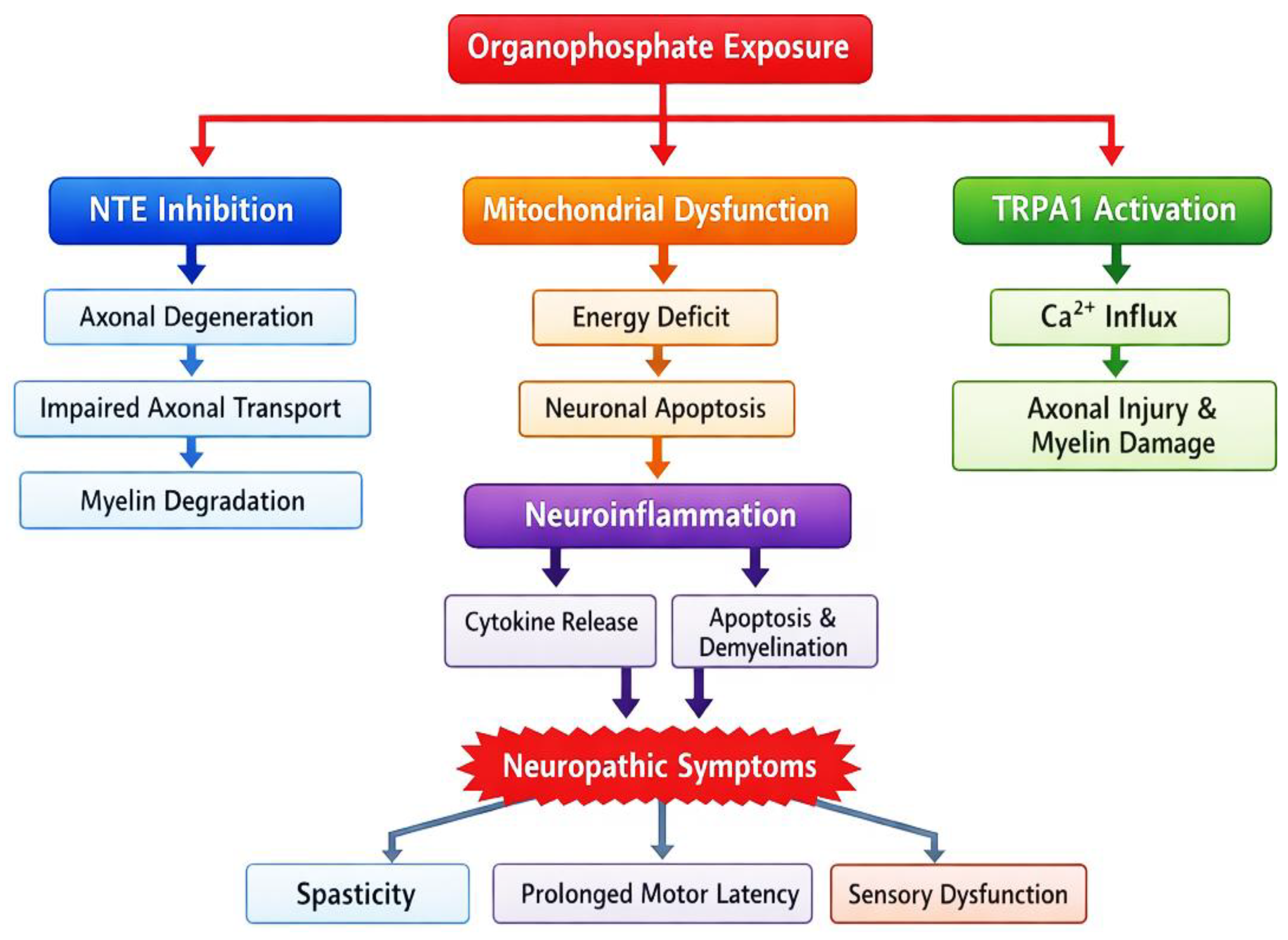

Table 1.
Symptoms and clinical progression experienced by the patient from the time of pesticide applicator exposure to hospital admission.
Table 1.
Symptoms and clinical progression experienced by the patient from the time of pesticide applicator exposure to hospital admission.
| Witness observations of the symptoms and progression of the disease | ||
|---|---|---|
| Year 1–5 | Year 6–8 | Year 9 |
| ⁃Occasional headaches ⁃Dizziness ⁃Mild fatigue |
⁃Tingling & numbness in hands and feet ⁃Muscle cramps & occasional tremors ⁃Difficulty gripping objects & weakness in the legs |
⁃Progressive muscle weakness, worsened over months ⁃Gait disturbances (difficulty walking & frequent tripping) ⁃Burning pain in legs, worse at night ⁃Mild memory & concentration problems |
Table 2.
NCS of the contralateral limbs revealed motor axonal involvement.
| Nerve conduction study (NCS) | ||||
|---|---|---|---|---|
| Right median | Right ulnar | Left tibial | ||
| Motor nerve conduction (MNC) | CMAP amplitude (mV) | 5.9 | 7.8 | 3.7 |
| Normal value | >4 | >4 | >4 | |
| Nerve conduction velocity (ms) | 57 | 54 | 46 | |
| Normal value | >50 | >50 | >40 | |
| Distal latency (ms) | 3.9 | 2.7 | 4.6 | |
| Normal value | <4.4 | <3.3 | <5.8 | |
| Sensory nerve conduction (SNC) | SNAP amplitude (µV) | 49.3 | 34 | 18.8 |
| Normal value | >20 | >17 | >6 | |
| Distal latency (ms) | 4.8 | 5.1 | 9.9 | |
| Normal Value | 2–3 | 2–3 | 2–3 | |
*Left peroneal was not recordable in both motor nerve and sensory nerve conduction.
Table 3.
Differential Diagnosis of Patients with Suspected OPIDN.
| Differential Diagnosis | Rationale for Consideration | Exclusion criteria |
|---|---|---|
| Nutritional Neuropathy | Diabetes & B12/folate deficiency can cause peripheral neuropathy | Normal fasting glucose, HbA1c, vitamin B12, & folate levels |
| Hereditary Neuropathies | Distal weakness, foot drop, & sensory deficits | No family history; adult-onset; & NCS pattern inconsistent with hereditary demyelinating neuropathy |
| CNS Demyelination | Weakness, spasticity, & sensory changes | MRI brain & spinal cord normal; symptoms predominantly peripheral |
| Stroke | Acute/subacute limb weakness | MRI spine showed only mild spinal cord atrophy |
| Motor Neuron Disease | Progressive weakness, & muscle atrophy | Sensory involvement present; reflexes largely preserved; pattern inconsistent with motor neuron disease |
| Chronic Inflammatory Demyelinating Polyneuropathy | Progressive motor & sensory deficits | NCS shows mixed axonal features but lacks a classic CIDP pattern; & no relapsing course |
| Toxin-Induced Neuropathy | Lead, arsenic, or other toxins can cause neuropathy | No history of relevant exposure; blood tests unremarkable; & symptom pattern aligns with OP exposure |
Table 4.
Clinical Course and Neurological Recovery Following Acute OPIDN.
| Measure | Baseline | Week 4 | Week 8 | Week 12 | Week 16 | Color/Representation | Notes |
|---|---|---|---|---|---|---|---|
| Proximal muscle strength | 2/5 | 3/5 | 3/5 | 4/5 | 4/5 | Solid brown line | Objective clinical assessment |
| Distal muscle strength | 2–3/5 | 3/5 | 3–4/5 | 4/5 | 4/5 | Solid blue line | Objective clinical assessment |
| Spasticity | 2–3 | 2–3 | 2 | 1–2 | 1 | Broken brown line | Clinician-assessed; partly subjective |
| Neuropathic pain (VAS) | 7 | 6 | 5 | 4 | 3 | Broken blue line | Patient-reported; subjective measure |
| Overall functional recovery | Low | Moderate | Moderate | Moderate | High | Shaded area (combined gains) | Represents combined improvement in strength, spasticity, and pain |
Table 5.
Comparison of Previously Published Studies and the Findings of This Manuscript.
| Findings from earlier published studies | ||||||||
|---|---|---|---|---|---|---|---|---|
| References | Age/gender | OPs type | History of ACS | History of long-term exposure | Time frame of OPIDN occurrence | Clinical Features | Clinical interventions | |
| Kobayashi, et al 2017 [12] | 89-year-old male farmer | 200 mL of a 50% Diptelex solution (trichlorfon) | Yes | No | Unknown | Rapidly progressive distal weakness and sensory disturbance | Gastric lavage, intravenous atropine, and pralidoxime | |
| Akçay, 2017 [15] | 27-year-old-male | 40 mL chlorpyrifos | Yes | No | 1 month | Motor axonal neuropathy involves the long axons of the peripheral nervous system. | A cold pack, Baclofen, and Botulinum toxin | |
| Rao et al., 2024 [2] | 36-year-old female | 50% chlorpyrifos | Yes | No | 20 days | Severe axonal motor neuropathy affecting both upper and lower limbs | Atropine infusion, pralidoxime, and antibiotics | |
| Gautam et al., 2022 [11] | 16-year-old male | 50% chlorpyrifos and 5% cypermethrin | Yes | No | 6 weeks | Normal motor and sensory amplitudes, no muscle atrophy, but spasticity was present in both the lower limbs. | IV methylprednisolone, calcium, and vitamin B1 supplements, and regular extensive physiotherapy. | |
| Acharya et al., 2016 [13] | 40-year-old male | High suspicion of poisoning by a food adulterant | No | No | 20 days | Difficulty in walking with inability to flex the foot and toes in both feet (“foot drop”) | Physiotherapy | |
| Chhabra et al., 2024 [9] | A 28-year-old man | 80 ml of OP (chlorpyrifos) | Yes | No | 5 weeks | Weakness in bilateral lower limbs, difficulty walking, and an abnormal gait | Gabapentin and nortriptyline, physiotherapy, and a foot splint. | |
| Viswanath, 2023 [3] | 20-year-old male | Organophosphorus pesticides | Yes | No | 3 weeks | Weakness and tightness in both lower limbs, and difficulty in walking, with distal weakness in both lower limbs | Cold packs, Baclofen, and Botulinum toxin A | |
| 34-year-old male | Organophosphorus pesticides | Yes | No | 2 weeks | Tightness in both lower extremities, difficulty walking, and painful spasms in sleep | Galvanic intermittent electrical stimulation, cold packs, Baclofen, and Botulinum toxin A injection | ||
| Chowdhury MMH et al, 2024 [16] | 29-year-old male | Chlorpyrifos | Yes | No | 4 weeks | Progressive lower-limb weakness and motor axonal neuropathy | Supplemental oxygen, hydrocortisone, nebulization, atropine pralidoxime, IV fluid, thiamine, and physiotherapy | |
| Ansal Mundu et al., 2016 [1] | 22-year-old male | Chlorpyriphos 200 ml | Yes | No | 3 weeks | Tingling sensation in the right foot, weakness in the right lower limb, and difficulty in walking | Gastric lavage, inj Atropine, pralidoxime, and oxygen therapy | |
| Prasai Pet al., 2022 [14] | 23-year-old lady | Organophosphorus compound | Yes | No | 4 weeks | Distal weakness in the lower limbs and motor neuropathy | Steroids and physiotherapy | |
| Vasconcellos et al., 2002 [18] | 39-year-old female | Dichlorvos-based insecticide | Yes | No | 2 weeks | Cramping calf pain, hyperesthesia in the plantar area, and distal weakness in the lower and upper limbs | Amitriptyline, carbamazepine, capsaicin, thiamin, and physiotherapy | |
| Finding of this manuscript | ||||||||
| Bereda. 2025 | 44-year-old male pesticide applicator | Many (e.g., chlorpyrifos, malathion, & diazinon) | No | Yes | 9 years | Axonal degeneration with demyelination in the lower limbs, as evidenced by prolonged distal motor latencies, reduced conduction velocity, and diminished sensory nerve action potentials. | Gabapentin, baclofen, antioxidant supplementation with vitamin E, vitamin C, methylprednisolone, and Physiotherapy | |
Disclaimer/Publisher’s Note: The statements, opinions and data contained in all publications are solely those of the individual author(s) and contributor(s) and not of MDPI and/or the editor(s). MDPI and/or the editor(s) disclaim responsibility for any injury to people or property resulting from any ideas, methods, instructions or products referred to in the content. |
© 2026 by the authors. Licensee MDPI, Basel, Switzerland. This article is an open access article distributed under the terms and conditions of the Creative Commons Attribution (CC BY) license (http://creativecommons.org/licenses/by/4.0/).
Copyright: This open access article is published under a Creative Commons CC BY 4.0 license, which permit the free download, distribution, and reuse, provided that the author and preprint are cited in any reuse.


