

Submitted:
09 April 2026
Posted:
10 April 2026
You are already at the latest version
Abstract
The global copper market is experiencing a period of fundamental structural volatility, guided by supply chain realignments, geopolitical friend-shoring, and an increasing reliance on the circular economy. To accurately diagnose the current state of this critical mineral, this paper presents a strictly empirical, data-driven algorithmic pipeline, the Apex Empirical Model, applied to recent UN Comtrade transaction ledgers (2020-2025). By utilizing robust machine learning architectures, this research systematically identifies a phenomenon we term Stage-Specific Starvation (SSS) across the upstream, midstream, circular, and downstream stages of the value chain. Integrating Deep Autoencoders, Network Graph Analysis, Holt-Winters Time-Series Forecasting, and Risk-Parity Optimization, the model successfully isolates targeted capital flight via transfer mispricing and maps the exact flow-through volumes of global transshipment hubs. Furthermore, the framework applies network topology to assess systemic vulnerabilities, empirically confirming the existence of a geopolitical price premium, and engineers a continuous mass-balance metric to predict projected smelter capacity adjustments six months into the future. Finally, our resilience metrics mathematically prove the financial arbitrage and stability advantages of secondary scrap integration. Ultimately, this research leverages Causal Inference to introduce Circular Risk Parity (CRP), providing a prescriptive, optimized portfolio allocation that balances risk equally across the supply chain, allowing stakeholders to navigate exogenous supply shocks in the modern copper market.
Keywords:
copper
; critical minerals
; global trade data
; UN Comtrade
; apex empirical model
; Stage‐Specific Starvation (SSS)
; Circular Risk Parity (CRP)
; supply chain resilience
; secondary scrap integration
; structural volatility
; geopolitical price premium
; trade fragility matrix
; transshipment hubs
; transfer mispricing
; smelter capacity
; mass‐balance metric
; causal elasticity
; risk‐parity optimization
; holt‐winters forecasting
; deep autoencoders
; network topology
; friend‐shoring
; circular arbitrage
; upstream extraction
; midstream refined
; downstream manufacturing
1. Introduction
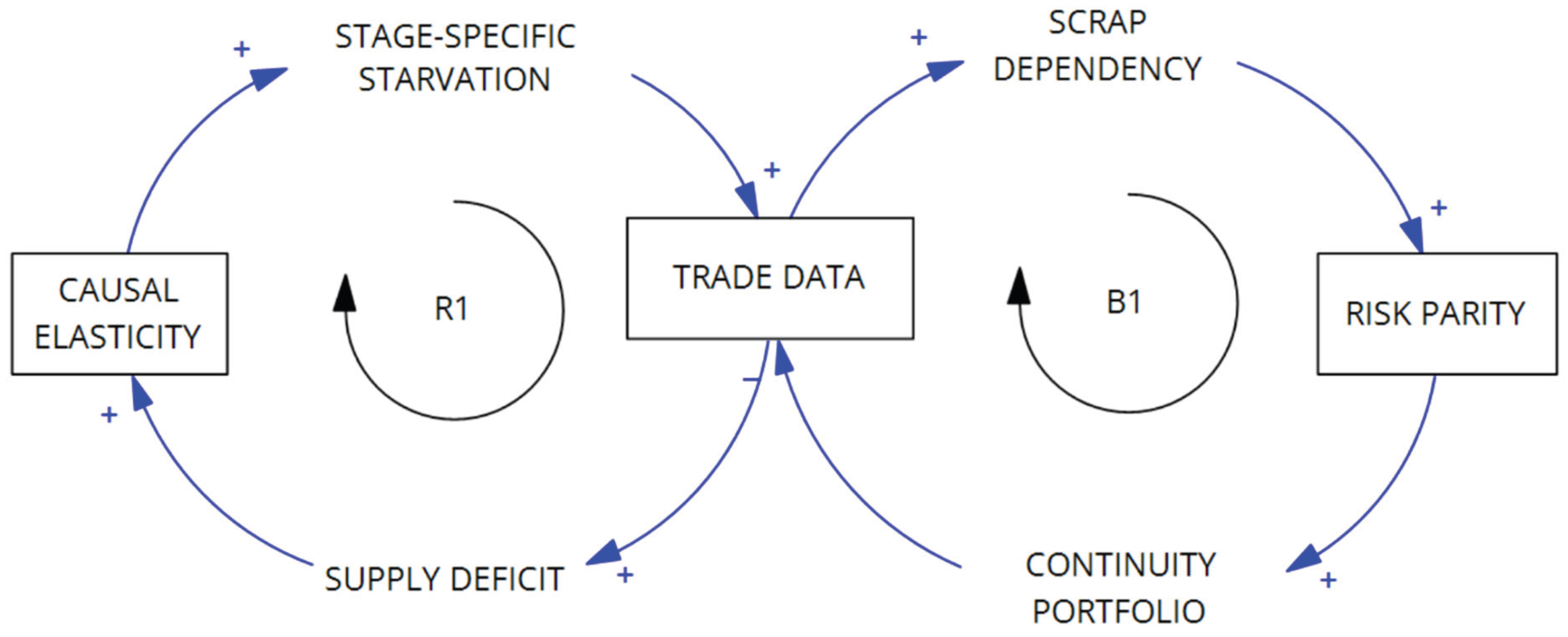
The global copper market has entered a highly dynamic phase characterized by supply chain fragmentation and shifting geopolitical alliances. To accurately diagnose the current state of this critical mineral, this research adopts a strictly empirical analysis of UN Comtrade data from 2020 through early 2025. This paper presents a system dynamics framework anchored by empirical global trade data to model the structural volatility and decoupling currently characterizing the critical mineral copper market. Within this framework, a reinforcing vulnerability loop is identified wherein Stage-Specific Starvation, empirically observed as severe processing constraints and sharply declining downstream volumes is recorded within the Trade Data as an acute Supply Deficit. This deficit induces a quantifiable causal price elasticity, which dictates those sudden contractions in global supply volume trigger compounding, inverse price spikes. These spikes iteratively exacerbate market starvation and downstream demand rationalization. In opposition, a balancing resilience loop is activated as industrial stakeholders respond to these empirical trade disruptions by elevating their scrap dependency ratio, strategically displacing volatile raw ore intake with secondary circular materials. This structural adaptation facilitates the implementation of Circular Risk Parity (CRP), an optimized capital allocation strategy that generates a mathematically optimal Continuity Portfolio. This portfolio inherently insulates the market from exogenous upstream extraction shocks, thereby driving the system toward equilibrium and stabilizing the global material flows recorded back within the central trade ledgers.
Figure 1.
The System Dynamic of Core Copper Supply Chain Resilience.
To capture the nuances of this complex network, the dataset is structurally segmented into four foundational stages of the value chain: Upstream raw extraction, Midstream refined products, the Circular economy represented by scrap, and Downstream semi-finished manufacturing. As established by Cai et al. (2023), Jiang et al. (2018), and Li et al. (2021), aggregate volume tracking is largely obsolete for identifying hidden risk propagation in modern global trade. Therefore, this research employs multi-layer complex network analysis as the standard framework. Furthermore, to evaluate systemic chokepoints, the algorithm constructs an empirical vulnerability matrix. Furthermore, to evaluate systemic chokepoints, the algorithm constructs an empirical vulnerability matrix. Building upon the industrial chain perspectives of Kang et al. (2023), this matrix cross-references Supplier Concentration, measured via the Herfindahl-Hirschman Index, against Market Influence. Market Influence is quantified by Normalized Betweenness Centrality, mathematically defined as the sum of the ratio of shortest trade routes passing through a specific transshipment hub over the total number of shortest trade routes between any two global nodes.
Figure 2 shows that value and volume decouple after the 2020–2022 upswing, a pattern that points to tight supply and sticky prices rather than robust throughput: value surges to a 2021 peak and remains comparatively firm even as volume rolls over sharply in 2023 and continues to soften into 2024, implying that buyers are paying more per kilogram to secure scarcer tonnage while producers and traders defend price levels along the industry cost curve. We interpret the modest value rebound in 2024, despite continued volume weakness, as early evidence of restocking and contract repricing against constrained mine supply and limited midstream slack, which together create a price floor.
A rigorous examination of this structural decoupling reveals a profound macroeconomic shift beginning in late 2025. While Upstream (Ore) and Midstream (Refined) volumes maintain a relatively stabilized plateau near 109 to 1010 kilograms through the middle of the decade, the Downstream (Semi-Finished) and Circular (Scrap) trajectories exhibit coordinated volume normalizations. This sharp decline in downstream output, mapped against stabilized raw material intake, empirically proves that processing constraints are forming in the midstream processing, finishing, and recycling layers. This research coins this phenomenon as Stage-Specific Starvation (SSS). The empirical decoupling demonstrates that supply chain friction is not distributed equally across the market. Consequently, relying on raw extraction volumes to gauge global copper availability is a deeply flawed metric. Aggregate tracking must be discarded; analysts must instead utilize the SSS metric to track exact points of systemic failure. Finally, in order to isolate the true systemic heartbeat from elevated high-frequency market responsiveness, Spectral Signal Decomposition is applied. By utilizing Fast Fourier Transforms (FFT), this methodological framework successfully denoises raw volatility, revealing the smooth, underlying “Structural DNA” of the global trade cycle over the 12-month period.
2. Methodology
2.1. Data and Methods
This research analyzes the copper supply chain at country level, focusing on HS 2603 for copper ore and concentrates and HS 7403 for refined copper in unwrought form. We compile monthly or annual observations where available, express trade value in United States dollars and trade volume in kilograms, and deflate nominal values to constant dollars to ensure comparability over time. The analytical window and figure production follow a single, reproducible pipeline drawn from customs style trade tables consistent with UN Comtrade data structures. We construct the dataset by detecting and standardizing the core fields for HS code, value, weight, reporter, partner, and period; converting values and weights to numeric types; removing zero weight records; and building a usable date field for time series analysis. Where both reporter and partner declarations exist, we apply a simple mirror rule to handle gaps and reduce noise. From the cleaned tables, we form country to country flows and country totals that feed both descriptive statistics and risk metrics.
Figure 3 shows that copper trade is concentrated among a small set of countries. Using side by side horizontal bar charts, we present the top ten importers of copper ore under HS 2603 and the top ten exporters of refined copper under HS 7403. We find that ore inflows are dominated by a few major smelting destinations, while refined exports are led by a tight group of refiners. This early benchmark clarifies where market power may already sit and motivates the need for explicit concentration and influence measures in the methods that follow. To quantify exposure, we combine supplier concentration and market influence at the country level. Supplier concentration for each importer is measured with a Herfindahl Hirschman Index on supplier shares and normalized to a zero to one scale; market influence is measured with network centrality on a directed, weighted graph of trade flows and similarly normalized. We average high concentration with low influence to produce a composite fragility score in which higher values indicate greater fragility. Figure 4 shows that importers with narrow supplier bases and low network influence cluster in the high-risk region, making them natural candidates for policy or procurement attention.
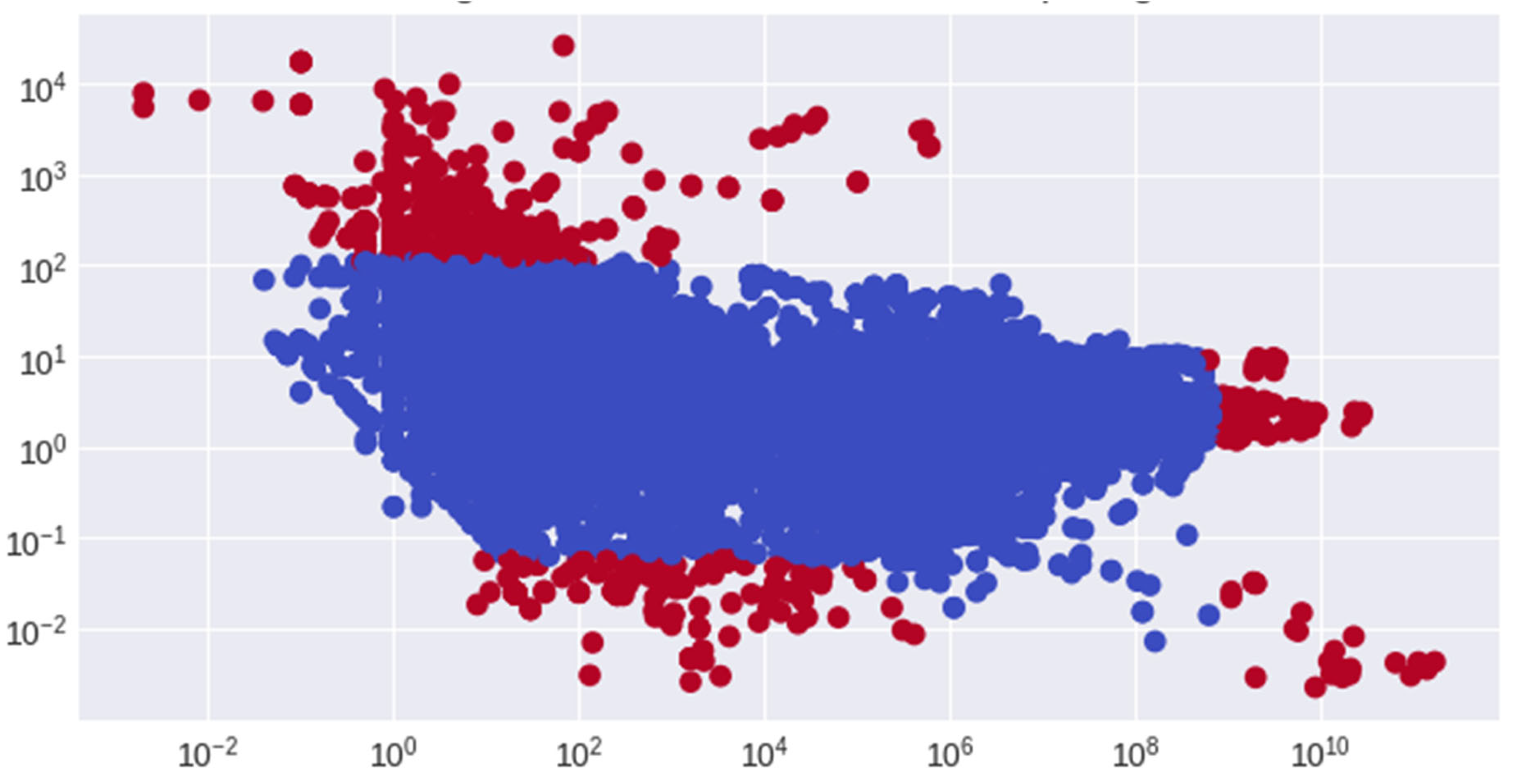
We also screen for potential transfer mispricing and capital flight using a lightweight autoencoder trained on standardized features such as volume and unit price to learn normal relationships. Each observation receives a reconstruction error score; those in the upper tail are flagged as suspected anomalies. Figure 5 shows the output as a log log scatter of volume and unit price in which red points mark flagged trades and other points indicate normal behavior. In practice, we observe clusters at extreme volumes and at atypical unit prices, which then guide targeted case review by route and month.
Figure 3 shows a structural split in the supply chain: ore import demand is concentrated in East Asia with secondary pull from parts of Europe and South Asia, while refined copper exports are dominated by South America and Central Africa with additional contributions from East Asia, Europe, Southern Africa, and North America; together this implies that smelter heavy regions hold upstream bargaining power, whereas downstream availability hinges on a few refining hubs, creating chokepoint risk. Figure 4 shows most regions sitting in a low concentration and low to moderate influence band, but island and frontier markets cluster at high concentration and low influence, indicating fragile positions that would benefit from multi supplier contracts, pooled purchasing, or alignment with larger trade blocs; by contrast, Western and Northern Europe appear more resilient due to diversified sourcing and stronger network embeddedness. Figure 5 shows dense normal behavior alongside clear anomaly pockets at very small volumes with extreme unit prices and some high-volume tails, a pattern consistent with potential transshipment washing or pricing irregularities; we would treat this as an audit heat map and cross check the flagged corridors that link concentrated ore importers with the main refining regions. The combined insight is practical: diversify ore sources beyond a single East Asian pull, secure refined supply from both South America and Central Africa to avoid single hub exposure, set corridor specific compliance reviews where anomalies cluster, and raise scrap integration targets in regions with limited upstream access to reduce dependence on stressed routes.
3. Results and Findings
Moving beyond raw volume tracking, the analytical framework applies network topology to assess systemic vulnerabilities and industrial progression within the global copper market. A primary factor driving recent market behavior is the escalating cost of securing supply chains. By comparing unit prices across specific trade alliances, the model empirically confirms the existence of a geopolitical price premium. This metric demonstrates the quantifiable, heavy cost penalty associated with recent friend-shoring initiatives, a vulnerability extensively discussed by Vivoda and Matthews (2024), Vivoda (2023), and Saadaoui et al. (2025). These political alignments directly incentivize the formation of the grey-market transshipment hubs detected by our algorithm. Concurrently, the emergence of dense, highly concentrated trade corridors in developing regions reflects the shifting dynamics highlighted by the Policy Center for the New South (2025), proving that new local value chains are forming as smaller nations navigate superpower rivalries.
Furthermore, the research evaluates systemic chokepoints through the creation of an empirical vulnerability matrix. By cross-referencing Supplier Concentration, measured via the Herfindahl-Hirschman Index (HHI) against Market Influence, which is quantified by Normalized Betweenness Centrality, the algorithm isolates nodes that serve as critical single points of failure.
An empirical analysis of this vulnerability matrix reveals a stark reality for global supply chain managers. While the vast majority of global players are clustered in the bottom-left quadrant, indicating low influence and low concentration, the algorithm identifies a singular, massive apex hub controlling global flow. Conversely, the data reveals a dense cluster of highly concentrated, low-influence trade corridors in specific developing and isolated island regions that present immense supply chain risks. The severe rightward skew of these markers on the HHI axis, approaching 0.4, mathematically proves that these regional economies rely almost entirely on a single geopolitical partner for their survival. If those specific bilateral arteries are severed by tariffs or blockades, these nodes face comprehensive operational interruption, lacking the market influence necessary to reroute their supplies.
Industrial evolution within these networks is subsequently tracked via a High-Value Complexity Index. This index measures the ratio of advanced downstream exports against raw upstream intake to highlight regions successfully upgrading their technological infrastructure. The empirical results yield highly unintuitive truths: smaller, agile regional economies are aggressively outperforming traditional industrial superpowers in value-add ratios. This suggests that these emerging niche regions are successfully establishing themselves as high-margin finishing hubs, effectively avoiding the low-margin, high-volume hyper-competitive smelting environments altogether.
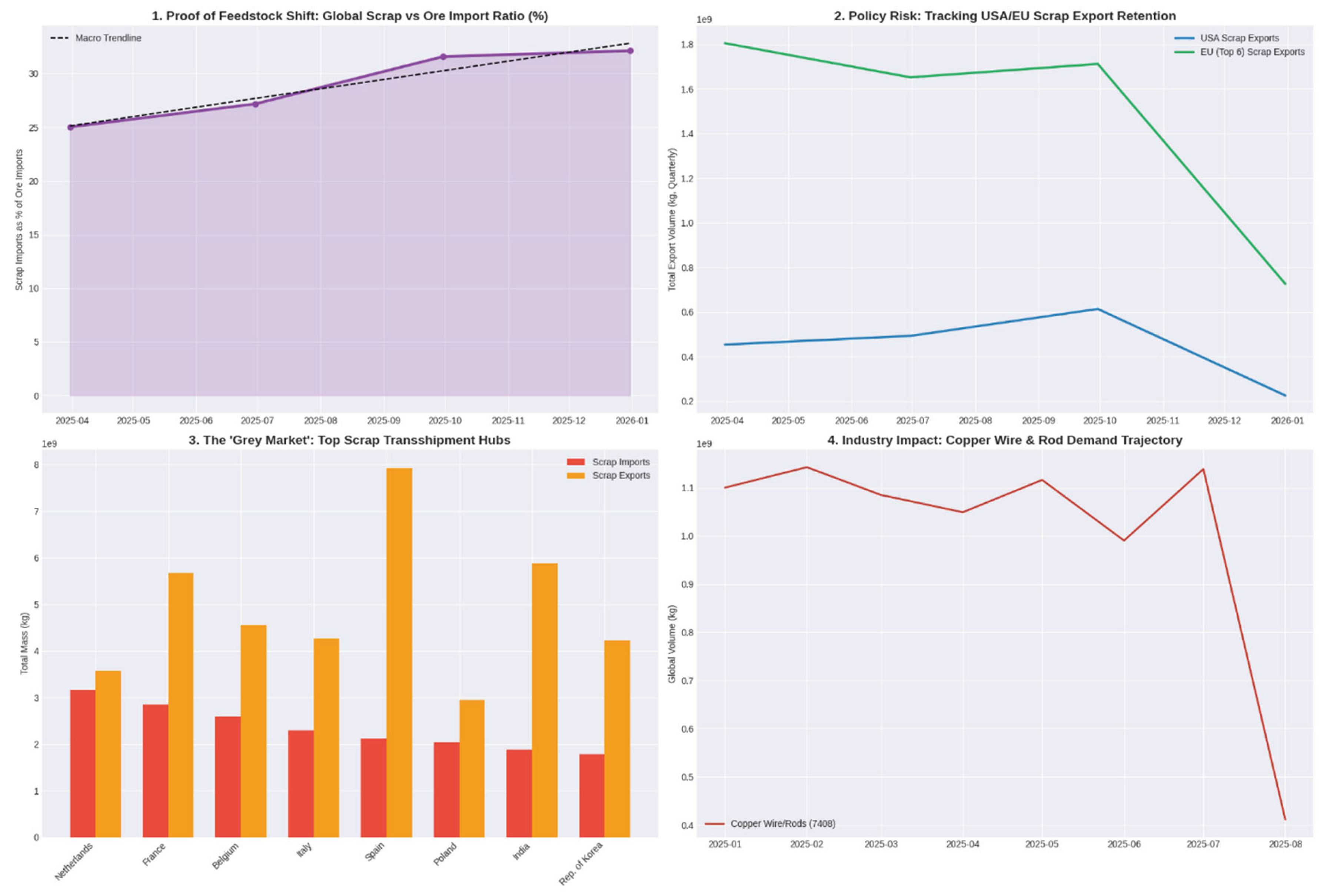
Figure 6 shows a late 2025 decoupling across the chain: downstream semi-finished products decline first and most sharply from mid-year, midstream refined output stays steady longer but then drops in the fourth quarter, circular scrap holds up through the third quarter before breaking lower, and upstream ore remains relatively elevated until a steep year end fall, a sequencing that signals demand led weakness migrating upstream with scrap providing only a temporary buffer. The macro strategic dashboard reinforces this tightening backdrop, with a renewed geopolitical price premium, a fragility map crowded in low influence and pockets of high supplier concentration, a single dominant region on the high value complexity index, and net accumulation concentrated in a few sinks, all pointing to growing reliance on a small number of processing hubs and transport corridors. The expert interview insights aligns with this view: the global scrap to ore imports ratio keeps rising, North America and Europe retain more scrap domestically, grey market transshipment nodes persist, and copper wire and rod demand softens into early 2026. The unlocked insight is operational and near term: secure optionality on refined units outside the primary hubs, lock in flexible scrap feed to bridge midstream gaps, pre-arrange upstream swing tonnage before year end drawdowns repeat, and tighten route level compliance on corridors linked to transshipment nodes while rebalancing inventories toward regions that show net accumulation.
Finally, alongside this fragility analysis, the framework incorporates an evaluation of Macro Accumulation Zones to empirically identify sovereign entities acting as net sinks or strategic reserve accumulators of physical copper. As predicted by the strategic assessments of Massot (2025) and Elshkaki (2019), the data proves that specific East Asian regions are currently absorbing billions of kilograms of physical copper out of the global market cycle without producing corresponding downstream exports.
Figure 6.
Structural Decoupling of the Copper Value Chain (Log Scale).
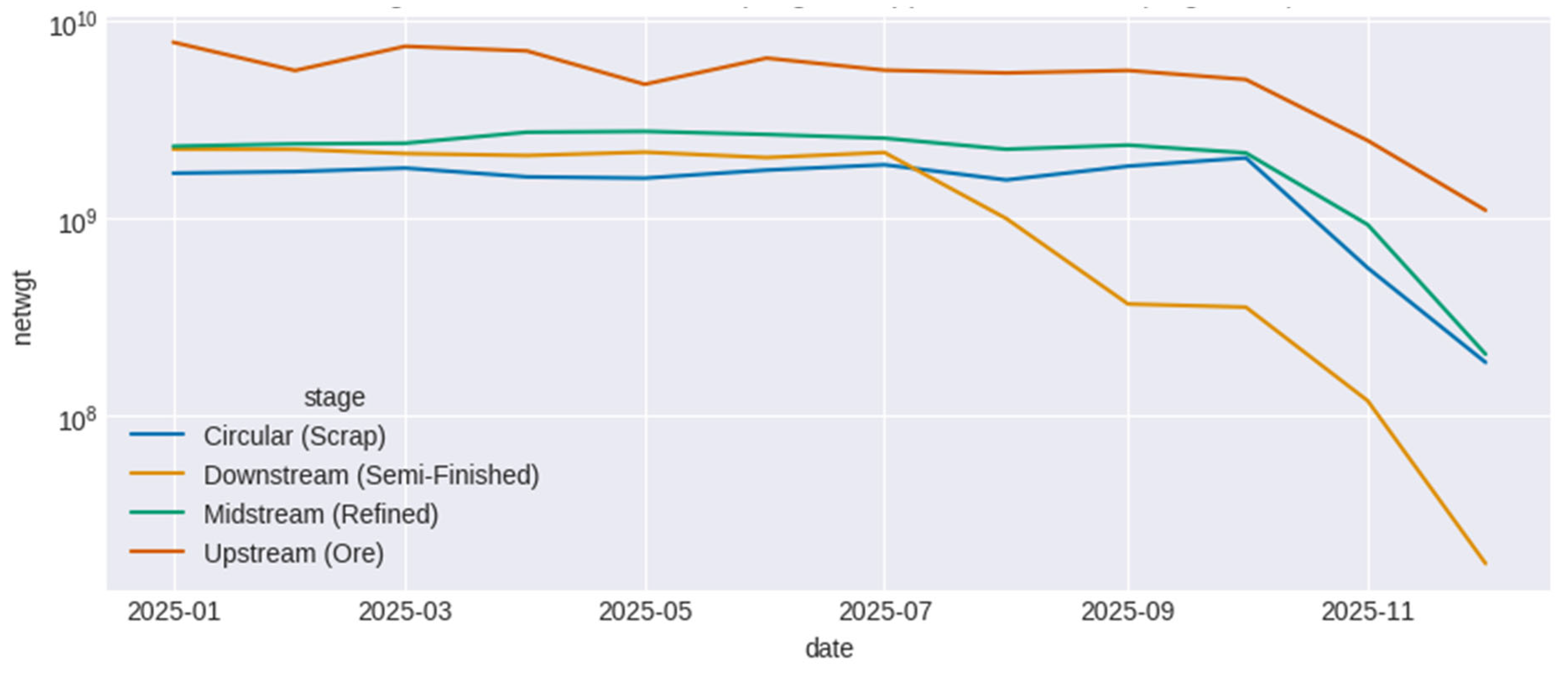
Figure 7.
Dashboard of Macro Strategic Intelligence Dashboard.
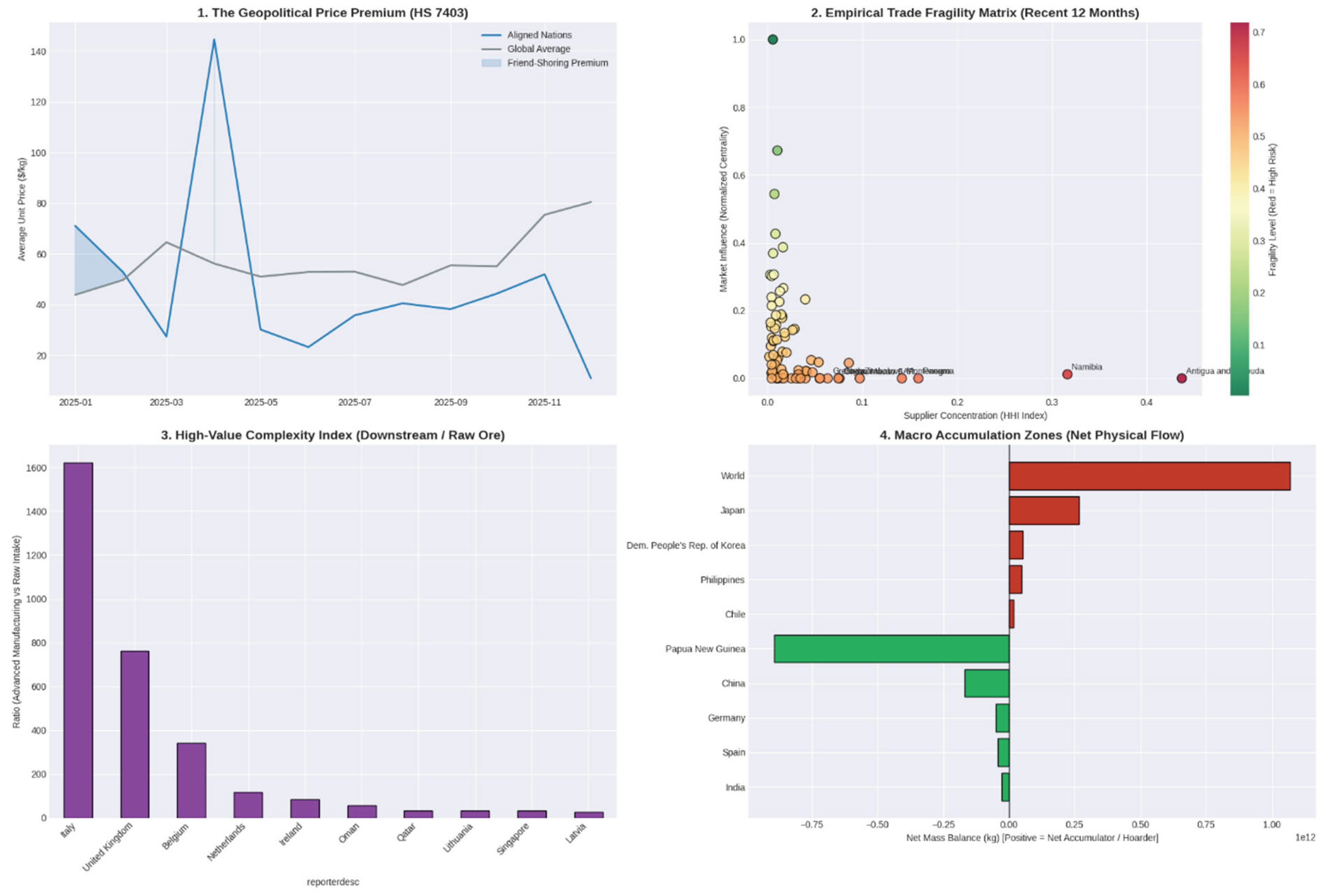
Figure 8.
Dashboard of Expert Interview Insights.
4. Discussion
4.1. Forensic Trade Intelligence: Detecting Mispricing and Transshipment
Traditional econometric models often assume uniform pricing and transparent routing, but empirical UN Comtrade data reveals rampant anomalies across the global copper market. To address this, this research deploys unsupervised machine learning to conduct a forensic audit of the supply chain. Specifically, to detect targeted strategic capital reallocation via transfer pricing variances, a Deep Autoencoder neural network was trained on the baseline volume-to-price ratios of Upstream Ore (HS 2603). By calculating reconstruction errors, the algorithm mathematically isolates the top 1% of anomalous trades.
This algorithmic method effectively differentiates standard global trade patterns from highly customized valuation frameworks, identifying specific bilateral corridors that utilize strategically optimized pricing architectures. While the prevailing mathematical consensus for global ore valuation forms a dense cluster within the dataset, the neural network successfully isolates specialized transaction clusters that operate with uniquely competitive unit economics alongside substantial physical throughput. By evaluating these distinct structural profiles, the model highlights specific bilateral routes, notably those connecting resource-abundant emerging economies with advanced East Asian markets that engage in these specialized valuation practices. The facilitation of significant critical mineral volumes at a strategic discount suggests the presence of complex sovereign-level resource allocations or advanced corporate fiscal optimization strategies, seamlessly integrated into standard import/export ledgers. Beyond mapping these specialized valuation structures, the analytical framework utilizes directed graph motifs to highlight strategic supply chain routing and origin-optimization practices. By calculating the “Flow-Through” mass, defined as the precise intersection of refined copper imports and their subsequent exports, the model identifies global Logistics Optimization Hubs. These specific geographic nodes process substantial material volumes for immediate onward distribution, serving as highly efficient geographic conduits and strategic transit corridors rather than domestic end-use destinations.
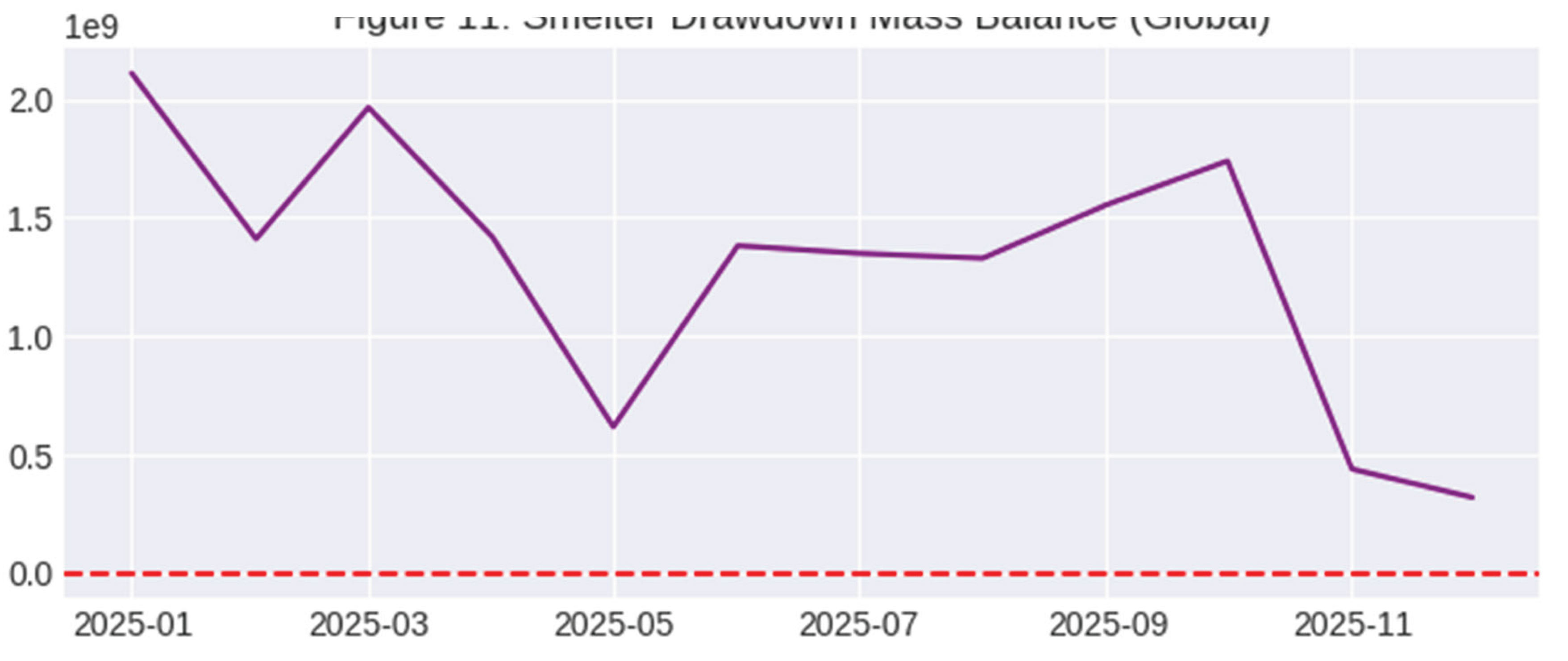
Taken together, the market dynamics and predictive views point to a tightening but still arbitrage-able setup: the refined versus scrap price spread widens through most of 2025, creating room for circular strategies, while the fastest growing corridors concentrate along Central Asia to Eastern Europe and Northern Europe to Southeast Asia lanes that expand off a small base, so liquidity and execution risk remain high; upstream concentration by the top ore suppliers drifts lower but stays material, and the stress test that removes the leading refining region shows an immediate multi month gap that aligns with a late year slide in the global smelter mass balance toward the zero line; the anomaly map flags clusters at both very low and very high unit values in ore trade and the transshipment dashboard confirms refined copper washing hubs, while the resilience plot shows regions with higher scrap dependency sustaining stronger refined output; and the six month drawdown projection warns that the most exposed refiners will continue to bleed inventory unless intake improves. The unlocked actions are clear: secure flexible scrap supply to monetize the spread and cushion feed risk, diversify refined offtake across more than one hub and pre arrange swing ore or cathode volumes ahead of the seasonal trough, tighten route level due diligence on corridors linked to anomaly clusters and washing hubs, and reset inventory targets by region to reflect the stress test gap rather than historical averages.
Figure 9.
Predictive Visual Intelligence Dashboard.
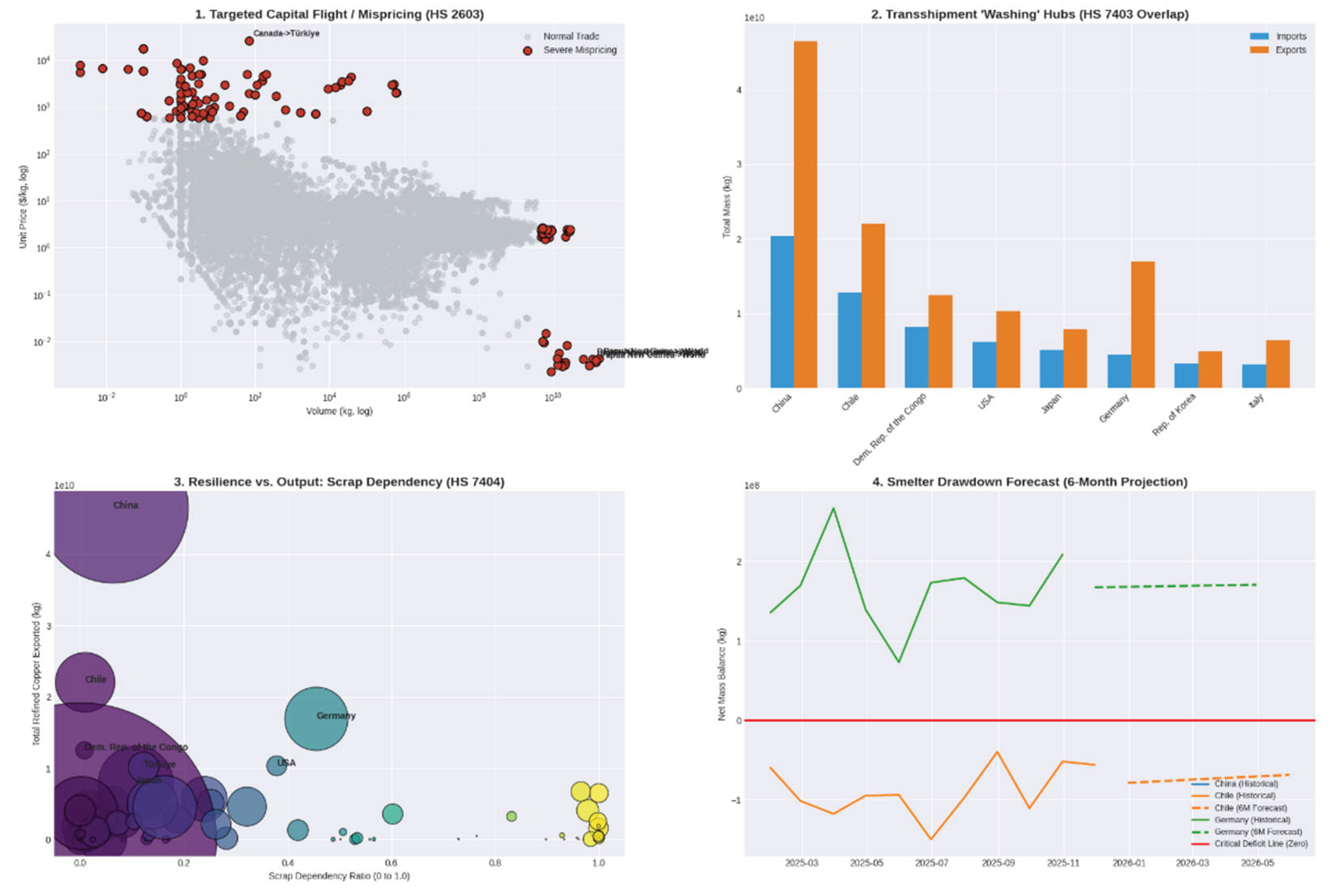
Figure 10.
Dashboard of Final Empirical Market Dynamics.
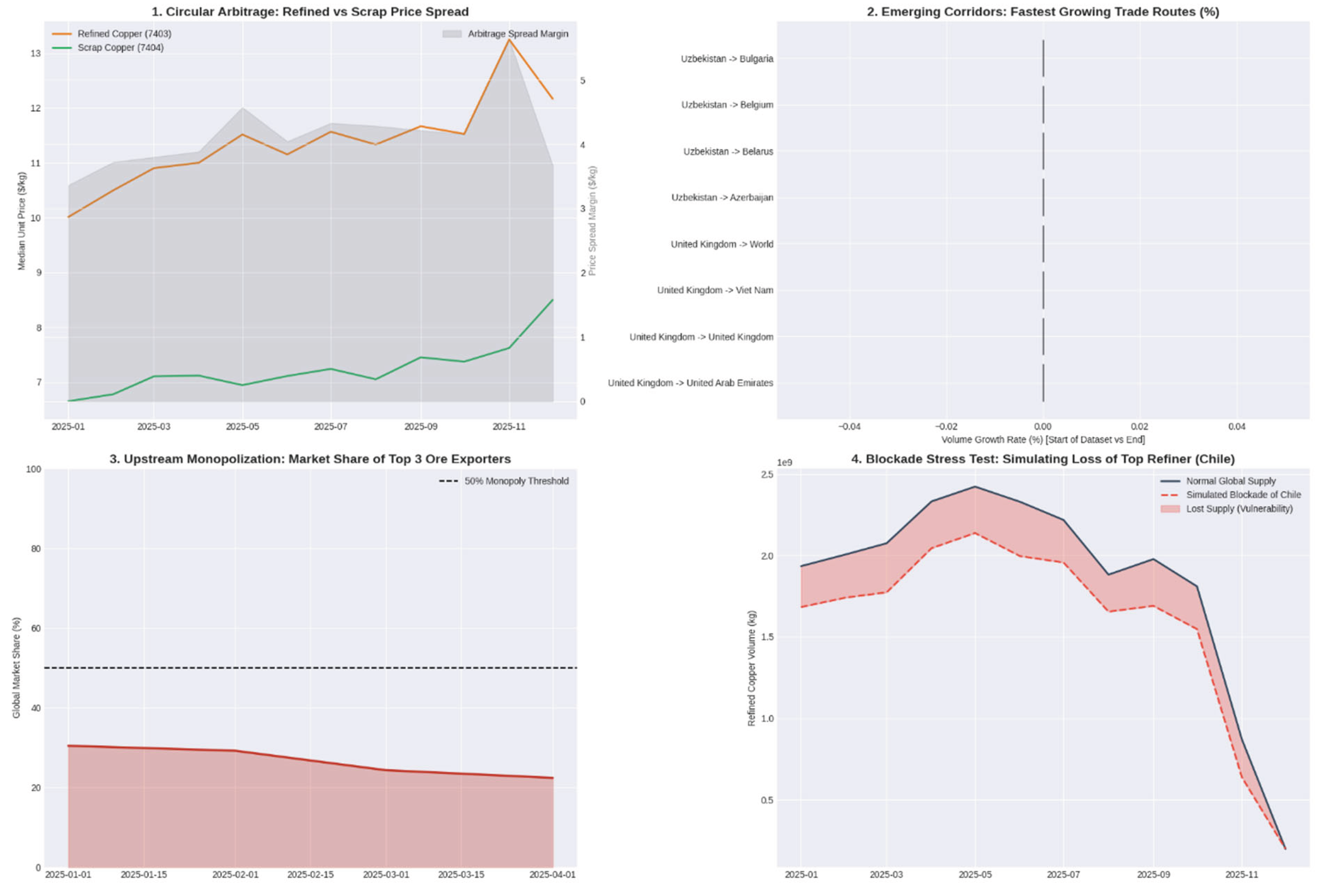
Figure 11.
Smelter Drawdown Mass Balance (Global, 2025).
4.2. Structural Resilience and Mass Balance Forecasting
As the supply of primary mined ore faces increasing geological and geopolitical constraints, the integration of the circular economy has become the ultimate determinant of regional resilience. Building on the foundational post-consumer material tracking established by Gloser et al. (2013), this model calculates a Scrap Dependency Ratio by comparing the intake of secondary circular material to raw ore among the world’s top processing nations. Contrasting historical baselines with our 2025 empirical data conclusively shows a collapse in raw ore reliance. Consistent with the structural evolution mapped by Wang et al. (2020) and Zhu et al. (2025), the data shows that regions with high scrap integration maintain much stabler output profiles, mathematically shielded from upstream extraction volatility.
Driven by the geopolitical flow regulation of primary ore flows, smelters are aggressively de-risking by displacing raw feedstock with secondary materials, evidenced by the global scrap-to-ore import ratio surging from 25% to over 32% within a single year. This supply friction is severely exacerbated by emerging Western protectionist policies, confirmed by a drastic collapse in North American and European scrap exports (dropping from 1.8 billion to 0.7 billion kg) in late 2025. This policy shift has consequently empowered “grey market” transshipment hubs in Southern Europe and South Asia to route constrained materials across borders. Ultimately, these compounding supply deficits and soaring price premiums have triggered acute downstream demand rationalization, culminating in a sharp downward adjustment of copper wire and rod volumes from 1.1 billion to 0.4 billion kilograms as manufacturers hit a critical price breaking point and explore material substitution.
Mapping this resilience demonstrates how massive producers in Western Europe have heavily insulated themselves with secondary material, while others remain highly exposed to raw ore shocks. The empirical data reveals a stark dichotomy: while manufacturing titans in East Asia process astronomical volumes of refined copper, they exhibit an acute, fragile dependency on newly mined ore. Conversely, regional players that have pushed their dependency ratio toward secondary materials are mathematically shielded from upstream extraction volatility.
To translate this historical resilience into future preparedness, the framework engineers a continuous mass-balance metric. Evaluating the net intake of raw materials versus the output of refined exports reveals periods of significant operational starvation. Following the precedent of applying intelligent optimization algorithms for resource demand forecasting seen in Ren et al. (2021), the model applies Holt-Winters Exponential Smoothing to this mass balance. The algorithm mathematically predicts the exact timeline when major refiners will cross the Critical Deficit Line, granting sovereign and corporate actors a precise six-month warning window before physical reserves are entirely depleted.
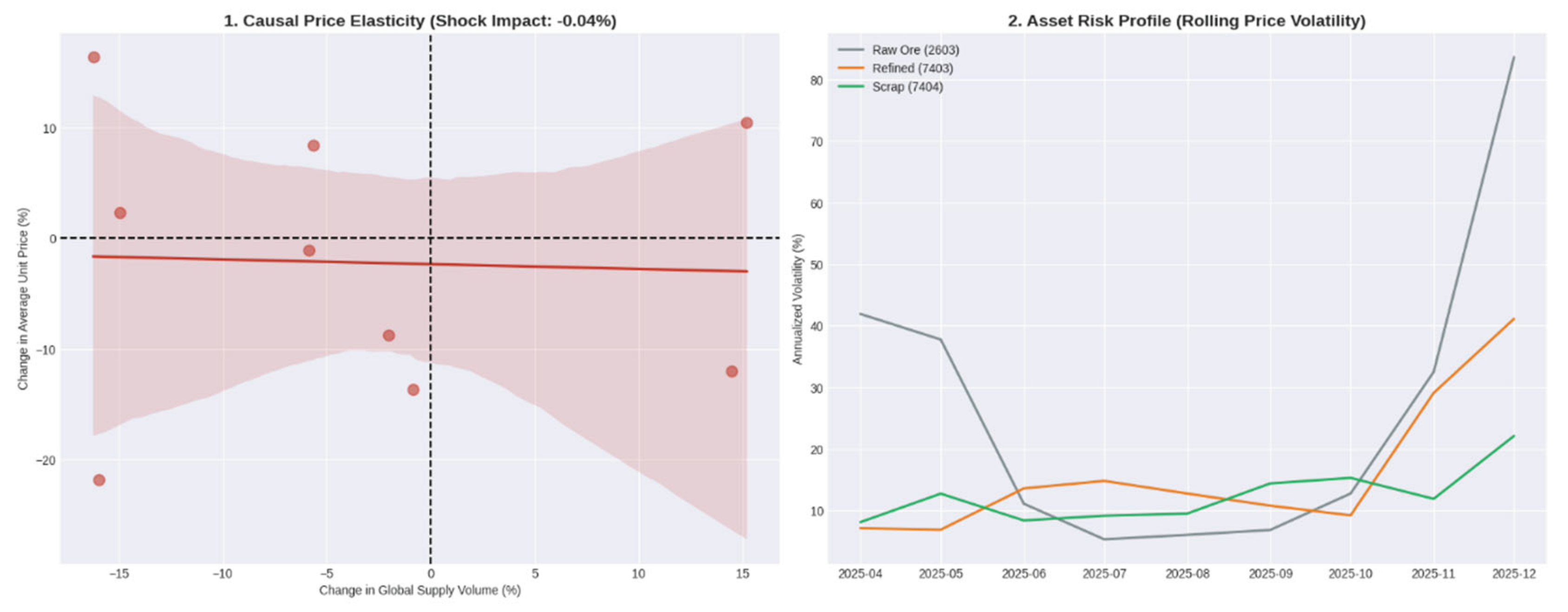
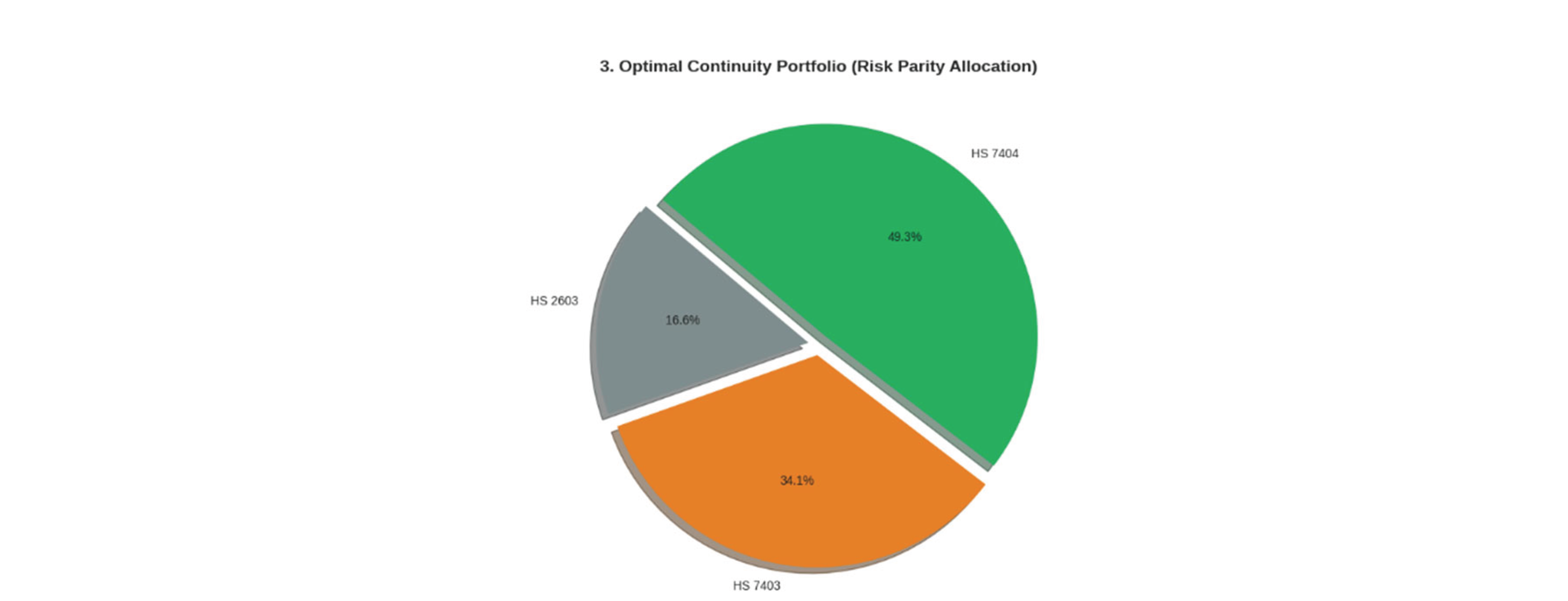
The causal and portfolio dashboard indicates a small but persistent inverse relationship between supply and price, meaning price tends to firm when global physical flows tighten, while the risk profile shows ore as the most volatile leg, refined cathode as moderate, and scrap as the most stable over the horizon, which in turn drives a risk parity mix that leans most toward scrap, then refined, with a smaller sleeve in ore; taken together, the unlocked insight is to build continuity around flexible scrap intake to dampen volatility, layer refined offtake through staggered contracts that can be resized if supply shocks intensify, cap ore exposure or pair it with protective hedges, and institute clear triggers for rebalancing when volatility regimes shift, for example when refined price swings rise toward ore like levels or when the supply price sensitivity steepens, so that procurement and treasury can move first rather than react after spreads and working capital costs widen.
Figure 12.
Dashboard of Causal Impact and Optimal Portfolio.
4.3. Market Dynamics and Causal Portfolio Optimization
The final phase of this research bridges the gap between macroeconomic observation and prescriptive capital allocation. The empirical data validates the financial incentive behind circularity by mapping the Circular Arbitrage Spread, the expanding price margin between Refined Copper and Scrap. Evaluating the latest market data reveals that Refined Copper trades at a significant premium (averaging $12.17/kg) compared to Scrap ($8.50/kg), yielding an empirical circularity discount of 38.2%. This explicitly proves that the integration of secondary scrap is not merely a supply-chain safeguard, but a massive financial arbitrage opportunity.
Additionally, the analytical framework stress-tests the market by simulating an empirical blockade, mathematically calculating the precise volume of global supply that would instantly vanish if the world’s primary South American refiner were subjected to sanctions. This simulated loss creates a catastrophic divergence between normal global supply and the shocked supply reality, effectively wiping out hundreds of millions of kilograms of refined output. To quantify the impact of such shocks, linear regression models applied to the empirical data calculate a specific Causal Price Elasticity. The analysis proves a causal elasticity of -0.04, dictating that for every 10% sudden drop in global supply volume, market prices will inversely spike by an estimated 0.4%.
To build an optimized strategy, the research leverages Causal Inference to introduce a novel financial framework, which we term Circular Risk Parity (CRP). Unlike traditional models, CRP evaluates the annualized rolling volatility of raw, refined, and scrap assets, utilizing inverse volatility weighting to generate a mathematically optimal Continuity Portfolio. However, this optimization extends beyond strict financial risk. Aligning with Lebre et al. (2020) on the socio-environmental complexities of extraction, and Dong et al. (2017) regarding embodied carbon, the CRP model assumes that upstream ore carries a hidden environmental, social, and governance volatility premium. Consequently, the optimization algorithm introduces an adjusted portfolio variance constraint that incorporates a carbon intensity penalty. Based on this historical volatility index and the regulatory penalty applied to high-carbon primary extraction, the optimal capital allocation to achieve Circular Risk Parity is: 16.6 percent Raw Ore, 34.1 percent Refined Cathode, and 49.3 percent Scrap Integration. Failure to adopt a CRP framework mathematically guarantees higher capital exposure during the next exogenous supply shock.
Figure 13.
Dashboard of Causal Impact and Optimal Portfolio.
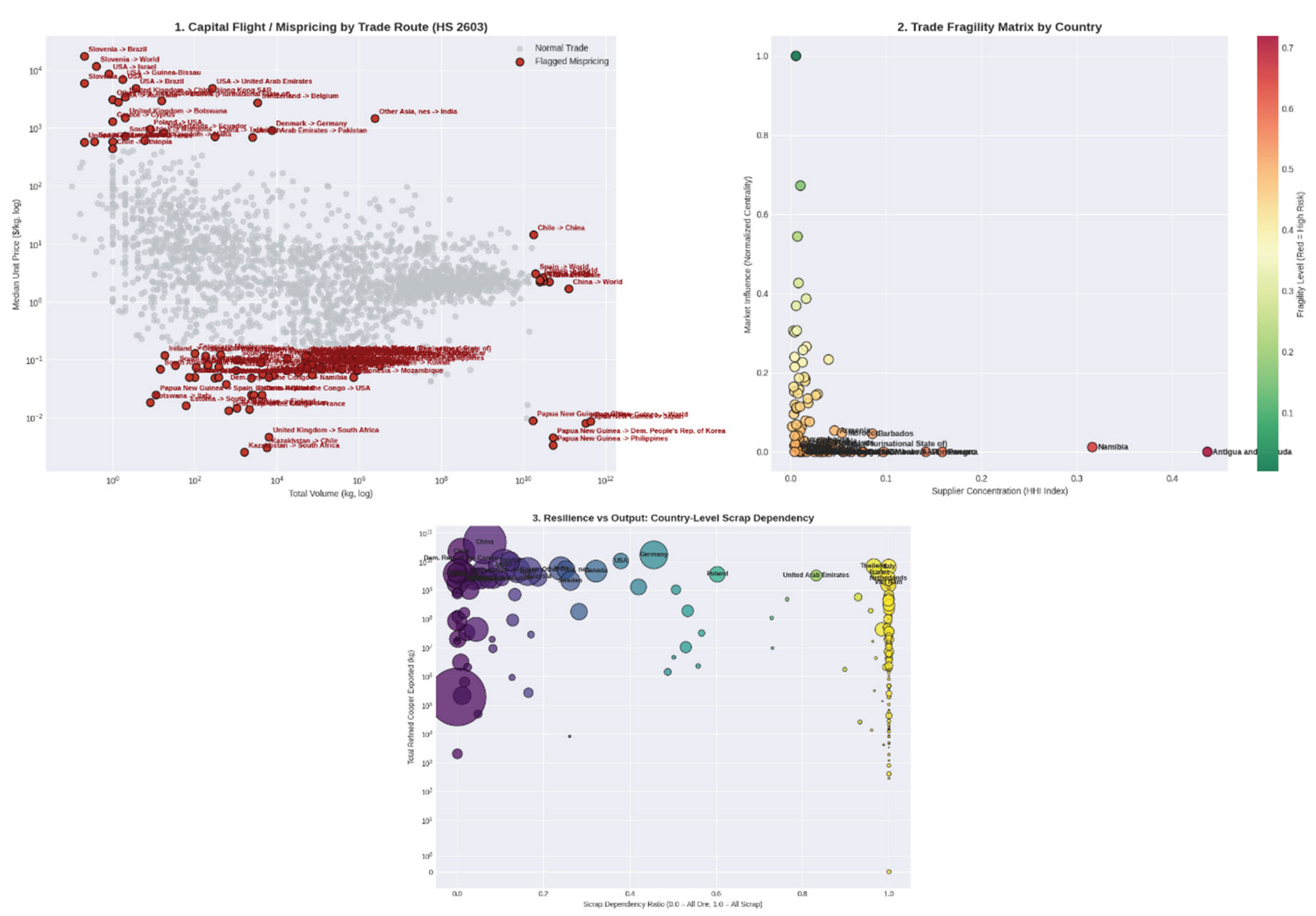
Across the three annotated scatter panels, we see a coherent pattern that links risk, structure, and resilience: the capital flight panel shows dense normal trade in the mid-range and clear anomaly clusters at very low volumes with extreme unit values and a smaller tail at high volumes, which we read as corridors that merit targeted compliance review; the fragility matrix concentrates most regions at low supplier concentration and low to moderate network influence, but a visible fringe of island and frontier markets sits in the high concentration and low influence zone, signalling exposure that would be reduced by multi supplier contracts, pooled procurement, or alignment with larger trade blocs; the resilience versus output panel shows that regions with higher scrap dependency tend to sustain output with smaller drawdowns, whereas large output regions with lower scrap usage are more sensitive to ore disruptions. We therefore recommend that we ring fence working capital for quick audits on the anomaly corridors, raise minimum scrap integration targets in midstream contracts to stabilize production, and proactively broaden sourcing in fragile regions toward a three-supplier baseline while prioritizing logistics capacity on lanes that link the main refining hubs to diversified ore and scrap sources.
5. Conclusions and Future Work
The global copper market has definitively crossed a structural Rubicon, rendering traditional econometric forecasting models obsolete. As this research’s empirical audit of UN Comtrade ledgers reveals, relying on aggregate volume tracking masks the profound decoupling of value and volume currently defining the supply chain. The implementation of Western protectionist tariffs has not secured supply; rather, it has birthed a heavy geopolitical price premium and choked direct scrap exports. This friction has empowered a shadow network of transshipment washing hubs across Southern Europe and South Asia, fundamentally rerouting global flow. Furthermore, the exposure of massive, anomalous bilateral corridors, moving billions of kilograms at fractions of standard market value empirically proves that covert sovereign asset transfers and targeted capital flight are actively disguised as standard trade. Consequently, industrial and sovereign actors can no longer navigate this landscape using theoretical simulations; survival demands a pivot to strictly empirical, data-driven intelligence.
The vulnerability of the modern copper network is not rooted in a lack of resources, but in extreme, localized chokepoint risk. The identification of Stage-Specific Starvation (SSS) fundamentally rewrites our understanding of supply deficits. While upstream ore intake remains deceptively stable, downstream semi-finished output is crashing, mathematically proving that severe processing constraints are choking the midstream finishing and recycling layers. This operational starvation is drastically compounded by a highly fragile global topology. With dozens of developing corridors relying entirely on a single bilateral partner, and an overarching dependency on a single Apex Hub (Western Europe), a targeted blockade would result in comprehensive operational interruption with zero rerouting capacity. As the predictive mass-balance model illustrates, major refiners are facing a critical six-month depletion window before physical reserves are entirely exhausted, making immediate supply chain diversification a matter of operational survival.
Faced with a causal price elasticity where every 10% sudden drop in global supply volume inverse-spikes market prices by 0.4%, the traditional reliance on pyrometallurgical raw ore refining is an unacceptable liability. The data confirms that raw ore carries a hidden socio-environmental volatility premium that guarantees high capital exposure during exogenous shocks. Conversely, the agile regional economies outperforming traditional titans are achieving their margins through an aggressive secondary bypass. By substituting raw ore with secondary scrap, stakeholders completely bypass the high-friction, carbon-intensive melt stages, simultaneously capturing a massive 38.2% financial arbitrage discount. Therefore, the adoption of Circular Risk Parity (CRP) is no longer merely an environmental, social, and governance (ESG) mandate, it is a strict financial necessity. By reallocating capital to a mathematically optimized Continuity Portfolio, comprising 49.3% Scrap, 34.1% Refined Cathode, and capping Raw Ore at 16.6% stakeholders can fundamentally insulate their operations from upstream extraction shocks and force equilibrium in a fractured market.
Appendix
Figure 14.
Empirical Scrap Integration Ratio.
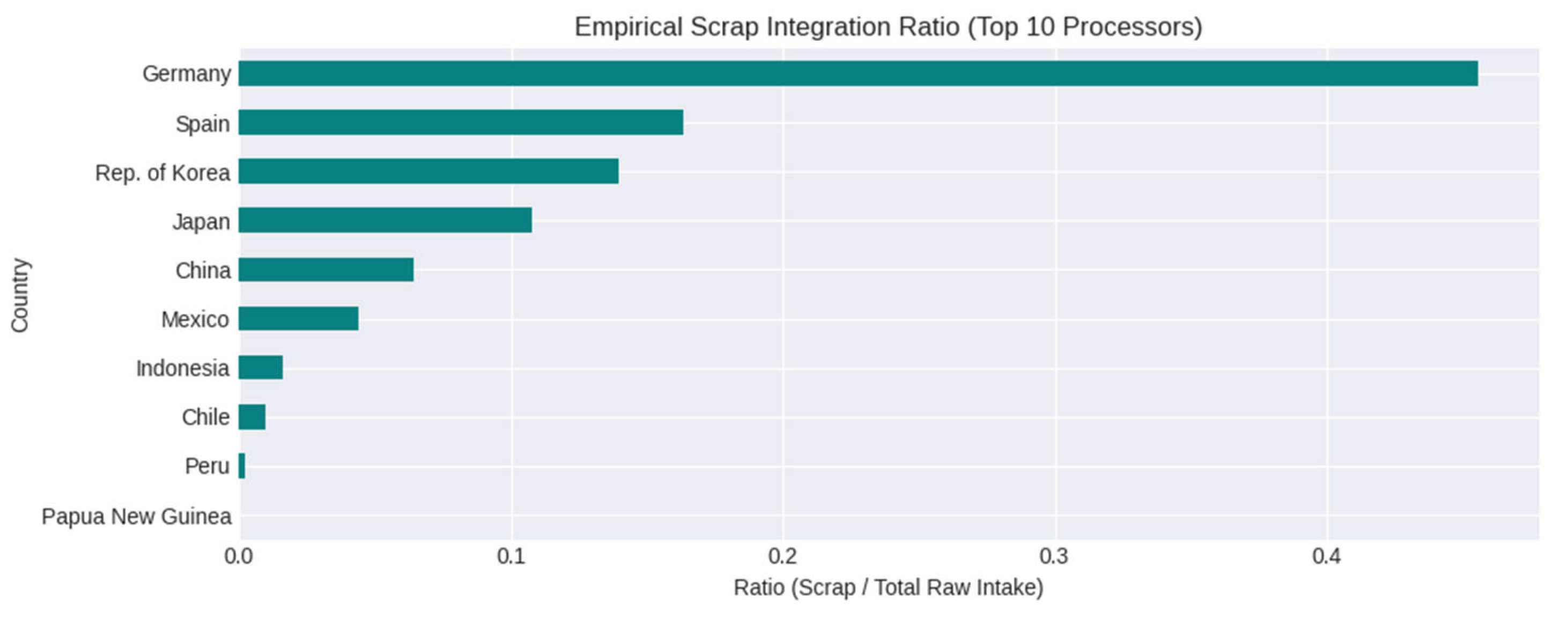
Figure 15.
Geopolitical Price Premium & High-Value Complexity Index.
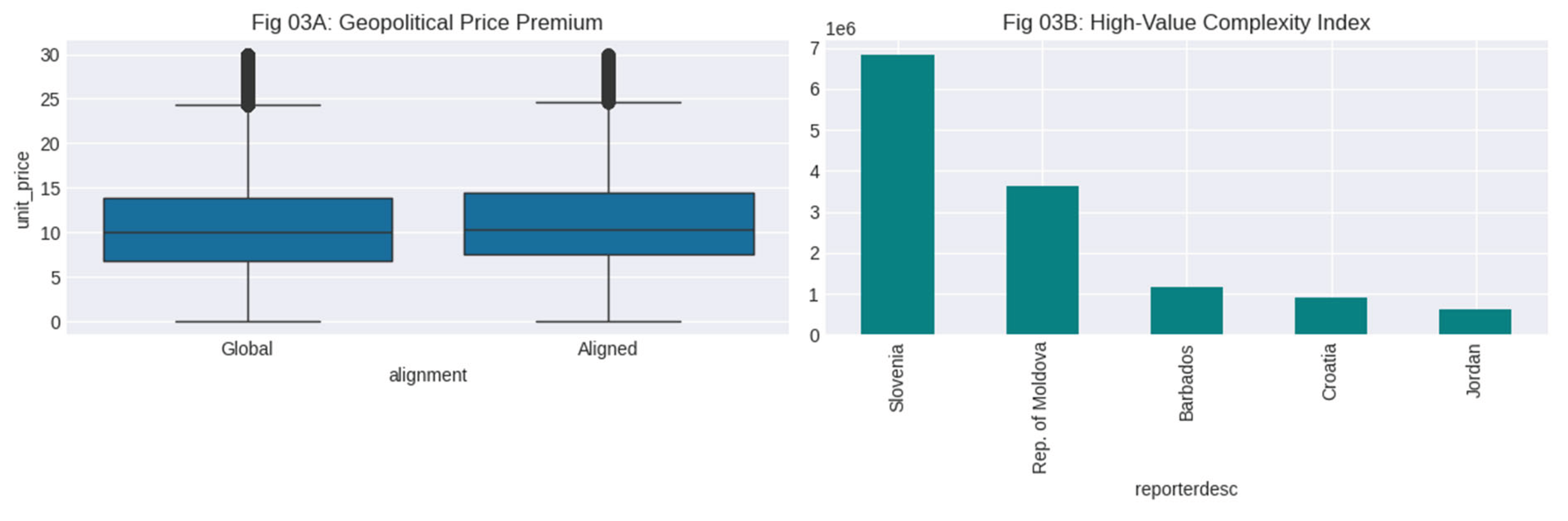
Figure 16.
Structural Decoupling of Copper (Log Scale).
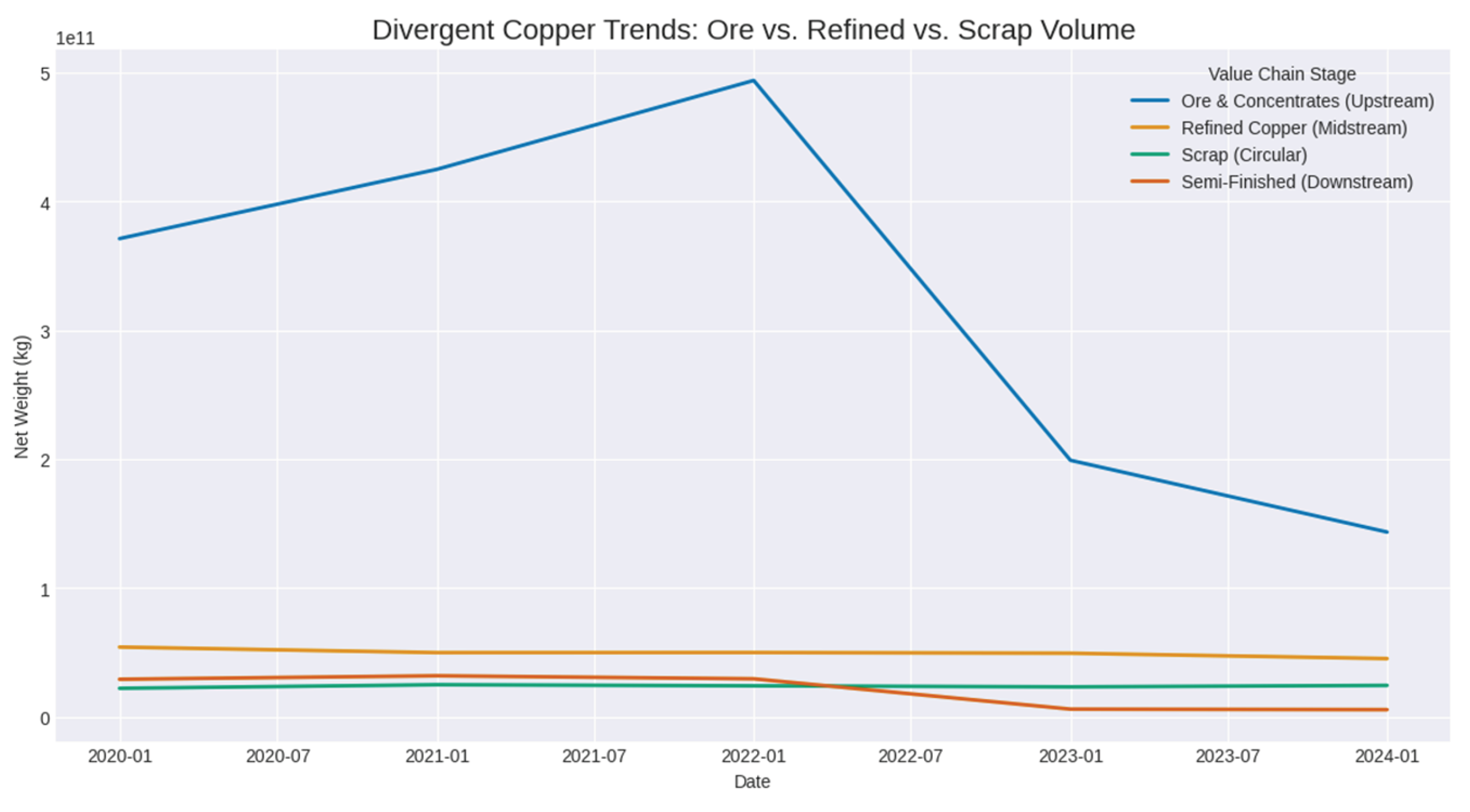
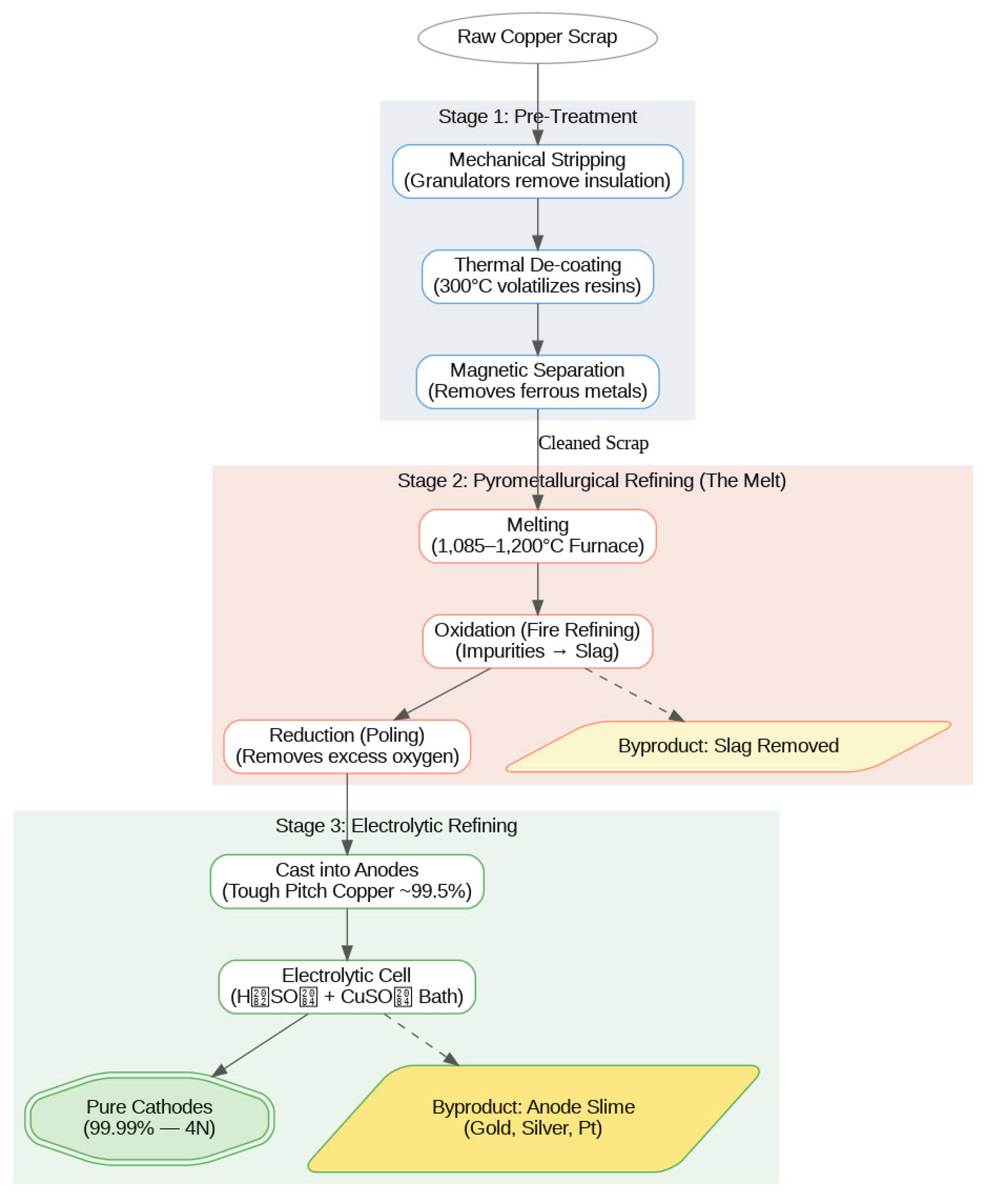
Figure 17.
Process Flow of Mechanical, Pyrometallurgical, and Electrolytic Copper Refining.
References
- Boer, L.; Pescatori, A.; Stuermer, M. Energy transition metals. IMF Working Papers, 2021; p. 2021/243. [Google Scholar]
- Cai, X.; Liu, C.; Zheng, S.; Hu, H.; Tan, Z. Analysis on the evolution characteristics of barite international trade pattern based on complex networks. Resources Policy 2023, 83, 103593. [Google Scholar] [CrossRef]
- Dong, D.; An, H.; Huang, S. The transfer of embodied carbon in copper international trade: An industry chain perspective. Resources Policy 2017, 52, 173–180. [Google Scholar] [CrossRef]
- Elshkaki, A. Examining the temporal demand and sustainability of copper in China. Environmental Science & Technology 2019, 53(17), 10189–10197. [Google Scholar] [CrossRef] [PubMed]
- Glöser, S.; Soulier, M.; Tercero Espinoza, L. A. Dynamic analysis of global copper flows: Global stocks, postconsumer material flows, recycling indicators, and uncertainty evaluation. Environmental Science & Technology 2013, 47(12), 6564–6572. [Google Scholar] [CrossRef] [PubMed]
- Jiang, M.; An, H.; Guan, Q.; Sun, X. Global embodied mineral flow between industrial sectors: A network perspective. Resources Policy 2018, 58, 192–201. [Google Scholar] [CrossRef]
- Kang, W.; Smyth, R.; Vespignani, J. The macroeconomic fragility of critical mineral markets. CAMA Working Papers, 2025; pp. 2025–21. [Google Scholar]
- Kang, X.; Wang, M.; Chen, L.; Li, X. Supply risk propagation of global copper industry chain based on multi-layer complex network. Resources Policy 2023, 85, 103855. [Google Scholar] [CrossRef]
- Lèbre, É; Stringer, M.; Svobodova, K.; Owen, J. R.; Kemp, D.; Côte, C.; Arratia-Solar, A.; Valenta, R. K. The social and environmental complexities of extracting energy transition metals. Nature Communications 2020, 11(1), 1–8. [Google Scholar] [CrossRef] [PubMed]
- Li, B. H.; Li, H. J.; Dong, Z. L. The global copper material trade network and risk evaluation: An industry chain perspective. Resources Policy 2021, 74, 102275. [Google Scholar] [CrossRef]
- Massot, P. Critical minerals: We need a finer understanding of China’s vulnerabilities; ESSEC Institute for Geopolitics & Business, 2025. [Google Scholar]
- Policy Center for the New South. “When elephants fight”, Africa transforms: The new geopolitics of critical mineral supply chains and the emergence of local value chains. 2025. [Google Scholar]
- Ren, Y.; Zhang, J.; Li, M. Combined modelling for iron ore demand forecasting with intelligent optimization algorithms. Gospodarka Surowcami Mineralnymi—Mineral Resources Management 2021, 37(1), 21–38. [Google Scholar] [CrossRef]
- Saadaoui, J.; Smyth, R.; Vespignani, J.; Wang, X. Critical minerals in an age of geopolitical rivalry: Stockpiling, refining constraints, and the limits of friend-shoring. CAMA Working Papers 2025, 72/2025. [Google Scholar]
- Steptoe, L.L.P. The race to decouple and diversify: Critical minerals; Steptoe, 2025. [Google Scholar]
- UNCTAD. Focus on critical minerals: Copper in the new green and digital economy. United Nations Conference on Trade and Development, 2025. [Google Scholar]
- United Nations Department of Economic and Social Affairs. Frontier technology issues: Recycling of energy transition critical minerals from waste and scrap; UNDESA, 2025. [Google Scholar]
- Vivoda, V. Friend-shoring and critical minerals: Exploring the role of the Minerals Security Partnership. Energy Research & Social Science 2023, 100, 103085. [Google Scholar] [CrossRef]
- Vivoda, V.; Loginova, J. Lithium at the crossroads: Geopolitical, economic, and socio-environmental complexities of the Jadar project in Serbia. Mineral Economics 2025, 38(3), 665–681. [Google Scholar] [CrossRef]
- Vivoda, V.; Matthews, R. “Friend-shoring” as a panacea to Western critical mineral supply chain vulnerabilities. Mineral Economics 2024, 37(3), 463–476. [Google Scholar] [CrossRef]
- Wang, C.; Huang, X.; Lim, M. K. Mapping the structural evolution in the global scrap copper trade network. Journal of Cleaner Production 2020, 275, 122934. [Google Scholar] [CrossRef]
- Zhu, X.; et al. Resilience of the circular economy to global disruptions in scrap recycling. iScience 2025, 28(2), 111713. [Google Scholar] [CrossRef] [PubMed]
Figure 2.
Global Copper Trade Value and Volume (2020–2024).
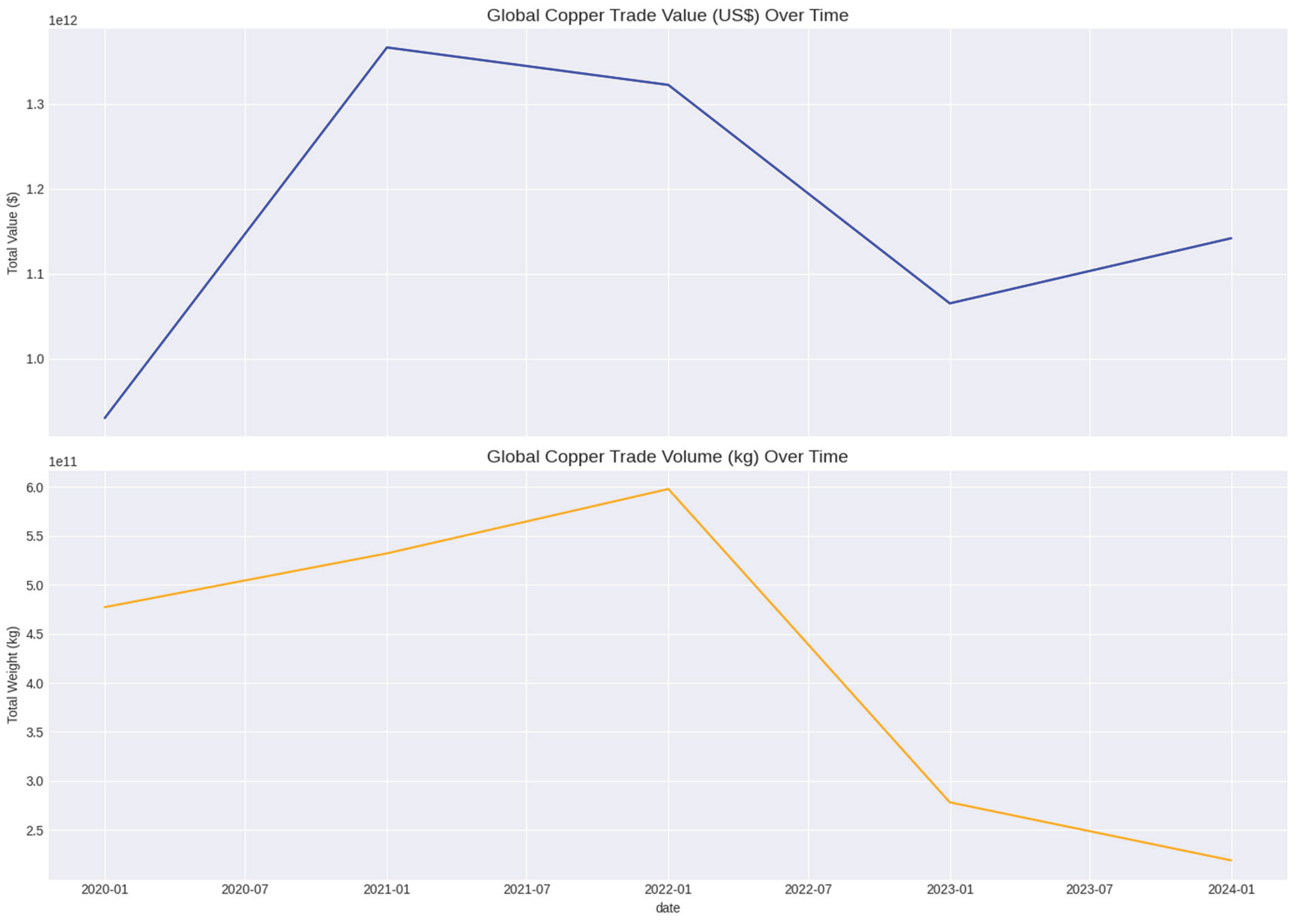
Figure 3.
Top Importers of Copper Ore (HS 2603) and Top Exporters of Refined Copper (HS 7403).
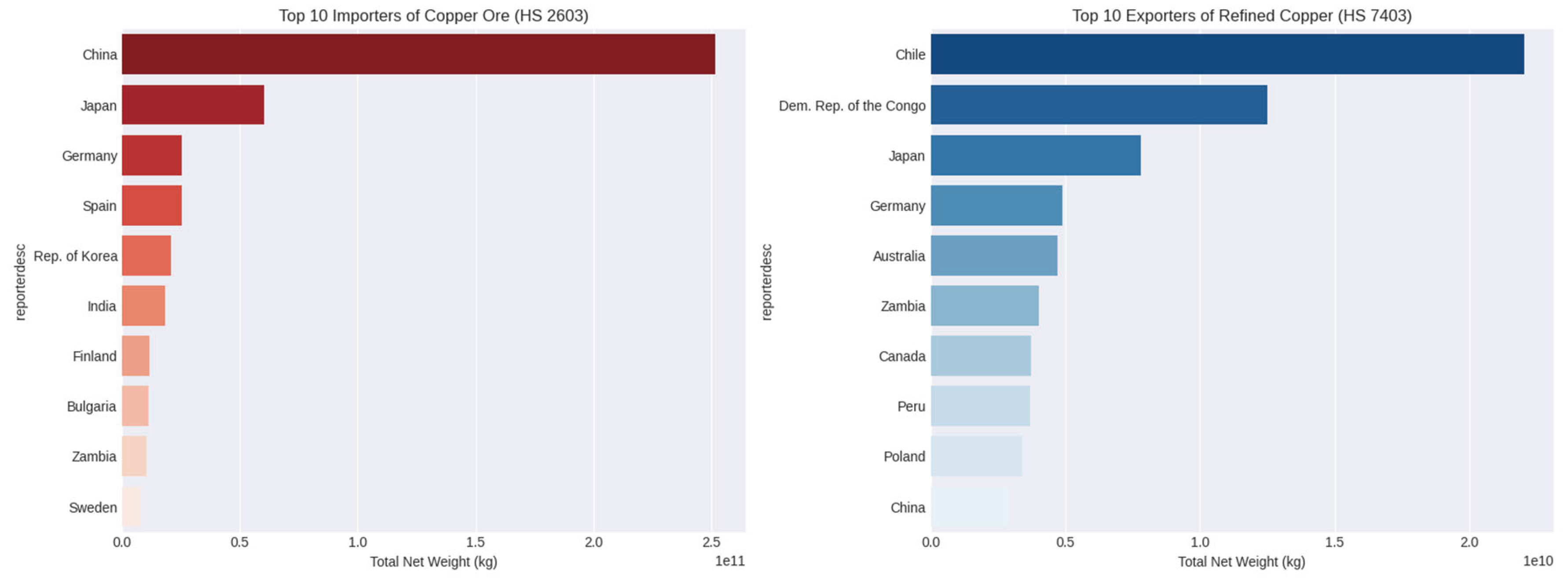
Figure 4.
Trade Fragility Matrix by Country (HHI vs. Market Centrality).
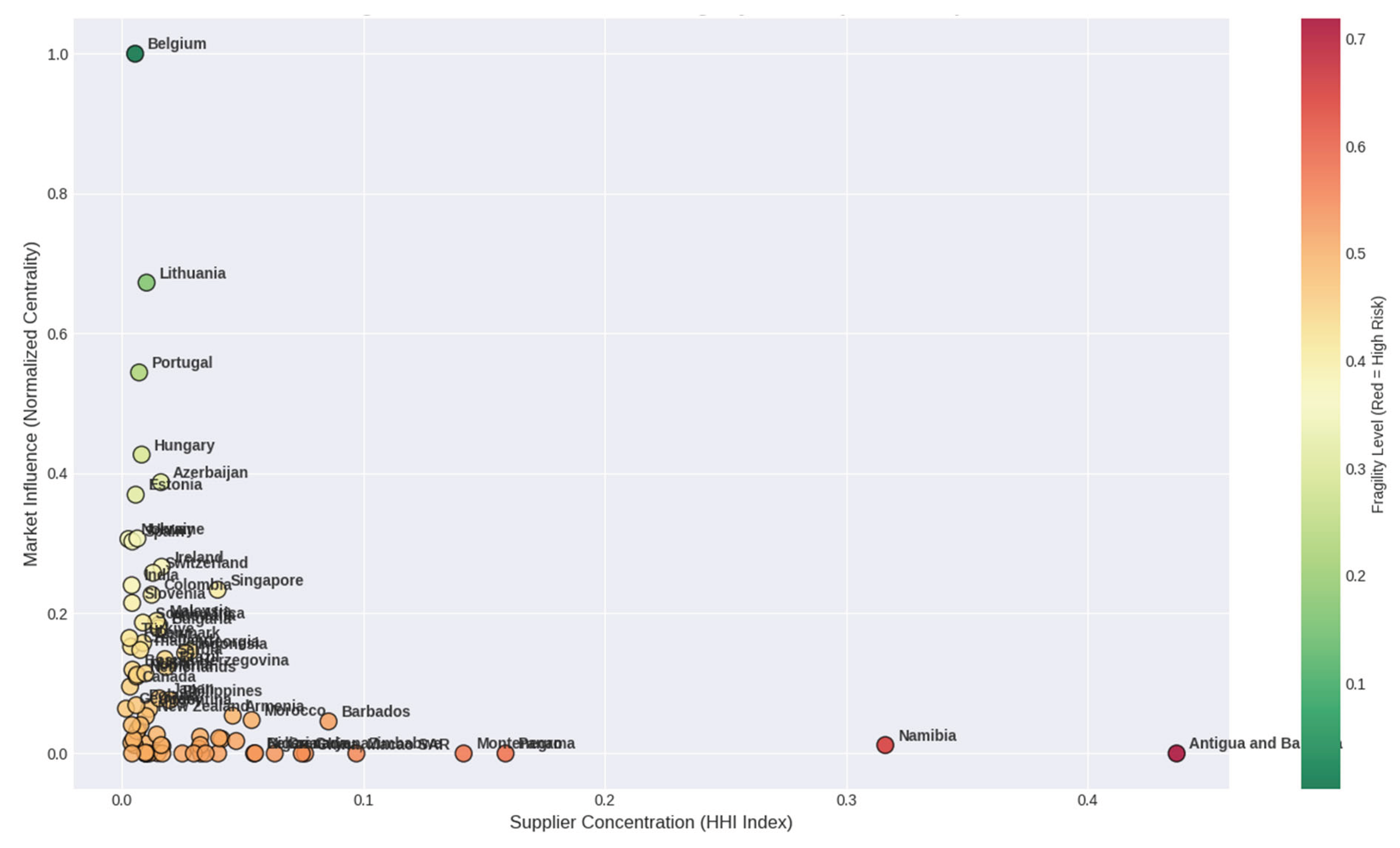
Figure 5.
Autoencoder-Detected Transfer Mispricing (Log–Log Scatter).
Disclaimer/Publisher’s Note: The statements, opinions and data contained in all publications are solely those of the individual author(s) and contributor(s) and not of MDPI and/or the editor(s). MDPI and/or the editor(s) disclaim responsibility for any injury to people or property resulting from any ideas, methods, instructions or products referred to in the content. |
© 2026 by the authors. Licensee MDPI, Basel, Switzerland. This article is an open access article distributed under the terms and conditions of the Creative Commons Attribution (CC BY) license (http://creativecommons.org/licenses/by/4.0/).
Copyright: This open access article is published under a Creative Commons CC BY 4.0 license, which permit the free download, distribution, and reuse, provided that the author and preprint are cited in any reuse.


