
Submitted:
08 April 2026
Posted:
09 April 2026
You are already at the latest version
Abstract
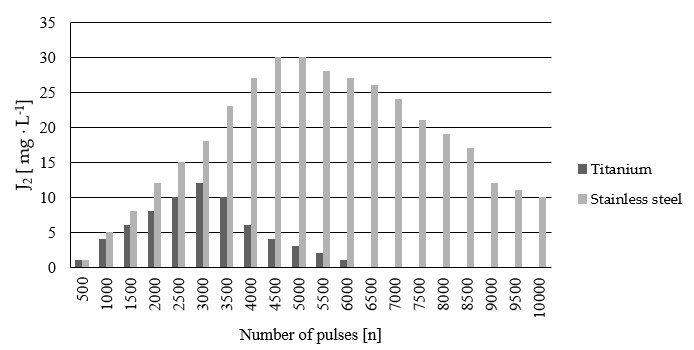
Electric discharge cavitation is an effective method for water treatment that combines physical and chemical effects within a single process. It enables water disinfection, extraction acceleration, dispersion of solid particles, and enhancement of porous material permeability. Compared to conventional chemical treatment, it reduces the demand for reagents and minimizes secondary pollution. This new and developing technology significantly contributes to the preservation of natural aquatic ecosystems by providing a sustainable alternative to traditional decontamination methods, thereby reducing the overall anthropogenic pressure on the environment. This study focuses on developing a reliable method for assessing electric discharge cavitation intensity and controlling water purification processes. The proposed approach is based on the oxidation of iodide ions to molecular iodine by reactive species generated during electric discharge cavitation. The adapted iodometric method is sensitive, reproducible, and does not require complex optical or acoustic equipment. Experimental results confirmed that iodometry provides accurate evaluation of cavitation intensity, allowing control of specific energy consumption and optimization of treatment parameters. Optimal operating conditions were established to control the water processing by electric discharge cavitation: stainless-steel electrodes, specific input energy not exceeding 280 kJ·L-1, the presence of a free liquid surface in the working chamber, and a discharge pulse frequency below 10 Hz. The proposed method supports the development of energy-efficient, low-waste technologies for wastewater and natural water treatment and facilitates the integration of electric discharge systems into existing water treatment infrastructure, particularly under resource-limited conditions.
Keywords:
electric discharge cavitation
; cavitation intensity
; iodometry
; water remediation control
; water treatment
; hybrid oxidation processes
Copyright: This open access article is published under a Creative Commons CC BY 4.0 license, which permit the free download, distribution, and reuse, provided that the author and preprint are cited in any reuse.


