

Submitted:
08 April 2026
Posted:
09 April 2026
You are already at the latest version
Abstract
In recent years, wearable sensing technologies have been widely used for motion analysis in sports; however, in kendo, motion evaluation still largely relies on subjective assessment, and quantitative approaches remain limited. This study proposes an embedded Inertial Measurement Unit (IMU) based sensing system for motion analysis of kendo swings. The system integrates a compact IMU and a microcontroller within the handle of a bamboo sword (shinai), enabling unobtrusive measurement without affecting usability. To achieve robust orientation estimation under highly dynamic conditions, an error-state Kalman filter (ESKF) is applied using only 6-axis IMU data, without relying on magnetometer measurements. This enables stable gravity compensation and reliable extraction of motion-related acceleration components. Experimental results showed that experienced practitioners exhibited significantly higher peak acceleration (p = 0.002) and smaller peak width (p = 0.022) than novices, indicating sharper and more efficient motion. No significant difference was observed in the secondary peak ratio. These results demonstrate that the proposed system can quantitatively capture kendo motion characteristics and distinguish practitioners of different proficiency, highlighting the effectiveness of magnetometer-free IMU-based motion analysis for highly dynamic movements.
Keywords:
inertial measurement unit (IMU)
; kendo
; sports
; wearable
; motion analysis
; embedded system
1. Introduction
1.1. Motion Characteristics of Kendo Swings
In recent years, wearable sensors have been widely utilized in the field of sports for motion analysis. In particular, inertial measurement units (IMUs) have been widely used due to their compact size, low cost, and ability to measure acceleration and angular velocity. They have been applied in various domains, including rehabilitation, gait analysis, and sports performance evaluation (Sabatini, 2011; López-Nava and Muñoz-Meléndez, 2016). In addition, in studies targeting swing motions such as those in golf and baseball, quantitative evaluation of motion using IMUs has been widely conducted and utilized for training support and performance improvement (Camomilla et al., 2018).
In contrast, the Japanese swordfighting-based martial art kendo motion evaluation still largely relies on subjective judgment by instructors. Therefore, there is a need to establish methods for objective and quantitative evaluation of the motion of the kendo bamboo sword (shinai). However, the temporal structure of kendo swings has not been sufficiently analyzed using sensor data.
Figure 1 shows an example of a swing motion performed by an experienced practitioner. As shown here, kendo swings are temporally continuous movements characterized by the periodic repetition of motions corresponding to strikes. Figure 2 shows the moment of striking during a swing motion by an experienced practitioner. In such movements, distinct peaks appear in the acceleration signal, and these peaks correspond to the moment of striking, as illustrated in Figure 2. Therefore, these peaks are used as indicators of motion characteristics in this study.
1.2. Related Work and Limitations
Various studies have applied sensors such as accelerometers, IMUs, and motion capture to kendo motion analysis. For example, Tatsumi et al. (2012) used a tri-axial accelerometer to extract features of strike motions and examined their potential application to evaluating the proficiency of kendo practitioners. In that study, the differences in skill levels were analyzed based on acceleration waveforms, demonstrating the effectiveness of this approach for quantifying kendo motion. In another study, Furuta et al. developed a mixed reality system that enables practitioners to train in a virtual environment using motion capture data of themselves (Furuta et al., 2025).
Some studies have also classified motion by attaching IMUs to the body or shinai (Torigoe et al., 2020,Takata et al., 2019), or analyzed the distribution of grip force during strikes using pressure sensors (Jeong et al., 2023). However, many of these studies used configurations where sensors were attached externally, which may have caused discomfort and changes in weight balance that could have disturbed natural motion.
Furthermore, while it is common for many IMU-based methods to use magnetometers for attitude estimation, magnetometers can be susceptible to magnetic field disturbances in indoor environments and during highly dynamic movements, which can make stable measurement difficult. Moreover, research on sensor-based measurement in kendo is limited compared with that in other sports, and there has been limited investigation of measurement methods that assume actual training environments. Embedded sensing systems within a shinai have not been sufficiently investigated in the context of motion analysis. Our previous work proposed a basic IMU-based measurement system embedded in a shinai (Ogai et al., 2024); however, it did not address magnetometer-free orientation estimation or detailed quantitative analysis of motion characteristics.
1.3. Purpose and Contribution
This study proposes a motion measurement method that embeds an IMU and measurement system inside the shinai. The system enables unobtrusive measurement in a natural state by integrating sensors, microcontrollers, and batteries inside the shinai. In addition, this study applies an error-state Kalman filter (ESKF) for attitude estimation and gravity compensation using only 6-axis IMU data consisting of acceleration and angular velocity, without using a magnetic sensor. This approach aims to stably extract motion-induced acceleration components even under highly dynamic conditions.
The objective of this study is to quantitatively capture the characteristics of kendo motion using the proposed system and to clarify the differences in motion between experienced and novice practitioners.
1.4. Paper Structure
The structure of this paper is as follows. In Chapter 2, the configuration of the proposed system and the motion analysis method are described, and in Chapter 3, the experimental results are presented. In Chapter 4, the results are discussed, and in Chapter 5, this study is summarized.
2. Materials and Methods
2.1. System Overview
The proposed sensing system is designed to measure kendo swing motion in a natural training environment without interfering with user performance. Figure 3 shows an overview of the proposed sensing system. The system consists of a sensor, a battery, and a single-board computer (Raspberry Pi Zero W) embedded inside the shinai, as well as an external PC. The Raspberry Pi Zero W processes data from the sensor and transmits it to the external PC via Wi-Fi.
2.2. Hardware Configuration
The sensor used is an IMU, specifically a module based on the MPU-9250 (InvenSense Inc.). Figure 4 shows the circuit diagram combining the Raspberry Pi Zero W and the MPU-9250. The MPU-9250 is a 9-axis sensor that integrates tri-axial accelerometer, tri-axial gyroscope, and tri-axial magnetometer; however, the magnetometer was not used in this study for the sake of computational efficiency. The accelerometer measurement range is set to , and the gyroscope range is set to .
The Raspberry Pi Zero W is configured to support Python 3 and an SSH server. During sensor data acquisition, an external device connects via SSH to execute a Python script that retrieves the data.
The battery used is a lithium-ion mobile battery called DE-M04L-3200BK from Elecom Co., Ltd. (output: 5 V -2.1 A, 3200 mAh, diameter 2.4 cm, length 10.1 cm, weight 72 g). The battery is connected to the Raspberry Pi Zero W via a USB cable for power supply. Its compact size allows it to be mostly housed inside the handle of the shinai.
The shinai used is a typical one with a total length of approximately 120 cm and an original weight of 513 g. The center of mass is located approximately 62 cm from the tip. To accommodate the components, the bamboo was partially hollowed out, resulting in the shinai’s weight dropping by 42 g to 471 g.
During experiments conducted in kendo training halls, a small Wi-Fi router was used to connect the Raspberry Pi Zero W and the external PC.
2.3. Embedded Implementation
Figure 5 shows the embedded implementation of the proposed sensing system inside the handle of the shinai. After embedding the components, the weight of the shinai became approximately 557 g (44 g heavier than the original shinai), and the center of mass shifted to approximately 6 cm toward the handle.
Figure 6 shows the internal structure of the embedded system as revealed by slightly opening the shinai. IMU sensor and Raspberry Pi Zero W are fixed to the bamboo of the shinai using tape. The orientation of the IMU accelerometer is defined such that the positive Z-axis points in the direction of raising the shinai, the positive X-axis points towards the tip of the shinai, and the positive Y-axis points to the left side of the shinai (from the perspective of the practitioner).
2.4. Data Acquisition Procedure
The sampling frequency is set to 20 Hz, and the measured data are recorded in comma-separated values (CSV) format. At the beginning of the program, memory space necessary for saving data is allocated, and during operation, data are saved in that allocated space. The program includes a process that waits until the specified time (0.05 seconds for 20 Hz) has elapsed before acquiring the next data point. The sampling frequency is set to 20 Hz because higher frequencies may cause the data acquisition process to lag behind. This frequency is the upper limit of the sampling frequency that the system can handle without lagging in data processing. Even with the 20 Hz setting, there may be some variability in the actual data acquisition time, so linear interpolation is applied to create a strictly 20 Hz evenly spaced dataset for analysis.
In the experiment, participants perform vertical swings (suburi) for approximately 10 seconds, during which data are recorded. Participants were divided into two groups: experienced practitioners and novice practitioners. The experienced group consists of 10 males in their 20s, 1 male in his 40s, 1 male in his 70s, and 3 females in their 20s. Among the experienced practitioners, two females have 2 years of kendo experience, while all other experienced practitioners have 9 or more years of kendo experience. The novice group consisted of individuals with little to no prior experience in kendo. The participants in the experiment include 24 individuals, consisting of 19 males (12 experienced and 7 novice) and 5 females (3 experienced and 2 novice). Among the participants, a questionnaire assessing the effects of integrating the system was also collected from 15 experienced practitioners. For each question in the questionnaire, participants responded using a 5-point Likert scale: “Strongly Agree,” “Agree,” “Neutral,” “Disagree,” and “Strongly Disagree.”
2.5. Orientation Estimation
Error-state Kalman filter (ESKF) is widely used for nonlinear orientation estimation problems, and is commonly combined with quaternion representation (Solà, 2017). Many studies have also reported on improving the accuracy of orientation estimation through the fusion of IMU sensors (Wei et al., 2025).
In this study, unlike the method of Wei et al., no correction using magnetometer data is performed, and orientation estimation is conducted using only gyroscope and accelerometer data. Magnetometer-based orientation estimation is known to be sensitive to magnetic disturbances, particularly in indoor environments and highly dynamic motion conditions such as kendo swings. Compared to methods such as Extended Kalman Filter (EKF), the ESKF is confirmed to have less drift in the orientation estimation for the data collected in this study. Using the estimated orientation, the gravity component is removed from the acceleration data to calculate the acceleration due to motion.
2.6. Feature Extraction
From the gravity-compensated acceleration data, peak detection and motion onset detection are performed. The norm of the tri-axial acceleration vector is calculated at each time point and smoothed using a moving average to reduce noise. The norm serves as an indicator of motion intensity that is independent of direction and is used for motion onset detection. Specifically, after excluding the warm-up period, a robust threshold based on the median and median absolute deviation is set, and the motion onset is defined as the point where this threshold is continuously exceeded. For the detection of individual strikes, the Z-axis acceleration is used. Main peaks that satisfy the local maximum condition and exceed a saliency threshold based on noise scale are extracted from the Z-axis signal, and a minimum time interval between peaks is set to suppress false detections. Moreover, the first and last peaks are excluded to eliminate the influence of the initial and final transient phases.
Since a small second peak following the main peak also appears to be characteristic in the acceleration waveform of experienced practitioners, the second peak is also extracted.
3. Results
3.1. Overview of Measured Signals
The proposed sensing system successfully recorded inertial data during kendo swing motion for all participants. The recorded signals include tri-axial acceleration and angular velocity, which were further processed to obtain gravity-compensated acceleration. Figure 7 shows the time series of raw acceleration data measured from an experienced kendo practitioner A during a swing trial. Figure 8 shows the time series of gyroscope data measured from the same trial. The raw acceleration data contain gravity components and may exhibit drift, making it difficult to accurately represent the characteristics of the motion. The gyroscope data and ESKF were used to perform orientation estimation and obtain gravity-compensated acceleration data. Compared to methods such as EKF, the ESKF is confirmed to have less drift in the orientation estimation for the data collected in this study.
Figure 9 and Figure 10 show examples of gravity-compensated acceleration for an experienced practitioner A and a novice practitioner A, respectively. During the vertical swing motion, it can be observed that experienced practitioners exhibit sharper peaks in the Z-axis direction compared to novice practitioners.
Figure 11 shows the automatically extracted peaks of the Z-axis of the processed acceleration data for an experienced kendo practitioner. The visually identifiable peaks in the Z-axis direction correspond well with the automatically calculated peaks of the Z-axis.
3.2. Questionnaire Results
For the question “Did you feel that the shinai used in this experiment was heavier than a normal shinai?”, among the 15 experienced practitioners, 9 responded “Strongly Disagree” and 6 responded “Disagree.” For the question “Did you feel that the shinai used in this experiment was more difficult to swing than a normal shinai?”, among the 15 experienced practitioners, 9 responded “Strongly Disagree” and 6 responded “Disagree.”
3.3. Comparison of Main Peak Acceleration
For each trial of each participant, the main peak acceleration in the Z-axis direction for all detected swings was obtained, and the mean and standard deviation were calculated. A comparison was then made between the experienced and novice groups. Welch’s t-test, which does not assume homogeneity of variances, was used for the group comparison. The significance level was set at 5 % (p < 0.05).
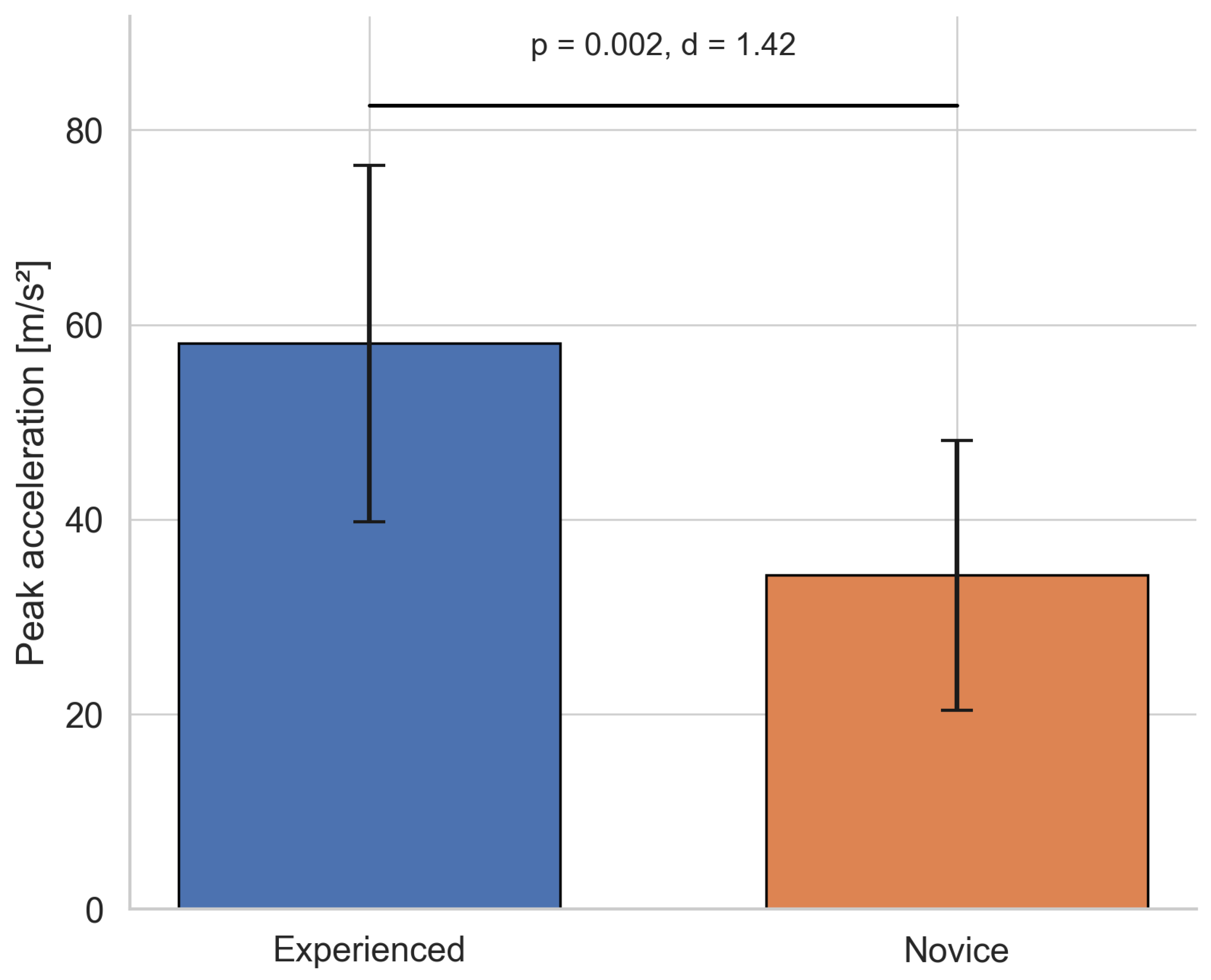
The results are shown in Figure 12. The experienced group showed significantly higher main peak acceleration values than the novice group (Welch’s t-test, p = 0.002), with a large effect size (Cohen’s d = 1.42).
3.4. Comparison of Main Peak Full Width at Half Maximum (FWHM)
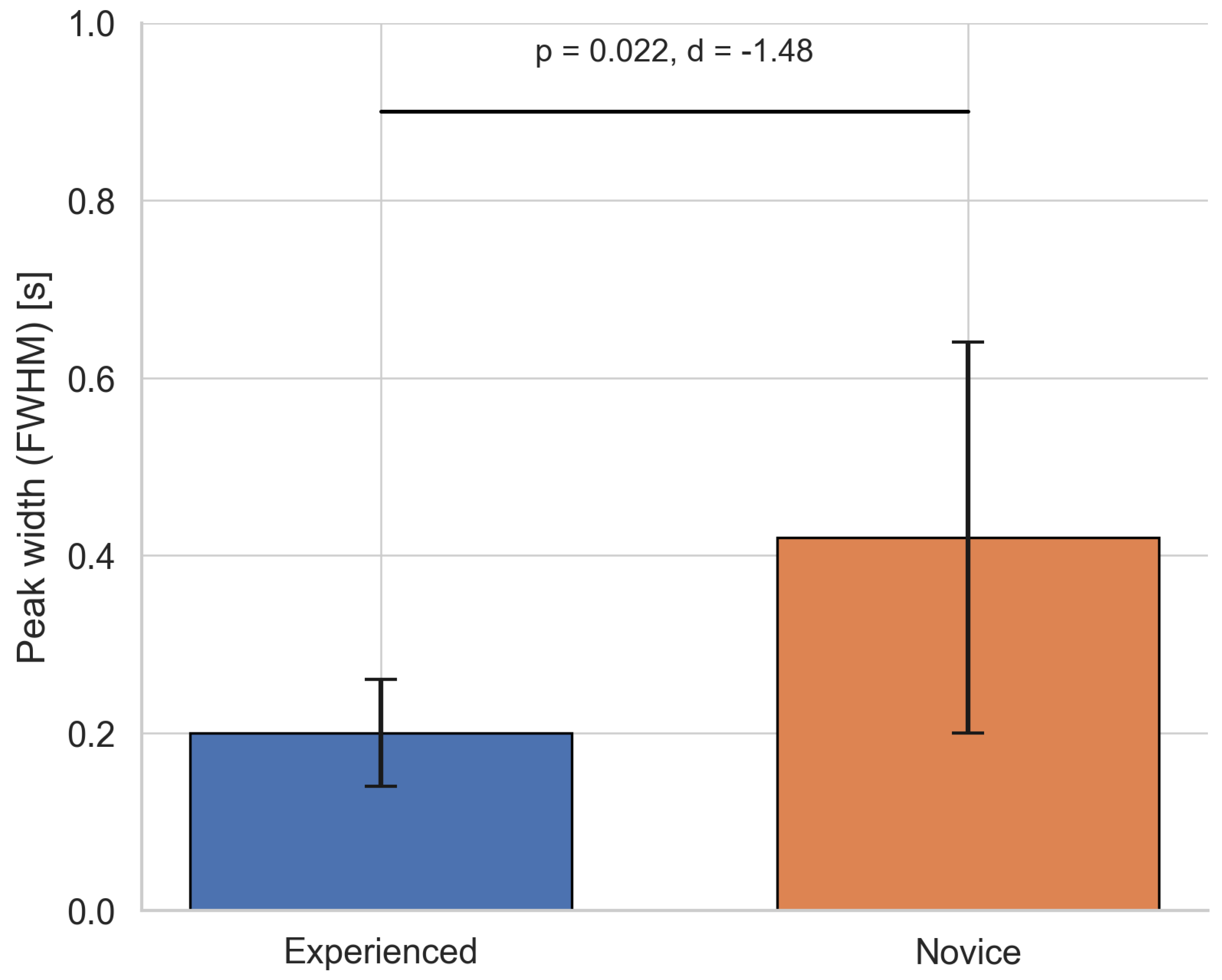
The novice group showed significantly larger peak width (Full Width at Half Maximum, FWHM) than the experienced group (Welch’s t-test, p = 0.022), with a large effect size (Cohen’s d = −1.48).
Figure 13.
Comparison of peak width (FWHM) between experienced and novice practitioners. Bars represent mean ± standard deviation. The novice group showed significantly larger peak width than the experienced group (Welch’s t-test, p = 0.022, Cohen’s d = −1.48).
Figure 13.
Comparison of peak width (FWHM) between experienced and novice practitioners. Bars represent mean ± standard deviation. The novice group showed significantly larger peak width than the experienced group (Welch’s t-test, p = 0.022, Cohen’s d = −1.48).
3.5. Comparison of Secondary Peak Ratio
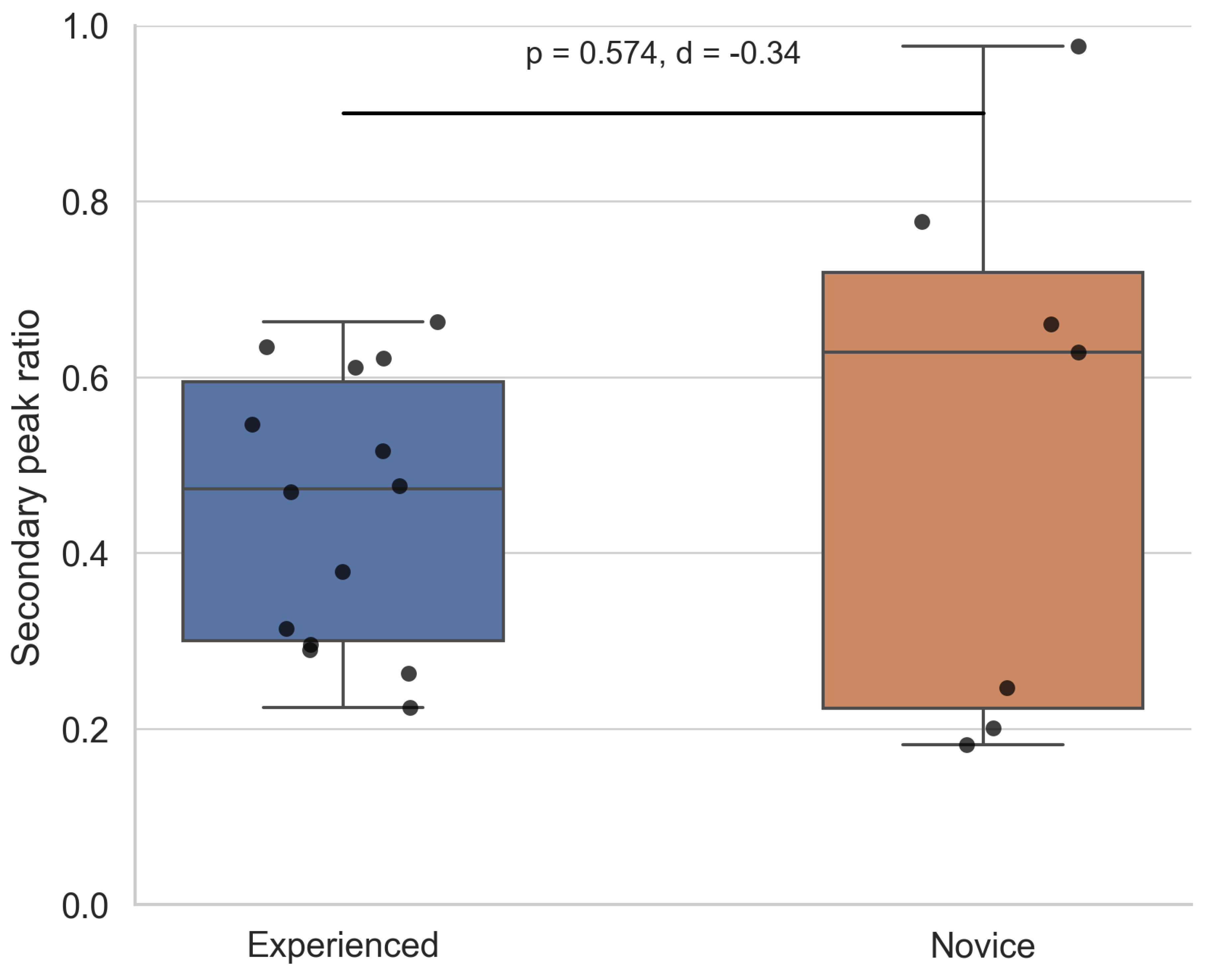
No significant difference was observed in the secondary peak ratio between the experienced and novice groups (Welch’s t-test, p = 0.574), with a small effect size (Cohen’s d = −0.34). However, the novice data points appear to form two clusters, suggesting potential subgroups within the novice practitioners.
Figure 14.
Comparison of secondary peak ratio between experienced and novice practitioners. Boxes represent median and interquartile range, with individual data points overlaid. No significant difference was observed between the groups (Welch’s t-test, p = 0.574, Cohen’s d = −0.34). However, the novice data points appear to form two clusters, suggesting potential subgroups within the novice practitioners.
Figure 14.
Comparison of secondary peak ratio between experienced and novice practitioners. Boxes represent median and interquartile range, with individual data points overlaid. No significant difference was observed between the groups (Welch’s t-test, p = 0.574, Cohen’s d = −0.34). However, the novice data points appear to form two clusters, suggesting potential subgroups within the novice practitioners.
4. Discussion
4.1. Effectiveness of the Proposed System
By embedding the sensor and measurement system within the shinai, this study achieved unobtrusive measurement of motion. The questionnaire results also confirmed that participants did not feel any discomfort regarding weight or swingability, suggesting that the system is applicable in real training environments. The measured data allowed quantitative analysis of the motion characteristics of experienced and novice practitioners, indicating that the data quality is sufficient for reliable motion analysis. Although the sampling rate was limited to 20 Hz due to the processing constraints of the Raspberry Pi Zero W, the obtained signals were sufficient to capture the major characteristics of the swing motion examined in this study.
4.2. Effectiveness of Orientation Estimation using 6-axis IMU and ESKF
This study’s key technical feature is the use of only 6-axis IMU data (acceleration and angular velocity) without magnetometer data, to achieve orientation estimation and gravity compensation using ESKF. Owing to the robustness against environmental magnetic disturbances and the processing constraints of the Raspberry Pi Zero W, this study implemented a program that does not store magnetometer data. By performing gravity compensation using the orientation estimated in post-processing, the results suggest that the acceleration components attributable to motion can be reasonably extracted. Moreover, for the data collected in this study, the ESKF showed less drift in orientation estimation than EKF, suggesting its suitability for highly dynamic kendo swing motion.
4.3. Interpretation of Motion Characteristics
In Section 3.3, it was shown that the acceleration peaks observed in experienced practitioners were higher than those in novices. This may indicate that experienced practitioners can perform more efficient movements and generate greater acceleration. Furthermore, in Section 3.4, it was shown that the peak width of experienced practitioners was smaller than that of novices. This may indicate that experienced practitioners can apply force momentarily and perform more efficient movements without unnecessary motion. In Section 3.5, although no significant difference was observed in the secondary peak ratio, there may be a cluster structure in the novice data. This suggests the possibility of subgroups among novices, with some learning faster than others.
According to practical knowledge shared by a high-ranking practitioner, kendo swings involve not only a downward motion but also a forward-directed component. In addition, an instructional book states that the arms should be fully extended at the moment of the swing (Ijima, 2016). These descriptions suggest that skilled swings may involve coordinated motion components other than simple downward acceleration, which could contribute to the secondary peaks observed before and after the main peak. By breaking down and analyzing the actual swing movements and comparing them with the data, it may be possible to gain a more detailed understanding of the characteristics of experienced practitioners’ movements.
4.4. Future Perspectives
By enabling objective and quantitative evaluation of swing motion, which has traditionally relied on subjective assessment, it is expected to enable more effective training support. For example, by measuring peak acceleration and motion sharpness with this system and providing real-time feedback through audio or graphical displays, efficient training support can be realized. In addition, by further analyzing the behavior of secondary peaks and the detailed waveform structure, it may be possible to apply this system for skill stratification and qualitative evaluation of form. Since the number of experimental participants is still small and the existence of subgroups among novices is also suggested, it is desirable to collect data from more participants in the future. There may also be differences in motion characteristics between experienced practitioners, such as university kendo club members and high-ranking instructors, so more detailed analysis within the experienced group is also a worthwhile option for future work.
Improving the system’s performance, such as increasing the sampling frequency and extending data storage time, should also be pursued. By incorporating a higher-performance processing module and integrating the system while ensuring that it does not affect the weight or balance of the shinai, it is considered possible to achieve these improvements.
Currently, it is necessary to open the shinai and access the internal module for charging, but design improvements to enable wireless charging and external access would also be valuable.
While the current design of the shinai raises concerns about device damage during strikes, it is not intended for use in actual sparring. However, it is desirable to enhance shock resistance in the future to enable use during sparring.
The method using a 6-axis IMU and ESKF demonstrated in this study can be applied to other sports and motion analysis fields, and is expected to contribute to the realization of simple and high-precision wearable measurement systems.
5. Conclusions
In this study, a measurement system with an embedded IMU inside a shinai was developed for the quantitative analysis of kendo swing motion. The proposed system demonstrated the feasibility of achieving orientation estimation and gravity compensation using 6-axis IMU data by applying an ESKF without relying on magnetometer data, allowing stable extraction of acceleration components due to motion. The experimental results confirmed that experienced practitioners had significantly higher main peak acceleration and smaller peak width than novices, revealing sharper and more efficient motion characteristics. On the other hand, no significant difference was observed in the secondary peak ratio, but a cluster structure was suggested in the novice group. From the above, the proposed method is effective for extracting the key features of kendo motion and identifying the proficiency level of practitioners, and it is anticipated to be valuable for application to training support and proficiency evaluation.
Author Contributions
Conceptualization, Y.O. and M.S.; methodology, Y.O. and M.S.; software, Y.O.; validation, Y.O. and M.S.; formal analysis, Y.O.; investigation, Y.O. and M.S.; resources, Y.O.; data curation, Y.O.; writing—original draft preparation, Y.O.; writing—review and editing, M.S.; visualization, Y.O.; supervision, Y.O.; project administration, Y.O.; funding acquisition, Y.O. All authors have read and agreed to the published version of the manuscript.
Funding
This work was supported by JSPS KAKENHI Grant Number JP24K06313.
Institutional Review Board Statement
The study was conducted in accordance with the Declaration of Helsinki, and approved by the Institutional Review Board of Tokyo Polytechnic University (protocol code 2023-14, approved on 25 December 2023).
Informed Consent Statement
Informed consent was obtained from all subjects involved in the study.
Data Availability Statement
The data presented in this study are available from the corresponding author upon reasonable request. The data are not publicly available due to privacy and ethical considerations.
Acknowledgments
The authors would like to thank the undergraduate students of the laboratory for their contributions to data collection and experimental support. We thank Tom Buckle from Scribendi (www.scribendi.com) for editing a draft of this manuscript.
Conflicts of Interest
The funders had no role in the design of the study; in the collection, analyses, or interpretation of data; in the writing of the manuscript; or in the decision to publish the results.
References
- Sabatini, A.M. 2011. Estimating Three-Dimensional Orientation of Human Body Parts by Inertial/Magnetic Sensing. Sensors 11: 1489–1525. [Google Scholar] [CrossRef] [PubMed]
- López-Nava, I.H., and A. Muñoz-Meléndez. 2016. Wearable Inertial Sensors for Human Motion Analysis: A Review. IEEE Sensors Journal 16: 7821–7834. [Google Scholar] [CrossRef]
- Camomilla, V., E. Bergamini, S. Fantozzi, and G. Vannozzi. 2018. Trends Supporting the In-Field Use of Wearable Inertial Sensors for Sport Performance Evaluation: A Systematic Review. Sensors 18. [Google Scholar] [CrossRef] [PubMed]
- Tatsumi, N., M. Iwase, Y. Watanabe, S. Takemori, T. Okazima, and K. Shibata. 2012. An Evaluation of Kendo Techniques Using 3-Axis Accelerometers. Seijo University Economic Papers 195: 33–46, in Japanese. [Google Scholar]
- Furuta, K., J. Li, T. Fushimi, and Y. Ochiai. 2025. Discipline Together with the Self in Kendo: Exploring "Qi" through Mixed Reality and Autoethnography. Proc. ACM Comput. Graph. Interact. Tech. 8. [Google Scholar] [CrossRef]
- Torigoe, Y., Y. Nakamura, M. Fujimoto, Y. Arakawa, and K. Yasumoto. 2020. Strike Activity Detection and Recognition Using Inertial Measurement Unit towards Kendo Skill Improvement Support System. Sensors and Materials 32: 651. [Google Scholar] [CrossRef]
- Takata, M., Y. Nakamura, Y. Torigoe, M. Fujimoto, Y. Arakawa, and K. Yasumoto. 2019. Strikes-Thrusts Activity Recognition Using Wrist Sensor Towards Pervasive Kendo Support System. 2019 IEEE International Conference on Pervasive Computing and Communications Workshops (PerCom Workshops); pp. 243–248. [Google Scholar]
- Jeong, K., A.M. Tan, T. Asai, K. Koda, and F.K. Fuss. 2023. Pressure Sensors for Measuring the Grip Pressure during Kendo Attacks: Assessment of Laterality and Evidence of the Five Phases of Attack. Sensors 23. [Google Scholar] [CrossRef] [PubMed]
- Ogai, Y., K. Kayama, and M. Sanekata. 2024. The Development of Kendo Swing Motion Measurement System Using IMU Sensor. Proceedings of the Proceedings of the SIG-SKL Workshop. in Japanese. [Google Scholar]
- Solà, J. 2017. Quaternion kinematics for the error-state Kalman filter. arXiv arXiv:1711.02508. [Google Scholar] [CrossRef]
- Wei, X., S. Fan, Y. Zhang, W. Gao, F. Shen, X. Ming, and J. Yang. 2025. A robust adaptive error state Kalman filter for MEMS IMU attitude estimation under dynamic acceleration. Measurement 242: 116097. [Google Scholar] [CrossRef]
- Ijima, A. 2016. Perfect Lesson Book: Kendo Kihon to Senjutsu. Jitsugyo no Nihon Sha: in Japanese. [Google Scholar]
Figure 1.
A single kendo swing motion by an experienced practitioner. Frames are extracted from the video every 0.33 s and displayed in a grid, with the first four frames in the top row and the subsequent frames in the bottom row.
Figure 1.
A single kendo swing motion by an experienced practitioner. Frames are extracted from the video every 0.33 s and displayed in a grid, with the first four frames in the top row and the subsequent frames in the bottom row.
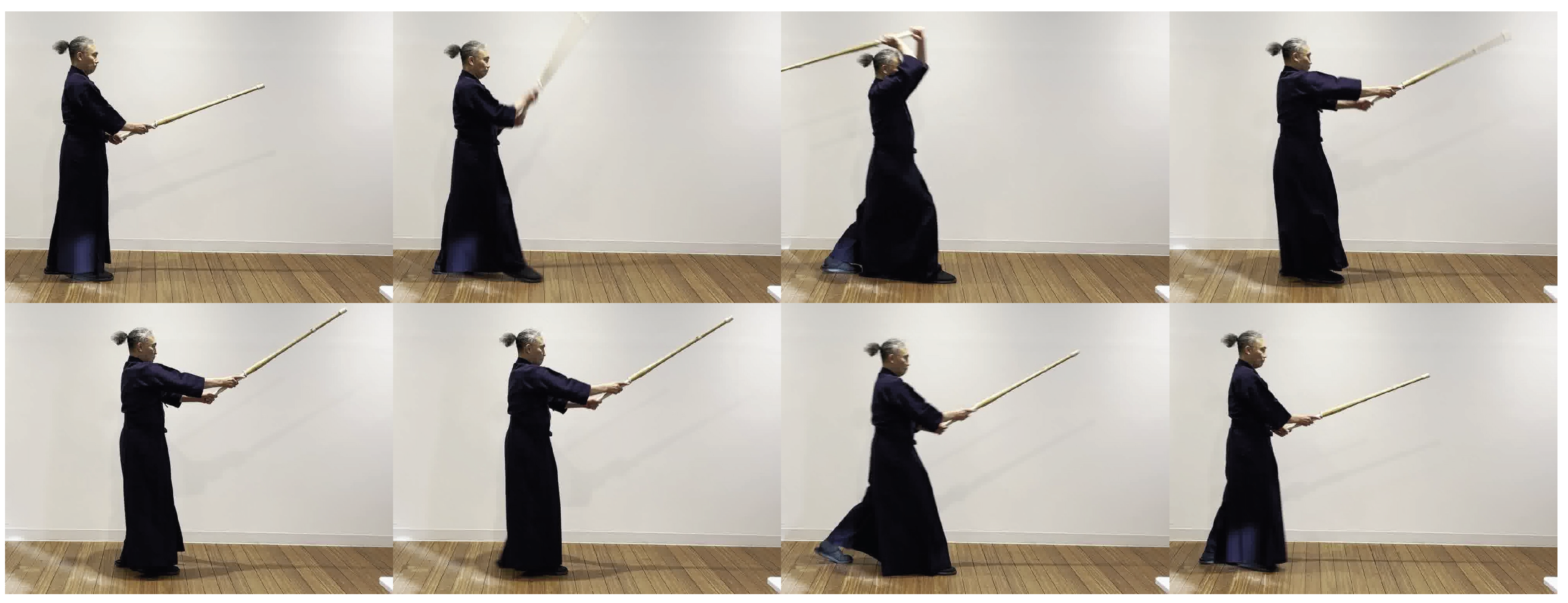
Figure 2.
The moment of striking during a swing motion by an experienced practitioner. Frames are extracted from the video every 0.033 s and displayed in a grid, with the first four frames in the top row and the subsequent frames in the bottom row.
Figure 2.
The moment of striking during a swing motion by an experienced practitioner. Frames are extracted from the video every 0.033 s and displayed in a grid, with the first four frames in the top row and the subsequent frames in the bottom row.
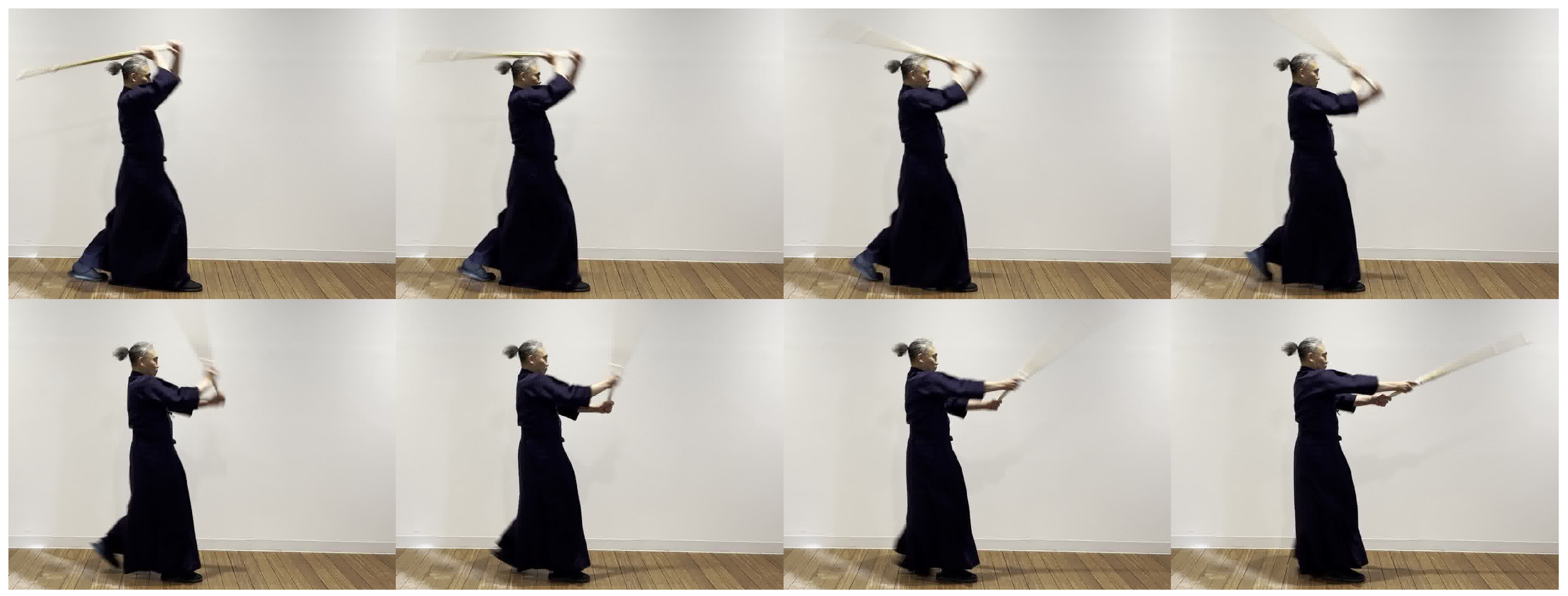
Figure 3.
Overview of the proposed embedded IMU-based sensing system for kendo swing analysis.
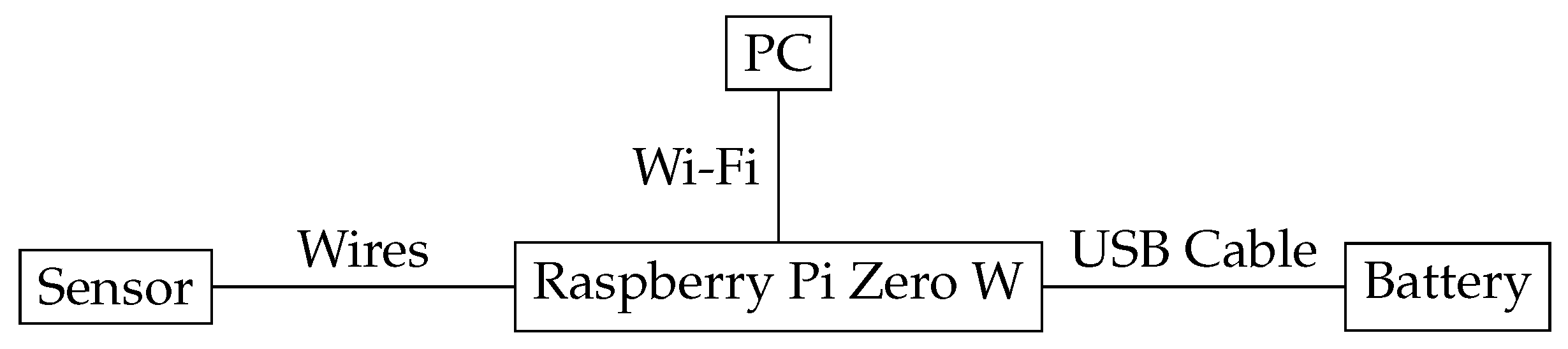
Figure 4.
Circuit diagram combining the Raspberry Pi Zero W and the MPU-9250.
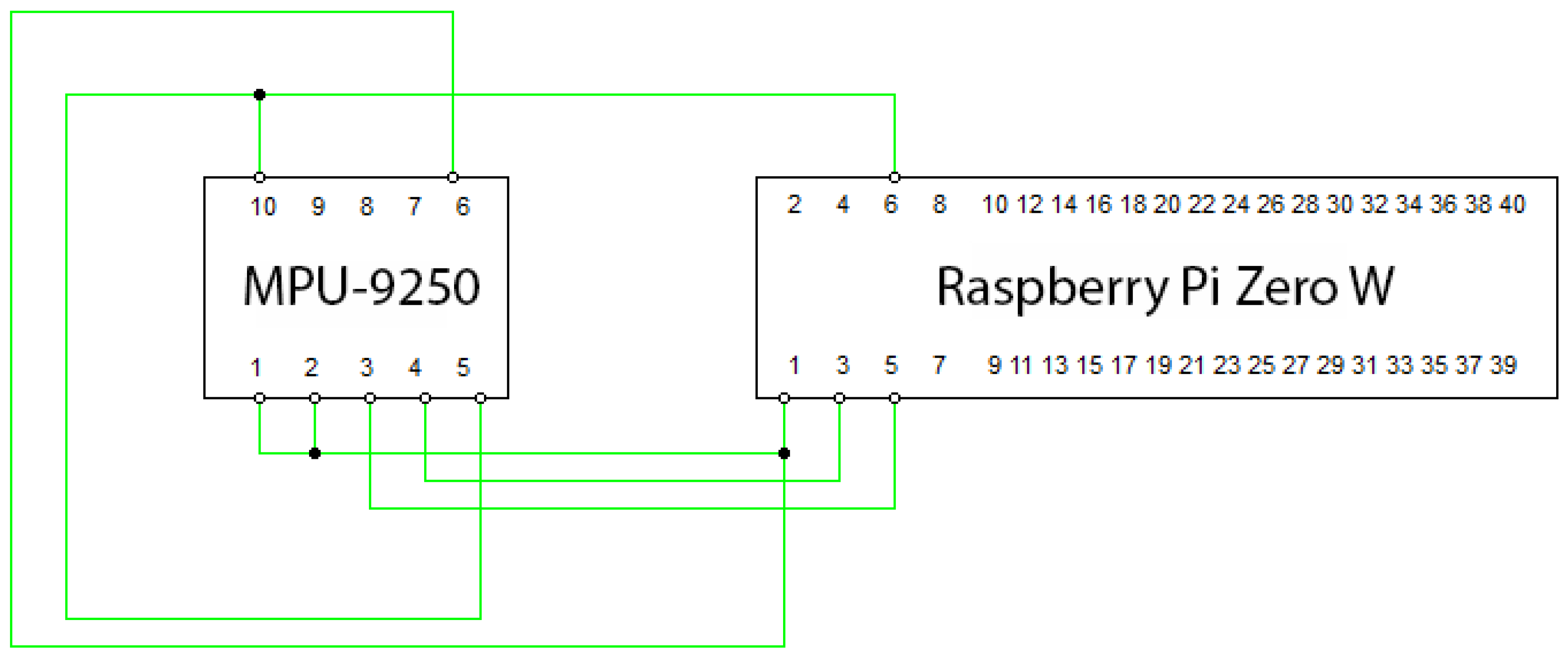
Figure 5.
Embedded implementation of all components inside the handle of the bamboo sword (shinai).

Figure 6.
The internal structure of the embedded system as revealed by slightly opening the shinai.
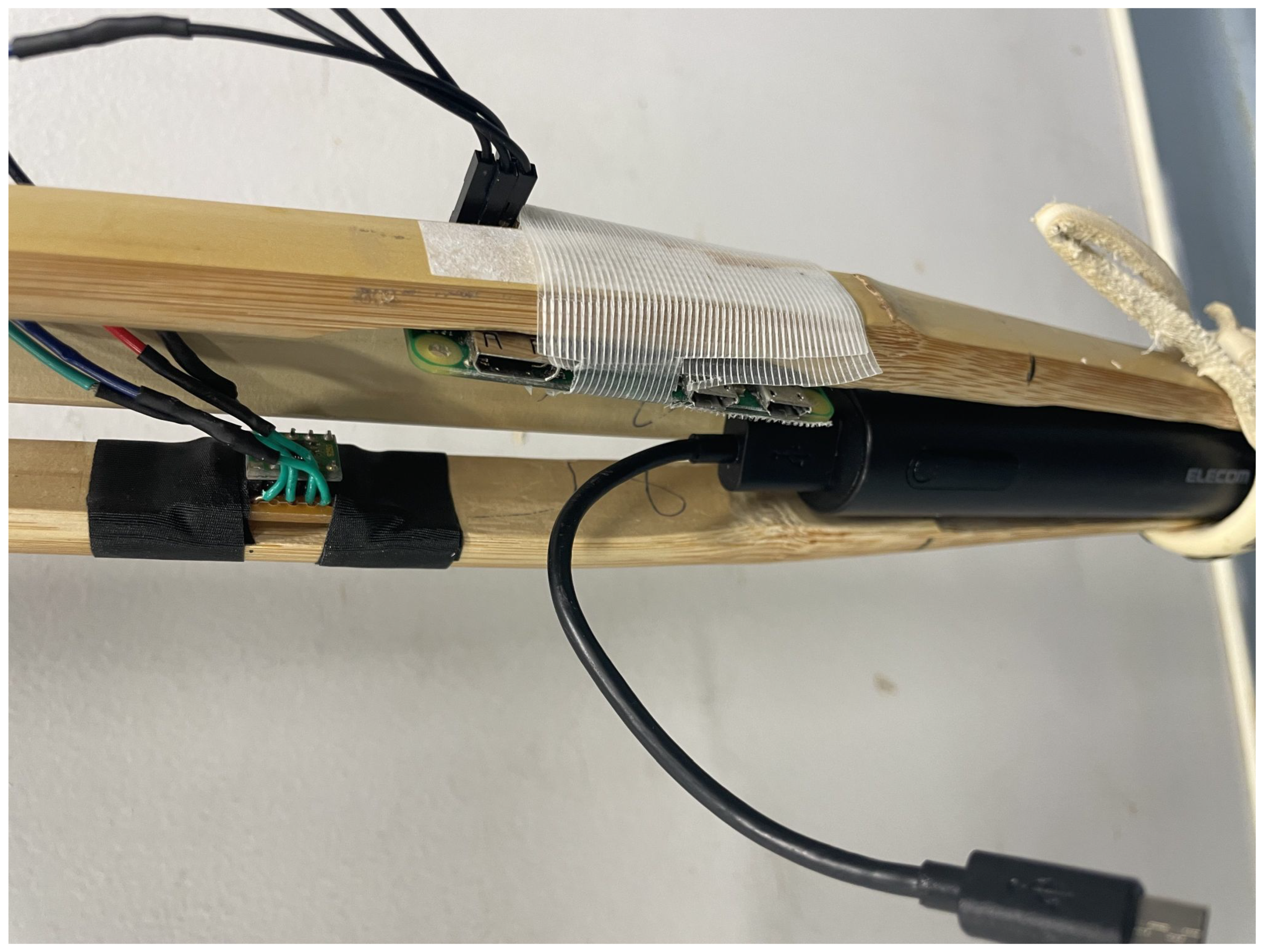
Figure 7.
Time series of acceleration data measured from an experienced kendo practitioner A during a swing trial.
Figure 7.
Time series of acceleration data measured from an experienced kendo practitioner A during a swing trial.
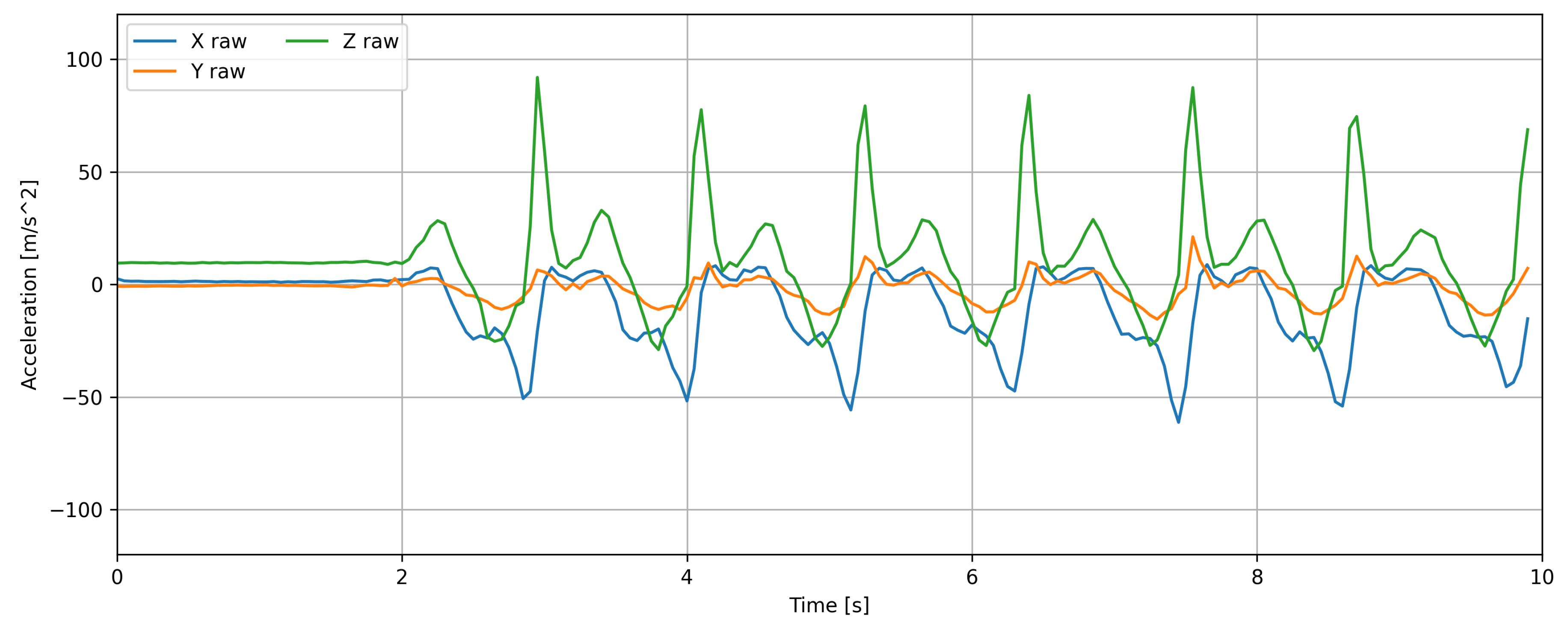
Figure 8.
Time series of gyroscope data measured from an experienced kendo practitioner A during a swing trial.
Figure 8.
Time series of gyroscope data measured from an experienced kendo practitioner A during a swing trial.
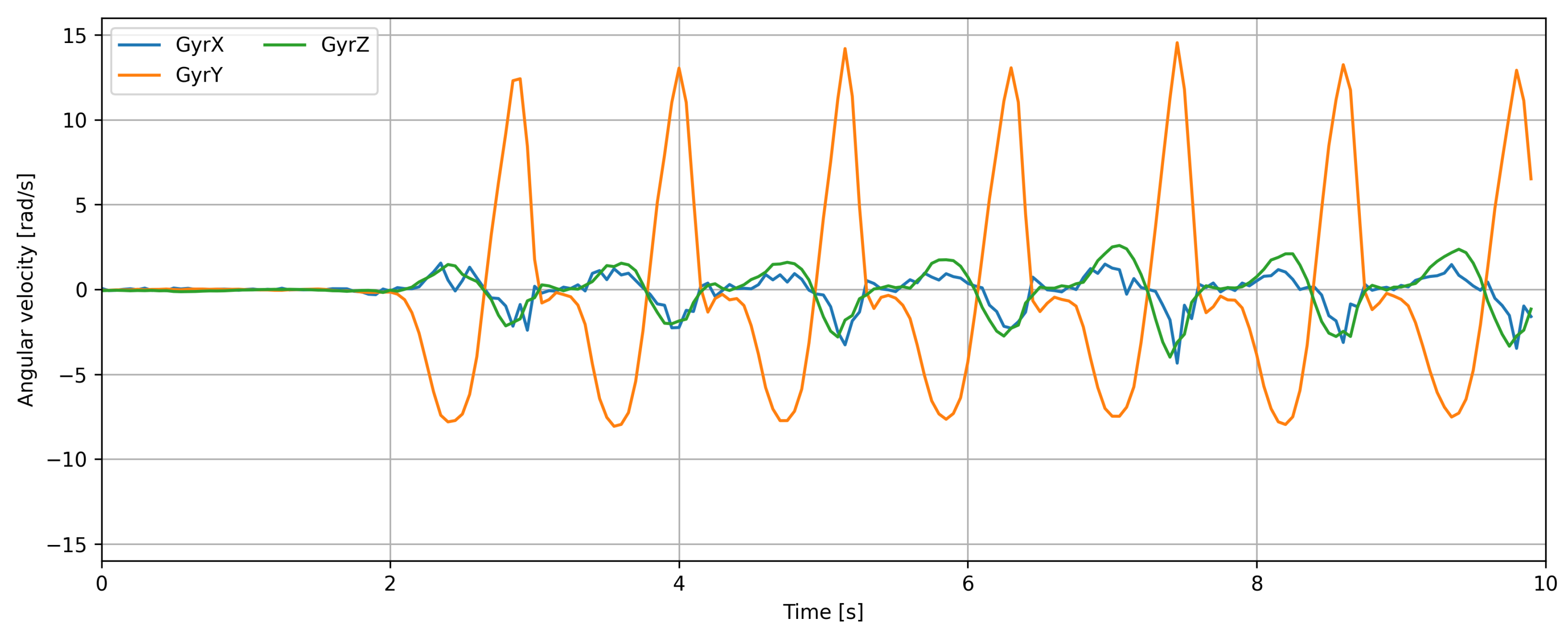
Figure 9.
Gravity-compensated acceleration measured from an experienced kendo practitioner A during a swing trial, corrected by ESKF.
Figure 9.
Gravity-compensated acceleration measured from an experienced kendo practitioner A during a swing trial, corrected by ESKF.
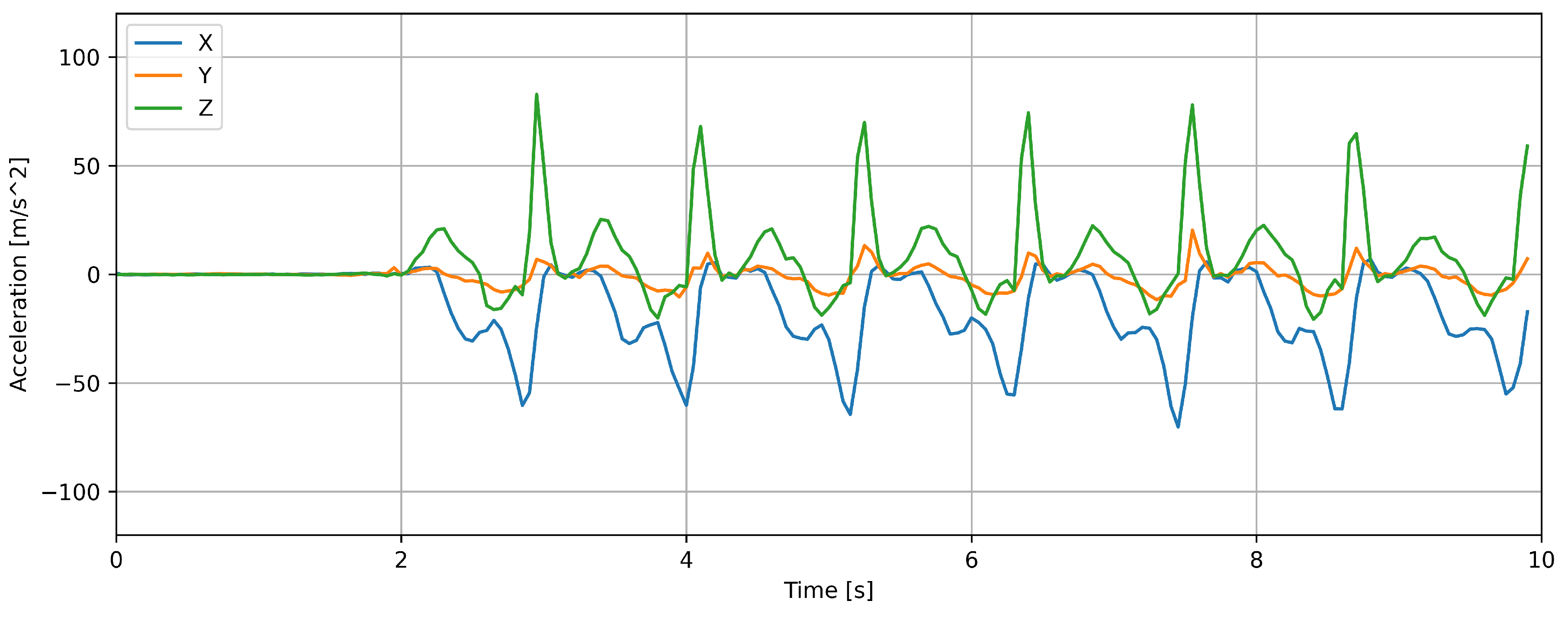
Figure 10.
Example of gravity-compensated acceleration measured from a novice kendo practitioner A during a swing trial, corrected by ESKF.
Figure 10.
Example of gravity-compensated acceleration measured from a novice kendo practitioner A during a swing trial, corrected by ESKF.
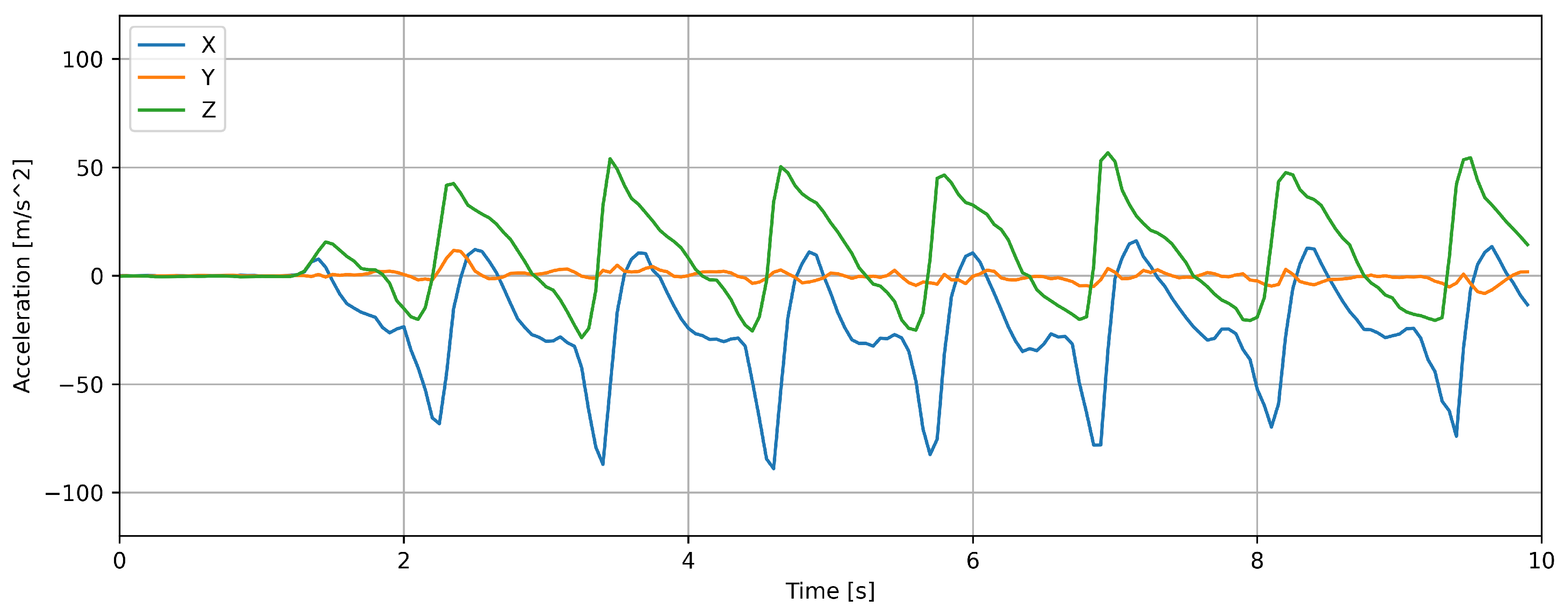
Figure 11.
Example of gravity-compensated acceleration signals and detected peaks. The main peaks and second peaks in the Z-axis signal clearly correspond to each swing cycle. The first and last peaks are excluded to eliminate the influence of the initial and final transient phases.
Figure 11.
Example of gravity-compensated acceleration signals and detected peaks. The main peaks and second peaks in the Z-axis signal clearly correspond to each swing cycle. The first and last peaks are excluded to eliminate the influence of the initial and final transient phases.
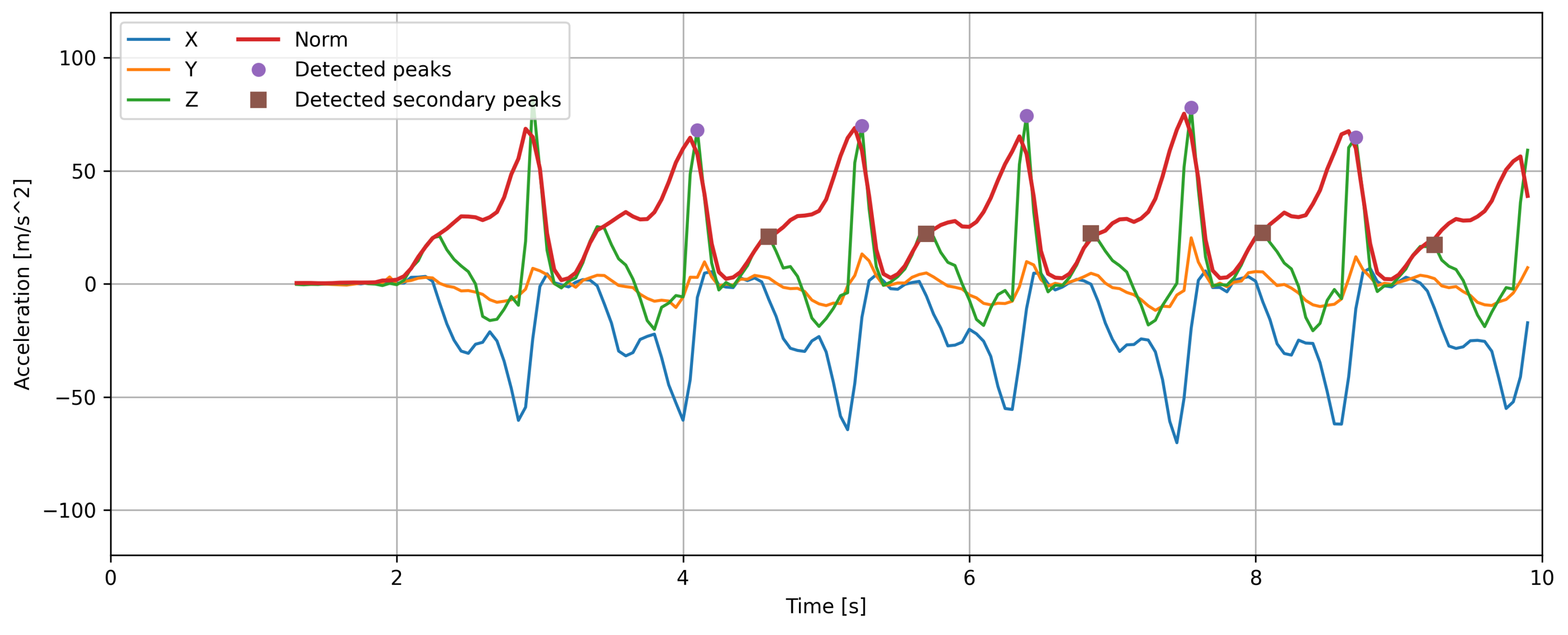
Figure 12.
Comparison of mean main peak acceleration between experienced and novice practitioners. Bars represent mean ± standard deviation. The experienced group showed significantly higher values than the novice group (Welch’s t-test, p = 0.002, Cohen’s d = 1.42).
Figure 12.
Comparison of mean main peak acceleration between experienced and novice practitioners. Bars represent mean ± standard deviation. The experienced group showed significantly higher values than the novice group (Welch’s t-test, p = 0.002, Cohen’s d = 1.42).
Disclaimer/Publisher’s Note: The statements, opinions and data contained in all publications are solely those of the individual author(s) and contributor(s) and not of MDPI and/or the editor(s). MDPI and/or the editor(s) disclaim responsibility for any injury to people or property resulting from any ideas, methods, instructions or products referred to in the content. |
© 2026 by the authors. Licensee MDPI, Basel, Switzerland. This article is an open access article distributed under the terms and conditions of the Creative Commons Attribution (CC BY) license (http://creativecommons.org/licenses/by/4.0/).
Copyright: This open access article is published under a Creative Commons CC BY 4.0 license, which permit the free download, distribution, and reuse, provided that the author and preprint are cited in any reuse.


