

Submitted:
07 April 2026
Posted:
08 April 2026
You are already at the latest version
Abstract
Background: Differentiating adrenal adenomas from non-adenomatous lesions remains a critical challenge in the management of adrenal incidentalomas. Conventional unenhanced CT relies on attenuation thresholds of 10 HU and 20 HU, which present trade-offs between sensitivity and specificity. Objectives: To evaluate the diagnostic performance of unenhanced Spectral CT using the attenuation difference between 40 keV and 140 keV virtual monoenergetic images for differentiating adrenal adenomas from non-adenomatous lesions. Methods: In this retrospective single-center study, 60 patients with adrenal lesions who underwent unenhanced dual-energy CT were included. Mean attenuation values were measured on conventional images and on virtual monoenergetic images at 40 keV and 140 keV. The spectral attenuation difference (Δ40–140 keV) was calculated. ROC analysis was performed to determine optimal thresholds and diagnostic performance. Results: Forty-nine lesions were adenomas and eleven were non-adenomatous. The optimal threshold for Δ40–140 keV was −17 HU. Diagnostic performance was as follows: HU ≤10 (AUC 0.816, diagnostic accuracy 0.70), HU ≤20 (AUC 0.883, diagnostic accuracy 0.87), and Δ40–140 keV ≤ −17 HU (AUC 0.940, diagnostic accuracy 0.90). The spectral attenuation difference demonstrated the highest overall diagnostic accuracy. Conclusions: Unenhanced Spectral CT using Δ40–140 keV improves discrimination between adrenal adenomas and non-adenomatous lesions compared with conventional attenuation thresholds. This technique may reduce indeterminate findings and limit the need for additional imaging.
Keywords:
adrenal incidentaloma
; dual-energy CT
; spectral CT
; virtual monoenergetic imaging
1. Introduction
According to the Society of Abdominal Radiology, an adrenal incidentaloma is defined as an incidentally detected adrenal nodule or mass unrelated to the clinical indication for the imaging examination performed [1]. More recently, a refined definition has been proposed, restricting adrenal incidentalomas to lesions measuring ≥1 cm and excluding patients with current or prior extra-adrenal malignancy [2].
Adrenal incidentalomas are relatively common, with a reported prevalence of approximately 3–7% in the adult population, and the majority represent benign, non-functioning adenomas. Accurate characterization of adrenal lesions as benign or malignant is therefore crucial, as imaging findings directly influence patient management and follow-up strategies [3,4,5].
Historically, CT characterization of adrenal lesions has relied on two main principles. First, an unenhanced attenuation value of ≤10 Hounsfield units (HU) has been considered diagnostic of lipid-rich adenomas, obviating the need for further imaging. Second, lesions with attenuation values >10 HU have traditionally been evaluated using contrast-enhanced washout techniques to differentiate lipid-poor adenomas from non-adenomatous lesions, with commonly accepted thresholds of ≥60% for absolute washout and ≥40% for relative washout [5,6,22].
More recently, an unhenanced attenuation threshold of >20 HU was proposed, in order to increase sensitivity in detecting benign lesions [2]. In parallel, dual-energy CT (DECT) has emerged as a promising technique for tissue characterization beyond conventional HU measurements, exploiting the energy-dependent attenuation properties of different materials [7,8,9,10].
In particular, unenhanced dual-energy CT allows spectral attenuation analysis using virtual monoenergetic images (VMIs). The presence of intracellular lipid within adrenal adenomas results in characteristic decrease in attenuation at lower energy levels, potentially providing incremental diagnostic information, even in lesions with attenuation values above 10 HU [11,12,13,14,15,16].
Based on previous evidence [17], we hypothesized that the attenuation difference between low- and high-energy VMIs (40–140 keV) could serve as a reliable discriminative parameter for differentiating adrenal adenomas from non-adenomatous lesions.
The aim of this study was to evaluate the diagnostic performance of unenhanced spectral CT for diagnosis of adrenal adenomas, in comparison with conventional unhenanced <10 HU and <20 HU cut-offs.
2. Materials and Methods
2.1. Study Population
Adult patients with adrenal nodular lesions who underwent unenhanced abdominal dual-energy Spectral CT between September 2021 and December 2025 were retrospectively identified from the institutional database of our University hospital. CT examinations were performed for various clinical indications, including both incidentally detected and clinically suspected adrenal lesions.
Inclusion and exclusion criteria are summarized in Figure 1.
The reference standard for all adrenal lesions was based on histopathologic examination, and/or interval imaging follow-up. Lesions showing no change in size for at least 12 months were considered as benign adenomas, whereas lesions demonstrating a size increase greater than 20% in maximum diameter were considered as non-adenomatous.
2.2. Spectral CT Image Acquisition
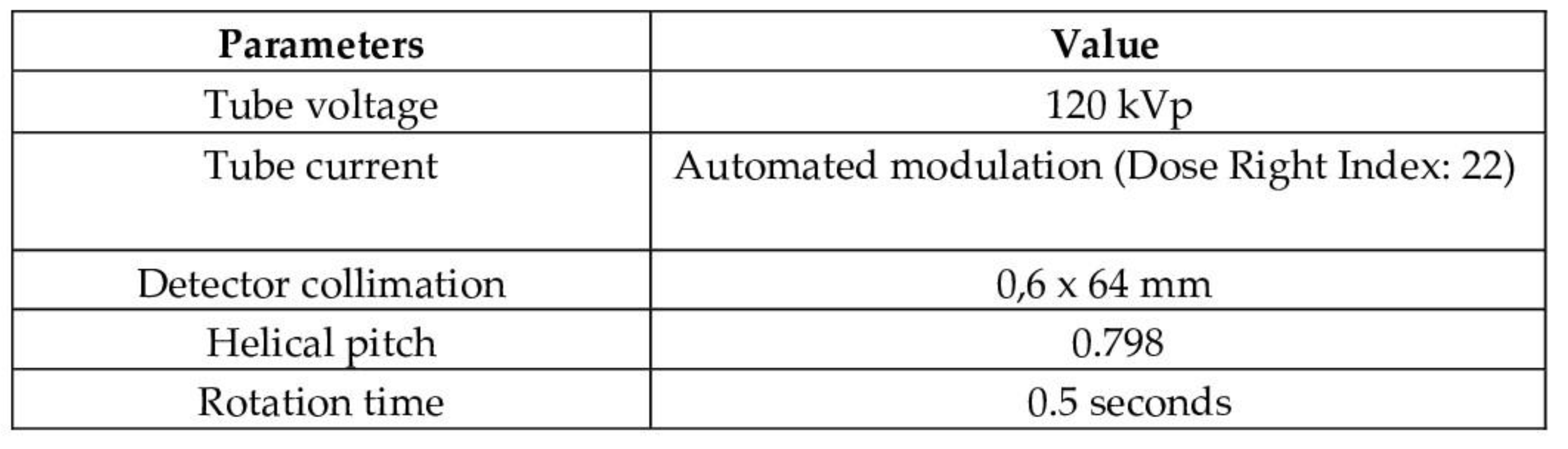
All images were acquired using dual-layer spectral-detector CT (IQon, Philips Healthcare), which provides both conventional (120 kVp) and spectral-based images.
Technical parameters are reported in Table 1.
Axial, unenhanced conventional 120-kVp and VMIs at 40 keV and 140 keV were reconstructed with contiguous 2-mm-thick sections.
Conventional images were reconstructed using an iterative reconstruction algorithm (iDose 4, level 3; Philips Healthcare), and VMIs were reconstructed using a dedicated spectral image reconstruction algorithm (Spectral, level 3; Philips Healthcare).
2.3. Image Analysis
All image data were postprocessed using the proprietary workstation (IntelliSpace Portal, version 9.0; Philips Healthcare).
Image analysis was conducted by two board-certified radiologists in consensus, both blinded to clinical information and final diagnosis.
To measure mean unenhanced attenuation on conventional images and VMIs, a circular region of interest (ROI) was placed manually within the center of each adrenal lesion, avoiding surrounding fat or normal adrenal parenchyma.
For each lesion, measurements from three separate ROIs were averaged to ensure data consistency. The spectral attenuation difference (Δ40–140 keV) was calculated as the difference between attenuation values measured on 40-keV and 140-keV VMIs using an identical ROI.
The spectral attenuation curve was also reconstructed from the VMIs at different energy levels.
2.4. Statistical Analysis
Statistical analyses were performed by using Med Calc software (MedCalc Statistical Software version 23.0.8 (MedCalc Software Ltd., Ostend, Belgium) and Matlab (Matlab, MathWorks v. R2024b, Natick, MA, USA)). Group comparisons were performed using the Mann–Whitney U test. Receiver operating characteristic analysis was conducted to assess diagnostic performance and determine optimal thresholds using the Youden index.
3. Results
3.1. Patient Demographics
A total of 258 patients were initially identified. After application of exclusion criteria, 60 patients were included in the final analysis, thirty-one males and twenty-nine females, mean age of 66 years. Forty-nine lesions were adenomas and eleven were non-adenomatous lesions: metastases (8), pheochromocytomas (2) and adrenal carcinoma (1).
3.2. Diagnostic Performance Figures, Tables and Schemes
ROC curve analysis demonstrated that optimal threshold to discriminate adenomas from non-adenomas, using Δ40–140 keV, was -17 HU, with values below this cutoff are indicative of benign lesions.
The diagnostic performance of all three parameters was high: HU ≤10 (AUC = 0.81), HU ≤20 (AUC = 0.88), and Δ ≤ –17 (AUC = 0.90). These values indicate good discriminative ability between benign and malignant lesions.
The diagnostic performance of the spectral attenuation difference was superior to that of conventional attenuation thresholds, with the highest area under the curve (Figure 2).
Significant differences were observed between benign and malignant lesions across all evaluated parameters (p < 0.0001). Adenomas exhibited lower unenhanced attenuation values and more negative spectral attenuation differences compared with non-adenomatous lesions (Figure 3 and Figure 4).
The results of the quantitative analysis are shown in Figure 5.
Diagnostic performance metrics are summarized in the bar plot (Figure 6), clearly showing that the spectral attenuation difference (Δ40–140 keV) provides the most balanced combination of sensitivity, specificity, and predictive values compared to the other evaluated rules.
4. Discussion
According to the 2023 European Society of Endocrinology (ESE) guidelines, unenhanced CT is considered the first imaging modality in the characterization of adrenal incidentalomas. [18]
Our results support the role of conventional attenuation thresholds as reliable and well-established criteria for the characterization of adrenal lesions.
The 10 HU threshold is highly specific but less sensitive for the diagnosis of adrenal adenoma, while the 20 HU threshold improves sensitivity to the detriment of specificity. [19].
Despite the very low prevalence of malignancy among homogeneous adrenal nodules <4 cm with attenuation between 10 and 20 HU, especially in patients without history of extra-adrenal malignancy, additional imaging or a 12-months follow-up are required.
The diagnostic accuracy of contrast-enhanced CT with a delayed washout (absolute and relative) is very low because up to one-third of pheochromocytomas and malignant tumors may show rapid washout similar to adenomas, while a notable fraction of benign adenomas do not meet the rapid washout criteria. [19,20,21,23,24,25,26]
Finally, despite FDG-PET/CT represents the most reliable imaging method in the assessment of adrenal masses indeterminate at unenhanced CT, few malignant lesions are FDG-negative, especially renal cancer, and a subset of benign adenomas, especially if endocrine active, are FDG-positive.
Dl-DECT has emerged as a useful tool for the characterization of incidental adrenal masses, because the ability to analyse lesion attenuation across a spectrum of energy levels provides crucial information on tissue composition. [15].
Spectral analysis allows detection of fat within adenomas, similarly to MRI with chemical shift imaging, even when mean attenuation exceeds 10 HU, overcoming the main limitation of conventional CT.
Our data demonstrate that the attenuation difference between 40 keV and 140 keV VMIs offers superior diagnostic performance compared with conventional unenhanced attenuation thresholds.
The diagnostic rule based on a conventional unenhanced attenuation value ≤ 10 HU, traditionally used to identify lipid-rich adenomas, demonstrated a good discriminative ability, with an AUC of 0.82. Increasing the attenuation threshold to ≤ 20 HU resulted in an improvement in sensitivity for benign lesions, yielding an AUC of 0.88. However, this gain in sensitivity was accompanied by a higher false-positive rate.
The diagnostic rule based on the spectral attenuation difference between 40 keV and 140 keV VMIs (Δ40–140 keV ≤ −17 HU) exhibited the highest diagnostic accuracy, with an AUC of 0.90.
Our results are consistent with prior literature. Nagayama et al., using ΔHU between 140 and 40 keV and 19 HU as the optimal threshold, demonstrated sensitivity and specificity of 76% and 97% respectively, in a group of adrenal lesions with attenuation of 10–30 HU, potentially eliminating the need for additional diagnostic work-ups, in this set of lesions [17].
Our study has several limitations. First, it is a retrospective single-center study, which may limit the generalizability of the findings. Additionally, the overall sample size is relatively small, especially regarding patients with non-adenomatous lesions. The limited number of such cases may affect the statistical power and the strength of the conclusions drawn.
Larger multicenter studies are warranted to validate these findings.
5. Conclusions
Unenhanced Spectral CT using the attenuation difference between 40 keV and 140 keV VMIs demonstrates higher diagnostic accuracy for differentiating adrenal adenomas from non-adenomatous lesions.
Integration of spectral parameters into diagnostic algorithms may reduce the number of indeterminate incidental adrenal lesions, avoiding the need for additional imaging in lesions with attenuation values between 10 HU and 20 HU.
Author Contributions
Conceptualization, G.A.; methodology, T.C. and G.M.; validation, S.B., G.F. and G.M.A. and E.M.; investigation, T.C and G.M.; resources, G.A.; data curation, T. D’A.; writing—original draft preparation, T.C.; writing—review and editing, G.M.; visualization, V.A and T.J.V.; supervision, G. A., S.M., M.V. and F.F.; All authors have read and agreed to the published version of the manuscript.
Funding
This research received no external funding.
Institutional Review Board Statement
The study was conducted in accordance with the Declaration of Helsinki, and approved by the Institutional Ethics Committee (Prot. 79-23 del 12.04.2023 – AOU “G. Martino” Messina, Italy).
Informed Consent Statement
Informed consent was obtained from all subjects involved in the study.
Data Availability Statement
The data presented in this study are available on request from the corresponding author due to ethical restrictions related to patient privacy.
Acknowledgments
During the preparation of this manuscript, the authors used ChatGPT (OpenAI, GPT-4version) to create tables and graphs. The authors reviewed and edited the output and take full responsibility for the content of this publication.
Conflicts of Interest
The authors declare no conflicts of interest.
Abbreviations
The following abbreviations are used in this manuscript:
| VMIs | virtual monoenergetic images |
| DECT | dual-energy CT |
| Dl-DECT | dual-layer DECT |
References
- Glazer, D.I.; Mayo-Smith, W.W.; Remer, E.M.; et al. Lexicon for adrenal terms at CT and MRI: a consensus of the Society of Abdominal Radi- ology adrenal neoplasm disease-focused panel. Abdom. Radiol. (NY) 2023, 48, 952–975. [Google Scholar] [CrossRef]
- Seow, J.H.; Stella, D.L.; Welman, C.J.; Somasundaram, A.J.; Gerstenmaier, J.F. Washed up: the end of an era for adrenal incidentaloma CT. Insights Imaging 2025, 16(1), 136. [Google Scholar] [CrossRef] [PubMed] [PubMed Central]
- Albano, D.; Agnello, F.; Midiri, F.; Pecoraro, G.; Bruno, A.; Alongi, P.; Toia, P.; Di Buono, G.; Agrusa, A.; Sconfienza, L.M.; Pardo, S.; La Grutta, L.; Midiri, M.; Galia, M. Imaging features of adrenal masses. Insights Imaging 2019, 10(1), 1. [Google Scholar] [CrossRef] [PubMed] [PubMed Central]
- Connolly, M.J.; McInnes, M.D.F.; El-Khodary, M.; McGrath, T.A.; Schieda, N. Diagnostic accuracy of virtual non-contrast enhanced dual-energy CT for diagnosis of adrenal adenoma: a system- atic review and meta-analysis. Eur. Radiol. 2017, 27, 4324–35. [Google Scholar] [CrossRef]
- Mayo-Smith, W.W.; Song, J.H.; Boland, G.L.; Francis, I.R.; Israel, G.M.; Mazzaglia, P.J.; Berland, L.L.; Pandharipande, P.V. Management of Incidental Adrenal Masses: A White Paper of the ACR Incidental Findings Committee. J. Am. Coll. Radiol. 2017, 14(8), 1038–1044. [Google Scholar] [CrossRef] [PubMed]
- Caoili, E.M.; Korobkin, M.; Francis, I.R.; et al. Adrenal masses: characterization with combined unenhanced and delayed enhanced CT. Radiology 2002, 222(3). [Google Scholar] [CrossRef]
- Ho, L.M.; Marin, D.; Neville, A.M.; et al. Characterization of adrenal nodules with dual-energy CT: can virtual unenhanced attenuation values replace true unenhanced attenuation values? AJR Am. J. Roentgenol. 2012, 198(4), 840–845. [Google Scholar] [CrossRef] [PubMed]
- Kim, Y.K.; Park, B.K.; Kim, C.K.; Park, S.Y. Adenoma characterization: adrenal protocol with dual-energy CT. Radiology 2013, 267(1), 155–163. [Google Scholar] [CrossRef]
- Mileto, A.; Nelson, R.C.; Marin, D.; Roy Choudhury, K.; Ho, L.M. Dual-energy multidetector CT for the characterization of incidental adrenal nodules: diagnostic performance of contrast-enhanced material density analysis. Radiology 2015, 274(2), 445–454. [Google Scholar] [CrossRef] [PubMed]
- Nagayama, Y.; Inoue, T.; Oda, S.; et al. Adrenal Adenomas versus Metastases: Diagnostic Performance of Dual-Energy Spectral CT Virtual Noncontrast Imaging and Iodine Maps. Radiology 2020, 296(2), 324–332. [Google Scholar] [CrossRef] [PubMed]
- Raptopoulos, V.; Karellas, A.; Bernstein, J.; Reale, F.R.; Constantinou, C.; Zawacki, J.K. Value of dual-energy CT in differentiating focal fatty in- filtration of the liver from low-density masses. AJR Am. J. Roentgenol. 1991, 157(4), 721–725. [Google Scholar] [CrossRef]
- Stadler, A.; Schima, W.; Prager, G.; et al. CT density measurements for charac- terization of adrenal tumors ex vivo: variability among three CT scanners. AJR Am. J. Roentgenol. 2004, 182(3), 671–675. [Google Scholar] [CrossRef] [PubMed]
- Gupta, R.T.; Ho, L.M.; Marin, D.; Boll, D.T.; Barnhart, H.X.; Nelson, R.C. Dual- energy CT for characterization of adrenal nodules: initial experience. AJR Am. J. Roentgenol. 2010, 194(6), 1479–1483. [Google Scholar] [CrossRef] [PubMed]
- Shi, J.W.; Dai, H.Z.; Shen, L.; Xu, D.F. Dual-energy CT: clinical application in differentiating an adrenal adenoma from a metastasis. Acta Radiol. 2014, 55(4), 505–512. [Google Scholar] [CrossRef] [PubMed]
- Ju, Y.; Liu, A.; Dong, Y.; et al. The Value of Nonenhanced Single-Source Du- al-Energy CT for Differentiating Metastases from Adenoma in Adrenal Glands. Acad. Radiol. 2015, 22(7), 834–839. [Google Scholar] [CrossRef]
- Hyodo, T.; Hori, M.; Lamb, P.; et al. Multimaterial Decomposition Algo- rithm for the Quantification of Liver Fat Content by Using Fast-Kilovolt- Peak Switching Dual-Energy CT: Experimental Validation. Radiology 2017, 282(2), 381–389. [Google Scholar] [CrossRef]
- Nagayama, Y.; Inoue, T.; Oda, S.; Tanoue, S.; Nakaura, T.; Morinaga, J.; Ikeda, O.; Hirai, T. Unenhanced Dual-Layer Spectral-Detector CT for Characterizing Indeterminate Adrenal Lesions. Radiology 2021, 301(2), 369–378. [Google Scholar] [CrossRef] [PubMed]
- Fassnacht, M.; Tsagarakis, S.; Terzolo, M.; Tabarin, A.; Sahdev, A.; Newell-Price, J.; Pelsma, I.; Marina, L.; Lorenz, K.; Bancos, I.; Arlt, W.; Dekkers, O.M. European Society of Endocrinology clinical practice guidelines on the management of adrenal incidentalomas, in collaboration with the European Network for the Study of Adrenal Tumors. Eur. J. Endocrinol. 2023, 189(1), G1–G42. [Google Scholar] [CrossRef] [PubMed]
- Schloetelburg, W.; Ebert, I.; Petritsch, B.; et al. Adrenal wash-out CT: moderate diagnostic value in distinguishing benign from malig- nant adrenal masses. Eur. J. Endocrinol. 2021, 186(2), 183–193. [Google Scholar] [CrossRef]
- Marty, M.; Gaye, D.; Perez, P.; et al. Diagnostic accuracy of computed tomography to identify adenomas among adrenal incidentalomas in an endocrinological population. Eur. J. Endocrinol. 2018, 178(5), 439–446. [Google Scholar] [CrossRef]
- Corwin, M.T.; Badawy, M.; Caoili, E.M.; et al. Incidental adrenal nod- ules in patients without known malignancy: prevalence of malig- nancy and utility of washout CT for characterization-a multiinstitutional study. AJR Am. J. Roentgenol. 2022, 219(5), 804–812. [Google Scholar] [CrossRef]
- Fassnacht, M.; Arlt, W.; Bancos, I.; et al. Management of adrenal in- cidentalomas: European Society of Endocrinology clinical practice guideline in collaboration with the European Network for the Study of Adrenal Tumors. Eur. J. Endocrinol. 2016, 175(2), G1–G34. [Google Scholar] [CrossRef] [PubMed]
- Sundin, A. Commentary on Adrenal wash-out CT: moderate diagnostic value in distinguishing benign from malignant masses. Eur. J. Endocrinol. 2022, 186(6), C9–C12. [Google Scholar] [CrossRef] [PubMed]
- Rowe, N.E.; Kumar, R.; Schieda, N.; Siddiqi, F.; McGregor, T.; McAlpine, K.; Violette, P.; Bathini, V.; Eng, M.; Izard, J. Diagnosis, Management, and Follow-Up of the Incidentally Discovered Adrenal Mass: CUA Guideline Endorsed by the AUA. J. Urol. 2023, 210(4), 590–599. [Google Scholar] [CrossRef] [PubMed]
- Corwin, M.T.; Badawy, M.; Caoili, E.M.; Carney, B.W.; Colak, C.; Elsayes, K.M.; Gerson, R.; Klimkowski, S.P.; McPhedran, R.; Pandya, A.; Pouw, M.E.; Schieda, N.; Song, J.H.; Remer, E.M. Incidental Adrenal Nodules in Patients Without Known Malignancy: Prevalence of Malignancy and Utility of Washout CT for Characterization-A Multiinstitutional Study. AJR Am. J. Roentgenol. 2022, 219(5), 804–812. [Google Scholar] [CrossRef] [PubMed]
- Akbulut, S.; Erten, O.; Kahramangil, B.; Gokceimam, M.; Kim, Y.S.; Li, P.; Remer, E.M.; Berber, E. A Critical Analysis of Computed Tomography Washout in Lipid-Poor Adrenal Incidentalomas. Ann. Surg. Oncol. 2021, 28(5), 2756–2762. [Google Scholar] [CrossRef] [PubMed]
Figure 1.
Flowchart of inclusion and exclusion criteria.
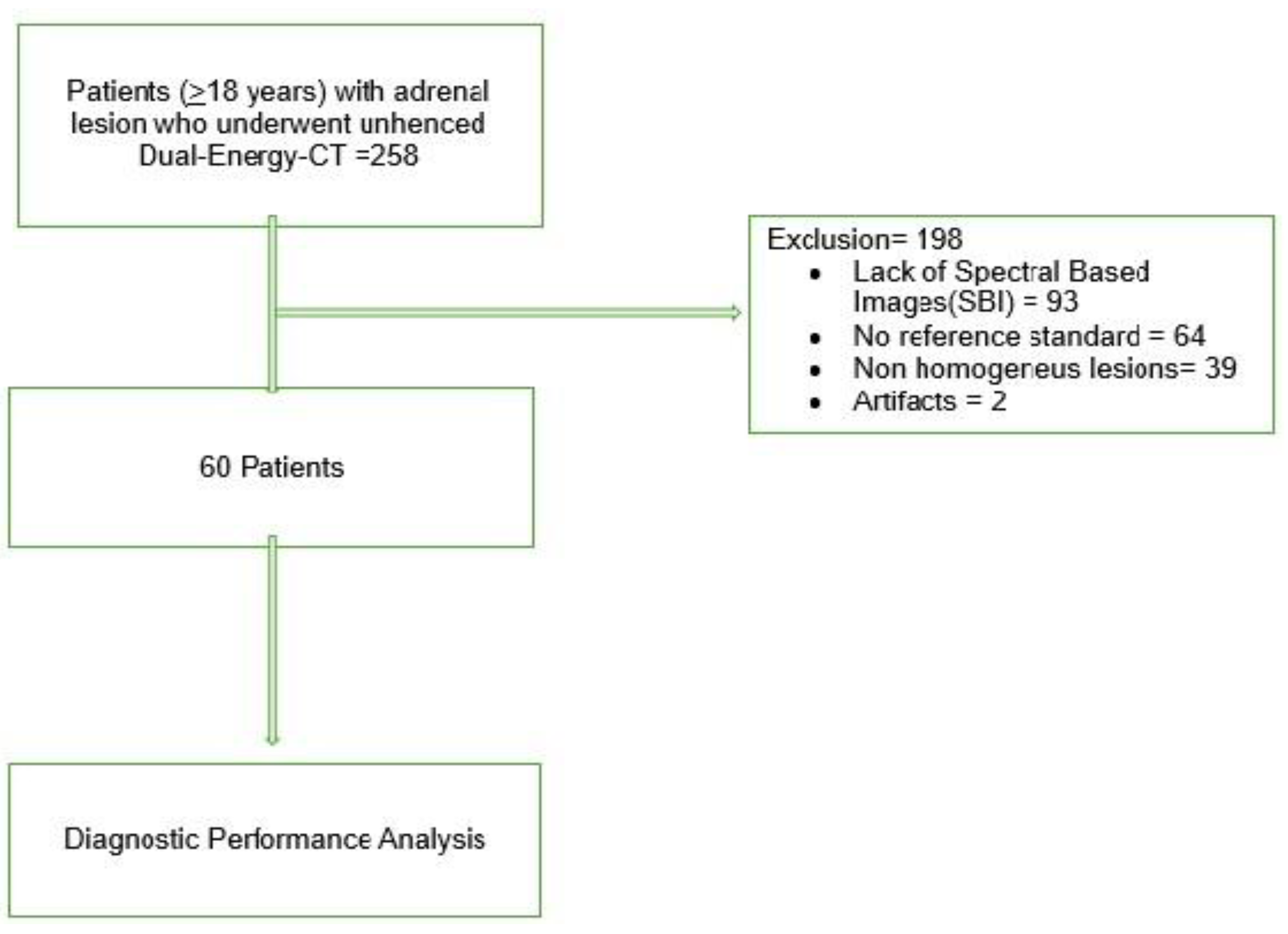
Figure 2.
Result of receiver operating characteristic analysis.
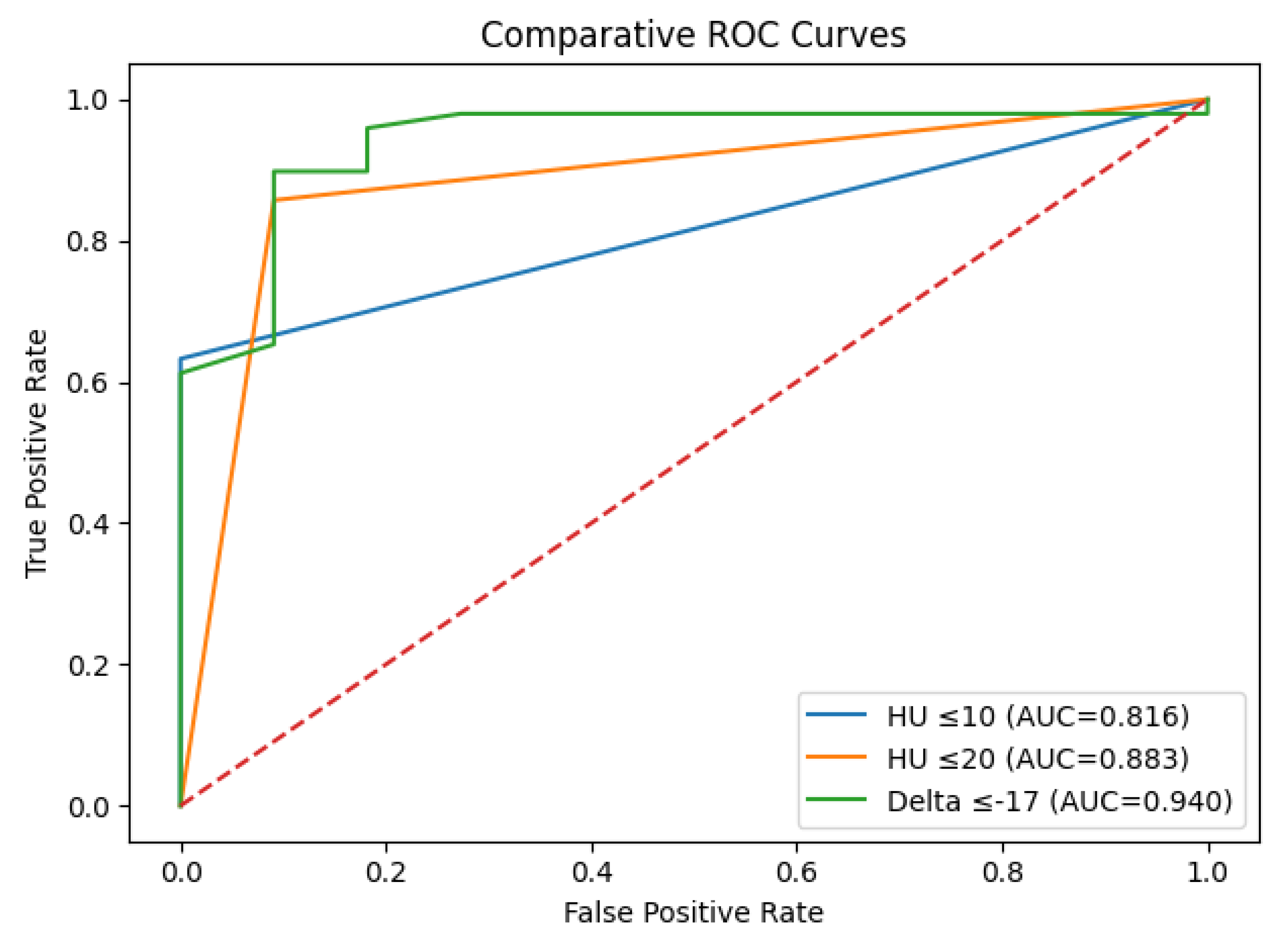
Figure 3.
Axial unenhanced Spectral CT images of a) Lipid-poor adenoma; b) Metastasis from lung cancer; c) pheochromocytoma. Lesion a shows decrease attenuation at 40 keV with Δ40 -140 keV of – 38,6 HU. Lesions b and c show no significant attenuation differences between 40 keV and 140 keV.
Figure 3.
Axial unenhanced Spectral CT images of a) Lipid-poor adenoma; b) Metastasis from lung cancer; c) pheochromocytoma. Lesion a shows decrease attenuation at 40 keV with Δ40 -140 keV of – 38,6 HU. Lesions b and c show no significant attenuation differences between 40 keV and 140 keV.
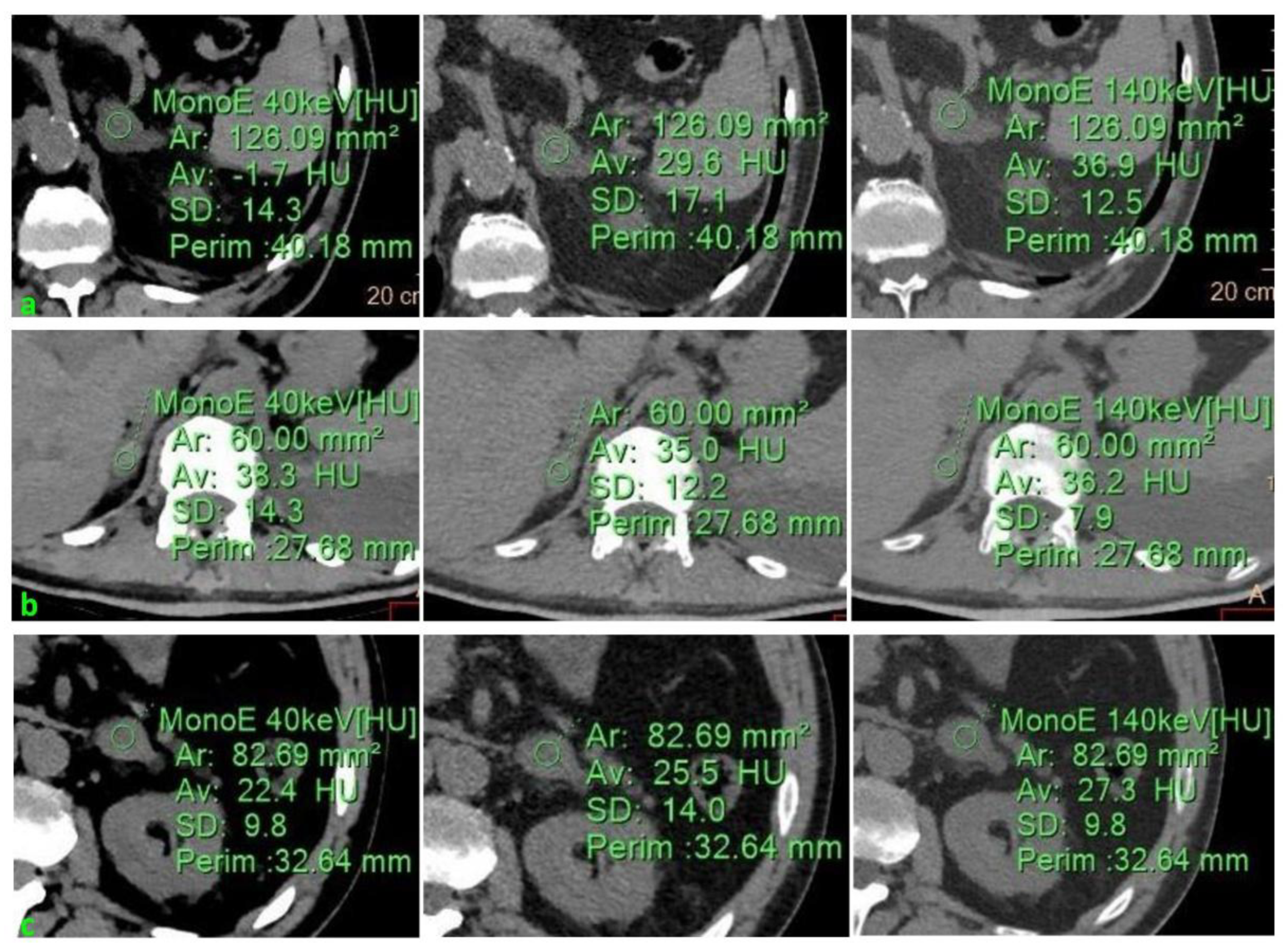
Figure 4.
The attenuation curves reflect the behavior of the same lesions of Figure 3 at different energy levels (keV). The lesion a (lipid-poor adenoma) has a deflecting curve while the lesions b (adrenal metastases) and c (pheochromocytoma) have a straight curve.
Figure 4.
The attenuation curves reflect the behavior of the same lesions of Figure 3 at different energy levels (keV). The lesion a (lipid-poor adenoma) has a deflecting curve while the lesions b (adrenal metastases) and c (pheochromocytoma) have a straight curve.
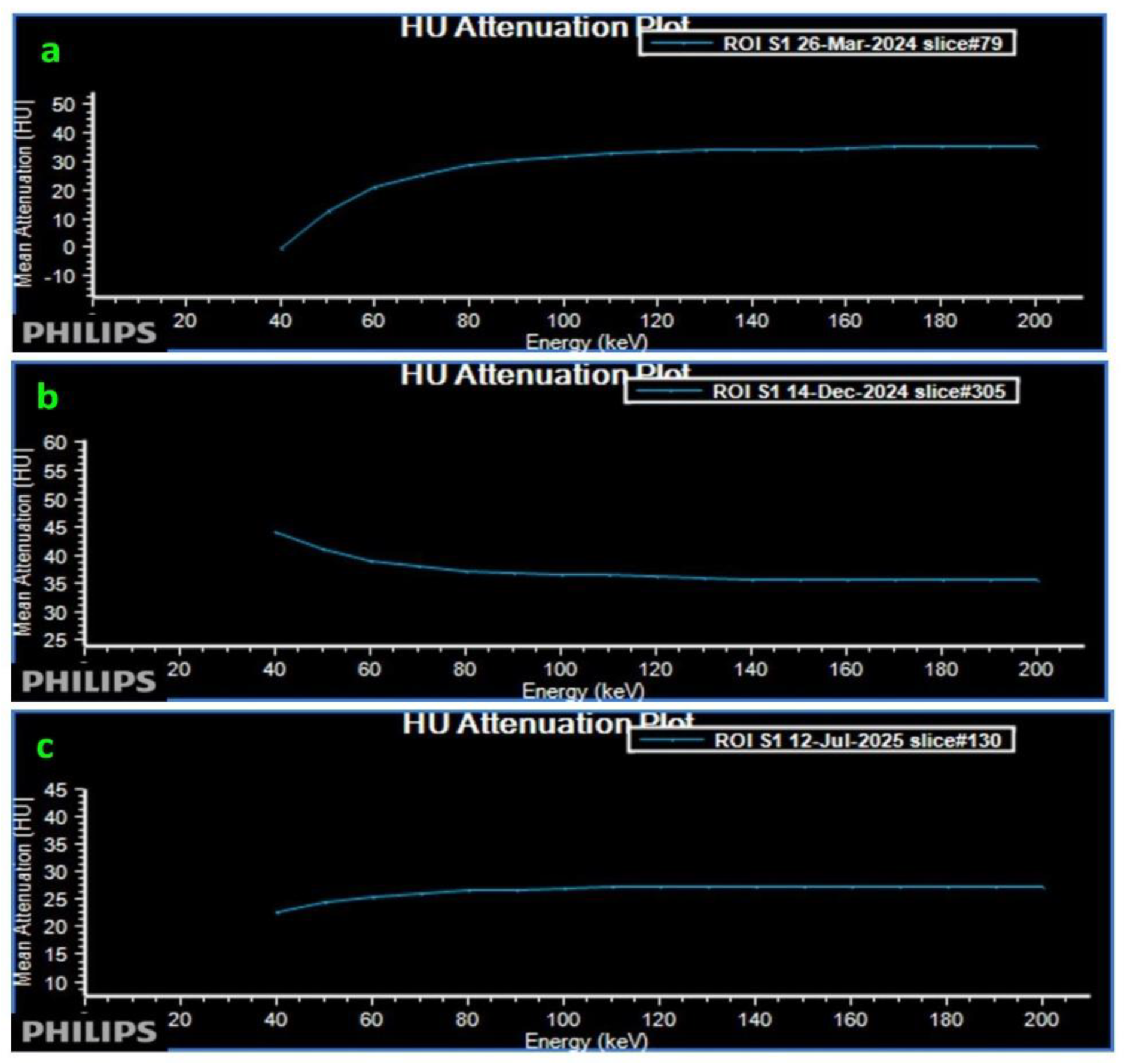
Figure 5.
The box plot compares the distribution of three continuous radiological parameters between benign and malignant adrenal lesions.
Figure 5.
The box plot compares the distribution of three continuous radiological parameters between benign and malignant adrenal lesions.
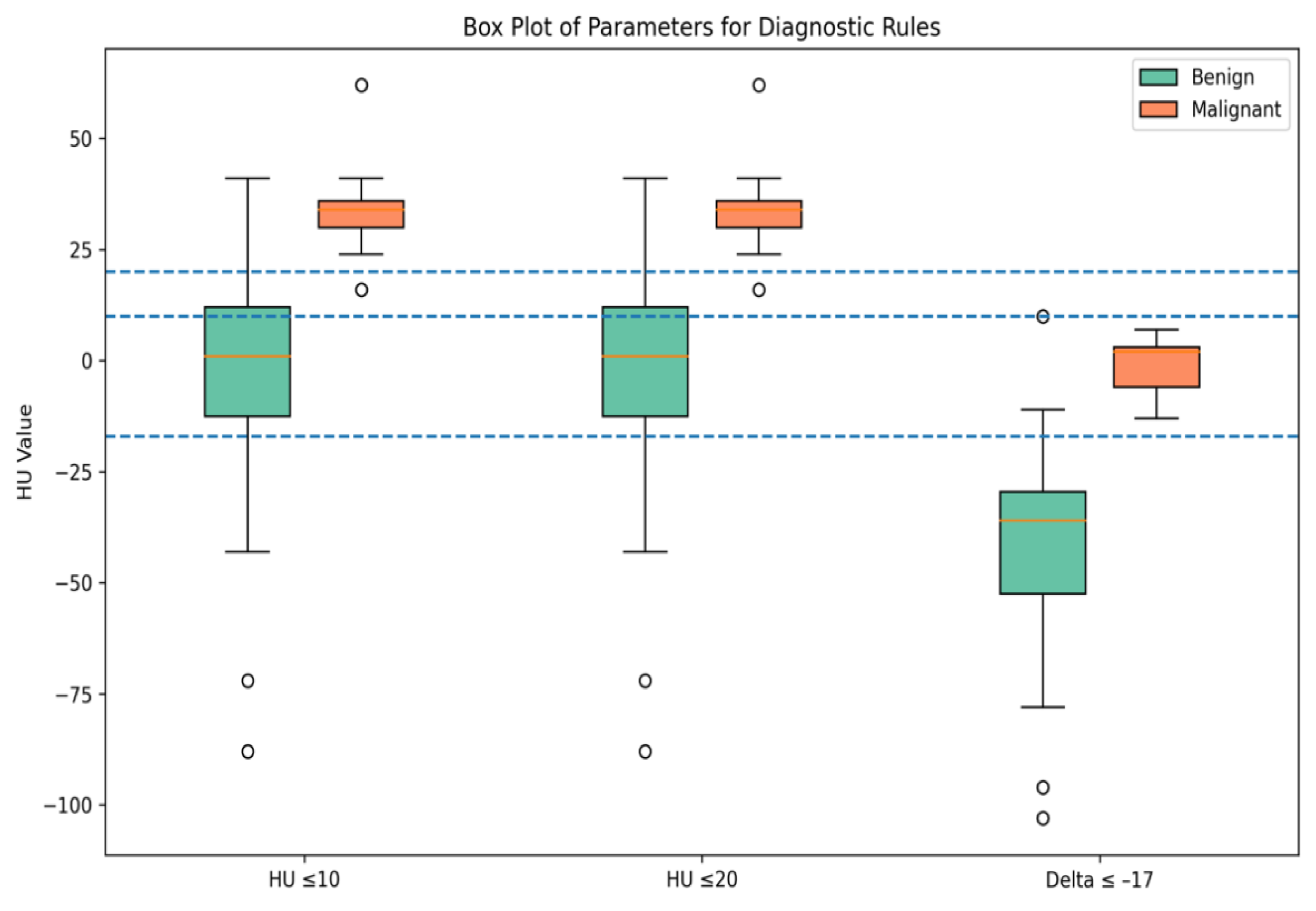
Figure 6.
Bar plot of sensitivity, specificity, accuracy, PPV, and NPV for each diagnostic rule. The spectral attenuation difference (Δ40–140 keV ≤ −17 HU) showed the best overall diagnostic performance.
Figure 6.
Bar plot of sensitivity, specificity, accuracy, PPV, and NPV for each diagnostic rule. The spectral attenuation difference (Δ40–140 keV ≤ −17 HU) showed the best overall diagnostic performance.
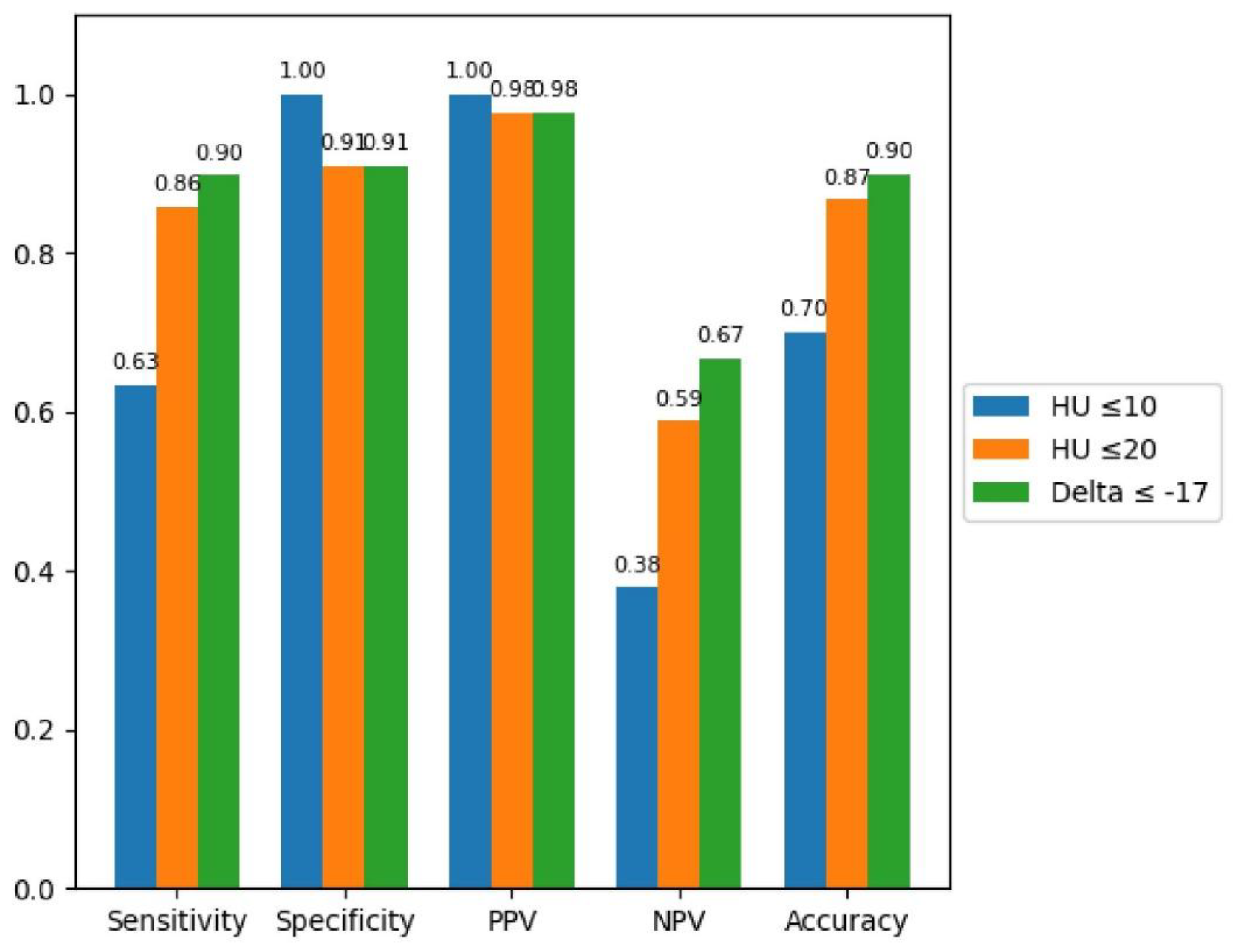

Table 1.
Caption.
 |
Disclaimer/Publisher’s Note: The statements, opinions and data contained in all publications are solely those of the individual author(s) and contributor(s) and not of MDPI and/or the editor(s). MDPI and/or the editor(s) disclaim responsibility for any injury to people or property resulting from any ideas, methods, instructions or products referred to in the content. |
© 2026 by the authors. Licensee MDPI, Basel, Switzerland. This article is an open access article distributed under the terms and conditions of the Creative Commons Attribution (CC BY) license (http://creativecommons.org/licenses/by/4.0/).
Copyright: This open access article is published under a Creative Commons CC BY 4.0 license, which permit the free download, distribution, and reuse, provided that the author and preprint are cited in any reuse.


