
Submitted:
03 April 2026
Posted:
08 April 2026
You are already at the latest version
Abstract
From the mid-nineteenth to the early twentieth century, both Great Britain and the United States implemented large-scale child-emigration schemes aimed at relocating so-called «surplus» children—impoverished but considered «of good stock»—from major urban centres to rural households overseas or in the American interior. These programmes emerged from a shared diagnosis: industrial and agricultural economies in metropolitan areas were allegedly unable to absorb growing populations of poor children, who were framed as both a social burden and a latent threat to urban order. Emigration was thus promoted as a form of social reform—an intervention that would simultaneously relieve urban poverty and overcrowding while promising the children a healthier, morally improving environment on the farm.Central to this policy logic was the belief that agricultural labour and rural domesticity would function as vehicles of knowledge acquisition, moral rehabilitation, and civic formation. By learning farm work and rural norms, the children were expected to develop the dispositions necessary for productive adulthood and responsible citizenship, thereby securing redemption from an otherwise bleak urban future. Yet the historical record complicates this narrative of benevolent rescue. Although some children undoubtedly escaped severe deprivation, many migrant youths struggled to adapt to rural life, faced abuse, exploitation or isolation, and carried the consequences of these ruptures into adulthood. Rather than straightforward instruments of uplift, these schemes often reproduced existing inequalities under the guise of paternalistic reform.
Keywords:
empire migration
; orphan train
; history of knowledge
; farm school
; foster care
1. Introduction
Between the end of the nineteenth century and the beginning of the twentieth, Britain and the United States were transformed by rapid industrialisation and urbanization, leading to the unprecedented growth of large, impersonal metropoles. These processes reshaped everyday life, introducing new rhythms of production, consumption and habitation that differed profoundly from those of only a century and a half earlier. Yet alongside material progress, they also generated new forms of hardship and inequality (Bayly 2004, 170).
Across both countries, public attention increasingly turned to the living and working conditions of the industrial wage-earning classes. Social investigations—systematic inquiries into the extent and causes of poverty—became authoritative tools through which reformers sought to understand the social consequences of industrial modernity (Lacey and Furner 1993, 12).
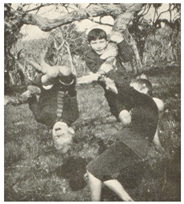
“New Arrivals Changing Their Perspective”1
In England, investigators revealed extensive poverty despite the nation’s exceptional wealth. At the turn of the twentieth century, Britain possessed the highest per-capita income in Europe, yet the poorest strata of Victorian society continued to experience acute deprivation and insecurity (Gazeley 2003, 13). Industrial fortunes tended to reinforce, rather than dismantle, long-standing social hierarchies (Bayly 2004, 171).
Although conditions varied from region to region, family poverty remained widespread. Studies undertaken between 1899 and 1937 across multiple English towns consistently demonstrated the persistence of hardship (see Table 1) (Gazeley 2003, 67).
These investigations—such as Arthur Lyon Bowley’s2 (1869 – 1957) study of Warrington, Northampton, Stanley, Reading and Bolton and Rowntree’s study of York—established methodological and moral precedents that reverberated beyond Britain.
Both Bowley and Benjamin Seebohm Rowntree (1836 – 1925 )3 showed that before the First World War, poverty was mainly caused by low wages relative to the size of the family or the death or absence of the principal wage earner.
After the war, the main reason was unemployment.(please see Table 2) (Gazeley 2003, 79–94).
Children were especially vulnerable, their health, education, and prospects often shaped by the precarious circumstances of their families (Gazeley 2003, 13).
In the United States, the emergence of Progressivism (1890s–1920s) an expanding national awareness of the need for political and economic reform, marked by a newly empathetic engagement with the urban condition—embracing labor rights, social welfare, municipal reform, and the protection of consumers—while exhibiting a more nuanced understanding of the intricate dynamics shaping modern social life (Hofstadter 1955, 50). Progressive intellectuals embraced a vision of a cooperative social order, shaped both by religious and intellectual traditions and by the face-to-face communal values of their small-town origins, even as they came of age in an increasingly urban and industrial society (Quandt 1970, 3). A prominent feature of Progressivism was a “search for truth” to discover the living conditions of the poor based on scientific observation and factual knowledge took place.4 The New York Tenement-House Commission of 1900 exposed the dangers of overcrowded tenements where «the great mass of respectable working men and their families lived», documenting deficiencies in ventilation, sanitation, lighting, and safety (Bremner 1992, 150). Subsequent reforms aimed to remedy these problems. In 1905, leading figures including Jane Addams (1860 – 1935)5 and Jacob Riis (1849 - 1914)6 helped establish the Charities Publication Committee, which funded the landmark Pittsburgh Survey of 1907–1908.As the first comprehensive investigation of a modern industrial community in the United States, the survey revealed long working hours, unsafe industrial environments, political corruption, environmental pollution, and persistent illness (Greenwald and Anderson 1996, 10–11). Its searing depiction of child labour as brutal and exploitative intensified national debates about the conditions under which children worked and lived (Greenwald and Anderson 1996, 93).
It was within this context that new proposals emerged to address poverty, social dislocation, and the perceived moral dangers of industrial life as well as the condition of impoverished urban childrenIn consequence, from the mid- to late nineteenth century onwards, a dense ecology of organised charities emerged in Britain and the United States. Among the most influential was the Charity Organisation Movement, which sought to rationalise relief, coordinate philanthropic activity, and eliminate poverty through investigation. (Woodroofe 1993). In New York, the Charity Organisation Society of the City of New York, founded in 1882, articulated these aims explicitly, presenting poverty as a social problem to be managed through organised intervention rather than indiscriminate aid (Brandt 1907).
Within the broader landscape of organised charity, within particular reform circles, attention turned to children through schemes that framed re-education and removal from urban environments as prerequisites for social regeneration (Dekker 2001, 73; Hawes, Joseph M. 1971, 4). From the late nineteenth century onwards, large-scale resettlement initiatives took shape in both Britain and the United States, seeking to relocate children deemed «surplus» to the requirements of industrial economies to rural settings where, it was believed, they would benefit from healthier surroundings and training suited to agricultural life.
Between 1869 and 1967, tens of thousands of British children were permanently emigrated to settler colonies within the Empire (Boucher 2014, 3). Their relocation was supported and partly financed by the British government, but the implementation of the schemes was largely entrusted to private organizations (Boucher 2014, 3). Among the most prominent was the Child Emigration Society (CES), founded by Kingsley Fairbridge.
In the United States, a parallel development took place between 1854 and 1929 with the so-called «orphan trains» (Holt 1992, 4). From overcrowded metropolises such as New York, children were transported to rural communities, mainly across the Midwest and West. The scheme was orchestrated primarily private child emigration groups such as the Children’s Aid Society (CAS), founded in 1853 by Charles Loring Brace (1826-1890), whose work was later on continued by his son Charles Loring Brace (1855–1938). As in Britain, the philanthropic initiative was later reinforced by public support: from 1912 onwards, the CAS began to receive regular payments from the city of New York for placements and supervision.
Although there is no evidence that Brace and Kingsley Fairbridge ever met, they operated within the same transnational reform milieu linking European and American child-saving initiatives from the mid-nineteenth century onwards. From the 1830s and 1840s, institutions such as the Rauhe Haus (founded 1833)(Nelson 1980, 22–35) and the Mettray Agricultural Colony (founded 1839) promoted re-education through rural isolation, influencing reformers on both sides of the Atlantic (Hawes, Joseph M. 1971, 80). Brace encountered these models during his European travels in 1850 (Brace 1872, 403), while British reformers including Annie MacPherson and Maria Rye inspected the midwestern part of Brace’s work in 1868, by 1870 both were placing children in Canada (Parr 1994, 45). Fairbridge entered this reform ecology in the early twentieth century, drawing on its established assumptions about child rescue, rural training, and social regeneration, while aligning them with contemporary imperial and settler-colonial agendas (Dekker 2001, 133).Central to these reform projects was the acquisition and transfer of knowledge. Agricultural skills, basic education, and civic instruction were prioritized as the foundation for transforming impoverished children into productive farmers and citizens. Knowledge was defined broadly, encompassing practical, social and tacit forms of expertise. Importantly, according to Lässig, «it also encompasses forms of knowledge that influence an individual’s or group’s values and the ways they align and live their lives» (Lässig 2016, 43). Knowledge acquired through the emigration process itself—through work, training, and socialization—was valued more highly than the knowledge that children brought with them from their lives before departure.
Brace and Fairbridge each devised educational concepts aimed at transmitting this knowledge in structured environments.
Although their schemes operated in different national contexts, both reveal a striking convergence of social policy, in which «emigration plus education» was imagined as a solution to urban poverty and juvenile destitution 7.
This article will examine how the transfer, acquisition and dissemination of knowledge thus became an essential instrument of the reformer's social reform aims.
2. The Problem and the Solution: The Early Years of Brace and Fairbridge
Both Brace and Fairbridge encountered child poverty as a pressing social problem while undertaking formative journeys in early adulthood. Having grown up in protected middle-class households their first experiences of London and New York exposed them to conditions of severe deprivation. For both of them, the journey marked a turning point that propelled their lifelong efforts to “improve” the situation of impoverished children—efforts framed as benevolent.
Born in 1885 in Rhodesia, where he grew up as a white settler, Fairbridge was deeply marked by his first voyage to England in 1903, where he encountered the poverty of London’s East End and the sight of destitute children condemned to a life in orphanages or workhouses (Fairbridge, Kingsley 1909, 10).
Fairbridge was struck and appalled by what he encountered in London:
Instead of stately processions of dignified citizens, conscious of the responsibilities of the Empire, I found throngs of smallish, active, young-looking people, shouting, running hither and thither, vending papers and posies and penny toys. […] In a vast community like Great Britain, thousands of children are born every year who, by the death of one – or perhaps both – of their parents, are left homeless and destitute (Fairbridge 1909, 144).
Brace, born in 1829 in rural Connecticut, when travelling to New York in 1848 (Nelson 1980, 122), expressed a similar shock in correspondence with his sister:
You have no idea what an immense vat of misery and crime and filth much of this great city is! I realize it more and more. Think of ten thousand children growing up almost sure to be prostitutes and rogues! (Brace, Emma, 1894, 84)
For both reformers, a key cause of child poverty was the fact that the children only acquired tacit forms of knowledge and a street-derived habitus and «wits» in urban environments (Lässig 2016, 37) that can be understood as a form of knowledge that influences a group’s values and the ways they align and live their lives (Burke 2016, 43).
This so-called «street» knowledge, developed through everyday survival strategies (Burke 2016, 43) in the space of the city (Lässig 2016, 43), was devalued and deligitimised by the reformers perceived as illegitimate and detrimental to the future of the children, as well as to the stability of society.
Brace deplored that many children grew up without, in his opinion, proper training:
Among the various rounds I was in the habit of making in the poorest quarters [in New York], was one through the Italian quarter of the « Five Points». Owing to their [the children’s] ignorance of our language and their street-trades, they never attended school, and seldom any religious service, and seemed growing up only for these wretched occupations. [Leading to] one of our great difficulties – and a long - standing one – is with the large boys of the city […] We know not what to do with them (Brace, 1872, 238).
The idea of «street wits» was a recurring theme for the CES, which voiced similar concerns in its annual reports. One example was Tom, a fifteen-year-old who, despite the sharpness he had developed on the streets, lacked formal education and work experience. To him, employment was not «a simple matter of exchange — wages for work» but «a street encounter, a trial of wits», and he abandoned the job the CES had arranged for him soon after starting.8
The phrase «street wits» encapsulated an entire epistemic hierarchy that denied recognition to the cultural resources of working-class families. According to Brace and Fairbridge, an important reason why the children were only trained in the «street wits» was the network of knowledge in which they grew up, especially that of the city environment and their parents, a social class to which both Brace and Fairbridge consciously denied legitimacy to train and bring up their own children. Both the New York CAS and the British CES deplored the large number of adversities that existed among the city populations, such as the death of parents, alcohol abuse, and the abandonment of children. Children growing up in such an environment were subject to neglect, bad education, and the evil example set by their immediate social circle. They carried «the shadow of a family handicap» and were exposed to cruelty, «poverty, neglect and anti-social influences» (Brace 1872, 28).
This rhetoric was not incidental: it provided the moral and intellectual scaffolding for programmes that displaced children, geographically and culturally, from their environments.
As well as the family environment, the educational space of institutions also failed to deliver an adequate solution, as they did not provide these children with the right form of practical knowledge they would require later in life, and instead taught them only academic knowledge. Fairbridge criticized the fact that «We leave these little orphans in the workhouse, we do not give them a chance. We do not give education a chance» (Fairbridge 1974, 146). The important years when the children could be taught to do almost anything were wasted, as the children «go to school, they learn their reading, writing and arithmetic. […] They hardly ever put their noses outside the workhouse walls»9. Brace shared similar sentiments - through asylum life the children would not get accustomed to the everyday work that had to be carried out in a «poor mans» cottage (Brace 1872, 225).
In these diagnoses, the «street wits», which were equated with ignorance, represented not resilience but a social danger, an embryonic «dangerous class» of untrained youth threatening the nation’s property, morals, and political order (Brace 1872, 2). Both men were thus determined that the knowledge of «street wits» should be suppressed and made to disappear, for—as the CAS warned:
The class of a large city most dangerous to its roperty, its morals and its political life,
are the ignorant, destitute, untrained, and abandoned youth, the outcast street-children grown up to be voters, to be the implements of demagogues, the “feeders” of the criminals, and the sources of domestic outbreaks and violations of law […]. This “dangerous class” has not begun to show itself, as it will in eight or ten years, when these boys and girls are matured.
They will vote— they will have the same rights as we ourselves, though they have grown up ignorant of moral principle, as any savage or Indian. They will poison society (Brace 1872, 2).
The solution advanced by both reformers was the replacement of urban habitus and knowledge with what was deemed a superior form of knowledge, to be acquired through the twin processes of emigration and education. «Emigration plus education» became the social policy through which the CAS and CES sought to secure national stability. As part of their social policies, both Charles Loring Brace and Kingsley Fairbridge elaborated schemes in which migrant children would be removed from the city and reconstituted within agrarian environments. In this framework, the acquisition of agricultural and civic competences overseas was cast as a patriotic service: the CES described child emigration as «an undeniable service upon the State» and a guarantee of its stability. Here, knowledge itself was treated as a tool of social engineering, detached from the children’s prior experience and subordinated to the needs of the nation.
Likewise, Brace agreed that «the cheapest and most efficacious way of dealing with the “Dangerous Classes” of large cities, is […] to prevent their growth». This could be done by bestowing «the influences of education and discipline and religion» upon the young people of the city so that they would «grow up as useful producers and members of society»(Brace 1872, 2).
Brace and Fairbridge’s programmes were rooted in a project of rupture rather than inclusion. Fairbridge insisted that children could become «better men and better women» if transplanted to the Dominions, where «better education, a better training and better opportunities» could be offered.
Children’s lives wasting [in Britain] while the Empire cried aloud for men. There were workhouses full orphanages full - and no farmers. “Farmers – children, farmers – children …” the words ran in my head […]. And then I saw it quite clearly: Train the children to be farmers! Not in England. Teach them their farming in the land where they will farm (Fairbridge 1909, 158).
This dictum reveals not only the practical orientation of his scheme but also its imperial dimension: agricultural training was to take place in the Dominions, binding child migrants to land, labour, and Empire.
This formulation encapsulated his belief that meaningful education required dislocation—a deliberate severing of children from their existing environments so they could be remade for imperial labour. Brace echoed this reasoning, calling for the prevention of the growth of dangerous classes by imposing «the influences of education and discipline and religion» (Brace 1872, 2). For those most impoverished, a «more radical cure is needed than the usual influences of school and church», against the «antithetical lessons» of their parents, prescribing emigration as the only effective cure (Brace 1872, 224).
Distance was integral to this logic. Emigration was not only an educational device but also a means of severing children from the networks of knowledge sustained by their families and urban environments. What emerges, therefore, is not a neutral pedagogical endeavour but an explicit project to displace and erase working-class forms of knowledge in favour of those aligned with British imperial and US national ideals (see p. 10).
3. Knowledge Dissemination at the Farm School and on the American Farm
The ostensible purpose of the emigration projects devised by the two reformers was to disseminate practical knowledge that would enable children to build new lives as farmers—or, in the case of girls, as farmers’ wives—while simultaneously moulding them into loyal, industrious, and morally upright citizens.
Although the institutional frameworks differed10, both the Children’s Aid Society (CAS) in the United States and the Child Emigration Society (CES) in Britain treated farms as privileged sites of socialisation and knowledge transfer. In both cases, knowledge was recoded primarily as «knowing how»: embodied apprenticeship in agricultural labour combined with tacit forms of «citizenship knowledge» (Burke 2016, 15; Lässig 2016, 20).
This reorientation demanded that children’s existing urban knowledge be not merely supplemented but fundamentally overturned. A CES photograph (see picture 1 below) captures this metaphor visually: a newly arrived boy hanging «upside down» from a tree—an image that symbolically inverted his previous ways of knowing and positioned the farm school as the site where new identities would be forged (see title picture).
Fairbridge’s scheme materialised in the creation of the «farm school», first established at Pinjarra, Western Australia, in 1912. Conceived initially as a «College of Agriculture», the farm school was designed to train formerly destitute children in farming while raising them in a quasi-domestic environment (Fairbridge 1974, 159).
After Fairbridge’s death in 1924, the CES, supported by his widow, expanded the system to Canada and Rhodesia. In principle, these schools sought to combine agricultural labour with civic, moral and religious instruction. Children lived in small cottages under the supervision of matrons, 11 worked in orchards, fields, and gardens, and tended animals. In this way, they were expected not merely to acquire the technical rudiments of agriculture but to internalise pride in rural labour and develop an affective bond with the land (Fairbridge 1974, 159). From the earliest stages, the children would thus acquire an in-depth knowledge of local farming (Fairbridge 1974, 159).
Fairbridge insisted that training could only occur on these specially set up farm schools in the Dominions, The farm schools functioned as a network of knowledge: a state teacher who lived on the premises of the farm school was responsible for the education of the children, while Fairbridge himself (at the farm school at Pinjarra) was responsible for their religious education12.
Boys were prepared for the role of «farmers» by rotating fortnightly through tasks including sowing, reaping, tending cattle, and rearing sheep, while girls were prepared to be «farmers’ wives», their instruction restricted to domestic economy, laundry, kitchen work, poultry management, and sewing. Visitors to the farm schools confirmed this stark division. In 1922–23, one observer recorded that «all the girls were in a classroom doing needlework», while «all the boys were together and they did mental addition very well indeed»13.
Once children completed their basic schooling, boys were sent to work as trainees with local farmers in order to «equip themselves» with practical experience, while girls were apprenticed in «the art of household management in the bush»14.
The CAS embedded knowledge dissemination within foster households based on farms across the American countryside. This approach was based on wider ideas of ruralism and the “agrarian myth” which were prevalent in American thought and became part of its nationalist ideology. The agrarian myth cast agriculture and rural life as morally and socially regenerative. At its centre stood the yeoman farmer: a small landowner, believed to embody a moral integrity unattainable in cities, which were portrayed as sites of vice, poverty, and degeneration. Endowed with these civic, moral, and spiritual virtues, the yeoman farmer emerged as the model citizen (Hofstadter 1955, 25).
Brace’s approach, though institutionally distinct from Fairbridge’s, was underpinned by similar assumptions about class, morality, and the redemptive power of rural life. For the CAS, the «plainest farmer’s home» represented «the best of all asylums for the outcast child» (Brace 1872, 237). Farmers were celebrated as embodiments of the ideal American citizen, and their homes were constructed discursively as laboratories of moral regeneration. They were idealised as «our most solid and intelligent class» (Brace 1872, 239), and functioning as foster families where the children were placed after emigration, was entrusted with the task of providing the network of knowledge necessary to socialising children away from the perceived degeneracy of the urban environment. Through daily example, foster parents were expected to «patiently train» their charges, to support their schooling, and in some cases even to assist them through higher education. In this scheme, knowledge was transferred informally, embedded in the rhythms of household and farm life. Formal schooling became an ever more crucial part of the children’s training. Only foster parents living in close proximity to a school (and therefore able to send their children to school) were selected15.
From the first visit of a placing-out agent, foster parents were instructed that children must receive «intelligent care in health, work, play, schooling, companions and moral and religious welfare»16.
Girls learned domestic chores17, childcare18, and sewing; boys worked in wood-cutting, carpentry, and general agricultural labour19, sometimes receiving small plots or livestock of their own20. Here, too, the aim was to embed children in a rural epistemology in which self-reliance, industry, and obedience stood as the key attributes of the ideal American citizen. Formal schooling21, curated reading22, and compulsory Protestant instruction23—monitored through annual agent visits by the CAS24 —further inculcated a normative moral order and distanced children from the cultural repertoires of the urban poor 25.
The two approaches diverged most significantly in their conception of who should mediate the process of knowledge acquisition. Fairbridge envisaged formally appointed mentors—»gentle women and men» who would act as «mentors and guides» (Fairbridge 1974, 146, 158). By contrast, the CAS relied on foster families, who, as Megan Birk has noted, functioned as «providers, protectors and moral discipliners for a class of children who desperately needed such examples to block the influences of poverty and vice» (Birk 2015, 20). Unlike the CES' staff, foster parents received no remuneration, underscoring the extent to which Brace’s model depended on unpaid, ideologically motivated labour.
4. US National and British Imperial Ideals in Action: Citizen Training as Knowledge Acquisition
Across both the Child Emigration Society (CES) and the Children’s Aid Society (CAS), the acquisition of agricultural or domestic knowledge was never merely vocational. Rather, it was embedded in a broader project of citizenship knowledge: a moral, civic, and affective repertoire through which children were expected to internalise the values of the US nation or Empire. The farm became the stage upon which new forms of knowledge could be inculcated and older, urban forms of knowledge systematically erased.
4.1. Citizenship Training at the Fairbridge Farm Schools (CES)
For Fairbridge, the transformative potential of knowledge acquisition was explicitly imperial(Fairbridge 1974, 159).
The Society stated that «the object of the Fairbridge Farm School Society is – to train these children in Fairbridge Farm schools for life and work within the Dominions» 26. Once trained, children would be «safely launched in work and satisfactorily settled in the new country»27, becoming «actual settlers, rooted in the soil and established citizens of the State»28. They would «merge into the life of Australia»29, growing into «efficient God-fearing men and women» who contributed through «their labours and good citizenship… to the wealth of the nation»30.
At the Fairbridge Farm Schools, the curriculum emphasised «the acknowledged duty of individuals towards God and Man; the glory of England; the essential unity of the Empire»31. Such formulations placed citizenship squarely within an imperial epistemology: children were taught to understand themselves as future…
…good serviceable citizens, enjoying life, enriching the Commonwealth by their characters and skilled industry, serving their fellows and in that service serving and pleasing their God (CES, 1928-1929, 7),
whose obligations ran not only to the farm school but to the Dominion and the Empire at large.
The gendered pathways at the farm school produced differentiated forms of citizenship knowledge, naturalising masculine productivity and feminine domesticity as the appropriate epistemic and social horizons of settler life.
4.2. Citizenship Training on the American Farm (CAS)
The CAS articulated a closely parallel knowledge regime. In the United States, the acquisition of farming skills was understood to be inseparable from the acquisition of citizenship itself.
The CAS articulated analogous ambitions to the CES in a national rather than imperial frame.
As in the CES, the farm household functioned as a pedagogical node in which practical knowledge and civic knowledge were mutually constitutive. Annual reports consistently described the aim of the Western Emigration and Placing-Out Department as preparing children for «lives of usefulness» 32, transforming them into «self-respecting well-to-do citizens of the West»33. Through the patient work of foster farmers, children would be «brought up to good citizenship» 34, becoming «producers instead of mere consumers» and ultimately «a blessing instead of a burden»35.
The Society frequently pointed to its former wards—now «substantial citizens in every calling of life»36—as evidence of successful knowledge transfer and social transformation. The «transformation of a street wanderer into a useful farmer’s boy» testified that agrarian training could erase the epistemic traces of urban poverty37 and produce citizens who elevated «the working people in America, especially in the farming communities»38. Indeed, the CAS claimed that 99% of its placed-out children became «good citizens» or achieved distinction39.
In this narrative, citizenship knowledge served a dual ideological purpose: it legitimised the programme as a public benefit and positioned the children as deserving recipients of philanthropic intervention precisely because they had internalised the knowledge that the programme sought to impart.
5. Assessment of the Success of the Knowledge Transfer
The reformers’ expectations for knowledge transfer were consistently evaluated both at the time and in the present day, yet they revealed that the CES’ and CAS' goals were not consistently achieved.
The Fairbridge farm schools were repeatedly investigated from the 1940s onwards (Sherington and Jeffery 1998, 203). Among others, in 1944, Walter J. Garnett, a career British civil servant serving as Official Secretary to the UK High Commissioner in Australia, was appointed to assess the Fairbridge Farm Schools. Though not an educational specialist (Bridge et al. 2010, 1–3), he had longstanding experience in child migration, having arrived in Australia in 1940 as the Children’s Overseas Reception Board representative accompanying evacuated British children (Sherington and Jeffery 1998, 209). His role placed him firmly within imperial administrative structures, and his appointment reflected the predominantly bureaucratic rather than pedagogical character of such inquiries. The review was initiated at the request of the Fairbridge Society in London amid increasing tensions between its headquarters and the Australian farm schools.
Garnett’s report evaluated whether the Fairbridge scheme had effectively transferred and applied the agricultural and domestic skills it aimed to instil. He measured «success» largely in functional terms—whether pupils had «made good»—while acknowledging the vagueness and narrowness of this standard (see Table 3).
Moreover, Garnett attributed much of the unevenness in outcomes not to deficiencies in training but to external conditions that impeded the effective application of knowledge. He pointed to «the unsettling effect upon the children of wartime conditions», the lure of «high wages in industry», and the declining attractiveness of agricultural employment. The broader agricultural economy, rather than the instructional method itself, was therefore held responsible for limiting the practical dissemination of the skills acquired within the schools.
A further difficulty lay in the children’s own inclinations, which limited their receptivity to the forms of knowledge the scheme sought to impart. Garnett noted a «disinclination to stay on the land», observing that where pupils had behaved satisfactorily at school but later proved unsettled in employment, «other reasons must be sought». In Garnett’s analysis, the failure of some pupils to embody the vocational ideals of the Fairbridge model did not primarily signify a deficiency of training, but rather a misalignment between institutional expectations and individual dispositions—a gap that ultimately circumscribed the success of the knowledge transfer the scheme was designed to achieve40.
In 2013, as part of a broader nation-building and secular modernization agenda, the Australian government established the Royal Commission into Institutional Responses to Child Sexual Abuse. This official national truth commission sought to investigate and address historical abuses against children who had grown up in institutional care (Gleeson and Ring 2020; Hirschberg 2025). Among the institutions scrutinized by the Commission were the Fairbridge Farm Schools(Royal Commission into Institutional Responses to Child Sexual Abuse 2017, 34).
The Commission’s final report was unambiguous in its recognition and condemnation of the widespread and systemic sexual abuse that occurred within these institutions, including the Fairbridge Farm Schools (Royal Commission into Institutional Responses to Child Sexual Abuse 2017, 2–5).
In parallel to this public inquiry, in the year 2009, former pupils of the Fairbridge Farm School in Molong, New South Wales, initiated a private class action against the Fairbridge Foundation, the Australian Federal Government and the New South Wales State Government as defendants. In 2015, the class action resulted in a $24 million settlement to be paid out to 150 claimants ($1.6 million per claimant) (Jabour 2015). More recently (2025), a renewed class action has been launched in the NSW Supreme Court, supported by reform to eliminate former limitation periods for civil child abuse claims (Outaway 2025).
Overall, these subsequent institutional inquiries and survivor actions point to a significant divergence between Fairbridge’s stated objectives of a transfer of knowledge and their longer-term effects.
Assessments of the “orphan train” scheme—administered by a range of organisations, among them the CAS—were conducted throughout the period of its operation. These evaluations typically relied on narrow, functional criteria: success was defined largely in terms of whether a child had “made good”, that is, whether they had achieved a stable livelihood and conformed to prevailing expectations of industrious citizenship (Trammell 2009, 4)41. According to the CAS, the success of the placing out system was proven since 99% of those placed out later on became “good citizens” or even achieved distinction42. Overall, there was little criticism at the time, such as when Brace was confronted with allegations at the National Conference of Charities in Madison in August 1882 that some placements had not «made good,» he rebutted the criticism by insisting that the overwhelming majority of children «turned out well» 43.
Yet such assessments illuminate little about the dynamics of knowledge transfer within the placing-out system. The records offer no insight into why particular placements failed, nor whether failures stemmed from deficiencies in the transmission of agricultural, domestic, or civic knowledge.
In the present day, unlike the extensive truth commissions and judicial inquiries that later scrutinised institutional abuse in Commonwealth child migration schemes, the orphan trains have not generated comparable contemporary investigations. The absence of such processes, however, tells us more about the historical status of children’s voices and the selective memorialisation of welfare practices than about the presence or absence of harm.
The movement’s memory has nonetheless been institutionalised, and is commemorated in a nostalgic way, particularly through endeavours such as the National Orphan Train Complex in Kansas, which aims to «instill a sense of pride for Riders and Descendants; engage historians and researchers, heritage visitors, and the general public; and further promote understanding of this nationally significant chapter of cultural and social history». Such «memory work» sustains a public narrative of rescue and opportunity, often at some distance from the more ambivalent, and at times deeply troubling, historical record.
Indeed, the long-term legacy of the orphan trains has become the subject of considerable historiographical debate. Earlier narratives credited this vast relocation project with catalysing major reforms—American adoption law, more professionalised foster care practices, child labour regulation, and the emergence of the modern child welfare movement (Bellingham, n.d.).More recent scholarship has challenged this celebratory interpretation (Trammell 2009, 4).
5. Conclusions
This article has examined the work of the New York Children’s Aid Society (CAS) and the British Child Emigration Society (CES) through the lens of the history of knowledge, tracing how these organisations mobilised, transmitted, and reshaped knowledge in pursuit of social reform. Across both contexts, a remarkable uniformity can be detected in reformers’ discourses (Bayly 2004, 4). Despite national differences in implementation, the emigration schemes shared a common epistemic project: to overwrite the cultural resources of urban working-class families and replace them with forms of agricultural, moral, and civic knowledge deemed more compatible with national stability and imperial expansion.
The CAS and CES each devised educational practices—whether through family placements or farm schools—that organised, hierarchised, and legitimised particular forms of knowledge. Their programmes rested on a shared conviction that «emigration plus education» could transform impoverished children into disciplined, productive adult citizens. This transatlantic discourse of social engineering reimagined the countryside as a privileged site of knowledge production, where «street wits» could be unlearned and agrarian virtue cultivated. In both the United States and the British Empire, rural space was idealised as a crucible of moral reformation and as the foundation for creating loyal, industrious settlers or citizens.
Gendered divisions of labour further structured the acquisition of knowledge, binding children into roles of production and reproduction that aligned with the economic and ideological needs of (settler colonial) society. Benevolent rhetoric about freedom, naturalness, and usefulness masked the coercive dimensions of the schemes, which displaced children not only geographically but epistemically—stripping away forms of working-class knowledge while elevating Protestant morality, domestic discipline, and agricultural labour as the hallmarks of good citizenship. In this sense, both organisations acted as knowledge regimes that produced, curated, and enforced new identities for the children in their care.
Contemporaneous evaluations of these schemes already revealed serious flaws, challenging institutional claims about success and exposing the limits of the reformers’ knowledge framework. Yet the longer-term historiographical trajectories of the two movements diverge markedly. In the United States, the legacy of the orphan trains is often inflected with nostalgia, in part because some scholars have cast the programme as a precursor to modern foster care.
In the same vein, the public commemorates the orphan trains the National Orphan Train Complex, The museum’s collections, exhibitions, programming, and research will instill a sense of pride for Riders and Descendants; engage historians and researchers, heritage visitors, and the general public; and further promote understanding of this nationally significant chapter of cultural and social history. In Britain and across the former White Dominions, by contrast, public memory has been shaped more strongly by testimonies of trauma, inquiries into institutional abuse, and governmental apologies. These different legacies reflect not only distinct historical experiences but also divergent processes of knowledge-making: what was remembered, what was forgotten, and who was authorised to speak.
Seen from a history-of-knowledge perspective, the CAS and CES schemes illuminate how child migration functioned as an epistemic enterprise—one that sought to engineer citizens by managing what children were permitted to know, what they were required to forget, and who they were allowed to become. Their enduring legacies, and the historiographical debates surrounding them, demonstrate how regimes of knowledge are continually renegotiated over time. What was once celebrated as humane reform is now understood as a coercive project of social and demographic engineering. The history of child emigration thus provides a powerful example of how knowledge is produced, legitimised, contested, and transformed across generation.
References
- Bayly, C. A. 2004. The Birth of the Modern World, 1780-1914: Global Connections and Comparisons. The Blackwell History of the World. Blackwell Pub.
- Bellingham, Bruce. “The ‘Unspeakable Blessing’: Street Children, Reform Rhetoric, and Misery in Early Industrial Capitalism.”. Politics & Society n.d., 12(3), 303–31. [Google Scholar]
- Birk, Megan. Fostering on the Farm: Child Placement in the Rural Midwest; University of Illinois Press, 2015. [Google Scholar]
- Boucher, Ellen. Empire’s Children: Child Emigration, Welfare, and the Decline of the British World 1869-1967; Cambridge University Press, 2014. [Google Scholar]
- Brace; Loring, Charles. The Dangerous Classes of New York; New York, 1872. [Google Scholar]
- Brandt, Lilian. The Charity Organization Society of the City of New York, 1882-1907 : History: Account of Present Activities.; New York City United Charities, 1907. [Google Scholar]
- Bremner, Robert H. 1992. The Discovery of Poverty in the United States. Philanthropy and Society. Transaction Publishers.
- Briggs, Asa. 1974. Social Thought and Social Action. A Study of the Work of Seebohm Rowntree 1871-1954. Reprint. Greenwood Pr.
- Burke, Peter. What Is the History of Knowledge? What Is History; Polity, 2016. [Google Scholar]
- Dale, Andrew I.; Kotz, Samuel. Arthur L Bowley: A Pioneer in Modern Statistics and Economics; World Scientific, 2011. [Google Scholar]
- Dekker, Jeroen J. H. The Will to Change the Child: Re-Education Homes for Children at Risk in Nineteenth Century Western Europe; Peter Lang, 2001. [Google Scholar]
- Fairbridge, Kingsley. Veld Verse and Other Lines; London, 1909. [Google Scholar]
- Fairbridge; Ogilvie, Kingsley. Kingsley Fairbridge: His Life and Verse. Part I; Books of Rhodesia, 1974. [Google Scholar]
- Gazeley, Ian. Poverty in Britain, 1900 - 1965. Social History in Perspective; Palgrave Macmillan, 2003. [Google Scholar]
- Gleeson, Kate; Ring, Sinéad. Confronting the Past and Changing the Future? Public Inquiries into Institutional Child Abuse, Ireland and Australia. Griffith Law Review 2020, 29(1), 109–33. [Google Scholar] [CrossRef]
- Greenwald; Weiner, Maurine; Anderson, Margo J. (Eds.) Pittsburgh Surveyed: Social Science and Social Reform in the Early Twentieth Century; University of Pittsburgh Press, 1996. [Google Scholar]
- Hawes, Joseph M. Children in Urban Society - Juvenile Delinquency in Nineteenth-Century America; Oxford Univ. Press, 1971. [Google Scholar]
- Hirschberg, Mairena. Comparing Truth Regimes and Discursive Practices in State-Led Inquiries into Cases of Compulsory Social Measures in Switzerland and Australia. Scottish Journal of Residential Child Care 2025, 24(1). [Google Scholar] [CrossRef]
- Hofstadter, Richard. The Age of Reform: From Bryan to F.D.R.; Vintage Books, 1955; Available online: http://search.ebscohost.com/login.aspx?direct=true&scope=site&db=nlebk&db=nlabk&AN=732946.
- Holt, Marilyn Irvin. The Orphan Trains: Placing out in America; University of Nebraska Press, 1992. [Google Scholar]
- Jabour, Bridie. Fairbridge Farm Students Receive Record $24m Payout for ‘sickening’ Child Abuse. In The Guardian; 2015. [Google Scholar]
- Lacey, Michael James, and Mary O. Furner, eds. 1993. The State and Social Investigation in Britain and the United States. Woodrow Wilson Center Series. Woodrow Wilson Center Press ; Cambridge University Press.
- Lässig, Simone. 2016. The History of Knowledge and the Expansion of the Historical Research Agenda. Bulletin, no. Issue 59.
- Morabito, Vince; Ekstein, Jarrah. Class Actions Filed for the Benefit of Vulnerable Persons—An Australian Study. Civil Justice Quarterly 2016, 35(1). [Google Scholar]
- Nelson, Kristine. “The Best Asylum: Charles Loring Brace and Foster Family Care.”; 1980. [Google Scholar]
- Outaway, Lani. NSW’s Fairbridge Farm School Child Abuse Survivors Launch Fresh Class Action. 20 May 2025. Available online: https://www.abc.net.au/news/2025-05-20/fairbridge-farm-school-abuse-survivors-launch-class-action-nsw/105313220.
- Parr, Joy. Labouring Children: British Immigrant Apprentices to Canada, 1869-1924; University of Toronto Press, 1994. [Google Scholar]
- Pascal, Janet B. Jacob Riis, 1st ed.; Oxford University Press, 2005. [Google Scholar]
- Quandt, Jean B. From the Small Town to the Great Community - The Social Thought of Progressive Intellectuals; Rutgers University Press, 1970. [Google Scholar]
- Royal Commission into Institutional Responses to Child Sexual Abuse. Final Report - Historical Residential Institutions. Royal Commission into Institutional Responses to Child Sexual Abuse. 2017. Available online: https://www.childabuseroyalcommission.gov.au/final-report.
- Sherington, Geoffrey; Jeffery, Chris. 1998. Fairbridge: Empire and Child Migration. Woburn Education Series. Woburn Press.
- Shields, Patricia M., Maurice Hamington, and Joseph Soeters, eds. 2023. The Oxford Handbook of Jane Addams. Oxford Handbooks Series. Oxford University Press.
- “Thompson Island Collection, 1814-1990,.” n.d. University Archives and Special Collections, Joseph P. Healey Library, University of Massachusetts Boston.
- Trammell, Rebecca. Orphan Train Myths and Legal Reality. The Modern American 2009, 3–13. [Google Scholar]
- Woodroofe, Kathleen. From Charity to Social Work in England and the United States; UMI Out-of-Print Books on Demand, 1993. [Google Scholar]
- Archival Sources.
- «Thompson Island Collection, 1814-1990,”, University Archives and Special Collections, Joseph P. Healey Library, University of Massachusetts Boston.).
- University of Liverpool Special Collections and Archive (ULSCA).
- Child Emigration (Fairbridge) Society Archives.
- New-York Historical Society.
- Collection of the New York Children’s Aid Society (N-YHS).
| 1 | CES, 20th Annual Report, 1928-1929, p.14, D296/D1/1/1, ULSCA. |
| 2 | Bowley maintained a sustained engagement with both social and official statistics, contributing significantly to their institutional development through his teaching at the London School of Economics. Alongside his academic work, he was periodically invited to advise governmental bodies, including formal commissions and public inquiries (Dale and Kotz 2011, 18). |
| 3 | Benjamin Seebohm Rowntree was a prominent British social investigator whose empirical surveys played a central role in shaping modern analyses of poverty. His study Poverty: A Study of Town Life (1901), based on systematic household surveys in York, highlighted the importance of economic and structural factors in explaining poverty. His work overlapped with the Charity Organisation Movement in its emphasis on systematic investigation (Briggs 1974). |
| 4 | (Bremner 1992, 140) |
| 5 | Jane Addams was a central figure in Progressive-era social reform, best known as co-founder of Hull House in Chicago and a pioneer of the settlement house movement. She engaged with the Charity Organization Movement (Shields et al. 2023) . |
| 6 | Jacob Riis was an influential investigative journalist and social reformer best known for exposing the living conditions of the urban poor in late-nineteenth-century New York. Through works such as How the Other Half Lives (1890), he used journalism and photography as instruments of social reform, closely aligned with the Charity Organization Movement. Riis moved within the same Progressive reform networks as Jane Addams (Pascal 2005). |
| 7 | CES, 17th Annual Report, 1925-1926, p.16, D296/D1/1/1, ULSCA. |
| 8 | Child Emigration Society , 27th Annual Report, 1935-1936, p.4, D296/D1/1/1, University of Liverpool, Special Collections and Archives. |
| 9 | K.Fairbridge, «Child Immigration”,1920, D296/A2/16, ULSCA. |
| 10 | It is important to note that British philanthropic societies for example the Salvation Army also sent British children to foster families on Canadian farms. Likewise, farm schools in the American countryside for American city children existed (for example the Boston Asylum and Farm School for Indigent Boys)( Thompson Island Collection, 1814-1990. University Archives and Special Collections, Joseph P. Healey Library, University of Massachusetts, Boston.) The CES was one among several voluntary societies involved in child migration which ran a farm school system. (Another farm school scheme, similar to the one run by the CES, was, for example, Barnardo’s farm training school at Mowbray Park in Picton in 1929. |
| 11 | 28th Annual Report, 1936-1937, D296/D1/2/8, p.14, ULSCA |
| 12 | Hon. Sir Arthur Lawley, "From Slums to Sunshine" CES, 14th Annual Report, 1922-1923, p.8, D296/D1/2/8, p.5, ULSCA. |
| 13 | CES, 14th Annual Report, 1922-1923, 1922/1923,D296/D1/2/8, p.17, ULSCA. |
| 14 | CES, 25th Annual Report, 1933-1934, p.25, d296/D1/1/1, ULSCA. |
| 15 | CAS, Sub-Subseries XIII.5.B - Duplicate Prints and Tintypes from Case Files, Box 987, ca. 1905-1945, N-YHS |
| 16 | Children’s Aid Society, Sub-Subseries XIII.5.B - Duplicate Prints and Tintypes from Case Files, Box 987, ca. 1905-1945, New-York Historical Society. |
| 17 | CAS, Sub-Subseries XI.4.B, Record Book 40, 1905, N-YHS. |
| 18 | CAS, Sub-Subseries XI.4.B, Record Book 37, 1902-1904, N-YHS. |
| 19 | CAS, Sub-Subseries XI.4.B, Record Book 460, 1914-1915, N-YHS. |
| 20 | CAS, Sub-Subseries XI.3, Case Files, 4237, N-YHS. CAS, Sub-Subseries XI.4.B, Record Book 45, 1908, N-YHS. |
| 21 | CAS, Sub-Subseries XI.4.B, Record Book 37, 1902-1904, N-YHS; CAS, Sub-Subseries XI.4.B, Record Book 42, 1906-7, N-YHS; CAS, Sub-Subseries XI.4.B, Record Book 43, 1907, N-YHS; CAS, Sub-Subseries XI.4.B, Record Book 45, 1908, (p.470/471), N-YHS; CAS, Sub-Subseries XI.4.B, Record Book 460, 1914-1915, N-YHS. |
| 22 | CAS, Sub-Subseries XIII.5.B - Duplicate Prints and Tintypes from Case Files, Box 987, ca. 1905-1945, N-YHS. |
| 23 | CAS, Sub-Subseries XI.4.B, Record Book 37, 1902-1904, N-YHS; CAS, Sub-Subseries XI.4.B, Record Book 42, 1906-7, N-YHS; CAS, Sub-Subseries XI.3, Case Files, 2336, N-YHS. |
| 24 | CAS, Sub-Subseries XIII.5.B - Duplicate Prints and Tintypes from Case Files, Box 987, ca. 1905-1945, N-YHS. |
| 25 | CAS, Sub-Subseries XI.3, Case Files, 2336, N-YHS. |
| 26 | CES 28th Annual Report, 1936-1937, p.4,D296/D1/2/8, ULSCA |
| 27 | CES 28th Annual Report, 1936-1937, p.5,D296/D1/2/8 , ULSCA. |
| 28 | 28th Annual Report, 1936-1937,D296/D1/2/8, p.3, ULSCA |
| 29 | 28th Annual Report, 1936-1937,D296/D1/2/8, p.3, ULSCA |
| 30 | K.Fairbridge, «Child Immigration «, Texts by Kingley Fairbridge (sermons, speeches, articles), 1920, D296/A2/16, ULSCA. |
| 31 | K. Fairbridge, ‘Letter from Fairbridge to Earl Grey’, Outlines and Draft Agreements, 5th August 1908, D296/A1/1, ULSCA. |
| 32 | CAS, Sub-Subseries III.2, 67th Annual Report, 1919, p.viii, N-YHS. |
| 33 | CAS, Minutes of the Board of Trustees 1895-1907, 18th March 1896, p. 16, Container 1 Volume 8, N-YHS. |
| 34 | Children’s Aid Society, 67th Annual Report, p. 15 |
| 35 | CAS, Sub-Subseries III.2, 47st Annual Report, 1899, p.99 N-YHS. |
| 36 | CAS, Sub-Subseries III.2, 67th Annual Report, 1919, p.11, N-YHS. |
| 37 | CAS, Sub-Subseries III.2, 58th Annual Report, 1910, p.20, N-YHS |
| 38 | CAS, Sub-Subseries III.2, 64th Annual Report, 1910, p.10, N-YHS. |
| 39 | Children’s Aid Society, 68th Annual Report, 1920/1921 p.viii; Children’s Aid Society, 69th Annual Report, p. viii |
| 40 | Garnett, W. 1944. “Report on Farm Schools in Australia.” PRO:DO 35/1138 M 1007/1/2. National Archives, London. |
| 41 | Various investigations were undertaken at the time in the United States, to assess the procedures and outcomes of orphan-train placements. These examinations were carried out both by the criticised charities themselves and by outside bodies. The internal reviews tended to employ a narrow definition of failure, limiting it to cases in which children later entered prisons or almshouses. One organisation, for example, reported that among the children under fifteen whom it had placed in 1858, only 2 percent could be classified as failures, a figure that rose to 4 percent for placements of children under eighteen. Another charity’s 1874 assessment claimed that merely five of the 6,000 children sent to Indiana—four boys and one girl—had subsequently been admitted to state reformatories. A further review, based on a sample of forty-five children for whom records could be located, found that eleven (24.4 percent) had disappeared from view, while one of the thirty-four traced children had committed a crime and left the state(Trammell 2009, 4). |
| 42 | Children’s Aid Society, 68th Annual Report, 1920/1921 p.viii; Children’s Aid Society, 69th Annual Report, p. viii |
| 43 | Brace, New York Homeless Children Sent to the West and the National Conference of Charities - Letters from the Secretary and the Agents of the Children's Aid Society, 1883, P60769, Public Library - Aston, Lenok and Tilden Foundation |

Table 1.
Summary of interwar poverty results, percentage of working class families in poverty (Gazeley 2003, 67).
Table 1.
Summary of interwar poverty results, percentage of working class families in poverty (Gazeley 2003, 67).
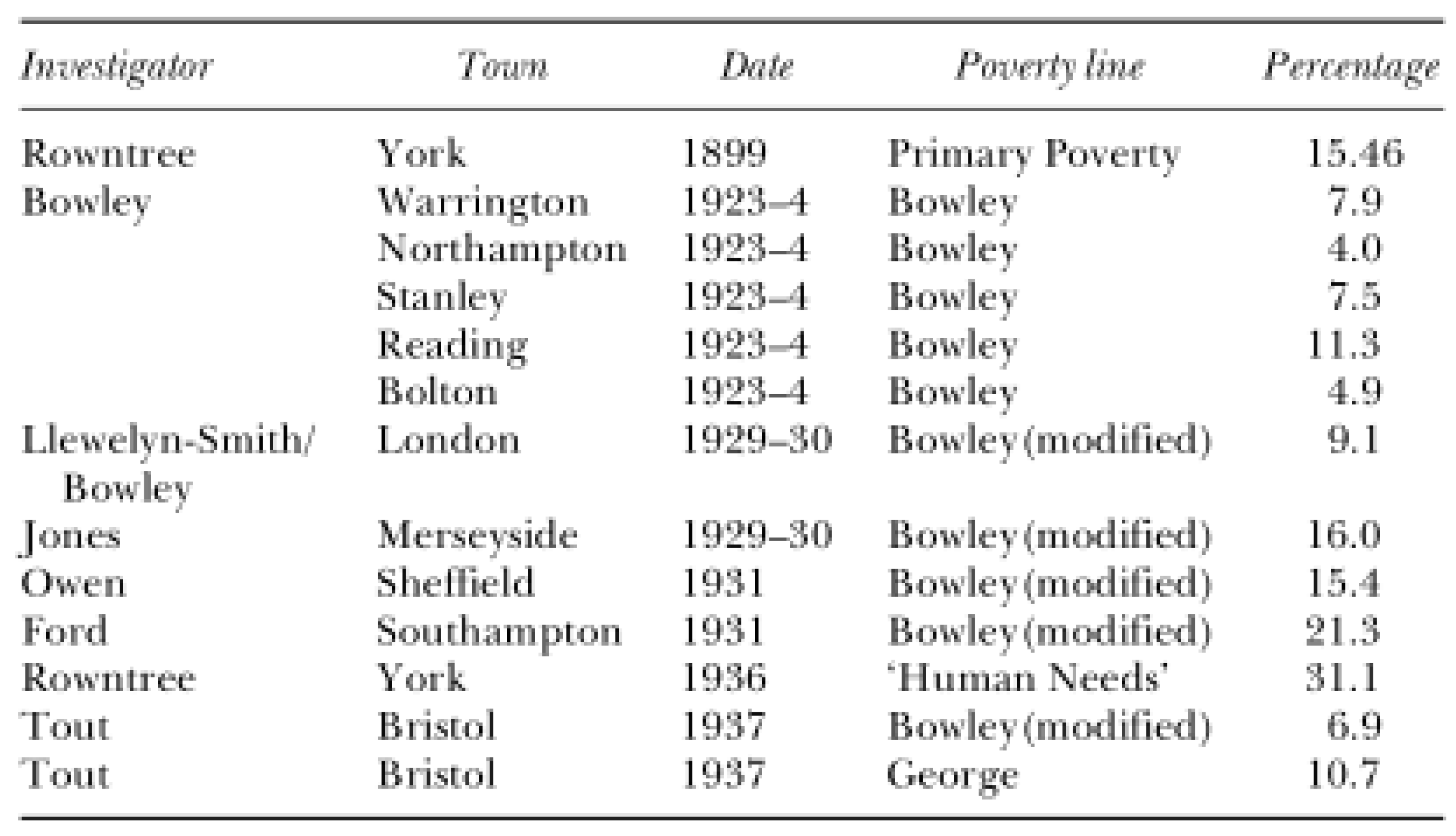 |
Table 2.
Causes of primary poverty in York, 1899 and 1936 (%) (Gazeley 2003, 94).
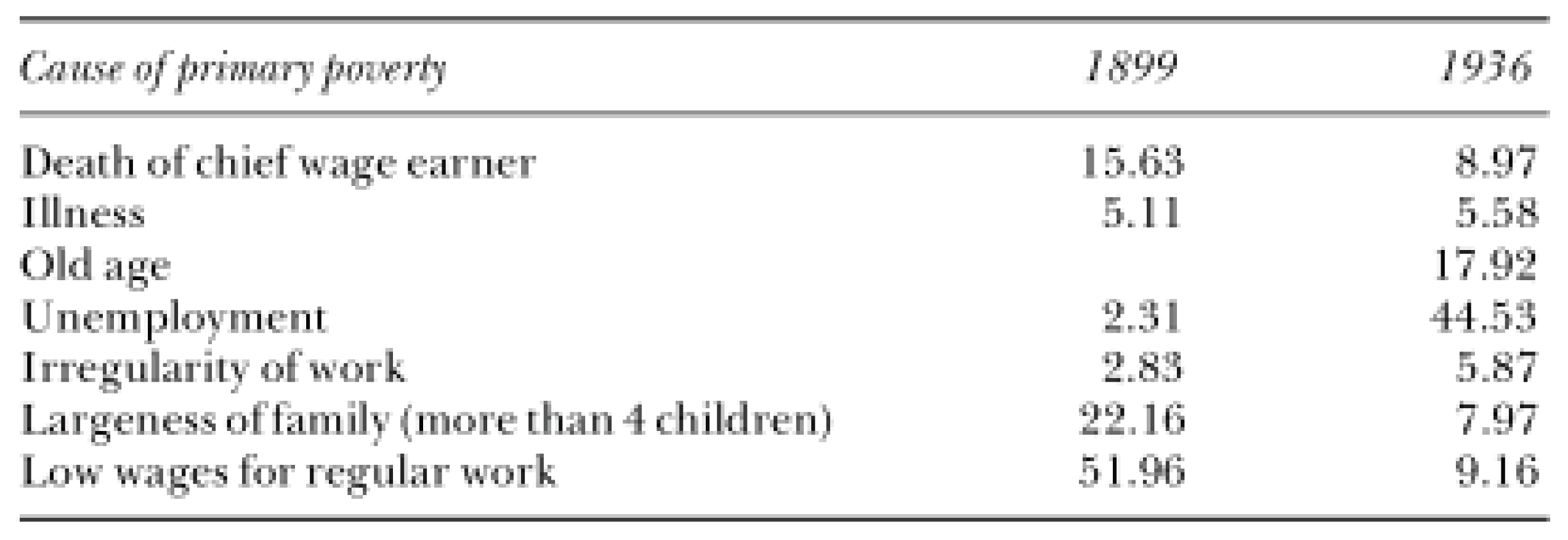 |
Table 3.
Recorded Outcomes for Children Participating in the Farm School Programme (Garnett, 1944).
| Number of children who… | |
| Made good | 825 |
| Definite failures | 6 |
| Doubtful failures | 41 |
| Still at School | 44 |
| Whereabouts unknown | 84 |
| No record (children who attended in the very early years) | 71 |
Disclaimer/Publisher’s Note: The statements, opinions and data contained in all publications are solely those of the individual author(s) and contributor(s) and not of MDPI and/or the editor(s). MDPI and/or the editor(s) disclaim responsibility for any injury to people or property resulting from any ideas, methods, instructions or products referred to in the content. |
© 2026 by the authors. Licensee MDPI, Basel, Switzerland. This article is an open access article distributed under the terms and conditions of the Creative Commons Attribution (CC BY) license (http://creativecommons.org/licenses/by/4.0/).
Copyright: This open access article is published under a Creative Commons CC BY 4.0 license, which permit the free download, distribution, and reuse, provided that the author and preprint are cited in any reuse.