

Submitted:
06 April 2026
Posted:
07 April 2026
You are already at the latest version
Abstract
The C-C motif chemokine receptor 1 (CCR1) plays key roles in guiding leukocyte movement during immune surveillance and inflammatory responses. Targeting CCR1 is a promising approach for treating autoimmune diseases and cancers. We previously developed anti-mouse CCR1 (mCCR1) monoclonal antibodies (clones C1Mab-2 and C1Mab-6) for use in flow cytometry and western blotting. However, the specific binding sites have not yet been identified. This study examined the binding epitope of C1Mab-2 and C1Mab-6. Analysis of mCCR1 mutants with altered extracellular domains showed that C1Mab-2 and C1Mab-6 bind to the N-terminal region of mCCR1. Additionally, PA-tag substitution experiments identified the epitope as comprising amino acids 1–13 of mCCR1. Further, alanine (or glycine) scanning within the N-terminal region (amino acids 2–13) was performed using flow cytometry and western blotting. The results demonstrated that Met1, Glu2, Asp5, and Phe6 are critical for recognition by C1Mab-2, while Met1, Glu2, Ile3, and Asp5 are essential for recognition by C1Mab-6. These findings enhance our under-standing of how mCCR1 interacts with C1Mabs.
Keywords:
CCR1
; monoclonal antibody
; epitope mapping
; alanine scanning
; flow cytometry
1. Introduction
Chemokine receptors are part of the seven-transmembrane (7TM) G protein–coupled receptor family and play essential roles in controlling leukocyte trafficking during immune surveillance and inflammation responses.[1] Chemokines are classified into the CC, CXC, XC, and CX3C subfamilies based on the arrangement of the first two conserved cysteines residues. CC chemokines (CCL1–CCL28) are identified by C-C chemokine receptors CCR1–CCR10.[2] Upon ligand engagement, chemokine receptors typically activate heterotrimeric G protein signaling pathways and recruit β-arrestins for receptor regulation endocytosis.[3,4]
CCR1 is a crucial mediator of inflammatory responses and plays a role in the development of autoimmune diseases.[1,5] Accordingly, CCR1 is considered a promising therapeutic target for allergic and autoimmune conditions disorders.[6] Notably, CCR1 shows ligand promiscuity, allowing it to recognize multiple CC chemokines, including CCL3, CCL5, CCL7, CCL8, CCL13–16, and CCL23.[2,7,8]
Structural elucidation of chemokine receptor activation is essential for rational drug design targeting the chemokine system. Among CCR family members, both inactive and ligand-bound active conformations have been resolved for CCR2 and CCR5.[9,10,11,12] Additionally, ligand-bound active-state structures of CCR6 and CCR8, along with inactive-state structures of CCR7 and CCR9, have been reported.[13,14,15,16] The structure of the CCL15–CCR1 complex showed that extracellular loops (ECL2 and ECL3) contain key factors for ligand recognition, setting CCR1 apart from other chemokine receptor–ligand interactions and offering new insights into chemokine binding mechanisms.[9] Furthermore, structural analyses of CCR8 in complex with either its endogenous ligand CCL1 or an antagonistic monoclonal antibody (mAb) have elucidated mechanisms underlying receptor activation and antibody-mediated inhibition.[13] These findings highlight the usefulness of anti-chemokine receptor mAbs with specific epitopes for structural and functional studies.
The Cell-Based Immunization and Screening (CBIS) method is a strategy for generating a variety of mAbs against membrane proteins. In this approach, antigen-overexpressing cells are immunized, and the hybridoma supernatants are then screened using flow cytometry-based high-throughput techniques. We have developed several mAbs targeting chemokine receptors, such as mouse CCR1 (mCCR1) and mouse CCR5 (mCCR5), utilizing the CBIS method method.[17,18] These mAbs are expected to recognize various epitopes, including linear and conformational ones. However, their specific binding epitopes are still undefined.
We previously reported the flow cytometry-based epitope mapping of an anti-mCCR1 mAb (S15040E) and an anti-mCCR8 mAb (C8Mab-2) using mutants with the extracellular domain substituted and alanine scanning scanning.[19,20] Using the epitope identification strategy, we aimed to determine the binding epitopes of anti-mCCR1 mAbs (C1Mab-2 and C1Mab-6) through flow cytometry and western blotting
2. Materials and Methods
2.1. Plasmid Construction
pCAG-Ble-mCCR1 and pCAG-Ble-mouse CCR5 (mCCR5) were generated as previously described.[17,18] Chimeric mutants including mCCR5 (mCCR1p2–34), mCCR5 (mCCR1p92–107), mCCR5 (mCCR1p172–197), and mCCR5 (mCCR1p265–281) were produced as described previously.[19] Alanine (or glycine)-substituted mutants of mCCR1 were generated using QuikChange Lightning Site-Directed Mutagenesis Kits (Agilent Technologies Inc., Santa Clara, CA, USA). PA-tag (GVAMPGAEDDVV) substituted mCCR1 mutants were created using a PCR-based method. The PCR fragments containing the desired mutations were inserted into the pCAG-Ble or pCAG-neo vectors (FUJIFILM Wako Pure Chemical Corporation, Osaka, Japan).
2.2. Cell Line and Plasmid Transfection
The chimeric, PA-tag substituted, and point-mutant plasmids were transfected into Chinese hamster ovary (CHO)-K1 cells (American Type Culture Collection, Manassas, VA, USA) using the Neon Transfection System (Thermo Fisher Scientific Inc., Waltham, MA, USA).
2.3. Antibodies
2.4. Flow Cytometry
Cells were collected after brief exposure to 0.25% trypsin/1 mM ethylenediaminetetraacetic acid (Nacalai Tesque, Inc.). After washing with 0.1% bovine serum albumin in phosphate-buffered saline, 2 × 10⁵ cells were treated with 1 μg/mL of C1Mab-2, C1Mab-6, C5Mab-2, C5Mab-4, or S15040E for 30 minutes at 4°C, followed by incubation with Alexa Fluor 488-conjugated anti-rat IgG (1:2,000; Cell Signaling Technology, Inc., Danvers, MA, USA). Fluorescence data (from a total of 5,000 cells per sample) were collected using the SA3800 Cell Analyzer (Sony Corp., Tokyo, Japan). Using FlowJo software (BD Biosciences, Franklin Lakes, NJ, USA), single cells were gated based on side scatter versus forward scatter, and the fluorescence intensity was plotted.
2.5. Western Blotting
Cell lysates were boiled in sodium dodecyl sulfate (SDS) sample buffer (Nacalai Tesque, Inc.). Proteins (10 µg/lane) were electrophoresed on 5%–20% polyacrylamide gels (FUJIFILM Wako Pure Chemical Corporation) and transferred onto polyvinylidene difluoride (PVDF) membranes (Merck KGaA, Darmstadt, Germany). After blocking with 4% non-fat milk (Nacalai Tesque, Inc., Kyoto, Japan), PVDF membranes were incubated with 1 μg/mL of C1Mab-2, C1Mab-6, or an anti-IDH1 mAb (clone RcMab-1), followed by incubation with horseradish peroxidase-conjugated anti-rat IgG (1:10,000; Sigma-Aldrich Corp., St. Louis, MO). Finally, protein bands were detected with ImmunoStar LD (FUJIFILM Wako Pure Chemical Corporation) using a Sayaca-Imager (DRC Co. Ltd., Tokyo, Japan).
3. Results
3.1. Determination of the Epitopes of Anti-mCCR1 mAbs (C1Mab-2 and C1Mab-6) by Flow Cytometry Using Chimeric Proteins
Anti-mCCR1 mAbs, clone C1Mab-2 (rat IgG2b, lambda) and C1Mab-6 (rat IgG2b, kappa)[18] were previously established and are applicable for flow cytometry and western blotting (http://www.med-tohoku-antibody.com/topics/001_paper_antibody_PDIS.htm). To investigate the binding epitopes of C1Mab-2 and C1Mab-6, we focused on four extracellular regions of mCCR1: the N-terminal region [amino acid (aa) 1–34], ECL1 (aa 92–107), ECL2 (aa 172–197), and ECL3 (aa 265–281). These regions of mCCR1 were replaced with the corresponding regions of mCCR5, which is highly homologous to mCCR1. As shown in Figure 1, plasmids encoding mCCR5 with these specific mCCR1 segments—mCCR1p1–34, mCCR1p92–107, mCCR1p172–197, and mCCR1p265–281—were created. The chimeric proteins were transiently expressed in CHO-K1 cells, and their reactivities to C1Mab-2 and C1Mab-6 were analyzed via flow cytometry (Figure 2A). Both C1Mab-2 and C1Mab-6 reacted with mCCR5 containing mCCR1p1–34 but not with those containing mCCR1p92–107, mCCR1p172–197, or mCCR1p265–281 (Figure 2A and B). The cell-surface expression of each mutant was confirmed using anti-mCCR5 mAbs, C5Mab-2 and C5Mab-4, which recognize the mCCR5 ECL2 and N-terminal regions, respectively (Figure 2C and D). These results suggest that C1Mab-2 and C1Mab-6 recognize the N-terminal region of mCCR1.
3.2. Determination of the C1Mab-2 and C1Mab-6 Epitopes by Flow Cytometry Using PA-Tag Substitution
Next, we constructed PA-tag substituted mCCR1 in the N-terminal region. As shown in Figure 3, PA-tag substituted mCCR1 on amino acids 2–13 (mCCR1-2PA13), 12–23 (mCCR1-12PA23), and 23–34 (mCCR1-23PA34) were created. Additionally, the 1st Met-substituted mCCR1 [PA-mCCR1 (2–355)] was produced. The PA-tag substituted mCCR1 was transiently expressed in CHO-K1 cells, and its reactivity to C1Mab-2 and C1Mab-6 was analyzed using flow cytometry. As shown in Figure 4, neither C1Mab-2 nor C1Mab-6 reacted with mCCR1-2PA13 nor PA-mCCR1 (2–355), but both reacted with mCCR1-12PA23 and mCCR1-23PA34. These results suggest that the epitopes of C1Mab-2 nor C1Mab-6 are located between amino acids 1–13 of mCCR1.
3.3. Determination of the C1Mab-2 and C1Mab-6 Epitopes by Flow Cytometry Using Alanine Scanning
Next, alanine scanning was performed on the N-terminal region (aa 2–13) of mCCR1. Twelve mutants with alanine (or glycine) substitutions in mCCR1 were created (Figure 5), and these mutant proteins were transiently expressed in CHO-K1 cells. Reactivity with C1Mab-2 and C1Mab-6 was assessed by flow cytometry. As shown in Figure 6A, C1Mab-2 did not react with two mutants (E2A and F6A). Similarly, C1Mab-6 did not react with two mutants (E2A and D5A) (Figure 6B). The cell surface expression of each mutant was confirmed with S15040E, which recognizes ECL2.[19]
3.4. Determination of the C1Mab-2 and C1Mab-6 Epitopes by Flow Cytometry Using Western Blotting
Since C1Mab-2 and C1Mab-6 are suitable for western blotting, the lysates of mutants were also examined using western blot analysis. As shown in Figure 7A, C1Mab-2 detected 45–48 kDa and slower-migrating smear bands, which completely disappeared in the lysates of three mutants (E2A, D5A, and F6A). Furthermore, C1Mab-6 detected 45–48 kDa and slower migrating smear bands, which completely disappeared in the lysates of three mutants (E2A, I3A, and D5A) (Figure 7B). An anti-IDH1mAb, RcMab-1, was used as an internal control (Figure 7C).
4. Discussion
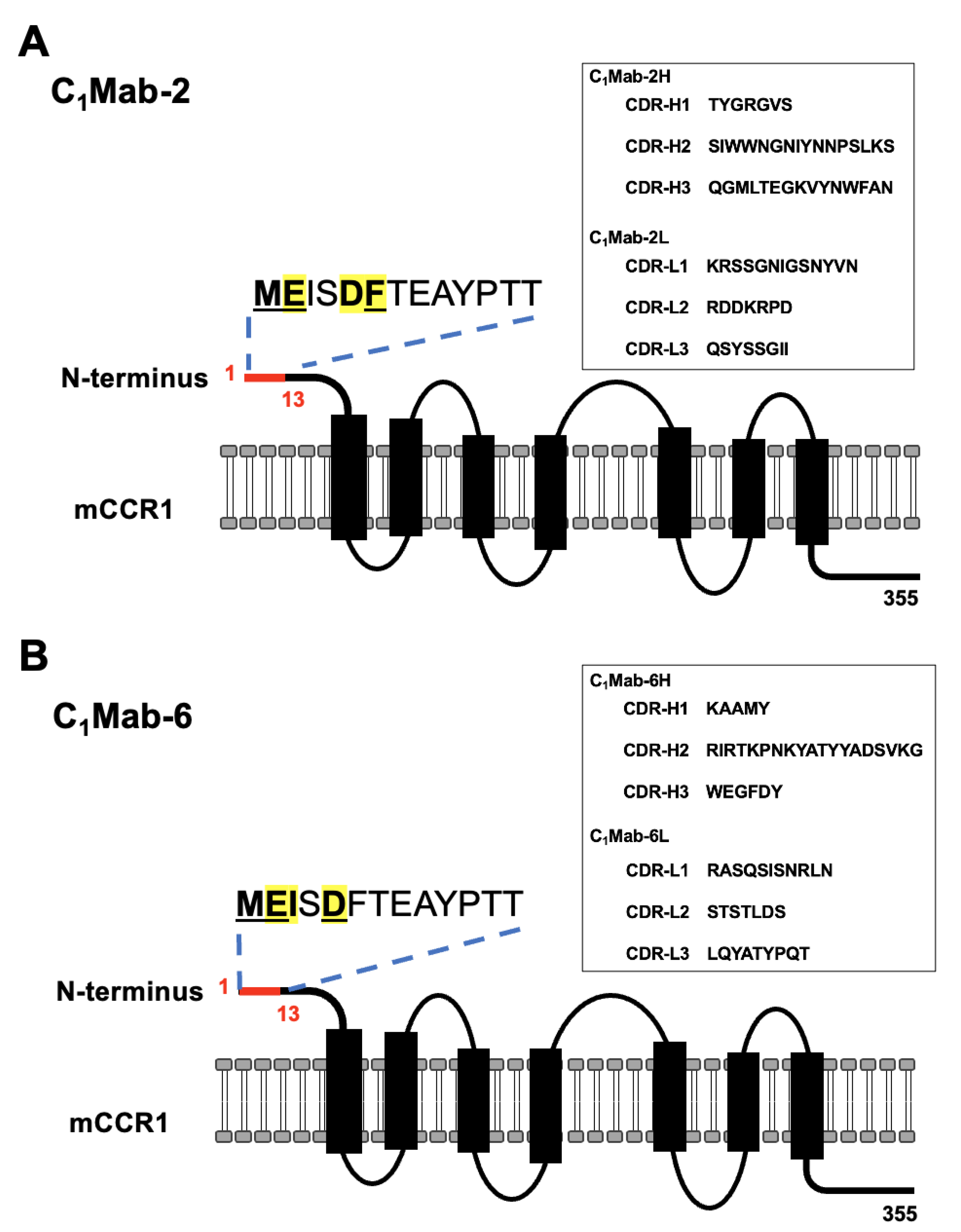
This study conducted flow cytometry-based epitope mapping of anti-mCCR1 mAbs (C1Mab-2 and C1Mab-6) using chimeric proteins (Figure 1 and Figure 2) and PA-tag substituted mutants (Figure 3 and Figure 4). Subsequently, alanine scanning analyses revealed that Glu2 and Phe6 are essential for recognition by C1Mab-2 in flow cytometry (Figure 6), while Glu2, Asp5, and Phe6 are crucial in western blotting (Figure 7). For C1Mab-6, Glu2 and Asp5 are vital in flow cytometry (Figure 6), and Glu2, Ile3, and Asp5 are important in western blotting (Figure 7). Additionally, we found that C1Mab-2 and C1Mab-6 did not recognize the 1st Met substituted mCCR1 [PA-mCCR1 (2–355)] (Figure 4), indicating that the 1st Met is also essential for the epitope. Figure 8 summarizes the results and illustrates the complementarity-determining regions (CDRs) of C1Mab-2 and C1Mab-6. Although C1Mab-2 and C1Mab-6 have different CDR sequences, they recognize similar epitopes in the mCCR1 N-terminal region.
The N-terminal region of the chemokine receptor is known as chemokine receptor site 1 (CRS1), which mainly mediates interactions with the chemokine N-loop/β3-strands and 40s-loop. These contacts are crucial for establishing the initial binding affinity and specificity between the chemokine and its cognate receptor.[22] CRS1 adopts a flexible and unstructured conformation when not in the presence of ligands.[23,24,25,26,27,28] Therefore, the modes of epitope recognition by C1Mab-2 and C1Mab-6 may be different between native structure in flow cytometry (Figure 6) and denatured structure in western blotting (Figure 7). The identification of the epitope would contribute to the understanding of mAb-epitope interaction.
Chemokine–receptor interaction is a multi-step process generally described by the two-site, two-step model within CRS1 and CRS2. In this model, chemokine–CRS1 interactions are initially established and facilitate ligand binding in the absence of receptor activation. After the initial docking at CRS1, a second interaction occurs at CRS2, where the chemokine N-terminus engages the deeper orthosteric binding pocket of the receptor. This subsequent interaction is essential for receptor activation, triggering the conformational changes needed for downstream intracellular processes signaling.[22] Since human CCR1 (hCCR1) N-terminal peptide (aa 1–29) serves as CRS1 to interact with the ligands,[29] corresponding mCCR1 N-terminus is thought to be involved in the ligand binding. Therefore, C1Mab-2 and C1Mab-6 are expected to neutralize the ligand binding.
CCR1 has been demonstrated as a drug target for the treatment of autoimmune diseases and tumors.[6] Recently, blocking mCCR1 with a neutralizing anti-CCR1 mAb (clone KM5908) in pro-tumorigenic myeloid cells demonstrated therapeutic efficacy in a mouse syngeneic model of colorectal cancer.[30] KM5908 was established by immunizing Ccr1 knockout mice with cells overexpressing hCCR1 and recognized both hCCR1 and mCCR1.[31] Although KM5908 was selected based on its inhibitory activity on the chemotaxis of the THP-1 monocytic cell line toward CCL15 gradient,[31] the binding epitope has not been clarified. Our epitope mapping system will help identify the KM5908 epitope, which is important for comparing properties with C1Mab-2 and C1Mab-6.
Supplementary Materials
The following supporting information can be downloaded at the website of this paper posted on Preprints.org.
Author Contributions
Conceptualization, M.K.K and Y.K.; investigation, A.O.; writing—original draft preparation, H.S.; writing—review and editing, Y.K.; project administration, Y.K.; funding acquisition, Y.K. All authors have read and agreed to the published version of the manuscript.
Funding
This research was supported in part by Japan Agency for Medical Research and Development (AMED) under Grant Numbers: JP25am0521010 (to Y.K.), JP25ama121008 (to Y.K.), JP25ama221153 (to Y.K.), JP25ama221339 (to Y.K.), and JP25bm1123027 (to Y.K.), and by the Japan Society for the Promotion of Science (JSPS) Grants-in-Aid for Scientific Research (KAKENHI) grant no. 25K10553 (to Y.K.).
Data Availability Statement
The data presented in this study are available in the article.
Conflicts of Interest
The authors declare no conflict of interest.
References
- Griffith, J.W.; Sokol, C.L.; Luster, A.D. Chemokines and chemokine receptors: positioning cells for host defense and immunity. Annu Rev Immunol 2014, 32, 659–702. [Google Scholar] [CrossRef]
- Stone, M.J.; Hayward, J.A.; Huang, C.; Z, E.H.; Sanchez, J. Mechanisms of Regulation of the Chemokine-Receptor Network. Int J Mol Sci 2017, 18. [CrossRef]
- Weis, W.I.; Kobilka, B.K. The Molecular Basis of G Protein-Coupled Receptor Activation. Annu Rev Biochem 2018, 87, 897–919. [Google Scholar] [CrossRef]
- Defea, K. Beta-arrestins and heterotrimeric G-proteins: collaborators and competitors in signal transduction. Br J Pharmacol 2008, 153 Suppl 1, S298–309. [Google Scholar] [CrossRef]
- Tian, Q.; Yan, Z.; Guo, Y.; Chen, Z.; Li, M. Inflammatory Role of CCR1 in the Central Nervous System. Neuroimmunomodulation 2024, 31, 173–182. [Google Scholar] [CrossRef]
- Scholten, D.J.; Canals, M.; Maussang, D.; Roumen, L.; Smit, M.J.; Wijtmans, M.; de Graaf, C.; Vischer, H.F.; Leurs, R. Pharmacological modulation of chemokine receptor function. Br J Pharmacol 2012, 165, 1617–1643. [Google Scholar] [CrossRef]
- Schall, T.J.; Proudfoot, A.E. Overcoming hurdles in developing successful drugs targeting chemokine receptors. Nat Rev Immunol 2011, 11, 355–363. [Google Scholar] [CrossRef] [PubMed]
- Murphy, P.M.; Baggiolini, M.; Charo, I.F.; Hébert, C.A.; Horuk, R.; Matsushima, K.; Miller, L.H.; Oppenheim, J.J.; Power, C.A. International union of pharmacology. XXII. Nomenclature for chemokine receptors. Pharmacol Rev 2000, 52, 145–176. [Google Scholar] [CrossRef] [PubMed]
- Shao, Z.; Shen, Q.; Yao, B.; Mao, C.; Chen, L.N.; Zhang, H.; Shen, D.D.; Zhang, C.; Li, W.; Du, X.; et al. Identification and mechanism of G protein-biased ligands for chemokine receptor CCR1. Nat Chem Biol 2022, 18, 264–271. [Google Scholar] [CrossRef] [PubMed]
- Isaikina, P.; Tsai, C.J.; Dietz, N.; Pamula, F.; Grahl, A.; Goldie, K.N.; Guixà-González, R.; Branco, C.; Paolini-Bertrand, M.; Calo, N.; et al. Structural basis of the activation of the CC chemokine receptor 5 by a chemokine agonist. Sci Adv 2021, 7. [Google Scholar] [CrossRef]
- Zheng, Y.; Qin, L.; Zacarías, N.V.; de Vries, H.; Han, G.W.; Gustavsson, M.; Dabros, M.; Zhao, C.; Cherney, R.J.; Carter, P.; et al. Structure of CC chemokine receptor 2 with orthosteric and allosteric antagonists. Nature 2016, 540, 458–461. [Google Scholar] [CrossRef] [PubMed]
- Tan, Q.; Zhu, Y.; Li, J.; Chen, Z.; Han, G.W.; Kufareva, I.; Li, T.; Ma, L.; Fenalti, G.; Li, J.; et al. Structure of the CCR5 chemokine receptor-HIV entry inhibitor maraviroc complex. Science 2013, 341, 1387–1390. [Google Scholar] [CrossRef] [PubMed]
- Sun, D.; Sun, Y.; Janezic, E.; Zhou, T.; Johnson, M.; Azumaya, C.; Noreng, S.; Chiu, C.; Seki, A.; Arenzana, T.L.; et al. Structural basis of antibody inhibition and chemokine activation of the human CC chemokine receptor 8. Nat Commun 2023, 14, 7940. [Google Scholar] [CrossRef] [PubMed]
- Wasilko, D.J.; Johnson, Z.L.; Ammirati, M.; Che, Y.; Griffor, M.C.; Han, S.; Wu, H. Structural basis for chemokine receptor CCR6 activation by the endogenous protein ligand CCL20. Nat Commun 2020, 11, 3031. [Google Scholar] [CrossRef]
- Jaeger, K.; Bruenle, S.; Weinert, T.; Guba, W.; Muehle, J.; Miyazaki, T.; Weber, M.; Furrer, A.; Haenggi, N.; Tetaz, T.; et al. Structural Basis for Allosteric Ligand Recognition in the Human CC Chemokine Receptor 7. Cell 2019, 178, 1222–1230.e1210. [Google Scholar] [CrossRef]
- Oswald, C.; Rappas, M.; Kean, J.; Doré, A.S.; Errey, J.C.; Bennett, K.; Deflorian, F.; Christopher, J.A.; Jazayeri, A.; Mason, J.S.; et al. Intracellular allosteric antagonism of the CCR9 receptor. Nature 2016, 540, 462–465. [Google Scholar] [CrossRef]
- Suzuki, H.; Tanaka, T.; Li, G.; Ouchida, T.; Kaneko, M.K.; Kato, Y. Development of a Sensitive Anti-Mouse CCR5 Monoclonal Antibody for Flow Cytometry. Monoclon Antib Immunodiagn Immunother 2024, 43, 96–100. [Google Scholar] [CrossRef]
- Ouchida, T.; Isoda, Y.; Nakamura, T.; Yanaka, M.; Tanaka, T.; Handa, S.; Kaneko, M.K.; Suzuki, H.; Kato, Y. Establishment of a Novel Anti-Mouse CCR1 Monoclonal Antibody C(1)Mab-6. Monoclon Antib Immunodiagn Immunother 2024, 43, 67–74. [Google Scholar] [CrossRef]
- Okada, A.; Suzuki, H.; Arimori, T.; Tanaka, T.; Kaneko, M.K.; Kato, Y. Epitope analysis of an anti-mouse CCR1 monoclonal antibody S15040E using flow cytometry. Biochem Biophys Rep 2025, 44, 102265. [Google Scholar] [CrossRef]
- Kobayashi, H.; Suzuki, H.; Tanaka, T.; Kaneko, M.K.; Kato, Y. Epitope Mapping of an Anti-Mouse CCR8 Monoclonal Antibody C(8)Mab-2 Using Flow Cytometry. Monoclon Antib Immunodiagn Immunother 2024, 43, 101–107. [Google Scholar] [CrossRef]
- Ubukata, R.; Suzuki, H.; Tanaka, T.; Li, G.; Kaneko, M.K.; Kato, Y. Development of Sensitive Anti-Mouse CCR5 Monoclonal Antibodies Using the N-Terminal Peptide Immunization. Monoclon Antib Immunodiagn Immunother 2024, 43, 112–118. [Google Scholar] [CrossRef] [PubMed]
- Kayastha, K.; Zhou, Y.; Brünle, S. Structural perspectives on chemokine receptors. Biochem Soc Trans 2024, 52, 1011–1024. [Google Scholar] [CrossRef]
- Millard, C.J.; Ludeman, J.P.; Canals, M.; Bridgford, J.L.; Hinds, M.G.; Clayton, D.J.; Christopoulos, A.; Payne, R.J.; Stone, M.J. Structural basis of receptor sulfotyrosine recognition by a CC chemokine: the N-terminal region of CCR3 bound to CCL11/eotaxin-1. Structure 2014, 22, 1571–1581. [Google Scholar] [CrossRef]
- Chaudhuri, A.; Basu, P.; Haldar, S.; Kombrabail, M.; Krishnamoorthy, G.; Rajarathnam, K.; Chattopadhyay, A. Organization and dynamics of the N-terminal domain of chemokine receptor CXCR1 in reverse micelles: effect of graded hydration. J Phys Chem B 2013, 117, 1225–1233. [Google Scholar] [CrossRef] [PubMed]
- Haldar, S.; Raghuraman, H.; Namani, T.; Rajarathnam, K.; Chattopadhyay, A. Membrane interaction of the N-terminal domain of chemokine receptor CXCR1. Biochim Biophys Acta 2010, 1798, 1056–1061. [Google Scholar] [CrossRef]
- Veldkamp, C.T.; Seibert, C.; Peterson, F.C.; De la Cruz, N.B.; Haugner, J.C., 3rd; Basnet, H.; Sakmar, T.P.; Volkman, B.F. Structural basis of CXCR4 sulfotyrosine recognition by the chemokine SDF-1/CXCL12. Sci Signal 2008, 1, ra4. [Google Scholar] [CrossRef] [PubMed]
- Fernando, H.; Nagle, G.T.; Rajarathnam, K. Thermodynamic characterization of interleukin-8 monomer binding to CXCR1 receptor N-terminal domain. Febs j 2007, 274, 241–251. [Google Scholar] [CrossRef]
- Duma, L.; Häussinger, D.; Rogowski, M.; Lusso, P.; Grzesiek, S. Recognition of RANTES by extracellular parts of the CCR5 receptor. J Mol Biol 2007, 365, 1063–1075. [Google Scholar] [CrossRef]
- Sanchez, J.; E.H., Z; Lane, J.R.; Liu, X.; Bridgford, J.L.; Payne, R.J.; Canals, M.; Stone, M.J. Evaluation and extension of the two-site, two-step model for binding and activation of the chemokine receptor CCR1. J Biol Chem 2019, 294, 3464–3475. [Google Scholar] [CrossRef]
- Masui, H.; Kawada, K.; Itatani, Y.; Hirai, H.; Nakanishi, Y.; Kiyasu, Y.; Hanada, K.; Okamoto, M.; Hirata, W.; Nishikawa, Y.; et al. Synergistic antitumor activity by dual blockade of CCR1 and CXCR2 expressed on myeloid cells within the tumor microenvironment. Br J Cancer 2024, 131, 63–76. [Google Scholar] [CrossRef]
- Kiyasu, Y.; Kawada, K.; Hirai, H.; Ogawa, R.; Hanada, K.; Masui, H.; Nishikawa, G.; Yamamoto, T.; Mizuno, R.; Itatani, Y.; et al. Disruption of CCR1-mediated myeloid cell accumulation suppresses colorectal cancer progression in mice. Cancer Lett 2020, 487, 53–62. [Google Scholar] [CrossRef]
Figure 1.
Schematic illustration of chimeric proteins. The four extracellular regions of mCCR1 including the N-terminal region (aa 1–34), ECL1 (aa 92–107), ECL2 (aa 172–197), and ECL3 (aa 265–281) were substituted into the corresponding regions of mCCR5. aa, amino acid; ECL, extracellular loop.
Figure 1.
Schematic illustration of chimeric proteins. The four extracellular regions of mCCR1 including the N-terminal region (aa 1–34), ECL1 (aa 92–107), ECL2 (aa 172–197), and ECL3 (aa 265–281) were substituted into the corresponding regions of mCCR5. aa, amino acid; ECL, extracellular loop.
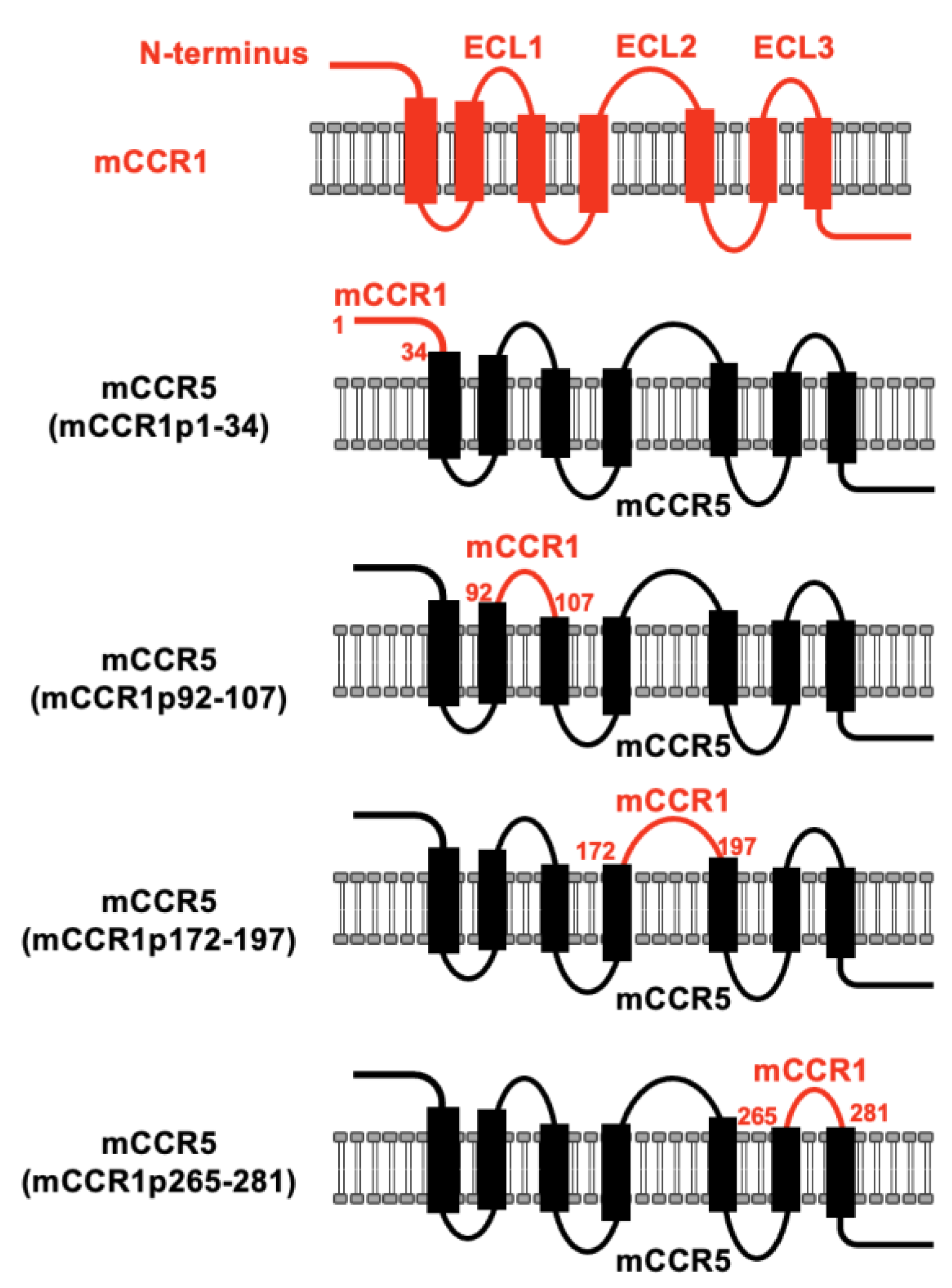
Figure 2.
Determination of the epitope of anti-mCCR1 mAbs, C1Mab-2 and C1Mab-6, by flow cytometry using chimeric proteins. CHO-K1 cells transiently expressing the chimeric proteins were treated with C1Mab-2 (1 µg/mL, A), C1Mab-6 (1 µg/mL, B), C5Mab-2 (1 µg/mL, C), C5Mab-4 (1 µg/mL, D), or blocking buffer for 30 minutes at 4°C, followed by the addition of Alexa Fluor 488-conjugated anti-rat IgG. Red lines indicate cells treated with C1Mab-2, C1Mab-6, C5Mab-2, or C5Mab-4, while black lines indicate cells treated with blocking buffer as a negative control.
Figure 2.
Determination of the epitope of anti-mCCR1 mAbs, C1Mab-2 and C1Mab-6, by flow cytometry using chimeric proteins. CHO-K1 cells transiently expressing the chimeric proteins were treated with C1Mab-2 (1 µg/mL, A), C1Mab-6 (1 µg/mL, B), C5Mab-2 (1 µg/mL, C), C5Mab-4 (1 µg/mL, D), or blocking buffer for 30 minutes at 4°C, followed by the addition of Alexa Fluor 488-conjugated anti-rat IgG. Red lines indicate cells treated with C1Mab-2, C1Mab-6, C5Mab-2, or C5Mab-4, while black lines indicate cells treated with blocking buffer as a negative control.
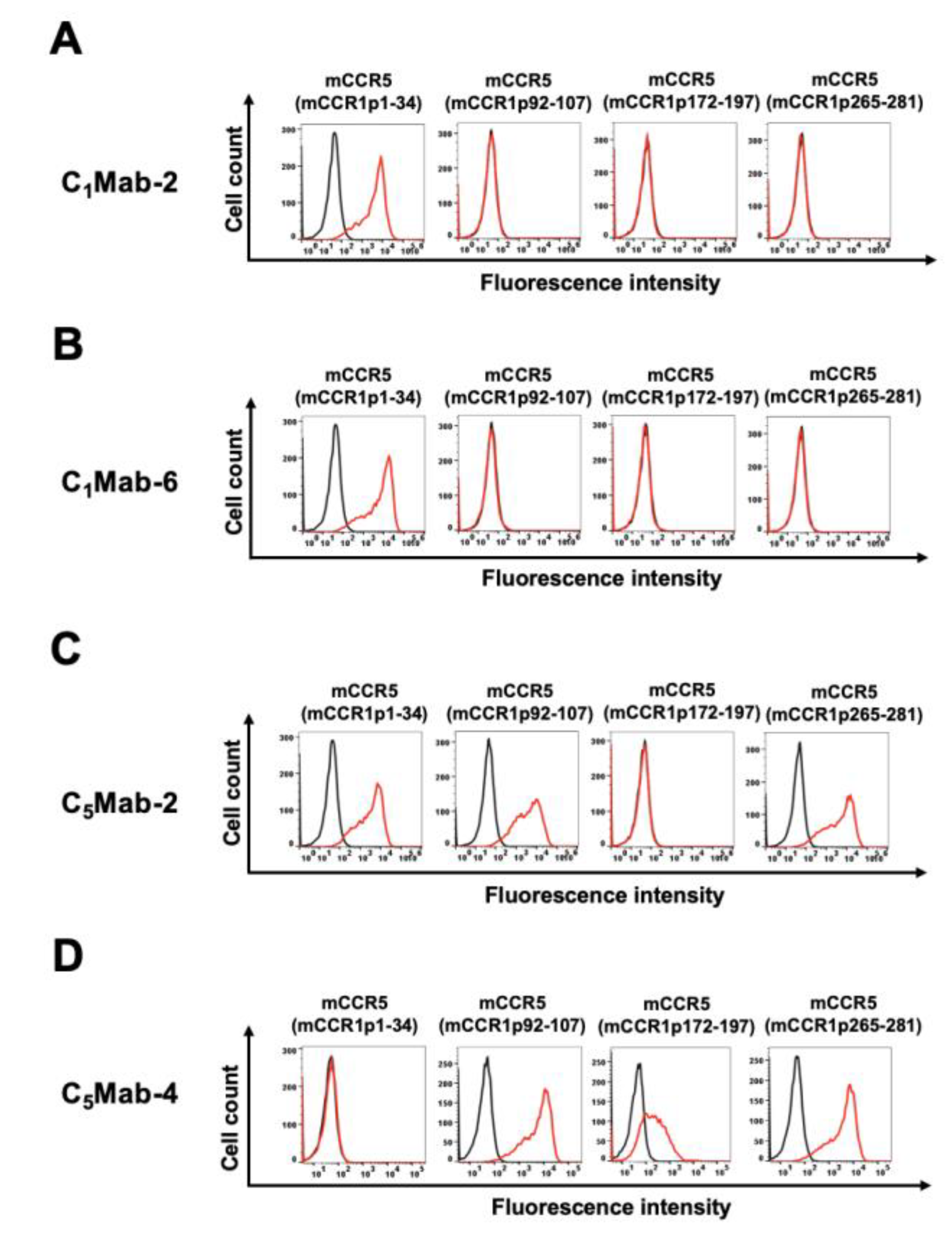
Figure 3.
The illustration of PA-tag substituted mutants of mCCR1.
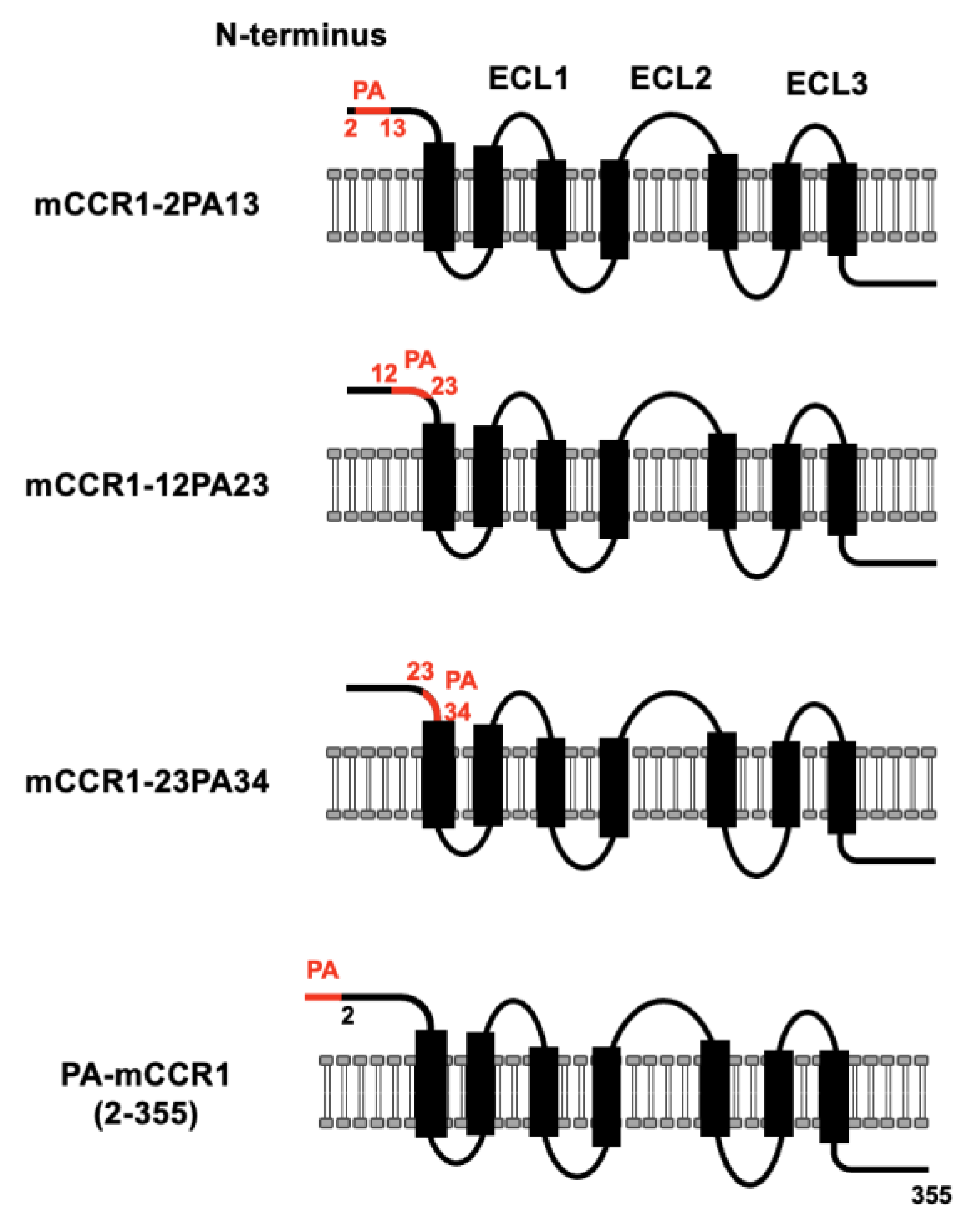
Figure 4.
CHO-K1 cells transiently expressing PA-tag substituted mCCR1 mutants were treated with C1Mab-2 (1 µg/mL, A), C1Mab-6 (1 µg/mL, B), S15040E (1 µg/mL, C), or blocking buffer for 30 minutes at 4°C. Subsequently, the cells were incubated with Alexa Fluor 488-conjugated anti-rat IgG. Red lines indicate cells treated with C1Mab-2, C1Mab-6, or S15040E, while black lines represent cells treated with blocking buffer as a negative control.
Figure 4.
CHO-K1 cells transiently expressing PA-tag substituted mCCR1 mutants were treated with C1Mab-2 (1 µg/mL, A), C1Mab-6 (1 µg/mL, B), S15040E (1 µg/mL, C), or blocking buffer for 30 minutes at 4°C. Subsequently, the cells were incubated with Alexa Fluor 488-conjugated anti-rat IgG. Red lines indicate cells treated with C1Mab-2, C1Mab-6, or S15040E, while black lines represent cells treated with blocking buffer as a negative control.
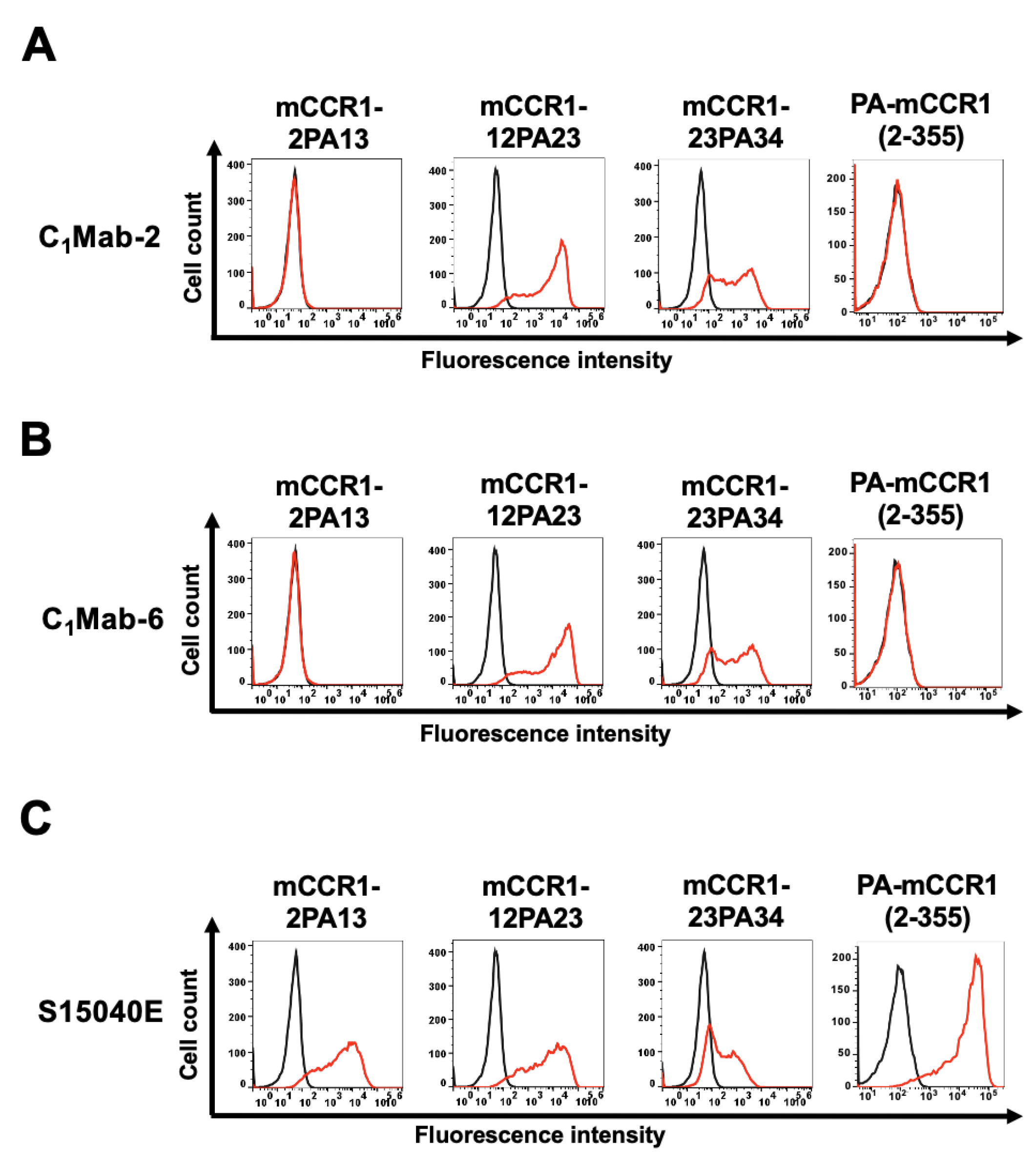
Figure 5.
The illustration of alanine (or glycine) substituted mutants of mCCR1.
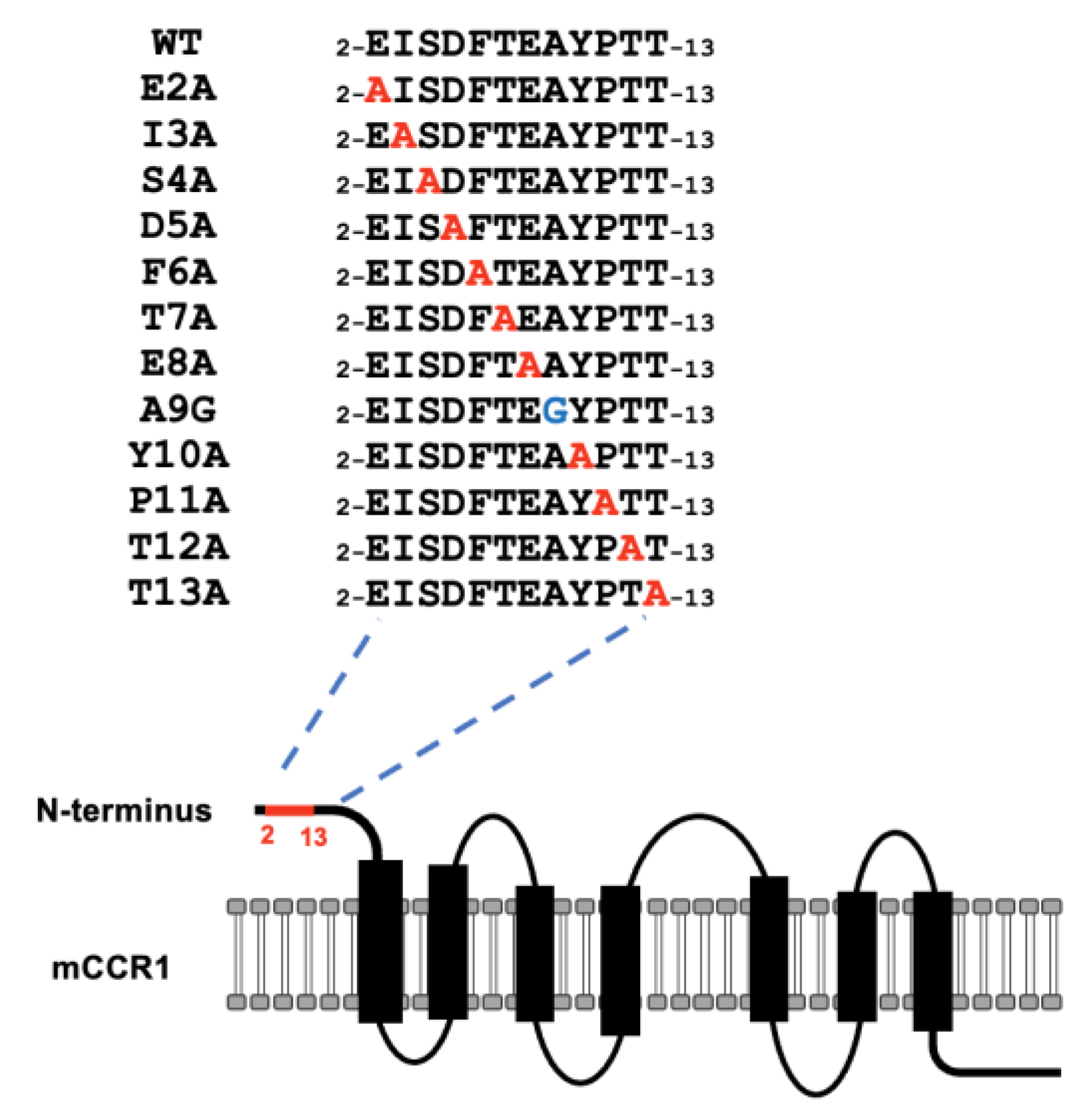
Figure 6.
Determination of C1Mab-2 and C1Mab-6 epitopes by flow cytometry using alanine scanning. CHO-K1 transiently expressed mCCR1 mutants and wild-type (WT) were treated with C1Mab-2 (1 µg/mL, A), C1Mab-6 (1 µg/mL, B), S15040E (1 µg/mL, C), or blocking buffer for 30 minutes at 4°C. Then, the cells were treated with Alexa Fluor 488-conjugated anti-rat IgG. Red lines indicate the cells treated with C1Mab-2, C1Mab-6, or S15040E, while black lines show cells treated with blocking buffer as the negative control.
Figure 6.
Determination of C1Mab-2 and C1Mab-6 epitopes by flow cytometry using alanine scanning. CHO-K1 transiently expressed mCCR1 mutants and wild-type (WT) were treated with C1Mab-2 (1 µg/mL, A), C1Mab-6 (1 µg/mL, B), S15040E (1 µg/mL, C), or blocking buffer for 30 minutes at 4°C. Then, the cells were treated with Alexa Fluor 488-conjugated anti-rat IgG. Red lines indicate the cells treated with C1Mab-2, C1Mab-6, or S15040E, while black lines show cells treated with blocking buffer as the negative control.
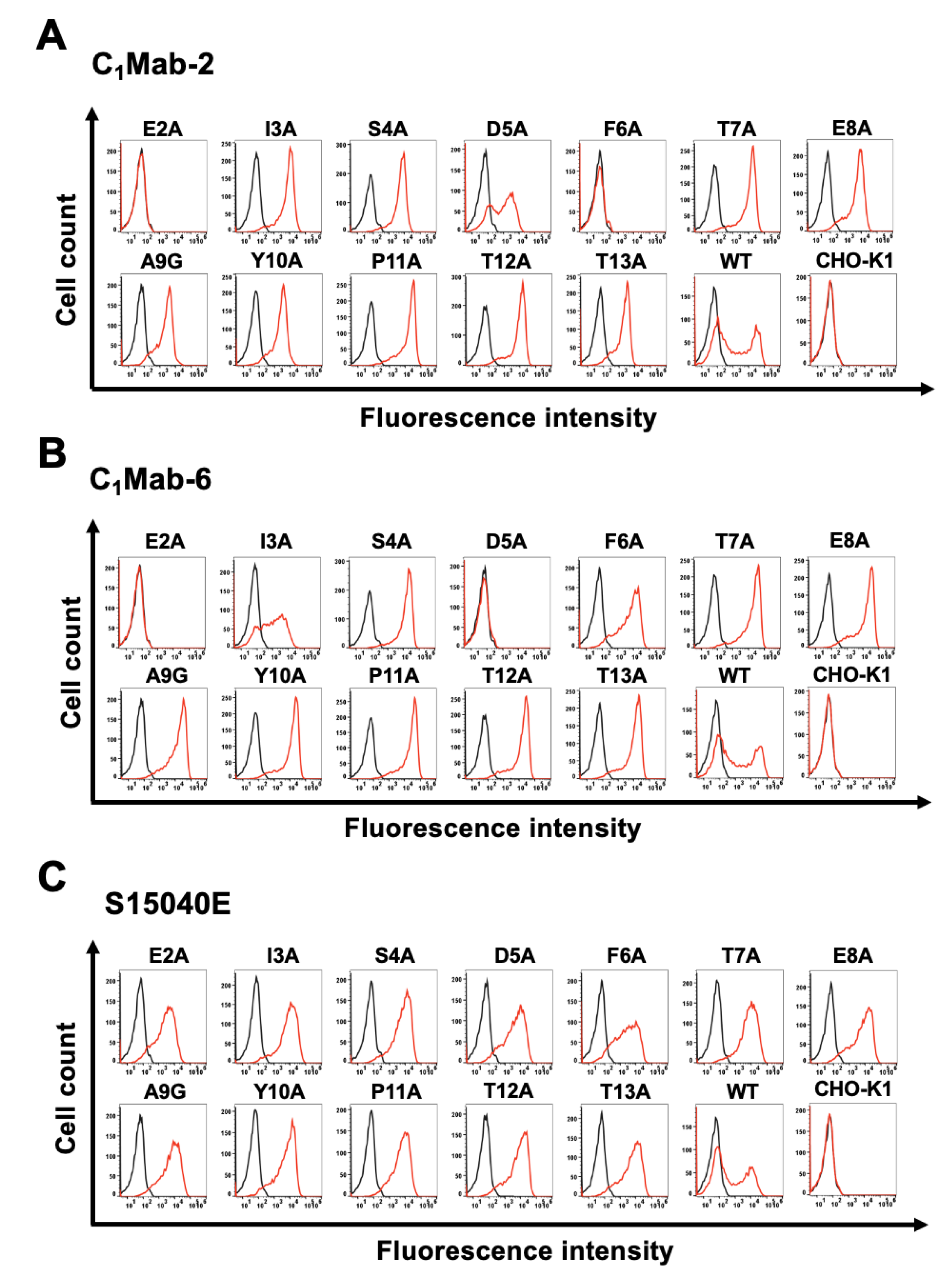
Figure 7.
Determination of C1Mab-2 and C1Mab-6 epitopes by western blotting. Cell lysates (10 μg/lane) from CHO-K1 cells transiently expressed mCCR1 mutants and wild-type (WT) were electrophoresed and transferred onto polyvinylidene difluoride membranes. The membranes were incubated with C1Mab-2 (1 μg/mL, A), C1Mab-6 (1 μg/mL, B), or RcMab-1 (an anti-IDH1 mAb, 1 μg/mL, C), followed by treatment with anti-rat IgG conjugated to horseradish peroxidase.
Figure 7.
Determination of C1Mab-2 and C1Mab-6 epitopes by western blotting. Cell lysates (10 μg/lane) from CHO-K1 cells transiently expressed mCCR1 mutants and wild-type (WT) were electrophoresed and transferred onto polyvinylidene difluoride membranes. The membranes were incubated with C1Mab-2 (1 μg/mL, A), C1Mab-6 (1 μg/mL, B), or RcMab-1 (an anti-IDH1 mAb, 1 μg/mL, C), followed by treatment with anti-rat IgG conjugated to horseradish peroxidase.
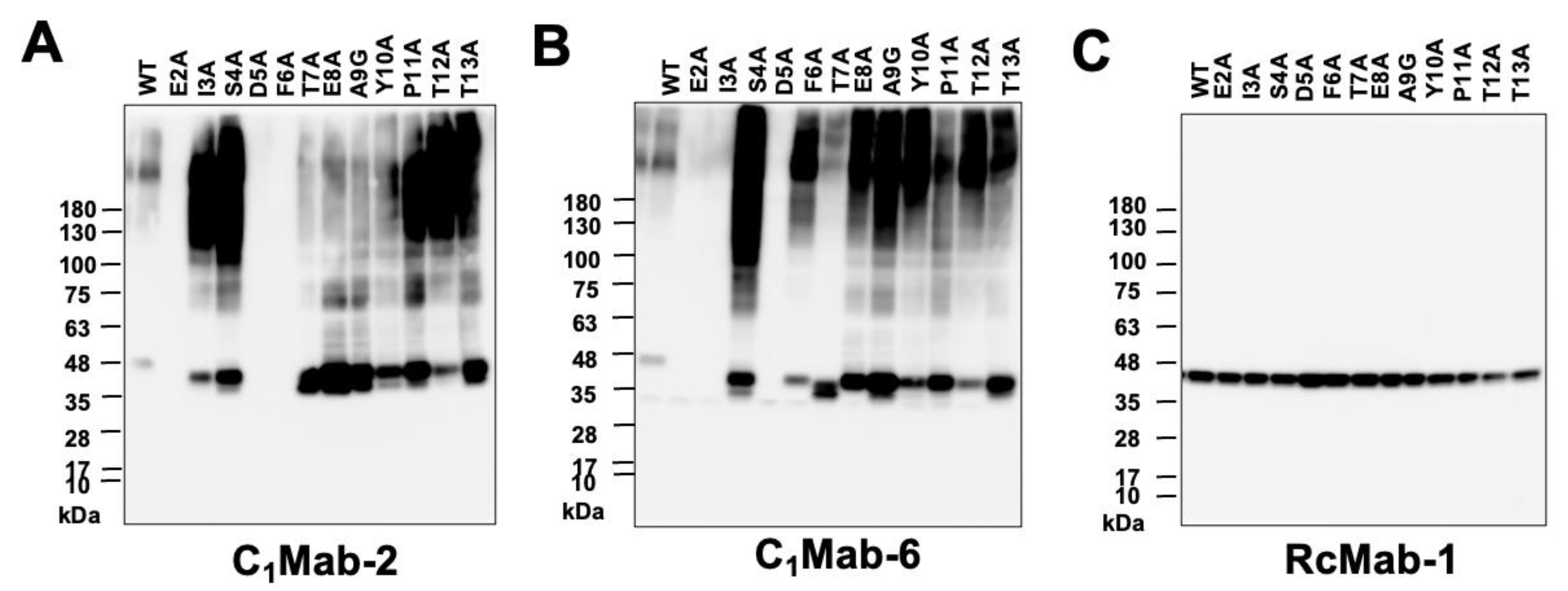
Figure 8.
The schematic illustration of C1Mab-2 and C1Mab-6 epitopes. (A) Met1, Glu2, and Phe6 of mCCR1 are essential for the recognition by C1Mab-2 in flow cytometry (underlined), and Glu2, Asp5, and Phe6 are essential for the recognition by C1Mab-2 in western blotting (yellow). The CDR sequences are indicated. (B) Met1, Glu2, and Asp5 of mCCR1 are essential for the recognition by C1Mab-6 in flow cytometry (underlined), and Glu2, Ile3, and Asp5 are essential for the recognition by C1Mab-6 in western blotting (yellow). The CDR sequences of C1Mab-6 are indicated. CDR, complementarity-determining region.
Figure 8.
The schematic illustration of C1Mab-2 and C1Mab-6 epitopes. (A) Met1, Glu2, and Phe6 of mCCR1 are essential for the recognition by C1Mab-2 in flow cytometry (underlined), and Glu2, Asp5, and Phe6 are essential for the recognition by C1Mab-2 in western blotting (yellow). The CDR sequences are indicated. (B) Met1, Glu2, and Asp5 of mCCR1 are essential for the recognition by C1Mab-6 in flow cytometry (underlined), and Glu2, Ile3, and Asp5 are essential for the recognition by C1Mab-6 in western blotting (yellow). The CDR sequences of C1Mab-6 are indicated. CDR, complementarity-determining region.
Disclaimer/Publisher’s Note: The statements, opinions and data contained in all publications are solely those of the individual author(s) and contributor(s) and not of MDPI and/or the editor(s). MDPI and/or the editor(s) disclaim responsibility for any injury to people or property resulting from any ideas, methods, instructions or products referred to in the content. |
© 2026 by the authors. Licensee MDPI, Basel, Switzerland. This article is an open access article distributed under the terms and conditions of the Creative Commons Attribution (CC BY) license.
Copyright: This open access article is published under a Creative Commons CC BY 4.0 license, which permit the free download, distribution, and reuse, provided that the author and preprint are cited in any reuse.


