

Submitted:
04 April 2026
Posted:
07 April 2026
You are already at the latest version
Abstract
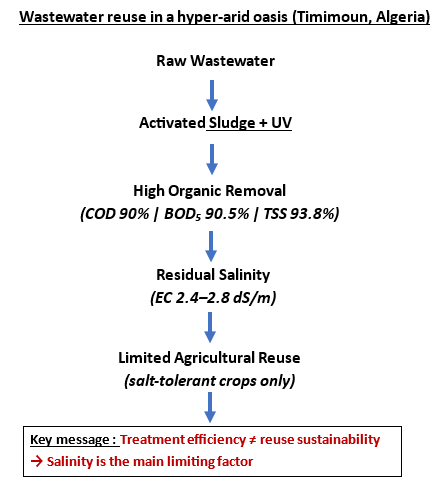
Today, the reuse of treated wastewater is considered an important and strategic driver for integrated and sustainable water and soil management in extremely arid desert regions, where significant constraints due to water scarcity, soil salinization, and the fragility of agricultural ecosystems within palm oases place a strain on all sustainable development policies. Through this study, we conducted a comprehensive evaluation of the performance of the treatment, as well as the constraints related to salinity and the implications for the land management of the activated sludge wastewater treatment plant located in the Timimoun desert oasis in southern Algeria. Through monthly monitoring over a 12-month period, we were able to perform an analysis of physicochemical, nutritional and microbiological parameters, as well as a seasonal analysis, in addition to calculating irrigation suitability indicators using first-order kinetic modeling of COD degradation. The results obtained showed high reduction rates for COD (90%), BOD5 (90,5%), and TSS (93.8%), confirming the resilience and effectiveness of biological treatment under very difficult and hostile climatic conditions. Furthermore, the ultraviolet disinfection process ensures microbiological quality that allows for reuse of treated water in agriculture. However, the residual salinity of this water remains a significant limiting factor for sustainable reuse, highlighting the need to integrate soil management strategies, crop selection, and irrigation management into regulatory frameworks for wastewater reuse. Therefore, this study provides us with important and useful scientific data for developing sound and sustainable water and land management policies in the harsh climate of Saharan oases.
Keywords:
treatment of wastewater reuse
; land management
; salinity management
; hyperarid environments
; irrigation suitability
; saharan oasis systems
1. Introduction
Sustainable wastewater management in hyper-arid regions poses a major challenge to water security, soil conservation, and the resilience of agricultural ecosystems in oases. Extreme evaporation, the near absence of groundwater recharge and the natural accumulation of salts in desert environments impose significant biogeochemical constraints that directly and effectively impact the functioning of biological purification processes [1,2]. In this context, the reuse of treated wastewater is considered a key strategy to reduce the depletion of deep aquifers and to support agricultural production in oases [3,4].
Most studies conducted in arid regions have shown that wastewater treatment processes, particularly intensive biological and plant-based systems, can maintain high productivity despite extreme climatic conditions, thanks to microbial adaptation, natural aeration processes, and rhizosphere interactions [4,5]. However, these environments are characterized by several challenges, including high salinity and temperature fluctuations, which can lead to changes in soil structure, in addition to the risks of sodiumization and a significant progressive decrease in soil permeability. This requires careful monitoring of electrical conductivity, major ions, and sodium uptake [6,7].
Research on irrigated agriculture using treated wastewater in harsh and arid environments in North Africa has also highlighted the crucial importance of assessing the long-term effects of this water on soil, plant productivity, and nutrient dynamics [8]. Furthermore, the quality of the water used for irrigation and the stability of the performance of treatment are factors strongly influenced by the human and climatic pressures to which it is exposed [9]. In this context, analyzing the operation and efficiency of the wastewater treatment plant in the Timimoun oasis is of particular importance to ensure the sustainable management of scarce water resources and to guide them towards agricultural development in a desert environment subject to significant constraints.
Therefore, our work aims to provide a comprehensive evaluation of the wastewater treatment performance of the Timimoun plant, within the broader framework of scientific knowledge on wastewater treatment in extremely arid and hostile environments. This article aims to provide a solid scientific basis to support treated wastewater reuse strategies, to promote the sustainability of water, agriculture and the environment in Saharan oases [10].
1.1. Novelty and Importance of the Study
This study provides new data on the operation of a wastewater treatment plant using activated sludge in a very arid desert climate, where extreme temperatures and high salinity levels are recorded, restrictions rarely documented on the real-world scale. The combined analysis of purification performance and decomposition kinetics, in addition to indicators of suitability for irrigation, allows us to identify the main limiting factors, such as residual salinity [10]. The results obtained demonstrate the operational flexibility of the process and provide us with a baseline that allows us to improve the treated water reuse process while integrating it into oasis systems.
2. Materials and Methods
2.1. Study Area and Environmental Context
The Timimoun oasis (southern Algeria) is located in the extremely arid Sahara region, suffering from a rainfall deficit of less than 80 mm per year, in addition to high temperatures exceeding 45 ° C in summer, and some of the highest potential evaporation rates in the world. These extreme climatic conditions severely affect the performance of biological treatment processes and the quality of effluents intended for agricultural reuse [12,13]. The wastewater treatment plant serves approximately 5,000 population equivalents. It primarily receives domestic wastewater with a moderate organic load but a high mineral content, characteristic of desert regions [8,9].
2.2. Description of the Treatment Process
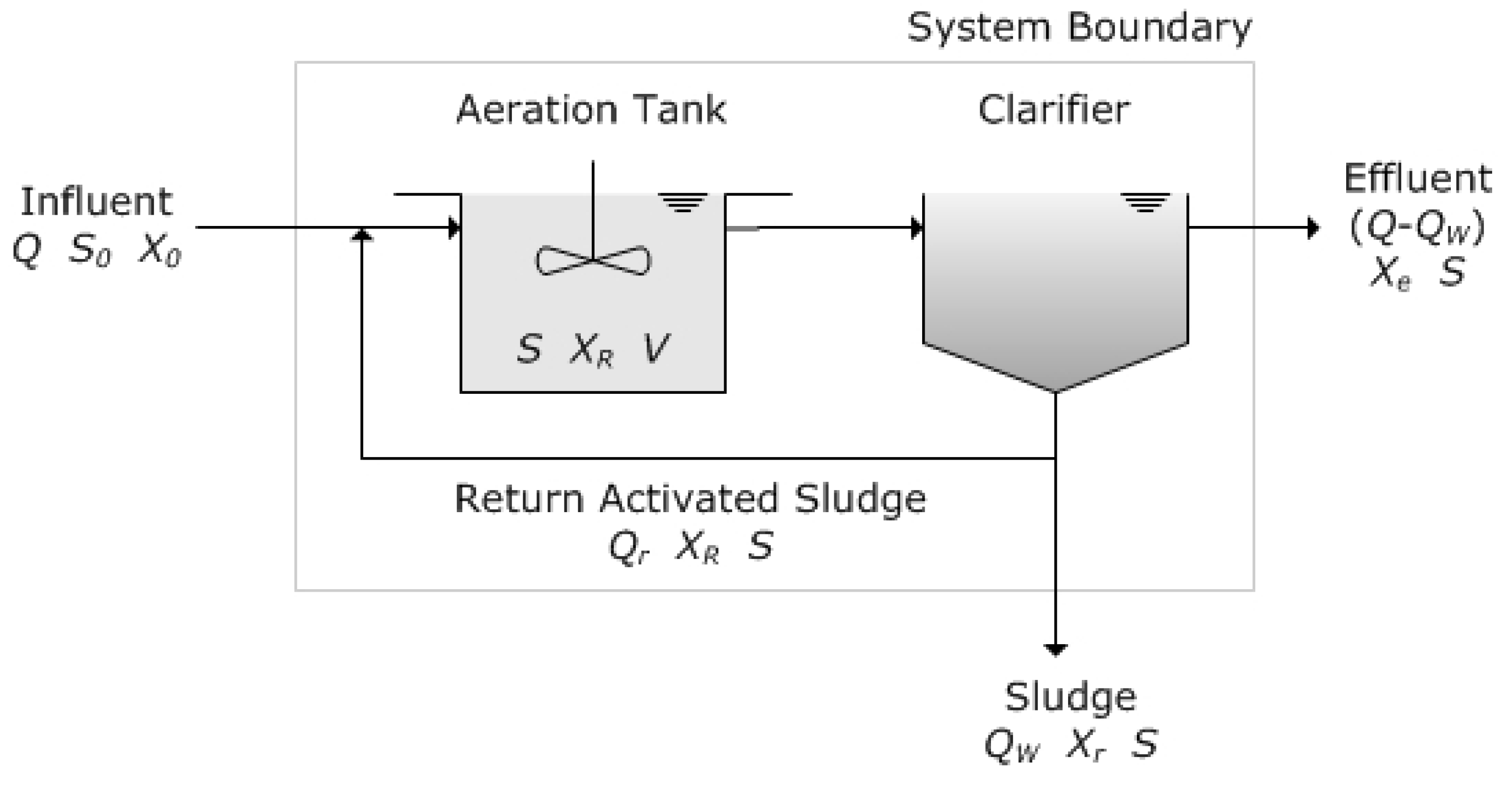
The wastewater treatment process at the oasis wastewater treatment plant is based on a traditional biological process adapted to arid regions and relies on the following elements:
Figure 1.
Schematic representation of the activated sludge system of the Timimoun oasis wastewater treatment plant.
Figure 1.
Schematic representation of the activated sludge system of the Timimoun oasis wastewater treatment plant.
- Pretreatment
• Coarse and fine screening.
• Grit/oil removal
- Biological treatment
The activated sludge system with extended aeration promotes the decomposition of organic matter and partial nitrification. Numerous studies in desert environments have demonstrated the ability of biomass to withstand hot climates [4,5].
- Clarification
Gravity separation in a secondary clarifier.
- Tertiary treatment
Ultraviolet disinfection is recommended in arid regions to prevent the formation of chlorination byproducts [14,15].
- Sludge management
2.3. Sampling Strategy
Various samples were collected monthly for twelve months (January to December) to account for seasonal variations characteristic of extremely arid environments. The sampling points are shown in Table 1.
The various samples were collected according to APHA Standard Methods [12].
2.4. Physicochemical Analyses
The measured parameters include the following. COD, BOD5, TSS, pH, electrical conductivity (EC), ammonia nitrogen (NH4+), nitrates (NO3−), Kjeldahl nitrogen (KTN), total phosphorus (TP) and major ions (Na+, Ca2+, Mg2+, Cl−). Table 2 summarizes the methods used in this work.
Physicochemical and nutritional parameters were analyzed using standardized methods to ensure data quality. Table 2 illustrates the exclusive use of the APHA and ISO protocols, which guarantees the accuracy and comparability of the analyzes.
2.5. Calculation of Irrigation Suitability Parameters
Irrigation quality indicators were calculated as follows:
2.5.1. Sodium Adsorption Ratio (SAR) [17].
2.5.2. Residual Sodium Carbonate (RSC) [18].
RSC=(CO32−+HCO3−) − (Ca2++Mg2+)
2.5.3. Risk Index for Soil Permeability (ISP) [18].
2.6. Microbiological Analyses
The microbiological indicators measured included total coliforms, fecal coliforms and E. coli, by membrane filtration (APHA 9222 D/E) [20].
The effectiveness of UV disinfection was evaluated by comparing the bacterial load before and after exposure.
2.7. Kinetic Modeling
A first-order model was used to study the kinetics of COD and nitrogen decomposition [21]:
2.8. Statistical Analysis
Statistical analysis was performed using R 4.3 and OriginPro 2023:
• Normality tests (Shapiro-Wilk)
• Analysis of variance (ANOVA) of seasonal variations
• Pearson correlation coefficients that include salinity, sodium, and electrical conductivity;
• Modeling of the Kinetic Equation by Nonlinear Regression
• A significance level of p < 0.05 was used.
3. Results and Discussion
3.1. Overall Performance of Wastewater Treatment Plants Under Hyper-Arid Conditions
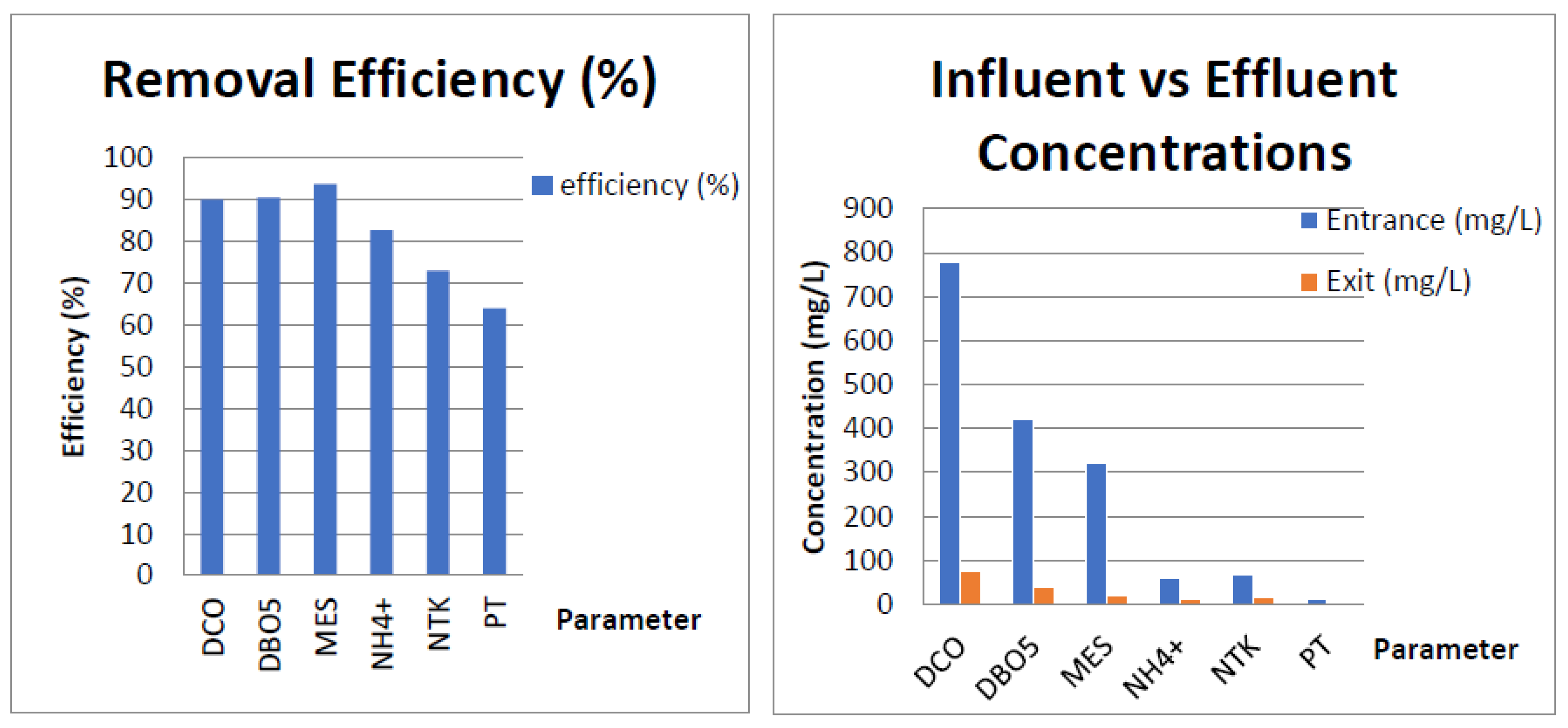
The following table (Table 3) shows the average wastewater treatment performance of the Timimoun plant. The high removal rates observed for COD (90%), BOD5 (90.5%) and TSS (93.8%) reflect the excellent efficiency of the biologically activated sludge system despite the severe climatic constraints of the extremely arid desert environment. Similar performance has also been observed for wastewater treatment plants operating in hot and dry climates, demonstrating the robustness and efficiency of traditional biological processes when properly implemented [24,25].
TSS visually illustrates the results obtained in Table 3, which clearly demonstrate the overall stability of the treatment, a result also observed in studies recently published in several journals [26,27].
Figure 2.
Treatment Performance of the Timimoun Wastewater Plant: Removal efficacy and influence-effectiveness concentration profiles.
Figure 2.
Treatment Performance of the Timimoun Wastewater Plant: Removal efficacy and influence-effectiveness concentration profiles.
The following figure (Figure 3) illustrates the weekly evolution of suspended solid concentrations in raw and treated wastewater. Despite fluctuations in inlet concentrations, treated wastewater at the outlet exhibits relatively low and stable concentration levels, indicating effective secondary settling and satisfactory cohesion of biological flocs [28]. These results are consistent with what has been observed and reported for biological systems operating at high thermal pressure [29].
Figure below (Figure 4) illustrates the temporal evolution of total dissolved solids (TDS). The removal efficiency remains moderate (40–55%), reflecting the inherent limitations of biological processes with respect to dissolved fractions. This finding has been widely documented in recent water literature, as it is a key factor in evaluating the feasibility of effluent reuse in arid regions [29,30].
Figure 5 and Figure 6, which relate to the weekly evolution of BOD5 and COD, show significant and relatively stable removal rates, often exceeding 85%. These results help to confirm the capacity of biological processes to absorb variations in organic load in the presence of severe drought, which is consistent with the observations made by [31].
The reduction in BOD is particularly high, ranging between 85% and 95%. This result was observed even during the peak observed in W-9, where the system was able to maintain wastewater with a low load of biodegradable organic matter, thus demonstrating the remarkable resilience of active biomass in the face of an increase in organic load [32].
The high and stable performance observed for TSS, BOD and COD demonstrate the high efficiency of biological treatment to remove particulate matter and organic particles, consistent with trends reported in previous literature [17,33]. On the contrary, the slight decrease recorded in the total amount of dissolved solids is typical of conventional biological processes [34]. This underscores the need to use advanced and modern technologies such as nanofiltration or reverse osmosis to target persistent dissolved substances [34]. The yields obtained are comparable to those observed in constructed wetland systems in the Sahara [5] and in wastewater treatment plants in hot climates [35].
3.2. Seasonal Variability of Treatment Performance
The figure in the following (Figure 7) illustrates the seasonal variation in the efficiency of COD removal. A slight decrease in performance is observed during periods of extreme temperatures, reflecting the impact of heat stress on microbial activity. Despite this, performance remains relatively high throughout the year, demonstrating the operational flexibility of the system, as confirmed by several recent studies on wastewater treatment plants in arid environments [36].
The following figure (Figure 8) shows the relationship between seasonal temperature fluctuations and the evolution of the physicochemical components of the treated water. Despite all the observed temperature fluctuations, the concentrations of suspended solids and organic matter remained relatively stable, although slight variations in nitrogen forms were observed during the summer. These trends are consistent with the observations of studies published, which highlight a moderate effect of temperature on biological systems without significant deterioration in the quality of treated water [37,38].
The decrease in yield can be attributed to:
• Partial inhibition of nitrifying biomass (for temperatures > 42 °C),
• Separation of microbial flocs,
• Maximum salinity during the summer period [8].
3.3. Salinity of Effluents and Suitability for Agricultural Reuse
Based on the irrigation suitability criteria listed in the following table (Table 4), it is demonstrated that the treated wastewater has an electrical conductivity between 2.4 and 2.8 dS/m. Furthermore, the SAR and RSC values indicate that there is no high to medium-risk to agricultural soils. Similar results have been recorded in other arid oases, such as the Al-Ahsa oasis in Saudi Arabia, where the reuse of treated wastewater is considered acceptable for salt-tolerant crops, provided that strict irrigation and soil management practices are implemented [26,39].
The results obtained show that residual salinity remains an important and essential determining factor for sustainable agricultural reuse, a finding largely confirmed in recent work published in the journal Water on integrated water and soil management in arid regions [40].
3.4. Effluent Microbiological Quality and Sanitary Safety
The table in below (Table 5) presents the results of microbiological analyzes obtained before and after disinfection by ultraviolet radiation. Significant reductions demonstrate the high effectiveness of UV treatment, with reductions ranging from 4 to 5 log10 for coliforms and Escherichia coli. These results are also consistent with those reported for wastewater treatment plants intended for agricultural reuse, where microbiological risk control has been identified as a fundamental and important condition for sanitary acceptance [36].
3.5. Kinetic Modeling of COD Degradation
The process of applying a first-order kinetic model to the decomposition of COD shows a high degree of agreement with the experimental data (R2 > 0.90), with an average kinetic coefficient k ≈ 0.32 j−1. These values can be compared to those obtained for biological systems operating in arid and semi-arid regions, confirming that residual salinity does not significantly affect the processes of decomposition of organic matter [36].
3.6. Implications for Land Management and Reuse Policies
The results obtained show that the feasibility of reusing treated wastewater in desert environments is based on a comprehensive approach that combines treatment performance, salinity management, and appropriate agricultural practices. This approach is fully consistent with the guidelines proposed in recent studies, which recommend the implementation of flexible regulatory frameworks, adaptable to specific soil and climate conditions, and clearly integrated for sustainable soil management [21,41].
3.7. Transferability to Other Arid and Hyperarid Oases
Although this work focuses on the study of a single wastewater treatment plant, it offers lessons applicable to other oases in the Sahara and similar arid regions. This is similar to recent studies published, which confirm the importance of these integrated approaches for improving the sustainability of treated wastewater reuse strategies in environments that suffer from severe water stress [22].
Compared to wastewater treatment plants operating in several other arid regions (Table 7), our Timimoun plant exhibits high efficiency in removing chemical oxygen demand (COD), comparable to or even exceeding that of conventional biological systems operating under similar climatic conditions. Unlike membrane processes, residual salinity remains the primary limiting factor for expanding agricultural use, confirming that treatment performance alone is insufficient to guarantee the sustainability of wastewater recycling in desert environments [38].

Table 6.
Comparative performance of wastewater treatment plants in arid and hyper-arid regions:.
| Site / Country | Climate | Processing method | Influential COD (mg/L) | COD effluent (mg/L) | COD Yield (%) | CE effluent (dS/m) | Agricultural use possible |
|---|---|---|---|---|---|---|---|
| Timimoun – Algeria | Saharan hyper-arid | Activated sludge + UV | 780 | 75 | 90 | 2.4–2.8 | Salt-tolerant crops |
| Al-Ahsa – Saudi Arabia | Hyper-arid | Prolonged activated sludge | 720 | 85 | 88 | 2.6–3.1 | Yes (strict management) |
| Ouargla – Algeria | Hyper-arid | Lagooning + planted filters | 650 | 110 | 83 | 3.2 | Limit |
| Negev – Palestine | Extreme arid | MBR | 600 | 30 | 95 | 1.8 | Yes (broad spectrum) |
| Al-Qassim – Saudi Arabia | Hyper-arid | Conventional activated sludge | 700 | 95 | 86 | 2.9 | Yes (forage) |
| Rajasthan – India | Hot arid | Activated sludge + ponds | 680 | 120 | 82 | 3.4 | Restricted |
| Southern Tunisia – Tunisia | Arid | aerated lagoon | 620 | 100 | 84 | 3.0 | Yes (salt tolerance) |
4. Conclusions
Through this work, our objective was to highlight the capacity of wastewater treatment plants operating with activated sludge to maintain high performance and treatment stability in hyper-arid desert environments, despite the constraints imposed by extreme climatic conditions characterized by extremely high temperatures, high evaporation, and increased natural mineralization. The Timimoun oasis wastewater treatment plant shows high capacity and efficiency in the removal of organic and particulate contamination, in addition to pathogenic microbiological disinfection, which certainly contributes to the robustness of the full-scale operational process.
However, the results obtained show that the residual salinity of treated water constitutes a major limiting factor in the sustainable agricultural reuse process. Although irrigation suitability indicators suggest compatibility with salinity-tolerant crops, the sustainability of reuse largely depends on the extent to which appropriate soil management and irrigation practices are adopted to prevent damage from sodification and soil structure degradation.
The results obtained show that the success of treated wastewater reuse strategies in oasis environments depends not only on the performance of these processes, but also requires an integrated approach that combines treated water quality with sustainable land management, in addition to strengthening regulatory frameworks adapted to the local characteristics of the region. The study of the Timimoun oasis station allows us to draw several lessons applicable to other Saharan oases and similar arid regions, which will contribute to the development of integrated policies for the sustainable management of water and soil, with the aim of improving water security and the sustainability of agricultural ecosystems in fragile desert regions.
Author Contributions
C.R. contributed to the development of the research methodology, supervised data collection, and revised the article. M.T. contributed to the simulations and analysis of the results and contributed to drafting the manuscript. A.B. designed the figures and formatting the tables. All authors reviewed and approved the final version of the manuscript.
Funding
This research received no external funding.
Data Availability Statement
All data supporting the findings of this study are available from the corresponding author upon reasonable request.
Conflicts of Interest
The authors declare no conflicts of interest.
References
- Minhas, P.S., Ramos, T.B., Ben-Gal, A., Pereira, L.S. Coping with salinity in irrigated agriculture: Crop evapotranspiration and water management issues. Agricultural Water Management, 2020. 227, 105832. [CrossRef]
- Mohammed, AS., Kutaila, AF., Al-Hinai, H.S. et al. Sustainable agriculture in Oman: evaluating treated wastewater irrigation effects on soil quality, heavy metal accumulation, and alfalfa growth. J. Saudi Soc. Agric. Sci, 2025. 24, 81. [CrossRef]
- Lyu, S., Chen, W., Zhang, W., Fan, Y. and Jiao, W. Wastewater Reclamation and Reuse in China: Opportunities and Challenges. Journal of Environmental Sciences, 2016. 39, 86-96. [CrossRef]
- Rezzoug, C., Merzougui, T., Bouchiba, A. (2025). Wastewater treatment technologies and challenges in Algeria and their future prospects. Discover Sustain. 6, 884. [CrossRef]
- Bendida, A., Kendouci, M.A., Mebarki, S., El-Bari Tidjani, A. Wastewater purification and recycling using plants in an arid environment for agricultural purposes: Case of the Algerian Sahara. Appl. Water Sci. 2024. 14, 123. [CrossRef]
- Moussaoui, T., Derdour, A., Hosni, A., Ballesta-de los Santos, M., Legua, P., Pardo-Picazo, M.Á. (2023). Assessing the Quality of Treated Wastewater for Irrigation: A Case Study of Ain Sefra Wastewater Treatment Plant. Sustainability, 2023. 15(14), 11133. [CrossRef]
- Ukoha-Onuoha, E., Horsfall, I. The evolution of wastewater reuse for irrigation: Lessons learned and future directions. Next Sustainability. 2026. Volume 7, 100253. [CrossRef]
- Mazouzi, M., Chenchouni, H. Evaluating the Impacts of Treated Wastewater and Groundwater Irrigation on Soil Quality and Physico-Chemical Properties. Eurasian Soil Sc. 2026. 59, 30. [CrossRef]
- Machineni, L. Review on biological wastewater treatment and resources recovery: attached and suspended growth systems. Water Science and Technology. 2019. 80 (11): 2013–2026. [CrossRef]
- Christou, A., Agüera, A., Bayona, J.M., Cytryn, E., Fotopoulos, V., Lambropoulou, D., Manaia, C.M., Michael, C., Revitt, M., Schröder, P., Fatta-Kassinos, D. The potential implications of reclaimed wastewater reuse for irrigation on the agricultural environment: The knowns and unknowns of the fate of antibiotics and antibiotic resistant bacteria and resistance genes – A review. Water Research, 2017. 123, 448–467. [CrossRef]
- Savari, M., Amghani, M., Malekian, A. Application of the diffusion of innovation theory to identify factors affecting the use of treated wastewater in crop irrigation: a study in Tehran province. Cleaner Engineering and Technology. 2025 (b). Volume 29, 101094. [CrossRef]
- Dib, D., Ouanes, M., Fellah, M. et al. Suitability of a classic wastewater treatment plant to purify the collective effluent of Oum El-Bouaghi City, North East Algeria. Appl Water Sci. 2025.15, 204. [CrossRef]
- Alfarra, A., Alnahhal, M., Hussein, A.H. Wastewater reuse in arid regions: Opportunities and challenges. Water. 2020, 12(9), 2539.
- UNESCO. United Nations World Water Development Report 2023: Partnerships and Cooperation for Water; UNESCO: Paris, France, 2023.
- APHA. Standard Methods for the Examination of Water and Wastewater, 24th ed; APHA/AWWA/WEF: Washington, DC, USA. 2022.
- Panda, D., Kumar, A., Gangawane, K.M. Principles of Wastewater Treatment and Sludge Generation. In: Mandpe, A., Shah, M.P. (eds) Wastewater Sludge Nexus. Sustainable Landscape Planning and Natural Resources Management. Springer, Cham, 2025.
- Henze, M., van Loosdrecht, M.C.M., Ekama, G.A., Brdjanovic, D. Biological Wastewater Treatment: Principles, Modelling and Design. IWA Publishing. 2017.
- Das, A., Mishra, S., Ayejoto, D.A. Harnessing Biotechnology for Sustainable Wastewater Treatment and Circular Economy. Earth Syst Environ 9, 2025. 625–638. [CrossRef]
- Hajjar, T., Mohtar, R., Abou Jaoude, L., Yanni, S. Treated wastewater reuse for irrigation in a semi-arid region. Science of The Total Environment. 2025. Volume 966, 178579. [CrossRef]
- Singhopon, T., Canh, V., Kadoya, S., Katayama, H. A full-scale Co-located comparison of virus removal by membrane bioreactor and conventional activated sludge systems. Water Research, 2026. Volume 292, 125352. [CrossRef]
- Bari, A.H., Akolkar, H.N., Hatvate, N.T., Haghi, A.K. Introduction to Wastewater Treatment. In: Wastewater Treatment. Synthesis Lectures on Sustainable Development. Springer, Cham 2026. [CrossRef]
- García. F., Jaramillo, A., Garay, C., Sánchez, K., Gonzales, L. Effectiveness of membrane technologies in removing emerging contaminants from wastewater: Reverse Osmosis and Nanofiltration. Water Cycle. 2025. Volume 6, Pages 357-373. [CrossRef]
- Reid, E., Liu, X., Judd, S. Effect of high salinity on activated sludge characteristics and membrane permeability in an immersed membrane bioreactor. Journal of Membrane Science. 2006. Volume 283, Issues 1–2, 20. Pages 164-171. [CrossRef]
- Metcalf & Eddy. Wastewater Engineering: Treatment and Resource Recovery. McGraw-Hill, 2014.
- Drechsel, P., Qadir, M., Galibourg, D. The WHO Guidelines for Safe Wastewater Use in Agriculture: A Review of Implementation Challenges and Possible Solutions in the Global South. Water. 2022. 14(6), 864. [CrossRef]
- Alresheedi, M.T., Haider, H., Albuaymi, A.M., Alsulaili, A.D., Alshammari, S.B. (2023). Sustainability of a low-cost decentralized treatment system for wastewater reuse: Resident perception-based evaluation for arid regions. Water 15, 3458. [CrossRef]
- Rezzoug, C., Merzougui, T., Bouchiba, A. Wastewater treatment technologies and challenges in Algeria and their future prospects. Discover Sustainability. 2025; 6, 884. [CrossRef]
- Mabrouk, O., Hamdi, H., Sayadi, S., Al-Ghouti, M., Abu-Dieyeh, M., Zouari, N. Reuse of Sludge as Organic Soil Amendment: Insights into the Current Situation and Potential Challenges. Sustainability. 2023. 15(8), 6773. [CrossRef]
- Al-Rashdi, T., Ahmed, M., Stefanakis, A. Assessment of a sludge treatment reed bed mesocosm under an arid and hot climate. Ecological Engineering. 2025. Volume 218, 107676. [CrossRef]
- Savari, M., Amghani, M., Malekian, A. Treated wastewater irrigation: A bridge between water scarcity, a healthy environment, and safe food production. One Health. 2025 (a). Volume 21, 101251. [CrossRef]
- Rezzoug, C., Belhadj, M., Merzougui, T., Bouchiba, A (2026). Wastewater Treatment Plants as Environmental Barriers in Hyperarid Regions: A Comprehensive Evaluation of their Performance, Groundwater Protection, and Reuse in Agriculture in the Algerian Sahara. Processes 2026, 14(7), 1112; [CrossRef]
- Gugliucci, W., Pepe, O., Ventorino, V. Biomass conversion strategies and wastewater reuse: a deep focus on hydrothermal liquefaction as a circular economy approach. Chem. Biol. Technol. Agric. 2024. 11, 177. [CrossRef]
- Dhinesh, R., Kirthiga, S.S., Gopinath, A., Taherzadeh, M. Future Trends and Innovations: Emerging Technologies in Wastewater Treatment and Potential Breakthroughs in Resource Recovery. In: Dhiman, S., Mukherjee, G. (eds) Resource Resurgence. Springer Water. Springer, Cham. 2025. [CrossRef]
- Azuma, T., Adachi, F., Kawahara, R., Yamaguchi, N., Kanamori, H. First nationwide survey of the distribution and seasonal variation of antimicrobials in effluents from wastewater treatment plants in Japan. Journal of Hazardous Materials Advances, 2026. Volume 21, 101054. [CrossRef]
- Gao, Y., Shao, G., Wu, S., Xiaojun, W., Lu, J., Cui, J. Changes in soil salinity under treated wastewater irrigation: A meta-analysis. Agricultural Water Management, 2021. 255, 106986. [CrossRef]
- Qadir, M., Drechsel, P., Jiménez Cisneros, B., Kim, Y., Pramanik, A., Mehta, P., Olaniyan, O. Global and regional potential of wastewater as a water, nutrient and energy source. Natural Resources Forum, 2020. 44(1), 40–51. [CrossRef]
- Heyde, B.J., Braun, M., Soufi, L. et al. Transition from irrigation with untreated wastewater to treated wastewater and associated benefits and risks. npj Clean Water. 2025. 8, 6. [CrossRef]
- Abou Jaoude, L., Kamaleddine, F., Bou Said, R., Mohtar, R.H., Dbaibo, R., Yanni, S.F. Treated wastewater reuse and its impact on soil properties and potato and corn growth. Science of the Total Environment, 2025. 958, 178130. [CrossRef]
- Vymazal, J. (2011). Constructed wetlands for wastewater treatment: Five decades of experience. Environmental Science & Technology, 45(1), 61–69. [CrossRef]
- Levy, G., Bar-Tal, A., Cytryn, E., Borisover, M. Wastewater as a contamination risk for agricultural soils. In: Naidu, R. (eds) Contaminants in agricultural soils: Challenges and solutions. Burleigh Dodds Series in Agricultural Science, vol 166. Burleigh Dodds Science Publishing, Cambridge, UK, 2025.
- Peña, N., Maroto-Melle, E., Del Rey, S., Valenciano, A., Gutiérrez, M., Gracia-Lor, E. Ecotoxicological risk and seasonal removal of licit and illicit drugs in wastewater treatment plants: A comparison of secondary and tertiary processes. Journal of Hazardous Materials, 2025. Volume 499, 140290. [CrossRef]
Figure 3.
Variation of TSS concentrations in wastewater (untreated versus secondary treatment) and the rate of reduction during the operating phase.
Figure 3.
Variation of TSS concentrations in wastewater (untreated versus secondary treatment) and the rate of reduction during the operating phase.
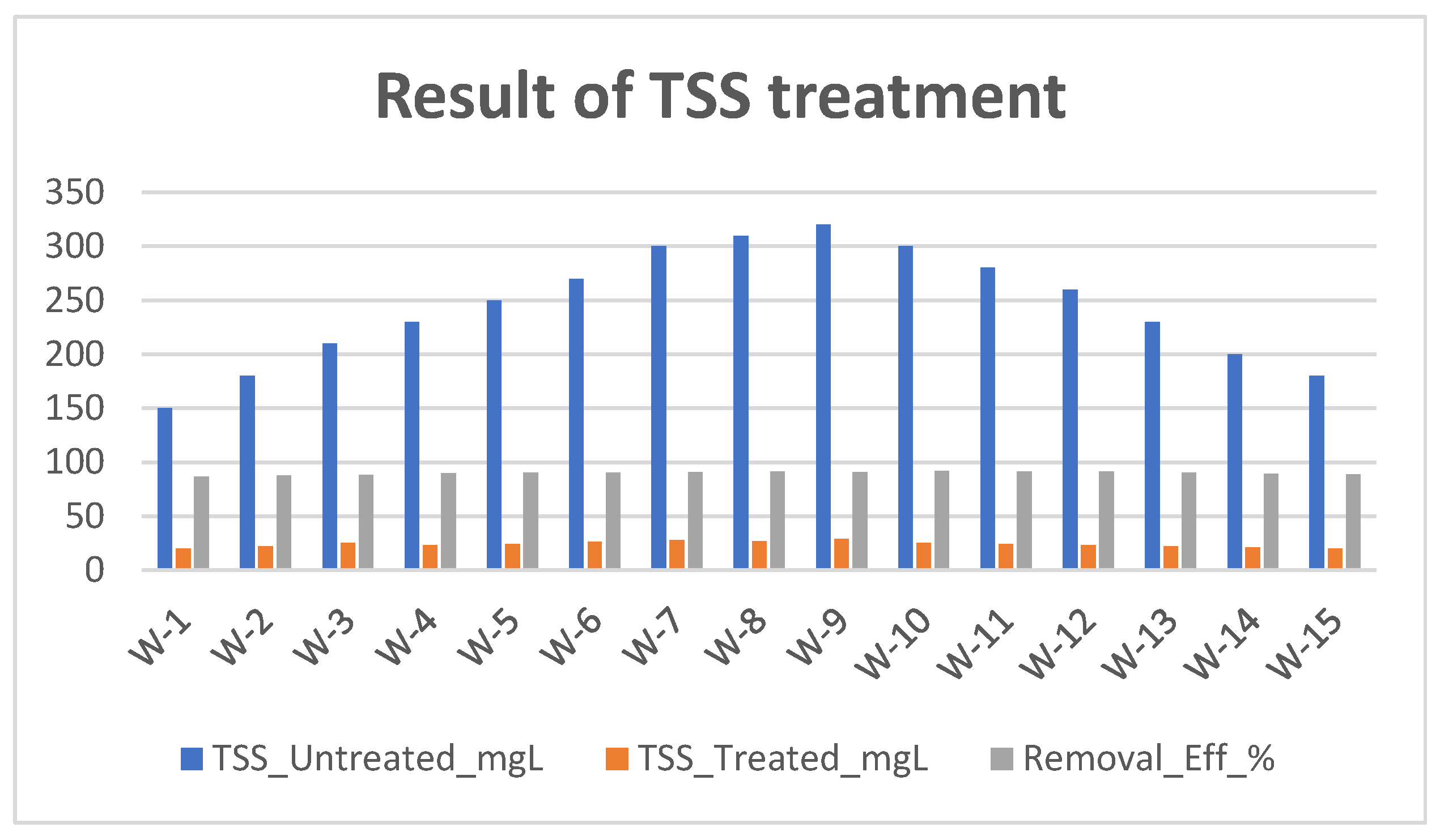
Figure 4.
Variation in the concentrations of total dissolved solids (TDS) (untreated vs. secondary treated) and the extent of the percentage decrease over the operating period.
Figure 4.
Variation in the concentrations of total dissolved solids (TDS) (untreated vs. secondary treated) and the extent of the percentage decrease over the operating period.
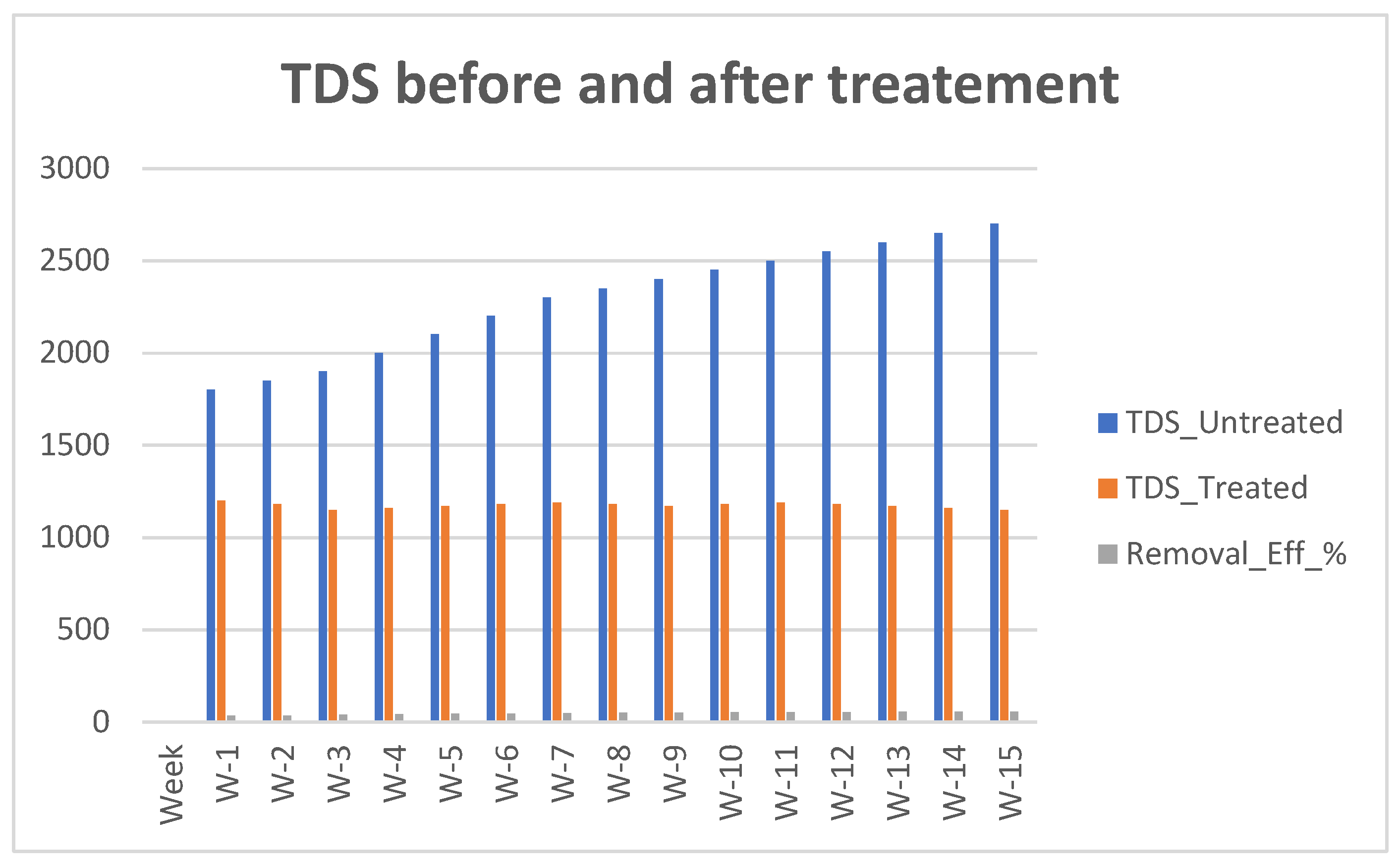
Figure 5.
Change in BOD concentrations (untreated versus secondary treated) and percentage decrease during the operating period.
Figure 5.
Change in BOD concentrations (untreated versus secondary treated) and percentage decrease during the operating period.
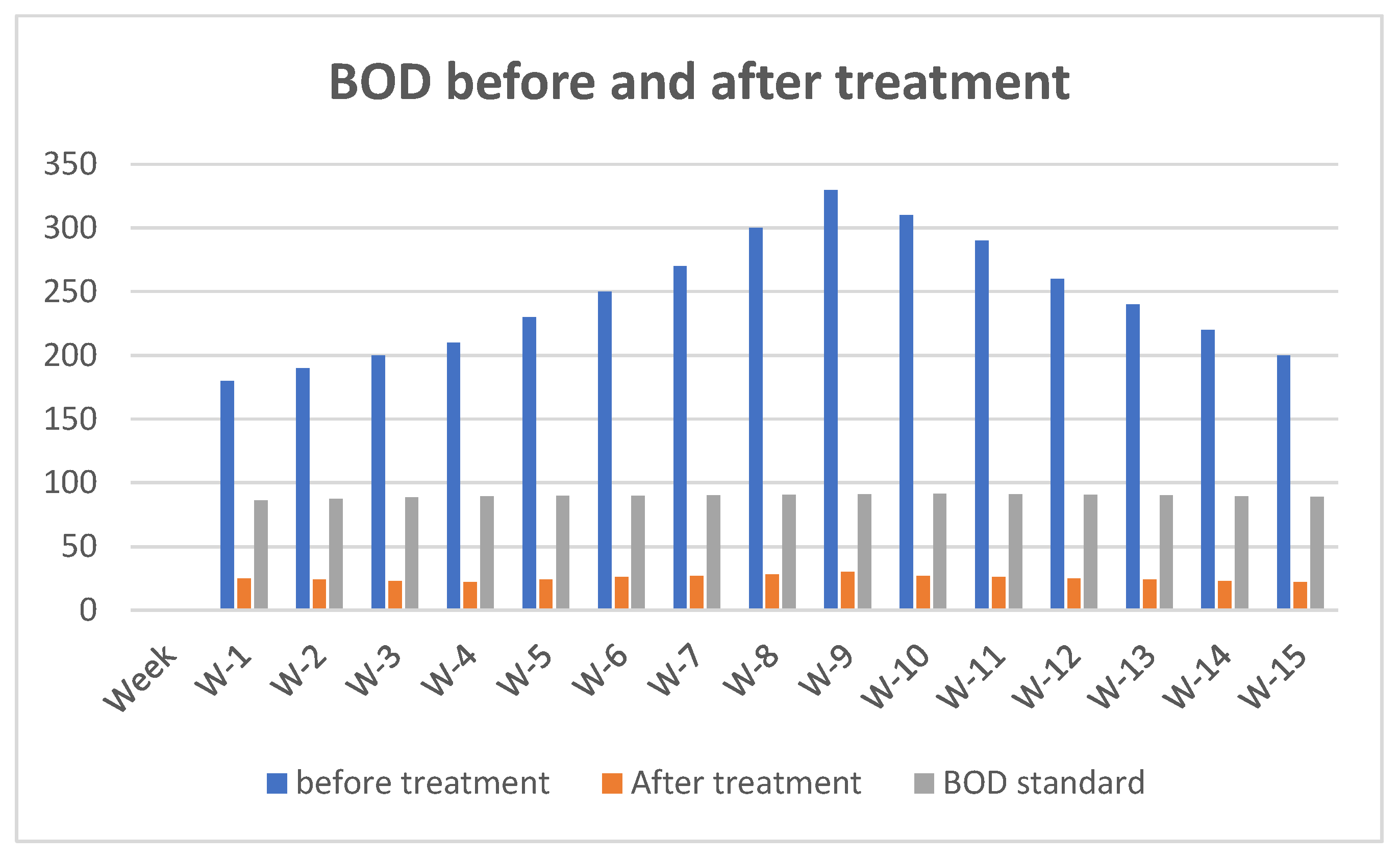
Figure 6.
Evolution of COD and removal efficiency.
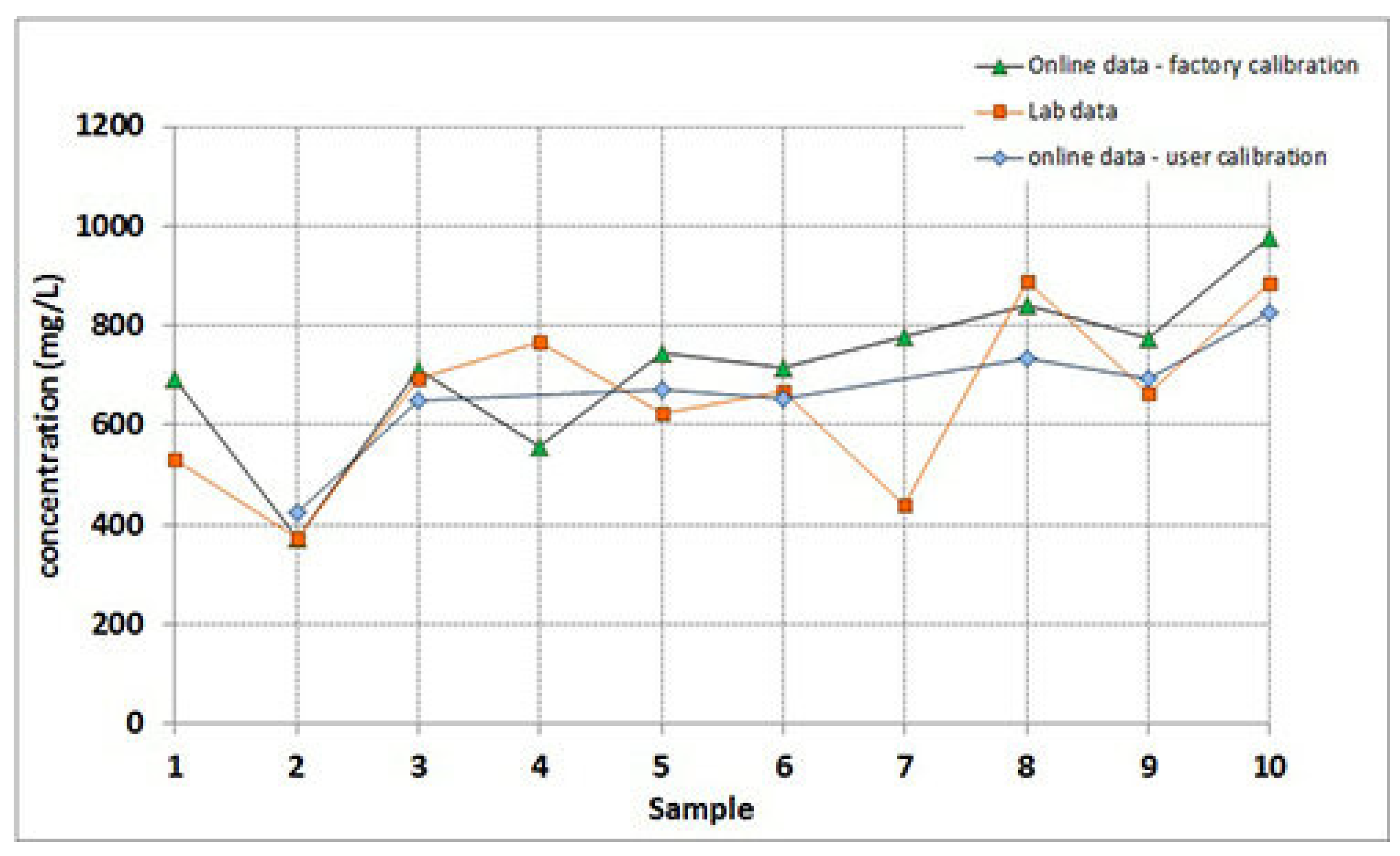
Figure 7.
Seasonal variation of COD yield.
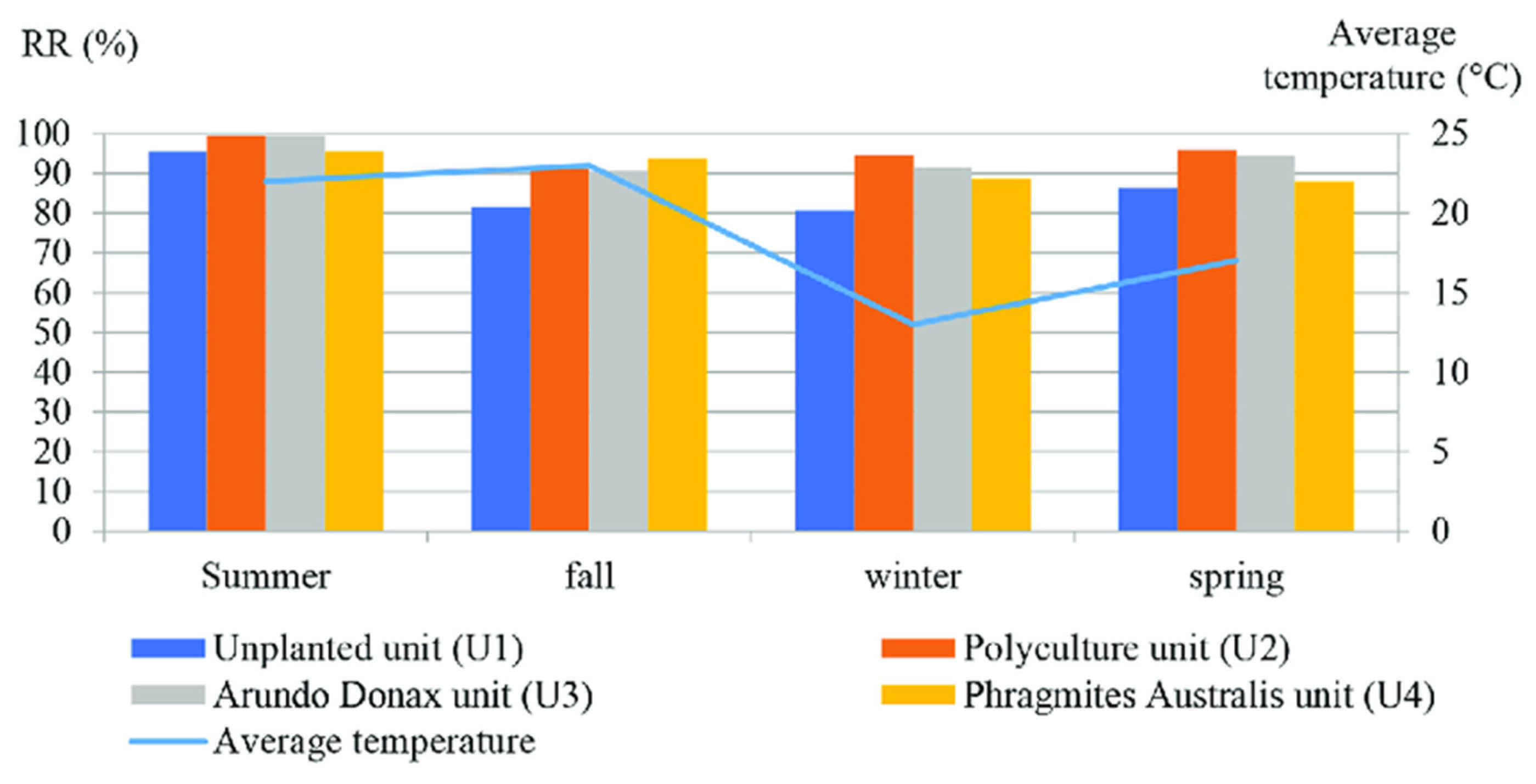
Figure 8.
Influence of temperature on wastewater quality parameters.
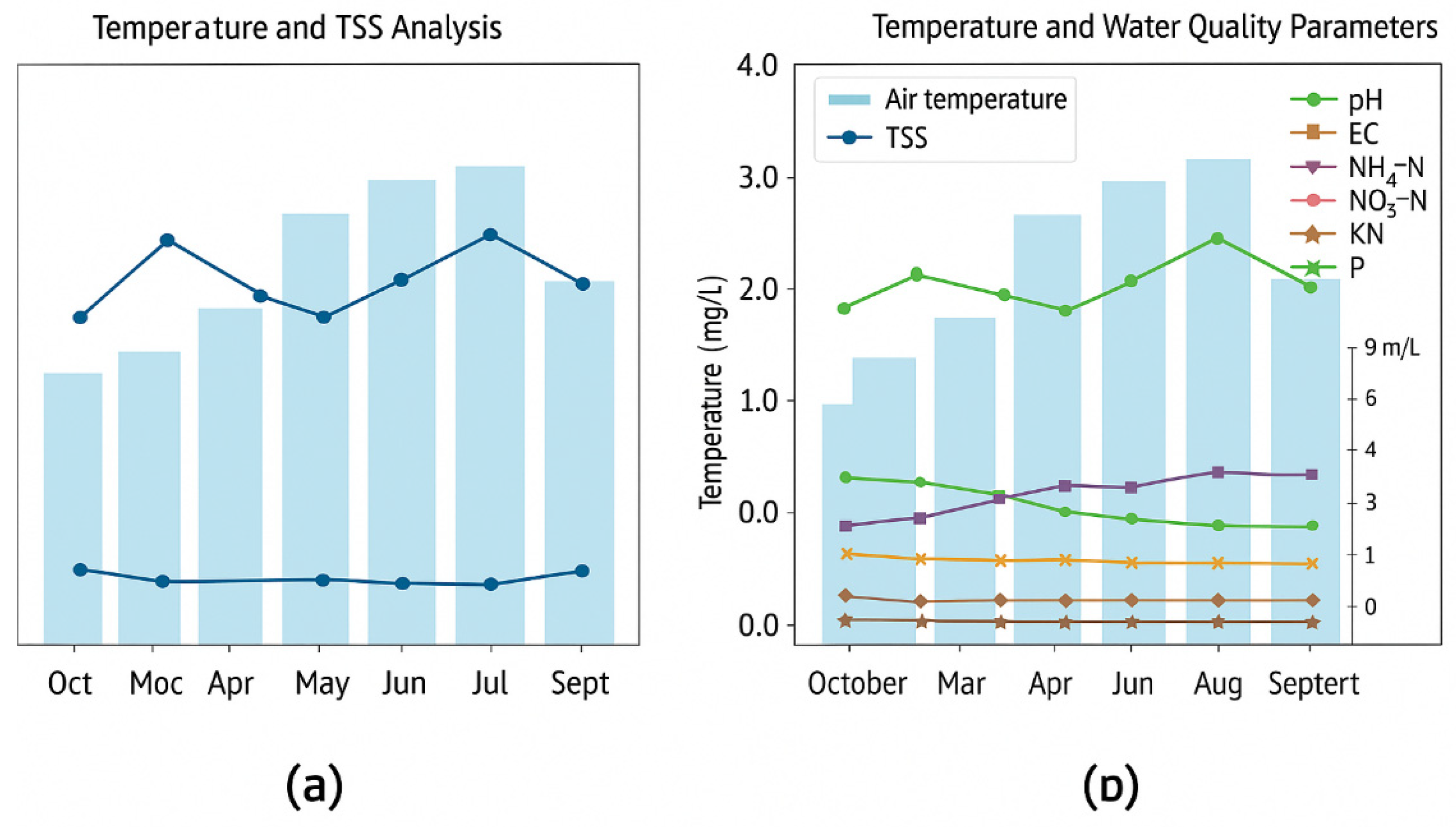
Table 1.
Sampling points.
| Code | Point | Description |
|---|---|---|
| P1 | WWTP Input | Raw wastewater |
| P2 | Clarifier outlet | Secondary effluent |
| P3 | UV outlet | Final effluent for reuse |
| B1 | Stabilized mud | Sludge intended for recovery |
Table 2.
Parameters analyzed and associated methods.
| Setting | Method | Reference |
|---|---|---|
| COD | Dichromate | APHA 5220D |
| BOD5 | Incubation period: 5 days | APHA 5210B |
| TSS | GF/C Filtration | APHA 2540D |
| NH4+ | Indophenol | APHA 4500-NH3 |
| NO3− | UV 220 nm | APHA 4500-NO3 |
| PT | Ascorbic acid | APHA 4500-P |
| CE | Conductimetry | ISO 7888 |
| pH | Potentiometry | ISO 10523 |
Table 3.
Average Wastewater Treatment Performance of the Timimoun Wastewater Treatment Plant.
| Setting | Entrance (mg/L) | Exit (mg/L) | Yield (%) |
|---|---|---|---|
| COD | 780 ± 60 | 75 ± 10 | 90% |
| BOD5 | 420 ± 35 | 40 ± 5 | 90.5% |
| MES | 320 ± 28 | 20 ± 3 | 93.8% |
| NH4+ | 58 ± 6 | 10 ± 2 | 82.7% |
| NTK | 68 ± 5 | 18 ± 3 | 73% |
| PT | 11 ± 3 | 4 ± 1 | 64% |
Table 4.
Parameters of irrigation suitability.
| Setting | Measured value | FAO threshold | Interpretation |
|---|---|---|---|
| CE | 2.4–2.8 dS/m | < 3 | Acceptable |
| SAR | 6.2 | < 10 | Low risk |
| RSC | 1.1 meq/L | < 1.25 | Satisfying |
| Cl− | 5.4 meq/L | < 7 | Tolerable |
| Bore | 0.65 mg/L | < 1 | Risk-free |
| Bore | 0.65 mg/L | < 1 | Risk-free |
Table 5.
Microbiological Results.
| Indicator | Entrance (UFC/100mL) | Exit UV (UFC/100mL) | Reduction |
|---|---|---|---|
| Total coliforms | >106 | <102 | 4 log10 |
| E. coli | >105 | <10 | 4–5 log10 |
| Fecal coliforms | >106 | <102 | 4 log10 |
Disclaimer/Publisher’s Note: The statements, opinions and data contained in all publications are solely those of the individual author(s) and contributor(s) and not of MDPI and/or the editor(s). MDPI and/or the editor(s) disclaim responsibility for any injury to people or property resulting from any ideas, methods, instructions or products referred to in the content. |
© 2026 by the authors. Licensee MDPI, Basel, Switzerland. This article is an open access article distributed under the terms and conditions of the Creative Commons Attribution (CC BY) license (http://creativecommons.org/licenses/by/4.0/).
Copyright: This open access article is published under a Creative Commons CC BY 4.0 license, which permit the free download, distribution, and reuse, provided that the author and preprint are cited in any reuse.


