

Submitted:
03 April 2026
Posted:
07 April 2026
You are already at the latest version
Abstract
Microplastics (MPs) are pervasive environmental contaminants detected in terrestrial, aquatic, and human systems. Emerging evidence indicates that MPs interact dynamically with microbiota across ecosystems, including host-associated microbiota such as the human gut, influencing microbial composition, metabolic activity, and functional potential. These interactions contribute to dysbiosis, altered immune responses, and increased dissemination of antibiotic resistance genes (ARGs), posing health risks. This review synthesizes current knowledge on mechanisms of microplastic–microbiota interactions, highlighting evidence from in vitro, in vivo, and environmental studies. We discuss methodological challenges, including variability in particle types, concentrations, aging, and analytical approaches. Recent advances in multi-omics techniques provide deeper mechanistic understanding and reveal functional consequences of MP exposure. We outline critical knowledge gaps and propose future research directions, aiming to provide a comprehensive framework for evaluating ecological and human health consequences of microplastic exposure.
Keywords:
microplastics
; microbiota
; dysbiosis
; antibiotic resistance genes
; multi-omics
; health effects
1. Introduction
Plastic materials represent one of the most successful yet problematic innovations of modern industry. Since the mass production of plastics in the 1950s, global plastic output has dramatically increased, reaching over 400 million tons annually [1,2,3]. This massive influx of plastic waste has led to the emergence of persistent environmental contaminants—microplastics (MPs), defined as plastic particles with a diameter between 1 μm and 5 mm while nanoplastics (NPs) as particles within diameters ranging from 1 to 1000 nm [3,4,5,6]. Originally, microplastics appeared as a byproduct of fragmentation of larger plastic items, known as secondary microplastics, but they are also intentionally manufactured as primary microplastics, such as microbeads in cosmetics, cleaning products, and synthetic textiles [1,2,7].
Of the MP/NPs present in the body, polypropylene (PP), polyethylene terephthalate (PET) and polystyrene (PS) accounted for more than 90%. PS is the most commonly used type of plastic material in the production of food contact materials and it is, for example, one of the most toxic polymers for placental enzymes. Therefore, MPs are at the forefront of toxicity research [8,9].
The accumulation of MP/NPs in the body causes many undesirable effects, such as oxidative stress, immune system disorders, intestinal damage, neurological disorders, etc. [10,11]. PS is very difficult to recycle, resulting in a large amount of PS waste accumulating in the environment. PS-MNPs accumulate in the intestines of terrestrial mammals in addition to aquatic organisms [12].
Microplastics are present across multiple ecosystems, from oceans and rivers to soils and the atmosphere, and have even been detected in human biological systems, including blood, placenta, and the gastrointestinal tract [1,13,14,15]. Their stability, resistance to biodegradation, and bioaccumulation potential make them particularly hazardous, as they can concentrate through food webs, affecting not only the environment but also human health. In recent years, research focus has shifted toward interactions between microplastics and microbiota, complex microbial communities that inhabit soil, water, and the human gut. The microbiota plays critical roles in nutrient metabolism, immune regulation, and protection against pathogens, while dysbiosis, an imbalance in microbial community composition, is associated with a wide range of diseases, including inflammatory, metabolic, and neurological disorders [1,13,16,17].
Emerging evidence suggests that microplastics can interact with microbial communities through both direct and indirect mechanisms. One key pathway is the formation of biofilms on plastic surfaces, creating unique microhabitats referred to as the plastisphere. These biofilms often harbor pathogenic microorganisms and antibiotic resistance genes (ARGs), increasing the risk of horizontal gene transfer between microbes [18,19,20]. The impact of microplastics extends beyond environmental microbiota to the human gut microbiome. Ingestion through food, water, or inhalation has been linked to reductions in beneficial microbial taxa, increases in opportunistic pathogens, and disruption of metabolic functions, such as short-chain fatty acid production, which is critical for immune regulation [1,14,21]. These alterations represent a potential pathway through which microplastics may indirectly affect host health, including inflammation and impaired gut barrier function.
Environmental aging processes, including photo-oxidation, mechanical abrasion, and chemical degradation, alter the surface properties of MPs, increasing their ability to adsorb antibiotics, heavy metals, and ARGs. Consequently, aged microplastics act as vectors for contaminant and resistance gene dissemination in the environment [5,19,22,23]. Moreover, co-exposure to MPs and antibiotics has been shown to synergistically alter gut microbiota and elevate ARG prevalence in animal models, underscoring the complexity of MP-microbiota interactions [14,23]. Despite rapid growth in research output, methodological heterogeneity limits the ability to reach consensus. Variations in MP types, sizes, concentrations, and analytical techniques complicate cross-study comparisons [24,25]. Therefore, standardized protocols are critical to improve reproducibility and clarify the mechanisms by which microplastics influence microbiota.
Antibiotic resistance genes (ARGs) can potentially be transferred to pathogenic bacteria through processes such as conjugation, transformation or transduction, posing a public health risk. The presence of MPs in the body and in the environment can extend the half-life of antibiotics and promote the formation of ARGs [26,27].
2. Sources and Characteristics of Microplastics
Microplastics can be classified according to their origin as primary or secondary [28,29]. Primary microplastics are intentionally produced for specific uses, such as microbeads and capsules in cosmetics, microfibers in synthetic textiles, personal care products, or industrial abrasives. Primary microplastics can also originate from wastewater from the production of plastic products. In contrast, secondary microplastics are formed by the fragmentation of larger plastic objects that are degraded mechanically, chemically, or biologically [1,2,7]. MPs can be found as fragments, foam, films, fibers, and pellets [30]. Microplastic fragments account for up to 48% [31]. The physical properties of microplastics, including size, shape, density, and chemical composition, determine their interactions with microbial communities and biological barriers of the host. Nanoplastics have a high surface-to-volume ratio and can penetrate cell membranes, thereby influencing the structure of microbial communities and host metabolic pathways [32,33]. Nanoplastics differ from microplastics mainly in properties related to environmental transport, bioavailability and toxicity [34,35,36].
Different types of polymers, such as polystyrene, polyethylene, polypropylene and polymethyl methacrylate, show different abilities to adsorb pollutants and promote biofilm formation [5,22,37].
Finding effective methods for the degradation of micro- and nanoplastics is essential for the removal of plastics from the environment. [38,39,40,41,42]. Various degradation techniques such as photodegradation [39,43,44], thermal degradation [45], photocatalysis [38,43,46], advanced oxidation processes [39], electrocatalysis [40] etc. are used to degrade MPs. Due to its efficiency and sustainability, biodegradation is well approached in the latter. Many microorganisms (e.g., Bacillus subtilis, Pseudomonas aeruginosa, Clostridium thermocellum, etc.) produce enzymes that are capable of carrying out biodegradation naturally in the environment. Various bacteria, fungi, algae and insects are able to completely digest MPs and finally convert them into sustainable waste products such as CO2 and H2O [47,48,49,50].
Environmental degradation of microplastics occurs through multiple processes. Physical degradation involves mechanical wear, crushing or friction. Chemical degradation involves hydrolytic or oxidative transformations of polymer chains. Biological degradation is often slow and depends on the presence of specific microorganisms capable of degrading polymers [51]. Aging and degradation change the surface properties of microplastics, increasing their ability to bind metals, antibiotics and ARGs (antibiotic resistance genes) [19,22]. The transport and distribution of microplastics depend on their density and interactions with the surrounding environment. Lighter polymers, such as polypropylene, can accumulate on the water surface, while heavier polymers, such as polyvinyl chloride, sediment, affecting soil and benthic ecosystems. This distribution determines which microbial communities are exposed to microplastics, as well as the potential ecological and health impacts [1,52].
3. Mechanisms of Microplastic–Microbiota Interactions
The microbiota is a microbial community that performs crucial functions such as digestion, immune system regulation, and protection against pathogens. MPs interact with the microbiota, influencing the bioaccumulation of MPs in organisms, the transfer of harmful chemicals, and the degradation of MPs in the environment [53,54,55,56].
The microbiota consists of symbiotic, pathogenic and commensal microbes. In multicellular organisms, the gut microbiota can form a barrier to potential pathogens and thus prevent disease [57]. MPs contamination can cause various neurological and respiratory diseases. In a study by Sun et al. [58], mice were used as a model to monitor the impact of MPs on the microbiota. They found that the intake of polyethylene MPs caused an increase in the values of inflammatory factors, namely IL-1β, IL-6, IL-8 and IL-10. In addition, the expression of mucin in the colon was reduced and the metabolic pathway of amino acids was increased [58].
Microplastics interact with microbial communities through a combination of physical, chemical, and biological mechanisms, which collectively influence microbial composition, diversity, and functional capacity in both environmental and host-associated ecosystems. One of the primary mechanisms is the formation of biofilms, complex aggregates of microorganisms embedded in an extracellular polymeric substance (EPS) matrix. The surfaces of MPs provide a stable substrate for microbial adhesion and colonization, creating specialized microhabitats known as the plastisphere [18,19,20]. Biofilm formation on MPs offers microorganisms protection from environmental stressors such as UV radiation, desiccation, and toxic compounds, enhanced nutrient acquisition from adsorbed organic matter, and facilitation of horizontal gene transfer, including antibiotic resistance genes (ARGs) [59]. Aged microplastics, which undergo chemical and physical modifications over time, exhibit increased surface roughness and hydrophobicity, enhancing microbial attachment and biofilm development. These surfaces also tend to adsorb antibiotics, heavy metals, and other pollutants, creating hotspots for selection and proliferation of resistant microbial populations [2,5,22].
Biofilm formation on MPs occurs in three stages:
1. Adhesion of microorganisms: protozoa, algae, fungi, bacteria and viruses attach reversibly or irreversibly to the surface of microplastics through weak or strong interactions. At the same time, antibiotics, metal ions or endocrine disruptors adsorb to the surface of MPs through covalent bonds, hydrophobic or π–π interactions.
2. Accumulation and formation of a stable biofilm: Substances that accumulate on the surface of the biofilm facilitate the colonization of microorganisms that secrete EPS.
3. Release of microorganisms: As a result of the degradation of MPs, microorganisms are released back into the environment.
In addition to environmental conditions such as UV radiation, pH, MPs biofilm formation is influenced by MP properties, such as color, shape, size, hydrophobicity, etc. Negative factors that do not support biofilm formation are also important: aging of microplastics, water depth, pollutants (antibiotics, heavy metals) and conjugative plasmids [2,59].
Beyond biofilm formation, MPs can influence microbial communities through direct physical and chemical interactions. Microplastic particles can cause abrasion or damage to microbial habitats in aquatic or soil environments, and ingestion in the gut can disrupt the mucosal barrier, altering microbial colonization patterns and favoring dysbiosis [14,60,61,62]. MPs can adsorb and release co-contaminants, including antibiotics, metals, and persistent organic pollutants, altering microbial metabolism and creating selective pressures favoring opportunistic or resistant taxa [63,64]. The stability of the gut microbiota is a key role in maintaining host health, as it plays an important role in regulating host metabolism. There are correlations between gut microbiota and host metabolism upon exposure to MPs [65,66,67]. In host systems, MPs can induce oxidative stress and inflammation, indirectly affecting microbial composition by altering the intestinal microenvironment [14,33,60]. Animal studies have demonstrated that ingestion of polystyrene or polyethylene MPs reduces the abundance of beneficial bacteria such as Lactobacillus and Bifidobacterium while increasing opportunistic pathogens such as Escherichia coli. This shift disrupts short-chain fatty acid production, compromises gut barrier integrity, and increases susceptibility to inflammation and infection [14,60].
The physicochemical properties of MPs are critical determinants of their interactions with microbial communities. Nanoplastics can penetrate cellular membranes and reach intracellular compartments, whereas larger MPs mainly interact with surface-associated microbiota [32,59]. Fibers, fragments, and spheres exhibit different adhesion characteristics, with fibers often providing larger surface areas for biofilm formation. Polymers such as polyethylene, polypropylene, and polystyrene differ in hydrophobicity, surface charge, and chemical composition, affecting microbial colonization and pollutant adsorption [5,22]. These characteristics contribute to heterogeneity in microbial responses, with certain taxa thriving on specific MP types, while others are inhibited.
MPs, due to their adsorption capabilities, serve as a vector for the transport of toxic substances [68] Depolymerization of plastics and physicochemical aging change the concentration of contaminants on the plastic surface and promote the formation of biofilm [69]. Biofilm formed on the surface of PS [70], PP [71] or PET [72] by pathogenic microbial communities is a factor in the transport of heavy metals, persistent organic pollutants as well as antibiotics. MPs covered with biofilm have a higher affinity for contaminants and facilitate the entry of sorbed pollutants into the food chain [68].
Microplastics act as vectors for antibiotic resistance genes due to their ability to serve as stable surfaces for biofilm formation, concentrate antibiotics and metals that select for resistant strains, and promote gene exchange within biofilms [2,19]. Evidence from aquatic environments indicates that MPs enhance ARG prevalence among environmental bacteria, including clinically relevant pathogens, potentially contributing to the global spread of antimicrobial resistance [19,73]. Similar patterns are observed in gut microbiota, where chronic MPs exposure can increase ARG abundance, particularly under co-exposure with antibiotics [14,23].
MPs rarely exist in isolation. They frequently interact with environmental or dietary co-contaminants, such as heavy metals, pesticides, or organic pollutants. These interactions can synergistically alter microbial metabolism, changing carbon cycling and nitrogen transformation in soils and aquatic systems, enhance microbial selection pressures favoring taxa capable of tolerating combined stressors, and increase ARG dissemination [63,74]. For example, aged MPs in sediments can adsorb both antibiotics and heavy metals, creating microenvironments where resistant microbes multiply and transfer ARGs more readily than in uncontaminated environments [22,74].
The accumulation of microplastics in the intestine, dysbiosis of the gut microbiota and effect on human health is presented on Figure 1.
4. Multi-Omics Approaches in Microplastic Research
Understanding microplastic–microbiota interactions requires integrative, high-resolution techniques that capture not only compositional changes but also functional consequences. Multi-omics approaches, including metagenomics, metatranscriptomics, metaproteomics, metabolomics, and emerging single-cell omics, provide comprehensive insights into how MPs alter microbial communities and their metabolic networks [20,21,75].
MPs and Antibiotic Resistance Genes (ARGs) pollute the environment and have adverse effects on human health. The gut microbiota is a hot spot for the accumulation and spread of ARGs. Metagenomics has been used to characterize changes in microbial ARGs in the gut and their health risks. [76,77]. Metagenomics allows characterization of microbial community structure and the functional potential encoded in their genomes, revealing shifts in taxa, ARG abundance, and metabolic gene profiles under microplastic exposure [18,19]. Studies using metagenomic sequencing have demonstrated that exposure to polystyrene or polyethylene MPs in aquatic environments can reduce microbial diversity while selectively enriching bacteria capable of biofilm formation and pollutant degradation. In the study by Gao et al. [76]. metagenomes were analyzed in human stool samples and fecal samples from mice exposed to microplastics (PE, PVC, PP, PS, and PA66) using shotgun metagenomic sequencing. Associations were found between MPs and microbial genes encoding invasion-related virulence factors, a quorum sensing system, an autoinducer and transport system, and microplastic biodegradation enzymes [76]. Moreover, MPs serve as hotspots for ARGs, with metagenomics revealing co-localization of resistance genes and mobile genetic elements, highlighting the potential for horizontal gene transfer [2,19]. High-resolution metagenomic analyses in sediment and wastewater environments further indicate that MPs may selectively enrich microbial taxa capable of metabolizing adsorbed xenobiotics, suggesting a microbial adaptation to the microplastic-mediated chemical microenvironment [7,78].
Metatranscriptomics complements metagenomic analyses by quantifying gene expression profiles, identifying active microbial functions under MPs exposure. For example, in murine gut models, MPs induce upregulation of genes associated with oxidative stress response, inflammation, and xenobiotic metabolism, reflecting microbial adaptation to altered intestinal microenvironments [14,21]. Similarly, metatranscriptomic studies in aquatic systems indicate enhanced expression of biofilm-associated genes, EPS production pathways, and stress response elements on MPs compared to surrounding waterborne microbiota [18,20]. These findings emphasize the dynamic nature of microbial responses and reveal that functional activation may occur even when compositional shifts are subtle, underscoring the value of transcript-level data.
Metaproteomics and metabolomics provide functional readouts of microbialresponses to MPs at the protein and metabolite levels. Metaproteomic analyses reveal shifts in enzymes involved in carbon, nitrogen, and sulfur metabolism, suggesting that MPs can alter nutrient cycling in both environmental and host-associated microbiomes [74,78].
Metabolomic profiling in the gut shows that MPs can disrupt production of short-chain fatty acids, bile acids, amino acids, and other metabolites critical for immune homeostasis, potentially linking microbial dysbiosis to systemic health effects [14,60]. For instance, reductions in butyrate-producing bacteria lead to decreased epithelial barrier integrity, while increased propionate and lactate concentrations may exacerbate inflammatory signaling, highlighting the interplay between microbial metabolism and host physiology.
Integration of multi-omics datasets enables identification of key microbial taxa, metabolic pathways, and resistance genes most impacted by MPs, providing mechanistic insights that are not possible with single-omic approaches. Advanced bioinformatic tools, including network analysis, machine learning, and metabolic flux modeling, allow for predictive mapping of microbiota responses, highlighting microbial resilience and susceptibility to MPs exposure [79,80]. Despite their potential, multi-omics studies face challenges. High variability in MPs types, doses, exposure durations, and host or environmental conditions complicates data interpretation and cross-study comparisons [1,75]. Moreover, standardization of bioinformatic pipelines is critical to accurately integrate datasets, avoid biases from low-abundance taxa, and account for stochastic gene expression patterns [20,21]. Emerging single-cell multi-omics approaches may overcome some limitations by linking functional responses to specific microbial taxa, offering unprecedented resolution of MP–microbiota interactions.
5. Health Implications of Microplastic–Microbiota Interactions
MPs enter the human body through various exposure routes, such as ingestion of contaminated food or inhalation of particles from the air. After ingestion, MPs interfere with the gut microbiota, altering the diversity and abundance of microbial species [81,82,83].
The ingestion and inhalation of microplastics pose emerging health concerns, mediated in part by interactions with the human gut microbiota. MPs can disrupt microbial composition, reduce beneficial commensals, increase opportunistic pathogens, and alter microbial metabolic outputs, potentially affecting host physiology [14,60,84]. Dysbiosis caused by MPs has been associated with reduced short-chain fatty acid production, compromised gut barrier integrity, and elevated pro-inflammatory signaling, which can predispose individuals to gastrointestinal disorders and systemic inflammation.
A Chinese study assessed the effects of polystyrene micro/nanoplastics (PS-MNPs) on the gut microbiota and intestinal barrier after oral exposure in mice. PS-MNPs significantly altered the short-chain fatty acids that were metabolized by the gut microbiota [85].
Animal studies consistently demonstrate that chronic MPs exposure reduces Lactobacillus and Bifidobacterium abundance while enriching Escherichia coli, Clostridium spp., and other opportunistic bacteria [14,60,86].
In addition to dysbiosis, MPs can act as vectors for antibiotic resistance genes, facilitating their spread within the gut microbiota. Co-exposure to MPs and antibiotics may synergistically enhance ARG prevalence, creating a reservoir for potential horizontal transfer to pathogens and increasing the risk of antibiotic-resistant infections [2,23]. MPs may also carry adsorbed heavy metals, persistent organic pollutants, and other xenobiotics, further influencing microbial metabolism and contributing to oxidative stress and inflammatory responses [63,87].
Beyond the gut, MPs have been detected in blood, placenta, lungs, and other tissues, indicating their potential to translocate across biological barriers [13,14]. Microbial interactions on MPs may influence immune recognition, inflammatory signaling, and systemic metabolic responses. For example, MPs can induce oxidative stress in epithelial and immune cells, alter cytokine profiles, and disrupt mucosal homeostasis, effects that are partly mediated by changes in microbial composition and function [60,76]. Chronic exposure may therefore have implications for inflammatory bowel disease, metabolic disorders, neuroinflammatory pathways, and even neurodevelopment, although direct evidence in humans remains limited [87,88,89]. Environmental co-exposures further complicate health risk assessment. MPs often adsorb pollutants, including heavy metals, polycyclic aromatic hydrocarbons, and pesticides, which can influence microbial activity and toxicity. These complex interactions underscore the need for studies that integrate microbial, chemical, and host response data, ideally through multi-omics and longitudinal designs [63,74,90]. Understanding how MPs modulate microbial communities and contribute to health effects is critical for risk assessment and for developing strategies to mitigate their impact.
The effect of microplastic exposition on biological markers and human health are presented in Table 1.
6. Knowledge Gaps and Future Directions
Despite significant progress, numerous knowledge gaps remain in understanding microplastic–microbiota interactions. Standardization in experimental design is urgently needed, including harmonization of particle types, sizes, concentrations, exposure durations, and relevant biological models [1,80].
More studies are required on long-term, chronic exposure and real-world scenarios, including mixed environmental and dietary microplastics with co-contaminants. Multi-omics integration should be prioritized to link microbial composition, functional potential, and metabolite profiles to host health outcomes [75,76].
Translational research is also lacking. Most current studies rely on in vitro or animal models, and human epidemiological evidence is sparse. Longitudinal studies in humans, integrating gut microbiome analysis with exposure assessment and health outcomes, are critical for evaluating risks associated with MP ingestion and inhalation [13,14,89]. Understanding host-microbiota-MPs interactions at molecular, cellular, and systemic levels will inform mitigation strategies, including dietary, microbial, or policy interventions aimed at reducing MP exposure and microbiota disruption.
Emerging analytical and computational tools, including single-cell multi-omics, advanced imaging, and machine learning models, offer opportunities to elucidate causal relationships and predict functional consequences of MPs exposure. These approaches will also allow identification of microbial taxa and metabolic pathways most sensitive to MPs, potentially revealing biomarkers for environmental and health monitoring [20,75]. Collaborative efforts across disciplines microbiology, environmental sciences, toxicology, and medicine are essential to build a holistic understanding of MPs microbiota interactions and their implications for ecosystem and human health.
Conclusions
Microplastics (MPs) represent a pervasive and persistent class of environmental pollutants with the remarkable capacity to interact dynamically with microbiota across diverse ecosystems, spanning marine, freshwater, soil, and host-associated environments, including the human gastrointestinal tract. These interactions are multifaceted, encompassing biofilm formation on particle surfaces, profound shifts in microbial community composition, functional rewiring of metabolic and signaling pathways, and facilitation of horizontal gene transfer, particularly of antibiotic resistance genes (ARGs). Such processes not only alter microbial ecosystem structure but also create microenvironments that can amplify the persistence and dissemination of chemical contaminants, heavy metals, and emerging xenobiotics, highlighting the role of MPs as both physical and biochemical vectors.
Recent advances in multi-omics technologies—including metagenomics, metatranscriptomics, metaproteomics, metabolomics, and single-cell approaches—have elucidated mechanistic underpinnings of MP-microbiota interactions, revealing that MPs can drive dysbiosis, perturb host–microbial metabolic crosstalk, disrupt short-chain fatty acid production, and impair mucosal barrier integrity. These microbial and metabolic disturbances have been linked experimentally to inflammation, oxidative stress, and immune dysregulation, underscoring potential risks for gastrointestinal disorders, metabolic disease, neuroinflammation, and the broader spectrum of non-communicable diseases. Importantly, MPs also act as reservoirs for ARGs, enhancing the risk of antimicrobial resistance dissemination, a pressing global health threat.
Despite these insights, critical knowledge gaps remain. Methodological heterogeneity, including variations in particle size, polymer type, exposure route, and co-contaminant interactions, limits cross-study comparability and translation to human health contexts. Furthermore, epidemiological evidence in human populations remains sparse, and the systemic implications of chronic, low-dose exposure are largely unexplored. Addressing these challenges requires harmonized experimental frameworks, standardized exposure models, and the integration of high-resolution multi-omics with advanced computational approaches to link microbial dynamics to host phenotypes and environmental contexts.
Looking forward, a systems-level perspective is essential. Integrative research combining environmental monitoring, microbiome ecology, host-pathogen interactions, and predictive modeling can reveal critical thresholds of MPs exposure, identify sentinel microbial taxa and metabolites as biomarkers of environmental and human health risk, and inform precision mitigation strategies. Policy interventions, including regulation of plastic production, improved waste management, and risk-based exposure guidelines, must be informed by mechanistic and translational data to safeguard ecosystem integrity and human health.
In conclusion, MPs are not merely inert pollutants but active participants in shaping microbial ecology and host physiology, with the capacity to propagate chemical, biological, and antimicrobial threats. Harnessing multi-omics and interdisciplinary approaches will not only advance our mechanistic understanding of MP-microbiota interactions but also provide actionable insights for environmental stewardship, public health policy, and the development of targeted interventions. Recognizing MPs as drivers of ecological and health perturbations reframes the plastic pollution crisis, positioning microbiota-centered research as a linchpin for both environmental sustainability and human health resilience. Ultimately, elucidating the interplay between MPs, microbiota, and host systems represents a frontier with profound implications for predictive toxicology, global health, and the stewardship of planetary microbiome.
Author Contributions
Conceptualization, M.V. and Cs.M.; writing—original draft preparation, M.V and Cs.M.; writing—review and editing, M.V and Cs.M.; visualization, M.V and Cs.M.; supervision, M.V and Cs.M. All authors have read and agreed to the published version of the manuscript.
Funding
This research received no external funding.
Conflicts of Interest
The authors declare no conflicts of interest.
References
- Thin, Z.S.; Chew, J.; Ong, T.Y.Y.; Ali, R.A.R.; Gew, L.T. Impact of microplastics on the human gut microbiome: a systematic review of microbial composition, diversity, and metabolic disruptions. BMC Gastroenterol. 2025, 25, 583. [Google Scholar] [CrossRef]
- Tang, K.H.D.; Li, R. Aged microplastics and antibiotic resistance genes: a review of aging effects on their interactions. Antibiotics 2024, 13, 941. [Google Scholar] [CrossRef]
- Zhang, Z.; Xu, M.; Wang, L.; Gu, W.; Li, X.; Han, Z.; Fu, X.; Wang, X.; Li, X.; Su, Z. Continuous oral exposure to micro- and nanoplastics induced gut microbiota dysbiosis, intestinal barrier and immune dysfunction in adult mice. Environ. Int. 2023, 182, 108353. [Google Scholar] [CrossRef]
- Pelegrini, K.; Pereira, T.C.B.; Maraschin, T.G.; Teodoro, L.S.; Basso, N.R.S.; De Galland, G.L.B.; Ligabue, R.A.; Bogo, M.R. Micro- and nanoplastic toxicity: A review on size, type, source, and test-organism implications. Sci. Total Environ. 2023, 878, 162954. [Google Scholar] [CrossRef]
- Lin, W.; Cao, S.; Wu, Q.; Xu, F.; Li, R.; Cui, L. Size effects of microplastics on antibiotic resistome and core microbiome in an urban river. Sci. Total Environ. 2024, 919, 170716. [Google Scholar] [CrossRef]
- Vanetti, C.; Brogiatto, M.; Pezzana, S.; Clerici, M.; Fenizia, C. Effects on microplastics on the immmune system: How much should we worry? Immunol. Lett. 2025, 272, 106976. [Google Scholar] [CrossRef]
- Guo, Y.; Zhang, Z.; Wang, J.; Ye, X.; Zhao, J.; Liu, P.; Jia, H. Microplastic-mediated interactions with antibiotics and antibiotic resistance genes in sludge: combined effects and environmental implications. Environ. Geochem. Health 2025, 47, 506. [Google Scholar] [CrossRef]
- Zhang, Z.; Chen, W.; Chan, H.; Peng, J.; Zhu, P.; Li, H.; Jiang, X.; Zhang, Z.; Wang, Y.; Tan, Z.; Peng, Y.; Zhang, Sh; Lin, K.; Yung, K.K.-L. Polystyrene microplastics induce size-dependent multi-organ damage in mice: Insights into gut microbiota and fecal metabolites. J. Hazard. Mater. 2024, 461, 132503. [Google Scholar] [CrossRef]
- Chen, X.; Xu, L.; Chen, Q.; Su, S.; Zhuang, J.; Qiao, D. Polystyrene micro- and nanoparticles exposure induced anxiety-like behaviors, gut microbiota dysbiosis and metabolism disorder in adult mice Ecotoxicol. Environ. Saf. 2023, 259, 15000. [Google Scholar] [CrossRef]
- Li, Y.; Xu, M.; Zhang, Z.; Halimu, G.; Li, Y.; Li, Y.; Gu, W.; Zhang, B.; Wang, X. In vitro study on the toxicity of nanoplastics with different charges to murine splenic lymphocytes. J. Hazard. Mater. 2022, 424, 127508. [Google Scholar] [CrossRef]
- Halimu, G.; Zhang, Q.; Liu, L.; Zhang, Z.; Wang, X.; Gu, W.; Zhang, B.; Dai, Y.; Zhang, H.; Zhang, C.; Xu, M. Toxic effects of nanoplastics with different sizes and surface charges on epithelial-to-mesenchymal transition in A549 cells and the potential toxicological mechanism. J. Hazard. Mater. 2022, 430, 128485. [Google Scholar]
- Xu, D.; Ma, Y.; Han, X.; Chen, Y. Systematic toxicity evaluation of polystyrene nanoplastics on mice and molecular mechanism investigation about their internalization into Caco-2 Cells. J. Hazard. Mater. 2021, 417, 126092. [Google Scholar] [CrossRef]
- Deng, B.D.; Sinha, S.R.; Lear, G.; Tropini, C. Microplastics and nanoplastics in the human gut: from signals to standards. Nat. Rev. Gastroenterol. Hepatol. 2026; published 04 March. [Google Scholar]
- Xia, Y.; Lan, Y.; Xu, Y.; Liu, F.; Chen, X.; Luo, J.; Xu, H.; Liu, Y. Effects of microplastics and tetracycline induced intestinal damage, intestinal microbiota dysbiosis, and antibiotic resistome: metagenomic analysis in young mice. Environ. Int. 2025, 199, 109512. [Google Scholar] [CrossRef]
- Wang, K.; Wang, F.; Yu, Y.; Yang, S.; Han, Y.; Yao, H. Microplastics and soil microbiomes. BMC Biol. 2025, 23, 273. [Google Scholar] [CrossRef]
- Bora, S.S.; Gogoi, R.; Sharma, M.R.; Anshu; Borah, M.P.; Deka, P.; Bora, J.; Naorem, R.S.; Das, J.; Teli, A.B. Microplastics and human health: unveiling the gut microbiome disruption and chronic disease risks. Front. Cell. Infect. Microbiol. 2024, 14, 1492759. [Google Scholar] [CrossRef]
- Sun, J.; Peng, S.; Yang, Q.; Yang, J.; Dai, Y.; Xing, L. Microplastics/nanoplastic and neurological health: An overview of neurological defects and mechanisms. Toxicology 2025, 511, 154030. [Google Scholar] [CrossRef]
- Jia, J.; Liu, Q.; Zhao, E.; Li, X.; Xiong, X.; Wu, C. Biofilm formation on microplastics and interactions with antibiotics, antibiotic resistance genes and pathogens in aquatic environment. EEH 2024, 3, 516–528. [Google Scholar] [CrossRef]
- Zhang, B.; Li, Y.; Zhao, Z.; Lyu, H.; Wang, l.; Welden, N.; Tang, J. Microplastics mediated antibiotic resistance gene enrichment and transfer in environment: Different types, microplastic antiobiotic resistance gene ecological island and nano-size effect. Ecotoxicol. Environ. Saf. 2026, 309, 119596. [Google Scholar] [CrossRef]
- Hongjin, C.; ur Rahman, S.; Rehman, A.; Khan, A.A.; Khalid, M. Microplastics and antibiotic resistance genes as rising threats: their interaction represents an urgent environmental concern. Curr. Res. Microb. Sci. 2025, 9, 100447. [Google Scholar] [CrossRef]
- Gao, B.; Chen, L.; Wu, L.; Zhang, S.; Zhao, S.; Mo, Z.; Chen, Z.; Tu, P. Association between microplastics and the functionalities of the human gut microbiome. Ecotoxicol. Environ. Saf. 2025, 290, 117497. [Google Scholar] [CrossRef]
- Bao, Y.; Liu, G.; Yao, H. (2025). Microplastic aging mediates bacterial and antibiotic resistance gene composition in plastisphere and the associated soil solution. Environ.Pollut 2025, 385, 127134. [Google Scholar] [CrossRef]
- Silverstein, J.; Yuang, D. Metagenomic analysis reveals the effects of microplastics on antibiotic resistance genes in sludge anaerobic digestion. Toxics 2024, 12, 920. [Google Scholar] [CrossRef]
- Editorial. Microplastic research must consider microbes. Nature Microbiology 2025, 10, 603. [Google Scholar] [CrossRef]
- Huang, X.; Lu, B.; Liu, H.; Wu, X.; Liu, Y. Ecotoxicological impacts of microplastics to gut microbiota: response mechanisms, challenges, and environmental sustainability — A review. Ecotoxicol. Environ. Saf. 2025, 302, 118748. [Google Scholar] [CrossRef]
- Khan, T.; Khanem, A.; Batool, I.; Ullah, I.; Younas, F. Microplastics: Disseminators of antibiotic resistance genes and pathogenic bacteria. Aquat. Toxicol. 2025, 289, 107591. [Google Scholar] [CrossRef]
- Zhao, C.; Li, Ch.; Li, F. Research progress on the origin, fate, impacts and harm of microplastics and antibiotic resistance genes in wastewater treatment plants. Sci. Rep. 2024, 14, 9719. [Google Scholar] [CrossRef]
- Barbosa, F.; Adeyemi, J.A.; Bocato, M.Z.; Comas, A.; Campiglia, A. A critical viewpoint on current issues, limitations, and future research needs on micro- and nanoplastic studies: from the detection to the toxicological assessment. Environ. Res. 2020, 182, 109089. [Google Scholar] [CrossRef]
- Shruti, V.C.; P’erez-Guevara, F.; Elizalde-Martínez, I.; Kutralam-Muniasamy, G. First study of its kind on the microplastic contamination of soft drinks, cold tea and energy drinks - future research and environmental considerations. Sci. Total Environ. 2020, 726, 138580. [Google Scholar] [CrossRef]
- Sharma, N.; Kumar, V.; Vimal, S.; Umesh, M.; Chakraborty, P.; Basheer, T.; Sarojini, S.; Sharma, P.; Pasrija, R.; Barcelo, D. Microplastic residues in clinical samples: A retrospection on sources, entry routes, detection methods and human toxicity. TrAC 2024, 173, 117618. [Google Scholar] [CrossRef]
- Tiwari, M.; Rathod, T.D.; Ajmal, P.Y.; Bhangare, R.C.; Sahu, S.K. Distribution and characterization of microplastics in beach sand from three different Indian coastal environments. Mar. Pollut. Bull. 2019, 140, 262–273. [Google Scholar] [CrossRef]
- Sutton, S.C.; Hills, R.D., Jr. Role of nanoplastics in decreasing the intestinal microbiome ratio: a review of the scope of polystyrene. Toxics 2025, 13, 1036. [Google Scholar] [CrossRef] [PubMed]
- Zhang, Y.; Ren, J.; Zheng, B.; Sun, J.; Zhang, J.; Niu, Y.; Shao, B.; Jin, Y. Microplastic toxicity: mechanisms, assessment methods, and future research directions. Front. Toxicol. 2026, 8, 766103. [Google Scholar] [CrossRef]
- Gigault, J.; el Hadri, H.; Nguyen, B.; Grassl, B.; Rowenczyk, L.; Tufenkji, N.; Feng, S.; Wiesner, M. Nanoplastics are neither microplastics nor engineered nanoparticles. Nat. Nanotechnol. 2021, 16, 501–507. [Google Scholar] [CrossRef]
- Mitrano, D.M.; Wick, P.; Nowack, B. Placing nanoplastics in the context of global plastic pollution. Nat. Nanotechnol. 2021, 16, 491–500. [Google Scholar] [CrossRef]
- Shukla, S.; Pei, Y.; Li, W.-G.; Pei, D.-S. Toxicological Research on Nano and Microplastics in Environmental Pollution: Current Advances and Future Directions. Aquat. Toxicol. 2024, 270, 106894. [Google Scholar] [CrossRef]
- Chen, G.; Li, X.; Wang, Z.; Li, M.; Wang, W.; Lu, R.; Wang, S.; Li, Q.; Hu, Z.; Wu, Y.; Li, Z.; Wang, P.; Cao, Y. Human exposure to micro(nano)plastics: Health risks and analysis methods. TrAC 2024, 178, 117835. [Google Scholar] [CrossRef]
- Jiang, R.; Lu, G.; Yan, Z.; Liu, J.; Wu, D.; Wang, Y. Microplastic degradation by hydroxy-rich bismuth oxychloride. J. Hazard Mater. 2021, 405, 124247. [Google Scholar] [CrossRef] [PubMed]
- Lin, J.; Yan, D.; Fu, J.; Chen, Y.; Ou, H. Ultraviolet-C and vacuum ultraviolet inducing surface degradation of microplastics. Water Res. 2020, 186, 116360. [Google Scholar] [CrossRef] [PubMed]
- Miao, F.; Liu, Y.; Gao, M.; Yu, X.; Xiao, P.; Wang, M.; Wang, S.; Wang, X. Degradation of polyvinyl chloride microplastics via an electro-Fenton-like system with a TiO2/graphite cathode. J. Hazard Mater. 2020, 399, 123023. [Google Scholar] [CrossRef]
- Pham, T.H.; Do, H.T.; Phan Thi, L.A.; Singh, P.; Raizada, P.; Chi-Sheng Wu, J.; Nguyen, V. H. Global challenges in microplastics: from fundamental understanding to advanced degradations toward sustainable strategies. Chemosphere 2021, 267, 129275. [Google Scholar] [CrossRef]
- Yuan, J.; Ma, J.; Sun, Y.; Zhou, T.; Zhao, Y.; Yu, F. Microbial degradation and other environmental aspects of microplastics/plastics. Sci. Total Environ. 2020, 715, 136968. [Google Scholar] [CrossRef]
- Nabi, I.; Bacha, A.U.R.; Li, K.; Cheng, H.; Wang, T.; Liu, Y.; Ajmal, S.; Yang, Y.; Feng, Y.; Zhang, L. Complete photocatalytic mineralization of microplastic on TiO2 nanoparticle film. iScience 2020, 23, 101326. [Google Scholar] [CrossRef]
- Uheida, A.; Mejía, H.G.; Abdel-Rehim, M.; Hamd, W.; Dutta, J. 2021. Visible light photocatalytic degradation of polypropylene microplastics in a continuous water flow system. J. Hazard Mater. 2021, 406, 124299. [Google Scholar] [CrossRef]
- Kasar, P.; Sharma, D.K.; Ahmaruzzaman, M. Thermal and catalytic decomposition of waste plastics and its co-processing with petroleum residue through pyrolysis process. J. Clean. Prod. 2020, 265, 121639. [Google Scholar] [CrossRef]
- Domínguez-Jaimes, L.P.; Cedillo-González, E.I.; Luévano-Hipólito; Acuña-Bedoya, J. D.; Hernández-López, J.M. Degradation of primary nanoplastics by photocatalysis using different anodized TiO2 structures. J. Hazard Mater. 2021, 413, 125452. [Google Scholar] [CrossRef] [PubMed]
- Chandra, P.; Singh, D.P.; Enespa. Microplastic degradation by bacteria in aquatic ecosystem. Microorganisms for Sustainable Environment and Health. Elsevier, 2020, 431–467.
- Sánchez, C. Fungal potential for the degradation of petroleum-based polymers: an overview of macro- and microplastics biodegradation. Biotechnol. Adv. 2020, 40, 107501. [Google Scholar] [CrossRef]
- Shabbir, S.; Faheem, M.; Ali, N.; Kerr, P.G.; Wang, L.F.; Kuppusamy, S.; Li, Y. 2020. Periphytic biofilm: an innovative approach for biodegradation of microplastics. Sci. Total Environ. 2020, 717, 137064. [Google Scholar] [CrossRef] [PubMed]
- Yuan, J.; Ma, J.; Sun, Y.; Zhou, T.; Zhao, Y.; Yu, F. Microbial degradation and other environmental aspects of microplastics/plastics. Sci. Total Environ. 2020, 715, 136968. [Google Scholar] [CrossRef] [PubMed]
- Zurier, H.S.; Goddard, J.M. Biodegradation of microplastics in food and agriculture. Curr. Opin. Food Sci. 2021, 37, 37–44. [Google Scholar] [CrossRef]
- Wang, K.; Wang, F.; Yu, Y.; Yang, S.; Han, Y.; Yao, H. Microplastics and soil microbiomes. BMC Biol. 2025, 23, 273. [Google Scholar] [CrossRef]
- Menéndez-Pedriza, A.; Jaumot, J. Interaction of environmental pollutants with microplastics: a critical review of sorption factors, bioaccumulation and ecotoxicological effects. Toxics 2020, 8, 40. [Google Scholar] [CrossRef]
- Procopio, A.C.; Soggiu, A.; Urbani, A.; Roncada, P. nteractions between microplastics and microbiota in a One Health perspective. OneHealth 2025, 20, 101002. [Google Scholar]
- Eichinger, J.; Tretola, M.; Seifer, J.; Brugger, D. Interactions between microplastics and the gastrointestinal microbiome. Ital. J. Anim. Sci. 2024, 23, 1044–1056. [Google Scholar] [CrossRef]
- Eichinger, J.; Tretolab, M.; Seifertc, J.; Bruggere, D. Review: interactions between microplastics and the gastrointestinal microbiome. Ital. J. Anim. Sci. 2024, 23, 1044–1056. [Google Scholar] [CrossRef]
- Parsaeimehr, A.; Miller, C.M.; Ozbay, G. Microplastics and their interactions with microbiota. Heliyon 2023, 9, e15104. [Google Scholar] [CrossRef]
- Sun, H.; Chen, N.; Yang, X.; Xia, Y.; Wu, D. Effects induced by polyethylene microplastics oral exposure on colon mucin release, inflammation, gut microflora composition and metabolism in mice. Ecotoxicol. Environ. Saf. 2021, 220, 112340. [Google Scholar] [CrossRef]
- Zhang, X.; Dong, Z.; Zhang, S.; Ma, J.; Liu, S. Microplastic biofilm as hotspots of antibiotic resistance genes and potential pathogens. NPJ Biofilms Microbiomes 2026, 12, ar.n. 24. [Google Scholar] [CrossRef]
- Wang, J.; Yang, Y.; Shi, Y.; Wei, L.; Gao, L.; Liu, M. Oxidized vs. unmodified polyethylene microplastics neurotoxicity via microbiota–gut–brain axis in mice. Environ. Int. 2024, 185, 108523. [Google Scholar] [CrossRef]
- Goswami, P.; Kanda, K.; Taamura-Andoh, Y.; Watanabe, M.; Guruge, K.S. Microplastics: Hidden drivers of antimicrobial resistance in aquatic systems. NanoImpact 2525, 38, 100566. [Google Scholar] [CrossRef]
- Fackelmann, G.; Sommer, S. Microplastics and the gut microbiome: How chronically exposed species may suffer from gut dysbiosis. Mar. Pollut. Bull. 2019, 143, 92–100. [Google Scholar] [CrossRef]
- Su, H.; Xu, W.; Hu, X.; Xu, Y.; Wen, G.; Cao, Y. The impact of microplastics on antibiotic resistance genes, metal resistance genes, and bacterial community in aquaculture environment. J. Hazard. Mater. 2025, 489, 137704. [Google Scholar] [CrossRef] [PubMed]
- Chen, X.; Zhang, Z.; Hsueh, Y.; Zhang, C.; Yu, J.; Zhu, J.; Niu, J.; Yin, N.; Zhang, J.; Cui, X.; Liu, X.; Xu, K.; Yuan, Ch. Interactions between environmental pollutants and gut microbiota: a review connecting conventional heavy metals and emerging microplastics. Environ. Res. 2025, 269, 120928. [Google Scholar] [CrossRef] [PubMed]
- Feng, S.; Zeng, Y.; Cai, Z.; Wu, J.; Chan, L.L.; Zhu, J.; Zhou, J. Polystyrenemicroplastics alter the intestinalmicrobiota function and the hepaticmetabolism status in marine medaka (Oryzias melastigma). Sci. Total Environ. 2021, 759, 143558. [Google Scholar] [CrossRef]
- Yu, J.; Chen, L.; Wu, B. Size-specific effects of microplastics and lead on zebrafish. Chemosphere 2023, 337, 139383. [Google Scholar] [CrossRef]
- Yang, X.Y.; Zhang, Z. W.; Chen, G.D.; Yuan, S. Gut microbiome remodeling induced by microplastic exposure in humans. Gut Microbes 2026, 18, 2617696. [Google Scholar] [CrossRef]
- Wang, J.; Guo, X.; Xue, J. Biofilm-developed microplastics as vectors of pollutants in aquatic environments. Environ Sci Technol. 2021, 55, 12780–12790. [Google Scholar] [CrossRef] [PubMed]
- Tuvo, B.; Scarpaci, M.; Bracaloni, S; Esposito, E.; Costa, A.L.; Ioppolo, M.; Casini, B. Microplastics and antibiotic resistance: the magnitude of the problem and the emerging role of hospital wastewater. Int J Environ Res Public Health 2023, 20, 5868. [Google Scholar] [CrossRef]
- Zhu, J.; Dong, X.; Zhao, N.; Jiang, S.; Jin, H. Microplastics in polystyrene-made food containers from China:abundance, shape, size, and human intake. Environ. Sci. Pollut. Res. 2023, 30, 40084–40093. [Google Scholar] [CrossRef]
- Chen, g Y.; Lu, J.; Fu, S.; Wang, S.; Senehi, N.; Yuan, Q. Enhanced propagation of intracellular and extracellular antibiotic resistance genes in municipal wastewater by microplastics. Environ Pollut. 2022, 292, 1182841052. [Google Scholar]
- Lu, J.; Zhang, Y.; Wu, J.; Luo, Y. Effects of microplastics on distribution of antibiotic resistance genes in recirculating aquaculture system. Ecotoxicol Environ Saf. 2019, 184, 109631. [Google Scholar] [CrossRef]
- Guruge, K.S.; Goswami, P.; Kanda, K.; Abeynayaka, A.; Kumagai, M.; Watanabe, M.; Tamamura-Andoh, Y. Plastiome: plastisphere-enriched mobile resistome in aquatic environments. J. Hazard. Mater. 2025, 471, 134353. [Google Scholar] [CrossRef]
- Balta, I.; Lemon, J.; Gadaj, A.; Cretescu, I.; Stef, D.; Pet, I.; Stef, L.; McCleery, D.; Douglas, A.; Corcionivoschi, N. The interplay between antimicrobial resistance, heavy metals and microplastics: mechanisms of co-selection and horizontal gene transfer. Front. Microbiol. 2025, 16, 1550587. [Google Scholar] [CrossRef]
- Li, Z.; Yuan, D. Metagenomic analysis of Reveals the Effects of Microplatics on Antibiotic Resistance genes in Sludge Anaerobic Digestion. Toxics 2024, 12, 920. [Google Scholar] [CrossRef]
- Gao, B.; Shi, X.; Li, S.; Xu, W.; Gao, N.; Shan, J.; Shen, W. Size-dependent effects of polystyrene microplastics on gut metagenome and antibiotic resistance in C57BL/6 mice. Ecotoxicol. Environ. Saf. 2023, 254, 114737. [Google Scholar] [CrossRef] [PubMed]
- Ye, G.; Li, M.; Huang, H.; Avell’an-Llaguno, R.D.; Chen, J.; Chen, G.; Huang, Q. Polystyrene microplastic exposure induces selective accumulation of antibiotic resistance genes in gut microbiota and its potential health risks. Int. J. Biol. Macromol. 2025, 309, 142983. [Google Scholar] [CrossRef] [PubMed]
- Liu, Y.; Liu, L.; Wang, J.; Shao, M.; Wei, Z.; Wang, L.; Li, B.; Li, Ch.; Luo, X.; Li, F.; Zheng, H. Microplastics enhance the prevalence of antibiotic resistance genes in mariculture sediments by enriching host bacteria and promoting horizontal gene transfer. Eco Environ. Health 2025, 4, 100136. [Google Scholar] [CrossRef]
- Yin, L.; Yang, M.; Teng, A.; Ni, C.; Wang, P.; Tang, Sh. Unraveling microplastic effects on gut microbiota across Various Animals Using machine Learning. ACS Nano 2025, 19, 369–380. [Google Scholar] [CrossRef] [PubMed]
- Huang, J.N.; Gao, C.C.; Ren, H.Y.; Wen, B.; Wang, Z.N.; Gao, J.Z.; Chen, Z.-Z. Multi-omics association pattern between gut microbiota and host metabolism of a filter-feeding fish in situ exposed to microplastics. Environ. Int. 2025, 197, 109360. [Google Scholar] [CrossRef]
- Jain, R.; Gaur, A.; Suravajhala, R.; Chauhan, U.; Pant, M.; Tripathi, V.; Pant, G. Microplastic pollution: Understanding microbial degradation and strategies for pollutant reduction. Sci. Total Environ. 2023, 905, 167098. [Google Scholar] [CrossRef]
- Barboza, L.G.A.; Lopes, C.; Oliveira, P.; Bessa, F.; Otero, V.; Henriques, B.; Raimundo, J.; Caetano, M.; Vale, C.; Guilhermino, L. Microplastics in wild fish from north East Atlantic Ocean and its potential for causing neurotoxic effects, lipid oxidative damage, and human health risks associated with ingestion exposure. Sci. Total Environ. 2020, 717, 134625. [Google Scholar] [CrossRef]
- Santiago, M.S.A.; Avellar, M.Ch.W.; Perobelli, J.E. Could the gut microbiota be capable of making individuals more or less susceptible to environmental toxicants? Toxicology 2024, 503, 153751. [Google Scholar] [CrossRef] [PubMed]
- Huang, X.; Lu, B.; Liu, H.; Wu, X.; Liu, Y. Ecotoxicological impacts of microplastics to gut microbiota: response mechanisms, challenges, and environmental sustainability — A review. Ecotoxicol. Environ. Saf. 2025, 302, 118748. [Google Scholar] [CrossRef]
- Zhang, Z.; Chen, W.; Chan, H.; Peng, J.; Zhu, P.; Li, J.; Jiang, X.; Zhang, Z.; Wang, Y.; Tan, Z.; Peng, Y.; Zhang, S.; Lin, K.; Yung, K.K. -L Polystyrene microplastics induce size-dependent multi-organ damage in mice: Insights into gut microbiota and fecal metabolites. J. Hazard. Mater. 2024, 461, 132503. [Google Scholar] [CrossRef]
- Tamargo, A.; Molinero, N.; Reinosa, J.J.; Alcolea-Rodriguez, V.; Portela, R.; Bañares, M.A.; Fernández, J.F.; Moreno-SArribas, M.V. PET microplastics affect human gut microbiota communities during simulated gastrointestinal digestion, first evidence of plausible polymer biodegradation during human digestion. Sci. Rep. 2022, 12, 528. [Google Scholar] [CrossRef] [PubMed]
- Bao, L.; Cui, X.; Zeng, T.; Liu, G.; Lai, W.; Zhao, H.; Gao, F.; Wu, J.; Leong, K.W.; Chen, Ch. Incorporation of polylactic acid microplastics into the carbon cycle as a carbon source to remodel the endogenous metabolism of the gut. Proc. Natl. Acad. Sci. USA 2025, 122, e2417104122. [Google Scholar] [CrossRef]
- Farooq, U.; Muhammad, Z.; Yang, Q.; Usman, M.; Qu, Z.; Zou, B.; Liu, N. Microplastics and the gut-brain axis: unraveling neurotoxic mechanisms and health implications. Innov. Med. 2026, 4, 100190. [Google Scholar] [CrossRef]
- Snehamayee, N.; Somya, S.; Kumar, S.Ch.; Niranjan, M.; Ranjan, S.B.; Kumar, M.N. Microplastics and Human Health: A comprehensive Review on Exposure Pathways, toxicity and Emerging Risks. Microplastics 2026, 5, 8. [Google Scholar] [CrossRef]
- Demarquoy, J. Microplastics and probiotics: mechanisms of interaction and their consequences for health. AIMS Microbiol. 2025, 11, 388–409. [Google Scholar] [CrossRef]
Figure 1.
The accumulation of microplastics in the intestine, dysbiosis of the gut microbiota and effect on human. Developed by the authors.
Figure 1.
The accumulation of microplastics in the intestine, dysbiosis of the gut microbiota and effect on human. Developed by the authors.
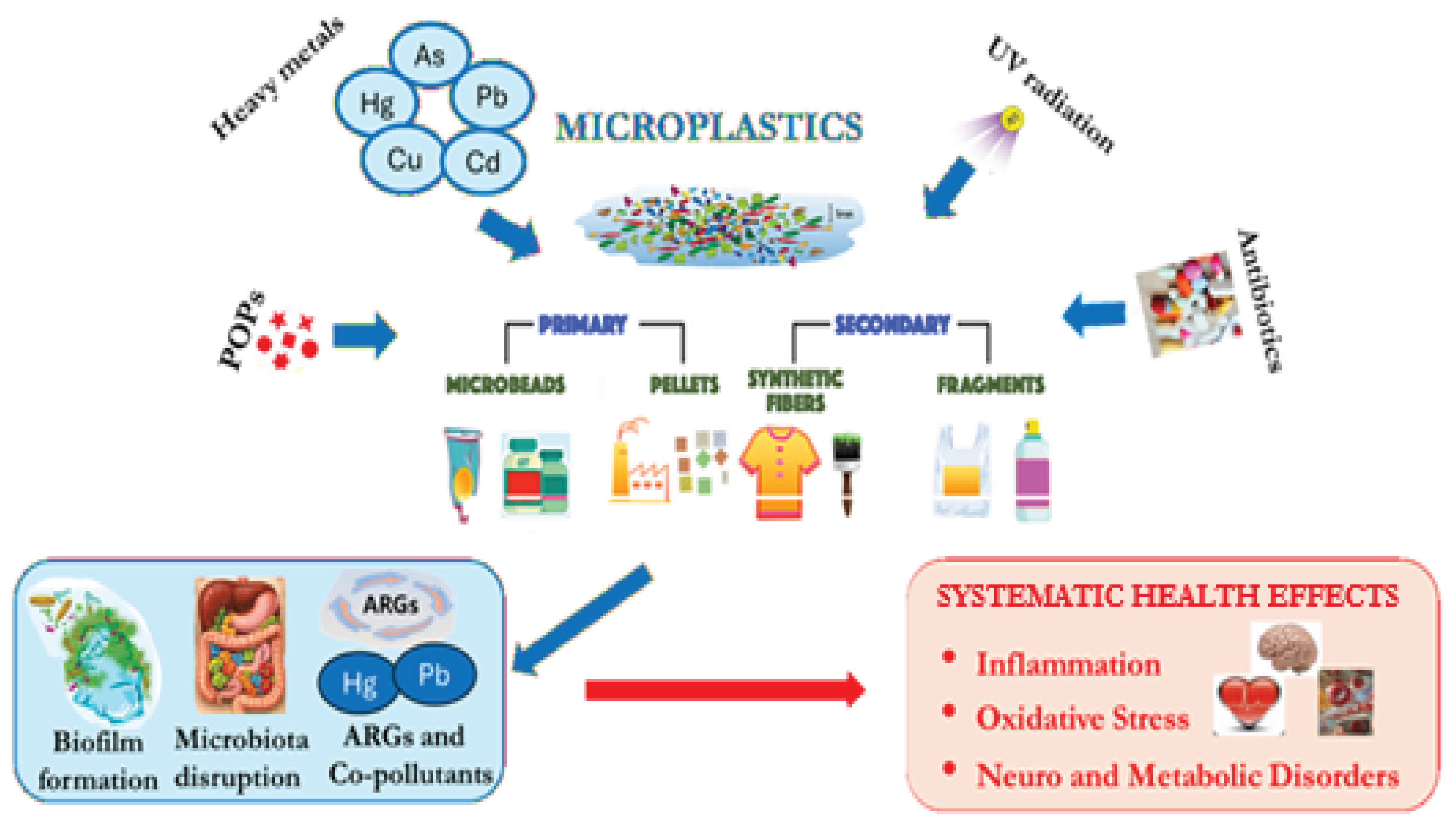

Table 1.
Effects of microplastic exposure on microbiota composition, biological markers, and host responses.
Table 1.
Effects of microplastic exposure on microbiota composition, biological markers, and host responses.
| Category | Parameter/ Marker | Direction of Change | Description / Mechanism | Health Implications | References |
|---|---|---|---|---|---|
| Inflammatory markers |
IL-6 | Increased | Upregulation of pro-inflammatory signaling pathways induced by microplastic exposure |
Chronic inflammation, immune dysregulation | [14,60] |
| TNF-α | Increased | Activation of innate immune responses and cytokine production |
Tissue damage, inflame matory disorders | [14,21] | |
| Pro-inflammatory cytokines (general) | Increased | Shift toward pro- inflammatory cytokine profile |
Increased risk of inflame matory diseases | [21,60] | |
| Oxidative stress | Reactive oxygen species (ROS) | Increased | Microplastics induce oxidative stress at cellular level |
Cellular damage, apoptosis | [14,60] |
| Antioxidant defenses | Decreased (relative) | Imbalance or depletion of antioxidant systems |
Accumulation of oxidative damage | [21] | |
| Gut microbiota (beneficial taxa) | Lactobacillus spp. | Decreased | Disruption of gut microbial balance under MP exposure |
Reduced host protection and immune regulation | [14,60] |
| Bifidobacterium spp. | Decreased | Microplastic-induced dysbiosis | Impaired gut homeostasis | [14] | |
| Gut microbiota (opportunistic/pathogenic taxa) | Escherichia coli | Increased | Selective enrichment in altered gut environment |
Increased infection risk and inflammation | [14,60] |
| Clostridium spp. | Increased | Dysbiotic shift favoring opportunistic taxa |
Production of harmful metabolites | [60] | |
| Microbial metabolites | Short-chain fatty acids (SCFAs, e.g., butyrate) | Decreased | Loss of SCFA- producing bacteria |
Impaired gut barrier integrity and immune regulation | [14,60] |
| Other metabolites (e.g., lactate, propionate) | Altered | Microbial metabolic reprogramming |
Disrupted host–microbiome interactions | [21] | |
| Gut barrier function |
Intestinal barrier integrity | Decreased | Physical disruption and inflammation-mediated damage | Increased intestinal permeability (“leaky gut”) | [14,60] |
| Antibiotic resistance |
Antibiotic resistance genes (ARGs) | Increased | Biofilm-mediated horizontal gene transfer on MPs | Spread of antimicrobial resistance | [2,19,60] |
| Biofilm formation |
EPS production, biofilm-associated genes | Increased | MPs serve as substrate for plastisphere formation | Reservoir of pathogens and ARGs | [18,20] |
| Microbial function | Xenobiotic metabolism pathways | Increased | Adaptive response to pollutants adsorbed on MPs | Altered microbial metabolism | [7,21] |
| Systemic effects |
Immune homeostasis | Disrupted | Combined effects of dysbiosis and inflammation | Increased susceptibility to chronic diseases | [21,60] |
Disclaimer/Publisher’s Note: The statements, opinions and data contained in all publications are solely those of the individual author(s) and contributor(s) and not of MDPI and/or the editor(s). MDPI and/or the editor(s) disclaim responsibility for any injury to people or property resulting from any ideas, methods, instructions or products referred to in the content. |
© 2026 by the authors. Licensee MDPI, Basel, Switzerland. This article is an open access article distributed under the terms and conditions of the Creative Commons Attribution (CC BY) license (http://creativecommons.org/licenses/by/4.0/).
Copyright: This open access article is published under a Creative Commons CC BY 4.0 license, which permit the free download, distribution, and reuse, provided that the author and preprint are cited in any reuse.


