

Submitted:
03 April 2026
Posted:
07 April 2026
You are already at the latest version
Abstract
Chronic pain represents a significant burden at both individual and societal levels. While paracetamol is widely used, its lack of anti-inflammatory activity makes it suboptimal for chronic inflammatory conditions. This narrative review examines the role of nonsteroidal anti-inflammatory drugs (NSAIDs) — the most globally prescribed medication class — in chronic pain management, with emphasis on best practices and recent advances.NSAIDs demonstrate established efficacy in reducing inflammation and pain; however, their potential for serious adverse effects warrants careful consideration, particularly in elderly populations. Both cardiovascular and gastrointestinal risks are relevant even with selective agents, and the elevated myocardial infarction risk within the first seven days of therapy underscores the need for caution even in short-term use.Sustained-release formulations offer pharmacokinetic advantages over immediate-release counterparts, maintaining therapeutic concentrations over 24 hours and improving adherence. Controlled-release technology further optimizes this profile by combining an initial rapid-onset phase with a prolonged maintenance phase. Chronic pain, whether neuropathic or osteoarticular, is best addressed through a multimodal therapeutic approach. Systematic analyses indicate no clinically meaningful differences in analgesic potency among most NSAIDs at equivalent doses; therefore, individualized prescribing based on drug adverse effect profile and patient comorbidities is essential.
Keywords:
musculoskeletal pain
; NSAIDs pharmacology
; NSAIDs adverse effects
1. Introduction
The commonly accepted definition of chronic pain is the one published by the the International Association for the Study of Pain (IASP) as “Chronic pain is pain that persists or recurs for longer than 3 months”[1]. It is very common, with a prevalence rate in the US estimated at 20.4%[2]. In Europe, a systematic review reported a pooled prevalence rate of chronic pain of 43.5%, with a rate of moderate to severe disabling pain ranging from 10.4% to 14.3%[3].
Chronic musculoskeletal pain is not a steady condition, and patients typically experience a baseline discomfort which can periodically worsen or be associated with other symptoms; the typical example is spinal central chronic pain, which is typically associated with periodic flares of pain during the year; in these patients, low back pain (LBP) may be associated with sciatica or other peripheral nerve compression symptoms[4].
Three of the top ten reasons people seek medical care are osteoarthritis, back pain, and headache, typically chronic and relapsing pain conditions [5]. Three of the four leading causes of years of work lost due to disability are back pain, musculoskeletal disorders, and neck pain, typically chronic pain conditions[6]. Moreover, the presence of chronic pain is considered one of the main factors that hampers pain control after surgery is performed[7]
The economic costs are significant; chronic pain represents an annual burden on the population amounting to €12 billion, or 4% of Gross Domestic Product (GDP). An estimated 80% of the costs are due to lost productivity[8].
The presence of inflammation is a common mechanism in many conditions that cause chronic pain [9,10]. High- or low-grade inflammation, at any musculoskeletal site, is present in and underpins many chronic painful conditions, both degenerative such as osteoarthritis (OA) and typically inflammatory such as rheumatoid arthritis (RA)[11].
Acetaminophen (Paracetamol) is often recommended by guidelines or expert panels as a first-line analgesic agent[12,13]. However, this would not be a very appropriate choice for chronic inflammatory pain. In fact, paracetamol has no anti-inflammatory activity and has been shown to be less effective than NSAIDs in the treatment of chronic or recurrent musculoskeletal pain [14,15]. Furthermore, paracetamol at doses higher than 3 grams/day in adults may present safety problems, especially if administered for prolonged periods.[16,17].
Aim of the current narrative review is to provide an overview of the use of nonsteroidal anti-inflammatory drugs (NSAIDs) in chronic pain, with a focus on best practices and selected advances. The focus is primarily on the safety of NSAIDs, attempting to differentiate molecules within the class, something not often done in general medicine literature.
2. NSAIDS
NSAIDs are the most commonly used drugs to treat chronic pain due to osteoarthritis and other musculoskeletal disorders in both adults and the elderly[18]. Most NSAIDs meaningfully reduce knee and hip osteoarthritis pain, greater than either paracetamol or opioids [19]. NSAIDs account for nearly 20% of all prescription drugs and are the most widely used class of medications globally [20]. Furthermore, given that NSAIDs are also available over-the-counter, it's likely that an even greater number of adults and older adults worldwide are taking them in an attempt to relieve pain. Studies have shown that approximately 30 million people worldwide use NSAIDs daily, 40% of whom are over the age of 60[21].
2.1. Brief Pharmacology Notes
NSAIDs act by inhibiting cyclooxygenase (COX) enzymes, which produce prostaglandins by metabolizing arachidonic acid [22]. Prostaglandins, in addition to their role in numerous bodily functions, also modulate pain, inflammation, fever, and vasodilation. COX enzymes also induce the formation of thromboxanes, which are primarily involved in platelet function and hemostasis.
NSAIDs are widely used in the treatment of mild to moderate pain, especially in inflammatory conditions, such as rheumatic and musculoskeletal disorders or in the post-operative period. Two distinct COX isoforms, COX-1 and COX-2, are currently recognized. COX-1 is a constitutive enzyme important for the production of prostaglandins with physiological functions, such as protecting the mucosa in the gastrointestinal tract and maintaining normal renal function. COX-2 has been found to be a predominantly inducible enzyme expressed under conditions of inflammation. PGE2 produced by COX-2 is the primary mediator of pain and fever [23].
NSAIDs can be classified based on their selectivity for COX-1 and COX-2 (Table 1).
Nonselective NSAIDs, such as ketoprofen indomethacin and naproxen, inhibit both COX-1 and COX-2, while COX-2-selective NSAIDs, such as celecoxib and etoricoxib, were developed with the aim of maintaining COX-1-mediated gastric mucosal integrity. However,many of the theoretical safety advantages of COX-2-selective NSAIDs over COX-1 are minimal in practice, and both present similar considerations in clinical use[24] (*COX-2 selective).
2.2. Adverse Effects and Prudent Use
These agents are certainly effective in treating inflammation and pain, but it must be considered that they are drugs that can have significant adverse effects. Elderly people, in particular, are at greater risk of drug-related adverse events due to age-related loss of physiological organ reserve, increased comorbidities, polypharmacy, and pharmacokinetic alterations [25]. Some reports indicate that NSAID use causes approximately 41,000 hospital admissions and 3,300 deaths each year among the elderly [26].
2.2.1. Cardiovascular Risk
The cardiovascular risk of NSAIDs emerged with the introduction of selective COX-2 inhibitors. However, it was soon recognized that the increased risk of cardiovascular events, particularly hypertension, heart failure, and myocardial infarction, also applies to nonselective NSAIDs[27,28] .
The increased baseline cardiovascular risk should prompt greater caution in the use of NSAIDs, based on risk-benefit considerations and comorbidity. Ketoprofen and low-dose celecoxib may carry a lower cardiovascular risk than other NSAIDs, while etoricoxib, diclofenac and ketorolac demonstrated the highest risk[29,30,31] (Table 2).
2.2.2. Gastrointestinal Risks
It is widely known that NSAIDs can cause mucosal damage in the upper, middle, or lower gastrointestinal tract[32]. Although selective COX-2 inhibitors were developed to reduce the incidence of gastrointestinal complications, these adverse effects can still occur[33].
Among COX-2-selective NSAIDs, celecoxib has the lowest gastrointestinal risk, while among the non-selective COX-2, ketoprofen lysine salt (KLS) and ibuprofen (low dose) have the lowest gastrointestinal risk[34,35] (Table 2).
Hepatic Impairment
NSAIDs should be avoided or used with great caution in patients with liver cirrhosis. Liver damage may be related to both the production of reactive intermediates and the induction of oxidative radicals. Diclofenac carries the best-known risk of liver damage[36] .
The mechanism underlying liver damage from diclofenac, and also from ibuprofen, appears to be the induction of intracellular ROS production, leading to lysosomal dysfunction and suppression of autophagy. Impaired autophagy fails to maintain mitochondrial integrity and increases the cellular ROS load, leading to hepatotoxicity[37].
2.3. Sustained Release Formulations
Long-term use of NSAIDs is often discouraged due to the development of adverse effects. However, 7- to 14-day treatment cycles can be used, especially with the most well-tolerated drugs. For this purpose, sustained-release NSAID formulations are very useful for treating chronic pain.
Sustained-release medications offer several advantages over immediate-release formulations.
Sustained-release formulations are designed to release the active ingredient gradually over a prolonged period. This release mechanism ensures that the drug remains effective in the body longer, reducing the frequency of administration.
Slow-release technologies can be summarized in two models:
(i)Sustained-release technology is characterized by the slow release of a specific substance at a programmed rate to deliver the drug over a prolonged period of time.
(ii)Controlled-release technology is characterized by the release of the drug at a predictable and rationally programmed rate to achieve the optimal serum concentration. This dosage form improves safety, efficacy, reliability, and convenience of drug therapy.
Although it is a slow-release system, unlike sustained-release, this process is designed to produce predictable concentration according to a predefined schedule. With this approach, the concentration of the active ingredient in the target tissue is controlled, not just the drug release.
In sustained-release tablets, various techniques can be used to maintain a steady drug delivery rate over time.. A matrix of insoluble materials such as acrylics or guar gum can be used to slow down the drug release rate.
Micro-encapsulation is a process in which the active pharmaceutical ingredient (API) is deposited around an inner core and enclosed within layers of insoluble compounds.When it comes to the treatment of chronic pain, there are two essential models of sustained release of NSAIDs (Figure 1).
The first is simple sustained release, where the drug is released from a matrix that delays its release. The advantage of this formulation is that it achieves active concentrations for 24 hours with a single administration, while the disadvantage is a delayed peak resulting in a delayed onset of effect. The second is controlled release, where pharmaceutical technology allows for drug release in two phases: an immediate release phase followed by a slow-release phase. This formulation produces an early drug peak with a rapid onset and maintains active concentrations for 24 hours.
For completeness, two examples of controlled-release NSAIDs are presented: sustained-release diclofenac and controlled-release ketoprofen lysine salt.
Diclofenac 150 mg prolonged-release tablets consist of spherical beads coated with ammonium methacrylate copolymer type B and paraffin. The paraffin forms a hydrophobic film that reduces the permeability of the microspheres. Diclofenac is released by diffusion from the pellets (Figure 2).
This formulation has the advantage of having an active concentration of the active ingredient for the duration of 24 hours. However, the drug is absorbed slowly, with the active ingredient appearing in the general circulation 1.2 hours after administration (Tlag) and a peak concentration 5.5 hours after administration (Table 3).
Ketoprofen Controlled Release uses a microgranule pharmaceutical technology that allows for biphasic release of the active ingredient. Briefly, the capsule contains a fixed number of microgranules. Each microgranule is a 1 mm diameter spheroid with a central core containing the active ingredient, which in turn is coated with a layer containing a highly concentrated active ingredient. The granule is coated with a dialysis membrane that determines the differentiated release of the drug (Figure 3).
The biphasic release allows for rapid absorption with a Tlag of 0.5 hours and relatively early peak of 2.13 hours and maintains active drug concentrations for 24 hours (Table 3).
3. Clinical Setting
Chronic pain has several causes, and it can be observed in a wide range of patients. Musculoskeletal diseases, being often related to the biomechanics of the skeleton, are influenced by loads, joints use, as well as by the personal history, sex/gender and sleep disturbances[40,41,42] . NSAIDs are commonly used in patients affected by low back pain, principally during the flares of inflammatory pain typical of this patients’ population. Those patients in fact may periodically expect to experience stiffness, nerve roots irritation, aching pain and severe muscle spasms associated with LBP. The use of NSAIDs is regarded as practical in patients with nonspecific LBP because of its effectiveness in pain control and no increase in adverse events; despite being indicated as one of the options in specific pain, as in spinal stenosis patients, a reduced indication to NSAIDs use in spinal stenosis was recorded[43,44]
Despite being formally similar, low back pain and joint pain differ in terms of our ability to treat.
When approaching orthopedic patients with chronic pain, what truly determines therapeutic success is a thorough understanding of the underlying causes. Indeed, the patient is critically characterized by understanding their general health status, keeping into account comorbidities and prescribed medications, and, above all, considering their functional requirements. In orthopedics, mild-to-moderate chronic pain often refers to non-surgical patients; in fact, only a small percentage of patients undergoing surgery develop significant post-surgical chronic pain over time. The Italian Society of Orthopedics and Traumatology (SIOT), together with the Society of anesthetists (SIA-ARTI, Italian Society of Anesthesia, Analgesia, Resuscitation and Intensive Care), rheumatologists (SIR, Italian Society of Rheumatology) and physiatrists (SIMFER, Italian Society of Physical and Rehabilitation Medicine), recently conducted a study with the aim to provide a national overview of pain associated with knee osteoarthritis, analyzing the chance of patients to have appropriate pain control [45]; knee pain was chosen because, compared to other joints, it is one of those associated with high disability. Through an online questionnaire, 1,473 physicians from the participating Specialized Societies, who treated patients with knee osteoarthritis, were interviewed to investigate the methods and treatments used to manage patients with pain. Furthermore, 150 patients were studied through the involvement of two patient associations, APMARR (National Association of People with Rheumatological and Rare Diseases) and ANMAR (National Association of Rheumatic Patients), to investigate the degree of satisfaction with the treatment received for pain control.
A significant proportion of patients with knee degenerative arthritis had moderate chronic pain, and that was mostly the main reason to seek medical advice. Patients’ samples included a significant number also of rheumatic patients affected by inflammatory diseases, including degenerative and inflammatory arthritis, and ankylosing spondylitis. They found that, paracetamol and NSAIDS were the most prescribed drugs in this patients’ population, representing over 50% of all prescriptions.
A non-negligible part of chronic musculoskeletal pain patients will be candidate to surgery; in fact, the increased demand of orthopaedic surgery by chronic pain patients is one of the burdens of current public health system worldwide[46]
With the increase in average waiting list time, innovative strategies are required to address patients’ specific needs while waiting for surgery. If NSAIDS are contraindicated if administered chronically, these are the mainstay in those patients experiencing the flares of recurrent pain over chronic symptoms[45]Among these, patients candidate to surgery are peculiar because NSAIDs should be restricted in case of the following conditions: in the two weeks before the surgery, to control the risk of bleeding; in those patients at risk to develop stress fractures, since chronically administered NSAIDS may affect bone healing[47,48]. It has been theorized that in waitlisted patients, pain-prehabilitation protocols may improve patients’ outcomes, reducing the risk of chronic post- surgical pain to develop[4]. In fact, the typical patient candidate to major orthopedic joint surgery is characterized by a mixed pain with nociception and central sensitization. Patients could be better treated by managing both inflammation through NSAIDS administration, and at the same time addressing central sensitization; patient management in this contest may greatly benefit from the implementation of Transitional Pain Services to improve overall patients’ outcomes, allowing a faster recovery after major orthopedic surgery.
4. Conclusions
Recommendations for chronic pain, both neuropathic and osteoarticular, agree on a multimodal approach that should include weight loss, if appropriate; a healthy lifestyle, including exercise, good nutrition, and proper sleep hygiene; smoking cessation; and ergonomic modifications when indicated. This is combined with opioid and non-opioid pharmacological therapies, psychological therapies, integrative treatments, and procedures[49,50].
Systematic analyses suggest that there is no clinically significant difference in analgesic potency between most NSAIDs and most indications when used at equivalent doses[51,52].
Therefore, the choice of drug should be dictated by the adverse effect profile
and the patient's comorbidities. In cases of recurrent pain, sustained-release NSAIDs offer advantages for patient compliance.
Evidence suggests that the risk of myocardial infarction is highest in the first 7 days of therapy, therefore the cardiovascular risk of NSAIDs must be considered even for short-term use [53,54]. NSAIDs with good gastrointestinal tolerability such as Ketoprofen lysine salt or Celecoxib are generally recommended for subjects at higher gastrointestinal risk, particularly those over 65 years of age, those with peptic ulcer disease, or those taking concomitant antiplatelet drugs, anticoagulants, or systemic glucocorticoids[55].
Author Contributions
All authors have written, read and agreed to the published version of the manuscript.
Funding
This research received no external funding.
Acknowledgments
The authors have reviewed and edited the output and take full responsibility for the content of this publication.
Conflicts of Interest
F.S. has received advisory board and speaker honoraria from Pfizer, GSK, Amgen, and Dompé. The other authors declare no conflicts of interest.
Abbreviations
The following abbreviations are used in this manuscript:
| API | Active pharmaceutical ingredient |
| ANMAR | National Association of Rheumatic Patients |
| APMARR | National Association of People with Rheumatological and Rare Diseases |
| COX | Cyclooxygenase |
| CR | Controlled release |
| GDP | Gross Domestic Product |
| IASP | International Association for the Study of Pain |
| KLS | Ketoprofen lysine salt |
| LBP | Low Back Pain |
| NSAIDs | Nonsteroidal anti-inflammatory drugs |
| OA | Osteoarthritis |
| PG | Prostaglandin |
| PR | Prolonged release |
| RA | Rheumatoid arthritis |
| SD | Standard deviation |
| SEM | Standard error of mean |
| SIA-ARTI | Italian Society of Anesthesia, Analgesia, Resuscitation and Intensive Care |
| SIMFER | Italian Society of Physical and Rehabilitation Medicine |
| SIOT | Italian Society of Orthopedics and Traumatology |
| Tlag | Time to onset in blood |
| Tmax | Time to peak |
References
- Raja, SN; Carr, DB; Cohen, M.; et al. The revised International Association for the Study of Pain definition of pain: concepts, challenges, and compromises. Pain 2020, 161, 1976–1982. [Google Scholar] [CrossRef]
- Dahlhamer, J; Lucas, J; Zelaya, C.; et al. Prevalence of Chronic Pain and High-Impact Chronic Pain Among Adults - United States, 2016. MMWR Morb Mortal Wkly Rep 2018, 67, 1001–1006. [Google Scholar] [CrossRef]
- Fayaz, A; Croft, P; Langford, RM.; et al. Prevalence of chronic pain in the UK: a systematic review and meta-analysis of population studies. BMJ Open 2016, 6. Epub ahead of print. [Google Scholar] [CrossRef]
- Coluzzi, F; Di Martino, A. ‘Pain Prehabilitation’ in Major Joint Surgery: The Way Forward to Improve Outcomes and Prevent Pain Chronicity. J Clin Med 2025, 14. Epub ahead of print. [Google Scholar] [CrossRef] [PubMed]
- St. Sauver, JL; Warner, DO; Yawn, BP.; et al. Why patients visit their doctors: assessing the most prevalent conditions in a defined American population. Mayo Clin Proc 2013, 88, 56–67. [Google Scholar] [CrossRef]
- Murray, CJL; Abraham, J; Ali, MK.; et al. The state of US health, 1990-2010: burden of diseases, injuries, and risk factors. JAMA 2013, 310, 591–608. [Google Scholar] [CrossRef] [PubMed]
- Mabarak, D; Khan, ST; Elmenawi, KA.; et al. Chronic Pain Diagnosis Before Total Knee Arthroplasty Leads to Higher Readmission Risk, Lower Patient-Reported Outcome Measures, and Dissatisfaction at One Year: An Analysis of 13,894 Patients. Journal of Arthroplasty 2025. Epub ahead of print. [Google Scholar] [CrossRef]
- Stubhaug, A; Hansen, JL; Hallberg, S.; et al. The costs of chronic pain-Long-term estimates. Eur J Pain 2024, 28, 960–977. [Google Scholar] [CrossRef]
- Lipnik-Stangelj, M. Mediators of inflammation as targets for chronic pain treatment. Mediators Inflamm. 2013. Epub ahead of print 2013. [CrossRef]
- Tal, M. A Role for Inflammation in Chronic Pain. Curr Rev Pain 1999, 3, 440–446. [Google Scholar] [CrossRef]
- Fang, XX; Zhai, MN; Zhu, M.; et al. Inflammation in pathogenesis of chronic pain: Foe and friend. Mol Pain 2023, 19. Epub ahead of print. [Google Scholar] [CrossRef] [PubMed]
- Hochberg, MC; Altman, RD; April, KT.; et al. American College of Rheumatology 2012 recommendations for the use of nonpharmacologic and pharmacologic therapies in osteoarthritis of the hand, hip, and knee. Arthritis Care Res (Hoboken) 2012, 64, 465–474. [Google Scholar] [CrossRef]
- Jordan, KM; Arden, NK; Doherty, M.; et al. EULAR Recommendations 2003: An evidence-based approach to the management of knee osteoarthritis: Report of a Task Force of the Standing Committee for International Clinical Studies Including Therapeutic Trials (ESCISIT). Ann Rheum Dis 2003, 62, 1145–1155. [Google Scholar] [CrossRef] [PubMed]
- Machado, GC; Maher, CG; Ferreira, PH.; et al. Efficacy and safety of paracetamol for spinal pain and osteoarthritis: systematic review and meta-analysis of randomised placebo-controlled trials. BMJ 2015, 350. Epub ahead of print. [Google Scholar] [CrossRef] [PubMed]
- Lee, C; Straus, WL; Balshaw, R.; et al. A comparison of the efficacy and safety of nonsteroidal antiinflammatory agents versus acetaminophen in the treatment of osteoarthritis: a meta-analysis. Arthritis Rheum 2004, 51, 746–754. [Google Scholar] [CrossRef]
- Graham, GG; Day, RO; Graudins, A.; et al. FDA proposals to limit the hepatotoxicity of paracetamol (acetaminophen): are they reasonable? Inflammopharmacology 2010, 18, 47–55. [Google Scholar] [CrossRef] [PubMed]
- Sudano, I; Flammer, AJ; Périat, D.; et al. Acetaminophen increases blood pressure in patients with coronary artery disease. Circulation 2010, 122, 1789–1796. [Google Scholar] [CrossRef]
- Marcum, ZA; Duncan, NA; Makris, UE. Pharmacotherapies in Geriatric Chronic Pain Management. Clin Geriatr Med 2016, 32, 705–724. [Google Scholar] [CrossRef]
- Da Costa, BR; Pereira, T V.; Saadat, P.; et al. Effectiveness and safety of non-steroidal anti-inflammatory drugs and opioid treatment for knee and hip osteoarthritis: network meta-analysis. BMJ 2021, 375. Epub ahead of print. [Google Scholar] [CrossRef]
- Shareef, J; Sridhar, SB; Saeed, ZM.; et al. Evaluation of Potential Drug-Drug Interactions, Polypharmacy, and Prescribing Patterns of NSAIDs Among the Older Adults in a Secondary Care Setting. Clin Interv Aging 2025, 20, 1875–1894. [Google Scholar] [CrossRef]
- Regi, JK; Lalwani, K; Pawar, S. Comparative trends in the usage of nonsteroidal anti-inflammatory drugs: Self-administration versus prescription. MGM Journal of Medical Sciences 2024, 11, 139–145. [Google Scholar] [CrossRef]
- Gunaydin, C; Bilge, SS. Effects of Nonsteroidal Anti-Inflammatory Drugs at the Molecular Level. Eurasian J Med 2018, 50, 116–121. [Google Scholar] [CrossRef]
- Kulesza, A; Paczek, L; Burdzinska, A. The Role of COX-2 and PGE2 in the Regulation of Immunomodulation and Other Functions of Mesenchymal Stromal Cells. Biomedicines 2023, 11. Epub ahead of print. [Google Scholar] [CrossRef]
- Scarpignato, C; Lanas, A; Blandizzi, C.; et al. Safe prescribing of non-steroidal anti-inflammatory drugs in patients with osteoarthritis--an expert consensus addressing benefits as well as gastrointestinal and cardiovascular risks. BMC Med 2015, 13. Epub ahead of print. [Google Scholar] [CrossRef]
- Davies, EA; O’Mahony, MS. Adverse drug reactions in special populations - the elderly. Br J Clin Pharmacol 2015, 80, 796–807. [Google Scholar] [CrossRef]
- Griffin, MR. Epidemiology of nonsteroidal anti-inflammatory drug-associated gastrointestinal injury. American Journal of Medicine 1998, 104. Epub ahead of print. [Google Scholar] [CrossRef] [PubMed]
- Antman, EM; Bennett, JS; Daugherty, A.; et al. Use of nonsteroidal antiinflammatory drugs: an update for clinicians: a scientific statement from the American Heart Association. Circulation 2007, 115, 1634–1642. [Google Scholar] [CrossRef] [PubMed]
- Sondergaard, KB; Weeke, P; Wissenberg, M.; et al. Non-steroidal anti-inflammatory drug use is associated with increased risk of out-of-hospital cardiac arrest: a nationwide case-time-control study. Eur Heart J Cardiovasc Pharmacother 2017, 3, 100–107. [Google Scholar] [CrossRef] [PubMed]
- Helin-Salmivaara, A; Virtanen, A; Vesalainen, R.; et al. NSAID use and the risk of hospitalization for first myocardial infarction in the general population: a nationwide case-control study from Finland. Eur Heart J 2006, 27, 1657–1663. [Google Scholar] [CrossRef]
- Masclee, GMC; Straatman, H; Arfè, A.; et al. Risk of acute myocardial infarction during use of individual NSAIDs: A nested case-control study from the SOS project. PLoS One 2018, 13. Epub ahead of print. [Google Scholar] [CrossRef]
- Baigent, C; Bhala, N; Emberson, J.; et al. Vascular and upper gastrointestinal effects of non-steroidal anti-inflammatory drugs: Meta-analyses of individual participant data from randomised trials. The Lancet 2013, 382, 769–779. [Google Scholar]
- Hopkins, S; Yang, V; Liew, DFL. Choosing a nonsteroidal anti-inflammatory drug for pain. Aust Prescr 2025, 48, 139–144. [Google Scholar] [CrossRef]
- Rockwell, MS; Oyese, EG; Singh, E.; et al. Scoping review of interventions to de-implement potentially harmful non-steroidal anti-inflammatory drugs (NSAIDs) in healthcare settings. BMJ Open 2024, 14. Epub ahead of print. [Google Scholar] [CrossRef] [PubMed]
- Brandolini, L; d’Angelo, M; Antonosante, A.; et al. Differential protein modulation by ketoprofen and ibuprofen underlines different cellular response by gastric epithelium. J Cell Physiol 2018, 233, 2304–2312. [Google Scholar] [CrossRef]
- Novelli, R; Aramini, A; Boccella, S.; et al. Ketoprofen lysine salt has a better gastrointestinal and renal tolerability than ketoprofen acid: A comparative tolerability study in the Beagle dog. Biomedicine and Pharmacotherapy 2022, 153. Epub ahead of print. [Google Scholar] [CrossRef]
- De Abajo, FJ; Montero, D; Madurga, M.; et al. Acute and clinically relevant drug-induced liver injury: a population-based case-control study. Br J Clin Pharmacol 2004, 58, 71–80. [Google Scholar] [CrossRef] [PubMed]
- Jung, SH; Lee, W; Park, SH.; et al. Diclofenac impairs autophagic flux via oxidative stress and lysosomal dysfunction: Implications for hepatotoxicity. Redox Biol 2020, 37. Epub ahead of print. [Google Scholar] [CrossRef] [PubMed]
- Biasi, G; Canova, N; Palazzini, E.; et al. Comparative pharmacokinetic study of a single dose of two prolonged-release formulations of diclofenac in healthy subjects. Current Therapeutic Research 1998, 59, 785–792. [Google Scholar] [CrossRef]
- Fincato, G; MPF; ACScapinelli. Pharmacokinetic comparison of 320 mg of 2 different oral capsule formulations of ketoprofen-lysine salt in healthy-volunteers.10.4. Adv Ther 1993, 10, 182–188. [Google Scholar]
- Jiménez-Sánchez, S; Jiménez-García, R; Hernández-Barrera, V.; et al. Has the Prevalence of Invalidating Musculoskeletal Pain Changed Over the Last 15 Years (1993-2006)? A Spanish Population-Based Survey. Journal of Pain 2010, 11, 612–620. [Google Scholar] [CrossRef]
- Alves, B; Tavares, I; Pozza, DH. Biomarkers and Breakdowns: Neuroinflammatory Drivers Linking Sleep Disorders and Chronic Pain. Biomedicines 2026, 14, 116. [Google Scholar] [CrossRef] [PubMed]
- Oostinga, D; Steverink, JG; van Wijck, AJM.; et al. An understanding of bone pain: A narrative review. Bone 2020, 134. Epub ahead of print. [Google Scholar] [CrossRef]
- Anderson, DB; Shaheed, CA. Medications for Treating Low Back Pain in Adults. Evidence for the Use of Paracetamol, Opioids, Nonsteroidal Anti-inflammatories, Muscle Relaxants, Antibiotics, and Antidepressants: An Overview for Musculoskeletal Clinicians. J Orthop Sports Phys Ther 2022, 52, 425–431. [Google Scholar] [CrossRef] [PubMed]
- Anderson, DB; De, Luca K; Jensen, RK.; et al. A critical appraisal of clinical practice guidelines for the treatment of lumbar spinal stenosis. Spine Journal 2021, 21, 455–464. [Google Scholar] [CrossRef] [PubMed]
- Iolascon, G; Migliore, A; Beretta, G.; et al. Pain Management in Knee Osteoarthritis: Insights from an Exploratory Online Survey of Italian Patients and Physicians. Healthcare (Basel) 2024, 12. Epub ahead of print. [Google Scholar] [CrossRef]
- Price, AJ; Alvand, A; Troelsen, A.; et al. Knee replacement. The Lancet 2018, 392, 1672–1682. [Google Scholar] [CrossRef] [PubMed]
- Staab, JS; Kolb, AL; Tomlinson, RE.; et al. Emerging evidence that adaptive bone formation inhibition by non-steroidal anti-inflammatory drugs increases stress fracture risk. Exp Biol Med 2021, 246, 1104–1111. [Google Scholar] [CrossRef] [PubMed]
- Lee, M; Cha, JM. Real-World Bleeding Risk of Anticoagulant and Nonsteroidal Anti-inflammatory Drugs Combotherapy versus Anticoagulant Monotherapy. Gut Liver 2024, 18, 824–833. [Google Scholar] [CrossRef] [PubMed]
- US Department of Health and Human Services. Pain Management Best Practices Inter-Agency Task Force Report - Healthy People 2030 | odphp.health.gov. Available online: https://odphp.health.gov/healthypeople/tools-action/browse-evidence-based-resources/pain-management-best-practices-inter-agency-task-force-report (accessed on 27 February 2026).
- NICE. Overview | Chronic pain (primary and secondary) in over 16s: assessment of all chronic pain and management of chronic primary pain | Guidance | NICE. Available online: https://www.nice.org.uk/guidance/ng193 (accessed on 27 February 2026).
- Ho, KY; Gwee, KA; Cheng, YK.; et al. Nonsteroidal anti-inflammatory drugs in chronic pain: implications of new data for clinical practice. J Pain Res 2018, 11, 1937–1948. [Google Scholar] [CrossRef] [PubMed]
- Chou, R; McDonagh, MS; Nakamoto, E.; et al. Analgesics for Osteoarthritis: An Update of the 2006 Comparative Effectiveness Review [Internet] - PubMed. Available online: https://pubmed.ncbi.nlm.nih.gov/22091473/ (accessed on 27 February 2026).
- Bally, M; Dendukuri, N; Rich, B.; et al. Risk of acute myocardial infarction with NSAIDs in real world use: bayesian meta-analysis of individual patient data. BMJ 2017, 357. Epub ahead of print. [Google Scholar] [CrossRef]
- Bally, M; Beauchamp, ME; Abrahamowicz, M.; et al. Risk of acute myocardial infarction with real-world NSAIDs depends on dose and timing of exposure. Pharmacoepidemiol Drug Saf 2018, 27, 69–77. [Google Scholar]
- Drini, M. Peptic ulcer disease and non-steroidal anti-inflammatory drugs. Aust Prescr 2017, 40, 91–93. [Google Scholar] [CrossRef] [PubMed]
Figure 1.
Two sustained release models of oral drugs compared with immediate release - see text for description.
Figure 1.
Two sustained release models of oral drugs compared with immediate release - see text for description.
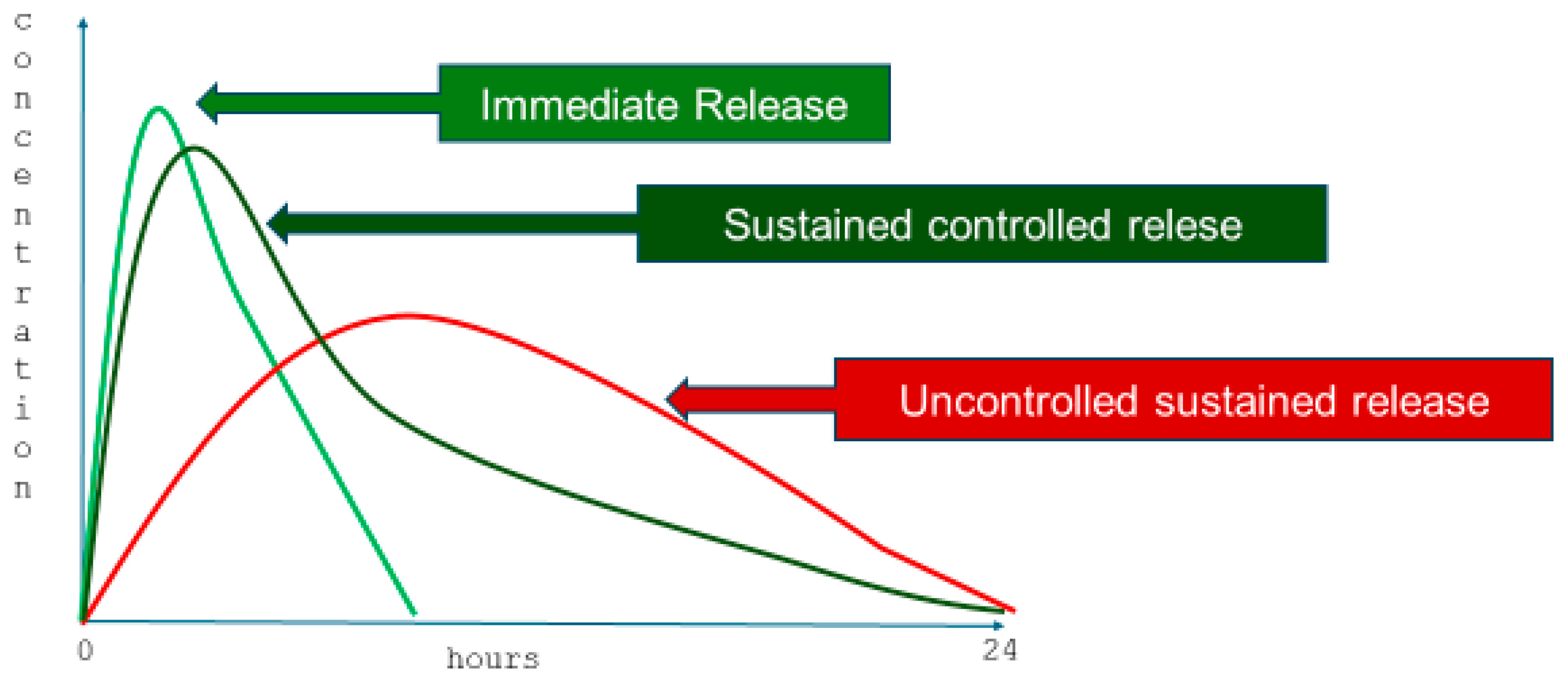
Figure 2.
Schematic representation of diffusion sustained drug release embedded in a polymer matrix.
Figure 2.
Schematic representation of diffusion sustained drug release embedded in a polymer matrix.
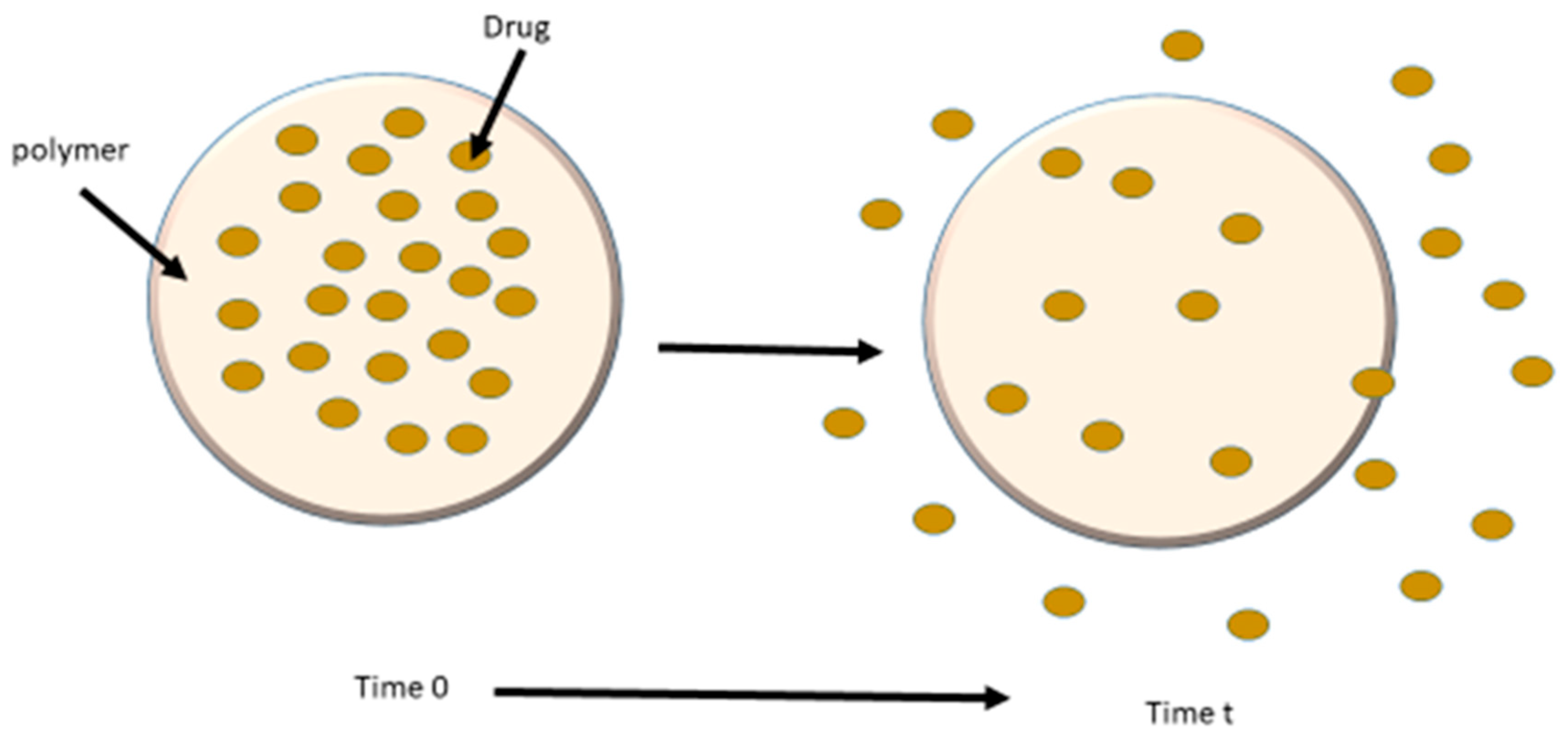
Figure 3.
Two-phase release microgranule technique. These are spheroids approximately 1 mm in diameter consisting of a central core.
Figure 3.
Two-phase release microgranule technique. These are spheroids approximately 1 mm in diameter consisting of a central core.
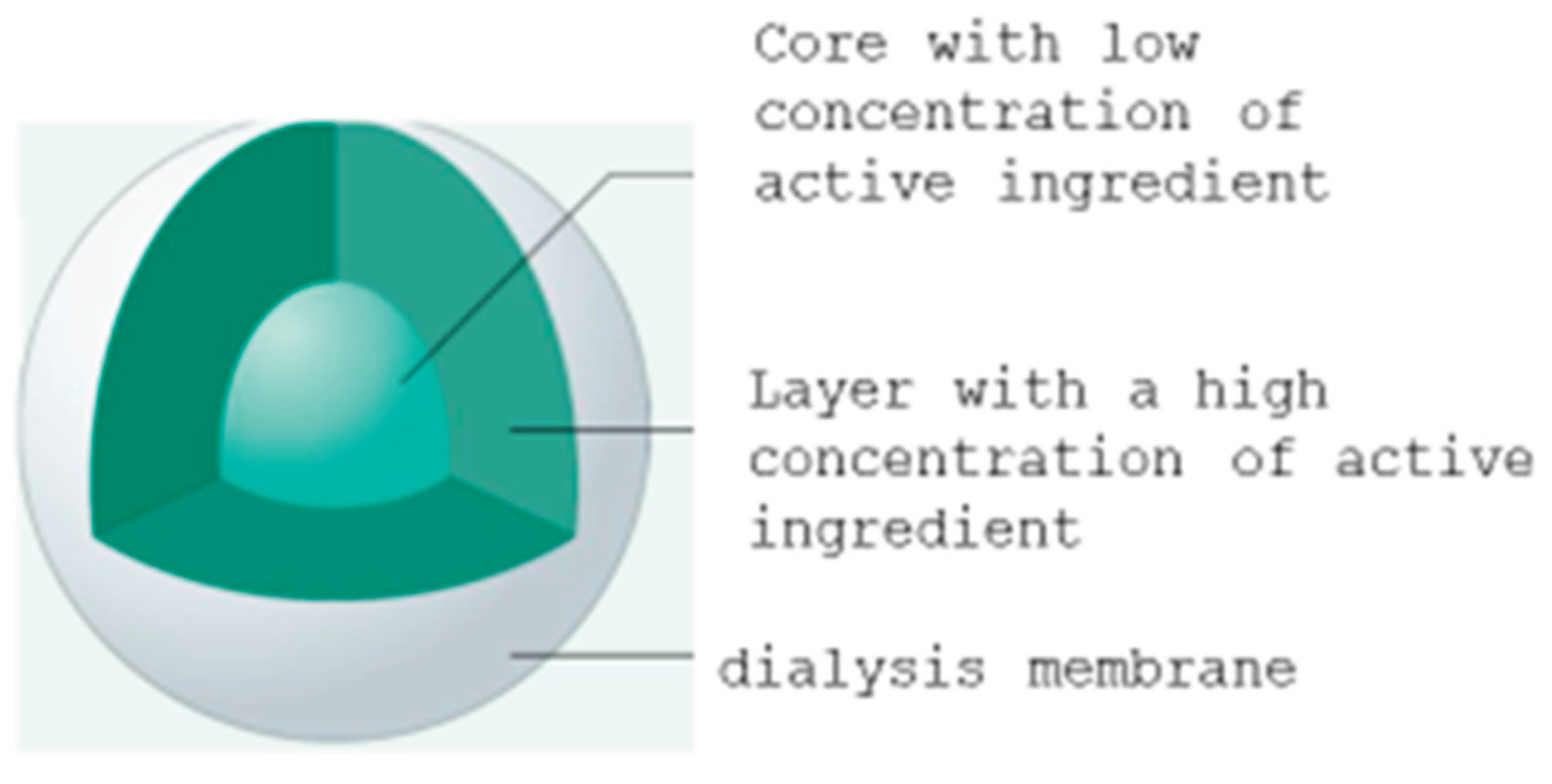

Table 1.
Comparison of common nonsteroidal anti-inflammatory drugs (NSAIDs).
| NSAID |
Dose equivalence (mg) |
Dose Frequency (times daily) |
Max. daily dose (mg) |
| ASA (anti-inflammatory) |
650 | 4 to 6 | 4000 |
| Celecoxib* | 200 | 1 to 2 | 400 |
| Diclofenac | 50 | 2 to 3 | 150 |
| Etoricoxib* | 30 | once daily | 120 |
| Ibuprofen | 600 | 4 to 6 | 3200 |
| Indometacin | 75 | 2 | 200 |
| Ketoprofen lysine salt | 50 | 2 to 4 | 300 |
| Ketorolac | 20 | 2 | 40 |
| Naproxen | 500 | 2 | 1500 |
Table 2.
Gastrointestinal and cardiovascular risk from individual NSAIDs.
| Gastrointestinal risk (REF:29-31) |
Cardiovascular risk (REF: 23-27) |
|
| High risk | piroxicam ketorolac high-dose aspirin (when used as an anti-inflammatory) |
etoricoxib ketorolac diclofenac |
| Moderate risk | naproxen indometacin diclofenac ibuprofen |
ibuprofen meloxicam indometacin |
| Low risk | meloxicam etoricoxib (low dose) ketoprofen lisine salt celecoxib (lowest) |
naproxen piroxicam ketoprofen (lowest) |
Table 3.
Time to onset in blood (Tlag) and time to peak (Tmax) of Diclofenac PR and Ketoprofen (KLS) CR.
Disclaimer/Publisher’s Note: The statements, opinions and data contained in all publications are solely those of the individual author(s) and contributor(s) and not of MDPI and/or the editor(s). MDPI and/or the editor(s) disclaim responsibility for any injury to people or property resulting from any ideas, methods, instructions or products referred to in the content. |
© 2026 by the authors. Licensee MDPI, Basel, Switzerland. This article is an open access article distributed under the terms and conditions of the Creative Commons Attribution (CC BY) license (http://creativecommons.org/licenses/by/4.0/).
Copyright: This open access article is published under a Creative Commons CC BY 4.0 license, which permit the free download, distribution, and reuse, provided that the author and preprint are cited in any reuse.


