
Submitted:
04 April 2026
Posted:
07 April 2026
You are already at the latest version
Abstract
Immune checkpoint modulation has emerged as a promising strategy in cancer therapy, including the treatment of aggressive tumors such as glioblastoma. Among these targets, programmed death-ligand 1 (PD-L1) plays a key role in tumor immune evasion and represents an attractive target for small-molecule inhibitor development. In this study, a virtual screening approach was applied to identify potential PD-L1 modulators within a library of nucleoside-related compounds and structurally similar molecules. A dataset of 400 compounds was evaluated using molecular docking to predict their binding affinity (free energy values and binding pose) toward PD-L1. The resulting complexes were analyzed to identify non-bond interactions within the hydrophobic pocket formed at the PD-L1 dimer interface. In addition to docking results, physicochemical descriptors associated with drug-likeness and blood brain barrier penetration were calculated, including lipophilicity, molecular weight, hydrogen bond donors and acceptors, and topological polar surface area. To integrate these parameters, a multiparameter optimization (MPO) score was implemented. The analysis revealed that several top-ranked compounds exhibited favorable docking scores and physicochemical properties compatible with drug-like behavior. Interestingly BMS-1, a known PD-L1 inhibitor was identified among the highest-scoring compounds, supporting the reliability of the MPO protocol. Furthermore, multiple candidates displaying nucleoside-like scaffolds combined with reduced polarity and moderate lipophilicity emerged as promising molecules according to the MPO ranking. Overall, the results suggest that nucleoside-derived scaffolds may represent a viable starting point for the development of small-molecule PD-L1 modulators with potential applicability in glioblastoma therapy.
Keywords:
glioblastoma
; cancer
; nucleosides
; cordycepin
1. Introduction
Cordycepin (3’-deoxyadenosine) is a natural nucleoside isolated mainly from fungi of the genus Cordyceps. It has been reported as anti-inflammatory modulating in different cell types, lungs, macrophages, chondrocytes, cardiac tissue, glia [1,2], and the brain, as well as antitumor, and immunomodulatory effects [3]. Anti-inflammatory effects have also been described in the brains of mice previously affected by ischemia [4]. They found that cordycepin exerts a potent neuroprotective action against ischemia.
According to physicochemical properties, cordycepin is a low molecular weight molecule (~251 Da), it has high polarity, multiple hydrogen bond donors and acceptors, and a high polar surface area. These characteristics suggest that cordycepin has a low ability to cross the blood‒brain barrier (BBB) by passive diffusion, a critical requirement for the treatment of central nervous system tumors [5]. Despite this apparent limitation, there is strong evidence that cordycepin exhibits significant antitumor activity in in vitro models of glioblastoma. Recent studies have investigated the effect of cordycepin on the migration of human glioblastoma cell lines such as U87, U251, T98G, and LN-229 and have shown that cordycepin inhibits cell proliferation, induces caspase-mediated apoptosis, causes cell cycle arrest, and reduces tumor migration and invasion [6]. These effects have been associated with the modulation of various oncogenic signaling pathways, including PI3K/AKT, MYC, MMPs, and processes related to epithelial-mesenchymal transition [7]. It is important to note that these results correspond to in vitro conditions, where the molecule has direct access to tumor cells without interference from the BBB.
On the other hand, programmed death ligand-1 (PD-L1) is a key immune checkpoint molecule involved in malign tumor immune evasion. In glioblastoma, PD-L1 is frequently overexpressed and contributes to the establishment of an immunosuppressive tumor microenvironment by interacting with the PD-1 receptor on cytotoxic T lymphocytes, leading to T-cell exhaustion and reduced antitumor immune activity [8]. Elevated PD-L1 expression has been associated with higher tumor grade and poorer patient survival [9], highlighting its relevance as both a prognostic biomarker and a potential therapeutic target in glioblastoma [10]. Due to these functions, the PD-1/PD-L1 axis is considered a potential therapeutic target; for example, blocking antibodies can restore the cytotoxic activity of tumor-infiltrating lymphocytes against glioblastoma cells [11].
The relevance of the BBB in the context of glioblastoma is particularly complex, although this barrier is often partially disrupted in tumor regions, such disruption is heterogeneous and does not guarantee homogeneous distribution of the drug throughout the brain tissue. In addition, infiltrative regions of glioblastoma may retain a functional BBB, limiting the access of hydrophilic compounds such as cordycepin [12]. It has been proposed that the efficacy observed in experimental models could depend on additional mechanisms, such as transport mediated by nucleoside transporters (NTs) [13] or the use of targeted delivery strategies designed to enhance brain exposure, including nanoparticles, liposomes, or molecular conjugates [14,15]. In several cases, the observed antitumor effects may be associated with tumor-induced disruption of the barrier, local inflammation, or the use of experimental formulations and delivery systems designed to enhance drug exposure within the brain [16].
Therefore, it is advisable to study analog compounds of cordycepin that could offer a better physicochemical profile to improve permeability in the BBB. For this reason various structural analogs of cordycepin, both natural and synthetic, including adenosine, tubercidine, and toyocamycin, have demonstrated antitumor and cell signaling modulatory properties, reinforcing the therapeutic potential of bioactive nucleosides derived from microorganisms as platforms for drug discovery [17,18,19].
Several computational studies have explored the identification of small-molecule capable of disrupting the PD-1/PD-L1 immune checkpoint interaction [20]. Structure-based virtual screening approaches combining molecular docking, pharmacophore modeling and molecular dynamics have successfully identified compounds capable of binding to key hotspots within the PD-L1 interface [21,22]. These studies demonstrate that computational screening strategies can efficiently prioritize potential PD-L1 inhibitors for further experimental validation, supporting the use of in silico methodologies in the early stages of immune checkpoint drug discovery.
Overall, available evidence indicates that cordycepin and its structural analogs exhibit antitumor activity against glioblastoma in cellular models [23]. However, their biological target is not supported at recognition structural level, also, their clinical application is limited by poor permeability across the blood–brain barrier (BBB), which restricts effective drug concentrations in the central nervous system [24]. Consequently, the identification or design of structural derivatives with improved pharmacokinetic properties and BBB penetration represents a critical step toward the development of nucleoside-based therapeutics for glioblastoma.
2. Materials and Methods
2.1. Docking Analysis
2.1.1. Ligand Library Preparation
A chemical library comprising 400 compounds was obtained from the Swiss Similarity database [46]. Molecular structures were retrieved as SMILES strings and converted into three-dimensional conformations. Ligands were subsequently transformed into SDF format and prepared for docking through protonation state assignment and geometry optimization. PDBQT files were generated using Open Babel [47] via command-line execution in a Linux environment.
2.1.2. Protein Preparation
The receptor structure was obtained from the Protein Data Bank (PDB ID: 8OR1). Protein preparation involved removal of crystallographic water molecules, addition of polar hydrogens, and assignment of Kollman charges to ensure compatibility with the docking software.
The docking grid was centered on the native ligand binding site to accurately represent the biologically relevant interaction region. Center coordinates were defined as X= -34 , Y= 39 and Z= -19, and X= 19 , Y= 18 and Z= -25 for size.
2.1.3. Molecular Docking
Docking simulations were performed using AutoDock Vina [48], employing an exhaustiveness parameter of 32. Compounds were ranked according to their predicted binding affinity values (kcal/mol), with more negative energies interpreted as stronger predicted binding.
2.1.4. Docking Validation
To validate the docking protocol, a redocking procedure was conducted using the cocrystallized ligand VYC from the original PDB structure for PDL1. Docking accuracy was assessed by calculating the root-mean-square deviation (RMSD) between the experimental and predicted poses.
2.2. ADMET Prediction
ADMET properties were evaluated to support the early prioritization of candidate molecules for glioblastoma therapy, with particular emphasis on descriptors associated with blood–brain barrier (BBB) permeability.
Physicochemical parameters including lipophilicity (logP), topological polar surface area (TPSA), and other drug-likeness criteria were computed using the atomic fragments Crippen of RDKIT software [49]. These descriptors were selected due to their empirical association with central nervous system exposure.
Given that BBB permeability is a multifactorial process influenced by transporter activity, plasma protein binding, metabolic stability, and efflux mechanisms such as P-glycoprotein, the ADMET framework was implemented as a chemical enrichment strategy rather than a definitive predictor of brain penetration. Compounds demonstrating favorable ADMET profiles were prioritized for subsequent MPO-based ranking.
2.3. Multi-Parameter Optimization (MPO) Scoring
A MPO framework was implemented to integrate binding affinity and ADMET-related descriptors into a single prioritization metric. The MPO score was designed to balance target engagement with physicochemical and permeability properties relevant to central nervous system drug discovery.
Binding affinity values obtained from molecular docking were transformed to positive scale and normalized using Min–Max scaling [50]. Predicted blood–brain barrier permeability (logBB), obtained from the pkCSM platform [51], was likewise normalized to ensure comparability across descriptors, facilitating integration within the multiparameter optimization framework.
Drug-likeness was evaluated according to Lipinski’s Rule of Five, and a continuous Lipinski compliance score was defined as follows: Lipinski score = 1 − (number of violations/4). Additional physicochemical descriptors were incorporated as categorical scoring functions reflecting empirically favorable ranges for CNS-active compounds. These included molecular weight (MW), lipophilicity (LogP), and topological polar surface area (TPSA). All descriptors were normalized using min–max scaling to ensure comparability across parameters and to prevent dominance of variables with larger numerical ranges. Each descriptor was assigned a score between 0 and 1 based on predefined optimal intervals associated with CNS exposure.
The final MPO score was calculated as a weighted linear combination of normalized and scaled parameters:
MPO_score = 0.40 × Affinity_norm + 0.20 × logBB_norm + 0.15 × Lipinski_score +
0.10 × TPSA_score + 0.10 × LogP_score + 0.05 × MW_score
0.10 × TPSA_score + 0.10 × LogP_score + 0.05 × MW_score
Weights were assigned according to pharmacological rationale (Table 2). Binding affinity was prioritized as the primary driver of target engagement, while BBB permeability was emphasized due to its critical relevance in glioblastoma therapy. The remaining parameters were incorporated to ensure balanced physicochemical properties compatible with drug-like behavior and CNS exposure.
The MPO score ranges from 0 to 1, with higher values indicating compounds that simultaneously exhibit strong predicted binding, favorable permeability, and optimal physicochemical profiles.
3. Results
3.1. Molecular Docking
Virtual screening of a 400-compound library revealed multiple molecules with favorable predicted binding affinities toward the PD-L1 target receptor. The docking protocol was first validated through a redocking procedure, which successfully reproduced the crystallographic binding pose with a root-mean-square deviation (RMSD) of 1.96 Å (Supplementary 1), supporting the reliability of the computational strategy.
The predicted binding energies showed a broad distribution, indicating substantial variability in ligand–receptor complementarity across the screened chemical space. Notably, of the 400 compounds tested, several exhibited stronger predicted affinities than the cocrystallized ligand VYC, suggesting their potential ability to competitively occupy the binding pocket (Supplementary 2).
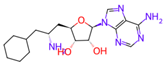
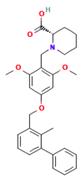
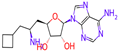
Top-ranked candidates were prioritized based on binding affinity and subsequently inspected to characterize their interaction patterns. Structural analysis revealed recurrent contacts with key residues (Ile116-Tyr123) located within the active site, highlighting a conserved interaction network likely contributing to ligand stabilization (Figure 1). Key predicted protein–ligand interactions for the proposed lead compounds are summarized in Table 1. The binding energies ranged from -10.8 to -7.0 kcal/mol. The proposed lead compounds demonstrated several hydrogen bonding, hydrophobic contacts, and π-related interactions with residues implicated in maintaining the structural integrity of the binding pocket. These interaction profiles support the hypothesis that the selected molecules possess structural features compatible with effective receptor engagement.
3.2. ADMET Analysis
ADMET profiling was performed to prioritize compounds whose physicochemical properties fall within the chemical space historically associated with central nervous system (CNS) drugs, thereby increasing the probability of brain exposure. Particular emphasis was placed on descriptors strongly linked to blood–brain barrier permeability, including lipophilicity (logP, logD), topological polar surface area (TPSA), molecular weight, and hydrogen bonding capacity (HBD;HBA: Hidrogen Bond Donor and Hidrogen Bond Acceptor, respectively), as these parameters collectively influence passive diffusion across the BBB (Figure 2).
The analysis revealed that several top-ranked docking candidates also exhibited favorable pharmacokinetic descriptors, including moderate lipophilicity (logP = 2 to 4) [25], reduced topological polar surface area (TPSA 40 Å to 90 Å) [5], molecular weight (< 450–500 g/mol), HBD (low) and compliance with drug-likeness criteria of lipinsky rules [26]. These features are commonly associated with an increased probability of brain exposure. Importantly, the integration of ADMET filters enabled the identification of compounds combining strong predicted binding affinity with properties supportive of CNS penetration, thereby reducing the likelihood of advancing molecules with suboptimal pharmacokinetic behavior.
While BBB permeability is inherently multifactorial and cannot be inferred exclusively from physicochemical parameters, the applied framework served as an effective early-stage prioritization strategy to enrich the screened library with CNS-compatible candidates. The highest-ranked molecules were subsequently advanced to MPO analysis to further refine compound selection. These results provided the structural basis for subsequent MPO prioritization and ADMET profiling.
3.3. MPO Index
The multi-parameter optimization (MPO) index was implemented as an integrative prioritization strategy to identify compounds displaying a balanced physicochemical profile suitable for central nervous system (CNS) drug discovery. MPO frameworks are widely employed in early-stage drug discovery to enrich chemical libraries and guide compound selection beyond binding affinity alone.
In this study, the MPO approach incorporated descriptors such as topological polar surface area (TPSA), lipophilicity (logP), logBB and drug-likeness criteria (lipinski rules) to favor molecules with CNS-compatible characteristics. All descriptors were normalized prior to score integration to prevent parameter dominance and ensure a balanced contribution of each variable. Weights were assigned to reflect the relative pharmacological importance of each parameter in the context of glioblastoma drug discovery, prioritizing target engagement and CNS compatibility over general drug-likeness descriptors. Accordingly, the MPO index should be interpreted as a chemical prioritization tool designed to reduce the risk of advancing compounds with favorable predicted binding but inadequate pharmacokinetic potential (Table 2).

Table 2.
Parameters used to constrct the MPO Index.
| Parameter | weights | Description |
| Affinity_norm | 0.40 | Docking enerigies. Affinity_norm = (Affinity_max - Affinity_compound) / (Affinity_max - Affinity_min) |
| LogBB | 0.20 | logBB=log10(Cbrain/Cblood)1 |
| Lipinski_score | 0.15 | Lipinski_score= rules compliance/4=1.0 |
| TPSA_score | 0.10 | TPSA_score = (TPSA_max - TPSA_compound) / (TPSA_max - TPSA_min) |
| LogP_score | 0.10 | LogP_score = (LogP_compound - LogP_min) / (LogP_max - LogP_min) |
| MW_score | 0.05 | MW_score = (MW_max - MW_compound) / (MW_max - MW_min) |
1 Calculated of pkCSM platform .
4. Discussion
The present study investigated the potential of nucleoside-derived compounds as modulators of PD-L1 using an integrated computational workflow that combines molecular docking, physicochemical descriptor analysis (ADME), and multiparameter optimization (MPO) [27]. This strategy allowed the identification of candidate molecules that not only display favorable predicted binding affinity but also exhibit physicochemical characteristics compatible with drug-like behavior, particularly in the context of CNS drug discovery.
The initial molecular docking screening identified a subset of compounds with predicted binding affinities comparable to those reported for previously described small-molecule inhibitors of PD-L1. Although docking scores should be interpreted cautiously and do not constitute direct evidence of biological activity, the results suggest that nucleoside-related scaffolds may be capable of establishing stabilizing interactions within the PD-L1 homodimer binding interface [28].
Structural studies have shown that effective PD-L1 inhibitors frequently bind within a hydrophobic pocket formed at the PD-L1 dimer interface, where residues such as Tyr56, Met115, Ala121, and Tyr123 contribute to ligand stabilization [29]. The predicted binding poses obtained in the present study are consistent with this structural model and support the plausibility of nucleoside-based ligands interacting with this region of the protein (Table 3).
An important observation emerging from the dataset is the presence of the known PD-L1 inhibitor BMS-1 [30] among the screened molecules. Interestingly, this compound ranked among the highest-scoring candidates according to both docking affinity and the integrated MPO score.
The identification of a previously reported PD-L1 ligand among the top-ranked compounds provides indirect support for the validity of the docking protocol and the selected binding region, presented in this work. While such observations do not constitute experimental validation, they suggest that the computational workflow applied in this study is capable of capturing structural features associated with known PD-L1 binding chemotypes [31].
Despite these encouraging docking results, it is well established that docking-based ranking alone is insufficient for reliable compound prioritization [32,33]. Molecules with favorable docking scores may still possess physicochemical properties incompatible with adequate pharmacokinetics or bioavailability [34]. This limitation is particularly relevant for therapeutic strategies targeting brain tumors such as glioblastoma, where the ability of small molecules to cross the BBB is a critical factor influencing therapeutic efficacy [35]. For this reason, additional descriptors related to drug-likeness and potential brain exposure were evaluated for all compounds.
The analysis of physicochemical parameters of compounds of this work revealed that several of the top-ranked candidates display properties commonly associated with drug-like molecules, in particular, a number of compounds exhibited molecular weights within ranges typical for small-molecule drugs and moderate lipophilicity values compatible with membrane permeability (Supp. 1). In addition, several molecules presented topological polar surface area (TPSA) values that fall within ranges frequently associated with an increased probability of central nervous system exposure [36]. Although these parameters alone cannot guarantee BBB penetration, they provide useful preliminary indicators for prioritizing compounds in early-stage drug discovery (e.g., integrated SAR/QSPR models and physicochemical descriptors are widely used for initial screening despite their predictive limitations) [37].
To further refine candidate selection, a multiparameter optimization (MPO) score was calculated integrating docking affinity with key physicochemical descriptors, including lipophilicity, polar surface area, molecular weight, and predicted BBB permeability (Suplement_2). The comparison between docking-based ranking and MPO-based prioritization revealed notable differences in compound ordering. Several molecules exhibiting strong docking scores were deprioritized due to unfavorable physicochemical characteristics, whereas other compounds with slightly lower docking affinities achieved higher MPO scores because of a more balanced combination of structural and pharmacokinetic properties (Table 3). These findings showed highlight the importance of integrating multiple descriptors during early-stage virtual screening to reduce the selection of false-positive hits that may arise when docking scores are considered in isolation.
Another noteworthy observation concerns the structural characteristics of the compounds with the highest MPO scores. Several of these molecules retain structural elements typical of nucleoside scaffolds while incorporating modifications that increase lipophilicity and reduce overall polarity (Figure 1). Such structural adjustments are consistent with medicinal chemistry strategies commonly employed to improve the pharmacokinetic properties of nucleoside analogs [38]. Natural nucleosides such as Cordycepin are known to display diverse biological activities [39], but often exhibit limited membrane permeability due to their relatively high polarity and dependence on nucleoside transporters [40]. The identification of modified nucleoside-like structures among the highest-ranked candidates therefore suggests that this scaffold may represent a promising starting point for the design of PD-L1 modulators with improved drug-like characteristics.
Despite the promising computational observations reported in this work, several limitations must be acknowledged [41]. Molecular docking provides only an approximate representation of ligand–protein interactions and does not account for the dynamic conformational behavior of proteins or solvent effects [42,43]. Furthermore, the ADMET properties evaluated in this study rely on predictive models and should therefore be interpreted as preliminary indicators rather than definitive pharmacokinetic measurements [44,45]. Experimental validation through biochemical binding assays, cellular studies, and eventually in vivo models will be necessary to determine whether the identified compounds can effectively modulate PD-L1 signaling in biological systems.
5. Conclusions
In summary, the integrated computational workflow applied in this study enabled the identification of nucleoside-derived molecules with predicted affinity for PD-L1 and physicochemical characteristics compatible with further optimization as drug candidates. The results support the potential of nucleoside-based scaffolds as starting points for the development of small-molecule modulators targeting immune checkpoint pathways in glioblastoma. Future studies combining molecular dynamics simulations, structure-guided optimization, and experimental validation will be necessary to further explore the therapeutic potential of these compounds.
Supplementary Materials
The following supporting information can be downloaded at the website of this paper posted on Preprints.org, Suplement 1: Redockung validation. Suplement 2: Table Results.
Author Contributions
Conceptualization, F.M.-G. ; methodology, F.M.-G., C.B. and J.C.-B. ; software, F.M.-G. and J.C.-B.; investigation, F.M.-G., C.B. and J.C.-B. ; resources, F.M.-G., C.B. and J.C.-B. ; data curation, F.M.-G.; writing—original draft preparation, F.M.-G., C.B. and J.C.-B. ; writing—review and editing, F.M.-G., C.B. and J.C.-B.; All authors have read and agreed to the published version of the manuscript.
Funding
This research received no external funding. The authors would like to acknowledge the support of the National Polytechnic Institute (IPN) and special thanks to the National School of Medicine, SECIHTI (Secretaria de Ciencias, Humanidades, Tecnología e Inovación), and the BEIFI program from the IPN-ESM Institute.
Institutional Review Board Statement
Not applicable.
Informed Consent Statement
Not applicable.
Data availability statement
Not applicable.
Acknowledgments
The authors would like to thank the National Polytechnic Institute (IPN) for their assistance during the work on this article.
Conflicts of interest
The authors declare no conflicts of interest.
Abbreviations
The following abbreviations are used in this manuscript:
| MDPI | Multidisciplinary Digital Publishing Institute |
| DOAJ | Directory of open access journals |
| MPO | Multiparameter optimization |
| PD-L1 | Programmed death ligand-1 |
References
- Jeong, J.-W.; et al. Anti-inflammatory effects of cordycepin via suppression of inflammatory mediators in BV2 microglial cells. Int Immunopharmacol 2010, 10, 1580–1586. [Google Scholar] [CrossRef]
- Tan, L.; et al. Anti-inflammatory effects of cordycepin: A review. Phytother Res 2020. [Google Scholar] [CrossRef]
- Radhi, M.; et al. A Systematic Review of the Biological Effects of Cordycepin. Molecules 2021, 26, 5886. [Google Scholar] [CrossRef]
- Cheng, Z.; et al. Cordycepin protects against cerebral ischemia/reperfusion injury in vivo and in vitro. Eur J Pharmacol 2011, 664, 20–28. [Google Scholar] [CrossRef]
- Pajouhesh, H.; Lenz, G.R. Medicinal chemical properties of successful central nervous system drugs. NeuroRx 2005, 2, 541–553. [Google Scholar] [CrossRef] [PubMed]
- Hueng, D.-Y.; Hsieh, C.-H.; Cheng, Y.-C.; Tsai, W.-C.; Chen, Y. Cordycepin inhibits migration of human glioblastoma cells by affecting lysosomal degradation and protein phosphatase activation. J Nutr Biochem 2017, 41, 109–116. [Google Scholar] [CrossRef]
- Zheng, S.-X.; et al. Cordycepin improves sensitivity to temozolomide in glioblastoma cells by down-regulating MYC. J Cancer Res Clin Oncol 2023, 149, 16055–16067. [Google Scholar] [CrossRef]
- Jiacheng, D.; et al. Research progress and challenges of the PD-1/PD-L1 axis in gliomas. Cell Biosci 2024, 14, 123. [Google Scholar] [CrossRef] [PubMed]
- Wang, Z.; et al. Molecular and clinical characterization of PD-L1 expression at transcriptional level via 976 samples of brain glioma. Oncoimmunology 2016, 5, e1196310. [Google Scholar] [CrossRef]
- Hao, C.; et al. PD-L1 Expression in Glioblastoma, the Clinical and Prognostic Significance: A Systematic Literature Review and Meta-Analysis. Front. Oncol. 2020, 10. [Google Scholar] [CrossRef] [PubMed]
- Antonios, J.P.; et al. PD-1 blockade enhances the vaccination-induced immune response in glioma. JCI Insight 2016, 1. [Google Scholar] [CrossRef] [PubMed]
- Arvanitis, C. D.; Ferraro, G. B.; Jain, R. K. The blood-brain barrier and blood-tumour barrier in brain tumours and metastases. Nat Rev Cancer 2020, 20, 26–41. [Google Scholar] [CrossRef]
- Young, J.D. The SLC28 (CNT) and SLC29 (ENT) nucleoside transporter families: a 30-year collaborative odyssey. Biochem Soc Trans 2016, 44, 869–876. [Google Scholar] [CrossRef]
- Saraiva, C.; et al. Nanoparticle-mediated brain drug delivery: Overcoming blood–brain barrier to treat neurodegenerative diseases. Journal of Controlled Release 2016, 235, 34–47. [Google Scholar] [CrossRef]
- 15 van, T.e.l.l.i.; ngen, O.; et al. Overcoming the blood–brain tumor barrier for effective glioblastoma treatment. Drug Resistance Updates 2015, 19, 1–12. [Google Scholar] [CrossRef] [PubMed]
- Digiovanni, S.; et al. Blood-brain barrier permeability increases with the differentiation of glioblastoma cells in vitro. Fluids Barriers CNS 2024, 21, 8. [Google Scholar] [CrossRef] [PubMed]
- Gupta, P.K.; et al. Synthesis, cytotoxicity, and antiviral activity of some acyclic analogues of the pyrrolo [2,3-d]pyrimidine nucleoside antibiotics tubercidin, toyocamycin, and sangivamycin. J Med Chem 1989, 32, 402–408. [Google Scholar] [CrossRef] [PubMed]
- Bergstrom, D.E.; et al. Antiviral activity of C-5 substituted tubercidin analogues. J Med Chem 1984, 27, 285–292. [Google Scholar] [CrossRef] [PubMed]
- Lee, S.-C.; Alaali, L.; Kwon, H.; Rigi, M.; Eberhart, C.G. Cordycepin (3′-Deoxyadenosine) Suppresses Heat Shock Protein 90 Function and Targets Tumor Growth in an Adenosine Deaminase-Dependent Manner. Cancers 2022, 14, 3122. [Google Scholar] [CrossRef]
- Chandrasekaran, J.; et al. Computational design of PD-L1 small molecule inhibitors for cancer therapy. Mol Divers 2023, 27, 1633–1644. [Google Scholar] [CrossRef]
- DiFrancesco, M.; et al. Discovery of small-molecule PD-1/PD-L1 antagonists through combined virtual screening and experimental validation. Computational Biology and Chemistry 2023, 102, 107804. [Google Scholar] [CrossRef]
- Fantacuzzi, M.; Paciotti, R.; Agamennone, M. A Comprehensive Computational Insight into the PD-L1 Binding to PD-1 and Small Molecules. Pharmaceuticals 2024, 17, 316. [Google Scholar] [CrossRef] [PubMed]
- Chaicharoenaudomrung, N.; Jaroonwitchawan, T.; Noisa, P. Cordycepin induces apoptotic cell death of human brain cancer through the modulation of autophagy. Toxicol In Vitro 2018, 46, 113–121. [Google Scholar] [CrossRef] [PubMed]
- Narsinh, K.H.; et al. Strategies to Improve Drug Delivery Across the Blood-Brain Barrier for Glioblastoma. Curr Neurol Neurosci Rep 2024, 24, 123–139. [Google Scholar] [CrossRef] [PubMed]
- Waterhouse, R.N. Determination of lipophilicity and its use as a predictor of blood-brain barrier penetration of molecular imaging agents. Mol Imaging Biol 2003, 5, 376–389. [Google Scholar] [CrossRef] [PubMed]
- Lipinski, C. A.; Lombardo, F.; Dominy, B. W.; Feeney, P. J. Experimental and computational approaches to estimate solubility and permeability in drug discovery and development settings. Adv Drug Deliv Rev 2001, 46, 3–26. [Google Scholar] [CrossRef]
- Wager, T. T.; Hou, X.; Verhoest, P. R.; Villalobos, A. Moving beyond Rules: The Development of a Central Nervous System Multiparameter Optimization (CNS MPO) Approach To Enable Alignment of Druglike Properties. ACS Chem. Neurosci. 2010, 1, 435–449. [Google Scholar] [CrossRef]
- Wager, T. T.; Hou, X.; Verhoest, P. R.; Villalobos, A. Central Nervous System Multiparameter Optimization Desirability: Application in Drug Discovery. ACS Chem Neurosci 2016, 7, 767–775. [Google Scholar] [CrossRef]
- Zak, K.M.; et al. Structural basis for small molecule targeting of the programmed death ligand 1 (PD-L1). Oncotarget 2016, 7, 30323–30335. [Google Scholar] [CrossRef]
- Xu, J.; et al. Progress in small-molecule inhibitors targeting PD-L1. RSC Med Chem 15, 1161–1175. [CrossRef] [PubMed]
- Broccatelli, F.; et al. Application of Mechanistic Multiparameter Optimization and Large-Scale In Vitro to In Vivo Pharmacokinetics Correlations to Small-Molecule Therapeutic Projects. Mol. Pharmaceutics 2024, 21, 4312–4323. [Google Scholar] [CrossRef]
- Berry, M.; Fielding, B.; Gamieldien, J. Practical Considerations in Virtual Screening and Molecular Docking. Emerging Trends in Computational Biology, Bioinformatics, and Systems Biology 2015, 487–502. [Google Scholar] [CrossRef]
- Shoichet, B.K. Virtual screening of chemical libraries. Nature 2004, 432, 862–865. [Google Scholar] [CrossRef]
- Wager, T. T.; Hou, X.; Verhoest, P. R.; Villalobos, A. Moving beyond rules: the development of a central nervous system multiparameter optimization (CNS MPO) approach to enable alignment of druglike properties. ACS Chem Neurosci 2010, 1, 435–449. [Google Scholar] [CrossRef] [PubMed]
- Wu, D.; et al. The blood–brain barrier: Structure, regulation and drug delivery. Sig Transduct Target Ther 2023, 8, 217. [Google Scholar] [CrossRef] [PubMed]
- Pu, J.; et al. Glioblastoma multiforme: an updated overview of temozolomide resistance mechanisms and strategies to overcome resistance. Discov Oncol 2025, 16, 731. [Google Scholar] [CrossRef]
- Cornelissen, F.M.G.; et al. Explaining Blood-Brain Barrier Permeability of Small Molecules by Integrated Analysis of Different Transport Mechanisms. J Med Chem 2023, 66, 7253–7267. [Google Scholar] [CrossRef] [PubMed]
- Yates, M. K.; Seley-Radtke, K. L. The evolution of antiviral nucleoside analogues: A review for chemists and non-chemists. Part II: Complex modifications to the nucleoside scaffold. Antiviral Res 2019, 162, 5–21. [Google Scholar] [CrossRef]
- Li, Y.; et al. Cordycepin: A Promising Anticancer Compound from Traditional Chinese Medicine. Am. J. Chin. Med. 2025, 53, 2137–2165. [Google Scholar] [CrossRef]
- Molina-Arcas, M.; Casado, F. J.; Pastor-Anglada, M. Nucleoside transporter proteins. Curr Vasc Pharmacol 2009, 7, 426–434. [Google Scholar] [CrossRef]
- Shi, D.; Khan, F.; Abagyan, R. Extended Multitarget Pharmacology of Anticancer Drugs. J. Chem. Inf. Model. 2019, 59, 3006–3017. [Google Scholar] [CrossRef]
- Friesner, R.A.; et al. Glide: a new approach for rapid, accurate docking and scoring. 1. Method and assessment of docking accuracy. J Med Chem 2004, 47, 1739–1749. [Google Scholar] [CrossRef] [PubMed]
- Coutsias, E. A.; Seok, C.; Dill, K. A. Using quaternions to calculate RMSD. J Comput Chem 2004, 25, 1849–1857. [Google Scholar] [CrossRef] [PubMed]
- Lessl, M.; Schoepe, S.; Sommer, A.; Schneider, M.; Asadullah, K. Grants4Targets - an innovative approach to translate ideas from basic research into novel drugs. Drug Discov Today 2011, 16, 288–292. [Google Scholar] [CrossRef]
- Regitz-Zagrosek, V. Therapeutic implications of the gender-specific aspects of cardiovascular disease. Nat Rev Drug Discov 2006, 5, 425–438. [Google Scholar] [CrossRef] [PubMed]
- Zoete, V.; Daina, A.; Bovigny, C.; Michielin, O. SwissSimilarity: A Web Tool for Low to Ultra High Throughput Ligand-Based Virtual Screening. J. Chem. Inf. Model. 2016, 56, 1399–1404. [Google Scholar] [CrossRef] [PubMed]
- O’Boyle, N.M.; et al. Open Babel: An open chemical toolbox. J Cheminform 2011, 3, 33. [Google Scholar] [CrossRef]
- Trott, O.; Olson, A.J. AutoDock Vina: improving the speed and accuracy of docking with a new scoring function, efficient optimization and multithreading. J Comput Chem 2010, 31, 455–461. [Google Scholar] [CrossRef] [PubMed]
- Wildman, S. A.; Crippen, G. M. Prediction of Physicochemical Parameters by Atomic Contributions. J. Chem. Inf. Comput. Sci. 1999, 39, 868–873. [Google Scholar] [CrossRef]
- Wager, T. T.; Hou, X.; Verhoest, P. R.; Villalobos, A. Moving beyond Rules: The Development of a Central Nervous System Multiparameter Optimization (CNS MPO) Approach To Enable Alignment of Druglike Properties. ACS Chem. Neurosci. 2010, 1, 435–449. [Google Scholar] [CrossRef]
- Pires, D.E. V.; Blundell, T. L.; Ascher, D. B. pkCSM: Predicting Small-Molecule Pharmacokinetic and Toxicity Properties Using Graph-Based Signatures. J. Med. Chem. 2015, 58, 4066–4072. [Google Scholar] [CrossRef] [PubMed]
Figure 1.
Binding poket of Cordycepin and VYC ligands in PD-L1 crystal 8OR1: (a) Interactions of VYC ligand present in 8OR1 PDB crystal, pose is obtained from redocking pose ; (b) Cordycepin interaction with PD-L1, three hidrogend bonds are formed for both ligands.
Figure 1.
Binding poket of Cordycepin and VYC ligands in PD-L1 crystal 8OR1: (a) Interactions of VYC ligand present in 8OR1 PDB crystal, pose is obtained from redocking pose ; (b) Cordycepin interaction with PD-L1, three hidrogend bonds are formed for both ligands.
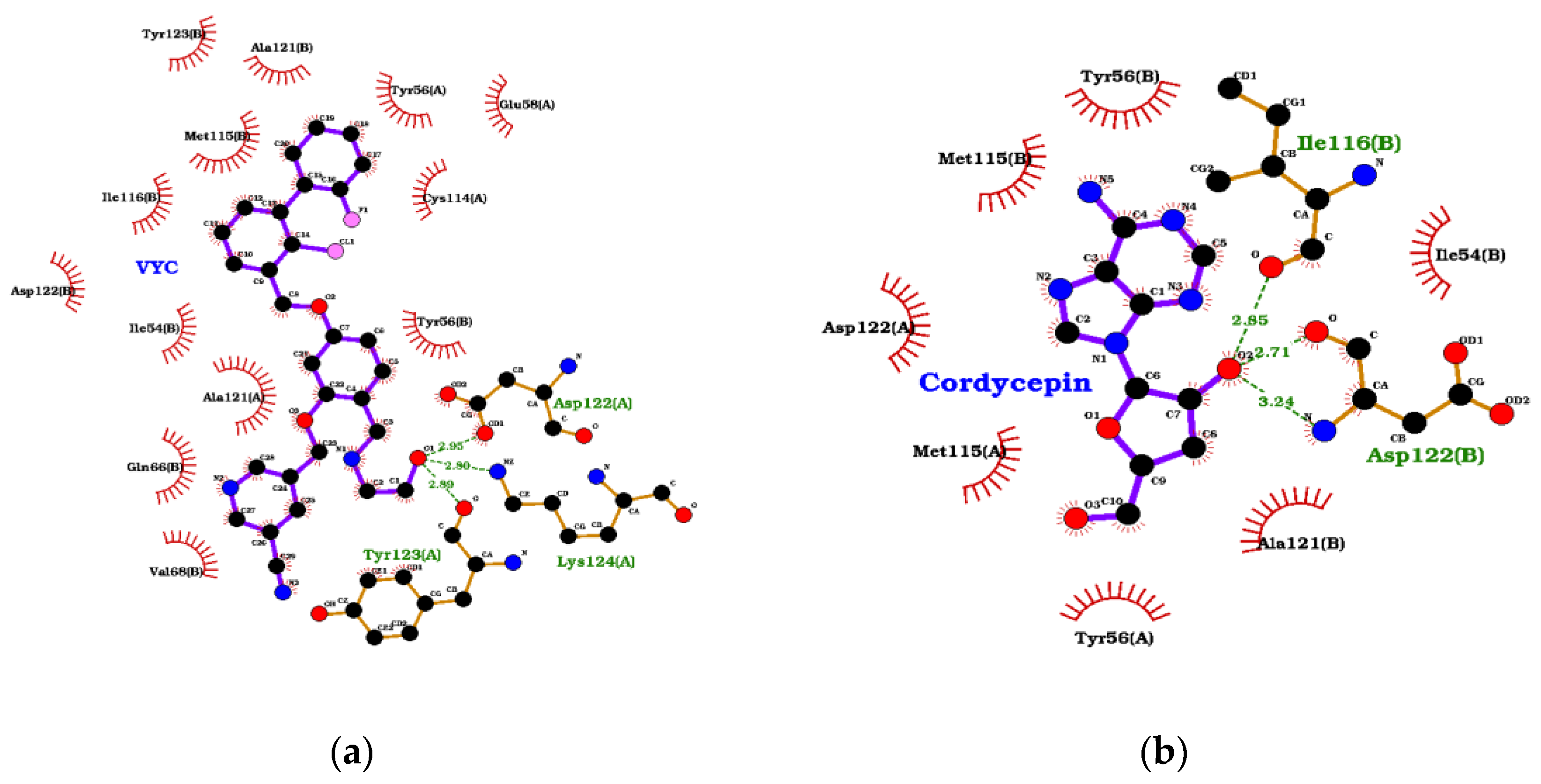
Figure 2.
Molecular descriptors heatmap. Correlation matrix between descriptors used: Affinity; Energies of docking analysis, SCORE: Similarity between cordycepin and other compounds of the database, MolWT: Molecular weight, LogP: Logarithm of the Octanol-Water Partition Coefficient, TPSA: Topological Polar Surface Area, HBD: Hydrogen Bond Donor, HBA: Hydrogen Bond Acceptor, RotBonds: Rotatable bonds, Lipinski_pass: compliance with Lipinski rules.
Figure 2.
Molecular descriptors heatmap. Correlation matrix between descriptors used: Affinity; Energies of docking analysis, SCORE: Similarity between cordycepin and other compounds of the database, MolWT: Molecular weight, LogP: Logarithm of the Octanol-Water Partition Coefficient, TPSA: Topological Polar Surface Area, HBD: Hydrogen Bond Donor, HBA: Hydrogen Bond Acceptor, RotBonds: Rotatable bonds, Lipinski_pass: compliance with Lipinski rules.
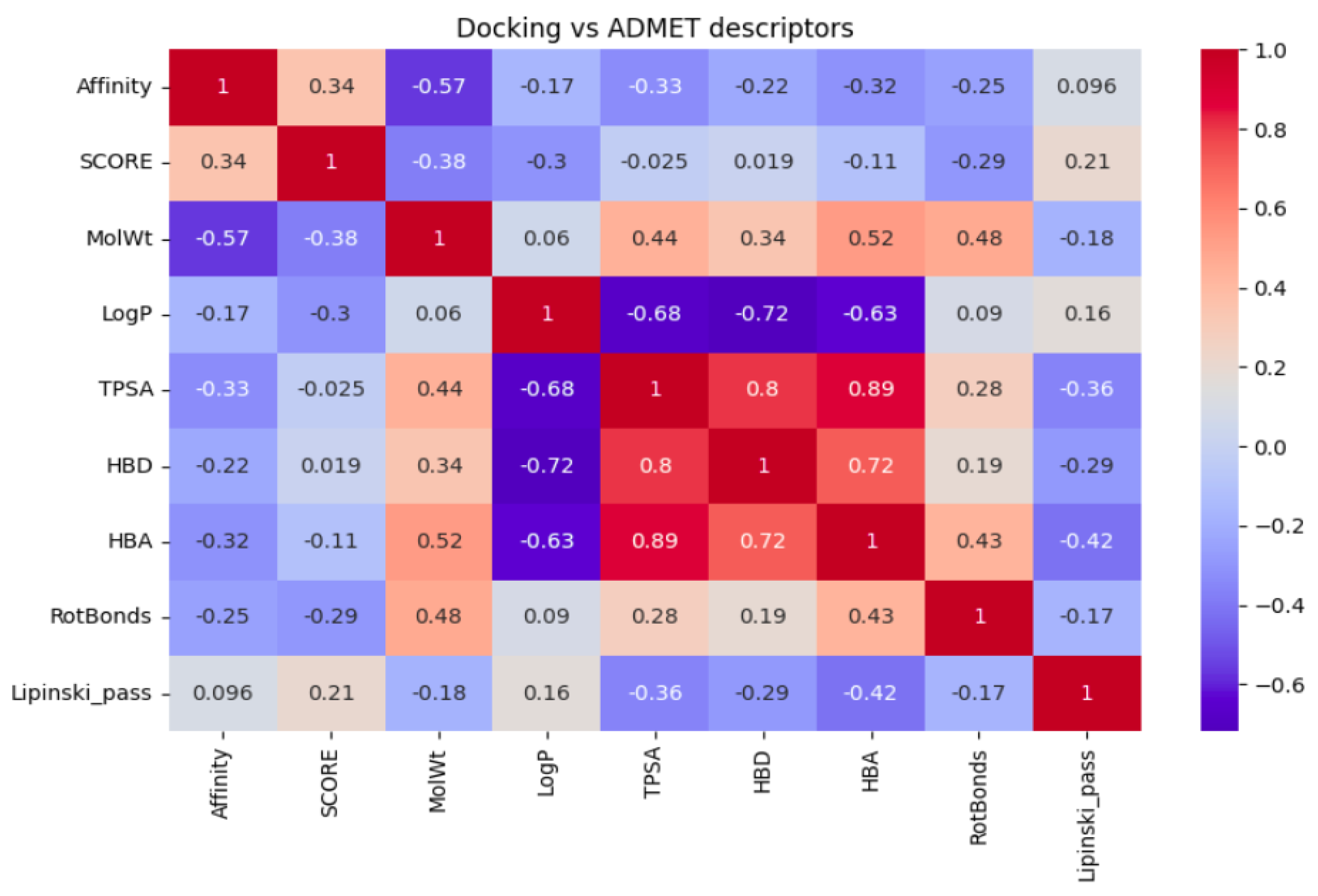
Table 1.
Compounds with the predicted strongest interactions with PD-L1.
| Compound | Affinity1 (kcal/mol) | 2D Structure |
| VYC2 | -10.9 | 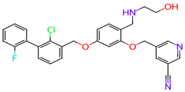 |
| CHEMBL4077793 |
-10.8 |
 |
|
CHEMBL4089220 |
-10.4 | 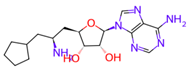 |
| BMS-13 |
-10.3 |
 |
| CHEMBL4095823 | -10.2 | 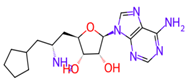 |
| CHEMBL4074394 | -9.8 | 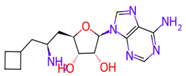 |
| CHEMBL2092784 | -9.7 | 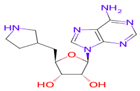 |
| CHEMBL4556165 | -9.6 | 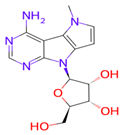 |
| CHEMBL4095401 | -9.6 | 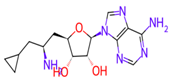 |
| CHEMBL4085649 | -9.6 | 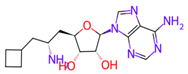 |
1 Free energy values calculated of docking analysis. 2 PUBCHEM: 168433094. 3 PUBCHEM: 91663303.
Table 3.
Interaction of the ligands reported with the highest MPO_index and known ligands.
| Compound | Binding energy (kcal/mol) |
MPO_index | Interacting residues | |||
|---|---|---|---|---|---|---|
| Hydrogen bonds | Hydrophobic interactions | Pi Interactions | 2D interactions | |||
| BMS-1 | -10.3 | 0.81 | Met115 | Met115A, Ala121A, Tyr123A, Tyr123B, Asp122A, | Tyr56B | 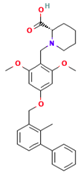 |
| VYC | -10.9 | 0.81 | Asp122A,Tyr123A, Lys124A | Ala121A, Met115A, Tyr123B, Asp122A | Tyr56B, Tyr123B | 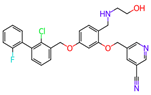 |
| CHEMBL 4077793 |
-10.8 | 0.84 | Ile54B, Met115B, Ile116B, Asp122B | Tyr56B, Met115B, Asp122A | Tyr123B | 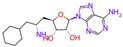 |
| CHEMBL 4089220 |
-10.4 | 0.81 | Cys114A, Met115B, Ile116B | Tyr56B, Met115B , Asp122A | Tyr123B | 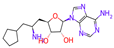 |
| CHEMBL 4095823 |
-10.2 | 0.78 | Cys114A, Ile116B | Ala121A, Asp122A, Met115A, Tyr56B | Tyr123B | 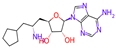 |
| CHEMBL 4074394 |
-9.8 | 0.74 | Cys114A, Ile116B | Met115A, Tyr56B | Tyr123B |
 |
| CHEMBL 2092784 |
-9.7 | 0.73 | Glu58A, Met115A, Met115B | Met115B, Ala121A | - | 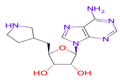 |
| CHEMBL 1222699 |
-9.3 | 0.73 | Ile54B, Cys114A | Met115B | - | 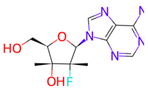 |
| CHEMBL 4556165 |
-9.6 | 0.72 | Ile54B, Cys114A | Met115B | - | 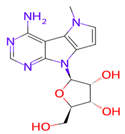 |
| Cordycepin | -7.7 | 0.56 | Asp122B, Ile116B | Met115A, Ala121A | - | 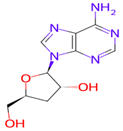 |
Disclaimer/Publisher’s Note: The statements, opinions and data contained in all publications are solely those of the individual author(s) and contributor(s) and not of MDPI and/or the editor(s). MDPI and/or the editor(s) disclaim responsibility for any injury to people or property resulting from any ideas, methods, instructions or products referred to in the content. |
© 2026 by the authors. Licensee MDPI, Basel, Switzerland. This article is an open access article distributed under the terms and conditions of the Creative Commons Attribution (CC BY) license (http://creativecommons.org/licenses/by/4.0/).
Copyright: This open access article is published under a Creative Commons CC BY 4.0 license, which permit the free download, distribution, and reuse, provided that the author and preprint are cited in any reuse.


