

Submitted:
05 April 2026
Posted:
06 April 2026
You are already at the latest version
Abstract
Cryptocurrencies are increasingly gaining traction in the digital realm, promising a decentralized future free from the grip of centralized authorities. This magnetic appeal has led to a surge in the integration of cryptocurrencies within various games and applications based on the robust security provided by blockchain technology. As the world embraces this digital revolution, everyday users are navigating a landscape filled with questions and concerns about the safety, privacy, and reliability of these innovative currencies. Some nations have chosen to ban or heavily regulate cryptocurrencies, further fanning the flames of uncertainty among regular users. While extensive research has been done on the technical dimensions of enhancing cryptocurrency security, there is a lack of appropriate work on critical aspects of parameters influencing users’ perspectives on security, privacy, and trust (SPT) offered by cryptocurrencies. This paper explores the existing gap by investigating the complex relationship between users’ perceptions of SPT in cryptocurrencies and the potential advantages presented by decentralized blockchains in current literature. PRISMA methodology has been followed to systematically review the existing literature targeting SPT parameters of cryptocurrencies with a detailed discussion of the methodologies followed by the researchers on the subject. After the careful selection of a search query, 64 papers have been reviewed in detail from a list of 350 papers obtained from Scopus, WoS, IEEE Explore, and ACM. Dominant use of surveys, the Technology Acceptance Model, and Structural Equation Modelling for analysis is observed in the reviewed literature which may not cover the complete domain of parameters affecting SPT concerns of users about cryptocurrencies. By exploring the existing literature, we highlighted the obstacles that may impede the widespread adoption of cryptocurrencies and the limitations that may be in research methodologies being adopted to measure these parameters.
Keywords:
cryptocurrencies
; blockchain
; security
; privacy
; trust
1. Introduction
Currencies have been a medium of exchange for millennia, with recorded usage dating back to ancient civilizations. In early human societies, barter was the primary method of trade, where individuals swapped goods directly. However, this system had limitations, particularly the impracticality of transporting large or valuable items for trade. Over time, societies recognized the need for a more versatile and efficient system of exchange, giving rise to the concept of currencies [1]. One fundamental aspect of currency is trust, which forms the cornerstone of any successful monetary system. The use of currency relies on the faith that it represents a certain value and that its exchange is reliable. This trust is typically vested in the guarantee provided by the currency’s issuing authority, which ensures the currency’s stability and acceptance by a broad user base [2]. Understanding the evolution of trust in currency systems is essential when exploring contemporary issues, such as the challenges and opportunities presented by the emergence of digital and cryptocurrencies.
Digital currencies are not a novel phenomenon introduced through blockchain; their use in transactions dates back to the late 1990s. The rise of the Internet gave birth to a new financial sector, where innovative online products like digital currencies, emerged. These digital currencies offered a modern way to transfer value over the internet, enabling global financial transactions that bypass traditional, heavily regulated financial channels. In the United States alone, nine different countries launched some form of digital currency, with only two, GoldMoney and WebMoney Transfer, surviving until 2015 [3]. The primary factor contributing to the failure of these currencies was stringent regulations, leading to their closure. Moreover, the legal scrutiny and cases involving these early digital currencies add to the current obstacles influencing the adoption of cryptocurrencies among common users. Blockchain changed how digital currencies operate by making things more decentralized, which means there’s no need for a bank or a third entity to watch over and approve every transaction. This decentralization brings increased transparency and security, offering users a unique level of control over their financial interactions. Although it has been only nearly a decade since bitcoin, the first cryptocurrency was first introduced, cryptocurrencies have since gained a lot of popularity among users [4]. According to Crypto Marketcap, the market cap of cryptocurrencies exceeds more than 1100 billion dollars. Cryptocurrencies can not be strictly regulated by being decentralized so there are a lot of questions that arise in mind while adopting them and a lot of work needs to be done to make them adaptable for day-to-day transactions to make them acceptable to both users as well as financial institutions and Governments.
1.1. Background
Blockchain establishes a robust security framework for cryptocurrencies. Blockchain ensures security through a combination of key elements. The decentralization principle is pivotal, as it mandates transaction verification by a network of nodes rather than relying on a central authority, significantly mitigating the risk of manipulation. The consensus mechanism, such as Proof of Work or Proof of Stake, guarantees that only valid transactions are added to the ledger, preventing double-spending [5]. The immutability of blockchain, once data is recorded, enhances security by making it nearly impossible to alter transaction history. Transparent and publicly auditable, it fosters trust. The inherent immutability of blockchain adds an additional layer of security, rendering transaction history impervious to alteration once recorded [6]. Additionally, the distributed ledger structure ensures resilience even if some nodes fail or are compromised, further enhancing security. A brief comparison of Cryptocurrencies and Fiat currencies is given in Figure 1
Cryptocurrency ownership globally averages 3.9% with 300 million users [7].In 2013, there were only 13 types of cryptocurrencies which have grown manyfold in a few years [8]. There are now more than 100,000 businesses that accept some form of cryptocurrencies. Some of the giants like Tesla, AT&T, Overstock and Starbucks have already started allowing cryptocurrencies for transactions. Similarly, we see many applications and games like crypto kitties [9] have introduced specific tokens or use NFTs (Non-Fungible Tokens) for in-game markets. These tokens enable players to buy, sell, and trade virtual items with increased transparency and security. Despite, having a reasonable acceptance of the market, cryptocurrencies are still mostly seen as digital assets rather than a currency of exchange. Specialized apps like BitDroplet allow investment in small amounts rather than large investments and even provide investment plans for investors [10]. To cater for volatile pricing which affects consumer trust, many, stablecoins like Tether (USDT), have also entered the market, purporting to be backed by traditional fiat currencies such as the US dollar [11,12]. The price variation of the top two stable coins in relation to the dollar over time is shown in Figure 2 which indicates it remains fairly constant in contrast to the price variation of basic cryptocurrencies. While these stable coins aim to address the issue of volatility that often plagues other cryptocurrencies, questions arise about the verifiability of their claims and the broader impact on users’ trust and confidence in digital currencies. Nevertheless, cryptocurrencies have gained much transaction during and after the COVID-19 era and if we compare the bitcoin prices during and after COVID-19 we can see this phenomenon with the sudden rise and fall in demand affecting the prices as shown in Figure 3.
1.2. Advantages of Crypto Currencies
The foundations of cryptocurrencies lie in the decentralization offered by blockchain technology. This decentralization eliminates the need for intermediaries, such as banks, offering users enhanced transparency and control over their financial transactions. The global accessibility of cryptocurrencies transcends the limitations of traditional banking systems [13], empowering individuals in regions with restricted access to financial services. Lower transaction costs, financial inclusion, and the potential for technological innovation further contribute to the appeal of cryptocurrencies [14]. As users navigate this dynamic landscape, the advantages of ownership, accessibility, and investment opportunities position cryptocurrencies as not merely a financial instrument but as a transformative force shaping the future of global finance. Cryptocurrencies offer several advantages that attract users. The advantages offered by Cryptocurrencies to the physical currency can be enumerated as below:-
- Decentralization. Cryptocurrencies operate on decentralized blockchain technology, eliminating the need for intermediaries like banks. This decentralization reduces the control of a single entity and enhances transparency [13].
- Financial Inclusion. Cryptocurrencies possess the capacity to extend financial services to individuals categorized as unbanked or underbanked. This implies that individuals lacking access to conventional banking systems can actively engage in the global economy through the utilization of cryptocurrencies [22,23].
- Accessibility 24/7. Cryptocurrencies operate on a global scale, and the market is open 24/7. This accessibility allows users to trade or transact at any time, unlike traditional financial markets with specific operating hours [25].
- Fast Transactions. Cryptocurrency transactions operate on a decentralized network, often resulting in faster transaction processing times compared to traditional banking systems. This speed is particularly advantageous for users engaging in time-sensitive transactions or seeking swift fund transfers [26].
- Savings on Credit Card Fees and Chargebacks. Cryptocurrency transactions typically incur lower fees compared to credit card transactions. By bypassing traditional financial intermediaries, users can avoid the associated fees and the potential for chargebacks [27]. This not only reduces transaction costs but also mitigates the risks associated with fraudulent chargebacks.
1.3. Crypto Crurrency Applications
Crypto currencies adoption is on the rise with the first commercial transaction reported was for a pizza of 25 dollars which was bought by paying 10,000 bitcoins [28]. Cryptocurrencies have found applications in various fields such as e-healthcare, the Internet of Things, smart contracts, e-finance, logistics, and more [29]. Riding on the hype, many countries have also started legalizing cryptocurrencies. El Salvador was the first country to legalize crypto transactions. According to CoinMarketCap, there are now more than 5400 different types of cryptocurrencies available with more than 300 million global users [30]. Here are some major crypto applications and fields:
1.3.1. Secure Assets
Account owners can use digital tokens as a means of storing value. Gold has been the asset of choice one it comes to maintaining an entity as an asset [31]. But cryptocurrencies are slowly overtaking gold the asset choice due to a number of reasons. First, there is no growth in gold. The gold you have on day one will remain so. Cryptocurrencies have inherent mechanisms like staking or mining where your assets grow as a reward for the work done in securing the underlying network. Moreover, there are extreme fees involved for jewelers, tax entities, etc. Then there are quality issues, cheating in the quantity and quality [32]. And the biggest issue is the safe storage of the gold. So, cryptocurrencies offer a better mechanism for investment, where you have to secure only the wallet and private key where you hold your assets [33].
1.3.2. Digital Currency
Crypto possesses the same required features as normal currencies. They store value and provide a unit of account [34]. They enable peer-to-peer transactions without the need for traditional banking intermediaries. So, cryptocurrencies have the potential to replace fiat money as a medium of exchange or transactions [32].
1.3.3. Payment of Essential Bills
The cryptocurrencies can also be used in non-accessible locations as a medium for payment of essential bills. For example, the researchers advocated that these can be used for secure energy trading and electrification in sub-Saharan Africa [35]. Gateways for patient-responsibility portions of medical bill transactions are also being developed to enable payment in cryptocurrencies [36].
1.3.4. Decentralized Finance (DeFi)
Decentralized finance (DeFi) represents an emergent paradigm in the financial sector, leveraging tokens, smart contracts, and blockchain technology as integral components of its financial instruments [37]. The main objective of DeFi is to overcome existing barriers to entry, mitigate high operational costs, and address the transparency deficit prevalent in traditional financial systems [38].
1.3.5. Gaming and Virtual Assets
1.3.6. Criminal Activities
Criminal activities constitute a significant factor contributing to the popularity of cryptocurrencies, primarily owing to their inherent un-traceability [41]. Various factors incentivize criminal involvement in the cryptocurrency realm, encompassing the irrevocable nature of transactions, the portability facilitating international transfers, the swiftness of instantaneous transactions, and the low associated transaction costs. Notable illegal activities where cryptocurrencies have gained traction include: -
- 1.
- Darknet Markets. Cryptocurrencies, particularly Bitcoin, have been used on darknet markets to facilitate the anonymous buying and selling of illegal stuff including drugs, hacking tools, and stolen data. The Silk Road, an online marketplace on the dark web, used Bitcoin for the illicit trade of drugs and other illegal goods and was shut down by law enforcement authorities [42].
- 2.
- Ransomware Payments. Cybercriminals often demand ransom payments in cryptocurrencies, such as Bitcoin, to unlock data that they have encrypted through ransomware attacks [43].
- 3.
- Money Laundering. Cryptocurrencies have been misused for money laundering purposes, where individuals seek to conceal the origins of illegally obtained funds by converting them into cryptocurrencies and transferring them through a complex network of transactions [17].
- 4.
- Scams and Frauds. Various scams and fraudulent schemes involve the use of cryptocurrencies to deceive individuals into investing in fake projects, Ponzi schemes, or ICOs (Initial Coin Offerings) with no intention of delivering promised returns [16].
- 5.
- Illegal Gambling. Cryptocurrencies are sometimes used for illegal online gambling, providing a more anonymous and less regulated way to place bets or participate in unlicensed gaming activities [44].
- 6.
- Tax Evasion. Some individuals may attempt to use cryptocurrencies to hide assets and evade taxes due to the perceived anonymity and privacy features associated with certain digital currencies [41].
- 7.
- Terrorist Financing. Cryptocurrencies have been exploited by individuals and groups engaged in terrorist activities to facilitate financial transactions outside the traditional banking system[45].
1.4. Top Factors Influencing Crypto Currency Adoption
While blockchain technology undoubtedly establishes a formidable security infrastructure, the widespread adoption of cryptocurrencies hinges not only on technological assurances but also on the subjective perceptions of users. Security, privacy, and trust, viewed through the lens of users’ perspectives, emerge as pivotal factors influencing the acceptance and integration of digital currencies into everyday transactions [19,26]. Significant reservations persist among both users and governments regarding the privacy, trustworthiness, and legal implications associated with these digital currencies [46]. Users harbor concerns about the security and confidentiality of transactions, contributing to hesitations in embracing cryptocurrencies on a broader scale [47,48]. The regulatory landscape further compounds these uncertainties and affects the trust and security perception of cryptocurrencies, as governments grapple with how to oversee and integrate digital currencies within established legal frameworks [16].
Given the intricate nature of the technology underpinning cryptocurrencies, there exists a pervasive lack of understanding and awareness when it comes to Security, Privacy, and Trust (SPT) concerns related to cryptocurrencies [49]. A considerable number of cryptocurrency users fall into the category of one-time adopters who were initially drawn to the hype but eventually discontinued their usage due to perceived usability issues or concerns related to Security, Privacy, and Trust (SPT) surrounding cryptocurrencies [50]. An illustrative example is Coinbase, recognized as the largest cryptocurrency exchange globally, boasting over 56 million registered users. However, the active user base is notably lower, with only 6.1 million users engaging in transactions regularly, performing at least one transaction per month [51]. This disparity between registered and active users underscores a prevalent trend where a significant portion of individuals who initiate cryptocurrency usage may not sustain their involvement over time, potentially influenced by factors related to SPT concerns.
Several researchers have attempted to address the intricate dynamics of Security, Privacy, and Trust (SPT) factors and their consequential impact on cryptocurrency adoption [52,53]. However, a majority of these investigations exhibit limitations in both scope and methodology [54]. The existing body of research, while contributing valuable insights, often falls short of comprehensively encapsulating the multifaceted nature of SPT factors and their intricate interplay within the cryptocurrency adoption landscape. Several research studies have concentrated on distinct domains, such as scrutinizing the elements influencing users’ perspectives on security, risks, and ease of use in cryptocurrency adoption [55]. Simultaneously, others have directed their focus toward factors like social influence and environmental considerations, particularly within the context of greenhouse effects. Additionally, a subset of researchers has honed in on specific security events, including crypto exchange hacks and wallet security incidents [56], which significantly shape the general perception regarding the security landscape of cryptocurrencies.
Similarly, Limitations are evident in the methodologies employed by researchers, primarily relying on questionnaires or direct analyses from users with limited involvement in the intricacies of cryptocurrencies. A predominant trend is observed in the utilization of established frameworks such as the Technology Acceptance Model (TAM) and Structural Equation Modeling (SEM) [57], with a noteworthy preponderance of quantitative studies. Notably, there exists a substantial deficit in the literature concerning qualitative or mixed-methods approaches, reflecting a significant lacuna in our understanding of the subjective and nuanced aspects pertaining to users’ experiences and perceptions in the realm of cryptocurrency adoption. This imbalance underscores the need for more diversified and comprehensive research methodologies to furnish a holistic understanding of the multifaceted dynamics inherent in the adoption of cryptocurrencies.
Moreover, there is no systematic literature review to the author’s knowledge that has been conducted on the topic. The paper fills this gap by conducting a systematic review of the literature targetting SPT concerns of users about cryptocurrencies and the main research methodologies being adopted to conduct the research. By systematically dissecting and evaluating these methodologies, we endeavor to distill valuable patterns, trends, and gaps, thereby contributing to a deeper understanding of the complex interplay between user perceptions and the technical underpinnings of cryptocurrency technology.
1.5. The Contributions of the Paper
The major contribution of the paper is to present a detailed and comprehensive analysis of the factors influencing users’ perceptions of cryptocurrency adoption, as well as addressing the challenges related to trust, security, and privacy within the realm of cryptocurrencies. The major contributions of the paper can be summarized as follows:-
- 1.
- Systematically review the existing literature with a focus on emphasizing user-centric research that explores the factors influencing users’ perceptions regarding the adoption of cryptocurrencies. The investigation specifically delves into aspects related to Security, Privacy, and Trust (SPT).
- 2.
- Provide insights into recognizing the key factors affecting user perspective that can considerably add value to the acceptance and engagement with cryptocurrencies and their applications.
- 3.
- Meticulously examine and analyze the research methodologies adopted by scholars in existing literature, with a specific emphasis on understanding the approaches employed to investigate factors related to cryptocurrency adoption.
- 4.
- Conduct a thorough examination of the existing literature to pinpoint gaps and areas that demand more in-depth exploration. Additionally, offers insights into potential future research directions, aiming to propel the field of cryptocurrencies forward and address the persisting challenges linked to their utilization.
1.6. Organization of the Paper
The rest of the paper is organized as follows: Section 2 presents a detailed description of the methodology followed for the systematic literature review. Section 3 discusses the bibliographical analysis of the existing literature on the subject in detail based on time, country, type of articles, and author distribution. Section 4 provides an insight into cryptocurrencies, the major stakeholders, and the impact of cryptocurrencies on financial applications. Section 5 explores the various factors in detail affecting SPT perception of users about cryptocurrencies. The research methodologies adopted by researchers have been discussed in Section 6. Section 7 offers a critical evaluation of existing research, highlighting potential pitfalls and gaps in existing research and finally, the paper concludes in Section 9.
2. Related Work
Several studies have been carried out to conduct systematic reviews on the existing literature about the underlying security architecture of Blockchain and the decentralization and privacy proffered by it [53,58]. We can also see studies highlighting the work being done to adopt blockchain and cryptocurrency in different application areas like IoT [5,59], supply chain management [60], health [61], tourism [62] and smart manufacturing [63] etc affecting overall security and trust of the application. However, most of these studies lack the user’s perspective of trust and security in using digital currency for daily[54] transactions. The trust of a user can not be won by mere underlying secure technology offering privacy. It is very essential to build the general perceptions of users about the technology and achieve confidence in Security, privacy, and trust that it offers. The best technology does not always win [64] and it is all about customers’ satisfaction and trust in the system.
Several researchers have attempted to address the intricate dynamics of Security, Privacy, and Trust (SPT) factors and their consequential impact on cryptocurrency adoption. However, a majority of these investigations exhibit limitations in both scope and methodology. Several research studies have concentrated on distinct domains, such as scrutinizing the elements influencing users’ perspectives on security, risks, and ease of use in cryptocurrency adoption [55]. Simultaneously, others have directed their focus toward factors like crypto exchange hacks and wallet security incidents [56], which significantly shape the general perception regarding the security landscape of cryptocurrencies. The study by Houy et al. [65] delves into detailed insights into the challenges faced by cryptocurrency wallets, providing a systematic literature review that establishes a taxonomy of attacks and defenses. It identifies common vulnerabilities, and existing countermeasures, and proposes future research directions for enhancing wallet security. It also identifies limitations in current wallet applications, such as the non-adoption of countermeasures against specific attacks, inadequate security information, lack of backup options, and user-side errors due to insufficient guidance from wallets. However, it does not consider the wallet UX design, the ease of use, and factors affecting building perceptions of users about the security and privacy of wallets.
Almeida et al. [66] review the literature surrounding the investor’s behaviors about cryptocurrencies. The paper highlights that existing literature focuses on the influence of social media and news on the crypto market and the effects of the presence of herding behavior and market inefficiency in the crypto market. The paper targets investors in cryptocurrency and not general users who may be affected by the investor’s behavior indirectly but are also influenced by other factors in cryptocurrency adoption.
Amsyar et al. [67] tried to address the challenge of a lack of a systematic literature review on cryptocurrencies, aiming to contribute valuable insights into research being carried out to understand the dynamics of cryptocurrencies. The paper sheds light on broader challenges faced by cryptocurrency users in conducting transactions namely the inherent challenge of fluctuating exchange rates in the cryptocurrency market, the role of legal institutions in the digital currency era, increased risk of money laundering crimes utilizing cryptocurrency. However, the paper fails to sum up the factors that affect the user perception of trust, security, and privacy about cryptocurrencies. The paper also does not discuss not cater for studies focused on ease of use, UX designs, social influence, etc that also shape a user’s perception and trust in cryptocurrencies.
A study by Kyriazis et al. [68] highlighted work being done to understand the price bubbles of cryptocurrencies. It emphasizes the recurrent nature of bubble phases exhibited by these digital assets. The paper also discusses widely used techniques, including the Augmented Dickey-Fuller (ADF) test and the Log-Periodic Power Law (LPPL) model in literature to detect price bubbles. The paper provides a foundation for informed decision-making within the cryptocurrency ecosystem. However, it lacks the inclusion of studies being conducted to understand the user’s perception about these and how these affect the general user trust of a user. Also, it does not include a review of the techniques used to measure the influence on user’s perceptions of these bubbles.
The systematic literature review by Al-Amri et al. [69] provides valuable insights into factors affecting cryptocurrencies. The factors influencing adoption are thoroughly explored, emphasizing key aspects such as ease of use, security, and government support. Security considerations encompass critical dimensions such as perceived risk, trust, privacy, and awareness. The research underlines these factors as crucial determinants in shaping the trajectory of cryptocurrency adoption. The authors also highlighted the diverse array of methods used for such investigations. The study on cryptocurrency adoption, while comprehensive, presents several limitations. Notably, the examination of cultural and contextual influences on users’ intentions to embrace cryptocurrency exchanges remains underexplored, lacking insights into how national culture, regulatory environments, and social norms shape adoption behaviors. Additionally, the study overlooks the strategic considerations for marketing crypto assets and addressing customers’ psychological barriers, a critical aspect in promoting widespread adoption. Moreover, the paper is old from 2019 and only reviews 25 articles.
These limitations in existing work on the topic underscore the need for future research to address these gaps. The paper fills this gap by highlighting the literature targetting SPT concerns of users about cryptocurrencies and the main research methodologies being adopted to conduct the latest research.
3. Research Methodology
The focus of this research is to summarize Security, Privacy, and Trust (SPI) issues in cryptocurrencies from users’ points of view discussed in existing literature and the research methodologies adopted in these papers. The aim is to identify the limitations of research methodologies adopted to the existing research which may not capture all factors affecting cryptocurrency adaptation. To systematically review the literature and extract relevant information we followed a systematic review process based on the PRISMA scheme of studies. The quantity of papers that are focused on SPI parameters from users’s perspective is not very large as most of the studies are focused on underlying blockchain security and deal with technical limitations and security issues of the decentralized networks. We selected Web of Science, Scopus, IEEE Explorer, and ACM as the primary databases for our research so, as to extract as many relevant studies in the literature as possible. Moreover, as Bitcoin was introduced in late 2008, the papers from January 2009 to November 2023 were included as our base research database to ensure that we do not miss any discussion on SPT parameters on cryptocurrencies from users’ perspectives. Although we shortlisted both conferences as well as journal papers related to the subject, we only analyzed journal papers in detail as the research majorly focused on research methodologies and conference papers usually do not discuss the methodology in detail. We selected and summarized the studies based on four steps.
3.1. Selection of Primary studies based on Keywords
As the paper focused on only users’ perspectives on the trust and usability of cryptocurrencies, for our basic search on the topic, we played with keywords such as "cryptocurrencies", "users", "consumers", and "security concerns" for the initial selection of studies and with the analysis of the results we were getting from the search, we applied boolean operators on our search query to limit the papers focusing on users perspective of SPT concerns of cryptocurrencies. The final query we selected for the selection of studies is as under.
"cryptocurrenc* AND (user* OR consumer OR customer OR investor) AND (concern* OR factor*) AND (adopt* OR use OR usage OR impact OR influence) AND ( security OR privacy OR trust )".
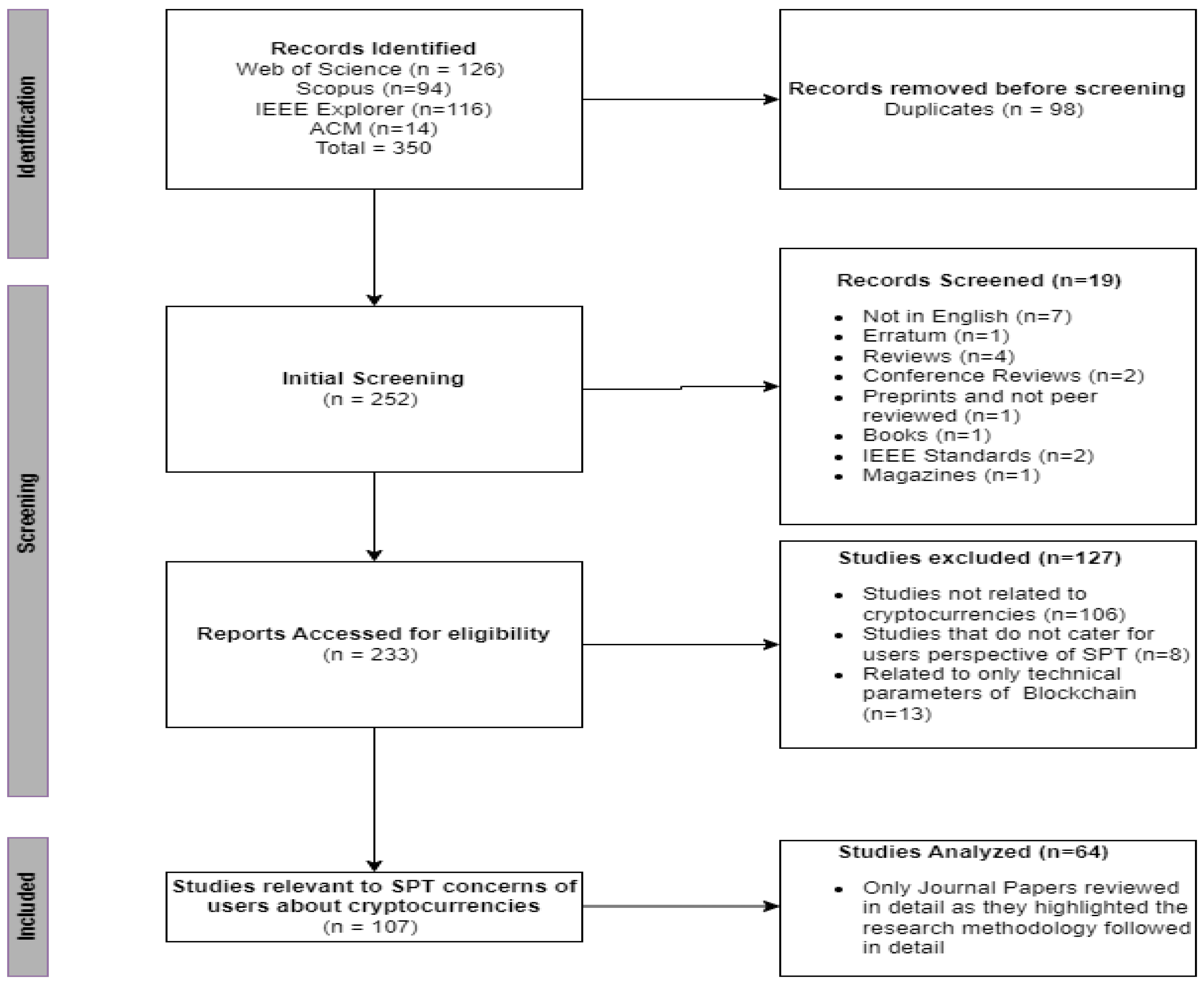
The query resulted in a total of 350 results from our selected databases. The complete breakdown of the studies found in different databases is given in Table 1.
For our scrutiny of the research results and performing bibliometric analysis, we extracted important information about the papers that included the types of the paper, year, title, etc. Complete information about the papers was not available in a few cases and we had to manually fill in the information.
Figure 4.
Identification of relevant studies through PRISMA.
3.2. Initial Screening
We included four different databases for our research. As we extracted the studies with a search query there were many results that were overlapping. So, before, initial scrutiny, the duplicates were removed. A total of 98 records were removed as a result and we were left with 252 records. We scanned through the abstract and in some cases initial introduction of the papers and only included papers that were focused on cryptocurrencies to remove false results. In addition, to streamline the study, the following were excluded:-
- 1.
- Studies not in English.
- 2.
- Preprints and not peer-reviewed.
- 3.
- Errtums and IEEE Standards.
- 4.
- Magazines and Books.
Based on initial screening we selected 233 papers for our review. In our initial extracted database, we added the basic research methodology followed in the paper, SPT parameters discussed, study method, and sample size.
3.3. Final Scrutiny and Selecting the Studies
For the final selection of studies, we proceeded in two steps. We read the titles and abstracts and excluded the studies that were not relevant to cryptocurrencies. Then we reviewed the full text of the papers. We included only those articles that discussed some privacy, security, and trust factors and followed a systematic approach to discuss the issue and provide some suggestions or future roadmap to build the necessary trust of users in cryptocurrencies. The papers containing security and privacy issues focused on technical aspects of blockchain were also excluded. We shortlisted 107 papers that are relevant to the subject. The complete breakdown of the paper types is discussed in the next chapter.
3.4. Qualitative Analysis
We thoroughly compiled the selected studies and added them to a database, reviewed them multiple times and extracted information was included under relevant headings. Relevant information from the research papers as needed for an effective review was included in the already maintained database. The keywords helped to conduct a thorough bibliometric analysis of the research being conducted on the topic. The information of the first author was used for deciding factors like country and institute and information from other authors may complicate the relationship charts and was not relevant to the study. Some of the information like language and country was manually inserted after going through initial scrutiny as it was missing in our initially fetched results. After going through the methodologies section in the papers, only journal papers(n=64) were analyzed in detail as conference papers lacked the methodology discussion in detail.
4. Bibliometric Analysis
In this section, we summarize the trends of research being conducted on SPT factors on cryptocurrencies from users’ points of view. The analysis highlights the research trend based on both the time factor as well as the methodology adopted by the researchers. The analysis covers all 107 Papers shortlisted that are relevant to the subject.
4.1. Number of Publications per Year
Figure 5 and Figure 6 shows the number of articles published and the number of citations of the paper on the subject by year obtained from the initial search query on the subject before screening. From the cryptocurrency birth, there has been little discussion on the SPT parameters from users’ perspectives regarding the adaptability of cryptocurrencies. We see a few papers in 2014 and then there is a gap. The issue gained traction in literature from 2018 onwards. This may be due to the strict search query that was focused on SPT parameters from the user’s perspective which may not have been the focus of researchers before cryptocurrencies gained transaction during COVID-19. We can see that the majority of the papers were published in 2023 which indicates the increase in the popularity of cryptocurrencies and research on dealing with users’ concerns and factors affecting the cryptocurrency adaptation. From the graph, we can deduce that there has been a surge in covid-19 duration in the popularity of cryptocurrencies and the research to solve their issues. We can also see that the number of citations has been the most in 2023 which is 1342. This indicates a growing trend in researchers to solve SPT issues from users’ perspectives.
Figure 5.
Number of publications per year targeting SPT parameters from Users perspective about cryptocurrencies.
Figure 5.
Number of publications per year targeting SPT parameters from Users perspective about cryptocurrencies.
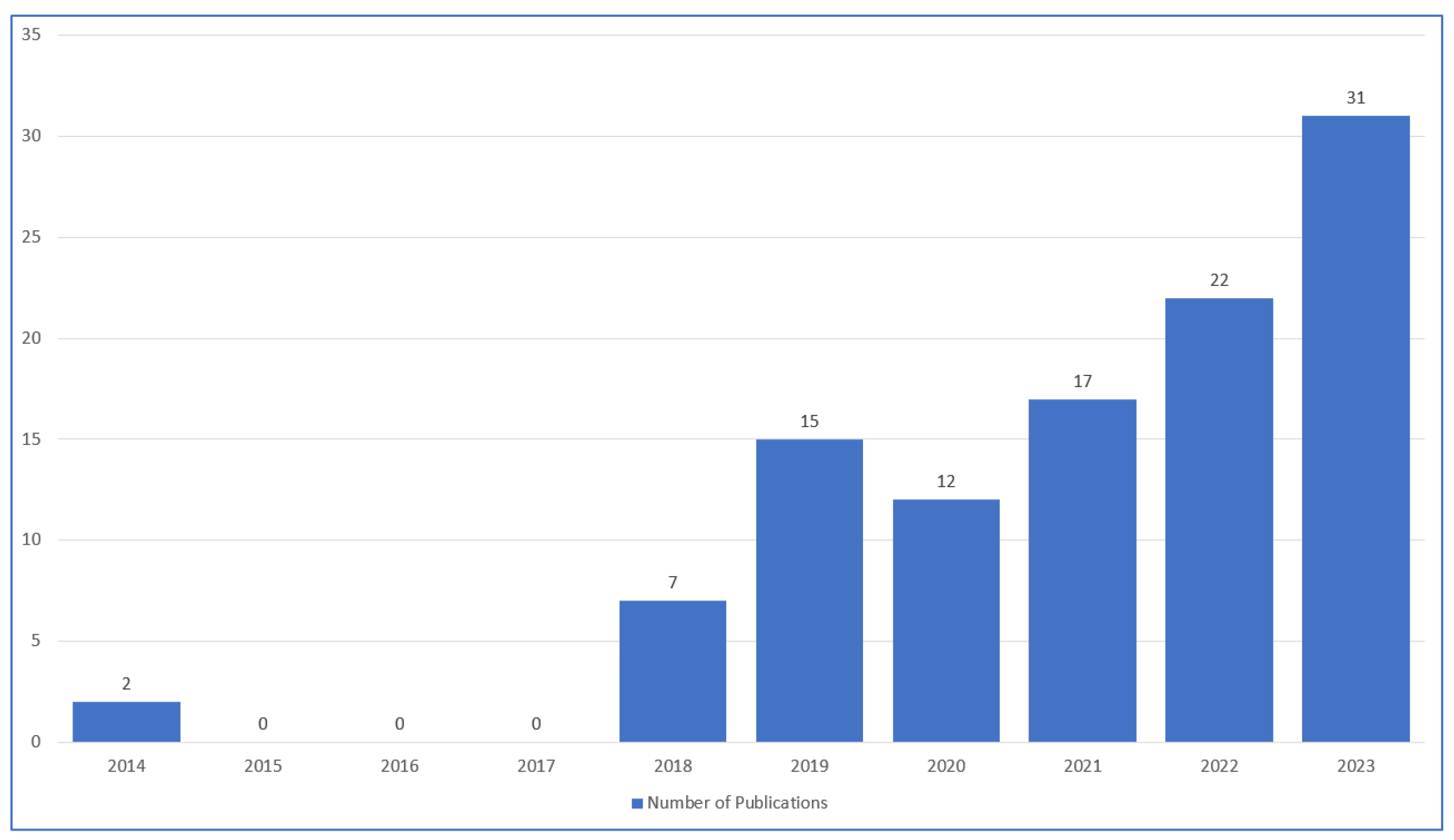
Figure 6.
Number of Citations per year targeting SPT parameters from Users perspective about cryptocurrencies.
Figure 6.
Number of Citations per year targeting SPT parameters from Users perspective about cryptocurrencies.
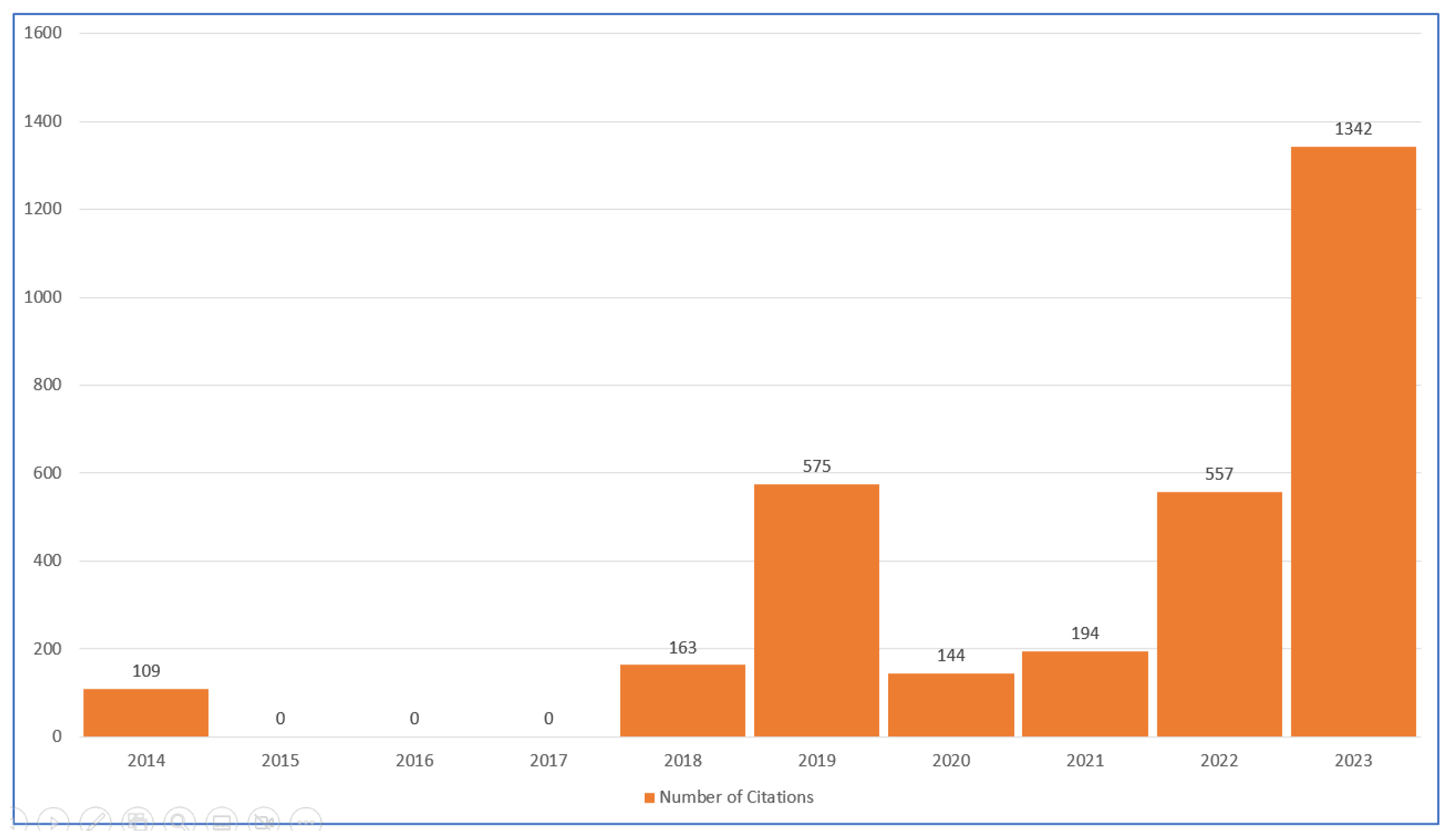
Figure 7.
Productivity distribution by Article Type.

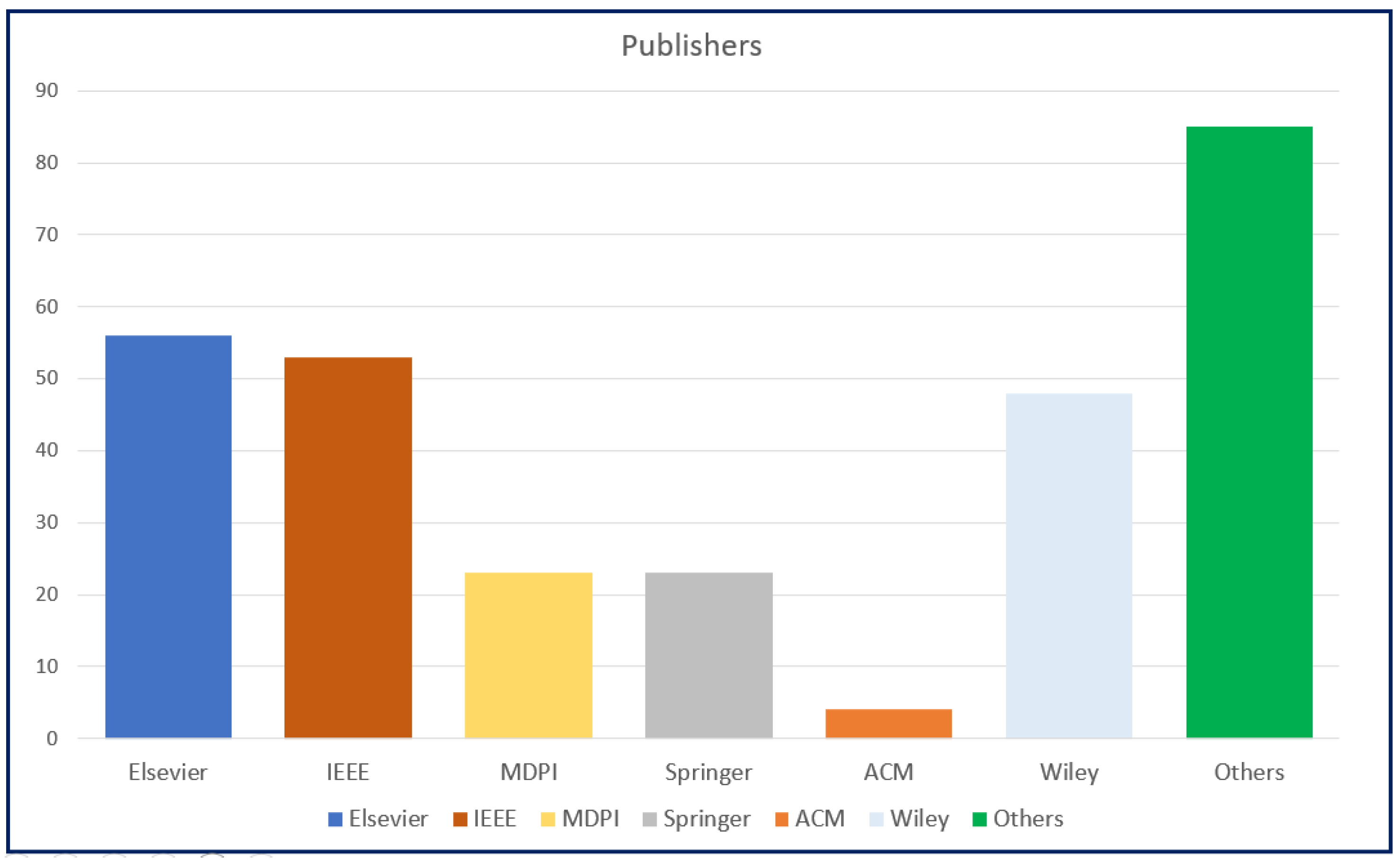
Figure 8.
Productivity distribution by Publisher.
4.2. Top Cited Articles
Table 2 shows the top most cited articles and the paper with the most citations is [70] which is focused on perceived ease of use, perceived usefulness and perceived security by users about cryptocurrencies.. The top five most cited papers revolve around the same subject more or less which indicates that trust is the major parameter being targetted by the researchers the major research revolves around measuring how the perception of users about security, ease of use, and usefulness results in increasing the trust in cryptocurrencies and increased acceptance.
4.3. Productivity Distribution by Country
Figure 9 shows the countries which are actively involved in research on the topic. The most productive countries are the United States and India with 19 and 11 publications followed by China (9), Malaysia (8), and Germany (6) which follows the general trend of research being carried out worldwide.
4.4. Publisher and Article Types
The Figure 7 indicates that most of the articles on the topic before final screening are journal papers. This indicates that the topic requires more deliberate deliberation and may not be covered adequately through conference papers. Moreover, the majority of the articles are published in IEEE journals as indicated in Figure 8 which means the topic is given due importance in IEEE with a few publications in Elsevier as well as in Springer which are considered esteemed publishers.
5. Cryptocurrency Users and Stakeholders
There are a number of Stakeholders involved in the complete cryptocurrency ecosystem each with unique concerns regarding Security, Privacy, and Trust (SPT). It is essential to recognize that the parameters of Security, Privacy and Trust (SPT) cannot be judged in isolation; instead, they must be evaluated concerning the specific needs and concerns of each stakeholder. Understanding how SPT factors influence each stakeholder in the adoption of cryptocurrency is critical for devising comprehensive strategies that address the diverse and interconnected dimensions of security, privacy, and trust in the cryptocurrency ecosystem. Major Stakeholders from the literature reviewed are listed here:-
5.1. Businesses
An investigation conducted by Roussou et al. [70] underscores the adoption trends of digital currencies across various business sectors. The study reveals that industries like Information Technology, Consulting Services, Health, Tourism, and Leisure, have readily incorporated digital currencies into their transactional processes. However, a noticeable proportion of sectors such as Retail, Manufacturing, Insurance, Construction, Marketing, Energy, and Logistics have yet to fully embrace digital currencies. Among businesses that have adopted cryptocurrencies, the primary motivations include the pursuit of secure transactions, protection against fraud, and the maintenance of trust with their customer base. Concerns about regulatory compliance and potential reputation risks associated with the acceptance of digital currencies are the major hurdles to their wide acceptance [46].
5.2. Miners
Cryptocurrency miners are concerned with the security and efficiency of the blockchain networks they support. They face challenges related to the centralization of mining power, potential attacks on the network, and ensuring fair compensation for their mining efforts. As miners move away from a particular blockchain, The cryptocurrencies based on that blockchain are affected both in terms of security as well as value. Moreover, the environmental impact of cryptocurrency mining, particularly in terms of energy consumption and carbon emissions, has raised alarm bells [71,72]. Additionally, the financial viability of mining has been questioned, as the expected profit may not outweigh the electricity costs associated with mining operations.
5.3. Regulators/Government
Regulators are concerned with preventing illicit activities such as money laundering and fraud facilitated by cryptocurrencies. Privacy features that enable anonymity can clash with regulatory goals, leading to concerns about the potential misuse of digital assets. They face the dilemma of acknowledging and regulating cryptocurrencies due to their complex features and intended purpose [73]. The decentralized nature of cryptocurrencies complicates the enforcement of laws, and there is a risk of money laundering and terrorist financing with digital currencies [74]. In addition, the emergence of cryptocurrency intermediaries and trading platforms has raised concerns about fraud, theft, misconduct, and manipulation, leading to the proposal of formal registration obligations for these intermediaries [75].
5.4. Developers
Developers play a crucial role in cryptocurrency ecosystems. They contribute to the development and maintenance of blockchain-based projects, ensuring the platform’s efficiency and functionality. Their concerns include issues such as trust, cybersecurity [76], scalability, and the socio-technical aspects of cryptocurrency ecosystems. Trust issues encompass price manipulation, volatility, insider trading, and reputation systems [77]. Developers are focused on creating secure and efficient blockchain technologies for safeguarding against vulnerabilities and ensuring the integrity of smart contracts.
5.5. Crypto Exchanges
Crypto exchanges play a crucial role in cryptocurrency ecosystems by facilitating the acquisition of cryptocurrencies and providing a marketplace for trading. However, these exchanges face several concerns. Security breaches are a significant risk, with evidence suggesting that they can lead to exchange closures [75]. Cryptocurrency exchanges are concerned with securing user accounts and digital assets. They face challenges related to preventing hacking incidents, ensuring the integrity of transactions, and addressing user concerns about data privacy [78].
5.6. General Users
General users are integral stakeholders in the cryptocurrency ecosystem, contributing to the widespread adoption and acceptance of digital currencies. They have the power to determine the best allocation of their assets based on risk reduction, upside opportunity, and the predicted diversity and return qualities of cryptocurrencies [79]. However, users have trust concerns in the cryptocurrency ecosystem. The apprehensions surrounding the cryptocurrency landscape encompass a spectrum of issues, spanning concerns like price manipulation, price volatility, insider trading, the emergence of a parallel and shadow economy, reputation systems, transparency, centrality, token economy dynamics, governance frameworks, regulatory landscape, design intricacies, usability considerations, privacy, and security aspects [76]. Additionally, users express anxieties regarding overarching challenges such as trust, cybersecurity threats, and scalability issues that become more prominent as the cryptocurrency ecosystem continues to evolve and expand [80]. Their concerns regarding Security, Privacy, and Trust (SPT) are pivotal in shaping the overall success and sustainability of the cryptocurrency landscape.
6. Factors Affecting SPT Confidence of Users in Cryptocurrencies
Researchers have identified various factors that influence SPT parameters steering individuals’ decisions to integrate cryptocurrencies into their financial repertoire. The success and widespread acceptance of cryptocurrencies hinge on stakeholders’ confidence and trust in the underlying technology and platforms. Users are the primary drivers of adoption, and their concerns regarding the security of transactions, the protection of personal information, and the overall trustworthiness of the cryptocurrency ecosystem cannot be overstated. Highlighting individual parameters that impact users provides valuable insights for the continuous improvement of security protocols, privacy features, and trust-building measures within the cryptocurrency space. Some of the Major Factors affecting the SPT perspective of stakeholders about cryptocurrencies are highlighted below:-
6.1. Factors Affecting Trust in Cryptocurrencies
6.1.1. Perception of Cryptocurrencies
The trust in cryptocurrencies hinges significantly on the prevailing user’s perceptions surrounding them. Early-stage technologies often grapple with public skepticism and limited understanding, necessitating time to earn the trust of individuals, particularly those who may be more hesitant towards technological change [81]. However, Awareness and knowledge can substantially affect the perception of consumers[82]. Perceived trust emerges as a critical determinant in the adoption of bitcoins [83]. Individuals are more inclined to use cryptocurrency when they perceive it as useful for easy, fast, and cost-effective transactions, or when it offers a high return on investment and an enjoyable and comfortable user experience [84][30]. Abbasu et al. [21] concluded that ease of use is directly proportional to its adaptation based on a dataset from Malaysia. Perceived usefulness substantially influences businesses as they become more inclined toward their commercial adaptation. For example, the adoption of cryptocurrencies received a notable boost with their integration into the FIFA 2022 World Cup, reshaping public perceptions and spurring a surge in academic interest [85]. Similarly, perceived usefulness and ease of use or enjoyment have been associated with cryptocurrency utilization [8] [21]. Moreover, Perceived value influences cryptocurrency investors and general users [86].
6.1.2. Personal Innovativeness
Individuals and businesses with a penchant for innovation and an openness to embrace new technologies are more inclined to engage with cryptocurrency [87]. The innovative mindset of consumers is a key determinant influencing their attitude and trust towards cryptocurrency, subsequently shaping their intention to use these digital assets [88]. Innovativeness impacts the intention to use cryptocurrency, with attitude mediating role in this dynamic [88]. Moreover, Innovativeness also emerges as a significant predictor in businesses’ decisions to adopt cryptocurrency platforms, underscoring its integral role in shaping the adoption landscape [89]. Small steps like improving upon the shape of a website or web application can greatly affect the user’s perception of cryptocurrency use [8].
6.1.3. Compatibility with Existing Applications and Existing Habits
Users and society fight change. To make cryptocurrency more adaptable, it has to be incorporated into the existing applications if we are looking to increase the trust of customers towards cryptocurrencies. The compatibility with existing practices and applications enhances the trust of general users, businesses as well as regulators [90]. It all depends on the developers to make cryptocurrency more adaptable to the existing applications and incorporate normal practices [91].
6.1.4. High Volatility
The crypto market is highly volatile and prices fluctuate a lot leading to creating mistrust among users and businesses. A study of South African crypto users [92]concludes that Bitcoin’s volatility is the major barrier to adoption in South Africa. The dynamic nature of exchange rates in cryptocurrencies, marked by their flexibility and volatility, introduces a dimension that can potentially encourage speculative behaviour, diminishing their capacity to function as a trusted medium of exchange for a broader public [93]. On the other hand, miners, playing a pivotal role in cryptocurrency systems, may have a preference for maintaining high volatility as it contributes to sustaining the value of their mining equipment [94]. Conversely, the pronounced volatility in cryptocurrency prices holds the potential to attract investors, sparking heightened interest in these financial instruments and, consequently, fostering increased liquidity. This interplay between price volatility and cryptocurrency adoption is intricate, yielding both positive and negative effects.
6.1.5. Introduction of Official Digital Currencies
The introduction of Official Digital Currencies (ODCs) by governments presents a notable development that can have a substantial impact on the landscape of cryptocurrencies and, consequently, influence their adoption. ODCs, often issued or endorsed by central authorities, serve as digital representations of a country’s official currency. The emergence of ODCs introduces an element of competition for user attention and trust [95]. Users, accustomed to decentralized cryptocurrencies, may now have official and regulated alternatives provided by their respective governments. The perceived stability, security, and legal backing of ODCs may sway users who were previously hesitant about adopting decentralized cryptocurrencies due to concerns about regulatory uncertainties and potential illicit uses.
Secondly, governments can leverage their regulatory power to shape the narrative around digital currencies. This regulatory influence can impact how cryptocurrencies are perceived by the general public and businesses [96].
China is working on its digital currency (DCEP) and similarly European Central Bank has also been working on the digital Euro for a long. The fundamental distinction between CBDC and cryptocurrency lies in the absence of centralization [97]. The competition between centrally issued digital currencies and decentralized cryptocurrencies introduces a complex interplay of factors involving trust, regulation, privacy, and the evolving perceptions of users in the evolving landscape of digital finance [98].
6.1.6. Government and Regulatory Issues
There is an absence of established regulations governing cryptocurrencies, and it lack support from the majority of governments as well as third-party entities. Legitimacy and regulations are the first things that map the user’s perception [99]. The regulatory landscape intensified with the Chinese government imposing a ban on Bitcoin transactions conducted by financial institutions. Major Bitcoin exchanges such as OKCoin and Huobi, pivotal players in facilitating transactions between Bitcoin and the Renminbi (RMB), ceased their operations involving Bitcoin. Even established entities like the Bank of China, a prominent banking chain, took a stance against accepting Bitcoin, citing concerns about its lack of regulation by the Chinese government [100]. These regulatory dynamics underscore the intricate challenges surrounding cryptocurrency acceptance and utilization for businesses, developers as well as general users [101]. Banks are the major resistors for the adoption of technology. The government’s perception, often influenced through the lens of banking institutions [102], becomes a determining factor in the broader acceptance landscape. These regulatory ambiguities create barriers that impede the seamless and legal utilization of cryptocurrencies, adding another layer of complexity to the multifaceted landscape of cryptocurrency adoption [41]. A summary of the country’s treatment of cryptocurrencies is given in the Table 3.
6.1.7. Lack of Insurance
Cryptocurrency users lack insurance backup primarily due to its unique functioning, making it challenging for guarantors to verify theft claims. There have been a lot of Ponzi schemes based on crypto which has further decreased the trust of users in cryptocurrencies. There is vast information that needs to be understood to get the working of crypto. People have been fooling people with speculative return promises and other schemes [103]. The research conducted by [104] suggests that individuals and businesses demonstrating a greater propensity to embrace risks are more inclined to engage in cryptocurrency investments. So, users are generally aware of the risks they are taking. The absence of insurance not only diminishes consumer confidence in the security of these digital assets but also acts as a deterrent for institutional investors who typically adhere to stringent risk management protocols [105].
6.1.8. Throughput
The scalability and throughput are major restrictions in the vast adaptability of cryptocurrency for normal business transactions. A blockchain transaction is made part of a chain in 10 minutes which is way too long for an immediate transaction and the confidence in system [106]. Users are more likely to adopt if they can make transactions in real life while making a trade [83,107].
6.1.9. Social Media
Social media plays a pivotal role in influencing individuals, businesses and Governments to adopt cryptocurrencies, acting as a powerful catalyst for awareness, education, and community engagement. Platforms like Twitter, Reddit, and YouTube serve as vibrant hubs where enthusiasts, experts, and influencers share insights, news, and discussions about the cryptocurrency landscape. Through these channels, users gain access to real-time updates on market trends, new projects, and regulatory developments, fostering a sense of community and shared interest [110]. Developers in the crypto space can leverage social media to share their perspectives, analyses, and investment strategies, shaping the opinions of the public and Governments [111]. However, it’s essential to note that social media’s influence can also have downsides, such as the potential for misinformation, hype-driven decision-making, and susceptibility to market manipulation [112]. As the crypto community continues to grow, the impact of social media on cryptocurrency adoption remains a multifaceted and evolving aspect of the broader ecosystem.
6.1.10. Ponzi Schemes, Illegal Activities
Cryptocurrency-related crimes have witnessed a surge in tandem with the increasing acceptance of digital currencies for illicit online transactions. BTC and Monero have become vehicles for various criminal activities, ranging from Ponzi schemes, drug trafficking, and money laundering to crypto-jacking. Cryptomining attacks spiked by 1,000% in the first half of 2018, underscoring the escalating nature of cyber threats. Ponzi schemes like Shaver’s defrauded investors of over US$7 million in BTCs through false promises of a 7% weekly return, reflecting the vulnerabilities within the cryptocurrency landscape [113].
The success of BTC as a pioneering cryptocurrency has facilitated the rise of criminal enterprises operating anonymously, as demonstrated by the infamous Silk Road. Operating on the TOR network, Silk Road served as a darknet marketplace for illegal goods, primarily drugs, comprising approximately 70% of its sales. Founder Ross Ulbricht reportedly orchestrated transactions worth about US$1 billion in illegal goods and services before the FBI intervened in October 2013. These incidents highlight the challenges posed by criminal exploitation within the cryptocurrency realm [48]. The use of cryptocurrency in illegal activities costs government and regulators trust and increases difficulties for general users and businesses interested in cryptocurrencies [114].
6.1.11. Social Influence
Social influence plays a crucial role in shaping individuals’ attitudes towards new technologies. Individuals are influenced by their social connections, such as family, friends, and colleagues, who may provide recommendations, opinions, and experiences related to the technology. Social influence can create a sense of social norms and expectations, leading individuals to adopt or reject new technologies based on the perceived acceptance or disapproval of their social circle[1]. Positive social influence can enhance individuals’ perceptions of the usefulness and benefits of new technologies, increasing their intention to adopt them. Conversely, negative social influence or resistance from social connections can create skepticism or reluctance toward new technologies [115]. This insight underscores the pivotal role of social influence in shaping individuals’ attitudes and decisions related to cryptocurrency adoption, highlighting the need for a nuanced understanding of social dynamics within the cryptocurrency ecosystem.
6.1.12. Consumer Trust in E-Payment Systems
Consumers are generally still not comfortable with e-payment systems, especially in third-world countries. As Bitcoin is a complete Digital system. Trust in the e-payment system is the main driving factor for the adoption of cryptocurrencies [48]. The relationship between awareness and behavioural intention is further nuanced by financial literacy, emphasizing the moderating role of financial knowledge in this dynamic [18]. Users require assurance not only in the technology underpinning cryptocurrencies but also in the platforms facilitating transactions and the overall ecosystem. Insights from digital marketing research highlight the role of trust marks in alleviating consumer concerns, thereby enhancing trust, usability, and confidence in utilizing digital wallets for online transactions [48].
6.1.13. High Energy Requirements
Blockchains require a lot of energy to complete their consensus which results in environmental emissions. Environmental advocates advocate against using it. Each transaction involving Bitcoin consumes as much energy as nine American households do in a day (approximately 250 kWh). The yearly energy consumption linked to this cryptocurrency, amounting to 33 TWh, parallels that of an entire European country [116]. Various alternatives, including proposals like Bitcoin Green, have been introduced to address environmental concerns associated with high-energy consumption in blockchain networks [117]. However, while such alternatives may enhance the perception of blockchain’s environmental impact, there’s a potential trade-off involving compromised security, impacting the overall security element from users’ perspectives [55]. Furthermore, high energy requirements for mining emerge as a pivotal consideration for achieving the United Nations Sustainable Development Goals [118]. So, it hurts both businesses as well as investors’ trust in long-term investment in cryptocurrency.
6.1.14. Religious Factors
There are strong doubts about the legitimacy of cryptocurrencies by religious scholars of different countries and many have also banned them according to the religion [119] which is also affecting crypto adaptation, especially in Muslims. Furthermore, there is a growing interest in the adoption of a Shariah-compliant precious metal-backed cryptocurrency, with factors such as innovation diffusion and perceived usefulness being significant in the adoption process [120]. Some scholars consider cryptocurrencies to be haram (prohibited) due to perceived elements of gambling and uncertainty in their nature. This raises questions about the compatibility of cryptocurrencies with Islamic financial principles and introduces complexities in their acceptance within Islamic communities.
6.1.15. Technical Complexity
Technical Complexity is a major factor in shaping the perception of people and businesses. The intricate nature of blockchain technology, cryptographic principles, and the overall infrastructure involved can be challenging for the average user to comprehend. Cryptocurrency wallets, private keys, and transaction processes often require a level of technical understanding that may be intimidating for individuals unfamiliar with the underlying technology [92].
Furthermore, the complexity extends to managing security features, including safeguarding private keys and comprehending the implications of various wallet options. The intricacies associated with securely storing and managing cryptocurrencies contribute to users, investors and businesses’ apprehension and may deter potential adopters who find the technical aspects overwhelming. Therefore, to enhance the adaptability of cryptocurrencies, developers not only need to make easy-to-use applications, but they also need to develop programs to increase understanding of blockchain, fostering trust in cryptocurrencies.
6.2. Factors Affecting Confidence in Security in Cryptocurrencies
6.2.1. Secure Blockchain Wallets
The security and privacy of using cryptocurrencies are embedded in the use of secure crypto wallets [65]. Although there is no direct way to reveal the identity of a cryptocurrency holder, many online crypto exchanges offer wallets for their customer where customers can log in just like social media accounts and access and perform cryptocurrency transactions. The sites require users to sign up with their personal information to create an account compromising the privacy cryptocurrencies provide against their usability. Sometimes, a third-party wallet provider may completely stop your access to your wallet based on a global event or regulatory requirements resulting in the loss of your assets. Many standalone cryptocurrency wallets have been found to be leaking signatures and insecure. Moreover, attackers can exploit the vulnerabilities to access the private keys resulting in complete exposure of privacy and cryptocurrency assets [121]. The emphasis on security measures of crypto wallets is integral to cultivating trust among users [122]. Users are more likely to engage with cryptocurrencies when they have confidence in the safeguarding of their assets putting more responsibility on developers [123].
6.2.2. Lack of Traceability
There is no traceability of a crypto transaction once it’s processed [124]. The lack of traceability in cryptocurrency transactions has multifaceted effects. Primarily, it facilitates illicit activities by making it challenging to track and identify transactions, presenting a hurdle for law enforcement and financial institutions in curbing illegal conduct [125]. Moreover, the absence of traceability impedes user accountability, as attributing transactions to specific individuals becomes challenging. This fosters a sense of anonymity, potentially incentivizing criminal activities by allowing users to shield their identities behind the pseudonymous nature of cryptocurrencies. Furthermore, the deficiency in traceability jeopardizes trust in business transactions, as there are no means to verify the authenticity and history of transactions [126].
6.2.3. Blockchain Inherent Issues
Blockchain technology, while revolutionary, encounters several significant technical challenges. Malicious actors have found different ways and means to compromise and attack blockchain networks [127]. Some of the issues that come coupled with blockchain are:-
- Deanonymization loosing privacy.
- Selfish mining.
- Double spending
- 51 % attack
- Unavailablity during rush time. Blockchain security is based on allowing only a number of transactions in a unit of time but if these transactions are not handled on time they restrict the usability of cryptocurrencies.
The general scepticism among the public, driven by apprehensions related to security risks and potential misuse, acts as a significant deterrent to embracing cryptocurrencies as viable online payment methods [128] by investors as well as businesses. To foster greater adoption, it is imperative to tackle these challenges proactively. This involves implementing heightened security measures by developers to alleviate concerns around potential abuses and miners attracting more miners for continued secure operation of blockchains.
6.2.4. Perceived Security
The trust invested by users and businesses in cryptocurrency adoption is intricately tied to the platforms facilitating their exchange, such as crypto exchanges [129]. Instances of doubt or security incidents involving crypto exchanges, such as FTX, CoinEx, and Binance, resulting in substantial financial losses, have eroded public trust. While these attacks may not necessarily target the underlying security of blockchain technology but rather stem from faulty implementations, they significantly impact the general perception and trust of the public towards cryptocurrency adoption [16][46].
Cryptocurrencies’ substantial value makes them an attractive target for hackers seeking significant gains. Despite the reported difficulty of hacking blockchain, it does not guarantee absolute safety as various risks are associated with crypto investment during the trading process[130]. Examples include the potential loss of keys due to device failures, the risk of losing or theft of Bitcoin wallets, and vulnerabilities to exploitation by criminals through viruses and trojans. These factors have the potential to erode user confidence and diminish the perceived usefulness of cryptocurrencies [20].
6.2.5. Crypto Exchanges Vulnerabilities
Cryptocurrency exchanges, serve as pivotal platforms for buying, selling, and trading cryptocurrencies and occupy a central position in the cryptocurrency ecosystem. These exchanges encounter diverse challenges, including issues related to security, liquidity, and regulatory compliance. User preferences lean towards exchanges that offer a broad spectrum of cryptocurrencies, coupled with high liquidity, low fees, and robust security measures [93]. Persistent concerns still encompass cryptocurrency exchanges regarding issues like liquidity and susceptibility to price manipulation which ultimately affects a user’s trust. While cryptocurrency exchanges are indispensable for cryptocurrency trading, they confront a spectrum of challenges and risks that necessitate thorough consideration for the market’s efficient operation [131].
6.2.6. Lack of Financial Backing
6.3. Factors Affecting Confidence in Privacy in Cryptocurrencies
6.3.1. Online Privacy and Anonymity
There has been an increase in the rise of data breaches that affect users’ online privacy and security. Major organizations like Facebook and Twitter have been affected in the past. Despite the promises of blockchain technology, users still have concerns about their online privacy. The mitigation of consumer privacy risks by developers should be the top consideration in using cryptocurrencies for e-commerce and online retail [16]. Crypto underlying architecture does provide a level of privacy which is the main driving factor but as the general transactions will be adopted by retail, these transactions can be traced back to the original wallet resulting in leakage of privacy and anonymity. According to a study, 25% of Bitcoin users make use of Tor for added anonymity and privacy not trusting the existing underlying existing privacy architecture [26,49].
6.3.2. Official Digital Currencies with Governments Terms and Conditions
While decentralized cryptocurrencies have thrived on principles of anonymity and decentralization, ODCs may come with enhanced regulatory oversight, potentially appealing to users who prioritize compliance and adherence to legal frameworks. However, the introduction of ODCs also raises questions about user privacy and autonomy. Cryptocurrencies, in their decentralized nature, offer a level of privacy that might be compromised in the case of ODCs, which could be subject to government surveillance and monitoring [101]. However, users are more likely to agree to lose some of the privacy parameters if the currency is regulated in some manner [132].
6.3.3. Difficult in Regulating cryptocurrency due to strong Privacy
The strong privacy offered by cryptocurrencies raises regulatory concerns, such as money laundering [133] which are significant barriers to cryptocurrency adoption for businesses as well as investors and users [7]. Moreover, regulators and governments are not ready to allow users a level of privacy, that cryptocurrency offers [101].
A summary of parameters affecting cryptocurrency adoption and affected stakeholders is shown in Figure 10.
7. Major Research Methodologies
Researchers employed diverse research methodologies to gauge the impact of parameters affecting Security and Privacy Trust (SPT) from the users’ perspective. The studies encompassed a range of approaches, including qualitative, quantitative, and mixed research methodologies. Qualitative methods have been utilized to discuss the nuanced perceptions and subjective experiences of users regarding SPT in cryptocurrency usage. Quantitative methods facilitated the measurement and statistical analysis of numerical data, providing a quantitative understanding of the impact of various parameters on SPT. Additionally, a few researchers followed mixed research methodologies which allowed for a comprehensive examination, combining the strengths of both qualitative and quantitative approaches. This multifaceted research design captured a holistic view of the factors influencing SPT, providing valuable insights into the intricate dynamics between users and cryptocurrency systems and are with their strengths and weaknesses.
The summary of research methodologies adopted by researchers is detailed in Table 4. A predominant trend, observed in the majority of studies (45 out of 64), is the utilization of quantitative methods for research. Notably, a significant portion of these studies employed questionnaires (36 out of 45) as the primary tool for data collection. Subsequently, various theoretical frameworks such as Structured Equation Modeling (SEM) (13 out of 64), Technology Acceptance Model (TAM), and Theory of Reasoned Action (TRA) were applied to analyze the gathered data. This alignment with quantitative approaches and established theoretical frameworks underscores a prevailing methodological orientation within the research landscape, emphasizing the systematic gathering and analysis of quantitative data to draw meaningful insights regarding the factors influencing cryptocurrency adoption.
7.1. Qualitative
In the realm of cryptocurrency research, an array of qualitative methodologies has been employed to delve into the complex dynamics and factors influencing adoption, perception, and challenges within this burgeoning ecosystem. Researchers have often adopted qualitative approaches such as exploratory interviews, content analysis, and SWOT analysis to unravel nuanced insights.
However, it is crucial to acknowledge the inherent limitations associated with these qualitative methodologies. While they provide valuable depth and context, qualitative studies often grapple with concerns related to generalizability, as the findings may be context-specific and reliant on the selected sample. Additionally, the subjective nature of qualitative data analysis poses challenges in terms of potential bias, as the researchers’ perspectives influence interpretations. Despite these limitations, qualitative research remains indispensable for unpacking the intricate nuances of cryptocurrency-related phenomena, offering a rich tapestry of insights that complement quantitative methodologies in constructing a comprehensive understanding of the crypto landscape.
7.1.1. Content Analysis
Interviews have been primarily utilised as a data source for the qualitative content analysis approach, engaging in semi-structured interviews with experts and non-experts to examine the factors influencing the adoption of Digital currencies [134]. Some studies focused on specific regions like the Middle East and North African (MENA) region and are more relevant for specific regions. Business leader interviews have also been utilised to comprehend the impediments to cryptocurrency adoption, with a specific emphasis on security concerns and regulatory compliance [133]. Some researchers have also employed purposeful sampling mechanism to identify interviewees within the cryptocurrency ecosystem, introducing potential bias that could limit the generalizability of the findings [133,135].
Researchers have also analysed existing literature examining prevailing knowledge, theories, and empirical evidence related to the influence of digital technologies on the international monetary system [98] and cashless economy [18]. This approach entails the interpretation and sense-making of qualitative data, encompassing literature reviews, expert opinions, and theoretical frameworks, to derive conclusive insights into the subject matter.
Similarly, information from diverse sources like academic articles, reports, and studies has been used to offer a comprehensive overview of the subject [135].
Following data collection, qualitative analysis mechanisms have been used to identify trends, challenges, and opportunities in cryptocurrency adoption with the different stakeholders, Researchers have applied different theories to perform qualitative analysis. For example, Attitude formation theory has been used to gauge users’ inclination toward new technologies [136]. The analysis involved a deductive category assignment structure within a structured content analysis framework. This involved formulating the research question, deriving main categories and subcategories from theory, creating a table outlining the main categories, and coding transcribed interviews with preliminary codes to identify suitable subcategories.
7.1.2. Swot Analysis
SWOT is a well-established tool for evaluating the strengths, weaknesses, opportunities, and threats of a specific subject. It offers a structured framework to systematically examine various facets of digital currency and assess its strategic positioning in the market [46]. The perceptions and opinions of the researchers have been utilised to assess trust, credibility, volatility, cross-country and time zone applicability, trading hours, uncertainty, and potential disruption to existing economic systems potentially limiting its generalizability to other contexts.
7.1.3. Multi-Theory Approach
The multi-theory approach has also been adopted in studies [129], which grounds its conceptual model in psychological and functional innovation resistance, technology readiness, trust, perceived risk, subjective norms, and the critical mass of users. This relies on analysing existing literature with diverse theoretical frameworks, encompassing concepts from psychological and functional innovation resistance, technology readiness, trust, perceived risk, risk propensity, subjective norms, and the critical mass of users.
Different Algorithms and Frameworks have also been proposed integrating theoretical concepts to address challenges in cryptocurrencies [108]. They also discuss different empirical evaluation mechanisms that can be utilized to measure factors fostering trust among consumers and businesses in this evolving financial ecosystem.

Table 5.
Research Methods Utilized in Qualitative Research Methodology.
| Research Method | Papers | Data Sources | Analysis Mechanisms | Focused Parameters |
| Content Analysis | [134], [136], [98], [18]. [135], [25] |
Interviews, Reviewing existing literature, academic articles, reports, and studies | Attitude formation theory | Compatibility, trialability, ease of use, observability, and perceived value |
| Swot Analysis | [46] | Existing Literature | Perceptions and opinions of the researchers | Trust, volatility, credibility |
| Multi-Theory Approach | [129], [108] | Existing literature | Conceptual Modeling | Psychological and functional innovation resistance, technology readiness, trust, perceived risk |
Within the realm of cryptocurrency research, a predominant and impactful investigative approach is the utilization of quantitative research methodologies. These methods offer a systematic means to unravel the complexities of the dynamic cryptocurrency landscape. Sophisticated techniques such as Structural Equation Modeling (SEM) [70], Partial Least Squares (PLS), Technology Acceptance Model (TAM) [137], and Fuzzy Analytic Hierarchy Process (FAHP) have been utilized to analyse factors affecting cryptocurrency adoption in different sectors. Through these methodologies, researchers delve into the factors influencing cryptocurrency adoption, assess investors’ perceptions, and scrutinize the intricate dynamics of blockchain technology.
Questionnaires and surveys have been used primarily to collect data aimed at investigating the determinants of cryptocurrency adoption within specific sectors like commercial users [70], banks, insurance companies, financial companies, and brokerage houses [138].
The questionnaires were designed by researchers specifically to examine the impact of perceived ease of use, perceived usefulness, and perceived security on the adoption of cryptocurrencies [70,83]. These contained multiple sections containing a number of questions ranging from 20-200 addressing aspects such as prior conditions, perceived usefulness, perceived ease of use, attitude towards use, actual use, and demographic information. Some studies also Utilized a Likert-type scale encompassing items rated on a point scale [16,21].
Online social media platforms have also been utilized to gather data from users of a specific platform like Facebook [30]. Sometimes, participants were motivated by a small monetary incentive [101].
Similarly, some studies focused on specific age groups like those under 30. The responses are also heavily dependent on the region where the surveys are conducted as the majority of these are limited to one country or a single state for example Jordan [30], Canadian university students [16], eastern Chine [138], South Africa [21], KSA [48], Turkey [55] which limits the generalizability of results.
Similarly, research studies, news articles and reports have also been used in quantitative research [45,82].
However, it’s crucial to recognize the limitations inherent in quantitative approaches, such as reliance on self-reported data, potential biases in responses, and the challenge of generalizing findings. These nuances underscore the importance of judiciously interpreting results and recognising the cryptocurrency landscape’s evolving nature.
7.1.4. Structural Equation Modeling (SEM)
In the majority of the studies, the collected data underwent analysis using Structural Equation Modeling (SEM) [57], a statistical technique employed to assess relationships between variables within a research model. In applying the SEM technique, a series of linear equations are estimated to represent the relationships among the constructs of the research model. This approach plays a pivotal role in confirming the overall structure of the model, examining the impact of independent variables on the dependent variable, and evaluating the goodness of fit of the research model. Some statistical measures like chi-square statistics, root mean square error of approximation (RMSEA), Comparative Fit Index (CFI), and standardized root mean square residuals (SRMR) have also been utilized to assess the models [21]. Researchers also employed the structural equation modelling (SEM) technique with partial least squares (PLS) for its effectiveness in handling small sample sizes and accommodating both normally and non-normally distributed data. The AMOS [82,138] and Smartpls4 [48,132] software have also been utilized to automate the analysis process to investigate the relationship between peer transactions, trust in cryptocurrencies, and the utilization of blockchain and bitcoin for monetary transactions. The results obtained through the methodology highlighted that perceived usefulness, perceived ease of use, and attitude towards use exerted significant positive influences on the actual use of digital currencies [30,70]. Additionally, prior conditions exhibited a notable positive effect on the perceived usefulness and perceived ease of use of digital currencies. Similarly, practical experience aligned with trust plays a pivotal role in determining the user’s ultimate intention to use or not use a cryptocurrency [139].
7.1.5. The Technology Acceptance Model (TAM)
The Technology Acceptance Model (TAM) [64] has also been employed as the primary methodology in some studies to investigate factors influencing the widespread adoption of Cryptocurrencies [137]. TAM, widely used in information system research, elucidates users’ motivations for embracing new technologies. These studies extended TAM’s applicability by incorporating considerations of security and control, as well as transaction processing—dimensions of cryptocurrencies. Some studies also incorporate additional theories like planned behaviour theory (PBT) to comprehend the behavioural intentions of individuals towards cryptocurrencies [55]. These studies revealed that perceived usefulness, perceived ease of use, security and control, and transaction processing significantly impacted the intention to use Bitcoin [137]. Notably, perceived usefulness exerted the most substantial influence, followed by perceived ease of use, security and control, and transaction processing. The findings suggested that Bitcoin could serve as a viable alternative to traditional payment methods, contingent on users’ perceptions regarding its utility, ease of use, security and control, and transaction processing.
7.1.6. Unified Theory of Acceptance and Use of Technology (UTUT
The Unified Theory of Acceptance and Use of Technology (UTAUT) is a theoretical framework developed to understand and predict how individuals adopt and use new information technologies [140]. The UTAUT integrates various theories and models, including the Theory of Reasoned Action (TRA), the Technology Acceptance Model (TAM), the Theory of Planned Behavior (TPB), and the Innovation Diffusion Theory (IDT). It identifies several key factors that influence technology acceptance and usage.
Abbasi et al [21] employed a distinctive methodology, integrating deep learning-based dual-stage structural equation modelling (PLS-SEM) and artificial neural network (ANN) analysis to explore cryptocurrency adoption. To mitigate common method bias (CMB), the study extended the Unified Theory of Acceptance and Use of Technology 2 (UTAUT2) model by incorporating additional variables pertinent to cryptocurrency adoption. The study employed the dual-stage PLS-SEM & ANN approach for analysis, which deviates from the conventional single-step PLS-SEM method. The innovative dual-stage methodology yielded valuable insights into the intricate dynamics influencing cryptocurrency adoption. UTAUT has also been employed in combination with the Unified Theory of Acceptance and Use of Technology (UTAUT) model and the modified Delone and McLean model [7]. model[7]. The studies identified several crucial factors influencing students’ intention to adopt cryptocurrency, including performance expectancy (perceived usefulness), effort expectancy (perceived ease of use), social influence, perceived trust, and facilitating conditions [19].
Table 6.
Research Methods Utilized in Quantitative Research Methodology.
| Research Technique | Papers | Data Source | Sample Size (approx) | Analysis Mechanisms | Focused Parameters |
|---|---|---|---|---|---|
| SEM | [70], [101], [139], [138], [132], [48], [141], [83], [87], [115], [86], [26], [142], |
Questionnaires, Social Media platforms, blogs, newspapers |
200-950 | PLS-SEM, chi-square statistics, Comparative Fit Index (CFI), standardized root mean square residuals (SRMR) | Awareness, performance expectancy, trust, financial literacy, and effort expectancy |
| TAM | [137], [82], [55], [143], [85], |
Questionnaires, news reports | 1500 | Pearson Correlation Analysis and Multiple Linear Regression Analysis | perceived ease of use, perceived usefulness, performance expectancy, and effort expectancy |
| UTAUT | [21], [19], [7], |
Online Surveys | 800-1000 | PLS-SEM, Artificial neural network (ANN) analysis | Perceived usefulness, ease of use, self-efficacy, awareness, trust, and security |
| Deductive Reasoning | [47], [119], [24], [84], [118], |
Questionnaires | 800-1200 | Innovation Diffusion Theory (IDT), Exploratory Factor Analysis (EFA) and Confirmatory Factor Analysis (CFA), wavelet coherence analysis | Perceived Ease of Use, Perceived Usefulness, Trust, Environment Concern |
| Statistical Analysis | [45], [104], [56], [44], [144], [145], [146], |
news reports, databases, and other publicly available sources | 2000-2500 | Machine Learning, Market Model (MM) and the Abnormal Return (AR) model, Wilcoxon test, Hodges Lehmann test, Ansari-Bradley test, and Conover test | Innovativeness, Self-efficacy , reliability,fraud |
| Fuzzy Analytic Hierarchy Process (FAHP) | [114], | Questionnaires | 2000-2800 | Fuzzy Logic | perceived trust, risk, personal innovetiveness |
7.1.7. Deductive Reasoning
Some studies [47] have adopted a deductive approach focusing on pivotal constructs such as perceived ease of use, perceived usefulness, performance expectancy, and effort expectancy, which are widely recognized as crucial antecedents of behavioural intention or use theories like Innovation Diffusion Theory (IDT) [119] to reason the effects of different factors on cryptocurrency adoption. Special research methods like wavelet coherence analysis are also seen in studies to investigate lead/lag relationships between different factors [118]
Exploratory Factor Analysis (EFA) and Confirmatory Factor Analysis (CFA) also play a crucial role in identifying latent variables and validating the appropriate grouping of responses [24].
7.1.8. Statistical Analysis
Different Statistical Analysis techniques along with economic modelling [45], statistical tests such as the Wilcoxon test, Hodges Lehmann test, Ansari-Bradley test, and Conover test [147] are also seen in literature drawing on data from news reports, databases, and other publicly available sources [44]. Similarly, the use of machine learning algorithms like logistic regressions, and linear regressions to conduct an analysis within cryptocurrency applications is also seen [104,148].
Complete Ensemble Empirical Mode Decomposition with Adaptive Noise (CEEMDAN) method has also been utilised to analyse the impact of the different events on cryptocurrencies like measuring the impact of the 2013 Cyprus bailout announcement on Bitcoin prices [56]. This methodology involves decomposing the Bitcoin price series into different time scales, signifying a quantitative analysis focused on comprehending the multiscale perspective of the data.
Szetela et al. [147] primarily employ a quantitative methodology, utilizing various statistical tests such as the Wilcoxon test, Hodges Lehmann test, Ansari-Bradley test, and Conover test to compare the distribution of the strength of directional movement across different cryptocurrency exchanges.
7.1.9. Fuzzy Analytic Hierarchy Process (FAHP)
The Fuzzy Analytic Hierarchy Process (FAHP) is an extension of the Analytic Hierarchy Process (AHP) that incorporates fuzzy logic to handle uncertainties and imprecise information in decision-making [149]. AHP is a structured technique for solving complex decision-making problems by breaking them down into a hierarchical structure of criteria and alternatives. It involves pairwise comparisons to determine the relative importance or preference of criteria and alternatives.Fuzzy logic allows for the representation of uncertainty through linguistic variables and fuzzy numbers. Fuzzy Analytic Hierarchy Process (FAHP) has been employed to analyze the intentions of investors in the realm of cryptocurrency[114]. The collected data underwent analysis using the FAHP to prioritize the diverse intentions driving cryptocurrency investment.
7.2. Mixed Methodologies
Mixed-methods research methodology as used in various studies, provides a comprehensive approach by integrating both qualitative and quantitative methodologies to address research questions from multiple perspectives [150]. In the realm of cryptocurrency and blockchain studies, researchers have strategically combined theoretical analysis, empirical surveys, simulations [109] and qualitative exploration to offer a nuanced understanding of complex phenomena. For instance, studies such as those by Babu et al. [151,152] leverage a mixed-methods approach, drawing on innovation resistance theory (IRT) and trust transfer theory (TTT). Abductive reasoning guides the research, incorporating quantitative data analysis through Partial Least Squares Structural Equation Modeling (PLS-SEM) and SmartPLS 3.0 to examine relationships among latent constructs [153]. These approaches not only enrich the depth of analysis but also enhance the reliability and validity of measurements.
Most of these studies follow a sequential mixed-methods design. In the initial quantitative phase, the researchers utilize survey data collected through a questionnaire with constructs derived from existing literature [92]. A few studies [17] rely on the collection and analysis of numerical data extracted from different sources like the dark web, news reports etc and then using statistical analysis techniques, encompassing descriptive and inferential statistics, neuro-fuzzy-based K-nearest neighbours (ANF-KNN) [154] to scrutinize the data and assess their hypotheses. The analysis involved rigorous steps, including reliability and validity assessments of the measurement using different statistical methods like SEM to scrutinize latent construct relationships. Transitioning to the qualitative phase, the studies delve into the perceptions and attitudes of customers and experts [41] focusing on a systematic content analysis of court documents, news reports, and various sources to meticulously identify and analyze factors affecting the acceptance of virtual currency [151].
8. Research Gap and Open Research Challenges
In delving into the existing literature on cryptocurrency and blockchain technology, several research gaps and open challenges emerge, providing valuable insights for future exploration.
8.1. Empirical Validation of Models
One significant research gap identified in studies employing qualitative research methodologies is the dearth of empirical evidence supporting proposed models and research propositions. [151]. Future research endeavours should prioritize empirical validation to offer robust foundations for businesses operating cryptocurrency exchange platforms. By testing and refining proposed models, researchers can provide actionable insights for enhancing marketing strategies and increasing user engagement.
8.2. Cultural and Contextual Factors
Another critical research gap is the insufficient attention given to cultural and contextual factors influencing users’ intention to use cryptocurrency exchanges. National culture, regulatory environments, and social norms play pivotal roles in shaping user attitudes and behaviours towards cryptocurrencies. To address this gap, future research should explore the intricate interplay of these factors.
8.3. Marketing Strategies Crypto
Hollensen underscores the need for strategic considerations in marketing crypto assets, emphasizing the scarcity of research in this domain.
8.4. Psychological Barriers and User Experience
A crucial area for future exploration involves understanding the strategic considerations for marketing crypto assets and mitigating users’ psychological barriers. [129,155]. Future research needs to delve into factors like interface design, customer support, and potential risks and challenges associated with cryptocurrency marketing.
8.5. Diverse Portfolios
The landscape of cryptocurrencies is characterized by a myriad of digital assets, each with its unique features, purposes, and market dynamics. The existing literature acknowledges the diverse nature of cryptocurrency portfolios but falls short in providing an in-depth analysis of how this diversity influences users. The sheer number of currencies available raises questions about optimal portfolio construction, risk management, and the impact of diversity on users’ investment strategies. Investigating the composition of cryptocurrency portfolios and its effects on users’ risk tolerance, investment decision-making, and overall satisfaction constitutes an essential research gap[41]. Future research should address critical questions surrounding diverse portfolios, including the optimal number of currencies in a portfolio, the role of portfolio diversity in risk mitigation, and the impact of diverse portfolios on users’ financial outcomes. Additionally, exploring how users navigate the complexities of managing diverse portfolios in the dynamic and volatile cryptocurrency market would contribute valuable insights to both academia and industry practitioners.
8.6. Escrow Services and Trust Mediation
The role of escrow services in mediating and transferring trust and security within cryptocurrency transactions remains a significant research gap. Future investigations should delve into the dynamics of escrow services, their impact on user trust, and their effectiveness in mitigating risks associated with cryptocurrency exchanges.
8.7. Compliance Solutions and Auditing Standards
A critical challenge that demands attention is the development of compliance solutions and auditing standards tailored to diverse cryptocurrency platforms. Addressing this gap is imperative for enhancing trust in the crypto space. Research should focus on defining rules and regulations without compromising the inherent advantages of cryptocurrencies, ensuring a delicate balance between regulatory frameworks and the unique characteristics of crypto assets.
8.8. Independent Auditing
The decentralized and pseudonymous nature of cryptocurrencies introduces unique challenges in ensuring the security, transparency, and trustworthiness of platforms. While some studies acknowledge the importance of addressing potential risks and challenges associated with cryptocurrency exchanges [129], there is a notable gap in exploring how independent auditing can be effectively implemented without compromising the core principles of decentralization and user privacy.
Future research should delve into the development of audit methodologies that can assess the security and operational integrity of cryptocurrency platforms without compromising the fundamental principles of decentralization. This involves addressing questions about the independence of auditors, the establishment of auditing standards, and the methodologies employed in conducting audits. Additionally, understanding how users perceive and respond to independent audit reports can provide insights into enhancing trust and confidence in cryptocurrency platforms.
8.9. Rules and Regulations
The evolving nature of the cryptocurrency landscape necessitates a comprehensive understanding of how rules and regulations can be defined to foster a secure and conducive environment without compromising the inherent advantages of crypto. Current studies highlight the need for regulatory considerations [155], but a significant research gap exists in articulating the specifics of regulatory frameworks tailored to the unique features of the cryptocurrency domain.
Future research should focus on delineating regulatory strategies that strike a balance between ensuring user protection, market integrity, and innovation within the cryptocurrency space. This involves exploring questions related to the adaptability of existing regulatory frameworks, the formulation of new regulations, and the international collaboration needed to create a harmonized regulatory environment.
9. Conclusions
Various studies have shed light on several significant aspects of cryptocurrency adoption and the challenges that influence users’ perceptions and behaviours. The identified research gaps highlight the need for a nuanced understanding of the factors impacting the Security, Privacy, and Trust (SPT) parameters from users’ perspectives in the context of cryptocurrency adoption. From a security standpoint, exploring effective methodologies for independent auditing that ensure the integrity of cryptocurrency platforms without compromising decentralization is paramount. User trust is intricately linked to the perceived security of these platforms, and addressing this research gap can significantly enhance the overall credibility of the crypto ecosystem. Additionally, a crucial avenue for future research involves the formulation of rules and regulations tailored to the unique features of the cryptocurrency domain. Striking a delicate balance between fostering innovation and ensuring user protection is imperative to build a sustainable and secure foundation for cryptocurrency adoption. Understanding users’ privacy concerns and perceptions of trust in the context of diverse portfolios, cultural factors, and regulatory environments represents a rich terrain for future research endeavors. By comprehensively addressing these research gaps, the cryptocurrency community can pave the way for a more user-friendly, secure, and widely accepted adoption landscape. This concerted effort will not only fortify the SPT parameters but also contribute to shaping a resilient and trustworthy foundation for the future of cryptocurrency adoption.
The exploration of cryptocurrency adoption and its inherent challenges has underscored the crucial role of Security, Privacy, and Trust (SPT) parameters in shaping user perceptions and behaviours. Examining the methodologies employed in existing research provides valuable insights into the multifaceted nature of these parameters and their impact on adoption. The identified research gaps point to the necessity of refining research methodologies to more effectively measure the influence of SPT parameters on cryptocurrency adoption. Existing studies have utilized a range of methods, including quantitative approaches such as surveys and structural equation modelling, as well as qualitative methods like interviews and content analysis. However, the limitations inherent in these methodologies, such as sampling biases, self-reported data, and the challenge of capturing dynamic real-world conditions, emphasize the need for more robust and diverse research approaches.
The study is limited by the strict search query and inclusion of only journal papers which may have missed papers containing the role of other technologies and factors affecting a user’s perception. A more relaxed search query and the inclusion of conference proceedings or book chapters might have enriched the discussion by capturing a broader array of perspectives. Moreover, a detailed exploration of the relationships and coherence among various factors and aspects could have added depth and granularity to the analysis. These limitations suggest avenues for future research to enhance the robustness and applicability of the study’s findings. Future research should focus on refining theories that underpin the investigation of SPT parameters in cryptocurrency adoption. A deeper exploration of cultural and contextual factors, user experiences, and the interplay of diverse portfolios is crucial. Additionally, there is a compelling need for research that delves into the development of effective auditing standards and regulatory frameworks tailored to the unique features of the cryptocurrency landscape. These efforts should be guided by a pragmatic approach that recognizes the necessity of striking a balance between innovation and user protection. By addressing these methodological and theoretical gaps, future research can contribute significantly to a more comprehensive understanding of the SPT factors influencing cryptocurrency adoption and pave the way for a more secure and user-friendly ecosystem.
Funding
This research received no external funding
Conflicts of Interest
The authors declare that there are no competing financial, professional, or personal interests that could have influenced the work reported in this manuscript.
References
- Brunnermeier, M.K.; James, H.; Landau, J.P. The digitalization of money; Technical report; National Bureau of Economic Research, 2019. [Google Scholar]
- Elsayed, A.H.; Nasir, M.A. Central bank digital currencies: An agenda for future research. Research in International Business and Finance 2022, 62, 101736. [Google Scholar] [CrossRef]
- Mullan, P.C. History of Digital Currency in the United States; Springer, 2016. [Google Scholar]
- Seetharaman, A.; Saravanan, A.; Patwa, N.; Mehta, J.; et al. Impact of Bitcoin as a world currency. Accounting and Finance Research 2017, 6, 230–246. [Google Scholar] [CrossRef]
- Makhdoom, I.; Abolhasan, M.; Abbas, H.; Ni, W. Blockchain’s adoption in IoT: The challenges, and a way forward. Journal of Network and Computer Applications 2019, 125, 251–279. [Google Scholar] [CrossRef]
- Hassan, A.; Makhdoom, I.; Iqbal, W.; Ahmad, A.; Raza, A. From trust to truth: Advancements in mitigating the Blockchain Oracle problem. Journal of Network and Computer Applications 2023, 217, 103672. [Google Scholar] [CrossRef]
- PRISSCILYA, S.; NAPITUPULU, T.A. EVALUATION OF BLOCKCHAIN TECHNOLOGY ACCEPTANCE FACTORS IN THE TOKOCRYPTO APPLICATION. Journal of Theoretical and Applied Information Technology 2023, 101. [Google Scholar]
- Gil-Cordero, E.; Cabrera-Sánchez, J.P.; Arrás-Cortés, M.J. Cryptocurrencies as a financial tool: Acceptance factors. Mathematics 2020, 8, 1974. [Google Scholar] [CrossRef]
- Serada, A.; Sihvonen, T.; Harviainen, J.T. CryptoKitties and the new ludic economy: how blockchain introduces value, ownership, and scarcity in digital gaming. Games and Culture 2021, 16, 457–480. [Google Scholar] [CrossRef]
- Varghese, H.M.; Nagoree, D.A.; Jayapandian, N.; et al. Cryptocurrency Security and Privacy Issues: A Research Perspective. In Proceedings of the 2021 6th International Conference on Communication and Electronics Systems (ICCES); IEEE, 2021; pp. 902–907. [Google Scholar]
- Chohan, U.W. Are stable coins stable? Notes on the 21st century (CBRi) 2019. [Google Scholar] [CrossRef]
- Ward, O.; Rochemont, S. Understanding central bank digital currencies (CBDC). Institute and Faculty of Actuaries, 2019; pp. 1–52. [Google Scholar]
- Bunjaku, F.; Gjorgieva-Trajkovska, O.; Miteva-Kacarski, E. Cryptocurrencies–advantages and disadvantages. Journal of Economics 2017, 2, 31–39. [Google Scholar]
- Yilmaz, N.K.; Hazar, H.B. DETERMINING THE FACTORS AFFECTING INVESTORS’DECISION MAKING PROCESS IN CRYPTOCURRENCY INVESTMENTS. PressAcademia Procedia 2018, 8, 5–8. [Google Scholar] [CrossRef]
- Zubaydi, H.D.; Varga, P.; Molnár, S. Leveraging Blockchain Technology for Ensuring Security and Privacy Aspects in Internet of Things: A Systematic Literature Review. Sensors 2023, 23, 788. [Google Scholar] [CrossRef] [PubMed]
- Mashatan, A.; Sangari, M.S.; Dehghani, M. How perceptions of information privacy and security impact consumer trust in crypto-payment: an empirical study. IEEE Access 2022, 10, 69441–69454. [Google Scholar] [CrossRef]
- Bahamazava, K.; Nanda, R. The shift of DarkNet illegal drug trade preferences in cryptocurrency: The question of traceability and deterrence. Forensic Science International: Digital Investigation 2022, 40, 301377. [Google Scholar] [CrossRef]
- Anaza, N.A.; Bennett, D.H.; Andonova, Y.; Anaza, E. DPS 2.0: on the road to a cashless society. Marketing Letters 2022, 33, 693–704. [Google Scholar] [CrossRef]
- Farhana, K.; Muthaiyah, S. Behavioral intention to use cryptocurrency as an electronic payment in Malaysia. Journal of System and Management Sciences 2022, 12, 219–231. [Google Scholar]
- Luther, W.J. Bitcoin and the future of digital payments. The Independent Review 2016, 20, 397–404. [Google Scholar] [CrossRef]
- Abbasi, G.A.; Tiew, L.Y.; Tang, J.; Goh, Y.N.; Thurasamy, R. The adoption of cryptocurrency as a disruptive force: Deep learning-based dual stage structural equation modelling and artificial neural network analysis. Plos one 2021, 16, e0247582. [Google Scholar] [CrossRef]
- Gowda, N.; Chakravorty, C. Comparative study on cryptocurrency transaction and banking transaction. Global Transitions Proceedings 2021, 2, 530–534. [Google Scholar] [CrossRef]
- Auer, R.; Farag, M.; Lewrick, U.; Orazem, L.; Zoss, M. Banking in the shadow of Bitcoin? The institutional adoption of cryptocurrencies. 2023. [Google Scholar] [CrossRef]
- Lee, S.H.; Hwang, H.S.; Kim, S.Y. Identifying the Facilitating Factors for Web-based Trading: A Case Study of Blockchain & Cryptocurrency. Journal of Web Engineering 2022, 1767–1792. [Google Scholar] [CrossRef]
- Toufaily, E. An integrative model of trust toward crypto-tokens applications: A customer perspective approach. Digital Business 2022, 2, 100041. [Google Scholar] [CrossRef]
- Hwang, Y.; Moon, Y. A quantitative model of determinants of use bebavior for the cryptocurrency system in terms of security concerns and risks. Journal of Theoretical and Applied Information Technology 2019, 97, 4623–4635. [Google Scholar]
- Panda, S.K.; Sathya, A.; Das, S. Bitcoin: Beginning of the Cryptocurrency Era. In Recent Advances in Blockchain Technology: Real-World Applications; Springer, 2023; pp. 25–58. [Google Scholar]
- Popper, N. Digital gold: Bitcoin and the inside story of the misfits and millionaires trying to reinvent money. 2015. [Google Scholar]
- Pestunov, A. Cryptocurrencies and Blockchain: Potential Applications in Government and Business. Problems of Economic Transition 2020, 62, 286–297. [Google Scholar] [CrossRef]
- Almajali, D.A.; Masa’Deh, R.; Dahalin, Z.M. Factors influencing the adoption of Cryptocurrency in Jordan: An application of the extended TRA model. Cogent Social Sciences 2022, 8, 2103901. [Google Scholar] [CrossRef]
- Enilov, M.; Mishra, T. Gold and the herd of Cryptos: Saving oil in blurry times. Energy Economics 2023, 122, 106690. [Google Scholar] [CrossRef]
- Jain, P.; Haddad, A.; Paramaiah, C. Goldonomics: Cryptocurrency vs. Gold; Which is a Better Store of Value in the Global. In Proceedings of the 2023 International Conference on Business Analytics for Technology and Security (ICBATS); IEEE, 2023; pp. 1–6. [Google Scholar]
- Widjaja, M.; Havidz, S.A.H. Are gold and cryptocurrency a safe haven for stocks and bonds? Conventional vs Islamic markets during the COVID-19 pandemic. European Journal of Management and Business Economics 2023. [Google Scholar] [CrossRef]
- Yu, J.H.; Kang, J.; Park, S. Information availability and return volatility in the bitcoin market: analyzing differences of user opinion and interest. Information Processing & Management 2019, 56, 721–732. [Google Scholar] [CrossRef]
- Samuel, O.; Almogren, A.; Javaid, A.; Zuair, M.; Ullah, I.; Javaid, N. Leveraging blockchain technology for secure energy trading and least-cost evaluation of decentralized contributions to electrification in Sub-Saharan Africa. Entropy 2020, 22, 226. [Google Scholar] [CrossRef]
- Ivaniuk, V. Application of cryptocurrency as an innovative method of payment. Actual problems of law 2020, 1, 81–85. [Google Scholar] [CrossRef]
- Zetzsche, D.A.; Arner, D.W.; Buckley, R.P. Decentralized finance (defi). Journal of Financial Regulation 2020, 6, 172–203. [Google Scholar] [CrossRef]
- Makarov, I.; Schoar, A. Cryptocurrencies and decentralized finance (DeFi); Technical report; National Bureau of Economic Research, 2022. [Google Scholar]
- da Silva, I.R.R.; Omar, N. Real and virtual token economy applied to games: A comparative study between cryptocurrencies. In Proceedings of the Intelligent Computing: Proceedings of the 2021 Computing Conference, Volume 2; Springer, 2021; pp. 869–880. [Google Scholar]
- Prachayanant, P.; Kraiwanit, T.; Chutipat, V. Cryptocurrency gamification: Having fun or making money. Journal of Governance and Regulation 2023. [Google Scholar] [CrossRef]
- Kethineni, S.; Cao, Y. The rise in popularity of cryptocurrency and associated criminal activity. International Criminal Justice Review 2020, 30, 325–344. [Google Scholar] [CrossRef]
- Christin, N. Traveling the Silk Road: A measurement analysis of a large anonymous online marketplace. In Proceedings of the Proceedings of the 22nd international conference on World Wide Web; 2013; pp. 213–224. [Google Scholar]
- Wang, K.; Pang, J.; Chen, D.; Zhao, Y.; Huang, D.; Chen, C.; Han, W. A large-scale empirical analysis of ransomware activities in bitcoin. ACM Transactions on the Web (TWEB) 2021, 16, 1–29. [Google Scholar] [CrossRef]
- Steinmetz, F. The interrelations of cryptocurrency and gambling: Results from a representative survey. Computers in Human Behavior 2023, 138, 107437. [Google Scholar] [CrossRef]
- Song, Y.; Chen, B.; Wang, X.Y. Cryptocurrency technology revolution: are Bitcoin prices and terrorist attacks related? Financial innovation 2023, 9, 1–20. [Google Scholar] [CrossRef] [PubMed]
- Sigursson, K.; Eyrsson, G. Digital currencies, SWOT analysis. 2023. [Google Scholar] [CrossRef]
- Bakri, M.H.; Aziz, N.A.A.; Razak, M.I.M.; Hamid, M.H.A.; Nor, M.Z.M.; Mirza, A.A.I. Acceptance Of Ddkoin Blockchain Using Utaut Model: A Customer Perspective Approach. Calitatea 2023, 24, 103–121. [Google Scholar]
- Alomari, A.S.; Abdullah, N.L. Factors influencing the behavioral intention to use Cryptocurrency among Saudi Arabian public university students: Moderating role of financial literacy. Cogent Business & Management 2023, 10, 2178092. [Google Scholar] [CrossRef]
- Koroma, J.; Rongting, Z.; Muhideen, S.; Akintunde, T.Y.; Amosun, T.S.; Dauda, S.J.; Sawaneh, I.A. Assessing citizens’ behavior towards blockchain cryptocurrency adoption in the Mano River Union States: Mediation, moderation role of trust and ethical issues. Technology in society 2022, 68, 101885. [Google Scholar] [CrossRef]
- Presthus, W.; O’Malley, N.O. Motivations and barriers for end-user adoption of bitcoin as digital currency. Procedia Computer Science 2017, 121, 89–97. [Google Scholar] [CrossRef]
- Dean, B. COINBASE usage and Trading Statistics (2023), 2023.
- Mohanta, B.K.; Jena, D.; Panda, S.S.; Sobhanayak, S. Blockchain technology: A survey on applications and security privacy challenges. Internet of Things 2019, 8, 100107. [Google Scholar] [CrossRef]
- Zhang, R.; Xue, R.; Liu, L. Security and privacy on blockchain. ACM Computing Surveys (CSUR) 2019, 52, 1–34. [Google Scholar] [CrossRef]
- Oliveira, L.; Zavolokina, L.; Bauer, I.; Schwabe, G. To token or not to token: Tools for understanding blockchain tokens. ICIS. 2018. [Google Scholar]
- Toraman, Y. Interest-Free Finance Model by Using Blockchain-Based Company Tokens: Research on Digital Turkish Lira (DTL) and Borsa Istanbul with Technology Acceptance Model (TAM). EMAJ: Emerging Markets Journal 2022, 12, 56–66. [Google Scholar] [CrossRef]
- Jin, X.; Zhu, K.; Yang, X.; Wang, S. Estimating the reaction of Bitcoin prices to the uncertainty of fiat currency. Research in International Business and Finance 2021, 58, 101451. [Google Scholar] [CrossRef]
- Hair, J.F., Jr.; Hult, G.T.M.; Ringle, C.M.; Sarstedt, M.; Danks, N.P.; Ray, S.; Hair, J.F.; Hult, G.T.M.; Ringle, C.M.; Sarstedt, M.; et al. An introduction to structural equation modeling. Partial least squares structural equation modeling (PLS-SEM) using R: a workbook 2021, 1–29. [Google Scholar]
- Lin, I.C.; Liao, T.C. A survey of blockchain security issues and challenges. Int. J. Netw. Secur. 2017, 19, 653–659. [Google Scholar]
- Tyagi, A.K.; Dananjayan, S.; Agarwal, D.; Thariq Ahmed, H.F. Blockchain—Internet of Things Applications: Opportunities and Challenges for Industry 4.0 and Society 5.0. Sensors 2023, 23, 947. [Google Scholar] [CrossRef]
- Wang, Z.J.; Chen, Z.S.; Xiao, L.; Su, Q.; Govindan, K.; Skibniewski, M.J. Blockchain adoption in sustainable supply chains for Industry 5.0: A multistakeholder perspective. Journal of Innovation & Knowledge 2023, 8, 100425. [Google Scholar] [CrossRef]
- Erol, I.; Oztel, A.; Searcy, C.; Medeni, İ.T. Selecting the most suitable blockchain platform: A case study on the healthcare industry using a novel rough MCDM framework. Technological Forecasting and Social Change 2023, 186, 122132. [Google Scholar] [CrossRef]
- Rashideh, W. Blockchain technology framework: Current and future perspectives for the tourism industry. Tourism Management 2020, 80, 104125. [Google Scholar] [CrossRef]
- Leng, J.; Ye, S.; Zhou, M.; Zhao, J.L.; Liu, Q.; Guo, W.; Cao, W.; Fu, L. Blockchain-secured smart manufacturing in industry 4.0: A survey. IEEE Transactions on Systems, Man, and Cybernetics: Systems 2020, 51, 237–252. [Google Scholar] [CrossRef]
- Marangunić, N.; Granić, A. Technology acceptance model: a literature review from 1986 to 2013. Universal access in the information society 2015, 14, 81–95. [Google Scholar] [CrossRef]
- Houy, S.; Schmid, P.; Bartel, A. Security Aspects of Cryptocurrency Wallets—A Systematic Literature Review. ACM Computing Surveys 2023, 56, 1–31. [Google Scholar] [CrossRef]
- Almeida, J.; Gonçalves, T.C. A systematic literature review of investor behavior in the cryptocurrency markets. Journal of Behavioral and Experimental Finance 2023, 100785. [Google Scholar] [CrossRef]
- Amsyar, I.; Christopher, E.; Dithi, A.; Khan, A.N.; Maulana, S. The challenge of cryptocurrency in the era of the digital revolution: A review of systematic literature. Aptisi Transactions on Technopreneurship (ATT) 2020, 2, 153–159. [Google Scholar] [CrossRef]
- Kyriazis, N.; Papadamou, S.; Corbet, S. A systematic review of the bubble dynamics of cryptocurrency prices. Research in International Business and Finance 2020, 54, 101254. [Google Scholar] [CrossRef]
- Al-Amri, R.; Zakaria, N.H.; Habbal, A.; Hassan, S. Cryptocurrency adoption: current stage, opportunities, and open challenges. International journal of advanced computer research 2019, 9, 293–307. [Google Scholar] [CrossRef]
- Roussou, I.; Stiakakis, E.; Sifaleras, A. An empirical study on the commercial adoption of digital currencies. Information Systems and e-Business Management 2019, 17, 223–259. [Google Scholar] [CrossRef]
- Jakobsson, M. Environmentally and Politically Conscious Crypto. In Security, Privacy and User Interaction; Springer, 2020; pp. 91–108. [Google Scholar]
- Sun, J.; Tang, P.; Zeng, Y. Games of miners. In Proceedings of the Proceedings of the 19th International Conference on Autonomous Agents and MultiAgent Systems, 2020; pp. 1323–1331. [Google Scholar]
- Jani, S. The growth of cryptocurrency in India: Its challenges & potential impacts on legislation. Research gate publication 2018. [Google Scholar]
- Cumming, D.J.; Johan, S.; Pant, A. Regulation of the crypto-economy: Managing risks, challenges, and regulatory uncertainty. Journal of Risk and Financial Management 2019, 12, 126. [Google Scholar] [CrossRef]
- Johnson, K.N. Decentralized finance: Regulating cryptocurrency exchanges. Wm. & Mary L. Rev. 2020, 62, 1911. [Google Scholar]
- ur Rehman, M.H.; Salah, K.; Damiani, E.; Svetinovic, D. Trust in blockchain cryptocurrency ecosystem. IEEE Transactions on Engineering Management 2019, 67, 1196–1212. [Google Scholar] [CrossRef]
- Gupta, A.; Arulkumar, N. An Exploratory Study of Python’s Role in the Advancement of Cryptocurrency and Blockchain Ecosystems. In Advanced Applications of Python Data Structures and Algorithms; IGI Global, 2023; pp. 236–252. [Google Scholar]
- Mukherjee, A.; Moore, T. Cryptocurrency Exchange Closure Revisited (Again). In Proceedings of the 2022 APWG Symposium on Electronic Crime Research (eCrime); IEEE, 2022; pp. 1–8. [Google Scholar]
- Gagarina, M.; Nestik, T.; Drobysheva, T. Social and psychological predictors of youths’ attitudes to cryptocurrency. Behavioral sciences 2019, 9, 118. [Google Scholar] [CrossRef] [PubMed]
- Shin, D.; Rice, J. Cryptocurrency: A panacea for economic growth and sustainability? A critical review of crypto innovation. Telematics and Informatics 2022, 71, 101830. [Google Scholar] [CrossRef]
- Parasuraman, A. Technology Readiness Index (TRI) a multiple-item scale to measure readiness to embrace new technologies. Journal of service research 2000, 2, 307–320. [Google Scholar] [CrossRef]
- Li, C.; Khaliq, N.; Chinove, L.; Khaliq, U.; Popp, J.; Oláh, J. Cryptocurrency Acceptance Model to Analyze Consumers’ Usage Intention: Evidence From Pakistan. SAGE open 2023, 13, 21582440231156360. [Google Scholar] [CrossRef]
- Almarashdeh, I.; Bouzkraoui, H.; Azouaoui, A.; Youssef, H.; Niharmine, L.; Rahman, A.; YAHAYA, S.S.S.; Atta, A.; EGBE, D.A.; MURIMO, B.M. An overview of technology evolution: Investigating the factors influencing non-bitcoins users to adopt bitcoins as online payment transaction method. Journal of Theoretical and Applied Information Technology 2018, 96, 3984–3993. [Google Scholar]
- Alaklabi, S.; Kang, K. THE EXTENDED TRA MODEL FOR THE ASSESSMENT OF FACTORS DRIVING INDIVIDUALS’BEHAVIORAL INTENTION TO USE CRYPTOCURRENCY. Interdisciplinary Journal of Information, Knowledge, and Management 2022. [Google Scholar] [CrossRef]
- Kowalski, L.; Green, W.; Lilley, S.; Panourgias, N. Lackluster Adoption of Cryptocurrencies as a Consumer Payment Method in the United States—Hypothesis: Is This Independent Technology in Need of a Brand, and What Kind? Journal of Risk and Financial Management 2022, 16, 23. [Google Scholar] [CrossRef]
- Sukumaran, S.; Siew Bee, T.; Wasiuzzaman, S. Investment in cryptocurrencies: a study of its adoption among Malaysian investors. Journal of Decision Systems 2023, 32, 732–760. [Google Scholar] [CrossRef]
- ALAKLABI, S.; KANG, K. Perceptions towards cryptocurrency adoption: A case of Saudi Arabian citizens. Journal of electronic banking systems 2021. [Google Scholar] [CrossRef]
- Namahoot, K.S.; Rattanawiboonsom, V. Integration of TAM Model of Consumers’ Intention to Adopt Cryptocurrency Platform in Thailand: The Mediating Role of Attitude and Perceived Risk. Human Behavior and Emerging Technologies 2022, 2022. [Google Scholar] [CrossRef]
- Chittineni, J. A Study on Cryptocurrency Investors’ Purchase Intentions: Revisiting the Brand Personality Theory. International Journal of Economics and Financial Issues 2022, 12, 28. [Google Scholar] [CrossRef]
- Roos, C.; et al. The motivation and factors driving crypto-currency adoption in SMEs. PhD thesis, University of Pretoria, 2015. [Google Scholar]
- Limayem, M.; Hirt, S.G.; Cheung, C.M. How habit limits the predictive power of intention: The case of information systems continuance. MIS quarterly 2007, 705–737. [Google Scholar] [CrossRef]
- Walton, A.J.; Johnston, K.A. Exploring perceptions of bitcoin adoption: The South African virtual community perspective. Interdisciplinary Journal of Information, Knowledge, and Management 2018, 13, 165. [Google Scholar] [CrossRef] [PubMed]
- Chen, J.; Lin, D.C.; Han, C.H. Volatility effect on the adoption and valuation of tokenomics. In Proceedings of the Proceedings of the 35th Annual ACM Symposium on Applied Computing; 2020; pp. 294–300. [Google Scholar]
- Hashimoto, Y.; Noda, S. Pricing of mining ASIC and its implication to the high volatility of cryptocurrency prices. 2019. [Google Scholar]
- Yermack, D. The potential of digital currency and blockchains. NBER Reporter 2018, 14–17. [Google Scholar]
- Birch, D. The Digital Currency Revolution. Center for Study of Financial Innovation (CSFI) Number 2020, 134. [Google Scholar]
- Renwick, R.; Gleasure, R. Those who control the code control the rules: How different perspectives of privacy are being written into the code of blockchain systems. Journal of Information Technology 2021, 36, 16–38. [Google Scholar] [CrossRef]
- Prasad, E. How will digital technologies influence the international monetary system? Oxford Review of Economic Policy 2023, 39, 389–397. [Google Scholar] [CrossRef]
- Schmitz, J.; Leoni, G. Accounting and auditing at the time of blockchain technology: a research agenda. Australian Accounting Review 2019, 29, 331–342. [Google Scholar] [CrossRef]
- Nadeem, M.A.; Liu, Z.; Pitafi, A.H.; Younis, A.; Xu, Y. Investigating the repurchase intention of Bitcoin: empirical evidence from China. Data technologies and applications 2020, 54, 625–642. [Google Scholar]
- Arli, D.; van Esch, P.; Bakpayev, M.; Laurence, A. Do consumers really trust cryptocurrencies? Marketing Intelligence & Planning 2021, 39, 74–90. [Google Scholar]
- Greebel, E.L.; Moriarty, K.; Callaway, C.; Xethalis, G. Recent key Bitcoin and virtual currency regulatory and law enforcement developments. Journal of Investment Compliance 2015, 16, 13–18. [Google Scholar] [CrossRef]
- Solimano, A. Crypto-currencies, speculation and the evolution of monetary systems. Perfiles Económicos 2018. [Google Scholar]
- El-Chaarani, H.; Mawad, J.L.; Mawad, N.; Khalife, D. Psychological and demographic predictors of investment in cryptocurrencies during a crisis in the MENA region: the case of Lebanon. Journal of Economic and Administrative Sciences 2023. [Google Scholar] [CrossRef]
- Kajwang, B. INSURANCE OPPORTUNITIES AND CHALLENGES IN A CRYPTO CURRENCY WORLD. International Journal of Technology and Systems 2022, 7, 72–88. [Google Scholar] [CrossRef]
- Venkatesh, V.; Morris, M.G.; Davis, G.B.; Davis, F.D. User acceptance of information technology: Toward a unified view. MIS quarterly, 2003; pp. 425–478. [Google Scholar]
- Arias-Oliva, M.; Pelegrín-Borondo, J.; Matías-Clavero, G. Variables influencing cryptocurrency use: a technology acceptance model in Spain. Frontiers in psychology 2019, 10, 475. [Google Scholar] [CrossRef]
- Qi, N.; Yuan, Y.; Wang, F.Y. DAG-BLOCK: A Novel Architecture for Scaling Blockchain-Enabled Cryptocurrencies. IEEE Transactions on Computational Social Systems 2022. [Google Scholar] [CrossRef]
- Zhang, Y.; et al. Research on multiparty payment technology based on blockchain and smart contract mechanism. Journal of Mathematics 2022, 2022. [Google Scholar] [CrossRef]
- Mangold, W.G.; Faulds, D.J. Social media: The new hybrid element of the promotion mix. Business horizons 2009, 52, 357–365. [Google Scholar] [CrossRef]
- Chen, X.; Miraz, M.H.; Gazi, M.A.I.; Rahaman, M.A.; Habib, M.M.; Hossain, A.I. Factors affecting cryptocurrency adoption in digital business transactions: The mediating role of customer satisfaction. Technology in Society 2022, 70, 102059. [Google Scholar] [CrossRef]
- Zilius, K.; Spiliotopoulos, T.; van Moorsel, A. A dataset of coordinated cryptocurrency-related social media campaigns. In Proceedings of the International AAAI Conference on Web and Social Media; 2023; Vol. 17, pp. 1112–1121. [Google Scholar] [CrossRef]
- PEREPELITSA, M. INVESTING IN A CRYPTOCURRENCY PRICE BUBBLE: SPECULATIVE PONZI SCHEMES AND CYCLIC STOCHASTIC PRICE PUMPS.
- Gupta, S.; Gupta, S.; Mathew, M.; Sama, H.R. Prioritizing intentions behind investment in cryptocurrency: a fuzzy analytical framework. Journal of Economic Studies 2021, 48, 1442–1459. [Google Scholar] [CrossRef]
- Gupta, S.; Dhingra, S.; Aggarwal, R. What explains the sudden surge in cryptocurrency? A consumption value theory perspective. Digital Policy, Regulation and Governance 2023. [Google Scholar]
- Mishra, S.P.; Jacob, V.; Radhakrishnan, S. Energy consumption–bitcoin’s achilles heel. 2017. [Google Scholar]
- Mnif, E.; Lacombe, I.; Jarboui, A. Users’ perception toward Bitcoin Green with big data analytics. Society and Business Review 2021, 16, 592–615. [Google Scholar] [CrossRef]
- Haq, I.U. Time-frequency comovement among green financial assets and cryptocurrency uncertainties. Economic Notes 2023, 52, e12216. [Google Scholar] [CrossRef]
- Ajouz, M.; Abdullah, A.; Kassim, S. Acceptance of Shariah-compliant precious metal-backed cryptocurrency as an alternative currency: An empirical validation of adoption of innovation theory. Thunderbird International Business Review 2020, 62, 171–181. [Google Scholar] [CrossRef]
- Abuamria, F.M.; Ajouz, M.A. Potential Users’ Acceptance of Shariah-Compliant Precious Metal Backed Crypto Currency: A Malaysian Perspective. 2020. [Google Scholar] [CrossRef]
- Apostolaki, M.; Zohar, A.; Vanbever, L. Hijacking bitcoin: Large-scale network attacks on cryptocurrencies. arXiv 2016, arXiv:1605.07524. [Google Scholar]
- Nowroozi, E.; Seyedshoari, S.; Mekdad, Y.; Savaş, E.; Conti, M. Cryptocurrency wallets: assessment and security. In Blockchain for Cybersecurity in Cyber-Physical Systems; Springer, 2022; pp. 1–19. [Google Scholar]
- Kumar, H.; Basak, S.; Saina, K.; Nalband, A.H. Enabling Secured and Seamless Crypto Wallets: A Blockchain Solution. In Proceedings of the 2023 2nd International Conference on Vision Towards Emerging Trends in Communication and Networking Technologies (ViTECoN); IEEE, 2023; pp. 1–8. [Google Scholar]
- Gagneja, K. Traceability of cryptocurrency transactions using blockchain analytics. International Journal of Computing and Digital Systems 2020, 9, 159–165. [Google Scholar] [CrossRef]
- Guo, W.; Zhang, J. Towards tracing bitcoin client using network traffic analysis. In Proceedings of the 2019 IEEE International Conference on Signal, Information and Data Processing (ICSIDP); IEEE, 2019; pp. 1–5. [Google Scholar]
- Yu, Z.; Au, M.H.; Yu, J.; Yang, R.; Xu, Q.; Lau, W.F. New empirical traceability analysis of CryptoNote-style blockchains. In Proceedings of the International Conference on Financial Cryptography and Data Security; Springer, 2019; pp. 133–149. [Google Scholar]
- Sagheer, N.; Khan, K.I.; Fahd, S.; Mahmood, S.; Rashid, T.; Jamil, H. Factors affecting adaptability of cryptocurrency: An application of technology acceptance model. Frontiers in Psychology 2022, 13, 903473. [Google Scholar] [CrossRef]
- Adewole, K.; Saxena, N.; Bhadauria, S. Application of cryptocurrencies using Blockchain for e-commerce online payment. In Blockchain for Cybersecurity and Privacy; CRC Press, 2020; pp. 263–305. [Google Scholar]
- Illia, A.; Lawson-Body, A.; Lee, S.; Akalin, G.I. Determinants of Cryptocurrency Exchange Adoption: A Conceptual Model. International Journal of Technology and Human Interaction (IJTHI) 2023, 19, 1–14. [Google Scholar] [CrossRef]
- Krombholz, K.; Judmayer, A.; Gusenbauer, M.; Weippl, E. The other side of the coin: User experiences with bitcoin security and privacy. In Proceedings of the Financial Cryptography and Data Security: 20th International Conference, FC 2016, Christ Church, Barbados, February 22–26, 2016; Revised Selected Papers 20. Springer, 2017; pp. 555–580. [Google Scholar]
- Chan, Q.; Ding, W.; Lin, C.; Rossi, A.G. An inside look into cryptocurrency exchanges. 2020. [Google Scholar]
- Jabbar, A.; Geebren, A.; Hussain, Z.; Dani, S.; Ul-Durar, S. Investigating individual privacy within CBDC: A privacy calculus perspective. Research in International Business and Finance 2023, 64, 101826. [Google Scholar] [CrossRef]
- Aiazbekov, A. Cryptocurrency as a method of payment in the tourism sector. Financial Internet Quarterly 2023, 19, 57–65. [Google Scholar] [CrossRef]
- Tronnier, F.; Harborth, D.; Biker, P. Applying the extended attitude formation theory to central bank digital currencies. Electronic Markets 2023, 33, 13. [Google Scholar] [CrossRef]
- Hadad, S.; Bratianu, C. Dematerialization of banking products and services in the digital era. Management & Marketing. Challenges for the Knowledge Society 2019, 14, 318–337. [Google Scholar]
- Harborth, D.; Kreuz, H. Exploring the attitude formation process of individuals towards new technologies: The case of augmented reality. International Journal of Technology Marketing 2020, 14, 125–153. [Google Scholar] [CrossRef]
- Nadeem, M.A.; Liu, Z.; Pitafi, A.H.; Younis, A.; Xu, Y. Investigating the adoption factors of cryptocurrencies—a case of bitcoin: empirical evidence from China. SAGE open 2021, 11, 2158244021998704. [Google Scholar] [CrossRef]
- Anser, M.K.; Zaigham, G.H.K.; Imran Rasheed, M.; Pitafi, A.H.; Iqbal, J.; Luqman, A. Social media usage and individuals’ intentions toward adopting Bitcoin: The role of the theory of planned behavior and perceived risk. International journal of communication systems 2020, 33, e4590. [Google Scholar] [CrossRef]
- Albayati, H.; Kim, S.K.; Rho, J.J. A study on the use of cryptocurrency wallets from a user experience perspective. Human Behavior and Emerging Technologies 2021, 3, 720–738. [Google Scholar] [CrossRef]
- Tamilmani, K.; Rana, N.P.; Wamba, S.F.; Dwivedi, R. The extended Unified Theory of Acceptance and Use of Technology (UTAUT2): A systematic literature review and theory evaluation. International Journal of Information Management 2021, 57, 102269. [Google Scholar] [CrossRef]
- Fenkli, M.; Cirak, A.N.; Soylu, S. Investigating Consumers’ Attitudes on Cryptocurrency Usage as an Online Shopping Payment Method in the City of Izmir. Istanbul Journal of Economics-Istanbul Iktisat Dergisi 2023, 143–184. [Google Scholar] [CrossRef]
- Miraz, M.H.; Mohd Sharif, K.I.; Hassan, M.G.; Hasan, M.T. Trust impact on Blockchain & Bitcoin monetary transaction. Journal of Advanced Research in Dynamical and Control Systems 2020, 12, 155–162. [Google Scholar] [CrossRef]
- Lopez, R.D.G.; Shih, W. Analysis of the Purchase Intension of Bitcoin by Applying the Technology Acceptance Model. Review of Integrative Business and Economics Research 2023, 12, 21–39. [Google Scholar]
- Beinke, J.H.; Rohde, K.; Pohl, F.; Teuteberg, F. Exploring the success factors of security token offerings: An empirical approach. International Journal of Information Technology & Decision Making 2021, 20, 1339–1362. [Google Scholar] [CrossRef]
- Ramos, S.; Pianese, F.; Leach, T.; Oliveras, E. A great disturbance in the crypto: Understanding cryptocurrency returns under attacks. Blockchain: Research and Applications 2021, 100021. [Google Scholar] [CrossRef]
- Jankeeparsad, R.W.; Tewari, D. BITCOIN: AN EXPLORATORY STUDY INVESTIGATING ADOPTION IN SOUTH AFRICA. Interdisciplinary Journal of Information, Knowledge & Management 2022, 17. [Google Scholar]
- Szetela, B.; Mentel, G.; Mentel, U.; Bilan, Y. Directional movement distribution in the bitcoin markets. Engineering Economics 2020, 31, 188–196. [Google Scholar] [CrossRef]
- Mittal, R.; Bhatia, M.P.S. Detection of suspicious or un-trusted users in crypto-currency financial trading applications. International Journal of Digital Crime and Forensics (IJDCF) 2021, 13, 79–93. [Google Scholar] [CrossRef]
- Ahmed, F.; Kilic, K. Fuzzy Analytic Hierarchy Process: A performance analysis of various algorithms. Fuzzy Sets and Systems 2019, 362, 110–128. [Google Scholar] [CrossRef]
- Xiao, X.; Zhang, Y.; Dong, X.; Wang, L.; Xiang, Y.; Cao, X. Fair Outsourcing Paid in Fiat Money Using Blockchain. IEEE Transactions on Services Computing, 2022. [Google Scholar]
- Babu, M.M.; Bason, T.; Porreca, R.; Petratos, P.; Akter, S. Fostering trust and overcoming psychological resistance towards cryptocurrencies and cryptoassets. Psychology & Marketing 2023. [Google Scholar]
- Xue, L.; Liu, D.; Ni, J.; Lin, X.; Shen, X.S. Enabling regulatory compliance and enforcement in decentralized anonymous payment. IEEE Transactions on Dependable and Secure Computing 2022, 20, 931–943. [Google Scholar] [CrossRef]
- Alomari, A.S.; Abdullah, N.L.; et al. Cryptocurrency Adoption among Saudi Arabian Public University Students: Dual Structural Equation Modelling and Artificial Neural Network Approach. Human Behavior and Emerging Technologies 2023, 2023. [Google Scholar]
- Rjoub, H.; Adebayo, T.S.; Kirikkaleli, D. Blockchain technology-based FinTech banking sector involvement using adaptive neuro-fuzzy-based K-nearest neighbors algorithm. Financial Innovation 2023, 9, 65. [Google Scholar] [CrossRef]
- Hollensen, S.; Kotler, P.; Opresnik, M.O. Metaverse–the new marketing universe. Journal of Business Strategy 2022. [Google Scholar] [CrossRef]
Figure 1.
Cryptocurrency vs Fiat Currencies.
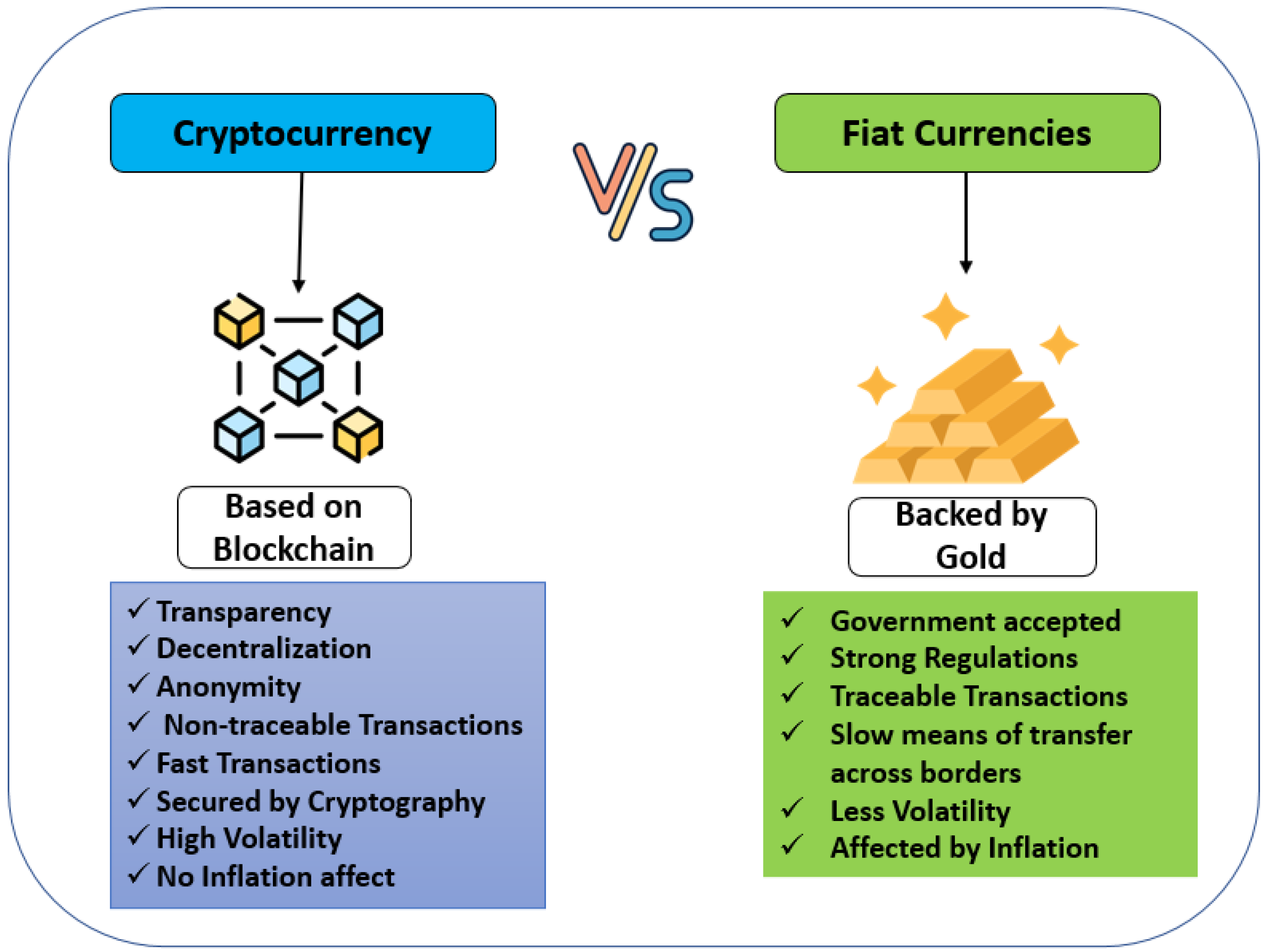
Figure 2.
Stable Coins Prices pegged to dollar (coinmarketcap).
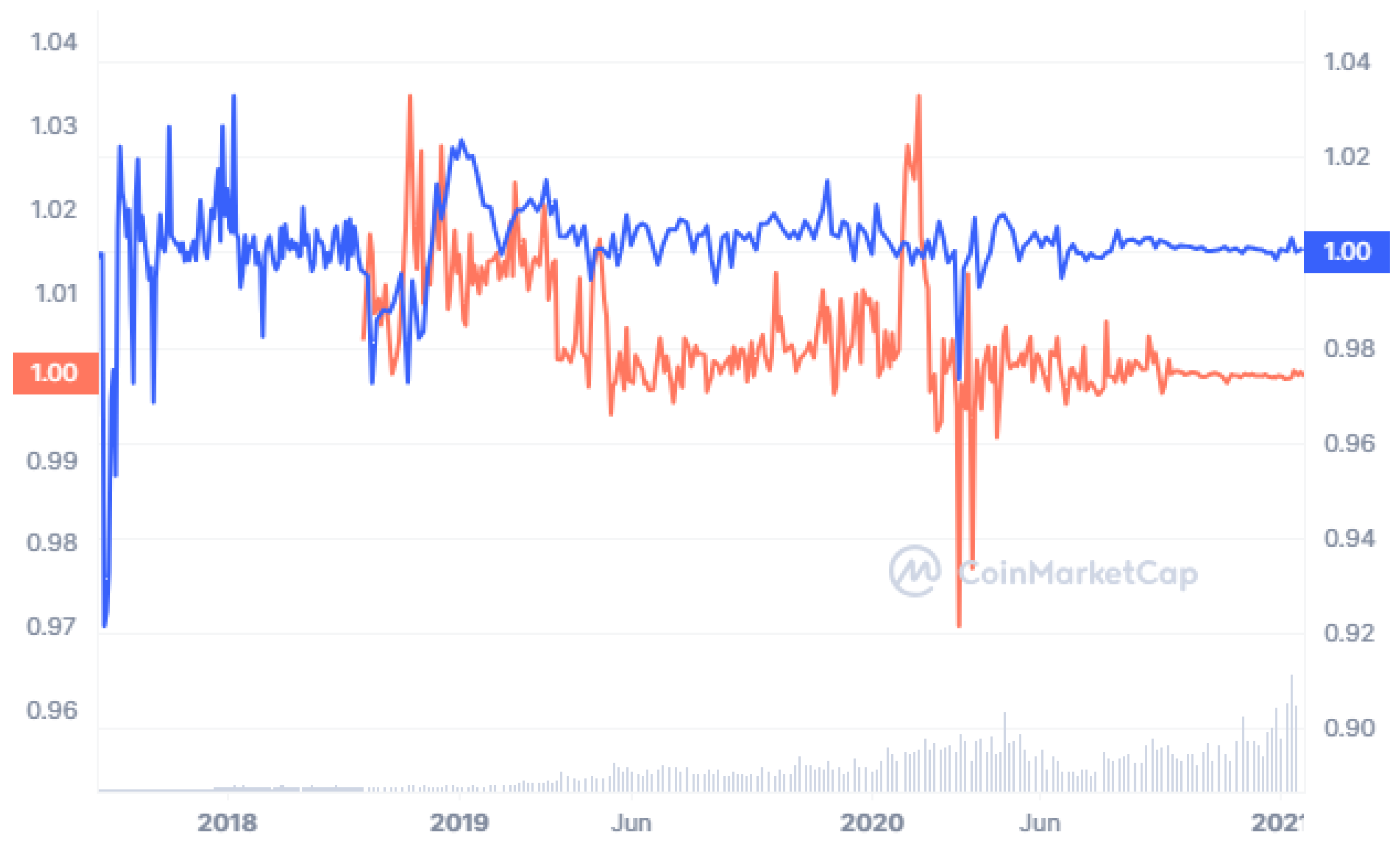
Figure 3.
Prices of Bitcoin and Ethereum over time (coinmarketcap).
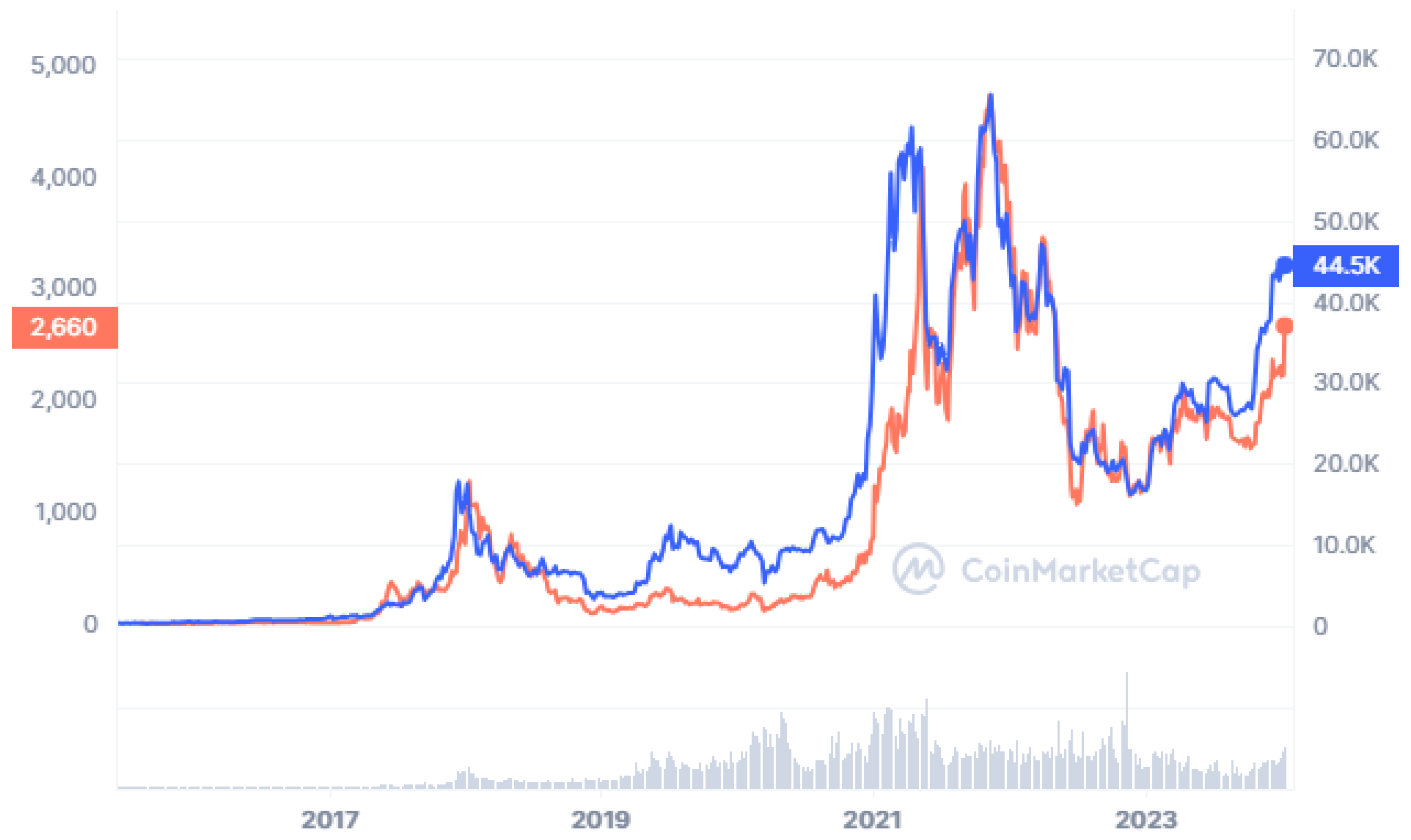
Figure 9.
Productivity distribution by country.
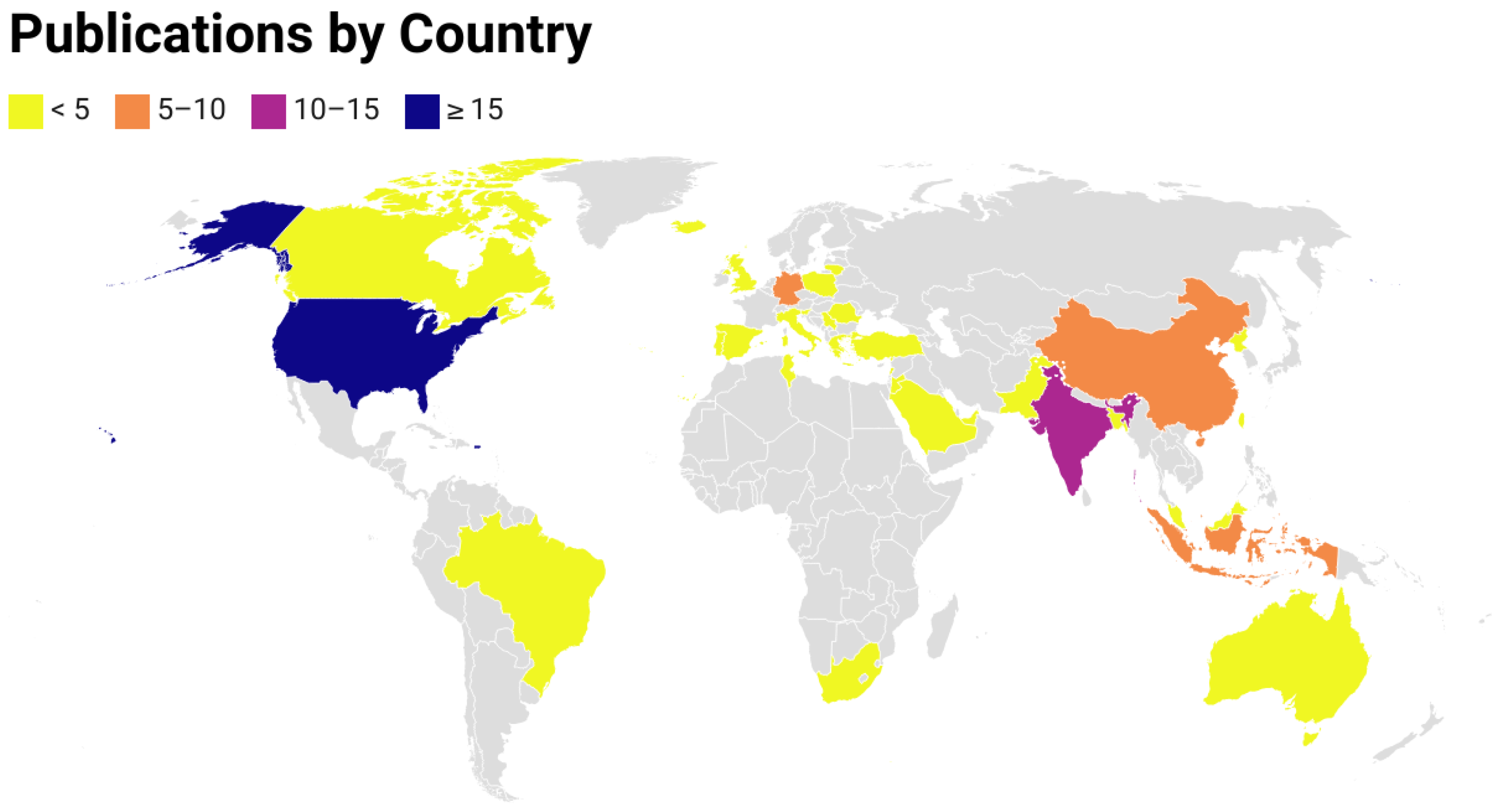
Figure 10.
Identification of Parameters Affecting Cryptocurrency Adoptation.
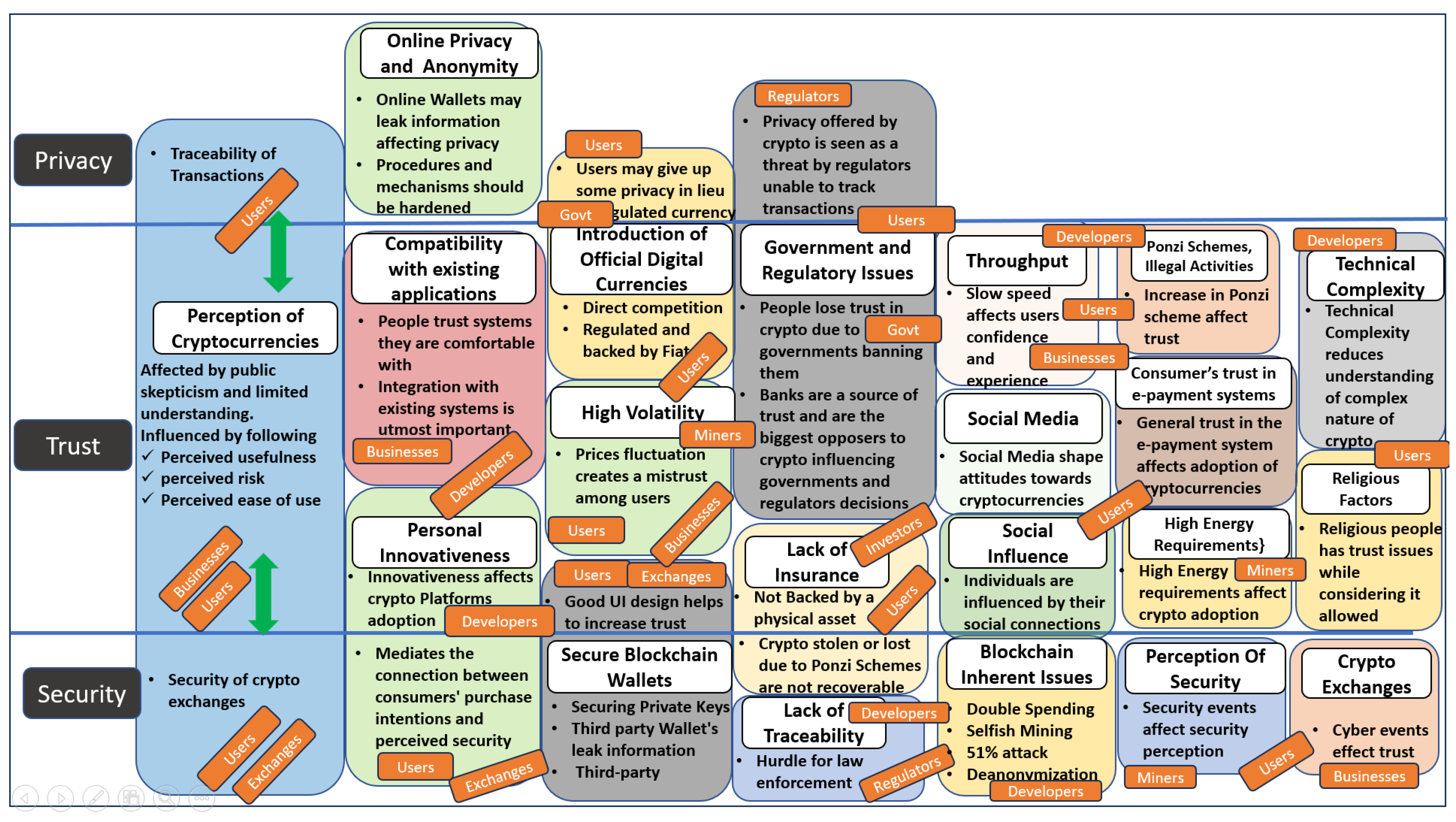
Table 1.
Number of Studies related to SPT Concerns of Users about Cryptocurrencies from initial query.
Table 1.
Number of Studies related to SPT Concerns of Users about Cryptocurrencies from initial query.
| Databases | Number of Results Found |
|---|---|
| Scopus | 94 |
| Web of Science | 126 |
| IEEE Explorer | 116 |
| ACM | 14 |
Table 2.
Top Cited Articles related to SPT concerns of normal Users.
| Title | Author | Year | Citations | Source | Study Theme |
| An empirical study on the commercial adoption of digital currencies | Roussou I.; Stiakakis E.; Sifaleras A. | 2019 | 138 | Information Systems and e-Business Management | Perceived ease of use and perceived usefulness, perceived security effect on cryptocurrencies adoption |
| Fostering trust and overcoming psychological resistance towards cryptocurrencies and cryptoassets | Babu, MM; Bason, T; Porreca, R; Petratos, P; Akter, S | 2023 | 136 | Psychology & Marketing | Effect of Sponsorships on building trust in cryptocurrencies |
| Investigating the Adoption Factors of Cryptocurrencies-A Case of Bitcoin: Empirical Evidence From China | Nadeem, MA; Liu, ZY; Pitafi, AH; Younis, A; Xu, Y | 2021 | 118 | Sage Open | Transaction processing, Perceived ease of use and perceived usefulness affect on intention to use Bitcoin. |
| Factors influencing the adoption of Cryptocurrency in Jordan: An application of the extended TRA model | Almajali, DA; Masa’Deh, R; Dahalin, ZMD | 2022 | 117 | Cogent Social Sciences | Positive attitudes and subjective norms towards cryptocurrency affect on adoption. |
| How Perceptions of Information Privacy and Security Impact Consumer Trust in Crypto-Payment: An Empirical Study | Mashatan, A; Sangari, MS; Dehghani, M | 2022 | 110 | IEEE Access | Traceability of payment transactions, perceived information privacy, perceived information security fraud and anonymity impact on consumer trust. |
Table 3.
Countries Regulating Cryptocurrency.
| Countries Banning | Countries with no regulations | Countries treating crypto as taxable asset | Countries that regulate crypto | |
| Number of Countries | 4 | 27 | 5 | 2 |
| Countries | Thailand, China, Russia, South Korea | Malaysia, Italy, Turkey, Argentina, India, Indonesia, Japan, Belgium, Canada, Hong Kong, Denmark, Estonia, France, Greece, Ireland, Malta, the Netherlands, Poland, Portugal, Singapore, Taiwan, Alderney, Chile, Croatia, Cyprus, Nicaragua, New Zealand, European Union | UK, Spain, Finland, Slovenia, and Israel | Brazil and Germany |
Table 4.
Top Research Mechanisms Employed in the Literature.
| Anatomy of Research Methods | Category | No of Papers |
|---|---|---|
| Research Methodology Type | Quantitative | 45 |
| Qualitative | 10 | |
| Mixed | 9 | |
| Research Mechanism | Surveys/Questionnaire | 36 |
| Interviews | 2 | |
| Literature Review / Theoretical | 6 | |
| Content Analysis (Social Media, news reports, crypto exchange data) | 9 | |
| Theories Utilized | TAM (Technology Acceptance Model) | 10 |
| SEM (Structural Equation Modeling) | 13 | |
| TRA (Theory of Reasoned Action) | 5 | |
| TPB (Theory of Planned Behavior) | 4 | |
| UTAUT (Unified Theory of Acceptance and Use of Technology) | 7 | |
| Misc/Others | 25 |
Disclaimer/Publisher’s Note: The statements, opinions and data contained in all publications are solely those of the individual author(s) and contributor(s) and not of MDPI and/or the editor(s). MDPI and/or the editor(s) disclaim responsibility for any injury to people or property resulting from any ideas, methods, instructions or products referred to in the content. |
© 2026 by the authors. Licensee MDPI, Basel, Switzerland. This article is an open access article distributed under the terms and conditions of the Creative Commons Attribution (CC BY) license (http://creativecommons.org/licenses/by/4.0/).
Copyright: This open access article is published under a Creative Commons CC BY 4.0 license, which permit the free download, distribution, and reuse, provided that the author and preprint are cited in any reuse.


