
Submitted:
02 April 2026
Posted:
03 April 2026
You are already at the latest version
Abstract
Background: An estimated 2–5% of infants are born with significant congenital defects and/or go on to develop severe neurodevelopmental disorders in early childhood, with a substantial proportion attributed to underlying genetic causes. Variants in the MED13L gene have been linked to a syndromic neurodevelopmental disorder characterized by developmental delay, intellectual disability, and, in some cases, congenital heart defects. However, the pathogenicity of many MED13L variants—particularly missense changes—remains poorly understood. Methods: This study analyzed clinically and genomically annotated data from the 100,000 Genomes Project (Genomics England), focusing on individuals with rare MED13L variants. A structured pipeline was developed to extract, filter, and interpret missense and truncating variants using the Interactive Variant Analysis (IVA) tool and associated resources. Detailed clinical phenotypes were manually cross-referenced through the Participant Explorer, and variants were classified following ACMG guidelines. Results: After filtering, eight probands were identified with clinically relevant, previously unreported, MED13L variants: five variants of uncertain significance (VUS) and three likely pathogenic. Despite differences in classification, both VUS and likely pathogenic variants were associated with a consistent neurodevelopmental phenotype. One additional patient carried an intronic MED13L variant with predicted spliceogenic potential and presented with a congenital heart defect, raising the possibility of a regulatory effect on cardiac gene expression. Notably, four of the eight individuals also harbored additional pathogenic or likely pathogenic variants in other genes known to contribute to neurodevelopmental phenotypes, illustrating potential genetic heterogeneity. The study also identified a disproportionately high rate of VUS among individuals of non-European ancestry, highlighting challenges in variant interpretation due to underrepresentation in population databases. Conclusions: This work emphasizes the value of large-scale genomic datasets in refining variant classification and improving diagnostic accuracy. It highlights the complexity of interpreting MED13L variants, the importance of considering genetic heterogeneity, and the need for increased diversity in genomic reference databases. Findings underscore the necessity of trio sequencing and functional studies to reclassify VUS and advance understanding of MED13L-associated syndromes.
Keywords:
MED13L
; variants of uncertain significance
; neurodevelopmental conditions
; genomic analysis
; patient management
; 100k genomes project
Introduction
Approximately 2-5% of infants are born with significant congenital defects, and/or they experience severe neurodevelopmental abnormalities during infancy. While various factors, such as gestational infection and maternal alcohol use, can result in neurodevelopmental abnormalities, harmful genetic variation in developmentally crucial genes plays a significant role.[1]
One notable example of those genes is the Mediator complex, an emerging set of genes linked to neurodevelopmental disorders.
The Mediator complex is an essential component of the transcription machinery in eukaryotic cells. It acts as a bridge connecting transcription factors, which bind to DNA at specific sequences, with RNA polymerase II (Pol II), the enzyme responsible for synthesizing mRNA from a DNA template.[2] Among the genes of the mediator complex, MED13L is one of the most frequently mutated genes [3] causing intellectual disability, speech impairment, hypotonia, distinctive facial gestalt and variable other anomalies such as congenital heart defects and epilepsy. [4]
Muncke et al. (2003) were the first to implicate MED13L (formerly PROSIT240) in human disease, demonstrating that disruptions of this gene were associated with congenital heart defects, particularly transposition of the great arteries, as well as intellectual disability. In their cohort, six intronic variants and three missense variants were identified, suggesting early on that both coding and non-coding alterations might contribute to disease pathogenesis. [5] Subsequently, through deep sequencing approaches, Najmabadi et al. (2011) identified 50 novel genes associated with recessive cognitive disorders, including MED13L. In that study, a homozygous missense MED13L variant was observed in two affected siblings, thereby broadening the phenotypic spectrum of MED13L-related disorders beyond congenital heart defects to encompass cognitive impairment. [6]
Further work underscored the importance of MED13L gene dosage, demonstrating that both haploinsufficiency and overexpression can result in congenital heart defects and intellectual disability, highlighting the necessity of tightly regulated MED13L expression during development.[7] The haploinsufficiency model was reinforced by the identification of additional individuals harboring pathogenic MED13L variants. [8]
Functional investigations provided mechanistic insight into the cellular consequences of MED13L insufficiency, revealing a pivotal role in neural crest cell development with downstream effects on organogenesis and neurodevelopment. [9] In parallel, in silico structural modeling of a missense variant identified in a patient with intellectual disability predicted disruption of α-helical stability and secondary structure, consistent with a deleterious molecular impact. [4]
Although multiple missense variants in MED13L have since been reported, [5,6] many remain classified as variants of uncertain significance (VUS), and their precise contribution to disease pathogenesis continues to be actively debated.4
Aims and Objectives of the Study
The overarching aim of this study is to provide a comprehensive analysis of missense variants (including (likely) benign, variants of uncertain significance and (likely) pathogenic variants) within MED13L, and to explore the phenotypic spectrum associated with its variants. This study is leveraging data from the 100,000 Genomes Project – Rare Disease Subgroup, one of the most expansive and representative datasets currently available for rare disease research.
A key strength of this study is the use of the 100,000 Genomes Project dataset, which provides a large and demographically diverse cohort, enabling robust and generalizable analyses beyond the constraints of small, clinically ascertained cohorts.
Data and Methods Section
Advancing Our Understanding of MED13L Through the Genomics England Dataset
This study was based on data from the Genomics England dataset, providing insight into the genetic landscape of MED13L-associated syndrome within a large and representative cohort. Unlike traditional datasets, which are often limited to a few hundred individuals and subject to referral bias, the Genomics England (GE) dataset comprised a broader and more diverse population. This breadth enhanced the generalizability of the findings and reduced biases commonly associated with smaller, clinically ascertained cohorts. The comprehensive nature of the GE data allowed for a more accurate assessment of MED13L-associated phenotypes, contributing to a deeper understanding of the disorder’s clinical variability and genetic architecture.
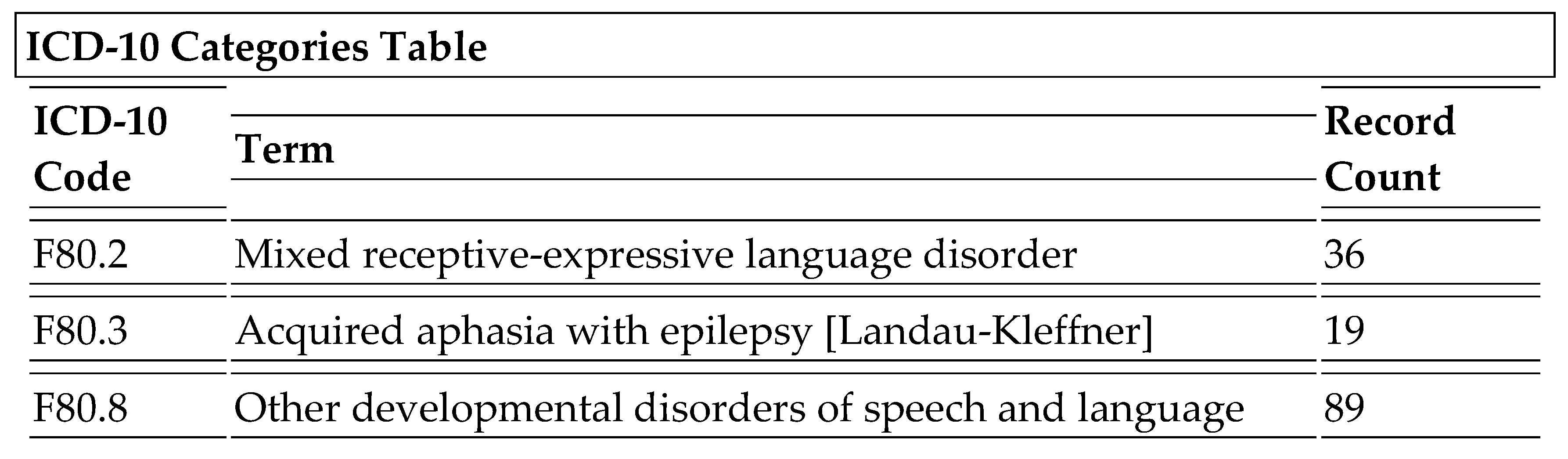
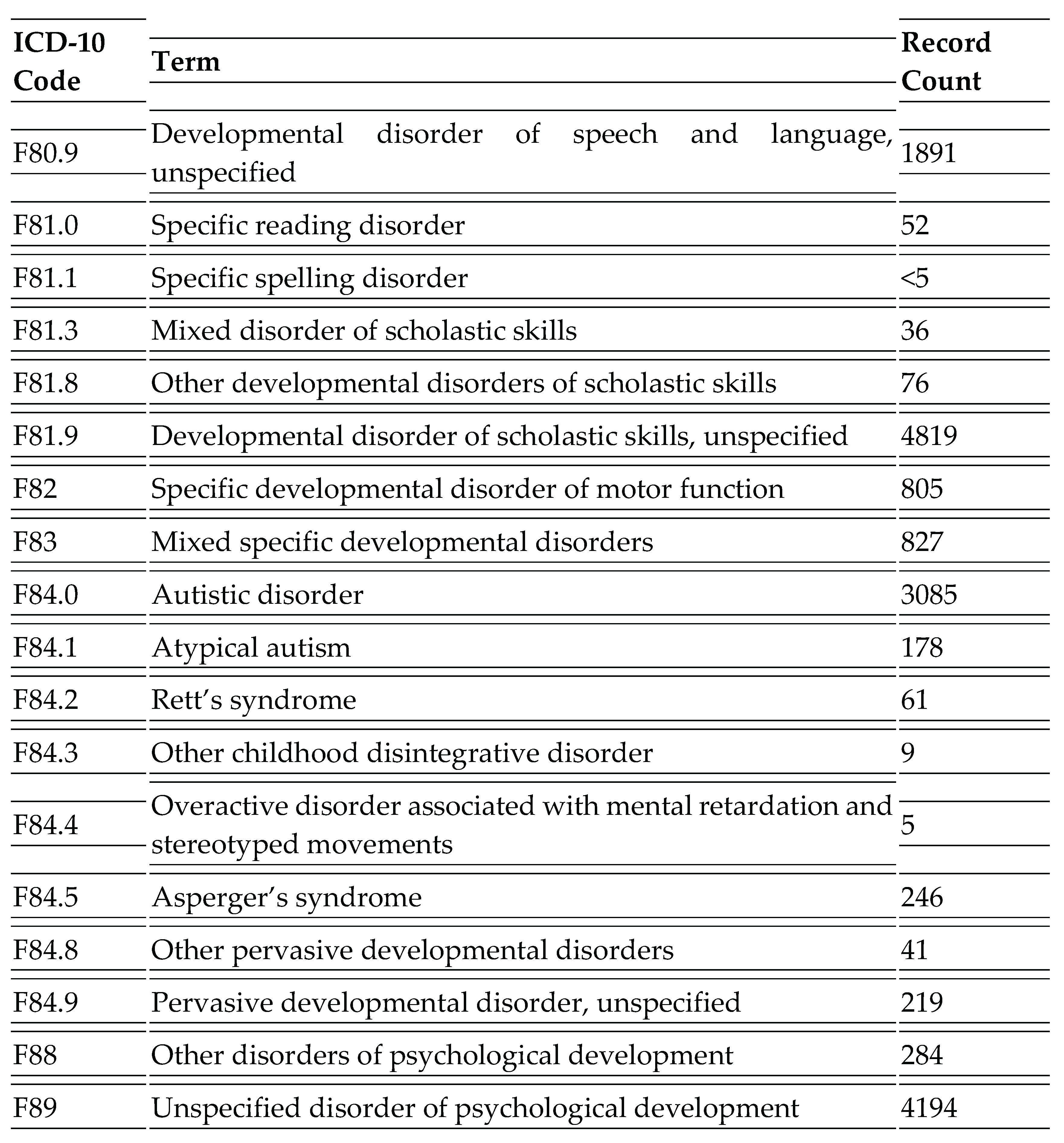
Across all Genomics England Projects, 64,52% of participants were white British, a further 9,03% were from “Any other white background” (Figure 2). Of the 73,605 participants, 52.19% were female and 47.79% were male (Figure 3). Participants were born between 1925 and 2020, representing a broad age range (Figure 4). Within the rare disease group, clinical records indicated that 40,481 individuals had a documented disease diagnosis (Figure 5). A subset of 17,150 participants was identified as having a neurodevelopmental condition. The most common diagnoses within this group included developmental disorder of scholastic skills and unspecified disorder of psychological development (Figure 6).
All genomic and clinical data had undergone processing through the Genomics England Interpretation Pipeline prior to analysis. Only genomes that passed stringent quality control (QC) criteria, including contamination assessment, concordance between genetic and reported data, and adequate sequencing coverage, were included. This ensured the integrity and reliability of the data analysed. [10]
Variant Filtering and Annotation
To investigate the clinical significance of MED13L missense variants, a structured bioinformatics pipeline was developed and applied to data from 100k Genomes Project Interactive Variant Analyser GrCh38 and GrCh37 Germline Programme. A minor allele frequency (MAF) threshold of <0.01 was applied to variants in MED13L to exclude common variants. The variants were then filtered by variant type (INDEL or SNV) and consequence type (missense or truncation). Missense variants were selected for focused analysis. Based on gnomAD allele counts and frequencies were determined. The localization of variants within gene-specific hotspots was considered, as well as previously reported variants in the literature and ClinVar. For this study, variants not previously reported were prioritized.
Participant and Phenotype Selection
Probands presenting with neurodevelopmental or neurodevelopmental and or neurodevelopmental and anatomical cardiac features were retained, while those with non-anatomical cardiac anomalies were excluded. Relevant clinical data—including de novo status, ethnicity, and family structure—were extracted using the Participant Explorer. Variants observed in more than 10 individuals—or in more than 50 individuals across the full cohort—were excluded to minimize the possibility of technical artifacts.
Variant Classification
Variants were classified according to ACMG/AMP guidelines. The following criteria were considered: phenotype consistency (PP4), de novo origin (PS2), absence from population databases (PM2), and in silico predictions (PP3), based on Ensembl Variant Effect Predictor (VEP), incorporating CADD, SIFT, and AlphaMissense scores.
Characterization of Probands
Detailed clinical profiles were compiled for all probands carrying filtered MED13L variants. Features were compared between those with likely pathogenic variants and those with variants of uncertain significance. A comprehensive literature review was conducted to confirm the novelty of each variant.
Through this approach, nine probands with rare MED13L variants were identified and characterized, contributing to the broader understanding of the gene’s role in neurodevelopmental disorders (see Figure 1).
Figure 1.
Variant filtering steps and number of variants after each filtering step.
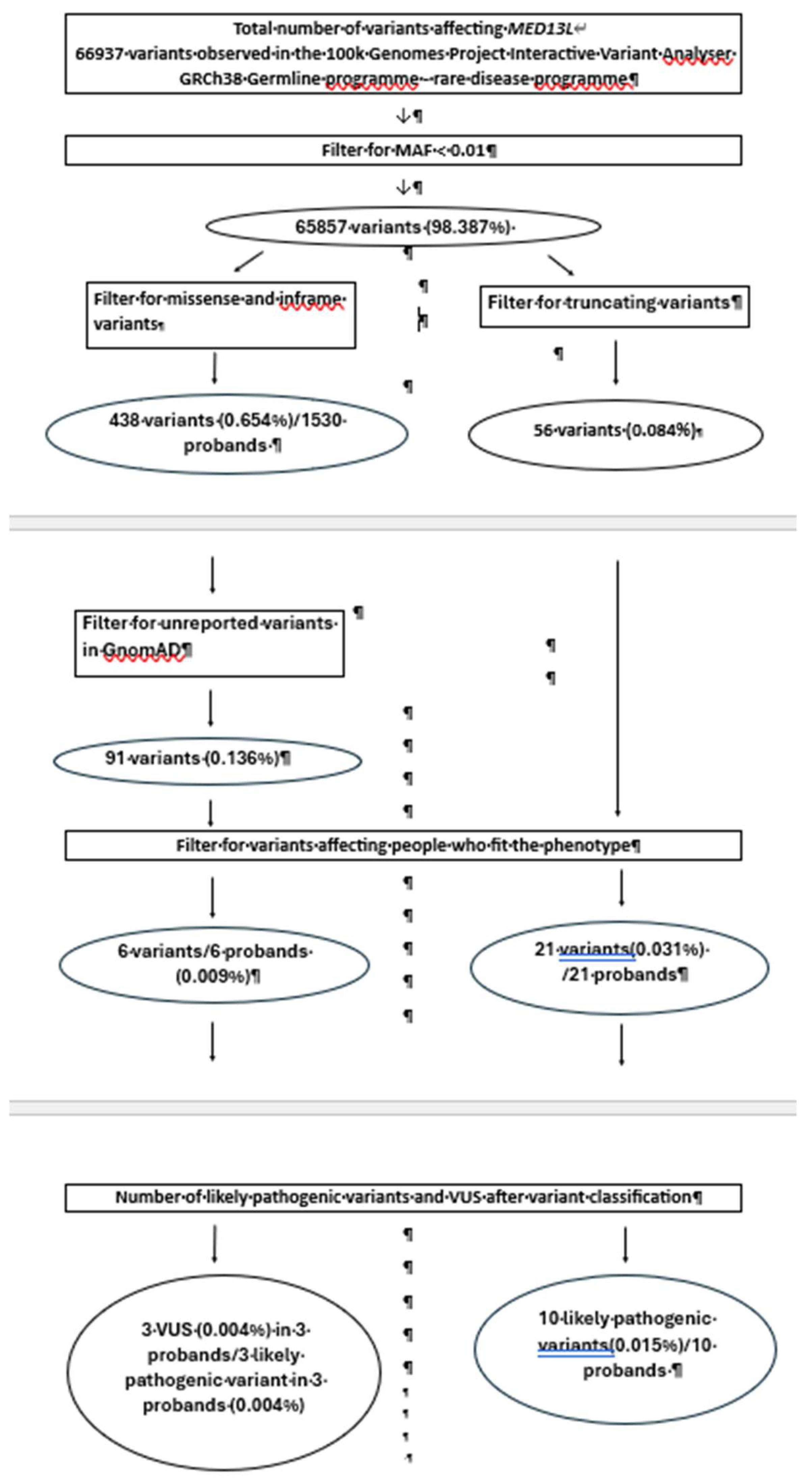
Figure 2.
Demographic information across all Genomics England Projects: Self defined ethnicity [11].
Figure 2.
Demographic information across all Genomics England Projects: Self defined ethnicity [11].
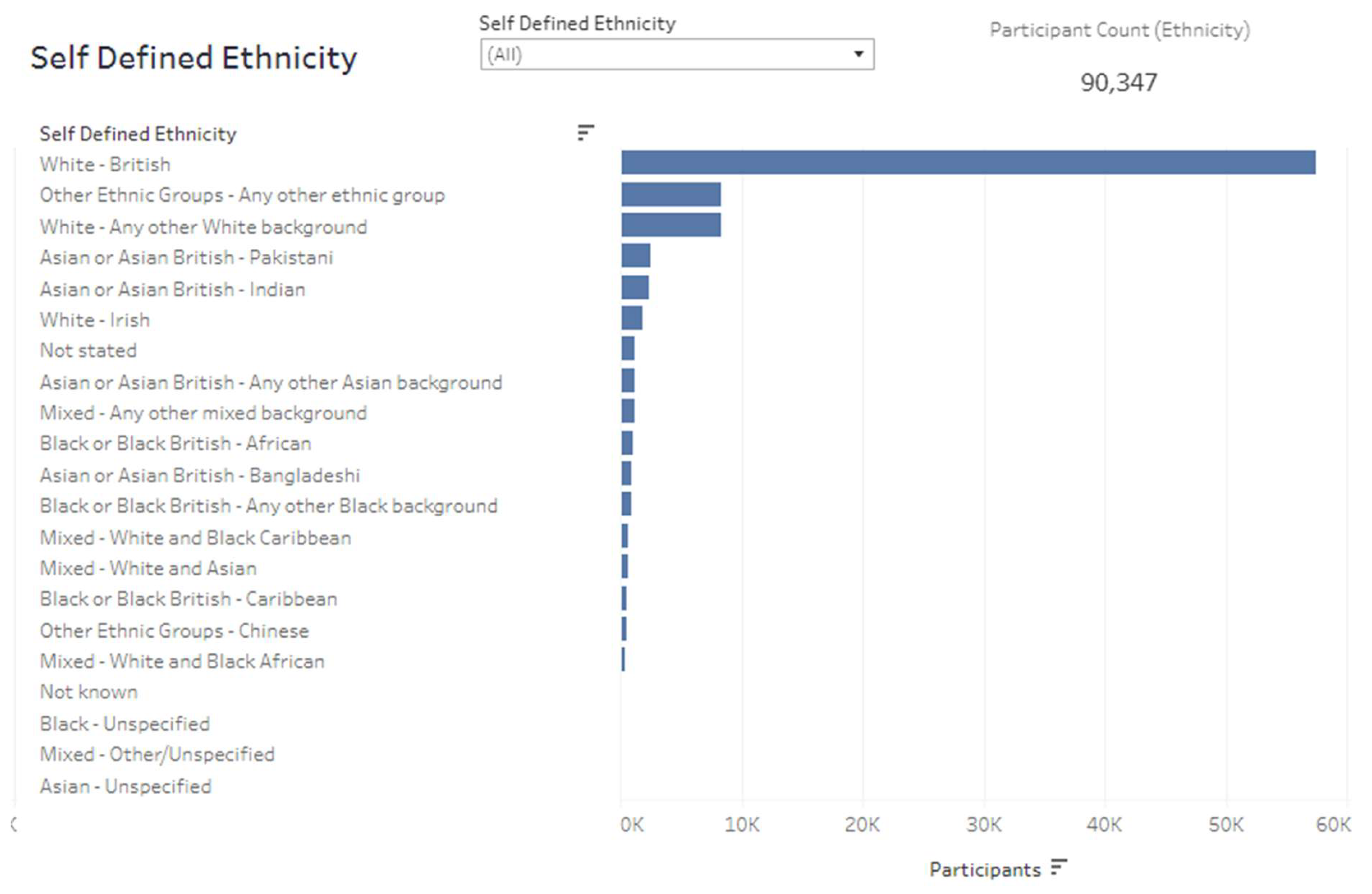
Figure 3.
Demographic information across all Genomics England Projects: Chromosomal Sex [11].
Figure 3.
Demographic information across all Genomics England Projects: Chromosomal Sex [11].
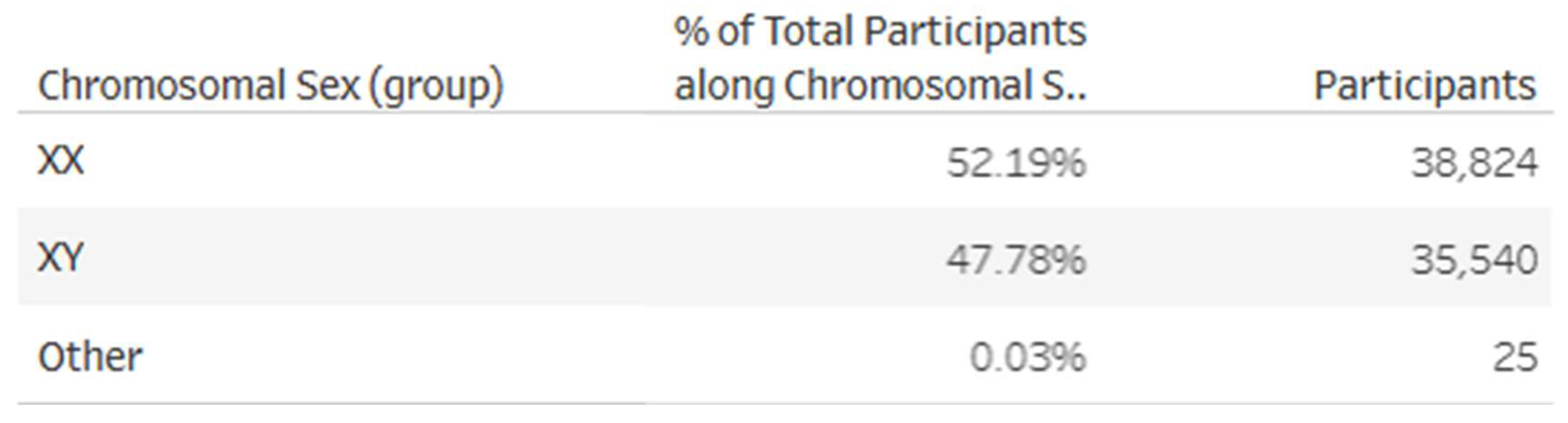
Figure 4.
A Demographic information across all Genomics England Projects: Year of birth (taken from Genomics England Public Data Browser) [11].
Figure 4.
A Demographic information across all Genomics England Projects: Year of birth (taken from Genomics England Public Data Browser) [11].
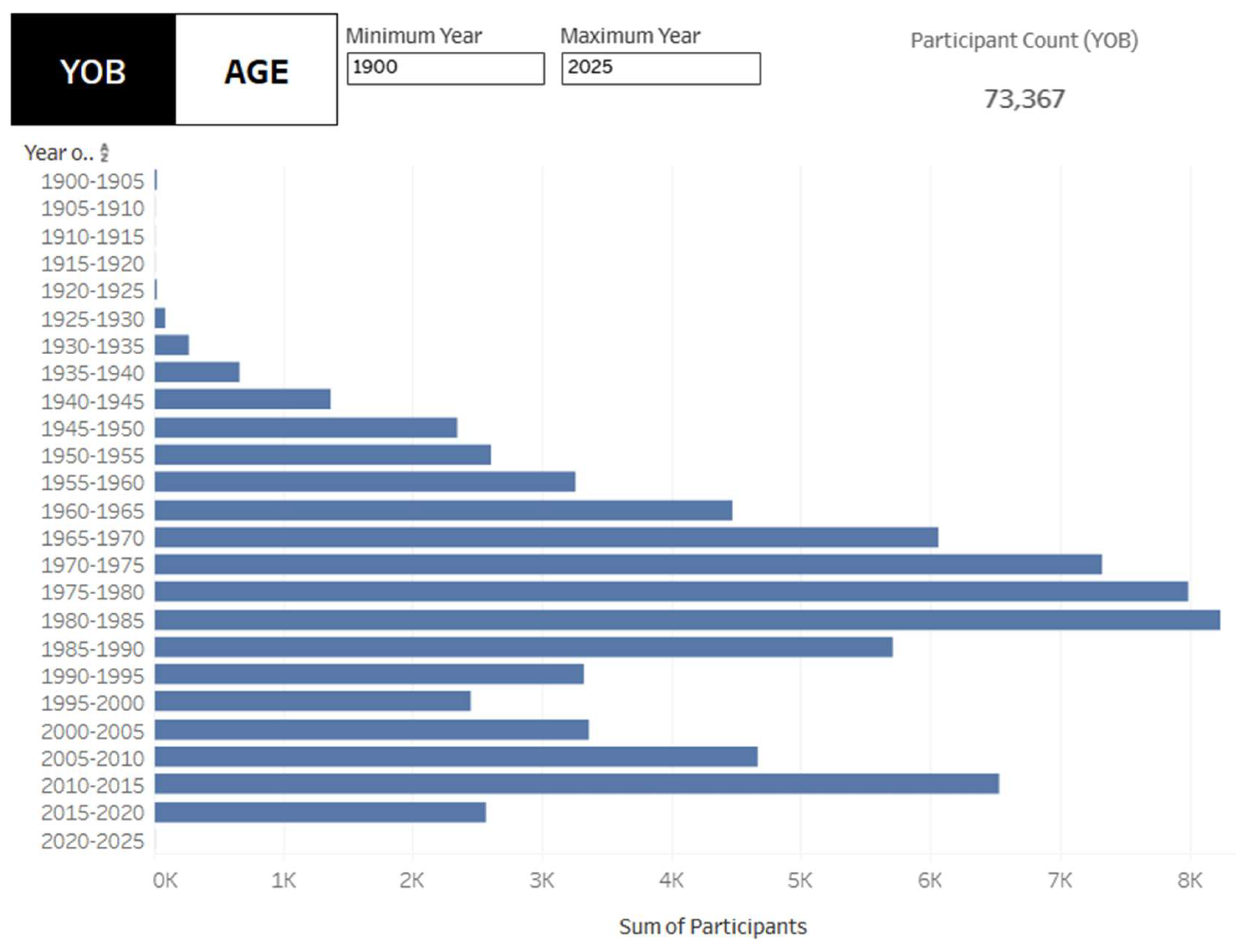
Figure 5.
Types of rare diseases in the 100k Genomes rare disease group (taken from Genomics England Public Data Browser) [12].
Figure 5.
Types of rare diseases in the 100k Genomes rare disease group (taken from Genomics England Public Data Browser) [12].
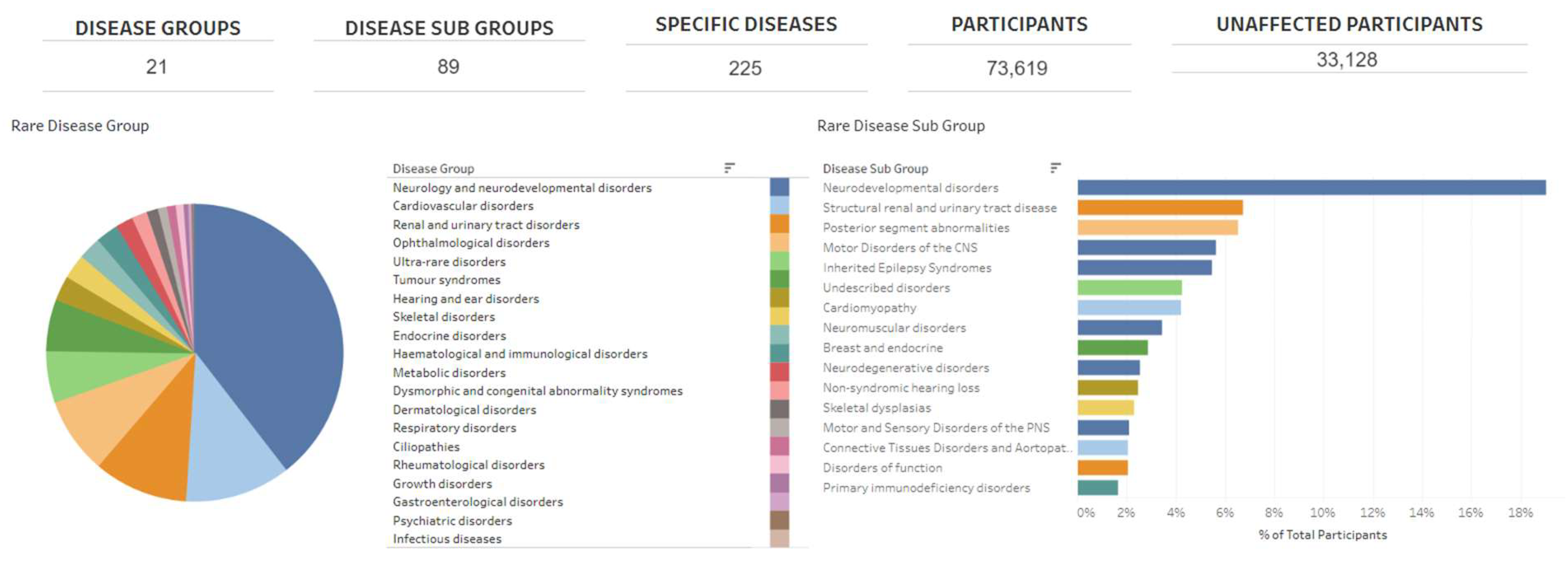
Figure 6.
Overview of disorders of psychological development (F80-F89) in the 100k Genomes rare disease cohort [13].
Figure 6.
Overview of disorders of psychological development (F80-F89) in the 100k Genomes rare disease cohort [13].
Results (The following results refer to various databases as of 18th March 2026)
Primary Variant filtering - Overview of the Spectrum of MED13L Missense and Truncating Variants in the Genomics England Rare Disease Cohort
A total of 438 missense MED13L variants were identified in the 100k Genomes Project Interactive Variant Analyser GrCh38 Germline Programme. Of these, 91 variants were absent from gnomAD, indicating that they are previously unreported.
Among the 1,530 probands carrying one of the 438 missense variants, ten individuals met the initial criteria for a neurodevelopmental phenotype. Upon detailed phenotypic review, three probands were excluded due to the absence of a neurodevelopmental component. An additional case was excluded because the corresponding MANE Select transcript classified the variant as intronic rather than missense.
After applying these criteria, seven individuals remained with phenotypes consistent with MED13L-associated neurodevelopmental disorder. Of these, three probands carried variants classified as likely pathogenic, corresponding to a prevalence of 0.004% within the 63,349 participants of the IVA rare disease cohort. Four probands harbored VUS, corresponding to a prevalence of 0.006% in the same cohort.
Among the 1,530 probands carrying missense variants, the four VUS cases represent 0.261% of missense carriers. Within the final phenotypically consistent subgroup (n = 7), VUS accounted for 57.1% of cases (4/7), while likely pathogenic variants accounted for 42.9% (3/7).
Exonic Missense Mutations in the MED13L Gene
In both data from GRGh38 and GRCh37 together, I identified eight heterozygous missense variants in MED13L in eight unrelated patients (P1–P8), all absent from both GnomAD and ClinVar databases (as of January 21, 2025). In cases where parental data were available, the variants were found to have occurred de novo (patients P5, P6, and P7). Consanguinity was documented in patient 1 and 6.
Variants were distributed across the gene:
c.250T>C p.(Trp84Arg), c.2432A>G p.(Asp811Gly), c.4745C>A p.(Ser1582Tyr), c.1466A>G p.(His489Arg), c.1688C>A, p.PRO563GLN, c2614>A p.(Glu872Lys), c. 3688-3693 TC/-(GrCh37) and c.6077 G/A p.(Gly1957Val) (GrCh37).
The c.1466A>G p.(His489Arg), c.1688C>A, p.PRO563GLN and c.1688C>A p.(Glu872Lys) substitutions were predicted to be deleterious by SIFT (score = 0) and had CADD scores ranging from 22.4 to 27.6.
Patient 4 carried an intronic MED13L variant (NM_015335.5:c.5589-20C>T; chr12:115975333G>A, GRCh38), which does not result in an amino acid substitution in the MANE Select transcript.
Patients 3, 5, 6 and harbored additional rare variants or chromosomal abnormalities in additional genes (RPSAP62, IQSEQ2, COQ4, and TRUB2), potentially contributing to their phenotypes.
Description of Patients with VUS and Pathogenic Variants
Due to the limited sample size, the findings of this study should not be considered representative of broader populations.
Demographic and Genetic Findings
Among the three patients classified with Variants of Uncertain Significance (VUS), two were of Asian or Asian British (Pakistani and Indian) or mixed (White and Asian) descent, while one patient was of White British ancestry. In contrast, among the three cases classified as likely pathogenic, two were of White British descent, and one patient was of Asian British (Indian) descent.
Consanguinity was documented in two cases: one patient with a VUS who had Indian parents, and one patient with a likely pathogenic variant who had Pakistani parents.
All patients with VUS were female. Among those with likely pathogenic variants, two were female, and one was male. All individuals in this cohort were born in the early 2000s.
In two out of three VUS cases, no definitive causative variant could be identified. In all VUS cases, the VUS classification was attributable to undetermined inheritance patterns, as only one parental genome was available for sequencing, precluding confirmation of de novo status (Table 1).
Patient Classification
The following patient subgroups were identified:
a) Patients with a VUS in MED13L who remain molecularly undiagnosed: These individuals harbored MED13L VUS without additional pathogenic findings, leaving them without a definitive molecular diagnosis (Patients 1 & 2 and 8&9).
b) Patients with a VUS in MED13L but with an established molecular diagnosis (pathogenic variant in another gene alongside the VUS): A likely pathogenic variant was identified in another gene, which is consistent with the proband’s clinical features. As the molecular diagnosis accounts for the phenotype, the impact of the VUS in MED13L on the clinical picture is uncertain (Patient 3).
Intronic Mutation in the MED13L Gene
In the MANE Select transcript (NM_015335.5), the variant was located within the intronic region, 20 nucleotides upstream of the exon–intron boundary (Figure 7). Although it does not alter the coding sequence, this position lies within a region that may influence pre-mRNA splicing. To evaluate its potential spliceogenic effect, maximum entropy (MaxEntScan) scores were calculated for both the reference and alternate alleles. Comparison of the reference (ref) and alternate (alt) scores, as well as the differential (ref − alt), suggested an enhancement of splice site strength in the presence of the variant. Specifically, the alternate allele yielded a score exceeding 8.5 and a negative differential score of −0.234, consistent with the potential creation or strengthening of a cryptic splice site. [14]
Initially, the variant was annotated as a missense alteration in an alternative transcript (ENST00000552447), resulting in a PRO→SER amino acid substitution.
However, subsequent attempts to confirm the missense annotation using Ensembl Variant Effect Predictor (VEP) were unsuccessful. Neither genomic coordinate search (12:115975333) nor transcript-based queries returned supporting evidence for the existence of this isoform. The transcript has since been deprecated and archived by UCSC, and no longer appears in current annotations under the GRCh38/hg38 assembly ( see Figure 7). As a result, the variant is no longer categorized as a missense variant in either UCSC or Ensembl VEP databases, leading to reclassification of the variant as intronic.
As the variant is at present classified as intronic, it was considered out of scope for this project.
This patient also presented with congenital heart malformations, adding clinical complexity to variant interpretation.
Phenotype of Patients with VUS and Pathogenic Variants
All eight probands presented with intellectual disability and severe speech delay, suggesting a consistent neurodevelopmental phenotype associated with MED13L missense variants. Seizures or abnormal EEG findings were reported in six out of eight individuals (75%), indicating a high prevalence of neurological involvement. Hypotonia was observed in three cases (37.5%), while autistic features were noted in three individuals (37.5%).
Facial dysmorphism was documented in three probands (37.5%), with specific findings including low-set ears and a bulbous nasal tip, each reported in two (25%) and one participants respectively. Abnormal brain MRI and abnormal EEG findings were each noted in one case (12.5%).
Growth abnormalities were present in two probands (33.3%). Microcephaly was observed in three cases (37.5%), with additional postnatal weight anomalies recorded—one individual exhibited postnatal underweight and another postnatal overweight. A complex congenital heart defect was also reported in one individual, who carried an intronic variant predicted to affect splicing and was not included among the eight individuals with missense variants (see Table 2).
These findings underscore the variable expressivity of MED13L-associated phenotypes, with a core neurodevelopmental presentation often accompanied by seizure activity, hypotonia, dysmorphic features, and, in some cases, structural brain or cardiac anomalies.
Impact of Filtering Strategy on Variant Counts
The observed distribution of retained variants was strongly influenced by the way genomic data are processed and represented within the Genomics England Interactive Variant Analyser (IVA) platform (Figure 1).
Application of a minor allele frequency (MAF) threshold of <0.01 resulted in only a modest reduction in variant counts. This unexpected finding can be attributed to IVA’s treatment of population frequency data: variants absent from gnomAD are assigned an alternate allele frequency of zero. Consequently, such variants are retained under a <0.01 threshold despite lacking independent population frequency evidence. This platform-specific annotation approach explains the limited impact of MAF filtering in the present dataset (Personal Communication, Genomics England Service Desk, 16 December 2024).
In contrast, consequence-based filtering produced the most pronounced reduction in candidate variants. Consistent with Genomics England’s default settings, synonymous variants were excluded, and only missense (SO:0001583) and feature truncating (SO:0001906) variants were retained. Because these variant classes are predicted to alter protein structure or function, this step substantially enriched the dataset for potentially pathogenic alterations.
Additional refinement was achieved through phenotype-driven filtering. Restricting analysis to probands presenting with neurodevelopmental phenotypes—with or without associated structural cardiac anomalies—aligned the variant set with the established clinical spectrum of MED13L-related disorders. Isolated cardiac anomalies were not considered sufficient for inclusion in the absence of neurodevelopmental features. In familial cases, only those with concordant phenotypes among affected individuals were retained, thereby reducing the risk of misattributing variants to unrelated clinical presentations.
Together, these filtering steps clarify how analytical design choices and platform-specific assumptions shaped the final variant counts observed in this study.
Discussion
In this study, I report eight individuals harboring non-recurrent variants in the neurodevelopmental disorder-associated gene MED13L, including three classified as likely pathogenic and five as variants of uncertain significance (VUS), thereby extending the known spectrum of missense variants in this gene. One individual with an intronic variant in MED13L and a heart phenotype was found.
In line with previous research, a clearly delineated phenotype was found, as all eight probands suffered from intellectual disability, motor delay and speech delay.
As confirmed in the literature there was a high number of patients with epilepsy (6 out of 8 patients) in patients carrying MED13L missense variants.[4,15]
Importantly, no significant phenotypic differences were observed between individuals with VUS and those carrying pathogenic MED13L variants. This observation aligns with prior reports suggesting considerable phenotypic overlap across the variant spectrum in MED13L-related disorders. [4,7,8,16]
Clinical Implications of Findings
Genetic heterogeneity—defined as pathogenic variants in different genes or alleles producing similar clinical phenotypes—emerged as a recurring feature within this cohort. In four of the eight probands, additional pathogenic or likely pathogenic variants were identified in genes distinct from MED13L, including ASXL3, IQSEC2, and COQ4. These genes are independently associated with neurodevelopmental disorders that may clinically overlap with MED13L-related syndromes. The presence of multiple pathogenic variants in individual probands raises the possibility of multilocus contributions to the observed phenotypes.
To date, most studies focused specifically on MED13L syndrome have not reported comparable levels of genetic heterogeneity.[7,8,16] A notable exception is the study by Mullegama et al., which described a patient harboring pathogenic variants in both DEAF1 and MED13L. Following in vitro functional analyses and comprehensive phenotypic evaluation, the authors concluded that the clinical presentation was most consistent with MED13L haploinsufficiency syndrome. [17]
The discrepancy between prior reports and the present findings may reflect differences in study design and cohort ascertainment. The Genomics England dataset, from which several participants in this study were drawn, recruits broadly across rare diseases rather than exclusively targeting neurodevelopmental phenotypes. Moreover, all participants undergo whole-genome sequencing, rather than phenotype-driven targeted gene panel sequencing, thereby enabling the detection of pathogenic variants beyond those initially suspected based on clinical presentation. Such an approach may increase the likelihood of detecting co-occurring pathogenic variants and capturing a more genetically heterogeneous population.
More broadly, emerging evidence in neurodevelopmental disorders supports the concept of cumulative genetic burden. A recent case study described a patient carrying heterozygous variants in HDAC8 and genes within the FA/BRCA pathway, suggesting a potential combined effect on disease expression.[18] Similarly, oligogenic models are increasingly considered in autism spectrum disorder, where multiple rare variants may contribute additively or interactively to phenotypic manifestation. [19,20]
Case Studies of Genetic Heterogeneity
Patient 3 was diagnosed with Bainbridge-Ropers syndrome (#OMIM 615485) due to a pathogenic nonsense variant in ASXL3 (chromosome 18: position: 33746183, c.6335 T>A; p.Leu2112Ter), causing a stop mutation alongside a VUS in MED13L. Bainbridge-Ropers syndrome (BRPS) presents with clinical features overlapping MED13L syndrome, including severe intellectual disability, delayed psychomotor development, hypotonia, feeding difficulties, growth impairment, and dysmorphic facial characteristics.[21]
Patient 5, a female proband, harbored multiple pathogenic or likely pathogenic variants, including alterations in IQSEC2 and MED13L. Genomic analysis identified a TG/T deletion at chromosomal position X:53320894 within IQSEC2 (UniProt accession AC245102). [22] This deletion results in a frameshift predicted to produce a truncated or functionally compromised protein and was classified as pathogenic by Genomics England.
Pathogenic variants in IQSEC2 are typically associated with severe intellectual disability, hypotonia, strabismus, stereotypic behaviors, autism spectrum disorder, postnatal microcephaly, and epilepsy. [23]
As IQSEC2-related disorders follow an X-linked dominant inheritance pattern, [23] affected females are frequently less severely impacted than males. This sex difference is attributed to X-chromosome inactivation (XCI), whereby heterozygous females exhibit mosaic expression of mutant and wild-type alleles. Depending on the degree of XCI skewing, this mosaicism can lead to a milder or more variable phenotype. Consistent with this mechanism, Kalscheuer et al. (2016) reported attenuated clinical manifestations in female carriers within affected pedigrees. [24]
The proband exhibited several features consistent with IQSEC2-related neurodevelopmental disorder, particularly intellectual disability and hypotonia. However, in contrast to the classical presentation, no recurrent or unprovoked seizures were reported; seizure activity was limited to febrile convulsions. Given that epilepsy is a common and often prominent feature of IQSEC2-associated disease, the absence of epilepsy in this patient suggests a comparatively attenuated phenotypic presentation, in line with the literature on female patients. However, the relative contribution of each gene to the overall clinical presentation remains uncertain.
Notably, RPSAP62, also identified in this proband, has no established disease association in OMIM and is likely an incidental finding.
In addition to a likely pathogenic MED13L mutation, patient 6 harbored a pathogenic variant in COQ4 as well as a variant in TRUB2. While TRUB2 is not known to be associated with any disease and likely incidental, COQ4 is implicated in pathogenicity. Notably, TRUB2 and COQ4 are located in close genomic proximity. Complex structural variations such as a deletion-insertion-duplication event could potentially encompass these two loci, representing a larger genomic rearrangement (see Figure 8).
Mutations in COQ4 have been linked to primary coenzyme Q10 deficiency, a condition with a clinically heterogeneous presentation. While most cases exhibit variable neurological symptoms, Brea-Calvo et al. reported a patient with COQ4-related disease who exhibited a progressive course of neurological deterioration.[25] Given the broad neurodevelopmental phenotype observed in this patient, it is evident that the proband presents with a dual diagnosis of MED13L syndrome and primary coenzyme Q10 deficiency, highlighting the complexity of the underlying genetic etiology.
Patient 7 – This patient was initially diagnosed by Genomics England with a likely pathogenic variant in the MED13L gene, a finding that was subsequently confirmed in the present study. In addition to this pathogenic variant, the patient has been assigned a diagnosis of chromosomal abnormality, classified under the ICD-10 code for chromosomal disorders. However, the clinical significance of this chromosomal abnormality remains uncertain, and it is unclear whether it contributes to the patient’s neurodevelopmental phenotype.
The present result corroborates previous findings from Genomics England, thereby replicating and reinforcing established genotype–phenotype associations.

Table 3.
Patient types identified by the present study and their implications as well as recommendations.
Table 3.
Patient types identified by the present study and their implications as well as recommendations.
| Patient Number | Variant classification | Additional Comments | Patient type | Implication | Recommendations For a diagnostic lab |
| Patient 1 | VUS in MED13L, no other variants | VUS | Consider further action: Additional tests/investigations (trio sequencing) could re-classify the VUS as likely pathogenic | ||
| Patient 2 | VUS in MED13L, no other variants | VUS | Consider further action: Additional tests/investigations (trio sequencing) could re-classify the VUS as likely pathogenic | ||
| Patient 3 | VUS in MED13L and asxl3 (pathogenic variant) | VUS and pathogenic variant-VUS | Consider further action: Additional tests/investigations (trio sequencing) could re-classify the VUS as likely path. | ||
| Patient 4 | VUS in MED13L, no other variants |
Heart: other congenital malformations of aorta (Q25.4), cardiac phenotype |
VUS | ||
| Patient 5 | Likely pathogenic in MED13L, Also variants in RPSAP62, IQSEQ2: AC245102 (accession number) |
Mild phenotype | Pathogenic and Likely Pathogenic | 2 disease causing variants at the same time | Report to Genomics England about likely pathogenic variant newly found by the present study, to pass on information to the clinician |
| Patient 6 | Primary coenzyme q10 deficiency, and likely pathogenic in VUS, variants in COQ4 and TRUB2 | bradycardia | Pathogenic and Likely Pathogenic | 2 disease causing variants at the same time | Report to Genomics England about likely pathogenic variant newly found by the present study, to pass on information to the clinicain |
| Patient 7 | Pathogenic in MED13L, chromosomal abnormality | Pathogenic | Replication (as already reported by Genomics England) | Consider further action: Additional tests/investigations (trio sequencing) could re-classify the VUS as likely path. | |
| Patient 8 | VUS in MED13L (confirmed by Genomics England), no other variants | VUS | Replication (as already reported by Genomics England) | Consider further action: Additional tests/investigations (trio sequencing) could re-classify the VUS as likely path. | |
| Patient 9 | VUS in MED13L , no other variants | VUS | Replication (as already reported by Genomics England) | Consider further action: Additional tests/investigations (trio sequencing) could re-classify the VUS as likely path. |
Intronic Variants
Patient 4 distinguished himself in this cohort by exhibiting a unique combination of features. Specifically, this individual presented with a primary intronic isoform in MED13L (see Figure 7) and was the only patient in the study to show congenital malformations of the aorta (ICD-10 Q25.4) alongside neurodevelopmental symptoms. These findings fulfill the criteria for a cardiac phenotype.
The variant, although located in a non-coding intronic region, resides within a domain implicated in splicing regulation and displays clear spliceogenic potential. Supporting this, the variant demonstrated a negative differential entropy score (-0.234) and a high alternate score (>8.5), consistent with the creation of a de novo or cryptic splice site and suggestive of aberrant splicing.[14] Such regulatory mutations, even when occurring outside canonical coding sequences, may significantly influence isoform expression and, consequently, organ development—including the heart.
It is also important to note that this particular MED13L variant is not listed in current public variant databases, and its expression profile in cardiac tissue remains unconfirmed.
This is in line with the literature, which has attributed such phenotypic variability to reduced penetrance of cardiac defects in MED13L syndrome.[16] Adegbola et al. (2015) were the first to describe a cohort of eight individuals with MED13L mutations who, while demonstrating syndromic neurodevelopmental features, lacked complex congenital heart defects. Their findings, consistent with those presented here, challenge earlier assumptions of MED13L as a monogenic cause of complex congenital heart malformations, instead suggesting a broader phenotypic spectrum for MED13L-related disorders.[26]
This expanded clinical understanding is further corroborated by Asadollahi et al. (2017), who reported that only 3 of 23 individuals with MED13L mutations exhibited complex congenital heart anomalies.[4]
Smol: Involvement of MED13L in the dTGA of these patients remains to be explained.[15]
Conclusion
This study provided valuable insights into the classification and implications of missense variants in the MED13L gene, based on data from the IVA 100k Genomes Project GRCh38 Germline Programme and GRCh37 Germline Programme - Rare Disease Programme. It emphasizes the importance of large-scale genomic initiatives in refining the classification of variants and improving diagnostic accuracy, ultimately enhancing patient care and management for individuals with MED13L-related and other genetic disorders.
In line with these findings, my case similarly demonstrates the value of considering multilocus contributions to complex phenotypes. Retrospective analysis suggests that the use of clinical genome sequencing was instrumental in moving beyond a linear diagnostic approach, allowing to recognize the contribution of more than one genetic disorder to the patient’s overall presentation. This case exemplifies the capacity of clinical genome sequencing to elucidate blended phenotypes by uncovering multiple, co-occurring genetic etiologies.[17]
Overall, the findings highlight the utility of CES in refining diagnoses, particularly in patients with atypical or complex clinical features. The ability to disentangle overlapping phenotypes through genomic analysis underscores the importance of broad, unbiased diagnostic tools in modern medical genetics.
The presence of multiple likely pathogenic variants in several probands also illustrated the complexity of genetic diagnoses and the need to consider the possibility of multiple concurrent conditions. This phenotypic overlap further supports the importance of accounting for both monogenic and polygenic contributions when interpreting genetic findings in individuals with neurodevelopmental disorders. However, larger cohorts are needed to confirm this observation. In sum, this study demonstrates how comprehensive genomic analyses can deepen our understanding of MED13L within broader neurodevelopmental risk architectures. It emphasizes the need for nuanced interpretation of genetic findings to support accurate diagnoses and optimized care strategies for affected individuals.
Finally, the case of Patient 4 highlights the potential significance of intronic variants. The presence of a congenital heart defect in this patient raises the possibility that the intronic variant could act as a regulatory mutation impacting gene expression or splicing in a heart-specific context. If this transcript proves to be particularly active in the heart or during critical periods of cardiac development, its disruption could plausibly contribute to the observed cardiac phenotype. However, it is presented here for educational purposes to illustrate the complexities of variant annotation, including transcript versioning, database updates, and reinterpretation of legacy data over time (see Figure 7). This particular case highlights the challenges of transcript-dependent variant annotation and underscores the evolving nature of genomic databases.
Clinically, this study represents the first focused analysis of VUS in MED13L. Despite the small cohort, results suggested that both VUS and pathogenic variants in MED13L can lead to a consistent and recognizable neurodevelopmental phenotype. The inclusion of only individuals with neurodevelopmental symptoms likely contributed to this phenotypic consistency, consistent with findings from previous studies, including those by Cafiero et al.8 and Haelst et al.37
Importantly, this study observed a higher frequency of VUS among individuals of non-European descent, in line with data from ClinVar, the DDD study, and Chen et al.[27] This highlights a persistent challenge in genomic interpretation due to the underrepresentation of diverse populations in reference datasets. Improving the ethnic diversity of genomic databases remains critical for increasing diagnostic accuracy and uncovering population-specific variation.
From a diagnostic perspective, the study highlights the importance of variant reporting. For likely pathogenic variants identified, reporting to Genomics England via the Diagnostic Discovery Pathway remains a critical next step, enabling their return to NHS Genomic Laboratory Hubs (GLHs) for clinical evaluation and possible incorporation into patient management strategies.53 Similarly, the three VUS identified in this study arose from probands where only duo sequencing had been conducted. This underscores the value of trio sequencing in enhancing variant classification accuracy, as classification often remains ambiguous in duo-sequenced cases. Nonetheless, practical limitations—such as patient or family preferences—may constrain the feasibility of parental sequencing in some instances. In line with updated ACGS guidelines, these VUS—supported by strong evidence—may be reclassified as likely pathogenic with additional data, such as trio sequencing, and therefore should also be reported to Genomics England.24
Further Research
The study’s findings advocate for continued research and clinical focus on comprehensive genetic evaluations that leverage diverse, large-scale data for more inclusive and precise medical insights.
A complex relationship between MED13L mutations and cardiac phenotypes is suggested. In particular, the mechanisms and phenotypic consequences of intronic MED13L variants remain poorly understood. Additional data from MED13L carriers are necessary to refine the estimated penetrance of cardiac phenotypes.
Consistent with Chen et al.[27], these findings underscore the importance of increasing ethnic diversity in genomic databases and improving methods to evaluate missense variants—especially those classified as VUS. Integrating clinical and experimental data, including functional studies, will be crucial for reducing uncertainty in variant interpretation.
Reclassification of VUS remains a challenge. Pathogenicity can often only be confirmed when similar cases are reported with matching phenotypes. Functional validation studies are essential to assess the impact of these variants.
This study also highlights the need for comprehensive genomic analysis to examine the role of MED13L within broader neurodevelopmental risk architectures. Deep phenotyping is necessary to better understand the clinical implications of such co-occurring mutations, and functional studies on the variants of uncertain significance found, should be carried out.
Intronic MED13L variants remain under-characterized. Muncke et al.[5] identified a total of four missense and six intronic mutations in their cohort, noting that although intronic and synonymous variants cannot be categorically dismissed—particularly when absent from control populations—they did not undertake a detailed functional assessment of the intronic alterations. This gap in knowledge emphasizes the need for comprehensive studies that examine the contribution of non-coding variants to structural and anatomical abnormalities.
Future work should also explore age-related factors, cancer prevalence, and broaden the known phenotypic spectrum associated with MED13L variants.
Table 4.
Overview of numbers after filtering steps of MED13L gene variants from the 100k Genomes Project GRCh38 Germline Programme (Rare Disease Programme).
Table 4.
Overview of numbers after filtering steps of MED13L gene variants from the 100k Genomes Project GRCh38 Germline Programme (Rare Disease Programme).
| Type of variants | Absolute numbers | Number of participants | Percentage of variants |
| Total number of variants affecting MED13L (all types of coding and non-coding variants) (from 100k Genomes Project GRCh38 Germline programme - rare disease programme, March 2025) | 66937 variants observed in the IVA rare disease programme | 63349 participants | 100% |
| Number of variants with MAF <0.01 (less than 1%) (from GnomAD) (from 100k Genomes Project GRCh38 Germline programme - rare disease programme) | 65857 variants | 98.387% | |
| Number of variants that are truncating (frame shift, stop gained, splice acceptor and splice donor variants, Indel (less 50bp) and SNV) (from 100k Genomes Project IVA rare disease GRCh38 cohort ) – without applying MAF | 57 variants |
268 probands | 0.085% |
| Number of missense/inframe variants (from 100k Genomes Project GRCh38 Germline programme - rare disease programme) | 438 variants (when filtering for MAF <0.01, it is 438 variants as well) | 1530 probands | 0.654% |
| Number of variants left after including variants unreported in GnomAD (from GnomAD) |
91 variants | -- | 0.136% |
| Number of variants after excluding people who did not fit phenotype (with no neurodevelopmental feature) or families where several members had same MED13L variant but different phenotypes (from 100k Genomes Project GRCh38 Germline programme - rare disease programme) | 7 variants | 7 probands | 0.01% |
| Number of VUS (from 100k Genomes Project GRCh38 Germline programme - rare disease programme) | 3 variants | 3 probands | 0.01% |
Table 5.
Variant classification based on criteria by the American College of Medical Genetics and Genomics [28].
Table 5.
Variant classification based on criteria by the American College of Medical Genetics and Genomics [28].
| Patient | C.nomenclature/ p.nomenclature |
Absent from database (reported in GnomAD) | Absent from database (reported in ClinVar on 21st Jan 2025) |
NGS analysis carried out | Computational evidence (in silico predictions CADD, SIFT, Polyphen, AlphaMissense) | SIFT | Polyphen | CADD | Alphamissense (with score) | Published in the literature | Final classification |
| Patient 1 | c.250T>C/ p.TRP84ARG |
No |
No |
Duo (absent in mother or father) | 3 pathogenic lines of evidence | Deleterious (0) | 0 (unknown) | 25/4.339121 | Likely pathogenic (0.9988) | No | VUS |
| Patient 2 | c.2432A>G/ p.ASP811GLY | No | No | Duo (absent in mother or father) | 2 pathogenic lines of evidence | Deleterious (0) | Unknown (0) | 29.2 | 0.4252778 (ambiguous) | No | VUS |
| Patient 3 | c.4745C>A/p.SER1582TYR | No | No | Duo (absent in mother or father) | 2 pathogenic lines of evidence | Deleterious(0) | Unknown (0) | 23.4 | 0.1857(likely benign) | No | VUS (leans towards benign, as patient has other disease causing mutation (ASXL3)) |
| Patient 4 | Intronic variant | No | No | Duo (absent in mother or father) | 2 pathogenic lines of evidence |
Intronic isoform |
MaxEntScandiff -0.234 |
MaxEntScanAlt 8.680 |
No | VUS | |
|
missense isoform 0.04 (tolerated low confidence) |
0.001 |
0.139432 (RawScore), 1.823 (PHRED score) (https://cadd.gs.washington.edu/snv) -benign |
Not available |
||||||||
| Patient 5 | c.1466A>G/p.HIS489ARG | No | No | Trio | 2 pathogenic lines of evidence | Deleterious (0) | Unknown (0) | 22.2 | Ambiguous (0.4852) | No | Likely Pathogenic |
| Patient 6 | c.1688C>A/p. p.PRO563GLN |
No | No | Trio | 2 pathogenic lines of evidence | Deleterious (0) | Unknown (0) | 26.5 | Ambiguous (0.4309) | No | Likely Pathogenic |
| Patient 7 | c.2614G>A/ p. GLU872LYS | No | No | Trio- on GEL de novo list | 3 pathogenic lines of evidence | Deleterious (0) | 0 | 27.6 | Likely pathogenic (0.9851) | No | Likely Pathogenic (classified likely path. in GEL) |
| Patient 8 | c.3481_3486/p.Thr1161_Cys1162 |
No | No | Duo | Not available as inframe deletion | No | VUS | ||||
| Patient 9 | c.5870G>C/ p.Gly1957Val |
No | No | Singleton | 2 pathogenic lines of evidence | Benign (0.06) | Pathogenic (0.999) | Pathogenic (26.2) | Benign (0.1789) | No | VUS |
Funding
This research received no specific grant from any funding agency in the public, commercial, or not-for-profit sectors.
Institutional Review Board Statement
This study used de-identified data from the Genomics England 100,000 Genomes Project. Ethical approval for the 100,000 Genomes Project was obtained by Genomics England, and all participants provided informed consent for research use of their data. No additional ethical approval was required for this secondary analysis. All analyses were conducted within the secure Genomics England Research Environment in accordance with data governance policies.
Data Availability Statement
The data that support the findings of this study are available from Genomics England, but restrictions apply to the availability of these data, which were used under licence for the current study and are not publicly available. Access to the data can be obtained through application to Genomics England (https://www.genomicsengland.co.uk/research/academic).
Conflicts of Interest
The author declares no competing interests.
References
- Deciphering Developmental Disorders Study Prevalence and architecture of de novo mutations in developmental disorders. Nature 2017, 542, 433–438. [CrossRef]
- Sato, S.; Tomomori-Sato, C.; Parmely, T.J.; Florens, L.; Zybailov, B.; Swanson, S.K.; Banks, C.A.S.; Jin, J.; Cai, Y.; Washburn, M.P.; et al. A Set of Consensus Mammalian Mediator Subunits Identified by Multidimensional Protein Identification Technology. Mol. Cell 2004, 14, 685–691. [Google Scholar] [CrossRef]
- The Deciphering Developmental Disorders Study Large-scale discovery of novel genetic causes of developmental disorders. Nature 2015, 519, 223–228. [CrossRef] [PubMed]
- Asadollahi, R.; Zweier, M.; Gogoll, L.; Schiffmann, R.; Sticht, H.; Steindl, K.; Rauch, A. Genotype-phenotype evaluation of MED13L defects in the light of a novel truncating and a recurrent missense mutation. Eur. J. Med. Genet. 2017, 60, 451–464. [Google Scholar] [CrossRef] [PubMed]
- Muncke, N.; Jung, C.; Rüdiger, H.; Ulmer, H.; Roeth, R.; Hubert, A.; Goldmuntz, E.; Driscoll, D.; Goodship, J.; Schön, K.; et al. Missense Mutations and Gene Interruption in PROSIT240, a Novel TRAP240 -Like Gene, in Patients With Congenital Heart Defect (Transposition of the Great Arteries). Circulation 2003, 108, 2843–2850. [Google Scholar] [CrossRef] [PubMed]
- Najmabadi, H.; Hu, H.; Garshasbi, M.; Zemojtel, T.; Abedini, S.S.; Chen, W.; Hosseini, M.; Behjati, F.; Haas, S.; Jamali, P.; et al. Deep sequencing reveals 50 novel genes for recessive cognitive disorders. Nature 2011, 478, 57–63. [Google Scholar] [CrossRef]
- Asadollahi, R.; Oneda, B.; Sheth, F.; Azzarello-Burri, S.; Baldinger, R.; Joset, P.; Latal, B.; Knirsch, W.; Desai, S.; Baumer, A.; et al. Dosage changes of MED13L further delineate its role in congenital heart defects and intellectual disability. Eur. J. Hum. Genet. 2013, 21, 1100–1104. [Google Scholar] [CrossRef]
- Cafiero, C.; Marangi, G.; Orteschi, D.; Ali, M.; Asaro, A.; Ponzi, E.; Moncada, A.; Ricciardi, S.; Murdolo, M.; Mancano, G.; et al. Novel de novo heterozygous loss-of-function variants in MED13L and further delineation of the MED13L haploinsufficiency syndrome. Eur. J. Hum. Genet. 2015, 23, 1499–1504. [Google Scholar] [CrossRef]
- Utami, K.H.; Winata, C.L.; Hillmer, A.M.; Aksoy, I.; Long, H.T.; Liany, H.; Yan, E.C.G.; Mathavan, S.; Hong, S.T.K.; Korzh, V.; et al. Impaired Development Of Neural-Crest Cell Derived Organs and Intellectual Disability Caused By MED13L Haploinsufficiency. Hum. Mutat. 2014, n/a–n/a. [Google Scholar] [CrossRef]
- Genomics England Personal Communication, 2024.
- Genomics England : Public Data Browser Self-defined Demographic information across all Genomics England Projects.
- Genomics England - Public Data Browser Types of rare diseases in the 100k Genomes rare disease group.
- Genomics England - Public Data Browser Overview of disorders of psychological development (F80-F89) in the 100k Genomes rare disease cohort.
- Shamsani, J.; Kazakoff, S.H.; Armean, I.M.; McLaren, W.; Parsons, M.T.; Thompson, B.A.; O’Mara, T.A.; Hunt, S.E.; Waddell, N.; Spurdle, A.B. A plugin for the Ensembl Variant Effect Predictor that uses MaxEntScan to predict variant spliceogenicity. Bioinformatics 2019, 35, 2315–2317. [Google Scholar] [CrossRef]
- Smol, T.; Petit, F.; Piton, A.; Keren, B.; Sanlaville, D.; Afenjar, A.; Baker, S.; Bedoukian, E.C.; Bhoj, E.J.; Bonneau, D.; et al. MED13L-related intellectual disability: involvement of missense variants and delineation of the phenotype. neurogenetics 2018, 19, 93–103. [Google Scholar] [CrossRef]
- Van Haelst, M.M.; Monroe, G.R.; Duran, K.; Van Binsbergen, E.; Breur, J.M.; Giltay, J.C.; Van Haaften, G. Further confirmation of the MED13L haploinsufficiency syndrome. Eur. J. Hum. Genet. 2015, 23, 135–138. [Google Scholar] [CrossRef]
- Mullegama, S.V.; Jensik, P.; Li, C.; Dorrani, N.; Kantarci, S.; Blumberg, B.; Grody, W.W.; Strom, S.P. Coupling clinical exome sequencing with functional characterization studies to diagnose a patient with familial Mediterranean fever and MED 13L haploinsufficiency syndromes. Clin. Case Rep. 2017, 5, 833–840. [Google Scholar] [CrossRef] [PubMed]
- Maia, N.; Nabais Sá, M.J.; Oliveira, C.; Santos, F.; Soares, C.A.; Prior, C.; Tkachenko, N.; Santos, R.; De Brouwer, A.P.M.; Jacome, A.; et al. Can the Synergic Contribution of Multigenic Variants Explain the Clinical and Cellular Phenotypes of a Neurodevelopmental Disorder? Genes 2021, 13, 78. [Google Scholar] [CrossRef] [PubMed]
- Teles E Silva, A.L.; Glaser, T.; Griesi-Oliveira, K.; Corrêa-Velloso, J.; Wang, J.Y.T.; Da Silva Campos, G.; Ulrich, H.; Balan, A.; Zarrei, M.; Higginbotham, E.J.; et al. Rare CACNA1H and RELN variants interact through mTORC1 pathway in oligogenic autism spectrum disorder. Transl. Psychiatry 2022, 12, 234. [Google Scholar] [CrossRef] [PubMed]
- Wang, T.; Zhao, P.A.; Eichler, E.E. Rare variants and the oligogenic architecture of autism. Trends Genet. 2022, 38, 895–903. [Google Scholar] [CrossRef]
- # 615485 BAINBRIDGE-ROPERS SYNDROME; BRPS.
- A0A1W2PQS2 · A0A1W2PQS2_HUMAN.
- ∙ 300522; IQ MOTIF- AND SEC7 DOMAIN-CONTAINING PROTEIN 2; IQSEC2.
- Kalscheuer, V.M.; James, V.M.; Himelright, M.L.; Long, P.; Oegema, R.; Jensen, C.; Bienek, M.; Hu, H.; Haas, S.A.; Topf, M.; et al. Novel Missense Mutation A789V in IQSEC2 Underlies X-Linked Intellectual Disability in the MRX78 Family. Front. Mol. Neurosci. 2016, 8, 85. [Google Scholar] [CrossRef]
- Brea-Calvo, G.; Haack, T.B.; Karall, D.; Ohtake, A.; Invernizzi, F.; Carrozzo, R.; Kremer, L.; Dusi, S.; Fauth, C.; Scholl-Bürgi, S.; et al. COQ4 Mutations Cause a Broad Spectrum of Mitochondrial Disorders Associated with CoQ10 Deficiency. Am. J. Hum. Genet. 2015, 96, 309–317. [Google Scholar] [CrossRef]
- Adegbola, A.; Musante, L.; Callewaert, B.; Maciel, P.; Hu, H.; Isidor, B.; Picker-Minh, S.; Le Caignec, C.; Delle Chiaie, B.; Vanakker, O.; et al. Redefining the MED13L syndrome. Eur. J. Hum. Genet. 2015, 23, 1308–1317. [Google Scholar] [CrossRef]
- Chen, E.; Facio, F.M.; Aradhya, K.W.; Rojahn, S.; Hatchell, K.E.; Aguilar, S.; Ouyang, K.; Saitta, S.; Hanson-Kwan, A.K.; Capurro, N.N.; et al. Rates and Classification of Variants of Uncertain Significance in Hereditary Disease Genetic Testing. JAMA Netw. Open 2023, 6, e2339571. [Google Scholar] [CrossRef]
- Richards, S.; Aziz, N.; Bale, S.; Bick, D.; Das, S.; Gastier-Foster, J.; Grody, W.W.; Hegde, M.; Lyon, E.; Spector, E.; et al. Standards and guidelines for the interpretation of sequence variants: a joint consensus recommendation of the American College of Medical Genetics and Genomics and the Association for Molecular Pathology. Genet. Med. 2015, 17, 405–424. [Google Scholar] [CrossRef] [PubMed]
Figure 7.
Variants at the position 12:115975333 G/A of the MED13L gene above in the UCSC Genome Browser on Human (GRCh38/hg38) and below in the UCSC Genome Browser on Human (GRCh37/hg37) with the archived missense variant ENST00000552447 (https://genome.ucsc.edu/).
Figure 7.
Variants at the position 12:115975333 G/A of the MED13L gene above in the UCSC Genome Browser on Human (GRCh38/hg38) and below in the UCSC Genome Browser on Human (GRCh37/hg37) with the archived missense variant ENST00000552447 (https://genome.ucsc.edu/).
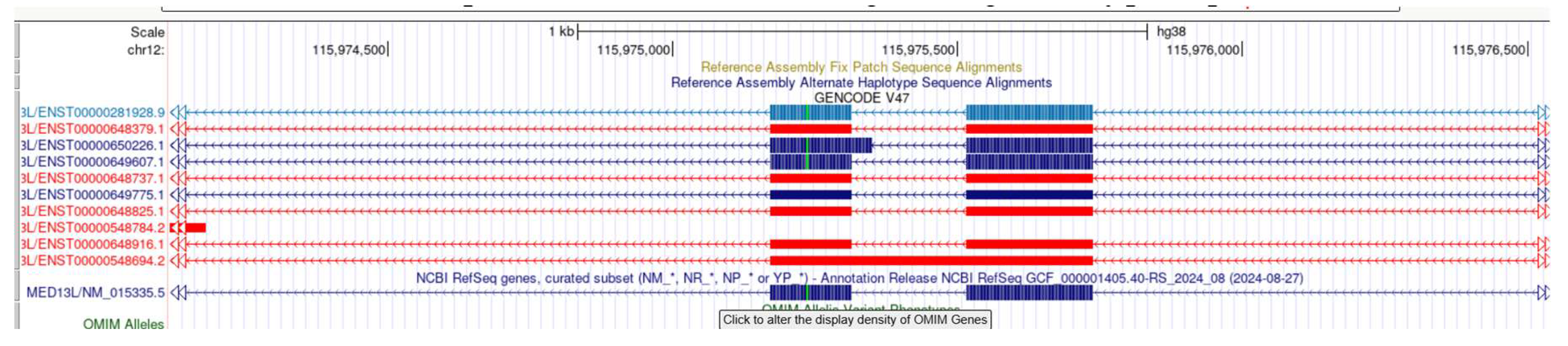
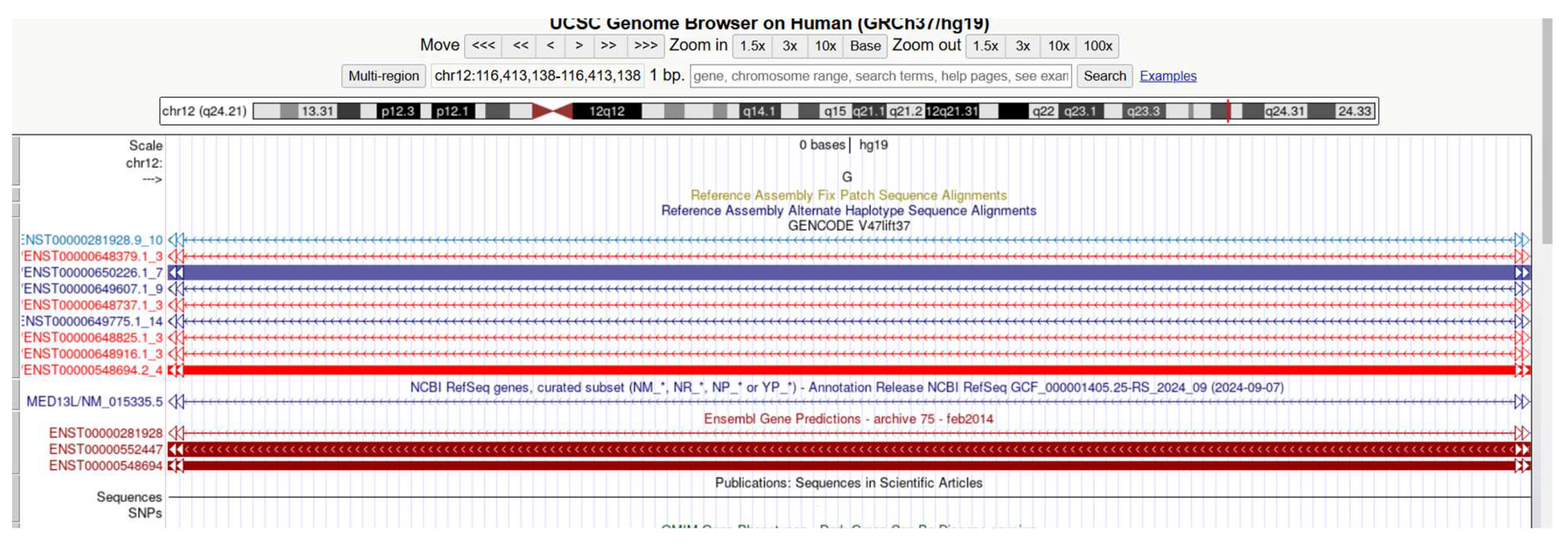
Figure 8.
The TRUB2 gene (left) and the COQ4 gene (right) are located in close proximity, as visualized using the UCSC Genome Browser for the human genome (GRCh38/hg38) (https://genome.ucsc.edu/).
Figure 8.
The TRUB2 gene (left) and the COQ4 gene (right) are located in close proximity, as visualized using the UCSC Genome Browser for the human genome (GRCh38/hg38) (https://genome.ucsc.edu/).

Table 1.
Overview of characteristics of patients relating to demography, phenotype and genotype.
| Patient number and variant type | Sex | Year of Birth |
Ethnicity | Cardiac manifestations | ID | Other manifestations | NGS analysis carried out | Mutation |
| Patient 1 -VUS | F | 2010 | Asian (Pakistani) | no | yes | no | Inheritance undetermined, only one parent sequenced | p.TR84ARG |
| Patient 2 -VUS | F | 2012 | White (British) | no | yes | no | Inheritance undetermined, only one parent sequenced | p.ASP811GLY |
| Patient 3 VUS | F | 2004 | Asian (Indian) | no | yes | no | Inheritance undetermined, only one parent sequenced | p.SER1582TYR |
| Patient 4 - VUS | M | 1998 | Mixed: White and Asian | Yes, other congenital malformations of aorta Q25.4 | yes | no | Inheritance undetermined, only one parent sequenced | Intronic variant |
| Patient 5 Likely pathogenic | F | 2013 | White (British) | no | yes | no | denovo | p.HIS489ARG |
| Patient 6 - Pathogenic | M | 2015 | Asian or Asian British (Indian) | Bradycardia | yes | no | denovo | p.PRO563GLN |
| Patient 7 – likely pathogenic | F | 2012 | British (White) | yes | no | denovo | p.GLU872LYS | |
| Patient 8 (from GrCh37) – Variant of Uncertain Significance | F | 2010 | British (White) | no | yes | no | Inheritance undetermined, only one parent sequenced | (deletion) |
| Patient 9 (from GrCh37) – Variant of Uncertain Significance | F | 2009 | British (White) | no | yes | no | Inheritance undetermined, parents not sequenced | p.GLY1957VAL |
Table 2.
Frequency of key clinical characteristics in the reported patients, patients in the study by Smol et al. and patients from previous studies [15]. The aforementioned features of the probands in my study are based on the patient descriptions found in the Participant Explorer; features that are not documented are neither considered present nor absent.
Table 2.
Frequency of key clinical characteristics in the reported patients, patients in the study by Smol et al. and patients from previous studies [15]. The aforementioned features of the probands in my study are based on the patient descriptions found in the Participant Explorer; features that are not documented are neither considered present nor absent.
| Clinical Feature | My Study (n=9) | Study by Smol et al. [15] | Previous Studies[15] |
| DD/ID | 8/8 (100% ) | 100% (36/36) | 100% (30/30) |
| Motor delay | 8/8 (100%) | 100% (36/36) | 100% (19/19) |
| Speech delay | 8/8 (100%) | 100% (36/36) | 100% (30/30) |
| Hypotonic open-mouth | Not measured by Genomics England | 78% (25/32) | 78% (14/18) |
| Hypotonia | 3/8 (37.5%) | 77% (26/34) | 62% (18/29) |
| Ataxia | 0/8 (0.00%) | 34% (11/32) | 32% (9/28) |
| Behavioral troubles | Not measured by Genomics England | 31% (10/32) | 32% (6/19) |
| CHD | 1 (intronic variant | 11% (3/27) | 24% (6/25) |
| Autistic features | 3/8 (37.5%) | 34% (10/29) | 21% (6/29) |
| Seizures | 6/8 (75%) | 17% (6/35) | 14% (4/28) |
| Abnormal EEG | 1/8 (12.5%) | ||
| Abnormal growth parameters | 2/8 (25%) | ||
| Abnormal MRI | 1/8 (12.5%) | ||
| Facial features | |||
| Facial dysmorphism | 3/6 (37.5%) | ||
| Bulbous nasal tip | Bulbous nose 1/8 (12.5%) | 82% (27/33) | 74% (17/23) |
| Upslanting palpebral fissures | 0/8 (0.00%) | 34% (11/32) | 62% (15/23) |
| Bitemporal narrowing | 0/8 (0.00%) | ||
| Broad/prominent forehead | 0/8 (0.00%) | ||
| Cupid-bow upper lip | 58% (18/31) | ||
| Deep philtrum | 58% (18/31) | ||
| Depressed/flat nasal bridge | 0/8 (0.00%) | ||
| Horizontal eyebrows | 0/8 (0.00%) | ||
| Low set ears | 2/8 (25%) | ||
| Macrocephaly | 0/8 (0.00%) | ||
| Macroglossia | 0/8 (0.00%) | ||
| Microcephaly | 3/8 (37.5%) | ||
| Thin vermillion border | 52% (17/33) | ||
| Abnormal chin | 0/8 (0.00%) | ||
| Postnatal overweight | 1/8 (12.5%) | ||
| Postnatal underweight | 1/8 (12.5%) | ||
| Aggressive behavior | 0/8 (0.00%) |
Disclaimer/Publisher’s Note: The statements, opinions and data contained in all publications are solely those of the individual author(s) and contributor(s) and not of MDPI and/or the editor(s). MDPI and/or the editor(s) disclaim responsibility for any injury to people or property resulting from any ideas, methods, instructions or products referred to in the content. |
© 2026 by the authors. Licensee MDPI, Basel, Switzerland. This article is an open access article distributed under the terms and conditions of the Creative Commons Attribution (CC BY) license (http://creativecommons.org/licenses/by/4.0/).
Copyright: This open access article is published under a Creative Commons CC BY 4.0 license, which permit the free download, distribution, and reuse, provided that the author and preprint are cited in any reuse.


