

Submitted:
01 April 2026
Posted:
02 April 2026
You are already at the latest version
Abstract
Pediatric brain tumours are highly prevalent and remain one of the leading causes of cancer-related deaths in children. There are numerous different brain tumour types that are now well characterized by magnetic resonance imaging (MRI), patient clinical course, neuropathological and molecular genetic alterations. One of the challenges with treating pediatric brain tumours with systemic chemotherapy is the inability of several chemotherapeutic agents to cross the blood brain barrier (BBB) which serves as a protective mechanism for neuronal homeostasis. The BBB is primarily comprised of microvascular endothelial tight junctions. Controlling BBB permeability to allow for therapeutics to cross and combat brain tumors is now possible using MR-guided Focused Ultrasound (MRgFUS). In this approach, microbubbles are administered intra-venously prior to MRgFUS BBB disruption at the targeted tumour site in the brain. In the presence of MRgFUS, the microbubbles in the brain capillaries oscillate, and temporarily disrupt the BBB enabling systemically administered chemotherapy drugs to cross at the targeted site. In this review, we provide evidence supporting the use of MRgFUS BBB disruption to treat brain tumours in animal models, and in on-going human clinical drug trials. We conclude with efforts to harness the potency of the immune system using MRgFUS against pediatric brain tumours.
Keywords:
blood brain barrier
; magnetic resonance imaging
; tumor immune microenvironment
; glioma
; medulloblastoma
; focused ultrasound
1. Introduction: Therapeutic Barriers in Pediatric Brain Tumours
The clinical burden of pediatric brain tumours accounts for approximately 23% of new childhood cancer cases under the age of 15 in Canada alone, and the most common cancer related mortality in children under 14 years of age in the United States, at an incidence rate of approximately 2.70 and 3.03 per 100,000 in Canada and the United States respectively [1,2]. Despite advances in the treatment of central nervous system (CNS) tumours, systemic therapies frequently fail due to the restrictive properties of the blood brain barrier (BBB) and a heterogeneous tumour immune microenvironment (TME). The BBB is a selective protective mechanism that controls the delivery of molecules from blood to the brain and maintains CNS homeostasis [3]. However, this protective mechanism also limits the delivery of systemically administered therapeutics to the brain. The blood brain tumour barrier (BBTB) refers to the often more permeable or “leaky”, BBB, caused from new blood vessels and malignant glioma tissue, located in the core of the tumour [4,5]. There are physical and metabolic barriers in the BBTB [5]. The tight junctions between the microvascular endothelial cells produce the physical barrier while the drug efflux transporters and endosomal sorting processes produce the metabolic barrier [4]. Additionally, the barrier is surrounded by astrocytes, oligodendrocytes and pericytes, all interconnected with neurons and microglia [4,5]. The microenvironment of the BBTB consists of cell chemokines, growth factors and proteolytic enzymes, all favoring tumor proliferation, invasion, adhesion, angiogenesis, and chemotherapy resistance [5]. Therefore, the structural and functional heterogeneity of the BBTB and the microenvironment are strong factors that determine immunotherapeutic function.
1.1. Knowledge and Therapeutic Opportunies for Pediatric Brain Tumours
Advances in genomic and epigenomic profiling have recognized distinct molecular subgroups across pediatric brain tumours, including medulloblastoma, ependymoma, and glioma [6,7]. These tumours differ from each other from their molecular drivers and their BBB integrity, which influences their therapeutic response. Classifying and understanding these tumours based on their features is critical for designing rational delivery strategies for emerging immunotherapies. Magnetic resonance-guided focused ultrasound (MRgFUS) has emerged as a non-invasive approach capable of transiently opening the BBB while simultaneously modulating the TME. This review synthesizes current knowledge on the BBB/BBTB heterogeneity across the five major pediatric brain tumour groups and discusses how MRgFUS-mediated BBB disruption may enhance immunotherapeutic delivery and modify tumour immune microenvironments. We conclude with discussing combination strategies with MRgFUS that can be used for specific tumours based on their TME composition and the need for individual patient stratification.
2. The Blood Brain Barrier , Blood Brain Tumour Barrier and Tumour Immune Microenvironment in Pediatric Brain Tumours
In the presence of a tumour, the BBB architecture becomes disrupted due to abnormal vasculature, altered endothelial signaling, and elevated interstitial pressure [5]. The BBB may become compromised, leading to dysfunctional permeability and difficulty in managing immunotherapeutic treatment.
The TME represents a complex, immunosuppressive ecosystem, diversified with immune cell types, cancer cells, endothelial cells, adipocytes and neurons [8]. The myeloid composition varies extensively from the location of the tumour, tumour type and tumour subtype [8]. Notably, pediatric and adult brain tumours exhibit marked differences in TME composition and their baseline effector immune cell populations [9,10]. These differences may be influenced from age-dependent processes in the CNS influencing microglial populations, as microglia exhibit heightened neurodevelopmental activity, such as pruning neuronal networks and modulating astrocytes as the immune system is developing [10,11]. Researchers have begun to classify brain tumours based on their proteomic immune signatures. For example, low grade gliomas and high-grade gliomas are characterized by the presence of macrophages, microglia, and dendritic cells; craniopharyngiomas are characterized by PD-1 and CTLA-4 expression; and ependymomas and medulloblastomas being characterized by lower immune infiltration [12].
The immunosuppression of the TME is caused by the release of immunosuppressive molecules such as IL-10, M2-like tumour associated macrophages (TAMs), and the overexpression of programmed death ligand 1 (PD-L1), leading to a definitive TME structure that influences the antitumor immune responses [13]. Collectively, the heterogeneity of tumors regarding their BBB integrity, myeloid polarization state, and baseline T cell composition, influence the rational selection of immunotherapeutic strategies [9,10]. We have summarized these defining features within the five common pediatric brain tumours and their subtypes including, medulloblastoma, diffuse midline glioma, ependymoma, craniopharyngioma, and low-grade glioma.
2.1. Tumour Specific BBB/BBTB Heterogeneity and their TME Baseline Composition
Medulloblastoma. This is the most common malignant childhood brain tumor, accounting for approximately 15% of all pediatric brain tumours [14,15] and includes the following four subgroups: Wingless-related integration site (WNT), Sonic Hedgehog (SHH), Group 3 and Group 4 medulloblastomas [14,15]. Within the four subtypes, SHH and Group 4 have an intact BBB, WNT has a leaky BBB, and group 3 has a mildly disrupted BBB [14,15]. The leaky BBB status of the WNT subtype permits the immunotherapeutic systemic delivery into the tumour tissue, typically resulting in a survival benefit as opposed to the other three medulloblastoma subtypes, and less of a requirement for MRgFUS-mediated BBB disruption [4].
Medulloblastoma is characterized by low levels of proinflammatory cytokines and T-cell infiltration, suggesting an immunosuppressive TME [16,17]. Within the SHH and WNT subtype, the TME is characterized by a predominance of TAMs such as microglia and macrophages, whereas groups 3 and 4 have a higher expression of CD8+ T-cells [10]. The SHH subgroup in particular exhibits more inflammatory cytokines than the other subgroups, whereas group 4 contains high levels of lymphocytes and neutrophil infiltration, with high expression of CD3+ T cells [17]. Overall, medulloblastomas express more M2-like macrophages than M1-like macrophages, few T-lymphocytes, and low PD-L1 expression which leads to tumour proliferation and invasion [10,18,19]
Diffuse Midline Glioma (DMG). A subset of DMG is diffuse intrinsic pontine glioma (DIPG), which is the leading cause of pediatric brain tumour deaths, accounting for 10% of all pediatric high-grade gliomas, and 80% of brainstem tumors [20,21]. DIPG has an intact BBB and a highly immunosuppressive TME, defined with higher M2-like TAMs to M1-like TAMs ratio expression [15,18]. Its non-inflammatory TME is further characterized by low inflammatory marker and cytokine expression, reduced CD3+ and CD8+ infiltrating T-cells, low mutational burden, and reduced antigen presentation [22,23,24,25].
Ependymoma. This is the third most common pediatric brain tumor, with four subtypes, two of which are in the posterior fossa and the other two in the supratentorial space [26,27,28]. Pediatric ependymomas have an intact BBB; however, within the supratentorial subtype, the BBB status is compromised [15,29]. Posterior fossa ependymomas have a low T cell tumour infiltration, and a low mutational burden, producing an immunosuppressive TME and is the most common ependymoma subtype to occur within pediatric patients [23,25,27,29]. Pediatric supratentorial ependymomas typically have a higher survival rate, as total gross surgical resection can be achieved, limiting the need for MRgFUS [30].
Craniopharyngioma. Pediatric adamantinomatous craniopharyngiomas (ACP) is the predominant form of craniopharyngioma in the pediatric population, and is defined by a compromised BBB, elevated inflammatory markers and immunomodulatory cytokines, such as IL-6 and IL-10 within the TME [15,31,32]. Craniopharyngiomas have a recurrence rate of 25%, with this rate being exacerbated in some ACP patients [33]. Interestingly, genomic profiling data showed that ACP tumours are stable throughout recurrence, with the activation of the MAPK pathway being the leading cause of recurrence [33]. Overall, research shows ACP tumours foster an immunosuppressive TME [33].
Low-grade Glioma. This group of common pediatric brain tumours include the diffuse low-grade glioma, with an intact BBB, and the pilocytic astrocytoma, featuring a compromised BBB [15,34]. According to one study, pilocytic astrocytoma has the highest degree of macrophage infiltration within the TME, and a highly activated M1-phenotype, which has increased inflammation leading to increased responsiveness to treatment [18] This tumor typically expresses a pro-inflammatory immune microenvironment, with the presence of T lymphocytes and an M1-phenotype [10]. The pediatric low-grade glioma fosters a moderately immunosuppressive TME, with reduced PD-L1 expression, high CD8+ T cell expression and CD163 macrophages [35].
3. Magnetic Resonance Guided Focused Ultrasound: Mechanisms of BBB Disruption
The biophysical mechanisms behind MRgFUS involve microbubble oscillation, mechanical stress on endothelial cells, tight junction disassembly, and increased transcytosis [36]. The microbubbles are injected intravenously and in the presence of low-intensity ultrasonic waves, oscillate, expanding and contracting, known as acoustic cavitation, to cause a temporary disruption of the BBB [4,37,38,39]. The absorbed ultrasound energy is transferred to the microbubbles, causing oscillation, which then achieves minimal observable normal tissue disruption [38]. The stress exertion on the endothelial cell wall, leading to a deformation of the cells for a temporary opening of the BBB, is caused from the acoustic pressures sufficient to induce stable microbubble cavitation [38]. Other molecular mechanisms behind temporary BBB disruption include the upregulation of caveolin-1, which leads to BBB permeability 1-hour post sonication. In addition, tight junction proteins such as occludin, claudin-1 and -5 are downregulated [38]. These mechanistic features of MRgFUS and intravenous microbubbles is a non-invasive technique, transmitting acoustic energy waves through the skull using ultrasonic transducers to target precise locations within the brain [39]. This opening of the BBB is temporary and allows for the targeted approach of therapeutics to the tumour region (Figure 1) [4,39].
The safety and reversibility of BBB opening have been studied extensively, enabling the implementation of MRgFUS device in clinical settings. The transient opening of the BBB lasts for approximately 6 hours, after which time the BBB restabilizes remaining fully impenetrable thereafter [38]. Additionally, in animal models and human patients, there have been no reports of behavioral alterations, or impaired cognition or motor skills post BBB opening [38]. The entry of neurotoxins via the BBB has not shown to exert adverse reactions, due to the activation of glial cells that can clear the components within the timeframe the BBB remains open [38]. MRgFUS overall has demonstrated to be a safe and reliable method for delivery of therapeutic reagents to CNS tumours [37,38].
3.1. MRgFUS BBB Disruption in Preclinical Animal Models
Preclinical studies demonstrate that MRgFUS-mediated BBB disruption significantly enhances intratumoral chemotherapy delivery and accumulation, translating to improved therapeutic efficacy and minimal toxic side effects in brain tumour models. Doxorubicin, a chemotherapeutic, is non-BBB penetrant. Delivering this drug via MRgFUS allows for the temporary disruption of the BBB and treatment of the targeted brain region [39]. A study using a DIPG mouse model that received a systemic injection of doxorubicin and microbubbles via MRgFUS led to an increased intratumoral concentration of the drug [39]. Cisplatin is another chemotherapeutic that is highly effective against several cancer types; however, nephrotoxicity and neurotoxicity are reported side effects in adult patients [40]. The use of MRgFUS with cisplatin has reduced some of its toxic side effects by controlling the delivery of the drug to targeted brain regions in mouse glioma models [40]. In a mouse model of glioblastoma (GBM), MRgFUS-mediated BBB opening with a systemic injection of etoposide increases the intratumoral concentration of this chemotherapeutic, that resulted in a concentration that was 8 times higher in brain tumour tissue than would be if not treated with the focused ultrasound [41].
Herceptin is a humanized monoclonal antibody, and has a molecular size of approximately 150 kDa, hindering its ability to cross the BBB [42]. MRgFUS-mediated transport of Herceptin across the BBB was a pivotal study demonstrating enhanced therapeutic delivery [42]. Notably, patients with brain cancer metastases from breast cancer have also benefitted from MRgFUS induced BBB disruption, as demonstrated from a HER2/neu positive breast cancer brain metastases brain study, in which patients received trastuzumab, a therapeutic agent that is effective against extracranial metastases, but has a large molecular weight otherwise precluding delivery [43].
Safety and efficacy of repeated MRgFUS-mediated BBB openings have also been evaluated in preclinical studies, as treating brain cancer tumours may require repeated MRgFUS sessions. Repeated BBB disruption was evaluated in rhesus macaques to determine the safety and efficacy of the procedure [44]. This study showed that repeated BBB disruption via MRgFUS produced no behavioral deficits, tissue damage, or visual functional deficits [44]. In a rat glioma model, it was demonstrated that the low-frequency ultrasound system reliably opened the BBB without any vascular injuries using three sessions per week [45]. Preliminary work on female Sprague Dawley rats demonstrated the safety and efficacy of opening the BBB using MRgFUS and microbubbles (MB) [46]. In this study, rats were tested for their motor function post treatment as well as observed for tissue damage through histological assessment of the brainstem to assess the feasibility of BBB opening, using the rotarod apparatus, and for their grip strength. As a prelude to treating DIPG in the brainstem, these researchers showed the efficacy of MRgFUS + MB + doxorubicin treatment [46]. They provided evidence that the most effective method of concentrating doxorubicin in the brainstem was using the combination of MRgFUS + MB + doxorubicin when compared to microbubbles alone, MRgFUS alone, and MRgFUS+ MB with no therapeutic agent [46].
Collectively, these studies establish a method to overcome heterogeneous BBB permeability, increase intratumoral chemotherapy concentrations, deliver large molecular agents, and in several models, reduce tumor burden and increase survival benefit. While the data on pediatric brain tumour models remain limited, the consistency of MRgFUS-mediated delivery of therapeutic agents across brain tumour models provides a strong translational rational for evaluating this methodology in the pediatric brain tumour population.
4. Immunomodulatory Effects of MRgFUS
4.1. The function of the tumor microenvironment:
MRgFUS not only enhances drug delivery but also can alter the TME through mechanical and inflammatory signaling pathways. Coined by Reardon and Antonio, the TME can be described as an immunologic desert, which can evade immunity [47]. The function of the TME is to protect the tumor cells and support their growth against the immune system, promoting metastasis, angiogenesis, acidic pH, and contributing to immunotherapy resistance [9]. This environment is sensitive and can change following MRgFUS treatment, promoting the transition from this immunologic desert, also termed immunologically “cold” tumor, to a more inflammatory or “hot” tumor [48]. This shift induces cellular responses such as increased TAMs and microglia and enables the probability of the microenvironment responding to Immune Checkpoint Inhibitors (ICIs) [48]. The combination of MRgFUS and ICIs, or MRgFUS + Chimeric Antigen Receptor (CAR) T cells, are strategies used in specific tumour cases and have shown to exert varying biochemical and mechanical effects that enable the transition from a cold to hot immune environment [9,24].
There is currently limited research examining the immunomodulatory effects from MRgFUS-induced BBB opening in pediatric brain tumors compared with adult brain tumors. Focused ultrasound technologies were initially developed for treatment of adult populations. Clinical use in pediatric patients received regulatory approval in 2020 [50]. As of 2025, only six studies have reported the use of transcranial focused ultrasound in pediatric patients [51], highlighting the early stage of clinical investigation in the pediatric population. Importantly, pediatric brain tumours differ biologically from adult brain tumours of the same histological subtype, including differences in the immune microenvironment. Pediatric brain tumours often exhibit an immunologically cold TME, characterized by a lack of immune cell infiltration [52–56]. Accordingly, the immunomodulatory effects induced by MRgFUS may differ from the observations seen in adult tumours and preclinical models.
Poor T cell infiltration and weak baseline immune activation, often contributing to immunotherapeutic resistance to ICIs, define immunologically cold tumours. Therapeutic strategies are needed to promote immune cell recruitment and activation, converting these tumours into a pro-inflammatory “hot state” characterized by high T cell infiltration, high interferon-γ signaling, strong antitumor immune response, and improved responsiveness to immunotherapeutic agents [54,55,57,58].
4.2. Converting Immunologically Cold Tumors to Immunologically Hot tumors: Biochemical and Mechanical Modulation of the TME
MRgFUS-mediated BBB opening induces cellular and tissue stress, which can lead to inflammation, increased microglia and macrophage expression [60]. An initial localized sterile inflammatory response (SIR), from the mechanical force of MRgFUS-mediated BBB opening, induces cytokine release, increases expression of localized adhesion molecules, enhances leukocyte recruitment, and endothelial activation [48,57,60]. An SIR can prime the TME for immune reactions and increased antigen exposure, supporting a shift to a more inflammatory TME [48,60]. Preclinical research has demonstrated this SIR activation in a glioblastoma animal model, increasing the expression of pro-inflammatory molecules such as astrocytes and microglia [48]. Changes to the interstitial fluid pressure within the tumour are also observed, improving tissue perfusion and immune cell motility [61]. The classification of myeloid cells and the baseline intrinsic composition of the TME can illustrate the response to MRgFUS-BBB opening [18,52,57,60]. Dendritic cells may also play a role in these responses, as the recruitment of these cells increases antigen presentation and can prime T cells to respond to tumour cells [18]. MRgFUS can release damage-associated molecular patterns (DAMPs), stimulating dendritic cell recruitment, and elevated responses in IL-1, IL-18, and TNFα [58]. MRgFUS promotes antigen presentation through the increased concentration of interferon-γ, decrease in IL-10, and the preservation of IL-4, TGF-β1, and TGF-β2. Preclinical models have also demonstrated increased expression of pro-inflammatory cytokines, and enhanced antigen presentation, shown through the maturation of dendritic cells [62].
Preclinical evidence in rat glioma models shows some support for MRgFUS immunomodulation. Interluekin-12 was delivered systemically (IL-12) in combination with MRgFUS to trigger an immune response against cancer cells [49]. MRgFUS surprisingly did not influence the T-lymphocyte population; however, increases in CD3+ and CD8+ occurred post MRgFUS exposure alone [49]. The combination of MRgFUS and IL-12 delivery produced the most significant increase of CD3+, CD8+ and regulatory T cells within the tumor region [49]. Interestingly, MRgFUS can be used for localized transcranial hyperthermia, a method used in a rodent glioblastoma model that demonstrated enhanced concentration and drug delivery in solid tumours [63]. This thermal stress reduces the interstitial fluid pressure in extracranial tumors, refines nanoparticle accumulation, and changes vessel permeability, altering the TME [63].
Therefore, MRgFUS can act as an effective modulator of the TME. Through both thermal and mechanical effects, MRgFUS can stimulate immune-related processes including the release of tumour antigens and inflammatory mediators [9,21]. These effects can trigger downstream biochemical signaling that influences TAMs and microglia, key regulators of the TME [9,21]. However, relatively few studies have investigated the intrinsic differences in the TME across tumor types, and how it influences the immunological responsiveness to MRgFUS [9].
4.3. Immune Checkpoint Inhibitors and MRgFUS Modulates the TME
The combination of immune checkpoint inhibitors (ICIs) and MRgFUS is a promising strategy to activate the immune system, enabling the elimination of tumour cells. The responsiveness of ICIs depends on the presence of pre-existing T cells within the TME, in which immunologically cold tumours such as medulloblastoma have a low baseline T-cell infiltration [10]. Under physiological conditions, checkpoint pathways such as PD-1/PD-L1 regulate CD8+ T cell-mediated immune responses and prevent autoimmunity [64]. This pathway is exploited by some tumours. To avoid immune-mediated clearance, the tumours will upregulate PD-1 leading to dysfunctional or ‘exhausted’ T-cells [64]. The PD-1/PD-L1 ICIs is the most often used cancer immunotherapy and has demonstrated effectiveness since the initial studies in 2014 [64]. The purpose of MRgFUS use is to achieve uniform ICI distribution within the restricted area of the tumour tissue [64,65]. In a rat glioma model, MRgFUS mediated the delivery of anti-PD-1, which resulted in the promotion of CD4+ T and CD8+ T cells [65]. Anti-PD1 was also delivered via MRgFUS in the GL261 mouse model of glioblastoma, with similar results, increasing proinflammatory molecules into the tumour region [60]. Research has also suggested closed-loop MRgFUS improves the penetration of ICIs in GL261 tumors and modifies the tumor immune microenvironment, by enabling the control of MB oscillation through acoustic emission feedback [60].
These findings support the notion that MRgFUS functions as a localized immune adjuvant treatment for brain tumours, exerting positive effects on the immune cell composition, converting the TME into a more permissive microenvironment to respond to ICIs [21,58]. It is important to note that a proportion of patients receiving ICI therapy immune-related adverse events, with reports suggesting that up to one-third of patients may experience toxic side effects [24]. MRgFUS may help mitigate these risks, by enhancing localized delivery of ICIs to brain tumours while limiting systemic exposure. MRgFUS may reduce off-target immune activation in surrounding tissues, as it enables spatially targeted therapeutic delivery.
4.4. Chimeric Antigen Receptor (CAR) T cell therapy and MRgFUS Modulates the TME
Perhaps the newest immunomodulatory technique is CAR T cell therapy. CAR T cells are genetically engineered T cells which respond to tumor antigens [66]. This novel technique allows each tumor and their genetic subtype to be targeted based on their antigenic expression [66]. This technique was developed in response to some cancers that can be unresponsive to ICI immunotherapies, due to their limited ICI expression within the TME, particularly in pediatric DMG [24]. The efficacy of CAR T cells also appears to modulate TAMs activity, successively modulating the TME [67]. There seems to be a required balance between proinflammatory and anti-inflammatory macrophages to prevent the failure of CAR T cells and their exhaustion [67]. The mechanism of ICIs to promote antitumor effects is to enhance the current antitumor immune activity within the TME, whereas CAR T cells are engineered to respond to a specific tumor antigen, without the need for an immune checkpoint pathway inhibition, and can function independently from the major histocompatibility complex (MHC) expression on tumour cells, thus directly affecting the tumor [68,69]. Figure 2 depicts the conversion of immunologically cold tumours into hot tumours following MRgFUS-mediated BBB disruption combined with either ICI therapy or CAR T cell therapy.
Although CAR T cells are activated ex vivo and recognize tumour antigens independently, they can become exhausted or suppressed from myeloid population within the TME [24]. There are some studies that suggest combining CAR T cells and ICIs will provide anti-tumor effects, as this can lead to reduced T-cell exhaustion [24]. Cytokine-armored CAR T cells can be engineered to secrete IL-12 and IL-18 to enhance antitumor immunity by promoting a pro-inflammatory microenvironment. These cytokines synergistically stimulate pro-inflammatory immune cells, such as T cells, NK cells and macrophages to produce IFN-γ, TNF-α, inhibited T-cell mediated suppression, and promote the polarization of TAMs toward an M1-like pro-inflammatory state, amplifying the anti-tumour responses [70,71]. Such IL-12/IL-18 armored CAR T strategies may be particularly advantageous in immunologically cold tumors such as diffuse midline glioma and medulloblastoma, where endogenous immune activation is limited.
Immune-effector cell-associated neurotoxicity syndrome (ICANS) is a recognized complication of CAR T cell therapy in pediatric patients [72,73]. The developing brain in pediatric patients normally expresses higher levels of pro-inflammatory cytokines, which leads to neuroinflammation and can impact the severity of CAR T cell-mediated ICANS [73]. Several limitations of CAR T cell therapy, including severe toxicities, suppressive TME interactions, restricted trafficking to tumour site, and antigen escape, can limit therapeutic efficacy [72–75]. MRgFUS has the potential to modulate these restrictions, by enhancing delivery and altering the TME. Importantly, CAR T cell therapy can function in TMEs with low endogenous T-cell expression, whereas ICIs typically rely on a pre-existing inflamed TME to achieve therapeutic efficacy. In addition, the tumor-associated extracellular matrix (ECM) represents a physical barrier that can restrict CAR T cell infiltration and activity in solid tumours [76]. Heat shock proteins, such as HSP47 and HSP90, contribute to ECM formation, in which MRgFUS has demonstrated to mediate the heat shock response, potentially influencing ECM structure to enhance CAR T cell infiltration [76,77].
Collectively, incorporating the specific tumor vasculature and immune cell populations into therapeutic stratification represents a critical determinant of immunotherapy success in pediatric neuro-oncology.
4.5. Case Specific Approaches to the Commom Pediatric Brain tumours
Pediatric patients present unique challenges compared with adults, due to several physiological differences, which include an increased risk of perioperative hypothermia from their low weight-to-surface-area ratio, thinner skull and cap structures, and reduced subcutaneous adipose tissue deposits [78]. Beyond these physiological considerations, important immunological differences also exist between pediatric and adult brain tumours. Recently, research has outlined T cell composition in common pediatric brain tumors, suggesting that immunotherapies that rely on the activation of pre-existing T cells in the TME, such as MRgFUS + ICIs therapy, may be less effective in the pediatric population as opposed to adults [29,57,79].
Immunotherapeutic strategies for medulloblastoma tumours are suggested through research showing that PD-1, PD-L1, and CTLA-4 antibodies have had effective results in the clinical pediatric population, except within the SHH subgroup, which possesses the highest PD-L1 expression of the four subtypes [79]. CAR T cell therapy may represent an alternative strategy, as it can bypass major histocompatibility complex (MHC) dependency of antigen presentation, directly target the tumour cells and enhance cytotoxic lymphocyte expression [11,17,19,75].
The DMG, particularly pediatric DMGs, often possess a cold TME, due to their lower levels of inflammatory marker expression and reduced CD 3+ infiltrating T-lymphocytes [22]. There have been preclinical and clinical studies that show little to no support for the efficacy of ICI therapy, including MRgFUS-enhanced delivery [24]. Contributing to the reduced efficacy is the lack of immune checkpoint proteins and increased immunosuppressive markers via microglia promotion [24]. Interestingly, a study that used B7-H3 CAR T cells found immunomodulatory effects within the TME, such that there was infiltration of tumor myeloid cells from the therapy, which reduces immunotherapy resistance [80].
Ependymoma RELA tumors demonstrate significantly higher PD-L1 expression compared to other ependymoma subtypes, suggesting an ICI over CAR T cell therapy [28]. However, one study showed that B7-H3-targeted CAR T cells were effective against treating both RELA and posterior fossa ependymomas, suggesting a personalized approach [80]. In ACP craniopharyngiomas, recent studies support an MRgFUS + ICI approach, as the tumour expresses PD-L1, PD1, and high levels of inflammatory markers [31,32]. Additionally, a clinical trial using Tocilizumab, an IL6 inhibitor, has shown enhanced benefit within ACP patients [33]. Finally, low-grade gliomas have lower CD8+ T cells and T cell trafficking, and a reduced PD-L1 expression, suggesting MRgFUS + CAR T cells may be the appropriate strategy [35].
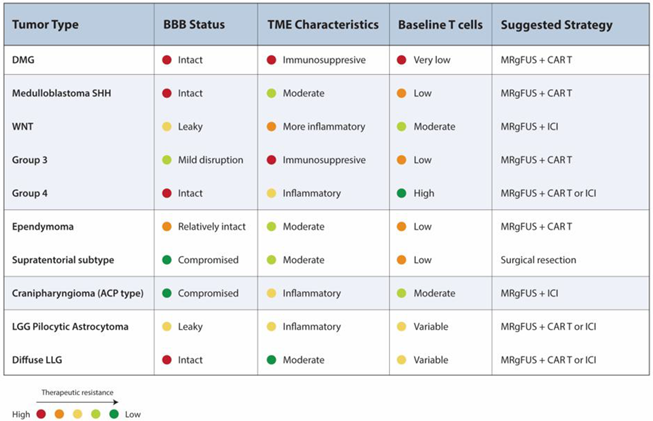
Table 1 summarizes the case specific approaches to common pediatric brain tumours based on their BBB and TME characteristics.
5. Clinical Translation: Ongoing Trials and Pediatric Interpretation
Safety and feasibility of the MRgFUS BBB opening in patients were reported in a preliminary study recruiting a small sample size of five glioma patients [37]. This study showed that the BBB can be repeatedly opened, with no reports of dose-limiting toxicity [37]. This study served as the foundation for the targeted and safe, temporal BBB disruption through MRgFUS, along with systemically administered chemotherapy [36]. Meng et al. were the first to report clinical evidence of targeted monoclonal antibody delivery across the BBB via MRgFUS to treat human patients with epidermal growth factor receptor 2- positive breast cancer brain metastases [81]. Importantly, these researchers showed MRgFUS increases intratumoral concentration of trastuzumab, a chemotherapeutic, which can be applied to deep brain regions, such as the brain stem, cranial nerve nuclei, and cerebellum, offering a noninvasive adjunct approach for tumors located in surgically challenging regions. Additionally, BBB disruption was well tolerated in patients with no adverse side effects [81]. These results may serve as evidence that brain tumors that cannot be surgically resected, or do not respond to standard cancer treatments due to their location in the brain, may still benefit from MRgFUS BBB disruption to deliver therapeutic agents.
Current clinical trials investigating MRgFUS are exploring its potential to enhance the delivery of chemotherapeutics, such as temozolomide and carboplatin in glioblastoma patients [82]. MRgFUS-mediated BBB disruption is also being explored to facilitate the transport of plasma cell-free DNA from GBM tumours into the bloodstream, enabling the use of liquid biopsy for diagnostics and treatment monitoring [83]. Liquid biopsy is a diagnostic approach used to analyze the pathology of tumors, such as the cerebral spinal fluid, blood, circulating tumor DNA and cells [84]. It serves as a real-time monitor of the tumor molecular environment, its response to therapeutic treatment, and its progression [84]. A recent study reported that transient MRgFUS-mediated BBB opening can increase the sensitivity of liquid biopsy by enriching the signal of circulating brain-derived biomarkers [84]. Patients with grade IV glioblastoma were recruited to evaluate the application of MRgFUS-based liquid biopsy, by delivering therapeutics and collecting blood samples at the same time to evaluate biological changes of the TME, suggesting that tumors can be treated individually according to their respective histological markers [84].
6. Future Directions
It will be interesting to see if MRgFUS-mediated BBB opening can be used for a growing number of pediatric brain tumors; or whether its application should be reserved for select tumour subtypes and patient-specific characteristics. Certain tumours such as DMG (DIPG), and the SHH subtype of medulloblastoma often retain an intact BBB, limiting conventional chemotherapeutic approaches. MRgFUS is required to enhance localized drug delivery and improve intratumoral distribution. MRgFUS should not be viewed as a universal drug delivery platform, but as a modulatory tool whose application is tailored to tumor biology, vascular characteristics, and therapeutic goals.
Recent research has elucidated, using immune-oncology gene expression assays, significant heterogeneity within tumours of the same classification, particularly the composition of the TME [7]. Specifically, tumours that are recorded to possess an immunologically cold TME, for example DMG, were found to have extensive T-cell infiltrates and a strong PD-L1 positivity, suggesting that ICIs are a suitable option to treat certain patients with DMG [7]. This review highlights both preclinical and emerging clinical evidence supporting combination approaches involving MRgFUS, with ICIs or CAR T cell strategies. The selection between these approaches may depend on individual, rather than universal, tumour characteristics including BBB integrity and the immunogenic profile of the TME.
Acknowledgments
This work was supported by the Canadian Institutes of Health Research (CIHR), a Terry Fox Research Institute (TFRI) Program Project Award, Meagan Bebenek Foundation, the Wiley Foundation, and the ChadTough Foundation. We thank Stacey Krumholtz for assistance with the medical illustrations.
Abbreviations
The following abbreviations are used in this manuscript:
| ACP BBB BBTB CAR CNS DAMPs DIPG DMG GBM |
Adamantinomatous Craniopharyngiomas Blood Brain Barrier Blood Brain Tumour Barrier Chimeric Antigen Receptor Central Nervous System Damage Associated-Molecular patterns Diffuse Intrinsic Pontine Glioma Diffuse Midline Glioma Glioblastoma |
| ICI MRgFUS MHC MB NK PD-L1 SHH SIR TAMs TME WNT |
Immune Checkpoint Inhibitor Magnetic Resonance Imaging Guided Focused Ultrasound Major Histocompatibility Complex Microbubbles Natural Killer Programmed Death Ligand 1 Sonic Hedgehog Sterile Inflammatory Immune Response Tumour Associated Macrophages Tumour Immune Microenvironment Wingless-related integration site |
References
- Larouche, V.; Toupin, A. K.; Lalonde, B.; Simonyan, D.; Jabado, N.; Perreault, S. Incidence trends in pediatric central nervous system tumors in Canada: a 15 years report from Cancer and Young People in Canada: (CYP-C) registry. Neuro-oncology advances 2020, 2(1), vdaa012. [Google Scholar] [CrossRef]
- Ostrom, Quinn T; Price, Mackenzie; Neff, Corey; Cioffi, Gino; Waite, Kristin A; Kruchko, Carol; Barnholtz-Sloan, Jill S. CBTRUS Statistical Report: Primary Brain and Other Central Nervous System Tumors Diagnosed in the United States in 2016—2020. Neuro-Oncology 2023, Volume 25, Issue Supplement_4, Pages iv1–iv99. [Google Scholar] [CrossRef] [PubMed]
- Zhang, S.; Gan, L.; Cao, F.; Wang, H.; Gong, P.; Ma, C.; Lin, X. The barrier and interface mechanisms of the brain barrier, and brain drug delivery. Brain Research Bulletin 2022, 190, 69–83. [Google Scholar] [CrossRef] [PubMed]
- Arvanitis, C. D.; Ferraro, G. B.; Jain, R. K. The blood–brain barrier and blood–tumour barrier in brain tumours and metastases. Nature Reviews Cancer 2020, 20(1), 26–41. [Google Scholar] [CrossRef]
- Cui, J; Xu, Y; Tu, H; et al. Gather wisdom to overcome barriers: well-designed nano-drug delivery systems for treating gliomas. Acta Pharm Sin B 2022, 12(3), 1100–1125. [Google Scholar] [CrossRef]
- Glod, J.; Rahme, G.; Kaur, H.; Raabe, H.; Hwang, E.; Israel, E.M. Pediatric Brain Tumors: Current Knowledge and Therapeutic Opportunities. Journal of Pediatric Hematology/Oncology 2016, 38(4), 249–260. [Google Scholar] [CrossRef]
- Levine, A. B.; Nobre, L.; Das, A.; Milos, S.; Bianchi, V.; Johnson, M.; Hawkins, C. Immuno-oncologic profiling of pediatric brain tumors reveals major clinical significance of the tumor immune microenvironment. Nature Communications 2024, 15(1), 5790. [Google Scholar] [CrossRef] [PubMed]
- De Visser, K. E.; Joyce, J. A. The evolving tumor microenvironment: From cancer initiation to metastatic outgrowth. Cancer cell 2023, 41(3), 374–403. [Google Scholar] [CrossRef] [PubMed]
- Joiner, J.B.; Pylayeva-Gupta, Y.; Dayton, P.A. Focused Ultrasound for Immunomodulation of the Tumor Microenvironment. The Journal of Immunology 2020, Volume 205(Issue 9), 2327–2341. [Google Scholar] [CrossRef]
- du Chatinier, A.; Velilla, I. Q.; Meel, M. H.; Hoving, E. W.; Hulleman, E.; Metselaar, D. S. Microglia in pediatric brain tumors: The missing link to successful immunotherapy. Cell Reports Medicine 2023, 4(11). [Google Scholar] [CrossRef]
- Poggi, A; Reggiani, F; Azevedo, HS; Raffaghello, L; Pereira, RC. Medulloblastoma: biology and immunotherapy. Front Immunol 2025, 16, 1602930. [Google Scholar] [CrossRef] [PubMed] [PubMed Central]
- Petralia, F.; Tignor, N.; Reva, B.; Koptyra, M.; Chowdhury, S.; Rykunov, D.; Krek, A.; Ma, W.; Zhu, Y.; Ji, J. Integrated proteogenomic characterization across major histological types of pediatric brain cancer. Cell 2020, 183, 1962–1985.e1931. [Google Scholar] [CrossRef]
- Labani-Motlagh, A; Ashja-Mahdavi, M; Loskog, A. The Tumor Microenvironment: A Milieu Hindering and Obstructing Antitumor Immune Responses. Front. Immunol. 2020, 11, 940. [Google Scholar] [CrossRef]
- Phoenix, T. N.; Patmore, D. M.; Boop, S.; Boulos, N.; Jacus, M. O.; Patel, Y. T.; Roussel, M. F.; Finkelstein, D.; Goumnerova, L.; Perreault, S.; Wadhwa, E.; Cho, Y.-J.; Stewart, C. F.; Gilbertson, R. J. Medulloblastoma genotype dictates blood–brain barrier phenotype. Cancer Cell 2016, 29(4), 508–522. [Google Scholar] [CrossRef]
- Gao, Q; Song, D; Xu, D; Chai, X; Ge, M. Characteristics of the blood-brain barrier in pediatric brain tumors. Front Pediatr 2025, 13, 1646641. [Google Scholar] [CrossRef] [PubMed] [PubMed Central]
- Audi, Z. F.; Saker, Z.; Rizk, M.; Harati, H.; Fares, Y.; Bahmad, H. F.; Nabha, S. M. Immunosuppression in Medulloblastoma: Insights into Cancer Immunity and Immunotherapy: Immunosuppression in Medulloblastoma. Current Treatment Options in Oncology 2021, 22(9), 83. [Google Scholar] [CrossRef]
- Diao, S.; Gu, C.; Zhang, H.; Yu, C. Immune cell infiltration and cytokine secretion analysis reveal a non-inflammatory microenvironment of medulloblastoma. Oncology Letters 2020, 20(6), 397. [Google Scholar] [CrossRef]
- Kalathoor, S.; Rajendran, S.; Canella, A.; Raval, R.; Cripe, T. P.; Mardis, E. R.; Rajappa, P. Myeloid cell heterogeneity in the tumor microenvironment and therapeutic implications for childhood central nervous system (CNS) tumors. Journal of Neuroimmunology 2023, 374, 578009. [Google Scholar] [CrossRef] [PubMed]
- Vermeulen, J. F.; Van Hecke, W.; Adriaansen, E. J.; Jansen, M. K.; Bouma, R. G.; Villacorta Hidalgo, J.; Bovenschen, N. Prognostic relevance of tumor-infiltrating lymphocytes and immune checkpoints in pediatric medulloblastoma. Oncoimmunology 2018, 7(3), e1398877. [Google Scholar] [CrossRef]
- Shariff, N.; Moreno, A. S.; Bennett, J.; Ramaswamy, V.; Das, A.; Liu, A. P.; Tsang, D. S. Re-irradiation for children with diffuse intrinsic pontine glioma and diffuse midline glioma. Radiotherapy and Oncology 2025, 207, 110865. [Google Scholar] [CrossRef] [PubMed]
- Zhang, Y.; Wang, J.; Ghobadi, S. N.; Zhou, H.; Huang, A.; Gerosa, M.; Wintermark, M. Molecular identity changes of tumor-associated macrophages and microglia after magnetic resonance imaging–guided focused ultrasound–induced blood–brain barrier opening in a mouse glioblastoma model. Ultrasound in Medicine & Biology 2023, 49(5), 1082–1090. [Google Scholar] [CrossRef]
- Bernstock, JD; Hoffman, SE; Kappel, AD; Valdes, PA; Essayed, W; Klinger, NV; Kang, KD; Totsch, SK; Olsen, HE; Schlappi, CW; Filipski, K; Gessler, FA; Baird, L; Filbin, MG; Hashizume, R; Becher, OJ; Friedman, GK. Immunotherapy approaches for the treatment of diffuse midline gliomas. Oncoimmunology 2022, 11(1), 2124058. [Google Scholar] [CrossRef] [PubMed] [PubMed Central]
- Vetsika, E. K.; Katsianou, M. A.; Sarantis, P.; Palamaris, K.; Papavassiliou, A. G.; Piperi, C. Pediatric gliomas immunity challenges and immunotherapy advances. Cancer Letters 2025, 618, 217640. [Google Scholar] [CrossRef] [PubMed]
- Persson, M. L.; Douglas, A. M.; Alvaro, F.; Faridi, P.; Larsen, M. R.; Alonso, M. M.; Dun, M. D. The intrinsic and microenvironmental features of diffuse midline glioma: Implications for the development of effective immunotherapeutic treatment strategies. Neuro-oncology 2022, 24(9), 1408–1422. [Google Scholar] [CrossRef] [PubMed]
- LaBelle, J. J.; Haase, R. D.; Beck, A.; Haase, J.; Jiang, L.; de Biagi, C. A. O.; Filbin, M. G. Dissecting the immune landscape in pediatric high-grade glioma reveals cell state changes under therapeutic pressure. Cell Reports Medicine 2025, 6(5). [Google Scholar] [CrossRef]
- Upadhyaya, SA; Robinson, GW; Onar-Thomas, A; Orr, BA; Billups, CA; Bowers, DC; et al. Molecular grouping and outcomes of young children with newly diagnosed ependymoma treated on the multi-institutional SJYC07 trial. Neuro Oncol. 2019, 21, 1319–30. [Google Scholar] [CrossRef]
- Palermo, M.; Massimi, L.; Tamburrini, G.; et al. Algorithm-based assessment of T-cell dysfunction and exclusion to forecast ICB sensitivity in pediatric brain ependymoma. J Neurooncol 2026, 176, 128. [Google Scholar] [CrossRef]
- Witt, D.A.; Donson, A.M.; Amani, V.; Moreira, D.C.; Sanford, B.; Hoffman, L.M.; Handler, M.H.; Levy, J.M.M.; Jones, K.L.; Nellan, A.; et al. Specific expression of PD-L1 in RELA-fusion supratentorial ependymoma: Implications for PD-1-targeted therapy. Pediatr. Blood Cancer 2018, 65, e26960. [Google Scholar] [CrossRef]
- Nam, S. J.; Kim, Y. H.; Park, J. E.; Ra, Y. S.; Khang, S. K.; Cho, Y. H.; Sung, C. O. Tumor-infiltrating immune cell subpopulations and programmed death ligand 1 (PD-L1) expression associated with clinicopathological and prognostic parameters in ependymoma. Cancer Immunology, Immunotherapy 2019, 68(2), 305–318. [Google Scholar] [CrossRef]
- Alexiou, GA; Moschovi, M; Stefanaki, K; Panagopoulos, D; Tsotra, M; Siozos, G; Sfakianos, G; Prodromou, N. Supratentorial ependymomas in children: Analysis of nine cases. J Pediatr Neurosci. 2013, 8(1), 15–8. [Google Scholar] [CrossRef] [PubMed] [PubMed Central]
- Whelan, R; Prince, E; Gilani, A; Hankinson, T. The Inflammatory Milieu of Adamantinomatous Craniopharyngioma and Its Implications for Treatment. J Clin Med. 2020, 9(2), 519. [Google Scholar] [CrossRef] [PubMed] [PubMed Central]
- Coy, S.; Rashid, R.; Lin, J.R.; Du, Z.; Donson, A.M.; Hankinson, T.C.; Foreman, N.K.; Manley, P.E.; Kieran, M.W.; Reardon, D.A.; et al. Multiplexed immunofluorescence reveals potential PD-1/PD-L1 pathway vulnerabilities in craniopharyngioma. Neuro. Oncol. 2018, 20, 1101–1112. [Google Scholar] [CrossRef]
- Apps, J. R.; Gonzalez-Meljem, J. M.; Guiho, R.; Pickles, J. C.; Prince, E.; Schwalbe, E.; Martinez-Barbera, J. P. Recurrent adamantinomatous craniopharyngiomas show MAPK pathway activation, clonal evolution and rare TP53-loss-mediated malignant progression. Acta Neuropathologica Communications 2024, 12(1), 127. [Google Scholar] [CrossRef] [PubMed]
- Hong, CS; Ho, W; Piazza, MG; Ray-Chaudhury, A; Zhuang, Z; Heiss, JD. Characterization of the blood brain barrier in pediatric central nervous system neoplasms. J Interdiscip Histopathol. 2016, 4(2), 29–33. [Google Scholar] [CrossRef] [PubMed] [PubMed Central]
- Ahamed, Cheyenne; Nguyen, Lam; Brock, Cayley S; Farzamnia, Ayla; Millet, Pierrick; Sato, Keisaku; Kumar, Kevin K. Targeting the tumor microenvironment in pediatric gliomas: Advances and future directions in immunotherapy. Neuro-Oncology Advances 2025, Volume 7(Issue 1), vdaf193. [Google Scholar] [CrossRef]
- Hynynen, K.; McDannold, N.; Vykhodtseva, N.; Jolesz, F.A. Noninvasive MR imaging–guided focal opening of the blood-brain barrier in rabbits. Radiology 2001, 220(3), 640–646. [Google Scholar] [CrossRef]
- Mainprize, T.; Lipsman, N.; Huang, Y.; Meng, Y.; Bethune, A.; Ironside, S.; Hynynen, K. Blood-brain barrier opening in primary brain tumors with non-invasive MR-guided focused ultrasound: a clinical safety and feasibility study. Scientific reports 2019, 9(1), 321. [Google Scholar] [CrossRef]
- Burgess, A.; Hynynen, K. Noninvasive and targeted drug delivery to the brain using focused ultrasound. ACS chemical neuroscience 2013, 4(4), 519–526. [Google Scholar] [CrossRef]
- Ishida, J.; Alli, S.; Bondoc, A.; Golbourn, B.; Sabha, N.; Mikloska, K.; Rutka, J. MRI-guided focused ultrasound enhances drug delivery in experimental diffuse intrinsic pontine glioma. Journal of Controlled Release 2021, 330, 1034–1045. [Google Scholar] [CrossRef] [PubMed]
- Timbie, K. F.; Afzal, U.; Date, A.; Zhang, C.; Song, J.; Miller, G. W.; Price, R. J. MR image-guided delivery of cisplatin-loaded brain-penetrating nanoparticles to invasive glioma with focused ultrasound. Journal of Controlled Release 2017, 263, 120–131. [Google Scholar] [CrossRef] [PubMed]
- Wei, H. J.; Upadhyayula, P. S.; Pouliopoulos, A. N.; Englander, Z. K.; Zhang, X.; Jan, C. I.; Wu, C. C. Focused ultrasound-mediated blood-brain barrier opening increases delivery and efficacy of etoposide for glioblastoma treatment. International Journal of Radiation Oncology* Biology* Physics 2021, 110(2), 539–550. [Google Scholar] [CrossRef]
- Kinoshita, M; Mcdannold, N; Jolesz, FA; Hynynen, K. Noninvasive localized delivery of herceptin to the mouse brain by MRI-guided focused ultrasound-induced blood–brain barrier disruption Delivery of monoclonal antibody Herceptin to the mouse brain by using US technique to open the BBB is demonstrated. Proc Natl Acad Sci USA 2006, 103(31), 11719–11723. [Google Scholar] [CrossRef] [PubMed]
- Park, E. J.; Zhang, Y. Z.; Vykhodtseva, N.; McDannold, N. Ultrasound-mediated blood-brain/blood-tumor barrier disruption improves outcomes with trastuzumab in a breast cancer brain metastasis model. Journal of Controlled Release 2012, 163(3), 277–284. [Google Scholar] [CrossRef]
- McDannold, N.; Arvanitis, C.D.; Vykhodtseva, N.; Livingstone, M.S. Temporary disruption of the blood-brain barrier by use of ultrasound and microbubbles: safety and efficacy evaluation in rhesus macaques. Cancer Res. 2012, 72, 3652–3663. [Google Scholar] [CrossRef]
- McDannold, N.; Zhang, Y.; Supko, J. G.; Power, C.; Sun, T.; Vykhodtseva, N.; Reardon, D. A. Blood-brain barrier disruption and delivery of irinotecan in a rat model using a clinical transcranial MRI-guided focused ultrasound system. Scientific Reports 2020, 10(1), 8766. [Google Scholar] [CrossRef] [PubMed]
- Alli, S.; Figueiredo, C. A.; Golbourn, B.; Sabha, N.; Wu, M. Y.; Bondoc, A.; Rutka, J. T. Brainstem blood brain barrier disruption using focused ultrasound: A demonstration of feasibility and enhanced doxorubicin delivery. Journal of controlled release 2018, 281, 29–41. [Google Scholar] [CrossRef] [PubMed]
- Reardon, DA; Antonio, CE. Immunotherapy for glioblastoma: On the sidelines or in the game? Discov Med 2017, 24(133), 201–208. [Google Scholar]
- Chen, H.; Koul, D.; Zhang, Y.; et al. Pulsed focused ultrasound alters the proteomic profile of the tumor microenvironment in a syngeneic mouse model of glioblastoma. J Neurooncol 2024, 170, 347–361. [Google Scholar] [CrossRef]
- Chen, PY; Hsieh, HY; Huang, CY; Lin, CY; Wei, KC; Liu, HL. Focused ultrasound-induced blood-brain barrier opening to enhance interleukin-12 delivery for brain tumor immunotherapy: a preclinical feasibility study. J Transl Med. 2015, 13, 93. [Google Scholar] [CrossRef] [PubMed] [PubMed Central]
- Kleinknecht, S.; Fox, K.; Tsitsos, F.; Zacharoulis, S. Focused Ultrasound (FUS) and Pediatric Brain Tumors: Current Status and Future Directions. Applied Sciences 2025, 15(21), 11322. [Google Scholar] [CrossRef]
- Hersh, A. M.; Jillala, R.; Kramer, P.; Keating, R. F.; Syed, H. R.; Oluigbo, C. O.; Hersh, D. S. Focused ultrasound in pediatric neurosurgery: a scoping review of opportunities and challenges. Child's Nervous System 2025, 41(1), 210. [Google Scholar] [CrossRef]
- Grabovska, Y.; Mackay, A.; O’Hare, P.; Crosier, S.; Finetti, M.; Schwalbe, E. C.; Williamson, D. Pediatric pan-central nervous system tumor analysis of immune-cell infiltration identifies correlates of antitumor immunity. Nature communications 2020, 11(1), 4324. [Google Scholar] [CrossRef]
- Wu, CC; Szalontay, L; Pouliopoulos, AN; Bae, S; Berg, X; Wei, HJ; Webster Carrion, A; Kokossis, D; Sethi, C; Fino, J; Shatravka, H; Lipina, J; Ji, R; Liu, K; Yousefian, O; Gallitto, M; Yoh, N; Englander, Z; McQuillan, N; Tazhibi, M; De Los Santos, G; Canoll, P; Jin, Z; Garvin, J; Gartrell, RD; Pavisic, J; Maddocks, A; Lignelli, A; Feldstein, N; Konofagou, EE; Zacharoulis, S. Blood-brain barrier opening with neuronavigation-guided focused ultrasound in pediatric patients with diffuse midline glioma. Sci Transl Med. 2025, 17(824), eadq6645. [Google Scholar] [CrossRef] [PubMed]
- Abedalthagafi, M.; Mobark, N.; Al-Rashed, M.; et al. Epigenomics and immunotherapeutic advances in pediatric brain tumors. npj Precis. Onc. 2021, 5, 34. [Google Scholar] [CrossRef] [PubMed]
- Liu, Y. T.; Sun, Z. J. Turning cold tumors into hot tumors by improving T-cell infiltration. Theranostics 2021, 11(11), 5365. [Google Scholar] [CrossRef]
- Gomez-Roca, C; et al. Anti-CSF-1R emactuzumab in combination with anti-PD-L1 atezolizumab in advanced solid tumor patients naïve or experienced for immune checkpoint blockade. J Immunother Cancer 2022, 10(5), e004076. [Google Scholar] [CrossRef]
- Cao, L; Xie, W; Ma, W; Zhao, H; Wang, J; Liang, Z; Tian, S; Wang, B; Ma, J. The unique immune ecosystems in pediatric brain tumors: integrating single-cell and bulk RNA-sequencing. Front Immunol. 2023, 14, 1238684. [Google Scholar] [CrossRef] [PubMed] [PubMed Central]
- Kovacs, ZI; Burks, SR; Frank, JA. Focused ultrasound with microbubbles induces sterile inflammatory response proportional to the blood brain barrier opening: Attention to experimental conditions. Theranostics 2018, 8(8), 2245–2248. [Google Scholar] [CrossRef] [PubMed] [PubMed Central]
- Kovacs, Z. I.; Kim, S.; Jikaria, N.; Qureshi, F.; Milo, B.; Lewis, B. K.; Frank, J. A. Disrupting the blood–brain barrier by focused ultrasound induces sterile inflammation. Proceedings of the National Academy of Sciences 2017, 114(1), E75–E84. Available online: http://www.pnas.org/cgi/doi/10.1073/pnas.1614777114. [CrossRef]
- Lee, H; Guo, Y; Ross, JL; Schoen, S, Jr.; Degertekin, FL; Arvanitis, C. Spatially tar- geted brain cancer immunotherapy with closed-loop controlled focused ultrasound and immune checkpoint blockade. Sci Adv. 2022, 8, eadd2288. [Google Scholar] [CrossRef]
- Mohammadabadi, A.; Huynh, R. N.; Wadajkar, A. S.; Lapidus, R. G.; Kim, A. J.; Raub, C. B.; Frenkel, V. Pulsed focused ultrasound lowers interstitial fluid pressure and increases nanoparticle delivery and penetration in head and neck squamous cell carcinoma xenograft tumors. Physics in Medicine & Biology 2020, 65(12), 125017. [Google Scholar] [CrossRef]
- Curley, C. T.; Stevens, A. D.; Mathew, A. S.; Stasiak, K.; Garrison, W. J.; Miller, G. W.; Price, R. J. Immunomodulation of intracranial melanoma in response to blood-tumor barrier opening with focused ultrasound. Theranostics 2020, 10(19), 8821. [Google Scholar] [CrossRef]
- Kim, C.; Guo, Y.; Velalopoulou, A.; Leisen, J.; Motamarry, A.; Ramajayam, K.; Arvanitis, C. D. Closed-loop trans-skull ultrasound hyperthermia leads to improved drug delivery from thermosensitive drugs and promotes changes in vascular transport dynamics in brain tumors. Theranostics 2021, 11(15), 7276. [Google Scholar] [CrossRef]
- Hoshi, R.; Gorospe, K. A.; Labouta, H. I.; Azad, T.; Lee, W. L.; Thu, K. L. Alternative strategies for delivering immunotherapeutics targeting the PD-1/PD-L1 immune checkpoint in cancer. Pharmaceutics 2024, 16(9), 1181. [Google Scholar] [CrossRef]
- Shan, H; Zheng, G; Bao, S; Yang, H; Shrestha, UD; Li, G; Duan, X; Du, X; Ke, T; Liao, C. Tumor perfusion enhancement by focus ultrasound-induced blood-brain barrier opening to potentiate anti-PD-1 immunotherapy of glioma. Transl Oncol. 2024, 49, 102115. [Google Scholar] [CrossRef] [PubMed] [PubMed Central]
- Vitanza, NA; Choe, M; Brown, C; Beebe, A; Kong, A; Rogers, L; Jacob, S; Mano, E; Abuan, K; Mgebroff, S; Lindgren, C; Gustafson, JA; Wilson, AL; Noll, A; Ronsley, R; Crotty, EE; Leary, SES; Foster, JB; Pinto, N; Gust, J; Gardner, RA; Park, JR; Jensen, MC. Locoregional CAR T Cells for the Treatment of CNS Tumors in Children: Investigational Drug Service Pharmacy Activities. J Hematol Oncol Pharm. 2024, 14(4), 148–154. [Google Scholar] [PubMed] [PubMed Central]
- Haydar, D.; Ibañez-Vega, J.; Crawford, J. C.; Chou, C. H.; Guy, C. S.; Meehl, M.; Krenciute, G. CAR T-cell design-dependent remodeling of the brain tumor immune microenvironment modulates tumor-associated macrophages and anti-glioma activity. Cancer Research Communications 2023, 3(12), 2430–2446. [Google Scholar] [CrossRef]
- Yu, C.; Hsieh, K.; Cherry, D. R.; Nehlsen, A. D.; Resende Salgado, L.; Lazarev, S.; Sindhu, K. K. Immune escape in glioblastoma: mechanisms of action and implications for immune checkpoint inhibitors and CAR T-cell therapy. Biology 2023, 12(12), 1528. [Google Scholar] [CrossRef] [PubMed]
- Chmielewski, M.; Hombach, A. A.; Abken, H. Antigen-specific T-cell activation independently of the MHC: chimeric antigen receptor-redirected T cells. Frontiers in immunology 2013, 4, 371. [Google Scholar] [CrossRef] [PubMed]
- Yeku, O.O.; Purdon, T.J.; Koneru, M.; et al. Armored CAR T cells enhance antitumor efficacy and overcome the tumor microenvironment. Sci Rep 2017, 7, 10541. [Google Scholar] [CrossRef] [PubMed]
- Widowati, W; Jasaputra, DK; Sumitro, SB; Widodo, MA; Mozef, T; Rizal, R; Kusuma, HSW; Laksmitawati, DR; Murti, H; Bachtiar, I; Faried, A. Effect of interleukins (IL-2, IL-15, IL-18) on receptors activation and cytotoxic activity of natural killer cells in breast cancer cell. Afr Health Sci. 2020, 20(2), 822–832. [Google Scholar] [CrossRef] [PubMed] [PubMed Central]
- Gust, J; Ponce, R; Liles, WC; Garden, GA; Turtle, CJ. Cytokines in CAR T Cell–Associated Neurotoxicity. Front. Immunol. 2020, 11, 577027. [Google Scholar] [CrossRef]
- Ferro, D.; Capelli, V.; Tozzi, A. E.; Del Baldo, G.; Mastronuzzi, A. Central nervous system immunological complications of immunotherapy in pediatrics. Expert Review of Clinical Immunology 2025, 21(11), 1615–1624. [Google Scholar] [CrossRef] [PubMed]
- Sterner, R.C.; Sterner, R.M. CAR-T cell therapy: current limitations and potential strategies. Blood Cancer J. 2021, 11, 69. [Google Scholar] [CrossRef] [PubMed]
- Voskamp, MJ; Li, S; van Daalen, KR; Crnko, S; Ten Broeke, T; Bovenschen, N. Immunotherapy in Medulloblastoma: Current State of Research, Challenges, and Future Perspectives. Cancers (Basel) 2021, 13(21), 5387. [Google Scholar] [CrossRef] [PubMed] [PubMed Central]
- Klabukov, I.; Kabakov, A. E.; Yakimova, A.; Baranovskii, D.; Sosin, D.; Atiakshin, D.; Kaprin, A. D. Tumor-associated extracellular matrix obstacles for CAR-T cell therapy: approaches to overcoming. Current Oncology 2025, 32(2), 79. [Google Scholar] [CrossRef]
- Seasons, G. M.; Pellow, C.; Kuipers, H. F.; Pike, G. B. Ultrasound and neuroinflammation: immune modulation via the heat shock response. Theranostics 2024, 14(8), 3150. [Google Scholar] [CrossRef]
- Keating, G. F.; Chesney, K. M.; Patel, N.; Kilburn, L.; Fonseca, A.; Packer, R. J.; Syed, H. R. MR-guided focused ultrasound in pediatric neurosurgery: current insights, technical challenges, and lessons learned from 45 treatments at Children’s National Hospital. Neurosurgical focus 2024, 57(3), E6. [Google Scholar] [CrossRef]
- Marques, RF; Moreno, DA; da Silva, L; Leal, LF; de Paula, FE; Santana, I; Teixeira, G; Saggioro, F; Neder, L; Junior, CA; Mançano, B; Reis, RM. Digital expression profile of immune checkpoint genes in medulloblastomas identifies CD24 and CD276 as putative immunotherapy targets. Front Immunol. 2023, 14, 1062856. [Google Scholar] [CrossRef] [PubMed] [PubMed Central]
- Mehta, S; Ippagunta, S; Varadharajan, S; Kardian, A; Laboe, N; Dinh, D; Jones, AB; Meehl, MM; Ibañez, J; Emanus, E; Dao, T; Ward, MB; Orisme, W; Lange, S; Langfitt, D; Steinberg, J; Chiang, J; Vogel, P; Sheppard, H; Ellison, DW; Mack, SC; Krenciute, G. B7-H3 CAR T Cells Are Effective against Ependymomas but Limited by Tumor Size and Immune Response. Clin Cancer Res. 2025, 31(17), 3754–3770. [Google Scholar] [CrossRef] [PubMed] [PubMed Central]
- Meng, Y.; Reilly, R. M.; Pezo, R. C.; Trudeau, M.; Sahgal, A.; Singnurkar, A.; Lipsman, N. MR-guided focused ultrasound enhances delivery of trastuzumab to Her2-positive brain metastases. Science translational medicine 2021, 13(615), eabj4011. [Google Scholar] [CrossRef] [PubMed]
- Holman, R.; McDannold, N. Identifying new therapeutics for focused ultrasound-enhanced drug delivery in the management of glioblastoma. Frontiers in oncology 2025, 15, 1507940. [Google Scholar] [CrossRef]
- Young, J. S.; Semonche, A.; Morshed, R. A.; Al-Adli, N. N.; Haddad, A. F.; Gerritsen, J. K.; Aghi, M. K. Focused ultrasound therapy as a strategy for improving glioma treatment. Journal of Neurosurgery 2025, 142(6), 1635–1644. [Google Scholar] [CrossRef] [PubMed]
- Meng, Y.; Pople, C. B.; Suppiah, S.; Llinas, M.; Huang, Y.; Sahgal, A.; Lipsman, N. MR-guided focused ultrasound liquid biopsy enriches circulating biomarkers in patients with brain tumors. Neuro-oncology 2021, 23(10), 1789–1797. [Google Scholar] [CrossRef] [PubMed]
Figure 1.
A focused ultrasound transducer is positioned over the patient’s head within the MRI patient table. (a) Microbubbles are administered intravenously along with selected immunotherapy. (b) Intracranial region is sonicated; MRI-guided focused ultrasound (MRgFUS) allows real-time image guidance and precise targeting of acoustic energy waves. (c) Upon sonication, the microbubbles interact with the ultrasonic field. At the microvascular level, microbubbles oscillate in the presence of ultrasonic waves, inducing mechanical stress on the endothelial cell wall, resulting in the temporary and localized BBB disruption. This process is associated with the upregulation of caveolin-1, a key regulator in BBB permeability, and the downregulation of tight junction proteins, including occludin, claudin-1 and -5. Collectively, this process increases BBB permeability, resolving within hours post sonication. .
Figure 1.
A focused ultrasound transducer is positioned over the patient’s head within the MRI patient table. (a) Microbubbles are administered intravenously along with selected immunotherapy. (b) Intracranial region is sonicated; MRI-guided focused ultrasound (MRgFUS) allows real-time image guidance and precise targeting of acoustic energy waves. (c) Upon sonication, the microbubbles interact with the ultrasonic field. At the microvascular level, microbubbles oscillate in the presence of ultrasonic waves, inducing mechanical stress on the endothelial cell wall, resulting in the temporary and localized BBB disruption. This process is associated with the upregulation of caveolin-1, a key regulator in BBB permeability, and the downregulation of tight junction proteins, including occludin, claudin-1 and -5. Collectively, this process increases BBB permeability, resolving within hours post sonication. .
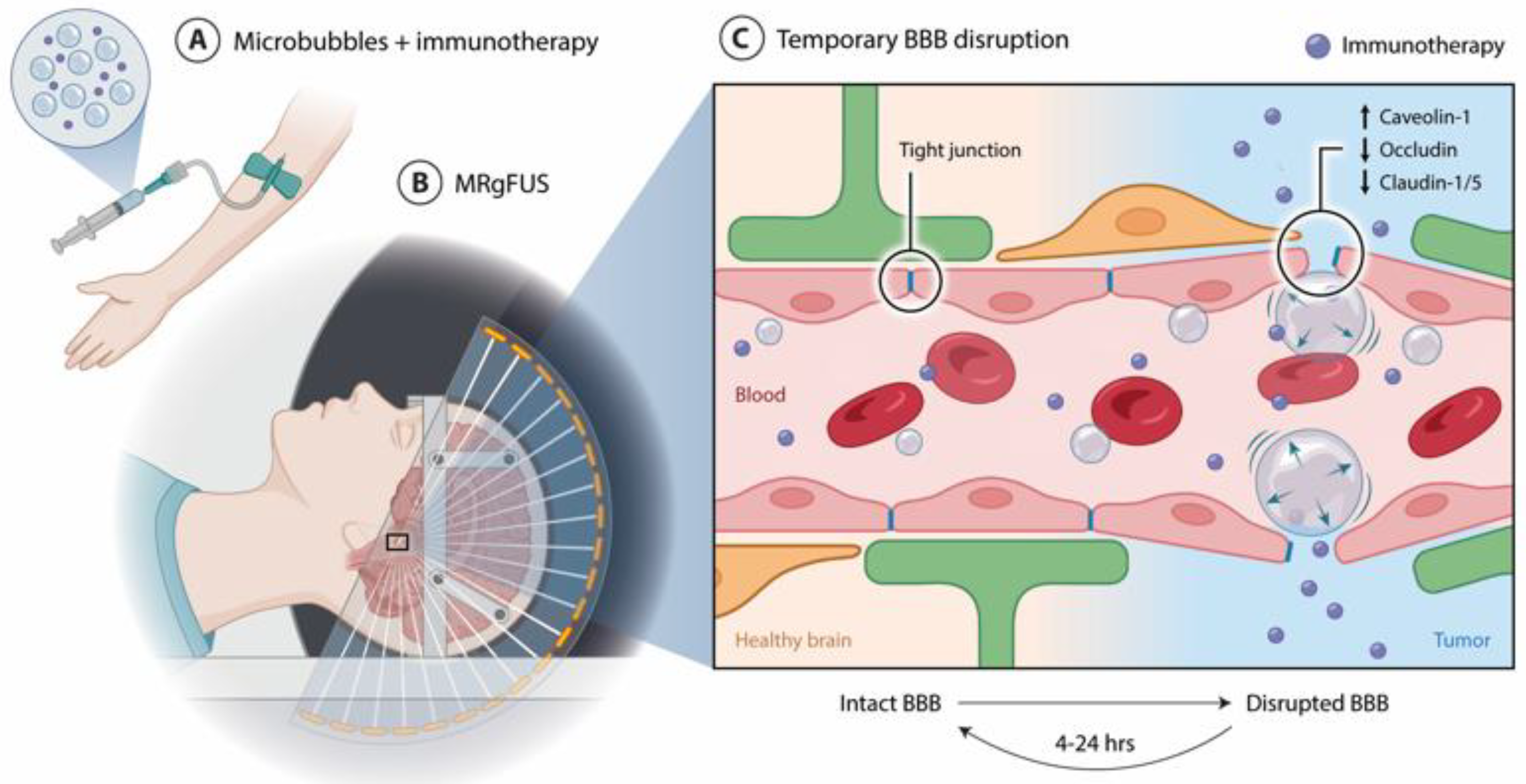
Figure 2.
MRgFUS BBB modulates the TME and promotes immune priming through increased antigen release and stimulates immune related processes. When combined with CAR T cell therapy, engineered T cells directly recognize tumour associated antigens independent of MHC presentation, enabling direct cytotoxic activity even in tumours with low T cell baseline infiltration. In contrast, ICIs mainly relies on antigen presentation (ex. MHC system), and acts on pre-existing T cells within the TME by blocking inhibitory signaling pathways such as PD-1/PD-L1, leading to the restoration of endogenous antitumor immune responses. Despite these distinct mechanisms, both strategies promote immune activation within the TME, characterized by increased CD8+ cytotoxic T-cell infiltration, enhanced pro-inflammatory cytokine signaling, including IFN-γ and TNF-α from NK cells, and a shift towards immunologically inflamed TME. .
Figure 2.
MRgFUS BBB modulates the TME and promotes immune priming through increased antigen release and stimulates immune related processes. When combined with CAR T cell therapy, engineered T cells directly recognize tumour associated antigens independent of MHC presentation, enabling direct cytotoxic activity even in tumours with low T cell baseline infiltration. In contrast, ICIs mainly relies on antigen presentation (ex. MHC system), and acts on pre-existing T cells within the TME by blocking inhibitory signaling pathways such as PD-1/PD-L1, leading to the restoration of endogenous antitumor immune responses. Despite these distinct mechanisms, both strategies promote immune activation within the TME, characterized by increased CD8+ cytotoxic T-cell infiltration, enhanced pro-inflammatory cytokine signaling, including IFN-γ and TNF-α from NK cells, and a shift towards immunologically inflamed TME. .
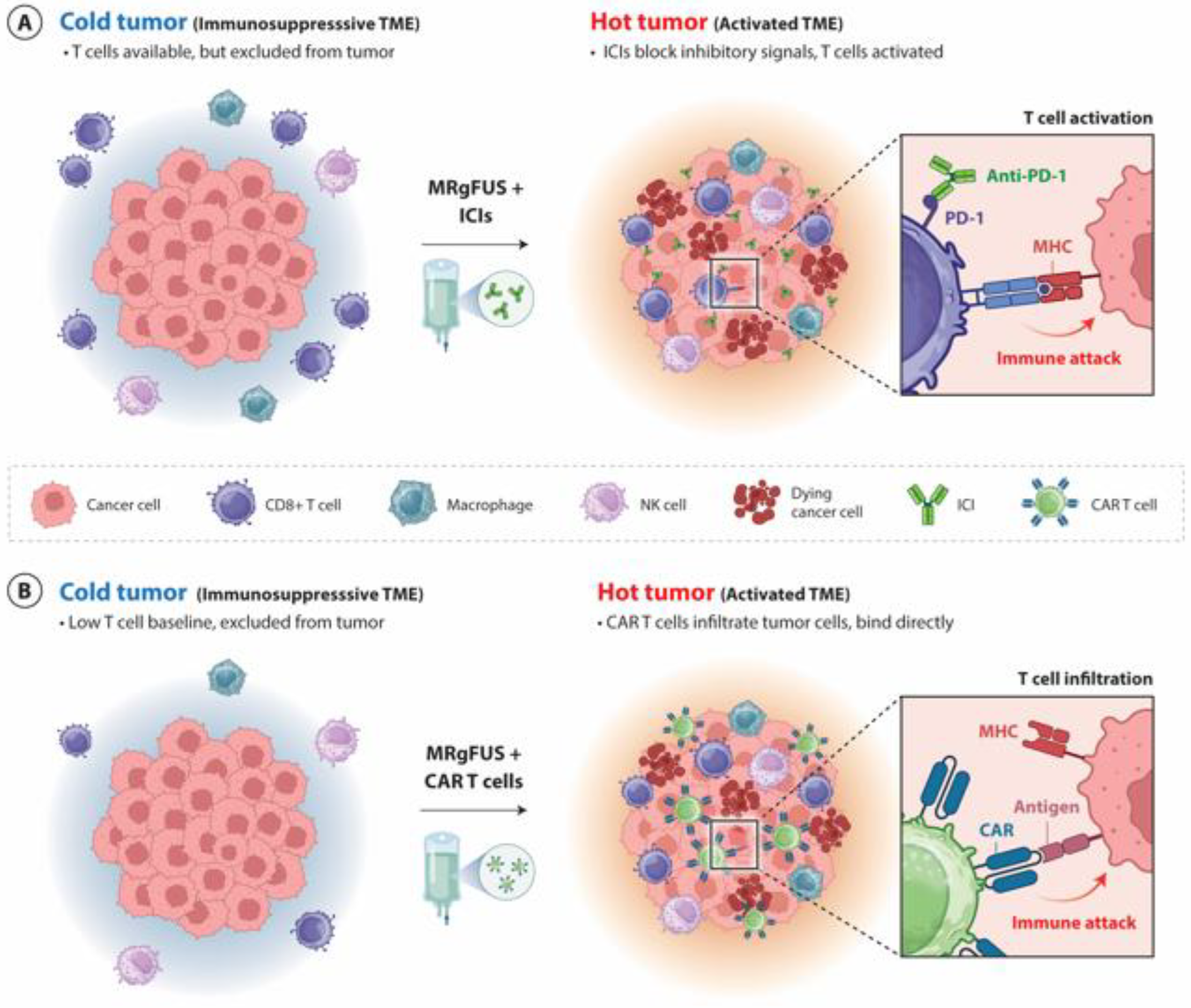

Table 1.
Summary of immunotherapy strategies according to pediatric tumour type and their characteristics.
Table 1.
Summary of immunotherapy strategies according to pediatric tumour type and their characteristics.
 |
Disclaimer/Publisher’s Note: The statements, opinions and data contained in all publications are solely those of the individual author(s) and contributor(s) and not of MDPI and/or the editor(s). MDPI and/or the editor(s) disclaim responsibility for any injury to people or property resulting from any ideas, methods, instructions or products referred to in the content. |
© 2026 by the authors. Licensee MDPI, Basel, Switzerland. This article is an open access article distributed under the terms and conditions of the Creative Commons Attribution (CC BY) license (http://creativecommons.org/licenses/by/4.0/).
Copyright: This open access article is published under a Creative Commons CC BY 4.0 license, which permit the free download, distribution, and reuse, provided that the author and preprint are cited in any reuse.


