

Submitted:
02 April 2026
Posted:
02 April 2026
You are already at the latest version
Abstract
The primary neural processes that help maintain cognitive abilities during aging are neuronal plasticity and compensatory scaffolding. These can be directly promoted through participation in intellectually stimulating activities, without psychological stress, with physical exercise, and a healthy diet. In this context, environmental factors that affect cognition can be classified at three levels: (i) micro-level (family and home): social interaction with family members and indoor pollution; (ii) meso-level (commu-nity and services): the variety of land uses, ease of access, and green spaces; (iii) mac-ro-level (society in general and public policies): social representations of old age and aging (positive aging vs. ageism), and public policies to improve activities related to cognitive maintenance. All three levels are interrelated and are determinants of cogni-tive function in old age. In this sense, the interaction of intrinsic capacity with the en-vironment, linked to behavioral characteristics, determines cognitive functional capac-ity and well-being within the framework of healthy aging. Therefore, the aim of this review is to synthesize information on the effect of the environment on the cognitive functions of older adults, linking biological, environmental and behavioral elements.
Keywords:
neighborhood characteristics
; green space
; walkability
; aging in place
; built environment
1. Introduction
The global demographic transition presents a challenge that requires feasible strategies to ensure healthy aging, taking into account different sociocultural contexts. In this regard, the World Health Organization reported the following data on population aging: (i) between 2015 and 2050, the proportion of the world's population over 60 years of age will almost double, from 12% to 22%; (ii) by 2020, the number of people aged 60 and over will outnumber children under 5; (iii) by 2050, 80% of older people will live in low- and middle-income countries; (iv) the rate of population aging is much faster than in the past; and (v) all countries face significant challenges in ensuring that their health and social systems are prepared to address and take full advantage of this demographic shift [1,2].
Older adults are valuable sources of human and social capital and should be seen as a gerontological dividend, benefiting both their own growth and that of others in their age group. Three key elements to achieve this are the combination of healthy aging, productive aging after age 50, and counteracting ageism [3,4,5]. In this sense, older people can continue to contribute to society through jobs that leverage their experience and knowledge in supervisory positions, as well as mentoring, participation in volunteer activities, home support, and more [6,7].
Healthy aging is defined as "the process of promoting and maintaining the functional capacity that allows well-being in old age" [2], specifying that functional capacity is determined by the individual's intrinsic capacity, the environment in which they live, and the interaction between both. Among the components that make up intrinsic capacity are cognitive functions, which allow information processing in order to interact with the environment [8,9].
The environment encompasses all external factors that form a person's life context. It comprises three levels: (i) micro-level: the characteristics of the home, family, and daily surroundings; (ii) meso-level: the community, with respect to specific programs for older adults, spaces for leisure and recreation, empowerment programs, and health services; and (iii) macro-level: including society in general, public policies, social representations of aging and old age (ageism), recognition of the human and social capital of older adults for their own development and that of others, such as a gerontological demographic dividend or a dividend of healthy longevity, and the creation of public institutions that include state programs for human development during aging and old age. It is important to note that there is continuous interaction among these three levels (Figure 1) [10,11]. In this way, the environment affects people's health; some conditions can increase the risk of disease [12], while others can promote a healthy lifestyle and improve health [13,14]. For this reason, the environment is a key element in promoting healthy aging, allowing older people to maintain their autonomy and independence without needing to move to a long-term care facility [15].
Two theories attempt to explain how the environment can affect cognitive functions: the biological theory of aging and cognibility theory. The biological theory of aging, developed from Bronfenbrenner's ecological theory, proposes that environmental demands and challenges, such as public policies, social support, and access to places, generate pressure or support for older adults. When environmental pressure exceeds an older person's capabilities, it leads to a loss of independence [16]. Cognibility is a concept proposed to study how neighborhood context’s structure opportunities and barriers to cognitive health in adulthood, particularly focusing on a meso-level including characteristics of the built and social environment [17].
Several studies have found that the environment has an effect on cognitive functions [18,19,20], however, these investigations have not delved into the mechanisms of this relationship or have focused solely on an environmental level of analysis, failing to identify the neural mechanisms that can promote cognitive maintenance, the direct activities that can influence these mechanisms, and the micro, meso, and macro levels of environmental conditions that can affect these direct activities. Therefore, the aim of this review is to synthesize information on the effect of the environment on the cognitive functions of older adults, linking biological, environmental and behavioral elements.
2. Cognition in Older Adults
Cognitive change during aging is a complex process; some functions increase while others decline. Cognitive functions related to knowledge of the world and automatic processing, such as semantic memory, can continue to improve even after age 70. Conversely, cognitive abilities associated with acquiring new knowledge and deliberate processing, primarily attention and episodic memory, tend to decline as people age, especially after the age of 65 [21].
The decline in cognitive function during aging is not uniform. Working memory and processing speed begin to decline around age 30, while the decline in episodic memory becomes noticeable around age 60 [22]. Between the ages of 18 and 60, processing speed declines by one z-score, while episodic memory declines by 0.4 z-scores [23].
When cognitive functions decline significantly, the person loses the ability to make decisions relevant to them (autonomy), and it can even affect the ability to perform basic and instrumental activities of daily living (independence), progressing to dementia, whose pathophysiological mechanisms depend on the type of dementia, among the most frequent are vascular dementia and Alzheimer's disease [24].
On the other hand, mild cognitive impairment (MCI) can be a precursor to dementia, characterized by a greater cognitive decline than expected during normal aging, but the person maintains their autonomy and independence. Tools like the Mini-Mental State Examination (MMSE) and the Montreal Cognitive Assessment (MoCA) help detect MCI; they use cutoff scores that consider a person's age and education level. There are multiple causes of cognitive impairment, including altered blood pressure, high glucose levels, depression, and insufficient cognitive stimulation, among others. Typically, MCI is a condition that can be reversed by encouraging a healthy environment and considering the three stages of cognitive development: micro, meso, and macro-level [25,26].
Cognitive decline during aging is normal and no specific activities have been shown to stop this process [27]; However, certain cognitive maintenance is possible to prevent the person from losing their autonomy and independence [28]. The biological mechanisms that explain how cognitive functions can be maintained during aging: brain plasticity and compensatory scaffolding [29,30].
Plasticity refers to the brain's capacity to undergo lasting structural changes in response to environmental demands that are not met by the organism's current functional capacity. Neurons are potentially capable of modification in the initial stages of learning a task, following this, a phase of selection and refinement of the neuronal changes generated by experience [29]. If environmental demands are high, neural resources will increase; whereas, if environmental demands are low, brain resources will decrease [31].
The Scaffolding Theory of Aging and Cognition proposes that compensatory scaffolding is in play when the resources of central or task-specific neural networks are inefficient or insufficient to meet the demands of that task. Constant mental challenges form neural networks that later become the structures enabling compensatory scaffolding. Furthermore, throughout life, there can be both resource-enriching and resource-depleting factors that affect brain structure, brain function, and the capacity for compensatory scaffolding [30,32].
The neural mechanisms by which cognitive functions can be maintained are brain plasticity and compensatory scaffolding; these are formed by intellectually stimulating activities, exercise, and access to adequate nutrition, while inadequate nutrition, pollution, stress, and depression can increase the decline (Figure 2) [29,30].
3. Direct Factors That Affect Cognitive Functions
3.1. Intellectually Stimulating Activities
Cognitive training is based on standardized tasks to enhance a specific cognitive process; multiple studies have reported positive results [33,34,35,36], but with insignificant effect on tasks other than the exercises used in intervention programs [37,38]. Given these considerations, it has been suggested to develop mental stimulation programs centered around learning practical activities, such as using new technology for work or household tasks, or acquiring knowledge to care for other older adults [39,40].
On the other hand, several research has identified that social participation, leisure activities, and intergenerational relationships contribute to cognitive maintenance. [41,42,43,44]. Intervention programs developed on the basis of intellectually stimulating activities such as learning photography or theater, creating products, or receiving support in academic activities, which have had a positive effect on cognitive functions [45].
Cognitive stimulation therapy is an intervention designed for people with MCI or dementia in its initial stages. Studies have demonstrated that it slows the rate of dementia-related decline. It primarily involves fostering social interaction through activities such as talking about the past, stimulating the senses, and practicing empathetic listening that validates subjective experience rather than objective facts [46].
Several intellectually stimulating activities can promote cognitive maintenance; the key is that they meet certain conditions. In line with what is expected to foster neuronal plasticity and compensatory scaffolding, as well as what has been reported in cognitive maintenance programs, the following characteristics are proposed for activities that can contribute to cognitive maintenance: (i) the use of different cognitive processes; (ii) the promotion of self-initiated processing; (iii) the performance of diverse tasks; (iv) the learning of new tasks; and (v) adjusting the difficulty of the task so that participants maintain a high level of effort [31,32,47,48,49].
3.2. Physical Activity and Exercise
Physical activity is one of the main activities that have been proposed to promote cognitive maintenance [50,51,52]. Physical activity supports cognitive function by improving the production of neurotrophic factors, neurotransmitters, and hormones. It promotes various mechanisms associated with synaptic plasticity, neurogenesis, angiogenesis, and autophagy. It also reduces psychological stress, inflammatory cytokines, and oxidative stress [53,54]. On the other hand, several studies have demonstrated the relationship between physical activity, diet, and sleep with a reduction in the probability of developing MCI or delaying the onset of clinical symptoms of Alzheimer's [55,56,57].
3.3. Diet
A healthy diet is a protective factor for cognitive function and can delay the onset of MCI or dementia. Increasing the consumption of vegetables, fruits, and fish can provide essential nutrients such as folate, trace elements, vitamins D, E, and B12, and antioxidants. These nutrients can protect the brain from damage caused by inflammation, oxidative stress, and vascular damage, as well as increase the production of neurotrophic factors that facilitate neurotransmitter production and neurogenesis [58,59].
3.4. Psychological Stress and Depression
Psychological stress is a factor linked to increased cortisol levels. Several animal and human studies have found a relationship between elevated cortisol and impaired cognitive performance. Cortisol exacerbates damage caused by oxidative stress and the production of β-amyloid peptide, affecting the hippocampus and frontal lobe [64]. Furthermore, it increases the risk of sleep disorders, depression, and vascular diseases, which in turn affect cognition [65,66,67].
Studies have found that depression is a risk factor for MCI and dementia [68]. In this regard, older adults with depression are more likely to have a lower volume of gray matter, particularly in the hippocampus and frontal lobes. Depression can increase oxidative stress and inflammation, reduce neuronal plasticity, and increase apoptosis [68,69,70,71].
3.4. Pollution
Air pollutants such as particulate matter (PM), nitrogen dioxide (NO2), and ozone (O3) Is associated with to lower cognitive performance and a higher likelihood of decline [72,73]. PM causes the excessive production of reactive oxygen species (ROS). These species can lead to DNA damage, endoplasmic reticulum stress, inflammatory responses, atherosclerosis, and airway remodeling, contributing to increased susceptibility to and exacerbation of various diseases and infections. It primarily affects cardiovascular health, increasing the likelihood of strokes [74]. They can cross the blood-brain barrier through the bloodstream and accumulate in the brain for a long time, increasing levels of pro-inflammatory cytokines and oxidative stress, which facilitates the formation of amyloid plaques, which are related to Alzheimer's disease [75,76].
4. Relationship of Different Environmental Levels with Cognitive Functions
The mechanisms by which cognitive performance in older adults can be maintained or damaged can be promoted by different environmental factors at the micro, meso and macro levels (Table 1).
4.1. Environment Micro-Level (Family)
The microenvironment can affect cognitive functions due to the type of behavior or activities that older adults perform daily in their homes. In this regard, social factors, primarily contact with a partner or children, as well as physical factors, such as indoor pollution, temperature, room layout, or decor, influence cognitive functions [77,78,79].
4.1.1. Social Interactions
Research has shown that growing up in a stimulating environment can improve cognitive development during childhood [80]. One of the most widely used instruments for assessing environmental conditions that can stimulate a child's cognition is the Home Observation for Measurement of the Environment (HOME). Recently, it has been adapted for older adults, observing that a greater variety of stimulation is related to higher cognitive performance. Some signs of this variety are living with pets, family, or friends, as well as taking part in cultural events; still, it's important to consider what these relationships are like [81]. The following is an analysis of the effect of relationships with partners and children on cognitive functions.
The relationship between marital satisfaction or quality and cognitive performance is inconsistent. Marital satisfaction is a subjective assessment of how happy a person is in their marriage, while marital quality includes elements such as affection, communication, cohesion, and consensus, among others. Studies have found that people with higher marital satisfaction or quality tend to perform better cognitively, indicating that less marital tension is linked to improved cognitive abilities. The proposed biological link to explain the positive relationship between marital satisfaction and cognitive performance is the reduction of psychological stress [77]. However, given the inconsistencies in the studies, it is possible that other lifestyle factors have an impact on cognitive performance.
It has been reported that people with a partner with MCI have a higher probability of developing MCI themselves. Three explanations have been proposed: (i) the impact of caregiver stress experienced by the spouse; (ii) partner selection based on similar characteristics, some associated with cognitive decline, such as low educational attainment or similar age; (iii) the influence of shared environment and lifestyle, for example, a sedentary lifestyle, a diet that increases the risk of metabolic diseases, or few intellectually stimulating activities [82].
Widowhood is a risk factor for sudden cardiac death, particularly in the first four years. This relationship may be explained by the way grief is experienced after losing a partner, which can manifest as depression or a decrease in activities, including physical exercise and those that contribute to mental stimulation [83].
Relationships with children also influence cognitive function. In particular, bidirectional financial support has been found to be associated with better cognitive performance in older adults. A positive relationship is also reported between sharing household chores or childcare, helping with schoolwork, or teaching skills and preventing cognitive decline. On the other hand, excessive (unnecessary) instrumental support for older adults has been associated with a higher likelihood of developing MCI [78]. Also, In rural areas, when older adults live alone because their children have left home, the risk of heart attack and suicidal thoughts increases [84].
Several studies have found that loneliness is a risk factor for developing cognitive decline. Individuals who experience loneliness may participate less in cognitively stimulating activities, which increases their likelihood of developing depression. Furthermore, an increased feeling of loneliness can be an indicator of MCI or depression [85,86] .
Considering the analysis above, psychological elements such as a sense of positive emotional connection, autonomy, or a sense of purpose in life are factors that motivate people to start and maintain a lifestyle [87,88], however, the effect on cognitive maintenance depends on the activities undertaken during social interaction. Activities that promote healthy aging, shared with the family and in which the older adult plays an active role, such as cognitively stimulating activities (board games, conversations about new topics, written assignments, computer use, among others), physical exercise, and a proper diet, can have an impact on cognitive function [89], Even some solitary tasks that meet the characteristics of intellectually stimulating activities described in the previous section can positively impact cognitive performance [90].
4.1.2. Physical Elements of the Environment
Characteristics of the microenvironment have been proposed as being associated with cognitive functions such as perception, attention, memory, and executive functions. Among the main ones are pollution and temperature; others have a particular impact on people with MCI, such as space distribution and decoration [79].
Currently, in countries like China and India, over 45% of homes continue to use solid fuels such as wood, coal, kerosene, crop residues, or manure for cooking and heating, in addition to incense sticks and mosquito coils. The use of these products increases the likelihood of developing myocardial infarction, even after controlling variables such as age, education level, and socioeconomic status [91,92]. This may be due to the increase in PM [93]. In addition, pollution can cause depression, sleep disorders, or high blood pressure, which also affects cognitive functions [94,95,96]. Cognitive damage from pollution can be prevented with good ventilation; a study in China found that ventilating the house 6 to 8 times per week can reduce the risk of MCI [97].
Plants and flowers in the home have been proposed as a relaxing element that could reduce stress or pollutants and thus have an effect on cognitive function; however, research on this topic has shown inconsistent results. In this regard, it has been found that practicing indoor gardening, which can be considered an intellectually stimulating activity, has a positive impact on both cognitive performance and overall well-being [98].
Extreme temperatures are associated with cognitive performance in older adults; in particular, elevated temperatures lead to poorer cognitive performance [99]. In a study that monitored house temperatures and asked older adults about their perceived level of attention while performing daily tasks, researchers found that a temperature between 20 and 24°C was associated with better levels of attention [100]. On the other hand, in an experimental study in which 68 older adults performed cognitive tests at 24°C or 32°C, lower cognitive performance was associated at elevated temperatures, only in those participants who did not perform physical exercise [101].
The environment can help maintain cognition by facilitating interaction between people. Spaces encourage eye contact, for example, by avoiding walls between rooms or placing chairs around the table to allow people to see each other face-to-face [102]. Spaces that facilitate movement between places in the house can also promote social interaction [103]. Social interactions can motivate people to engage in activities, but the type of activity performed will depend on the influence it has on cognitive maintenance.
Other environmental elements may have minor impact on the cognitive stimulation of healthy older adults; however, they can improve the functionality of people with MCI or the initial stages of some dementias. Higher contrasting colors and textures can make it easier for them to recognize personal objects, such as their room, bed, plate, etc. [104,105]. Familiar decorative objects can encourage memory [106]. On the other hand, similar textures or colors between objects can make it difficult to differentiate them, for example, a table and a plate of the same color. Also, textures with crossed or uneven lines can facilitate the development of hallucinations [107,108].
4.2. Environment Meso-Level (Community)
Research on the built environment involves studies of the meso-environment. The built environment refers to spaces modified by humans to facilitate their daily activities, such as living, working, and recreation [109]. The characteristics that have associated with cognitive functions are land use patterns, transportation systems, environmental design, and open spaces [109,110].
4.2.1. Land Use Patterns
Land use patterns refer to the spatial distribution of human activities, for example, their use for residential, recreational, or commercial purposes (this also includes green areas, but these will be addressed in the section on open spaces). Areas with a high mix of land uses are less likely to experience MCI [111,112] and better memory [113]. On the other hand, living in an area with low residential density, where there may be fewer services, was associated with a higher probability of developing MCI [114].
Not all land uses will have the same impact on cognitive function, nor on the same populations. Distance from everyday services such as convenience stores is associated with lower cognitive performance and a higher likelihood of developing dementia in populations of all economic strata; however, distance from healthcare centers only impacts middle- and low-income populations [115]. Another study found that in people under 80, a greater mix of land uses was associated with better cognition, while in people over 80, proximity to a community center had a positive impact on cognition. [116]. It has also reported that the proximity of community centers improves cognitive functions in white people, but not in black and Hispanic people [117].
The type of services available also impacts on cognition. Services that promote active leisure have associated with better performance in older adults [116]. A longitudinal study found that proximity to civic and social organizations that promote participation led to an increase in cognitive functions; likewise, proximity to artistic organizations, museums, and recreation centers was associated with stability in cognitive functions [17].
Participation in activities in the surrounding environment is also a relevant element. In a study by Guo et al. [118], Better cognitive performance was found in areas with greater access to libraries, but only among highly educated individuals. Meanwhile, another study observed a positive relationship between processing speed and time spent shopping, but not with destination density [119]. Similarly, in areas with less availability of services, people who participated in more activities in their community, such as cultural classes, meetings, attending community centers, and participating in sports and gardening activities, were less likely to experience cognitive decline [120].
On the other hand, access to services can improve or impact overall health, which would indirectly affect cognitive function. Living within 500 meters of fruit and vegetable shops is associated with a lower risk of developing dementia. [121], while the proximity of fast-food establishments is associated with lower cognitive performance [17]. It has also limited access to healthy food is linked to greater cognitive decline [122].
4.2.2. Transportation System
The transportation system refers to the physical infrastructure and services that provide spatial links or connectivity between activities. Elements that have associated with cognitive function in older adults include street integration, connectivity, walkability, transportation lines, and proximity to major transportation routes [110].
Street integration measures the number of choices a person has to access locations within a defined system; lower integration indicates more winding paths or dead ends. Connectivity refers to the number of paths, streets, or nodes directly connected to each street or node in the road network. In older adults, greater street connectivity and integration are associated with improved cognitive performance [123]. It was also in places with more bus lines and employment services, cognitive decline is slower [124].
Roads with a higher number of intersections and a greater proportion of land dedicated to retail trade were associated with better processing speed [125], Whereas, in places with a lower density of intersections, older people have lower cognitive performance [126]. In individuals carrying APOE ε3 or ε4, the positive effects of intersections on cognition were not observed [125].
Walkability can be particularly beneficial for people with lower levels of education. Walkability refers to the density of intersections and the shorter distance to the nearest public transport stop. Greater walkability reduces the distance gap in cognitive performance between people with lower levels of education and those with higher levels of education, while neighborhoods that increase social isolation widen that gap [127].
On the other hand, it has been found that living closer to a major traffic road is related to dementia not associated with Alzheimer's; the effect is found at a distance of 50 meters, although the negative effect occurs at a greater distance in large cities [128], even at 150 meters in the case of highways [129]. Similarly, living 100 meters away from main streets is associated with lower cognitive performance [130,131]. Furthermore, living near a busy area affects older people with low levels of education more [131].
4.2.3. Environmental Design
Environmental design refers to the aesthetic, physical, and functional qualities of an area. In research on cognition, cleanliness and safety are the main factors studied. Objective elements of cleanliness (e.g., litter, graffiti, noise, and unpleasant odors), as well as objective elements of danger in an area (e.g., murders, rapes, or assaults), have not associated with cognitive performance [132,133].
On the other hand, design indicators evaluated subjectively—that is, people's perceptions of their environment—are related to cognitive function in older adults. In environments perceived as more dangerous, older adults exhibit lower cognitive performance [132,133]. Environments perceived as having greater physical disorder (graffiti, garbage, empty houses, and crime) have also associated with lower performance in episodic memory; this may be explained by increased stress in older adults [134,135].
4.2.4. Open Spaces
Open spaces include green spaces, blue spaces, and areas with little or no vegetation that serve as spaces for social interaction. Green space is a general term encompassing various forms of urban landscapes, such as isolated trees, green walls, open lawns, and dense forests with or without access. Blue spaces are areas where water predominates; their functions are like those of green spaces [136,137].
A meta-analysis of five studies found that living near a green area reduces the risk of dementia (OR 0.94, 95% CI 0.92, 0.96)[19]. Longitudinal studies have found that living within 300 meters of a green space reduces the risk of cardiovascular events, vascular dementia, and death. The impact of green spaces on reducing the likelihood of strokes was greater in those who had previously suffered a stroke [138,139]. Trees have also reduced the likelihood of developing dementia by 14% over an 11-year period [140]. The protective effect of green spaces in preventing cognitive decline has also reported in a longitudinal study that analyzed people from 11 to 76 years old [141].
A study found that people living within 500 meters of a green space have better cognitive performance compared to those living farther away. It also observed that people living near green spaces are less likely to develop MCI [142]. Living near blue spaces has also to have cognitive health benefits [143]. Moreover, proximity to a green area mitigated the negative cognition effects from living near a road [129].
The protective effect of green spaces may not be present in all cases. One study found that green spaces have a protective effect on people between 65 and 79 years old, unless they carry the APOE ε4 gene [144]. Another study found that access to recreational spaces had better cognitive performance, but only in men, not in women [145]. Another study, the protective effect of green spaces on cognition was only observed in women from low-income backgrounds [141].
4.3. Environment Macro-Level (Social)
The macroenvironmental elements that can affect cognitive functions are primarily related to social representations of aging (ageism) and public policies. Ageism refers to prejudices (feelings), stereotypes (thoughts), and discrimination (actions) directed at a person based solely on their age, whether self-inflicted, interpersonal, or institutional [146]. On the other hand, public policies for healthy aging, primarily aimed at promoting social participation and exercise and reducing the consumption of processed products and pollution, influence cognitive functions. [147,148,149].
4.3.1. Ageism
Self-inflicted ageism is the internalization of stereotypes and prejudices about old age, which affect an individual's self-perception, expectations, interests, and actions. Self-inflicted ageism not only affects cognitive function but also overall health [150]. Some of these beliefs, such as the idea that all older people have bad memories, cannot learn new things, cannot meet new people, and are simply a burden on society, among others, can limit a person's ability to engage in intellectually stimulating activities, exercise, or maintain a healthy diet [151].
A systematic review of longitudinal studies found that a positive perception of aging is associated with better health, including improved performance in activities of daily living, reduced obesity, depression, and cardiovascular disease. This may be due to decreased stress, increased self-efficacy, exercise, improved diet, and participation in social activities [152].
Ageism in interpersonal relationships manifests in interactions with older adults, as well as in comments and behaviors directed toward them. Negative interpersonal stereotypes can foster self-inflicted stereotypes and generate discriminatory behaviors that limit developmental opportunities and cognitive stimulation. Conversely, positive stereotypes can promote prosocial behavior toward older adults [153], however, such support can limit opportunities for social participation and activities, affecting cognitive performance, when a person is overprotected simply because they are old [154,155], therefore, it is important to consider support that enhances their autonomy and independence, and not just welfare-based assistance..
Institutional ageism encompasses laws, regulations, policies, and practices that unfairly limit opportunities based on age. It includes conscious and overt actions by individuals within the institution, although more often it involves repetitive behaviors without any analysis of their effects and implications. The assessment of Institutional ageism is based on the outcomes of the institution's activities and can affect employment, financial support, access to media, research, healthcare, and other areas [156]. For example, in healthcare, frailty is emphasized, medical care or procedures can be denied, unnecessary treatments can be administered, and other factors can be exploited. This affects not only cognitive performance but also quality of life and life expectancy [157].
4.3.2. Public Policies
Public policies can foster ageism as an unintended consequence. Singapore implemented the Generation Pioneer Policy (GPP) in 2013, allocating financial resources for outpatient healthcare for people aged 65 and over. It was found that positive stereotypes related to old age decreased while negative stereotypes increased, possibly due to the increased prevalence of the medicalization of aging [158].
Public policies that highlight the gerontological dividend, that is, that also promote social participation, in addition to improving the representation of old age, can contribute to older people participating in more activities, some of which can maintain cognitive performance [159].
There are several strategies to promote the social participation of older people. Laws amended to recognize older people as subjects of rights, not just recipients of welfare programs. Infrastructure is also being developed to promote social participation. This can include opening centers where volunteering is possible, as well as infrastructure modifications to facilitate transportation and interaction among people. Furthermore, social participation is encouraged through awareness campaigns, support for the creation or strengthening of centers for older adults that promote activities related to learning new skills or implementing mentorship programs, the development of flexible employment policies for older adults, and the creation of forums where people can identify their barriers to participation and design solutions, among other initiatives [147,160,161,162,163].
An umbrella review of fifty-seven systematic reviews analyzed 53 public policies aimed at promoting physical activity. The review identified school policies and infrastructure elements as having the greatest impact. The latter involved interventions that improve aspects of the built environment, such as residential density, mixed land use, sidewalk quality and connectivity, and street redesign to facilitate transportation and cycling. While most studies focused on children, their findings could also be applied to older adults [164]. A positive effect has also used media campaigns and multi-component approaches in community interventions [165].
Another umbrella review, which included twelve systematic reviews on the effect of public policies on eating behavior, reported that policies involving food prices (increasing taxes on unhealthy products and subsidies on healthy ones), portion sizes, and food availability in retail establishments promote healthy eating [148]. Currently, it would also be relevant to consider the design of public policies regarding food delivery platforms, which could favor the consumption of healthy or unhealthy foods [149].
To reduce pollution, various public policies have been developed. Some consist of incentives, such as subsidies for public transport to make it cheaper and reduce the use of private transport, or for switching from domestic fuels to less harmful ones; closures or restrictions on coal-fired industries or power plants; promotion of the use of nuclear, solar, or wind energy; and stricter vehicle regulations. Several of these strategies have shown favorable results in reducing air pollutants and improving health [166,167,168], including a positive effect on cognitive functions [169]. The environment, at each of its levels, is related to the direct mechanisms that can affect the brain and, in turn, cognition. At the micro-environmental level, we find social and physical factors. The social factor can be a motivator for a healthy lifestyle, including intellectually stimulating activities, exercise, and a healthy diet. In this sense, the family environment, such as partners, children, and grandchildren, is essential for maintaining cognitive function [77,170]. In terms of physical factors, a design that facilitates a healthy lifestyle and avoids air pollution, mainly from fuels such as coal or firewood, can affect cognitive functions [79].
At the meso-level environmental, elements that affect cognitive functions include land use, transportation systems, environmental design, and open spaces. Environments offering a wider variety of activities, including open spaces, green areas, and places where people can engage in active social activities such as volunteering, with multiple access routes, can facilitate intellectually stimulating activities. In this sense, it is necessary to develop activities that align with the interests of people in each specific area so that these activities are utilized and have an impact on cognitive functions. On the other hand, factors such as living near highways or factories can increase exposure to air pollutants, which affect cognitive functions. Elements of appropriate urban planning that include green areas can mitigate these effects [19,110].
In relation to the macro-level environment, public policies and ageism can affect cognitive functions, which are also interconnected. Self-inflicted ageism can discourage older adults from adopting a healthy lifestyle; as well as cause depression or stress that also affect cognitive functions. Interpersonal and institutional ageism can limit development opportunities and generate a negative view of old age. Public policies focused solely on the medicalization of aging can lead to undesirable consequences such as increased ageism. Therefore, it is also important to highlight policies that consider older adults as a gerontological asset and the contributions they can make to society [150,152,157].
Several public policies have been developed to improve the lifestyles of the general population and older adults, with positive health outcomes. Among the strategies that have shown satisfactory results are facilitating access to places or improving infrastructure for people to engage in physical activity; facilitating access to healthy foods and hindering access to unhealthy foods; and promoting various strategies to improve air quality [149,164,168]. However, little is known about how these public policies affects the cognitive functions of older adults.
5. Conclusions
This narrative review integrated evidence to understand how the environment influences the cognitive functions of older adults. To this end, it identified neural mechanisms associated with cognitive maintenance, the elements that directly influence these mechanisms, and the characteristics of the environment at its micro, meso, and macro levels that are related to these elements. This approach allows us to conceptualize cognitive aging as the result of the interaction between biological, behavioral, and environmental processes.
This review integrates knowledge about the environment and cognitive aging, emphasizing factors that can directly affect environment-related brain changes. It also identifies the following challenges: (i) research on the built environment and its impact on cognitive functions is far more advanced than research at the micro and macro levels of the environment; (ii) research is lacking on how environmental aspects can directly affect brain changes and their effect on cognitive functions; (iii) it is necessary to evaluate the impact on specific cognitive functions such as working memory, processing speed, and episodic memory, among others; (iv) further research is needed on the impact of the environment on specific populations and contexts, for example, women vs. men, different economic strata, and urban vs. rural areas; (v) experimental research is needed that modifies conditions at different levels of the environment and examines the impact on cognitive functions; (vi) It is necessary to investigate how different factors interact within and across environmental levels and their effect on cognitive functions.
This paper presents key environmental elements that can contribute to the development of comprehensive strategies for implementing interventions at different environmental levels, including the home, the community, and society at large, to promote the autonomy, independence, and well-being of older adults within the framework of healthy aging.
Author Contributions
Conceptualization, M.V.M. and S.J.M.; investigation, S.J.M.; writing—original draft preparation, M.V.M., S.J.M. and H.M.B.; writing—review and editing, M.V.M., S.J.M. and H.M.B.. All authors have read and agreed to the published version of the manuscript.
Funding
This research received no external funding
Conflicts of Interest
The authors declare no conflicts of interest.
Abbreviations
The following abbreviations are used in this manuscript:
| MCI | Mild Cognitive Impairment |
| PM | Particulate Matter |
| NO2 | Nitrogen Dioxide |
| ROS | Reactive Oxygen Species |
References
- World Health Organization. Ageing and Health; WHO: Geneva, 2021. [Google Scholar]
- World Health Organization. World Report on Ageing and Health; WHO: Geneva, 2015. [Google Scholar]
- O’Neill, D.J. Ageing Workforce: Sustaining the “Longevity Dividend.”. BMJ 2019, 367. [Google Scholar] [CrossRef]
- Olshansky, S.J.; Perry, D.; Miller, R.A.; Butler, R.N. Pursuing the Longevity Dividend: Scientific Goals for an Aging World. Ann. N. Y. Acad. Sci. 2007, 1114, 11–13. [Google Scholar] [CrossRef] [PubMed]
- Scott, A.J. Achieving a Three-Dimensional Longevity Dividend. Nat. Aging 2021, 1, 500–505. [Google Scholar] [CrossRef] [PubMed]
- Wiles, J.L.; Jayasinha, R. Care for Place: The Contributions Older People Make to Their Communities. J. Aging Stud. 2013, 27, 93–101. [Google Scholar] [CrossRef]
- Chen, P.W.; Chen, L.K.; Huang, H.K.; Loh, C.H. Productive Aging by Environmental Volunteerism: A Systematic Review. Arch. Gerontol. Geriatr. 2022, 98. [Google Scholar] [CrossRef] [PubMed]
- George, P.P.; Lun, P.; Ong, S.P.; Lim, W.S. A Rapid Review of the Measurement of Intrinsic Capacity in Older Adults. Journal of Nutrition, Health and Aging 2021, 25, 774–782. [Google Scholar] [CrossRef]
- Liang, Y.; Shang, S.; Gao, Y.; Zhai, J.; Cheng, X.; Yang, C.; Zhang, R. Measurements of Intrinsic Capacity in Older Adults: A Scoping Review and Quality Assessment. J. Am. Med. Dir. Assoc. 2023, 24, 267–276.e2. [Google Scholar] [CrossRef]
- Mendoza-Núñez, V.M.; Vivaldo-Martínez, M. Community Gerontology Model for Healthy Aging Developed in Mexico Framed in Resilience and Generativity. J. Cross. Cult. Gerontol. 2019, 34, 439–459. [Google Scholar] [CrossRef]
- Greenfield, E.A.; Black, K.; Buffel, T.; Yeh, J. Community Gerontology: A Framework for Research, Policy, and Practice on Communities and Aging. Gerontologist 2019, 59, 803–810. [Google Scholar] [CrossRef]
- Zhang, K.; Ma, Y.; Luo, Y.; Song, Y.; Xiong, G.; Ma, Y.; Sun, X.; Kan, C. Metabolic Diseases and Healthy Aging: Identifying Environmental and Behavioral Risk Factors and Promoting Public Health. Front. Public Health 2023, 11. [Google Scholar] [CrossRef]
- Hernández, E.D.; Cobo, E.A.; Cahalin, L.P.; Seron, P. Impact of Environmental Interventions Based on Social Programs on Physical Activity Levels: A Systematic Review. Front. Public Health 2023, 11. [Google Scholar] [CrossRef]
- Hernandez, E.D.; Guzman, C.A.; Seron, P. Interventions Based on Environmental Determinants for Nutritional and Physical Activity Behaviours in Colombia: A Scoping Review. BMJ Open 2022, 12. [Google Scholar] [CrossRef]
- Aliberti, S.M.; Capunzo, M. The Power of Environment: A Comprehensive Review of the Exposome’s Role in Healthy Aging, Longevity, and Preventive Medicine—Lessons from Blue Zones and Cilento. Nutrients 2025, 17. [Google Scholar] [CrossRef] [PubMed]
- Lawton, M.P. Environment and Other Determinants of Weil-Being in Older People. Gerontologist 1983, 23, 349–357. [Google Scholar] [CrossRef]
- Finlay, J.; Esposito, M.; Langa, K.M.; Judd, S.; Clarke, P. Cognability: An Ecological Theory of Neighborhoods and Cognitive Aging. Soc. Sci. Med. 2022, 309, 115220. [Google Scholar] [CrossRef] [PubMed]
- Chen, X.; Lee, C.; Huang, H. Neighborhood Built Environment Associated with Cognition and Dementia Risk among Older Adults: A Systematic Literature Review. Soc. Sci. Med. 2022, 292. [Google Scholar] [CrossRef]
- Da, L.; Song, X.; Jia, Z.; Myers, N.G.L.; Sun, J.; Wei, J.; Jung, D.; Li, F.; Song, S. Objectively Measured Environmental Features and Their Association with Cognition and Dementia: A Systematic Review and Meta-Analysis. Ageing Res. Rev. 2025, 104, 102630. [Google Scholar] [CrossRef]
- Wu, Y.T.; Prina, A.M.; Brayne, C. The Association between Community Environment and Cognitive Function: A Systematic Review. Soc. Psychiatry Psychiatr. Epidemiol. 2015, 50, 351–362. [Google Scholar] [CrossRef]
- Craik, F.I.M.; Bialystok, E. Cognition through the Lifespan: Mechanisms of Change. Trends Cogn. Sci. 2006, 10, 131–138. [Google Scholar] [CrossRef] [PubMed]
- Tucker-Drob, E.M.; Brandmaier, A.M.; Lindenberger, U. Coupled Cognitive Changes in Adulthood: A Meta-Analysis. Psychol. Bull. 2019, 145, 273–301. [Google Scholar] [CrossRef]
- Salthouse, T.A. Decomposing Age Correlations on Neuropsychological and Cognitive Variables. J Int Neuropsychol Soc 2009, 15, 650–661. [Google Scholar] [CrossRef]
- Sokolovič, L.; Hofmann, M.J.; Mohammad, N.; Kukolja, J. Neuropsychological Differential Diagnosis of Alzheimer’s Disease and Vascular Dementia: A Systematic Review with Meta-Regressions. Front. Aging Neurosci. 2023, 15. [Google Scholar] [CrossRef]
- Petersen, R. Mild Cognitive Impairment. Continuum (Minneap Minn) 2016, 22, 404–418. [Google Scholar] [CrossRef]
- Tangalos, E.G.; Petersen, R.C. Mild Cognitive Impairment in Geriatrics. Clin. Geriatr. Med. 2018, 34, 563–589. [Google Scholar] [CrossRef]
- Salthouse, T.A. Mental Exercise and Mental Aging: Evaluating the Validity of the “Use It or Lose It” Hypothesis. Perspect. Psychol. Sci. 2006, 1, 68–87. [Google Scholar] [CrossRef] [PubMed]
- Schooler, C. Use It-and Keep It, Longer, Probably: A Reply to Salthouse (2006). Perspect. Psychol. Sci. 2007, 2, 24–29. [Google Scholar] [CrossRef] [PubMed]
- Lindenberger, U.; Lövdén, M. Brain Plasticity in Human Lifespan Development: The Exploration–Selection–Refinement Model. Annu. Rev. Dev. Psychol. 2019, 1, 197–222. [Google Scholar] [CrossRef]
- Reuter-Lorenz, P.A.; Park, D.C. Cognitive Aging and the Life Course: A New Look at the Scaffolding Theory. Curr. Opin. Psychol. 2024, 56, 101781. [Google Scholar] [CrossRef]
- Lövdén, M.; Wenger, E.; Mårtensson, J.; Lindenberger, U.; Bäckman, L. Structural Brain Plasticity in Adult Learning and Development. Neurosci. Biobehav. Rev. 2013, 37, 2296–2310. [Google Scholar] [CrossRef] [PubMed]
- Park, D.C.; Reuter-Lorenz, P. The Adaptive Brain: Aging and Neurocognitive Scaffolding. Annu. Rev. Psychol. 2009, 60, 173–196. [Google Scholar] [CrossRef]
- Hou, J.; Jiang, T.; Fu, J.; Su, B.; Wu, H.; Sun, R.; Zhang, T. The Long-Term Efficacy of Working Memory Training in Healthy Older Adults: A Systematic Review and Meta-Analysis of 22 Randomized Controlled Trials. Journals of Gerontology - Series B Psychological Sciences and Social Sciences 2020, 75, E174–E188. [Google Scholar] [CrossRef] [PubMed]
- Nguyen, L.; Murphy, K.; Andrews, G. Immediate and Long-Term Efficacy of Executive Functions Cognitive Training in Older Adults: A Systematic Review and Meta-Analysis. Psychol. Bull. 2019, 145, 698–733. [Google Scholar] [CrossRef] [PubMed]
- Wei, Z.; Zhao, X.; Liu, Y. A Meta-Analysis of the Consequences of Cognitive Training on the Cognitive Function of Aged Mild Cognitive Impairment Patients. Psychogeriatrics 2024, 24, 1371–1388. [Google Scholar] [CrossRef]
- Basak, C.; Qin, S.; O’Connell, M.A. Differential Effects of Cognitive Training Modules in Healthy Aging and Mild Cognitive Impairment: A Comprehensive Meta-Analysis of Randomized Controlled Trials. Psychol. Aging 2020, 35, 220–249. [Google Scholar] [CrossRef]
- Melby-Lervåg, M.; Redick, T.S.; Hulme, C. Working Memory Training Does Not Improve Performance on Measures of Intelligence or Other Measures of “Far Transfer”: Evidence From a Meta-Analytic Review. Perspectives on Psychological Science 2016, 11, 512–534. [Google Scholar] [CrossRef]
- Teixeira-Santos, A.C.; Moreira, C.S.; Magalhães, R.; Magalhães, C.; Pereira, D.R.; Leite, J.; Carvalho, S.; Sampaio, A. Reviewing Working Memory Training Gains in Healthy Older Adults: A Meta-Analytic Review of Transfer for Cognitive Outcomes. Neurosci. Biobehav. Rev. 2019, 103, 163–177. [Google Scholar] [CrossRef]
- Wu, R.; Rodriguez, T.M.; Tavenner, B.P.; de Queiroz, I.F.L.; Boot, W.; Parisi, J.; Carlson, M.; Lövdén, M.; Beier, M.E.; Gow, A. Optimizing Cognitive Interventions to Improve Real-World Function for Healthy Older Adults. Eur. J. Ageing 2025, 22, 1–9. [Google Scholar] [CrossRef]
- Sánchez-Nieto, J.M.; De La Luz Martínez-Maldonado, M.; Lena, M.M.L.; Mendoza-Núñez, V.M. Effect of a Mental Stimulation Program of Computer and Internet Learning on Cognitive Functions and Wellbeing in Older Community-Dwelling Mexicans. Brain Sci. 2019, 9. [Google Scholar] [CrossRef]
- Gao, H.; Harris, J.; Maupin, D.; Schneider, S.; Hernandez, R.; Jin, H. Early Identification of Cognitive Impairment in Older Adults from Advanced Activities of Daily Living (AADL): A Scoping Review. Public Health 2025, 246. [Google Scholar] [CrossRef]
- Iizuka, A.; Suzuki, H.; Ogawa, S.; Kobayashi-Cuya, K.E.; Kobayashi, M.; Takebayashi, T.; Fujiwara, Y. Can Cognitive Leisure Activity Prevent Cognitive Decline in Older Adults? A Systematic Review of Intervention Studies. Geriatr. Gerontol. Int. 2019, 19, 469–482. [Google Scholar] [CrossRef] [PubMed]
- Cunha, C.; Voss, G.; Andrade, R.; Delerue-Matos, A. Is Formal Social Participation Associated with Cognitive Function in Middle-Aged and Older Adults? A Systematic Review with Meta-Analysis of Longitudinal Studies. Behavioral Sciences 2024, 14. [Google Scholar] [CrossRef] [PubMed]
- Sharifi, S.; Babaei Khorzoughi, K.; Rahmati, M. The Relationship between Volunteering and Cognitive Performance in Older Adults: A Systematic Review. Geriatr. Nurs. (Minneap). 2024, 55, 89–96. [Google Scholar] [CrossRef] [PubMed]
- Kelly, M.E.; Loughrey, D.; Lawlor, B.A.; Robertson, I.H.; Walsh, C.; Brennan, S. The Impact of Cognitive Training and Mental Stimulation on Cognitive and Everyday Functioning of Healthy Older Adults: A Systematic Review and Meta-Analysis. Ageing Res. Rev. 2014, 15, 28–43. [Google Scholar] [CrossRef] [PubMed]
- Gómez-Soria, I.; Iguacel, I.; Aguilar-Latorre, A.; Peralta-Marrupe, P.; Latorre, E.; Zaldívar, J.N.C.; Calatayud, E. Cognitive Stimulation and Cognitive Results in Older Adults: A Systematic Review and Meta-Analysis. Arch. Gerontol. Geriatr. 2023, 104. [Google Scholar] [CrossRef]
- Schwaighofer, M.; Fischer, F.; Bühner, M. Does Working Memory Training Transfer? A Meta-Analysis Including Training Conditions as Moderators. Educ. Psychol. 2015, 50, 138–166. [Google Scholar] [CrossRef]
- Carlson, M.C.; Parisi, J.M.; Xia, J.; Xue, Q.L.; Rebok, G.W.; Bandeen-Roche, K.; Fried, L.P. Lifestyle Activities and Memory: Variety May Be the Spice of Life. The Women’s Health and Aging Study II. Journal of the International Neuropsychological Society 2012, 18, 286–294. [Google Scholar] [CrossRef]
- Noice, H.; Noice, T. An Arts Intervention for Older Adults Living in Subsidized Retirement Homes. Aging, Neuropsychology, and Cognition 2008, 16, 56–79. [Google Scholar] [CrossRef]
- Zhao, Y.; Li, Y.; Wang, L.; Song, Z.; Di, T.; Dong, X.; Song, X.; Han, X.; Zhao, Y.; Wang, B.; et al. Physical Activity and Cognition in Sedentary Older Adults: A Systematic Review and Meta-Analysis. Journal of Alzheimer’s Disease 2022, 87, 957–968. [Google Scholar] [CrossRef]
- Gallardo-Gómez, D.; del Pozo-Cruz, J.; Noetel, M.; Álvarez-Barbosa, F.; Alfonso-Rosa, R.M.; del Pozo Cruz, B. Optimal Dose and Type of Exercise to Improve Cognitive Function in Older Adults: A Systematic Review and Bayesian Model-Based Network Meta-Analysis of RCTs. Ageing Res. Rev. 2022, 76. [Google Scholar] [CrossRef]
- Northey, J.M.; Cherbuin, N.; Pumpa, K.L.; Smee, D.J.; Rattray, B. Exercise Interventions for Cognitive Function in Adults Older than 50: A Systematic Review with Meta-Analysis. Br. J. Sports Med. 2018, 52, 154–160. [Google Scholar] [CrossRef]
- Cheng, A.; Zhao, Z.; Liu, H.; Yang, J.; Luo, J. The Physiological Mechanism and Effect of Resistance Exercise on Cognitive Function in the Elderly People. Front. Public Health 2022, 10. [Google Scholar] [CrossRef]
- Mahalakshmi, B.; Maurya, N.; Da Lee, S.; Kumar, V.B. Possible Neuroprotective Mechanisms of Physical Exercise in Neurodegeneration. Int. J. Mol. Sci. 2020, 21, 1–17. [Google Scholar] [CrossRef]
- Puri, S.; Shaheen, M.; Grover, B. Nutrition and Cognitive Health: A Life Course Approach. Front. Public Health 2023, 11. [Google Scholar] [CrossRef] [PubMed]
- Gavelin, H.M.; Dong, C.; Minkov, R.; Bahar-Fuchs, A.; Ellis, K.A.; Lautenschlager, N.T.; Mellow, M.L.; Wade, A.T.; Smith, A.E.; Finke, C.; et al. Combined Physical and Cognitive Training for Older Adults with and without Cognitive Impairment: A Systematic Review and Network Meta-Analysis of Randomized Controlled Trials. Ageing Res. Rev. 2021, 66. [Google Scholar] [CrossRef] [PubMed]
- Dominguez, L.J.; Veronese, N.; Vernuccio, L.; Catanese, G.; Inzerillo, F.; Salemi, G.; Barbagallo, M. Nutrition, Physical Activity, and Other Lifestyle Factors in the Prevention of Cognitive Decline and Dementia. Nutrients 2021, 13. [Google Scholar] [CrossRef]
- Pei, H.; Liu, S.; Li, L.; Zhou, M. Association of Dietary Pattern and Cognitive Function in the Elderly: A Systematic Review and Meta-Analysis. Geriatr. Nurs. (Minneap). 2025, 63, 470–475. [Google Scholar] [CrossRef] [PubMed]
- Loughrey, D.G.; Lavecchia, S.; Brennan, S.; Lawlor, B.A.; Kelly, M.E. The Impact of the Mediterranean Diet on the Cognitive Functioning of Healthy Older Adults: A Systematic Review and Meta-Analysis. Advances in Nutrition 2017, 8, 571–586. [Google Scholar] [CrossRef]
- Gillespie, K.M.; White, M.J.; Kemps, E.; Moore, H.; Dymond, A.; Bartlett, S.E. The Impact of Free and Added Sugars on Cognitive Function: A Systematic Review and Meta-Analysis. Nutrients 2024, 16. [Google Scholar] [CrossRef]
- Taylor, Z.B.; Stevenson, R.J.; Ehrenfeld, L.; Francis, H.M. The Impact of Saturated Fat, Added Sugar and Their Combination on Human Hippocampal Integrity and Function: A Systematic Review and Meta-Analysis. Neurosci. Biobehav. Rev. 2021, 130, 91–106. [Google Scholar] [CrossRef]
- Liu, H.; Liu, Y.; Shi, M.; Zhou, Y.; Zhao, Y.; Xia, Y. Meta-Analysis of Sugar-Sweetened Beverage Intake and the Risk of Cognitive Disorders. J. Affect. Disord. 2022, 313, 177–185. [Google Scholar] [CrossRef]
- Chen, X.; Maguire, B.; Brodaty, H.; O’Leary, F. Dietary Patterns and Cognitive Health in Older Adults: A Systematic Review. Journal of Alzheimer’s Disease 2019, 67, 583–619. [Google Scholar] [CrossRef]
- Zheng, B.; Tal, R.; Yang, Z.; Middleton, L.; Udeh-Momoh, C. Cortisol Hypersecretion and the Risk of Alzheimer’s Disease: A Systematic Review and Meta-Analysis. Ageing Res. Rev. 2020, 64. [Google Scholar] [CrossRef]
- Resmini, E.; Santos, A.; Webb, S.M. Cortisol Excess and the Brain. Front. Horm. Res. 2016, 46, 74–86. [Google Scholar] [CrossRef] [PubMed]
- Gardner, M.; Lightman, S.; Kuh, D.; Comijs, H.; Deeg, D.; Gallacher, J.; Geoffroy, M.C.; Kivimaki, M.; Kumari, M.; Power, C.; et al. Dysregulation of the Hypothalamic Pituitary Adrenal (HPA) Axis and Cognitive Capability at Older Ages: Individual Participant Meta-Analysis of Five Cohorts. Sci. Rep. 2019, 9. [Google Scholar] [CrossRef] [PubMed]
- Orihashi, R.; Imamura, Y.; Yamada, S.; Monji, A.; Mizoguchi, Y. Association between Cortisol and Aging-Related Hippocampus Volume Changes in Community-Dwelling Older Adults: A 7-Year Follow-up Study. BMC Geriatr. 2022, 22. [Google Scholar] [CrossRef]
- Mourao, R.J.; Mansur, G.; Malloy-Diniz, L.F.; Castro Costa, E.; Diniz, B.S. Depressive Symptoms Increase the Risk of Progression to Dementia in Subjects with Mild Cognitive Impairment: Systematic Review and Meta-Analysis. Int. J. Geriatr. Psychiatry 2016, 31, 905–911. [Google Scholar] [CrossRef] [PubMed]
- Bergmann, E.; Harlev, D.; Wolpe, N. Depressive Symptoms Are Linked to Age-Specific Neuroanatomical and Cognitive Variations. J. Affect. Disord. 2025, 369, 1013–1020. [Google Scholar] [CrossRef]
- Chalmers, R.A.; Cervin, M.; Choo, C.; Baune, B.T.; Trollor, J.N.; Numbers, K.; Sachdev, P.S.; Brodaty, H.; Kochan, N.A.; Medvedev, O.N. Networks of Inflammation, Depression, and Cognition in Aging Males and Females. Aging Clinical and Experimental Research 2022, 2022 34 34, 2387–2398. [Google Scholar] [CrossRef]
- Gałecki, P.; Talarowska, M.; Anderson, G.; Berk, M.; Maes, M. Mechanisms Underlying Neurocognitive Dysfunctions in Recurrent Major Depression. Med. Sci. Monit. 2015, 21, 1535–1547. [Google Scholar] [CrossRef]
- Thompson, R.; Smith, R.B.; Karim, Y.B.; Shen, C.; Drummond, K.; Teng, C.; Toledano, M.B. Air Pollution and Human Cognition: A Systematic Review and Meta-Analysis. Science of the Total Environment 2023, 859. [Google Scholar] [CrossRef]
- Chandra, M.; Rai, C.B.; Kumari, N.; Sandhu, V.K.; Chandra, K.; Krishna, M.; Kota, S.H.; Anand, K.S.; Oudin, A. Air Pollution and Cognitive Impairment across the Life Course in Humans: A Systematic Review with Specific Focus on Income Level of Study Area. Int. J. Environ. Res. Public Health 2022, 19. [Google Scholar] [CrossRef] [PubMed]
- Andrade, A.; D’Oliveira, A.; De Souza, L.C.; Bastos, A.C.R. de F.; Dominski, F.H.; Stabile, L.; Buonanno, G. Effects of Air Pollution on the Health of Older Adults during Physical Activities: Mapping Review. Int. J. Environ. Res. Public Health 2023, 20. [Google Scholar] [CrossRef]
- Ma, Y.H.; Chen, H.S.; Liu, C.; Feng, Q.S.; Feng, L.; Zhang, Y.R.; Hu, H.; Dong, Q.; Tan, L.; Kan, H.D.; et al. Association of Long-Term Exposure to Ambient Air Pollution With Cognitive Decline and Alzheimer’s Disease–Related Amyloidosis. Biol. Psychiatry 2023, 93, 780–789. [Google Scholar] [CrossRef]
- Iaccarino, L.; La Joie, R.; Lesman-Segev, O.H.; Lee, E.; Hanna, L.; Allen, I.E.; Hillner, B.E.; Siegel, B.A.; Whitmer, R.A.; Carrillo, M.C.; et al. Association between Ambient Air Pollution and Amyloid Positron Emission Tomography Positivity in Older Adults with Cognitive Impairment. JAMA Neurol. 2021, 78, 197–207. [Google Scholar] [CrossRef]
- Haghighi, P.; Littler, E.A.L.; Mauer-Vakil, D.; Miller, M.; Oremus, M. Exploring the Relationship between Marital Quality and Cognitive Function: A Systematic Review. Soc. Sci. Med. 2024, 355. [Google Scholar] [CrossRef]
- Sharifi, S.; Babaei Khorzoughi, K.; Khaledi-Paveh, B.; Rahmati, M. Association of Intergenerational Relationship and Supports with Cognitive Performance in Older Adults: A Systematic Review. Geriatr. Nurs. (Minneap). 2023, 52, 146–151. [Google Scholar] [CrossRef]
- Luo, K.; Wei, D.; He, B.; Fei, Y. Association between the Indoor Visual Environment and Cognition in Older Adults: A Systematic Review. Buildings 2024, 14, 3066. [Google Scholar] [CrossRef]
- Yang, Q.; Yang, J.; Zheng, L.; Song, W.; Yi, L. Impact of Home Parenting Environment on Cognitive and Psychomotor Development in Children Under 5 Years Old: A Meta-Analysis. Front. Pediatr. 2021, 9, 658094. [Google Scholar] [CrossRef]
- Hale, K.; Østbye, T.; Perera, B.; Bradley, R.; Maselko, J. A Novel Adaptation of the HOME Inventory for Elders: The Importance of the Home Environment Across the Life Course. International Journal of Environmental Research and Public Health 2019, 16, 2826. [Google Scholar] [CrossRef] [PubMed]
- Meng, H.; Lv, X.; Zhang, R.; Feng, Y.; Wang, J.; Liu, J.; Zhang, J. Occurrence and Risk Factors for Cognitive Decline Shared by Couples: A Systematic Review and Meta-Analysis. J. Alzheimers Dis. 2024, 100, 29–40. [Google Scholar] [CrossRef] [PubMed]
- Singham, T.; Bell, G.; Saunders, R.; Stott, J. Widowhood and Cognitive Decline in Adults Aged 50 and over: A Systematic Review and Meta-Analysis. Ageing Res. Rev. 2021, 71. [Google Scholar] [CrossRef]
- Zhao, D.; Li, J.; Fu, P.; Hao, W.; Yuan, Y.; Yu, C.; Jing, Z.; Wang, Y.; Zhou, C. Cognitive Frailty and Suicidal Ideation among Chinese Rural Empty-Nest Older Adults: Parent-Child Geographic Proximity as a Possible Moderator? J. Affect. Disord. 2021, 282, 348–353. [Google Scholar] [CrossRef] [PubMed]
- Harrington, K.D.; Vasan, S.; Kang, J.E.; Sliwinski, M.J.; Lim, M.H. Loneliness and Cognitive Function in Older Adults Without Dementia: A Systematic Review and Meta-Analysis. Journal of Alzheimer’s Disease 2023, 91, 1243–1259. [Google Scholar] [CrossRef]
- Lee, J.H.; Sutin, A.R.; Hajek, A.; Karakose, S.; Aschwanden, D.; O’Súilleabháin, P.S.; Stephan, Y.; Terracciano, A.; Luchetti, M. Loneliness and Cognition in Older Adults: A Meta-Analysis of Harmonized Studies from the United States, England, India, China, South Africa, Mexico, and Chile. Psychol. Med. 2025, 55. [Google Scholar] [CrossRef]
- Ryan, R.M.; Deci, E.L. Intrinsic and Extrinsic Motivation from a Self-Determination Theory Perspective: Definitions, Theory, Practices, and Future Directions. Contemp. Educ. Psychol. 2020, 61, 101860. [Google Scholar] [CrossRef]
- Ryff, C.D. Psychological Well-Being Revisited: Advances in the Science and Practice of Eudaimonia. Psychother. Psychosom. 2014, 83, 10–28. [Google Scholar] [CrossRef] [PubMed]
- Zou, C.; Amos-Richards, D.; Jagannathan, R.; Kulshreshtha, A. Effect of Home-Based Lifestyle Interventions on Cognition in Older Adults with Mild Cognitive Impairment: A Systematic Review. BMC Geriatrics 2024, 24, 1–11. [Google Scholar] [CrossRef]
- Silva, R.; Bobrowicz-Campos, E.; Santos-Costa, P.; Cruz, A.R.; Apóstolo, J. A Home-Based Individual Cognitive Stimulation Program for Older Adults With Cognitive Impairment: A Randomized Controlled Trial. Front. Psychol. 2021, 12. [Google Scholar] [CrossRef] [PubMed]
- Saenz, J.L.; Adar, S.D.; Zhang, Y.S.; Wilkens, J.; Chattopadhyay, A.; Lee, J.; Wong, R. Household Use of Polluting Cooking Fuels and Late-Life Cognitive Function: A Harmonized Analysis of India, Mexico, and China. Environ. Int. 2021, 156, 106722. [Google Scholar] [CrossRef]
- Shaw, S.; Kundu, S.; Chattopadhyay, A.; Rao, S. Indoor Air Pollution and Cognitive Function among Older Adults in India: A Multiple Mediation Approach through Depression and Sleep Disorders. BMC Geriatr. 2024, 24, 1–13. [Google Scholar] [CrossRef]
- Luo, H.; Hu, H.; Zheng, Z.; Sun, C.; Yu, K. The Impact of Living Environmental Factors on Cognitive Function and Mild Cognitive Impairment: Evidence from the Chinese Elderly Population. BMC Public Health 2024, 24, 1–11. [Google Scholar] [CrossRef]
- Wang, M.; Cho, Y.; Li, J. Air Pollution and Sleep Health in Middle-Aged and Older Adults: A Systematic Review and Meta-Analysis. Sleep Med. Rev. 2025, 83. [Google Scholar] [CrossRef]
- Li, L.; Yang, A.; He, X.; Liu, J.; Ma, Y.; Niu, J.; Luo, B. Indoor Air Pollution from Solid Fuels and Hypertension: A Systematic Review and Meta-Analysis. Environmental Pollution 2020, 259. [Google Scholar] [CrossRef]
- Zhang, X.; Ding, L.; Yang, F.; Qiao, G.; Gao, X.; Xiong, Z.; Zhu, X. Association between Indoor Air Pollution and Depression: A Systematic Review and Meta-Analysis of Cohort Studies. BMJ Open 2024, 14. [Google Scholar] [CrossRef]
- Wang, W.; Chen, J.; Jin, X.; Ping, Y.; Wu, C. Association between Indoor Ventilation Frequency and Cognitive Function among Community-Dwelling Older Adults in China: Results from the Chinese Longitudinal Healthy Longevity Survey. BMC Geriatr. 2022, 22, 1–9. [Google Scholar] [CrossRef] [PubMed]
- Yeo, N.L.; Elliott, L.R.; Bethel, A.; White, M.P.; Dean, S.G.; Garside, R. Indoor Nature Interventions for Health and Wellbeing of Older Adults in Residential Settings: A Systematic Review. Gerontologist 2020, 60, e184–e199. [Google Scholar] [CrossRef] [PubMed]
- Hou, K.; Xu, X. Ambient Temperatures Associated with Reduced Cognitive Function in Older Adults in China. Sci. Rep. 2023, 13. [Google Scholar] [CrossRef] [PubMed]
- Baniassadi, A.; Yu, W.; Travison, T.; Day, R.; Lipsitz, L.; Manor, B. Home Ambient Temperature and Self-Reported Attention in Community-Dwelling Older Adults. The Journals of Gerontology: Series A 2025, 80, 286. [Google Scholar] [CrossRef]
- Trezza, B.M.; Apolinario, D.; de Oliveira, R.S.; Busse, A.L.; Gonçalves, F.L.T.; Saldiva, P.H.N.; Jacob-Filho, W. Environmental Heat Exposure and Cognitive Performance in Older Adults: A Controlled Trial. Age (Dordr). 2015, 37. [Google Scholar] [CrossRef]
- Melin, L.; Götestam, K.G. THE EFFECTS OF REARRANGING WARD ROUTINES ON COMMUNICATION AND EATING BEHAVIORS OF PSYCHOGERIATRIC PATIENTS. J. Appl. Behav. Anal. 1981, 14, 47–51. [Google Scholar] [CrossRef]
- Marquardt, G.; Schmieg, P. Dementia-Friendly Architecture: Environments That Facilitate Wayfinding in Nursing Homes. Am. J. Alzheimers Dis. Other Demen. WEBSITE:WEBSITE:SAGE;JOURNAL:JOURNAL:AJAE;WGROUP:STRING:PUBLICATION. 2009, 24, 333–340. [Google Scholar] [CrossRef]
- Motzek, T.; Bueter, K.; Marquardt, G. Environmental Cues in Double-Occupancy Rooms to Support Patients With Dementia. HERD 2016, 9, 106–115. [Google Scholar] [CrossRef]
- Wang, Z.Y.; Cho, J.Y. Older Adults’ Response to Color Visibility in Indoor Residential Environment Using Eye-Tracking Technology. Sensors (Basel) 2022, 22. [Google Scholar] [CrossRef]
- Motzek, T.; Bueter, K.; Marquardt, G. Investigation of Eligible Picture Categories for Use as Environmental Cues in Dementia-Sensitive Environments. HERD 2017, 10, 64–73. [Google Scholar] [CrossRef] [PubMed]
- Hwang, Y.R. Influence of Building Materials with Directional Textures on the Visual Perceptions of Elderly with Alzheimer’s Disease. Int. J. Gerontol. 2014, 8, 147–151. [Google Scholar] [CrossRef]
- Dickinson, J.I.; McLain-Kark, J.; Marshall-Baker, A. The Effects of Visual Barriers on Exiting Behavior in a Dementia Care Unit. Gerontologist 1995, 35, 127–130. [Google Scholar] [CrossRef]
- Wideman, T.H.; Sullivan, M.J.L. Built Environment. Encyclopedia of Behavioral Medicine 2020, 312–314. [Google Scholar] [CrossRef]
- Song, Y.; Liu, Y.; Bai, X.; Yu, H. Effects of Neighborhood Built Environment on Cognitive Function in Older Adults: A Systematic Review. BMC Geriatr. 2024, 24. [Google Scholar] [CrossRef]
- Wu, Y.T.; Prina, A.M.; Jones, A.; Matthews, F.E.; Brayne, C. The Built Environment and Cognitive Disorders: Results From the Cognitive Function and Ageing Study II. Am. J. Prev. Med. 2017, 53, 25–32. [Google Scholar] [CrossRef]
- Wu, Y.T.; Prina, A.M.; Jones, A.P.; Barnes, L.E.; Matthews, F.E.; Brayne, C. Community Environment, Cognitive Impairment and Dementia in Later Life: Results from the Cognitive Function and Ageing Study. Age Ageing 2015, 44, 1005–1011. [Google Scholar] [CrossRef]
- Ng, T.P.; Nyunt, M.S.Z.; Shuvo, F.K.; Eng, J.Y.; Yap, K.B.; Hee, L.M.; Chan, S.P.; Scherer, S. The Neighborhood Built Environment and Cognitive Function of Older Persons: Results from the Singapore Longitudinal Ageing Study. Gerontology 2018, 64, 149–156. [Google Scholar] [CrossRef] [PubMed]
- Motohiro, A.; Abe, T.; Okuyama, K.; Onoda, K.; Ito, T.; Isomura, M.; Nabika, T.; Kumakura, S. Environmental Factors Affecting Cognitive Function among Community-Dwelling Older Adults: A Longitudinal Study. Int. J. Environ. Res. Public Health 2021, 18. [Google Scholar] [CrossRef]
- Wu, Y.T.; Brayne, C.; Liu, Z.; Huang, Y.; Sosa, A.L.; Acosta, D.; Prina, M. Neighbourhood Environment and Dementia in Older People from High-, Middle- And Low-Income Countries: Results from Two Population-Based Cohort Studies. BMC Public Health 2020, 20. [Google Scholar] [CrossRef]
- Chan, O.F.; Liu, Y.; Guo, Y.; Lu, S.; Chui, C.H.K.; Ho, H.C.; Song, Y.; Cheng, W.; Chiu, R.L.H.; Webster, C.; et al. Neighborhood Built Environments and Cognition in Later Life. Aging Ment. Health 2023, 27, 466–474. [Google Scholar] [CrossRef] [PubMed]
- Clarke, P.J.; Ailshire, J.A.; House, J.S.; Morenoff, J.D.; King, K.; Melendez, R.; Langa, K.M. Cognitive Function in the Community Setting: The Neighbourhood as a Source of “Cognitive Reserve”? J. Epidemiol. Community Health (1978) 2012, 66, 730–736. [Google Scholar] [CrossRef]
- Guo, Y.; Chan, C.H.; Chang, Q.; Liu, T.; Yip, P.S.F. Neighborhood Environment and Cognitive Function in Older Adults: A Multilevel Analysis in Hong Kong. Health Place 2019, 58, 102146. [Google Scholar] [CrossRef]
- Besser, L.M.; Rodriguez, D.A.; McDonald, N.; Kukull, W.A.; Fitzpatrick, A.L.; Rapp, S.R.; Seeman, T. Neighborhood Built Environment and Cognition in Non-Demented Older Adults: The Multi-Ethnic Study of Atherosclerosis. Soc. Sci. Med. 2018, 200, 27–35. [Google Scholar] [CrossRef]
- Katayama, O.; Lee, S.; Makino, K.; Chiba, I.; Bae, S.; Shinkai, Y.; Harada, K.; Shimada, H. The Association between Neighborhood Amenities and Cognitive Function: Role of Lifestyle Activities. J. Clin. Med. 2020, 9, 1–12. [Google Scholar] [CrossRef]
- Tani, Y.; Suzuki, N.; Fujiwara, T.; Hanazato, M.; Kondo, K. Neighborhood Food Environment and Dementia Incidence: The Japan Gerontological Evaluation Study Cohort Survey. Am. J. Prev. Med. 2019, 56, 383–392. [Google Scholar] [CrossRef]
- Kim, B.; Thorpe, R.J.; Szanton, S.L.; Adkins-Jackson, P.B.; Samuel, L.J. Disparities in Neighborhood Food Environment and Cognitive Decline among US Older Adults: A Cohort Study. BMC Med. 2025, 23, 259. [Google Scholar] [CrossRef] [PubMed]
- Watts, A.; Ferdous, F.; Moore, K.D.; Burns, J.M. Neighborhood Integration and Connectivity Predict Cognitive Performance and Decline. Gerontol. Geriatr. Med. 2015. [Google Scholar] [CrossRef] [PubMed]
- Luo, Y.; Zhang, L.; Pan, X. Neighborhood Environments and Cognitive Decline among Middle-Aged and Older People in China. Journals of Gerontology - Series B Psychological Sciences and Social Sciences 2019, 74, e60–e71. [Google Scholar] [CrossRef]
- Besser, L.; Galvin, J.E.; Rodriguez, D.; Seeman, T.; Kukull, W.; Rapp, S.R.; Smith, J. Associations between Neighborhood Built Environment and Cognition Vary by Apolipoprotein E Genotype: Multi-Ethnic Study of Atherosclerosis. Health Place 2019, 60. [Google Scholar] [CrossRef]
- Yu, W.; Esposito, M.; Li, M.; Clarke, P.; Judd, S.; Finlay, J. Neighborhood ‘Disamenities’: Local Barriers and Cognitive Function among Black and White Aging Adults. BMC Public Health 2023, 23. [Google Scholar] [CrossRef]
- Yang, T.C.; Kim, S.; Choi, S. won E.; Halloway, S.; Mitchell, U.A.; Shaw, B.A. Neighborhood Features and Cognitive Function: Moderating Roles of Individual Socioeconomic Status. Am. J. Prev. Med. 2024, 66, 454–462. [Google Scholar] [CrossRef]
- Chen, H.; Kwong, J.C.; Copes, R.; Tu, K.; Villeneuve, P.J.; van Donkelaar, A.; Hystad, P.; Martin, R. V.; Murray, B.J.; Jessiman, B.; et al. Living near Major Roads and the Incidence of Dementia, Parkinson’s Disease, and Multiple Sclerosis: A Population-Based Cohort Study. The Lancet 2017, 389, 718–726. [Google Scholar] [CrossRef]
- Yuchi, W.; Sbihi, H.; Davies, H.; Tamburic, L.; Brauer, M. Road Proximity, Air Pollution, Noise, Green Space and Neurologic Disease Incidence: A Population-Based Cohort Study. Environ. Health 2020, 19. [Google Scholar] [CrossRef] [PubMed]
- Yao, Y.; Jin, X.; Cao, K.; Zhao, M.; Zhu, T.; Zhang, J.; Zeng, Y. Residential Proximity to Major Roadways and Cognitive Function among Chinese Adults 65 Years and Older. Science of the Total Environment 2021, 766. [Google Scholar] [CrossRef]
- Wellenius, G.A.; Boyle, L.D.; Coull, B.A.; Milberg, W.P.; Gryparis, A.; Schwartz, J.; Mittleman, M.A.; Lipsitz, L.A. Residential Proximity to Nearest Major Roadway and Cognitive Function in Community-Dwelling Seniors: Results from the Mobilize Boston Study. J. Am. Geriatr. Soc. 2012, 60, 2075–2080. [Google Scholar] [CrossRef] [PubMed]
- Hyun, J.; Lovasi, G.S.; Katz, M.J.; Derby, C.A.; Lipton, R.B.; Sliwinski, M.J. Perceived but Not Objective Measures of Neighborhood Safety and Food Environments Are Associated with Longitudinal Changes in Processing Speed among Urban Older Adults. BMC Geriatr. 2024, 24. [Google Scholar] [CrossRef]
- Lee, H.; Waite, L.J. Cognition in Context: The Role of Objective and Subjective Measures of Neighborhood and Household in Cognitive Functioning in Later Life. Gerontologist 2018, 58, 159–169. [Google Scholar] [CrossRef] [PubMed]
- Zaheed, A.B.; Sharifian, N.; Kraal, A.Z.; Sol, K.; Hence, A.; Zahodne, L.B. Unique Effects of Perceived Neighborhood Physical Disorder and Social Cohesion on Episodic Memory and Semantic Fluency. Archives of Clinical Neuropsychology 2019, 34, 1346–1355. [Google Scholar] [CrossRef]
- Estrella, M.L.; Durazo-Arvizu, R.A.; Gallo, L.C.; Isasi, C.R.; Perreira, K.M.; Vu, T.H.T.; Vasquez, E.; Sachdeva, S.; Zeng, D.; Llabre, M.M.; et al. Associations between Perceived Neighborhood Environment and Cognitive Function among Middle-Aged and Older Women and Men: Hispanic Community Health Study/Study of Latinos Sociocultural Ancillary Study. Soc. Psychiatry Psychiatr. Epidemiol. 2020, 55, 685–696. [Google Scholar] [CrossRef]
- Abhijith, K. V.; Kumar, P.; Gallagher, J.; McNabola, A.; Baldauf, R.; Pilla, F.; Broderick, B.; Di Sabatino, S.; Pulvirenti, B. Air Pollution Abatement Performances of Green Infrastructure in Open Road and Built-up Street Canyon Environments – A Review. Atmos. Environ. 2017, 162, 71–86. [Google Scholar] [CrossRef]
- Liu, S.; Ho, H.C.; Wilson, J.P. Effects of Urban Green Space on Human Cognition: A Systematic Search and Scoping Review. Urban Clim. 2025, 60, 102372. [Google Scholar] [CrossRef]
- Hu, X.; Wang, J.; Yang, T.; Jin, J.; Zeng, Q.; Aboubakri, O.; Feng, X.L.; Li, G.; Huang, J. Role of Residential Greenspace in the Trajectory of Major Neurological Disorders: A Longitudinal Study in UK Biobank. Science of The Total Environment 2024, 912, 168967. [Google Scholar] [CrossRef]
- Paul, L.A.; Hystad, P.; Burnett, R.T.; Kwong, J.C.; Crouse, D.L.; van Donkelaar, A.; Tu, K.; Lavigne, E.; Copes, R.; Martin, R. V.; et al. Urban Green Space and the Risks of Dementia and Stroke. Environ. Res. 2020, 186. [Google Scholar] [CrossRef]
- Astell-Burt, T.; Navakatikyan, M.A.; Feng, X. Why Might Urban Tree Canopy Reduce Dementia Risk? A Causal Mediation Analysis of 109,688 Adults with 11 Years of Hospital and Mortality Records. Health Place 2023, 82. [Google Scholar] [CrossRef]
- Cherrie, M.P.C.; Shortt, N.K.; Mitchell, R.J.; Taylor, A.M.; Redmond, P.; Thompson, C.W.; Starr, J.M.; Deary, I.J.; Pearce, J.R. Green Space and Cognitive Ageing: A Retrospective Life Course Analysis in the Lothian Birth Cohort 1936. Soc. Sci. Med. 2018, 196, 56–65. [Google Scholar] [CrossRef] [PubMed]
- Zhu, A.; Wu, C.; Yan, L.L.; Wu, C.-D.; Bai, C.; Shi, X.; Zeng, Y.; Ji, J.S. Association between Residential Greenness and Cognitive Function: Analysis of the Chinese Longitudinal Healthy Longevity Survey. BMJ Nutr. Prev. Health 2019, 2, 72–79. [Google Scholar] [CrossRef] [PubMed]
- Cerin, E.; Barnett, A.; Shaw, J.E.; Martino, E.; Knibbs, L.D.; Tham, R.; Wheeler, A.J.; Anstey, K.J. Urban Neighbourhood Environments, Cardiometabolic Health and Cognitive Function: A National Cross-Sectional Study of Middle-Aged and Older Adults in Australia. Toxics 2022, 10. [Google Scholar] [CrossRef]
- Zhu, A.; Yan, L.; Shu, C.; Zeng, Y.; Ji, J.S. APOE Ε4 Modifies Effect of Residential Greenness on Cognitive Function among Older Adults: A Longitudinal Analysis in China. Sci. Rep. 2020, 10. [Google Scholar] [CrossRef] [PubMed]
- Fangfang, H.; Xiao, H.; Shuai, Z.; Qiong, W.; Jingya, Z.; Guodong, S.; Yan, Z. Living Environment, Built Environment and Cognitive Function among Older Chinese Adults: Results from a Cross-Sectional Study. Journal of Prevention of Alzheimer’s Disease 2022, 9, 126–135. [Google Scholar] [CrossRef]
- World Health Organization. Informe Mundial Sobre El Edadismo; Pan American Health Organization: Washington, 2022. [Google Scholar]
- Kong, C.; Reuter, A.; Buffel, T.; Xu, W. A Scoping Review on Older Adults’ Participation in Policymaking. J. Aging Soc. Policy 2025, 1–31. [Google Scholar] [CrossRef]
- Hansen, K.L.; Golubovic, S.; Eriksen, C.U.; Jørgensen, T.; Toft, U. Effectiveness of Food Environment Policies in Improving Population Diets: A Review of Systematic Reviews. Eur. J. Clin. Nutr. 2022, 76, 637–646. [Google Scholar] [CrossRef]
- Jia, S.S.; Todd, A.R.; Vanderlee, L.; Farrell, P.; Allman-Farinelli, M.; Sacks, G.; Gibson, A.A.; Partridge, S.R. Offline to Online: A Systematic Mapping Review of Evidence to Inform Nutrition-Related Policies Applicable to Online Food Delivery Platforms. BMC Medicine 2024, 22 22, 1–21. [Google Scholar] [CrossRef]
- Hu, R.X.; Luo, M.; Zhang, A.; Li, L.W. Associations of Ageism and Health: A Systematic Review of Quantitative Observational Studies. Res. Aging 2021, 43, 311–322. [Google Scholar] [CrossRef] [PubMed]
- Marquet, M.; Missotten, P.; Adam, S. Ageism and Overestimation of Cognitive Difficulties in Older People: A Review. Geriatr. Psychol. Neuropsychiatr. Vieil. 2016, 14, 177–186. [Google Scholar] [CrossRef] [PubMed]
- Tully-Wilson, C.; Bojack, R.; Millear, P.M.; Stallman, H.M.; Allen, A.; Mason, J. Self-Perceptions of Aging: A Systematic Review of Longitudinal Studies. Psychol. Aging 2021, 36, 773–789. [Google Scholar] [CrossRef]
- Ma, G.; Chen, Z.; Zou, W.; Zhang, X. To Help or Not: Negative Aging Stereotypes Held by Younger Adults Could Promote Helping Behaviors toward Older Adults. Curr. Psychol. 2023, 43, 1041–1051. [Google Scholar] [CrossRef]
- Jing, Y.; Wang, W.; Peng, W.; Wang, M.; Chen, X.; Liu, X.; Wang, P.; Yan, F.; Yang, Y.; Wang, X.; et al. Social Support and Cognitive Function in Chinese Older Adults Who Experienced Depressive Symptoms: Is There an Age Difference? Front. Aging Neurosci. 2023, 15. [Google Scholar] [CrossRef] [PubMed]
- Sims, R.C.; Hosey, M.; Levy, S.A.; Whitfield, K.E.; Katzel, L.I.; Waldstein, S.R. Distinct Functions of Social Support and Cognitive Function among Older Adults. Exp. Aging Res. 2014, 40, 40–59. [Google Scholar] [CrossRef]
- Mendoza-Núñez, V.M.; Mendoza-Soto, A.B. Is Aging a Disease? A Critical Review Within the Framework of Ageism. Cureus 2024, 16. [Google Scholar] [CrossRef]
- Levy, B.R.; Slade, M.D.; Chang, E.S.; Kannoth, S.; Wang, S.Y. Ageism Amplifies Cost and Prevalence of Health Conditions. Gerontologist 2020, 60, 174–181. [Google Scholar] [CrossRef]
- Ng, R.; Chow, T.Y.J.; Yang, W. The Impact of Aging Policy on Societal Age Stereotypes and Ageism. Gerontologist 2022, 62, 598–606. [Google Scholar] [CrossRef]
- Wang, F.; Zhu, J.; Xiao, D. The Impact of Community-Organised/Sponsored Activities on Health Outcomes in Older Adults: A Systematic Review. Gerontologist 2025. [Google Scholar] [CrossRef]
- Chandrashekhar, A.; Thakur, H.P. Efficacy of Government-Sponsored Community Health Programs for Older Adults: A Systematic Review of Published Evaluation Studies. Public Health Rev. 2022, 43. [Google Scholar] [CrossRef]
- You, J.; Ganann, R.; Wilson, M.; Carusone, S.C.; MacNeil, M.; Whitmore, C.; Dafel, A.; Dhamanaskar, R.; Ling, E.; Dingman, L.; et al. Public Engagement in Health Policy-Making for Older Adults: A Systematic Search and Scoping Review. Health Expect. 2024, 27. [Google Scholar] [CrossRef]
- Falanga, R.; Cebulla, A.; Principi, A.; Socci, M. The Participation of Senior Citizens in Policy-Making: Patterning Initiatives in Europe. International Journal of Environmental Research and Public Health 2021, 18, 34. [Google Scholar] [CrossRef]
- Townsend, B.G.; Chen, J.T.H.; Wuthrich, V.M. Barriers and Facilitators to Social Participation in Older Adults: A Systematic Literature Review. Clin. Gerontol. 2021, 44, 359–380. [Google Scholar] [CrossRef] [PubMed]
- Gelius, P.; Messing, S.; Goodwin, L.; Schow, D.; Abu-Omar, K. What Are Effective Policies for Promoting Physical Activity? A Systematic Review of Reviews. Prev. Med. Rep. 2020, 18. [Google Scholar] [CrossRef]
- Kohler, S.; Dippon, L.; Helsper, N.; Rütten, A.; Abu-Omar, K.; Birkholz, L.; Pfeifer, K.; Weber, P.; Semrau, J. Population-Based Physical Activity Promotion with a Focus on Health Equity: A Review of Reviews. Int. J. Equity Health 2023, 22. [Google Scholar] [CrossRef]
- Wang, L.; Zhong, B.; Vardoulakis, S.; Zhang, F.; Pilot, E.; Li, Y.; Yang, L.; Wang, W.; Krafft, T. Air Quality Strategies on Public Health and Health Equity in Europe-A Systematic Review. Int. J. Environ. Res. Public Health 2016, 13. [Google Scholar] [CrossRef]
- Burns, J.; Boogaard, H.; Polus, S.; Pfadenhauer, L.M.; Rohwer, A.C.; van Erp, A.M.; Turley, R.; Rehfuess, E.A. Interventions to Reduce Ambient Air Pollution and Their Effects on Health: An Abridged Cochrane Systematic Review. Environ. Int. 2020, 135. [Google Scholar] [CrossRef]
- Jonidi Jafari, A.; Charkhloo, E.; Pasalari, H. Urban Air Pollution Control Policies and Strategies: A Systematic Review. J. Environ. Health Sci. Eng. 2021, 19, 1911. [Google Scholar] [CrossRef] [PubMed]
- Yao, Y.; Lv, X.; Qiu, C.; Li, J.; Wu, X.; Zhang, H.; Yue, D.; Liu, K.; Eshak, E.S.; Lorenz, T.; et al. The Effect of China’s Clean Air Act on Cognitive Function in Older Adults: A Population-Based, Quasi-Experimental Study. Lancet Healthy Longev. 2022, 3, e98. [Google Scholar] [CrossRef] [PubMed]
- Sharifian, N.; Spivey, B.N.; Zaheed, A.B.; Zahodne, L.B. Psychological Distress Links Perceived Neighborhood Characteristics to Longitudinal Trajectories of Cognitive Health in Older Adulthood. Soc. Sci. Med. 2020, 258. [Google Scholar] [CrossRef] [PubMed]
Figure 1.
A. MICRO-LEVEL, includes the characteristics of the home, the family, and their daily environment. B. MESO-LEVEL, includes the community, specific programs for older adults, spaces for leisure and recreation, generative programs (social participation), and health services. C. MACRO-LEVEL, includes public policies, negative social representations of aging and old age (ageism), and recognition of the human and social capital of older adults for their own development. The arrows show the influence of the different levels of the environment.
Figure 1.
A. MICRO-LEVEL, includes the characteristics of the home, the family, and their daily environment. B. MESO-LEVEL, includes the community, specific programs for older adults, spaces for leisure and recreation, generative programs (social participation), and health services. C. MACRO-LEVEL, includes public policies, negative social representations of aging and old age (ageism), and recognition of the human and social capital of older adults for their own development. The arrows show the influence of the different levels of the environment.
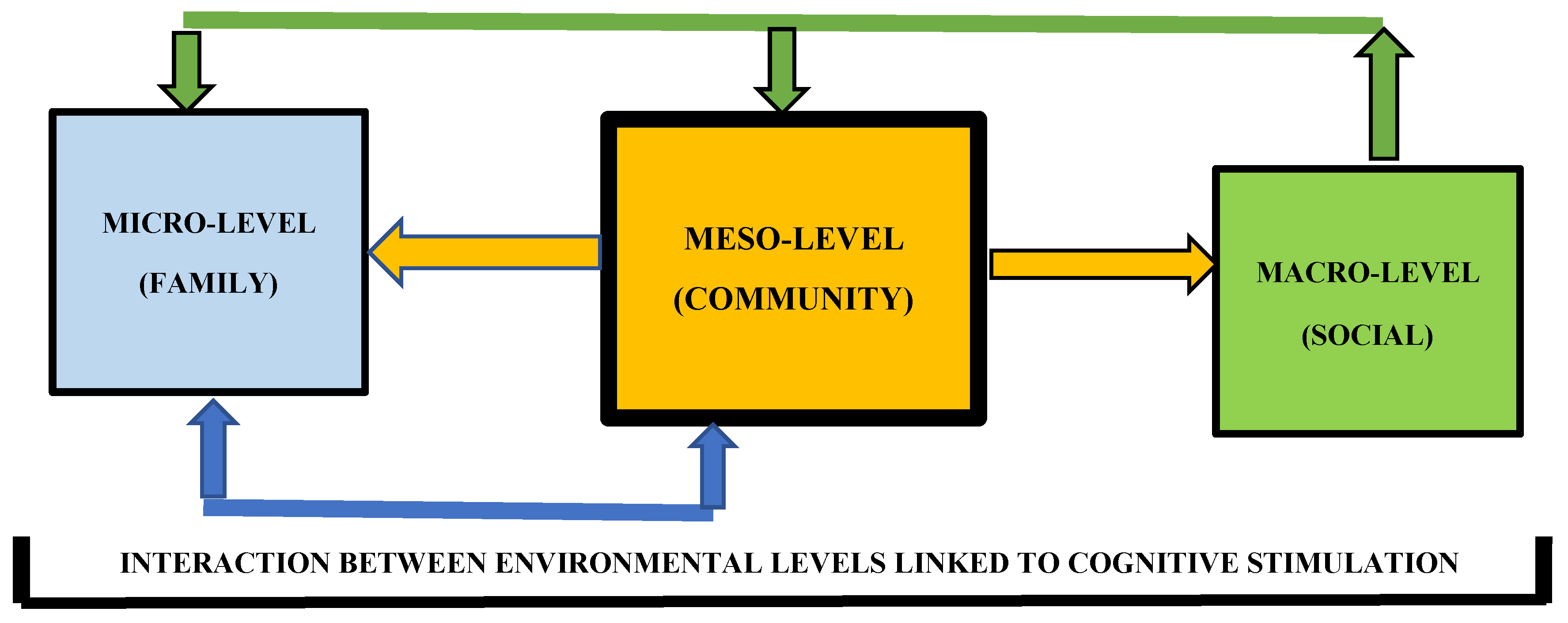
Figure 2.
Mechanisms that maintain cognitive performance. On the left are the elements that can promote cognitive maintenance, and on the right, those that impair it. At the top level are behaviors and environmental factors; those that promote cognitive stimulation, exercise, and a healthy diet, while those that negatively impact it are isolation, depression, stress, sedentary lifestyle, unhealthy diet, and air pollution. At the middle level are brain mechanisms; those that promote cognitive function are plasticity and neuronal scaffolding, while those that negatively affect it are inflammation and oxidative stress. At the bottom level are the consequences of both, identified through neuropsychological evaluation.
Figure 2.
Mechanisms that maintain cognitive performance. On the left are the elements that can promote cognitive maintenance, and on the right, those that impair it. At the top level are behaviors and environmental factors; those that promote cognitive stimulation, exercise, and a healthy diet, while those that negatively impact it are isolation, depression, stress, sedentary lifestyle, unhealthy diet, and air pollution. At the middle level are brain mechanisms; those that promote cognitive function are plasticity and neuronal scaffolding, while those that negatively affect it are inflammation and oxidative stress. At the bottom level are the consequences of both, identified through neuropsychological evaluation.
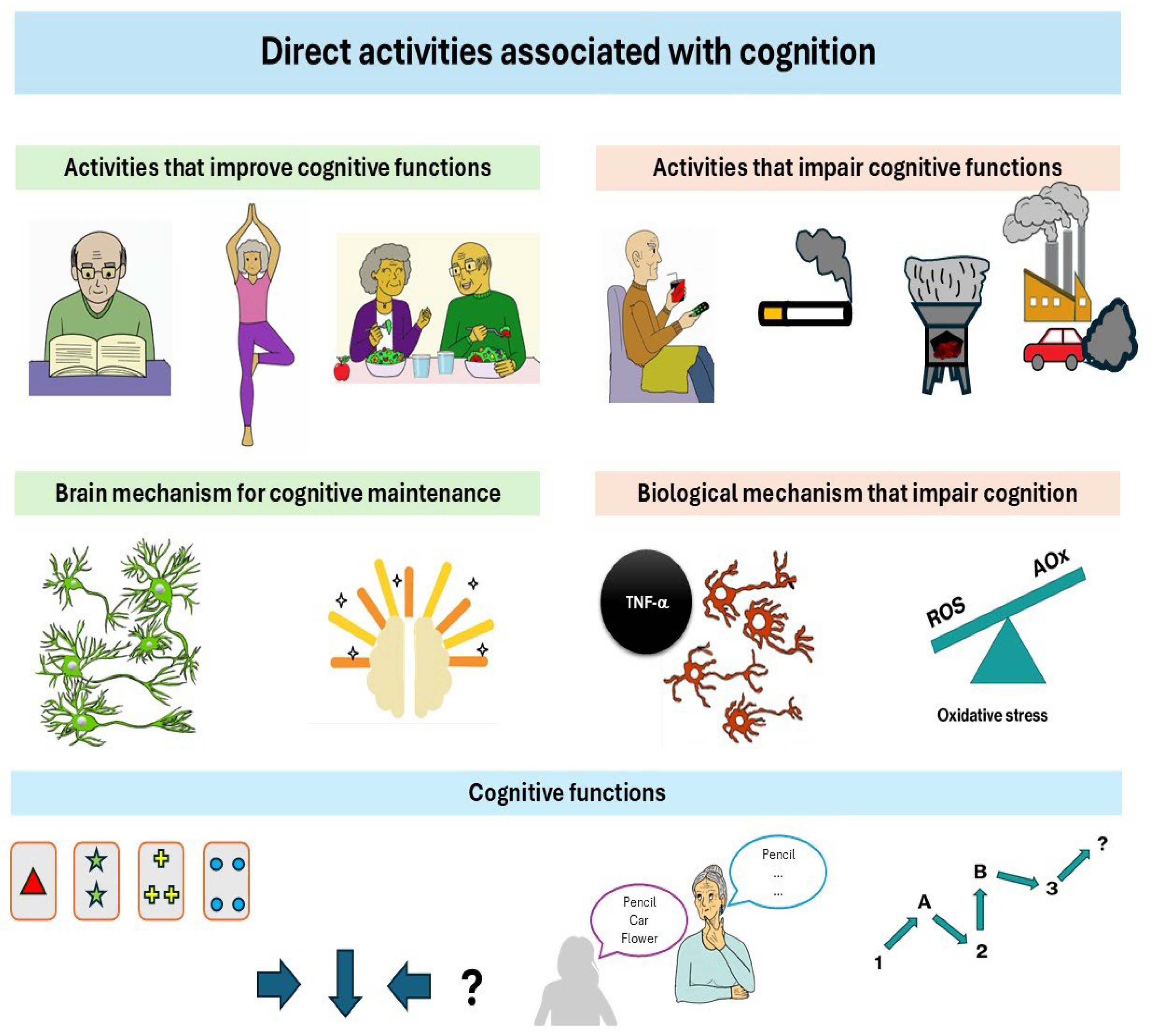

Table 1.
Environmental factors that promote the maintenance or impairment of cognitive performance in older adults.
Table 1.
Environmental factors that promote the maintenance or impairment of cognitive performance in older adults.
| Environment | Elements that improve cognition | Elements that damage cognition |
|---|---|---|
|
Micro-level (family) |
|
|
|
Meso-level (community) |
land use patterns | |
|
|
|
| Transport | ||
|
|
|
| Environmental design | ||
|
|
|
| Open spaces | ||
|
||
|
Macro-level (society) |
|
|
Disclaimer/Publisher’s Note: The statements, opinions and data contained in all publications are solely those of the individual author(s) and contributor(s) and not of MDPI and/or the editor(s). MDPI and/or the editor(s) disclaim responsibility for any injury to people or property resulting from any ideas, methods, instructions or products referred to in the content. |
© 2026 by the authors. Licensee MDPI, Basel, Switzerland. This article is an open access article distributed under the terms and conditions of the Creative Commons Attribution (CC BY) license (http://creativecommons.org/licenses/by/4.0/).
Copyright: This open access article is published under a Creative Commons CC BY 4.0 license, which permit the free download, distribution, and reuse, provided that the author and preprint are cited in any reuse.


