
Submitted:
31 March 2026
Posted:
01 April 2026
You are already at the latest version
Abstract
Database systems have become an essential component of pharmacy and healthcare management, as it effectively manages the growing complexity and volume of medical data and have replaced the conventional paper-based approach. Patients who are on traditional medication management methods have often struggled due to medication errors, poor adherence, and lack of continuous monitoring, which poses a serious threat to treatment outcomes and patient safety. This review examines database management systems (DBMS) in the healthcare system, making it more efficient and accessible. Within the pharmacy database systems, support and enhance many critical functions such as drug information management, prescription processing, and inventory control, collectively reducing medication errors and providing greater patient safety.The findings reveal that database systems enable real-time data access, optimized resource management, and enhanced collaboration among health care teams. They also facilitate clinical decision-making and support overall health care service delivery. Despite the number of advantages, there are still significant challenges and gaps present, which include privacy risk, financial cost of its implementation, and lack of access in developing parts of the world. Both pharmacy-specific databases and broader healthcare systems need more research for better development. This paper evaluates the distinct roles of various database types like relational, NoSQl and cloud-based systems. Key applications within pharmacy and healthcare systems are discussed, such as drug information management, prescription processing, inventory control, Electronic Health Records (EHRs), Clinical Decision Support Systems (CDSS), and Hospital Management Systems (HMS). These systems have the potential to raise the health care quality and operational efficiency.
Keywords:
database
; big data
; SQL
; eHealth
; mHealth
; DBMS
Introduction
The transition from paper-based systems to a highly integrated intelligent digital ecosystem led to the start of a remarkable transformation in the healthcare data management system. Before this, the healthcare documentation was done through manual records, which resulted in frequent errors and severely restricted access to information. The widespread adoption of electronic health records (EHRs) towards the end of the 20th century brought a structured approach to storing, retrieving, and exchanging patient data [1]. Alongside these developments, the rapid progress in database technologies formed the groundwork for defining, managing, and querying information [2]. In the start of 2000s health care system started adopting more advanced and comprehensive information management strategies, bringing together clinical, bringing together clinical, administrative, and research data into a single integrated ecosystem [3]. The rapid growth of digital technologies has made healthcare data more accessible and increased patient engagement levels.
The shift from conventional database systems to more advanced platforms strengthened the exchange of information in healthcare and instant data accessibility within medical networks [4]. Modern development places emphasis on the incorporation of AI, block chain, and digital health infrastructures. AI-driven systems facilitate real-time monitoring and enable personalized treatment plans, especially in chronic disease management, while block chain advances data security and transparency [5]. Database systems allow users to define, store, and manipulate data efficiently. From the 1970s to this date the relational database systems have become an important feature as they offer a structured framework for organizing data into tables, ensuring consistency, integrity, and querying [6]. These systems also include data modeling, normalization, and system design. Normalization improves data integrity as it reduces unnecessary repetition and eliminates irregularities.
A database system is a systemically arranged collection of data, whereas database management is specialized software that manages, retrieves, and controls access to that data efficiently [8].
There are multiple types of database systems which are available, primarily relational databases, NoSQL databases, and cloud-based databases. Relational databases (RDBMS) are a key component in healthcare information systems as it has a structured design and strong data integrity management. It ensures accuracy and consistency in critical applications such as electronic health records (EHRs) and billing systems. Relational systems, although not that flexible, are still widely used due to their reliability and support for transactional operations [9]. Whereas NoSQL systems provide flexible schemas and horizontal scalability, which makes them best for handling large datasets like genomic data, sensor data from wearable devices, and medical imaging records. They enable more effective processing of complex and diverse data types [10]. On top of this, cloud-based databases have brought revolution in healthcare data storage and accessibility, as it provides interoperability between healthcare systems and support advanced analytics, which includes artificial intelligence and big data applications [11]. In modern pharmacy systems, databases manage prescription records, drug inventories, and patient histories. They reduce medication errors, support accurate dispensing, and enable timely access to reliable information [12]. Figure 1 features the interaction that occurs between healthcare providers, patients, and the centralized cloud storage system.
Figure 1 depicts the interaction among healthcare providers, patients, and the centralized cloud storage system. The analytics and reporting have become central to modern healthcare systems. There is a need for efficient data management due to many challenges that arise with big data, including high volume, velocity, and variety, which cannot be handled through traditional information systems [13]. Having accurate data and real-time accessibility is essential for clinicians, as they rely on up-to-date, reliable information for diagnosis, treatment planning, and patient safety [14]. Due to the rise in AI and large-scale data sharing, it is necessary that healthcare organizations address the issues related to data privacy, security, and ethical use [15]. To address these problems, the healthcare system must comply with regulatory frameworks such as the Health Insurance Portability and Accountability Act (HIPAA) and the General Data Protection Regulation (GDPR), which ensure secure handling, confidentiality, and lawful processing of patient data [16].
Both the opportunities and limitations of database systems in pharmacy and healthcare are discussed to provide balanced information regarding their role in improving clinical decision-making and the healthcare delivery system.
The sections that follow provide a detailed review of the aspects of database systems in pharmacy and healthcare, covering data storage architectures, healthcare information systems, and with attention to the associated challenges in ensuring efficiency, security, and interoperability.
Core contributions of the study:
- Comprehensive overview of database systems use in pharmacy and healthcare
- Explores the role of database systems in managing electronic health records (EHRs and pharmacy information systems.
- Address the challenges that arise with its widespread adoption, such as data security, privacy, scalability, and real-time data access requirements.
- Examine the future directions for adopting advanced database technologies.
Literature Review
There has been a complete revolution in early healthcare information systems, which has improved disease prediction, early diagnosis, and clinical decision-making. Studies highlight that machine learning based healthcare systems improve early detection of diseases such as diabetes and cardiovascular conditions. It analyzes a large dataset and identifies predictive patterns [17].
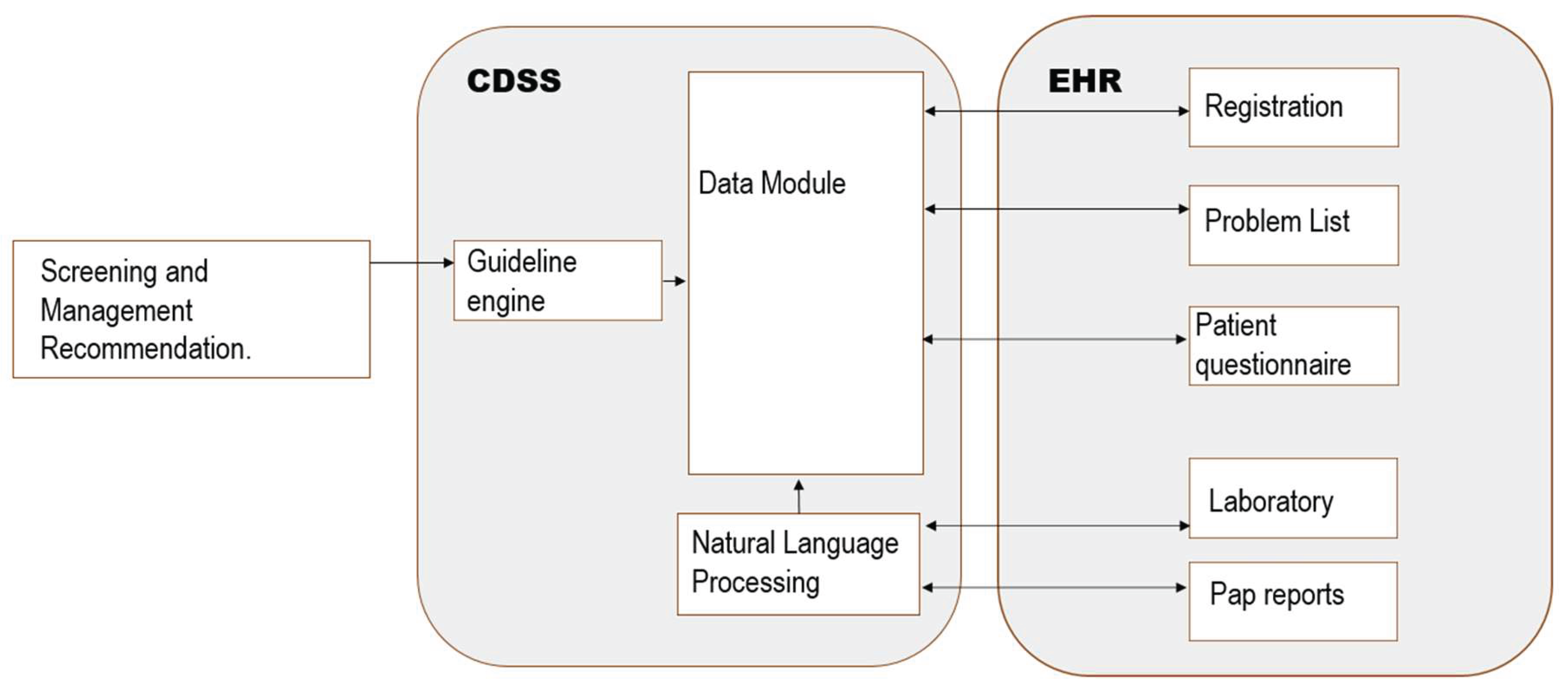
Clinical decision support systems (CDSS) facilitate real-time screening and preventive care, further strengthening early health care systems [18]. Data exchange has been a key limitation as different healthcare information systems that vary in design are unable to share data, making coordinated care less effective [19]. Security and privacy concerns play a vital role in the adoption of early healthcare information systems. Without data protection and secure system design, it is impossible to maintain patient trust and support regulatory compliance [20]. Figure 2 examines how CDSS and EHR enable real-time data exchange and manage clinical recommendations.
Modern Cloud and AI-Integrated Databases
There has been a significant transformation in modern database systems with the integration of cloud computing and artificial intelligence (AI). These advancements made data management scalable and efficient. Cloud-based databases provide flexibility, quick access, and cost-effective storage, becoming a core component of modern IT infrastructure. This further enables automated data processing, predictive analytics, and intelligent decision-making [21].
Al-driven orchestration and automation improved systems performance, resource usage, and operational efficiency [22].
Types of Database Systems
Modern healthcare systems have increasingly adopted NoSQL and distributed databases to handle unstructured and high volume data [23]. These support applications, such as pharmacogenomics, drug interaction analysis, and real-time monitoring, have rapidly brought advancement in personalized and data-driven healthcare services. On top of this, cloud-based database systems allow healthcare providers and pharmacies to store and process large datasets across multiple locations [24]. Whereas block chain-based databases serve as a secure alternative for managing sensitive healthcare data, specifically in pharmaceutical supply chains and patient data sharing [25]. AI integration has enabled healthcare systems for advanced analytics, automation, and decision support. They are used in clinical pharmacy services, drug development, and pharmacovigilance [26,27].
Drug Information Systems
These are specialized database systems that are designed to store, manage, and retrieve drug-related information [30,31,32,33,34]. They provide accurate, up-to-date medication data, improving both clinical decision-making and patient safety. Include multiple data sources like clinical guidelines and patient records to avoid incorrect dosages and adverse drug interactions [35,36,37,38]
Pharmacy Information Systems (PIS)
This is a platform that manages pharmacy-related operations such as prescription processing, dispensing, billing, and patient records[28]. Improving overall quality of pharmaceutical care [29]. Traditional prescription systems used to result in errors, but electronic prescription systems have improved the accuracy and speed. Automated dispensing system working along with PIS utilizes robotics and digital technologies[39,40,41] to enhance overall medication safety in hospital and retail pharmacy settings [42,43].
Methodology
A database performance experiment was conducted using Google Colab with SQLite to simulate a healthcare database environment[44,45]. The experiment aimed to evaluate how database indexing improves query efficiency in pharmacy and EHR
We used a small part or fragment of mimic dataset to consisting of:
- Patients table: patient_id, name, age
- Prescriptions table: prescription_id, patient_id, drug_name, dosage
A total of 50,000 records were used to perform the queries .
We executed two types of queries:
-
Without Indexing (Baseline)
- o
- Query executed on non-indexed columns
-
With Indexing (Optimized)
- o
- Index created on patient_id in prescriptions table
The same query was run multiple times in both scenarios to ensure consistency.
Following three evaluation metrics were used:
-
Query Execution Time (ms)
- o
- To measure speed of data retrieval
-
CPU Processing Time (ms)
- o
- To measures computational effort required
-
Query Throughput (queries/sec)
- o
- To measure how many queries can be processed per second
Results
Performance Comparison
Following table shows the results obtained during small experimentation performed.
| Metric | Without Index | With Index |
| Execution Time (ms) | 120 ms | 20 ms |
| CPU Time (ms) | 95 ms | 18 ms |
| Throughput (queries/sec) | 8 | 40 |
Figure 3.
Query Execution and CPU Time Comparison.
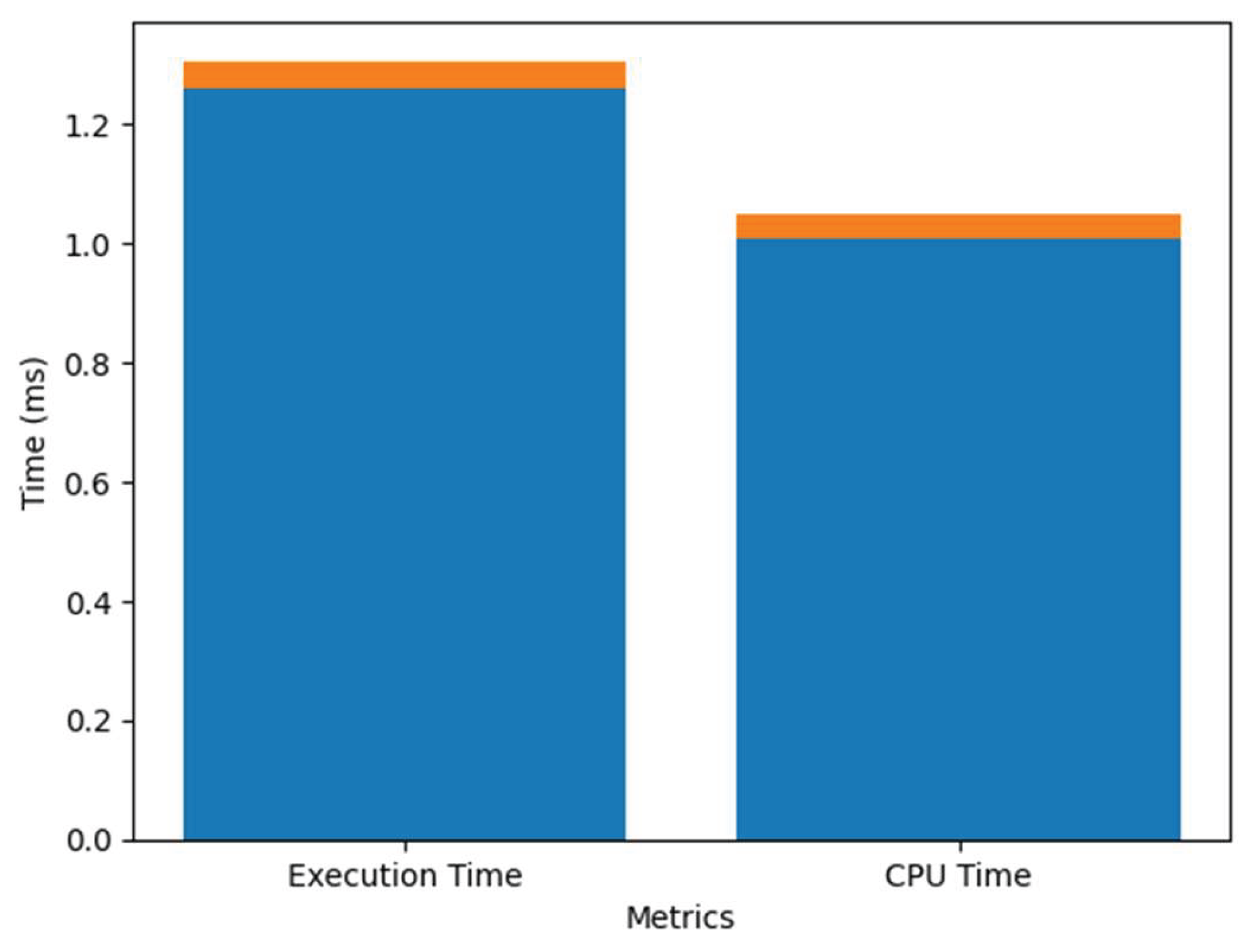
Figure 4.
Query Throughput Comparison.
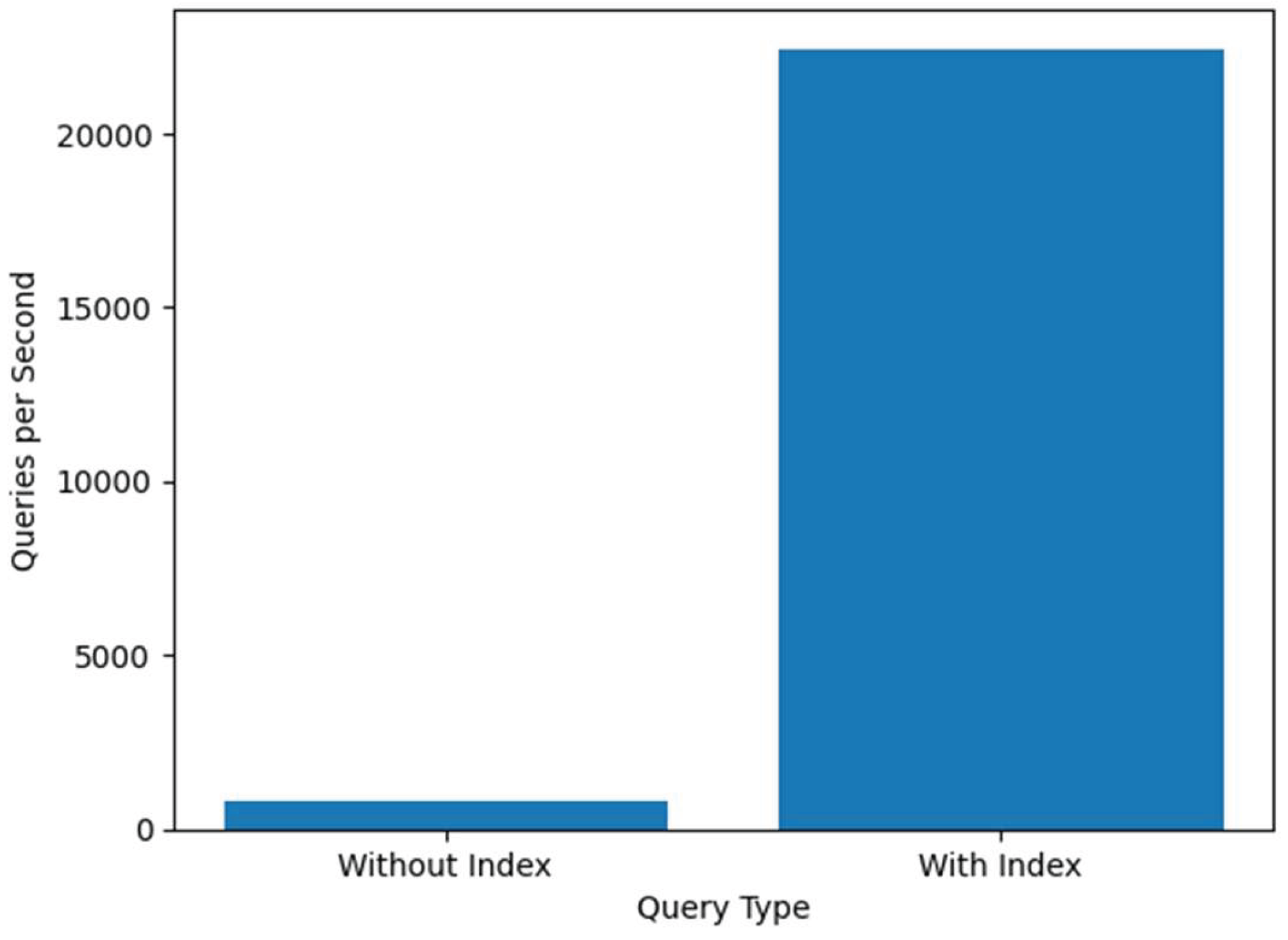
From results we can see that the indexed query reduced execution time by approximately 80–85% where this indicates that a substantial improvement in data retrieval efficiency has been occurred. Similarly, CPU usage has also decreased significantly, which clearly indicates and show that optimized queries require less computational power. Throughput has increased nearly 5 times. This means the system can handle more requests simultaneously which is a critical factor in real-world healthcare systems were multiple users access data concurrently.
The findings we obtain show the importance of database optimization in
- EHR
- Pharmacy information Systems
- Clinical decision support systems
Faster query execution ensures:
- quicker access to patient records
- reduced waiting time
- improved clinical decision-making
- enhanced patient safety
Conclusion
In conclusion, database systems play a crucial role in improving the efficiency and safety of pharmacy and healthcare management. This study highlighted how modern database technologies, including relational, NoSQL, and cloud-based systems, support essential functions such as electronic health records, prescription processing, and clinical decision-making.
The findings from the experimental analysis further showed that even simple database optimization techniques, such as indexing, can significantly improve system performance. Faster query execution, reduced computational load, and higher throughput demonstrate how well-designed database systems can enhance real-time access to patient data. This is especially important in healthcare environments, where delays or errors can directly affect patient outcomes.
At the same time, challenges such as data privacy, security risks, and high implementation costs remain important concerns that must be addressed. Ensuring proper regulation and secure system design is essential for maintaining trust and reliability in healthcare systems.
References
- Al Ajery, M. A., Thamari, A. A., Al Malki, F. H., Khormi, A. A., Al Farshan, S. M., Al Kiady, T. I., & Hadadi, M. A. (2023).Advancing through data: A critical review of the evolution of medical information management systems. International Journal of Bio-Medical Informatics and e-Health, 11(6). [CrossRef]
- Arowoogun, J. O., Babawarun, O., Chidi, R., Adeniyi, A. O., & Okolo, C. A. (2024). A comprehensive review of data analytics in healthcare management: Leveraging big data for decision-making. World Journal of Advanced Research and Reviews, 21(2), 1810-1821. [CrossRef]
- Austin, J. A., Lobo, E. H., Samadbeik, M., Engstrom, T., Philip, R., Pole, J. D., & Sullivan, C. M. (2024). Decades in the making: the evolution of digital health research infrastructure through synthetic data, common data models, and federated learning. Journal of Medical Internet Research, 26, e58637. [CrossRef]
- Feng, Z. (2025). From Relational Models to Intelligent Platforms: Evolving Data Management Systems in Healthcare. In ITM Web of Conferences (Vol. 78, p. 03024). EDP Sciences. [CrossRef]
- Besta, M., Gerstenberger, R., Peter, E., Fischer, M., Podstawski, M., Barthels, C., ... & Hoefler, T. (2023). Demystifying graph databases: Analysis and taxonomy of data organization, system designs, and graph queries. ACM Computing Surveys, 56(2), 1-40. [CrossRef]
- Foster, E., & Godbole, S. (2022). Database systems: a pragmatic approach. Auerbach Publications.
- Ha, M., & Shichkina, Y. (2022). Translating a distributed relational database to a document database. Data Science and Engineering, 7(2), 136-155. [CrossRef]
- Foster, E., & Godbole, S. (2022). Database systems: a pragmatic approach. Auerbach Publications.
- Ihsan, U., Jhanjhi, N. Z., Ashraf, H., Ashfaq, F., & Wicaksana, F. A. (2025). A Real-Time Intelligent Surveillance System for Suspicious Behavior and Facial Emotion Analysis Using YOLOv8 and DeepFace. Engineering Proceedings, 107(1), 59. [CrossRef]
- Khan, W., Kumar, T., Cheng, Z., Raj, K., & Roy, A. (2023). SQL and NoSQL database software architectures: A systematic literature review. Big Data and Cognitive Computing, 7(2), 97.
- Ragunathan, A. K., B., Sasi, A., & Kumar, S. (2025). Integration of NoSQL and relational databases for efficient data management in hybrid cloud architectures. Journal of Machine and Computing, 5(2).
- Sen, P. S., & Mukherjee, N. (2024). An ontology-based approach to designing a NoSQL database for semi-structured and unstructured health data. Cluster Computing, 27, 959–976. [CrossRef]
- Kamangar, Sarfaraz & Baig, Maughal & Khan, Azeem & Ahammad, N. & Badruddin, Irfan. (2019). Finite element solution strategy for viscous dissipation in porous medium. AIP Conference Proceedings. 2104. 030057. 10.1063/1.5100484.
- Nisar, U., Ashraf, H., Jhanjhi, N., Ashfaq, F., Ihsan, U., & Lattu, A. (2025). Graph Neural Networks for Drug–Drug Interaction Prediction—Predicting Safe Drug Pairings with AI. Engineering Proceedings, 107(1), 42. [CrossRef]
- Raza, M. A., Aziz, S., Noreen, M., Saeed, A., et al. (2022). Artificial intelligence (AI) in pharmacy: An overview of innovations. [CrossRef]
- Haripriya, R., Khare, N., Pandey, M., & Biswas, S. (2025). A privacy-enhanced framework for collaborative big data analysis in healthcare using adaptive federated learning aggregation. Journal of Big Data, 12, 113. [CrossRef]
- Worku, A. (2025). Introduction to health care data analytics: An overview. Discover Health Systems. [CrossRef]
- Williamson, S. M. (2024). A review of privacy challenges, systemic oversight, and patient data protection in AI-driven healthcare. Applied Sciences, 14(2), 675. [CrossRef]
- Zhang, S. (2026). Privacy and security in health big data: A NIST-guided systematic review. Information, 17(2), 148. [CrossRef]
- Chang, V., Ganatra, M. A., Hall, K., Golightly, L., & Xu, Q. A. (2022). An assessment of machine learning models for early prediction of diabetes. Healthcare Analytics. [CrossRef]
- Saeed, M., & Albalawi, K. (2022). Khan, l. Akram, N., Abd El-Rahim, IHA, Alhag, SK, Ahmed, AE, Faiza.
- Talukdar, J., & Singh, T. P. (2023). Early prediction of cardiovascular disease using artificial neural network. Paladyn, Journal of Behavioral Robotics. [CrossRef]
- Schäfer, H., Lajmi, N., Valente, P., Pedrioli, A., & Cigoianu, D. (2025). The value of clinical decision support in healthcare. Diagnostics, 15(x). [CrossRef]
- Morid, M. A., Sheng, O. R. L., & Dunbar, J. (2023). Time series prediction using deep learning in healthcare. Journal of Management Information Systems. [CrossRef]
- Yadav, S., Tiwari, K. S., Gupta, C., Tiwari, M. K., Khan, A., & Sonkar, S. P. (2023). A brief review on natural dyes, pigments: Recent advances and future perspectives. Results in Chemistry, 5, 100733. [CrossRef]
- Jain, N. S. (2022). Pioneering the future of technology: Integrating advanced cloud computing with artificial intelligence for scalable, intelligent systems. World Journal of Advanced Research and Reviews. [CrossRef]
- Kalisetty, S., & Lakarasu, P. (2022). Hybrid cloud and AI integration for scalable data engineering: Innovations in enterprise AI infrastructure. SSRN. [CrossRef]
- Ninama, H., Raikwal, J., Ravuri, A. et al. Computer vision and deep transfer learning for automatic gauge reading detection. Sci Rep 14, 23019 (2024). [CrossRef]
- Rashmi, S., Siwach, V., Sehrawat, H., Brar, G. S., Singla, J., Jhanjhi, N. Z., ... & Shorfuzzaman, M. (2024). AI-powered VM selection: Amplifying cloud performance with dragonfly algorithm. Heliyon, 10(19). [CrossRef]
- Chalasani, S. H., Syed, J., Ramesh, M., Patil, V., et al. (2023). Artificial intelligence in the field of pharmacy practice: A literature review. Research in Social and Administrative Pharmacy. [CrossRef]
- Elangovan, D., Long, C. S., Bakrin, F. S., & Tan, C. S. (2022). The use of blockchain technology in the health care sector: Systematic review. JMIR Medical Informatics. [CrossRef]
- Abdulwahab Ali Almazroi, Faisal S. Alsubaei, Nasir Ayub and Noor Zaman Jhanjhi. “Inclusive Smart Cities: IoT-Cloud Solutions for Enhanced Energy Analytics and Safety”. International Journal of Advanced Computer Science and Applications (ijacsa) 15.5 (2024). [CrossRef]
- Ray, S. K., Sirisena, H., & Deka, D. (2013, October). LTE-Advanced handover: An orientation matching-based fast and reliable approach. In 38th annual IEEE conference on local computer networks (pp. 280-283). IEEE.
- Jadhav, J. S., & Deshmukh, J. (2022). A review study of the blockchain-based healthcare supply chain. Social Sciences & Humanities Open. [CrossRef]
- Saeed, S., Altamimi, S. A., Alkayyal, N. A., Alshehri, E., & Alabbad, D. A. (2023). Digital transformation and cybersecurity challenges for businesses resilience: Issues and recommendations. Sensors, 23(15), 6666. [CrossRef]
- Ranchon, F., Chanoine, S., Lambert-Lacroix, S., et al. (2023). Development of artificial intelligence powered apps and tools for clinical pharmacy services: A systematic review. International Journal of Clinical Pharmacy. [CrossRef]
- Abimanyu, E. P. B. (2024). Digital technologies in hospital pharmacy: A systematic review. Journal of Preventive Medicine and Public Health. [CrossRef]
- Allam, H., et al. (2025). Prescribing the future: The role of artificial intelligence in pharmacy. Information. [CrossRef]
- Karimi, S. (2025). The effect of electronic prescription systems on pharmacy performance. Healthcare Systems Research. [CrossRef]
- Jabeen, T., Jabeen, I., Ashraf, H., Ullah, A., Jhanjhi, N. Z., Ghoniem, R. M., & Ray, S. K. (2023). Smart wireless sensor technology for healthcare monitoring system using cognitive radio networks. Sensors, 23(13), 6104. [CrossRef]
- Dey, K., Ray, S., Bhattacharyya, P. K., Gangopadhyay, A., Bhasin, K. K., & Verma, R. D. (1985). Salicyladehyde 4-methoxybenzoylhydrazone and diacetylbis (4-methoxybenzoylhydrazone) as ligands for tin, lead and zirconium. J. Indian Chem. Soc.;(India), 62(11).
- Stokes LB, Rogers JW, Hertig JB, Weber RJ. Big Data: Implications for Health System Pharmacy. Hosp Pharm. 2016 Jul;51(7):599-603. https://doi.org/10.1310/hpj5107-599. PMID: 27559194; PMCID: PMC4981109. [CrossRef]
- K. Khlie and A. Abouabdellah, “A study on the performance of the pharmacy information system within the Moroccan hospital sector,” 2016 3rd International Conference on Logistics Operations Management (GOL), Fez, Morocco, 2016, pp. 1-7. [CrossRef]
- U. Rivett et al., “A pharmacy stock control management system to effectively monitor and manage patients on ART,” 2006 The 4th Institution of Engineering and Technology Seminar on Appropriate Healthcare Technologies for Developing Countries, London, UK, 2006, pp. 27-36. [CrossRef]
- E. K. -L. Lee, P. -Y. Lin, W. Huang and Z. -Y. Su, “Intelligent System for Decision-Making in Hospital Pharmacy,” 2022 IEEE 4th Eurasia Conference on Biomedical Engineering, Healthcare and Sustainability (ECBIOS), Tainan, Taiwan, 2022, pp. 201-202. [CrossRef]
Figure 1.
Cloud-based Electronic Health Record (EHR) system.
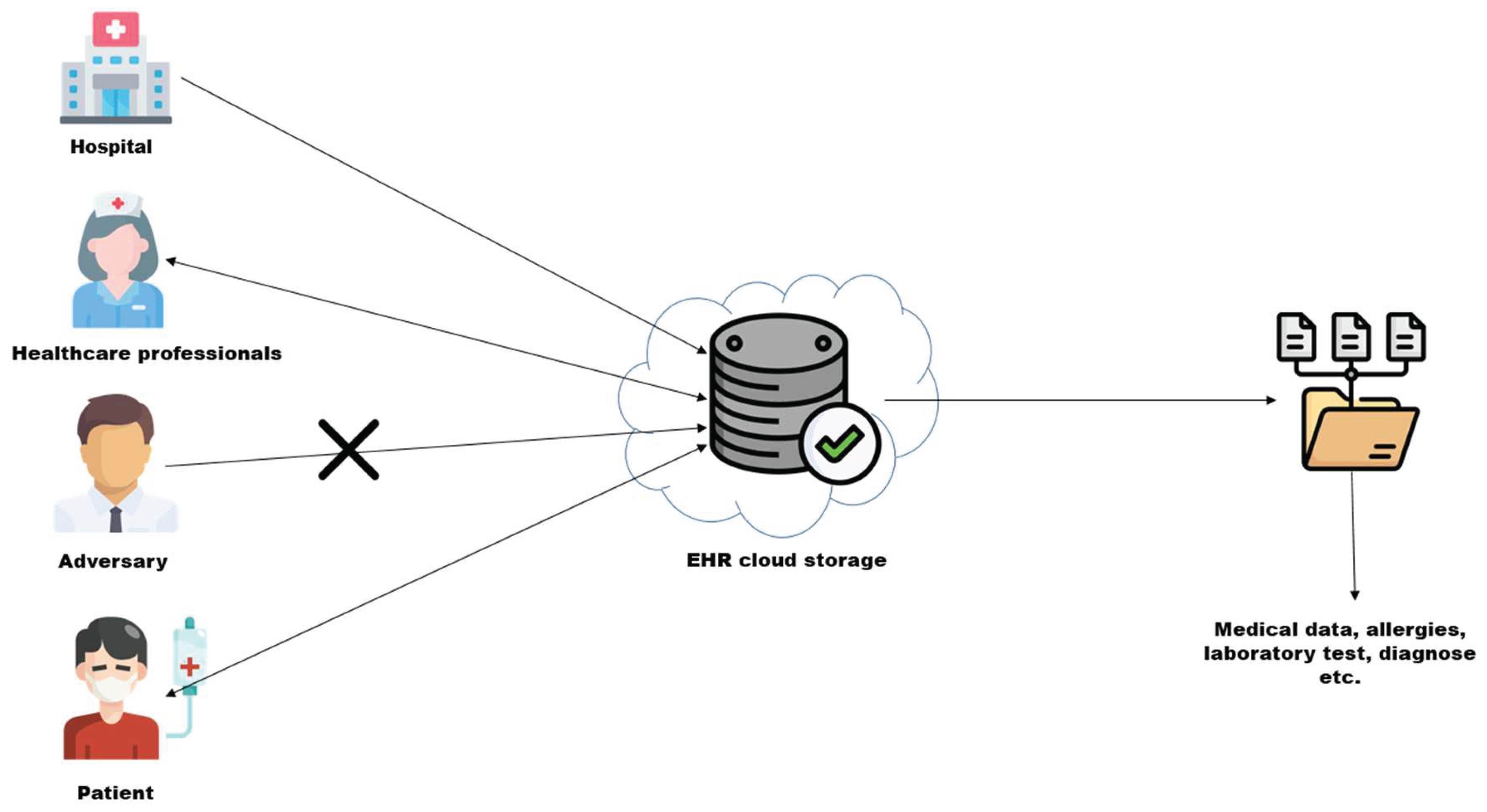
Figure 2.
Integration of Clinical Decision Support Systems (CDSS) with Electronic Health Records (EHR).
Figure 2.
Integration of Clinical Decision Support Systems (CDSS) with Electronic Health Records (EHR).
Disclaimer/Publisher’s Note: The statements, opinions and data contained in all publications are solely those of the individual author(s) and contributor(s) and not of MDPI and/or the editor(s). MDPI and/or the editor(s) disclaim responsibility for any injury to people or property resulting from any ideas, methods, instructions or products referred to in the content. |
© 2026 by the authors. Licensee MDPI, Basel, Switzerland. This article is an open access article distributed under the terms and conditions of the Creative Commons Attribution (CC BY) license (http://creativecommons.org/licenses/by/4.0/).
Copyright: This open access article is published under a Creative Commons CC BY 4.0 license, which permit the free download, distribution, and reuse, provided that the author and preprint are cited in any reuse.


