

Submitted:
31 March 2026
Posted:
01 April 2026
You are already at the latest version
Abstract
Digital health technologies have fundamentally transformed healthcare delivery by improving communication, monitoring, and patient-centered care. Patients who are on traditional medication management methods have often struggled due to medication errors, poor adherence, and lack of continuous monitoring, which poses a serious threat to treatment success and patient safety.The widespread growth of smartphones and mobile technologies has led to the development of mobile health (mHealth) applications. These serve as an effective tool for patients and healthcare professionals in managing medications more efficiently. These applications offer a diverse range of functionalities, from automated dosing reminders and prescription tracking to drug information databases and adherence-monitoring systems. They help patients stay on track with their medications, facilitate patient education, enable clinicians to monitor progress, and strengthen communication between patients and healthcare providers. Although these mobile health applications offer many advantages, they also present limitations, including data privacy and security risks, variable accuracy, regulatory complexities, and accessibility issues. Overcoming these limitations is required to unlock the full potential of digital health technologies. This review highlights the growth of digital health and mobile applications in medication management and confirms that continued advancements will further enhance patient care and medication outcomes. In this paper, we discuss conventional approaches to medication management before exploring how digital health applications are transforming the field by improving patient adherence, reducing medication errors, and making remote monitoring a practical and accessible reality.
Keywords:
digital health technologies
; healthcare delivery
; mobile technologies
; medication adherence
Introduction
Digital health includes a broad range of technologies, including mobile health (mhealth) applications, telemedicine, wearable devices, health information systems, and electronic health records. These all have led to professionals and patients being able to have access to their medical information, monitor health conditions, and manage treatments more effectively [1].
Over the past decade, digital technologies in health care have evolved rapidly. At the start, they were mainly used for administrative functions like managing patient records and hospital data. With the advancements in information technology, cloud computing, and mobile communication, the scope of digital health solutions has increased considerably to include telemedicine, remote monitoring, and data-driven, clinically focused decision support systems [2].
These contributions have collectively increased patient engagement, more effective diseases management, and improved health outcomes [3]. Figure 1 presents the conceptual framework of digital health-based medication management. Digital health technologies play a key role in medical management and patient adherence.
Medical management denotes the systematic process of prescribing, dispensing, administering, and monitoring medications to ensure safe and effective use. It includes appropriate medication selections, correct dosing, and patient education [4]. Conventional medication management depended on manual documentation, face-to-face consultation, and patient self-reporting. These led to incomplete patient records, lack of real-time monitoring, and limited communication between healthcare providers and patients. This resulted in delays in treatment modification and reduced efficiency in medication monitoring. Absence of centralized digital infrastructures made it difficult for healthcare providers to keep track of medication histories and identify drug related issues [5].
Studies have confirmed that a considerable number of adverse drug events can be prevented as they are mostly a result of incorrect dosing, drug interactions or miscommunication among health care professionals. Complex medication regimens, lack of patient education and forgetfulness are the reasons for poor adherence [6].
The rapid advancement of smartphone technology has significantly influenced the development of mobile health (mHealth) applications in healthcare systems. Mobile devices are widely accessible, which makes them a practical platform for delivering health services, monitoring patient conditions, and managing medication through mobile applications [7].
Mobile health applications such as Medisafe and MyTherapy allow patients to receive medication reminders, store prescription information, and access reliable drug-related data. These mobile health applications also facilitate real-time data collection and communication, hence play a significant role in advancing disease management and improving coordination of care [8].
This paper examines the role of digital health technologies and mobile applications in enhancing medication management and patient outcomes. We explore the advantages, challenges, and limitations of digital health tools and anticipate the promising role of emerging technologies, specifically artificial intelligence, in modern health care systems.
The following section examines the existing literature on digital health technologies, mainly focusing on their contribution to medication management and their impact on healthcare outcomes.
The core contribution of this research is as follows;
- Comprehensive review of digital technologies such as mobile health(mhealth) applications, electronic health records and use of AI in medication management.
- This study explores how digital health tools facilitate medication prescribing, monitoring, and adherence.
- The research highlights the key challenges regarding digital health technologies such as usability issues, privacy concerns, digital literacy barriers, and system integration problems.
- We examine the future potential of digital health technologies.
The main contribution of this study is the development of a survey-based simulation framework for evaluating medication adherence behavior under different digital intervention scenarios. By combining structured assumptions from literature with synthetic patient profiles, the study enables a controlled experimental setup to compare no-intervention, basic reminder systems, and AI-driven smart reminder applications. This approach provides a low-cost and scalable way to analyze behavioral healthcare outcomes while maintaining statistical rigor through t-tests, ANOVA, regression analysis, and effect size evaluation.
Literature Review
Digital health is the use of digital technologies to support health services, improve patient care, and enhance the efficiency of the health care system. It involves the fusion of information technology, communication tools, and digital platforms to streamline the collection, management and sharing of health information [9].
Telemedicine is the main component of digital health. This allows health care professionals to provide medical consultation and treatment to patients remotely through video calls, mobile applications, and online platforms. It is particularly beneficial for patients who reside in remote or underserved areas. Electronic health records (EHR) are another key component of digital health.
EHRs are comprehensive digital versions of patients’ medical records that store information such as medical history, diagnoses, prescriptions, laboratory results, and treatment plans. These systems facilitate health care providers’ access to and sharing of patient histories, improve care coordination, and reduce medical errors.
Mobile health technologies, also known as mHealth, are a significant component of digital health care. These technologies use mobile devices such as smartphones and tablets to support health services and health information delivery.
Electronic Health Records (EHRs) are the most important innovations that replaced traditional paper-based medical records and allowed healthcare providers to store, access, and share patient information electronically. These systems have shown remarkable improvement in the efficiency of health care services by enabling easier access to medical histories, laboratory results, and treatment plans [9]. Early digital systems marked the emergence of hospital information systems and clinical management platforms that supported administrative and clinical processes, supporting the day-to-day functions within healthcare institutions.
With the rapid advancements in technology, digital healthcare systems have also grown into more sophisticated platforms that bring multiple healthcare services together. Modern digital health platforms include a diverse range of technologies such as telemedicine systems, mobile health applications, wearable health devices and data analytics tools that support health care delivery and patient monitoring [10].
Alongside this, emerging technologies such as artificial intelligence, big data analytics, and digital twins have emerged to improve healthcare decision-making and predictive analysis in medical practices. These platforms boost patient engagement and support personalized treatment approaches [11].
Most mHealth applications have the ability to assist patients in managing chronic diseases such as diabetes, cardiovascular diseases, and respiratory disorders. These applications are equipped with different types of useful features such as symptom monitoring, medication tracking, educational content, and health data recording. Research has shown that medication reminders and education are the most used features [12].
These mHealth apps also collect patient-generated health data, which supports clinical decision-making and improves treatment outcomes. Studies show that the effectiveness of mHealth applications depends on user engagement, usability, and the extent to which patients consider these tools useful. Factors such as simple app designs, ease of use, and personalized health feedback can make it easier for patients to adopt and continue using these applications [13]. Development of a deep understanding regarding user characteristics and behavior is essential to improve the design and effectiveness of mHealth solutions [14]. These platforms have medication reminders, automated alerts and real-time monitoring systems which allow patients to follow their prescribed treatment with consistency, and these also help patients with taking medications at the correct time and dosage [15].
Mobile applications and digital pills enable healthcare providers to track medication intakes of patients and early identification of potential adherence issues [16].
Digital health platforms have enabled personalized and proactive healthcare management. They collect and analyze patient data, then offer a tailored treatment and support clinical decision making. These systems have demonstrated the ability to improve chronic disease management through continuous patient monitoring and facilitate medical interventions [17]. Better communication has increased patient engagement and results in improved health outcomes [18].
1. Artificial Intelligence in Medication Management:
AI technologies support different stages of medication managements. Tools such clinical decision support systems, predictive analytics, and mobile health applications assist healthcare professionals with making clinical decisions and improves patient safety. Table 1 presents important stages of medication management and role of AI in each stage.
2. Challenges and Limitations of Mobile Health
The rapid growth of digital health technologies [28,29,30] has undoubtedly transformed the healthcare system, yet several challenges and limitations still affect their effective implementation in healthcare systems.
2.1. Usability and Quality Issues
A prominent challenge that arises is the usability and quality of health applications. These apps vary in their design, functions, and reliability, which affect their usefulness to both patients and healthcare providers [31]. Evidence from studies has shown that some digital health applications fall behind on proper clinical validation and standardized evaluation methods, making it difficult to assess their effectiveness and safety.
2.2. User Engagement and Adoption Challenges
Low user engagement and poor adherence to digital health applications are other limitations of digital health applications [32]. Many users discontinue their use after a short period of time due to lack of motivation, poor interface design, or inadequate personalized features.
2.3. Digital Health Literacy and Accessibility
Digital health literacy plays an important role in determining the success of digital health technologies [33]. Patients who are particularly older adults or patients with limited technological skills may find it difficult to use these platforms. The literacy gaps can limit the benefits of digital health interventions.
2.4. Data Privacy and Security Concerns
Methodology
In this research work we use simulation based experimental design to evaluate the impact of mobile health (mHealth) applications [41,42,43] in relation to medical adherence. We used a simple survey data which included following variables:
- Age
- Number of prescribed medicines
- System Usage (0=No usage, 1=Mobile App)
- Medication Adherence Rate (%)
Patients were divided into three groups:
- 1)
- Group A:These were patients which were not using any app → Control Group
- 2)
- Group B: These were patients which were using app → Normal Group
- 3)
- Group C: These were patients which were using smart AI based Reminder System → Special Group
The objective is to compare medication adherence behavior under different digital intervention scenarios.
We also performed statistical independent sample t-test to evaluate the significance of the difference between the two groups.
Results
The T-test compared the mean adherence rates between patients group A and group B. The large absolute T-statistics and extremely small p-value (much less than 0.05) indicates a highly statistically significant difference between the two groups.
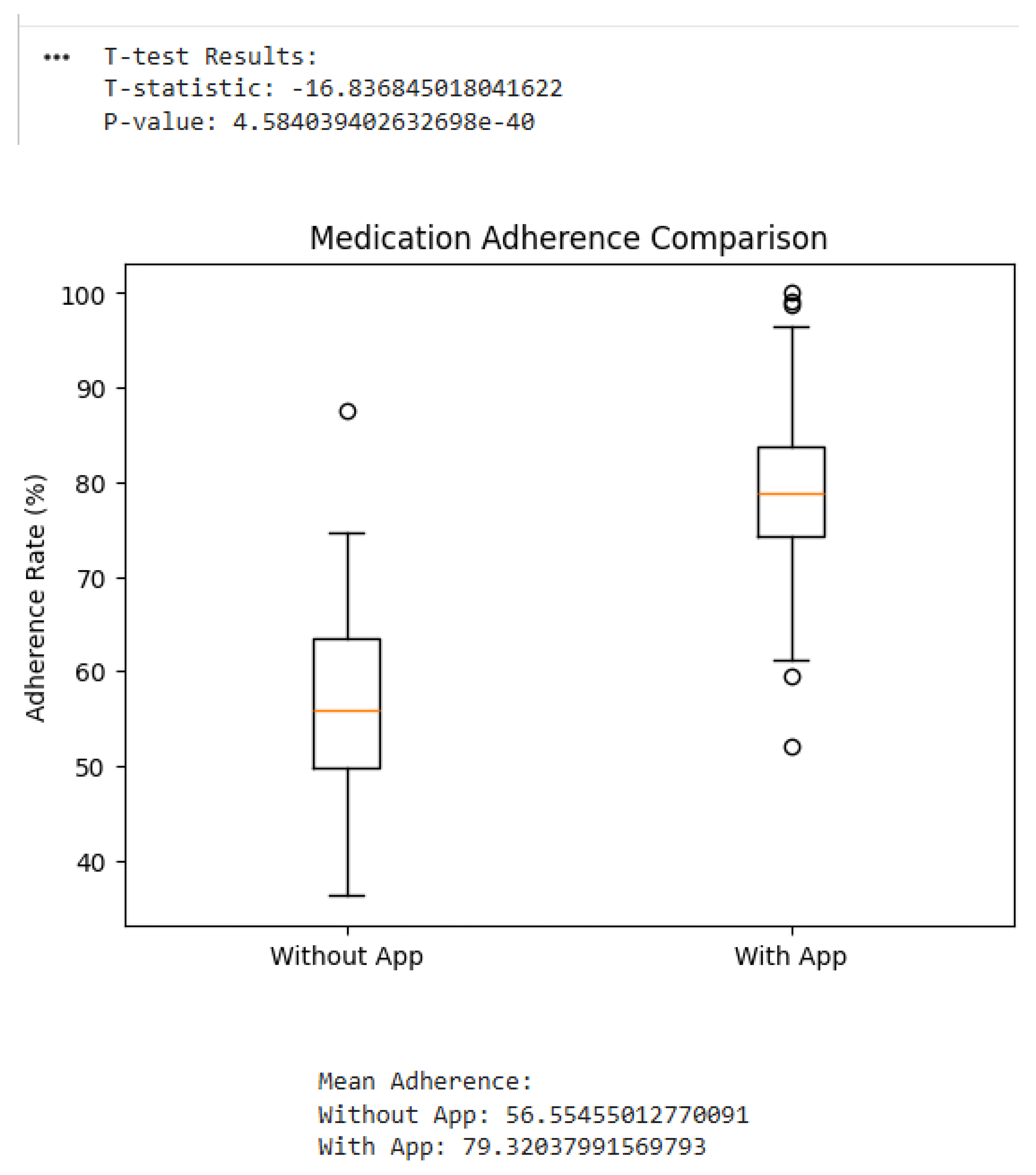
The above results show mean adherence show a great difference in average adherence rates. Patients using the app (With App) had a significantly higher mean adherence rate (79.32%) compared to those without the app (Without App) (56.55%). This supports the conclusion from the t-test that the app has a positive impact on adherence.
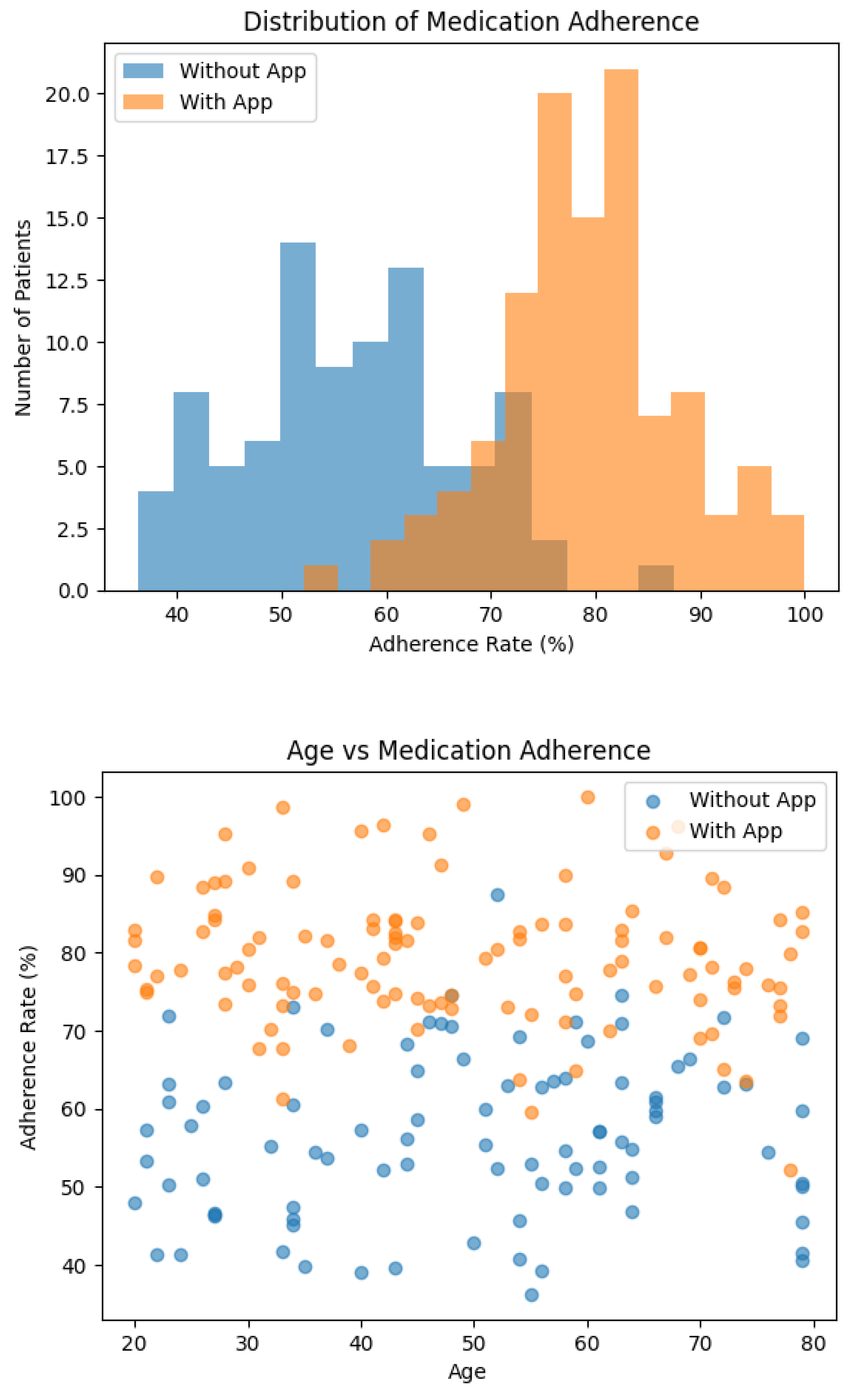
Then we did the linear regression model which explored the relationship between Age and Adherence. The coefficient of -0.0259 suggests a very slight negative relationship: for every one-year increase in age, the adherence rate is predicted to decrease by approximately 0.026 percentage points. The intercept of 70.35 represents the predicted adherence rate for a patient with an age of 0 (which is not practically meaningful in this context but serves as the starting point of the regression line).
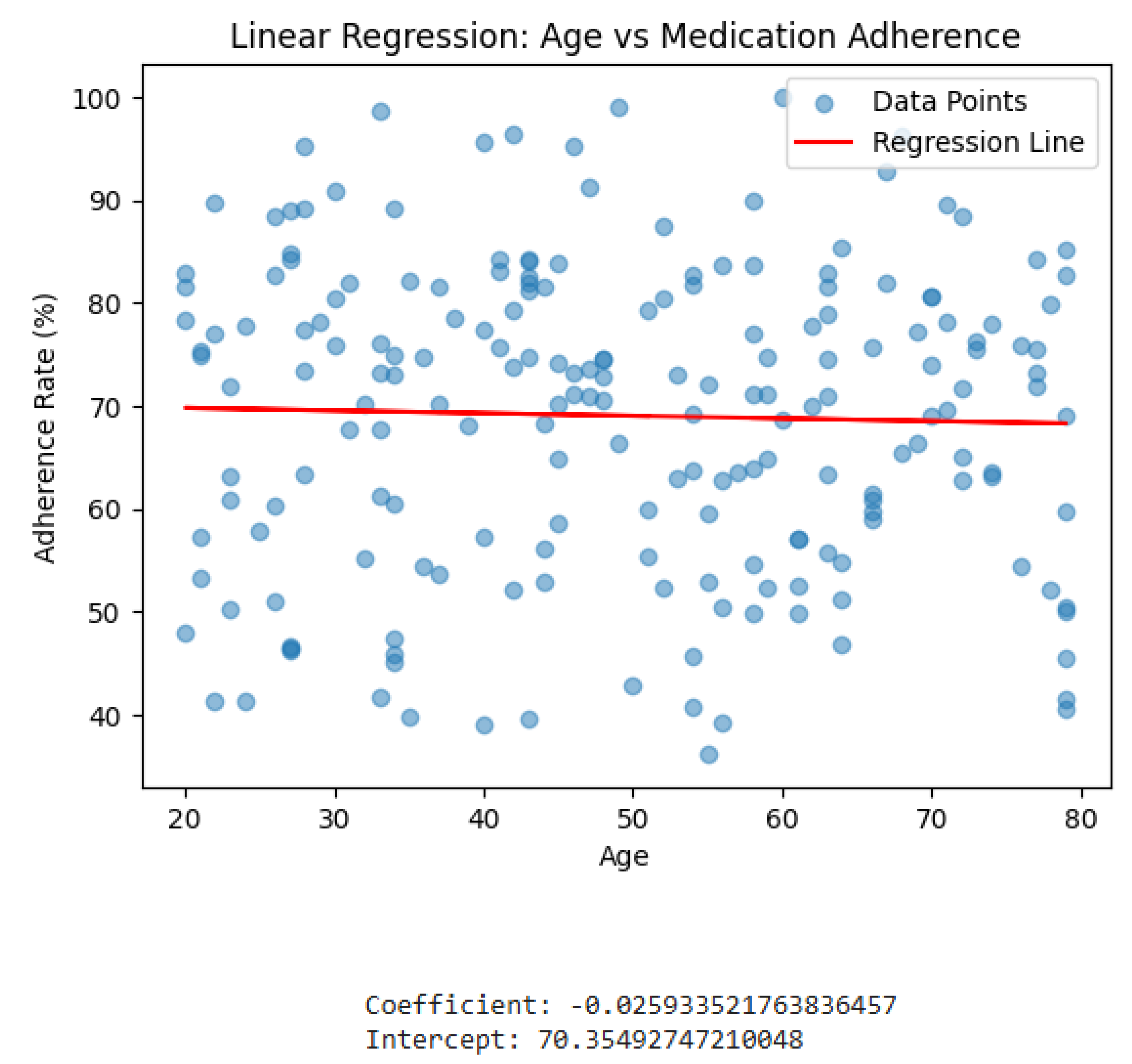
- The heatmap below is the correlation heatmap which visually represent the correlation matrix. The most notable correlation is between Reminder and Adherence (corr = 0.77). This strong positive correlation indicates that the presence of a reminder (app usage) is highly associated with higher medication adherence, reinforcing the findings from the t-test.
- Age and Medications show very weak (close to zero) correlations with Adherence, and also with Reminder, suggesting these factors have minimal linear relationship with adherence in this dataset.
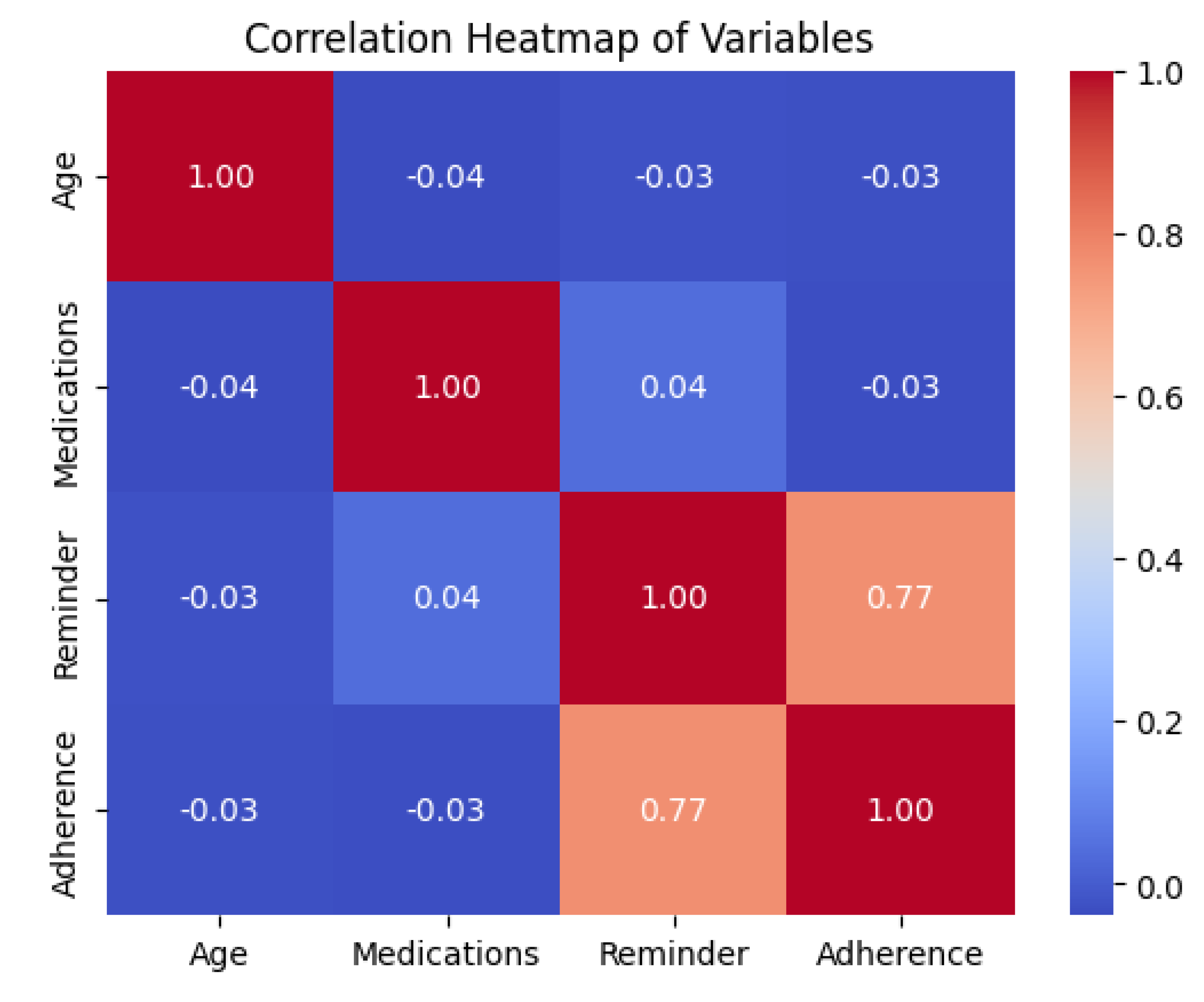
- Group 2: 73 patients
- Group 0: 66 patients
- Group 1: 61 patients
Below figure shows the distribution of patients across the three newly defined groups: ‘No app’ (Group 0), ‘Basic reminder’ (Group A), and ‘Smart AI reminder’ (Group C). The groups are fairly balanced in size.
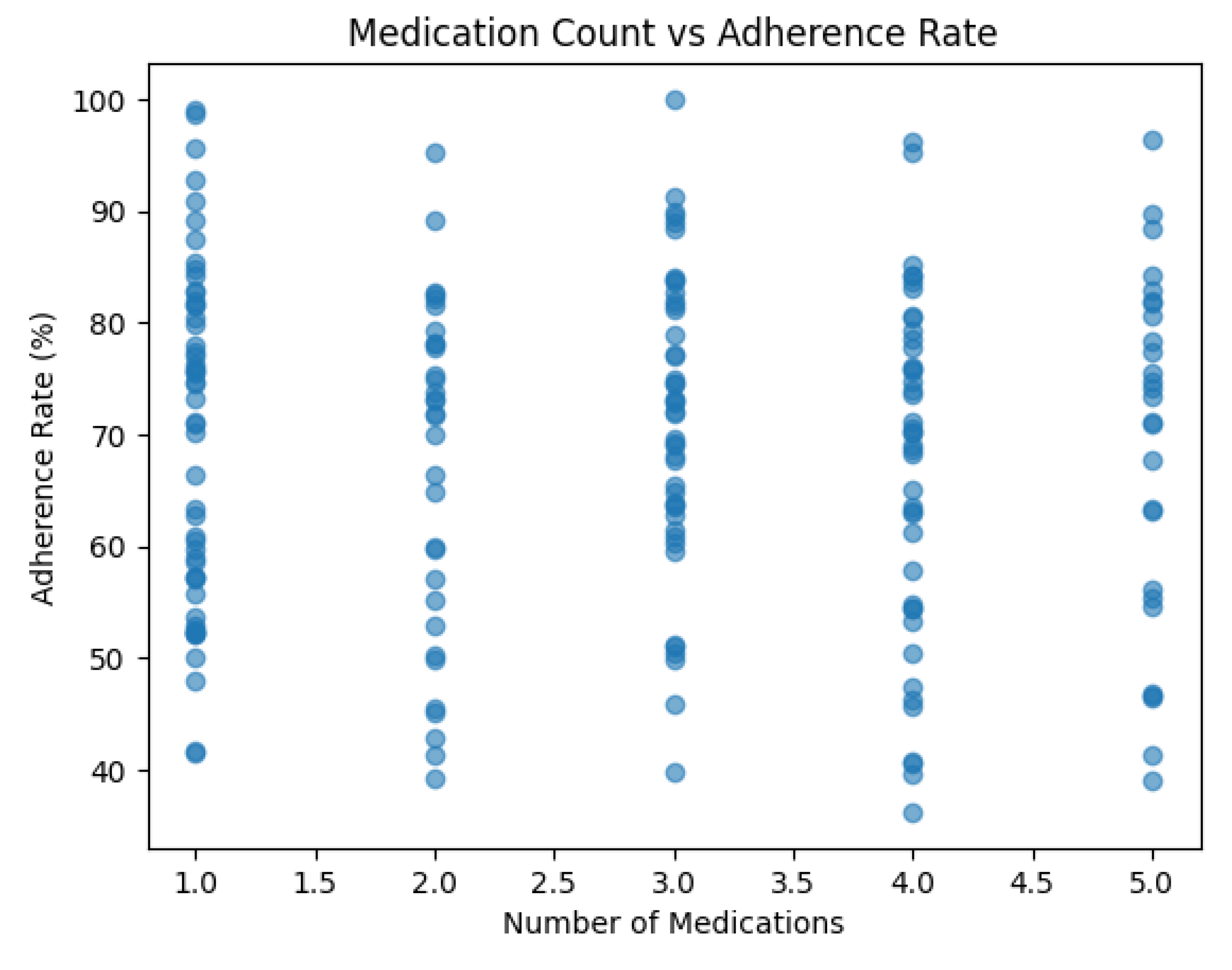
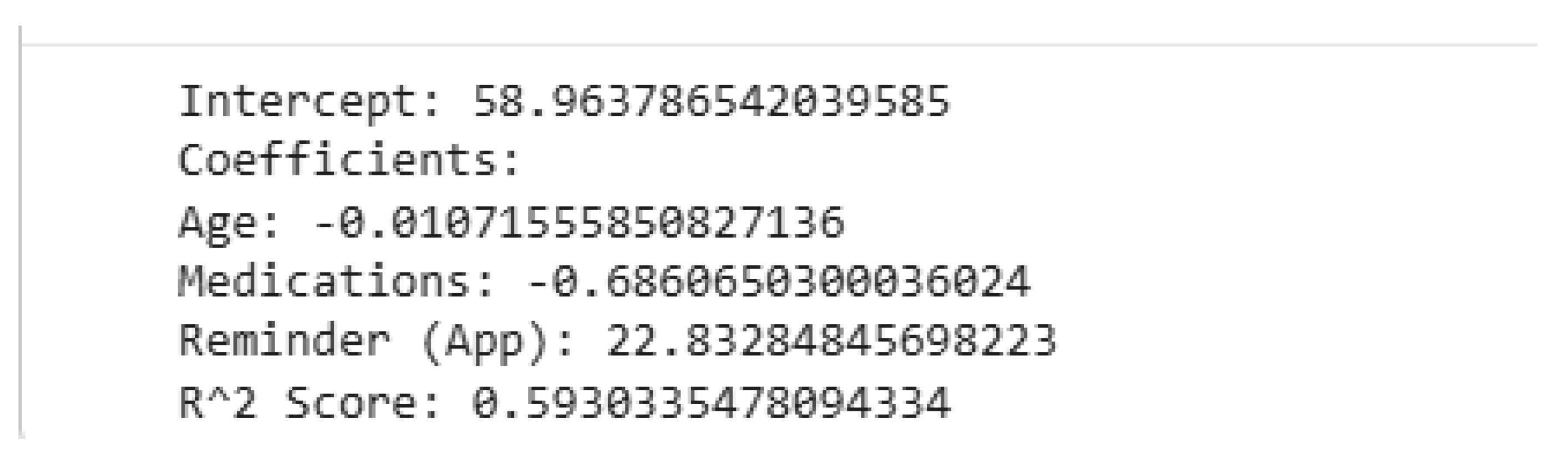
We also used the model to predict the adherence based on Age, Medications, and Reminder. The coefficients explain the impact of each variable while controlling for others:
- Age: A very small negative impact, similar to the simple linear regression.
- Medications: For each additional medication, adherence is predicted to decrease by about 0.69 percentage points, holding other variables constant.
- Reminder (App): This is the most impactful factor. Using the app (Reminder = 1) is associated with an increase of about 22.83 percentage points in adherence compared to not using it (Reminder = 0), holding age and medications constant.
- Score: An of 0.593 (or 59.3%) means that approximately 59.3% of the variance in medication adherence can be explained by this model using Age, Medications, and Reminder.
The ANOVA (Analysis of Variance) test compared the means of the three groups. The very large F-statistic and extremely small p-value indicate a highly significant difference in mean adherence rates among at least some of the three groups. This confirms that not all group means are equal.

Cohen’s d is a measure of effect size. A value of 2.87 is a very large effect size. This indicates a very substantial practical difference in adherence rates between the ‘Smart App’ (Group C) and ‘No App’ (Group A) groups, far beyond what might be considered small or medium. This suggests the Smart AI reminder has a very strong positive impact.

Below we show the results which provide the mean adherence rate for each group along with their 95% confidence intervals. The confidence interval gives a range within which the true population mean is likely to fall 95% of the time. We can observe that the confidence intervals for each group do not overlap, which further supports the conclusion that there are statistically significant differences between the adherence rates of the three groups, with the ‘Smart App’ having the highest adherence, followed by ‘Basic App’, and then ‘No App’.

Conclusion
This is a preliminary nature study where we reviewed the literature on digital health and mobile application using a small survey-based study. We concluded from small survey results that reminder apps can greatly improve medication adherence. Patients who used mobile apps consistently followed their medication schedules better than those who did not use any support system. Among the different types of apps, simple reminder systems improved adherence, while smart AI-based reminders showed the highest effectiveness.
Statistical results confirm that these improvements are not due to chance, and the effect is also practically meaningful, especially for the smart app group. In contrast, factors like age and number of medications had only a minor influence on adherence compared to the impact of the reminder system.
3. Future Potential
Although there are many limitations, they still have the potential to improve medication management in the future. Technologies such as artificial intelligence, mobile health application and wearable devices offer real time monitor of medication use and help health care providers make accurate decisions. With continued technological innovation and improved system integration, patient safety will be enhanced, reduce medication errors, and strengthen healthcare delivery systems [23].
References
- World Health Organization. WHO guideline: recommendations on digital interventions for health system strengthening; WHO: Geneva, 2019. [Google Scholar]
- Iyengar, K.; Upadhyaya, G. K.; Vaishya, R.; Jain, V. COVID-19 and applications of digital health technologies in healthcare. Diabetes & Metabolic Syndrome: Clinical Research & Reviews 2020, 14(4), 733–737. [Google Scholar]
- Torous, J.; Bucci, S.; Bell, I. H.; et al. The growing field of digital psychiatry: current evidence and the future of apps, social media, chatbots, and virtual reality. World Psychiatry 2021, 20(3), 318–335. [Google Scholar] [CrossRef]
- Jimmy, B.; Jose, J. Patient medication adherence: measures in daily practice. Oman Medical Journal 2020, 35(1), e145. [Google Scholar] [CrossRef] [PubMed]
- Keesara, S.; Jonas, A.; Schulman, K. Covid-19 and health care’s digital revolution. New England Journal of Medicine 2020, 382(23), e82. [Google Scholar] [CrossRef] [PubMed]
- Kwan, J. L.; Lo, L.; Sampson, M.; Shojania, K. G. Medication reconciliation during transitions of care as a patient safety strategy. Annals of Internal Medicine 2020, 172(11), 812–821. [Google Scholar] [CrossRef]
- Tariq, R. A.; Vashisht, R.; Sinha, A.; Scherbak, Y. Medication errors; StatPearls, 2021. [Google Scholar]
- Torous, J.; Bucci, S.; Bell, I. H.; et al. The growing field of digital health technologies and their applications in healthcare. World Psychiatry 2021, 20(3), 318–335. [Google Scholar] [CrossRef]
- World Health Organization. WHO guideline: Recommendations on digital interventions for health system strengthening; World Health Organization: Geneva, 2019. [Google Scholar]
- Barbieri, C.; Neri, L.; Stuard, S.; Mari, F. From electronic health records to clinical management systems: How the digital transformation can support healthcare services. Clinical Kidney Journal. 2023. [Google Scholar] [CrossRef]
- Kamangar, S.; Baig, M. A. A.; Azeem; Ahamad, N. A.; Badruddin, I. A. Finite element solution strategy for viscous dissipation in porous medium. In AIP Conference Proceedings; AIP Publishing LLC, 2019; Vol. 2104, p. 030057. [Google Scholar]
- Butcher, C. J. T.; Hussain, W. Digital healthcare: The future. Future Healthcare Journal. 2022. [Google Scholar] [CrossRef]
- Gouda, W.; Almurafeh, M.; Humayun, M.; Jhanjhi, N. Z. Detection of COVID-19 based on chest X-rays using deep learning. Healthcare 2022, 10(2), 343. [Google Scholar] [CrossRef] [PubMed]
- Saeed, M., & Albalawi, K. (2022). Khan, l. Akram, N., Abd El-Rahim, IHA, Alhag, SK, Ahmed, AE, Faiza.
- Bora, P.S.; Sharma, S.; Batra, I.; Malik, A.; Ashfaq, F. Identification and Classification of Rare Medicinal Plants. In Proceedings of the 2024 International Conference on Emerging Trends in Networks and Computer Communications (ETNCC), Windhoek, Namibia, 2024; pp. 1–6. [Google Scholar] [CrossRef]
- Jakob, R.; Harperink, S.; Rudolf, A. M.; Fleisch, E. Factors influencing adherence to mHealth apps for prevention or management of noncommunicable diseases: Systematic review. Journal of Medical Internet Research 2022. [Google Scholar] [CrossRef]
- Jin, X.; Yuan, Z.; Zhou, Z. Understanding the antecedents and effects of mHealth app use in pandemics. International Journal of Environmental Research and Public Health 2023. [Google Scholar] [CrossRef]
- Jabeen, T.; Jabeen, I.; Ashraf, H.; Ullah, A.; Jhanjhi, N. Z.; Ghoniem, R. M.; Ray, S. K. Smart wireless sensor technology for healthcare monitoring system using cognitive radio networks. Sensors 2023, 23(13), 6104. [Google Scholar] [CrossRef]
- Aziz, M.; Erbad, A.; Belhaouari, S. B.; Almourad, M. B. Who uses mHealth apps? Identifying user archetypes of mHealth apps. Digital Health 2023. [Google Scholar] [CrossRef]
- De Keyser, H. H.; Anderson, W. C.; Stempel, D. A. Digital health for asthma management: Electronic medication monitoring for adherence as a case example. Journal of Allergy and Clinical Immunology 2025. [Google Scholar] [CrossRef] [PubMed]
- Divya, R.; Shree, S. S.; Sakthiganesh, V. Digital pills: Enhancing patient outcomes through innovative medication management. Computers in Biology and Medicine 2025. [Google Scholar] [CrossRef]
- Feilong, Q.; Khan, N. A.; Jhanjhi, N. Z.; Ashfaq, F.; Hendrawati, T. D. Improved YOLOv5 Lane Line Real Time Segmentation System Integrating Seg Head Network. Engineering Proceedings 2025, 107(1), 49. [Google Scholar] [CrossRef]
- Yadav, S.; Tiwari, K.S.; Gupta, C.; Tiwari, M.K.; Khan, A.; Sonkar, S.P. A brief review on natural dyes, pigments: Recent advances and future perspectives. Results in Chemistry 2023, 5. [Google Scholar] [CrossRef]
- Li, Z. The impact and benefits of digital health management systems on chronic disease management. BIO Web of Conferences 2024. [Google Scholar]
- Ray, S. K.; Sirisena, H.; Deka, D. LTE-Advanced handover: An orientation matching-based fast and reliable approach. In 38th annual IEEE conference on local computer networks; IEEE, 2013; pp. 280–283. [Google Scholar]
- Brands, M. R.; Gouw, S. C.; Beestrum, M.; Cronin, R. M. Patient-centered digital health records and their effects on health outcomes: Systematic review. Journal of Medical Internet Research 2022. [Google Scholar] [CrossRef]
- Lim, M.; Abdullah, A.; Jhanjhi, N.Z. Performance optimization of criminal network hidden link prediction model with deep reinforcement learning. Journal of King Saud University - Computer and Information Sciences 2021, 33(10), 1202–1210. [Google Scholar] [CrossRef]
- Alon, N.; Torous, J. Current challenges for evaluating mobile health applications. Journal of the American Medical Informatics Association 2023. [Google Scholar] [CrossRef]
- Amagai, S.; Pila, S.; Kaat, A. J.; Nowinski, C. J. Challenges in participant engagement and retention using mobile health apps. Journal of Medical Internet Research 2022. [Google Scholar] [CrossRef] [PubMed]
- Dey, K.; Ray, S.; Bhattacharyya, P. K.; Gangopadhyay, A.; Bhasin, K. K.; Verma, R. D. Salicyladehyde 4-methoxybenzoylhydrazone and diacetylbis (4-methoxybenzoylhydrazone) as ligands for tin, lead and zirconium. J. Indian Chem. Soc. 1985, 62(11). [Google Scholar]
- Fitzpatrick, P. J. Improving health literacy using the power of digital communications to achieve better health outcomes. Frontiers in Digital Health 2023. [Google Scholar] [CrossRef]
- Istepanian, R. S. H. Mobile health (m-Health) in retrospect: The known unknowns. International Journal of Environmental Research and Public Health 2022. [Google Scholar] [CrossRef]
- Abernethy, A.; Adams, L.; Barrett, M.; et al. The promise of digital health: Then, now, and the future. National Academy of Medicine 2022. [Google Scholar] [CrossRef]
- Bajwa, J.; Munir, U.; Nori, A.; Williams, B. Artificial intelligence in healthcare: Transforming the practice of medicine. Future Healthcare Journal. 2021. [Google Scholar] [CrossRef] [PubMed]
- Jakob, R.; Harperink, S.; Rudolf, A. M.; Fleisch, E. Factors influencing adherence to mHealth apps for prevention or management of noncommunicable diseases: Systematic review. Journal of Medical Internet Research 2022. [Google Scholar] [CrossRef]
- Junaid, S. B.; Imam, A. A.; Balogun, A. O.; De Silva, L. C. Recent advancements in emerging technologies for healthcare management systems: A survey. Healthcare 2022. [Google Scholar] [CrossRef]
- Anwesa Chaudhuri, A. C.; Sanjib Ray, S. R. Antiproliferative activity of phytochemicals present in aerial parts aqueous extract of Ampelocissus latifolia (Roxb.) Planch. on apical meristem cells. 2015. [Google Scholar]
- Khairandish, M. O.; Sharma, M.; Jain, V.; Chatterjee, J. M.; Jhanjhi, N. Z. A hybrid CNN-SVM threshold segmentation approach for tumor detection and classification of MRI brain images. IRBM 2022, 43(4), 290–299. [Google Scholar] [CrossRef]
- Naik, N.; Hameed, B. M. Z.; Sooriyaperakasam, N.; et al. Transforming healthcare through a digital revolution: A review of digital healthcare technologies and solutions. Frontiers in Digital Health 2022. [Google Scholar] [CrossRef]
- Peng, Y.; Wang, H.; Fang, Q.; Xie, L.; Shu, L.; Sun, W.; Liu, Q. Effectiveness of Mobile Applications on Medication Adherence in Adults with Chronic Diseases: A Systematic Review and Meta-Analysis. J Manag Care Spec Pharm. 2020, 26(4), 550–561. [Google Scholar] [CrossRef] [PubMed] [PubMed Central]
- Qin, J.; Wu, Z.; Zhang, H.; Qi, X. Designing age-friendly interfaces and wearable–environment integrations to enhance medication adherence: a discrete choice experiment among older adults. Frontiers in Medicine 2026, 13. [Google Scholar] [CrossRef] [PubMed]
- Mehta, P.; Rao, A.; Upadhyay, N.; Mustafa, S.; Digra, V.; Wariar, A.; Soni, N.; Chatterjee, P.; Chakrawarty, A.; Sarwar, N. Use of Mobile Application for Improving Drug Compliance and Clinical Outcomes: A Randomized Controlled Trial. International Journal of Telemedicine and Applications 2026, 2026(1). [Google Scholar] [CrossRef] [PubMed]
- Drapkina, O.; Kontsevaya, A.; Deev, I. Programmatic approach to the prevention and control of hypertension as a key reserve for reducing mortality in the Russian Federation. Cardiovascular Therapy and Prevention 2026, 24(12), 4698. [Google Scholar] [CrossRef]
Figure 1.
Framework of Digital Health.
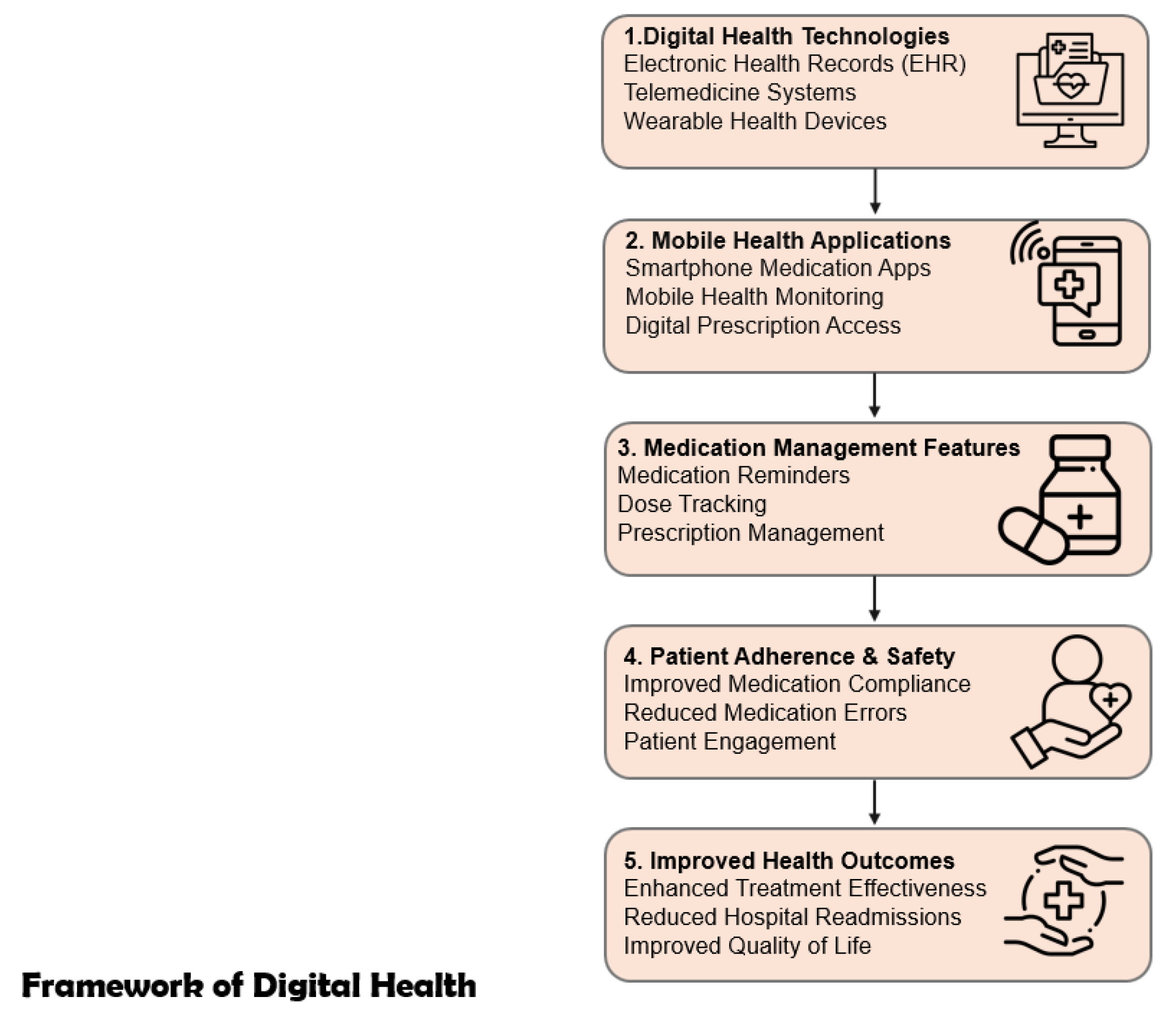

Table 1.
Role of Artificial Intelligence in Medication Management.
| Stage of Medication Management | Role of Artificial Intelligence | Benefits | Example AI Technologies | References |
|---|---|---|---|---|
| Medication Prescribing | AI assist physicians in selecting the most appropriate medication and dosage. | Reduces prescribing errors and improves treatment decisions. | Clinical Decision Support Systems (CDSS), Machine Learning algorithms | [23] |
| Medication Dispensing | AI supports pharmacy systems by verifying prescriptions, detecting drug interactions. | Improves accuracy in dispensing and reduces medication errors. | Automated pharmacy systems, AI-based verification tools | [24] |
| Medication Administration | AI systems monitor medication administration processes in hospitals and healthcare facilities to ensure correct drug delivery and timing. | Enhances patient safety and reduces administration mistakes. | Smart infusion pumps, AI monitoring systems | [25] |
| Medication Monitoring | AI analyzes patient health data from electronic health records and wearable devices | Enables early detection of drug-related problems and supports personalized treatment. | Predictive analytics, AI health monitoring platforms | [26] |
| Medication Adherence | AI mobile health applications remind patients to take medications. | Improves patient compliance and treatment outcomes. | mHealth apps, digital health platforms | [27] |
Disclaimer/Publisher’s Note: The statements, opinions and data contained in all publications are solely those of the individual author(s) and contributor(s) and not of MDPI and/or the editor(s). MDPI and/or the editor(s) disclaim responsibility for any injury to people or property resulting from any ideas, methods, instructions or products referred to in the content. |
© 2026 by the author. Licensee MDPI, Basel, Switzerland. This article is an open access article distributed under the terms and conditions of the Creative Commons Attribution (CC BY) license.
Copyright: This open access article is published under a Creative Commons CC BY 4.0 license, which permit the free download, distribution, and reuse, provided that the author and preprint are cited in any reuse.


