

Submitted:
30 March 2026
Posted:
31 March 2026
You are already at the latest version
Abstract
This paper discusses the sustainability of Urban Air Mobility (UAM) in smart cities across four dimensions: environmental, social, economic, and operational impacts. In the long term, UAM aircraft are expected to be autonomous and unmanned, however, there some UAM aircraft will have pilots in the immediate future. Economic factors reflect the financial viability of UAM, the business case for operations, public impacts from subsidies for vertiport and power infrastructure, and potential indirect costs from increased electricity demand and grid upgrades. Environmental impacts include energy use, emissions, and noise. Social considerations include vertiport siting, public acceptance, employment effects, land use changes, and distributional equity. Operational sustainability encompasses technical readiness, regulatory conditions, and UAM missions such as cargo delivery, passenger transport and emergency response. Using existing literature and case studies from U.S. cities to provide a summary of relevant topics, we analyze a UAM business case framework and estimate travel time savings for airport-to-downtown trips in Dallas and New York. We compare UAM energy intensity and emissions versus conventional transportation modes using a New York City application, and examine how vertiport siting impacts travel times, land use, and neighborhood noise. Operational considerations highlight early use cases most likely to deliver near-term benefits. We conclude with a research agenda to address gaps and guide sustainable UAM deployment.
Keywords:
UAM
; UAS
; sustainability
; smart city
; drones
; unmanned aircraft
; policy
; regulation
1. Introduction
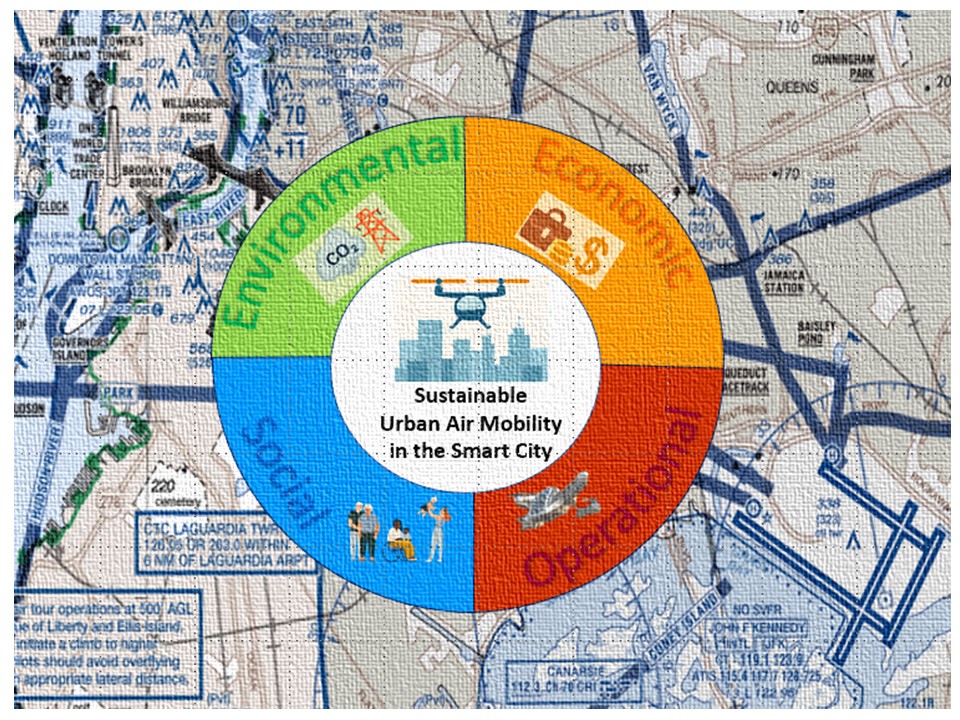
As cities confront increasing pressures from congestion and as technologies to support Urban Air Mobility (UAM) advance, interest has grown in UAM as an innovative mode of transportation to support mobility in the smart cities of the future while promising a faster, cleaner, and more efficient transportation option (He et al., 2025; Palaiologk & Arvanitidis, 2025). Supported by advances in electric vertical takeoff and landing (eVTOL) technologies, automation, communication networks, and battery technologies, UAM is proposed to move people and goods, and support emergency response and medical services. In the long term, UAM aircraft are expected to be autonomous and unmanned, however, there some UAM aircraft will have pilots in the immediate future. Although it is often suggested or implied that UAM will support sustainability, it is less common for research to provide a methodical and holistic examination of UAM sustainability in the context of all four components of sustainability, namely the economic, environment, social and operational impacts within the context of the existing land use and transportation in a developed urban area. This definition of four components of sustainability is consistent with the definition provided by the Federal Aviation Administration (FAA), as shown in Figure 1 (2025a).
While technology readiness has advanced significantly, UAM must be evaluated not as a stand-alone technology or transportation mode but as part of a broader smart city transportation system that relies on data-driven planning, multimodal integration, and holistic sustainability criteria (Di Vito et al., 2025). Within this context, this paper addresses the research question: what are examples of the sustainability considerations of UAM in existing cities with respect to the environmental, economic, social, and operational components based on existing information? This paper lays a framework for response to this question by examining these topics in the context of the literature, industry activities, and example case studies. After a review of sustainability considerations, the paper provides a brief discussion and identifies research gaps to foster the responsible and sustainable integration of UAM into the smart cities of the future.
2. Methods
This study uses a mixed-methods approach incorporating a literature review and a discussion of example case study applications for future eVTOL in US cities (e.g., the Dallas Fort Worth and New York metropolitan areas) with the examples informed by previous research, industry information (e.g., eVTOL manufacturers and industry groups) and government policies (e.g., Federal Aviation Administration (FAA) and European Union Aviation Safety Agency (EASA)). The case study examples address each of the four components of sustainability: economic, environmental, social and operational impacts and are intended to support a more robust appreciation for the context of UAM and emphasize the value of careful assessment across a range of areas as these systems are deployed.
3. Literature Review
A literature review was conducted using the database Scopus through the Purdue Libraries for documents related to UAM sustainability. The search used the term “UAM sustainability” in the article title, abstract or keywords and was limited to documents in English. The initial search considered open access documents in a journal or conference proceeding; papers that were not related to urban air mobility as transportation were eliminated (e.g., UAM can also stand for Universal Anesthesia Machine in medicine, Uneven-aged Management Sites in forestry, and the Autonomous Metropolitan University). A second search used the search term “UAM sustainability” in the article title, abstract or keywords and considered all journal articles with any of the following key words: Urban Air, Urban Air Mobility, Air Mobility, Sustainable Development, Urban Transportation and Sustainability. Each paper was reviewed and the major themes were identified, as well as how these themes relate to the primary areas of sustainability: environmental, operational, economic, and social considerations. To support seamless mobility in the smart city, in many cases UAM must also integrate with other modes of transportation, so this was also considered when reviewing the papers. A summary of the papers, including the purpose and relevance to the four sustainability components and integration with other modes, is shown in Table 1 and discussed in greater detail below. Note that there is substantial research that addresses elements of UAM sustainability, although it is not in Table 1 because it did not meet the search criteria. Some of this research on a component of UAM is included in the discussion and case study examples.
3.1. Economic
Economic viability must consider the costs (e.g., infrastructure, aircraft and operations) as well as the market demand or willingness to pay. Wu et al. (2025) and Liberacki et al. (2023) address infrastructure cost allocation, phased investments, and operational cost reduction. Research such as Bi et al. (2025) and Li et al. (2025) suggests demand is highly sensitive to pricing models, which would be expected. Demand and economic viability is also affected by operational considerations such as whether the aircraft are autonomous, and regulations for pilot requirements (if not autonomous). In terms of business models, research by Cohen et al. (2021) and Di Vito et al. (2023) explores market evolution and challenges for economic sustainability. Economically, multi-objective and phased planning approaches suggest UAM infrastructure should progress incrementally, balancing cost allocation with system-wide externalities and demand sensitivity to pricing (Wu et al., 2025; Bi et al., 2025).
3.2. Environmental
Environmental considerations in UAM research often focus on noise and emissions, and it is less common for environmental considerations to be presented in a holistic approach that includes a lifecycle assessment or metrics that reflect the environmental implications of the energy source used. Although not identified in this Scopus search since it was not framed in the context of sustainability, Khavarian and Kockelman (2023) conducted research on the life cycle of eVTOL that focused on environmental and cost factors. Numerous studies (e.g., Palaiologk et al., 2025, Tojal & Paletti, 2024, Bubalo, 2024, Koch and Asmer, 2020) emphasize minimizing carbon footprint, noise pollution, and trajectory optimization. UAM operations typically use electric propulsion (or in some cases, hydrogen) to reduce the environmental impact (Tojal & Paletti, 2023, Menichino et al., 2022, Zewde and Raptis, 2025). In some cases, environmental considerations are mentioned and discussed in a conceptual rather than quantitative context (e.g., Cohen et al., 2021, Huis, 2023). In many cases, the focus is on reduced local emissions (e.g., Zewde and Raptis, 2025), and some research, although less common, does consider carbon footprint and life-cycle emissions (e.g., Dziugiel et al., 2025, and Liberacki et al., 2023). Nonetheless, it it can be very difficult to assess the full impacts of UAM throughout the supply chain for aircraft, energy production and infrastructure.
Environmentally, studies converge on emissions and noise mitigation through electric propulsion (occasionally hydrogen), trajectory optimization, and weather-informed routing (e.g., RefMap by Palaiologk et al., 2025) as core levers, while cautioning that true impact depends on local energy mixes and lifecycle effects (Palaiologk et al., 2025; Tojal & Paletti, 2023; Dziugiel et al., 2025). The suggestion of increased sustainability through UAM relies upon a presumption of a green mix of electricity, which may be unlikely in the near term.
3.3. Social
Social considerations include acceptance, equity, and affordability and policy to support these objectives. These concerns are acknowledged in policy research by Biehle (2022), Di Vito et al. (2023), Santos et al. (2026), Raghunatha et al. (2023), and Wild (2024). Socially, acceptance is driven by perceived safety, trust, environmental awareness, and price sensitivity, with higher acceptance for public-service missions (e.g., medical and emergency logistics) than fully autonomous passenger services, at least in the near-term (Kim & Zhang, 2025; Li et al., 2025; Lee et al., 2025; Duca et al., 2023).
In many cases, social considerations are presented in a conceptual and qualitative rather than quantitative context. Few of the papers address affordability in depth and social considerations are outside the scope of many, if not most, technical papers. One social consideration is public perception, which is addressed by Kim & Zhang (2025); Li et al. (2025); and Lee et al. (2025). Public perception research often highlights the importance of trust, safety, and demographic factors, which are expected to influence how quickly UAM is adopted. Another consideration is community impact, which is addressed by Huis (2023) and Eissfeldt (2020), with research that identifies noise, visual pollution, and participatory approaches for UAM acceptance. Equity is also a social consideration, however, it is less often considered, although Lu et al. (2025) and Acceptance, Safety and Sustainability Recommendations for Efficient Deployment of Urban Air Mobility (ASSURED-UAM, a project funded by the European Union (EU) studies address fairness in infrastructure placement and service distribution, which highlights the important role of vertiport siting with respect to social considerations and overall sustainability (DiVito et al., 2023). Research by Wilde (2024) examines UAM from an urban science perspective and suggests that the key factor to ensure equity is to ensure that UAM is affordable for a wide range of income groups. In terms of social impacts, most of the research in Table 1 does not address distributional equity or environmental justice, which encompasses the potential risk of disproportionate negative impacts on disadvantaged populations and disproportional benefits to the wealthy.
3.4. Operational
Operational considerations are the most common theme and include topics such as trajectory optimization, coordination, and siting considerations (e.g., Deniz et al., 2024; Wu et al., 2025; Kim et al. 2024; Di Vito et al., 2023; Lu et al., 2025). Vertiport siting and capacity is considered in research by Wu et al. (2025), Lu et al. (2025) and Bubalo (2024), with analysis that includes site selection, spatial constraints, and airspace capacity. Vertiport siting also has social impacts, since operations may affect people on the adjacent land and in the vicinity of the vertiport.
Operational aspects also include air traffic management, which is addressed by research by Deniz et al. (2024) with a proposal for multi-agent reinforcement learning (MARL) to model and optimize operations in a complex and high-density environment and by Menichino, with an assessment of U-space (the automated air traffic management for UAM in the EU), as well as technical readiness of the supporting communication and infrastructure requirements, as well as propulsion technologies. Advanced modeling and digital integration are also documented in work by Dziugiel et al. (2025) and Bubalo (2024) with an exploration of digital twins, information and communication technologies, and integration for real-time optimization. Digital twins and simulation show that throughput is limited by aircraft size, parking and charging considerations, speeds, turn times, autonomy levels, and route length; these considerations underscore the need for detailed capacity planning (Bubalo, 2024). Advanced control may reduce travel times and conflicts, enabling smoother merges and crossings in structured urban airspace (Deniz et al., 2024) and supporting operational efficiency and safety. In addition to airspace capacity and air traffic management, research also considers operational issues at the vertiport such as autonomous landing guidance, which was investigated by Ahmed (2023). An important operational consideration is safety, which has significant overlap with social and economic considerations.
3.5. Integration with Other Transportation Modes and Additional Considerations
Integration with other transportation modes is closely related to land use and urban form, since transportation and land use are inherently related and appropriate planning is needed to ensure efficiency and seamless mobility and accessibility. Integration with other transportation modes also has a significant impact on social considerations, since siting will affect access.
Research addresses transportation integration via the investigation of airport shuttles (e.g., Kim & Zhang, 2025; Wu et al., 2025), as well as collaboration between drones and trucks for delivery (Xiao and Gao, 2024). In some cases, UAM is proposed as an alternate to existing transportation, commonly as an alternative to congested roadways, and in some cases as an alternative to existing rail transit (Bi et al., 2025). Some researchers consider UAM as a complement to existing ground transportation, with the resulting overall system supporting resilience and sustainability (Dziugiel et al., 2025).
Integration with other transportation modes including ground modes is rarely addressed in technology focused papers, but is addressed in policy papers, often in a qualitative way. Integration with other transportation modes is also addressed via Sustainable Urban Mobility Plans (SUMP) and Sustainable Urban Air Mobility Initiatives (SUAMI) (Palaiologk et al., 2025), integration with land-use and land-use planning, holistic clusters (Santos et al., 2025), and land use (Wu et al., 2025). Integration with other modes is both a design principle and an efficiency tactic: truck–drone collaboration lowers last mile costs and elevates resilience, while shared mobility concepts (e.g., mobile landing pads on buses) illustrate how UAM can induce sustainability in the wider system (Xiao & Gao, 2024; Dziugiel et al., 2025). While the integration of UAM with transit may promote equity and has been proposed by some research that was not identified in this Scopus search (e.g., Rahman et al., 2023), it does not seem very realistic in terms of business model, since UAM will likely be a preferred good (especially in the near term) and transit is typically a lower utility good. Integration with other modes could be considered a component of both the social and operational components of sustainability.
The regulatory framework is another theme that arose. The regulatory framework overlaps with all components of sustainability and encompasses aircraft certification, airspace use, and policy related to vertiport siting and environmental management, including noise and visual pollution. Aircraft certification is acknowledged as an important consideration for safety, which, as mentioned previously, spans operational, social and economic realms, and is supported by risk management and other activities. Huis (2023) and Di Vito et al. (2023) stress regulatory clarity for safety, certification, and urban airspace use, which will address needs related to the development of supporting policy and law. Menichino et al. (2022) discusses the ASSURED UAM project and includes an outline of enabling technologies and safety protocols, which can help support standards and risk management. The rights and responsibilities of operators and third parties such as government sponsors must be clear and public oversight of regulations and permitting may help ensure equity and community safeguards for environmental impacts (Huis, 2023; Menichino et al., 2022; Di Vito et al., 2023; Cohen et al., 2021). It may be challenging for public agencies to minimize negative impacts of UAM in terms of environment (e.g., noise) and social considerations (e.g., distributional equity and environmental justice), especially in light of recent administrative changes to US policy.
Table 2 provides an overview of some of the opportunities and promises, or benefits, of UAM, as well as some of the challenges, based on scholarly literature (e.g., as shown in Table 1) as well as industry publications (e.g., UIC2 – UAM Initiative Cities Community, EU’s Smart Cities Marketplace, 2021). Each of these concepts is considered in light of the four components of sustainability. While the expected benefits span all aspects of sustainability, perhaps the greatest benefits relate to social considerations. The challenges and uncertainties also span the four aspects of sustainability.
For UAM passenger service, phased implementation and limited capacity would limit benefits to a relatively small group, while the externalities may be borne by the larger community or by segments of the community. If not implemented well, UAM benefits and costs could mirror those of private aviation which benefits a small population of users but imposes costs onto the entire system. If the capacity of UAM is large enough to benefit a significant segment of the population, then negative externalities would likely increase with the increased operational footprint. Operational scenarios such as emergency response and medical services would provide more widespread and equitable community benefits, and the smaller scale would reduce negative externalities. This brings up the expected trajectory and evolution of UAM. While most scholarly papers suggest that the UAM era has not yet arrived, or is burgeoning with an uncertain timeline as technology and policies evolve, other research suggests that the UAM era started decades ago with the concept of flying cars, and the beginning of UAM was realized with the use of helicopters in urban transport as early as the 1950s to 1980s (Cohen et al., 2021). For example, on the west coast of the US, helicopter service using turbine powered Sikorsky S-62 provided 30 daily scheduled flights from San Francisco (SFO) and Oakland (OAK) airports to downtown heliports in the early 1960s (Briefings, 1961). Service was also provided from Disneyland and LAX (Garrow et al., 2021). This service was discontinued due to safety concerns and fuel costs. On the east coast of the US, service was provided from the Downtown Manhattan Heliport (Pier 6) to LaGuardia (LGA) and John F. Kennedy (JFK) airports through New York Airways. A similar service is currently provided by Blade, with scheduled service six days a week from JFK to Manhattan starting at $195 (Blade, 2026); charter service is also available.
Cohen et al. (2021) suggests the current use of on-demand aviation services (including jet share and charter services) lays the framework for future UAM that will use VTOL in designated corridors; this will be followed by hub and spoke UAM with multiple vertiports in the city, and finally, point-to-point on-demand air taxi service with numerous vertiports and vertipads (smaller facilities for landing without charging capabilities) throughout the city. This evolution focuses on passenger service, and raises the issue of distributional equity, which may be a concern for UAM, since current on-demand aviation services remain a preferred good and the province of only the most wealthy. This highlights the uncertainty related to the operational model for UAM, which affects not only UAM operations, but also the sustainability considerations in terms of social and community impacts, environmental impacts, and financial viability.
4. Exploration of UAM Sustainability Through Case Study Examples
This section presents case study examples to explore different aspects of the sustainability as it relates to the economic, environment, social and operational components. In terms of economic, the viability of UAM is affected by the UAM business model, which encompasses how UAM, including air taxis, cargo drones and supporting infrastructure, create and monetize value. Key considerations include the convenience and speed of UAM (and the travel time advantage relative to current modes), and whether UAM will attract and drive an innovation ecosystem, and spur economic development as occurred with Silicon Valley CA in the 1990s due to the tech sector and Detroit in the 1940s due to automobile manufacturing. UAM as a catalyst for a broader economic surge may be used to justify UAM investments in the context of economic development; however, there is no model on which to reliably predict or justify the return on investment (ROI) for such an investment. The case study in this paper focuses on the travel time advantages of UAM relative to existing modes, but it is also important to acknowledge that UAM would require significant investment in infrastructure, including air traffic management, vertiports, charging facilities and in some cases the expansion of the electric grid to provide power.
The increase in electricity demand from UAM raises the issue of grid capacity and emissions for the source energy. Charging eVTOL would require significant energy, with estimates that a vertiport with two charging stations would require as much as 1 MW of power, which represents the energy required for about 750 homes (Kelly, 2024). In addition to any direct public subsidy for UAM infrastructure such as vertiports, the public may also pay an indirect cost for UAM in terms of higher electricity rates due to the increased electricity demand associated with the intensive energy requirements of UAM. This may be analogous to the increase in consumer electricity costs realized due to data centers and AI. Modeling by Carnegie Mellon and North Carolina State Universities suggests that growth in data centers and cryptocurrency mining could increase electricity costs by 8% and greenhouse gas emissions by 30% due to increased demand for electricity and the associated impact of increased electricity generation (Blackhurst et al., 2025). Households in some states have already seen dramatic increases in electricity costs, with increases in Maine and Connecticut of 36.3% and 18.4%, respectively, from 2024 to 2025 (Mesa, 2025). Thus, UAM may have economic impacts and social costs beyond the direct operation of eVTOL.
The electric grid is relevant not only when considering financial and economic considerations, but also for environmental reasons, since the generation of electricity usually results in emissions. In many cases, research highlights that eVTOL and UAM eliminate local emissions, without acknowledging the emissions that are generated by the creation of energy (this is explored in the environmental subsection). This is explored in the environmental section. Another environmental consideration is noise, which may also be considered part of the social component, due to the impact on individuals and communities.
Discussion of the social component includes a discussion of the framework for siting vertiports, since this will affect access to UAM, and may present negative externalities for the adjacent land uses. A comparison of the siting considerations for the US and EU provides a context for the discussion. Although not addressed by the examples in this paper, the viability of UAM is also affected by public acceptance, which affects demand for UAM, and the willingness of the public to allow vertiports and vertipads in their neighborhoods, which would be reflected by local and state zoning rules and decisions regarding vertiports and allowable land uses. Public acceptance will also affect the willingness to provide subsidies for vertiports through federal, state and local funds.
The final section presents a discussion of operational considerations and explores the expected applications by examining the characteristics of some aircraft that are being developed. The operational characteristics obviously have significant overlap with sustainability components, since it drives the business case (e.g., trip length and return on investment (RIO)), environmental impacts (including energy use and emissions), and social impacts (e.g., equity). The next sections provide additional discussion of the four components of sustainability supported by example case studies.
4.1. Economic Considerations
One relevant economic consideration is the UAM business model. In terms of revenue streams, most scenarios suggest that UAM will include passenger services with air taxi rides on demand (similar to Uber or Lyft only in the air), cargo delivery via drone, and emergency services via air ambulance. Beyond the revenue and expenses associated with each trip or delivery, the infrastructure use (e.g., fees for vertiport access, charging, and parking), aircraft (e.g., capital and maintenance), and operations (e.g., personnel, technology, airspace management, and insurance) must be included in the economic accounting. There may be partnerships with corporations and municipalities, both for operational collaboration, as well as for the development of infrastructure through public-private partnerships.
There are a number of potential challenges, including the high capital costs associated with aircraft and infrastructure (such as vertiport structures, energy capacity, and technology), regulatory challenges (including certification, safety and airspace rules), financial risk associated with uncertainty and narrow margins, and public acceptance, not only associated with willingness to adopt, but also larger social concerns regarding noise, safety and equity. Table 3 compares the UAM business model with the business model for traditional ground transportation.
In terms of the business model, Joby Aviation serves as one example and proposes an on-demand air taxi model with up to four passengers traveling 150 to 200 mph to bypass congestion and claims near zero noise and emissions (Joby, 2026), although higher speeds may not be reached on shorter trips within the urban area and may be more likely for longer trips between cities. Other companies have a similar model, with variations due to aircraft size (e.g., Volocopter has a two-seat aircraft (Volocopter GmbH, 2026), speeds, targeted trip length, and trip purpose. In terms of revenue streams, current UAM business models suggest revenue streams will be realized from passenger fares and aircraft sales and potentially from fees for use of private infrastructure, strategic partnerships (such as corporate and military customers), data analytics and integration with other digital platforms.
In terms of partnerships, both airlines and automobile companies may provide an important role in scaling operations. Some researchers have suggested that the infrastructure will require a public subsidy (e.g., Solanki et al., 2023; European Union Aviation Safety Agency (EASA), n.d.a), potentially supported at the local, state or federal level. Recent Florida legislation allows the state to provide funds for vertiports, although no funding is currently allocated (Florida Senate Bill, 2026). An important consideration for success of the business model is the fare for passenger service. Example fares are shown in Table 4.
Values range from less than $2 per mile, to more than $10 per mile. These values may be underestimated if analysis focused on direct operational cost without consideration of the need to reposition aircraft and routes that are not direct due to air traffic management practices and vertiport locations. Many of these values are not very current (and they have not been adjusted for inflation), because current information rarely predicts fares. The wide range of proposed values highlight the uncertainty associated with the economic impacts and financial feasibility of UAM. The success of UAM as a business case is significantly affected by a wide variety of factors, from public investment in infrastructure to occupancy levels realized for trips. Values may also be low because private companies looking for investors may be optimistic in fare forecasts to encourage private sector investments. Similarly, long term and aspirational forecasts assume increased efficiency and technology improvements that will drive down costs. In other cases, the cost of service shown in Table 4 was not sustainable and the service was discontinued (e.g., Voom). In addition to affecting the ROI, occupancy assumptions for eVTOL have a significant impact on the energy intensity and emissions associated with UAM travel, as discussed in the following section. For the economic, environmental, social and operational perspective, a best case eVTOL scenario reflects full occupancy of seats and efficient routing; however, in a worst case eVTOL scenario with low occupancy, hover delays, and suboptimal routing, the benefits disappear.
Current companies are leveraging existing activities to provide operational lessons learned, as evidenced by Joby’s acquisition of Blade’s passenger business for $125 M (Ros, 2025); this acquisition also provided Joby with Blade riders and experience operating air taxis via helicopters in urban areas such as New York City. Joby also previously acquired Uber Elevate (Joby Aviation, 2020) and has plans to deploy pilot activities in Dubai (Doll, 2025) and scale manufacturing with Toyota (Joby Aviation, 2024), so they have leveraged partnerships in a number of ways. While electricity is generally the preferred energy source, Joby is also testing hydrogen-electric which provides significant advantages in terms of range and has reportedly demonstrated capability for flights over 500 miles (Degeurin, 2024). While range is important, safety and infrastructure concerns remain more significant for hydrogen power. Honda has also looked to hybrid power to expand the range, using 100% sustainable aviation fuel that has been reported to provide a 249 mile (400 km) range (Kesteloo, 2025). Many other manufacturers also have partnerships. Joby has partnered with L3Harris, and Archer Aviation has partnered with Anduril Industries Inc., for a military aircraft applications (Kesteloo, 2025b).
The expectation that UAM will result in a reduced travel time might seem intuitive given the congestion that exists in urban areas. However, a reduced travel time may not always be realized, depending on a variety of factors, such as travel distance, processing protocols for UAM (including security), and the proximity of the vertiport to the origin and destination. Segment components are shown in Table 5, which provides example travel time components for a trip from the Dallas Fort Worth Airport (DFW) to the Kay Bailey Hutchison Convention Center in Dallas (KBHCCD), Texas. Current helicopter routes from DFW to the vertiport near the KBHCCD are shown in Figure 2; these routes may be modified for eVTOL.
There are a number of assumptions required which illustrate that the overall travel time will be significantly affected by modeling assumptions in the planning phase, and by operating framework in practice. The embedded assumptions have a significant impact on the overall travel time savings, and the benefits of avoiding road congestion are quickly eroded by increased processing time, the need to transfer within a large airport, and increased distance of the vertiport from the final destination. If the vertiport is located within the FBO, the passenger arrived at DFW via private aircraft, and there is no need for screening, the transfer time would be reduced.
In terms of processing, it is likely that security functions may be expedited by programs such as CLEAR, which reduces security wait time and processing for members who purchase the subscription service (Clear, n.d.). Private vs. commercial service would also reduce processing time (analogous to the difference in security time between business aviation or general aviation and commercial aviation). Even if processing only takes a few minutes, there would be lag time to wait for all passengers to arrive and board the aircraft if there is a requirement for full occupancy. Travel time components for ground travel at the destination may also vary significantly, depending on the vertiport location relative to the final destination, personal characteristics such as walk speed, and whether there is an additional shuttle or other need for ground transportation.
Another potential limitation of both UAM and helicopter service is weather. Helicopters, eVTOL and small aircraft have lower tolerances for wind gusts and cross wind and are more vulnerable to inclement weather than large aircraft. When Blade helicopter service is not available due to weather, an SUV is used to transport passengers from the heliport to the airport. If there are multiple passengers, the high-occupancy vehicle lane can be used to provide some travel time savings over the conventional traffic lanes.
While public transit for this trip is also available and is shown for comparison, the travel time would be longer (overall estimated at approximately 65 minutes with the DART Orange Line train departing DFW Terminal A to West End in downtown every 15 to 20 minutes and the Convention Center a short walk from there), and it is unlikely that public transit would be a substitute good for UAM in the near term.
A second example that may be relevant is comparing travel using current Blade helicopter service between John F Kennedy Airport (JFK) and Manhattan, which is shown in Table 6. Current helicopter routes from DFW to the vertiport near the KBHCCD are shown in Figure 3; these routes may be modified for eVTOL.
The time for Blade helicopter includes lounge check-in, flight and ground transfers. Figure 4a illustrates the current Blade heliport infrastructure, which provides insight into what a future vertiport may look like. It is also interesting to read public comments about Blade which indicate that passengers appreciate the reduced travel time, and enjoy their wait in the lounge, implying that a 10-minute lounge wait (which may include a drink in hand) differs from 10 minutes waiting in traffic. Also interesting is the fact that many passengers focus on the line-haul travel time rather than the door-to-door time. For example, one user focused on an 18-minute travel time that included the helicopter flight and transfer to the terminal and neglected to include the 10 minute boarding call and 25 minute wait time before the boarding call in the reported “door-to-door” calculation (Vogel, 2025). A conceptual vertiport lounge is shown in Figure 4b. Comments also indicate that some members of the public resent the noise and disruption caused by the helicopter service (Google, n.d.a), which would be considered both an environmental and social impact. Blade counters noise complaints with comments that most of the flights are above the Hudson River which minimizes noise for people on the ground (Zilber, 2025).

Table 6.
Current Travel in NYC from JFK Airport to Manhattan (about 16 mi or 25.7 km)
| Mode | Cost | Door-to-Door Time | Comments |
|---|---|---|---|
| Blade Helicopter | $195 or more | 35 – 40 min when schedules align, up to 60 min or more if waiting / or IROP (irregular operations) |
35 – 40 min when a seat aligns (5 min check-in, 10 min boarding, 8 – 10 min flight + 5 min exit + 7 – 10 min transfer to terminal) Up to 60 min or more if you wait for the next slot or during IROP Weather dependent operation |
| UberX | $74 – $92 | 45 – 60 off peak, 80 min peak | 45 – 60 min off peak, up to 80 minutes or longer during peak period (traffic dependent) |
| Uber Black (larger SUV) |
$100 – $150 | ||
| Electric Vehicle | $74 – $92 | ||
| Public Transit | $10 - $18 | 50 – 75 min (or more, subway takes almost 2 hours) |
May require transfer, could take bus, tram and train or subway |
| UAM eVTOL (future, battery electric) | TBD | TBD 35 min – 40 min expected |
Similar to helicopter timing; potential twice as fast as ground depending on traffic; Weather dependent operation |
Sources: Blade, 2026; GoogleMaps, 2026; Rome2Rio, 2026b; Vogel, 2025. Notes: Travel distance is about 16 miles via air or 18 miles via roadway (distance depends on terminal as well as route). Roadway travel time has a wide variance during peak periods. Congestion index is 1.44 for New York (Schrank et al., 2025), however, congestion during the peak period is much less predictable in New York City so there is a wider range for expected door-to-door time for roadway.
Figure 3.
FAA Helicopter Route Maps from Manhattan to JFK Airport. Source: FAA, 2026b.
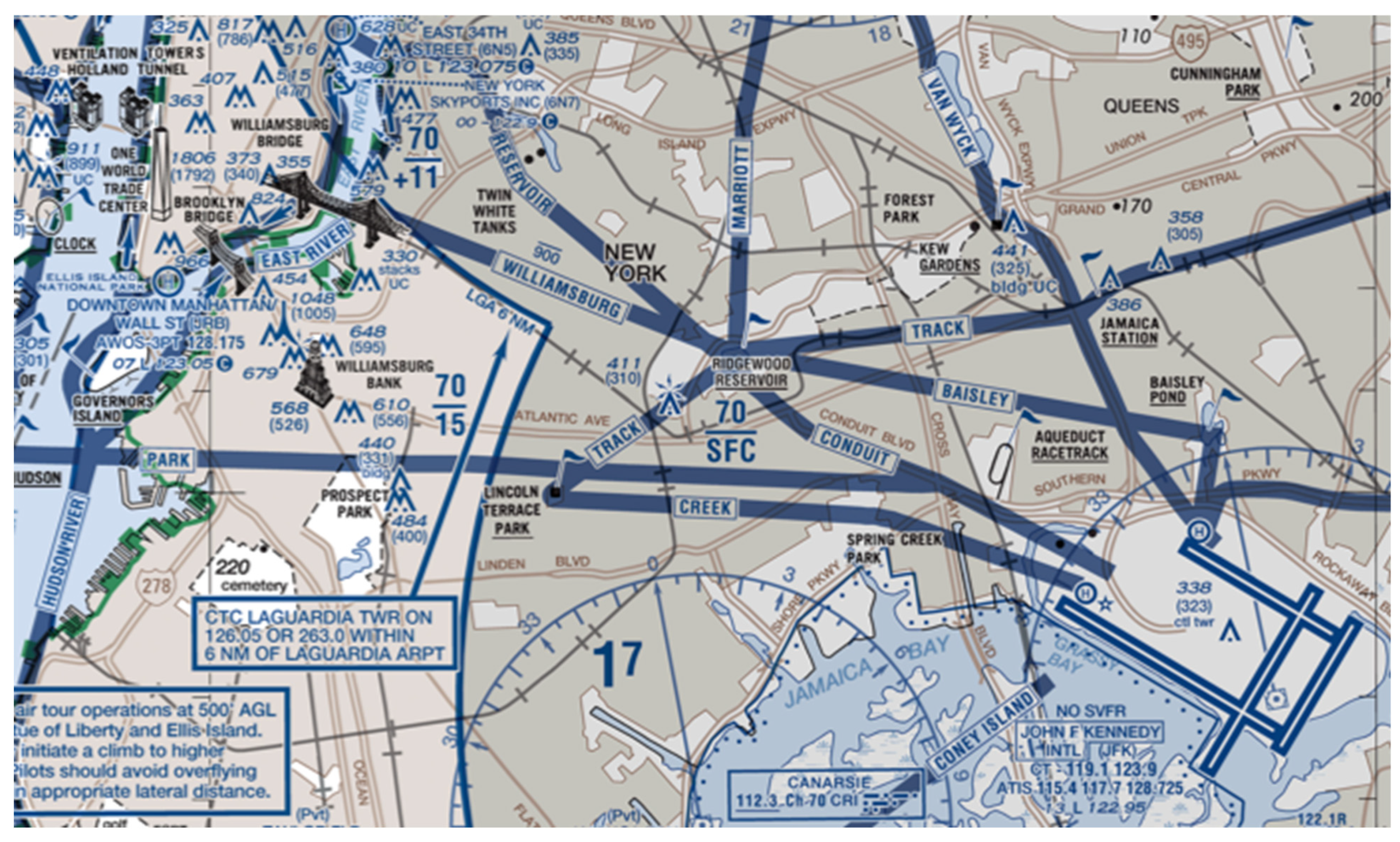
Figure 4.
Future Vertiport Concepts May Leverage Existing Heliport Designs Source: Images created using Microsoft Copilot (GPT-5 model).
Figure 4.
Future Vertiport Concepts May Leverage Existing Heliport Designs Source: Images created using Microsoft Copilot (GPT-5 model).
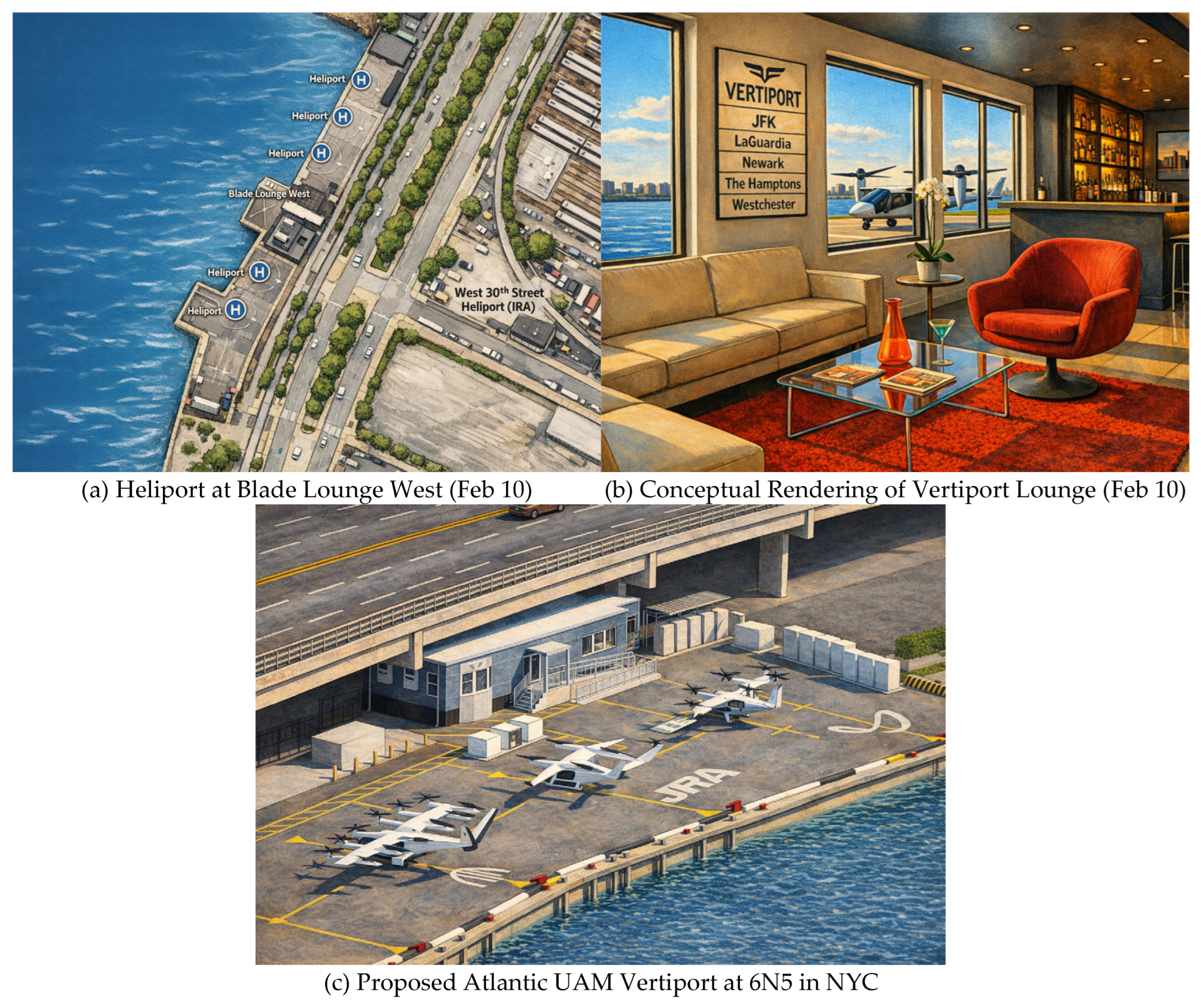
An illustration of a heliport along the water is shown in Figure 4a, which shows location of the existing Blade West heliport, one of multiple heliports along the water in New York City. Future vertiports may serve all New York airports as well as a variety of tourist and commuter destinations. In addition to service to LaGuardia Airport (LGA) and JFK, Blade currently also offers service from the suburb Westchester (to serve both commuters and shoppers) as well as the Hamptons, an elite weekend getaway destination (Zilber, 2025); these may all be routes for UAM in the future. While some politicians have raised noise and safety concerns regarding helicopter service, others suggest the helicopter service makes the city more attractive to both executives and tourists (Fierick et al., 2025).
It is likely that travel time benefits will increase with distance traveled, reducing the impact of processing and transition times at the beginning and end of the trip, and allowing travelers to realize the benefits associated with the faster cruise speed. UAM is likely to have a strong market in large cities with significant congestion such as the greater Los Angeles area, San Francisco-Oakland, Miami, and Washington DC (Schrank et al., 2025).
In addition to passenger service which would presumably benefit from a fast travel time and positive travel experience, there may also be economic benefits for cargo delivery, including package delivery which is currently provided by Amazon in eight cities including Phoenix, and San Antonio, and planned for four more cities, including Chicago and Houston (Amazon, 2026). Emergency response and medical transport also provides a compelling economic use case since it provides an important public service and may be more likely to receive public subsidies. Emergency response capabilities have been demonstrated by research by a German rescue service (Reichmann, 2021), and more recently with two rescue eVTOLs providing emergency supplies on Dianshan Lake in Kunshan, China in the Jiangsu Province (Mingyang and Zishuai, 2025). While the economic component of sustainability is primarily focused on a positive cash flow for the private operator, the environmental component is usually focused on ensuring there are positive environmental implications for the public.
4.2. Environmental Considerations
There are many environmental considerations, the highest profile topics include energy consumption, noise and emissions at the vertiport, from the aircraft, and holistically in the supply chain. There is significant overlap between environmental and social impacts since environmental impacts affect individuals and the community, and there is additional discussion of noise in the social considerations section as it relates to vertiport siting.
Research often points to UAM as a sustainable alternative since it uses electricity and results in reduced local emissions; there is also often an assumption that the electricity used for charging eVTOL will be generated using clean energy or green energy, if not now, then in the future. Currently 41% of the world’s electricity is clean energy (anything other than fossil fuels), and 15% of the world’s power generation is clean (Ember, 2025).
As shown in Figure 5a, coal and natural gas are used to generate more than half of US electricity; both of these contribute significant carbon dioxide emissions. Many people like the idea of renewable energy (which includes wood, biofuels, biomass waste, wind, solar, hydroelectric and geothermal), however, even renewable energy sources produce CO2 emissions over the life cycle, as do the batteries used in both electric aircraft and electric vehicles, as shown in Figure 5b. The CO2 emissions associated with electricity vary significantly, depending on the state and the specific subgrid within the state that produces the electricity; this is illustrated by the data in Table 7. A map of the US eGRID is shown in Figure 5c. An eVTOL charged by power generated in West Virginia would result in more than seven times the CO2 emissions as an eVTOL charged by power generated in New Hampshire.
Challenges to increase the share of clean energy include overall increasing demand for electricity, access to critical minerals (e.g., copper, lithium, cobalt and nickel), and the growing need for electricity which results in the need for an expansion in the grid infrastructure (Li, et al., 2025b),
The expected energy intensity of eVTOL varies, depending on the aircraft technology, operational assumptions, and occupancy. Table 8 includes information about the energy intensity that might be expected for each mode for a trip in New York City from JFK Airport on Long Island to The Blade West Lounge in Manhattan. In a best case eVTOL scenario, all the seats are full and there is efficient routing, in which case eVTOL has advantages in terms of energy intensity over helicopter, and all the roadway modes except EV; transit and EV are more sustainable in terms of both energy intensity and emissions under all scenarios. In terms of emissions, the power supplying the grid makes a significant difference, and the values shown in Table 8 are based on emissions from the NYLI (New York Long Island subgrid). If power generation utilized sources of power with fewer CO2 emissions, the emissions for passenger trips that utilize electricity would be more favorable. Occupancy also plays an important role, and a full occupancy eVTOL would have fewer emissions than black car service at typical occupancy, although this advantage would disappear if the black car service has two passengers or more. Some previous research suggests that eVTOL operational emissions may be similar to an EV, however, the eVTOL lifetime emissions are estimated to be twice the emissions of electric cars due to inefficiencies associated with vertiport siting (Khavarian and Kockelman, 2023); these inefficiencies associated with deadheading, increased travel time due to routing, and increased hovering due to air traffic management or weather are not reflected in Table 8 for vertiports or other modes.
Another consideration is trip length. For a relatively short flight such as one from JFK to Manhattan, the eVTOL would be less efficient because it spends less time in the cruise phase, which is the most efficient component. Overall, it is reasonable to expect that the eVTOL would be more efficient with fewer emissions than a conventional helicopter, however, depending on occupancy, it would not likely significantly reduce emissions relative to roadway modes and transit.
4.3. Social Considerations
Social impacts are the third component of sustainability and include positive factors, such as employment opportunities and mobility benefits, as well as the negative impacts experienced by people and communities, including exposure to noise and emissions, increased electricity costs, and inequitable distribution of benefits and harm. There is overlap between environmental impacts and social impacts. For example, noise and vibration are environmental impacts, but they may negatively affect people and communities both in terms of annoyance, and even health, as evidence increasingly shows. Social concerns also include distributional equity, which arises since the benefits may disproportionately accrue to the wealthy, and the negative externalities may be disproportionately born by socioeconomically disadvantaged populations and communities. This is related to environmental and equity concerns that have arisen for aviation, particularly in Europe, where the concept of flygskam (flight shaming) began (Wormbs and Soderberg, 2023).
Workforce impacts are another component of social impacts and may include the creation of new jobs for pilots, maintenance and operations personnel, as well as jobs in aircraft manufacturing, air traffic management (both aircraft oversight as well as programmers and data integrators), and vertiport construction. Much of the workforce impacts from UAM will be from aircraft production. One example of job creation is the manufacture of the Archer Midnight eVTOL in Covington, Georgia in collaboration with auto manufacturer Stellantis; batteries for the aircraft are manufactured in San Jose, California (Dragan, 2025a). Aircraft production will begin at two aircraft per month, with targets of 650 per year, and battery production is targeted at 15,000 battery packs per year (Dragan, 2025a). Other locations supporting and benefitting from aircraft manufacturing for UAM include the Beta production facility in Burlington, Vermont (Dragan, 2025b) and SkyDrive production at a Suzuki facility in Iwata City, Shizuoka (100 aircraft per year are planned) (Dragan, 2025c), and trial production of the Land Aircraft Carrier at a Hungpu plant in Shanghai (Mingyang and Zishuai, 2025). Note that in some cases existing manufacturing facilities may be leveraged, as evidenced by the manufacture of SkyDrive aircraft at a Suzuki facility, and in other cases, new manufacturing facilities are used. Often production begins on a small scale and will be expanded to meet demand, as needed. For example, the production of the Land Aircraft Carrier was targeted to be 5,000 units the first year, with an ultimate capacity of 10,000 (Yiyi, 2025). In small regional labor markets, the increase in manufacturing jobs can lead to increases in market wages and provides a multiplier effect for the community.
Alternatively, from a business case perspective, even though higher paying jobs would provide greater community benefits for the workforce, these higher wages would likely increase the cost of UAM making it less affordable and increasing concerns regarding distributional equity. One labor group that earns a wage premium are pilots. Currently, pilot requirements for UAM are expected to vary from those of fixed wing aircraft pilots, as demonstrated by aircraft that can be certified under the MOSAIC rule for lights sport aircraft (AOPA, 2025). Long term, there is an expectation that on-board pilots will eventually be replaced by a remote “vehicle supervisor” who may oversee up to 10 vehicles (Brinkmann, 2026), increasing the passenger carrying capability, decreasing the weight and increasing the efficiency of operations. However, in the short term, some UAM may operate under Part 135 regulations which govern commuter and on demand operations. Part 135 has lower thresholds in terms of the required hours of pilot experience as compared to large scheduled commercial air carriers that operate under Part 121. Pilots are typically paid based on the hours they are flying and one challenge recruiting pilots for UAM may be that the short urban flights (e.g., a ten minute flight in an urban area) will not allow pilots to log much flight time; this is a drawback for potential pilots in terms of the salary earned as well as the ability of pilots to build their resume and gain experience to “build their hours” enabling them to move up and fly for a major airline.
Noise is widely acknowledged as a social and community impact, and although the electric motors of UAM would be quieter than a piston or gas engine, there is still noise that would result from the air flow and aircraft movement, and from reverberation off buildings, which may be particularly relevant in densely developed urban areas. EASA standards incorporate approach paths from all directions and obstacle-free volumes (OFV) to minimize noise footprints in dense urban areas (EASA, 2022). In the US, FAA currently relies on Aviation Environmental Design Tool (AEDT) modeling (FAA, n.d.a), but capabilities for UAM noise profiles are immature. For example, environmental justice considerations are no longer required under the National Environmental Policy Act (NEPA); this may reduce attention to environmental impacts, as well as to disproportionate impacts on vulnerable communities (Rizzi & Rafaelof, 2021; Federal Register, 2025).
Europe’s U-Space framework for UAM traffic management integrates noise mitigation and community acceptance into operational concepts (EASA, 2022; EUROCONTROL, 2023). In the US, FAA’s vertiport standards ensure safety and operational feasibility (FAA, 2024), NEPA updates (Order 1050.1G, 2025) revise the approval process and narrow the required analysis by removing climate and environmental justice as required topics. The revised order also shifts from mandating (“must address”) direct, indirect and cumulative impacts to providing significantly more discretion (“may consider…as appropriate to the specific action” in Section 1.2 of Order 1050.1G) for “both short- and long-term effects, both beneficial and adverse effects, effects on public health and safety, economic effects, and effects on the quality of life of the American people” (Order 1050.G, p. 7) (FAA, 2015; FAA, 2025; Federal Register, 2025). These changes reduce systematic evaluation of lifecycle emissions and equity impacts (van Heuven, 2025). If vertiports are funded with private rather than federal funding, there will likely be even less mandate for environmental assessment or mitigation.
In many cases, state governments currently regulate certificates for private heliports, so there is a potential for different policies from state to state, and potentially even from city to city, since local zoning ordinances may specify allowable land uses and may also affect vertiport siting. While state and local governments may have some control over land uses for vertiports, in the US, the federal government maintains control of airspace, and local jurisdictions cannot restrict flight paths. Since the location of the vertiports will have a significant impact on the surrounding community, it is worthwhile to consider siting criteria. Table 9 provides an overview of vertiport siting criteria for the US and the EU.
In both the US and EU, the framework for vertiport siting is still evolving, but there are some key differences. For example, FAA emphasizes airspace safety and integration and has streamlined the process to accelerate deployments, while EASA incorporates social acceptance, noise mitigation, and network resilience for vertiport siting; this reflects Europe’s focus on urban planning and sustainability. EUREKA (EUopean Key solutions for vertiports and UAM) is a research project and one of the EU’s initiatives to advance UAM.
The US and EU are converging on core safety and infrastructure requirements for vertiports, but they diverge in how siting decisions are embedded in environmental review, airspace integration, and urban-planning practice. The FAA approach focuses on engineering considerations, including integration with existing airports and airspace, and project level design compliance. EASA places stronger emphasis on urban context, obstacle free volumes tailored to dense cities, flexible trajectories for noise mitigation, and network level operations via the Single European Sky ATM Research (SESAR) and EUREKA; this approach creates a more explicit planning pathway for citywide UAM networks (FAA, 2022; FAA, 2024; EASA, 2022; EUROCONTROL, 2023).
Both FAA and EASA specify vertiport geometry, safety areas, and protected airspace. The FAA’s EB 105A updates the touch down and lift-off (TLOF) and final approach and takeoff (FATO) sizing to propulsion-driven dimensions (including the rotor diameter, or RD), introduces parking standards for air and hover taxi, and identify caution areas for downwash and outwash (lateral) to protect people and structures (FAA, 2024). EASA’s prototype specifications introduce a funnel shaped obstacle free volume (OFV) and omnidirectional approach paths, innovations tailored to constraints of European cities (EASA, 2022). EASA’s approach also allows protection on side slopes, which is shown in Figure 6a.
For UAM planners, this means vertiport siting in the US will often start from aircraft dimensions and airside safety envelopes on airport or rooftop parcels, whereas in the EU, vertiport siting is considered in the context of the airspace requirements, specifically the operational funnel and its relationship to UAM routing to avoid historic structures, protected zones and narrow streets (FAA, 2024; EASA, 2022). As a result, the EU framework provides a larger role for noise analysis and social acceptance through airspace design and urban integration concepts.
The US approach to vertiport siting is standards driven and includes more information for vertiport landing sites located on airports (requiring coordination with the Airport Layout Plan, ALP), with faster, project level advances but more reliance on sponsors and cities to add environmental and equity rigor. UAM programs that blend FAA geometry and safety discipline with EASA style analysis of urban, noise and network considerations will be best positioned to scale sustainably in either jurisdiction (FAA, 2022; EASA, 2022; EUROCONTROL, 2023). In the EU, sponsors can leverage the obstacle free volume (OFV) and flexible trajectory tools to allow utilization of rooftops and other constrained urban sites for vertiports (FAA, 2024; EASA, 2022).
Vertiports may utilize existing heliports, or lots, rooftops or parking structures. An illustration of a future vertiport that leverages an existing heliport can be seen in Figure 6b, which shows a conceptual vertiport proposed by Atlantic Aviation for New York Helipad that will be adapted for eVTOL aircraft. There are also innovative approaches to the vertiports, including Chinese company AutoFlight’s “zero-carbon water vertiport” which leverages land, sea and air, with a moving marine vertiport to expand the range of the eVTOL (Stojkovski, 2025), as shown in Figure 6c. This configuration can serve industrial, cargo and passenger eVTOL, and charges the eVTOL with energy derived from solar panels on the deck of the ship which also serves as a landing pad (Stojkovski, 2025).
The vertiport shown in Figure 6d also integrates innovative concepts; Australian company Skyportz proposes a modular vertipad that is designed to dissipate energy faster than a concrete surface, enabling a more compact footprint to ensure compliance with FAA requirements for wind safety beyond the landing surface where wind speeds exceed 34.5 mph in the downwash and outwash zone (Dragan, 2025d). Swedish companies Kookiejar and Stillfold also propose vertiports focusing on efficiency and low cost, suggesting “origami” vertiports that leverage green manufacturing built with folding flat sheet metal over curves with minimal component parts (inspiring analogies to IKEA design efficiency) (Stilfold, 2024; Kookiejar, 2023). In the US, some businesses propose to start with existing infrastructure. Atlantic Aviation acquired Ferrovial Vertiports in 2025 and is poised to develop vertiports in NYC, the greater Los Angeles, and the San Franciso Bay Area (Dragan, 2025e).
4.4. Operational Considerations
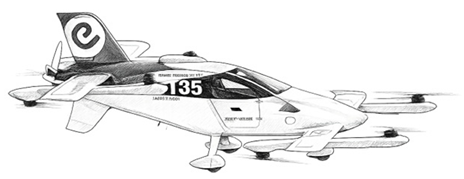
Operations is the final component of UAM sustainability. This encompasses technical considerations, such as aircraft and air traffic management technology, UAM use cases, UAM safety and regulations. Examples of UAM aircraft in development are shown in Table 10. While this table is not intended to be comprehensive since there are numerous other aircraft in development, it is intended to illustrate the range of aircraft that may be used for UAM in the smart city in multiple countries. Most of the aircraft are still in the certification process, although the Autoflight CarryAll cargo drone and the EHang 216S are both completely certified by the Civil Aviation Administration of China (CAAC), which is especially notable since both aircraft are completely autonomous with no pilot on board. This certification may reflect technical readiness as well as risk tolerance for both the companies and government regulators involved. AutoFlight is a Chinese German company (Patrascu, 2025) and the floating vertiport can accommodate both passenger vehicles (e.g., the 6-seat Prosperity) and cargo vehicles (e.g., the CarryAll, which can move two-tons of cargo); power for both the floating vertiport ship and the eVTOLs it serves is provided via photovoltaic energy storage batteries (Patrascu, 2025). AutoFlight promotes the floating vertiport for a variety of use cases, including emergency rescue, commuting, tourism, and energy platform maintenance, and suggests mooring multiple vessels together to provide a larger hub. In 2025, the CarryAll was used to provide supplies to an offshore oil platform, with the marine vessel launched from Shenzhen and the cargo delivered to an oil rig operated by the China National Offshore Oil Corporation in the South China Sea (Patrascu, 2025).
This novel approach emphasizes that the operational use case for UAM is affected by the range, capacity, and speed of the VTOL, as is the business case. The operational framework and business case are also affected by the aircraft turn time between flights, which is influenced by the time required for charging, battery replacement and/or refueling. The Beta uses a charge cube which can be used to charge both eVTOL and EV; there are currently over 50 locations, primarily on the east coast of the US and in select southern and midwestern states (Beta, 2026).
Table 10.
Example Aircraft to Support UAM in the Smart City
| Aircraft Sketch | Characteristics | Additional Notes |
|---|---|---|
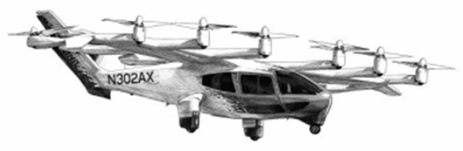 |
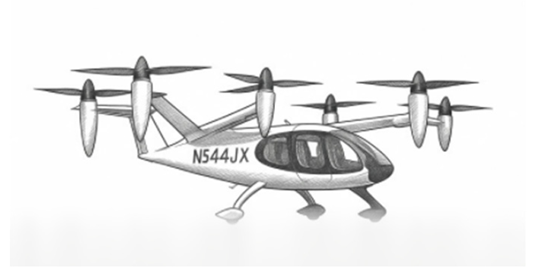
US Archer Midnight aircraft 1 pilot, 4 pax, Speed: up to 150 mph, Range: 20 to 50 mile range (back to back) 12 engines, 6 independent battery packs |
Downtown Manhattan to EWR in 9 min (13 miles) vs. 62 min by train. Archer will provide air taxi services for LA out of 80 acre Hawthorne Airport which is less than three miles from LAX |
 |
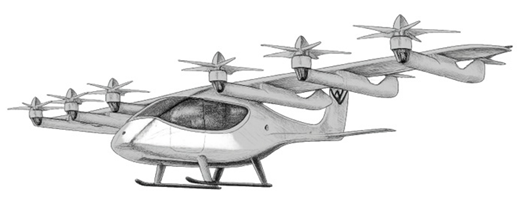
US Joby (Toyota collaboration) 1 pilot, 4 pax Speed: up to 200 mph Hydrogen-electric version has range of 561 miles, Routes: Routes up to 100 miles at top speed of 200 mph |
First air taxi company in UAE. Dubai to Abu Dhabi in 30 min (2 hours by car in rush hour). Joby has exclusive right to Dubai. Launch market is UAE but also in partnership with Japan due to Toyota collaboration with 100 aircraft expected to be deployed in Japan ($894 M investment from Toyota). |
 |
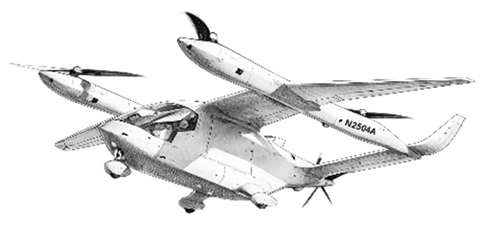
US Wisk Gen 6 aircraft (by Boeing) Autonomous flight with remote human oversight, 4 pax Range: 90 mi, Speed: 120 knots (2500 ft altitude) Certification: type certification pending (testing and analysis) and Part 135 operation certification in progress |
eVTOL backed by Boeing Company with testing in US, Canada, Poland and Australia. Charge time 15 min. |
 |
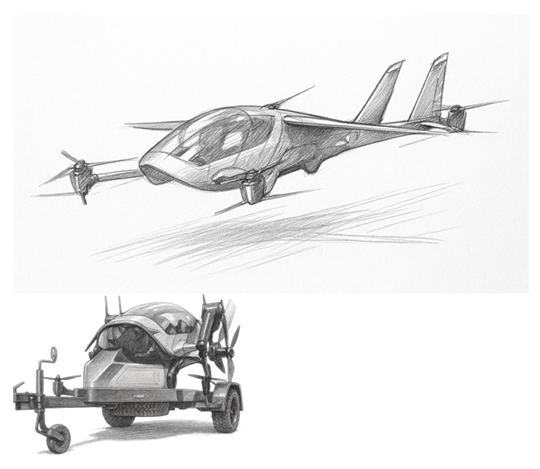
US Beta aircraft includes conventional takeoff and landing (CTOL) and VTOL. Beta A250 shown at left. 1 pilot, 5 pax Range: 336 nm for CTOL 200 cf cargo space, Charge time: 1 hour Max speed: 153 knots VTOL compared to Bell 407: 84% less emissions; energy cost: $28 vs $311 per hr; and operating cost 42%. |
Hybrid electric propulsion partnership with GE Aerospace Power via UL certified Charge Cube with 52 charging locations in the US. Mini Cube provides 60 kWh with 50 ft cord for eVTOL charging. First charger at a US Air Force base. CTOL expected to enter service with Air New Zealand. CTOL compared to Cessna 208: 75% less emissions; energy cost $18 vs $347 per hr; and operating cost 74%. |
 |
Israeli AIR One eVTOL (support from German company EDAG) 1 pilot, 1 pax 8 motors and 8 propellors 110 miles on full charge Top speed 155 mph, cruise 100 mph Charge time: 60 min full charge 30 min from 20 to 80% Standard EV charging stations Automated cargo version Light sport pilot license required with “fly-by-intent” controls that simplify flying Wings fold for transport (shown trailer) Allows vertical and horizontal take off. |
Folding wings and trailer Certification initiated for operation under FAA’s MOSAIC regulations Light sport pilot required (can be obtained with 15 hours flight instruction, no medical required) Pilot plus one passenger Automated cargo model also available Expected priced about $150,000. |
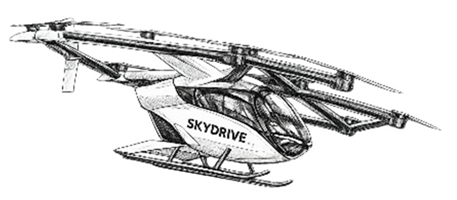 |
Japanese SkyDrive SD-05 eVTOL (collaboration with Suzuki) 1 pilot, 2 pax (behind pilot) Designed for rooftop landings in tight urban spaces (37.7 ft long and 37 ft wide with 12 rotors). Range: up to 9 mi Speed: 62 mph. |
Aircraft pre-orders include 50 aircraft by India’s JetSetGo, a private jet operator, and 5 aircraft by US based Bravo Air in Georgia. |
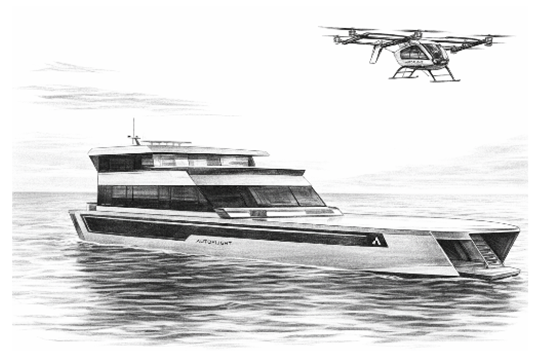 |
Chinese AutoFlight Range: 93 miles (150 km) for drone 310 miles (500 km) offshore for drone and mobile marine vertiport combination Speed: 10x conventional transport, 20 min for 31 miles (50 km) passenger trip (ave 94 mph) CarryAll: no pilot (cargo delivery), fully CAAC certified. Prosperity: 1 pilot, 5 pax, certification is underway. |
Zero carbon water vertiport Industrial eVTOL has a range of 310 miles (500 km) and can reach offshore platforms ten times faster than conventional equipment. Fares for a 20 min, 31 miles (50 km) cross-seat trip may be $42 for commuters and tourists. |
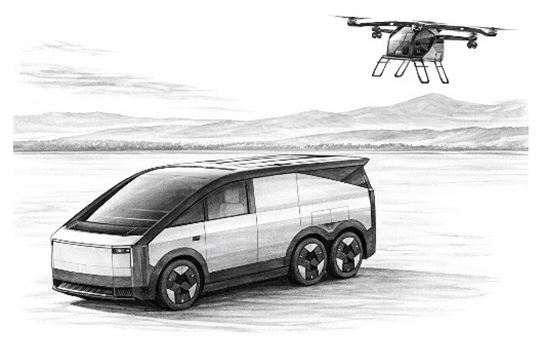 |
Chinese Xpeng Land Aircraft Carrier: Six wheel EV with detachable 2-pax, 6 rotor eVTOL Ground vehicle range: 620 miles driving. Flying module can be manually flown or autonomous (pilot optional). |
Detachable air module (wings fold out) is targeted to individual consumers. Expected price: $287,000. |
 |
Chinese Ehang VT 35 No pilot. 2 pax. Range: 124 miles (200 km), marketed as long-range). 8 lift propellers, max takeoff weight 2,094 lbs (950 kg). |
Compatible with EH216-S vertiports including rooftops, parking lots, and parks. |
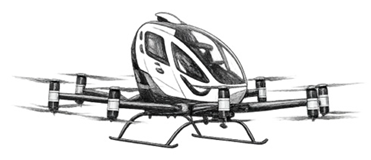 |
Chinese Ehang EH216-S No pilot 2 pax Zero emissions 16 propellers on eight arms. Max speed: 80.8 mph Range: 18.6 mi (30 km) Fully certified by CAAC (type, production and airworthiness). |
Agreement to purchase 50 EH216 by Kazakhstan with plans to be the manufacturing base for 200 aircraft per year (serve as UAM center in Central Asia). Expected price: $410,000 Demos in 21 countries on five continents with manned 8 min demo flight in Doha, Qatar to replace a 30 min car ride. |
Sources: Air Vev Ltd., n.d.; Archer, 2025; Anderson, 2026; Autoflight, 2026; Beta, 2026; Dolzall, (2024). Dragan, 2025b; Dragan, 2025c; Dragan, 2025f; Dragan, 2025g; Dragan, 2025h; 2024; Dragan, 2025i; Dragan, 2025j; Dragan, 2025k; Ehang, 2025; Minyang and Zishuai, 2025; Motor Watt Database, n.d.; Minyang and Zishuai, 2025; Verndon, Wisk Aero, 2025; 2025; Yiyi, 2025. Images created using Microsoft Copilot (GPT-5 model).
Aircraft advancements have been significant as evidenced by the certification of aircraft in China, and demonstrations such as the Archer Midnight eVTOL which has flown for 45 minutes at 120 mph at elevations as high as 7,000 ft (Dragan, 2025a). Archer’s progress is notable since it has also acquired a long-term lease for the Hawthorne Airport in Los Angeles CA (LA) and plans to have the airport serve as a hub for the LA air taxi network with service planned during the 2028 Summer Olympics and also as test bed for advanced technologies in partnership with United Airlines (AAM Nation, 2025). Hawthorne Airport is located on 80 acres, less than three miles from Los Angeles Airport (LAX) and close to downtown LA and destinations such as SoFi Stadium (home of the NFL Rams and Chargers), The Forum indoor arena and the Intuit Dome (home of the NBA Clippers) (AAM Nation, 2025). In the LA area, the demand for air taxi services is likely to be strong, however the safety considerations may be considerable, as evidenced by recent reports that the National Transportation Safety Board has raised concerns about near-miss collisions near Hollywood Burbank Airport in the greater LA area (Bodell, 2026).
In terms of academic research, there are numerous papers that address technical considerations which are beyond the scope of this discussion, except to acknowledge that technical capabilities have a significant impact on UAM operations framework and sustainability. In terms of use cases, UAM for passenger travel seems to get the most attention, however, based on surveys, emergency use cases and cargo delivery have the most perceived usefulness (McKinsey & Company, 2021).
Emergency use cases may include emergency medical transport, disaster response, and the movement of time sensitive medical goods, including organ transport. The cargo use case is not as compelling from the perspective of community benefits, particularly since most areas are less congested in the off peak, which may make ground vehicles on the roadway more efficient in terms of energy use and environmental implications in the near term. In some ways, the independent technical aspects of eVTOL may be the most easily addressed, and the issues related to system integration, including sharing airspace with legacy aircraft, the development of appropriate regulations, understanding externalities and social impacts, and ensuring complimentary siting with existing land uses and transportation infrastructure may be more challenging.
In terms of regulatory issues, a primary consideration is the use of certification to ensure safety. Some manufacturers choose one country for initial certification activities, and others work with multiple countries simultaneously. For example, Eve Air Mobility is working with Brazil’s civil aviation authority, ANAC, as well as FAA and EASA for certification (Embraer, 2026); SkyDrive is working with Japan’s Civil Aviation Bureau and the FAA for certification (SkyDrive, n.d.). AIR (an Israeli company) has received an Experimental Airworthiness Certificate with intention to certify the first eVTOL under FAA’s new Modernization of Special Airworthiness Certification (MOSAIC) rules in summer 2026 (Alcock, 2025); Beta, Joby and Archer working with FAA for certification; EHang is working with the Civil Aviation Administration of China (CAAC) (Menon, 2025); and Germany’s Lilium and Volocopter are coordinating with EASA for vertiport approval in the EU, as a step toward a global rollout (sUAS News, 2024; Menon, 2025).
In addition to regulatory compliance, in the US, insurance and liability concerns may be a dominant consideration. It is interesting to note that these issues are still not resolved in other technology sectors such as automated vehicles (AV), as evidenced by news stories describing issues with citing an AV without a driver with a traffic ticket (e.g., Har, 2025).
In the US, there are fewer regulations to ensure that environmental impacts are carefully considered, especially given recent administrative changes and the siting of vertiports by the private sector. Another factor that may affect the development of UAM is FAA’s mission is to support the growth of aviation, including UAM. This charge dates back to the beginning of aviation in the 1920s, when aviation resided in the Department of Commerce and the fledgling department was charged with supporting aviation growth and development. Although aviation has changed significantly in the last 100 years, moving under the structure of the Department of Transportation (DOT) more than fifty years ago, this mission of FAA to support growth has not changed, although the other agencies within the DOT do not have a similar mission. Perhaps FAA’s mission should be evaluated to determine if overall efficiency and context sensitive design (as considered by the Federal Highway Administration (FHWA)) should be considered and balanced with the traditional mandate for aviation growth. It is interesting to note that FHWA also has programs for demand management to support the efficiency, safety and sustainability of the highway system.
Overall, perhaps a good strategy for UAM is to encourage the development of UAM to support use cases that are clearly in the public interest such as emergency response, utilize public-private partnerships for the development of infrastructure rather than relying on public subsidy, and encourage holistic assessment of UAM deployment to reduce negative externalities such as noise, issues with distributional equity, and potential increases in electricity costs.
5. Future Research
There are a number of gaps related to research on UAM sustainability. Many existing studies focus on specific components of eVTOL aircraft, and there is a need for holistic sustainability metrics that integrate environmental, economic, and social dimensions into a unified assessment framework, as well as standardized indicators to compare UAM with other transportation modes to allow rigorous analysis of tradeoffs and system level impacts.
Lifecycle Assessment (LCA) also remains an underexplored area. In addition to quantifying operational emissions and noise as aircraft technologies advance and operational frameworks evolve, there needs to be an assessment of the full lifecycle impacts of UAM vehicles and infrastructure, including manufacturing, maintenance, and end of life disposal. This assessment is also affected by the energy source; for example, the carbon intensity of regional electricity grids is key to the benefits of electric propulsion yet is often glibly assumed that UAM will increase sustainability in the future when we have green energy.
Social sustainability presents similar gaps. Research on public perception, trust, and acceptance of UAM is emerging, but there is no meaningful research regarding questions of equity, namely who benefits from UAM and who bears the burdens of noise, land use changes, and displacement. A better understanding of these distributional impacts is essential, and the current framework in which vertiports require a public subsidy may not be appropriate given the lack of equity and the distributional impacts. Future research could develop community level impact assessment tools that quantify noise exposure and potential displacement risk from land use changes. Additionally, future work could examine the subsidy requirements for UAM and the opportunity costs associated with allocating public resources to their usage. This could also include an analysis of fare subsides or passes or perhaps direct payment for those most negatively impacted by UAM usage.
Economic sustainability also requires further examination. Existing work often assumes idealized operational conditions and fails to capture the variability in demand and energy cost, and provides only a partial understanding of cost recovery, pricing models, and the role of public private partnerships to support UAM development in the near-term and long-term. Further research could estimate fare elasticities using helicopter transport fare data or localized willingness to pay surveys. Also, UAM research could benefit from finding close or analogous public-private partnerships in transportation to better understand the financing structures that might be applicable to UAM.
Infrastructure and energy systems research is also needed to investigate vertiport energy demands and resilience, the impact of UAM on energy costs, and the widespread assumptions that need to be verified regarding renewable energy availability, energy storage, and charging strategies. These technical and economic considerations need to be verified to minimize environmental impacts, negative community impacts and ensure system reliability. Future work could examine energy offset programs or onsite renewable energy generation to mitigate the strain on the community’s grid. Additionally, understanding the impacts of high frequency UAM operation and charging on costs and battery waste is an important avenue for further research.
Finally, regulatory and governance frameworks for UAM must be refined (and in some cases developed) to ensure safety and reduce negative externalities. The lack of clear and consistent standards for vehicle certification, airspace management and vertiport infrastructure delay implementation, and the lack of policies to address integration with community and environmental needs could cause problems in the future. Future research could work to evaluate FAA Part 135 to see if existing frameworks are a viable and appropriate path for UAM adoption. Also, research on noise and local ordinance best practices in mitigating the negative externalities would benefit the public policymakers and community at large.
Supplementary Materials
There are no supplementary materials.
Author Contributions
For research articles with several authors, a short paragraph specifying their individual contributions must be provided. The following statements should be used Conceptualization, SH and JS; methodology and analysis, SH.; writing—original draft preparation, SH; writing—review and editing, JS.; visualization, SH and JS. All authors have read and agreed to the published version of the manuscript.
Funding
This research received no external funding.
Data Availability Statement
All data is included in the paper.
Acknowledgments
During the preparation of this manuscript/study, the authors used Microsoft Copilot for brainstorming, development, to find sources, to proofread and make suggestions for short sections of text, to generate images and to make a list of abbreviations (Microsoft Copilot GPT-5 model). The authors have reviewed and edited the output and take full responsibility for the content of this publication.
Conflicts of Interest
The authors declare no conflicts of interest.
Abbreviations
The following abbreviations are used in this manuscript:
| AEDT | Aviation Environmental Design Tool |
| ALP | Airport Layout Plan |
| ASSUREDUAM | Acceptance, Safety and Sustainability Recommendations for Efficient Deployment of Urban Air Mobility |
| CAAC | Civil Aviation Administration of China |
| DFW | Dallas–Fort Worth International Airport |
| DOE | Department of Energy |
| DOT | Department of Transportation |
| EASA | European Union Aviation Safety Agency |
| EIA | Energy Information Administration |
| EPA | Environmental Protection Agency |
| EU | European Union |
| EUREKA | EUropean Key Solutions for Vertiports and UAM |
| EV | Electric Vehicle |
| FAA | Federal Aviation Administration |
| FBO | Fixed Base Operator |
| GHG | Greenhouse Gas Emissions |
| ICE | Internal Combustion Engine |
| JFK | John F. Kennedy International Airport |
| KBHCCD | Kay Bailey Hutchison Convention Center Dallas |
| LA | Los Angeles |
| MARL | Multi-Agent Reinforcement Learning |
| NASA | National Aeronautics and Space Administration |
| NEPA | National Environmental Policy Act |
| NYC | New York City |
| OFV | Obstacle-Free Volume |
| RD | Rotor Diameter |
| RIO | Return on Investment |
| SESAR | Single European Sky ATM Research |
| UAM | Urban Air Mobility |
| US | United States |
| VTOL | Vertical Takeoff and Landing |
| eVTOL | Electric Vertical Takeoff and Landing |
References
- AAM Nation. (2025). Archer To Acquire Hawthorne Los Angeles Airport As Strategic AAM Air Taxi Network Hub and AI Testbed https://aamnation.com/en/2025/11/07/archer-to-acquire-hawthorne-los-angeles-airport-as-strategic-aam-air-taxi-network-hub-and-ai-testbed/ (accessed on March 2, 2026).
- Air Vev Ltd. (n.d.). Travel with AIR ONE. https://www.airev.aero/air-one (accessed on March 2, 2026).
- Aircraft Owners and Pilot Association (AOPA). (2025). MOSAIC Explained: FAQ. https://www.aopa.org/news-and-media/all-news/2025/august/14/mosaic-explained-faq (Accessed March 25, 2026).
- Akridge (n.d.). “Land Aircraft Carrier” Modular Flying Car. Guangdong Huitian Aerospace Co Ltd. https://www.aridge.com/x3 (accessed on March 2, 2026).
- Alcock, C. (2025). FAA Grants Experimental Airworthiness Certification for Air One eVTOL. AIN. Retrieved March 2, 2026 from https://www.ainonline.com/aviation-news/futureflight/2025-09-02/faa-grants-experimental-airworthiness-certification-air-one (accessed on March 2, 2026).
- Amazon (2026). What’s faster than fast? Your next drone delivery. https://www.amazon.com/b?ie=UTF8&node=206533607011 (accessed on March 14, 2026).
- Archer. (2024). Introducing Midnight. https://archer.com/aircraft (accessed on March 2, 2026).
- Archer. (2025, Dec 9). Archer Completes First Phase of Transactions to Acquire Control of Hawthorne Airport. https://news.archer.com/archer-completes-first-phase-of-transactions-to-acquire-control-of-hawthorne-airport (accessed on March 2, 2026).
- Ahmed, H. O. (2023). Segregated FLS processing cores for V/STOL autonomous landing guidance assistant system using FPGA. arXiv preprint arXiv:2306.03170. https://arxiv.org/pdf/2306.03170 (accessed on March 2, 2026).
- Airbus, 2018. Voom’s Helicopter Service Launches in Mexico City. March 9, 2018. Available online at. https://www.airbus.com/en/newsroom/news/2018-03-vooms-helicopter-commuting-service-launches-in-mexico-city (accessed Feb 6, 2026).
- Airbus (2020). Closing This Chapter: Our Learnings On Transforming How People Move. https://acubed.airbus.com/blog/voom/closing-this-chapter-our-learnings-on-transforming-how-people-move/ (accessed Feb 11, 2026).
- Airports International. (2023, August 9). Vertiports and the impact of regulations. https://www.airportsinternational.com/article/vertiports-and-impact-regulations (accessed Feb 25, 2026).
- Anderson, B. (2026, Feb 3). You can now buy a 2-seater drone that comes with its own giant minivan garage. MSN. https://www.msn.com/en-us/travel/news/you-can-now-buy-a-2-seater-drone-that-comes-with-its-own-giant-minivan-garage/ar-AA1Vw4at (accessed March 2, 2026).
- Autoflight (2026). https://autoflight.com/en/ (accessed Feb 25, 2026).
- Aviation Outlook. (2025, Dec 14). Joby Aviation - Strategic Analysis and Outlook Report (2026). https://www.aviationoutlook.com/p/joby-aviation-strategic-analysis-outlook-report (accessed Feb 6, 2026).
- Bell Textron (2025). Bell 407GXi Specifications. https://www.bellflight.com/-/media/site-specific/bell-flight/documents/products/407-gxi/bell-407gxi-product-specifications.pdf (accessed March 19, 2026).
- Beta (2026). https://beta.team/aircraft (accessed Feb 25, 2026).
- Bi, W., Lyu, Y., Shen, Y., Ji, Y., & Du, Y. (2025). Understanding the potential of urban air mobility in alleviating rail transit oversaturation: a divertible demand driven analysis. Transportation Letters, 1-22. [CrossRef]
- Biehle, T. (2022). Social Sustainable Urban Air Mobility in Europe. Sustainability, 14(15), 9312. [CrossRef]
- Blackhurst, M., Wade, C., Decarolis, J., De Queiroz, A., Johnson J., and Jaramillo, P. (2025, July 16) Data Center Growth Could Increase Electricity Bills 8% Nationally and as Much as 25% in Some Regional Markets. Carnegie Mellon University. https://www.cmu.edu/work-that-matters/energy-innovation/data-center-growth-could-increase-electricity-bills (accessed Feb 25, 2026).
- Blade (2026). Blade Airport: JFK Manhattan. https://www.blade.com/p/jfk (accessed Feb 25, 2026).
- Bodell, L, (2026, Jan 30). “Safety Is Top Priority”: Hollywood Burbank Airport Responds to Fears of Next Midair Tragedy. Simple Flying. https://simpleflying.com/safety-is-top-priority-hollywood-burbank-airport-responds-to-fears-of-next-midair-tragedy/ (accessed Jan 30, 2026).
- Booz Allen Hamilton, (2018). Urban Air Mobility (UAM) Market Study. Technical Out Brief to the National Aeronautics and Space Administration (NASA). https://ntrs.nasa.gov/api/citations/20190000517/downloads/20190000517.pdf (accessed Feb 25, 2026).
- Briefings. (1961, August). Flying Magazine, Vol 69, Number 2, page 8.
- Brinkmann, P. (2026, Jan 23) Autonomous aircraft ops may be limited by number of human operators, NASA research indicates. Aerospace America. American Institute of Aeronautics and Astronautics (AIAA). https://aerospaceamerica.aiaa.org/autonomous-aircraft-ops-may-be-limited-by-number-of-human-operators-nasa-research-indicates/?utm_medium=email&utm_source=rasa_io&utm_campaign=newsletter (accessed Feb 25, 2026).
- Bubalo, B. (2024). Capacity and demand forecasting in Urban Air Mobility-A simulation of air transportation in Hamburg. Transportation Research Procedia, 80, 11-19.
- Clear (n.d). https://www.clearme.com/ (accessed Feb 25, 2026).
- Climatiq. (2026). Emission Factors in Transport. https://www.climatiq.io/data/sector/transport and https://www.climatiq.io/data/emission-factor/58dbe3b5-4ed4-4d7a-b92a-682b2c72b308 (accessed Feb 6, 2026).
- Cohen, A. P., Shaheen, S. A., & Farrar, E. M. (2021). Urban Air Mobility: History, ecosystem, market potential, and challenges. Journal of Air Transport Management. https://ieeexplore.ieee.org/stamp/stamp.jsp?arnumber=9447255 (accessed Feb 6, 2026).
- Congressional Budget Office (CBO). (2022, Dec). Emissions of Carbon Dioxide in the Transportation Sector. https://www.cbo.gov/system/files/2022-12/58566-co2-emissions-transportation.pdf. (accessed Feb 6, 2026).
- Deniz, S., Wu, Y. Shi, Y., and Wang, Z. (2024). A reinforcement learning approach to vehicle coordination for structured advanced air mobility. Green Energy & Intelligent Transportation. https://www.sciencedirect.com/science/article/pii/S2773153724000094 (accessed Feb 6, 2026).
- Degeurin, M. (2024, Jul 11). A hydrogen-powered air taxi flew 523 miles emitting only water vapor. Popular Science. https://www.popsci.com/technology/hydrogen-power-air-taxi/ (accessed Jan 30, 2026).
- Dickey, M. (2018, May 8). Here’s how much Uber’s flying taxi service will cost. https://techcrunch.com/2018/05/08/heres-how-much-ubers-flying-taxi-service-will-cost/ (accessed Feb 6, 2026).
- Di Vito, V., Dziugiel, B., Melo, S., Ten Thije, J. T., Duca, G., Liberacki, A., Hesselink, H., Giannuzzi, M., Menichino, A., Montaquila, R. V., Cerasuolo, G., & Witkowska-Konieczny, A. (2025). Integrating urban air mobility into smart cities: A proposal for relevant use cases in the next decades. Aircraft Engineering and Aerospace Technology, 97(1), 2–12. https://www.emerald.com/aeat/article-pdf/97/1/2/9702381/aeat-03-2024-0081.pdf (accessed Feb 25, 2026).
- Di Vito, V., Dziugiel, B., Melo, S., Thije, J., Duca, G., Liberacki, A., Hesselink, H., Giannuzzi, M., Menichino, A., Witkowska-Koniecz, A., (2023). Operational concepts for urban air mobility deployment in the next decades. Journal of Physics: Conference Series. https://iopscience.iop.org/article/10.1088/1742-6596/2526/1/012098/pdf (accessed Feb 25, 2026).
- Distance as the Crow Flies. (n.d.) https://distanceasthecrowflies.com/ (accessed Mar 12, 2026).
- Ditch Carbon Ltd. (2025). Uber Sustainability Profile. https://ditchcarbon.com/organizations/uber (accessed Feb 6, 2026).
- Doll, S., Joby Aviation (JOBY) begins piloted eVTOL flights in the United Arab Emirates. Electrek. https://electrek.co/2025/06/30/joby-aviation-begins-piloted-evtol-flights-united-arab-emirates-video/ (accessed Jan 30, 2026).
- Dolzall, T. (2024). UAM Snapshot – Ehang EH216-S. Flight Plan Civil Aerospace Insights from Forecast International. https://flightplan.forecastinternational.com/2024/05/02/uam-snapshot-ehang-eh216-s/ (accessed Feb 25, 2026).
- Dragan, O. (2025a, Oct 3). Archer’s Midnight eVTOL to Fly Before the Blue Angels in Salinas This Weekend. Autoevolution. https://www.autoevolution.com/news/archers-midnight-evtol-to-fly-before-the-blue-angels-in-salinas-this-weekend-258551.html (accessed Feb 25, 2026).
- Dragan, O. (2025b, Aug 21). Beta Marks a Huge Milestone for Electric Aviation in Canada. Autoevolution. https://www.autoevolution.com/news/beta-marks-a-huge-milestone-for-electric-aviation-in-canada-256265.html (accessed Feb 25, 2026).
- Dragan, O. (2025c, Apr 22). Japanese eVTOL Maker Introduces the First Full-Scale Mockup of Its Famous Aircraft. Autoevolution. https://www.autoevolution.com/news/japanese-evtol-maker-introduces-the-first-full-scale-mockup-of-its-famous-aircraft-250334.html (accessed Feb 25, 2026).
- Dragan, O. (2025d, Mar 23). The Skyportz Modular Vertipad Is a Game-Changer for Air Taxi Operations. Autoevolution. https://www.autoevolution.com/news/the-skyportz-modular-vertipad-is-a-game-changer-for-air-taxi-operations-248833.html# (accessed Feb 25, 2026).
- Dragan, O. (2025e, Oct 7). Texas FBO Aims to Bring Top Air Taxis to the Busiest Urban Areas in the US. Autoevolution. https://www.autoevolution.com/news/texas-fbo-aims-to-bring-top-air-taxis-to-the-busiest-urban-areas-in-the-us-258752.html# (accessed Feb 25, 2026).
- Dragan, O. (2025f, Feb 28) Joby Gearing Up for Its First Passenger Flights Later This Year. Autoevolution. https://www.autoevolution.com/news/joby-gearing-up-for-its-first-passenger-flights-later-this-year-247792.html (accessed Feb 25, 2026).
- Dragan, O. (2025g, Nov 12). Tokyo Air Taxi Project Brings Together Japanese and American eVTOLs. Autoevolution. https://www.autoevolution.com/news/tokyo-air-taxi-project-brings-together-japanese-and-american-evtols-260872.html# (accessed Feb 25, 2026).
- Dragan, O. (2025h, Aug 12). Toyota-Backed Californian eVTOL Is Heading to Japan Later This Year. Autoevolution. https://www.autoevolution.com/news/toyota-backed-californian-evtol-is-heading-to-japan-later-this-year-255749.html (accessed Feb 25, 2026).
- Dragan, O. (2025i, Sept 5). GE Aerospace Puts a Spin on the Alia Electric Aircraft. Autoevolution. https://www.autoevolution.com/news/ge-aerospace-puts-a-spin-on-the-alia-electric-aircraft-256993.html (accessed Feb 25, 2026).
- Dragan, O. (2025j, Sept 18). EHang to Manufacture 200 Autonomous eVTOLs per Year in Kazakhstan. Autoevolution. https://www.autoevolution.com/news/ehang-to-manufacture-200-autonomous-evtols-per-year-in-kazakhstan-257678.html# (accessed Feb 25, 2026).
- Dragan, O. (2025k, Sept 9). The Chinese EH216-S Becomes the First Passenger-Carrying Pilotless eVTOL to Fly in Africa. Autoevolution. https://www.autoevolution.com/news/the-chinese-eh216-s-becomes-the-first-passenger-carrying-pilotless-evtol-to-fly-in-africa-257161.html (accessed Feb 25, 2026).
- Duca, G., Triconea, B., Dziugielb, B., Liberackib, A., Russoa, R., Sangermanoa, V., Wikowska-Konieczny, A. (2023). Urban Air Mobility in the Next Future: Main Findings from a technical survey. Transportation Research Procedia, 72, 965–972. https://www.sciencedirect.com/science/article/pii/S2352146523008220 (accessed Feb 25, 2026).
- Dziugiel, B., Liberacki, A., Di Vito, V., Menichino, A., & Duca, G. (2025). Sustainable UAM operations in integrated transport system. Aircraft Engineering and Aerospace Technology, 97(1), 77-86. https://www.emerald.com/aeat/article/97/1/77/465101/Sustainable-UAM-operations-in-integrated-transport (accessed Feb 25, 2026).
- Ehang. (2025). Global Debut: EHang Introduces VT35, a Next-Generation Long-Range Pilotless Passenger eVTOL. https://www.ehang.com/news/1291.html (accessed Feb 25, 2026).
- Eissfeldt, H. (2020). Sustainable urban air mobility supported with participatory noise sensing. Sustainability, 12(8), 3320. https://www.mdpi.com/2071-1050/12/8/3320 (accessed Feb 25, 2026).
- Ember. (2025). Global Electricity Review 2025, Major Countries and Regions. https://ember-energy.org/latest-insights/global-electricity-review-2025/major-countries-and-regions/ (accessed Feb 25, 2026).
- Embraer. (2026, Jan 7). Eve Air Mobility Completes First Flight of Full-Scale eVTOL Prototype. UAS Magazine. https://uasmagazine.com/articles/eve-air-mobility-completes-first-flight-of-full-scale-evtol-prototype (accessed Feb 6, 2026).
- Eno Center for Transportation (2022). CBO Releases Overview of GHG Emissions in Transportation https://enotrans.org/article/cbo-releases-overview-of-ghg-emissions-in-transportation (accessed Mar 19, 2026).
- EPA (2025). Summary Data, eGRID Subregion Total Output Emission Rates (lb/MWh). https://www.epa.gov/egrid/summary-data (accessed Feb 6, 2026).
- EPA (n.d.) Fuel Economy. https://www.fueleconomy.gov/feg/Find.do?action=sbs&id=46206 (accessed Feb 6, 2026).
- EPA (2023a). eGRID Summary Tables 2023. https://www.epa.gov/system/files/documents/2025-06/summary_tables_rev2.pdf (accessed Mar 11, 2026).
- EPA (2023b). Summary Data eGrid with 2023 Data (2023). https://www.epa.gov/egrid/summary-data (accessed Mar 11, 2026).
- European Union Aviation Safety Agency (EASA). (n.d.a). Financing innovative air mobility and services. European Union Aviation Safety Agency. https://www.easa.europa.eu/en/domains/drones-air-mobility/drones-air-mobility-landscape/financing-innovative-air-mobility-and-services (accessed Feb 6, 2026).
- European Union Aviation Safety Agency (EASA). (2022, March). Vertiports, Prototype Technical Specifications for the Design of VFR Vertiports for Operation with Manned VTOL-Capable Aircraft Certified in the Enhanced Category (PTS-VPT-DSN). https://www.easa.europa.eu/sites/default/files/dfu/PTS-VPT-DSN.pdf (accessed Feb 6, 2026).
- EUROCONTROL. (2023, June 15). Bringing Urban Air Mobility to the cities of the future: EUREKA set to pave the way for vertiports. https://www.eurocontrol.int/news/bringing-urban-air-mobility-cities-future-eureka-set-pave-way-vertiports (accessed Feb 6, 2026).
- Federal Aviation Administration (FAA). (n.d.a). Aviation Environmental Design Tool (AEDT). https://aedt.faa.gov/ (accessed Feb 6, 2026).
- Federal Aviation Administration (FAA). (2015). Order 1050.1F, Environmental Impacts: Policies and Procedures. https://www.faa.gov/documentLibrary/media/Order/FAA_Order_1050_1F.pdf (accessed Mar 2, 2026).
- Federal Aviation Administration. (2022, September 26). FAA releases vertiport design standards to support the safe integration of AAM aircraft. https://www.faa.gov/newsroom/faa-releases-vertiport-design-standards-support-safe-integration-advanced-air-mobility (accessed Feb 6, 2026).
- Federal Aviation Administration (FAA). (2024, Dec 27). Engineering Brief No 105A, Vertiport Design, Supplemental Guidance to Advisory Circular 150/5390-2D, Heliport Design. https://www.faa.gov/airports/engineering/engineering_briefs/eb_105a_vertiports (accessed Mar 2, 2026).
- Federal Aviation Administration (FAA). (2023, Jan 5). Heliport Design. https://www.faa.gov/documentLibrary/media/Advisory_Circular/AC_150_5390_2D_Heliports.pdf (accessed Mar 2, 2026).
- Federal Aviation Administration (FAA). (2023, Jan 5). Advisory Circular 150/5390-2D, Heliport Design. https://www.faa.gov/airports/engineering/engineering_briefs/eb_105a_vertiports (accessed Feb 25, 2026).
- Federal Aviation Administration (FAA). (2025a). Airport Sustainability. https://www.faa.gov/airports/environmental/sustainability (accessed Mar 19, 2026).
- Federal Aviation Administration (FAA). (2025, June 30). Order 1050.1G, FAA National Policy Act Implementing Procedures. https://www.faa.gov/documentLibrary/media/Order/FAA_Order_1050.1G.pdf (accessed Mar 2, 2026).
- Federal Aviation Administration (FAA). (2026a). Dallas-Ft. Worth Helicopter Route Chart. FAA Product ID: HELDFW. https://aeronav.faa.gov/visual/03-19-2026/PDFs/Dallas-Ft_Worth_Heli.pdf (accessed Mar 25, 2026).
- Federal Aviation Administration (FAA). (2026b). New York Helicopter Route Chart. FAA Product ID: HELNY. https://aeronav.faa.gov/visual/03-19-2026/PDFs/New_York_Heli.pdf (accessed Mar 25, 2026).
- Federal Register. (2025, July 3). Availability of FAA Order 1050.1G; Environmental Impacts: Policies and Procedures; and related NEPA updates (90 Fed. Reg. 29431). https://www.govinfo.gov/content/pkg/FR-2025-07-03/pdf/2025-12484.pdf (accessed Feb 25, 2026).
- Florida Senate Bill 1362. (2026). Bill Analysis and Fiscal Impact Statement. https://flsenate.gov/Session/Bill/2026/1362/Analyses/2026s01362.pre.ap.PDF (accessed Mar 11, 2026).
- Fierick H., Morphet, J., Shakhnazarova, N., and McCarthy, C. (2025). Lawmakers call for ban on NYC tourist choppers after Hudson River helicopter crash kills six. New York Post. https://nypost.com/2025/04/11/us-news/lawmakers-call-for-ban-on-nyc-tourist-helicopters-after-hudson-river-chopper-crash/ (accessed Jan 19 2026).
- Garrow, L., German, B., Leonard, C. (2021). Urban air mobility: A comprehensive review and comparative analysis with autonomous and electric ground transportation for informing future research. Transportation Research Part C: Emerging Technologies. Vol 132, November, 103377. [CrossRef]
- Google Maps. (n.d.). https://www.google.com/maps/ (accessed Feb 6, 2026).
- Google Maps. (n.d.a). Google Maps. BLADE Lounge West 30th St. Google Maps. https://www.google.com/maps/place/BLADE+Lounge+West+30th+St/@40.7548982,-74.04296,6839m/data=!3m1!1e3!4m10!1m2!2m1!1sblade+manhatten!3m6!1s0x89c259ca72d69c6d:0x19737b8963299ccc!8m2!3d40.7548982!4d-74.0069111!15sCg9ibGFkZSBtYW5oYXR0YW6SAQhoZWxpcG9ydOABAA!16s%2Fg%2F11c43qzk2h?entry=ttu&g_ep=EgoyMDI2MDIwNC4wIKXMDSoASAFQAw%3D%3D (accessed Feb 6, 2026).
- Har, J. (2025) California police pull over a self-driving Waymo for an illegal U-turn, but they can’t ticket. AP. https://apnews.com/article/waymo-no-driver-traffic-ticket-0a0dffb19bf38c5ee85681a6f83591ff (accessed Feb 25, 2026).
- He, Z., Wang, Z., & Li, L. (2025). Urban air mobility: A review of recent advances in communication, management, and sustainability. In 2025 International Conference on Cyber-Physical Social Intelligence (CPSI) (pp.1-6). https://ieeexplore.ieee.org/stamp/stamp.jsp?arnumber=11343897 (accessed Feb 25, 2026).
- Head for Points. (2022, Apr 10). Review: the 5 minute, $145, Blade helicopter transfer from Manhattan to Newark or JFK. https://www.headforpoints.com/2022/06/30/review-blade-helicopter-service-new-york/ (accessed Feb 6, 2026).
- Huis, R. (2023). Urban Air Mobility as the Environmental-Friendly Transport of the future in Indonesia? Some Legal Considerations. E3S Web of Conferences, 417, 01033. https://www.e3s-conferences.org/articles/e3sconf/pdf/2023/63/e3sconf_icobar23_01033.pdf (accessed Feb 25, 2026).
- Joby Aviation. (2026). Joby Aviation [Company website]. Retrieved January 30, 2026, from https://www.jobyaviation.com/.
- Joby Aviation. (2024, Oct 1). Toyota To Invest $500 Million in Joby Aviation. https://www.jobyaviation.com/news/toyota-to-invest-500-million-in-joby-aviation (accessed Jan 30, 2026).
- Joby Aviation. (2020, Dec 7). Joby Aviation Welcomes New $75M Investment from Uber as it Acquires Uber Elevate and Expands Partnership. https://www.jobyaviation.com/news/joby-aviation-welcomes-new-75m-investment-from-uber-as-it-acquires-uber-elevate-and-expands-partnership (accessed Jan 30, 2026).
- Jobs Ohio (2026). Ohio eIPP Proposal Uses New Aviation Technology to Solve National Healthcare Challenge. https://www.jobsohio.com/newsroom/news-press/ohio-eipp-proposal-uses-new-aviation-technology-to-solve-national-healthcare-challenge (accessed Mar 11, 2026).
- Johnston, T., Riedel, R., Sahdev, S., 2020. To take off, flying vehicles first need places to land. McKinsey and Company. https://www.mckinsey.com/industries/automotive-and-assembly/our-insights/to-take-off-flying-vehicles-first-need-places-to-land (accessed Feb 6, 2026).
- Kesteloo, H. (2025, Dec 9). Honda eVTOL Emerges from Stealth Mode: Full-Scale Prototype Flying March 2026. Drone XL. https://dronexl.co/2025/12/09/honda-evtol-full-scale-prototype-2026/ (accessed Feb 6, 2026).
- Kesteloo, H. (2025b, Aug 1). L3Harris and Joby Aviation Team Up for Military-Grade eVTOL Development. Drone XL. https://dronexl.co/2025/08/01/l3harris-joby-aviation-military-grade-evtol/ (accessed Feb 6, 2026).
- Khavarian, K., & Kockelman, K. M. (2023). Life-cycle analysis of electric vertical take-off and landing vehicles. Transportation Planning and Technology, 47(8), 1227-1242. [CrossRef]
- Kay Bailey Hutchison Convention Center Dallas (2026), Getting here/parking, Navigation. https://www.dallasconventioncenter.com/attendees/getting-here-parking (accessed Feb 25, 2026).
- Kim, B., Noh, B., & Song, K. (2024). Method on Efficient Operation of Multiple Models for Vision-Based In-Flight Risky Behavior Recognition in UAM Safety and Security. Journal of Advanced Transportation, 2024(1), 7113084. [CrossRef]
- Kim, J., & Zhang, Y. (2025). Willingness to use urban air mobility (UAM) as an airport shuttle across levels of automation. Journal of Urban Mobility. Vol 8, 100162. https://www.sciencedirect.com/science/article/pii/S2667091725000640 (accessed Feb 25, 2026).
- Kelly, E. (2024) Vertiports: electrical and digital infrastructure. Airports International https://www.airportsinternational.com/article/vertiports-electrical-and-digital-infrastructure (accessed Feb 25, 2026).
- Koch, T., & Asmer, L. (2020). Identification of application fields for electrical propulsion techniques and personal aerial vehicles. 9th International Conference on Air Transport. Transportation Research Procedia, 51, 98-107.
- Li, X., Dang, A., & Chen, M. (2025). Green, safe, and Cost-Effective? An integrated structural analysis of public acceptance of urban air mobility. Transport Policy, 103795.
- Li, S., Jaeger, J., Singh, N., and Layke, J. (2025b, Dec 10). The State of Clean Energy, in 10 Charts. World Resources Institute. https://www.wri.org/insights/state-clean-energy-charted (accessed Mar 2, 2026).
- Liberacki, A., Dziugiel, B., Woroniecka, P., Ginter, P., Stanczyk, A. D., Mazur, A. M., Thije, JT. & Tojal Castro, M. (2023). Key factors in reducing cost of UAM implementation. Aircraft Engineering and Aerospace Technology, 95(9), 1403-1410. [CrossRef]
- Lu, Y., Zeng, W., Wei, W., Wu, W., & Jiang, H. (2025). Vertiport Location Selection and Optimization for Urban Air Mobility in Complex Urban Scenes. Aerospace, 12(8), 709. https://www.mdpi.com/2226-4310/12/8/709 (accessed Feb 25, 2026).
- McKinsey & Company. (2021). Urban Air Mobility Survey Evaluation Report for EASA. https://www.easa.europa.eu/sites/default/files/dfu/uam_detailed_survey_evaluation.pdf (accessed Feb 25, 2026).
- Menichino, A., Di Vito V., Dziugiel, B., Liberacki, A., Hesselink, H., and Giannuzzi, M. (2022). Urban air mobility perspectives over mid-term time horizon: main enabling technologies readiness review. Integrated Communication, Navigation, and Surveillance Conference (ICNS) (pp.1-13). IEEE. https://ieeexplore.ieee.org/stamp/stamp.jsp?arnumber=9771511 (accessed Feb 25, 2026).
- Menon, J. (2025, Sept 5). FAA certifies first eVTOL under new MOSAIC rules as Israel’s AIR claims historic milestone. Aerospace Global News. https://aerospaceglobalnews.com/news/faa-first-evtol-mosaic-certification/ (accessed Feb 6, 2026).
- Mesa, j. (2025, Aug 7). Eye-Popping Electric Bills Come Due as Price of AI Revolution. Newsweek. https://www.newsweek.com/ai-data-centers-why-electric-bill-so-high-2109965 (accessed Feb 25, 2026).
- Mingyang, T. and Zishuai, C. (2025, Nov 22). Chinese firm debuts water-based eVTOL launch pad to spur low-altitude economy. Global Times. https://www.globaltimes.cn/page/202511/1348812.shtml (accessed Feb 25, 2026).
- Moradi, N., Wang, C., & Mafakheri, F. (2024). Urban Air Mobility for Last-Mile Transportation: A Review. Vehicles, 6(3), 1383-1414. [CrossRef]
- Motor Watt Database. (n.d.) Air ONE. https://ev.motorwatt.com/ev-database/flying-electric-vehicles/air-evtol-air-one. (Retrieved Mar 11, 2026).
- Rizzi, S. & Rafaelof, M., (2021). Community noise assessment of urban air mobility vehicle operations using the FAA Aviation Environmental Design Tool (AEDT) (NTRS 20210014126). https://ntrs.nasa.gov/api/citations/20210014126/downloads/IN21_AEDT_Final0505.pdf (accessed Feb 25, 2026).
- Northeast UAS Airspace Integration Research Alliance (NUAIR). (2021, May 27). High-Density Automated Vertiport Concept of Operations. https://ntrs.nasa.gov/api/citations/20210016168/downloads/20210016168_MJohnson_VertiportAtmtnConOpsRprt_final_corrected.pdf (accessed Feb 25, 2026).
- Patrascu, D. (2025, Nov 30). Chinese VTOL Maker’s Floating Vertiports Might Forever Change Aerial Mobility. Autoevolution. https://www.autoevolution.com/news/chinese-vtol-maker-s-floating-vertiports-might-forever-change-aerial-mobility-261518.html (accessed Feb 25, 2026).
- Private Charter X, eVTOL Manufacturers Ranking 2025: Top 15 Companies Shaping Urban Air Mobility. https://www.privatecharterx.blog/evtol-manufacturers-ranking-2025/ (accessed Feb 6, 2026).
- Roberton, J., Schmidt, S., and Stiles, R. (n.d.) Emissions from the Taxi and For-Hire Vehicle Transportation Sector in New York City. https://www.nyc.gov/assets/dcas/downloads/pdf/fleet/Emissions-from-NYC-For-Hire-Vehicle-FHV-Industry.pdf (accessed Feb 6, 2026).
- Stilfold. (2024, Nov 4) STILFOLD Secures Funding to Realize the Next Generation of Sustainable Drone Airports. https://www.stilfold.com/posts/stilfold-secures-funding-to-realize-the-next-generation-of-sustainable-drone-airports (accessed Feb 25, 2026).
- Palaiologk, A., Krousouloudi, N., Georganti, E., and Kalakou, S., (2025). Towards an Environmental Modeling Platform for Sustainable Aviation and Urban Air Mobility. Transportation Research Procedia, 91, 83-90.
- Palaiologk, A., & Arvanitidis, A. (2025). Integrating urban air mobility into sustainable urban mobility plans: A framework and occupational profiles for smart cities. https://www.3af-tsas.com/images/DOI/TSAS25/DocFinal-76-902-.pdf (accessed Feb 25, 2026).
- Port Authority of New York and New Jersey (PANYNJ) (2024). Port Authority and the New Terminal One Consortium Kick off Construction of New York City’s Largest Solar Array at the John F. Kennedy International Airport. https://www.panynj.gov/port-authority/en/press-room/press-release-archives/2024-Press-Releases/port-authority-and-the-new-terminal-one-consortium-kick-off-cons.html (accessed Mar 11, 2026).
- Raghunatha, A., Thollander, P., & Barthel, S. (2023). Addressing the emergence of drones–A policy development framework for regional drone transportation systems. Transportation Research Interdisciplinary Perspectives, 18, 100795. https://www.sciencedirect.com/science/article/pii/S2590198223000428 (accessed Feb 25, 2026).
- Rahman, B., Bridgelall, R., Habib, M. F., & Motuba, D. (2023). Integrating Urban Air Mobility into a Public Transit System: A GIS-Based Approach to Identify Candidate Locations for Vertiports. Vehicles, 5(4), 1803–1817. [CrossRef]
- Reichmann, K. (2021). What Role Could Air Taxis Play in Emergency Response? Avionics International. https://interactive.aviationtoday.com/avionicsmagazine/october-november-2021/five-innovative-new-business-and-ga-avionics-since-the-last-nbaa/ (accessed Mar 14, 2026).
- Reiche, C., Goyal, R., Cohen, A., Serrao, J., Kimmel, S., Fernando, C., & Shaheen, S. (2018). Urban air mobility market study. Booz Allen Hamilton. [CrossRef]
- Roland Berger GmbH (2024). Advanced Air Mobility on the Runway to Commercialization, a close look at eVTOL unit economics. https://content.rolandberger.com/hubfs/07_presse/24_2429_REP_Advanced_Air_Mobility_lay5.pdf (accessed Feb 6, 2026).
- Rome2Rio (2026). How to get from Dallas/Ft.Worth Airport (DFW) to Kay Bailey Hutchison Convention Center. https://www.rome2rio.com/s/Dallas-Ft-Worth-Airport-DFW/Kay-Bailey-Hutchison-Convention-Center (accessed Feb 25, 2026).
- Rome2Rio (2026b). How to get from JFK Airport to Manhattan. https://www.rome2rio.com/s/JFK-Airport/Manhattan (accessed Feb 6, 2026).
- Ros, M. (2025, Aug 4). Joby acquires helicopter ride company Blade in $125 million deal. AeroTime. https://www.aerotime.aero/articles/joby-acquires-helicopter-ride-company-blade-in-125-million-deal (accessed Jan 30, 2026).
- Santos, M., Kalakou, S., & Ferreira, F. (2025). Mapping research achievements on urban air mobility: A systematic literature review. Socio-Economic Planning Sciences, 102392. https://www.sciencedirect.com/science/article/pii/S0038012125002411 (accessed Mar 11, 2026).
- sUAS News. (2024, Aug 8) Volocopter – Paris Sets the Stage for eVTOL Operational Validation. https://www.suasnews.com/2024/08/volocopter-paris-sets-the-stage-for-evtol-operational-validation/ (accessed Jan 30, 2026).
- Schrank, D., Albert, L., Jha, K. & Eisele (2025). 2025 Urban Mobility Report. Available online: Texas A&M Transportation Institute, INRIX and Texas Department of Transportation. https://static.tti.tamu.edu/tti.tamu.edu/documents/mobility-report-2025.pdf (accessed Feb 25, 2026).
- SkyDrive (n.d.). We Bring Electric Air Mobility into Your Everyday Life. https://en.skydrive2020.com/ (accessed Feb 9, 2026).
- Solanki, B., Sanders, P., Miller, E., Paudyal, P., Rathod, B., Abraham, Young, M., Avelino, A., Padullaparti, H., Cary, S., Hallock, C., Moriarty, K., Ellwood, G., Wang, J., Flores-Espino, F., Rane, J., Markel, T., and Sanghvi, A. (2023). Federal Aviation Administration vertiport electrical infrastructure study (NREL/TP-5R00-86245, rev. Dec. 2023). National Renewable Energy Laboratory. https://docs.nrel.gov/docs/fy24osti/86245.pdf (accessed Feb 25, 2026).
- Sripad, S., & Viswanathan, V. (2021). The promise of energy-efficient battery-powered urban aircraft. Proceedings of the National Academy of Sciences, 118(45), e2111164118. [CrossRef]
- Stojkovski, B. (2025, Nov 23). Chinese firm launches water-based eVTOL vertiport to boost low-altitude transport. Interesting Engineering. https://interestingengineering.com/transportation/china-water-based-evtol-vertiport (accessed Feb 25, 2026).
- Tojal, M., & Paletti, M. (2023). Is Urban Air Mobility Environmentally Feasible? Defining Guidelines for a Sustainable Implementation of its Ecosystem. Transportation Research Procedia, 72, 1747-1754. https://www.sciencedirect.com/science/article/pii/S235214652300947X (accessed Feb 25, 2026).
- Travel Update. (2019, June 7). Trying Out Airbus’ VOOM, The Uber of Helicopters. https://travelupdate.com/trying-out-airbus-voom-the-uber-of-helicopters/ (accessed Feb 6, 2026).
- 22 Places. (2026, Jan 6). The Best Way to Get from JFK Airport to Manhattan: Our Guide. https://www.22places.com/nyc-jfk-airport/ (accessed Feb 6, 2026).
- Uber Elevate, 2019. Day 2: Uber Elevate Summit 2019. YouTube video, Cost estimates provided at 6:02:42. https://youtu.be/E0Ub9Z8ifiQ?t=22176 (accessed Feb 6, 2026).
- UIC2 – UAM Initiative Cities Community, EU’s Smart Cities Marketplace. (2021). Urban Air Mobility and Sustainable Urban Mobility Planning, Practitioner Briefing. https://urban-mobility-observatory.transport.ec.europa.eu/document/download/9469c082-0c3c-4b8f-b48d-1ff52478cc0f_en?filename=urban_air_mobility_and_sump.pdf (accessed Feb 25, 2026).
- US Department of Energy (2024). How Wind Can Help Us Breathe Easier. https://www.energy.gov/eere/wind/articles/how-wind-can-help-us-breathe-easier (accessed Mar 11, 2026).
- US Department of Energy (2026). 2026 Fuel Economy Estimates. https://www.fueleconomy.gov/ (accessed Mar 19, 2026).
- US Energy Information Administration (eia). (2024, Sept 18). Carbon Dioxide Emissions Coefficients. https://www.eia.gov/environment/emissions/co2_vol_mass.php (accessed Feb 6, 2026).
- US Energy Information Administration (eia). (2024, Sept 18). U.S. energy facts explained. https://www.eia.gov/energyexplained/us-energy-facts/ (accessed Mar 11, 2026).
- US Department of Transportation. (2025). Energy Consumption by Mode of Transportation. Bureau of Transportation Statistics. https://www.bts.gov/content/energy-consumption-mode-transportation (accessed Mar 19, 2026).
- van Heuven, C. (2025, July 7). Significant changes to the National Environmental Policy Act affecting airport projects. Kaplan Kirsch. https://www.kaplankirsch.com/resources-and-news/significant-changes-to-the-national-environmental-policy-act-affecting-airport-projects/ (accessed Feb 25, 2026).
- Verndon, M. (2025). This New eVTOL Is Like a Two-Seat Coupe for the Skies. Robb Report. https://robbreport.com/motors/aviation/air-one-evtol-faa-certification-1237015417/ (accessed Mar 11, 2026).
- Vogel, M. (2025). Five Minutes to JFK: My Blade Helicopter Flight from Manhattan. Mark around the World, LLC. https://www.markaroundtheworld.com/post/five-minutes-to-jfk-my-blade-helicopter-flight-from-manhattan (accessed Mar 13, 2026).
- Volocopter GmbH. (2026). Volocopter. https://www.volocopter.com/en (accessed Jan 30, 2026).
- Wild, G. (2024). Urban Aviation: The Future Aerospace Transportation System for Intercity and Intracity Mobility. Urban Science, 8(4), 218. [CrossRef]
- Wisk. (2025). Wisk Aero. https://wisk.aero/ (accessed Mar 3, 2026).
- Wormbs, N. and Soderberg, M. (2023, Nov 17). Flygskam / Flight shame. Nordics Info Aarhus University. https://nordics.info/show/artikel/flightshame-in-sweden (accessed Feb 25, 2026).
- Wu, H., Zame, S. I., Guo, T., Lu, Q. L., & Antoniou, C. (2025). A sustainable multi-objective framework for multi-phased, capacitated vertiport siting with land use integration. Communications in Transportation Research, Vol 5, 100186. [CrossRef]
- Xiao, Q., & Gao, J. (2025). Resilient Last-Mile Logistics in Smart Cities Through Multi-Visit and Time-Dependent Drone–Truck Collaboration. Drones, 9(11), 782. [CrossRef]
- Yiyi, Z. (2025, Nov 12). China’s first flying car factory begins trial production, mass delivery set for 2026: GT learned from developer XPENG Aridge. Global Times. https://www.globaltimes.cn/page/202511/1348045.shtml (accessed Feb 25, 2026).
- Zewde, L., & Raptis, I. (2025). Conceptualizing UAM: Technologies and methods for safe and efficient urban air transportation. Green Energy and Intelligent Transportation, 100265. https://www.sciencedirect.com/science/article/pii/S2773153725000155 (accessed Feb 25, 2026).
- Zilber, A. (2025). Blade to offer 12-minute helicopter commuter flights between Manhattan and Westchester. New York Post. https://www.msn.com/en-us/money/other/blade-to-offer-12-minute-helicopter-commuter-flights-between-manhattan-and-westchester/ar-AA1PSI8n (accessed Jan 19, 2026).
Figure 1.
FAA Framework for Sustainability Source: FAA, 2025a.
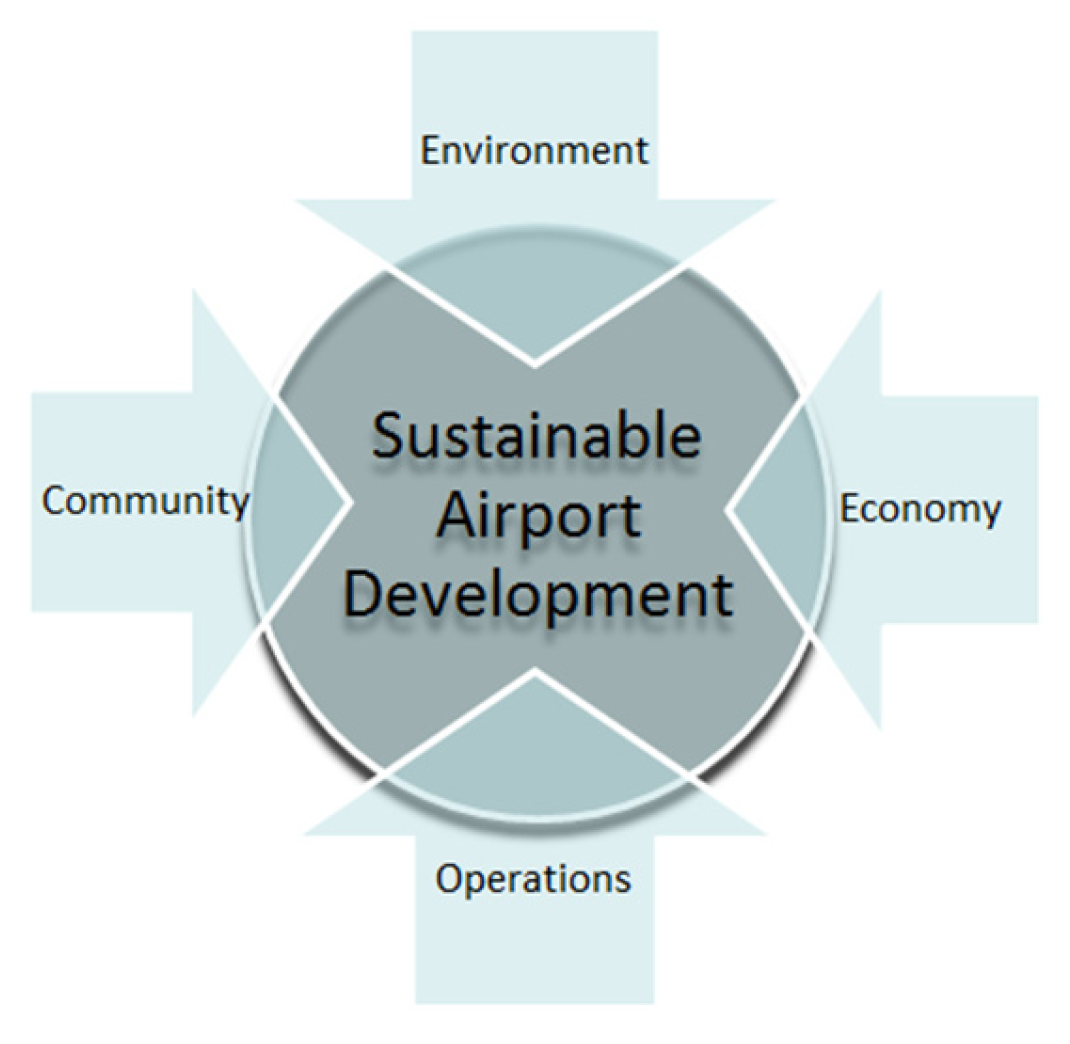
Figure 2.
Helicopter Routes from DFW to Vertiport near Convention Center Source: FAA, 2026a.
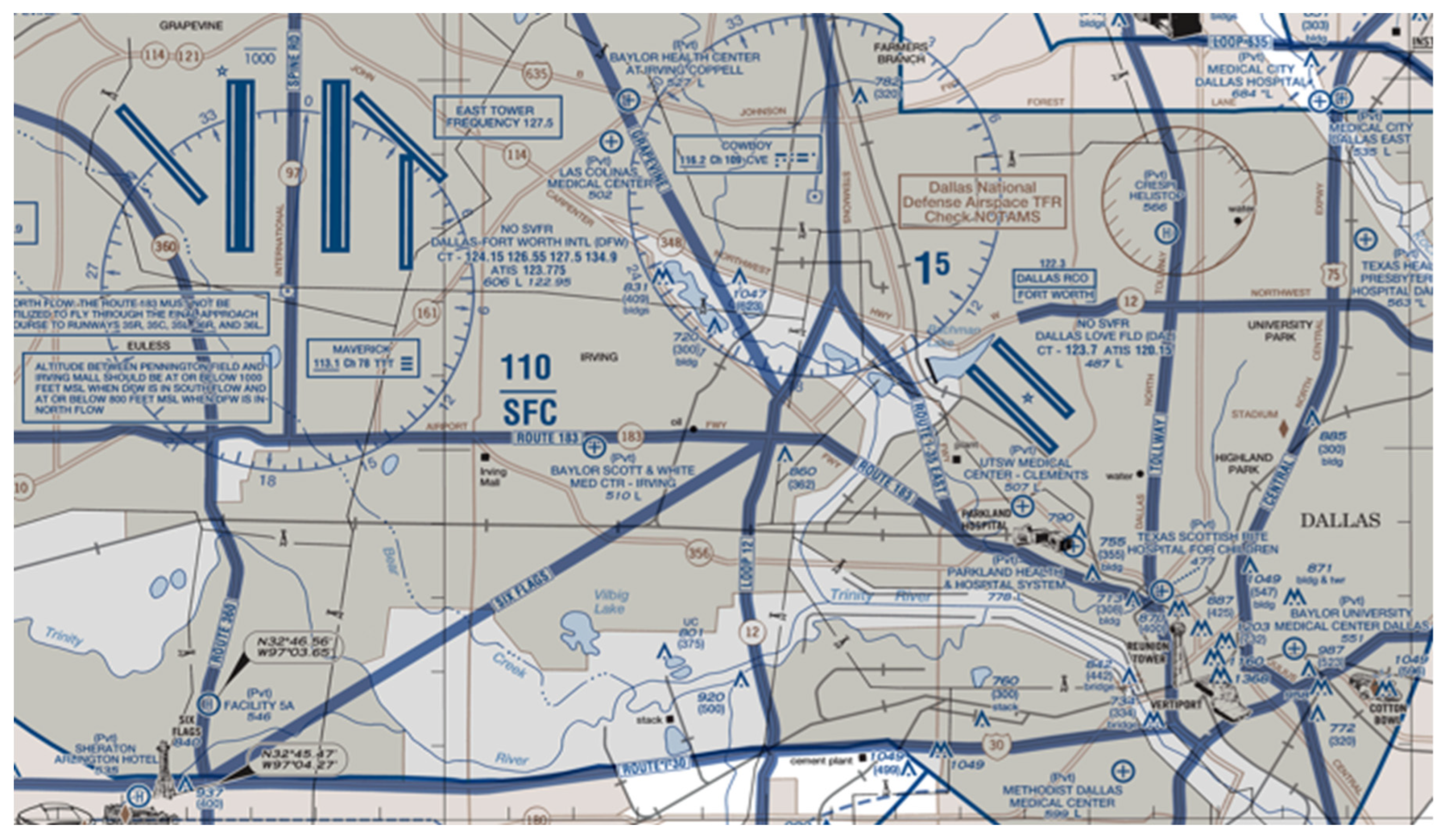
Figure 5.
Source Energy for Electric Power, Lifetime CO2 Emissions for Electricity Sources and Electricity Subgrid for US Sources: 2024 data from US Energy Information Administration (eia) (n.d); US Department of Energy (2024); EPA (2023a).
Figure 5.
Source Energy for Electric Power, Lifetime CO2 Emissions for Electricity Sources and Electricity Subgrid for US Sources: 2024 data from US Energy Information Administration (eia) (n.d); US Department of Energy (2024); EPA (2023a).
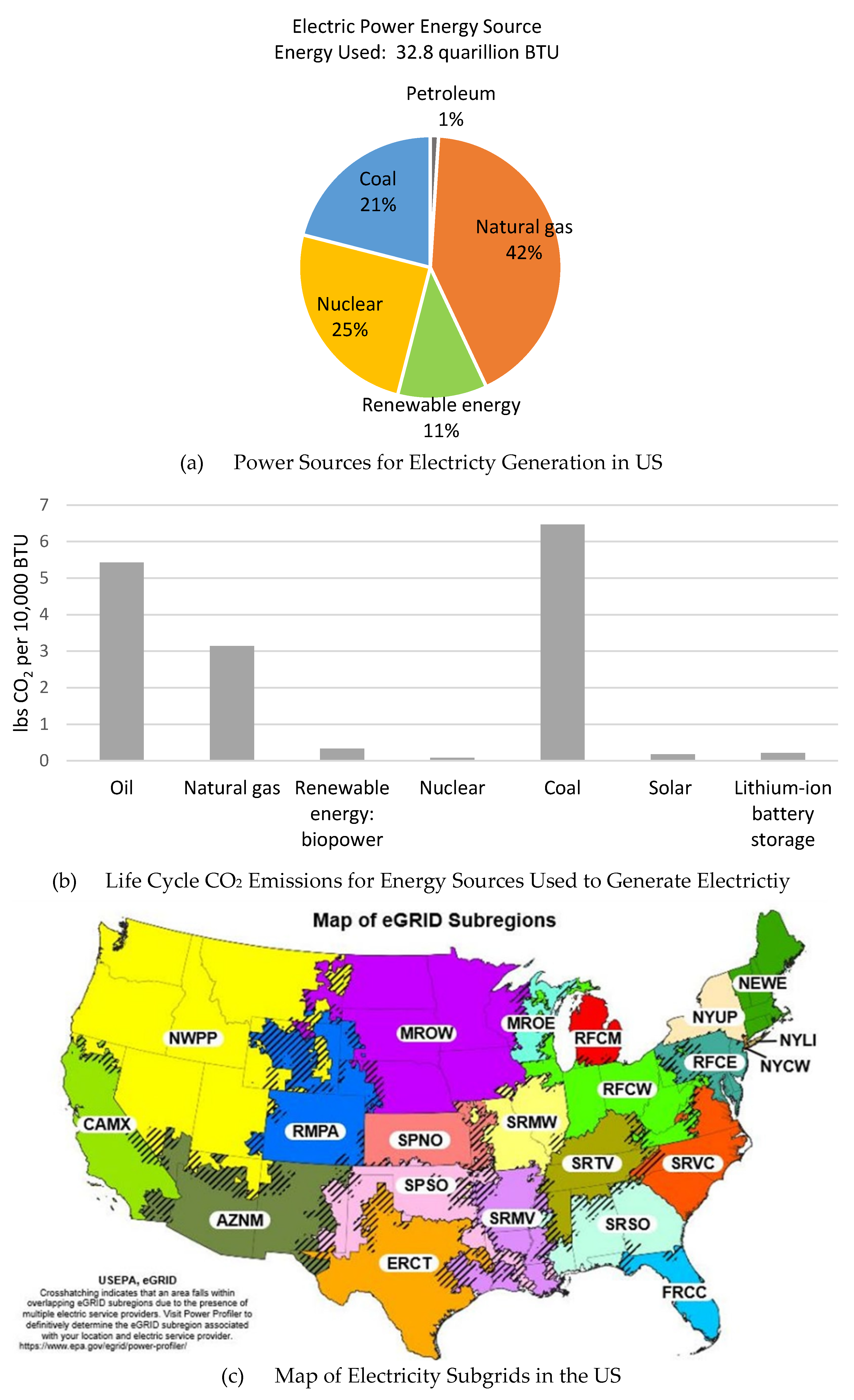
Figure 6.
Vertiport Concepts Leverage Existing Designs and New Technologies Source: Images created using Microsoft Copilot (GPT-5 model).
Figure 6.
Vertiport Concepts Leverage Existing Designs and New Technologies Source: Images created using Microsoft Copilot (GPT-5 model).
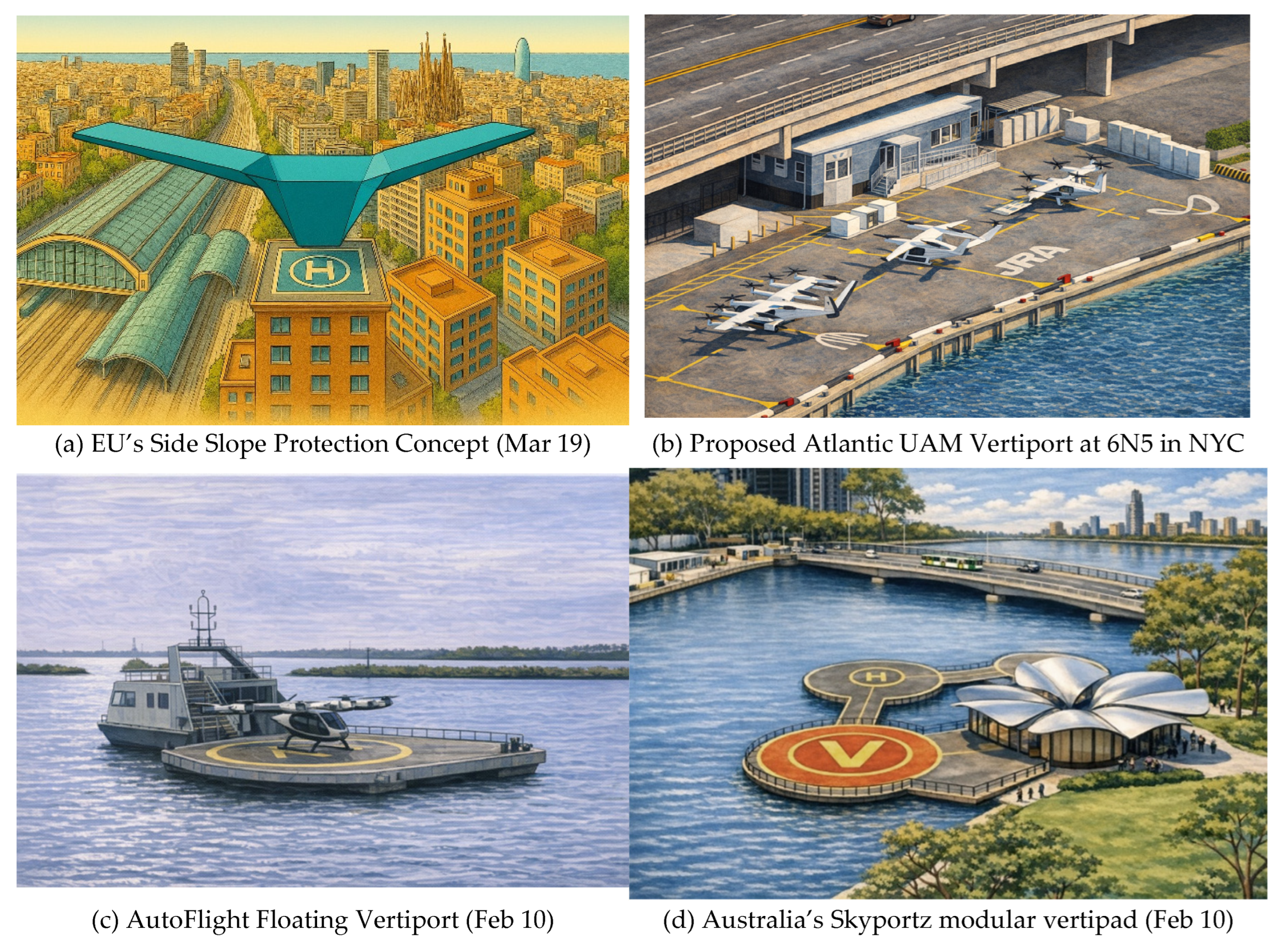
Table 1.
Themes in UAM Sustainability Research Papers
| Paper | Concept | Economic | Environment | Social | Operational | Integration with Other Modes |
|---|---|---|---|---|---|---|
| Ahmed (2023) | Autonomous landing system for VTOL | Autonomous landing guidance | UAM will provide alternative to congested roads | |||
| Bi et al. (2025) | Examines UAM as an alternative to rail in Shenzhen China | Different pricing schemes including mileage charges | Divert passengers | UAM as alternative to rail | ||
| Biehle (2022) |
Assess social impacts of passenger drones | Requires public subsidies in the short to mid term | Equity, mobility, passengers with disabilities | |||
| Bubalo (2024) | Digital twin of airspace and infrastructure for capacity and demand forecast | Energy demand | Airspace and vertiport capacity and routes | Two airports in Hamburg considered | ||
| Cohen et al. (2021) |
Interviews and workshops to identify history and ecosystem of UAM | Referenced but not detailed | Mentions energy efficiency but not a major theme | Safety and reliability mentioned | Critical flight phases, decision support and flight rules, sensor fusion, safety | |
| Deniz et al. (2024) |
Model high density AAM in structured airspace using a multi-agent reinforcement learning (MARL) | High-density traffic management with conflict avoidance and safe separation | ||||
| Di Vito et al. (2023) |
Describe ASSURED UAM for deployment | Cost factors acknowledged but not analyzed | Environmental goals addressed at a high level | Acceptance part of the ASSURED UAM scope | Use cases discuss technology enablers and operational requirements | Suggests UAM complements existing modes but does not provide details |
| Duca et al. (2023) |
Survey of experts | Cost is an obstacle | Climate neutral, clean energy | Social acceptance, equity, privacy | Standard vehicle and missions | |
| Dziugiel et al. (2025) |
Analysis of UAM sustainability in smart city with digital tech (communication and info tech) | Lifecycle cost including cost of safety, | Emissions, carbon, water, climate change, biodiversity, animals killed | Affordability, accessibility, acceptance, emergency services | ||
| Eissfeldt (2020) | Resident participation in noise sensing | Noise impact | Citizen participation | |||
| Huis (2023) | Legal framework to reduce risk in Indonesia UAM | Accidents would increase insurance costs, consider costs of ground stations | Noise and visual pollution | Community impact | Regulatory requirements to reduce accidents | |
| Kim et al. (2024) | Computer vision for cabin surveillance | Energy efficiency | Safety & security | Cabin surveillance | ||
| Kim & Zhang (2025) | Survey in South Korea regarding willingness to use UAM | Public acceptance survey (automation, demographics) | Airport shuttle use case | |||
| Koch and Asmer (2020) | Analysis of aircraft and business jets | Cost comparison | Electric propulsion sustainability | Technical performance | Comparison with existing helicopters | |
| Lee et al. (2023) | Assessment of acceptance, adoption and use of UAM | Social influence, trust, performance expectancy, structural assurance | UAM as alternative to transit | |||
| Li, et al. (2025) | Model of UAM acceptance | Price sensitivity | Environmental awareness | Public acceptance | Perceived safety | |
| Liberacki et al. (2023) | Identify factors affecting cost of UAM for ASSURED | Cost factors include infrastructure and aircraft, operational costs, delay, etc. | Environmental costs contribute to cost | Operational cost contributes to overall cost | ||
| Lu et al. (2025) | Vertiport site selection in Shenzhen for passenger transport | Economic constraints | Equity in access | Safety | ||
| Menichino et al. (2022) |
Technology readiness, propulsion, communication, infrastructure and U-space for ASSURED UAM | Cost affected by tech readiness | Energy efficiency | Propulsion, U-Space readiness | ||
| Moradi et al. (2024) |
Investigate last mile delivery from OR perspective | Infrastructure planning | GHG and emissions | May ease congestion and reduce travel time | Routing and scheduling, safety | Integration with robots, EV and parcel lockers |
| Palaiologk et al. (2025) |
Environmental modeling of UAM and aviation | Emissions, noise mitigation | Trajectory optimization, real-time weather information | |||
| Raghunatha et al. (2023) | Policy framework | Market pricing, public-private partnerships | Noise, energy, emissions, use of renewable energy | Trust and in-vehicle safety, safety and privacy of non-users, impact on labor and quality of life, local decision making | Require certificates for vehicle to address design, safety and operation | |
| Santos et al. (2025) |
Systematic review that considers 150 indicators to assess UAM impacts | Integrated with social as socio-economic; includes affordability, investment costs, operating costs | CO2 emissions, carbon credits, noise, energy, visual impacts, construction, life cycle, animals | Travel times, privacy, equity, access to employment, congestion, security, quality of life | Safety, weather, travel time | Congestion on the ground |
| Tojal and Paletti (2023) |
Define measures for UAM sustainability | Consider lifecycle costs | Noise, emissions, energy efficiency | Affordability, accessibility, satisfaction | Fatalities, congestion, delay | Facilitate multimodality and compliment other modes |
| Wild (2024) |
Integration of UAM into urban areas | May create jobs and stimulate economic growth | Air and noise pollution | Noise, socio-economic considerations | Regulatory barriers including certification, infrastructure, safety standards | Addresses UAS from an urban science perspective which includes land use |
| Wu et al. (2025) | Multi-objective optimization to site Munich vertiports | Cost allocation, phased investment | Emissions in optimization | Vertiport siting, phased implementation | Mode share considered, uses real land use data | |
| Xiao and Gao (2025) | Last mile delivery with truck-drone | Operational cost | Collaborative model with trucks and drones | Integrate UAS with truck pickups | ||
| Zewde and Raptis (2025) | Conceptualize UAM including aircraft and operational technologies, airspace, and traffic management | Cost effectiveness, operational cost and public private partnerships | Reduced noise and emissions | Accessibility of UAM | Safety | Multi-modal connectivity |
Table 2.
Opportunities and Challenges of UAM
| Economic | Environment | Social | Operational | |
|---|---|---|---|---|
| Opportunities & Promises of UAM | ||||
| Complement other transportation modes and may provide an alternative to congested roadways. | √ | √ | ||
| Potential for economic growth, innovation, and new business models. | √ | |||
| Creates employment opportunities in a new business sector. | √ | √ | ||
| Supports environmental sustainability in the future if powered by green energy. | √ | |||
| Airspace management aim and other regulatory frameworks aim to ensure safety and efficiency. | √ | √ | √ | |
| Challenges & Uncertainties | ||||
| Safety risks in dense urban airspace and potential risk to manned aircraft near airports. | √ | √ | √ | |
| Current operations are limited and certifications are still pending; most aircraft are still in test phases. | √ | |||
| Current battery technology limits range and flight duration. | √ | √ | ||
| Infrastructure will likely require subsidies. | √ | |||
| Community concerns include noise, emissions and equity. | √ | √ | ||
| Limited capacity reduces equity since a large volume of aircraft would likely correlate with significant negative externalities. | √ | √ | ||
| Would likely require increased energy supply (if deployed at scale) and additional grid infrastructure, this may increase electricity costs for all users | √ | √ | √ |
Table 3.
UAM vs. Traditional Ground-Based Business Models
| Aspect | Urban Air Mobility (UAM) | Traditional Roadway |
|---|---|---|
| Value Proposition | Fast, congestion-free travel; complements existing modes; marketed as potentially sustainable although this relies on green energy that does not currently exist | Affordable, widely accessible; established infrastructure |
| Revenue Streams | Air taxi fares, cargo delivery fees, vertiport access charges, subscription models, medical and emergency response | Ticket fares, fuel sales, tolls, ride-hailing fees |
| Cost Structure | High upfront costs (eVTOL R&D, certification) and costs for vertiports, air space management, maintenance, insurance, and charging | Lower infrastructure costs (roads exist); vehicle purchase, fuel, maintenance |
| Regulatory Complexity | Requires new airspace management, certification for eVTOLs, safety standards, and liability | Mature regulatory frameworks for roads and vehicles |
| Technology Dependency | Advanced batteries, autonomous flight systems, air traffic integration | Internal combustion engines (ICE) or electric vehicle (EV) tech; less complex systems |
| Profitability Risks | High uncertainty; narrow margins due to infrastructure and certification costs; forecasts may be overly optimistic to obtain investor funding | Proven profitable models; predictable demand |
| Public Acceptance | Concerns about noise, safety, equity of access | High acceptance; culturally ingrained |
| Scalability | Limited by vertiport availability, airspace constraints | Highly scalable; existing networks support mass adoption |
| Environmental Impact | Potentially low emissions if powered by green energy | ICE vehicles tend to have higher emissions; EVs may reduce impact if “green” electricity source is used |
Table 4.
UAM Expected Cost Information
| Service Type | Operator / Context | Market / Route Context | Price | Key Notes | Source | |
|---|---|---|---|---|---|---|
| Helicopter | ||||||
| Modern helicopter | Voom (Airbus platform with service from 2016 and to 2020) | Mexico City | ~ $7.50 per pax-mile | $249 from TLC to MEX (about 33 miles) | Travel Update (2019) | |
| São Paulo, Mexico City & SF Bay Area | $10 per pax-mile | General cost | Booz Allen Hamilton (2018)1 and Reiche et a. (2018)1. Airbus (2020) | |||
| Blade | Scheduled service in NYC | $11.50 per pax-mile | JFK to Manhattan $195 (about 17 miles) | Blade (2026) | ||
| General | Helicopter cost range | $6–$8 per seat-mile | Presented as estimated cost range | Johnston, Riedel, & Sahdev (2020) | ||
| Near Term eVTOL | ||||||
| eVTOL air-taxi estimate | Uber Elevate | On-demand air taxi at launch | $5.73 per pax-mile | Projected initial service cost | Dickey (2018) | |
| eVTOL air-taxi estimate (w/ ridesharing) | Uber Elevate | Increased utilization via ridesharing | $1.86 per pax-mile | Cost reduction attributed to utilization / ridesharing | ||
| eVTOL seat-mile estimate | Cost required to be competitive with existing modes | Near-term | $2.50 per seat-mile | Seat-mile metric (not pax-mile) | Johnston, Riedel, & Sahdev (2020) | |
| eVTOL cost forecast | Price varies depending on capacity of eVTOL | 5-seat eVTOL is much less than 2-seat eVTOL per pax | $6.25 to $11 per pax-mile | More conservative than Uber/McKinsey estimates | Booz Allen Hamilton (2018) | |
| eVTOL operating cost | Uber Elevate conference statement | At $2.00 per pax-mile operating scenario | $2.00 per pax-mile | $662/hr (eVTOL) vs $1,253/hr (typical helicopters) | Uber Elevate (2019) 1 | |
| eVTOL air taxi | Service in Austin Texas | Model of life cycle costs for eVTOL | $5.79 per pax-mile (max cost) | 4 seat aircraft provides more efficient transport than 8 seat aircraft in terms of energy and GHG | Khavarian & Kockelman (2023) | |
| eVTOL Chinese Company AutoFlight | Mobile air carrier water vertiport | Tourists and commuters | $1.34 per pax-mile | $42 for 31 mile (50 km) trip across water for tourists and commuters | Mingyang and Zishuai (2025) | |
| eVTOL considering flying (energy, pilot, ATC), vertiport, aircraft and maintenance costs | 10.7 mi trip, 3 pax | Airport Shuttle | $7.66 to $16.36 per pax-mile | 75% occupancy assumed | Roland Berger (2024) |
|
| Long Term | ||||||
| eVTOL long-term target (aspirational) | Uber Elevate | Long-term with manufacturing + autonomy advances | $0.44 per pax-mile | Compared to full auto ownership cost $0.46–$0.61 per mile |
Dickey (2018) | |
| eVTOL cost forecast (long-term w/ 60% reduction) |
NASA- commissioned forecast |
Five-seat eVTOL | $3.75 per pax-mile | Long-term decrease attributed to efficiency/autonomy/tech improvements | Booz Allen Hamilton (2018) 1 | |
Notes: 1 Based on information from Garrow et al. (2021).
Table 5.
Travel Time Components for UAM and Ground Vehicle
| Segment | Estimated UAM (eVTOL) | Traditional Roadway |
| Access to vertiport | 4 – 8 min to vertiport Elevator/shuttle inside Terminal A, short transfer important for travel time benefit |
5 min from terminal to vehicle pickup |
| Origin terminal/ processing | 5 min Check-in/brief screening terminal processes impact throughput & total time |
2 – 3 min Exit parking garage |
| Boarding | 10 min Flight called 10 min before departure |
|
| Line-haul | 9 – 12 min Includes time for take-off, climb, cruise, hover and landing |
Off-peak: 23 – 25 min Peak: 30 – 33 min |
| Arrival terminal/ processing | 2 – 5 min Deplane and egress to curb |
– |
| Egress to destination | 2 – 5 min Short walk or shuttle to KBHCCD entrance from vertiport |
2 – 5 min park + walk to KBHCCD entrance from parking lot |
| Door-to-door total | 32 – 45 min Very sensitive to terminal processes and vertiport siting |
32 – 38 min (off-peak) 39 – 46 min (peak) |
Sources: Bailey Hutchison Convention Center Dallas, 2026; Distance as the Crow Flies, n.d.; GoogleMaps, 2026; Rome2Rio, 2026; Schrank et al., 2025. Notes: Travel distance is 16.5 miles via air or 18 miles on I-35E (22.3 miles via I-30), fastest route depends on traffic and distance depends on terminal as well as route. Congestion factor for roadway peak period is 1.31 × off-peak travel time. Time for UAM reflects cruise speed of 130 mi/hr (113 knots, 7.4 min) plus time for climb, hover and land (1.6 to 4.6 min). Boarding time is based on 10 min time reported for Blade Helicopter service (Vogel, 2025). Access to vertiport would vary depending on arrival terminal; at JFK the transfer between the heliport and Terminal 5 is seven minutes (Vogel, 2025).
Table 7.
Emission Rates for Electricity Generation
| State or Subgrid | CO2 Emissions (lbs/MWh) |
Comment |
|---|---|---|
| New Hampshire | 272.9 | Lowest state emission rate due to greater use of nuclear power (57% vs. US average 25% nuclear ) |
| West Virginia | 1,954.4 | Highest state emission rate due to use of coal (86% vs. US average 21% coal) |
| Texas | 393.5 | Relevant to example case study in Section 3.1 Economic Considerations |
| ERCT Subgrid | 733.9 | Subgrid that serves the Dallas Fort Worth area |
| New York | 465.1 | Relevant to example case study in Section 3.2 Environmental Considerations |
| NYLI Subgrid | 1,180.7 | New York City uses a mix of electricity generated within the city and outside the city including power from the NYLI (Long Island) and NYCW (NYC/Westchester) subgrids. JFK Airport is on the southwestern shore of Long Island (so significant electricity comes from the NYLI subgrid); a solar microgrid is planned at JFK for Terminal 1 and Parking Lot 9 to offset the electricity needs of the existing airport (PANYNJ, 2024). |
| NYCW Subgrid | 864.5 | |
| California | 393.5 | Relevant to example case study in Section 3.4 Operational Considerations; Hawthorne Airport has been leased for e-VTOL use during 2028 Olympics in Los Angeles. California) |
| Florida | 786.6 | Florida has state legislation allowing state funds to be used to build vertiports |
| Ohio | 1,063.8 | Ohio has proposed to use Advanced Air Mobility (AAM) for critical medical transport applications in a project that spans four states (including Indiana, Kentucky and Michigan) and includes partnerships with Beta, Joby, and NEOEx Systems. |
| Indiana | 1,457.2 | |
| Kentucky | 1,735.0 | |
| Michigan | 793.2 | |
| Average for US | 767.2 |
Sources: EPA (2023b); Florida Senate Bill 1362 (2026); Jobs Ohio (2026); Port Authority of New York and New Jersey (2024);.
Table 8.
Estimated Energy Intensity of Travel in NYC from JFK Airport to Manhattan
| Mode | Occupancy | Energy intensity (kWh / pax trip) |
Trip CO2 per pax trip (lb CO2) |
| Air | |||
| Blade Helicopter | 3 pax (6 max) |
108.6 | 59.0 |
| UAM eVTOL full occupancy |
4 pax (4 max) |
18.0 | 21.3 |
| UAM eVTOL expected average occupancy |
2 pax (4 max) |
32.4 | 38.3 |
| Roadway | |||
| UberX Sedan | 1 pax (typical) (4 max) |
29.2 (21 mpg) |
17.9 |
| Uber Black, 2 pax (larger SUV) increased occupancy |
2 pax (4 max) |
23.6 (14 mpg) |
13.4 |
| Uber Black, 1 pax (larger SUV) typical occupancy |
1 pax (typical) (4 max) |
43.1 (14 mpg) |
26.8 |
| Uber EV (Tesla) | 1 pax (typical) (4 max) |
5.2 | 6.14 |
| Transit | |||
| Public Transit (subway) | - | - | 2.5 |
Notes: The distance for eVTOL is shorter (16 miles or 25 km) than the typical roadway route taken (18 miles or 29 km) based on Rome2Rio (2026b); Google Maps (n.d.); Distance as the Crow Flies (n.d). Assume both helicopter and UAM are a 9 min trip in terms of aircraft engine time (includes climb, cruise, hover and landing). Helicopter based on fuel flow of 55 gal/hr of Jet A (max fuel flow for a Bell 407GXi (Bell Textron, 2025); for eVTOL, 32 kWh for 16 mile, 6 min cruise at 2 kWh/mi; lift and climb for 1.5 min at twice the energy burn rate as cruise (16 kWh), hover and landing for 1.5 min at 3x the energy burn as cruise (24 kWh); 10% reduction for 2 pax rather than 4 due to reduced weight. Vehicle mileage values shown are practical for a 2017 Honda Accord (uber sedan), a Chevy Suburban in City traffic (Uber Black), an Uber EV like a Tesla Model 3 (US Department of Energy, 2026). CO2 data based on carbon dioxide emissions coefficients from US Energy Information Administration (2024); CO2 calculations for electric modes (EV, Transit, eVTOL) are based on the NYLI carbon intensity, estimated at approx. 1.181 lb CO2/kWh (mix of natural gas and zero-emissions sources) as published by EPA (2025). CO2 for subway (NYC) is based on 0.108 lbs of CO2 per pax mile (Eno Center for Transportation, 2022) with an estimated distance of 23 miles. Energy per gallon of fuel (Jet A and gasoline) based on Bureau of Transportation Statistics data published by the Department of Transportation (2025) (39.57 kWh per gallon of Jet A, 36.64 kWh per gallon of gasoline). CO2 data from US Energy Information Administration, 2024) (20.86 lbs CO2 per gallon of gasoline and 21.5 lbs CO2 per gallon of Jet A).
Table 9.
US vs. EU Vertiport Siting Criteria
| Dimension | United States (FAA) | European Union (EASA) |
|---|---|---|
| Regulatory Basis | FAA Engineering Brief 105A; NEPA considerations; Airport Layout Plan (ALP) depiction requirements for vertiports on airports. |
EASA Prototype Technical Design Specifications (PTS-VPT-DSN) provides performance-based criteria; single European Sky (SESAR) / EUREKA inputs |
| Safety & Geometry | Touch down and lift off (TLOF) / final approach and take off (FATO) sized per VTOL rotor diameter; Downwash/Outwash protection zones for downward and lateral force of air | Obstacle-Free Volume (OFV) funnel-shaped clearance; omnidirectional approach paths |
| Airspace Integration | Must align with national airspace (NAS) procedures; coordinate with air traffic control (ATC) and ALP | Integrated with U-space and ATM; supports flexible trajectories for urban density |
| Environmental Review | NEPA applies, but analysis related to environmental justice, climate, and cumulative impacts were removed from required scope to streamline approval process | Environmental and noise mitigation emphasized; community acceptance prioritized |
| Noise Management | Noise modeled via AEDT; supplemental analysis recommended for UAM but no specified framework has been identified | Flexible omnidirectional paths to minimize noise; siting considers urban noise corridors |
| Land Use & Zoning | Parcel size, zoning compatibility, stakeholder engagement; FAA ALP depiction required for vertiports at airports; Local zoning and land use requirements will likely be managed by local ordinance (rather than federal regulation) | Urban planning integration; repurposing heliports and rooftops encouraged |
| Infrastructure Needs | Load-bearing pads, charging stations, passenger facilities; increased grid infrastructure likely required but outside the scope of FAA evaluation | Similar requirements plus redundancy for network resilience and emergency ops |
| Community & Equity | Environmental Justice is no longer mandated under FAA NEPA; voluntary stakeholder engagement is encouraged | Explicit emphasis on social acceptance and stakeholder engagement in EASA guidance |
| Network Planning | Focused on individual site compliance; multimodal integration optional | Network-level capacity and resilience planning required under SESAR / EUREKA; includes city-wide digital twin to model U-space |
Sources: FAA (2024); FAA (2025); EASA (2022).
Disclaimer/Publisher’s Note: The statements, opinions and data contained in all publications are solely those of the individual author(s) and contributor(s) and not of MDPI and/or the editor(s). MDPI and/or the editor(s) disclaim responsibility for any injury to people or property resulting from any ideas, methods, instructions or products referred to in the content. |
© 2026 by the authors. Licensee MDPI, Basel, Switzerland. This article is an open access article distributed under the terms and conditions of the Creative Commons Attribution (CC BY) license (http://creativecommons.org/licenses/by/4.0/).
Copyright: This open access article is published under a Creative Commons CC BY 4.0 license, which permit the free download, distribution, and reuse, provided that the author and preprint are cited in any reuse.