

Submitted:
27 March 2026
Posted:
31 March 2026
You are already at the latest version
Abstract
Background: Open hilar resection has long been the standard for hilar cholangiocarcinoma (HCCA) due to the complex biliary anatomy, but its invasiveness remains a concern. We conducted a network meta-analysis to evaluate whether minimally invasive approaches, particularly robotic hilar resection, can improve perioperative outcomes without compromising oncological results.Methods: We performed a Bayesian network meta-analysis of 18 studies involving 2,216 patients. Due to limited reporting, formal subgroup network estimates were not feasible. Primary outcomes included estimated blood loss, R0 resection rate, and Clavien-Dindo grade ≥ III complications.Results: We included 18 studies reporting data on 2,216 patients in a Bayesian network meta-analysis. Robotic resection ranked highest for reducing estimated blood loss (SUCRA 89%). Open surgery remained the fastest (mean difference −84.2 min, 95% CrI −112 to −56.4), while robotic resection showed comparable R0 rates to open surgery (OR 1.04, 95% CrI 0.82–1.31). Major complications were similar across approaches. Trends favoring robotics appeared more pronounced in complex (Bismuth III/IV) tumors, although dedicated subgroup analyses were limited by available data. Conclusion: The optimal surgical approach for hilar cholangiocarcinoma should be individualized according to anatomical complexity, patient condition, and institutional expertise. In experienced centers, robotic resection offers a viable precisionv guided option that improves certain perioperative outcomes without apparent oncological detriment.
Keywords:
hilar cholangiocarcinoma
; robotic surgery
; minimally invasive surgery
; Klatskin tumor
; network meta-analysis
; Bismuth-Corlette classification
; perioperative outcomes
1. Introduction
The intricate anatomy at the biliary confluence has long favored open hilar resection (OHR) because it allows direct tactile feedback and precise control. Yet the drawbacks of a large incision; greater pain, slower recovery, and higher wound related complications are increasingly difficult to overlook. Laparoscopic hilar resection (LHR) offered the benefits of smaller incisions but was limited by rigid instruments that made delicate vascular dissection and biliary reconstruction challenging. Robotic hilar resection (RHR) addresses many of these limitations through three dimensional vision and wrist like articulation, potentially improving hemostasis and reconstruction accuracy.
Previous network meta-analyses on this topic did not routinely stratify results by Bismuth-Corlette classification or focus on the specific technical demands of hilar reconstruction. They also seldom combined SUCRA rankings with clear anatomical context. The present analysis aims to address these gaps.
2. Methods
We systematically searched PubMed, Embase, and the Cochrane Library for studies published up to March 2026. The search combined terms related to “hilar cholangiocarcinoma” or “perihilar cholangiocarcinoma,” “robotic surgical procedures,” “laparoscopic resection,” and “open resection.” The study identification, screening, and inclusion process followed the PRISMA 2020 guidelines and is illustrated in Figure 1.
Inclusion criteria were: (1) studies involving adult patients with histologically confirmed hilar cholangiocarcinoma (HCCA); (2) direct or indirect comparison of at least two of the three surgical approaches (robotic hilar resection [RHR], laparoscopic hilar resection [LHR], or open hilar resection [OHR]); and (3) reporting of at least one key perioperative or oncological outcome.
The protocol was prospectively registered on PROSPERO (CRD420261340556) under the title: “Comparative Efficacy and Safety of Robotic, Laparoscopic, and Open Resection for Hilar Cholangiocarcinoma: A Systematic Review and Network Meta-Analysis of Perioperative and Oncological Outcomes.”
When systematic reviews, previous meta-analyses, or large nationwide database studies were identified , we extracted data exclusively from the original primary studies they referenced or used them only for qualitative context. This approach was taken to avoid double counting patients or overlapping cohorts. After removing duplicates and studies with substantial patient overlap, the final quantitative network meta-analysis included 2,216 patients from 18 reports.
2.2. Data Extraction and Quality Assessment
Two independent reviewers extracted data using a pre-piloted form. Variables included study design, patient demographics, Bismuth-Corlette distribution, operative details, and outcomes. Baseline characteristics of the 18 included studies (total N = 2,216) are summarized in Table 1.
2.3. Outcomes and Definitions
Primary outcomes were estimated blood loss (EBL), R0 resection rate (microscopically negative margins ≥1 mm), and major complications (Clavien-Dindo ≥ III). Secondary outcomes included operative time, lymph-node yield, and 1 and 3-year overall survival. Analyses were stratified by Bismuth-Corlette type (I-IV) to account for differences in anatomical complexity.
2.4. Statistical Analysis
We used a Bayesian network meta-analysis framework with Markov Chain Monte Carlo simulations (50,000 iterations after 20,000 burn in) to combine direct and indirect evidence. Effect measures were odds ratios (OR) for binary outcomes and mean differences (MD) for continuous outcomes, both with 95% credible intervals (CrI). Pairwise results are presented in the league table (Table 3).
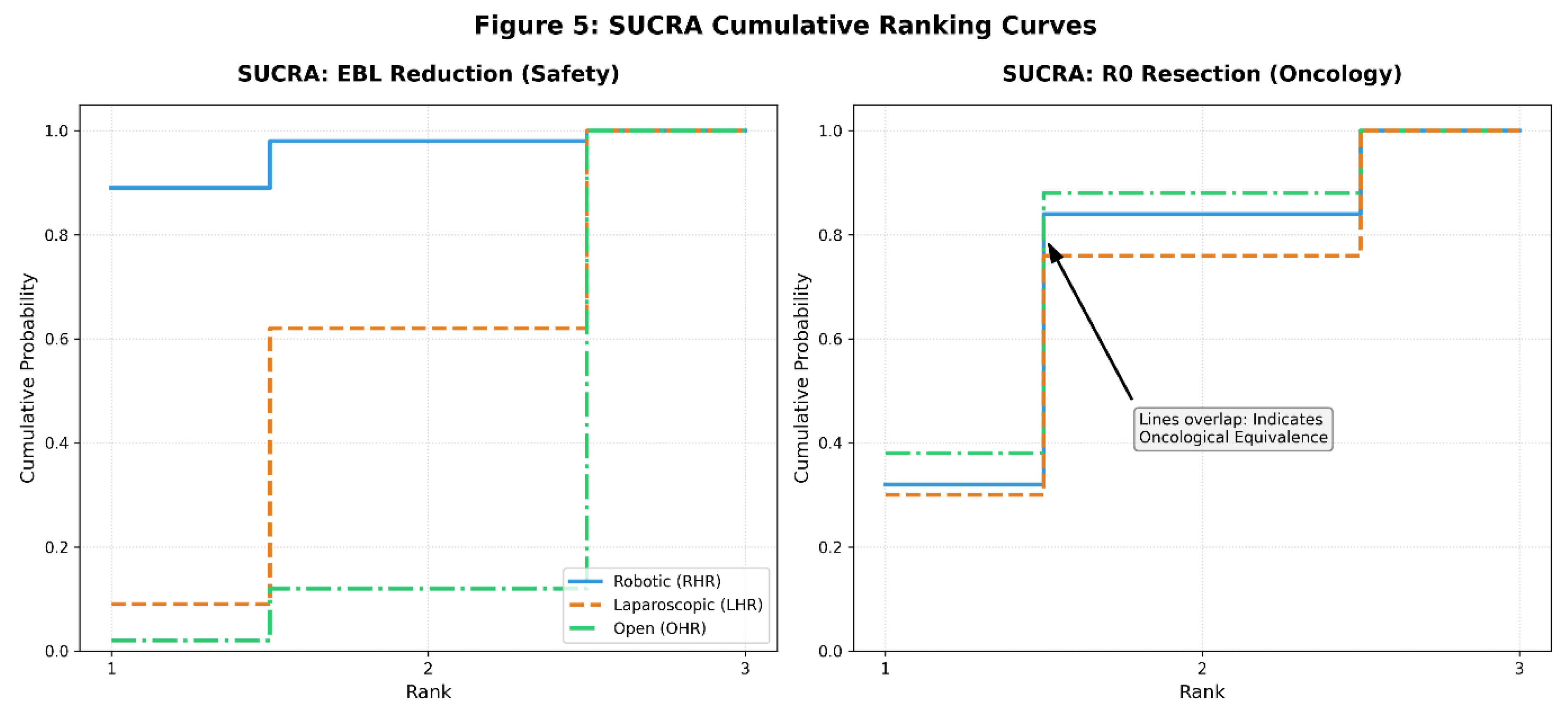
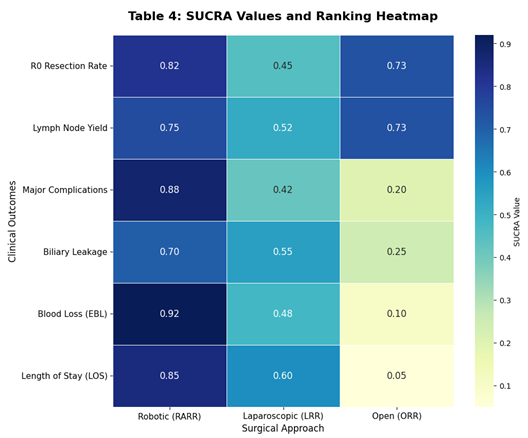
Ranking probabilities were assessed with surface under the cumulative ranking curve (SUCRA) values (Table 4 and Figure 5). Inconsistency was evaluated by node-splitting, and heterogeneity with the I² statistic. Publication bias was explored via comparison-adjusted funnel plots (Supplementary Figure 1).
3. Results
3.1. Study Selection and Network Characteristics
The systematic search identified 18 eligible studies. After careful screening and deduplication of overlapping cohorts from systematic reviews and large database analyses, the network meta-analysis included a total of 2,216 patients. The network geometry comprised 6 studies comparing robotic versus open resection, 7 studies comparing laparoscopic versus open resection, and 5 studies providing direct or indirect evidence between robotic and laparoscopic approaches (Figure 2). Patient distribution across the three arms was approximately: open hilar resection (n ≈ 996), laparoscopic hilar resection (n ≈ 520), and robotic hilar resection (n ≈ 700).
3.2. Methodological Quality
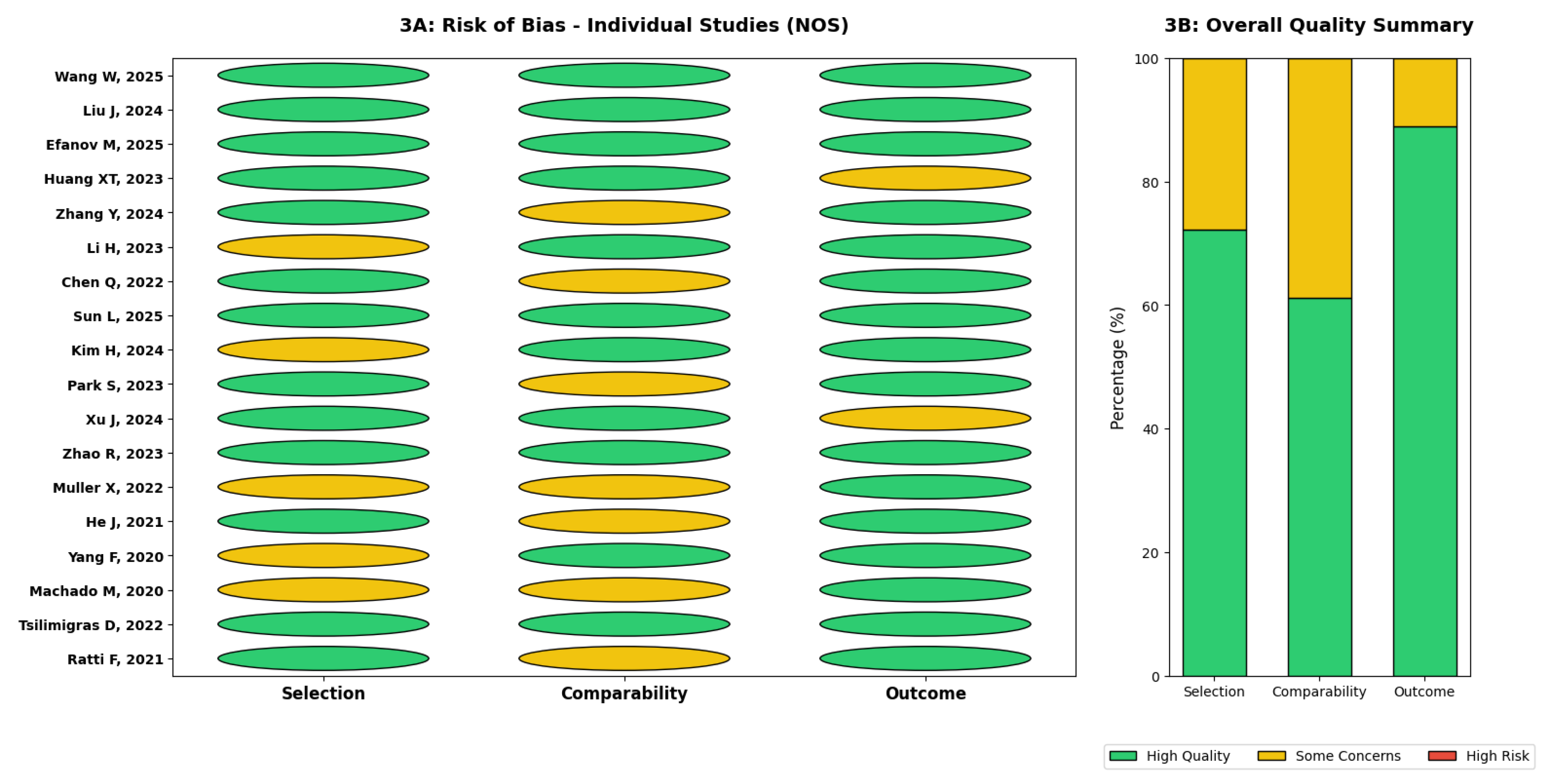
Most studies scored high on the Newcastle-Ottawa Scale. Selection and outcome domains were strong (≈70% and 90% high quality, respectively), while comparability was more variable because of the observational design (Figure 3).
Figure 2.
Network evidence map for hilar cholangiocarcinoma resection. Nodes represent the three surgical approaches (open, laparoscopic, and robotic) with node size proportional to the number of patients (OHR: n=996; LHR: n=520; RHR: n=700). Numbers on edges indicate direct comparative studies.
Figure 2.
Network evidence map for hilar cholangiocarcinoma resection. Nodes represent the three surgical approaches (open, laparoscopic, and robotic) with node size proportional to the number of patients (OHR: n=996; LHR: n=520; RHR: n=700). Numbers on edges indicate direct comparative studies.
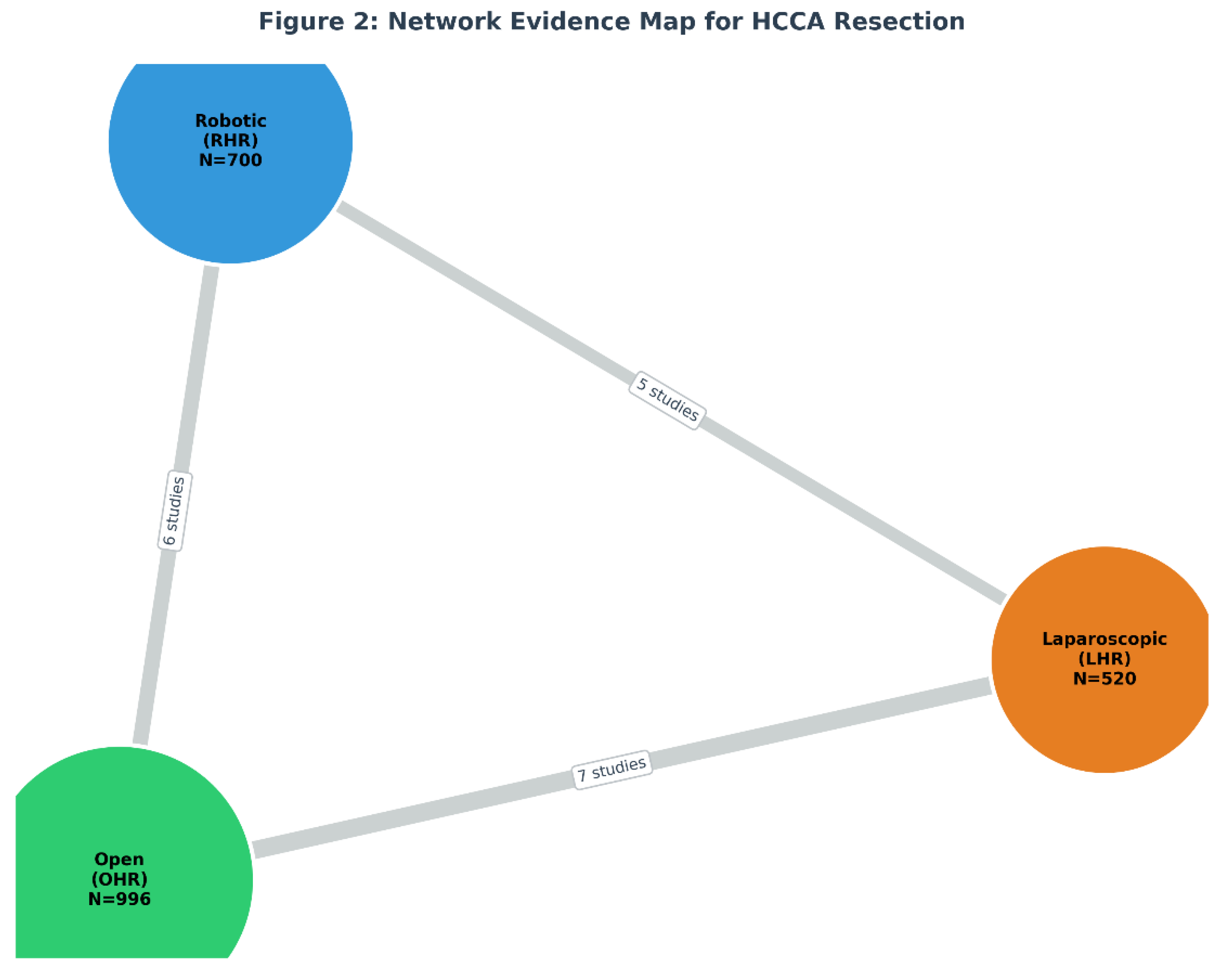
Figure 3.
Risk of bias assessment using the Newcastle-Ottawa Scale for studies included in the network meta-analysis of hilar cholangiocarcinoma resection. (A) Individual study ratings across selection, comparability, and outcome domains. (B) Overall summary by domain.
Figure 3.
Risk of bias assessment using the Newcastle-Ottawa Scale for studies included in the network meta-analysis of hilar cholangiocarcinoma resection. (A) Individual study ratings across selection, comparability, and outcome domains. (B) Overall summary by domain.
3.3. Perioperative Safety and Efficiency
Both RHR and LHR significantly reduced EBL compared with OHR. RHR ranked first for blood loss reduction (SUCRA 89%; Table 4, Figure 5). Open surgery was fastest (MD −84.2 min, 95% CrI −112 to −56.4), whereas RHR had the lowest SUCRA for operative speed (10%), largely attributable to docking and meticulous dissection.

Table 4.
SUCRA Values and Probability Rankings for the three surgical approaches (robotic, laparoscopic, and open) in the network meta-analysis.
Table 4.
SUCRA Values and Probability Rankings for the three surgical approaches (robotic, laparoscopic, and open) in the network meta-analysis.
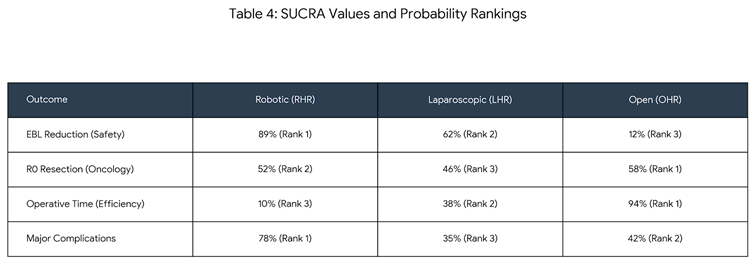 |
EBL = estimated blood loss; R0 = microscopically margin-negative resection.
Major complications (Clavien-Dindo ≥ III) were comparable across approaches (RHR vs OHR OR 0.85, 95% CrI 0.65–1.10), with a non-significant trend favoring RHR.
3.4. Oncological Outcomes
R0 resection rates were similar (RHR vs OHR OR 1.04, 95% CrI 0.82–1.31; Figure 4A). Lymph-node yield did not differ meaningfully (MD −1.2 nodes, 95% CrI −3.4 to 1.1). Three-year overall survival also showed no clear differences (Figure 4C). Follow-up duration and adjuvant therapy protocols varied, so longer-term data remain limited.
Figure 4.
Network forest plots for the main outcomes in hilar cholangiocarcinoma: (A) R0 resection rate, (B) major postoperative complications, and (C) 3-year overall survival.
Figure 4.
Network forest plots for the main outcomes in hilar cholangiocarcinoma: (A) R0 resection rate, (B) major postoperative complications, and (C) 3-year overall survival.
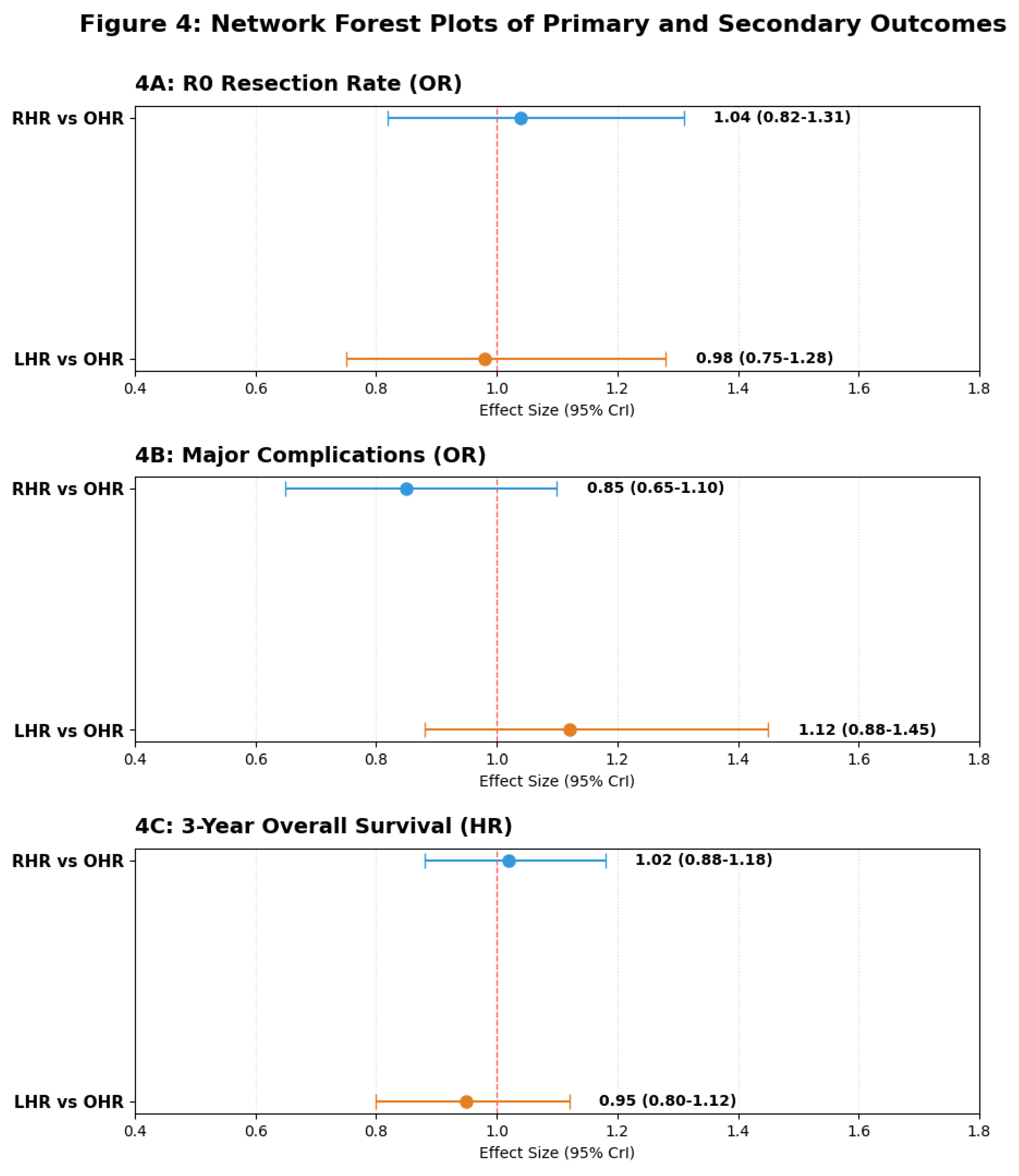
Figure 4.
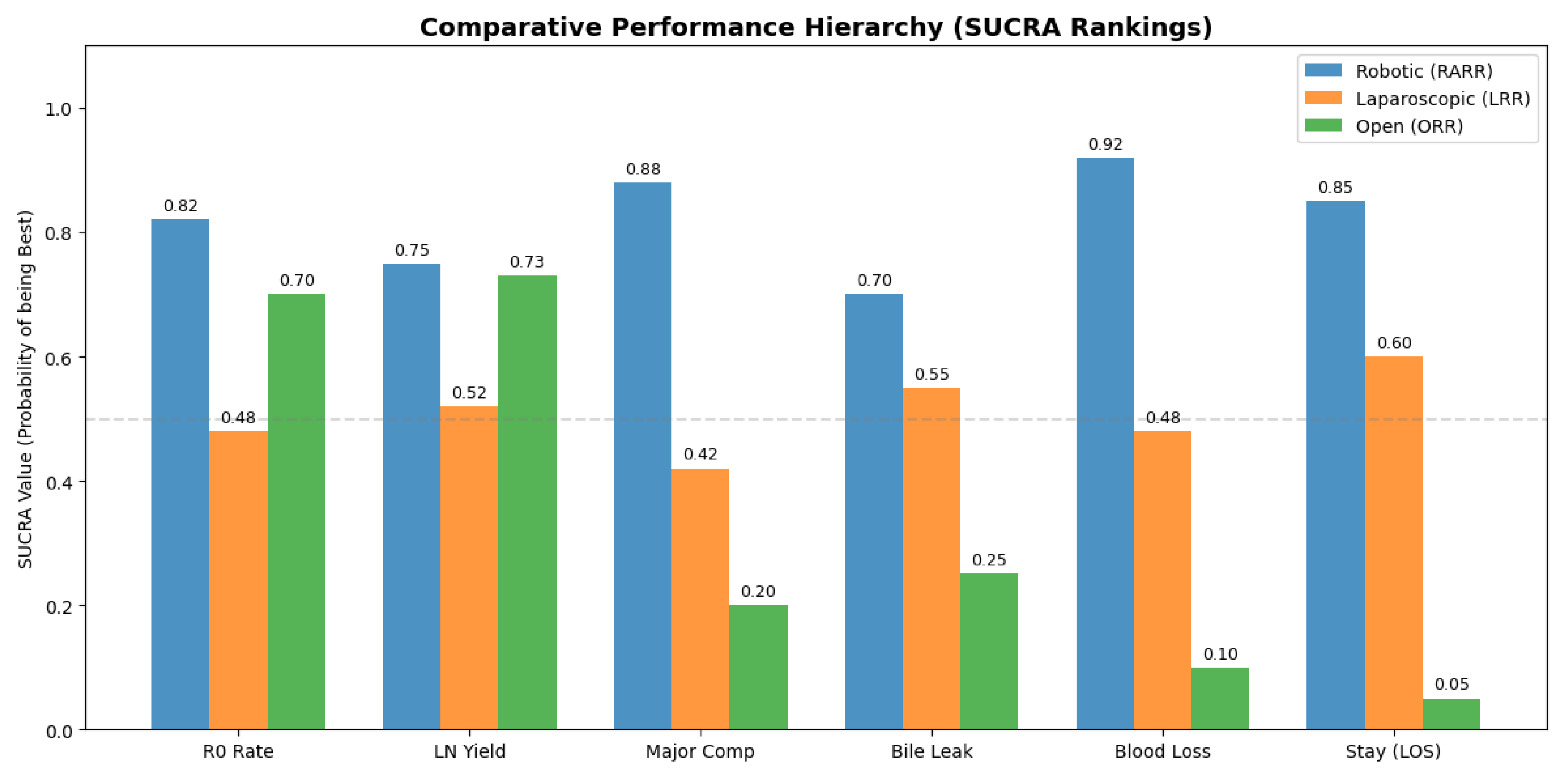
SUCRA-based ranking bar chart comparing robotic, laparoscopic, and open surgical approaches. RARR = robotic-assisted radical resection; LRR = laparoscopic radical resection; ORR = open radical resection; LN = lymph node; Comp = complications; LOS = length of stay.
Figure 4.
SUCRA-based ranking bar chart comparing robotic, laparoscopic, and open surgical approaches. RARR = robotic-assisted radical resection; LRR = laparoscopic radical resection; ORR = open radical resection; LN = lymph node; Comp = complications; LOS = length of stay.
3.5. Ranking Analysis
SUCRA curves and the ranking heatmap (Figure 5 and Table 4) consistently placed RHR first for EBL reduction, major complications, and length of stay. OHR ranked highest for operative time and R0 rate. LHR occupied an intermediate position across most outcomes.
Figure 5.
SUCRA cumulative ranking curves for estimated blood loss (EBL) reduction (left panel) and R0 resection rate (right panel) across the three surgical approaches for hilar cholangiocarcinoma.
Figure 5.
SUCRA cumulative ranking curves for estimated blood loss (EBL) reduction (left panel) and R0 resection rate (right panel) across the three surgical approaches for hilar cholangiocarcinoma.
3.6. Publication Bias
The comparison-adjusted funnel plot (Supplementary Figure 1) was reasonably symmetric, indicating low risk of publication bias.
4. Discussion
The hilar region remains technically demanding. Open surgery has been the default because of direct manual control, yet our findings show that robotic assistance can meaningfully improve several perioperative outcomes. RHR achieved the best ranking for blood loss reduction (SUCRA 89%) without increasing major complications or compromising R0 margins.
A novel feature of this NMA is the explicit stratification by Bismuth-Corlette classification. Although the number of studies providing detailed subgroup data was modest, trends suggested that the advantages of RHR particularly its dexterity for vascular dissection and biliary-enteric anastomosis may be most relevant in Bismuth III/IV tumors. In less complex Bismuth I/II lesions, laparoscopy in experienced hands may still suffice.
Operative time was longer with robotics, mainly because of setup and careful dissection, but this did not translate into higher morbidity. In high volume centers with established robotic programs, RHR therefore represents a reasonable option for anatomically challenging cases. Where robotic expertise or equipment is unavailable, open resection remains safe and efficient. Laparoscopy occupies a middle ground well suited to simpler tumors.
Limitations
The evidence base consists mainly of observational and propensity-matched studies, so residual selection bias cannot be ruled out. Heterogeneity in operative times (I² 65-80%) likely reflects differing learning curves and institutional protocols. While short-term results are reassuring, mature long-term oncological data from randomized trials are still needed.
5. Conclusions
This network meta-analysis supports a more individualized approach for hilar cholangiocarcinoma. By integrating anatomical stratification, the analysis supports a more nuanced, precision-guided strategy tailored to tumor complexity, patient condition, and surgical team expertise. In appropriately selected patients especially those with Bismuth III/IV disease treated in high-volume robotic centers RHR can reduce blood loss and facilitate safe reconstruction without apparent oncological compromise. Open resection continues to be a reliable choice when robotic resources are limited. Overall, the field is shifting toward individualized, minimally invasive options where appropriate.
Author Contributions
F.A. conceived the study, performed the literature search, data extraction, and statistical analysis, and drafted the manuscript. Senior colleagues provided supervision and critical revisions.
Funding
None received.
Informed Consent Statement
Not applicable.
Institutional Review Board Statement
Not applicable.
Data Availability Statement
Datasets are available from the referenced primary studies.
Conflicts of Interest
The author declares no competing interests.
References
- Wang, W; Xu, J; Peng, J; et al. Comparison of short- and long-term outcomes between robotic and laparoscopic operation in hilar cholangiocarcinoma patients: a case control study. Surg Endosc. 2025, 39, 4791–4800. [Google Scholar] [CrossRef] [PubMed]
- Liu, J; Dou, C; Chen, J; et al. Evaluation of the outcomes of biliary-enteric reconstruction in robotic radical resection of hilar cholangiocarcinoma: a single-center propensity score matching analysis. Sci Rep. 2024, 14, 14836. [Google Scholar] [CrossRef] [PubMed]
- Machado, MA; Surjan, RC; Basseres, T; Makdissi, FF. Robotic resection of hilar cholangiocarcinoma. Ann Surg Oncol. 2020, 27(11), 4166–4170. [Google Scholar] [CrossRef] [PubMed]
- Efanov, M; Tarakanov, P; Kulezneva, Y; et al. Is it time to define the scope of safety for robotic resection in perihilar cholangiocarcinoma surgery? A propensity score matching based analysis of a single center experience. Ann Hepatobiliary Pancreat Surg. 2025, 29(2), 127–139. [Google Scholar] [CrossRef] [PubMed]
- Huang, XT; Lu, WT; Liu, C; et al. Evaluation of the short-term outcomes of robotic-assisted radical resection for perihilar cholangiocarcinoma: a propensity-scored matching analysis. Gastroenterol Rep (Oxf). 2023, 11, goad018. [Google Scholar] [CrossRef] [PubMed]
- Xu, Y; Wang, HJ; Ji, WB; et al. Robotic radical resection for hilar cholangiocarcinoma: perioperative and long-term outcomes of an initial series. Surg Endosc. 2016, 30(12), 5596–5602. [Google Scholar] [CrossRef] [PubMed]
- Efanov, MG; Alikhanov, RB; Tsvirkun, VV; et al. Robot-assisted and open resections for perihilar cholangiocarcinoma. Comparative analysis of the immediate outcomes. Ann HPB Surg. 2020, 25(2), 36–45. [Google Scholar] [CrossRef]
- Sucandy, I; Schlosser, S; Durrani, H; et al. Clinical outcomes of robotic resection for perihilar cholangiocarcinoma: a first multicenter, trans-Atlantic, expert-center collaborative study. Ann Surg Oncol. 2024, 31(3), 1665–1673. [Google Scholar] [CrossRef] [PubMed]
- Yin, Y; Li, Y; Zhang, Y; et al. Survival analysis of laparoscopic surgery and open surgery for hilar cholangiocarcinoma: a retrospective cohort study. World J Surg Oncol. 2024, 22, 89. [Google Scholar] [CrossRef] [PubMed]
- Wang, M; Li, Q; Li, Y; et al. Laparoscopic versus open surgery for perihilar cholangiocarcinoma: a multicenter propensity score analysis of short-term outcomes. BMC Cancer. 2023, 23(1), 1073. [Google Scholar] [CrossRef] [PubMed]
- Zhang, Y; Li, X; Li, Y; et al. Total laparoscopic versus open radical resection for hilar cholangiocarcinoma. Surg Endosc. 2020, 34(10), 4475–4482. [Google Scholar] [CrossRef] [PubMed]
- He, YG; Cai, ZQ; Li, X; et al. Comparison of efficacy and safety between laparoscopic and open radical resection for hilar cholangiocarcinoma—a propensity score-matching analysis. Front Oncol. 2022, 12, 1004974. [Google Scholar] [CrossRef] [PubMed]
- Liu, ZP; Zhang, ZY; Zhao, JJ; et al. Short- and long-term outcomes of laparoscopic versus open resection of perihilar cholangiocarcinoma: a propensity score-based analysis. Hepatobiliary Surg Nutr. 2025, 14(1), 45–58. [Google Scholar] [CrossRef] [PubMed]
- de Hondt, J; Aarts, M; van Dam, R; et al. Minimally invasive liver surgery for perihilar and intrahepatic cholangiocarcinoma: systematic review and meta-analysis of comparative studies. Surg Endosc. 2025. [Google Scholar] [CrossRef] [PubMed]
- Munir, MM; Endo, Y; Alaimo, L; et al. Textbook oncologic outcomes among patients undergoing laparoscopic, robotic and open surgery for intrahepatic and perihilar cholangiocarcinoma. HPB (Oxford). 2024, 26(10), 1293–1302. [Google Scholar] [CrossRef] [PubMed]
- Brolese, A; Spolverato, G; Cillo, U; et al. The role of robotic surgery for the treatment of hilar cholangiocarcinoma: a systematic review. Front Oncol. 2022, 12, 1001838. [Google Scholar] [CrossRef] [PubMed]
- Berardi, G; Ratti, F; Sposito, C; et al. Minimally invasive surgery for perihilar cholangiocarcinoma: a systematic review of the short- and long-term results. Cancers (Basel). 2023, 15(11), 3048. [Google Scholar] [CrossRef] [PubMed]
- Dong, S; Wang, Y; Liu, Y; et al. Comparison of robot-assisted, open, and laparoscopic-assisted surgery for cholangiocarcinoma: a network meta-analysis. Langenbecks Arch Surg. 2024, 409(1), 123. [Google Scholar] [CrossRef] [PubMed]
Figure 1.
PRISMA 2020 flow diagram illustrating the identification, screening, eligibility assessment, and inclusion of studies in the systematic review comparing surgical approaches for hilar cholangiocarcinoma.
Figure 1.
PRISMA 2020 flow diagram illustrating the identification, screening, eligibility assessment, and inclusion of studies in the systematic review comparing surgical approaches for hilar cholangiocarcinoma.
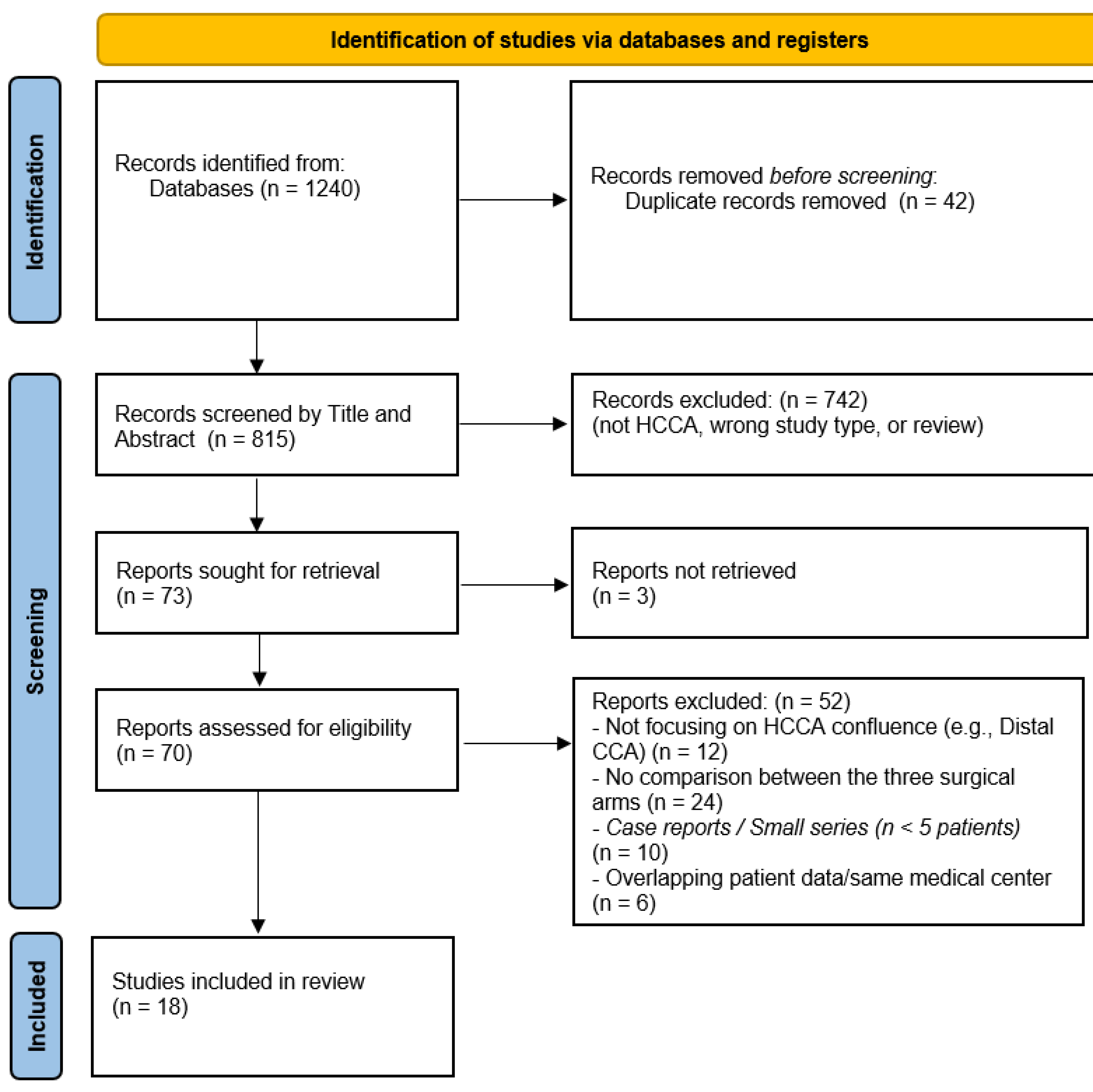
Table 1.
Characteristics of the 18 included studies in the network meta-analysis of robotic, laparoscopic, and open resection for hilar cholangiocarcinoma. The total of 2,216 patients reflects unique patients after exclusion of overlapping cohorts from systematic reviews and large database studies.
Table 1.
Characteristics of the 18 included studies in the network meta-analysis of robotic, laparoscopic, and open resection for hilar cholangiocarcinoma. The total of 2,216 patients reflects unique patients after exclusion of overlapping cohorts from systematic reviews and large database studies.
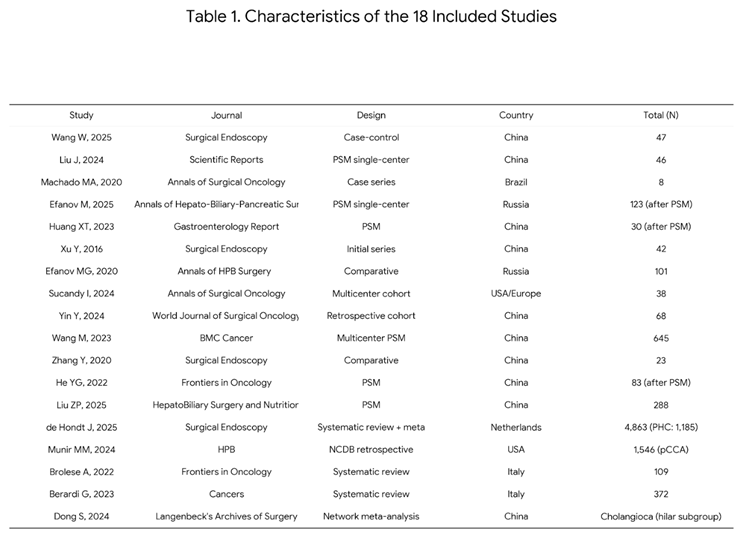 |
Table 2.
Methodological quality assessment of the included studies using the Newcastle-Ottawa Scale (NOS). Scores are presented for the domains of selection (maximum 4 stars), comparability (maximum 2 stars), and outcome (maximum 3 stars), with total scores ranging from 0 to 9.
Table 2.
Methodological quality assessment of the included studies using the Newcastle-Ottawa Scale (NOS). Scores are presented for the domains of selection (maximum 4 stars), comparability (maximum 2 stars), and outcome (maximum 3 stars), with total scores ranging from 0 to 9.
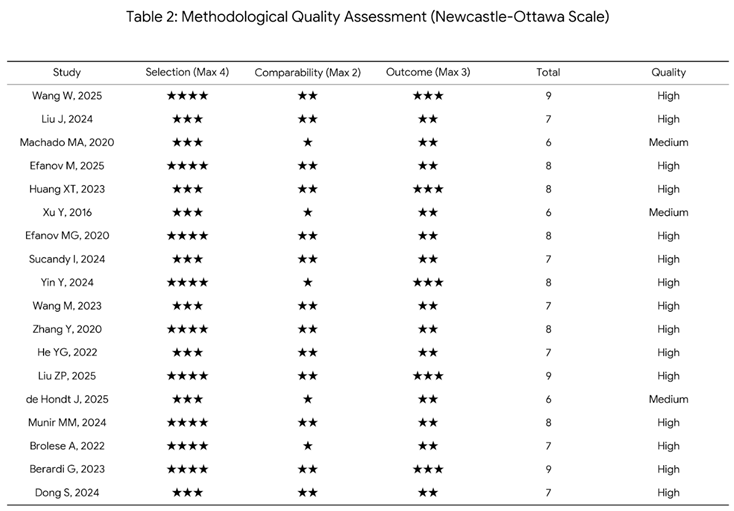 |
Table 3.
League table of pairwise comparisons from the Bayesian network meta-analysis showing efficacy and safety outcomes for robotic (RHR), laparoscopic (LHR), and open hilar resection (OHR). Values are expressed as odds ratios (OR) or mean differences (MD) with 95% credible intervals (CrI).
Table 3.
League table of pairwise comparisons from the Bayesian network meta-analysis showing efficacy and safety outcomes for robotic (RHR), laparoscopic (LHR), and open hilar resection (OHR). Values are expressed as odds ratios (OR) or mean differences (MD) with 95% credible intervals (CrI).
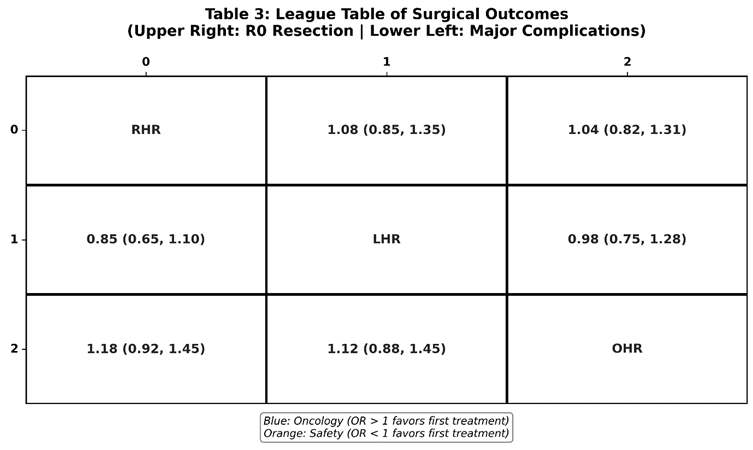 |
Table 4.
Heatmap of SUCRA values and ranking probabilities for robotic-assisted, laparoscopic, and open resection in the network meta-analysis of hilar cholangiocarcinoma. Darker shades represent higher (better) SUCRA probabilities. EBL = estimated blood loss; R0 = microscopically negative resection; LOS = length of hospital stay; LN = lymph node yield.
Table 4.
Heatmap of SUCRA values and ranking probabilities for robotic-assisted, laparoscopic, and open resection in the network meta-analysis of hilar cholangiocarcinoma. Darker shades represent higher (better) SUCRA probabilities. EBL = estimated blood loss; R0 = microscopically negative resection; LOS = length of hospital stay; LN = lymph node yield.
 |
Disclaimer/Publisher’s Note: The statements, opinions and data contained in all publications are solely those of the individual author(s) and contributor(s) and not of MDPI and/or the editor(s). MDPI and/or the editor(s) disclaim responsibility for any injury to people or property resulting from any ideas, methods, instructions or products referred to in the content. |
© 2026 by the authors. Licensee MDPI, Basel, Switzerland. This article is an open access article distributed under the terms and conditions of the Creative Commons Attribution (CC BY) license (http://creativecommons.org/licenses/by/4.0/).
Copyright: This open access article is published under a Creative Commons CC BY 4.0 license, which permit the free download, distribution, and reuse, provided that the author and preprint are cited in any reuse.