

Submitted:
28 March 2026
Posted:
31 March 2026
You are already at the latest version
Abstract
The textile and clothing industry has historically exerted a significant negative impact on the environment. Excessive water consumption, chemical pollution, and soil degradation are just a few of the pressing environmental concerns linked to this sector. Addressing these issues has become a priority not only for regulatory bodies, at National and European level, but also for the industry itself. More recently, growing attention has turned to reducing the huge volume of waste generated by consumers' unbridled purchase of clothing. Two promising solutions to this challenge are the Circular Economy (CE) model and the implementation of the Digital Product Passport (DPP). CE aims to reintegrate discarded garments back into the value chain, reducing the need for new raw materials and minimizing waste, straightforwarding reuse and recycling. Complementing this, the DPP provides comprehensive information about a garment’s life cycle, enhancing transparency, enabling traceability, and empowering consumers to make more informed choices. In this context, consumers play a pivotal role. They have the responsibility to adopt more sustainable habits, namely purchasing less, choosing eco-friendly options, and extending the lifespan of their clothing through reuse, donation, or recycling. This article proposes a gamified platform designed to inspire and support consumers in embracing more sustainable behaviour. The platform enables users to manage their wardrobes by tracking garment usage and documenting each item’s end-of-life journey. This data not only fosters consumer awareness and accountability but also contributes to the broader implementation of the DPP and CE practices.
Keywords:
eco-gamification
; sustainability
; textile and clothing
; circular economy
; digital product passport
1. Introduction
To prevent the planet’s natural resources from running out and to mitigate the increasing waste caused by excessive consumption, the move from a linear economy to a circular economy is an urgent step. This is true for several sectors of the economy, such as electrical and electronics [1], construction [2], vehicle industry and batteries [3], textile and clothing [4], and others.
The Circular Economy (CE) aims to better manage natural resources to ensure a better society and environmental balance for the next generations. To do this, people need to consume less, reuse more and recycle.
The Digital Product Passport (DPP) and the CE complement each other, as the implementation of the DPP provides detailed information on the product life cycle, implements traceability and provides transparency across the value chain, enabling consumers and businesses to make more informed decisions to reduce waste and maximize the reuse of materials. The DPP enables the sharing of trusted information between business partners, institutions and consumers. So, while enabling consumers to select the most environmentally friendly clothing, it also gives companies and organizations the opportunity to select suppliers and business partners with a lower environmental impact. To ensure that we meet the European Commission’s 2020 Circular Economy plans, the CE and DPP need to become a reality.
This article focuses on the textile and clothing sector. The consumption of products in this sector has seen an exceptional increase in recent decades [5], which is why moving towards CE and implementing the DPP is essential.
In the Textile & Clothing (T&C) sector, the implementation of the DPP not only provides information about a product’s life cycle and composition but also aims to collect data on how clothing items are used and eventually disposed of [6,7]. As such, active consumer participation is crucial. Consumers play a key role by choosing to consume less, opting for more environmentally friendly products, and ensuring their clothing has a more sustainable end of life through donation, recycling, or other responsible methods. Raising awareness about this responsibility is essential. To support this shift, consumers must be both encouraged and educated to adopt behaviors that are more beneficial for the planet. According to [8], incorporating gamification techniques is among the most effective strategies for motivating consumers to adopt more environmentally friendly behaviors and engage in sustainable practices.
Inputs for implementing the DPP during the usage phase of T&C items include consumer feedback on how garments are used, maintained, and ultimately disposed of [6]. In this article, we present a platform that leverages gamification strategies to encourage consumers to adopt more environmentally friendly practices. The gamified platform presented in this article not only supports consumers in managing their wardrobes but also enables the collection of valuable data on the usage and disposal phases of garments. This contributes to the advancement of the CE and supports the completion of the DPP. Users can register their clothing items, track usage, record repairs, and log actions such as sharing, donating, or recycling. The platform rewards environmentally responsible behaviors by offering incentives for these "good deeds."
The platform presented here, and named as EcoProve, aims to use game strategies such as fun, competition, challenges and compensations to teach environmental concepts and encourage consumers to change habits.
The rest of this article is structured as follows: Section 2 describes the methodology used in this research project. Section 3 presents some concepts related to the digital product passport and gamification strategies, and presents a background review of platforms that try to encourage consumers to be more sustainable. Section 4 covers our proposed solution for the gamified platform. It presents the list of requirements, the software design and the final solution. The user interface of the platform is presented in Section 5, and Section 6 presents the validation of the platform. Finally, Section 8 discusses results and presents some conclusions and ideas for future work.
2. Methodology
Design Science Research (DSR) has been the methodology used in this research work. DSR is able to adapt to the different needs in the context of Information Systems/Information Technology (IS/IT) research projects [9]. DSR guides the research work through a series of iterations in which an artifact is conceived, produced and evaluated. The evaluation of the produced artifact can identify strengths and weaknesses for improvement, as well as generate new ideas that can be implemented in the next iteration [9,10]. The artifact is further refined in each iteration, yielding new improved results.
The DSR Method involves six main steps, which have been instantiated for this research and are presented in Figure 1, namely:
- Problem Identification and Motivation - As discussed in Section 1, in recent years, increasing awareness of the environmental impact of the fashion industry has driven the need for innovative solutions that encourage more sustainable consumer behaviour.
- Definition of Objectives - As described in Section 1, the main objective is to develop a digital artifact designed to promote environmentally responsible clothing consumption by actively engaging consumers in conscious decision-making. Additionally, the artifact will support wardrobe management by enabling the systematic collection and analysis of relevant data. This dual approach seeks not only to foster behavioural change but also to provide users with practical tools to better understand and optimize their clothing usage.
- Artifact Design and Development - For the design and creation of the artifact, a study of game history was carried out according to [11]. After that, the functional requirements were defined (Section 4.2) and the software models were created, as presented in Section 4.
- Demonstration - The demonstration consists of the preparation and implementation of the artifact, namely a gamified platform, as outlined in Section 5.
- Evaluation - The evaluation was conducted through a survey administered to a small group of users after they had used the platform for over one month, as presented in Section 6.
- Communication - Communication and dissemination of results is done through the publication of scientific articles. The findings from the first iteration were presented in [12] and the final results are presented in the current article.
3. Background Review
In this section, we provide a brief literature review. We begin by presenting previous work carried out within the scope of the same project, followed by related studies conducted by other authors. Finally, we present an overview of the Gameful Design Heuristics that have been applied in the proposed platform.
3.1. Previous Work
Prior publications have been produced as part of this project. In [13], a proposal is presented for using blockchain technology to support and promote the CE. The work emphasizes the importance of involving end consumers in the CE, particularly within the textile and clothing industry. Cruz et al. [8] conducted a comprehensive state-of-the-art review of consumer engagement strategies in the context of sustainability and the circular economy. Their findings identify gamification as one of the most promising approaches to encourage active consumer participation. In [14], the authors examine consumer behaviors that can increase carbon footprints. They then explore frameworks and gamification techniques that can enhance consumer involvement in the CE. The study proposes a set of Gameful Design Heuristics (GDH) to guide the development of consumer engagement platforms focused on sustainability and circular practices.
The work in [12] presents an initial proposal for the implementation of a gamification platform. The current article extends and completes that earlier work by introducing the fully developed version of the platform.
3.2. Circular Economy and Sustainability in T&C
Numerous authors discuss sustainability and CE within the textile and clothing sector, and how the end consumer may be more involved in the process. Some approaches focus on the CE, others address the DPP.
Examples of solutions for some of these purposes are those presented in [15,16], which aim to extend the lifespan of clothes, by sharing, renting or donating clothes. The authors in [15] propose a platform for selling children’s clothing. Children grow quickly, so clothes are only usable for a short period of time causing a lot of waste. Promoting clothes reuse, by reselling or donating them, is an important way of prolonging the useful lifetime of clothes.
In [13] the authors describe a project whose objective is to implement traceability in the value chain of the textile and clothing industry in order to increase transparency in the entire supply chain. In this project, information is collected and stored to calculate the sustainability impact of a garment or home textile.
According to [6], the DPP has the potential to "enhance textile industry traceability, circularity, and transparency". As illustrated in Figure 2, the DPP must include comprehensive information covering raw materials, manufacturing processes, product usage, and end-of-life details. Consequently, it is essential to document data related to the garment’s usage, including washing, ironing, drying, repairs, alterations, and the manner in which it is ultimately disposed of [6,17].
In recent decades, waste management strategies have evolved significantly, aligning with the principles of the CE, which is strongly supported by the European Union (EU). In [18], the authors conducted a comparative study of sustainable waste management practices across four EU countries, focusing on criteria, methodologies, policies, and outcomes. While the findings are positive and encouraging, the study emphasizes the need for EU member states to further close material loops by increasing the proportion of Secondary Raw Materials (SRM) reintegrated into manufacturing processes.
3.3. Consumer Engagement
In [17], the authors present a comprehensive guide that compiles existing publications on the implementation of the DPP. Their aim is to synthesize a "collective understanding" of the key stakeholders involved, the beneficiaries of the DPP, and the types of data that should be collected and managed for its effective development.
Based on the need to move from a linear economy to a circular economy, the authors in [19], carry out a study on the stakeholders that influence this change and the factors that must be taken into account to ensure this transition. The adoption of engagement strategies has become increasingly relevant.
In [8], the authors conducted a study on digital solutions designed to encourage consumers to adopt more sustainable and environmentally conscious behaviors. They present several gamified approaches aimed at reducing energy consumption, promoting recycling, and fostering participation in the collaborative economy through reuse, repair, and recycling initiatives. Specifically within the T&C sector, the authors highlight that multiple strategies already exist to engage consumers in CE practices, such as online platforms for second-hand clothing sales and physical stores that facilitate garment resale and reuse.
Several other authors propose the use of game tactics for consumer engagement in sustainability and circular economy. In [20] the authors present a study on the capacity of augmented reality (AR) technology to raise awareness among consumers about the need to take more sustainable actions and to encourage the transition to CE. The authors propose the creation of a new tool, the AR mobile application (CirculAR), and validate it in two studies involving citizens of a Greek municipality and citizens from outside that municipality. The results were promising, as the authors concluded that AR increased social inclusion and community, and controlled coercion to disseminate the benefits of continuing education and engage the public.
In [21], the author demonstrates that gamification can influence behaviour through a combination of motivation, engagement, and social interaction. The study further concludes that successful gamification interventions for sustainability are not based on isolated elements, but rather on the integration of multiple gamification functions. Additionally, it is suggested that companies can leverage the data collected through these interventions to design more effective sustainability campaigns and initiatives.
In [22], the authors present a game-based project, collaboratively developed in Italy, with a focus on ecosocial sustainability. They conclude that incorporating game mechanics can influence perceptions and behaviour, however, revisions are needed to integrate more practical content and best practices for everyday life.
In [23], the authors created a mobile application that, through the use of gamification techniques, seeks to engage users in more sustainable actions, such as choosing sustainable transportation, sustainable retail options, recycling, among others. The application provides Just-In-Time (JIT) messages about nearby sustainable options based on the user’s location and time.
3.4. Gameful Design Heuristics
Gameful Design Heuristics (GDH) are a set of heuristics designed to support the design and evaluation of gamified platforms, originally proposed by Tondello et al. [24] as an inspection tool. These heuristics are inspired by Nielsen’s heuristics for usability [25], but with a focus on motivation and gaming experience in non-playful contexts.
This set of heuristics provides designers and researchers with a structured guide to identify, from the early stages of design, potential flaws or opportunities in the creation of gamified platforms. Applying these heuristics allows us to assess whether the platform offers the right conditions to foster user engagement, intrinsic motivation, and participation, addressing different key dimensions such as Intrinsic Motivation Heuristics (IMH), Extrinsic Motivation Heuristics (EMH), and Context-Dependent Heuristics (CDH) [14]. The IMH dimensions are related to needs such as Challenge, Competence, Purpose, Autonomy, Creativity, Mastery, etc. EMH refers to heuristics that produce a specific outcome, regardless of what the player is doing, such as Ownership, Rewards, Scarcity, etc.[14,26]. The two dimensions of motivations are related to the basic human needs of autonomy, competence, and relatedness [26]. CDH dimensions may function as either intrinsic or extrinsic drivers, depending on the situational context. Examples include Feedback, Unpredictability, and Change and Disruption [14]. GDH has, however, some limitations, such as the fact that heuristics are generalist and may need to be adapted to the platform’s target audience.
Other studies, such as [27], validate GDH as an effective tool in supporting usability and gamification experts in identifying motivational problems and improving the user experience, offering a practical and validated framework for promoting more engaging and motivating experiences that are aligned with principles of sustainability and active participation.
4. The EcoProve Platform
The platform presented in this work aims to encourage consumers to make more environmentally conscious decisions regarding clothing consumption. These decisions can be considered across three distinct phases:
- Before purchasing, when the consumer makes a decision about what to buy. At this stage, the consumer can choose more sustainable products, that is, products that are more environmentally friendly or socially responsible.
- During the possession and use phase, consumers can act to extend the useful lifetime of the product by reusing garments as many times as possible. This also includes maintaining clothing through more environmentally friendly practices (e.g., washing at lower temperatures, air drying) and repairing garments when necessary in order to prolong their lifespan.
- After the useful lifetime, when the user no longer uses a garment, it can be donated, resold, or sent for recycling.
By identifying these phases, the platform will integrate gamification elements to promote greater consumer motivation in all of them.
4.1. Gamification Elements
In [11], the authors present a set of 28 gamification heuristics that serve as guidelines for the design of playful platforms. The EcoProve platform promotes the adoption of the best practices described above by integrating gamification elements selected according to the GDH identified in [14], which builds upon these heuristics. The most relevant gamification elements used are described below:
4.1.1. Scoring
The scoring system is used to measure performance, progress, or competitive superiority within a game. This mechanism enables the evaluation of performance and can influence ranking, rewards, and progression. That can be used to create and measure the gaming experience and to keep the player interested. Each action that the user registers on the platform, receives a score according to the table presented in [12].
There are four types of scores:
- 1.
- Eco-Score - These points are used to calculate a garment and the user’s sustainability index. Eco-Score can be defined as an environmental score, or classification, that allows knowing and comparing the environmental impact of the products and of the user’s actions [12].
- 2.
- Sustainability Points (SP) - These points can be exchanged for vouchers or other benefits proposed by sponsors. The user can also increase eco-score points by playing educational games about environmental sustainability, integrated with the application.
- 3.
- Experience Points (XP) (or loyalty points) - These are points used to encourage the user to use the platform. These points increase whenever the user registers actions on the platform. The quantity of points decrease if the user does not use the application for more than a certain number of days.
- 4.
- EcoCoins - Points earned by participating in educational games integrated into the platform. These points can be used in the games themselves and to exchange for SP (and vice versa).
4.1.2. Badges/Medals
Badges/Medals are a very important gamification element, as they recognise and congratulate consumers whenever they perform a certain number of consciously sustainable or important actions on the platform. This type of gamification element reinforces positive behaviours and encourages their repetition, as there are several levels of difficulty for each action, with progressive difficulty, which ensures a continuous challenge and motivation over time. The list of badges and medals that a user (consumer) can earn through the app, along with the corresponding eligibility criteria for each, has been identified in [12].
4.1.3. Digital Educational Games
To make the application more interactive and engaging for users, digital educational games were developed to facilitate and accelerate the earning of SP. Through these games, sustainability messages are conveyed, reminding users of environmentally responsible practices associated with the garment life cycle. The purpose of these games is not only to provide entertainment but also to raise awareness of environmental issues. By participating in these games, users receive EcoCoins, which can be exchanged for SP, as well as XP that unlocks new levels. This system encourages healthy competition and repeated engagement with the platform, thereby reinforcing the adoption of sustainable behaviours in a more attractive, accessible, and continuous manner.
4.2. Platform Use Case Model
Figure 3 represents a Unified Modeling Language (UML) use case model, which represents the different types of users (actors or profiles) that the platform supports and the functionalities (use cases) that the platform provides for each profile. The Figure 3 shows the use cases of the platform’s different actors, highlighting the main functional elements through an abstract, high-level view of interactions with the system. Each element of the diagram hides a set of more specific and interactive actions that represent the true functional value of the application.
The consumer is the main participant in the Gamified Platform. In addition to performing a set of (more or less) environmentally friendly tasks for which consumers receive a score, they can also create and participate in clothing-sharing groups.
As mentioned previously, consumers can also play educational games, through which they can earn points that can subsequently be used within the platform.
Beyond encouraging consumers to perform environmentally responsible actions, the platform also aims to collect information about the use phase of garments. The platform includes several requirements that can be categorized according to different objectives, such as promoting environmentally friendly activities, enabling clothing sharing, reducing consumption, and supporting clothing recycling. These requirements support the platform’s goals and enable the CE cycle to operate effectively across the different stages of clothing usage, including purchasing, ownership, usage, maintenance (repairing, cleaning, modification) and disposal.
For consumers, the platform provides the following functionalities:
- Management of the consumer account profile, as well as additional profiles created to manage, for example, children’s clothing or household linen;
- Registration of garments in the virtual wardrobe;
- Recording garment usage
- Registration of the cleaning maintenance actions (e.g., washing, drying, ironing);
- Recording repair or renovation actions performed on garments;
- Creation of sharing groups (public or private), where consumers can communicate with invited friends;
- Exchange or donation of garments within a group;
- Monitoring consumer progress, including XP (Experience Points), SP (Sustainability Points), EcoCoins, and Eco-Score, both by account and by profile;
- Exchanging points for real benefits, such as partner vouchers (e.g., zoo or cinema tickets, discounts on garments).
To enable some of the platform’s activities, increase its attractiveness and allow users to benefit from the points they accumulate, the participation of additional stakeholders is required. Therefore, other participants with distinct roles are included in the platform, namely Service Providers, Brands, Recycling companies and Sponsors.
Service Providers, Brands, and Recycling companies together with consumers enable the CE cycle to be completed, as they influence different stages of the CE process. Consumers are primarily responsible for the use phase, together with Service Providers and Brands, through repair and maintenance activities. Recycling Companies and Brands also play a role in the end-of-life stage of garments, determining their final destination. If a garment cannot be reused or recycled it is destroyed. Otherwise, it re-enters the supply chain stage, where it may be resold as a second-hand item or used to produce new raw material for the production of new garments.
Brands represent clothing manufacturers or retailers. In addition to participating in the use, end-of-life, and supply-chain phases, they are also involved in the finished product and distribution stage, enabling garments with a new life cycle to be sold to consumers and thereby closing the circular loop. These three actors record the actions performed on garments at different stages of their lifecycle (e.g., repair, maintenance, recycling, second-hand sale, or collection at drop-off points). In addition, they may also perform actions similar to those carried out by the Sponsor actor.
For Service Providers, Brands and Recycling companies, the platform allows:
- Registering of validating the reception and the returning of a garment for maintenance and repairing services;
- Creating and promoting events or vouchers that can be exchanged for SP (Sustainability Points);
- Registering the reception of garments intended for recycling.
Some Brands provide containers for the collection of garments intended for recycling. Both Brands and Recycling Companies can register the reception of garments for recycling within the platform
The Sponsor actor also plays a key role in the platform. Sponsors are responsible for increasing the perceived value of SP and promoting events that motivate consumers to perform environmentally responsible actions. Through these actions, users can earn points that can later be exchanged for benefits. Sponsors may include local institutions such as city councils, zoos, or cultural organizations. These entities can promote events on the platform and offer rewards in exchange for points. For example, a city council may promote an event such as a half-marathon or nature walk and offer free participation in exchange for Sustainability Points.
For the Sponsor, the platform provides the following main functionalities:
- Announcing and promoting events;
- Allowing event participation to be exchanged for points.
4.2.1. Relevant Concepts
To support the implementation of these requirements, several supporting concepts were introduced, including profiles, groups, and basket, which facilitate the management of different platform functionalities.
- Wardrobe - Each Profile has a virtual Wardrobe to keep track of their clothes usage and management. In fact, An account has a unique wardrobe, which is filtered on each individual account’s profile.
- Profiles - Consumers can create multiple profiles within the same account. This feature facilitates the management of clothing belonging to different household members without requiring separate accounts. For example, a parent can manage their children’s clothing directly from their own account while keeping wardrobes separate. Another example is the management of household laundry. This separation is ensured through filters in the virtual wardrobe, allowing each profile to be managed independently. The platform also allows these profiles to be promoted to independent accounts. This action, initiated by the main profile, converts the selected profile into an autonomous account with full control over its wardrobe and platform functionalities. This feature supports simpler, more flexible, and user-centered management, making the platform accessible to different age groups and family contexts while ensuring scalability and long-term use.
- Groups - Created specifically for sharing clothing, two types of groups are supported: public and private. Any user may join and participate in public groups. Private groups, however, have restricted access and require an invitation from the group owner or an authorized member. Each group includes a hierarchical role structure managed by the owner, allowing different permission levels for members. Groups enable users to communicate, build communities, and request the sharing, exchange, or sale of garments. This functionality aligns with CE principles by encouraging garment reuse, extending product lifecycles, and fostering collaborative and sustainable communities.
- Basket - The basket feature was created to simplify and optimize clothing maintenance and management processes within the platform. Its goal is to reduce repetitive actions and improve the overall user experience, particularly in family contexts with multiple profiles or large wardrobes. Instead of managing garments individually, users can add multiple garments to the basket and perform a batch action, such as sending them for maintenance services (washing, ironing, repair, etc.) in a single operation. To ensure flexibility and control, individual garments within the basket can be excluded from the collective action by blocking them, preventing them from being affected by operations applied to the basket.
4.3. Proposed Platform’s Domain Model
The domain model of the EcoProve platform is illustrated in Figure 4. It represents the main entities of the system, their attributes, and the relationships between them within the sustainability platform. The model defines three main user classes that interact with the system, corresponding to the following roles: Consumer, Organization, and Employee. The Consumer represents the standard user of the platform and primarily interacts with the virtual wardrobe, which allows the organization and management of garments through entities such as Cloth and Bucket, as well as their associated aggregates. In contrast, Organization and Employee represent specialized roles that enable the creation and management of stores, where consumers can take their garments to receive specific services.
These services, represented by the entity Maintenance Activity, correspond to different types of operations that can be performed on a garment, such as washing, repairing, or other maintenance procedures. Alternatively, if a consumer prefers not to rely on a store, they may perform these maintenance actions themselves within the platform.
Each garment is initially associated with a default number of Sustainability Points (SP). These points can increase when Maintenance Activities or Daily Use Activities are recorded. Daily use activities are triggered whenever a user marks a garment as used or unused. Conversely, the sustainability score may decrease over time if no digital interaction or recorded activity occurs for the garment.
In addition, the model includes entities that support the group feature of the application. Groups can be classified into two types: public groups, which are open to any user who wishes to join, and private groups, which require an invitation to participate. These groups provide opportunities for users to socialize, share garments, and exchange items that are no longer in use. Such transactions contribute to increasing the Sustainability Points associated with the garment and reward users with a small number of EcoCoins, which can be used elsewhere within the platform.
As can be seen in Figure 4, a user can create multiple profiles and can join multiple sharing groups.
4.4. Proposed Platform’s Architecture
Figure 5 depicts the architecture model of the proposed gamification platform.
This architecture is composed of several key components:
- Proxy: The proxy component manages language translation and directs incoming requests backend services. It is developed with a programmable proxy called Pingora, which is based on the Rust framework. Also, a custom middleware has been put in place to dynamically translate the content of the response with the provided language.
- Auth Service: Serves as the root of trust in the system, it is responsible for authentication and authorization. It issues scoped tokens that allows secure access to the other services. This service is developed with Golang using the Fiber framework, to implement a RESTFUL API, thus aiming for a performance and leveraging speed.
- Core Service: The core service contains the main business logic of the backend architecture. It is developed using ASP.NET Core, a high performance, cross-platform framework for building web applications and APIs.
- Messaging Service: This service manages user notifications, public and private forums rooms, and real-time communication. It is developed in Elixir, leveraging the concurrency model of the Erlang VM. Also, it’s used The Phoenix framework that allows the development of APIs. With this framework enables the usage of Phoenix channels to support WebSocket-based real-time messaging, this is used to implemented features like conversation groups for garment exchanges.
- Gaming Service: This service manages the achievements, medals, and currency points such as Sustainability Points and Eco-Coins, thus controlling the gamification aspect of the application. It is develop using the web framework Ruby On Rails, leveraging the strengths of the language to implement a Rule Engine in conjunction with the saga events try to identity possible achievements.
- Choreographed SAGA Pattern: The system follows a choreographic SAGA pattern, using Kafka as a message broker to facilitate communication between services. Events are outsourced in order to all services communicate with each other.
-
Data Storage: The platform involves three different databases:
- PostgreSQL, is used for primary relational data store.
- MongoDB, a document-oriented NoSQL database, is used for dynamic and unstructured data, such as forum messages.
- Redis, an in-memory key-value, is used for session management and group attendance.
Overall, this architecture provides a scalable, flexible, and efficient solution for building web and mobile applications.
4.5. Implementation of Gameful Design Heuristics
The platform presented here makes use of the gamification heuristics proposed by [11] and their adaptation for the sustainability context presented by [14]. Thus the Tables Table 2, Table 3 and Table 1 present the mapping of the Gameful Design Heuristics (GDH) to the concrete functionalities implemented in the EcoProve platform. Table 1 presents the mapping of the Context-Dependent Heuristics (CDH), Table 2 presents the mapping of the Intrinsic Motivation Heuristics (IMH) and Table 3 presents the mapping of the Extrinsic Motivation Heuristics (EMH).

Table 1.
Mapping of Context-Dependent Heuristic (CDH) to EcoProve Platform Features.
| GDH Heuristic | How EcoProve Implements It | Feature Examples |
|---|---|---|
| ]2*CDH1. Clear & Immediate Feedback | Users instantly see results of actions. | Notifications pop-ups, Eco-Score updates. |
| ]2*CDH2. Actionable Feedback | Users know next possible actions. | Notifications suggesting repairs/donations. |
| CDH3. Graspable Progress | Clear sense of progress at all times. | Level bars, Eco-Score. |
| ]2*CDH4. Varied Challenges | Different sustainable tasks keep engagement high. | Missions: donate, repair, recycle, share. |
| CDH5. Varied Rewards | Rewards differ in type and value. | Mix of vouchers, experiences, coins. |
| CDH6. Innovation | Users can suggest improvements. | Feedback system. |
| ]2*CDH7. Disruption Control | Prevents cheating or gaming the system. | Automatic validation system. |
Table 2.
Mapping of Intrinsic Motivation Heuristic (IMH) to EcoProve Platform Features.
| GDH Heuristic | How EcoProve Implements It | Feature Examples |
|---|---|---|
| ]2*IMH1. Meaning | Actions contribute to sustainability and positive environmental impact. | Eco-Score linked to CO2 and water saved. |
| ]2*IMH2. Information & Reflection | Users can reflect on their impact over time. | Eco-Score. |
| ]4*IMH3. Increasing Challenge | As users progress, the system requires higher XP and more complex actions to reach the next level, ensuring sustained engagement. | Progressive XP requirements for leveling up. |
| IMH4. Onboarding | - | - |
| IMH5. Self-challenge | Complete achievements. | “Repair 5 garments” badge. |
| IMH6. Progressive Goals | Always shows next achievable goal. | Progress bars. |
| ]2*IMH7. Achievement | Celebrates accomplishments with recognition. | Badges/Medals, levels, XP, SP, Eco-Score, EcoCoins. |
| ]2*IMH8. Choice | Users decide what to do with garments. | Wardrobe: use, repair, maintenance actions, donate, recycle, exchange. |
| ]2*IMH9. Self-expression | Profiles reflect identity. | Customisable profiles, avatars, wardrobe organisation. |
| ]2*IMH10. Freedom | Experiment without harsh penalties. | Undo basket actions, test “what-if” scenarios. |
| IMH11. Social Interaction | Users connect with others. | Group chat, community feed. |
| ]2*IMH12. Social Cooperation | Users collaborate on goals. | Group donation drives, collective Eco-Score. |
| IMH13. Social Competition | Users compete through scores. | Group leaderboards. |
| ]2*IMH14. Fairness | Fair play ensured for new vs. experienced users. | Balanced leaderboards, group levels. |
| ]2*IMH15. Narrative | Sustainable fashion framed as a mission. | Storyline: “Save the planet through your wardrobe.” |
| ]2*IMH16. Perceived Fun | Experiences feel playful and enjoyable. | Engaging animations, gamified interactions. |
Table 3.
Mapping of Extrinsic Motivation Heuristic (EMH) to EcoProve Platform Features.
| GDH Heuristic | How EcoProve Implements It | Feature Examples |
|---|---|---|
| ]2*EMH1. Ownership | Users own digital wardrobes and profiles. | Wardrobe inventory, profiles. |
| ]2*EMH2. Rewards | Tangible incentives for sustainable actions. | Vouchers, gift cards, Badges/Medals, level, XP, SP, Eco-Score, EcoCoins. |
| EMH3. Virtual Economy | In-app exchanges and redemptions. | EcoCoin store, trade-in for benefits. |
| ]2*EMH4. Scarcity | Limited items or challenges create urgency. | Time-limited vouchers, rare badges/medals. |
| ]2*EMH5. Loss Avoidance | Fear of missing opportunities motivates. | Expiring challenges, countdown timers. |
As can be seen in Table 1, all identified CDH have been implemented on the EcoProve platform.
As can be seen in Table 2, with the exception of “IMH4-Onboarding”, all other identified IMH have been implemented on the EcoProve platform described here.
As can be seen in Table 3, all identified EMH have been implemented on the platform.
5. The EcoProve Platform User Interface
The user interface is designed to be user-friendly, intuitive, and easy to navigate, with visually appealing, clear, and characterised by a coherent graphic identity while maintaining simplicity and providing straightforward navigation paths for the user. This section presents three usage scenarios that illustrate the use of different platform functionalities while providing an overview of the user interface.
5.1. Activity Scenario I—Create a Profile
Fernando, an interior designer, wishes to keep his home décor items separate from his personal wardrobe. To achieve this, he intends to create a dedicated profile for his home. This can be accomplished by following the steps described below, in accordance with the sequence illustrated in Figure 6.
On the Profile screen (panel a), Fernando can see all consumer points (XP, SP, EcoCoins, EcoScore and in addition, the level defined by XP) and badges/medals earned. This screen also allows access to rewards, educational games and profiles. Fernando selects the profile button, indicated in the panel with a circle. Then the platform displays the profiles (panel b) that he own, allowing him to manage them (promote or delete) or log in to an existing profile. The profiles are represented by displaying the following information: name, level, SP and EcoScore. Fernando wants to create a new profile, so he uses the button marked in this panel. To create a new profile, Fernando must fill in the form shown in panel c), where he fills in the mandatory field by entering a suitable profile name (‘Home’) and leaving the optional fields, date of birth and gender in blank, as they are not relevant for a domestic profile. After filling in the details, he taps ‘Continue’. The confirmation screen is displayed (panel d), and he selects the “Confirm” button. The newly created profile is added to the list of available profiles (panel e), alongside the existing profiles, allowing Fernando to select and switch to this new domestic profile.
5.2. Activity Scenario II—Repair Clothing at a Service Provider
David is preparing for an important meeting when he encounters an unexpected problem: his business suit is damaged. In order to resolve the situation promptly, he decides to use the EcoProve platform, which provides access to clothing repair services. Assuming that David is already logged into the platform, he follows the sequence of actions described below and illustrated in Figure 7.
On the Closet (Wardrobe) screen (panel a), David can view all the garments associated with his profile, including the damaged item—in this case, the highlighted black sweater. When the item is selected, a detailed view of the garment is displayed (panel b), presenting information such as colour, size, and the current Eco-Score. By pressing the highlighted button, the platform displays the options screen (panel c), which includes available maintenance services, the basket option, and disposal alternatives (recycling or sending the garment to a waste bin) for the selected item. David chooses the “Repair" action, after which two options are presented: “By Myself” or “Service". Since David intends to use a professional repair service, he selects “Service” (panel d). The platform then displays a confirmation screen containing a QR code (panel e), which can be presented at a repair shop or partner service point to initiate the repair process. David can then proceed with the selected service, thereby extending the lifetime of the garment in an environmentally responsible manner.
5.3. Activity Scenario III—Create a Chat Group and Share a Garment
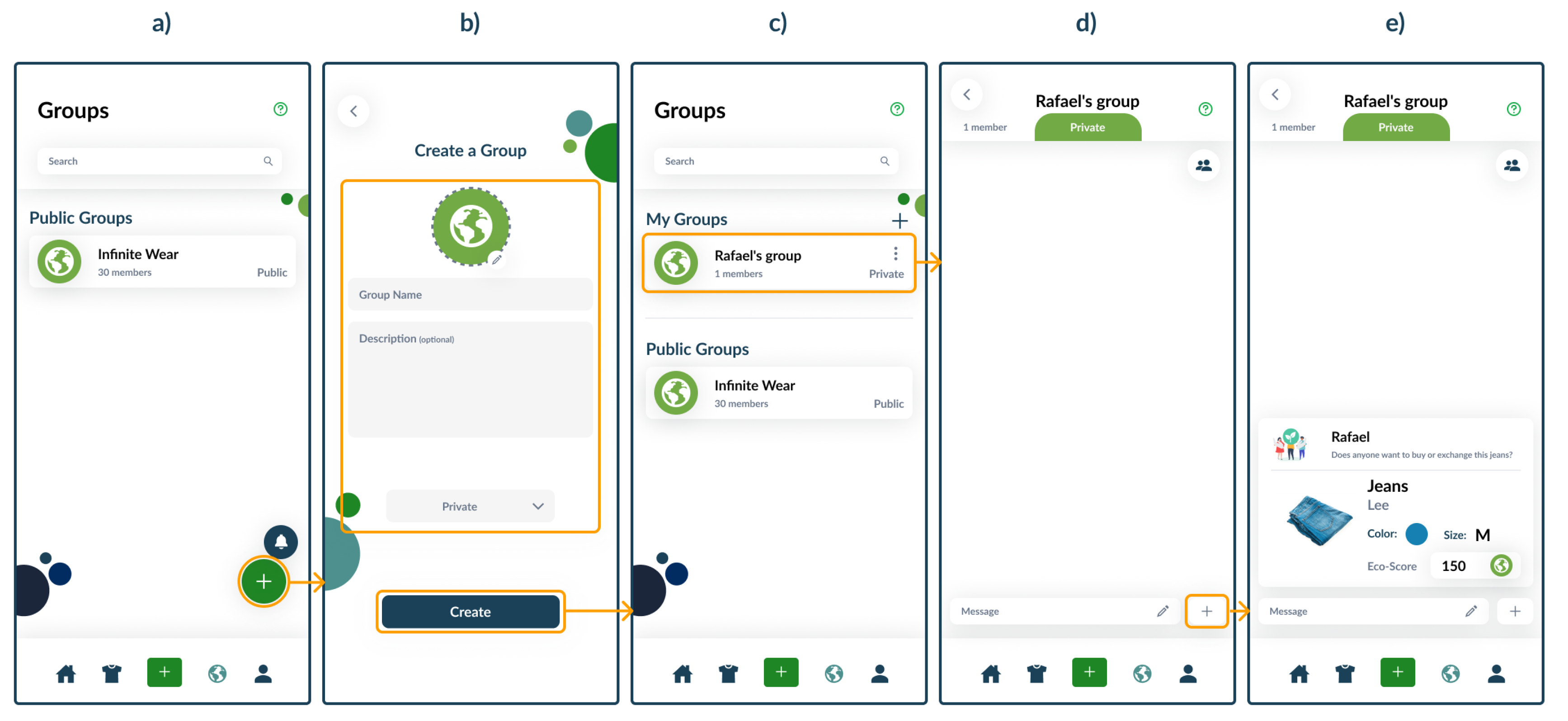
Rafael is a fashion influencer committed to promoting sustainability and the reuse of refurbished garments. His main objective is to raise awareness and inspire his followers to adopt a more environmentally responsible lifestyle and to value second-hand clothing. To support this goal, he decides to create a chat group with his followers so they can share garments among themselves. Once logged into the EcoProve platform, Rafael follows the sequence of actions described below and illustrated in Figure 8. First, he selects “Groups” from the platform’s main menu (panel a), where he can view all public groups as well as the groups to which he belongs, whether public or private. As Rafael intends to create his own group, he selects the highlighted button.
The platform then presents a form that must be completed to create the group. Rafael chooses the name “Rafael’s Group” and decides to create a private group, completing the process by selecting the “Create” button. Once the group has been created and becomes visible (panel c), he selects it and is directed to the group chat (panel d), where he can write messages or share and donate garments. To share or donate a garment, Rafael selects the highlighted option, chooses the garment from his wardrobe, and sends a sharing or donation request to the group members. The resulting request is displayed in the chat, as illustrated in panel e.
6. Platform Validation
The validation aims primarily to assess whether the developed solution effectively fulfills its intended purpose: to promote the adoption of more sustainable consumption practices among users. According to the approach defined by the CMMI for Development model [28], validation focuses on confirming that the final product meets the needs and expectations of the end user, going beyond the technical verification of correct implementation. In this context, the goal is to understand how the application influences consumer behavior, particularly by raising awareness about the environmental impact of their consumption habits.
6.1. Validation Strategy
The validation strategy was structured around a controlled, small-scale pilot involving a limited number of participants. This pilot served as a practical setting to observe and measure the impact of the application on users’ consumption behaviors. The strategy was designed to provide both qualitative and quantitative insights, allowing the team to assess whether the digital solution effectively supported the adoption of more environmentally responsible habits.
The validation process was organized into distinct phases, beginning with the recruitment and initial assessment of participants. In this phase, users completed a baseline questionnaire that gathered sociodemographic data and evaluated their existing knowledge and attitudes toward sustainable consumption. This step was essential for establishing a reference point against which changes in behavior and awareness could later be compared.
Following the initial assessment, the application was officially launched and made available through mobile app stores, ensuring easy and verified access for pilot participants. The participants were introduced to the app through a public webinar, during which the installation process was explained and a user manual was distributed. The users then engaged with the app autonomously over a one-month period, allowing for an uninterrupted and natural integration of the tool into their daily routines.
After the testing period, a final questionnaire was administered to evaluate changes in participants’ understanding and behaviors. This post-intervention data, when compared with the initial baseline, enabled a thorough analysis of the app’s influence on sustainable consumption practices. The pilot concluded with a comprehensive assessment of the collected data, allowing the validation team to determine the overall effectiveness of the solution and identify areas for future improvement or iteration.
6.2. Validation Results
The validation phase began with a pilot involving 18 users. However, by the end of the process, only 12 participants had completed all required steps, resulting in a 33% dropout rate. The following demographic and socioeconomic data characterize the initial group of participants.
6.2.1. Demographic and Socioeconomic Characterization
The majority of participants were between 18 and 35 years old, with 44.4% aged 18–25 and 38.9% aged 26–35. A smaller proportion fell into the 36–45 age group (11.1%), and only one participant (5.6%) was between 46–60 years old. This indicates a predominantly young participant base.
The sample consisted of 55.6% male participants and 38.9% female participants, while one individual (5.6%) preferred not to disclose their gender.
Most participants had a higher education background. Specifically, 55.6% held undergraduate degrees (Bachelor’s or equivalent), 27.8% had postgraduate qualifications (Master’s or PhD), and 16.7% had completed only secondary education. This suggests a relatively well-educated sample.
All participants resided in the northern region of the country. In terms of settlement type, 61.1% lived in urban areas, 33.3% in rural zones, and 5.6% in large cities. This distribution indicates a predominantly urban demographic with some rural representation.
Regarding household structure, 72.2% reported having no dependents, while 16.7% had one dependent and 11.1% had two. As for household income, half of the participants (50.0%) indicated that their income allowed them to cover regular expenses, while 33.3% reported living comfortably. A smaller segment (11.1%) found it difficult to live with their current income, and one participant (5.6%) chose not to disclose their financial situation.
6.2.2. Initial Environmental Awareness
The data collected from the 18 participants prior to using the Ecoprove application revealed a generally positive, though still limited, environmental awareness. While most participants appeared partially conscious of environmental issues, only a subset demonstrated familiarity with best practices related to the use, care, and disposal of clothing. The most significant gap in knowledge concerned sustainable textile materials, with more than half of the respondents stating that they felt poorly informed on the topic. When asked about responsibility for sustainability in the textile sector, most participants placed the burden on brands and producers, although many also acknowledged the shared responsibility of consumers.
Despite the small sample size, cross-referencing demographic characteristics with environmental perceptions offered insightful trends that may guide future research:
Participants aged 18 to 25 generally described themselves as only partially environmentally aware, indicating some sensitivity to the topic but also uncertainty or lack of strong conviction. In contrast, those in the 26 to 35 age group more frequently reported a clear sense of environmental consciousness. This may reflect increased maturity or greater exposure to sustainability discourse. Among older age groups, environmental awareness appeared less consistently acknowledged, although it is important to note their limited representation in the sample.
A strong correlation emerged between participants’ education levels and their knowledge of sustainable textile materials. Individuals with higher education—particularly those who had completed postgraduate studies—tended to report being more informed about the topic. Those with only secondary education were more likely to admit lacking this knowledge. This suggests that formal education may play a significant role in shaping environmental literacy and fostering concern for sustainability issues.
Findings also indicated a link between household income and awareness of sustainable practices in clothing use. Participants who reported greater financial comfort demonstrated more knowledge of how to use, maintain, and dispose of clothing responsibly. Conversely, those who reported financial hardship more often lacked this awareness. This trend may reflect how sustainability, although recognized as important, becomes secondary when material conditions are constrained.
A notable gender-based difference emerged in perceptions of responsibility within the textile industry. Female participants tended to view sustainability as a shared responsibility between consumers and producers, while male participants—and those who did not disclose gender—were more inclined to place the burden primarily on brands and manufacturers. This distinction may reflect differing levels of personal engagement with environmental issues or varying perceptions of agency in promoting sustainable change.
6.2.3. Post-Usage Environmental Awareness
Following the one-month usage period, the same survey was completed by 12 of the initial 18 participants, representing a 33% attrition rate. The following analysis explores the participants’ self-reported changes in environmental awareness and habits, as well as their perceived ability to apply sustainable practices after interacting with the Ecoprove application.
Half of the respondents (6 out of 12) reported feeling more environmentally aware after using the application. An additional 4 participants described a partial improvement in their awareness, suggesting some level of impact, albeit not transformative. Only 2 participants stated that they did not perceive any change in their environmental awareness. These results indicate that, for most users, the app contributed positively—either fully or partially—to a heightened consciousness of environmental issues.
When asked about their capacity to apply sustainable consumption practices, the majority (9 participants) indicated they were moderately capable of integrating such behaviors into their routines. Two respondents reported feeling very capable, suggesting a high level of confidence in adopting best practices. Only one participant expressed continued difficulty in applying sustainable habits, highlighting a general trend toward improved self-efficacy in this domain among the users.
Regarding perceived behavioral change, 7 out of 12 participants stated that their consumption habits had improved after using the app. Three participants were unsure or unable to assess whether any change had occurred, while 2 believed that their habits remained unchanged. Despite the limited sample size, these findings suggest that the Ecoprove app had a meaningful impact on a significant portion of users, both in terms of awareness and behavior.
7. Analysis and Discussion
The results of the pilot suggest that the Ecoprove application had a generally positive impact on participants’ environmental awareness. Most users reported an increased sensitivity to environmental issues and demonstrated a moderate capacity to apply sustainable practices in the use, maintenance, and disposal of clothing. More than half of the respondents acknowledged an improvement in their habits following the use of the app. Nonetheless, a portion of the group described the change as only partial or expressed difficulty in assessing the impact, which may indicate opportunities to enhance the experience through more continuous engagement, practical content, or sustained support over time.
The comparison between pre- and post-usage data supports the conclusion of a globally positive shift in environmental perception among participants. In terms of environmental consciousness, the majority reported either an improvement or consistent awareness levels, though some noted minimal or no change. When it came to knowledge and implementation of good textile-related practices, the progression was more evident: while only three participants initially declared awareness of such practices, after using the app, nearly all respondents reported feeling capable of understanding and applying them, primarily at a moderate level. This suggests a clear gain in both knowledge and confidence regarding sustainable behavior.
Furthermore, seven out of twelve participants stated that their habits related to textile consumption had improved, reinforcing the app’s potential as a tool for promoting behavioral change. These results indicate that the Ecoprove Platform was effective not only in raising awareness but also in initiating practical shifts in everyday behavior, particularly concerning sustainable consumption choices.
Nevertheless, the presence of users who did not perceive significant changes or struggled to evaluate the app’s impact highlights the need to refine certain aspects of the intervention. To maximize effectiveness, future iterations of the app might incorporate more interactive or personalized content, and consider mechanisms for long-term engagement, such as reminders, challenges, or community-based features. These additions could help deepen the behavioral impact and ensure more sustained adoption of environmentally responsible practices.
8. Conclusion
The platform presented in this work was developed with the main objective of encouraging consumers to adopt more environmentally responsible practices. This is achieved by reducing the demand for new raw materials and minimizing waste generation throughout the lifecycle of clothing items. To support this goal, gamification strategies were implemented, rewarding users who demonstrate sustainable behaviours. These strategies require the collection and storage of information related to consumer practices, both during the use phase of garments and at the moment of disposal.
The platform promotes more sustainable consumption patterns by encouraging users to wear their garments more frequently and extend their lifespan through actions such as repairing, donating, or reselling. At the end of a garment’s life cycle, the platform also encourages recycling as an appropriate disposal option. In addition, the platform uses game-based elements such as fun, competition, challenges, and rewards to help communicate environmental concepts and motivate behavioural change among consumers. The data collected through the platform can also contribute to closing the CE loop, while supporting more accurate studies on consumer habits and clothing usage patterns.
Another important feature of the platform is its ability to assist users in managing their wardrobes, whether a single wardrobe or multiple ones. By providing tools to track clothing items, the platform helps users identify garments that are no longer being used and facilitates their appropriate disposal through donation, resale, or recycling.
Finally, the platform enables the storage of detailed information regarding the use phase of garments, including activities such as repair and cleaning, as well as information on how items are handled at the end of their life cycle. This data can support further analysis of the use phase of clothing and home textile products, contributing valuable insights for improving CE strategies.
As future work, the platform is intended to be extended with functionalities that suggest daily outfits based on the garments available in the user’s wardrobe and current weather conditions, and promoting the usage of the less used pieces. In addition, the platform is expected to incorporate image-recognition capabilities that allow it to identify garments worn by the consumer through a photograph and automatically register their use within the application. Another planned feature is the ability to assist users in preparing a suitcase for a specific destination and travel period, recommending suitable garments based on the items stored in their virtual wardrobe. This tracking of used garments will enable the platform to suggest giving, selling or donating less or never used garments, promoting their usage by other consumers.
Author Contributions
Conceptualization, A.M.R.d.C., P.M.F. and E.F.C.; methodology, E.F.C.; software, D.B. and D.A.; validation, J.O. and L.O.S.; investigation, E.F.C., A.M.R.d.C. and P.M.F.; writing—original draft preparation, D.B., D.A. and E.F.C.; writing—review and editing, E.F.C. and A.M.R.d.C.; supervision, E.F.C.; project administration, E.F.C. All authors have read and agreed to the published version of the manuscript.
Funding
This research has been developed in the context of Project “BE@T: Bioeconomia Sustentável fileira Têxtil e Vestuário-Medida 2", funded by “Plano de Recuperação e Resiliência" (PRR), through measure TC-C12-i01 of the Portuguese Environmental Fund (“Fundo Ambiental").
Informed Consent Statement
Informed consent was obtained from all subjects involved in the study.
Acknowledgments
During the preparation of this manuscript/study, the author(s) used some AI-based tools, such as Google Translator and Writefull. The authors have reviewed and edited the output and take full responsibility for the content of this publication.
Conflicts of Interest
The authors declare no conflicts of interest. The funders had no role in the design of the study; in the collection, analyses, or interpretation of data; in the writing of the manuscript; or in the decision to publish the results.
Abbreviations
The following abbreviations are used in this manuscript:
| API | Application Program Interface |
| CDH | Context-Dependent Heuristics |
| CE | Circular Economy |
| DPP | Digital Product Passport |
| EMH | Extrinsic Motivation Heuristics |
| GDH | Gameful Design Heuristics |
| IMH | Intrinsic Motivation Heuristics |
| SP | Sustainability Points |
| UI | User Interface |
| UML | Unified Modeling Language |
| XP | Experience Points |
References
- Fernandes, L.; Rosado da Cruz, A.M.; Cruz, E.F.; Lopes, S.I. A Review on Adopting Blockchain and IoT Technologies for Fostering the Circular Economy in the Electrical and Electronic Equipment Value Chain. Sustainability 2023, 15. [Google Scholar] [CrossRef]
- Timm, J.F.G.; Maciel, V.G.; Passuello, A. Towards Sustainable Construction: A Systematic Review of Circular Economy Strategies and Ecodesign in the Built Environment. Buildings 2023, 13. [Google Scholar] [CrossRef]
- Balakrishnan, A.; Ramanathan, R.; Ramanathan, U.; Srinivasan, R.R. Responsible battery disposal management practices: An investigation in the electric vehicle industry from a circular economy perspective. Journal of Environmental Management 2025, 383, 125488. [Google Scholar] [CrossRef] [PubMed]
- Alves, L.; Cruz, E.F.; Lopes, S.I.; Faria, P.M.; Rosado da Cruz, A.M. Towards circular economy in the textiles and clothing value chain through blockchain technology and IoT: A review. Waste Management & Research 2022, 40, 3–23. [Google Scholar] [CrossRef] [PubMed]
- Neethu, M.; Bhuvaneswari, R. The Global Clothing Oversupply: An Emerging Environmental Crisis. Nature Environment & Pollution Technology 2024, 23. [Google Scholar]
- European Parliament. Digital product passport for the textile sector. In Technical report, European Parliament; 2024. [Google Scholar] [CrossRef]
- Rosado da Cruz, A.M.; Cruz, E.F. Digital Product Passports in promoting Circular Economy: A Conceptual Data Model. In Proceedings of the 11th IFAC Conference on Manufacturing Modelling, Management and Control (IFACMIM), 2025. [Google Scholar]
- Cruz, E.F.; Rosado da Cruz, A. Digital solutions for engaging end-consumers in the circular economy of the textile and clothing value chain - A systematic review. Cleaner and Responsible Consumption 2023, 11, 100138. [Google Scholar] [CrossRef]
- Cruz, E.F.; Rosado da Cruz, A.M. Design Science Research for IS/IT Projects: Focus on Digital Transformation. In Proceedings of the 2020 15th Iberian Conference on Information Systems and Technologies (CISTI), 2020; pp. 1–6. [Google Scholar] [CrossRef]
- Hevner, A.R.; March, S.T.; Park, J.; Ram, S. Design Science in Information Systems Research. MIS Quarterly 2004, 28, 75–105. [Google Scholar] [CrossRef]
- Tondello, G.F.; Kappen, D.L.; Mekler, E.D.; Ganaba, M.; Nacke, L.E. Heuristic Evaluation for Gameful Design. In Proceedings of the 2016 Annual Symposium on Computer-Human Interaction in Play Companion Extended Abstracts, New York, NY, USA, 2016; CHI PLAY Companion ’16, pp. 315–323. [Google Scholar] [CrossRef]
- Cruz., E.F.; Braga., D.; Assunção., D.; Faria., P.; Rosado da Cruz., A. Towards an Eco-Gamification Platform to Engage Consumers in the Textile & Clothing Circular Economy. In Proceedings of the 26th International Conference on Enterprise Information Systems -, SciTePress, 2024; Volume 2, pp. 296–304. [Google Scholar] [CrossRef]
- Alves, L.; Sá, M.; Cruz, E.F.; Alves, T.; Alves, M.; Oliveira, J.; Santos, M.; Rosado da Cruz, A.M. A Traceability Platform for Monitoring Environmental and Social Sustainability in the Textile and Clothing Value Chain: Towards a Digital Passport for Textiles and Clothing. Sustainability 2024, 16. [Google Scholar] [CrossRef]
- Alves, L.; Faria, P.M.; Cruz, E.F.; Lopes, S.I.; Rosado da Cruz, A.M. Eco-Gamification Platform to Promote Consumer Engagement in the Textile and Clothing Circular Value Chain. Sustainability 2023, 15. [Google Scholar] [CrossRef]
- Peña-Vinces, J.; Solakis, K.; Guillen, J. Environmental knowledge, the collaborative economy and responsible consumption in the context of second-hand perinatal and infant clothes in Spain. Resources, Conservation and Recycling 2020, 159, 104840. [Google Scholar] [CrossRef]
- Shang, D.; Wu, W. Does green morality lead to collaborative consumption behavior toward online collaborative redistribution platforms? Evidence from emerging markets shows the asymmetric roles of pro-environmental self-identity and green personal norms. Journal of Retailing and Consumer Services 2022, 68, 102993. [Google Scholar] [CrossRef]
- Keränen, J.; Orko, I.; Valtanen, K.; Åkerman, M. Implementing the digital product passport - A guidebook for businesses; Number 436 in VTT Technology, VTT Technical Research Centre of Finland: Finland, 2025. [Google Scholar] [CrossRef]
- Tabas, A.M.; Rehman, M.A.; Khitous, F.; Urbinati, A. Stakeholder and customer engagement in circular economy ecosystems: A systematic literature review and research agenda. Business Strategy and the Environment 2025, 34, 402–416. Available online: https://onlinelibrary.wiley.com/doi/pdf/10.1002/bse.3989. [CrossRef]
- Salvioni, D.; Almici, A. Circular Economy and Stakeholder Engagement Strategy. Symphonya. Emerging Issues in Management (symphonya.unicusano.it) 2020.
- Katika, T.; Karaseitanidis, I.; Tsiakou, D.; Makropoulos, C.; Amditis, A. Augmented Reality (AR) Supporting Citizen Engagement in Circular Economy. Circular Economy and Sustainability 2022, 2, 2730–5988. [Google Scholar] [CrossRef] [PubMed]
- Mabalay, A.A. Gamification for sustainability: A systematic review of applications, trends, and opportunities. Computers in Human Behavior 2025, 165, 108529. [Google Scholar] [CrossRef]
- Teverini, G.; Vaccarella, L. Play to prosper in fashion: give me back my agency!, 2025. Fashion Highlight, pages 388-398. Available online: https://usiena-air.unisi.it/handle/11365/1296815.
- Soares, M.; Romão, T.; Rodrigues, A. A Gamified Platform to Encourage Sustainable Behaviours. AGILE: GIScience Series 2024, 5, 13. [Google Scholar] [CrossRef]
- Tondello, G.F.; Kappen, D.L.; Ganaba, M.; Nacke, L.E. Gameful Design Heuristics: A Gamification Inspection Tool. In Proceedings of the Human-Computer Interaction. Perspectives on Design: Thematic Area, HCI 2019, Held as Part of the 21st HCI International Conference, HCII 2019, Orlando, FL, USA; Proceedings, Part I, Berlin, Heidelberg, July 26–31, 2019; 2019; pp. 224–244. [Google Scholar] [CrossRef]
- Nielsen, J. Enhancing the explanatory power of usability heuristics. In Proceedings of the Proceedings of the SIGCHI Conference on Human Factors in Computing Systems, New York, NY, USA, 1994; CHI ’94, pp. 152–158. [Google Scholar] [CrossRef]
- Ryan, R.M.; Deci, E.L. Intrinsic and Extrinsic Motivations: Classic Definitions and New Directions. Contemporary Educational Psychology 2000, 25, 54–67. [Google Scholar] [CrossRef] [PubMed]
- Mora, A.; Riera, D.; González González, C.; Arnedo-Moreno, J. Gamification: a systematic review of design frameworks. Journal of Computing in Higher Education 2017, 29, 1–33. [Google Scholar] [CrossRef]
- CMMI Product Team. CMMI for Development, Version 1.3. 2018. [Google Scholar] [CrossRef]
Figure 1.
DSR diagram with activities applied to the project’s context (adapted from [9]).
Figure 1.
DSR diagram with activities applied to the project’s context (adapted from [9]).
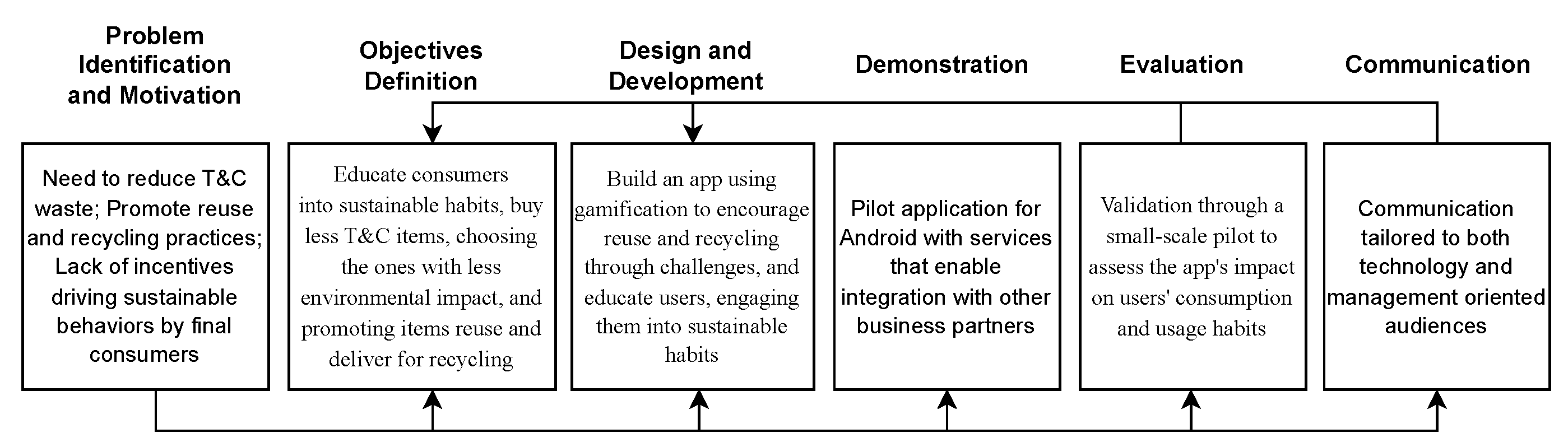
Figure 2.
Circular Economy - Extracted from [6].
Figure 2.
Circular Economy - Extracted from [6].
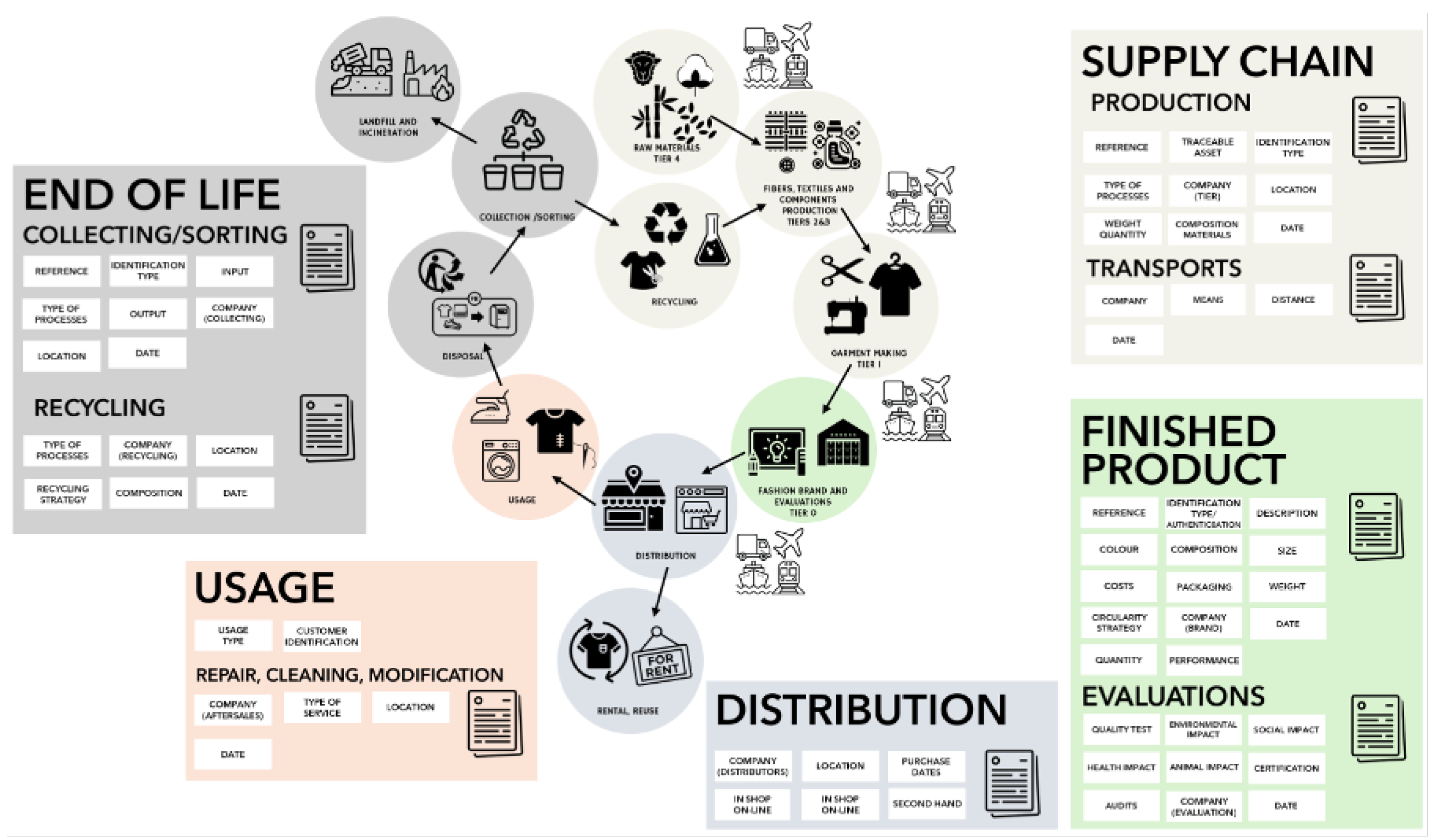
Figure 3.
EcoProve Platform partial use case diagram, leveraging the use cases for the repairing and maintenance activities of the usage phase, and the sharing, donating and delivering for recycling activities of the end-of-life phase of CE.
Figure 3.
EcoProve Platform partial use case diagram, leveraging the use cases for the repairing and maintenance activities of the usage phase, and the sharing, donating and delivering for recycling activities of the end-of-life phase of CE.
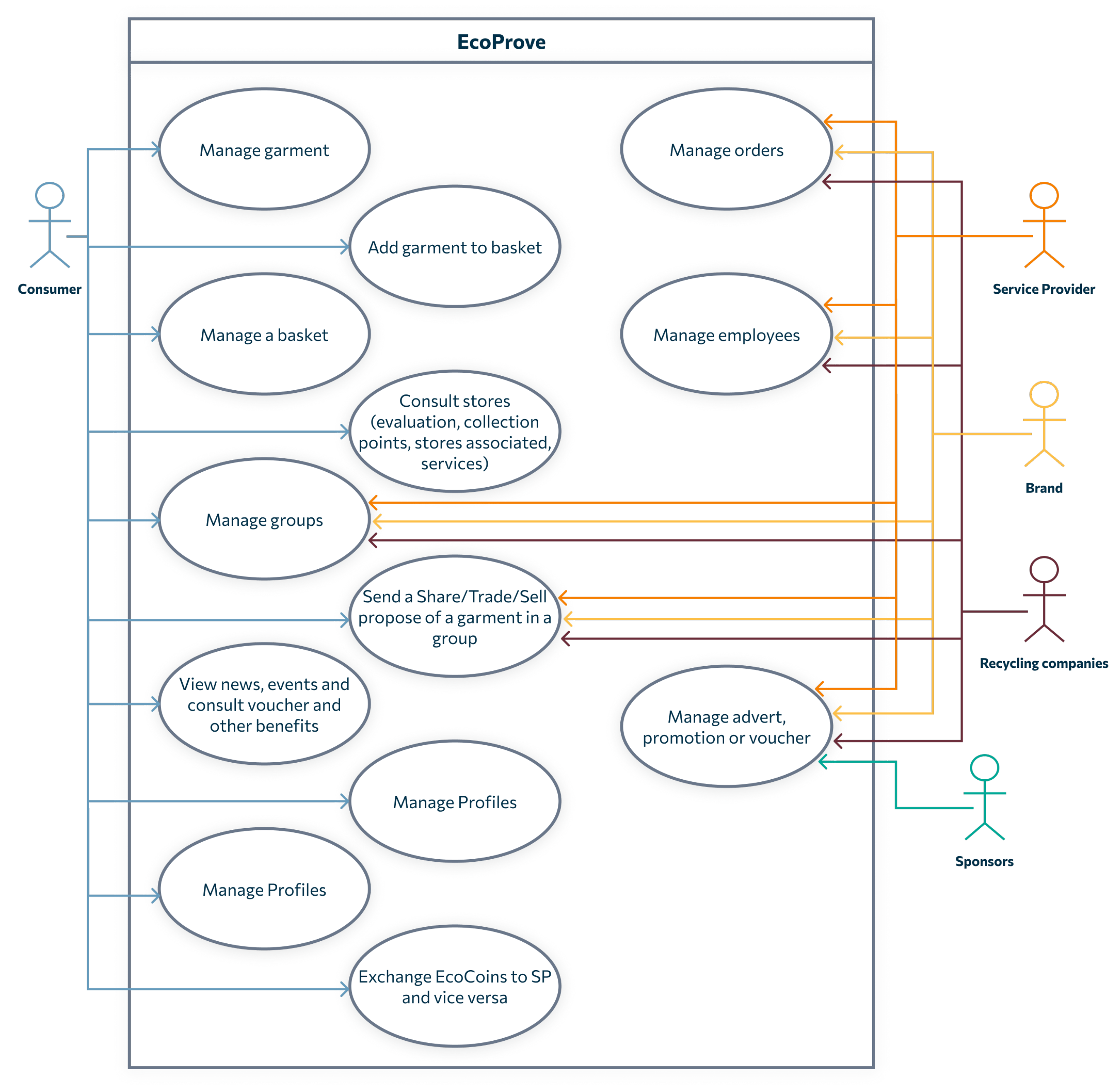
Figure 4.
EcoProve Platform Domain Model.
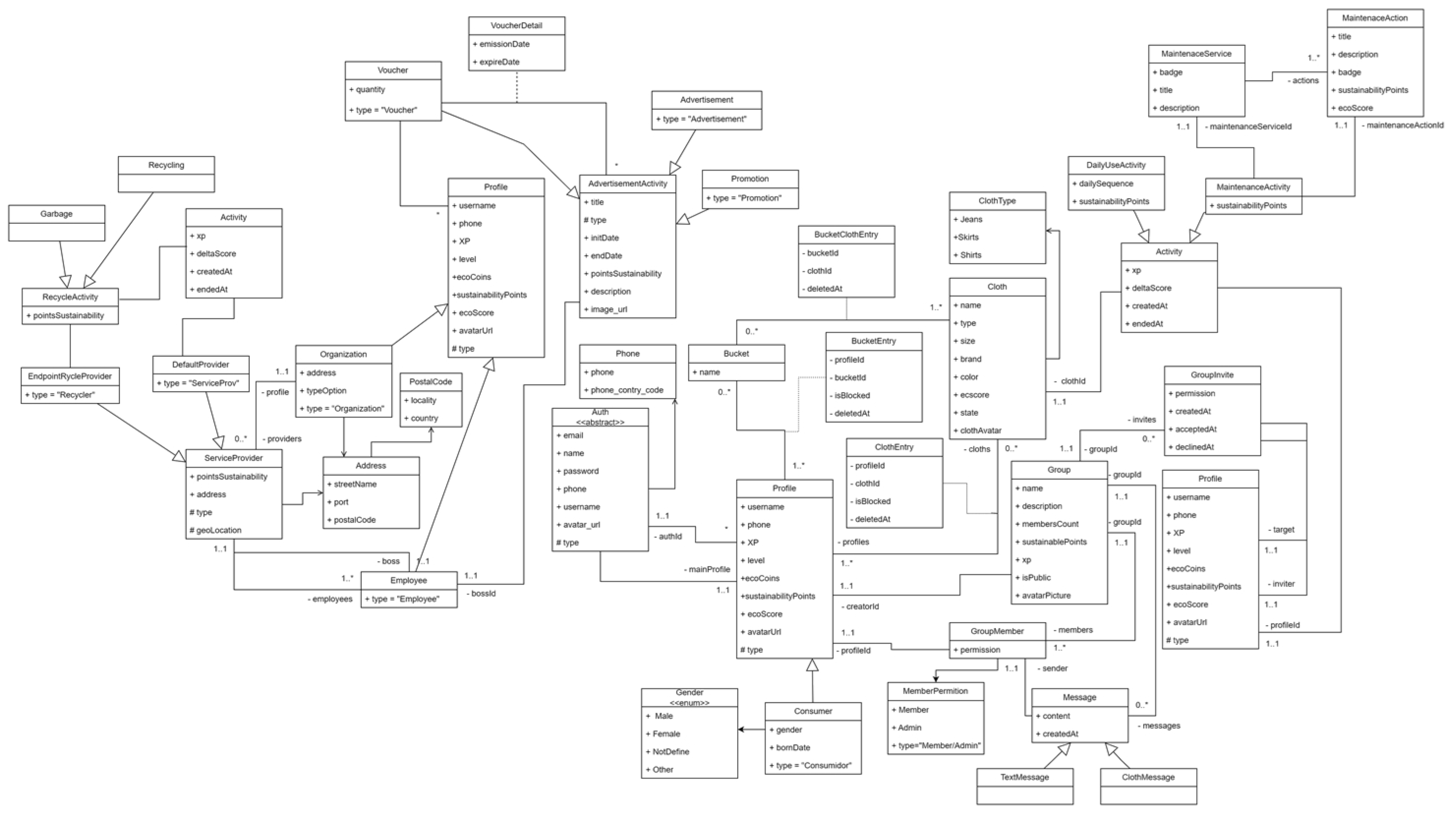
Figure 5.
Platform’s Architecture.
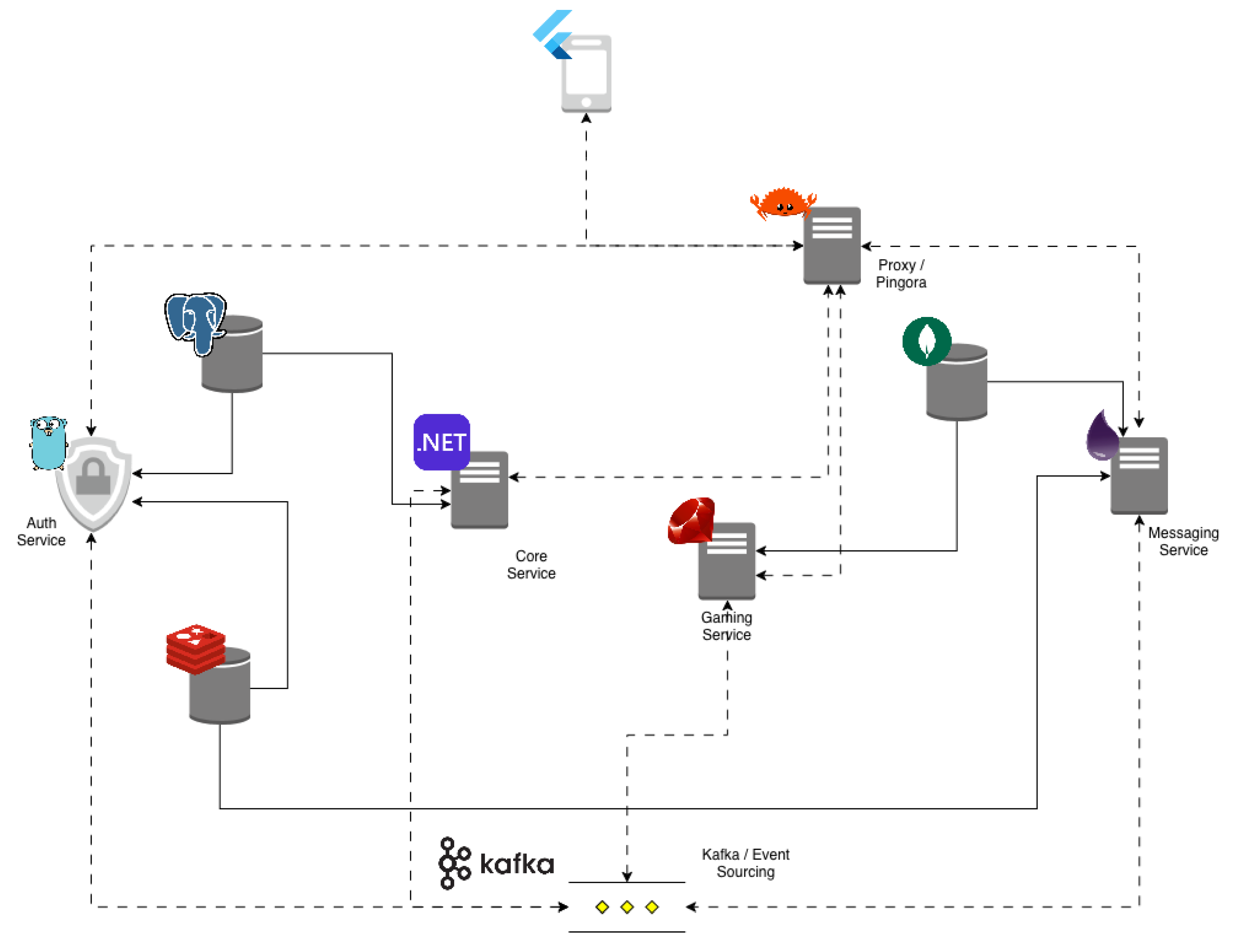
Figure 6.
Fernando is able to create a profile for his house and select it.
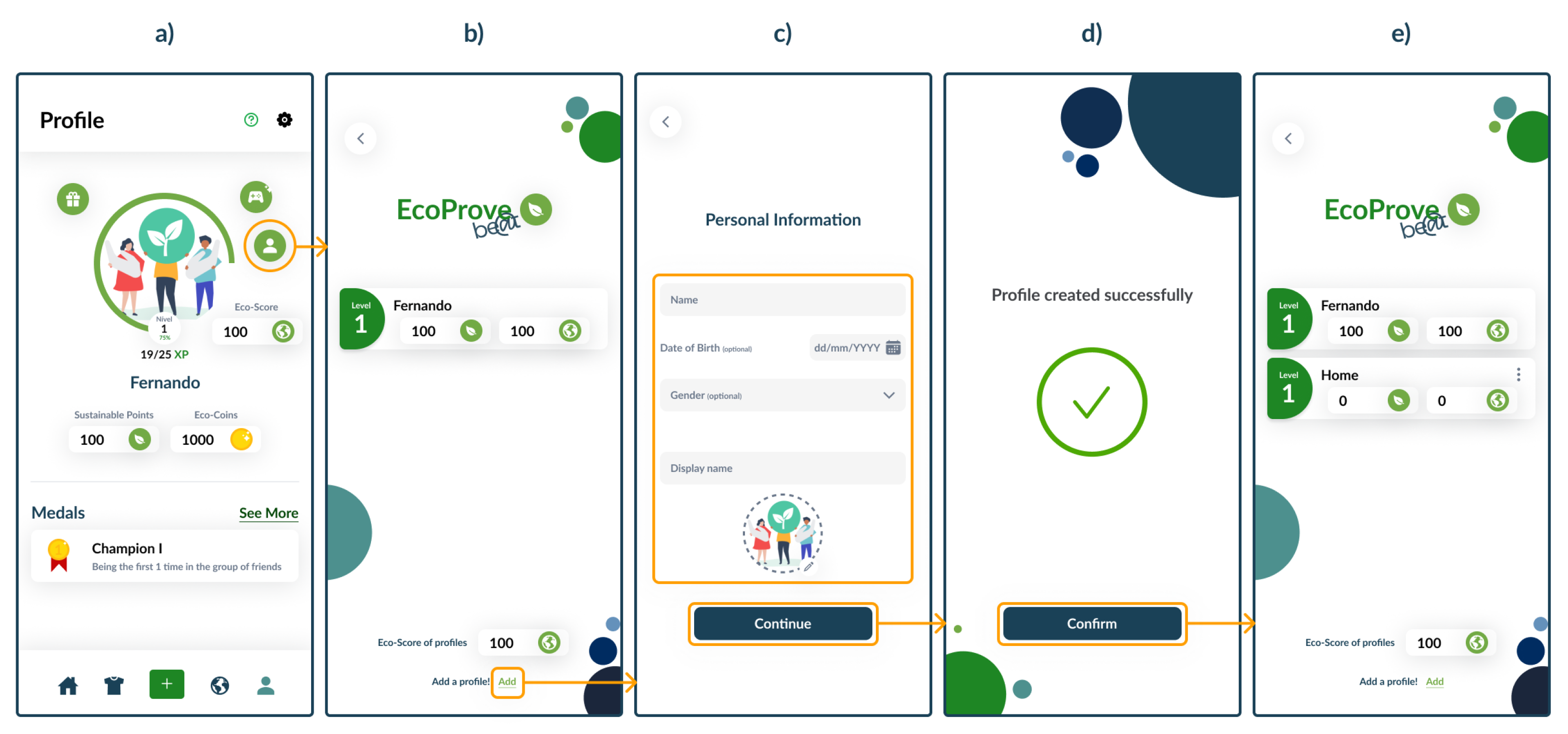
Figure 7.
David is able to select a part for repair through a service.
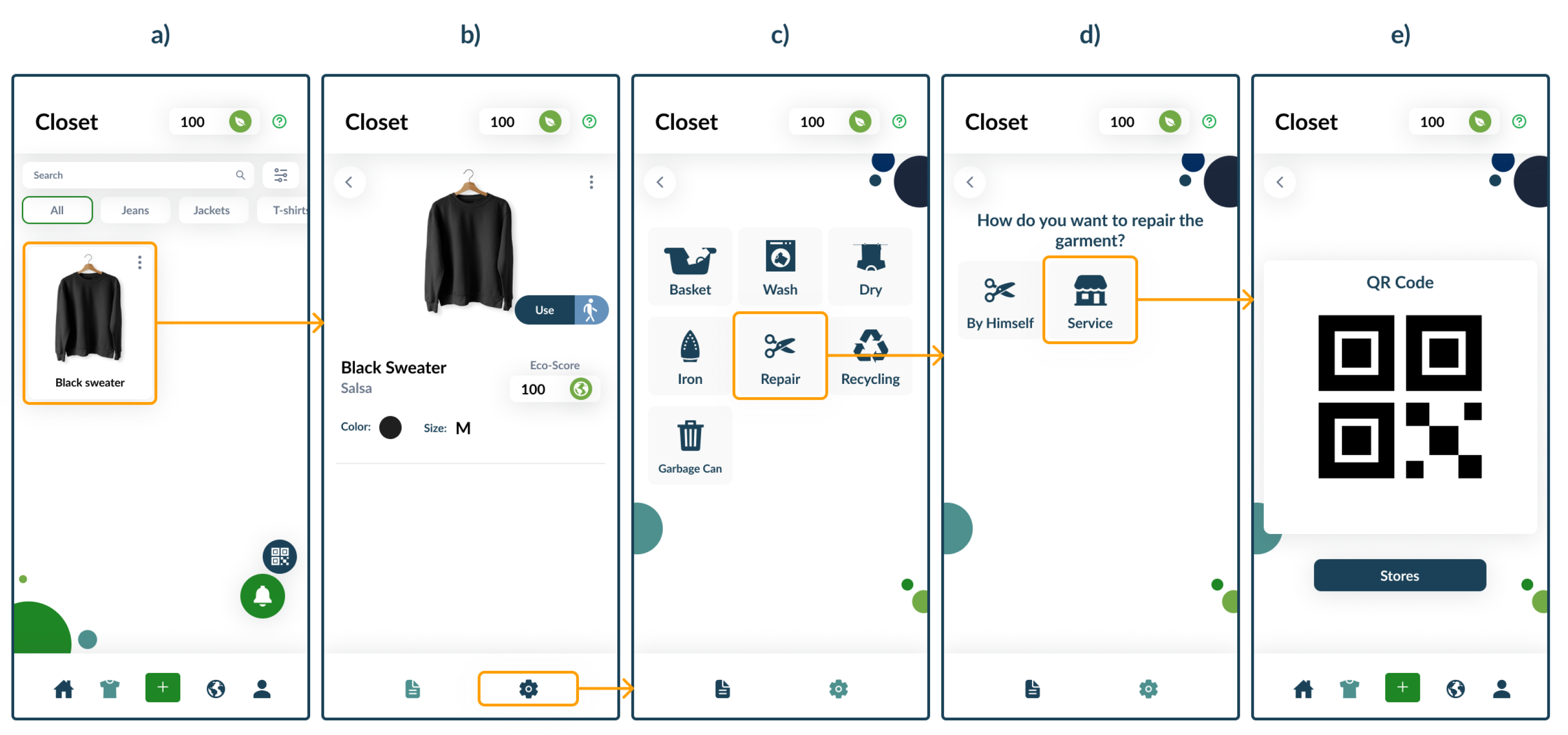
Figure 8.
Rafael is able to create a group and share/donate a garment.
Disclaimer/Publisher’s Note: The statements, opinions and data contained in all publications are solely those of the individual author(s) and contributor(s) and not of MDPI and/or the editor(s). MDPI and/or the editor(s) disclaim responsibility for any injury to people or property resulting from any ideas, methods, instructions or products referred to in the content. |
© 2026 by the authors. Licensee MDPI, Basel, Switzerland. This article is an open access article distributed under the terms and conditions of the Creative Commons Attribution (CC BY) license (http://creativecommons.org/licenses/by/4.0/).
Copyright: This open access article is published under a Creative Commons CC BY 4.0 license, which permit the free download, distribution, and reuse, provided that the author and preprint are cited in any reuse.


