
Submitted:
30 March 2026
Posted:
30 March 2026
You are already at the latest version
Abstract
From the perspective of value co-creation, this paper adopts the grounded theory research method, takes Henan local retail enterprise Pang Donglai as a single case, and systematically analyzes the construction mechanism of the retail business ecosystem.Through three-level coding of multi-source data—including official documents, authoritative media reports, and user-generated content—we develop a three-stage model comprising "value foundation," "value dissemination," and "value implementation." Our findings reveal that Pang Donglai first establishes a robust value foundation through internal practices such as employee-centric value orientation, humanistic care systems, customer trust cultivation, product value reorientation, industry empowerment, and social responsibility initiatives. Subsequently, the company achieves external value dissemination through the founder's philosophical influence, authoritative endorsements, external community resonance, and open value systems. Ultimately, through ideological recognition, knowledge precipitation, capability transplantation and sustainable operation, value is deeply embedded into partner enterprises to achieve value realization.These three sequential stages progressively reinforce one another, collectively shaping the dynamic construction pathway of retail business ecosystems.
Keywords:
PDL
; retail industry
; business ecosystem
; value co-creation
; grounded theory
1. Introduction
The Fourth Plenary Session of the 20th Central Committee of the Communist Party of China outlined the objectives for the 15th Five-Year Plan period: achieving significant progress in high-quality development and continuously improving people’s living standards. As the intermediary hub of China’s market circulation [1] and the bridge connecting production and consumption [2], the retail industry plays a pivotal role. Its high-quality development directly influences the efficiency of domestic economic circulation and contributes substantially to promoting high-quality economic growth [3].
The rapid advancement of information technology has transformed both consumer behaviors and the retail market environment [4]. In response, numerous retail enterprises are actively exploring new consumption models and business formats to ensure sustainable survival and efficient development [5]. However, challenges such as diversified consumer demands, complex supply chain systems, and conflicting sales channels [6] continue to pose significant obstacles for many businesses during their transformation efforts.
Scholars have investigated these issues from multiple perspectives, including data-driven environmental empowerment [7], the impact of social informatization on traditional retail transformation and efficiency enhancement [8], and omnichannel synergy driving digital retail transformation [9]. Yet most existing analytical frameworks focus on individual enterprises, and emphasize internal resource allocation and core competitiveness building. What remains underexplored is the broader retail ecosystem within which businesses operate as integral components. In other words, current research lacks insights into how enterprises can establish symbiotic and co-evolving business ecosystems through deep interactions with employees, customers, suppliers, the public, and partner companies—starting from their own value creation practices.
Against this backdrop, the enterprise “PDL” has demonstrated remarkable developmental resilience. Beyond possessing a robust supply chain, efficient workforce, exceptional customer service, and strong social responsibility, it has seamlessly integrated these advantages into a cohesive model that is perceptible, communicable, and actionable. The company proactively shares its philosophy and practices with the industry, empowering sector-wide innovation.
Value co-creation theory—centered on Vargo and Lusch’s service-dominant logic and Prahalad and Ramaswamy’s customer co-creation framework—challenges the traditional notion that enterprises are the sole value creators. It explicitly posits that value is not generated by a single entity but emerges through collaborative participation and interaction among multiple stakeholders, including enterprises, users, suppliers, partners, and government agencies. Value co-creation has evolved beyond being merely a marketing tactic to become a strategic paradigm shift in value creation. Enterprises now transition from independent value producers to organizers, resource integrators, and platform builders within value co-creation ecosystems. Through dynamic interactions between internal and external stakeholders, they enhance innovation capabilities, competitive advantages, and sustainable development capacities.
Therefore, from the perspective of value co-creation, this paper adopts the grounded theory method and takes Pang Donglai as a single case study to explore the construction of retail business ecosystems. It aims to reveal the inherent logic and mechanism behind it, so as to provide theoretical references and practical implications for retail enterprises as core actors to build sustainable business ecosystems.
2. Literature Review and Theoretical Foundation
2.1. Business Ecosystems and Its Construction from the Perspectives of Value Co-Creation
The concept of the “business ecosystem” was first introduced into management research by American scholar Moore, who drew an analogy from biological contexts to describe economic alliances formed through interactions among organizations and individuals [10,11]. These alliances subsequently evolve into organic business entities [12]. Iansiti and Levien further defined business ecosystems as “networks of interconnected enterprises that jointly create and share value” [13], challenging the traditional view of businesses as independent competitors [14,15]. In modern commerce, a healthy business ecosystem provides platforms for collaborative evolution and collective adaptation to external uncertainties [16]. This theoretical framework offers crucial insights into how retail industries can transcend single-enterprise boundaries and integrate multi-stakeholder resources.
Value co-creation theory originated from Prahalad and Ramaswamy’s research on customer experience, initially proposed from the perspectives of corporate strategic management and competition. Subsequently, Vargo and Lusch further developed the concept of value co-creation based on service-dominant logic. As business and academic environments have evolved, this theory has undergone continuous development [17]. Its evolution demonstrates a shift from enterprise dominance to collaborative participation by diverse stakeholders, including consumers and suppliers, forming a high-density complex network through bidirectional enterprise-consumer linkages [18]. Value co-creation drives ecosystem transformation from “core dominance” to “multi-stakeholder symbiosis” through three mechanisms: resource integration, service exchange, and institutional arrangements [19]. This theory provides a micro-level foundation for understanding the operational mechanisms of retail business ecosystems, revealing how enterprises create shared value through sustained interactions with employees, customers, suppliers, public stakeholders, and partner companies in retail scenarios. This analytical framework serves as the core focus of our case study on PDL.
In today’s highly uncertain, complex, and interconnected business environment, the traditional solo competition model of retail enterprises has become increasingly ineffective. Their fate is increasingly tied to the health and prosperity of the entire retail industry ecosystem in which they operate, necessitating co-development with other enterprises within a tightly interconnected and mutually dependent symbiotic system [20].
2.2. Grounded Theory
Grounded Theory, proposed by Glaser and Strauss, is a qualitative research methodology whose core tenet is to develop theories grounded in empirical data.Unlike quantitative empirical research, researchers do not formulate theoretical hypotheses prior to fieldwork. Instead, they directly derive empirical generalizations from survey data, refining concepts that reflect social phenomena through iterative comparisons. This process involves developing conceptual frameworks and establishing relationships between categories, ultimately elevating findings into theoretical frameworks [21]. This bottom-up approach to substantive theory development involves systematically collecting data to identify core concepts representing social phenomena, then constructing relevant social theories through conceptual connections [22].
Current theories on value co-creation and business ecosystems predominantly focus on established technology platform enterprises [23], lacking directly applicable methodologies for traditional retail contexts. Therefore, grounded theory methods are essential for developing explanatory theories derived from empirical observations.
The core principles of grounded theory are implemented through three coding processes: open coding, axial coding, and selective coding. First, data is conceptualized and categorized. Next, relationships between major categories are identified and established. Finally, core categories are systematically organized and discovered [21]. The construction of commercial ecosystems in PDL involves complex, long-term interactions among diverse stakeholders. By employing grounded theory’s rigorous coding procedures, the inherent operational logic of these systems becomes clearly demonstrated.
2.3. Research Review
In summary, existing research has not yet clarified how traditional brick-and-mortar retail enterprises transcend the limitations of single-enterprise competition through value co-creation practices to build sustainable commercial ecosystems. Furthermore, constructing a retail industry commercial ecosystem through value co-creation is a logically progressive process involving continuous interactions with multiple stakeholders such as employees, customers, suppliers, and the public. It requires in-depth study of specific case enterprises and dynamic perspectives to clarify the construction mechanisms and sustainability of the retail industry’s commercial ecosystem.
Previous scholars have explored the role mechanisms and implementation paths of value co-creation in digital-era commercial ecosystems [23], retail industry development strategies from the perspective of commercial ecosystems [20], and value co-creation pathways and mechanisms in fresh food retail under dynamic perspectives [24]. However, limited research exists on how leading retail enterprises leverage their influence and core advantages to create sustainable commercial ecosystems. Therefore, this study delves into the value co-creation practices adopted by Chinese brick-and-mortar retail enterprises—represented by PDL—to build commercial ecosystems, and investigates their construction process and intrinsic mechanisms of “value foundation—value dissemination—value implementation.”
3. Research Design
This section may be divided by subheadings. It should provide a concise and precise description of the experimental results, their interpretation, as well as the experimental conclusions that can be drawn.
3.1. Research Methods
This study employs an exploratory single-case research methodology for three key reasons. First, the research primarily investigates the intrinsic logic of retail business ecosystem construction from the perspective of value co-creation, where case studies inherently possess inductive and exploratory characteristics [25]. Second, single-case analysis can transcend the inherent limitations of case-specific knowledge by extending to internal and external correlations, thereby generating complex information networks that may yield generalized insights beyond individual case constraints [26]. Taking PDL as a case study, we aim to develop a theoretical framework for retail ecosystem construction that provides actionable references. Third, achieving research objectives requires deep analysis of underlying mechanisms within comprehensive data environments. Single-case studies excel at contextualizing specific scenarios and systematically identifying critical analytical gaps in existing research through robust evidence chains [27].
This study employs grounded theory methodology. Yin emphasizes that exploratory research adheres precisely to the principles of grounded theory [28]. By collecting extensive data on PDL and conducting empirical observations, the study systematically applies comparative analysis to derive empirical generalizations, which are subsequently elevated to theoretical conclusions.
3.2. Case Selection
When selecting research cases, this study comprehensively considered three aspects: case typicality, sample appropriateness, and data availability [29].
From a typicality perspective, PDL has established a value community built on deep trust and emotional connections with suppliers, employees, customers, and the public through its unique business philosophy and values. By sharing its expertise with the entire retail industry, it has empowered the sector. The company’s growth from a regional retailer to a nationally recognized industry benchmark and cultural icon epitomizes the process of building commercial ecosystems under the value co-creation concept. Thus, the PDL case effectively illuminates the mechanisms for constructing retail business ecosystems from a value co-creation perspective.
In terms of sample representativeness, PDL—a quintessential retail enterprise—boasts a robust supply chain, highly efficient workforce, exceptional customer service, and strong social responsibility. It continuously empowers the industry and drives the development of a commercial ecosystem, which aligns perfectly with the research theme.
Regarding data accessibility, PDL’s immense influence has generated a wealth of publicly available materials. Primary sources include founder Yu Donglai’s public speeches and media interviews. Secondary sources are even more abundant, encompassing in-depth reports from CCTV to local media outlets, research studies, academic literature, and massive amounts of user-generated content on online platforms.
3.3. Data Collection
Based on different data sources, the data was categorized into three types: first, publicly available materials from PDL’s official website; second, reports from major media outlets; and third, user-generated content on online platforms. The collection results and characteristics of the materials are presented in Table 1.
3.4. Data Analysis
3.4.1. Key Constructs and Definitions
The key constructs in this study were conceptually defined through theoretical research and case induction, as shown in Table 2.
3.4.2. Coding Process
This study adhered to the methodology proposed by Gioia et al. for structured data analysis and coding [23]. First, we conducted open coding. Following the principle of open theoretical exploration, we organized data with shared attributes or similar connotations to identify key events as defined by PDL, thereby establishing initial conceptual categories. Subsequently, axial coding was implemented by repeatedly examining and comparing relationships between these concepts, which were then consolidated into themes relevant to the research questions. Finally, selective coding was conducted to identify the core categories that integrate all other themes. The resulting aggregated constructs are illustrated in Figure 1, Figure 2 and Figure 3.
4. Case Analysis
Through the integration and analysis of the collected data, this paper divides the construction mechanism of retail business ecosystem built by Pang Donglai into three major stages: Value Foundation, Value Diffusion and Value Realization。 Each stage is elaborated in detail below.
4.1. Value Foundation
The value foundation serves as the starting point for constructing the retail business ecosystem led by PDL, providing a tangible prototype for all subsequent activities. Without a solid core creation, dissemination and operation would be like water without a source.
PDL developed its entire corporate strategy based on the principles of fairness, freedom, happiness, and fraternity.
At the employee level, PDL ensures that grassroots employees’ salaries exceed the local average in Xuchang, even surpassing industry peers by more than double. This approach restructures the distribution system, transcending the conventional logic of treating employees as mere costs and fully demonstrating a value-oriented philosophy. Beyond material rewards, PDL has established a comprehensive institutional framework designed to safeguard employees’ well-being. Working hours are limited to a minimum of five hours per shift, with Tuesday closures and annual leave policies ensuring employees’ right to rest and family time. The renowned “Weiqu Award” (a compensation for employees who suffer unreasonable treatment at work) provides financial recognition for employees subjected to unfair treatment, complemented by a range of generous benefits that foster well-rounded personal development.
At the customer level, PDL elevates relationships from transactional interactions to trust-based connections. Its exceptional service design and thoughtful details—including complimentary ice packs at checkout counters, versatile shopping carts for diverse demographics, reading glasses for seniors, and staff assistance with heavy items—create an emotionally engaging experience filled with understanding and care. The “7-day no-questions-asked return policy” and even immediate replacements for shoes with quality issues after two months of wear subconsciously reinforce the perception that “PDL deserves unconditional trust.” This comprehensive after-sales guarantee significantly enhances emotional loyalty. Beyond this, PDL transparently displays gross profit margins for certain products, addressing common information asymmetry in retail. For perishable goods like fresh food, the company implements a “time-sensitive discount system,” where transparent pricing strategies clearly demonstrate rigorous product value management, anchoring trust between emotional connections and rational business principles.
On product quality, PDL rejects marketing gimmicks and brand premiumization, returning to the fundamental principles of quality and safety in retail. Food product prices are linked to freshness duration, while unsold items are handled through employee internal purchases to eliminate potential customer exposure to stale products. With self-built testing laboratories and publicly disclosed inspection reports, PDL ensures rigorous quality control and robust safety measures. Unlike standardized chain supermarkets nationwide, PDL leverages regional advantages to provide customized products tailored to local Henan consumer preferences. Localized and personalized product development not only captures regional flavors and emotional connections, generating strong market resonance and consumer loyalty, but also promotes Henan’s distinctive characteristics through PDL’s influence. The company has implemented deep supply chain optimization and stringent controls, with its own-brand products achieving excellent pass rates in third-party quality inspections. For non-owned brands, PDL has established a comprehensive supply chain management system encompassing direct procurement models, relationship governance, and intelligent logistics, ensuring both premium quality and efficient turnover.
At the industry and societal levels, PDL has proactively transcended corporate competition boundaries to empower entire industries. It elevated its people-first business philosophy into an industry benchmark. Through social media platforms, public speeches, and media interviews, the founder systematically articulated the “Freedom and Love” values, critiqued internal competition and utilitarianism, advocated “joyful work,” and consistently emphasized cultivating sound personalities and achieving vibrant individual lives. By disseminating these concepts, PDL sparked extensive social discussions and value reflections, reshaping the spiritual foundation of industry ecosystems at the cognitive level. Moreover, the company selflessly shared operational expertise: publicly releasing core management manuals and compensation systems, opening stores for nationwide peer learning programs, and dispatching teams to provide hands-on training for partners—demonstrating its commitment to driving industry-wide progress through public service awareness and responsibility.
PDL has consistently prioritized community value through livelihood initiatives. By offering stable, high-benefit employment opportunities that alleviate local job market pressures and enhancing workers’ vocational skills through systematic training programs, it supports economic development. Through direct agricultural procurement systems, the company helps farmers achieve stable income growth, contributing to rural revitalization strategies. Additionally, its high-quality products and services promote local consumption upgrades and quality-of-life improvements. Public welfare actions—including donations during major disasters and sustained support for local education—further solidify its emotional bond as a “trusted community neighbor.” Relevant conceptual frameworks and exemplary evidence are cited in Table 3.
4.2. Value Dissemination
Value dissemination serves as the critical bridge for PDL to transform internally consolidated value energy into external attractiveness. It facilitates the conversion of value energy from internal accumulation to external radiation, thereby forming the embryonic structure of an ecological network.
Founder Yu Donglai serves as the most direct and compelling “ideological anchor,” continuously disseminating values to society and industries through his personal influence. Via his social media accounts, he shares his business philosophy, life reflections, and industry perspectives using a distinctive, down-to-earth language style. This approach breaks away from traditional corporate communication hierarchies and packaging, establishing a genuine and charismatic channel that allows the public to directly and vividly understand his values. PDL proactively publishes videos of his speeches from internal meetings and mentoring sessions on the company’s official website, systematically transforming internal value discussions into public discourse that society can learn from and evaluate. This strategy significantly enhances the dissemination of its core values.
Through endorsement from authoritative media and academic circles, PDL has not only gained widespread social recognition for its authenticity and legitimacy but also effectively disseminated its benchmark significance. The brand received positive coverage from prestigious media outlets including CCTV, People’s Daily, and Henan Satellite TV. These reports elevated PDL from a regional brand to national prominence, significantly reducing public awareness and trust costs while spreading its value concepts with unquestionable credibility. PDL has also become a research subject and teaching case in numerous universities and research institutions, with academic evaluations enhancing the scientific validity and replicability of its operational model. The story and framework of PDL have been systematized and theorized, continuously influencing business managers and establishing a lasting, profound value dissemination channel.
External community resonance has constructed a multi-level communication network for the value dissemination of PDL. Ordinary consumers spontaneously share their experiences of “free repairs” and “ice water delivery during high temperatures” through social media, with these authentic and vivid user experiences forming massive user-generated content on platforms like TikTok and Xiaohongshu, achieving word-of-mouth dissemination of value recognition among consumer groups. Supported enterprises publicly voice their opinions through official channels, detailing PDL’s “sincere and professional” empowerment process and the results of “significant increase in customer traffic” after adjustments. This authoritative validation from industry partners elevates value dissemination from mass emotional resonance to professional industry credibility.
By fully opening its core knowledge system and physical operations to industries and society, PDL has established crucial pathways for value impact implementation and transfer. The company prominently displays its management philosophy embodied in the “Happy Life Handbook” on its official website homepage, along with transparent employee management policies, facilitating standardized dissemination of advanced concepts and methodologies across the industry. Through hosting open days where enterprises can visit for learning experiences, PDL effectively promotes its progressive lifestyle concepts, scientific management techniques, and humanistic values. This “what you see is what you get” experiential approach significantly enhances the credibility and appeal of its business model. Relevant conceptual frameworks and case evidence are cited in Table 4.
4.3. Value Implementation
Value implementation serves as the core mechanism enabling PDL to deeply integrate with and sustainably empower ecosystem partners who endorse its value propositions and operational framework.
From the initial empowerment phase through the entire process, partner enterprises must consistently embrace PDL’s core values. Partners should recognize PDL’s people-first organizational commitment, where corporate policies and profit distribution prioritize safeguarding employees’ dignity, well-being, and professional growth. They must acknowledge customer trust as the foundation of business operations, with all operational activities—from product services to pricing strategies and after-sales support—centered on building and maintaining reliable long-term relationships. Additionally, partners should embrace PDL’s social responsibility ethos, actively contributing to community prosperity, industry advancement, and societal development as active participants in fostering a sustainable ecosystem.
PDL systematically transforms abstract and conceptual value frameworks into concrete, actionable knowledge systems and methodologies. It compiled operational values into the Handbook of Happy Life, summarized successful employee management practices into the Employee Management System, and standardized its operational framework through modular knowledge distillation. Building on these standardized knowledge modules, PDL conducts in-depth diagnostics of specific challenges faced by assisted enterprises, ultimately developing customized solutions tailored to their unique needs.
PDL employs a “one-on-one mentoring” approach to help partner enterprises translate theoretical knowledge into practical implementation. Its customization teams are stationed directly at stores to redesign core business modules—including product structures, display logic, and service processes—while conducting on-site execution to ensure new operational standards become actionable, verifiable realities rather than abstract documents. PDL provides in-depth coaching for partner enterprises’ core management teams, transmitting its management philosophies, decision-making frameworks, and leadership methodologies. Through dual-level instruction covering business processes and management teams, the program ensures comprehensive skill transfer and sustainable organizational capabilities.
PDL’s practice extends beyond mere “delivery” and “exit” phases, establishing a dynamic and continuous “value closed-loop operation” mechanism. Rather than offering short-term training, PDL dispatches teams to partner enterprises for in-depth on-site engagements lasting several months to a year. Through extended timelines, these teams conduct comprehensive problem diagnostics and systematically implement new processes. After team withdrawal, PDL maintains close collaboration with empowered enterprises via institutionalized methods including regular follow-ups, online communication, and data synchronization to provide sustained support. This systematic collaborative approach not only effectively prevents “rebound effects” from organizational adjustments but also enables timely responses to market changes and joint problem-solving. Relevant conceptual frameworks and case evidence are referenced in Table 5.
4.4. The Construction of a Commercial Ecosystem
The construction of a business ecosystem is not an overnight achievement but rather a dynamic evolutionary process that progresses from internal foundations to external manifestations, evolving from conceptual frameworks to practical implementation. Through case analysis of PDL, this study identifies three core convergent constructs: value foundation, value dissemination, and value implementation. These components collectively form a logically rigorous and cyclically reinforcing system-building mechanism.
The value foundation serves as both the starting point and cornerstone of organizational development, forming the bedrock for building corporate credibility and appeal. Only when PDL achieves tangible results through internal practices that resonate with employees, customers, and society can it establish a conceptual framework worthy of industry emulation. Without this solid internal foundation, all subsequent external initiatives would lack legitimacy and persuasive power.
Value dissemination serves as a crucial bridge connecting internal practices with external ecosystems, functioning to transform internal conceptual implementations into external influence. Through founder sharing, authoritative endorsements, external promotion, and proactive openness, PDL disseminates its value signals and core philosophies, attracting potential collaborators and learners while establishing the initial framework of an ecosystem network. This approach fosters recognition of PDL’s conceptual model among diverse potential partners, facilitating the selection of collaborators for in-depth engagement.
Value implementation constitutes the final stage in achieving deep identification and ecosystem development. For partner enterprises embracing PDL’s philosophy, this process transforms PDL’s value model into actionable, sustainable management systems and behavioral patterns through hands-on mentorship and continuous support, building upon PDL’s comprehensive systemic framework. This facilitates a profound transition from conceptual alignment to organizational capability development, ensuring that ecosystem partners not only share ideological consensus but also achieve alignment in organizational competencies and operational outcomes. Ultimately, this fosters a robust, co-evolving ecosystem community where all stakeholders work in harmony.
5. Conclusion and Implications
5.1. Research Findings
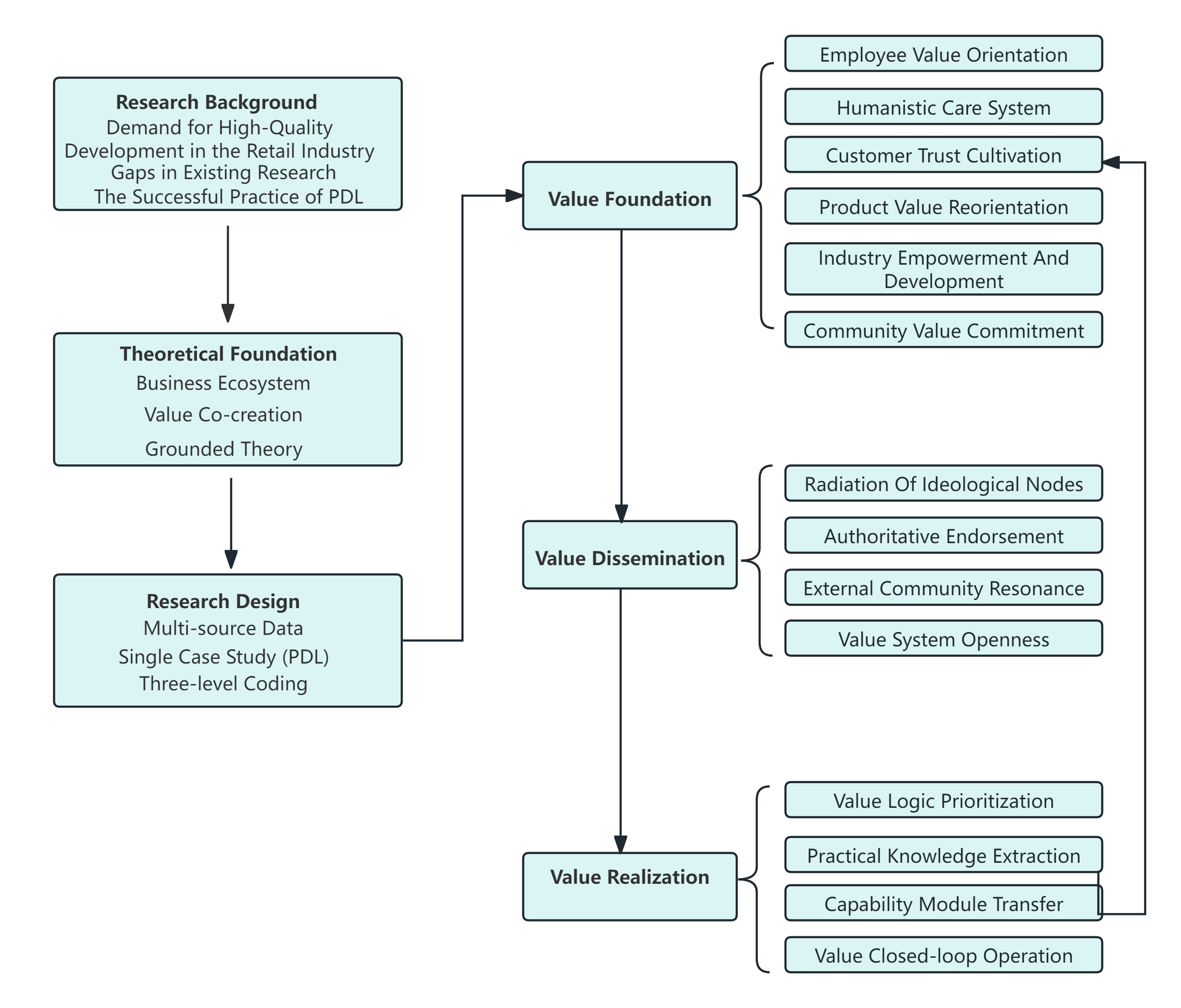
This study focuses on constructing a retail business ecosystem from the perspective of value co-creation, using PDL as a case study and employing grounded theory methodology for systematic coding and analysis of multi-source data. The research reveals that the formation of a retail business ecosystem constitutes a dynamic process characterized by core enterprise leadership, progressive participation from multiple stakeholders, and collaborative value creation through cyclical interactions. This evolutionary process originates from the accumulation of internal values and t``he refinement of practical systems within the enterprise. Through value spillover, the enterprise absorbs and integrates resources from external partners, and ultimately achieves the stable construction and coordinated development of the ecological network via institutional empowerment. The specific formation mechanism is elaborated in Figure 4.
5.1.1. Value Foundation
The value foundation serves as the bedrock and energy source for ecosystem formation. Through profound practices transcending transactional logic, PDL has developed a comprehensive and self-consistent value creation system. This goes beyond simple cost control or service optimization—it fundamentally reshapes the relationship between enterprises and core stakeholders. At the employee level, the combination of “competitive compensation + empowerment + generous benefits + humanistic care” transforms workers from cost factors into primary value creators and beneficiaries, establishing the foundation for organizational trust and vitality. For customers, sincere pricing strategies, exceptional service, robust after-sales support, and meticulous product quality elevate transactional relationships into deep emotional trust, creating solid market foundations. At the industry and societal levels, the company proactively transcends competitive boundaries by sharing innovative concepts and open expertise, demonstrating a sense of responsibility to drive industry-wide progress. Simultaneously, it actively fulfills social responsibilities, supports employment initiatives, and contributes to rural revitalization. These practices collectively form a tangible, actionable “value foundation” with strong moral appeal, providing robust conceptual foundations for subsequent value dissemination.
5.1.2. Value Dissemination
Value dissemination serves as the critical bridge connecting internal value propositions with external ecosystems. Through multi-channel strategies, PDL has successfully transformed its internally accumulated value potential into widespread external appeal and social influence. This process exhibits multidimensional characteristics: The founder acts as the most compelling “idea node,” directly engaging the public through authentic personal communication; in-depth media coverage and academic research provide legitimacy endorsement for its model, significantly enhancing social trust and industry recognition; consumers and empowered enterprises spontaneously engage in word-of-mouth dissemination and outcome validation through social media and official channels, fostering vibrant external community resonance. Additionally, PDL’s proactive openness of its value system materializes its core concepts, initially attracting potential ecosystem partners and outlining the embryonic form of an ecological network.
5.1.3. Value Implementation
Value implementation serves as the cornerstone for transitioning ecosystems from loose networks to stable collaborative communities. PDL employs a systematic empowerment framework to deeply embed value concepts within partner enterprises, fostering capability symbiosis and co-creating operational rules. The implementation roadmap prioritizes value logic to establish conceptual consensus; practical knowledge extraction transforms experience into standardized and customized methodological tools; capability module transfer drives profound business process and management transformation through on-site guidance and immersive mentorship; ultimately, value closed-loop operations cultivate dynamic adjustment and continuous optimization inertia. This phase not only materializes value co-creation but also refines interaction protocols and collaboration models among ecosystem members, endowing the system with self-reinforcing and evolutionary capabilities.
5.1.4. The Construction of a Co-Evolving Commercial Ecosystem
The formation of a retail business ecosystem follows a progressive logic of “value foundation → value dissemination → value implementation.” This reveals that under the framework of value co-creation, system development begins with core enterprises’ internal excellence in value practices, matures through external attraction and recognition of such value models, and ultimately solidifies through institutional empowerment and symbiotic collaboration across enterprises. This process profoundly demonstrates that in the new era of retail development, building a healthy, mutually beneficial business ecosystem has become a critical strategic capability for enterprises to achieve long-term resilience and lead sustainable industry development.
5.2. Theoretical Contributions
Through the case study of PDL, this research constructs a theoretical model of the retail industry’s business ecosystem, which holds significant theoretical implications for China’s retail sector development. The findings are primarily reflected in the following aspects:
First, this study expands the application of business ecosystem theory to traditional brick-and-mortar retail sectors. By focusing on offline services and interpersonal interactions as core elements, the PDL case demonstrates that physical retail ecosystems are built upon “trust, emotional connections, and shared values.” Its “value foundation—value dissemination—value implementation” model systematically explains how internal cultural identity and best practices can attract value, ultimately forming actionable collaborative models. This approach deepens our understanding of human-centric, value-driven business ecosystem formation mechanisms, filling gaps in existing theoretical frameworks.
Second, this study deepens and integrates value co-creation theory by elevating its analytical framework from binary interaction levels to complex ecosystem network perspectives. Traditional value co-creation theories primarily focus on “business-customer” binary interactions, with insufficient elaboration on how they systematically initiate, shape, and stabilize broader commercial ecosystems. Through grounded analysis, our research reveals that PDL’s value co-creation practices exhibit multi-layered and polymorphic evolutionary characteristics. These findings clearly demonstrate how value co-creation serves as a central thread connecting collaborative activities across different levels and stakeholders. We propose a three-stage model comprising “value foundation—value dissemination—value implementation,” providing novel insights into value co-creation mechanisms within complex systems.
Finally, this study demonstrates the robust vitality and theoretical construction potential of qualitative research methods, particularly grounded theory, in analyzing China’s indigenous management phenomena. The PDL model is rooted in China’s specific socio-cultural and market context. Its practices of “dedication spirit” and “altruistic win-win” exhibit distinct local characteristics. This study employs single-case grounded theory research methods, adhering to the principle of “emerging theory from data” to avoid simplistic application of mature Western theories. Through rigorous three-level coding, the study extracts core constructs such as “value foundation,” “value dissemination,” and “value implementation” along with their interrelationships from complex empirical data, ultimately forming an explanatory theoretical model. It provides researchers with actionable research paradigms for deriving theoretical contributions from China’s national conditions, enhancing the cultural context sensitivity and theoretical diversity in management studies.
5.3. Practical Implications
The conclusions of this study provide valuable insights and references for the construction of commercial ecosystems in China’s retail industry.
First, this study offers retail enterprises a clear strategic pathway from internal value creation to external ecosystem development. The three-stage model of “value foundation—value dissemination—value implementation” provides a systematic framework for building sustainable competitive advantages. It guides companies to internally establish a robust “value core” through enhancing employee dignity and well-being, cultivating exceptional customer trust, maintaining product quality and transparency, and fulfilling social responsibilities. Building on this foundation, enterprises should proactively transform internal strengths into industry influence through initiatives like concept dissemination and knowledge sharing, attract and integrate ecosystem partners, and ultimately achieve sustainable growth through institutionalized empowerment systems. This approach enhances organizational resilience in complex market environments.
Second, this study provides replicable value paradigms and collaborative benchmarks for building a healthy and symbiotic industry ecosystem. PDL’s practice offers a practical reference for addressing the long-standing ecological challenges in the retail industry. It demonstrates that a business model based on the principles of “mutual benefit and win-win outcomes” and “shared responsibility” can effectively promote industrial collaboration, enhance overall efficiency, and improve reputation. This case highlights that industry associations and leading enterprises should proactively advocate for and participate in establishing open and shared industry integrity collaboration standards and non-competitive communication platforms, transforming individual successful practices into public assets for the industry. This shift from zero-sum games to win-win cooperation in industry competition will help improve the overall service level and social value of China’s retail sector.
Finally, this study validates the logic of constructing business ecosystems driven by “human-centric” principles, enriching their implementation approaches. Through the case study of PDL, we provide practical validation and theoretical enrichment for business ecosystem development and value co-creation theories. The research demonstrates that in brick-and-mortar retail sectors where technology or capital is not the sole dominant factor, building robust ecosystems remains achievable when powered by social capital principles like “win-win collaboration” and “human-centered values.” This provides crucial insights into understanding diverse business ecosystem configurations. The case study also illustrates how value co-creation evolves from internal corporate concepts into multi-stakeholder collaborative networks, clearly mapping out the complete implementation chain of “value foundation—value dissemination—value implementation.” This not only offers vivid empirical evidence for value co-creation theory but also demonstrates how enterprises aiming to build ecosystems can transform abstract value concepts into concrete governance mechanisms and operational workflows.
5.4. Research Limitations and Future Directions
5.4.1. Limitations
This study employs a single-case study methodology, which enables in-depth exploration of the ecological construction mechanisms of PDL. However, the generalizability of the conclusions requires further validation through multi-case comparative analysis.
The data primarily originates from publicly available sources and secondary content, lacking primary interview data from ecosystem participants. Future research could enhance multi-perspective triangulation validation.
The research focuses on mechanism construction, with insufficient attention paid to the long-term evolutionary dynamics of ecosystems and their performance impacts.
5.4.2. Future Directions
Future research could conduct cross-regional and multi-sector comparative case studies to explore common patterns and contextual variations in retail business ecosystem construction across market environments with differing digitalization levels, consumer cultures, and competitive landscapes.
Quantitative research methods can be introduced to empirically examine the relationships between value co-creation and variables such as ecosystem health status and corporate performance.
Future research could conduct longitudinal tracking studies on commercial ecosystems, focusing on evolutionary drivers at different life cycle stages, shifts in governance mechanisms, and long-term value generation. Particular attention should be paid to exploring how digital technologies enhance ecosystem synergy efficiency, risk resilience, and sustainable evolution, while investigating innovative ecological models that integrate “offline value co-creation with online digital collaboration.”
References
- Li Ziwen, Liu Xiangdong, Chen Chengzhang. Research on Factors Affecting Technical Efficiency in China’s Retail Industry Based on Stochastic Frontier Model [J]. China Circulation Economics 2016, 30(11), 109–120. [CrossRef]
- Zhang Ge, Jing Linbo. Development Trend Changes of Foreign-funded Retail Enterprises in China over the Twenty Years After WTO Accession: Influencing Factors and Empirical Evidence [J]. Business Economics and Management 2022, (12), 5–14. [CrossRef]
- Ma Xiaoting. Analysis of the Impact of Digital Economy on High-Quality Development of Retail Industry: Based on the Mediating Effects of Technological Innovation and Consumption Structure Upgrading [J]. Research on Commercial Economics 2024, (10), 39–42.
- Zheng Chenrouyu, Liu Jiaming, Dong Bingkun, et al. Spatial Layout and Location Selection of Urban Retail Industry Based on Multi-source Data Integration: A Case Study of Hohhot Main Urban Area [J]. Geography and Geographic Information Science 2025, 41(04), 60–67.
- Li Chuanxi. Research on Optimization of Retail Industry Development Pathways under New Consumption Patterns, Business Models and Modes [J]. Modern Commerce 2023, (23), 23–26. [CrossRef]
- Liu Yintai. Research on Dual-channel Supply Chain Pricing Strategies for Retailers [D], Hebei University of Technology, 2015.
- Sun Yihua. Data Element Flow Environment Empowers High-Quality Development of the Retail Industry: A Mechanism Test Based on Trade Costs and Consumption Structure Upgrading [J]. Research on Commercial Economics 2025, (15), 35–38.87. [CrossRef]
- Deng Yaxuan, Zhang Zhiyu, Liu Wenmin. Social Informatization, Distribution Technology Efficiency and New Retail Models: A Perspective on Total Factor Productivity [J]. Times Economic & Trade 2023, 20(04), 23–27. [CrossRef]
- Xieyan Shao. Path and Performance Analysis of Digital Transformation in Retail Industry Driven by Omnichannel Synergy [D], Hangzhou Dianzi University, 2025.
- Moore, J. F. Predators and Prey: A New Ecology of Competition. Harvard Business Review 1993, 71(3), 75–86. [Google Scholar]
- Adner, R.; Kapoor, R. Innovation Ecosystems and the Pace of Substitution: Re-examining Technology S-curves. Strategic Management Journal 2016, 37(4), 625–648. [Google Scholar] [CrossRef]
- Li Xiaoxia. Dynamic Equilibrium Analysis of Retail Business Ecosystem [J]. Research on Commercial Economics 2018, (22), 23–25.
- Lin Fanjun, Zong Zupan. Transformation and Framework of Commercial Ecosystem Governance for Performing Arts Enterprises in the Digital Era [J]. Journal of Shandong University (Philosophy and Social Sciences Edition) 2024, (02), 36–44. [CrossRef]
- Adner, R. Ecosystem as Structure: An Actionable Construct for Strategy. Journal of Management 2017, 43(1), 39–58. [Google Scholar] [CrossRef]
- Jacobides, M. G.; Cennamo, C.; Gawer, A. Towards a Theory of Ecosystems. Strategic Management Journal 2018, 39(8), 2255–2276. [Google Scholar] [CrossRef]
- Feng Yongchun, Gong Yuechen, Wang Ling, et al. Research on the Construction Mechanism of Overseas Commercial Ecosystem for China Infrastructure Enterprises: A Single Case Analysis from the Perspective of Institutional Entrepreneurship [J/OL]. Nankai Management Review, 1-20 [2026-02-12]. https://link.cnki.net/urlid/12.1288.F.20250820.1548.008.
- Zhang Hong, Lu Yaobin, Zhang Fengjiao. Review on Value Co-creation Research: Bibliometric Analysis and Knowledge System Construction [J]. Scientific Research Management 2021, 42(12), 88–99. [CrossRef]
- Zhu Yi, Lin Li. Exploring Value Co-creation Elements Empowered by Artificial Intelligence: A Study Based on Consumer Cognitive Attitudes [J]. Journal of Northwest Minzu University (Philosophy and Social Sciences Edition) 2025, (05), 96–107. [CrossRef]
- Ji Huisheng, Asmita, Wu Xiaomei, et al. Manufacturing Enterprise Niche Strategy and Innovation Ecosystem Evolution: A Perspective on Value Symbiosis and Co-creation [J]. Journal of University of Electronic Science and Technology of China (Social Sciences Edition) 2023, 25(05), 76–85.
- Ouyang Qu. Development Strategy Construction of Retail Industry from the Perspective of Commercial Ecosystem [J]. Business Times 2012, (13), 20–21.
- Zhang Jingwei. Application of Grounded Theory Research Method in Management Studies [J]. Science and Technology Management Research 2010, 30(01), 235–237.
- Chen Xiangming. The Approach and Methodology of Grounded Theory [J]. Educational Research and Experiment 1999, (04), 58–63+73.
- Sun Xinbo, Sun Haobo. How to Co-create Value in the Digital Era Business Ecosystem: A Single Case Study Based on Dynamic Capability and Resource Action Perspectives [J]. Technology Economics 2022, 41(11), 152–164.
- Shi Jun, Chen Yi. Research on Value Co-creation Pathways and Mechanisms in Fresh Retail Industry from a Dynamic Perspective: A Case Study of Yonghui Supermarket [J]. Financial Management Research 2025, (04), 51–61.
- Gao Shang, Lai Yuanyuan, Zhou Jing, et al. Construction and Value Creation of Enterprise Project Management Platform Ecosystem: A Case Study Based on Huawei [J]. China Soft Science 2025, (05), 130–144. [CrossRef]
- Wang Zhenbo. An Overview and Critical Evaluation of Case Study Methods in China [J]. Management Case Studies and Reviews 2022, 15(03), 335–346.
- Cao Xin, Liu Yao, Zhou Qing, et al. Research on Value Co-creation Pathways for the “Belt and Road” Enterprise Technical Standards Alliance: A Case Study of Haier Ecosystem [J]. Management Review 2025, 37(07), 275–288. [CrossRef]
- Mao Jiye, Zhang Xia. Normativity and Current Status Assessment of Case Study Methods: Review of China Enterprise Management Case Forum (2007) [J]. Management World 2008, (04), 115–121. [CrossRef]
- Li Xiaofei, Chen Yubo, Huang He, et al. Digital Transformation Pathways for Manufacturing Enterprises in the Digital Industry: A Case Study of Hengtong Group [J]. Journal of Management Science 2023, 26(11), 22–38. [CrossRef]
Figure 1.
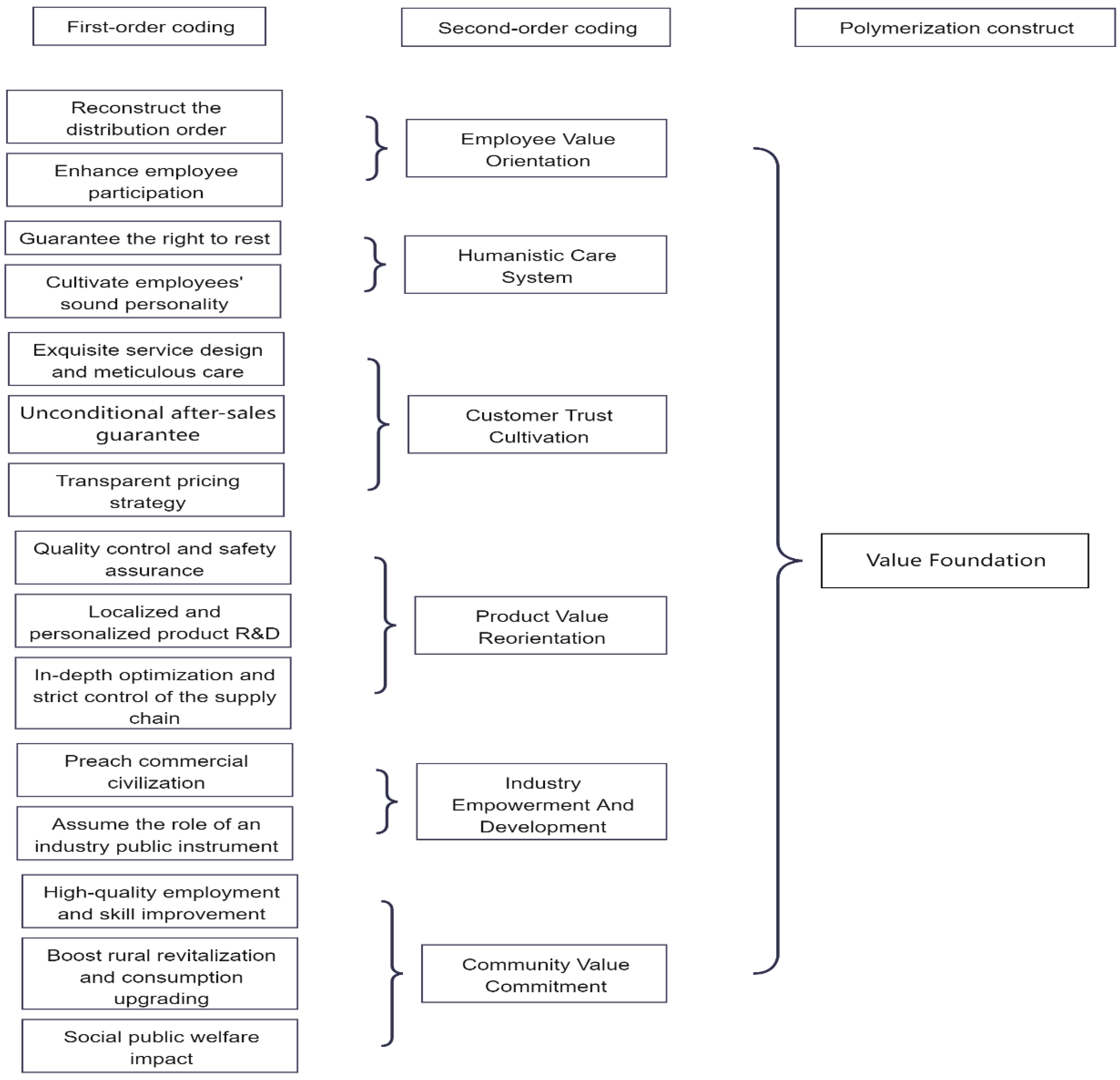
Figure 2.
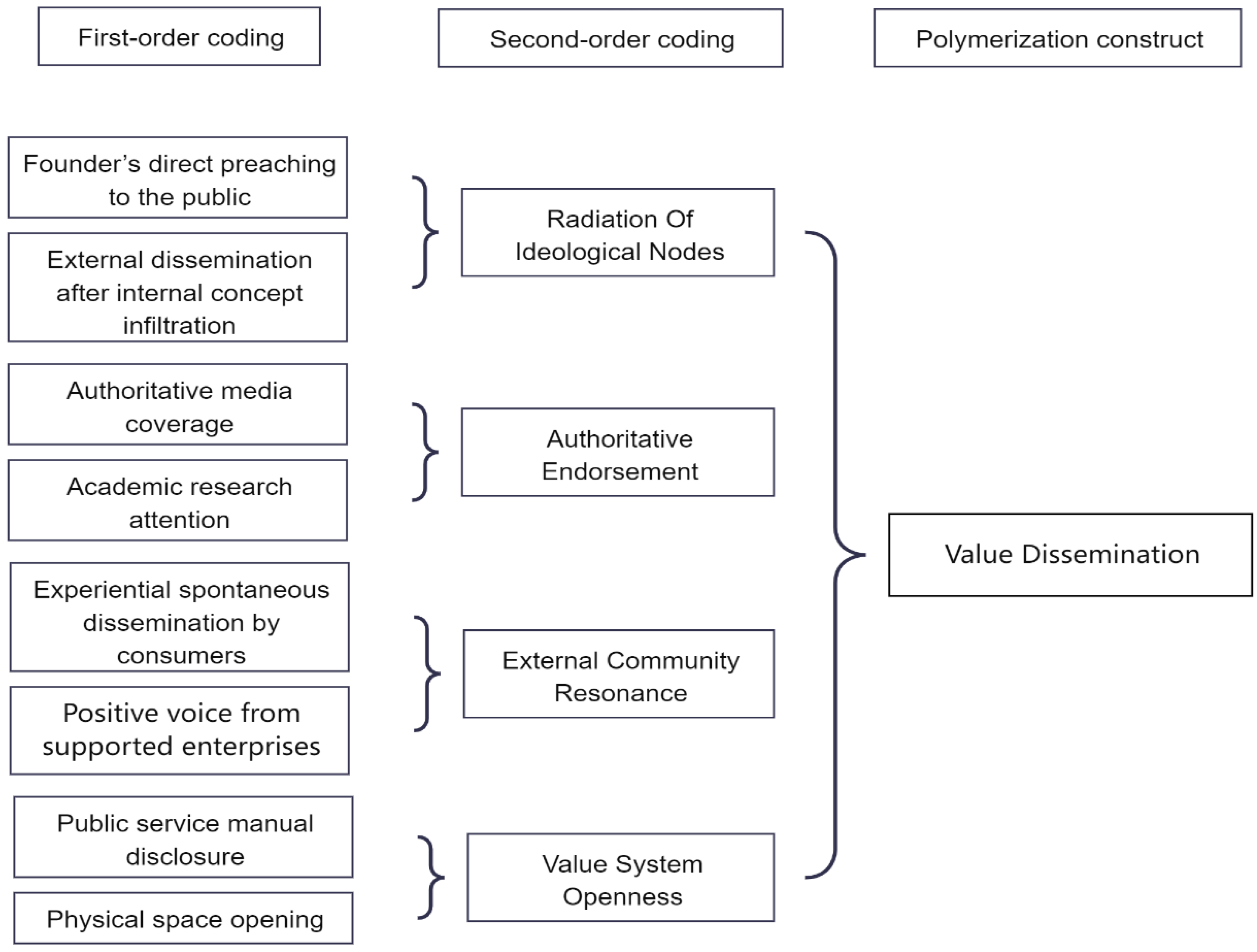
Figure 3.
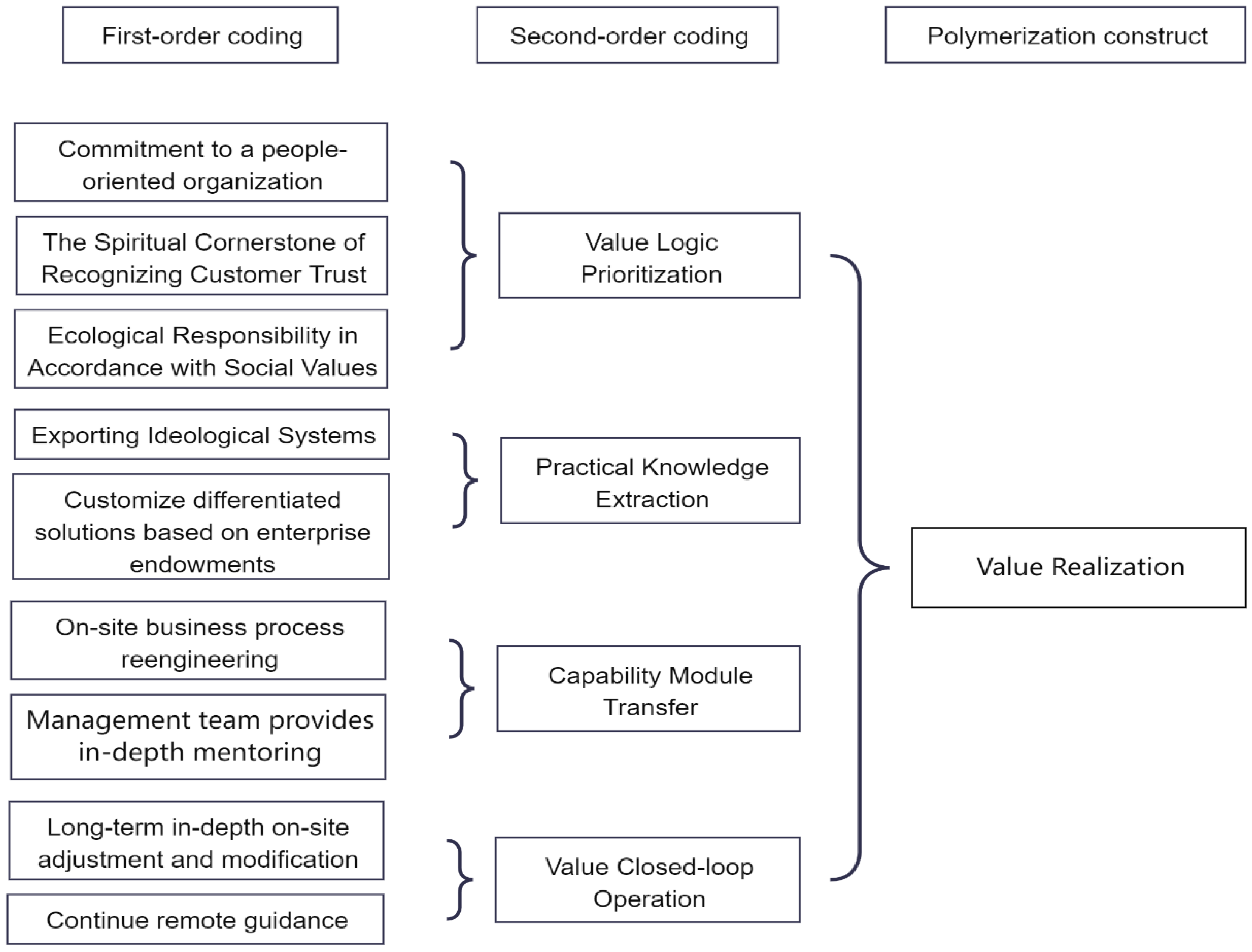
Figure 4.
Construction Mechanism of the Retail Industry Commercial Ecosystem.
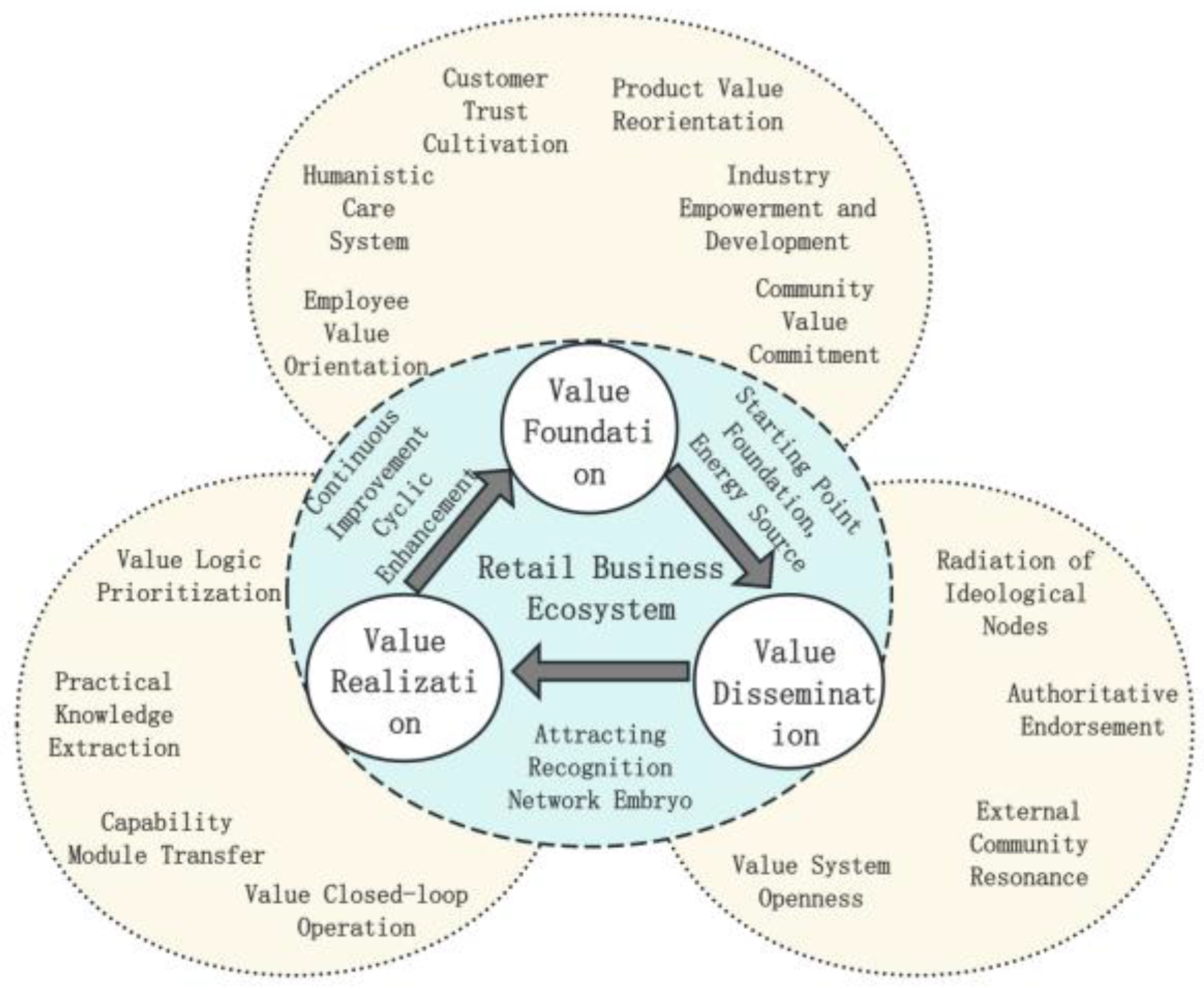

Table 1.
Data Source Coding.
| Source Code | Data collection results | Features |
|---|---|---|
| E1 | Collected over 20 internal regulatory documents officially released by PDL, including the “Employee Handbook” and “Daily Management Service Standards”; organized publicly disclosed information such as supply chain collaboration data, user value distribution data, and ecosystem partner cooperation rules. | As an authoritative primary source for constructing the business ecosystem’s “underlying value design,” it accurately reflects the institutional logic governing value co-creation and distribution within the ecosystem. |
| E2 | Compiled over 30 in-depth reports/documentaries about PDL from authoritative media such as CCTV and China News Weekly; summarized founder Yu Donglai’s public speeches on “the symbiotic value of corporate ecosystems” and internal strategic addresses. | Through multiple screenings, this study presents the value spillover effects and ecological influence of its business ecosystem from industry and societal perspectives, thereby aiding in understanding the ecosystem’s external value network. |
| E3 | Collected over 1,000 user-generated content items from platforms such as Xiaohongshu, TikTok, and Dianping, including customer experience feedback, employee value perception sharing, and interactive evaluations from ecosystem terminals (such as suppliers/partners). | Authentic and vivid micro-level value feedback reveals the value transmission effectiveness of the business ecosystem at the terminal level, the value implementation experience of all stakeholders, and supplements the practical details of value realization in ecological practice. |
Table 2.
Key Concepts and Their Definitions.
| Key Construct | Definition |
|---|---|
| Value Foundation | It is the foundation for “why PDL’s ideological culture can diffuse”, a set of excellent models forged by the enterprise through a series of extreme and systematic internal practices, and the initial energy source for building an ecosystem. |
| Value Dissemination | It is the intermediate link in the diffusion of the value foundation from the inside to the outside, emphasizing Pang Donglai’s attractiveness to other enterprises and establishing ideological value identity. |
| Value Implementation | PDL systematized its experience, concepts, and cultural insights into structured methodologies, enabling other enterprises to implement them through diverse approaches. |
Table 3.
Value Foundation Coding and Representative Evidence.
| Core Construct | Construct Dimension | Representative Evidence Examples |
|---|---|---|
| Value Foundation | Employee Value Orientation | Employee salaries significantly exceed the industry average, with regular staff earning over 10,000 RMB per month. The management compensation structure features a rational tiered system and annual dynamic salary adjustments (E1, E2). |
| Employees can rate cafeteria meals, remove low-rated dishes from shelves, propose in-store displays and event plans, and participate in their implementation (E1). | ||
| Humanistic Care System | Implement Tuesday closures and extended Spring Festival holidays, limit single-shift working hours to ≤7 hours, and mandate full annual leave usage (E1, E2). | |
| Launch “Happy Classroom” training programs on emotional management and family management, and organize public welfare volunteer activities to promote social care (E1). | ||
| Customer Trust Cultivation | Equipped with 7 types of shopping carts (adapted for special groups), reading glasses provided next to shelves, and maternal and infant rooms furnished with constant-temperature milk warmers and other supplies (E3). | |
| Supports 7-day no-questions-asked returns. Used items not damaged by human error can be exchanged for new ones (E3). | ||
| The cost structure for private-label brands is disclosed as “origin + procurement cost + gross margin,” clearly demonstrating pricing logic (E2). | ||
| Product Value Reorientation | The self-established laboratory conducts daily sampling tests for pesticide resiues and veterinary drug residues, with test reports simultaneously displayed on store screens and online platforms (E1). | |
| Developed the “Henan Spicy Soup Instant Pack” and launched holiday “Custom Gift Boxes” such as the Dragon Boat Festival hometown-flavored zongzi set (E3). | ||
| Direct procurement from fresh production bases with end-to-end temperature control in the cold chain (error ≤1 °C), maintaining a loss rate below 2% (E2). | ||
| Industry Empowerment And Development | Yu Donglai shared business philosophies with the industry through the “President Sharing Sessions” and “Seed Classes,” training over 2,000 practitioners (E1). | |
| Open supply chain and service standard manuals, and promote the adoption of industry-wide rules such as “no-questions-asked returns” and “minimum employee salaries” (E2). | ||
| Community Value Commitment |
New employees receive paid training in skills such as warehousing, with over 30% of positions held by local residents aged 40 and above (E3). | |
| Signed direct procurement agreements with over 500 county-level cooperatives, packaging local agricultural products as “geographical indication premium products,” driving an average annual income increase of 32,000 RMB (E3). | ||
| Establish an “Emergency Assistance Fund” to support disadvantaged families, and organize annual clothing donations and book drives covering over 10 communities (E3). |
Table 4.
Value Dissemination Coding and Representative Evidence.
| Core Construct | Construct Dimension | Representative Examples |
|---|---|---|
| Value Dissemination | Radiation Of Ideological Nodes | Yu Donglai conveys the ldeology of “freedom and happiness”through CEO sharing sessions, Seed Classes, and Donglai Essays. (E2) |
| Employees proactively assist customers by lifting heavy items and offering umbrellas during rain to help them board vehicles, transforming “humanistic care” into routine service actions (E3). | ||
| Authoritative Endorsement | CCTV reports that PDL received over 3 million visitors during the National Day holiday; People’s Daily interviews regarding its employee benefits and business model (E2). | |
| The PDL management model has become a case study in the retail industry, with its service standards referenced in academic analyses (E2). | ||
| External Community Resonance | TikTok and Xiaohongshu users shared experiences such as “changing shoes after two months” and “finding lost cards”; during the pandemic, they praised its cost-price vegetable sales (E3). | |
| Yonghui and BBK released statements thanking PDL for its assistance, with Yonghui reporting an 80% increase in foot traffic after on-site deployment (E2). | ||
| Value System Openness | PDL hosts “Open Days” to offer corporate visitation channels (E1, E2). | |
| Promote service upgrades in the industry by publicly releasing service manuals, employee management systems, and the “Happy Life Handbook” (E1). |
Table 5.
Value Implementation Coding and Representative Evidence.
| Core Construct | Construct Dimension | Representative Examples |
|---|---|---|
| Value Implementation | Value Logic Prioritization | Yonghui and BBK have raised employee monthly salaries to at least 1.5 times the industry average, incorporated a mandatory one-day weekly leave policy into corporate regulations, and embraced the logic of trading higher salaries for operational efficiency (E1). |
| Multiple assisted enterprises have implemented the policy of “unlimited after-sales service for products and transparent product cost pricing” (E2). | ||
| Guide assisted enterprises in establishing “Community Emergency Service Stations” to provide public welfare services such as free umbrellas, emergency charging, and assistance for lost persons (E3). | ||
| Practical Knowledge Extraction | Deliver the Employee Rights Handbook and Customer Service Standards to assisted enterprises, systematically conveying the core values of “freedom, equality, and fraternity” (E1). | |
| Develop a “localized product R&D process” for regional supermarkets, and optimize the “supply chain standardization + dialect service” adaptation solution for nationwide chains.(E2) | ||
| Capability Module Transfer | On-site optimization of the entire process for assisted enterprises’ “fresh product sorting-delivery-display,” benchmarked against a 2% loss rate (E2). | |
| Implement a dual-track training program for the management team focusing on both conceptual understanding and practical skills, encompassing humanistic management principles as well as hands-on competencies such as customer complaint resolution and employee proposal implementation (E3). | ||
| Value Closed-loop Operation | The on-site team provides end-to-end process monitoring and dynamic optimization, conducting daily operational data reviews to adjust service standards and staff schedules in real time (E1). | |
| Monthly review of value realization for assisted enterprises, with 24/7 operational issue response (E1) |
Disclaimer/Publisher’s Note: The statements, opinions and data contained in all publications are solely those of the individual author(s) and contributor(s) and not of MDPI and/or the editor(s). MDPI and/or the editor(s) disclaim responsibility for any injury to people or property resulting from any ideas, methods, instructions or products referred to in the content. |
© 2026 by the authors. Licensee MDPI, Basel, Switzerland. This article is an open access article distributed under the terms and conditions of the Creative Commons Attribution (CC BY) license (http://creativecommons.org/licenses/by/4.0/).
Copyright: This open access article is published under a Creative Commons CC BY 4.0 license, which permit the free download, distribution, and reuse, provided that the author and preprint are cited in any reuse.


