

Submitted:
30 March 2026
Posted:
30 March 2026
You are already at the latest version
Abstract
Extracted from Ganoderma lucidum mycelium, the developed β-1,3;1,6-glucan rich polysaccharides have the potential for industrial production of health food products due to their inhibition of metabolic syndrome, immunomodulatory and anti-tumor activities and other health benefits. Ganoderma polysaccharides have also been found to promote skin health, particularly due to their antioxidant and anti-ageing properties. The present study investigates the skin-protective properties of polysaccharides purified from Ganoderma mycelium cultivated using stress-tolerance technology and a fully plant-based medium. The effects of the polysaccharides are investigated in both in vitro and human studies. The research results indicate that the developed Ganoderma lucidum polysaccharides effectively inhibit tyrosinase activity and melanin production in B16F10 cells; they also promote cell migration and wound closure in scratch assays within NIH 3T3 cells. In human studies, Ganoderma lucidum polysaccharides demonstrated no potential for skin irritation while effectively reducing skin wrinkles, enhancing skin brightness, diminishing erythema, and increasing epidermal hydration. In hot-flux patch-induced erythema experiments, these polysaccharides were found to be capable of alleviating erythema severity by up to 48%. The research conducted to date has demonstrated that industrially produced Ganoderma lucidum polysaccharides, produced using innovative technology, have the potential for application in skin-related industries.
Keywords:
active polysaccharide
; skin care
; Ganoderma lucidum
; β-glucan
; wound healing
1. Introduction
The term "biocosmetics" is used to denote cosmetics that are derived from biological sources, including but not limited to plants, animals, or microorganisms. The replacement of synthetic chemicals with natural ingredients has been demonstrated to minimise skin irritation and allergic reactions, while concomitantly promoting environmental sustainability [1]. A significant number of studies have been conducted that present the findings of research and surveys exploring the potential of fungi or mushrooms as ingredients in cosmeceuticals [2,3]. Fungi such as Ganoderma sp. are considered to be a traditional source of naturally occurring bioactive compounds [4]. These can be used in a variety of ways in relation to cosmetics [2]. Such benefits include exfoliation of dead skin cells, the mitigation of inflammation, and the acceleration of skin cell renewal. Furthermore, the aforementioned substances have been demonstrated to enhance the elasticity of the skin and promote its whitening [5,6,7].
Ganoderma lucidum (G. lucidum, Lingzhi), a species of mushroom, has been demonstrated to possess bioactivities that are conducive to dermal health, and it has been shown to ameliorate dermatological conditions [8]. It has been reported that polysaccharides constitute the predominant functional metabolites of Ganoderma, which have been shown to possess antioxidant properties [9,10,11,12]. Furthermore, G. lucidum has been demonstrated to have significant potential in skincare cosmetics for the treatment of skin hyperpigmentation [13,14]. G. lucidum polysaccharide has a significant positive effect on the viability and migratory ability of fibroblasts, as well as wound healing rates [15]. The study suggests that polysaccharide has the potential to promote skin wound healing by activating the Wnt/β-catenin signaling pathway and up-regulating TGF-β1. Extracted polysaccharide from G. lucidum have been employed to promote the healing of skin wounds and to mitigate post-burn infection. Furthermore, Ganoderma extracts have been incorporated into skin care products due to their recognized efficacy in mitigating photoaging and promoting skin lightening. The anti-inflammatory properties of Ganoderma have been demonstrated in models of atopic dermatitis and cutaneous sarcoidosis, suggesting its potential for use in the treatment of skin carcinoma [16]. Among mushroom extracts, β-glucans is the most important active ingredients that boost the effectiveness of cosmetic products. The in vitro and in vivo studies that have been conducted have demonstrated that the β-glucan have a significant effect on the skin-care and wound healing [17]. It has been demonstrated that β-glucans, which are derived from mushrooms, have the capacity to promote keratinocyte migration, thereby accelerating wound healing [18]. In addition to this, they have been shown to activate dermal fibroblast differentiation to remodel the matrix. In the treatment of chronic wounds, β-glucan has been demonstrated to promote collagen synthesis through multiple pathways and to regulate the ratio of type I to type III collagen, thereby helping to reduce scar formation [19].
Although polysaccharides can be extracted from G. lucidum directly, they can also be produced through biotechnological cultivation to yield extracellular polysaccharides. Exopolysaccharides produced by fungal mycelium during submerged fermentation offer significant advantages over those extracted from mycelium or fruiting bodies. These exopolysaccharides have been demonstrated to facilitate enhanced yields within reduced production cycles, whilst concurrently exhibiting reduced susceptibility to contamination [20]. The G. lucidum active polysaccharides (GAP) were processed using metabolic synthesis technology and contained about 95.9 % carbohydrates and 51.7 water-soluble polysaccharides in our previous study [21]. These polysaccharides, which have been found to exhibit inhibitory effects on metabolic syndrome, anti-inflammatory properties, and antitumor activity, were found to originate primarily from β-1,3;1,6-glucan, present at a concentration as high as 73%. Most studies on the effects of fungal extracts produced by biotechnology on the skin have been conducted through cell and animal experiments. However, researchers have conducted few actual human trials or clinical research. This study uses polysaccharides rich in β-1,3;1,6-glucan extracted from cultured G. lucidum mycelium to evaluate their in vitro activities related to skin health and to investigate the efficacy of this substance when applied to human skin.
2. Results
2.1. In Vitro Study
2.1.1. The Effect of GAP on DPPH Scavenging Ability, Inhibition of Tyrosinase Activity and Melanin Formation
G. lucidum mycelium cultivated using plant-based media and stress-resistant techniques, combined with patented purification technology, yields a crude extract of GAP at a concentration of 16 mg/mL. As shown in Table 1, the DPPH radical scavenging assay indicates that the GAP extract exhibits only a 16.87% inhibition rate against DPPH radicals. However, upon dilution to half its original concentration, GAP exhibits a complete loss of scavenging capacity, thereby suggesting that GAP possesses relatively low antioxidant activity in purely chemical reactions.
An eight-fold dilution of GAP (2 mg/mL) exhibited no significant toxicity to cell viability in B16-F10 cells. The findings, as presented in Table 1, indicate that the GAP compound demonstrated a substantial inhibitory influence, evidenced by a 21.93% decrease in intracellular tyrosinase activity and a 30% reduction in melanin formation. These findings are consistent with those of previous studies [22,23,24], which suggest that polysaccharides derived from G. lucidum mycelium may inhibit tyrosinase activity through competitive inhibition or by altering tyrosinase conformation. The formation of melanin in B16-F10 cells was found to be reduced as a consequence of GAP's inhibition of tyrosinase activity and its protein expression.
2.1.2. Wound Healing Ability of GAP
Given that β-glucan has been demonstrated to induce the production of growth factors that are essential for skin, as well as to promote collagen biosynthesis and maintain skin moisture and elasticity [18], the present study investigated the potential of GAP to regenerate damaged skin in scratch assays within NIH 3T3 cells. The tested GAP demonstrated enhanced fibroblast proliferation and/or migration capacity in scratch assays (Figure 1A). The average proliferation/migration rate of the experimental group was found to be 2.5 times higher than that of the control group at 12 hours (see Figure 1B). Moreover, 90% wound healing was achieved at 24 hours (see Figure 1C).
2.2. In Vivo Study
2.2.1. Skin Assessments of GAP
Prior to conducting human trials on the skin efficacy of GAP, Insult Patch Tests (HRIPT) were performed on leave-on cosmetic products, as outlined in the COLIPA Guidelines. The purpose of the HRIPT was to confirm the absence of irritation side effects under normal usage conditions. In a 24-hour test involving 30 subjects, the Mean Irritation Index was 0.1, classified as non-irritating according to the irritation-grading standard. Within the specified 48-hour period, no subjects reported experiencing sensory discomfort, defined as the presence of stinging, burning, or itching sensations. These results demonstrate the excellent skin compatibility of GAP. A total of ten subjects applied GAP to the butterfly area of their faces for a period of 28 consecutive days. An analysis of the skin measurements presented in Table 2 indicates that the GAP treatment led to a significant reduction in skin wrinkles by 3.6%, an enhancement in skin brightness by 10.2%, a decrease in erythema by 3.0%, and an increase in epidermal moisture content by 7.5%. The results obtained demonstrated statistically significant differences.
2.2.2. Erythema-Reducing Efficacy of GAP
The manifestation of skin erythema can be attributed to a multitude of factors. The most prevalent primary causes encompass prolonged sun exposure and inflammatory conditions associated with skin diseases, manifesting as signs of hyperpigmentation and warmth [25]. With regard to the efficacy of GAP in alleviating erythema, two test areas were established on the inner arms of ten subjects: an experimental area where GAP was applied after hot-flux patch stimulation, and a control area where no GAP was applied. The levels of redness were measured at 30 and 60 minutes after application of the product. As demonstrated in Table 3, the application of GAP resulted in a 13.91% reduction in erythema severity after 60 minutes, surpassing the 9.39% reduction observed in the untreated control group. In comparison with the control group, GAP demonstrated a 48% enhancement in the relief of erythema. The results of the study demonstrate the efficacy of GAP in the treatment of erythema caused by skin irritation.
3. Discussion
It is evident that β-Glucan exerts considerable biological activity and demonstrates considerable potential for application in the domain of skincare. The primary benefits include immune modulation, antioxidant effects, anti-inflammatory properties, skin barrier repair, and moisturising nourishment. It is noteworthy that β-glucan also exhibits considerable potential in the treatment of skin conditions, including the promotion of wound healing, protection against UV damage, the improvement of photoaging, and the alleviation of atopic dermatitis [17]. The present study corroborates the hypothesis that glucans with a high proportion of β-1,3;1,6-glucans, obtained from G. lucidum mycelium cultivated in plant-based media, have skin-care and therapeutic potential in the fields of dermatology and medicine. This evidence is supported by in vitro cellular experimentation and in vivo human trials. Despite the results of low antioxidant activity presented in the research, it is understood that Ganoderma polysaccharides do not exhibit superior chemical free radical scavenging capacity [9,11]. Instead, the evidence suggests that they demonstrate antioxidant effects by inducing the activity of superoxide dismutase (SOD), catalase (CAT), and glutathione peroxidase (GSP) in biological organisms [10]. Ganoderma polysaccharides have been shown to activate antioxidant enzymes such as CAT, SOD, and by increasing the expression of antioxidant genes like NQO1 and NO-1, thereby counteracting oxidative stress [12]. Cellular experimentation has indicated that the observed dermal effects of the GAP substance in human trials, including whitening, moisturizing, reducing erythema, and promoting fibroblast proliferation, are not the result of straightforward chemical reactions. Rather, these effects are attributed to its capacity to modulate cellular signaling pathways. It is well established that β-1,3;1,6-glucans typically exert potent signaling and regulatory effects, primarily due to their stable triple-helix structure [26]. The long-chain β-1,3-glucan backbone forms the core helix, while β-1,6 glycosidic bonds introduce branching structures, which enhance solubility and influence receptor binding in the pathways they regulate.
Skin wound healing is a complex process, generally divided into three stages: inflammation, proliferation, and tissue remodeling. Multiple studies have shown that β-glucan has potential in promoting wound healing. A plethora of studies have devised various strategies to enhance wound healing and limit scar formation by regulating the wound healing process. In comparison with synthetic polymers, natural polysaccharides are considered to be more appropriate for use as wound healing components due to their biodegradability, biocompatibility, and low toxicity [27]. The present results of the developed GAP produced from G. lucidum through biotechnology and the polysaccharides traditionally extracted from G. amboinense or other sources are comparable [28,29], demonstrating highly effective cellular wound healing effects. Consequently, the GAP possess considerable potential as novel resources for the development of wound-healing cosmetics.
Fungal polysaccharides offer distinct advantages that are in alignment with the current trends in the cosmetic industry towards sustainable development. The utilization of organic materials ensures a sustainable alternative to synthetic ingredients, catering to the growing demand from environmentally conscious consumers. This study signifies the premier implementation of innovative metabolic synthesis technology in cellular and in vivo models to evaluate the dermal benefits of Ganoderma active polysaccharides. The results clearly demonstrate that these GAP, which are rich in β-1,3;1,6-glucan, can be regarded as an optimal source of cosmetic ingredients and exhibit broad potential for use in skin therapy. In addition, this water-soluble GAP is both environmentally sustainable and continuously producible, and is generally easier to formulate into skincare products because it emulsifies readily, forming stable lotions or creams suitable for developing lightweight formulations. Furthermore, water-soluble ingredients are generally more readily absorbed by the skin, as the skin's natural barrier permits water molecules to pass through more easily, rendering them suitable for use in the development of moisturising products.
4. Materials and Methods
4.1. Sample Preparation
The mycelium employed for the purpose of inoculum preparation and polysaccharide production is the Ganoderma lucidum strain CCRC 36792 (Biological Resource Center and Research Institute, Hsinchu, Taiwan), which has been optimized through the Strain Optimization System (TWN Patent M640778). Fermentation was conducted using plant-based media and incorporating stress management operations using a previously described method [21]. Extracellular polysaccharides were produced through metabolic engineering and the fermentation broth was subjected to a process of concentration via a purification system (TWN Patent M646622) to define Ganoderma lucidum active polysaccharides (GAP). The GAP employed in this study was supplied by DISAM Biotechnology Co., Ltd. (Taipei, Taiwan).
4.2. DPPH Scavenging Ability
The preparation of the reaction reagent involves the dissolution of 7.87 mg of DPPH in 10 mL of DMSO. Subsequently, GAP is added to the DPPH solution, and the reaction is allowed to proceed at room temperature for a duration of 60 minutes. Subsequent to the reaction, the spectrophotometer should be utilised to measure the extinction coefficient at a wavelength of 517 nm. The DPPH scavenging capacity can be calculated by determining the percentage of decrease in the absorbance.
4.3. Inhibition of Tyrosinase Activity and Melanin Formation
The murine melanoma B16-F10 cell (BCRC 60031) cell line was cultured in Dulbecco's Modified Eagle Medium (DMEM), supplemented with 10 % fetal bovine serum (FBS). All cells were incubated in a humidified incubator with 5% CO₂ at 37 °C. Cells were regularly monitored and maintained at sub-confluent levels to ensure optimal growth conditions. The medium was refreshed every 48 hours, and cells were passaged upon reaching 80-90% confluence and was used 0.25% trypsin-EDTA solution to detach the cells.
The B16-F10 cells were introduced to a 96-well cell culture plate, with 100 μL of complete culture medium, at an initial density of 1 × 10⁴ cells/well. The plate was subsequently placed in a 37 °C incubator containing 5% CO₂, for a 24-hour incubation period. The following day, an 8-fold dilution of GAP should be added and the incubation continued for a period of 72 hours. Following the incubation period, 50 μL of MTT solution (1 mg/mL) should be added. The samples are then subjected to an incubation process at a temperature of 37°C for a duration of two hours. Following this, 100 μL of DMSO is added to the samples. Following dissolution, the measurement of the sample's optical density at a wavelength of 570 nm is to be conducted using an ELISA reader, thus enabling the calculation of the cell viability.
Subsequently, 2.5 × 10⁴ cells of the B16-F10 strain were seeded into 6-well plates, which had been pre-filled with 2 mL of culture medium. Then, the plates were subjected to an incubation period at 37 °C within a 5% CO2 incubator for a duration of 24 hours. Subsequent to the incorporation of GAP, the incubation period should be maintained for a duration of 72 hours. Subsequently, the cells should be dissolved using 20 mM 0.1% Triton X-100, after which the mixture should be subjected to centrifugation. A portion of the resulting supernat should then be collected for the purpose of protein quantification. The supernant should be added to the L-DOPA solution, which is then to be incubated at 37°C for a period of 10 minutes. Subsequently, the degree of absorption at 475 nm should be measured. The rate of tyrosinase activity inhibition can be determined by calculating 1-(OD475 of the test sample/OD475 of the control) multiplied by 100. As described above, the lysed cells were treated with 20% and 10% TCA, respectively, to precipitate proteins. Following the washing of the samples with diethyl ether, they were left to dry in air. Thereafter, they were redissolved in 0.85 M KOH, and the absorbances at 440 nm were measured. The inhibition rate of melanin production can be calculated by determining the difference between the optical density (OD) of the sample and the control at a wavelength of 440nm, and then dividing this by 100 [30].
4.4. Wound Healing Scratch Assay
The migration of NIH 3T3 fibroblasts was assessed using the wound healing scratch assay. The cells were seeded in 24-well tissue culture dishes for 24 hours at 37°C, at a concentration of 7.6 × 10⁴ cells/mL, and cultured in 1 mL of medium containing 10% fetal bovine serum until a nearly confluent cell monolayer was achieved. A sterile pipette tip is then utilised to create a linear scratch on the monolayer of cells. Thereafter, 500 µL of fresh medium is introduced into the culture, along with 2 mg/mL of GAP (GAP, in vitro). The experiment is to be replicated three times. The cells must then be incubated at 37°C for 21 hours. Prior to and following the incubation period, three images of each well were captured using a Olympus IX70 microscope in order to assess cell proliferation and/or migration. The migration rates of cells were calculated based on the percentage of scar closure at 12 and 24 hours [31].
4.5. Human Study
Participants in this human study were recruited through advertisements. The inclusion criteria encompassed women within the age range of 20 to 50 years, who were not currently utilising any medications and were not pregnant. The present study was conducted in accordance with the recommendations of the National Cheng Kung University Human Research Ethics Committee, and all participants provided written informed consent. The present study protocol was approved by the Institutional Review Board ( NCKU HREC-E-113-176-2). A dose of 2 mg/cm² of GAP was applied to the facial skin test area twice daily, in the morning and evening, for a period of 28 consecutive days. Participants were instructed to avoid excessive sun exposure in the test area during the study period. Skin assessments were conducted prior to and following treatment in a temperature- and humidity-controlled room (65% humidity and 26 °C) to analyse skin fine lines (Miravex Antera 3D Analyzer, Miravex Limited, Dublin, Ireland), skin tone and erythema (Mexameter MX18, Courage+Khazaka electronic GmbH, Köln, Germany), and skin moisture content (Corneometer 825, Courage+Khazaka electronic GmbH, Köln, Germany).
In the erythema-reducing efficacy test, the inner sides of the arms of 10 subjects were divided into two areas: a GAP application group and a control group, each measuring 3 × 3 cm². Following the application of a 1% vanillyl butyl ether (Hot-Flux) occlusive patch to the two test areas for 30 and 60 minutes, respectively, the erythema-reducing effect was evaluated using a Minolta Chromameter.
4.6. Statistical Analysis
The data are presented as standard deviations (SD) from three replicate experiments. In order to ascertain whether the observed differences between the treatment group and the control group were statistically significant, a one-way analysis of variance (ANOVA) was conducted, followed by Dunnett's multiple comparison test. A p-value of less than 0.05 was considered to be statistically significant.
5. Conclusions
In vitro and human clinical studies have confirmed the effectiveness of a polysaccharide extract containing 73% β-1,3;1,6-glucans, derived from G. lucidum mycelium culture, in brightening skin tone, providing hydration, reducing erythema, and promoting wound healing.
6. Patents
The Ganoderma mycelium cultivation system was developed using TWN Patent M640778 and purified using TWN Patent M646622.
Supplementary Materials
The following supporting information can be downloaded at the website of this paper posted on Preprints.org, Figure S1: Cytotoxicity of GAP against B16-F10 cells.
Author Contributions
C. C. and H. S. conceptualize the study. All authors collected the field data and experimented. C. F. analyzed the data. C. C. supervised the work. All authors interpreted the analyzed data, wrote, and reviewed the manuscript. All authors read and approved the final manuscript.
Funding
This research received no external funding.
Institutional Review Board Statement
The study was conducted in accordance with the Declaration of Helsinki, and approved by the Institutional Review Board of National Cheng Kung University Human Research Ethics Committee (NCKU HREC-E-113-176-2, 2024.5.22.
Informed Consent Statement
Informed consent was obtained from all subjects involved in the study.
Data Availability Statement
All raw data are available upon request from the corresponding author.
Acknowledgments
This work was technical supported by the R&D Department of DISAM Biotechnology Inc. (Taipei, Taiwan).
Conflicts of Interest
The authors declare no conflicts of interest.
References
- Minocha, S; Lal, N.; Parveen, R. Biocosmetics: An Era of Natural Friendly Constituents in the Cosmetic Market. Curr. Cosmet. Sci. 2025, 4(1), E26667797336316. [CrossRef]
- Mmusi, K. V.; Katerere, D. R.; Komane, B.; Gurusamy, M. Fungi-Derived Ingredients in Cosmetics and Skincare. In Fungal Biotechnology- Advancements in Drug Discovery, Healthcare, and Environmental Solutions, 1st ed.; Farid, A., Preet, G., Eds.; CRC press: Boca Raton, US, 2025; Chapter 14.
- Anaele, E. N.; Nwafor, F. I.; Osegbue, C. C. Fungal-Based Cosmetics: An Introduction. In: Ghosh, S., Onyeaka, H.N. (eds) Fungal-Based Cosmetics: Formulation and Usage. The Mycota, vol 17. Springer, Cham. 2026; Chapter 3. pp 47–72. [CrossRef]
- Soccol, C.R.; Bissoqui, L.Y.; Rodrigues, C.; Rubel, R.; Sella, S.R.; Leifa, F.; Soccol, V.T. Pharmacological properties of biocompounds from spores of the lingzhi or reishi medicinal mushroom Ganoderma lucidum (Agaricomycetes): A review. Int. J. Med. Mushrooms 2016, 18, 757–767.
- Mago, P.; Sharma, R.; Hafeez, I.; Nawaz, I.; Joshi, M.; Mehrotra, R. Mushroom based Cosmeceuticals: An Upcoming Biotechnology Sector. Biosci. Biotech. Res. Asia. 2023, 20(2). http://dx.doi.org/10.13005/bbra/3097.
- Nanjangud V. A. K.; Quispe, C.; Herrera-Bravo, J.; Herrera Belén, L.; Loren, P.; Salazar, L. A.; Silva, V.; Erdogan Orhan, I.; Senol Deniz, F. S.; Nemli, E.; Capanoglu, E.; Olatunde, A.; Cristina Cirone Silva, N.; Zivkovic, J.; Shorog, E. M.; Calina, D.; Sharifi-Rad, J. Potential of Mushrooms Bioactive for the Treatment of Skin Diseases and Disorders, J. Food Bioche. 2023, 5915769. [CrossRef]
- Dewanjee, D., Ghosh, S., Khatua, S., & Rapior, S. Ganoderma in skin health care: a state-of-the-art review. In Ganoderma, 1st ed.; Acharya, K; Khatua, K., Eds.; CRC press: Boca Raton, US, 2024, 79-101. [CrossRef]
- Zhang, G. P.; Pan, Y. M.; Ye, S. M.; Lu, Y. C.; Fan, X. J.; Zhang, A. Q. Bioactive components of Ganoderma lucidum and their efficacy and application in cosmetics. Food Med. Homol. 2025, 2(1), 9420044. [CrossRef]
- Fan, L.; Li, J.; Deng, K.; Ai, L. Effects of drying methods on the antioxidant activities of polysaccharides extracted from Ganoderma lucidum. Carbohydr. Polym. 2012, 87(2), 1849-1854. [CrossRef]
- Pan, K,; Jiang, Q.; Liu, G.; Miao, X.; Zhong, D. Optimization extraction of Ganoderma lucidum polysaccharides and its immunity and antioxidant activities. Int. J. Biol. Macromol. 2013, 55, 301-306. [CrossRef]
- Kang, Q.; Chen, S.; Li, S.; Wang, B.; Liu, X.; Hao, L.; Lu, J. Comparison on characterization and antioxidant activity of polysaccharides from Ganoderma lucidum by ultrasound and conventional extraction. Int. J. Biol. Macromol. 2019, 124, 1137-1144. [CrossRef]
- Zhao, Y.; Li, O.; Wang, M.; Wang, Y.; Piao, C.; Yu, H.; Liu, J.; Li, Z. Structural characterization of polysaccharides after fermentation from Ganoderma lucidum and its antioxidant activity in HepG2 cells induced by H2O2. Food Chem.: X 2023, 18, 100682. [CrossRef]
- Kozarski, M.; Klaus, A.; Jakovljević, D.; Todorović, N.; Wan-Mohtar WAAQI, Nikšić, M. Ganoderma lucidum as a cosmeceutical: antiradical potential and inhibitory effect on hyperpigmentation and skin extracellular matrix degradation enzymes. Arch. Biol. Sci. 2019, 71(2), 253-64. https://www.serbiosoc.org.rs/arch/index.php/abs/article/view/3759.
- Ha, H. T.; Tran-Van, H.; Tran, T. V.; Nguyen, H. T. N.; Phan, D. T. A. Study on chemical compositions, antioxidants and intracellular anti-melanogenic activities of varieties of Ganoderma lucidum in Vietnam, Int. J. Food Sci. Technol. 2023, 58(8), 4127–4135. [CrossRef]
- Hu, F.; Yan, Y.; Wang, C.W.; Liu, Y.; Wang, J.J.; Zhou, F.; Zeng, Q. H.; Zhou, X.; Chen, J.; Wang, A. J.; Zhou, J. D. Article Effect and Mechanism of Ganoderma lucidum Polysaccharides on Human Fibroblasts and Skin Wound Healing in Mice. Chin. J. Integr. Med. 2019, 25(3), 203-209. https://doi:10.1007/s11655-018-3060-9.
- Yin, Z.; Yang, B.; Ren, H. Preventive and Therapeutic Effect of Ganoderma (Lingzhi) on Skin Diseases and Care. Adv. Exp. Med. Biol. 2019; 1182, 311-321. https://doi:10.1007/978-981-32-9421-9_14.
- Feng X, Shang J, Wang Y, Chen Y, Liu Y. Exploring the Properties and Application Potential of β-Glucan in Skin Care. Food Sci. Nutr. 2025, 13(4):e70212. [CrossRef]
- Seo, G.; Hyun, C.; Choi, S.; Kim, Y. M.; Cho, M. The wound healing effect of four types of beta-glucan. Appl. Biol. Chem. 2019, 62, 20. [CrossRef]
- Somboonchokephisal, T.;, Techachan, S.; Kaokai, T.; Saokaew, S.; Kanchanasurakit, S.; Srisuwan, T. The effect of beta-glucan on wound healing: a systematic review and meta-analysis. Wound Pract. Res. 2025, 33(4),166-175. [CrossRef]
- Wu, J.; Kaewnarin, K.; Nie, X.; Qingbiao Li, He, N.; Huang, J.; Geng, A.; Biological activities of a polysaccharide from the coculture of Ganoderma lucidum and Flammulina velutipes mycelia in submerged fermentation. Process Biochem. 2021, 109:10-18. [CrossRef]
- Hsieh, C.-H.; Yang, H.-S.; Hsu, C.-P.; Chang, J.-F.; Lin, C.- C. Exploring the potential health benefits of Ganoderma lucidum polysaccharides produced using an innovative metabolic synthesis technique. Nat. Prod. Commun. 2025, 20(7)1-8. [CrossRef]
- Chien, C. C.; Tsai, M. L.; Chen, C. C.; Chang, S.-J.; Tseng C.-H.. Effects on Tyrosinase Activity by the Extracts of Ganoderma lucidum and Related Mushrooms. Mycopathologia 2008, 166, 117–120. [CrossRef]
- Hsu, K. D.; Chen, H. J.; Wang, C. S.; Lum, C.-C.; Wu, S.-P.; Cheng, K.-C.. Extract of Ganoderma formosanum Mycelium as a Highly Potent Tyrosinase Inhibitor. Sci Rep 2016, 6, 32854. [CrossRef]
- Zhang, J.; Shi, X.; Cheng, W.; Wang, Q.; Wang, C.; Li, M.; Zhao, D.; An, Q. Comparison of the Anti-Inflammatory and Antioxidant Activities of Mycelial Polysaccharides from Different Strains of Lingzhi or Reishi Medicinal Mushroom, Ganoderma lucidum (Agaricomycetes). Int. J. Med. Mushrooms 2022, 24(2), 77-90. https://10.1615/IntJMedMushrooms.2022044274.
- Ohanenye, C.; Taliaferro, S.; Callender, V. D. Diagnosing Disorders of Facial Erythema, Dermatol.c Clin. 2023, 41(3), 377 – 392. [CrossRef]
- Wang, Q.; Sheng, X.; Shi, A.; Hu, H.; Yang, Y.; Liu, L.; Fei, L.; Liu, H.; β-Glucans: Relationships between Modification, Conformation and Functional Activities. Molecules. 2017 9;22(2):257. [CrossRef]
- Summa, M.; Russo, D.; Penna, I.; Margaroli, N.; Bayer, I.S.; Bandiera, T.; Athanassiou, A.; Bertorelli, R. A biocompatible sodium alginate/povidone iodine film enhances wound healing. Eur. J. Pharm. Biopharm. 2018, 122, 17-24. [CrossRef]
- Zhao, S.; Lei, M.; Xu, H.; He, H.; Suvorov, A.; Wang, J.; Qiu, J.; Zhou, Q.; Yang, J.; Chen, L. The normal cell proliferation and wound healing effect of polysaccharides from Ganoderma amboinense. Food Sci. Hum. Wellness 2021, 10(4), 508-513. [CrossRef]
- Yao, Y.; Xu, B. Skin Health Promoting Effects of Natural Polysaccharides and Their Potential Application in the Cosmetic Industry. Polysaccharides 2022, 3, 818-830. [CrossRef]
- Lee, H. S.; Cho, H. J.; Lee, K. W.; Park, S. S.; Seo, H. C.; Suh, H. J. Antioxidant activities and melanogenesis inhibitory effects of Terminalia chebula in B16/F10 melanoma cells. J. Food Sci. Nutr. 2010, 15(3), 213-220. [CrossRef]
- Amin, Z. M.; Koh, S. P.; Yeap, S. K.; Abdul Hamid, N. S.; Tan, C. P.; Long, K. Efficacy Study of Broken Rice Maltodextrin in In Vitro Wound Healing Assay, Biomed. Res. Intl. 2015, 687694. [CrossRef]
Figure 1.
Effect of GAP on wound healing activity in the scratch assay. (A) Representative images of cell migration. Cell migration rates after 12 h (B) and 24 h (C) of treatment.
Figure 1.
Effect of GAP on wound healing activity in the scratch assay. (A) Representative images of cell migration. Cell migration rates after 12 h (B) and 24 h (C) of treatment.
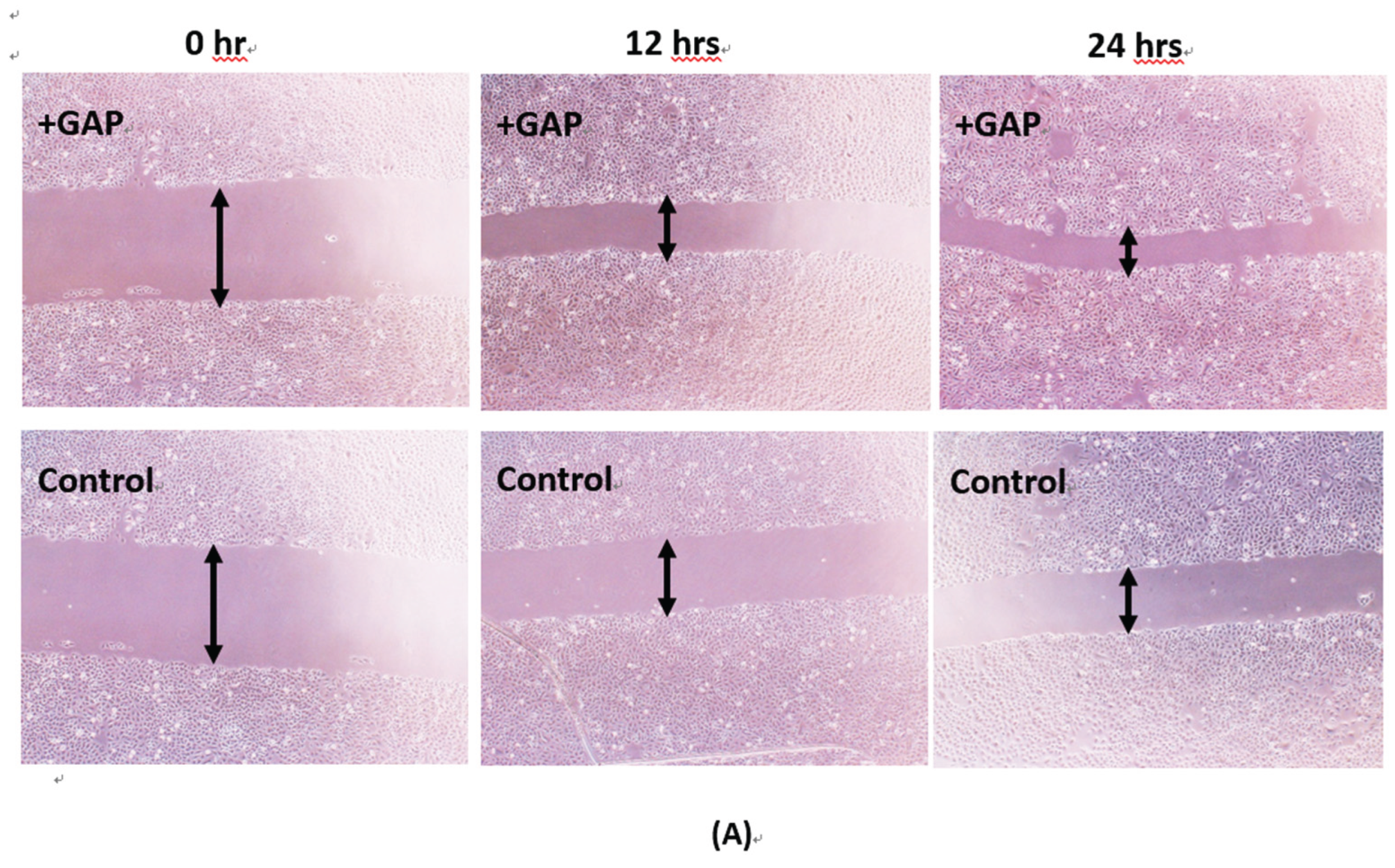
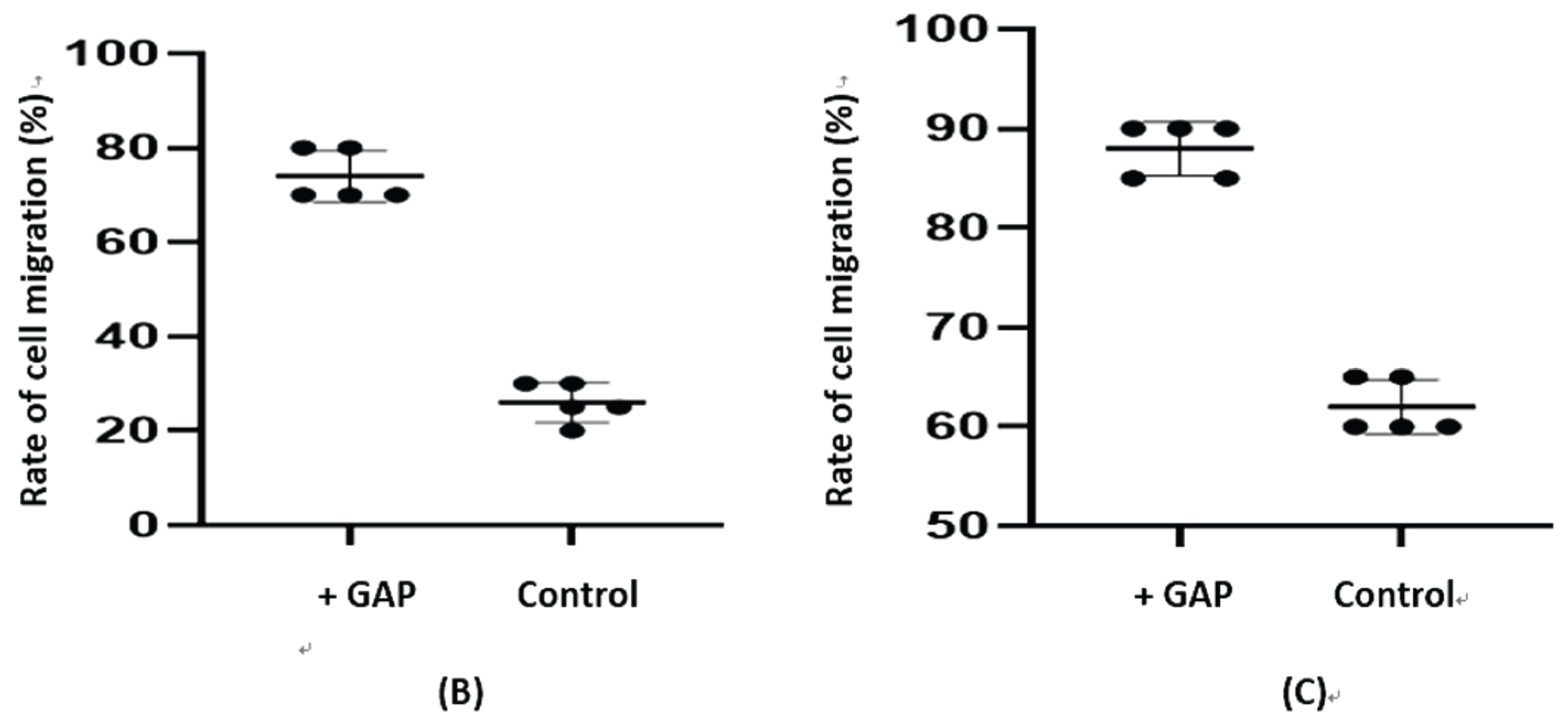

Table 1.
Inhibitory activity of Ganoderma lucidum polysaccharides in vitro study.
| Inhibition % (Mean ± SD) | |
|---|---|
| DPPH scavenging ability | 16.9 ± 0.8 |
| Tyrosinase activity | 32.4 ± 1.6 |
| Melanin content | 30.6 ± 2.4 |
The GAP concentration used in the DPPH assay was 16 mg/ml, while the concentration employed in the B16-F10 cellular assay for inhibiting tyrosinase and melanin production was 2 mg/ml. Data are presented as mean ± S.D., n = 4.
Table 2.
Effect of Ganoderma lucidum polysaccharides treatment after 28 days in vivo study.
| Before | After | difference | Significance | |
|---|---|---|---|---|
| Wrinkle level | 4.47 | 4.31 | - 0.16 | * |
| Melanin Index | 125.6 | 112.8 | - 12.8 | *** |
| Erythema level | 209.0 | 202.8 | - 6.2 | * |
| Hydration | 31.57 | 33.93 | 2.36 | ** |
A significant difference at the level of *p < 0.05, **p < 0.01, ***p < 0.001.
Table 3.
Reduction of skin erythema by Ganoderma lucidum polysaccharides following hot-flux patch stimulation.
Table 3.
Reduction of skin erythema by Ganoderma lucidum polysaccharides following hot-flux patch stimulation.
| Control | Treatment | |
|---|---|---|
| Before irridiation | 9.74 | 9.46 |
| After irridiation | 13.74 | 13.73 |
| After 30 min treatment | 13.22 | 13.12* |
| After 60 min treatment | 13.45 | 11.82** |
A significant difference at the level of *p < 0.05, **p < 0.01.
Disclaimer/Publisher’s Note: The statements, opinions and data contained in all publications are solely those of the individual author(s) and contributor(s) and not of MDPI and/or the editor(s). MDPI and/or the editor(s) disclaim responsibility for any injury to people or property resulting from any ideas, methods, instructions or products referred to in the content. |
© 2026 by the authors. Licensee MDPI, Basel, Switzerland. This article is an open access article distributed under the terms and conditions of the Creative Commons Attribution (CC BY) license.
Copyright: This open access article is published under a Creative Commons CC BY 4.0 license, which permit the free download, distribution, and reuse, provided that the author and preprint are cited in any reuse.


