

Submitted:
25 March 2026
Posted:
26 March 2026
You are already at the latest version
Abstract
Port State Control (PSC) inspections play a critical role in enforcing international maritime safety and environmental standards, yet little is known about how compliance behavior interacts with economic cycles. This study examines the relationship between vessel detentions and freight market conditions using monthly data from the Paris and Tokyo Memoranda of Understanding (MoUs) over the period 2010-2021. A system of simultaneous equations is estimated using the Generalized Method of Moments (GMM) to address the bidirectional relationship between detention activity and freight market conditions, proxied by the Baltic Dry Index (BDI). The results demonstrate a positive and statistically significant bidirectional relationship: vessel detentions increase during periods of strong freight market conditions, while past detentions contribute to higher freight rates by constraining effective fleet supply. Institutional factors, including flag state, classification society (IACS membership), and ISM-related deficiencies, are also found to significantly influence detention risk. These findings challenge the conventional expectation that stronger market conditions promote higher compliance and instead suggest the presence of opportunistic behavior during economic upswings. The study contributes to the literature by linking regulatory compliance with economic cycles and highlights the importance of adaptive, risk-based enforcement strategies.
Keywords:
port state control
; vessel detention
; maritime economics
; freight markets
; Baltic dry index
; compliance behavior
; generalized method of moments
; principal-agent theory
; shipping regulation
; maritime safety
1. Introduction
Maritime transport underpins global trade, carrying the majority of world merchandise while operating within a complex regulatory framework designed to ensure safety, environmental protection, and operational reliability. Within this framework, Port State Control (PSC) serves as a key enforcement mechanism, allowing authorities to inspect foreign vessels and verify compliance with international conventions such as SOLAS, MARPOL, and the ISM Code (IMO, 2026) [1]. PSC detentions, imposed in cases of serious deficiencies, represent critical regulatory events with significant operational and financial consequences, including voyage disruptions, reputational damage, and increased compliance costs.
A substantial body of literature has examined the determinants of vessel detention, highlighting the role of ship-specific characteristics, flag state performance, classification society, and inspection practices. However, relatively little attention has been paid to the broader economic environment in which compliance decisions are made. This omission is notable given the cyclical nature of shipping markets, where fluctuations in freight rates, fleet utilization, and commodity demand continuously reshape operational incentives.
From a theoretical perspective, stronger freight market conditions are generally expected to promote higher compliance. Higher earnings increase the opportunity cost of detention, strengthen incentives to maintain uninterrupted operations, and provide shipowners with the financial capacity to invest in maintenance and regulatory adherence. However, this assumption has not been systematically tested within an empirical framework that accounts for potential feedback effects between regulatory outcomes and freight market conditions.
This study addresses this gap by examining the dynamic relationship between vessel detention and freight market conditions. Using manually collected monthly data from the Paris and Tokyo Memoranda of Understanding (MoUs) over the period 2010-2021, we estimate a system of simultaneous equations employing the Generalized Method of Moments (GMM) to capture the bidirectional interaction between detention activity and freight market conditions, proxied by the Baltic Dry Index (BDI).
The findings reveal a positive and statistically significant bidirectional relationship: vessel detentions increase during periods of strong freight market conditions, while past detentions contribute to higher freight rates by constraining effective fleet supply. This result challenges the conventional expectation that compliance improves during economic upswings and instead points to the presence of opportunistic behavior under high-revenue conditions.
This study makes three contributions. First, it provides empirical evidence of a bidirectional relationship between PSC detentions and freight market conditions. Second, it introduces a behavioral mechanism, grounded in a principal-agent framework, linking compliance incentives to market cycles. Third, it shows that regulatory outcomes and freight market dynamics are jointly determined rather than independent processes.
The remainder of the paper is structured as follows. Section 2 reviews the relevant literature. Section 3 outlines the data and methodology. Section 4 presents the model specification. Section 5 discusses empirical results, Section 6 provides the discussion and Section 7 concludes with policy implications and directions for future research.
2. Literature Review
A substantial body of research has examined vessel detention under Port State Control (PSC), with most studies focusing on the determinants of detention and the effectiveness of inspection regimes. Existing evidence shows that detention risk is shaped by a combination of ship-specific, institutional, and inspection-related factors, including vessel age, flag state performance, classification society, ship type, and deficiencies related to safety and environmental compliance, particularly under the International Safety Management (ISM) Code.
Several studies highlight the importance of technical and operational deficiencies in explaining detention outcomes. Using Tokyo MoU data, Chen et al. (2019) [2] identify crew certification, watertight integrity, emergency systems, and ISM-related deficiencies as key drivers of detention. Similar findings are reported by Hanninen and Kujala (2014) [3], while Boljat et al. (2020) [4] show that pollution-related deficiencies significantly increase detention risk. These studies suggest that detention is a predictable outcome linked to observable compliance failures.
A parallel strand of literature emphasizes institutional characteristics. Flag state quality has consistently been found to affect detention probability, with poorly performing flags associated with higher detention risk [Fan et al. (2014) [5]; Heij et al. (2011) [6]]. Heij et al. (2011) [6] demonstrates that detention is better explained by structural variables, such as age, flag, classification society, and vessel characteristics rather then by the number of deficiencies alone. In addition, vessels classified by reputable organizations, particularly members of the International Association of Classification Societies (IACS), are generally less likely to be detained (IACS 2026) [7].
Geographical and institutional variation in PSC enforcement is also well documented. Differences in inspection intensity across Memoranda of Understanding (MoUs), as well as port-specific practices, have been shown to influence detention outcomes Graziano et al. (2018) [8]. Graziano et al. (2018) [8] and Ravira and Piniella (2016) [9] highlight the role of inspector experience and professional background, suggesting that enforcement outcomes depend not only on vessel characteristics but also on institutional capacity and inspection practices.
A further strand of literature examines the effectiveness of PSC as a regulatory tool. Li and Zheng (2008) [10] confirm that PSC contributes to improving maritime safety, while Fan et al. (2014) [5] show that inspections may influence strategic responses by shipowners, including decisions related to flag registration. Wu et al. (2014) [11] further demonstrates that inspection-related practices, such as emergency drills, can affect compliance outcomes.
Despite these contributions, the literature remains focused primarily on the determinants of detention and the functioning of inspection regimes. Much less attention has been paid to the broader economic environment in which compliance decisions are made. There is limited empirical evidence on whether vessel detentions vary systematically with freight market conditions or whether compliance incentives change across different phases of the shipping cycle.
From a theoretical perspective, the relationship between freight market conditions and compliance remains ambiguous. Strong market conditions may promote compliance by increasing financial capacity and the opportunity cost of detention. At the same time, high freight earnings may incentivize shipowners to prioritize uninterrupted operations, potentially leading to deferred maintenance or greater tolerance for regulatory risk, particularly under imperfect monitoring. These competing mechanisms point to a gap in the literature regarding the interaction between market cycles and compliance behavior.
This study addresses this gap by introducing a dynamic and behavioral perspective to the analysis of PSC detentions, modelling detention activity and freight market conditions as jointly determined processes.
3. Hypotheses
Vessel detentions under Port State Control (PSC) are widely recognized as disruptive regulatory events that impose significant operational and financial costs on shipowners, including voyage delays, loss of charter revenue, and reputational damage. By temporarily removing vessels from service, detentions reduce effective fleet capacity and may influence broader market dynamics. PSC functions as a key enforcement mechanism within the international regulatory framework, ensuring compliance with conventions such as SOLAS, MARPOL, and the ISM Code, while contributing to maritime safety and environmental protection (IMO (2026) [1]; Kasoulides (1993) [12]).
From a conventional economic perspective, stronger market conditions are expected to promote higher compliance. Higher freight earnings increase the opportunity cost of detention and strengthen incentives to maintain uninterrupted operations. At the same time, enforcement mechanisms such as PSC are designed to deter non-compliance through inspections and penalties, thereby reinforcing adherence to regulatory standards [IACS (2026) [7]; Kasoulides (1993) [12]].
Based on this reasoning, we formulate the following baseline hypothesis:
H1: Vessel detentions are negatively associated with freight market conditions in the maritime sector.
A substantial body of the literature identifies technical and regulatory deficiencies as primary drivers of detention risk. Deficiencies related to safety systems, environmental compliance, and operational management, especially those associated with the ISM framework, have been consistently linked to higher detention probabilities [Chen et al. (2019) [2]; Hanninen and Kujala (2014) [3]; Boljat et al. (2020) [4]]. These findings suggest that detention outcomes are systematically related to observable compliance failures rather than occurring randomly.
H2: ISM-related deficiencies are positively associated with vessel detentions.
Institutional characteristics also play a central role in shaping detention risk. Flag state performance and classification society oversight have been shown to significantly influence inspection outcomes. Vessels registered under high-quality (white-listed) flag states and those classified by reputable organizations, such as members of the International Association of Classification Societies (IACS), are subject to stricter technical standards and monitoring, reducing the likelihood of detention [Fan al. (2014) [5]; Heij et al. (2011) [6]; Piniella et al. (2014) [13]].
H3: Vessels registered under white-listed flags and classified by IACS members are less likely to be detained.
However, the relationship between market conditions and compliance behavior may not be linear. During periods of strong freight market conditions, shipowners may face incentives to prioritize short-term revenue generation over regulatory compliance. High freight rates increase vessel utilization and operational pressure, potentially leading to deferred maintenance or greater tolerance for regulatory risk. At the same time, variations in inspection intensity, enforcement capacity, and inspector behavior may affect the effectiveness of regulatory oversight [Ravira and Piniella (2016) [9]; Groenleer at al. (2010) [14]].
This dynamic can be interpreted within a principal-agent framework, where misaligned incentives between shipowners, operators, and other stakeholders may weaken compliance behavior during high-revenue periods. As a result, compliance may deteriorate precisely when market conditions are strongest, leading to a reversal of the expected relationship between freight market conditions and detention risk.
H4: The relationship between freight market conditions and vessel detentions may become positive during periods of strong freight market conditions, reflecting opportunistic behavior and operational pressure.
4. Materials and Methods
4.1. Data
This study employs monthly data from January 2010 to December 2021, combining regulatory and market information to examine the relationship between vessel detentions and maritime freight market conditions. Data on vessel detentions were manually collected from the Paris and Tokyo Memoranda of Understanding (MoUs), resulting in 144 monthly observations for each region. For each detained vessel, we record key characteristics, including flag state, classification society, vessel type (dry bulk, tanker, general cargo), year built, port of inspection, and the nature of deficiencies. Emphasis is placed on deficiencies related to safety and environmental compliance, especially those associated with the International Safety Management (ISM) Code. To capture broader market conditions, the detention dataset is complemented with economic indicators obtained from Clarkson’s Shipping Intelligence Network. These include the Baltic Dry Index (BDI) as a proxy for freight market conditions, Brent crude oil prices as an indicator of bunker fuel costs, iron ore prices as a proxy for dry bulk demand, and fleet growth metrics reflecting changes in vessel supply. All continuous variables are transformed using natural logarithms to reduce heteroskedasticity and ensure comparability across scales.
4.2. Variable Construction
The main endogenous variables are the natural logarithm of vessel detentions (LSD), as well as disaggregated measures by vessel type, including dry bulk (LSDB) and tankers (LSDT), and the natural logarithm of the Baltic Dry Index (LBDI). Explanatory variables include both technical and institutional factors, such as flag state performance (white versus grey/black-listed flags), classification society membership (IACS versus non-IACS), port region (European versus Asian MoUs), and ISM-related deficiencies. Macroeconomic controls include iron ore prices, Brent oil prices, and fleet growth indicators, capturing demand- and supply-side dynamics in the shipping market.
Panel B of Table 1 presents the descriptive statistics for the variables used. All variables are transformed into logs to account for scale differences. We observe that in total a larger number of ships are detained by Port authorities who are members of the Tokyo MoU. Also, Paris MoU detains a larger number of Dry-Bulk and a small number of tankers. Tokyo MoU detains more General Cargo vessels. Furthermore, it appears that more ships with white flags and members of the IACS are detained by Tokyo MoU authorities while Paris MoU authorities detained considerably more ships with deficiencies arising from safety and reasons regarding the protection of the environment.
4.3. Model Specification
To investigate the interdependence between vessel detention and freight market conditions, we specify a system of simultaneous equations capturing the bidirectional relationship between regulatory outcomes and market conditions. The baseline system is defined as follows:
where Detentionsₜ represents the logarithm of detained vessels and LBDIₜ denotes the logarithm of the Baltic Dry Index. The model incorporates lagged variables to account for dynamic effects and potential feedback mechanisms between compliance outcomes and freight market conditions.
Detentionsₜ = α0 + α1 LBDIₜ₋1 + α2 Flagₜ + α3 Classₜ + α4 PortRegionₜ + α5 ISMₜ + εₜ
LBDIₜ = β0 + β1 Detentionsₜ₋1 + β2 IronOreₜ + β3 Brentₜ + β4 FleetGrowthₜ₋1 + ηₜ
4.4. Estimation Strategy
Given the potential endogeneity arising from reverse causality and omitted variable bias, the system is estimated using the Generalized Method of Moments (GMM). The Generalized Method of Moments (GMM) is employed to address potential endogeneity arising from the bidirectional relationship between vessel detention and freight market conditions. This approach is appropriate in a simultaneous equation framework, as it provides consistent parameter estimates in the presence of endogenous regressors, heteroskedasticity, and autocorrelation. Instrumental variables are constructed using lagged values of endogenous and predetermined variables, including lagged detentions, lagged BDI, and exogenous market indicators such as commodity prices. Instrument validity is assessed using Hansen’s J-test of over-identifying restrictions, while instrument relevance is evaluated through first-stage diagnostics to mitigate concerns related to weak instruments. This empirical strategy enables the identification of both the determinants of vessel detentions and their feedback effects on maritime freight market conditions, offering a dynamic perspective that extends beyond traditional single-equation approaches.
5. Results
5.1. Baseline Results
Figure 1 presents the natural logarithm of the number of detentions by ship type over the period under investigation. Tanker detentions are consistently lower over time. This is because vetting inspections in tankers are much stricter and are undertaken both by the inspection institution ‘Rightship’ but also by major shipping companies.
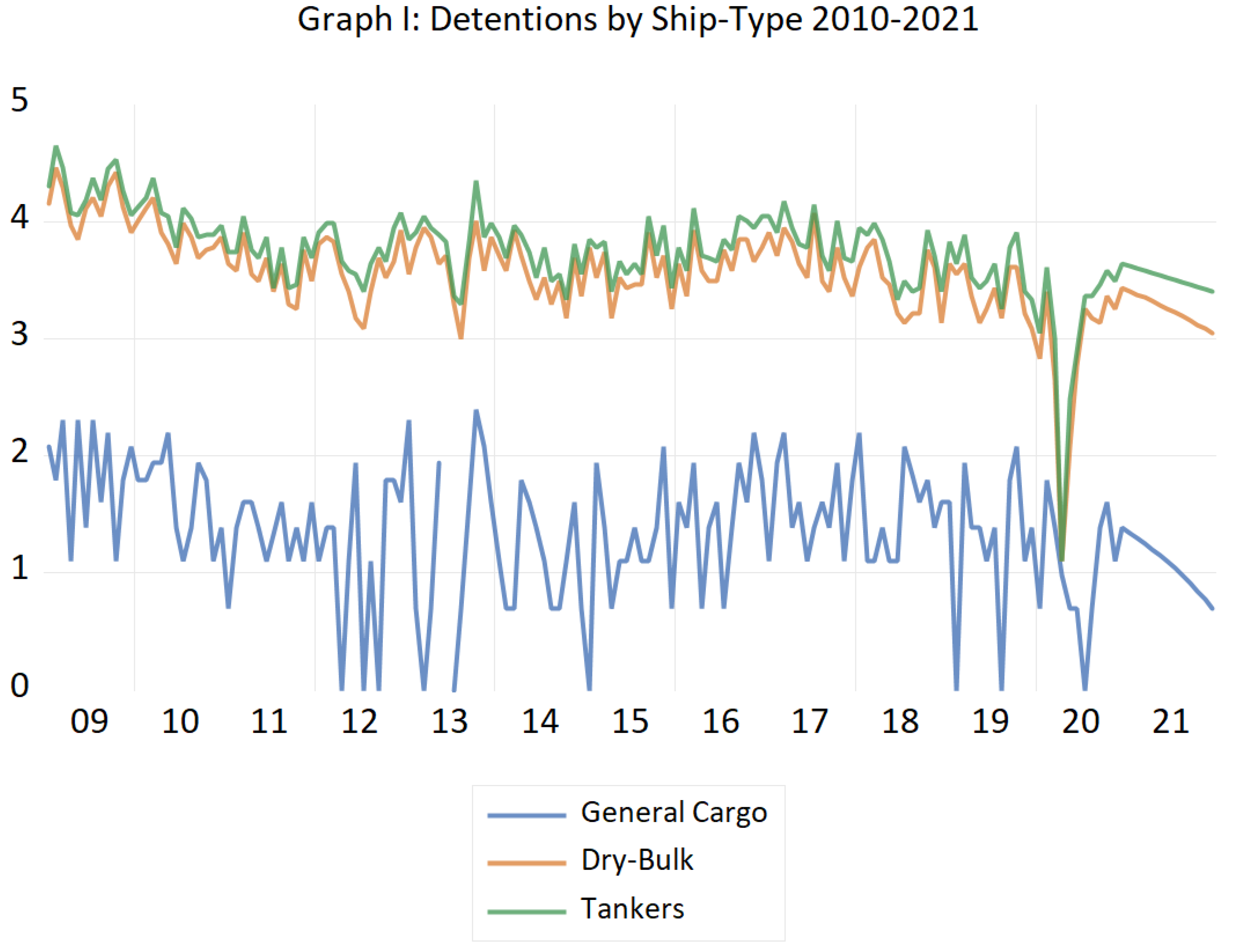
Table 2 reports the GMM and 3SLS estimates for the full sample over the period 2010-2021, where vessel detentions (LSD) and maritime freight market conditions (LBDI) are treated as jointly determined. The results indicate a positive and statistically significant relationship between freight market conditions and vessel detentions, as lagged values of LBDI are associated with higher detention levels. This finding contrasts with the conventional expectation that stronger market conditions should enhance compliance by increasing the opportunity cost of detention. Instead, it suggests that periods of heightened freight market conditions are accompanied by intensified vessel utilization and greater detection of compliance deficiencies, potentially reflecting both operational pressures and increased inspection intensity. The reverse relationship is also statistically significant, with lagged detentions positively associated with LBDI. This bidirectional effect may be explained by the impact of detentions on effective fleet supply. Detained vessels experience operational delays and reputational effects that may affect their ‘charterability’, resale value, and insurability, while repeated detentions may ultimately contribute to vessel withdrawal or scrapping. These mechanisms reduce available capacity and may exert upward pressure on freight rates.
Institutional variables behave as expected. European and Asian port regions are positively associated with detention activity, reflecting stronger enforcement intensity, while vessels flying white-listed flags and those classified by IACS members exhibit significantly lower detention risk. ISM-related deficiencies are positively related to detentions, confirming their role as key indicators of safety and environmental non-compliance. Overall, the results support the presence of a dynamic and bidirectional relationship between regulatory outcomes and market conditions, suggesting that compliance behavior does not necessarily improve during periods of strong economic performance.
To examine potential heterogeneity across vessel segments, the sample is disaggregated into three major categories: dry bulk, general cargo, and tanker vessels. These segments differ in terms of operational characteristics, regulatory exposure, and inspection intensity, which may influence both compliance behavior and detention risk. Dry bulk and general cargo vessels account for most detention cases across both MoUs, reflecting their large share in the global fleet and the diversity of operational conditions under which they operate. In contrast, tanker detentions are comparatively less frequent, likely due to the stricter regulatory and commercial scrutiny applied to this segment, including enhanced safety standards and additional vetting procedures. Table 3 presents the estimation results for dry bulk vessel detentions. The findings are broadly consistent with those obtained for the full sample. The key explanatory variables retain their expected signs and similar magnitudes, indicating that the relationship between detention activity and economic conditions is robust within this segment. In particular, the coefficient on IACS classification (LIACS) is negative, as expected, suggesting that vessels classified by IACS members are less likely to be detained. However, this effect is statistically significant only in the Paris MoU specification, while it remains insignificant in the Tokyo MoU case, indicating some regional variation in the role of classification standards. Overall, the results suggest that while the main determinants of detention are consistent across vessel types, their relative importance may vary depending on segment-specific regulatory environments and operational practices.
Table 4 reports the estimation results for general cargo detentions under the Tokyo MoU and tanker detentions under the Paris MoU. The findings reaffirm the presence of a bidirectional relationship between detention activity and maritime economic conditions across both vessel categories. For general cargo vessels, the key institutional variables exhibit the expected signs and are generally statistically significant. Vessels classified by IACS members and those registered under white-listed flags are associated with a lower probability of detention, while ISM-related deficiencies are positively related to detention incidence. These results are consistent with the broader literature and support the robustness of the main findings across vessel segments. In contrast, the results for tanker vessels reveal some notable differences. While the bidirectional relationship between detention and freight market conditions remains significant, the coefficient on ISM-related deficiencies is not statistically significant. This likely reflects the heightened regulatory scrutiny and additional industry oversight applied to tankers, including rigorous vetting procedures and stricter compliance standards, which reduce the marginal impact of ISM-related deficiencies on detention outcomes. Overall, the evidence suggests that although the core relationship between market conditions and detention activity persists across vessel types, the role of specific compliance factors varies depending on segment-specific regulatory intensity.
Overall, the findings of this study reveal a robust and positive relationship between vessel detentions and freight market conditions in the maritime sector. Contrary to conventional expectations that improved market conditions enhance compliance, the results suggest that detention activity increases during periods of strong freight markets. This pattern can be attributed to a combination of factors, including increased inspection intensity, higher traffic volumes, and operational pressures that may incentivize short-term profit maximization over full regulatory compliance. The analysis further confirms the importance of institutional and vessel-specific characteristics in shaping detention outcomes. Vessels registered under white-listed flags and classified by members of the International Association of Classification Societies (IACS) exhibit a lower probability of detention, while ISM-related deficiencies are positively associated with detention risk. These findings are consistent across different vessel segments, although the magnitude and significance of specific factors vary depending on regulatory intensity and market structure. From a policy perspective, the results highlight the continued importance of Port State Control (PSC) as a mechanism for enforcing safety and environmental standards, particularly during market upswings when compliance incentives may weaken. Detention records also play a critical role in shaping vessel valuation, insurance conditions, and chartering opportunities, reinforcing their broader economic significance. Looking ahead, PSC authorities are expected to play an increasingly important role in monitoring compliance with new environmental regulations, including the Energy Efficiency Existing Ship Index (EEXI) and the Carbon Intensity Indicator (CII). As the shipping industry transitions toward decarbonization, effective enforcement mechanisms will be essential to ensure that regulatory objectives translate into actual operational improvements. Future research could extend the analysis to additional MoU regions and explore the role of institutional quality, enforcement capacity, and corruption in shaping detention outcomes across jurisdictions.
Table 2 presents the GMM and 3SLS estimates for the full sample, examining the relationship between vessel detentions (LSD) and maritime freight market conditions (LBDI). The results reveal a positive and statistically significant bidirectional relationship between detention and freight market conditions. Lagged values of LBDI exert a positive effect on detention, indicating that detention activity increases during periods of stronger market conditions. This finding contrasts with the conventional expectation that higher freight earnings incentivize greater compliance. The reverse relationship is also significant. Lagged detentions are positively associated with LBDI, suggesting that detention activity constrains effective fleet supply and contributes to higher freight rates. This effect may operate through delays, reputational impacts, and the eventual withdrawal or scrapping of repeatedly detained vessels. Institutional and technical variables are also economically meaningful. Port-region effects are positive, indicating stronger enforcement intensity in both European and Asian ports. By contrast, vessels flying white-listed flags and those classified by IACS members are significantly less likely to be detained, confirming the protective role of strong institutional affiliations. ISM-related deficiencies are positively associated with detentions, reinforcing their importance as key predictors of regulatory intervention. Control variables behave as expected. Iron ore prices exert a positive effect on LBDI, reflecting stronger industrial demand, while Brent crude oil prices have a negative effect, consistent with higher operating costs. Fleet growth is negatively associated with LBDI, indicating the expected supply-side pressure on freight rates.
5.2. Results by Vessel Type
To explore sectoral heterogeneity, the detention variable is disaggregated by vessel type. Table 3 reports the results for dry bulk carriers, Table 4 for general cargo vessels, and Table 5 for tankers. For dry bulk carriers, the estimated relationships closely mirror those of the full sample. The positive association between lagged market activity and detentions remains strong, suggesting that dry bulk operators are particularly exposed to the trade-off between compliance and revenue maximization during boom periods. Institutional variables, including IACS membership and ISM-related deficiencies, remain significant determinants of detention risk. For general cargo vessels, the same overall pattern persists, although the estimated effects are generally weaker. This is consistent with the greater heterogeneity of the general cargo fleet, where variation in trading patterns, vessel age, and operational practices dilute the influence of institutional characteristics. In the tanker segment, the results differ in an important respect. While the bidirectional relationship between detention and freight market conditions remains significant, ISM-related deficiencies are not statistically significant. This may reflect the presence of stricter parallel monitoring mechanisms, including oil major vetting and enhanced commercial oversight, which reduces the marginal impact of ISM-related deficiencies on detention outcomes.
6. Discussion
The empirical results reveal a pattern that contrasts with the standard expectation of improved compliance during strong market conditions. Conventional reasoning suggests that higher freight earnings should strengthen compliance by increasing financial capacity, raising the opportunity cost of detention, and amplifying reputational concerns. Under this framework, detention rates would be expected to decline during economic upswings. However, the findings indicate the opposite. The positive relationship between freight market conditions and detention activity suggests that stronger market conditions may, under certain conditions, weaken compliance incentives.
This result stands in contrast to the dominant strand of literature, which emphasizes structural and technical determinants of detention. Previous studies consistently show that detention risk is primarily driven by observable deficiencies and vessel characteristics, including safety systems, crew certification, and environmental compliance [Chen et al., (2019) [2]; Hanninen and Kujala (2014) [3]; Boljat et al. (2020) [4]], as well as institutional factors such as flag state quality and classification society oversight [Fan al. (2014) [5]; Heij et al. (2011) [6]; Piniella et al. (2014) [13]]. Within this framework, detention is typically interpreted as a predictable outcome of substandard vessel conditions and weak institutional controls. By contrast, the present findings suggest that even when these structural factors are accounted for, broader market conditions may play an additional and previously underexplored role in shaping compliance behavior.
At the same time, the results are consistent with strands of literature that highlight variation in enforcement effectiveness and inspection outcomes. Studies have shown that PSC results may depend on inspector characteristics, institutional capacity, and differences across inspection regimes [Ravira and Piniella (2016) [9], Groenleer et al. (2010) [14], Graziano et al. (2018) [8]]. This suggests that enforcement is not uniform and that the deterrent effect of inspections may vary across contexts. In this setting, strong market conditions, characterized by higher traffic intensity and operational pressure, may interact with institutional constraints, potentially reducing the effectiveness of enforcement precisely when incentives to deviate from compliance are strongest.
The findings can also be interpreted through a behavioral and principal-agent lens. While PSC is designed to deter non-compliance and improve safety outcomes [Kasoulides (1993) [12]], shipowners and operators may face competing incentives during periods of high freight earnings. When market conditions are favorable, the marginal benefit of uninterrupted operations increases, while the expected cost of non-compliance remains conditional on inspection probability. Under such conditions, shipowners may rationally accept higher compliance risk, treating potential detention as an operational trade-off rather than a strict constraint. This interpretation is consistent with evidence that inspection regimes can influence strategic behavior, including decisions related to vessel management and flag choice [Fan et al. (2014) [5]; Heij et al. (2011) [6]].
The bidirectional nature of the results further highlights the dynamic interaction between regulatory enforcement and market outcomes. While detention activity responds to market conditions, it may also influence them by constraining effective fleet supply. By temporarily removing vessels from service, detentions can reduce available capacity, which may, in turn, be associated with higher freight rates. This suggests that compliance behavior and freight market dynamics should be analyzed as jointly determined processes rather than independent phenomena. A limitation of the analysis is that it relies on aggregated MoU-level data rather than vessel-level observations, which may obscure heterogeneity in compliance behavior across individual ships and operators.
Overall, the findings extend the existing literature in two important ways. First, they complement the established focus on vessel-specific and institutional determinants of detention by introducing a cyclical and market-based dimension. Second, they provide empirical support for a behavioral mechanism in which compliance incentives vary across phases of the shipping cycle. These insights suggest that regulatory outcomes in shipping cannot be fully understood without accounting for the interaction between enforcement mechanisms and economic conditions.
From a policy perspective, the results imply that enforcement strategies may need to adapt to prevailing market conditions. If strong freight markets are associated with increased incentives for opportunistic behavior, regulators may need to adjust inspection intensity, targeting mechanisms, or monitoring practices during boom periods to maintain the effectiveness of PSC regimes. More broadly, the findings highlight the importance of designing enforcement systems that remain robust under varying levels of market activity.
Finally, it is important to interpret the results with appropriate caution. While the analysis identifies a robust association between market conditions and detention activity, the underlying behavioral mechanisms cannot be observed directly. Future research could build on these findings by incorporating vessel-level decision data, inspection targeting models, or alternative identification strategies to further explore the causal channels linking economic incentives and compliance behavior.
7. Conclusions
This study examined the relationship between vessel detentions under Port State Control and freight market conditions in the maritime sector using monthly data from the Paris and Tokyo MoUs over the period 2010-2021. Employing a system of simultaneous equations estimated via GMM, the analysis identifies a positive and statistically significant bidirectional relationship between detention activity and freight market conditions. The results challenge the conventional expectation that stronger market conditions promote better compliance. Instead, they suggest that shipowners may be more willing to accept regulatory risk during boom periods, particularly when the gains from continuous operation are substantial. At the same time, detention activity appears to feed back into freight market conditions by tightening effective fleet supply. The analysis also confirms the importance of institutional and technical determinants. Vessels operating under white-listed flags and IACS classification societies exhibit lower detention risk, while ISM-related deficiencies and port-region enforcement intensity remain significant predictors. Differences across vessel types further indicate that compliance dynamics vary across market segments. From a policy perspective, the findings highlight the need for adaptive, risk-based inspection strategies that account for prevailing market conditions. Greater harmonization across port regions may also reduce regulatory arbitrage. As the industry transitions toward stricter environmental regulation, including EEXI and CII frameworks, the role of PSC in ensuring effective implementation will become increasingly important. Future research could extend the analysis to additional MoU regions, incorporate post-2021 data, and explore the interaction between decarbonization policies, digital monitoring systems, and compliance behavior in shipping markets.
Ethical Approval
Not applicable.
Author Contributions
Conceptualization, X.A.M. and T.S (supervision).; methodology, X.A.M, G.K.; formal analysis, X.A.M, G.K.; data curation, X.A.M.; writing-original draft preparation, X.A.M.; writing-review and editing, X.A.M. and T.S.; supervision, T.S. All authors have read and agreed to the published version of the manuscript.
Data Availability Statement
The data used in this study were manually collected from publicly available sources, including the Paris and Tokyo Memoranda of Understanding (MoUs) on Port State Control and Clarkson’s Shipping Intelligence Network. Data are available from the corresponding author upon reasonable request.
Conflicts of Interest
The authors declare no conflict of interest.
References
- International Maritime Organization. Port State Control. Available online: https://www.imo.org/en/ourwork/msas/pages/portstatecontrol.aspx (accessed on 20 March 2026).
- Chen, J.; Zhang, S.; Xu, L.; Wan, Z.; Fei, Y.; Zheng, T. Identification of key factors of ship detention under Port State Control. Marine Policy 2019, 102, 21–27. [Google Scholar] [CrossRef]
- Hänninen, M.; Kujala, P. Bayesian network modeling of PSC inspection findings and ship accident involvement. Expert Systems with Applications 2014, 41, 1632–1646. [Google Scholar] [CrossRef]
- Boljat, H.; Sliskovic, M.; Jelaska, I.; Gudelj, A.; Mrcelic, G. Analysis of pollution-related deficiencies identified through PSC inspections for the period 2014-2018. Sustainability 2020, 12, 5956. [Google Scholar] [CrossRef]
- Fan, L.; Luo, M.; Yin, J. Flag choice and Port State Control inspections-Empirical evidence using a simultaneous model. Transport Policy 2014, 35, 350–357. [Google Scholar] [CrossRef]
- Heij, G.; Bijwaard, G.; Knapp, S. Ship inspection strategies: Effects on maritime safety and environmental protection. Transportation Research Part D 2011, 16, 42–48. [Google Scholar] [CrossRef]
- International Association of Classification Societies. About IACS. Available online: https://iacs.org.uk/about-us/vision-mission (accessed on 20 March 2026).
- Graziano, A.; Cariou, P.; Wolff, F.; Mejia, M.; Schröder-Hinrichs, J. Port state control inspections in the European Union: Do inspector’s number and background matter? Marine Policy 2018, 88, 230–241. [Google Scholar] [CrossRef]
- Ravira, F.; Piniella, F. Evaluating the impact of PSC inspectors’ professional profile: a case study of the Spanish Maritime Administration. WMU Journal of Maritime Affairs 2016, 15, 221–236. [Google Scholar] [CrossRef]
- Li, K.; Zheng, H. Enforcement of law by the Port State Control (PSC). Maritime Policy & Management 2008, 35, 61–71. [Google Scholar] [CrossRef]
- Wu, J.; Jin, Y.; Fu, J. Effectiveness Evaluation on Fire Drills for Emergency and PSC Inspections on Board. TransNav: the International Journal on Marine Navigation and Safety of Sea Transportation 2014, 8, 229–236. [Google Scholar] [CrossRef]
- Kasoulides, G.C. Port State Jurisdiction and Control: Evolution of the Port State Regime; Martinus Nijhoff Publishers: Dordrecht, The Netherlands, 1993. [Google Scholar]
- Piniella, F.; Rodriguez-Diaz, E.; Ignacio, J. A Comparative analysis of Vessels detained under the PSC agreements of Paris, Tokyo and Vina del Mar. Journal of Shipping and Ocean Engineering 2014, 4, 291–306. Available online: https://www.davidpublisher.com/index.php/Home/Article/index?id=1103.html.
- Groenleer, M.; Kaeding, M.; Versluis, E. Regulatory governance through agencies of the European Union? The role of the European agencies for maritime and aviation safety in the implementation of European transport legislation. Journal of European Public Policy 2010, 17, 1212–1230. [Google Scholar] [CrossRef]
- Disclaimer/Publisher’s Note: The statements, opinions and data contained in all publications are solely those of the individual author(s) and contributor(s) and not of MDPI and/or the editor(s). MDPI and/or the editor(s) disclaim responsibility for any injury to people or property resulting from any ideas, methods, instructions or products referred to in the content.

Table 1.
Variables.
| Panel A: Description of variables | |||||
| Variable | Coding | Definition | |||
| Baltic Dry Index | Natural Logarithm of the weighted average of freight rates over 26 routes issued by the Baltic Exchange | ||||
| Price of Brent Oil | Natural logarithm of the Price of Brent crude oil in $/bbl | ||||
| Iron Ore | Iron Ore Spot price CFR, N.China, in $/tonne | ||||
| Fleet Growth Fleet Growth in Dry-Bulk/Tanker/General Cargo |
FGB |
Monthly increase in the total fleet Monthly increase in the Dry-Bulk/Tanker/General Cargo fleet |
|||
| IACS IACSB/IACST/IACSG |
LIACSB |
Natural logarithm of the number of ships detained with IACS classification Natural logarithm of the number of Dry-Bulk/Tanker/General Cargo detained with IACS classification |
|||
| Ships Detained | Natural logarithm of the number of ships detained across types | ||||
| Dry-Bulk/Tankers/General Cargo | Natural logarithm of the number of Dry-Bulk/Tankers/General Cargo ships detained | ||||
| Asian Ports |
LPASB/LPAST/LPASG |
Natural logarithm of the Asian Detention Ports, all ships Natural logarithm of the Asian Detention Ports, Dry-Bulk/Tanker/General Cargo ships |
|||
| European Ports |
LPERB/LPERT/LPERG |
Natural logarithm of the European Detention Ports all ships Natural logarithm of the European Detention Ports Dry-Bulk/Tanker/General Cargo ships |
|||
| Ships with White Flag |
LWFB/LWFT/LWFG |
Natural logarithm of the detained Ships with White Flag Natural logarithm of the detained Dry-Bulk/Tankers/General Cargo Ships with White Flag |
|||
|
Safety and Environment Dry-Bulk/Tankers/General Cargo Ships with Grey Flags American Ports |
LISMB/LISMT/LISMG GF PAM |
Natural Logarithm of the Number of Deficiencies associated with Safety and Environment Natural Logarithm of the Number of Deficiencies Dry-Bulk/Tankers/General Cargo associated with Safety and Environment Ships with Grey Flags Number of detentions by American Ports |
|||
| Panel B: Descriptive statistics | |||||
| Mean | Median | Max | Min | Std. Dev | |
| PARIS MoU | ALL SHIPS | ||||
| LSD | 3.741 | 3.773 | 4.644 | 1.098 | 0.380 |
| LPER | 3.678 | 3.701 | 4.454 | 0.000 | 0.426 |
| LPAS | 2.333 | 2.000 | 13.000 | 0.000 | 2.392 |
| LWF | 3.377 | 3.367 | 4.263 | 0.693 | 0.387 |
| LIACS | 3.877 | 3.892 | 4.290 | 3.496 | 0.190 |
| LISM | 6.265 | 6.359 | 7.360 | 3.583 | 0.522 |
| PARIS MoU | DRY-BULK | ||||
| LSDB | 3.556 | 3.583 | 4.466 | 1.098 | 0.399 |
| LPERB | 5.652 | 5.674 | 6.428 | 1.973 | 0.426 |
| PASB | 1.768 | 1.515 | 9.849 | 0.000 | 1.811 |
| LWFB | 3.068 | 3.059 | 3.954 | 0.385 | 0.387 |
| LIACSB | 3.478 | 3.450 | 4.04 | 0.303 | 0.690 |
| LISMB | |||||
| PARIS MoU | TANKERS | ||||
| LSDT | 1.333 | 1.386 | 2.398 | 0.000 | 0.554 |
| LPERT | 3.064 | 3.070 | 3.811 | 1.754 | 0.308 |
| PAST | 1.803 | 1.521 | 9.886 | 0.000 | 1.822 |
| LWFT | 3.100 | 3.070 | 3.965 | 1.900 | 0.324 |
| LIACST | 1.324 | 1.305 | 2.795 | 0.000 | 0.615 |
| LISMT | 5.061 | 5.136 | 5.945 | 2.895 | 0.422 |
| TOKYO MoU | ALL SHIPS | ||||
| LSD | 4.428 | 4.511 | 5.037 | 3.091 | 0.424 |
| LPER | 0.586 | 0.693 | 1.791 | 0.000 | 0.508 |
| LPAS | 4.405 | 4.499 | 5.010 | 2.990 | 0.437 |
| LWF | 4.125 | 4.277 | 4.779 | 1.609 | 0.489 |
| LIACS | 3.980 | 4.045 | 5.929 | 1.253 | 1.024 |
| LISM | 0.532 | 0.544 | 0.612 | 0.371 | 0.051 |
| TOKYO MoU | DRY-BULK | ||||
| LSDB | 3.338 | 3.401 | 3.912 | 2.398 | 0.312 |
| LPERB | -0.474 | -0.476 | 0.972 | -1.544 | 0.591 |
| LPASB | 3.338 | 3.393 | 3.905 | 2.302 | 0.292 |
| LWFB | 3.045 | 3.144 | 3.625 | 0.726 | 0.377 |
| LIACSB | 3.850 | 3.818 | 4.090 | 1.867 | 0.707 |
| LISMB | |||||
| TOKYO MoU | GEN. CARGO | ||||
| LSDG | 3.423 | 3.496 | 4.344 | 1.609 | 0.59 |
| LPERG | -0.371 | -0.364 | -0.909 | -1.670 | 0.624 |
| LPASG | 3.409 | 3.492 | 4.337 | 1.514 | 0.591 |
| LWFG | 3.137 | 3.282 | 3.984 | 0.624 | 0.594 |
| LIACSG | 3.981 | 4.045 | 5.929 | 1.253 | 1.024 |
| LISMG | 4.289 | 4.444 | 5.464 | 2.514 | 0.701 |
| SHIPPING | SECTOR | INDICATORS | |||
| LBDI | 7.090 | 7.042 | 8.480 | 5.726 | 0.527 |
| LIRON | 4.602 | 4.609 | 5.368 | 3.679 | 0.405 |
| LBRENT | 4.265 | 4.273 | 4.832 | 3.281 | 0.364 |
| FG | 4.097 | 3.600 | 9.800 | 2.300 | 2.339 |
| FGB | 6.673 | 4.300 | 17.600 | 1.900 | 4.902 |
| FGT | 2.090 | 1.873 | 12.373 | -4.980 | 3.117 |
| FGG | 6.539 | 3.950 | 16.70 | 1.60 | 5.096 |
Table 2.
The Bidirectional Relationship Between Ship Detentions (LSD) by TOKYO MoU and PARIS MoU and Seaborne freight market conditions as Proxied by LBDI.
Table 2.
The Bidirectional Relationship Between Ship Detentions (LSD) by TOKYO MoU and PARIS MoU and Seaborne freight market conditions as Proxied by LBDI.
| Estimation by GMM(TOKYO) (1) | Estimation by 3SLS(TOKYO) (2) | Estimation by GMM(PARIS) (3) | Estimation by 3SLS(PARIS) (4) | |||||
| Independent Variables | Dep.Var. LSD |
Dep.Var. LBDI |
Dep.Var. LSD |
Dep.Var. LBDI |
Dep.Var. LSD |
Dep.Var. LBDI |
Dep.Var. LSD |
Dep.Var. LBDI |
| C | 0.672*** (0.106) |
-6.021*** (2.010) |
0.652*** (0.193) |
-5.715** (2.710) |
1.111*** (0.242) |
-2.283 (1.564) |
1.137*** (0.365) |
-2.223 (1.433) |
| LBDI (-1) | 0.053** (0.024) |
0.057 (0.042) |
0.037*** (0.009) |
0.047*** (0.016) |
||||
| LPER | 0.028*** (0.003) |
0.029*** (0.006) |
0.734*** (0.036) |
0.684*** (0.035) |
||||
| PAS | - | - | 0.005*** (0.002) |
0.006* (0.004) |
||||
| LPAS | 0.984*** (0.005) |
0.985*** (0.012) |
- | - | ||||
| LWF | -0.075*** (0.009) |
-0.074*** (0.020) |
-0.193*** (0.033) |
-0.224*** (0.046) |
||||
| LIACS | -0.093*** (0.016) |
-0.089*** (0.031) |
-0.067** (0.035) |
-0.042 (0.061) |
||||
| LND | - | - | 0.084*** (0.021) |
0.098*** (0.023) |
||||
| LISM | 0.073*** (0.026) |
0.069 (0.069) |
0.498*** (0.210) |
0.527 (0.330) |
||||
| LSD (-1) | 1.329*** (0.333) |
1.221*** (0.465) |
1.257*** (0.245) |
1.237*** (0.232) |
||||
| LIRON | 2.714*** (0.406) |
2.637*** (0.537) |
1.699*** (0.303) |
1.841*** (0.287) |
||||
| FG (-1) | -0.126*** (0.030) |
-0.119*** (0.036) |
-0.389*** (0.200) |
-0.405** (0.179) |
||||
| LBRENT | -1.045** (0.333) |
-0.931*** (0.451) |
-0.589*** (0.225) |
-0.726*** (0.282) |
||||
| Prob(J-Stat) | 0.162 | 0.117 | ||||||
Note:(*) sig.at 10%,(**)sig.at 5%,(***)sig.at 1%.
Table 3.
The Bidirectional Relationship Between Dry-Bulk Ship Detentions (LSDB) by TOKYO MoU and PARIS MoU and Seaborne freight market conditions as Proxied by LBDI.
Table 3.
The Bidirectional Relationship Between Dry-Bulk Ship Detentions (LSDB) by TOKYO MoU and PARIS MoU and Seaborne freight market conditions as Proxied by LBDI.
| Estimation by GMM(TOKYO) (1) | Estimation by 3SLS(TOKYO) (2) | Estimation by GMM(PARIS) (3) | Estimation by 3SLS(PARIS) (4) | |||||
| Independent Variables | Dep.Var. LSDB |
Dep.Var. LBDI |
Dep.Var. LSDB |
Dep.Var. LBDI |
Dep.Var. LSDB |
Dep.Var. LBDI |
Dep.Var. LSDB |
Dep.Var. LBDI |
| C | 0.991*** (0.209) |
-1.880*** (1.242) |
1.083*** (0.373) |
-1.898 (1.763) |
-1.259*** (0.337) |
-1.068 (0.917) |
-1.213*** (0.455) |
-1.539 (1.249) |
| LBDI (-1) | 0.599** (0.305) |
0.471 (0.512) |
0.081*** (0.025) |
0.111*** (0.036) |
||||
| LPERB | 0.029*** (0.003) |
0.975*** (0.01) |
0.729*** (0.032) |
0.702*** (0.032) |
||||
| PASB | - | - | 0.029*** (0.003) |
0.031*** (0.008) |
||||
| LPASB | 0.973*** (0.007) |
0.029*** (0.007) |
- | - | ||||
| LWFB | -0.12*** (0.021) |
-0.128*** (0.04) |
-0.004 (0.019) |
-0.016 (0.023) |
||||
| LIACSB | -0.16*** (0.035) |
-0.169*** (0.062) |
-0.094* (0.057) |
-0.143* (0.079) |
||||
| LISMB | 0.124*** (0.031) |
0.109* (0.065) |
0.175*** (0.036) |
0.209*** (0.055) |
||||
| LSDB (-1) | 0.945*** (0.305) |
0.879** (0.424) |
0.957*** (0.097) |
0.991*** (0.189) |
||||
| LIRON | 1.792*** (0.213) |
1.785 *** (0.309) |
1.545*** (0.250) |
1.703*** (0.269) |
||||
| FGB (-1) | -0.06*** (0.019) |
-0.061*** (0.023) |
-0.352** (0.153) |
-0.447*** (0.130) |
||||
| LBRENT | -0.498*** (0.262) |
-0.418*** (0.307) |
-0.404** (0.163) |
-0.447 (0.295) |
||||
| Prob(J-Stat) | 0.158 | 0.127 | ||||||
Note:(*) sig.at 10%,(**)sig.at 5%,(***)sig.at 1%.
Table 4.
The Bidirectional Relationship Between General Cargo Ship Detentions (LSDG) by TOKYO MoU and Tanker Ship Detentions(LSDT) by PARIS MoU and Seaborne freight market conditions as Proxied by LBDI.
Table 4.
The Bidirectional Relationship Between General Cargo Ship Detentions (LSDG) by TOKYO MoU and Tanker Ship Detentions(LSDT) by PARIS MoU and Seaborne freight market conditions as Proxied by LBDI.
| Estimation by GMM(TOKYO) (1) | Estimation by 3SLS(TOKYO) (2) | Estimation by GMM(PARIS) (3) | Estimation by 3SLS(PARIS) (4) | ||||||
| Independent Variables | Dep.Var. LSDG |
Dep.Var. LBDI |
Dep.Var. LSDT |
Dep.Var. LBDI |
Dep.Var. LSDT |
Dep.Var. LBDI |
Dep.Var. LSDT |
Dep.Var. LBDI |
|
| C | 0.049 (0.045) |
-4.54*** (0.909) |
0.013 (0.115) |
-4.697*** (1.380) |
C | -1.899** (0.802) |
3.623*** (0.534) |
-2.207 (1.728) |
3.055*** (0.891) |
| LBDI (-1) | 0.764** (0.305) |
0.705 (0.539) |
LBDI (-1) | 0.294*** (0.084) |
0.294** (0.149) |
||||
| LPERG | 0.037*** (0.004) |
0.036*** (0.007) |
LPERT | 2.214*** (0.541) |
2.345** (0.996) |
||||
| PASG | - | - | PAST | 0.004 (0.030) |
0.019 (0.052) |
||||
| LPASG | 1.059*** (0.020) |
1.071*** (0.042) |
LPAST | - | |||||
| LWFG | -0.056*** (0.017) |
-0.059* (0.032) |
LWFT | -1.612** (0.683) |
-1.760 (1.145) |
||||
| LIACSG | -0.108*** (0.019) |
-0.123*** (0.041) |
LIACST | -0.418*** (0.142) |
-0.362 (0.246) |
||||
| LISMG | 0.055** (0.023) |
0.075 (0.065) |
LISMT | 0.188 (0.159) |
0.213 (0.217) |
||||
| LSDG (-1) | 1.106*** (0.115) |
1.111*** (0.191) |
LSDT(-1) | 0.709*** (0.159) |
0.810*** (0.220) |
||||
| LIRON | 2.579*** (0.225) |
2.636*** (0.327) |
LIRON | 1.359*** (0.227) |
1.624*** (0.209) |
||||
| FGG (-1) | -0.117*** (0.017) |
-0.115*** (0.024) |
FGT(-1) | - | - | ||||
| LBRENT(-1) | -1.003*** (0.170) |
-1.034*** (0.279) |
LBRENT(-1) | -0.807*** (0.239) |
-0.988*** (0.241) |
||||
| FGT(-1) | -1.052*** (0.302) |
-1.049 (0.420) |
|||||||
| Prob(J-Stat) | 0.135 | 0.122 | |||||||
Note:(*) sig.at 10%,(**)sig.at 5%,(***)sig.at 1%.
Disclaimer/Publisher’s Note: The statements, opinions and data contained in all publications are solely those of the individual author(s) and contributor(s) and not of MDPI and/or the editor(s). MDPI and/or the editor(s) disclaim responsibility for any injury to people or property resulting from any ideas, methods, instructions or products referred to in the content. |
© 2026 by the authors. Licensee MDPI, Basel, Switzerland. This article is an open access article distributed under the terms and conditions of the Creative Commons Attribution (CC BY) license (http://creativecommons.org/licenses/by/4.0/).
Copyright: This open access article is published under a Creative Commons CC BY 4.0 license, which permit the free download, distribution, and reuse, provided that the author and preprint are cited in any reuse.


