Preprint
Article

This version is not peer-reviewed.

Plant-Derived Antimicrobial Peptides as Natural Alternatives to Chemical Fungicides for Postharvest Control of Botrytis cinerea in Apples

Submitted:

24 March 2026

Posted:

25 March 2026

You are already at the latest version

Abstract

Postharvest fungal diseases remain a major cause of fruit losses during storage and distribution. In apples, grey mould caused by Botrytis cinerea is one of the most important postharvest pathogens, leading to significant economic losses worldwide. Although chemical fungicides are widely used to control this disease, increasing concerns about toxicity, environmental impact, and pathogen resistance have stimulated the search for safer and more sustainable alternatives. In this study, plant-derived antimicrobial peptides from the South American native species Peltophorum dubium were evaluated as potential natural antifungal agents for postharvest disease control. Four defensin candidates were selected from a catalogue of antimicrobial peptides previously generated through transcriptome mining of germinated seeds. Antifungal activity against B. cinerea was initially assessed using soluble protein fractions from recombinant production in Escherichia coli. Subsequently, the peptides PdDf11 and PdDf13 were purified from the two most active fractions; both peptides completely inhibited fungal growth in vitro, with a minimum inhibitory concentration of 6 µM. Finally, their protective effect was evaluated in apples stored under cold conditions. Purified PdDf11 showed the highest efficacy, reducing disease severity by 97% and disease incidence by 86%. These results highlight defensins as promising natural antifungal agents for sustainable postharvest protection of apples.

Keywords: 
;  ;  ;  ;  ;  

1. Introduction

Apple (Malus domestica Borkh.) is one of the most widely cultivated and economically important fruit crops worldwide. However, significant postharvest losses occur during storage and commercialisation, mainly due to fungal infections [1,2]. Although technologies such as low-temperature storage and controlled-atmosphere systems are widely used to slow fruit respiration, ethylene production, and metabolic activity, postharvest decay remains a major constraint affecting apple shelf life and marketability [3,4,5]. Among the most prevalent postharvest fungal pathogens affecting apples are Botrytis cinerea, Penicillium expansum, and Alternaria spp., which cause substantial economic losses across production regions [6].
Chemical fungicides are currently the most widely used strategy to control postharvest diseases due to their effectiveness. Nevertheless, growing concerns about toxicity, environmental impact, and the emergence of resistant strains have driven the search for safer, more sustainable alternatives [7].
In this context, antimicrobial peptides (AMPs) have emerged as promising candidates for postharvest disease management. AMPs are small biomolecules (2–7 kDa) that are widely distributed across all kingdoms of life and constitute an important component of innate immunity. Their ability to target essential cellular structures and processes reduces the likelihood of resistance development [8,9]. Several studies have reported the potential of AMPs to reduce postharvest decay in different fruit species, highlighting their value as natural protective agents [10,11,12].
Among AMPs, plant defensins constitute a widely distributed superfamily involved in plant defence against phytopathogens. These peptides are generally non-toxic to plant and human cells and exhibit strong antifungal and antibacterial activity [13,14,15]. Structurally, plant defensins share a conserved cysteine-stabilised αβ (CSαβ) motif that confers high stability against proteolysis and variations in pH and temperature. Despite their relatively small size, defensins exhibit substantial sequence variability, contributing to functional diversification and distinct antifungal properties [16].
In the search for novel plant-derived AMPs, transcriptomic mining of South American native plant species has proven to be an effective strategy. In the transcriptome of germinated seeds of Peltophorum dubium, 14 putative defensin sequences were identified [17]. Most correspond to canonical defensins containing the characteristic CSαβ and γ-core motifs, whereas a subset represents atypical variants lacking the γ-core motif and exhibiting elongated terminal regions [17]. Although less characterised, atypical defensins may display expanded biological functions or enhanced structural stability, suggesting unexplored antifungal potential [18].
From this repertoire, four defensins—including both canonical and atypical variants—were selected for experimental characterisation to explore the relationship between structural features and antifungal activity. An initial screening with soluble fractions enabled rapid evaluation of recombinant protein activity without purification. The most active peptides (PdDf11 and PdDf13) were subsequently purified and evaluated in vitro against B. cinerea. Furthermore, their protective effect on apples during cold storage was assessed using both purified peptides and crude extracts.
The aim of this study was to evaluate the antifungal activity of recombinant defensins from Peltophorum dubium against B. cinerea and to determine their capacity to protect apples during cold storage, thereby assessing their potential as sustainable alternatives to conventional chemical fungicides.

2. Materials and Methods

2.1. Fungal Strain

A strain of Botrytis cinerea (CCMG 14s) from the collection of the Microbiology Laboratory of the Faculty of Chemistry was used in this study. Spore suspensions were prepared by adding Tween 80 (0.001 g/L) directly onto the surface of potato dextrose agar (PDA) plates, followed by gentle scraping with a sterile spatula to detach the spores. The resulting suspension was filtered through a Blutex filter to remove mycelial debris, and the filtrate was collected in a sterile tube. Spore concentration was determined using a Thoma counting chamber and adjusted according to the requirements of subsequent assays.

2.2. Cloning in pET32 and Generation of Recombinant Strains

The sequences corresponding to the complete mature peptides of PdDf10, PdDf11, and PdDf13 were initially amplified from cDNA using the primers and conditions described by Rodríguez-Decuadro et al. [17]. The amplified fragments were subsequently used as starting material for insertion into a modified pET32 vector using the Restriction-Free Cloning strategy [19,20]. This technique allows insertion of a DNA fragment at any position within the plasmid without relying on restriction sites and without introducing modifications to either the vector or the gene of interest.
For the Restriction-Free Cloning step, primers specifically designed for each defensin were used, as detailed in Table A1. In the case of PdDf3, the vector containing the corresponding insert was synthesised and supplied by GenScript. The resulting plasmids were transformed into Escherichia coli Rosetta-gami (DE3)pLysS [21]. Colonies carrying the recombinant constructs were selected and confirmed by DNA sequencing. The primers used in this study are listed in Table A1.

2.3. Production and Purification of Recombinant Defensins

Recombinant peptides were expressed in the strains obtained in the previous section (E. coli Rosetta-gami (DE3) carrying pET32::histag::trx::defensin constructs). Production conditions were optimised at small scale by evaluating different culture temperatures (20, 28, and 37 °C), IPTG concentrations, and pre- and post-induction incubation times (4 and 24 h). Optimal production conditions were established as follows. Pre-cultures were grown in LB medium supplemented with ampicillin (50 µg/mL) at 37 °C and 150 rpm for 16 h. Cultures were then inoculated into 100 mL of LB medium and grown until the optical density at 600 nm (OD₆₀₀) reached of 0.5–0.7. Recombinant peptide expression was induced with 2 mM IPTG, followed by incubation for 24 h at 28 °C and 150 rpm.
Cells were harvested by centrifugation at 5000 rpm for 15 min at 4 °C. Cell lysis was performed using a combined enzymatic lysis and sonication protocol. Cell pellets were resuspended in lysis buffer containing lysozyme and incubated on ice for 30–45 min. Sonication was then performed at 30% amplitude using pulses of 3s ON and 10s OFF for 23 cycles. Subsequently, DNase, RNase, and Triton (20%) were added, and samples were centrifuged at 10,000 rpm for 40 minutes at 4 °C to separate soluble and insoluble fractions.
Fusion proteins were purified using immobilised metal affinity chromatography (IMAC-Ni²⁺; HiTrap 5 mL, Cytiva). Dialysed samples in Tris buffer (20 mM Tris, 50 mM NaCl) were digested with AcTEV protease (Invitrogen) to release the mature defensin and separate it from the fusion protein.
Protein samples, including crude extracts and purified fractions, were analysed by SDS–PAGE (15%) and protein concentration was determined using the Pierce BCA Protein Assay kit (Thermo Fisher).

2.4. In Vitro Antifungal Screening and Determination of Minimum Inhibitory Concentration (MIC)

The antifungal activity of extracts and purified defensins was evaluated using a microdilution assay in 96-well plates adapted from the protocol described by the Clinical and Laboratory Standards Institute (CLSI, 2017). B. cinerea spore suspensions were adjusted to 1 × 10⁵ spores/mL in Malt Extract Broth (MEB), and serial dilutions of extracts or purified defensins were prepared.
Plates were incubated at 28 °C for 7 days, and all assays were performed in triplicate. To optimise the screening method, a defensin characterised in our laboratory (EcgDf1) was used as a reference, as its antifungal activity profile had been documented [21].
For extract assays, fungal growth controls (GC), sterility controls (culture medium only), and a HisTag-TRX fusion protein extract (TRX control) were included. The TRX extract was used exclusively as a reference to discriminate the specific activity of defensins. Antifungal activity was evaluated by visual assessment of sporulation, and extracts were considered active when the inhibition observed exceeded that of the TRX control.
For purified defensins, only growth and sterility controls were included. Growth inhibition was quantified by measuring absorbance at 595 nm after 3 days of incubation. The minimum inhibitory concentration (MIC) was determined starting from an initial concentration of 12 µM and confirmed by direct visual observation after 7 days.

2.5. Control of Botrytis cinerea in Apples

Fruit infection assays were conducted following the protocols described by Arrarte et al. [22] and Vero et al. [23]. Healthy Malus domestica cv. Red Delicious apples without visible damage were used. A total of 30 wounds were evaluated per treatment (six fruits with five wounds each; n = 30).
Fruits were surface disinfected with 70% ethanol, and five wounds were made in the equatorial region of each fruit using a sterile needle, generating punctures of approximately 2 mm in diameter and 4 mm in depth. Each wound was inoculated with 10 µL of purified defensin (at concentrations of 0.5× and 1× the MIC) or crude extract, together with 10 µL of B. cinerea spore suspension adjusted to 1 × 10⁴ spores/mL.
Control wounds were inoculated only with the spore suspension (10 µL of B. cinerea spore suspension adjusted to 1 × 10⁴ spore/mL). Apples were incubated in cold storage at 0 ± 1 °C until fungal growth was observed in all control wounds (30 days).
Disease development was evaluated by assessing disease incidence and severity, according to Madden et al. [24]. Disease incidence was calculated as the percentage of infected wounds relative to the total number of wounds evaluated. Disease severity was expressed as the relative wound size compared with the mean wound size observed in the control treatment. Wound diameters were measured using a vernier calliper. Data were analysed using analysis of variance (ANOVA) followed by Tukey’s post hoc test using the software JASP (JASP Team, 2023).

3. Results

3.1. Selection of Candidate Defensins

From the repertoire of 14 defensin genes previously identified in the transcriptome of P. dubium (Rodríguez-Decuadro et al., 2021), four sequences were selected for recombinant expression (Figure 1). The selection included three typical defensins, the majority group of peptides with conserved structural motifs (PdDf3, PdDf10, and PdDf11) and one atypical defensin (PdDf13), a variant with divergent characteristics. Overall, the selection strategy aimed on maximising diversity of the sequences to be analysed with respect to antifungal activity against B. cinerea.
As shown in Figure 1A, five subgroups can be distinguished among the typical defensins based on sequence similarity. Subgroup I contains the most conserved sequences, together with the previously characterised defensin EcgDf1 from Erythrina crista-galli (Rodríguez-Decuadro et al., 2019). Due to the high degree of similarity to the previously studied peptide (53% identity, 83% similarity overall for the subgroup; 68-76% identity, 76-86% similarity pairwise between P. dubium sequences and EcgDf1), no representatives from this clade were selected, as similar biological functions were expected. Subgroup II comprised four sequences, with 30–41% identity and 40–54% similarity to sequences of subgroup I and EcgDf1, of which PdDf3 was chosen as representative. Subgroups III-V, despite their low sequence similarity with the previous subgroups, show structural similarity, retain key residues, and the CSαβ and γ-core (GxCxnC) motifs. PdDf11 was selected as the sole member of subgroup III. From subgroup IV, consisting of two highly similar sequences (66% identity, 80% similarity), PdDf10 was chosen. Subgroup V was excluded from further analysis, as PdDf12 lacks the C-terminal cysteine residue. Regarding atypical defensins (Figure 1B), two sequences encoding highly similar mature peptides were identified (66% identity, 80% similarity); in this case, PdDf13 was selected as representative.

3.2. Defensins Recombinant Production and Initial Antifungal Screening

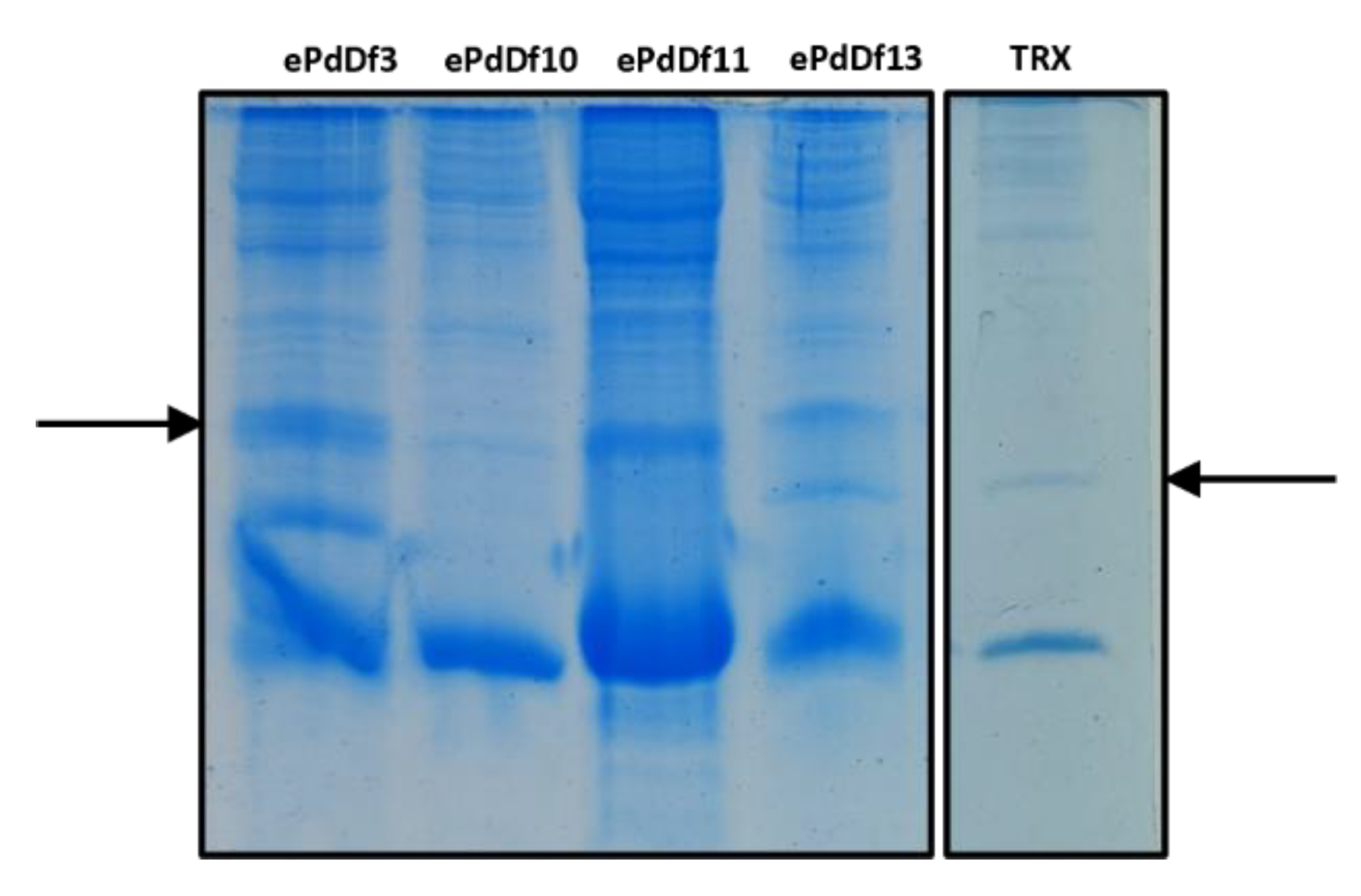
The four selected defensins (PdDf3, PdDf10, PdDf11, and PdDf13) were expressed in Escherichia coli as HisTag-Trx-defensin fusion proteins. In all cases, SDS–PAGE analysis of the soluble fractions revealed bands of approximately 17–19 kDa, corresponding to the expected fusion proteins (HisTag-Trx ≈ 12 kDa fused to defensins of 5–7 kDa) (Supplementary Figure S.1). This confirmed successful recombinant production and provided crude extracts suitable for antifungal screening as well as starting material for purification. Inspection of the SDS–PAGE profiles also revealed differences in the relative intensity of the fusion protein bands among the constructs (Figure A.1). The band corresponding to PdDf3 appeared markedly more intense, followed by PdDf11, whereas PdDf13 and PdDf10 showed comparatively faint bands, even weaker than that of the HisTag-Trx control. These differences suggest variations in recombinant expression levels that should be considered when interpreting the antifungal activity observed in crude extracts.
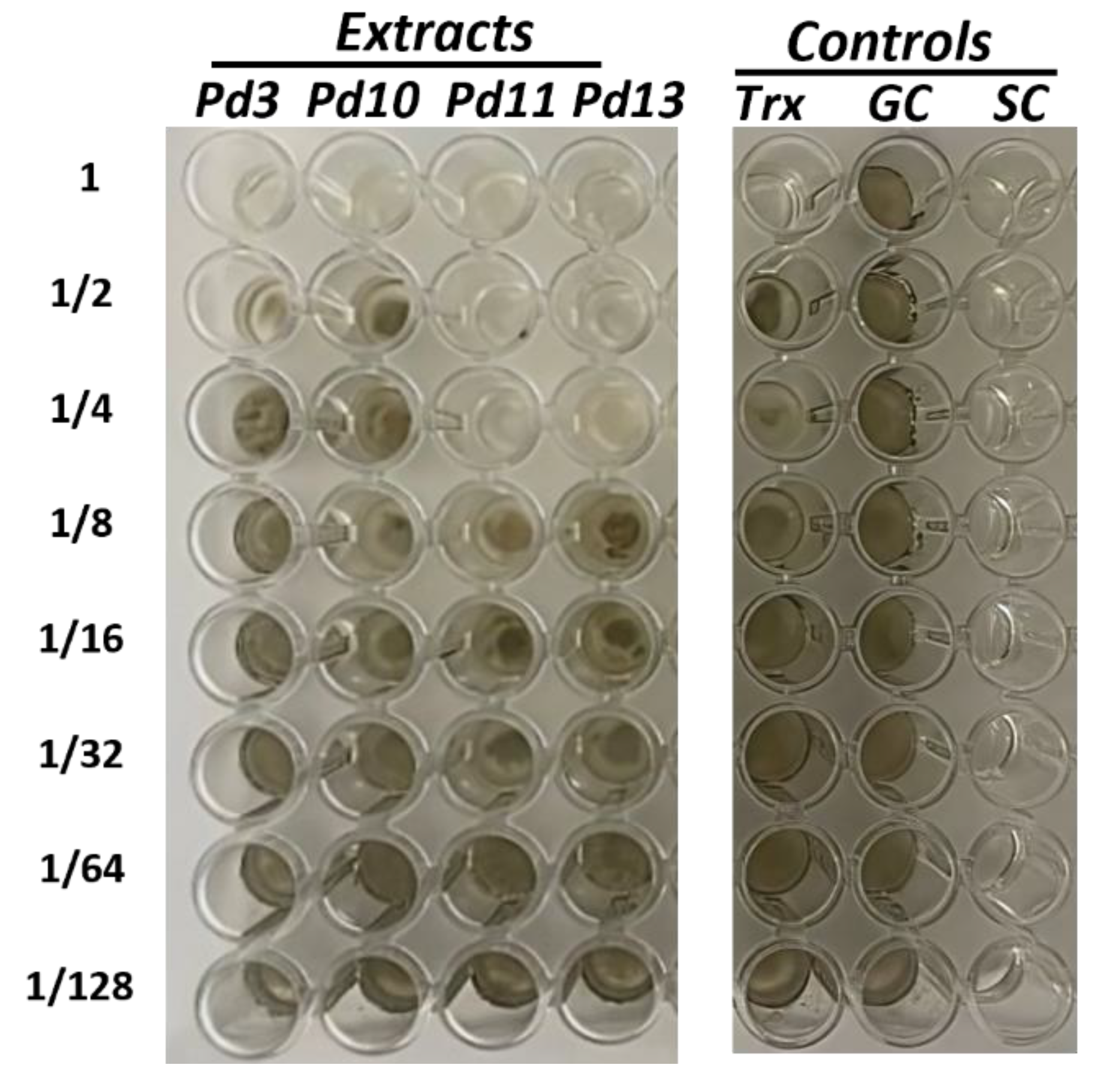
The antifungal potential was initially evaluated using the crude extracts directly (soluble phase of recombinant E. coli cultures). B. cinerea was exposed to the extract of each defensin fusion protein (HisTag-Trx-defensin) and to the extract of HisTag-Trx production (without defensin) as a control. After seven days of incubation, extracts showing sporulation levels equal to or lower than those of the recombinant HisTag-Trx control were considered active. Under these conditions, PdDf11 and PdDf13 extracts inhibited sporulation, whereas PdDf3 and PdDf10 did not exceed the inhibition observed with the control (Figure 2). Based on these results, PdDf11 and PdDf13 were selected for purification and in vitro evaluation. After purification and removal of the fusion partner (see Material and Methods section), mature peptides of approximately 5–7 kDa were obtained with high purity, as confirmed by SDS–PAGE. The production yield of free defensins was 2.7 and 1.2 µmol L⁻¹ of culture for PdDf11 and PdDf13, respectively.

3.3. Antifungal Activity of Purified Peptides Against B. cinerea

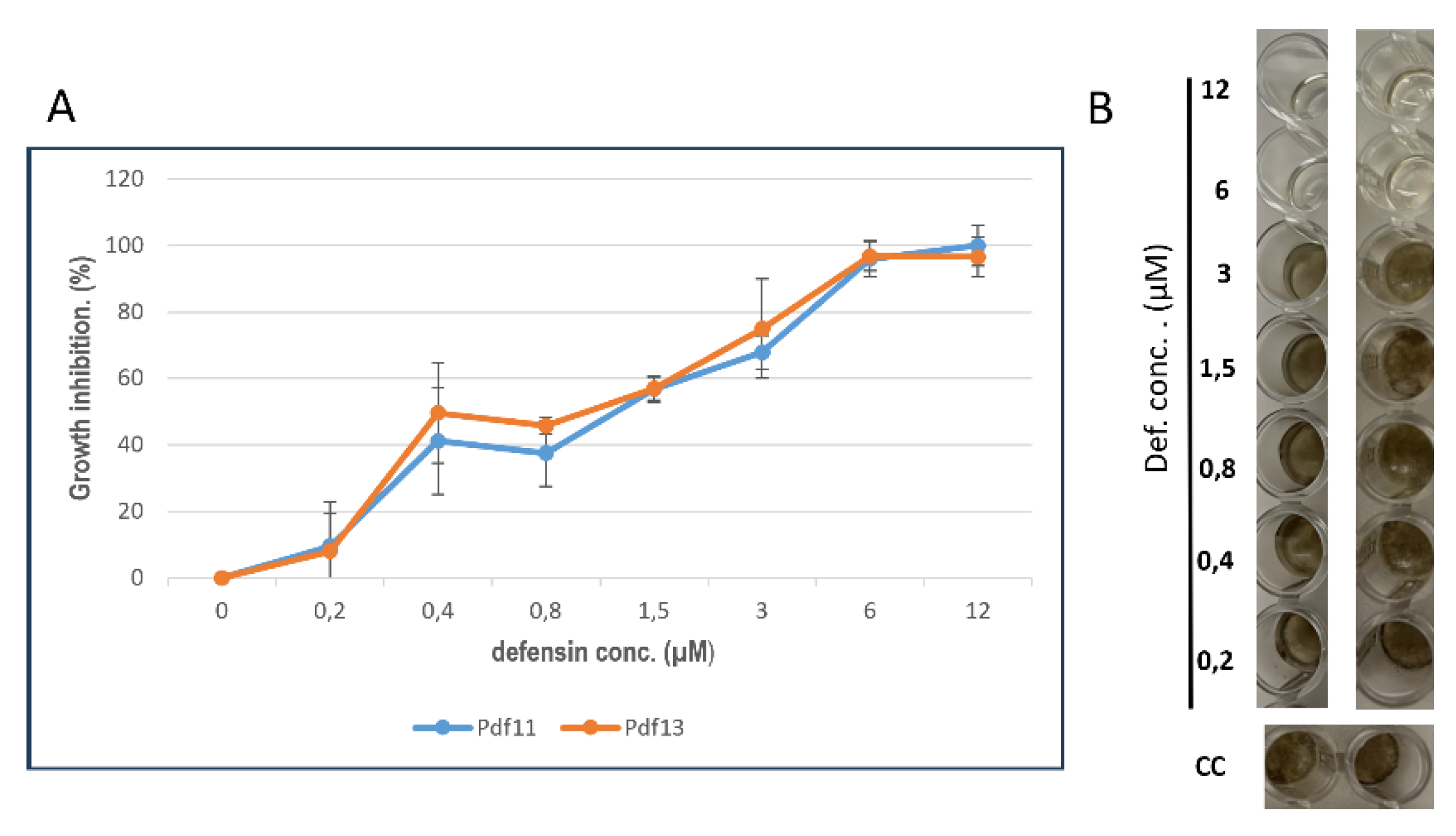
Growth inhibition assays showed that both peptides completely inhibited the development of B. cinerea at a minimum inhibitory concentration (MIC) of 6 µM (Figure 3). At lower concentrations, partial inhibition was observed. At 3 µM, PdDf11 showed 68% inhibition (±5%), while PdDf13 exhibited 75% inhibition (±15%). At 1.5 µM, both peptides produced approximately 57% inhibition (±4% for PdDf11 and ±3% for PdDf13).
These results confirmed the antifungal activity of PdDf11 and PdDf13 against B. cinerea under in vitro conditions and provided the basis for subsequent evaluation of their protective effect in apples during cold storage.

3.4. Protective Activity in Apples

The peptides’ ability to control Botrytis cinerea infection was evaluated in Red Delicious apples at two peptide concentrations, corresponding to 1× MIC and 0.5× MIC. As a growth control, apples were inoculated with B. cinerea spores in the absence of defensins. After 30 days of storage at 0 °C, disease incidence (percentage of infected wounds) and disease severity (wound size) was evaluated.
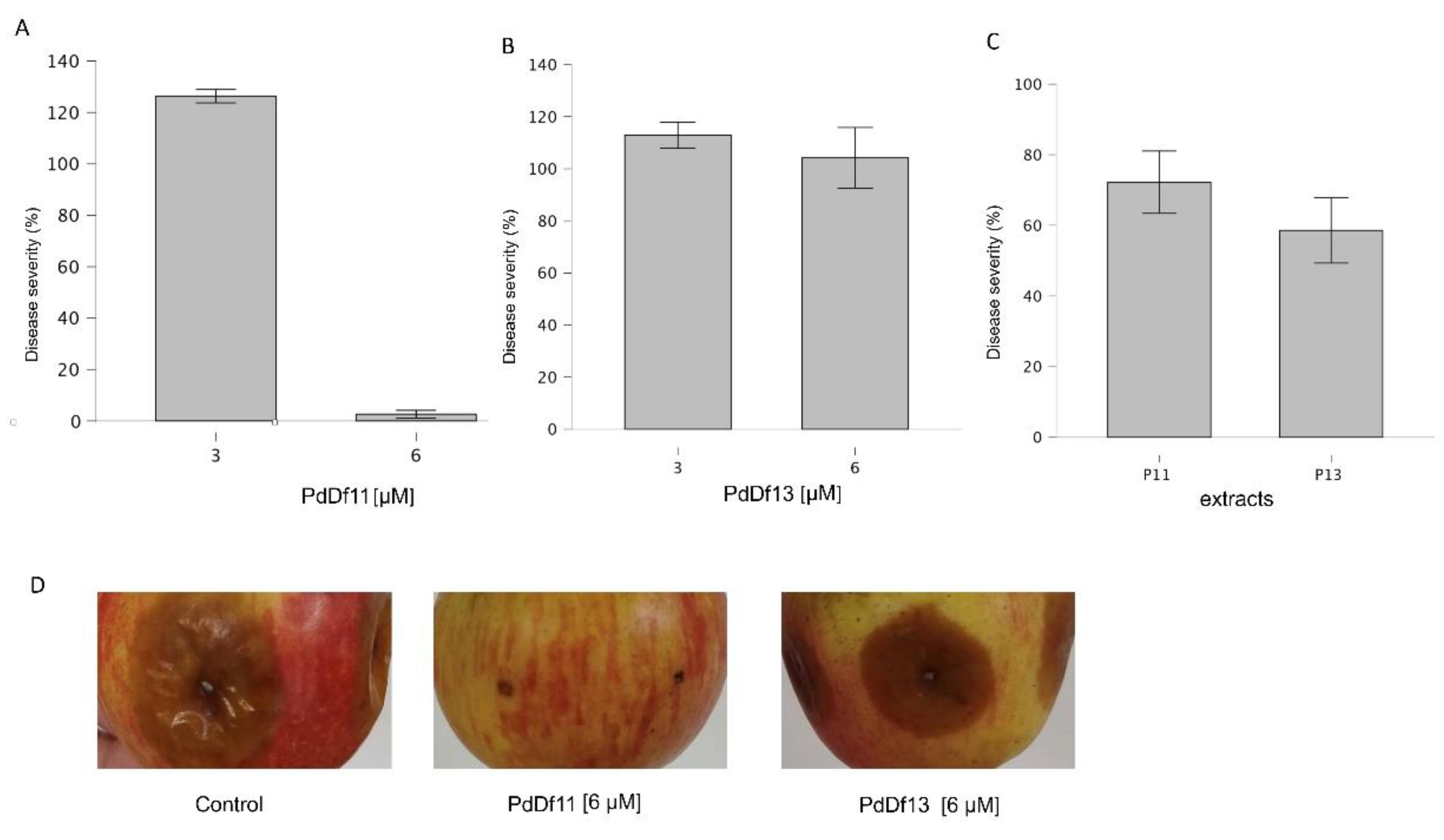
Under these conditions, treatment with PdDf11 at 6 µM showed a strong protective effect, reducing disease incidence to 14% and disease severity to 3% (Figure 4A). However, at 3 µM PdDf11 did not provide protection, with both incidence and severity reaching 100%. In contrast, PdDf13 did not reduce disease development at either tested concentration, with incidence and severity remaining close to 100% (Figure 4B).
In parallel, the effectiveness of crude extracts containing the same defensins was also evaluated in Red Delicious apples. Since these extracts had shown antifungal activity in the initial in vitro screening, this experiment was designed to explore the feasibility of using cell lysates directly as potential biocontrol agents, avoiding purification steps and facilitating future practical applications. However, under the tested conditions, none of the extracts provided protection against the disease, showing incidence and severity levels comparable to those of the untreated control (Figure 4C).
Overall, the fruit assays demonstrated that PdDf11 significantly reduced both disease incidence and severity at the highest concentration tested, whereas PdDf13 and the crude extracts did not protect apples against B. cinerea infection.

4. Discussion

This study presents an integrated strategy for identifying and evaluating plant-derived antimicrobial peptides from a South American native species as potential biocontrol agents against B. cinerea. The experimental strategy combined different levels of evaluation. First, a rapid screening method using fusion protein extracts enabled efficient and cost-effective identification of the most promising defensins without requiring purification. The selected defensins were subsequently purified and evaluated, confirming their antifungal functionality in vitro. Finally, the effectiveness of these peptides was validated in apple infection assays, providing key evidence of their potential as alternatives to conventional fungicides. In parallel, a more application-oriented approach was explored by directly evaluating the effectiveness of crude cellular extracts in apples, in order to assess their feasibility as a low-cost strategy for postharvest disease control.
The expression of the four selected defensins from P. dubium in E. coli enabled the production of active Trx-HisTag fusion proteins suitable for both rapid screening and purification. The in vitro screening identified PdDf11 and PdDf13 as the most active variants against B. cinerea, demonstrating that this strategy is effective for selecting candidate peptides from a larger repertoire.
The relative intensity of the recombinant bands observed in SDS–PAGE also provides additional context for interpreting the crude extract screening. PdDf3 showed the strongest expression among the constructs, followed by PdDf11, whereas PdDf13 and PdDf10 exhibited comparatively faint bands, even weaker than that of the HisTag-Trx control. Despite this lower apparent expression level, crude extracts containing PdDf11 and PdDf13 inhibited B. cinerea sporulation, suggesting a comparatively higher intrinsic antifungal potency for these defensins. In contrast, PdDf3, which showed the highest expression level, did not display detectable antifungal activity under the conditions tested. PdDf10 also showed low expression and no detectable activity in this assay; therefore, a potential antifungal effect cannot be completely excluded. Notably, crude extracts containing PdDf10 and PdDf3 have shown antimicrobial activity against other microorganisms in independent assays (data not shown), indicating that the recombinant proteins present in these extracts were biologically active.
To optimise the screening method, a previously characterised defensin (EcgDf1) was used as a reference [21]. This peptide had been previously studied in our laboratory, and its antifungal activity had been documented in earlier work. Its inclusion allowed adjustment of the assay conditions to directly evaluate the activity of recombinant defensins from soluble extracts obtained after cell lysis, without the need for prior purification. This approach facilitates the rapid preselection of the most promising candidates for subsequent functional assays.
Assays performed with purified peptides showed that PdDf11 and PdDf13 completely inhibited the growth of B. cinerea at a minimum inhibitory concentration (MIC) of 6 µM. At lower concentrations, both peptides showed partial inhibition of fungal growth: at 3 µM, PdDf13 exhibited 75% inhibition and PdDf11 68%, while at 1.5 µM an inhibition of 57% was observed. These results confirm that both defensins display comparable antifungal activity against B. cinerea. The inclusion of the atypical defensin PdDf13 in this study posed an additional challenge, as the functional properties of this peptide type remain poorly characterised. Nevertheless, its evaluation proved valuable, as the results indicate that despite its noncanonical structure, PdDf13 retains the typical architecture of plant defensins (unpublished results) and exhibits robust antifungal activity against B. cinerea. This finding represents an important step toward understanding atypical defensins and their potential as sources of novel antimicrobial agents.
Differences were observed between the in vitro assays and the fruit experiments. Despite the similar behaviour of both peptides (PdDf11 and PdDf13) in vitro, only PdDf11 maintained high efficacy in apples. These differences may be related to factors inherent to the fruit environment, such as peptide absorption, diffusion within wounds, interactions with the fruit’s cellular components, pH conditions and other physiological properties that may influence antifungal activity. Similar discrepancies have previously been reported for other antimicrobial peptides [12,25,26], indicating that in vitro activity does not always translate directly into effective fruit protection. The ability of PdDf11 to maintain strong antifungal activity under these complex conditions suggests that this defensin may possess physicochemical properties that favour its stability or functionality within the fruit environment.
The efficacy achieved with PdDf11 is noteworthy (86% and 97% reduction in disease incidence and severity, respectively). In earlier studies, purified peptides achieved more moderate reductions (42–56%), in some cases comparable to those obtained with commercial fungicides [12,25]. These findings highlight the great potential of PdDf11 as a biocontrol agent and reinforce the relevance of recombinant peptides as promising tools for the management of post-harvest fungal diseases in fruit.
The evaluation of crude extracts (the soluble fraction of recombinant production) directly in apples was considered an exploratory proof-of-concept approach to reducing known production costs. These costs may prevent purified peptides from being economically viable for large-scale industrial applications. For these purposes, PdDf11 is a good model for developing more practical application strategies, given the excellent levels of disease protection achieved with purified peptide. However, under the conditions analysed, no extract conferred protection against the disease. These observations do not entirely rule out the feasibility of this strategy. In previous unpublished studies conducted in our laboratory, a crude extract obtained by expressing a defensin from Maytenus ilicifolia showed promising activity against B. cinerea, reducing disease incidence to 50% and severity to 15%. Based on this precedent, future work will explore using PdDf11 extracts at higher concentrations to enhance their protective effect in fruit. The aim will be to increase peptide expression levels to raise its concentration in the crude extract; in other words, to increase the peptide-to-cellular-protein ratio in the soluble fraction.
Overall, PdDf11 emerges as a promising candidate for the postharvest control of B. cinerea in apples. Further studies will be required to evaluate optimal dosage, formulation strategies, spectrum of activity against other pathogens, stability under storage conditions, and safety or cytotoxicity aspects. It is worth noting that, unlike commercial fungicides that are typically applied in optimised formulations, the peptides evaluated in this study were tested in simple solutions. The development of suitable formulations could therefore significantly improve their stability and efficacy under postharvest conditions, as has been demonstrated for other peptide-based antifungals. Taken together, this work represents an important step toward developing peptide-based strategies for postharvest disease management and highlights the potential of recombinant plant defensins from native South American species as safe and sustainable alternatives to conventional chemical fungicides.

Author Contributions

Conceptualization, M.B.V. and G.C.; methodology, M.B.V., G.C. and E.A.; investigation, R.C.R., R.B. and M.R.F.A.; formal analysis, R.C.R. and R.B.; visualization, R.C.R., R.B. and M.B.V.; writing—original draft preparation, M.B.V.; writing—review and editing, M.B.V. and G.C.; supervision, M.B.V., G.C. and E.A.; funding acquisition, G.C. and M.B.V. All authors have read and agreed to the published version of the manuscript.

Funding

This research was funded by the National Agency for Research and Innovation (ANII, Uruguay), grant number FCE_1_2019_1_156473. R.C.R. was supported by a doctoral fellowship from ANII. Additional funding was provided by PEDECIBA through researcher support funds to G.C. and M.B.V., and by the full-time dedication program of Universidad de la República. Further support was provided by the Centro de Estudios Interdisciplinarios de Biodiversidad Orientada a Aplicaciones en Salud (CEIBOS), funded by the Espacio Interdisciplinario of Udelar. The APC was funded by the full-time dedication program of Universidad de la República.

Institutional Review Board Statement

Not applicable.

Data Availability Statement

The data presented in this study are available on request from the corresponding author.

Acknowledgments

The authors would like to thank Dr. Silvana Vero for providing access to the cold storage facilities used for the apple assays.

Conflicts of Interest

The authors declare no conflicts of interest. E.A. is CEO of Polymera; however, this company had no role in the design of the study; in the collection, analyses, or interpretation of data; in the writing of the manuscript; or in the decision to publish the results. The funders had no role in the design of the study; in the collection, analyses, or interpretation of data; in the writing of the manuscript; or in the decision to publish the results.

Abbreviations

The following abbreviations are used in this manuscript:
AMP antimicrobial Peptide
IPTG isopropyl β-D-1-thiogalactopyranoside
MIC minimum inhibitory concentration
LB Luria–Bertani medium
PDA potato dextrose agar medium
MEB malt extract broth
SDS–PAGE sodium dodecyl sulfate–polyacrylamide gel electrophoresis
IMAC immobilized metal affinity chromatography
TRX thioredoxin
OD₆₀₀ optical density at 600 nm

Appendix A

Table A1. Primers used for cloning defensins into the pET32 vector.
Primer Sequence (5’→3’)
Pdf13/32_F1 AAACCTGTATTTTCAGGGATCCCAGGACGATACCTCATCCATCC
Pdf13/32_R1 CAGCTGCCGGATCCTTAAAAAAGGCCAAACAATACCG
Pdf11/32_F3 AAACCTGTATTTTCAGGGATCCGCGTTAAGAATCCCTGAACATA
Pdf11/32_R3 CAGCTGCCGGATCCTTAGAGAGGTGGGTCTTTACAATAATAAG
Pdf10/32_F4 AAACCTGTATTTTCAGGGATCCAGAAGGTTTTGTTCAGTGGAGCTAG
Pdf10/32_R4 CAGCTGCCGGATCCTTAAGGGCAGATATAGGAGCAGACG
Oligonucleotide sequences used for insertion of PdDf10, PdDf11 and PdDf13 genes into pET32 vector by Restriction-Free cloning.
Figure A1. Visualisation of recombinant defensins. SDS-PAGE (15%) analysis of cellular extracts expressing PdDf3, PdDf10, PdDf11, and PdDf13. The HisTag-Trx construct lacking the defensin domain (Trx) was included as a control and was analysed on a separate gel. The left black arrow indicates the expected position of the HisTag-Trx-defensin fusion protein (~20 kDa), whereas the right black arrow indicates the HisTag-Trx protein (~15 kDa).
Preprints 204945 g0a1

References

  1. Longa, C. M. O.; et al. Fungal Biodiversity of Apple Bark, Leaves, Stems, and Fruit Under Rain Shelters with Reduced Fungicide Schedule. Agriculture 2024, 15, 17. [Google Scholar] [CrossRef]
  2. Kemp, C. Apple revival: how science is bringing historic varieties back to life. Nature 2023, 622, 446–449. [Google Scholar] [CrossRef]
  3. Pimenta, R. S.; Morais, P. B.; Rosa, C. A.; Corrêa, A. Utilization of Yeasts in Biological Control Programs. In Yeast Biotechnology: Diversity and Applications; Satyanarayana, T., Kunze, G., Eds.; Springer Netherlands: Dordrecht, 2009; pp. 199–214. [Google Scholar] [CrossRef]
  4. Watkins, C.; Kupferman, E.; Rosenberger, D. Apple the commercial storage of fruits, vegetables, and florist and nursery stocks. 2004. [Google Scholar]
  5. Lawal, H.; et al. Biocontrol and Nanotechnology Strategies for Postharvest Disease Management in Fruits and Vegetables: A Comprehensive Review. Foods 14, 2782. [CrossRef]
  6. Sharma, R. R.; Singh, D.; Singh, R. Biological control of postharvest diseases of fruits and vegetables by microbial antagonists: A review. Biol. Control 2009, 50, 205–221. [Google Scholar] [CrossRef]
  7. Tripathi y, P.; Dubey, N. K. Exploitation of natural products as an alternative strategy to control postharvest fungal rotting of fruit and vegetables. Postharvest Biol. Technol. 2004, 32, 235–245. [Google Scholar] [CrossRef]
  8. Nadar, S.; Khan, T.; Patching, S. G.; Omri, A. Development of Antibiofilm Therapeutics Strategies to Overcome Antimicrobial Drug Resistance. Microorganisms 2022, 10, 303. [Google Scholar] [CrossRef]
  9. Tang, R.; et al. Application of antimicrobial peptides in plant protection: making use of the overlooked merits. Front. Plant Sci. 2023, 14, 1139539. [Google Scholar] [CrossRef]
  10. Liu, Z.; Zeng, M.; Dong, S.; Xu, J.; Song, H.; Zhao, Y. Effect of an antifungal peptide from oyster enzymatic hydrolysates for control of gray mold (Botrytis cinerea) on harvested strawberries. Postharvest Biol. Technol. 2007, 46, 95–98. [Google Scholar] [CrossRef]
  11. Zhang, B. Peptides derived from tryptic hydrolysate of Bacillus subtilis culture suppress fungal spoilage of table grapes. Food Chem. 2018, 239, 520–528. [Google Scholar] [CrossRef] [PubMed]
  12. Huang, Y.; Gao, L.; Lin, M.; Yu, T. Recombinant expression of antimicrobial peptides in Pichia pastoris: A strategy to inhibit the Penicillium expansum in pears. Postharvest Biol. Technol. 2021, 171, 111298. [Google Scholar] [CrossRef]
  13. Li, J.; Hu, S.; Jian, W.; Xie, C.; Yang, X. Plant antimicrobial peptides: structures, functions, and applications. Bot. Stud. 2021, 62, 5. [Google Scholar] [CrossRef]
  14. Lima, A. M.; et al. Plant antimicrobial peptides: An overview about classification, toxicity and clinical applications. Int. J. Biol. Macromol. 2022, 214, 10–21. [Google Scholar] [CrossRef]
  15. Zou, F.; et al. Plant antimicrobial peptides: a comprehensive review of their classification, production, mode of action, functions, applications, and challenges. Food Funct. 2023, 14, 5492–5515. [Google Scholar] [CrossRef]
  16. Kovaleva, V.; Bukhteeva, I.; Kit, O. Y.; Nesmelova, I. V. Plant Defensins from a Structural Perspective. Int. J. Mol. Sci. 2020, 21, 5307. [Google Scholar] [CrossRef] [PubMed]
  17. Rodríguez-Decuadro, S. Antimicrobial peptides in the seedling transcriptome of the tree legume Peltophorum dubium. Biochimie 2021, 180, 229–242. [Google Scholar] [CrossRef]
  18. Van Der Weerden, N. L.; Anderson, M. A.; et al. Plant defensins: Common fold, multiple functions. Fungal Biol. Rev. 2013, 26, 121–131. [Google Scholar] [CrossRef]
  19. Bond y, S. R.; Naus, C. C. RF-Cloning.org: an online tool for the design of restriction-free cloning projects. Nucleic Acids Res. 2012, 40, W209–W213. [Google Scholar] [CrossRef] [PubMed]
  20. Van Den Ent y, F.; Löwe, J. RF cloning: A restriction-free method for inserting target genes into plasmids. J. Biochem. Biophys. Methods 2006, 67, 67–74. [Google Scholar] [CrossRef] [PubMed]
  21. Rodríguez-Decuadro, S.; Dans, P. D.; Borba, M. A.; Benko-Iseppon, A. M.; Cecchetto, G. Gene isolation and structural characterization of a legume tree defensin with a broad spectrum of antimicrobial activity. Planta 2019, 250, 1757–1772. [Google Scholar] [CrossRef]
  22. Arrarte, E.; Garmendia, G.; Rossini, C.; Wisniewski, M.; Vero, S. Volatile organic compounds produced by Antarctic strains of Candida sake play a role in the control of postharvest pathogens of apples. Biol. Control 2017, 109, 14–20. [Google Scholar] [CrossRef]
  23. Vero, S.; Mondino, P.; Burgueño, J.; Soubes, M.; Wisniewski, M. Characterization of biocontrol activity of two yeast strains from Uruguay against blue mold of apple. Postharvest Biol. Technol. 2002, 26, 91–98. [Google Scholar] [CrossRef]
  24. Madden, L. V.; Hughes, G.; Van Den Bosch, F. The Study of Plant Disease Epidemics; The American Phytopathological Society, 2017. [Google Scholar] [CrossRef]
  25. Badosa, E. Sporicidal Activity of Synthetic Antifungal Undecapeptides and Control of Penicillium Rot of Apples. Appl. Environ. Microbiol. 2009, 75, 5563–5569. [Google Scholar] [CrossRef] [PubMed]
  26. Delgado, J.; Ballester, A.-R.; Núñez, F.; González-Candelas, L. Evaluation of the activity of the antifungal PgAFP protein and its producer mould against Penicillium spp postharvest pathogens of citrus and pome fruits. Food Microbiol. 2019, 84, 103266. [Google Scholar] [CrossRef] [PubMed]
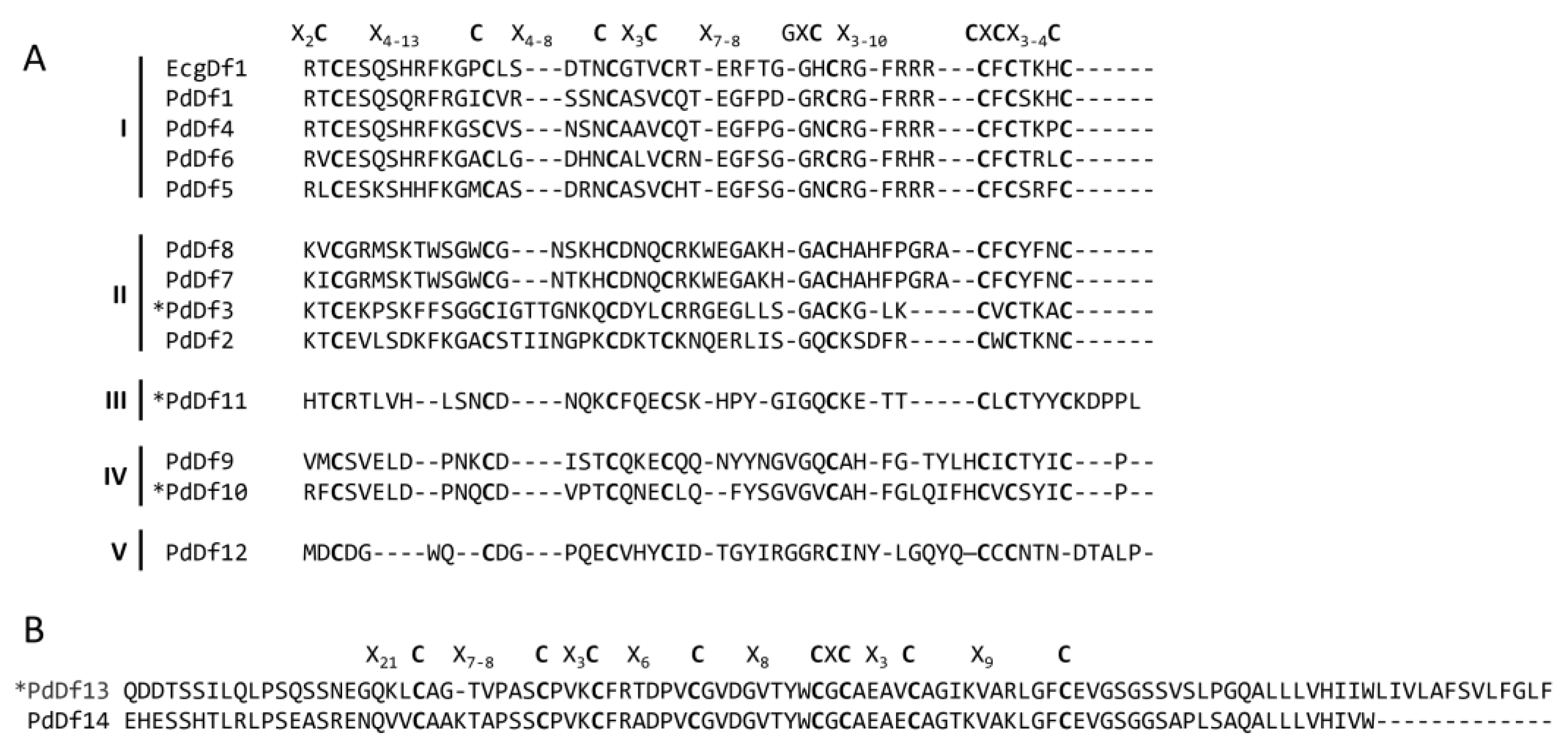
Figure 1. Defensin sequences identified in P. dubium. A) Typical defensins. B) Atypical defensins. The sequences corresponding to the mature peptides [17] and the cysteine ​​rearrangements are shown. (*) indicates the defensins selected in this work.
Preprints 204945 g001
Figure 2. Antifungal activity of crude extracts. B. cinerea incubated at 28 °C for 7 days. Pd3-Pd13: crude extracts from the production of HisTag-Trx-defensin fusion proteins PdDf3, PdDf10, PdDf11 and PdDf13. Trx: crude extract containing HisTag-Trx (without defensin). GC: growth control without extracts; SC: sterility control. The extract dilutions are indicated on the left. Representative photo of three independent replicates.
Preprints 204945 g002
Figure 3. Antifungal activity of purified peptides PdDf11 and PdDf13 against B. cinerea. (A) Percentage inhibition, calculated from absorbance measured at 590 nm after 3 days of incubation. Error bars represent the standard deviation of independent replicates. (B) Representative visual assessment of fungal growth after 7 days at 28 °C. Defensin concentrations are indicated on the left. CC, B. cinerea growth control. The minimum inhibitory concentration (MIC) was 6 µM for both peptides.
Preprints 204945 g003
Figure 4. Severity of rot caused by B. cinerea in ‘Red Delicious’ apples during storage at 0 °C for 30 days. (A) PdDf11 at 3 and 6 µM. (B) PdDf13 at 3 and 6 µM. (C) Non-purified extracts of PdDf11 (P11) and PdDf13 (P13). Disease severity (%) was calculated based on lesion diameter measurements. Bars represent the standard error (n = 30). (D) Representative images of apples showing disease symptoms: control fruit inoculated with B. cinerea, fruit treated with 6 µM PdDf11, and fruit treated with 6 µM PdDf13.
Preprints 204945 g004
Disclaimer/Publisher’s Note: The statements, opinions and data contained in all publications are solely those of the individual author(s) and contributor(s) and not of MDPI and/or the editor(s). MDPI and/or the editor(s) disclaim responsibility for any injury to people or property resulting from any ideas, methods, instructions or products referred to in the content.
Copyright: This open access article is published under a Creative Commons CC BY 4.0 license, which permit the free download, distribution, and reuse, provided that the author and preprint are cited in any reuse.