

Submitted:
24 March 2026
Posted:
24 March 2026
You are already at the latest version
Abstract
Severe nasal vestibular stenosis in brachycephalic cats involves species-specific anatomi-cal structures distinct from those in dogs, often leading to a high recurrence rate even after standard surgical correction. This case report introduces an innovative surgical strategy for a refractory Exotic Shorthair cat presenting with obligate open-mouth breathing and complete nasal obstruction despite three previous surgical interventions. To remove the recurrent scar tissue and maximize the nasal vestibular lumen, a combined surgical ap-proach was performed, incorporating a modified Trader's technique, bilateral wedge re-section, and bilateral single pedicle advancement flaps. To maintain the acquired airway and prevent restenosis, a steroid-eluting bioabsorbable implant (PROPEL Contour) was placed within the resected nasal vestibule, marking its first application in veterinary medicine. Postoperatively, open-mouth breathing resolved immediately. At the three-month follow-up, normal nasal breathing was maintained without restenosis or nasal discharge, and no implant-related adverse effects or infections were observed. The concurrent application of radical structural resection and a PROPEL Contour implant ef-fectively suppresses tissue regrowth and maintains stable nasal patency, offering a highly promising therapeutic protocol for refractory feline nasal vestibular stenosis.
Keywords:
brachycephalic obstructive airway syndrome
; BOAS
; exotic shorthair
; feline
; nasal vestibular stenosis
; PROPEL contour
; steroid-eluting stent
; modified Trader’s technique
1. Introduction
Brachycephalic cat breeds, such as the Exotic Shorthair and Persian, have gained immense popularity. Their skulls are characterized by a rounded shape resulting from the extreme shortening of the facial bones and neurocranium, exhibiting infant-like anatomical features. However, these profound morphological alterations driven by selective breeding are a major cause of the increased prevalence of conformation-related disorders. Clinically, this is deeply associated with the development of Brachycephalic Obstructive Airway Syndrome (BOAS) and chronic epiphora, which severely compromise the patient’s quality of life [1].
BOAS is a common cause of inspiratory obstruction in brachycephalic dogs, typically accompanied by anatomical abnormalities such as stenotic nares, tracheal hypoplasia, an elongated soft palate, everted laryngeal saccules, and laryngeal collapse [2]. These abnormalities lead to varying degrees of dyspnea, stertor/stridor, exercise intolerance, and gastrointestinal issues [3]. Conversely, clinical reports of feline BOAS are less frequent, and the related literature remains very limited. Although an elongated soft palate has been documented in a Persian cat presenting with recurrent dyspnea and pulmonary edema [4], brachycephalic cats generally present primarily with stenotic nares as an isolated clinical sign, lacking the typical multi-level BOAS components seen in dogs.
Notably, the anatomical etiology of stenotic nares differs visually and structurally between cats and dogs. In dogs, stenosis is primarily driven by the axial deviation of the alar wings and alar folds. In contrast, axial deviation is relatively less significant in cats; instead, obstruction is predominantly caused by redundant skin folds at the junction where the ventral floor of the nostril meets the haired skin of the lip, leading to ventral nasal occlusion. To address this feline-specific anatomical difference, surgical approaches such as bilateral single pedicle advancement flaps following the excision of the redundant ventral nasal fold have been attempted to alleviate clinical signs of airway obstruction [5].
To effectively manage refractory recurrent nasal vestibular stenosis, a PROPEL Contour implant (Medtronic, Minneapolis, MN, USA) was utilized in an off-label capacity in this case. Originally designed to maintain the patency of sinus ostia following functional endoscopic sinus surgery in humans, this bioabsorbable stent is composed of poly(L-lactide-co-glycolide). It acts as a physical scaffold to prevent postoperative adhesions, while simultaneously releasing coated mometasone furoate over approximately 30 days to profoundly suppress local edema and inflammation. Human clinical studies have demonstrated that such drug-eluting stents significantly reduce postoperative scar tissue formation and the need for subsequent surgical interventions [6].
Severe nasal vestibular stenosis and nasal obstruction in brachycephalic cats have a notoriously high recurrence rate following conventional surgical correction due to these species-specific anatomical complexities. The objective of this report is to describe a novel surgical treatment strategy—combining a radical multi-step alarplasty with the insertion of a steroid-eluting implant (PROPEL Contour)—and its clinical outcome in a refractory Exotic Shorthair patient experiencing complete nasal obstruction despite three previous corrective surgeries.
2. Materials and Methods
2.1. Case and Ethical Considerations
The medical records of a brachycephalic cat that underwent surgical correction for refractory nasal vestibular stenosis at EUM Animal Medical Center were reviewed. This study involved a non-experimental animal. Established, internationally recognized best practices for veterinary clinical care were followed. Informed verbal consent was obtained from the owner for the procedures performed.
2.2. Diagnosis of Refractory Nasal Vestibular Stenosis
Diagnosis was based on the macroscopic evaluation revealing complete bilateral occlusion of the nasal cavities, clinical signs indicative of severe upper airway obstruction (obligate open-mouth breathing and severe dyspnea), and the primary complaint of recurrent stenosis. The patient had a history of three previous failed surgical attempts, culminating in total re-occlusion.
2.3. Preoperative Evaluation
Collected data included signalment, clinical history, primary complaints, physical examination findings, and preoperative imaging. The patient was a neutered male Exotic Shorthair born in February 2019, weighing 3.3 kg. A significant weight loss (from 4.1 kg to 3.3 kg) was documented over the 6 months prior to presentation. Computed tomography (CT) was utilized to assess structural abnormalities. Imaging revealed severe anterior nasal obstruction characterized by profound soft tissue proliferation extending from the nasal vestibule to the rostral nasal cavity, accompanied by turbinate hypertrophy (Figure 1).
2.4. Surgical Technique
The cat was pre-oxygenated for 5 min prior to anesthetic induction. The premedication protocol included midazolam (Midazolam Inj.; Bukwang Pharmaceutical Co., Ltd., Seoul, Republic of Korea) and butorphanol (Myungmoon Butorphanol tartrate Inj.; Myungmoon Pharm Co., Ltd., Seoul, Republic of Korea). Anesthesia was induced with propofol (Provive; Myungmoon Pharm Co., Ltd., Republic of Korea) and maintained with an inhalant anesthetic. During induction, a laryngeal examination was performed to evaluate for the presence of an elongated soft palate. The patient was positioned in sternal recumbency with the head slightly elevated using surgical towels placed under the mandible. The head was meticulously positioned to ensure the symmetry of facial features.
Modified Trader’s Technique
The traditional Trader’s technique was modified by adjusting the incision angle ventrally. A No. 11 scalpel blade was directed nearly vertically downward, angled towards the 5 o’clock position for the left nostril and the 7 o’clock position for the right nostril. Single incisions were made at these predetermined angles, effectively resecting the redundant soft tissue and skin folds on the ventral floor of the nares, which are the primary culprits of nasal obstruction in cats (Figure 2a). Hemorrhage was controlled by applying firm, direct pressure to the surgical site for 5 min using sterile cotton swabs soaked in chilled epinephrine solution (1:1000; Bosmin, Jeil Pharmaceutical Co., Ltd., Seoul, Republic of Korea). Leveraging the advantage of the original Trader’s technique, no sutures were placed at the incision sites, allowing the open wounds to heal naturally by secondary intention through granulation tissue formation and epithelialization.
Bilateral Wedge Resection
Using a No. 11 blade, a full-thickness wedge-shaped excision of the skin and underlying dorsolateral nasal cartilage was performed adjacent to the hairless margins of the nasal planum. Following the wedge resection, the cut margins were approximated and closed with simple interrupted sutures using 5-0 Prolene (Ethicon, Somerville, NJ, USA) (Figure 2b and Figure 2b’).
Single Pedicle Advancement Flap
Bilateral single pedicle advancement flaps were created using a No. 11 blade. The long axis of the flaps was oriented rostrocaudally. The base of the flap was located just inside the nasal cavity and extended rostrally toward the haired skin of the lip. The width of the flap encompassed the entire ventral floor of the nostril. Redundant ventral nasal folds at the entrance of the nostrils were excised en bloc. The flaps were advanced and closed with simple interrupted sutures using 5-0 Prolene (Ethicon, Somerville, NJ, USA) (Figure 2c and Figure 2c’).
Placement of a Steroid-Eluting Bioabsorbable Nasal Stent (PROPEL)
Following the resection of proliferated tissue and the physical expansion of the nares, the internal lumen was sequentially dilated using 4 Fr, 5 Fr, and 6 Fr feeding tubes. Subsequently, a steroid-eluting implant (PROPEL Contour) was placed intranasally within the resected nares and the medial aspect of the nasal vestibule (Figure 3).
2.5. Postoperative Care and Follow-Up
Postoperatively, the patient was admitted to the intensive care unit (ICU) and received 40% oxygen therapy for 3 days. Analgesia was provided using meloxicam (Metacam; Boehringer Ingelheim Vetmedica GmbH, Ingelheim am Rhein, Germany) and butorphanol. Weekly follow-ups were conducted during the first month post-discharge, and a CT scan was performed 3 months postoperatively to evaluate the structural outcome.
3. Results
3.1. Medical History and Preoperative Progression
The patient had a history of three previous surgical corrections for open-mouth breathing caused by nasal vestibular stenosis. Following the first surgery, the patient remained asymptomatic for approximately 13 months. However, clinical signs recurred, necessitating a second surgery. One week after the second procedure, open-mouth breathing resumed due to restenosis. A third surgery was performed one month later, utilizing electrocautery to additionally resect the nasal vestibule and secure patency. Despite this, complete restenosis occurred within 2 weeks. Subsequently, the dyspnea worsened, accompanied by marked anorexia and exercise intolerance.
3.2. Intraoperative Findings and Immediate Postoperative Course
A laryngeal examination performed prior to intubation revealed no evidence of an elongated soft palate. Immediately following the combined surgical procedure (multi-step nares expansion and implant placement), the patient’s open-mouth breathing resolved completely (Figure 4).
3.3. Postoperative Follow-Up and Prognosis
At 2 weeks postoperatively, the patient was sedated with dexmedetomidine in the preparation room for suture removal, with pre- and post-sedation oxygen supplementation. Laryngeal examination was repeated, revealing no abnormalities such as laryngeal edema or collapse. Following suture removal, a 6 Fr feeding tube was smoothly passed to physically confirm the maintenance of nasal patency. Sedation was successfully reversed with intramuscular atipamezole.
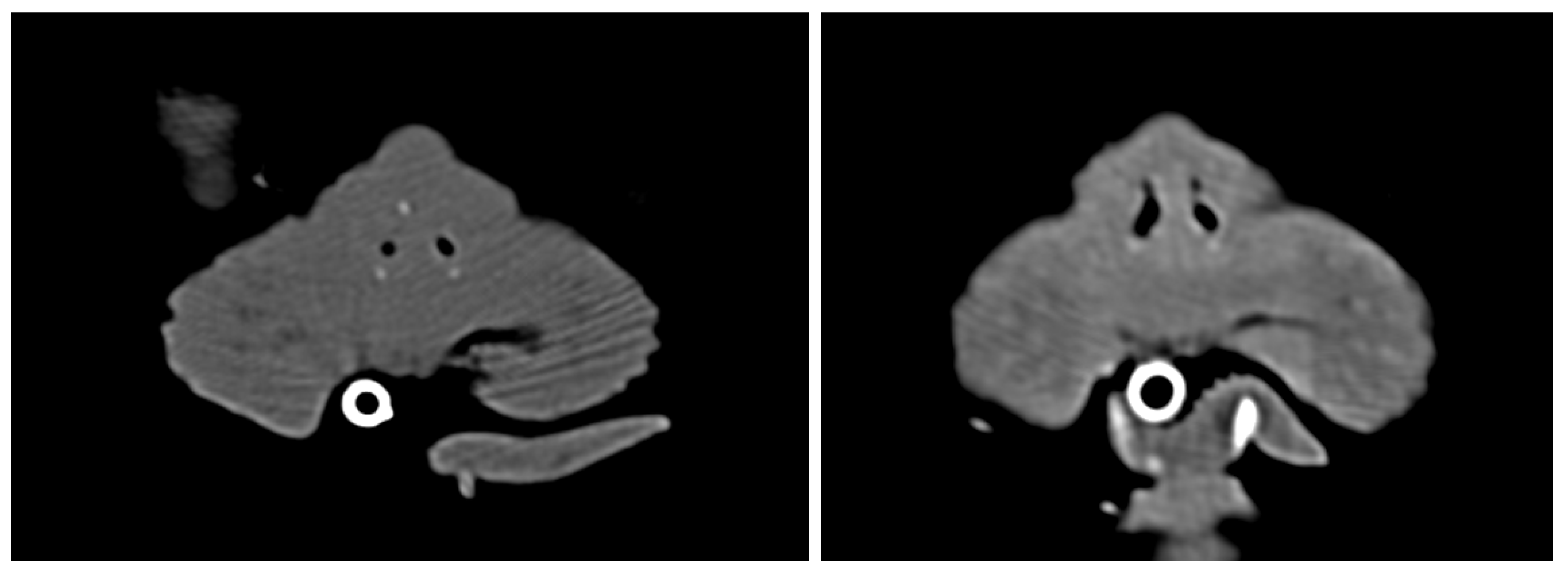
At the 2-month recheck, the patient’s body weight had significantly increased from 3.3 kg on the day of surgery to 3.7 kg. The preoperative anorexia and exercise intolerance showed marked improvement starting the day after discharge. A CT scan performed 3 months postoperatively confirmed that the nasal cavity remained normally patent and structurally stable, with no signs of restenosis (Figure 5 and Figure 6).
4. Discussion
This case represents the first report in veterinary medicine detailing the successful treatment of severe, refractory nasal vestibular stenosis in an Exotic Shorthair cat using a combination of a modified Trader’s technique for maximal luminal expansion and the application of a steroid-eluting bioabsorbable implant (PROPEL Contour) to maintain the acquired airway.
As the popularity of brachycephalic feline breeds rises, the clinical significance of feline BOAS is becoming increasingly apparent [7]. Due to extreme morphologic changes in the skull, the facial bones of brachycephalic cats are severely foreshortened, altering the geometry of the nasal airway and causing significant respiratory compromise [8]. The resulting increase in upper airway resistance not only causes dyspnea but can also precipitate fatal secondary complications, such as recurrent pulmonary edema triggered by an elongated soft palate in Persian cats. Therefore, securing unobstructed airflow at the nasal vestibule—the primary gateway of the upper airway—is paramount [4].
However, the pathophysiology of feline nasal vestibular stenosis differs markedly from that of dogs. In dogs, axial deviation of the alar folds is the primary cause of stenosis. In cats, airflow obstruction arises from species-specific, complex etiologies, including redundant ventral skin folds [5] and elongated dorsolateral nasal cartilages [9]. Consequently, applying conventional canine surgical techniques—such as simple wedge resection or ala-vestibuloplasty—to severe feline cases often fails to provide sufficient airflow and results in a refractory course with high recurrence rates due to the complex local anatomy.
To overcome the limitations of conventional techniques and achieve extreme dilation of the narrowed vestibule, a modified Trader’s technique was integrated into our approach. Originally devised by Trader [10] and validated in Shih Tzus by Huck et al. [11], this technique eschews conservative incision-and-suture methods in favor of aggressively amputating the obstructive alar soft tissue to provide immediate and maximal opening. Considering the feline anatomy and aiming to overcome intractable restenosis, we designed a strategic, multi-step surgical protocol to expand the entrance of the nasal cavity to its absolute maximum.
The first key step was the modified Trader’s technique (Figure 2a). Instead of lateral incisions, triangular wedge excisions were directed at the 5 o’clock and 7 o’clock positions. This radically excised the redundant soft tissue on the ventral floor of the vestibule, directly eliminating the primary cause of feline nasal occlusion and fundamentally securing vertical patency.
In the second step, bilateral wedge resections (Figure 2b and Figure 2b’) were performed on the lateral alae immediately after securing the space. The tension generated during the closure of these resections was strategically utilized to pull and migrate the remaining alar tissues laterally. As a result, the synergy between the modified Trader’s technique (removing ventral obstacles) and the wedge resection (providing lateral traction) maximized the surgical expansion of the vestibular lumen.
Following lateral expansion using tension, bilateral single pedicle advancement flaps (Figure 2c and Figure 2c’) were applied to draw the ventral vestibular tissue rostrally. While the modified Trader’s technique and wedge resection addressed vertical opening and lateral traction, respectively, the flaps dynamically repositioned the entire vestibular structure forward. This phased, multi-dimensional surgical approach successfully achieved comprehensive physical expansion of the medial, lateral, and ventral aspects of the nasal lumen, rather than merely securing space in a single direction.
However, such aggressive surgical resection to maximize the vestibule inevitably leaves extensive exposed wounds. The subsequent healing process—characterized by severe inflammatory responses, excessive granulation tissue formation, and scar contracture—carries an extremely high risk of secondary restenosis. Traditionally, silicone tubes or catheters have been utilized as stents to prevent luminal collapse. Yet, these can incite foreign body reactions, increase secretions, promote mucosal adhesions, and critically require a second general anesthesia for removal [12].
To fundamentally block these complications and stably maintain the maximized vestibular lumen, we implanted the PROPEL Contour into the nasal vestibule. In human otorhinolaryngology, PROPEL is a state-of-the-art device used to maintain airway patency following chronic sinusitis or choanal atresia surgeries. Notably, Galletti et al. reported the successful off-label use of PROPEL in a 7-day-old neonate’s narrow airway to suppress postoperative inflammation and secure physical patency [6].
Introducing PROPEL into the feline nasal vestibule—which is extremely narrow and vulnerable to inflammatory edema much like a human neonate’s airway—marks the pioneering application of a bioabsorbable steroid stent in veterinary medicine for the management of refractory nasal vestibular stenosis. In this case, PROPEL delivered two powerful synergistic effects. First, its biocompatible, self-expanding mesh structure acted as a mechanical scaffold, flawlessly preventing the physical collapse of the surgically maximized space during the healing phase. Second, as the implant degraded slowly in vivo over approximately 30 days, it continuously released mometasone furoate, a potent topical corticosteroid. This profoundly suppressed acute inflammation and granulation tissue hyperplasia, promoting stable mucosal re-epithelialization. Furthermore, because the implant is naturally bioabsorbed, the need for a secondary anesthetic event for stent removal was completely eliminated, serving as a groundbreaking advantage in reducing patient stress and anesthetic burden [13,14].
5. Conclusions
In conclusion, for refractory nasal vestibular stenosis in brachycephalic cats such as the Exotic Shorthair, the combination of maximized surgical airway expansion via a modified Trader’s technique and chemical-physical luminal maintenance using a PROPEL implant represents an innovative protocol. This approach simultaneously resolves the dual challenges of conventional surgeries: insufficient initial expansion and postoperative restenosis. This case holds significant academic and clinical value as it successfully demonstrates the veterinary application of a bioabsorbable steroid stent, securing the benefits of minimized mucosal trauma and the avoidance of secondary surgery. It provides crucial clinical evidence that may establish a new paradigm in feline brachycephalic respiratory surgery.
Author Contributions
Conceptualization, Hyeong-mok Kim and Hwi-yool Kim; methodology, Su-jin Son; formal analysis, Seok-ho Jeon; investigation, Hyeong-mok Kim, Su-jin Son; data curation, Hyeong-mok Kim and Seok-ho Jeon; writing—original draft preparation, Hyeong-mok Kim; writing—review and editing, Su-jin Son and Hwi-yool Kim; surgery, Su-jin Son; supervision, Hwi-yool Kim. All authors have read and agreed to the published version of the manuscript.
Funding
This research received no external funding.
Institutional Review Board Statement
Ethical review and approval were waived for this study, as it is a case report detailing the clinical management of a single patient based on established standards of veterinary care, and does not constitute experimental animal research.
Informed Consent Statement
Informed verbal consent was obtained from the owner of the animal involved in the study for the procedures and publication of this report.
Data Availability Statement
The data presented in this study are available on request from the corresponding author.
Conflicts of Interest
The authors declare no conflicts of interest. The off-label use of the medical device described in this report was independent of the manufacturer.
References
- Schlueter, C.; Budras, K.D.; Ludewig, E.; Mayrhofer, E.; Baezner, C.; Peppler, C.; Oechtering, G. Brachycephalic feline noses: CT and anatomical study of the relationship between head conformation and the nasolacrimal drainage system. J. Feline Med. Surg. 2009, 11, 891–900. [Google Scholar] [CrossRef] [PubMed]
- Mitze, S.; Barrs, V.R.; Beatty, J.A.; Hobi, S.; Bęczkowski, P.M. Brachycephalic obstructive airway syndrome: much more than a surgical problem. Vet. Q. 2022, 42, 213–223. [Google Scholar] [CrossRef] [PubMed]
- Musulin, A.; Nađ, M. A Comprehensive Review of Brachycephalic Obstructive Airway Disease: Pathophysiology, Diagnosis, Management, and Future Perspectives. Vet. Stanica 2024, 55, 731–743. [Google Scholar] [CrossRef]
- Corgozinho, K.B.; de Souza, H.J.M.; Ferreira, A.M.R.; da Silva, A.L.G. Recurrent pulmonary edema secondary to elongated soft palate in a cat. J. Feline Med. Surg. 2012, 14, 417–419. [Google Scholar] [CrossRef] [PubMed]
- Berns, C.N.; Ter Haar, G.; Brockman, D.J. Single pedicle advancement flap for treatment of feline stenotic nares: technique and results in five cases. J. Feline Med. Surg. 2020, 22, 1238–1242. [Google Scholar] [CrossRef] [PubMed]
- Galletti, C.; Portelli, D.; Ferrisi, M.G.; Gambino, F.; Iuculano, L.; Sanfilippo, B.; Ielo, G.; Freni, L.; Maniaci, A.; Ciodaro, F.; Freni, F.; Galletti, F.; Galletti, B. Endoscopic Endonasal Repair of Bilateral Choanal Atresia in a Neonate with Placement of a Steroid-Eluting Bioabsorbable Nasal Stent (PROPEL) Using a Customised Alternative Insertion Technique: A Case Report and Literature Review. J. Clin. Med. 2025, 14, 8282. [Google Scholar] [CrossRef] [PubMed]
- Farnworth, M.J.; Chen, R.; Packer, R.M.; Caney, S.M.; Gunn-Moore, D.A. Flat feline faces: is brachycephaly associated with respiratory abnormalities in the domestic cat (Felis catus)? PLoS ONE 2016, 11, e0161777. [Google Scholar] [CrossRef] [PubMed]
- Sieslack, J.; Farke, D.; Failing, K.; Kramer, M.; Schmidt, M.J. Correlation of brachycephaly grade with level of exophthalmos, reduced airway passages and degree of dental malalignment in Persian cats. PLoS ONE 2021, 16, e0254420. [Google Scholar] [CrossRef] [PubMed]
- Chen, Y.-C.; Chang, Y.-S. A novel surgical approach for feline stenotic nares: Bilateral wedge resection of the dorsal lateral nasal cartilage in seven cases. Vet. Med. Sci. 2023, 9, 2430–2437. [Google Scholar] [CrossRef] [PubMed]
- Trader, R.L. Nose operation. J. Am. Vet. Med. Assoc. 1949, 114, 210–211. [Google Scholar]
- Huck, J.L.; Stanley, B.J.; Hauptman, J.G. Technique and outcome of nares amputation (Trader’s technique) in immature shih tzus. J. Am. Anim. Hosp. Assoc. 2008, 44, 82–85. [Google Scholar] [CrossRef] [PubMed]
- Alsubaie, H.M.; Almosa, W.H.; Al-Qahtani, A.S.; Margalani, O. Choanal atresia repair with stents and flaps: a systematic review article. Allergy Rhinol. 2021, 12, 21526567211058052. [Google Scholar] [CrossRef] [PubMed]
- De Lorenzi, D.; Bertoncello, D.; Comastri, S.; Bottero, E. Treatment of acquired nasopharyngeal stenosis using a removable silicone stent. J. Feline Med. Surg. 2015, 17, 117–124. [Google Scholar] [CrossRef] [PubMed]
- Wang, P.-P.; Tang, L.-X.; Ge, W.; Zhang, J.-G.; Sun, W.-Y.; Wang, T.; Wen, J.-J.; Ouyang, Z.; Ni, X. Combination of the endoscopic septonasal flap technique and bioabsorbable steroid-eluting stents for repair of congenital choanal atresia in neonates and infants: a retrospective study. J. Otolaryngol. Head Neck Surg. 2021, 50, 51. [Google Scholar] [CrossRef] [PubMed]
Figure 1.
Preoperative appearance demonstrating severe bilateral nasal vestibular stenosis.
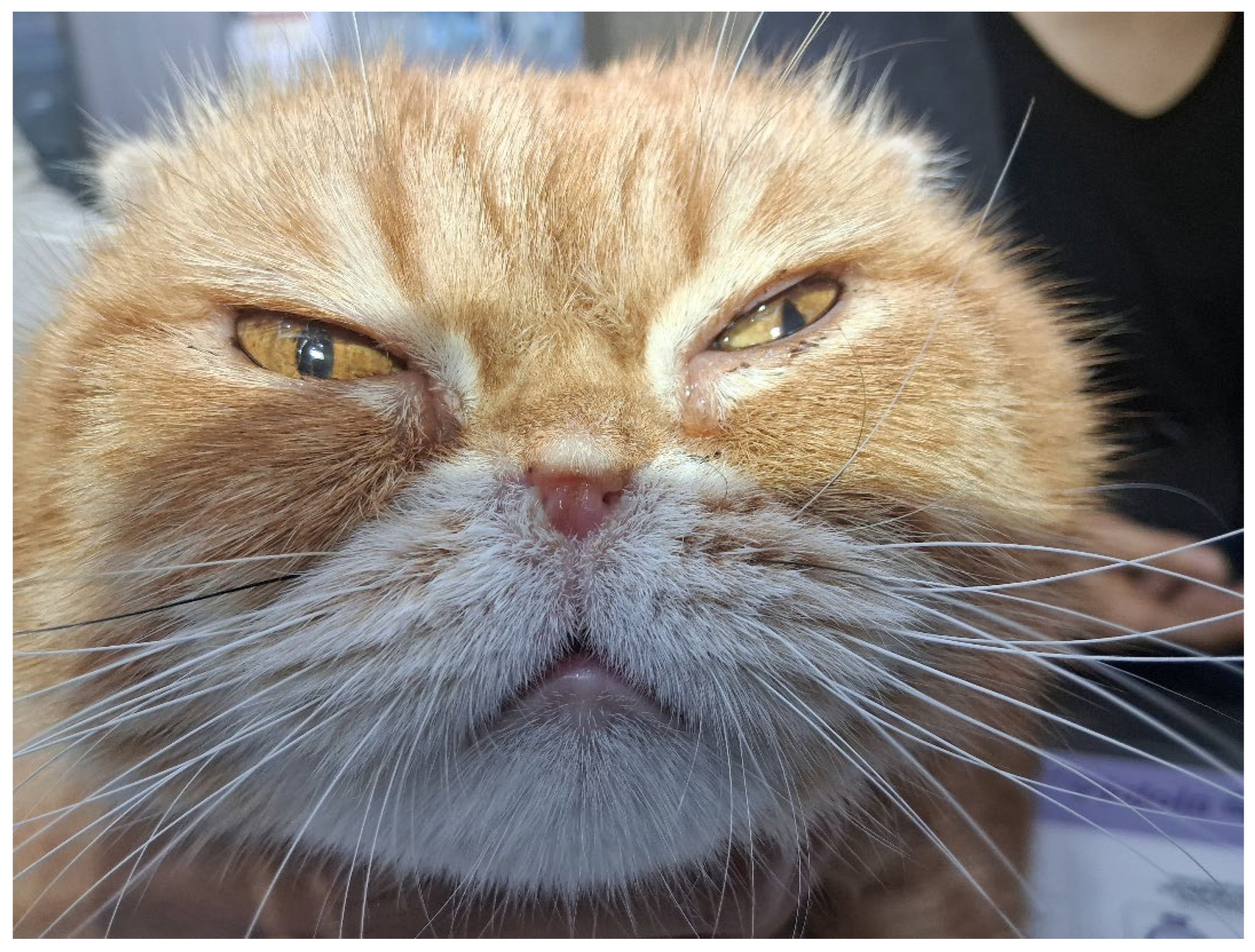
Figure 2.
Schematic illustrations of the combined surgical techniques. The unlabelled top left image represents the preoperative state; (a) Modified Trader’s technique aiming ventrally (5 and 7 o’clock directions); (b) and (b’) Bilateral wedge resection providing strong lateral traction; (c) and (c’) Single pedicle advancement flaps drawing tissue rostrally to comprehensively maximize the vestibular lumen.
Figure 2.
Schematic illustrations of the combined surgical techniques. The unlabelled top left image represents the preoperative state; (a) Modified Trader’s technique aiming ventrally (5 and 7 o’clock directions); (b) and (b’) Bilateral wedge resection providing strong lateral traction; (c) and (c’) Single pedicle advancement flaps drawing tissue rostrally to comprehensively maximize the vestibular lumen.
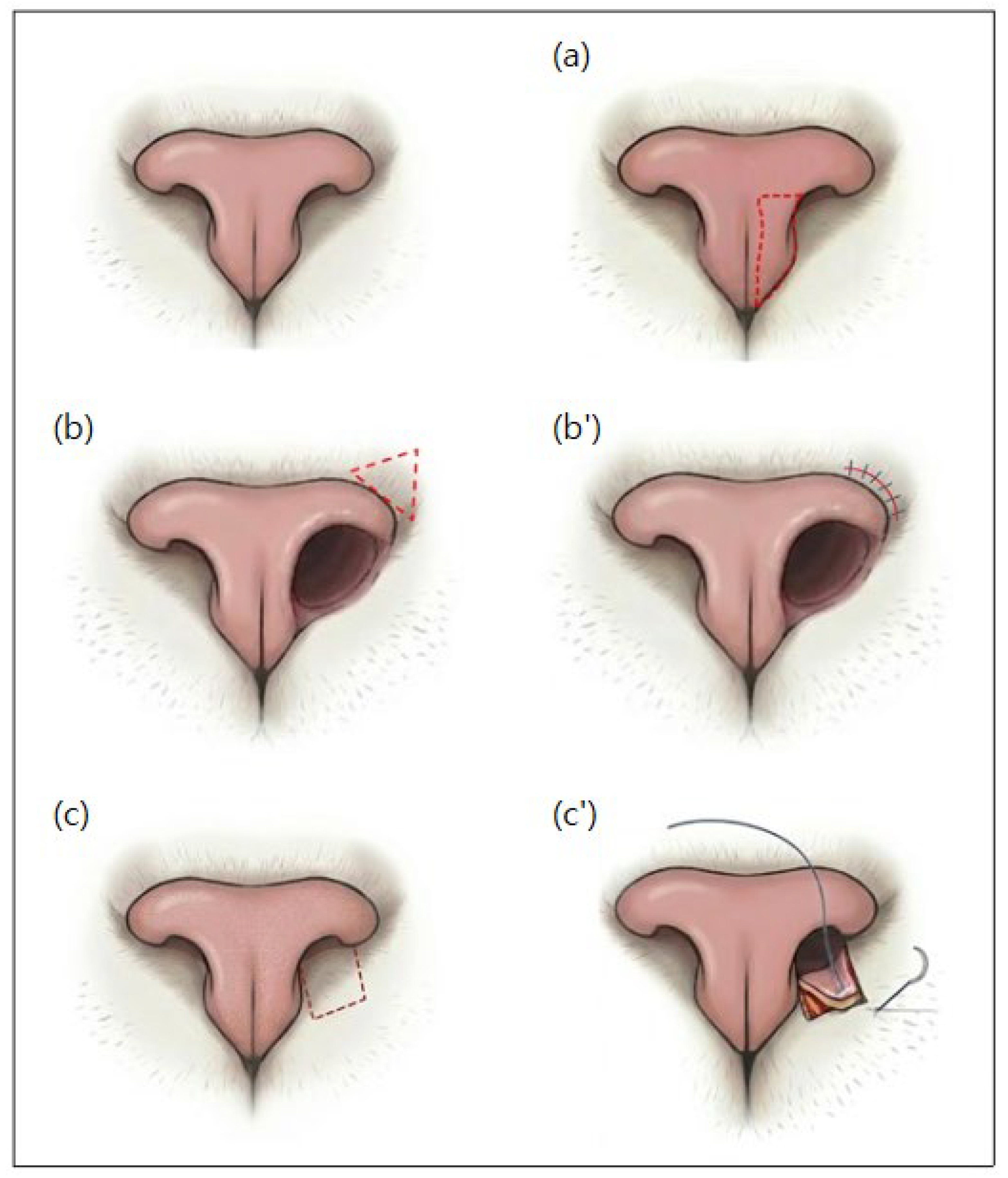
Figure 3.
Macroscopic appearance of the PROPEL Contour implant. The device is a mometasone furoate-eluting bioabsorbable scaffold with an hourglass configuration.
Figure 3.
Macroscopic appearance of the PROPEL Contour implant. The device is a mometasone furoate-eluting bioabsorbable scaffold with an hourglass configuration.
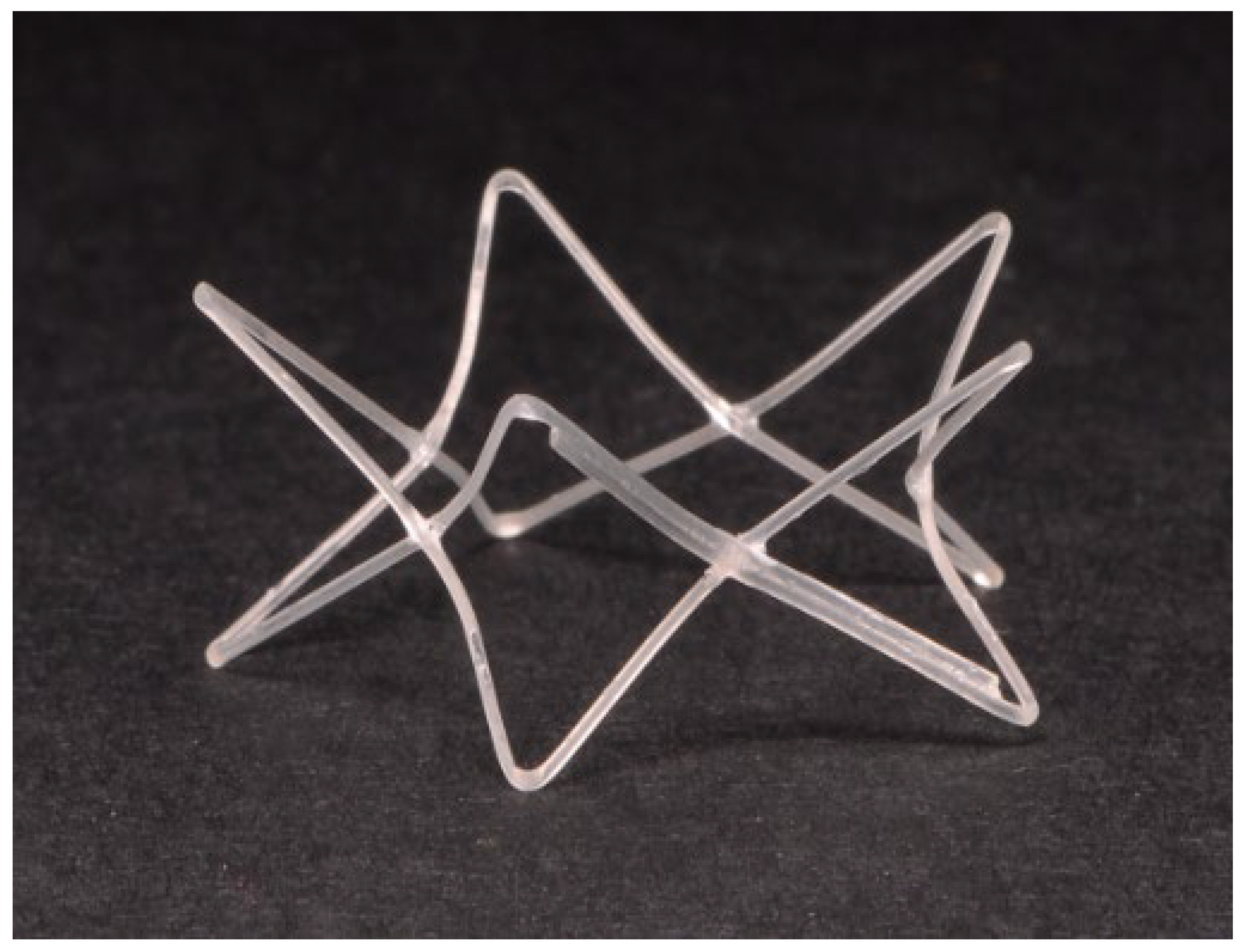
Figure 4.
Immediate postoperative view showing the enlarged nares and significantly improved bilateral nasal patency.
Figure 4.
Immediate postoperative view showing the enlarged nares and significantly improved bilateral nasal patency.
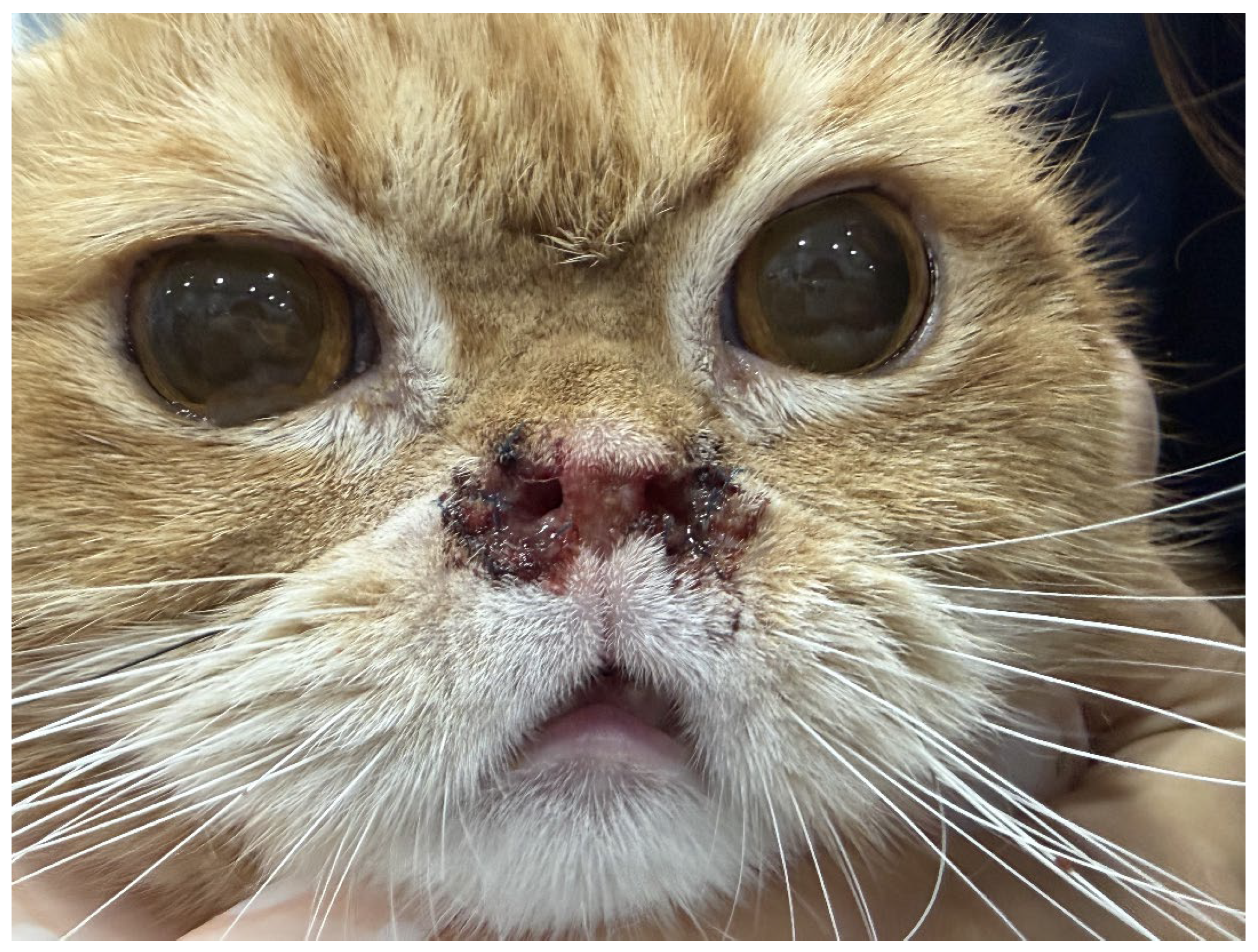
Figure 5.
Sagittal CT images comparing the preoperative (left) and 3 months postoperative (right) airway, showing the resolution of anterior nasal obstruction.
Figure 5.
Sagittal CT images comparing the preoperative (left) and 3 months postoperative (right) airway, showing the resolution of anterior nasal obstruction.
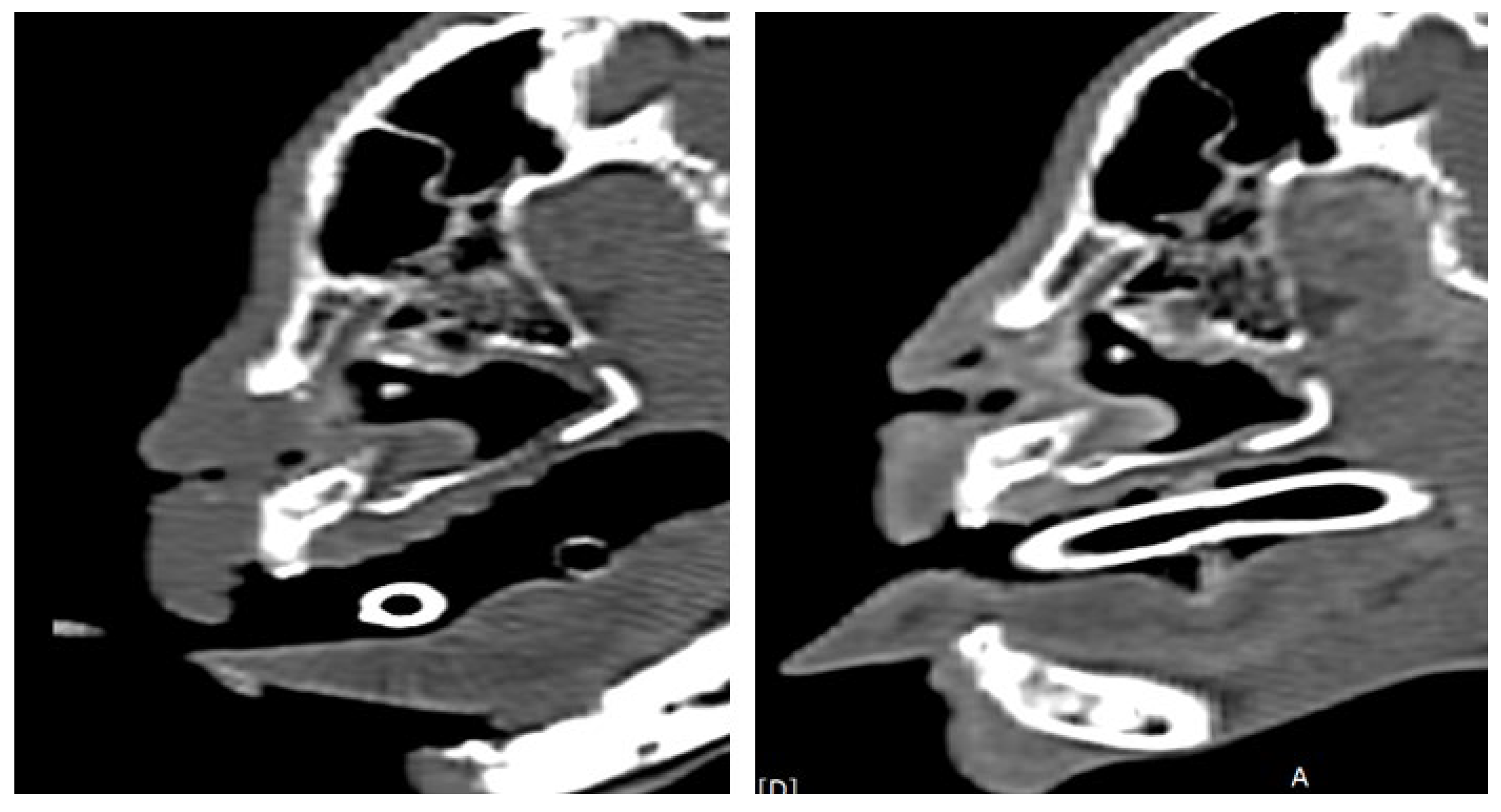
Figure 6.
Transverse CT images comparing the preoperative (left) and 3 months postoperative (right) states, demonstrating maintained luminal patency of the nasal vestibule without tissue regrowth.
Figure 6.
Transverse CT images comparing the preoperative (left) and 3 months postoperative (right) states, demonstrating maintained luminal patency of the nasal vestibule without tissue regrowth.
Disclaimer/Publisher’s Note: The statements, opinions and data contained in all publications are solely those of the individual author(s) and contributor(s) and not of MDPI and/or the editor(s). MDPI and/or the editor(s) disclaim responsibility for any injury to people or property resulting from any ideas, methods, instructions or products referred to in the content. |
© 2026 by the authors. Licensee MDPI, Basel, Switzerland. This article is an open access article distributed under the terms and conditions of the Creative Commons Attribution (CC BY) license (http://creativecommons.org/licenses/by/4.0/).
Copyright: This open access article is published under a Creative Commons CC BY 4.0 license, which permit the free download, distribution, and reuse, provided that the author and preprint are cited in any reuse.


