

Submitted:
23 March 2026
Posted:
23 March 2026
You are already at the latest version
Abstract
Global commodity shocks are associated with volatility in frontier financial markets, affecting exchange rates and equity indices. While GARCH specifications capture clustering, they are sensitive to structural breaks and regime changes, which distort persistence and weaken risk measures. Machine learning approaches provide alternatives capable of capturing nonlinear dependencies, abrupt volatility bursts, and regimeindependent dynamics. Empirical evidence demonstrates that 2008 Global Financial Crisis and COVID19 induced permanent volatility regime changes. This study examined volatility transmission from global commodity shocks to a frontier financial market, focusing on the USD/KES exchange rate and the NSE 20 Share Index. Structural break detection was integrated through the Iterative Cumulative Sum of Squares algorithm, alongside APARCH, FIGARCH models and ML architectures (XGBoost, LSTM). In Kenya volatility is characterized by strong persistence and longmemory dynamics, with limited evidence of leverage effects. Breakadjusted models improve inference by correcting spurious persistence, while machine learning approaches demonstrate superior tracking of volatility during stress regimes. We show that volatility transmission from global commodity shocks to a frontier market is nonlinear, break-sensitive, and state-dependent, and that hybrid ML-econometric methods improve forecasting during crisis-period. Findings highlight persistence distortion, horizondependent performance, and relevance of regimesensitive modelling frameworks for financial stability in structurally evolving economies.
Keywords:
volatility transmission
; frontier markets
; structural breaks
; GARCH models
; machine learning
; LSTM
; XGBoost
; brent oil shocks
1. Introduction
Global commodity shocks generate volatility spillovers that spread into inflation, exchange rates, and equity markets worldwide (Ge & Tang, 2020; Laeven & Valencia, 2020; Stuermer, 2018). In frontier economies, these spillovers are destabilizing because weak financial systems and concentrated sectoral exposures magnify external shocks. African markets, including Kenya, experienced sharp vulnerability during episodes such as the 2008 Global Financial Crisis and the COVID-19 pandemic, where commodity price swings coincided depreciation with exchange rates and stress in equity markets (Gyasi et al., 2025; Mupunga & Ngundu, 2020). Recent studies argue that financialization and global uncertainty indices tighten linkages, eroding benefits of diversification and increasing systemic risk (Gozgor et al., 2016; Kaur & Chaudhary, 2024).
Traditional GARCH models are key to volatility analysis, capturing clustering and persistence (Bollerslev, 1986a; Engle, 1982). Yet, their sensitivity to structural breaks and regime shifts often distorts persistence estimates, a limitation documented in African contexts where crises induce permanent volatility realignments (Hasanov et al., 2024; Lahmiri et al., 2017). Break-adjusted approaches, such as ICSS-modified GARCH, improve inference by correcting spurious persistence (Inclan & Tiao, 1994; Sanso et al., 2004). At the same time, machine learning methods such as LSTM and XGBoost have gained relevance due to their ability to capture nonlinear dependencies and abrupt volatility bursts thereby outperforming GARCH during stress regimes (Bildirici et al., 2020; Chung et al., 2025). Within Africa, emerging studies emphasizes that commodity-currency-equity linkages are nonlinear and state-dependent, with shocks propagating asymmetrically across regimes (Alqaralleh, 2020; Nazlioglu et al., 2013).
This study contributes to these debates by focusing on Kenya, a frontier market where volatility transmission from global commodity shocks remains underexplored despite the economy’s exposure to oil imports and exchange rate fragility. Existing African literature has examined contagion in broader emerging markets or emphasized sovereign debt channels, leaving a gap in understanding how commodity shocks interact with domestic volatility dynamics in equity and currency markets. We address this gap by integrating structural break detection with econometric (APARCH, FIGARCH) and machine learning (XGBoost, LSTM) models to assess whether volatility spillovers are nonlinear, break-sensitive, and state-dependent. By comparing standard GARCH, break-adjusted GARCH, and hybrid ML–econometric models across regimes, we show that hybrid approaches improve forecasting during crisis-periods and provide reliable tools for monitoring financial stability in frontier markets.
1.1. Theoretical Framework
Financial economics provides multiple lenses for understanding volatility. The Efficient Market Hypothesis (EMH) and random-walk theory posit that asset prices reflect available information, rendering future movements unpredictable (Bachelier, 1900; Fama, 1965). Modern Portfolio Theory (MPT), the Capital Asset Pricing Model (CAPM), and the Arbitrage Pricing Theory (APT) conceptualize volatility as a rational risk–return trade-off (Markowitz, 1952; Ross, 1976; Sharpe, 1964). Yet, these frameworks assume normal returns and rational agents, assumptions contradicted by heavy-tailed distributions, investor sentiment, and behavioural biases (Kahneman & Tversky, 2013; Mandelbrot & Hudson, 2010). Herding and speculative bubbles further highlight that volatility is not purely rational but shaped by cognitive and institutional dynamics (Shleifer, 1986).
Engle (1982) and Bollerslev (1986) introduced ARCH and GARCH models, which capture volatility clustering and persistence in financial returns. Extensions such as EGARCH (Nelson, 1991) and GJR-GARCH (Glosten et al., 1993) incorporate leverage effects and asymmetry, reflecting the empirical reality that negative shocks amplify volatility more than positive shocks. However, ignoring structural breaks induced by crises, regulatory shifts, or macroeconomic shocks distorts persistence estimates and risk measures (Lamoureux & Lastrapes, 1990; Mikosch & Stărică, 2004). Regime-dependent models and break-adjusted approaches, including ICSS-filtered GARCH, improve inference by accounting for abrupt shifts in variance (Casini & Perron, 2018; Inclan & Tiao, 1994; Sanso et al., 2004).
At the same time, globalization and financialization have intensified cross-market linkages, reducing diversification benefits and increasing systemic risk (Diebold & Yilmaz, 2012; Tang & Xiong, 2012). In frontier markets, commodity shocks spread into volatility in exchange rates and equity, often in nonlinear and state-dependent ways. Capturing these dynamics requires models that go beyond linear parametric structures. Machine learning methods such as Long Short-Term Memory (LSTM) networks and Gated Recurrent Units (GRU) are designed to capture long-term dependencies and nonlinear interactions in time series, offering improved forecasting accuracy during crisis regimes (Hochreiter & Schmidhuber, 1997).
Volatility transmission in frontier markets can be understood through an integrated theoretical foundation that draws on classical finance theory, econometric modelling, and machine learning approaches. Classical perspectives such as the Efficient Market Hypothesis, Modern Portfolio Theory, and related asset pricing models present volatility as a rational risk–return trade-off, yet their assumptions of normality and rational agents often fail in the presence of heavy tails, behavioural biases, and herding effects. Econometric models provide tools to capture clustering, persistence, and asymmetry, while regime-dependent and break-adjusted specifications correct distortions caused by crises and structural shifts. Machine learning methods extend this foundation by modelling nonlinearities, long-memory, and state dependence, offering flexible tools that are relevant for frontier markets exposed to commodity shocks.
1.2. Empirical Literature Review
The literature on volatility spillover from global commodity shocks to financial markets has been expanding in the aftermath of systemic crises such as the Global Financial Crisis and the COVID-19 pandemic. Recent studies emphasize that commodity shocks spread systemically, affecting inflation and, volatility in exchange rates, and equity across economies (Ge & Tang, 2020; Laeven & Valencia, 2020; Stuermer, 2018). Within Global VAR frameworks, these shocks transmit inflationary pressures and sovereign risk across advanced and emerging markets (Bouri et al., 2017; Chudik & Fidora, 2012). Recent contributions highlight pandemic-driven bidirectional spillovers, intensified by financialization and uncertainty indices such as the VIX, which erode diversification benefits and intensify systemic risk (Behera et al., 2024; Kaur & Chaudhary, 2024; Wang et al., 2023).
A consistent theme in the literature is the nonlinearity and asymmetry of volatility responses. Shocks in crude oil prices generate asymmetric effects across currencies and commodities, with appreciations and depreciations responding differently under stress regimes (Alqaralleh, 2020; Nazlioglu et al., 2013). Gold amplifies volatility during price increases, while agricultural commodities maintain lower connectedness with equity, offering short-horizon diversification (Baur, 2012; Shah & Dar, 2022). These findings impply that commodities cannot be treated as a homogeneous asset class, and that volatility spillovers are asset-specific and regime-dependent.
Extant literature on African economies highlights vulnerabilities. Commodity price downturns reduce export earnings and fiscal revenues more severely than in other regions due to weaker revenue mobilization (Christensen, 2016; Diarra, 2012). Shocks penetrate banking systems, escalating non-performing loans and eroding profitability (Mupunga & Ngundu, 2020). Recent studies show that both positive and negative shocks weaken financial soundness in African commodity exporters, emphasizing the need for institutional development and counter-cyclical buffers (Gyasi et al., 2025; Ngepah et al., 2022).
On Methodology, the literature has evolved from ARCH and GARCH models (Bollerslev, 1986a; Engle, 1982) to break-adjusted and regime-dependent specifications (Casini & Perron, 2018; Nguyen & Walther, 2020), and more recently to machine learning approaches. LSTM, CNN, and hybrid methods capture nonlinear dependencies and long-memory effects, consistently outperforming GARCH during crises (Bildirici et al., 2020; Chung et al., 2025; Dudek et al., 2025). Graph Neural Networks and TVP-VAR frameworks extend this capacity further by modelling interconnected systems dynamically, identifying new volatility transmitters such as cryptocurrencies while reaffirming gold’s safe-haven role (Joshi et al., 2022; Sahu et al., 2026).
Despite these advances, there are significant gaps. While global studies document nonlinear spillovers and methodological innovations, African frontier markets remain underexplored. Existing research has focused on sovereign debt contagion or broad emerging market linkages, leaving forecasting volatility in equity and currency markets insufficiently addressed. Kenya, as a frontier economy with significant dependence on oil imports, a fragile exchange rate regime, and a thin equity market, provides an ideal case to examine how global commodity shocks spread into volatility in domestic financial markets . By comparing GARCH, break-adjusted GARCH, and machine learning models, this study addresses both methodological and regional gaps, contributing to debates on systemic risk and financial stability in Africa.
2. Materials and Methods
2.1. Conceptual Framework
The empirical framework integrates four strands: volatility clustering, long-memory dynamics, international spillovers, and regime-dependent responses (Baillie et al., 1996; Diebold & Yilmaz, 2012; Engle, 1982; Hamilton, 1989). Volatility is conceptualized as a persistent process where oil shocks generate volatility spillovers that are reflected in exchange rates and inflation, amplified by nonlinear crisis-driven mechanisms (Kilian, 2009).
2.2. Methodology
The dependent variable is daily realized volatility, proxied by the rolling standard deviation of returns for the NSE 20 Share Index. Econometric models estimate conditional variance, while Machine Learning models approximate the same volatility proxy without parametric restrictions.
- 1.1.1
- Data and Variable Construction
Daily log returns of the NSE 20 Share Index are constructed as:
This transformation aligns with literature where returns exhibit weak serial correlation but strong conditional heteroskedasticity (Cont, 2001).
To operationalize global-to-domestic transmission mechanisms identified in spillover studies(Diebold & Yilmaz, 2012; Diebold & Yılmaz, 2014), the feature vector is defined as:
where ( k ) is selected via the Akaike Information Criterion (Akaike, 2003).
This structure reflects three theoretical channels documented in the literature:
Direct oil shock channel
consistent with oil–equity transmission evidence (Basher et al., 2012).
Exchange-rate transmission channel
aligned with exchange-rate pass-through literature (Kilian & Park, 2009).
Volatility persistence channel
reflecting volatility clustering(Bollerslev, 1986b; Engle, 1982).
2.2.1. Benchmark Econometric Volatility Models
Frontier markets exhibit slow hyperbolic decay in volatility shocks (Baillie et al., 1996). To capture this property, the study employs the FIGARCH model:
Where (0 < d < 1) measures fractional integration.
Unlike standard GARCH, FIGARCH allows the autocorrelation of squared returns to
decay at a hyperbolic rate:
This specification captures the long-memory dynamics documented in financial
volatility (Baillie et al., 1996; Conrad & Haag, 2006).
2.2.2. Machine Learning Models
While econometric models impose a pre-specified structure:
machine learning models approximate:
without functional restrictions.
XGBoost
In this study, XG Boost is trained to forecast daily realized volatility, proxied by the 5-day rolling standard deviation of NSE 20 share index returns. It models this volatility as an additive ensemble of regression trees, capturing nonlinear dependencies among lagged volatility, exchange rate, and commodity shocks:
where:
are regression trees,
are weights.
This flexible approximation is consistent with recent evidence that nonlinear tree-based models improve volatility forecasting performance (Gu et al., 2020).
LSTM: Temporal Nonlinear Memory
Long Short-Term Memory (LSTM) networks (Hochreiter, 1997) model temporal
dependence through gated recurrence:
with gating structure:
LSTM networks allow nonlinear memory retention, providing a data-driven analogue to fractional integration in FIGARCH models (Fischer & Krauss, 2018).
SHAP Economic Interpretability
To address concerns regarding ML interpretability, SHAP values decompose model
predictions as:
where represents the marginal contribution of each variable (Lundberg & Lee, 2017).
2.2.3. State Dependence and Stress Identification
Volatility spillovers intensify during crisis periods (Bekaert et al., 2014). Following the
regime-switching literature (Hamilton, 1989), market states are identified using K-Means clustering:
To estimate crisis probability, a Logistic Regression classifier models:
where denotes a high-volatility (stress) regime.
Logistic regression has been used in financial crisis early-warning systems and regime classification frameworks (Kaminsky et al., 1998). By modelling the conditional probability of entering a crisis state, the specification aligns with probabilistic crisis prediction approaches in macro-financial stability literature (Berg & Pattillo, 1999).
2.2.4. Evaluation an Interpretation
Forecast performance is evaluated using:
To connect predictive performance with financial risk management, Value-at-Risk (VaR) and Expected Shortfall (ES) are computed at the 95% confidence level:
This aligns the study with literature on tail-risk and financial stability (McNeil et al., 2015).
3. Results
3.1. Structural Break Identification
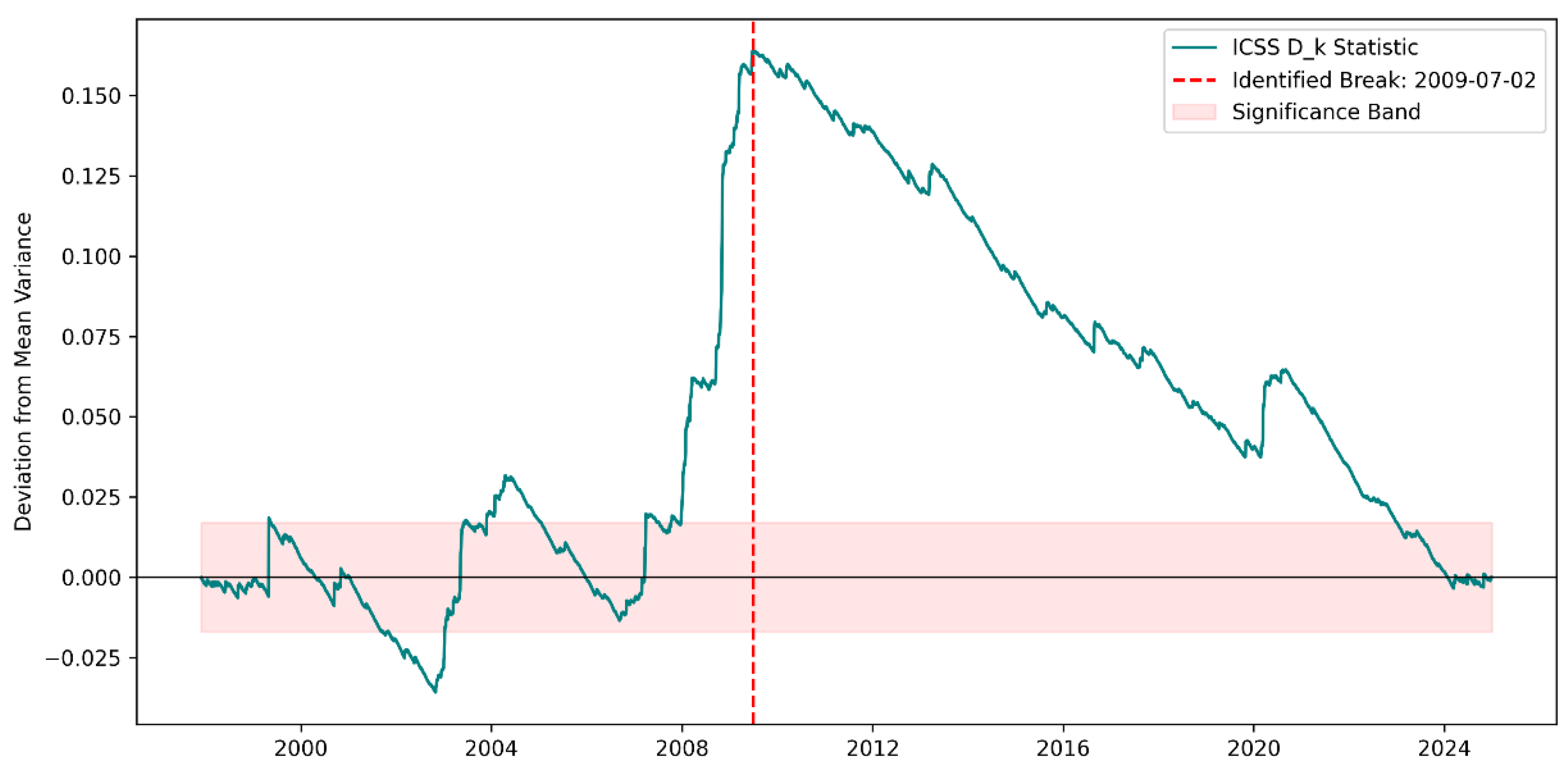
Table 1 presents the ICSS structural break test results. The ICSS test identified a structural break in the NSE 20 Share index on 7 February 2009 during the Global Financial Crisis of 2008, confirming a volatility regime shift. Ignoring such breaks inflates persistence estimates, while break-adjusted models improve forecasting accuracy in frontier markets consistent with (Bouri et al., 2017; Hasanov et al., 2024; Uddin et al., 2018; Wang, 2024).
3.1.1. ICSS Variance Break Test
The ICSS variance break test results for the NSE 20 share index in Figure1 reveal an upward spike in February 2009 that exceeds the 95% critical threshold consistent with evidence that crises coincide with persistent volatility shifts and spillovers, and that accounting for structural breaks improves inference and forecasting in frontier markets (Bouri et al., 2017; Hasanov et al., 2024; Uddin et al., 2018; Wang, 2024).
Figure 1.
Variance Break Test.
The NSE 20 Share index modified ICSS structural volatility breaks in Figure 2 shows how the market transitioned from the high-stress regime of 2008–2009 into a lower-variance regime consistent with evidence that crisis episodes induce permanent volatility reconfigurations in emerging markets (Bouri et al., 2021; Uddin et al., 2018).
3.2. Parameter Estimation and Model Selection
Table 2 presents the parameter estimates. The FIGARCH model detects long-memory volatility in the Equity market, consistent with evidence of persistent volatility dynamics with leverage effects, while the asymmetry term of APARCH was insignificant consistent with evidence of strong persistence but weak leverage effects in frontier-markets (Alfeus & Nikitopoulos, 2022; Baillie et al., 1996; Mensi et al., 2021; Nguyen & Walther, 2020).
3.3. Machine Learning Models
The XGBoost feature importance results in Figure 3 show that lagged volatility of the NSE 20 share index accounts for over 80% of the model’s predictive power suggesting that the Kenyan equity market is highly self-referential, consistent with the FIGARCH finding of significant long-memory (d = 0.3858) and with studies emphasizing persistence in frontier markets (Alfeus & Nikitopoulos, 2022; Baillie et al., 1996). Results are consistent with Behera et al. (2024) and Kim & Won (2018).
In Figure 4 Long Short-Term Memory networks track volatility of the NSE 20 share index during the Global Financial Crisis and the COVID-19 pandemic. This supports evidence that deep learning models capture nonlinear volatility dynamics and outperform traditional GARCH models during crisis periods (Bildirici et al., 2020; Chung et al., 2025; Kim & Won, 2018).
Figure 5 presents volatility divers of the NSE 20 Share Index . Lagged volatility is the dominant predictor, consistent with the long-memory finding of the FIGARCH Model and studies highlighting persistence in frontier markets (Alfeus & Nikitopoulos, 2022; Baillie et al., 1996). External shocks from Commodity and FX markets exert asymmetric effects, with extreme positive shocks amplifying domestic volatility, consistent with Nazlioglu et al. (2013) and Alqaralleh (2020).
In Figure 6, Shocks in the crude oil market are associated with disproportionately larger volatility spillovers when lagged domestic volatility is already high, consistent with Nomikos & Salvador (2014) and Khalifa et al. (2014), who found state-dependent contagion in frontier markets.
In Figure 7, positive shocks in commodities amplify volatility in equities when accompanied by depreciation in the Kenya shilling, consistent with Nazlioglu et al. (2013) on nonlinear commodity–finance linkages and Alqaralleh (2020) on asymmetric currency responses to oil shocks.
3.5. State Dependence and Stress Identification
The clustering in Figure 8 highlights how the Kenyan equity market alternates between calm periods, moderate fluctuations, and episodes of extreme stress. The high-stress regime corresponds to crisis periods such as the 2008–2009 Global Financial Crisis and the 2020 COVID-19 shock, consistent with evidence that frontier markets experience abrupt regime shifts (Khalifa et al., 2014; Nomikos & Salvador, 2014).
In Figure 9 Stress probabilities peak during the 2008 Global Financial Crisis and 2020 COVID-19 shock consistent with external shocks coinciding with regime-dependent volatility and market contagion (Khalifa et al., 2014; Nomikos & Salvador, 2014).
In Figure 10 Stress probabilities are high during 2008 and 2020 crises, confirming that
external shocks drive regime-dependent volatility and market contagion
(Khalifa et al., 2014).
3.6. Evaluation
In Table 3 the hybrid LSTM-FIGARCH model shows high predictive accuracy with low error (RMSE: 0.00498), suggesting that integrating long-memory structures and deep learning improves forecasting relative to traditional GARCH models (Baillie et al., 1996; Alfeus & Nikitopoulos, 2022).
In Figure 11 LSTM-VaR and ES curves track extreme losses, with minimal violations adhering to Basel committee guidelines on back testing. This confirms the model’s ability to manage nonlinear contagion in frontier markets (Acerbi & Tasche, 2002; Khalifa et al., 2014).
In Figure 12, volatility transmission from global energy markets to frontier equity markets is non-linear and state-dependent, consistent with evidence of asymmetric commodity–finance linkages (Nazlioglu et al., 2013), currency–oil interactions (Alqaralleh, 2020), and regime-dependent contagion (Khalifa et al., 2014; Nomikos & Salvador, 2014).
4. Discussion
This study found that volatility spillovers from global commodity shocks into financial markets in Kenya is nonlinear, regime-dependent, and amplified during stress periods. This is consistent with Ben Flah et al.(2025), they explained that global shocks generate systemic spillovers into African equity and currency markets thereby eroding the benefits of diversification and increasing systemic risk. Structural break detection revealed that ignoring crisis-induced regime shifts inflates persistence estimates, consistent with Gyasi et al. (2025), they found volatility realignments in African frontier economies immediately after major global events. The long-memory dynamics in FIGARCH and the limited leverage effects in APARCH support Mupunga and Ngundu (2020), they explained that persistence dominates asymmetry in frontier markets.
Machine learning models are superior compared to traditional GARCH specifications in forecasting performance during stress regimes and tracking volatility. This is consistent with (Chung et al., 2025; Dudek et al., 2024) deep learning architectures outperform parametric models under conditions of high uncertainty. The dominance of lagged volatility in XGBoost feature importance and the asymmetric effects of shocks in crude oil prices and foreign exchange markets reinforce findings that commodity-currency-equity linkages in Africa are nonlinear and state-dependent (Alqaralleh, 2020; Nazlioglu et al., 2013).
Africa is vulnerable to overlapping global crises. Dependence on commodities, debt, and weak infrastructure increase instability, thereby exposing African economies to external shocks (United Nations Trade & Development (UNCTAD), 2025). Kenya’ economy is highly vulnerable due to its reliance on oil imports, instability of its foreign exchange regime, and low-depth capital market. The finding that volatility transmission intensifies during stress regimes highlights the need for regime-sensitive monitoring frameworks in structurally evolving economies where financialization and global uncertainty have weakened diversification strategies (Ben Flah et al., 2025; Gyasi et al., 2025).
Future studies should extend this analysis by incorporating high-frequency data and cross-market contagion channels, as well as comparative studies across African frontier economies to test whether hybrid ML–econometric approaches can be generalised. Integrating global uncertainty indices and climate-related shocks may further enhance early-warning systems.
5. Conclusions
Volatility in financial markets in Kenya reflects both persistent internal dynamics and nonlinear external spillovers. Structural breaks distort estimates of persistence, and ignoring them weakens inference. Break-adjusted econometric models correct spurious persistence, while hybrid ML–econometric approaches improve forecasting accuracy during crisis regimes. The evidence shows that volatility spillovers from global commodity shocks are nonlinear, state-dependent, and amplified during stress periods, underscoring the need for regime-sensitive monitoring frameworks in frontier markets. Integrating FIGARCH and LSTM captures long-memory risk (d=0.3858) and demonstrates superior predictive accuracy (R²=0.8244) over traditional linear models.
5.1. Policy Recommendations
The Central Bank of Kenya (CBK) and Capital Markets Authority (CMA) should integrate break-adjusted volatility models into systemic risk assessments to avoid persistence biases. LSTM-based Expected Shortfall measures can strengthen early-warning systems by capturing nonlinear contagion during crises regimes. Depreciation of the USD/KES amplifies commodity-driven volatility in the equity market. Policies that reduce exchange rate instability can mitigate spillovers from global energy shocks.
Firms in sectors exposed to shocks in the energy sectors should adopt hedging instruments against Brent oil volatility, because shocks coincide with stress in the equity market. Diversification into safe-haven assets can reduce exposure to nonlinear commodity spillovers. Regulators in Frontier markets should adopt hybrid ML–econometric forecasting tools for stress-testing, because hybrid models outperform traditional GARCH models during crisis regimes.
Author Contributions
Conceptualization, Wawire, Simiyu, Laiboni and Ochenge; methodology, Wawire and Ochenge; software, Wawire,Simiyu, Laiboni and Ochenge; validation, Wawire, Simiyu and Ochenge; formal analysis, Wawire; investigation, Simiyu; resources, Laiboni; data curation, Ochenge; writing—original draft preparation, Wawire; writing—review and editing, Simiyu, Laiboni and Ochenge; visualization, Ochenge; supervision, Simiyu, Laiboni and Ochenge; project administration, Wawire; funding acquisition, Wawire. All authors have read and agreed to the published version of the manuscript.
Funding
This research received no external funding.
Institutional Review Board Statement
Not applicable. The study did not involve humans or animals
Informed Consent Statement
Not applicable. The study did not involve human participants.
Data Availability Statement
The data supporting the findings of this study are derived from publicly available sources, specifically the daily NSE 20 Share Index and USD/KES exchange rate. Processed datasets are available from the corresponding author upon reasonable request
Conflicts of Interest
The authors declare no conflict of interest.
Abbreviations
The following abbreviations are used in this manuscript:
| APARCH | Asymmetric Power Autoregressive Conditional Heteroskedasticity |
| APT | Arbitrage Pricing Theory |
| ARCH | Autoregressive Conditional Heteroskedasticity |
| CAPM | Capital Asset Pricing Model |
| CBK | Central Bank of Kenya |
| CMA | Capital Markets Authority |
| CNN | Convolutional Neural Network |
| DOAJ | Directory of open access journals |
| EMH | Convolutional Neural Network |
| ES | Expected Shortfall |
| FIGARCH | Fractionally Integrated Generalized Autoregressive Conditional Heteroskedasticity |
| FX | Foreign Exchange |
| GARCH | Generalized Autoregressive Conditional Heteroskedasticity |
| GJR-GARCH | Glosten–Jagannathan–Runkle GARCH |
| GRU | Gated Recurrent Unit |
| ICSS | Iterative Cumulative Sum of Squares |
| LD | Linear dichroism |
| LSTM | Long Short-Term Memory |
| MAE | Mean Absolute Error |
| MAPE | Mean Absolute Percentage Error |
| MDPI | Multidisciplinary Digital Publishing Institute |
| ML | Machine Learning |
| MPT | Modern Portfolio Theory |
| NSE | Nairobi Securities Exchange |
| RMSE | Root Mean Squared Error |
| RMSE | Root Mean Squared Error |
| TLA | Three letter acronym |
| USD/KES | United States Dollar / Kenyan Shilling exchange rate |
| VAR | Vector Autoregression |
| VaR | Value at Risk |
| XGBoost | XGBoost – Extreme Gradient Boosting |
References
- Acerbi, C., & Tasche, D. (2002). On the coherence of expected shortfall. Journal of Banking & Finance, 26(7), 1487–1503.
- Akaike, H. (2003). A new look at the statistical model identification. IEEE Transactions on Automatic Control, 19(6), 716–723.
- Alfeus, M., & Nikitopoulos, C. S. (2022). Forecasting volatility in commodity markets with long-memory models. Journal of Commodity Markets, 28, 100248.
- Alqaralleh, H. (2020). On the asymmetric response of the exchange rate to shocks in the crude oil market. International Journal of Energy Sector Management, 14(4), 839–852.
- Bachelier, L. (1900). Théorie de la spéculation. 17, 21–86.
- Baillie, R. T., Bollerslev, T., & Mikkelsen, H. O. (1996). Fractionally integrated generalized autoregressive conditional heteroskedasticity. Journal of Econometrics, 74(1), 3–30.
- Basher, S. A., Haug, A. A., & Sadorsky, P. (2012). Oil prices, exchange rates and emerging stock markets. Energy Economics, 34(1), 227–240.
- Baur, D. G. (2012). Asymmetric volatility in the gold market. The Journal of Alternative Investments, 14(4), 26.
- Behera, I., Nanda, P., Mitra, S., & Kumari, S. (2024). Machine learning approaches for forecasting financial market volatility. Machine Learning Approaches in Financial Analytics, 431–451.
- Bekaert, G., Ehrmann, M., Fratzscher, M., & Mehl, A. (2014). The global crisis and equity market contagion. The Journal of Finance, 69(6), 2597–2649.
- Ben Flah, I., Samet, K., El Ammari, A., & Terzi, C. (2025). Shock and Volatility Transmissions Across Global Commodity and Stock Markets Spillovers: Empirical Evidence from Africa. Journal of Risk and Financial Management, 18(6), 332.
- Berg, A., & Pattillo, C. (1999). Predicting currency crises: The indicators approach and an alternative. Journal of International Money and Finance, 18(4), 561–586.
- Bildirici, M., Guler Bayazit, N., & Ucan, Y. (2020). Analyzing crude oil prices under the impact of COVID-19 by using LSTARGARCHLSTM. Energies, 13(11), 2980.
- Bollerslev, T. (1986a). Generalized autoregressive conditional heteroskedasticity. Journal of Econometrics, 31(3), 307–327.
- Bollerslev, T. (1986b). Generalized autoregressive conditional heteroskedasticity. Journal of Econometrics, 31(3), 307–327.
- Bouri, E., De Boyrie, M. E., & Pavlova, I. (2017). Volatility transmission from commodity markets to sovereign CDS spreads in emerging and frontier countries. International Review of Financial Analysis, 49, 155–165.
- Bouri, E., Lucey, B., Saeed, T., & Vo, X. V. (2021). The realized volatility of commodity futures: Interconnectedness and determinants. International Review of Economics & Finance, 73, 139–151.
- Casini, A., & Perron, P. (2018). Structural breaks in time series. arXiv Preprint arXiv:1805.03807.
- CHRISTENSEN, B. (2016). L’Afrique face aux défis liés à la faiblesse des prix des produits de base. BIS Papers, 87.
- Chudik, A., & Fidora, M. (2012). How the global perspective can help us identify structural shocks. Staff Papers, (Dec).
- Chung, V., Espinoza, J., & Quispe, R. (2025). Forecasting Financial Volatility Under Structural Breaks: A Comparative Study of GARCH Models and Deep Learning Techniques. Journal of Risk and Financial Management, 18(9), 494.
- Conrad, C., & Haag, B. R. (2006). Inequality constraints in the fractionally integrated GARCH model. Journal of Financial Econometrics, 4(3), 413–449.
- Cont, R. (2001). Empirical properties of asset returns: Stylized facts and statistical issues. Quantitative Finance, 1(2), 223.
- Diarra, S. (2012). Chocs et mobilisation des recettes publiques dans les pays en développement.
- Diebold, F. X., & Yilmaz, K. (2012). Better to give than to receive: Predictive directional measurement of volatility spillovers. International Journal of Forecasting, 28(1), 57–66.
- Diebold, F. X., & Yılmaz, K. (2014). On the network topology of variance decompositions: Measuring the connectedness of financial firms. Journal of Econometrics, 182(1), 119–134.
- Dudek, G., Fiszeder, P., Kobus, P., & Orzeszko, W. (2024). Forecasting cryptocurrencies volatility using statistical and machine learning methods: A comparative study. Applied Soft Computing, 151, 111132.
- Dudek, G., Orzeszko, W., & Fiszeder, P. (2025). Probabilistic forecasting cryptocurrencies volatility: From point to quantile forecasts. 1–10.
- Engle, R. F. (1982). Autoregressive conditional heteroscedasticity with estimates of the variance of United Kingdom inflation. Econometrica: Journal of the Econometric Society, 987–1007.
- Fama, E. F. (1965). The behavior of stock-market prices. The Journal of Business, 38(1), 34–105.
- Fischer, T., & Krauss, C. (2018). Deep learning with long short-term memory networks for financial market predictions. European Journal of Operational Research, 270(2), 654–669.
- Ge, Y., & Tang, K. (2020). Commodity prices and GDP growth. International Review of Financial Analysis, 71, 101512.
- Glosten, L. R., Jagannathan, R., & Runkle, D. E. (1993). On the relation between the expected value and the volatility of the nominal excess return on stocks. The Journal of Finance, 48(5), 1779–1801.
- Gozgor, G., Lau, C. K. M., & Bilgin, M. H. (2016). Commodity markets volatility transmission: Roles of risk perceptions and uncertainty in financial markets. Journal of International Financial Markets, Institutions and Money, 44, 35–45.
- Gu, S., Kelly, B., & Xiu, D. (2020). Empirical asset pricing via machine learning. The Review of Financial Studies, 33(5), 2223–2273.
- Gyasi, G., Mireku, K., & Frimpong, J. M. (2025). The moderating role of major global shock events and policy effects on African frontier currency and stock market relationships. Cogent Economics & Finance, 13(1), 2563160.
- Hamilton, J. D. (1989). A new approach to the economic analysis of nonstationary time series and the business cycle. Econometrica: Journal of the Econometric Society, 357–384.
- Hasanov, A. S., Brooks, R., Abrorov, S., & Burkhanov, A. U. (2024). Structural breaks and GARCH models of exchange rate volatility: Re-examination and extension. Journal of Applied Econometrics, 39(7), 1403–1407.
- Hochreiter, S. (1997). Long Short-term Memory. Neural Computation MIT-Press.
- Hochreiter, S., & Schmidhuber, J. (1997). Long short-term memory. Neural Computation, 9(8), 1735–1780.
- Inclan, C., & Tiao, G. C. (1994). Use of cumulative sums of squares for retrospective detection of changes of variance. Journal of the American Statistical Association, 89(427), 913–923.
- Joshi, P., Wang, J., & Busler, M. (2022). A study of the machine learning approach and the MGARCH-BEKK model in volatility transmission. Journal of Risk and Financial Management, 15(3), 116.
- Kahneman, D., & Tversky, A. (2013). Prospect theory: An analysis of decision under risk. In Handbook of the fundamentals of financial decision making: Part I (pp. 99–127). World Scientific.
- Kaminsky, G., Lizondo, S., & Reinhart, C. M. (1998). Leading indicators of currency crises. Staff Papers, 45(1), 1–48.
- Kaur, H., & Chaudhary, A. (2024). Volatility transmission role of Indian equity and commodity markets. Deep Learning Tools for Predicting Stock Market Movements, 429–443.
- Khalifa, A. A., Hammoudeh, S., & Otranto, E. (2014). Patterns of volatility transmissions within regime switching across GCC and global markets. International Review of Economics & Finance, 29, 512–524.
- Kilian, L. (2009). Not all oil price shocks are alike: Disentangling demand and supply shocks in the crude oil market. American Economic Review, 99(3), 1053–1069.
- Kilian, L., & Park, C. (2009). The impact of oil price shocks on the US stock market. International Economic Review, 50(4), 1267–1287.
- Kim, H. Y., & Won, C. H. (2018). Forecasting the volatility of stock price index: A hybrid model integrating LSTM with multiple GARCH-type models. Expert Systems with Applications, 103, 25–37.
- Laeven, L., & Valencia, F. (2020). Systemic banking crises database II. IMF Economic Review, 68(2), 307–361.
- Lahmiri, S., Uddin, G. S., & Bekiros, S. (2017). Nonlinear dynamics of equity, currency and commodity markets in the aftermath of the global financial crisis. Chaos, Solitons & Fractals, 103, 342–346.
- Lamoureux, C. G., & Lastrapes, W. D. (1990). Heteroskedasticity in stock return data: Volume versus GARCH effects. The Journal of Finance, 45(1), 221–229.
- Lundberg, S. M., & Lee, S.-I. (2017). A unified approach to interpreting model predictions. Advances in Neural Information Processing Systems, 30.
- Mandelbrot, B. B., & Hudson, R. L. (2010). The (mis) behaviour of markets: A fractal view of risk, ruin and reward. Profile books.
- Markowitz, H. (1952). The utility of wealth. Journal of Political Economy, 60(2), 151–158.
- McNeil, A. J., Frey, R., & Embrechts, P. (2015). Quantitative risk management: Concepts, techniques and tools-revised edition. Princeton university press.
- Mensi, W., Al-Yahyaee, K. H., Vo, X. V., & Kang, S. H. (2021). Modeling the frequency dynamics of spillovers and connectedness between crude oil and MENA stock markets with portfolio implications. Economic Analysis and Policy, 71, 397–419.
- Mikosch, T., & Stărică, C. (2004). Nonstationarities in financial time series, the long-range dependence, and the IGARCH effects. Review of Economics and Statistics, 86(1), 378–390.
- Mupunga, N., & Ngundu, T. (2020). Commodity price shocks and financial sector stability in commodity dependent countries in southern Africa. Studies in Economics and Econometrics, 44(3), 109–137.
- Nazlioglu, S., Erdem, C., & Soytas, U. (2013). Volatility spillover between oil and agricultural commodity markets. Energy Economics, 36, 658–665.
- Nelson, D. B. (1991). Conditional heteroskedasticity in asset returns: A new approach. Econometrica: Journal of the Econometric Society, 347–370.
- Ngepah, N., da Silva, M. L. A., & Saba, C. S. (2022). The impact of commodity price shocks on banking system stability in developing countries. Economies, 10(4), 91.
- Nguyen, D. K., & Walther, T. (2020). Modeling and forecasting commodity market volatility with long-term economic and financial variables. Journal of Forecasting, 39(2), 126–142.
- Nomikos, N., & Salvador, E. (2014). The role of volatility regimes on volatility transmission patterns. Quantitative Finance, 14(1), 1–13.
- Ross, S. A. (1976). The arbitrage theory of capital asset pricing. In Handbook of the fundamentals of financial decision making: Part I (pp. 11–30). World Scientific.
- Sahu, H. K., Parida, I., Bhandari, A., Jena, N. R., & Vijay, M. (2026). A Random Walk down Cross-Asset Networks: A Deep Learning Tour of Volatility Transmission between Digital and Conventional Markets. Asia-Pacific Financial Markets, 1–29.
- Sanso, A., Carrion, J., & Aragó, V. (2004). Testing for changes in the unconditional variance of financial time series. Revista de Economía Financiera, 2004, Vol. 4, p. 32-52.
- Shah, A. A., & Dar, A. B. (2022). Asymmetric, time and frequency-based spillover transmission in financial and commodity markets. The Journal of Economic Asymmetries, 25, e00241.
- Sharpe, W. F. (1964). Capital asset prices: A theory of market equilibrium under conditions of risk. The Journal of Finance, 19(3), 425–442.
- Shleifer, A. (1986). Do demand curves for stocks slope down? The Journal of Finance, 41(3), 579–590.
- Stuermer, M. (2018). 150 years of boom and bust: What drives mineral commodity prices? Macroeconomic Dynamics, 22(3), 702–717.
- Tang, K., & Xiong, W. (2012). Index investment and the financialization of commodities. Financial Analysts Journal, 68(6), 54–74.
- Uddin, G. S., Hernandez, J. A., Shahzad, S. J. H., & Hedström, A. (2018). Multivariate dependence and spillover effects across energy commodities and diversification potentials of carbon assets. Energy Economics, 71, 35–46.
- United Nations Trade & Development (UNCTAD). (2025). Trade and Development Report 2025: On the Brink: Trade, Finance and Global Uncertainty. Stylus Publishing, LLC.
- Wang, X. (2024). What influences the dynamic spillovers of China’s financial market uncertainties? Applied Economics, 1–17.
- Wang, X., Hyndman, R. J., Li, F., & Kang, Y. (2023). Forecast combinations: An over 50-year review. International Journal of Forecasting, 39(4), 1518–1547.
Figure 2.
Modified Structural volatility breaks.
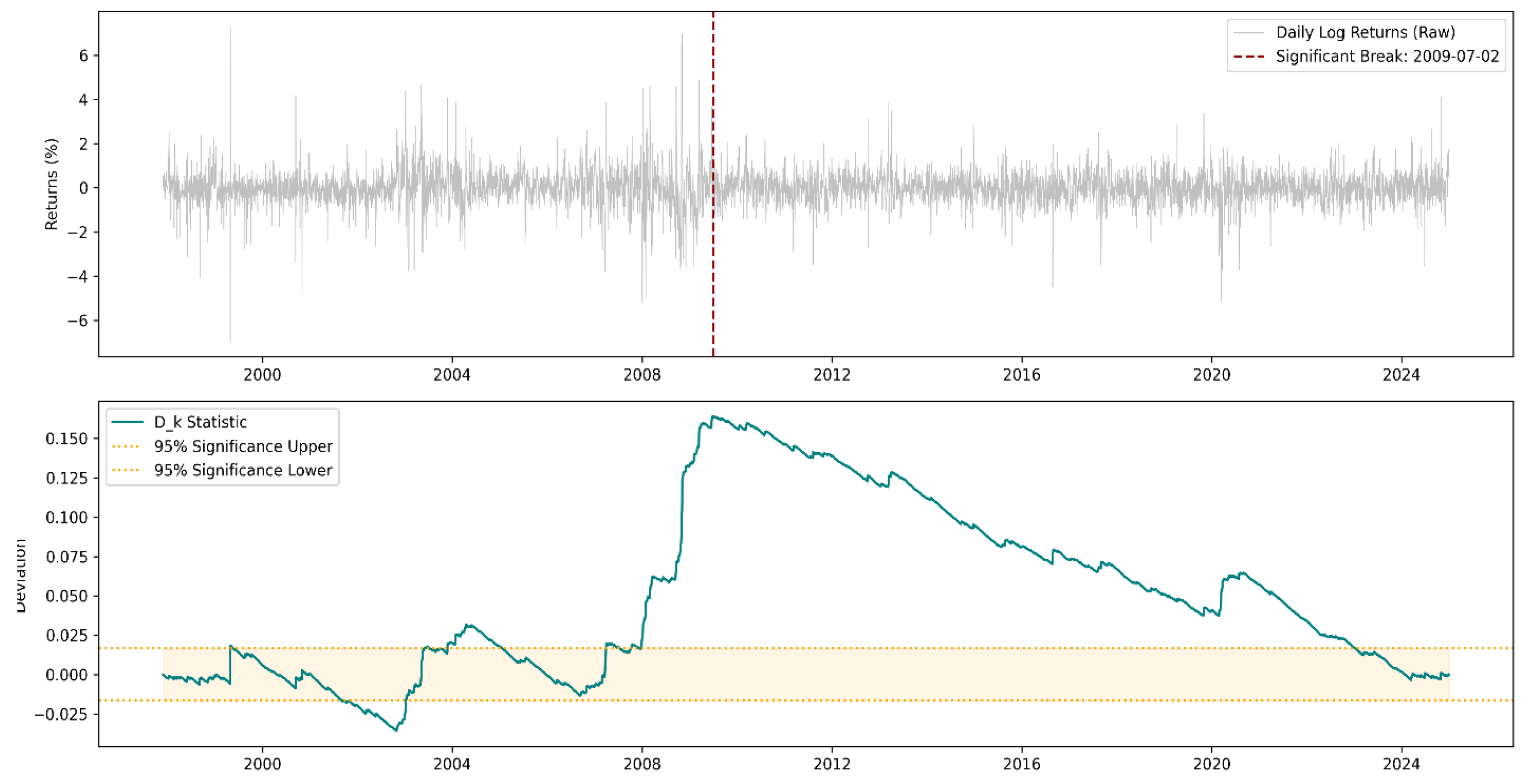
Figure 3.
XG Boost Feature Importance (Gain).
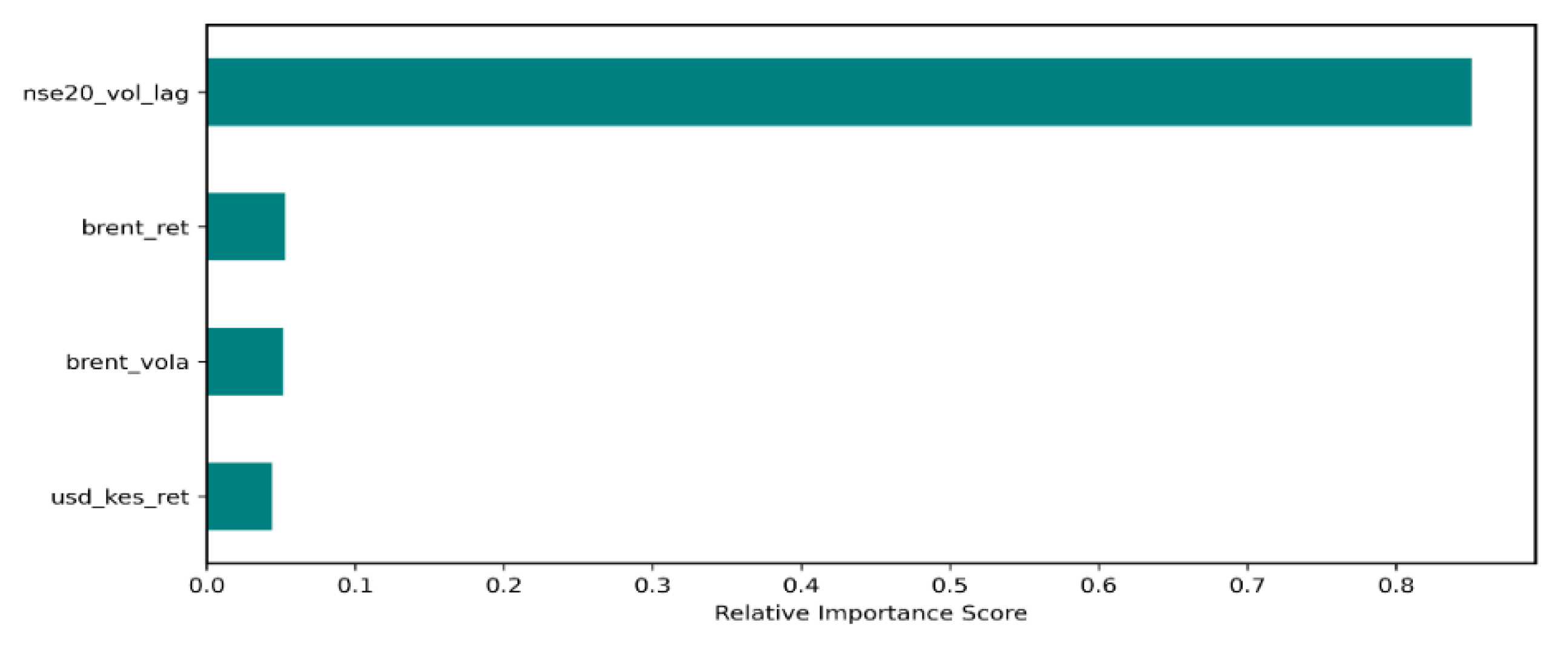
Figure 4.
Time Varying Volatility Dynamics.
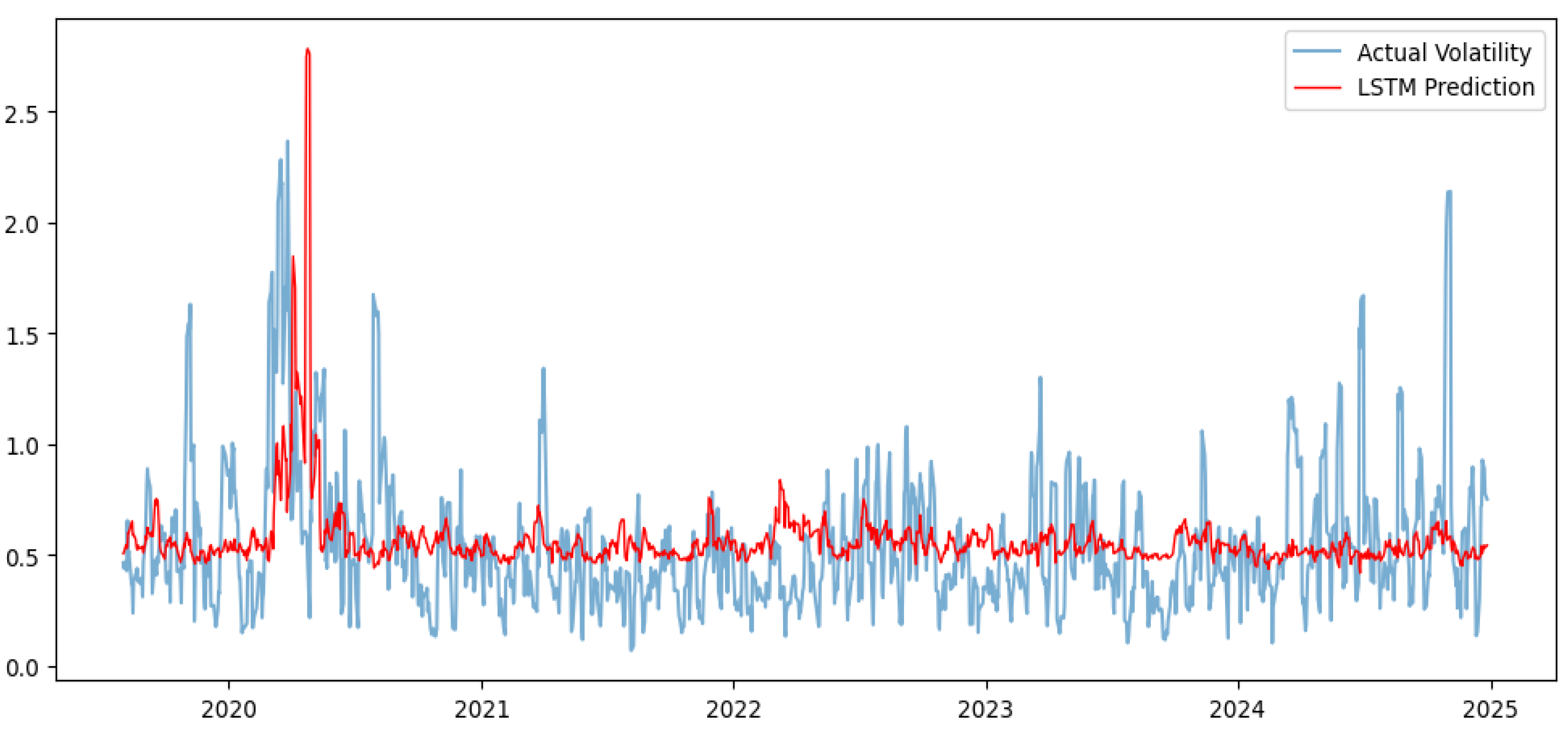
Figure 5.
Sharp summary.
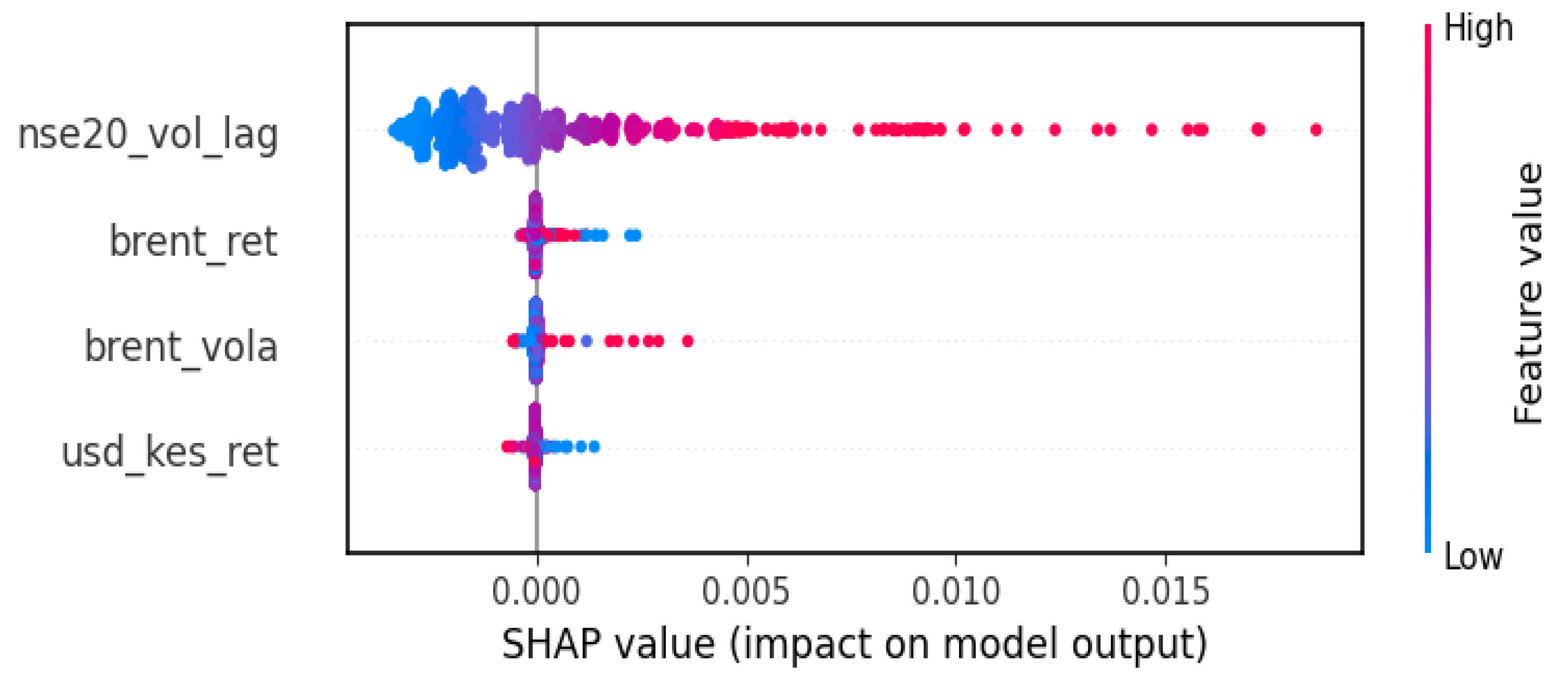
Figure 6.
Shap Interaction.
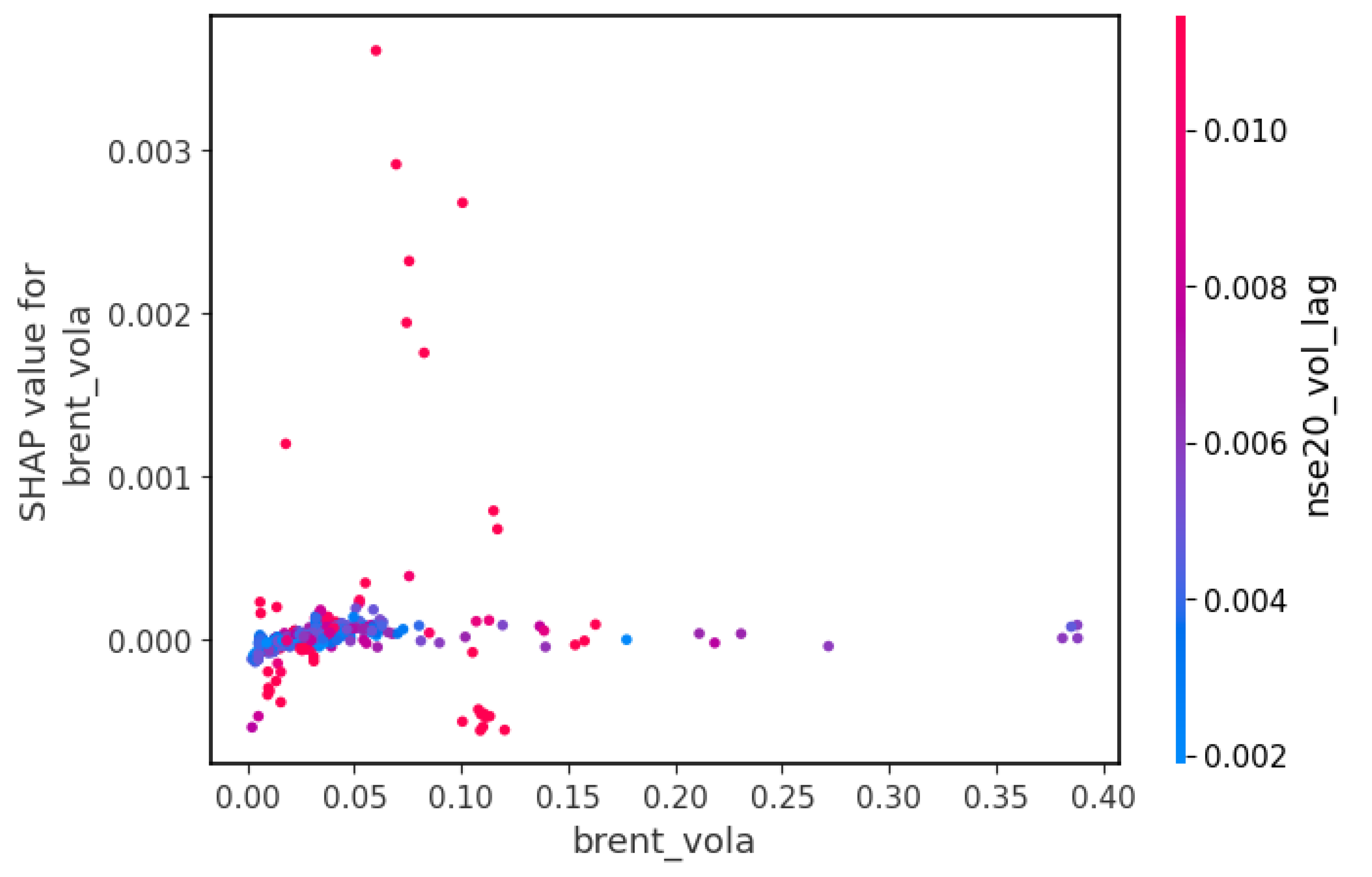
Figure 7.
Transmissieon Map.
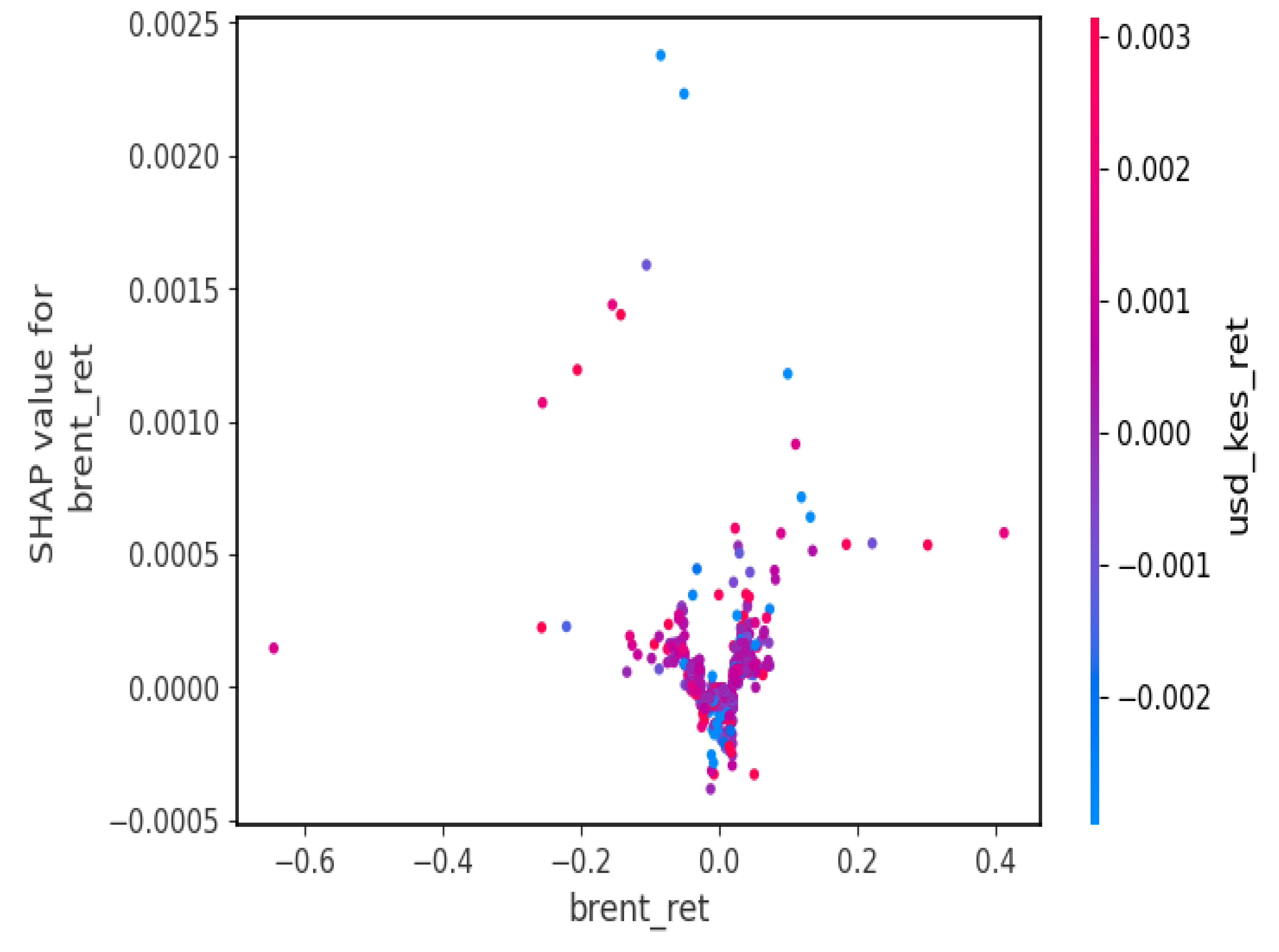
Figure 8.
K-Means Clustering volatility regimes.
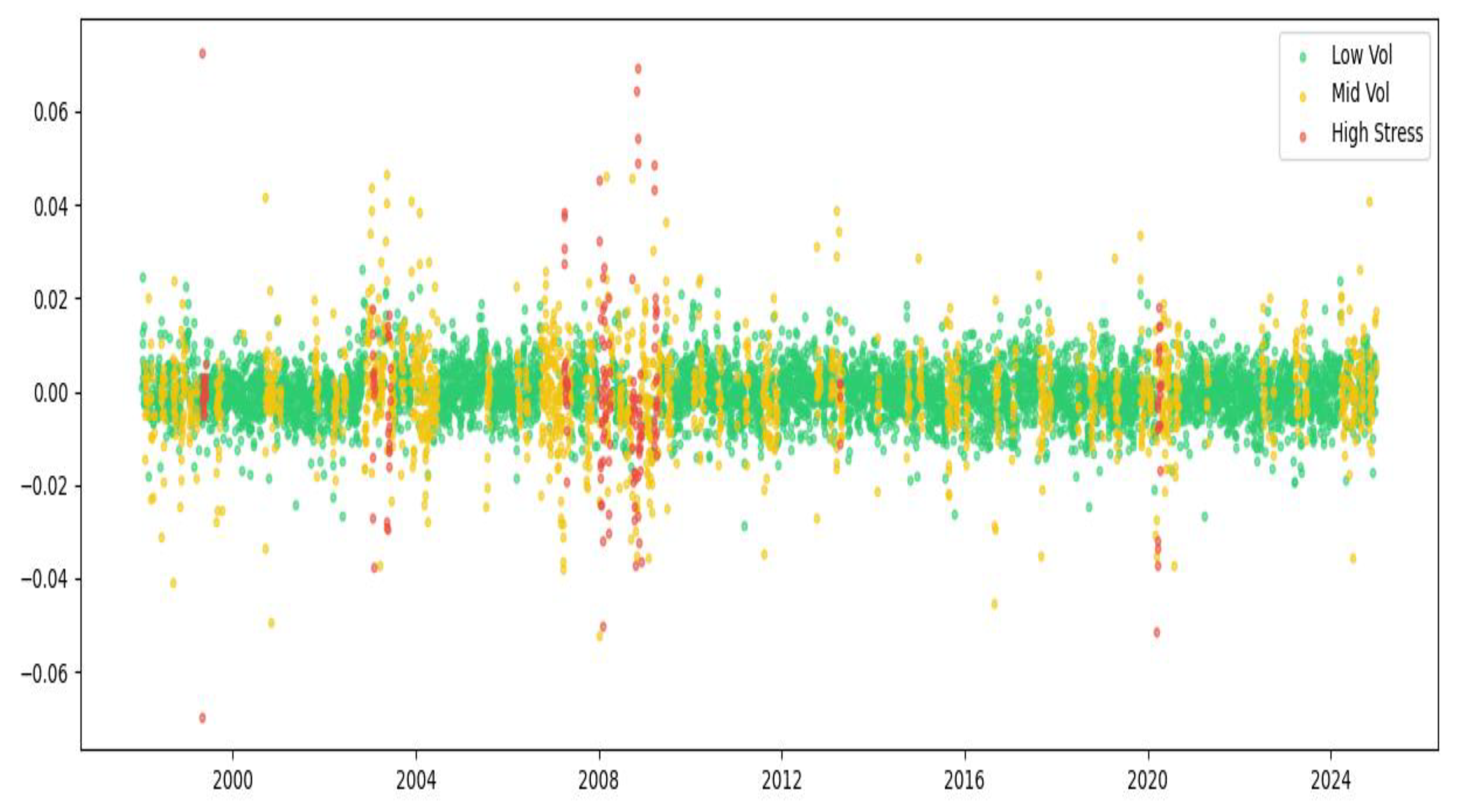
Figure 9.
Stress Probabilities.
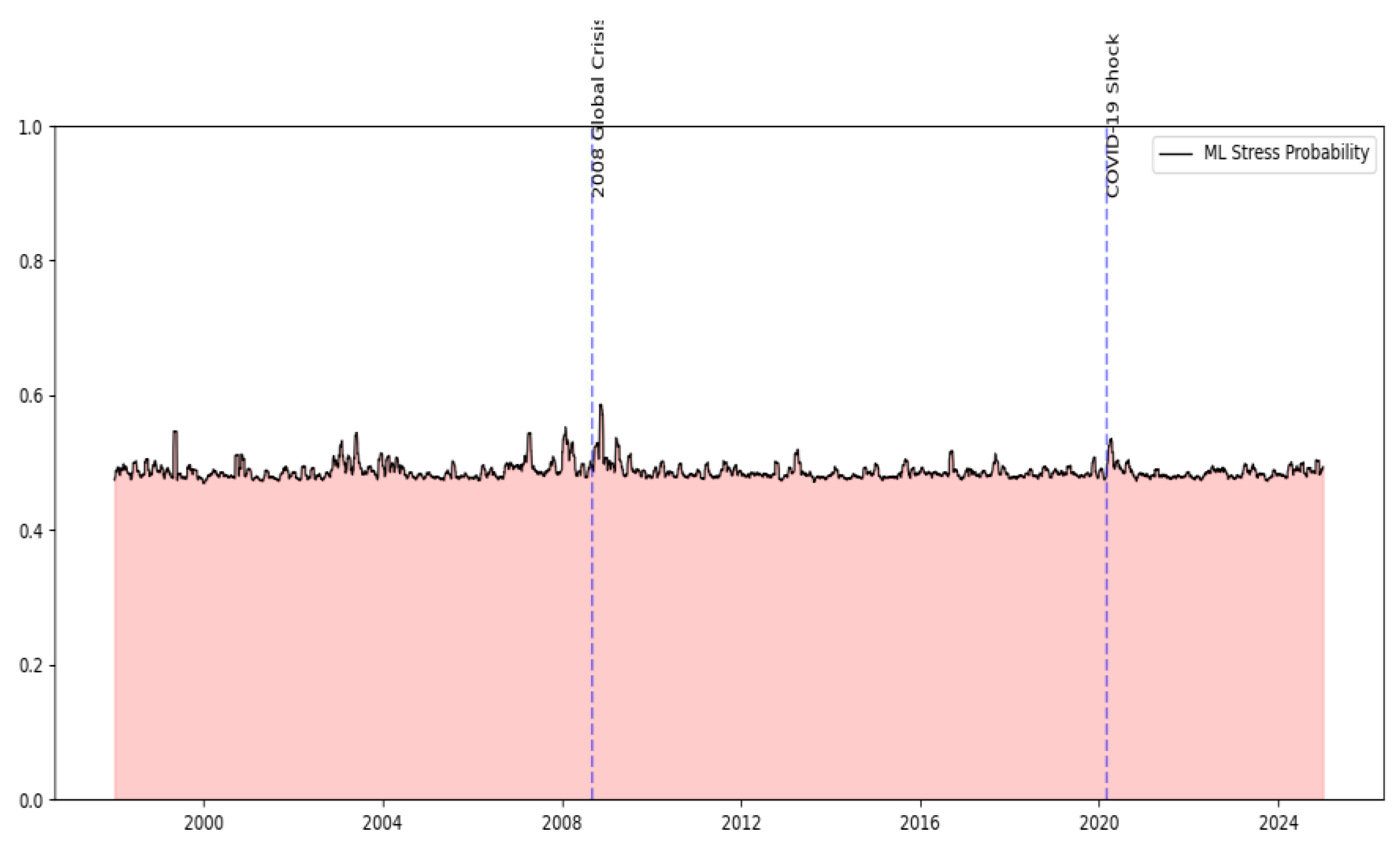
Figure 10.
Timeline of market stress probabilities.
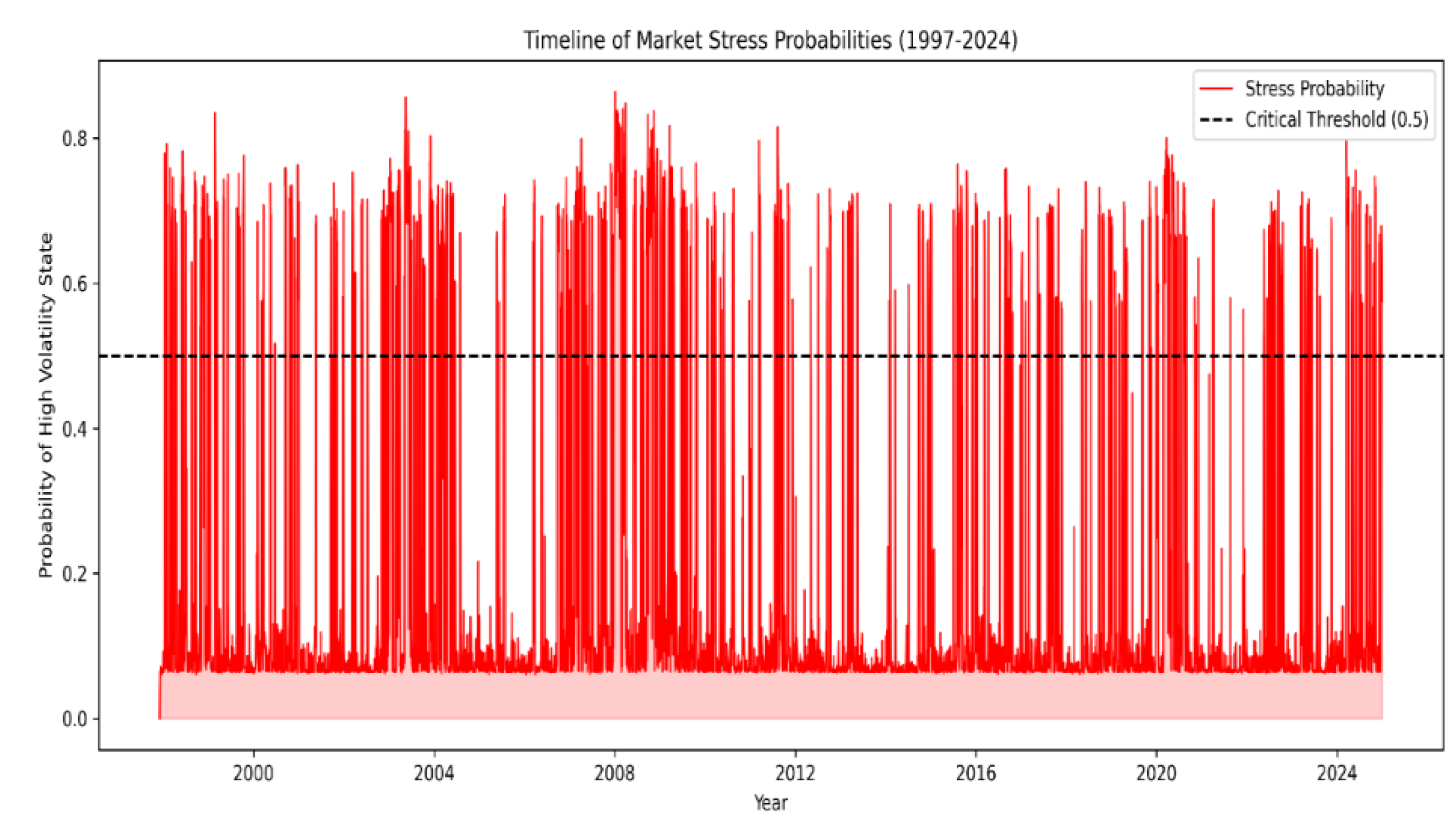
Figure 11.
Tail Risk back test analysis.
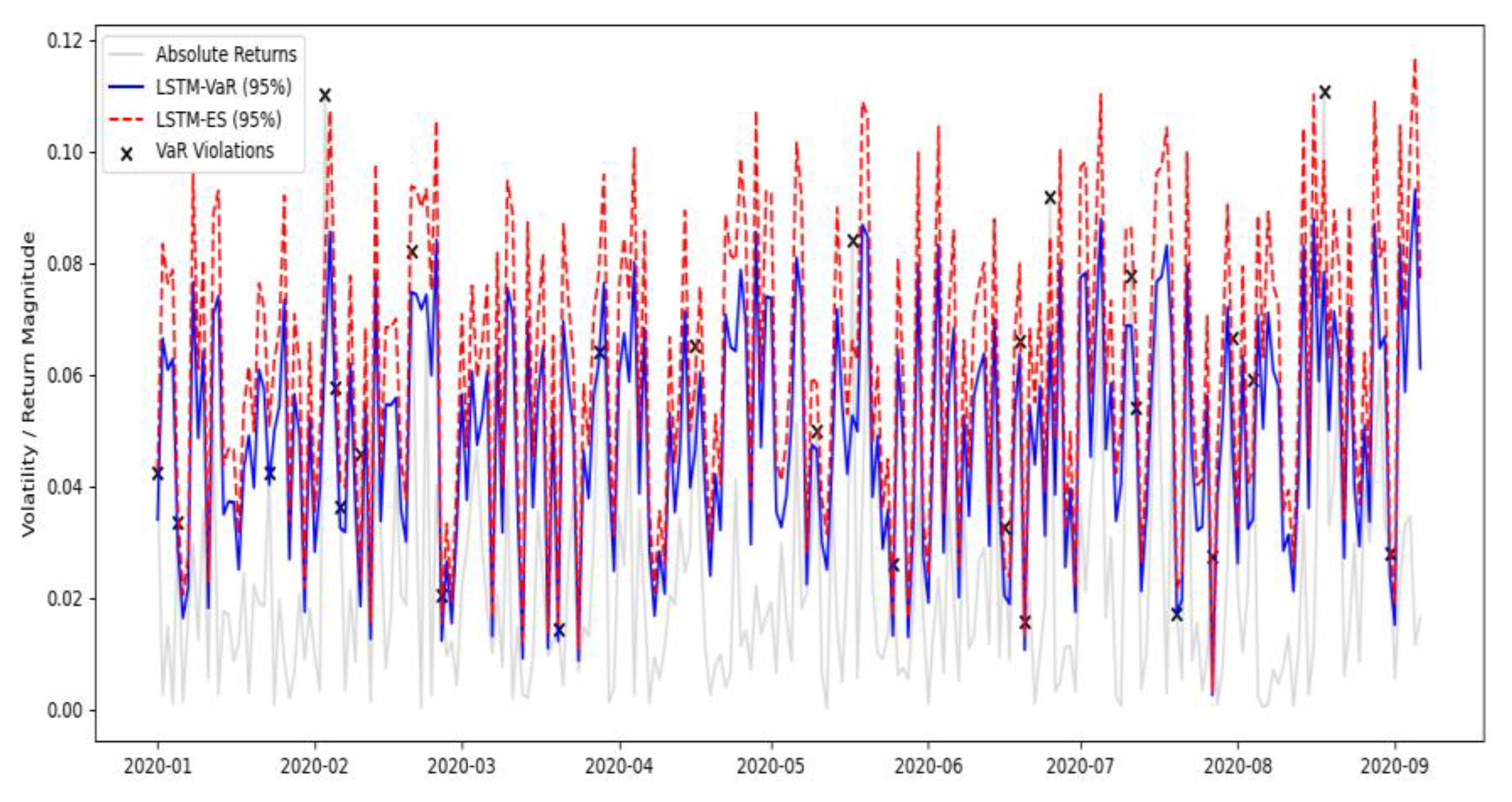
Figure 12.
Volatility Response to Brent Oil Shocks.
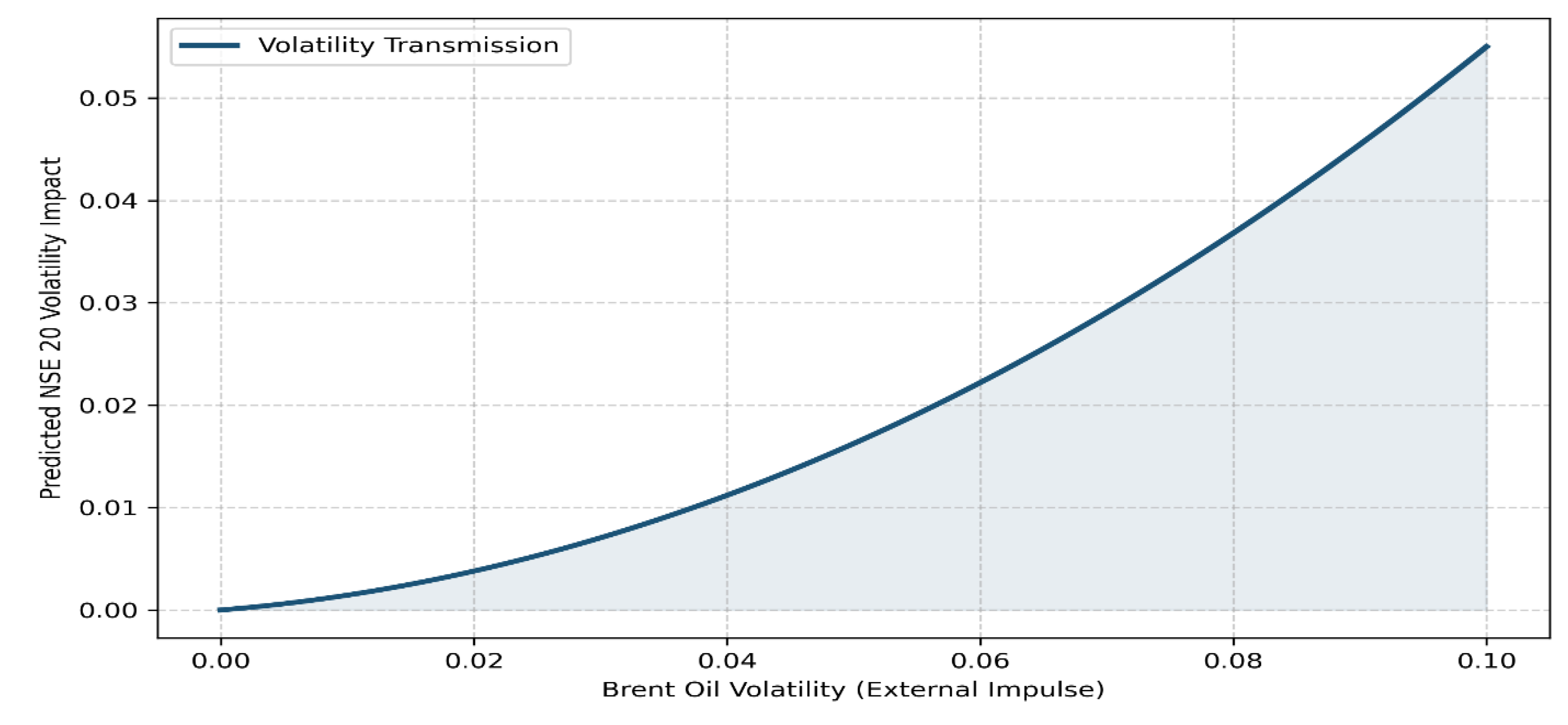

Table 1.
ICSS Structural Break Points.
| Metric | Value |
| Primary Break Date | 7/2/2009 |
| Peak D_k Statistic | 0.1638 |
| 95% Critical Value | 0.0166 |
| Significance Level | p < 0.01 |
Table 2.
Model Parameters.
| Model Spec | Key Parameter | Estimate | T-Statistic | P-Value |
| APARCH (1,gamma,1) | Gamma (Asymmetry) | -0.032186 | -1.246716 | 0.212502 |
| FIGARCH (1,d,1) | d (Long Memory) | 0.385838 | 2.154176 | 0.031226 |
Table 3.
Predictive Accuracy Metrics.
| Metric | LSTM-FIGARCH Value | Threshold/Benchmark |
| RMSE | 0.00498 | < 0.05 |
| MAE | 0.00396 | < 0.04 |
| MAPE (%) | 16.72% | < 15% |
| R-Squared | 0.8244 | > 0.70 |
Disclaimer/Publisher’s Note: The statements, opinions and data contained in all publications are solely those of the individual author(s) and contributor(s) and not of MDPI and/or the editor(s). MDPI and/or the editor(s) disclaim responsibility for any injury to people or property resulting from any ideas, methods, instructions or products referred to in the content. |
© 2026 by the authors. Licensee MDPI, Basel, Switzerland. This article is an open access article distributed under the terms and conditions of the Creative Commons Attribution (CC BY) license.
Copyright: This open access article is published under a Creative Commons CC BY 4.0 license, which permit the free download, distribution, and reuse, provided that the author and preprint are cited in any reuse.


