
Submitted:
20 March 2026
Posted:
23 March 2026
You are already at the latest version
Abstract
Existing research on cooperative control of connected and autonomous vehicles (CAVs) has primarily focused on structured freeway environments. Most existing approaches adopt lane-based modeling and discrete lane-change actions. These assumptions are unsuitable for toll plaza diverging areas without lane markings, where vehicles move toward multiple tollbooths. The absence of predefined lanes leads to continuous trajectory evolution, dense interactions, and increased safety risk. To address this limitation, this study proposes a multi-agent cooperative control framework based on Multi-Agent Proximal Policy Optimization (MAPPO) under a Centralized Training and Decentralized Execution (CTDE) architecture. The multi-agent formulation captures multi-vehicle Interaction in toll plaza diverging areas, while centralized training improves learning stability. A target-path-oriented action space is introduced to replace the discrete lane-change action, enabling flexible tollbooth selection and continuous trajectory generation. Moreover, a simulation platform, structured under a Perception-Decision-Action framework, is constructed to support high-fidelity evaluation in weak-constraint traffic environments. Simulation results based on real-world traffic data show that the proposed method improves traffic efficiency and enhances collision avoidance. Furthermore, comparative analyses are conducted to evaluate the model performance under varying traffic environments.
Keywords:
toll plaza diverging area
; weak-constraint traffic
; cooperative vehicle control
; MAPPO algorithm
1. Introduction
As a typical class of unmanned ground vehicles (UGVs), connected and autonomous vehicles (CAVs) are increasingly deployed in various transportation scenarios. With their rapid deployment, cooperative control has become a fundamental component of next-generation intelligent transportation systems [1,2]. While substantial progress has been achieved on freeway segments, toll plaza diverging areas remain insufficiently studied [3]. Unlike structured freeway environments, toll plaza diverging areas are more prone to traffic accidents [4], due to their weak lane constraints, high lateral maneuvering freedom, and intensive multi-vehicle weaving interactions [5,6].The vehicles gradually disperse from upstream approach lanes toward multiple tollbooths without rigid lane guidance, generating continuous lateral movements and complex conflict patterns. This characteristic fundamentally differentiates toll plaza diverging areas from lane-based traffic systems.
Extensive research has investigated cooperative control strategies [7]. However, most existing cooperative control strategies, whether rule-based [8], optimization-driven [9,10], or learning-based [11,12], are developed under explicit lane-based traffic area assumptions. The vehicle control strategies are typically represented as discrete lane-change decisions combined with longitudinal acceleration control [13]. These strategies implicitly constrain conflict modeling within adjacent lanes and assume instantaneous lateral transitions. In rule-based and optimization-based methods, maintaining computational tractability often requires artificial discretization of lanes or trajectories, which constrains the action space [14]. In toll plaza diverging areas, vehicle trajectories evolve in a continuous two-dimensional space where lateral displacement is gradual rather than instantaneous, and conflict regions are spatially overlapping rather than lane-adjacent [15,16]. Under such conditions, the lane-based method fails to reflect the reality of the toll plaza diverging areas. Consequently, although these methods perform well in structured networks, their effectiveness diminishes in weakly constrained diverging regions.
In recent years, Multi-Agent Reinforcement Learning (MARL) has emerged as a powerful method for cooperative vehicle control, enabling agents to learn policies directly through interaction with the environment [17,18]. MARL has shown promising results in freeway merging, variable speed limit control [19,20], and lane-change coordination [21,22], where the state and action spaces remain structured and lane-indexed. Nevertheless, most existing MARL implementations still inherit discrete maneuver abstractions and structured geometric assumptions.
Despite notable progress in vehicle control strategies, a clear gap remains in modeling and coordinating vehicle behaviors in toll plaza diverging areas. Existing methods are largely developed under structured lane assumptions and rely on discrete lane-change or acceleration actions, which cannot capture continuous lateral movements and flexible path selection in weakly constrained environments. In addition, most mainstream traffic simulation platforms inherently adopt one-dimensional, lane-based car-following rules, even when modeling diverging areas. Such modeling assumptions further constrain the representation of vehicle interactions and limit the fidelity of safety evaluation in toll plaza scenarios.
To address this gap, we propose a cooperative control framework based on Multi-Agent Proximal Policy Optimization (MAPPO) under a Centralized Training and Decentralized Execution (CTDE) architecture. The multi-agent formulation captures the strong coupling among vehicles in open-space diverging areas, where each trajectory choice affects the feasible decisions of others. Instead of modeling discrete lane-change actions, a target-path–oriented action space is introduced to represent feasible tollbooth paths under weak lane constraints. To ensure consistent validation under weak structural constraints, a dedicated interaction-driven simulation environment is constructed, which removes rigid lane-following assumptions in toll plaza diverging areas. The primary contributions of this research are summarized as follows:
(1) This study proposes a coordinated multi-agent cooperative decision-making model considering safety and efficiency for toll plaza diverging areas. The framework is designed to address complex multi-vehicle interactions under weak lane constraints, enabling coordinated control that simultaneously improves traffic efficiency and mitigates collision risk.
(2) To accommodate the lateral freedom and weak constraints in toll plaza diverging areas, this study designs a target path-based action space that resolves the mismatch between lane-based decision models and diverging areas. The vehicles select feasible tollbooth paths rather than execute discrete lane change actions, enabling continuous and natural trajectories.
(3) Extensive simulations are conducted on the developed simulation platform using real-world traffic data to validate the proposed framework. Comparative experiments against classical control methods show clear improvements in operational efficiency and safety performance.
The remainder of this paper is organized as follows. Section 2 presents the methodology. Section 3 describes the simulation-platform development. Section 4 introduces the multi-agent cooperative decision model. Section 5 outlines data preprocessing and model configuration. Section 6 reports the simulation results and provides analytical discussions. Section 7 concludes the study and highlights future research directions.
2. Methodology
Aiming at the weak-constraint traffic characteristics of the toll plaza diverging area, we proposed a two-dimensional microscopic simulation platform under a Perception-Decision-Action (PDA) framework. Within this environment, a multi-agent cooperative decision model is implemented to achieve multi-vehicle cooperative control. The overall methodology is illustrated in Figure 1.
A two-dimensional microscopic simulation platform is developed based on the existing research [23]. The platform is specifically designed to reproduce vehicle interactions in weakly constrained toll plaza diverging areas, where lateral freedom is high, lane boundaries are not strictly enforced, and multi-vehicle weaving occurs frequently. To accurately capture these dynamics, the platform integrates three core components: (i) accessible path perception, which maps feasible paths toward tollbooths in continuous space; (ii) dynamic toll lane selection, which determines the short-term routing of vehicles under real-time traffic conditions; and (iii) a car-following model considering lateral offsets. It enables vehicles to adjust longitudinal and lateral acceleration dynamically based on the positions of surrounding agents in the two-dimensional space.
Based on this platform, a multi-agent collaborative control model, which enables vehicles to optimize actions jointly while considering interactions with surrounding traffic. Within this model, the reward function balances traffic efficiency and safety objectives, guiding vehicles toward coordinated behaviors that minimize collisions and congestion. A CTDE structure is employed, mitigating non-stationarity in densely interacting environments [24].
3. Simulation Platform Establishment
The simulation platform is built on the PDA framework to simulate the driver’s cognitive process in the toll plaza diverging areas. It decomposes the complex driving behaviors into three aspects: accessible lane perception, dynamic toll lane selection, and a car-following model considering lateral offsets. The main components of this platform are introduced below.
3.1. Accessible Lanes Perception
As mentioned earlier, although vehicles in the diverging area have a longitudinal target lane, they lack lateral motion constraints and typically drive directly toward the end of their target toll lane’s queue. During this process, vehicles no longer rely on lane markings but on paths to each accessible toll lane to guide their perception and make decisions [25,26]. To incorporate this characteristic, this study proposes a path-oriented perception method, with its two components detailed below.
3.1.1. Accessible Diverging Path Generation
Polynomial curves are commonly used to characterize the lane-changing trajectories [27], as their continuous curvature ensures smooth transitions in velocity and acceleration. Therefore, this section uses a cubic polynomial function to simulate the diverging paths of vehicles at the diverging area:
where a, b, and c represent parameters of the curve function, d is a constant term.
As shown in Figure 2, because the electronic toll collection (ETC) system has not yet achieved full coverage in China, toll plazas typically operate under a mixed tolling scheme that integrates ETC and manual toll collection (MTC). This operational structure results in multiple feasible approach paths toward different toll booths within the diverging area. The accessible paths shown in the figure are generated using the polynomial curve function defined above. The path parameters are defined by the coordinates of four key points along the vehicle’s trajectory during its diverging process, including the vehicle’s current and previous positions, and two fixed points on the centerline of the accessible toll lane. When a vehicle enters the diverging area (e.g., ETC vehicle SV 1), the simulation platform will generate multiple accessible paths (Path 1 to Path 5) based on its two trajectory points before entering the diverging area (P1 and P2) and two fixed points on the center-line of each accessible ETC lane (P3 and P4). If a vehicle detects a preceding vehicle (e.g., SV2) on its current path during the diverging process, it will dynamically generate new candidate paths (Path 1’ and Path 2’). These paths are created based on the vehicle’s current and previous positions (P1’ and P2’), as well as fixed points on the center lines of other accessible lanes (e.g., P3’ and P4’), effectively simulating the vehicle’s dynamic adjustment behavior.
3.1.2. Perception Based on Path
Vehicle perception information in the diverging area is divided into two categories: vehicle-related information and path-related information. All variables are defined in Table 1 and illustrated in Figure 3.
- Vehicle-related information: It comprises three categories: dynamic kinematic states, including vehicle’s position ((, ), velocity (, ), and longitudinal acceleration (); static attributes, including the toll collection type () and initial lane (); and surrounding vehicle indicators () for the presence of other vehicles in predefined surrounding zone.
- Path-related information: It includes the available longitudinal distance (), lateral moving magnitude (), and the queue length () for each accessible path, where j is the toll lane number determined by the current vehicle’s toll collection type.
The definitions of the path-related variables are as follows. As illustrated in Figure 3, the diverging area contains 5 ETC lanes and 3 MTC lanes. If the current vehicle is an ETC vehicle, its accessible paths are ; if it is an MTC vehicle, then . Since represents the available longitudinal space on path at time. If there is a preceding vehicle on the path, equals the longitudinal distance between the current vehicle and the preceding one. For example, in Figure 3, there are preceding vehicles A and B on Path 1 and Path 3, so and are the longitudinal distances to A and B. In contrast, Paths 2, 4, and 5 are not affected by other vehicles, so , , and are all equal to , the longitudinal distance to the toll lane entrance at time . Meanwhile, the variable is the required steering magnitude for selecting path at time, calculated as the ratio of to , where is the lateral distance from current position to the merge-in point of path at time . Finally, indicates the number of vehicles queued on path at time .
3.2. Dynamic Toll Lane Decision
Based on the environmental information provided by the perception layer, the decision layer dynamically selects a target toll lane to simulate the decision adjustment in the human driving process. Upon entering the area, the vehicle first selects an initial target lane and then makes real-time adjustments continuously based on the traffic conditions ahead. This dynamic path selection can be framed as a multi-class classification problem [28,29]. To model this behavior, we use a Multi-layer Perceptron(MLP) neural network [30] that takes environmental information (as detailed in Table 1) as its input and, in turn, outputs the vehicle’s optimal target toll lane at each time step.
3.3. Dynamic Toll Lane Decision
On structured road segments with clear lane markings, car-following models often assume that the centers of the preceding and following vehicles are on the same straight line. However, in unstructured scenarios like diverging areas without lane markings, there exists a significant lateral offset between the preceding and following vehicles [31]. In these cases, common car-following models fail to accurately capture their driving behaviors. Therefore, it is necessary to modify the original model to incorporate the weak-constraint motion features at the diverging area.
The Full Velocity Difference (FVD) model is one of the most widely used car-following models. It simulates the following vehicle’s reaction to its predecessor by comprehensively considering factors such as the spacing, the velocity difference, and the driver’s response sensitivity. The model can be formulated as:
where is the driver’s optimal speed function based on the spacing to the preceding vehicle ; is the velocity of the following vehicle at time ; is the velocity difference between the current vehicle and the leading vehicle; respectively represents the sensitivity coefficient of the driver to the difference between the optimal velocity and the current velocity; and the current speed difference.
To account for the substantial lateral offsets between vehicles in the diverging area, an improved FVD model is adopted to describe car-following behavior [32], as shown in Figure 4. The modified FVD model is given by:
where and are sensitivity coefficients to the rate of change of the visual angle and the lateral offset angle. is the visual angle of the preceding vehicle, while is the lateral offset angle.
The specific calculation methods for these angles are as follows:
where the vehicle length and width are set to 5m and 1.6m in this study.
The optimal velocity is calculated as follows:
where , , , are the parameters for the optimal velocity function. This study adopts the classic parameter set (=6.75, =7.91, =0.13,=1.57), which was determined based on empirical traffic data from Stuttgart, Germany, and has been used in subsequent car-following research [33].
To ensure continuous car-following behavior even when no preceding vehicle is on the chosen path, the simulation platform places a virtual vehicle at the end of the target toll lane. This allows the current vehicle to adhere to the car-following rules throughout the diverging process.
4. Multi-Agent Cooperative Decision Model
To address the challenge of multi-vehicle cooperative control in the weak-constraint environment of the toll plaza diverging area, each CAV is defined as an agent capable of independent decision-making. By adopting the CTDE paradigm, the model enables these agents to train using global information while executing efficient and safe real-time coordination based solely on local observations. The following sections describe the agent’s action space, state space, reward function, and the principles of the MAPPO algorithm.
4.1. Action Space
In structured road environments with explicit lane markings, an agent's action space is typically defined by discrete actions such as “lane change ” or “lane keeping” [34]. However, this definition is inapplicable in the weak-constraint environment of a toll plaza diverging area, which lacks clear lane-making. The actual vehicle movement in this area is characterized by a continuous and smooth merging motion toward the target toll lane, unconstrained by fixed lanes. To accurately represent this weak-constraint driving behavior, this paper redesigns the action space for each agent. The action executed by agent at each simulation time stepcomprises two components: longitudinal acceleration control and target lane selection, formulated as follows:
where the longitudinal acceleration of the agent is constrained to the range [[-4,3] m/s2. represents the target toll lane number of the agent. This paper assumes that all toll lanes are accessible for all agents. Accordingly, the value is drawn from the lane set , corresponding to the agent's specific toll collection type:
Consequently, the complete action space of each agent, defined as the set of all possible actions, can be formally expressed as:
4.2. State Space
Under the CTDE framework adopted in this paper, the definition of the state information involves a clear distinction between local observations for each agent and the global state used by the centralized controller for evaluation during training.
- Local observation space: During the decentralized execution phase, each agent solely perceives the environment information through its own sensors, then forms a local observation . This allows any differences in their traffic performance to be attributed solely to their respective control strategies or human behavioral models. Specifically, includes the vehicle’s ego state (, , , ,), surrounding vehicles information (-), and path-related information (, , ).
Therefore, the local observation can be formalized as:
- Global state space: During the centralized training phase, the critic network takes the global state information as input to accurately estimate the expected joint return of the agents, enabling the learning of cooperative policies. Consequently, the global state is defined as:
where is the total number of agents in the diverging area at the current time step .
4.3. Reward Function
Conventional lateral decision-making models typically calculate rewards solely based on the state upon lane-change completion, thereby overlooking the vehicle's behavior throughout the motion. To address this limitation, the reward function we propose incorporates the lateral motion process and environmental characteristics, providing agent with immediate feedback at each time step , as detailed below.
4.3.1. Traffic Efficiency Reward
To promote coordination among agents in the diverging area and improve overall traffic efficiency, we introduce the average speed of all agents within the area at each time step as a shared reward, which is then distributed to each agent:
where denotes the total number of agents in diverging area at time , and represents the speed of at time . If , the reward is set to 0. This design provides immediate response on how individual decisions impact the overall traffic efficiency, thereby facilitating the learning of cooperative behaviors among agents under the CTDE framework.
Furthermore, to encourage agents to select toll lanes with shorter queues, thereby balancing traffic loads of each lane, we design a queue-balancing reward , formulated as follows:
where and respectively denote the queueing numbers of the previous and new target toll lane. If , a reward is granted, otherwise, a penalty is imposed.
4.3.2. Traffic Efficiency Reward
To guarantee vehicle safety during the diverging process, we incorporate two penalty mechanisms. First, a collision penalty is designed to train agents to avoid conflicts with surrounding vehicles. When an agent’s lateral maneuver results in a collision, the penalty is triggered:
Also, a steering penalty is designed to penalize aggressive steering actions:
A larger value of indicates more aggressive steering, which tends to cause disturbances to surrounding traffic, particularly in non-lane-based areas, thereby incurring a heavier penalty.
The final weighted reward received by agent at time is formulated as:
where the weighting coefficients are set as , , , .
4.4. MAPPO Training Framework
The selection of the MAPPO algorithm, as opposed to off-policy alternatives such as MADDPG or QMIX, is predicated on its greater stability and convergence in dynamic environments. Given the intensive weaving and stochastic multi-vehicle interactions in toll-plaza diverging areas, MAPPO operating within the CTDE framework is selected for this study.
MAPPO is extended from the single-agent Proximal Policy Optimization (PPO) algorithm. When adapted to multi-agent scenarios, MAPPO assigns an independent actor network while employing a centralized critic network. Each agent’s actor selects actions based on local observation , with its clipped objective function formulated as follows:
where denotes the probability ratio between the new and old policies of agent . is the advantage function estimated by the critic network, and is the clipping parameter (typically set between 0.1 and 0.3). The function restricts to the interval [, preventing excessive policy updates.
To estimate the advantage function accurately, the centralized critic network takes the global state as input to approximate the value function , thus using generalized advantage estimation (GAE):
where is the temporal difference (TD) error. is the discount factor and is the GAE parameter.
To ensure accurate value estimation, the critic network is trained to minimize the mean squared error between the predicted value and the discounted cumulative return :
where represents the actual return obtained by agent from time to the end of the episode.
Furthermore, to prevent premature convergence to sub-optimal policies, a policy entropy is introduced. The overall objective function for the actor network is thus formulated as:
where .
Finally, the network parameters are updated iteratively using the Adam optimizer:
where and denote the learning rates for the actor and critic networks respectively.
5. Simulation Experiment
5.1. Data Collection and Processing
The data for this study were collected at the Changsha West Toll Plaza on the G55 Changsha-Zhangjiajie Freeway (east to west), a major traffic node in the western part of Changsha. An aerial view of the study area is shown in Figure 5. The upstream section of the study area consists of three mainline lanes, each with a width of 3.75 m. It is followed by a diverging area approximately 145 m in length, which leads to a toll plaza with eight lanes. Five of these are ETC lanes on the left, and the remaining three are MTC lanes on the right. Each toll lane is 5 m wide. The vehicle trajectory data were captured through vertical aerial filming from an Unmanned Aerial Vehicle (UAV). The footage was recorded in May 2021. A total of 55 minutes of video were recorded in 4K resolution at 30 fps. After excluding segments with no traffic or heavy congestion to ensure data quality, approximately 25 minutes of continuous video footage were kept for analysis. Based on 10-minute statistical intervals, the traffic flow during the observation period ranged from 1578 to 2004 vehicles per hour.
The vehicle trajectories were extracted from the video data using the Automated Roadway Conflicts Identification System (ARCIS) [35],developed by the University of Central Florida's Intelligent Safe and Sustainable Transportation team. A final data-set of 692 complete vehicle trajectories was obtained through this method, comprising 628 passenger cars (439 ETC, 189 MTC) and 64 large vehicles (trucks and buses). Given their significant differences in acceleration performance, turning radii, and lane-changing behaviors compared to passenger cars, large vehicles were excluded from direct modeling and analysis. However, to ensure a realistic traffic environment, the trajectories of large vehicles were preserved and incorporated as background traffic flow within the simulation environment.
The number of vehicles entering the diverging area from each mainline lane and the throughput of each toll lane are presented in Table 2. The data reveal two primary trends. First, in terms of entry lane selection, ETC vehicles tended to enter from the middle mainline lanes, while MTC vehicles primarily opted for the outer lanes. Second, regarding toll lane selection, drivers showed a clear preference for the lane with the shortest lateral distance. These behavioral tendencies led to higher traffic volumes for ETC lanes 1-3 and MTC lanes 1-2 compared to other lanes of their respective types.
5.2. Model Setup
5.2.1. Simulation Platform Setup
A scenario was constructed in the simulation platform based on the actual layout of the Changsha West Toll Plaza diverging area, as shown in Figure 6. The simulated highway mainline consists of a 10-meter section with three 3.75-meter-wide lanes (numbered 1-3). This section transitions into a gradually widening, diverging area and ultimately connects to a toll plaza with eight 5-meter-wide toll lanes. The traffic volume was set to 1500 vehicles per hour. In this environment, both ETC and MTC vehicles are generated at the beginning of the mainline section, with initial conditions consistent with the measured data shown in Table 2: the lane-entry proportion of ETC vehicles is 1:2:1, with speeds following a normal distribution ; while the lane-entry proportion of MTC vehicles is 1:2:4, with speeds following . The terminal rules for vehicles are defined as follows: ETC vehicles must pass through toll lanes at a speed not exceeding 20 km/h, whereas MTC vehicles stop for 20 seconds after traveling 15 meters into the toll lane to simulate manual payment processing. To evaluate the system efficiency, the metric “diverging time” is defined as a vehicle’s total travel time within the diverging area, excluding any dwell time within the toll lanes. The simulation process is executed on a self-developed Python platform, comprising three modules: a visualization interface, a simulation engine, and a data logging module. The accuracy of this platform has been validated in previous work [6,23].
5.2.2. Simulation Platform Setup
To train a cooperative driving policy for CAVs in the diverging area, our study integrated the MAPPO algorithm into the simulation platform. Both the actor and critic networks are MLPs, each consisting of one input layer, two hidden layers, and one output layer. The key hyper-parameters are specified in Table 3. During policy training, the CAV penetration rate was set to 50%. At the beginning of each episode, a corresponding proportion of the simulated human-driven vehicles was randomly designated as CAVs. Each episode lasted 30 minutes, and training data were collected through a fixed time window to optimize the cooperative policy until convergence.
As shown in Figure 7, the average reward of each CAV during the training process of the MAPPO model. In the initial training phase, the average reward exhibits significant volatility, suggesting that CAVs may encounter issues such as collisions, abrupt maneuvers, or inefficient queuing in the early learning process. As the number of iterations increases, the reward value gradually rises and converges after approximately 350 episodes, indicating the continuous optimization and stabilization of the policy network. Furthermore, to verify the effectiveness of the multi-agent cooperative strategy, a comparative analysis was conducted against the single-agent PPO algorithm under identical parameters and environmental conditions. While the MAPPO model achieves stable convergence after 350 episodes, the PPO algorithm's reward continues to exhibit marked fluctuations during the same period. The persistent instability observed in the PPO results highlights underlying issues with collision avoidance and effective lane selection, whereas MAPPO successfully ensures its stable performance.
6. Simulation Results and Analysis
6.1. Benchmark Implementation
To examine the superior performance of MARL for cooperative optimization in diverging areas, our study compares traffic performance under three methods: MAPPO, PPO, and a no-control baseline. Each scenario was simulated independently for one hour under identical conditions. Efficiency is measured by the average vehicle speed, while safety is assessed through the distribution of traffic conflicts.
6.2. Performance Evaluation
The Figure 8 presents the average diverging speeds of CAVs, human-driven ETC vehicles (ETC HVs), and MTC vehicles (MTC HVs) under the three scenarios. The results show that under the control of both the MAPPO and PPO algorithms, the overall diverging speeds improve compared to the no-control baseline. Notably, CAVs under MAPPO control achieve the highest average diverging speed, significantly outperforming the HVs. This demonstrates the effectiveness of this multi-agent strategy in improving efficiency. Furthermore, compared to the PPO algorithm, the MAPPO exhibits a lower standard deviation in speeds, indicating a more stable traffic operation. This stability is attributed to the cooperative mechanism in the CTDE framework, which enables agents to leverage global state information and thereby mitigate local competition. In contrast, the PPO algorithm, relying solely on local observations for independent decision-making, results in limited speed improvements and larger velocity variance among agents. Additionally, it was observed that in the presence of CAVs, the average speed of human-driven vehicles also slightly increased compared to the no-control scenario. This suggests that the proposed strategy enhances the CAVs’ efficiency without compromising the performance of HVs.
Figure 9 compares the distribution of traffic conflicts in the diverging area under the three scenarios. Since conflicts in such areas primarily arise from multi-directional weaving, the Extended Time-to-Collision (ETTC) is adopted as a surrogate safety measure for multi-angle conflicts [15]. Specifically, ETTC is calculated based on vehicle trajectories at 0.1-second simulation time steps. An ETTC value below 2 seconds is defined as a severe conflict.
A two-dimensional kernel density estimation is then applied to generate conflict heat-maps, where darker colors indicate higher spatial densities of severe conflicts. The results show that both PPO and MAPPO significantly reduce the overall density and clustering of severe conflicts, with the conflict hot-spots shifting downstream. MAPPO achieves a greater reduction than PPO, demonstrating the safety advantage of multi-agent cooperative control. However, a local conflict hot-spot persists near the entrance of the MTC lanes. This is likely associated with the stop-and-go behavior of MTC vehicles, which must stop to pay tolls and cannot be fully eliminated.
6.3. Comparative Analysis
To validate the applicability and robustness of the proposed cooperative control strategy under varying traffic demands and geometric conditions, two sets of comparative experiments were designed:
- Traffic volume sensitivity test: The length of the diverging area was fixed at 140 m, while traffic volumes were set to 1500, 1750, and 2000 veh/h.
- Geometric sensitivity test: With the traffic volume fixed at 1500 veh/h, the lengths of the diverging area were set to 120, 140, 160, and 180 m.
In all experiments, other parameters such as the proportion of ETC and MTC vehicles, the CAV penetration rate, and the initial speed distribution remained constant. Each simulation was independently executed for 1 hour. The evaluation metrics include the average diverging speed and the total number of traffic conflicts in the diverging area.
The Figure 10 compares the average diverging speeds and their distributions under the MAPPO control and no-control scenarios across different traffic volumes. The results demonstrate that the MAPPO strategy consistently increases the overall speed and narrows the speed distribution at all flow levels. The most significant improvement occurs at 1500 veh/h. As the volume increases, the average speed decreases in both scenarios. However, under MAPPO, the proportion of low-speed vehicles is substantially reduced, and the distribution remains compact. This indicates that the proposed cooperative control strategy effectively mitigates speed variance among vehicles under high-volume conditions, thereby ensuring traffic flow stability in the diverging area.
The Figure 11 presents the impact of diverging area length on the average speed. A slight upward trend in average speed is observed as the length increases, with the MAPPO strategy exhibiting a more pronounced increase. Specifically, at the 120 m length, the difference in average speed between the two scenarios is minimal; however, MAPPO yields a more concentrated distribution. At medium lengths (140 m and 160 m), MAPPO achieves a notable improvement in the average diverging speed. When the length extends to 180 m, although the absolute difference in average speed diminishes, the speed distribution under MAPPO exhibits lower dispersion. This corroborates the advantages of the proposed strategy in smoothing traffic flow fluctuations.
To further evaluate the safety performance of the MAPPO strategy, this study quantified the number of traffic conflicts for ETTC and across all scenarios, with the results presented in Figure 12.
As shown in Figure 12(a), the number of conflicts increases as the traffic volume rises. However, MAPPO consistently yields fewer conflicts than the baseline. Notably, for severe conflicts in the (0,1] s range, MAPPO achieves reductions of 16.3%, 15.9%, and 6.0% at volumes of 1500, 1750, and 2000 veh/h, respectively. This indicates that while the safety improvement effect of MAPPO is reduced under high-volume conditions, it remains evident.
Figure 12 (b) examines the effect of diverging area length. The total number of conflicts increases slightly as the length increases. In contrast, the relative safety improvement under MAPPO becomes more pronounced. For diverging area lengths of 120, 140, 160, and 180 m, the severe conflicts in the (0,1] s range are reduced by 8.9%, 14.7%, 15.0%, and 18.8%, respectively. These results indicate that additional spatial capacity enhances the effectiveness of cooperative control among CAVs and strengthens the safety benefits of the proposed control strategy.
7. Conclusions
This study investigates toll plaza diverging areas. The toll plaza diverging areas exhibit weak lane constraints, high lateral maneuvering freedom, and intensive multi-vehicle weaving interactions. To enhance both traffic efficiency and operational safety, we propose a cooperative control strategy for CAVs based on the MAPPO algorithm. To support the training and evaluation of this strategy, a two-dimensional simulation platform integrating the PDA framework was developed.
The simulation results provide strong evidence of MAPPO’s advantages in the toll plaza diverging areas. Compared to both the no-control and the single-agent PPO strategy, MAPPO demonstrates significant advantages in both efficiency and safety metrics. Experimental data reveal that CAVs under the MAPPO strategy achieve the highest average diverging speed with minimal fluctuation, demonstrating operational stability. Moreover, this cooperative strategy indirectly enhances the efficiency of human-driven vehicles by improving the overall traffic environment. Furthermore, conflict analysis based on ETTC reveals that MAPPO significantly mitigates the density of severe conflicts, highlighting the marked safety advantages of multi-agent cooperation in weak-constraint scenarios. Validation across diverse scenarios with varying traffic volumes and diverging area lengths confirms the robustness and adaptability of the proposed strategy.
Future work will focus on improving the practical deployment of the proposed framework under real-world conditions. We will examine how communication latency affects the robustness of cooperative control. The framework will also be extended to mixed traffic environments, with particular attention to the interactions between CAVs and HDVs to ensure safe and compatible operation.
Author Contributions
Conceptualization, L.Z and Y.F.; methodology, L.Z. and Y.F.; software, Y.F. and S.L.; validation, Y.F.; resources, L.Z. and Y.F.; writing—original draft preparation, S.L.; writing—review and editing, S.L. and L.Z.; supervision, L.Z.; funding acquisition, L.Z. All authors have read and agreed to the published version of the manuscript.
Funding
This research received no external funding.
Data Availability Statement
The data that support the findings of this study are available from the corresponding author upon reasonable request.
Conflicts of Interest
The authors declare no conflicts of interest.
Abbreviations
The following abbreviations are used in this manuscript:
| CAVs | Connected and autonomous vehicles |
| MAPPO | Multi-agent proximal policy optimization |
| CTDE | Centralized training and decentralized execution |
| MARL | Multi-agent reinforcement learning |
| PDA | Perception-Decision-Action |
| ETC | Electronic toll collection |
| MTC | Manual toll collection |
| FVD | Full velocity difference |
| MADDPG | Multi-agent deep deterministic policy gradient |
| QMIX | Monotonic mixing network |
| PPO | Proximal policy optimization |
| GAE | Generalized advantage estimation |
| TD | Temporal difference |
| UAV | Unmanned aerial vehicle |
| MLP | Multilayer perceptron |
| HVs | Human-driven vehicles |
| ETTC | Extended time-to-collision |
References
- Talebpour, A.; Mahmassani, H.S. Influence of Connected and Autonomous Vehicles on Traffic Flow Stability and Throughput. Transportation Research Part C: Emerging Technologies 2016, 71, 143–163. [Google Scholar] [CrossRef]
- Rahman, Md.M.; Thill, J.-C. Impacts of Connected and Autonomous Vehicles on Urban Transportation and Environment: A Comprehensive Review. Sustainable Cities and Society 2023, 96, 104649. [Google Scholar] [CrossRef]
- Liu, W.; Hua, M.; Deng, Z.; Meng, Z.; Huang, Y.; Hu, C.; Song, S.; Gao, L.; Liu, C.; Shuai, B.; et al. A Systematic Survey of Control Techniques and Applications in Connected and Automated Vehicles. IEEE Internet Things J. 2023, 10, 21892–21916. [Google Scholar] [CrossRef]
- Abdelwahab, H.T.; Abdel-Aty, M.A. Artificial Neural Networks and Logit Models for Traffic Safety Analysis of Toll Plazas. Transportation Research Record: Journal of the Transportation Research Board 2002, 1784, 115–125. [Google Scholar] [CrossRef]
- Saad, M.; Abdel-Aty, M.; Lee, J. Analysis of Driving Behavior at Expressway Toll Plazas. Transportation Research Part F: Traffic Psychology and Behaviour 2019, 61, 163–177. [Google Scholar] [CrossRef]
- Fei, Y.; Long, K.; Xing, L.; Pei, X.; Li, X.; Yao, L. Safety Performance Analysis of Toll Plaza Diverging Area Based on an Improved Simulation Platform for Weak-Constraint Driving Behaviors. Accident Analysis & Prevention 2025, 220, 108177. [Google Scholar] [CrossRef]
- Shladover, S.E.; Nowakowski, C.; Lu, X.-Y.; Ferlis, R. Cooperative Adaptive Cruise Control: Definitions and Operating Concepts. Transportation Research Record: Journal of the Transportation Research Board 2015, 2489, 145–152. [Google Scholar] [CrossRef]
- Lukose, E.; Levin, M.W.; Boyles, S.D. Incorporating Insights from Signal Optimization into Reservation-Based Intersection Controls. Journal of Intelligent Transportation Systems 2019, 23, 250–264. [Google Scholar] [CrossRef]
- Kamal, Md.A.S.; Imura, J.; Hayakawa, T.; Ohata, A.; Aihara, K. A Vehicle-Intersection Coordination Scheme for Smooth Flows of Traffic Without Using Traffic Lights. IEEE Trans. Intell. Transport. Syst. 2015, 16, 1136–1147. [Google Scholar] [CrossRef]
- Wu, Y.; Chen, H.; Zhu, F. DCL-AIM: Decentralized Coordination Learning of Autonomous Intersection Management for Connected and Automated Vehicles. Transportation Research Part C: Emerging Technologies 2019, 103, 246–260. [Google Scholar] [CrossRef]
- Boukerche, A.; Zhong, D.; Sun, P. A Novel Reinforcement Learning-Based Cooperative Traffic Signal System Through Max-Pressure Control. IEEE Trans. Veh. Technol. 2022, 71, 1187–1198. [Google Scholar] [CrossRef]
- Zhou, M.; Yu, Y.; Qu, X. Development of an Efficient Driving Strategy for Connected and Automated Vehicles at Signalized Intersections: A Reinforcement Learning Approach. IEEE Trans. Intell. Transport. Syst. 2020, 21, 433–443. [Google Scholar] [CrossRef]
- Zhang, J.; Chang, C.; Zeng, X.; Li, L. Multi-Agent DRL-Based Lane Change With Right-of-Way Collaboration Awareness. IEEE Trans. Intell. Transport. Syst. 2023, 24, 854–869. [Google Scholar] [CrossRef]
- Mirheli, A.; Tajalli, M.; Hajibabai, L.; Hajbabaie, A. A Consensus-Based Distributed Trajectory Control in a Signal-Free Intersection. Transportation Research Part C: Emerging Technologies 2019, 100, 161–176. [Google Scholar] [CrossRef]
- Xing, L.; He, J.; Abdel-Aty, M.; Cai, Q.; Li, Y.; Zheng, O. Examining Traffic Conflicts of Upstream Toll Plaza Area Using Vehicles’ Trajectory Data. Accident Analysis & Prevention 2019, 125, 174–187. [Google Scholar]
- Xing, L.; He, J.; Li, Y.; Wu, Y.; Yuan, J.; Gu, X. Comparison of Different Models for Evaluating Vehicle Collision Risks at Upstream Diverging Area of Toll Plaza. Accident Analysis & Prevention 2020, 135, 105343. [Google Scholar] [CrossRef]
- Aoki, S.; Higuchi, T.; Altintas, O. Cooperative Perception with Deep Reinforcement Learning for Connected Vehicles. In Proceedings of the 2020 IEEE Intelligent Vehicles Symposium (IV), October 19 2020; IEEE: Las Vegas, NV, USA; pp. 328–334. [Google Scholar]
- Waga, A.; Benhlima, S.; Bekri, A.; Abdouni, J.; Saber, F.Z. A Survey on Autonomous Navigation for Mobile Robots: From Traditional Techniques to Deep Learning and Large Language Models. J. King Saud Univ. Comput. Inf. Sci. 2025, 37, 198. [Google Scholar] [CrossRef]
- Gregurić, M.; Kušić, K.; Ivanjko, E. Impact of Deep Reinforcement Learning on Variable Speed Limit Strategies in Connected Vehicles Environments. Engineering Applications of Artificial Intelligence 2022, 112, 104850. [Google Scholar] [CrossRef]
- Jin, J.; Huang, H.; Li, Y.; Dong, Y.; Zhang, G.; Chen, J. Variable Speed Limit Control Strategy for Freeway Tunnels Based on a Multi-Objective Deep Reinforcement Learning Framework with Safety Perception. Expert Systems with Applications 2025, 267, 126277. [Google Scholar] [CrossRef]
- Li, G.; Qiu, Y.; Yang, Y.; Li, Z.; Li, S.; Chu, W.; Green, P.; Li, S.E. Lane Change Strategies for Autonomous Vehicles: A Deep Reinforcement Learning Approach Based on Transformer. IEEE Trans. Intell. Veh. 2023, 8, 2197–2211. [Google Scholar] [CrossRef]
- Zhang, S.; Zhuang, W.; Li, B.; Li, K.; Xia, T.; Hu, B. Integration of Planning and Deep Reinforcement Learning in Speed and Lane Change Decision-Making for Highway Autonomous Driving. IEEE Trans. Transp. Electrific. 2025, 11, 521–535. [Google Scholar] [CrossRef]
- Fei, Y.; Xing, L.; Yao, L.; Yang, Z.; Zhang, Y. Deep Reinforcement Learning for Decision Making of Autonomous Vehicle in Non-Lane-Based Traffic Environments. PLoS ONE 2025, 20, e0320578. [Google Scholar] [CrossRef]
- Zhang, J.; Zhang, Y.; Zhang, X.S.; Zang, Y.; Cheng, J. Intrinsic Action Tendency Consistency for Cooperative Multi-Agent Reinforcement Learning. AAAI 2024, 38, 17600–17608. [Google Scholar] [CrossRef]
- Xing, L.; Zou, D.; Fei, Y.; Long, K.; Wang, J. Safety Evaluation of Toll Plaza Diverging Area Considering Different Vehicles’ Toll Collection Types. Applied Sciences 2023, 13, 9005. [Google Scholar] [CrossRef]
- Bai, R.; Xu, R.; Rui, T.; Liu, J.; Lee, H.L.; Oung, Q.W.; Tian, Z.; Yuan, F. Safe and Efficient Lane-Changing for Autonomous Vehicles: An Improved Double Quintic Polynomial Approach with Time-to-Collision Evaluation. J. King Saud Univ. Comput. Inf. Sci. 2026, 38, 36. [Google Scholar] [CrossRef]
- Li, Y.; Li, L.; Ni, D. Dynamic Trajectory Planning for Automated Lane Changing Using the Quintic Polynomial Curve. Journal of Advanced Transportation 2023, 2023, 1–14. [Google Scholar] [CrossRef]
- Kumar, P.; Perrollaz, M.; Lefevre, S.; Laugier, C. Learning-Based Approach for Online Lane Change Intention Prediction. In Proceedings of the 2013 IEEE Intelligent Vehicles Symposium (IV), June 2013; IEEE: Gold Coast City, Australia; pp. 797–802. [Google Scholar]
- Shi, Q.; Zhang, H. An Improved Learning-Based LSTM Approach for Lane Change Intention Prediction Subject to Imbalanced Data. Transportation Research Part C: Emerging Technologies 2021, 133, 103414. [Google Scholar] [CrossRef]
- Peng, J.; Guo, Y.; Fu, R.; Yuan, W.; Wang, C. Multi-Parameter Prediction of Drivers’ Lane-Changing Behaviour with Neural Network Model. Applied Ergonomics 2015, 50, 207–217. [Google Scholar] [CrossRef]
- Song, X.-M.; Jin, S.; Wang, D.-H.; Cao, J.-H. Vehicle-Following Model Considering Lateral Offset. Journal of Jilin University(Engineering and Technology Edition) 2011, 41, 333–337. [Google Scholar]
- Qi, W.; Ma, S.; Fu, C. An Improved Car-Following Model Considering the Influence of Multiple Preceding Vehicles in the Same and Two Adjacent Lanes. Physica A: Statistical Mechanics and its Applications 2023, 632, 129356. [Google Scholar] [CrossRef]
- Helbing, D.; Tilch, B. Generalized Force Model of Traffic Dynamics. Phys. Rev. E 1998, 58, 133–138. [Google Scholar] [CrossRef]
- Hoel, C.-J.; Wolff, K.; Laine, L. Automated Speed and Lane Change Decision Making Using Deep Reinforcement Learning. In Proceedings of the 2018 21st International Conference on Intelligent Transportation Systems (ITSC), Maui, HI, November 2018; IEEE; pp. 2148–2155. [Google Scholar]
- Zheng, O.; Abdel-Aty, M.; Wu, Y. UCF-SST Automated Roadway Conflicts Identify System (ARCIS). Available online: https://github.com/fatemehjdi/A-R-C-I-S (accessed on 15 March 2026).
Figure 1.
Overall methodology.
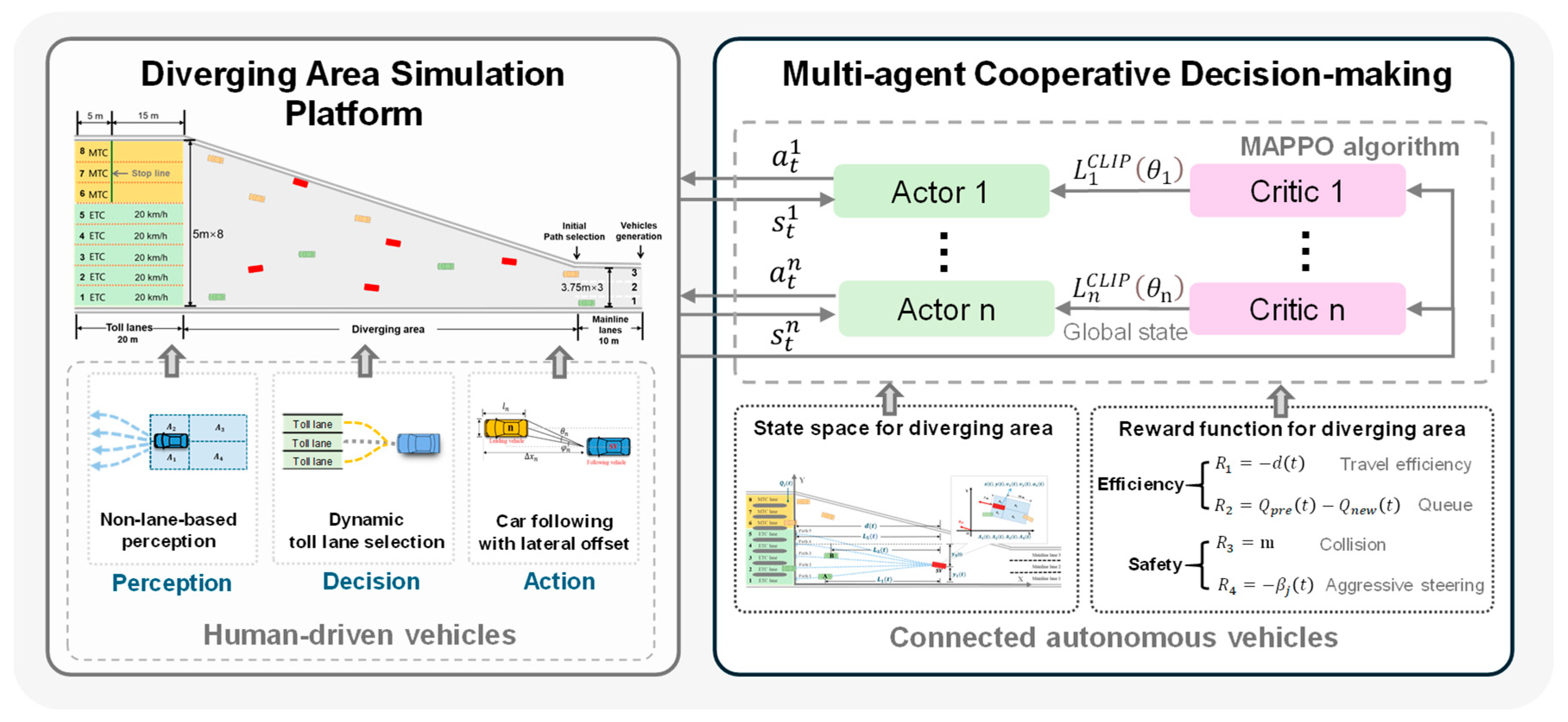
Figure 2.
Illustration of accessible path generation.
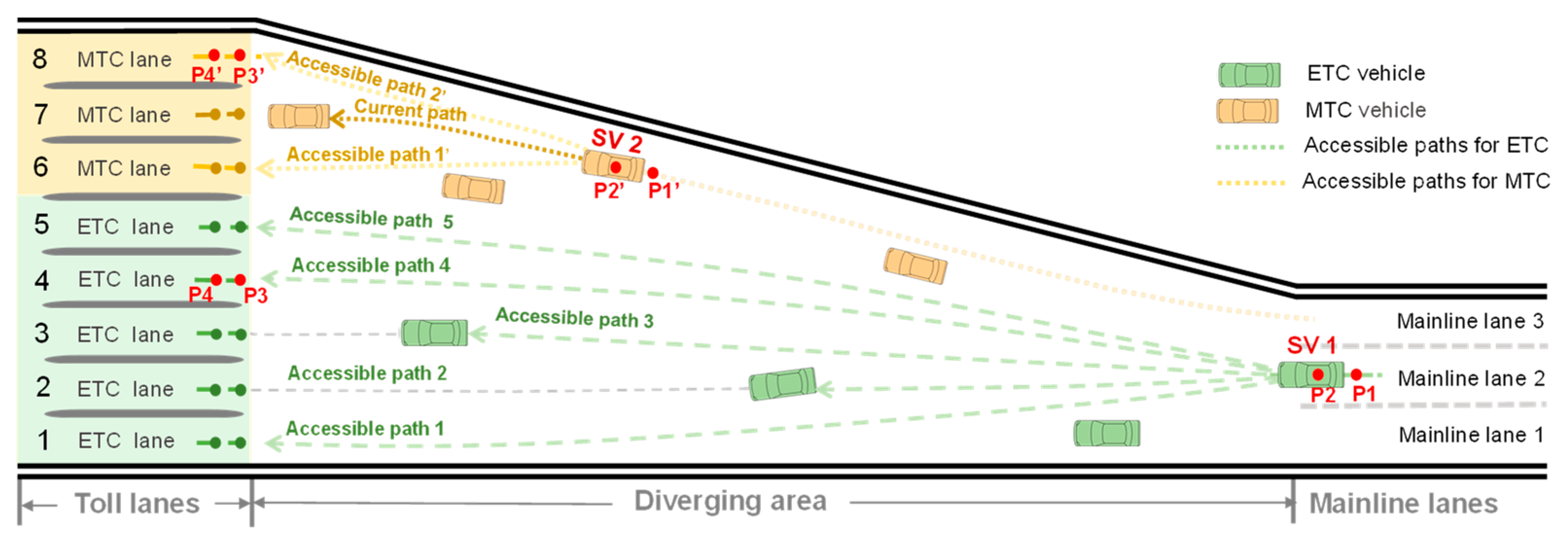
Figure 3.
Illustration of vehicle state and path information.
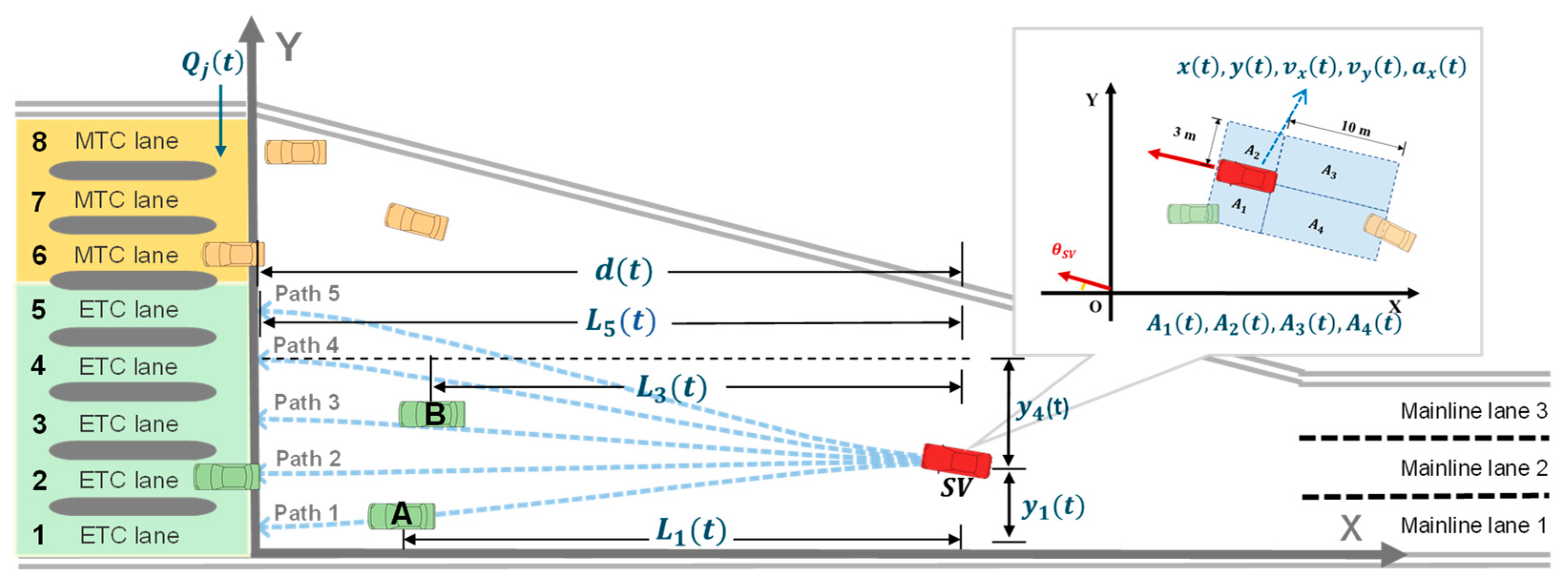
Figure 4.
Schematic of the car-following model considering lateral offsets.
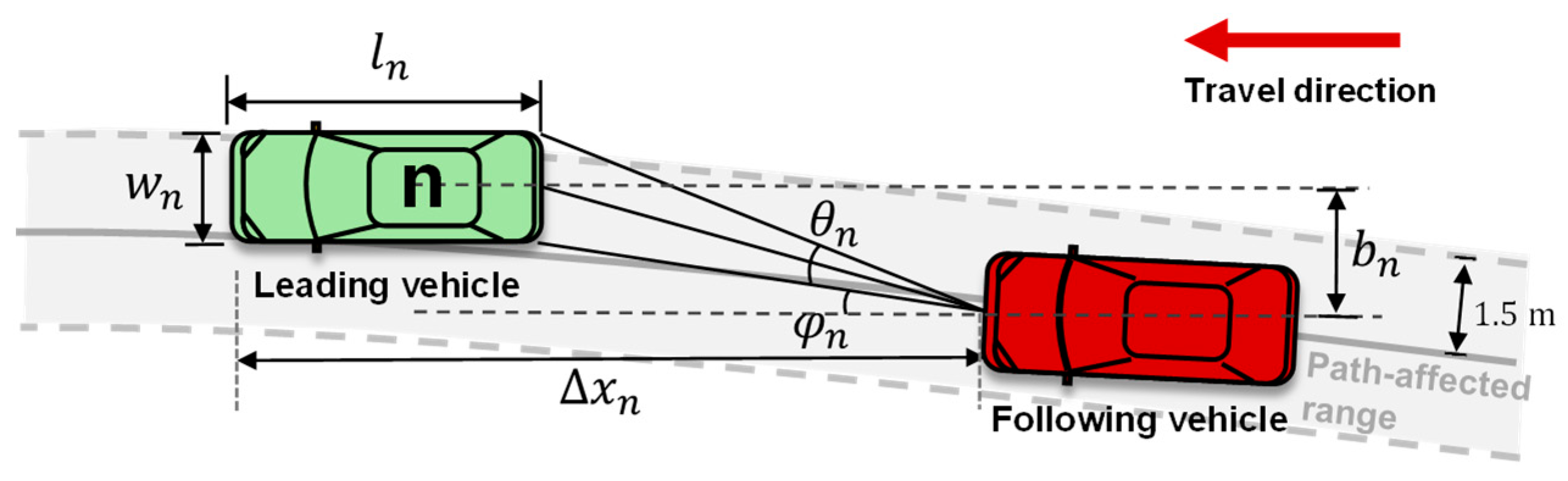
Figure 5.
Aerial view of the diverging area at Changsha West Toll Station.
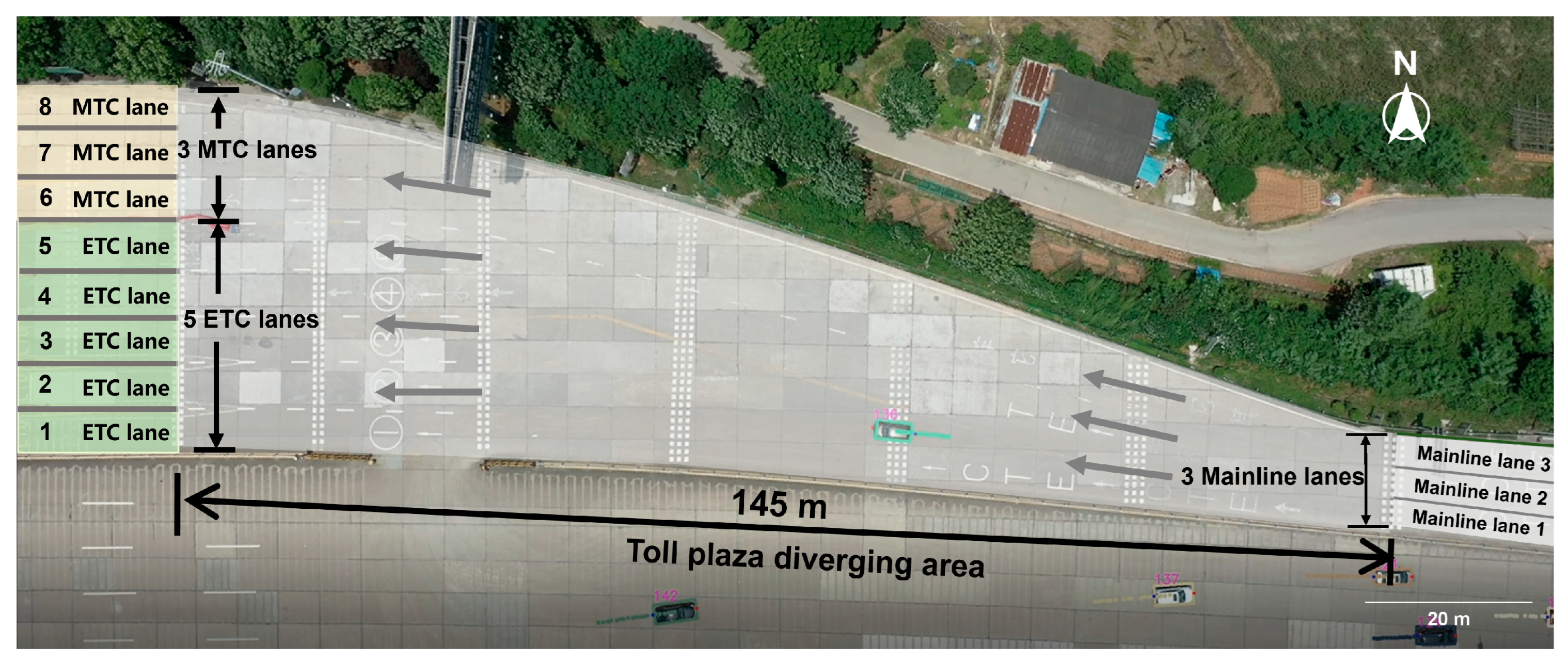
Figure 6.
Layout of the simulation platform.
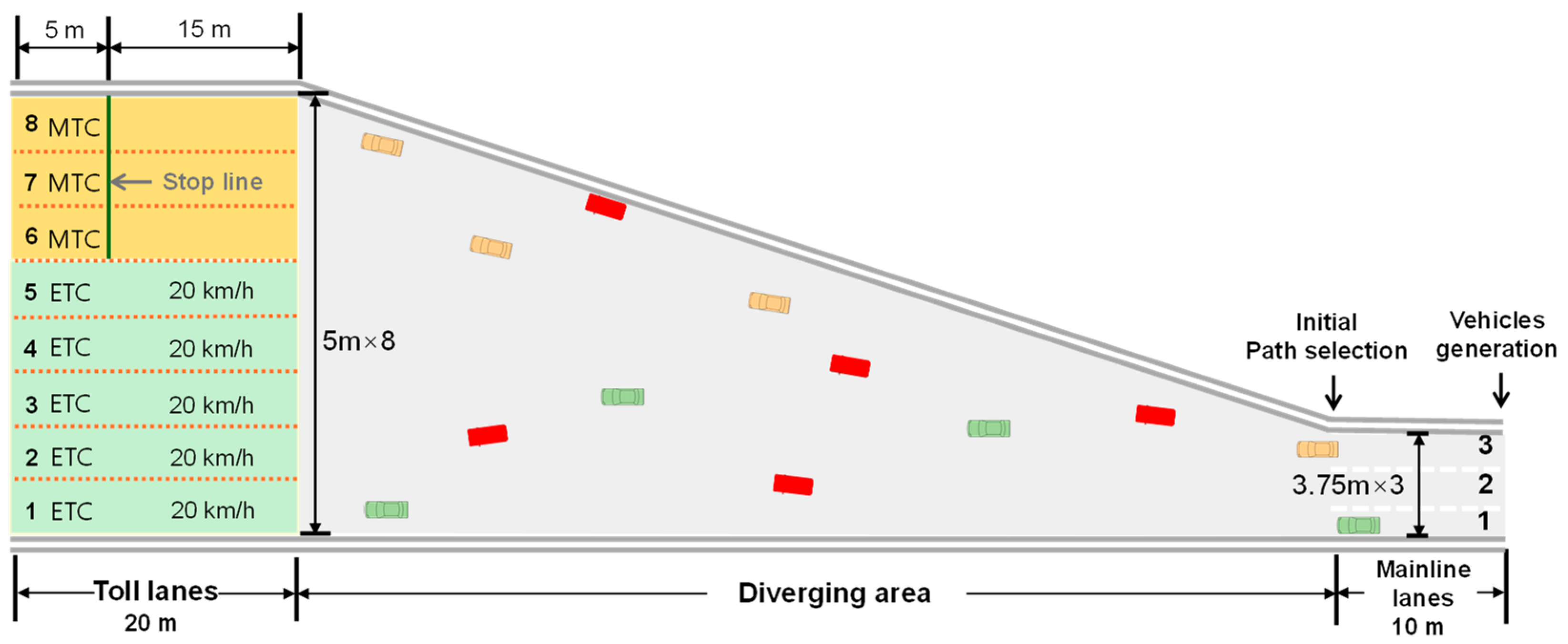
Figure 7.
Convergence curve of the average reward during training.
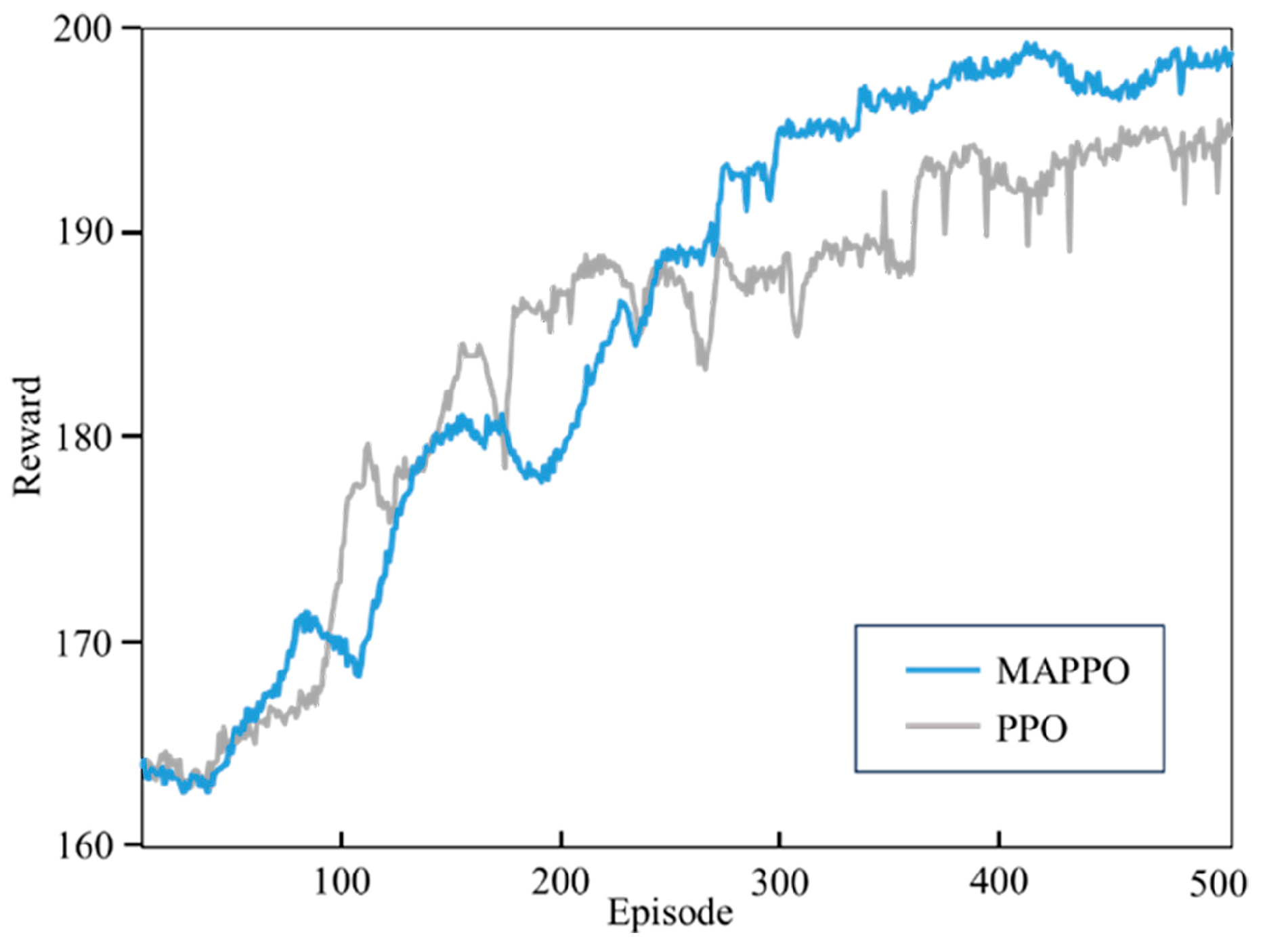
Figure 8.
Average diverging speeds of different vehicle types.
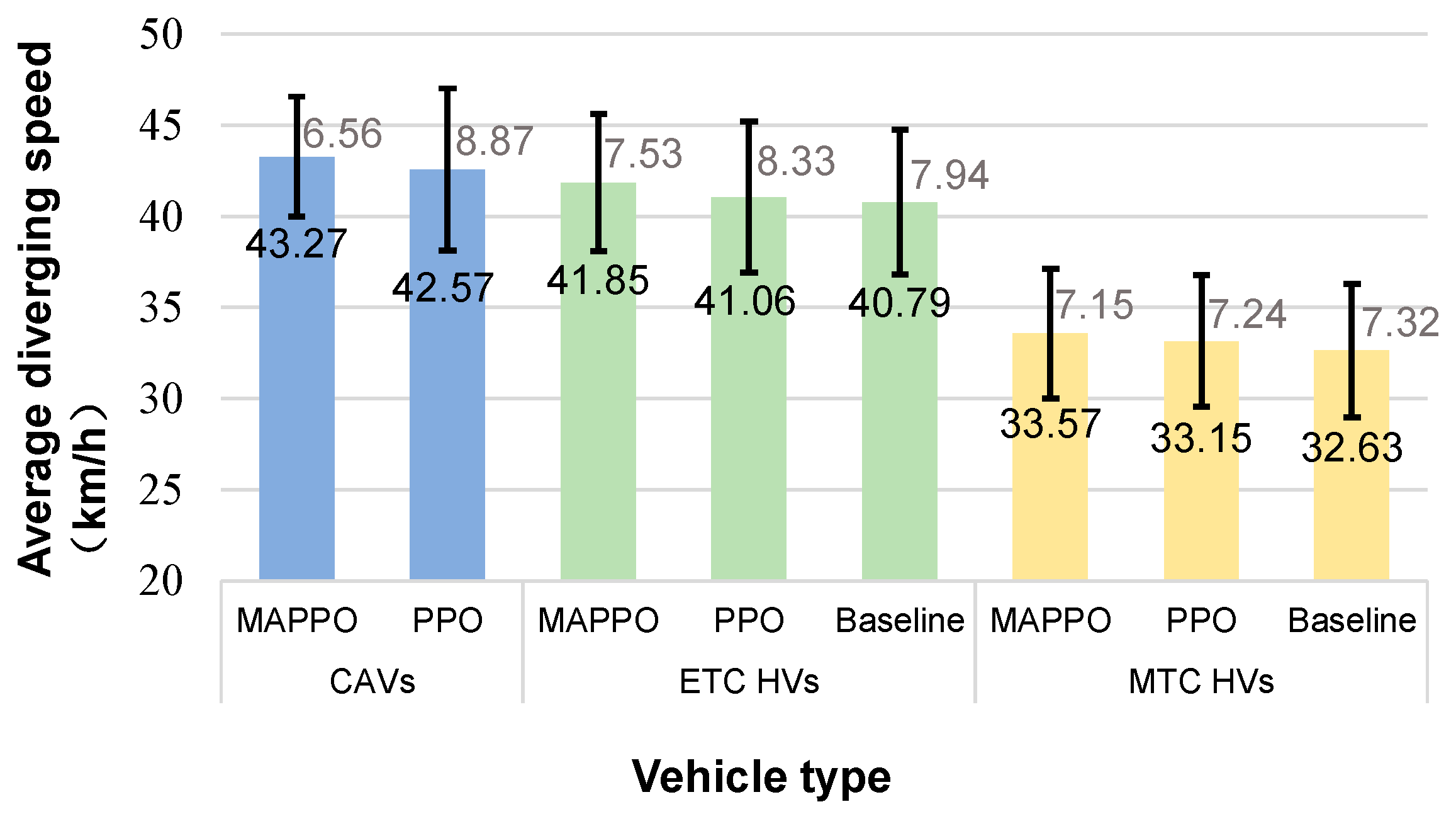
Figure 9.
Heat-maps of traffic conflict distribution under different scenarios.

Figure 10.
Vehicle speed distributions under different traffic volumes.
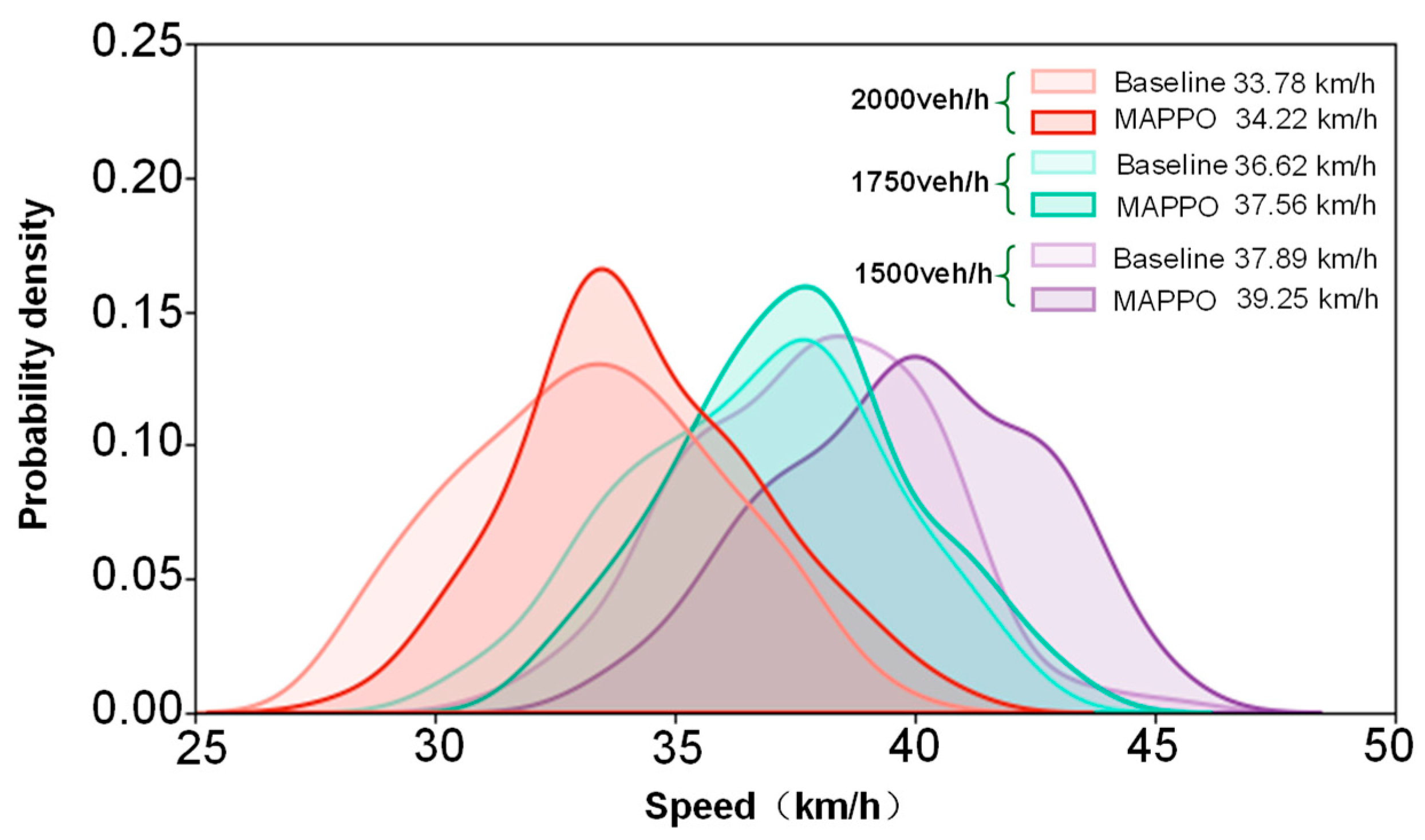
Figure 11.
Distribution of average vehicle speeds under different diverging area lengths.
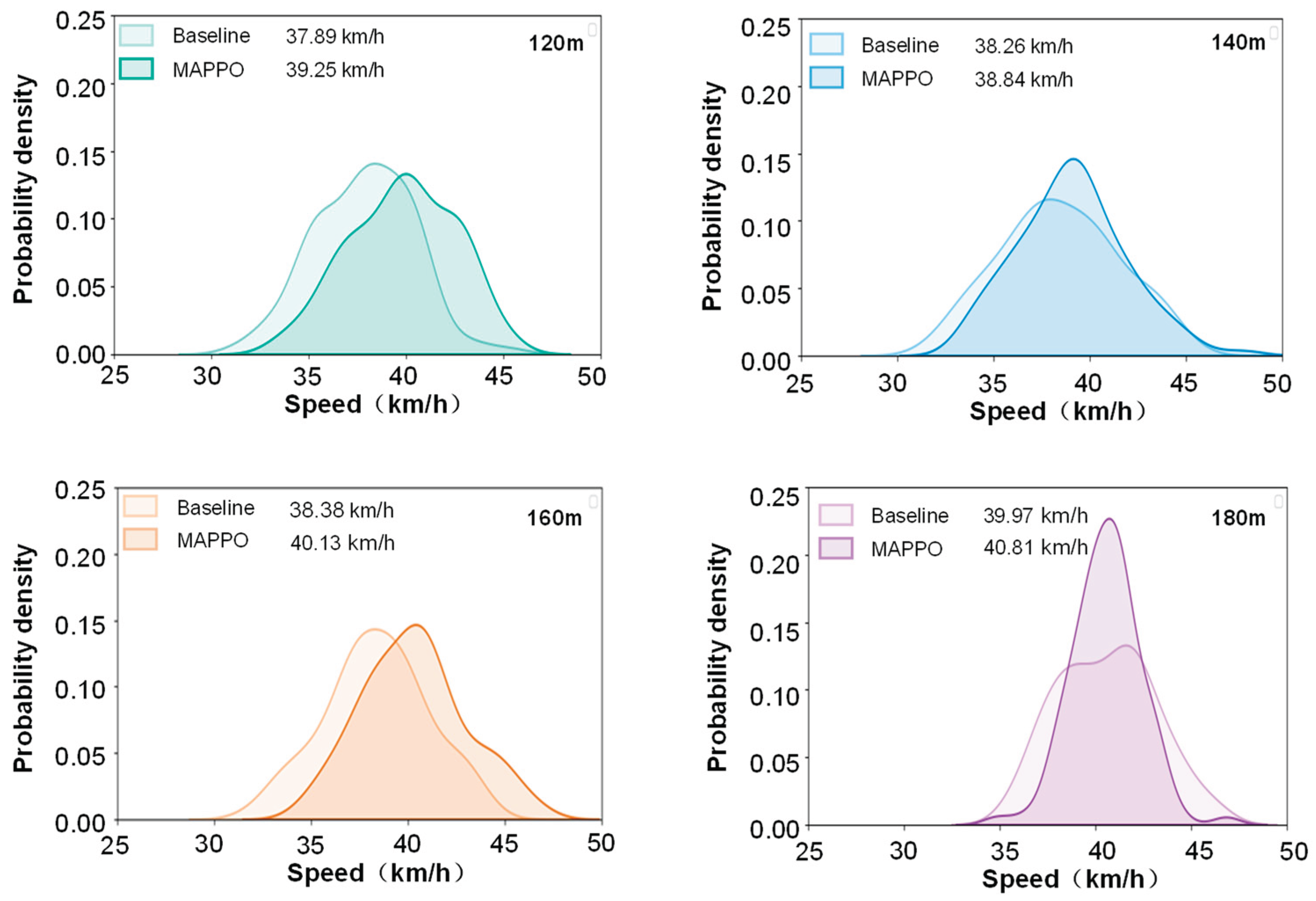
Figure 12.
Statistical comparison of traffic conflicts: (a) Conflict statistics under different traffic volumes; (b) Conflict statistics under different lengths.
Figure 12.
Statistical comparison of traffic conflicts: (a) Conflict statistics under different traffic volumes; (b) Conflict statistics under different lengths.
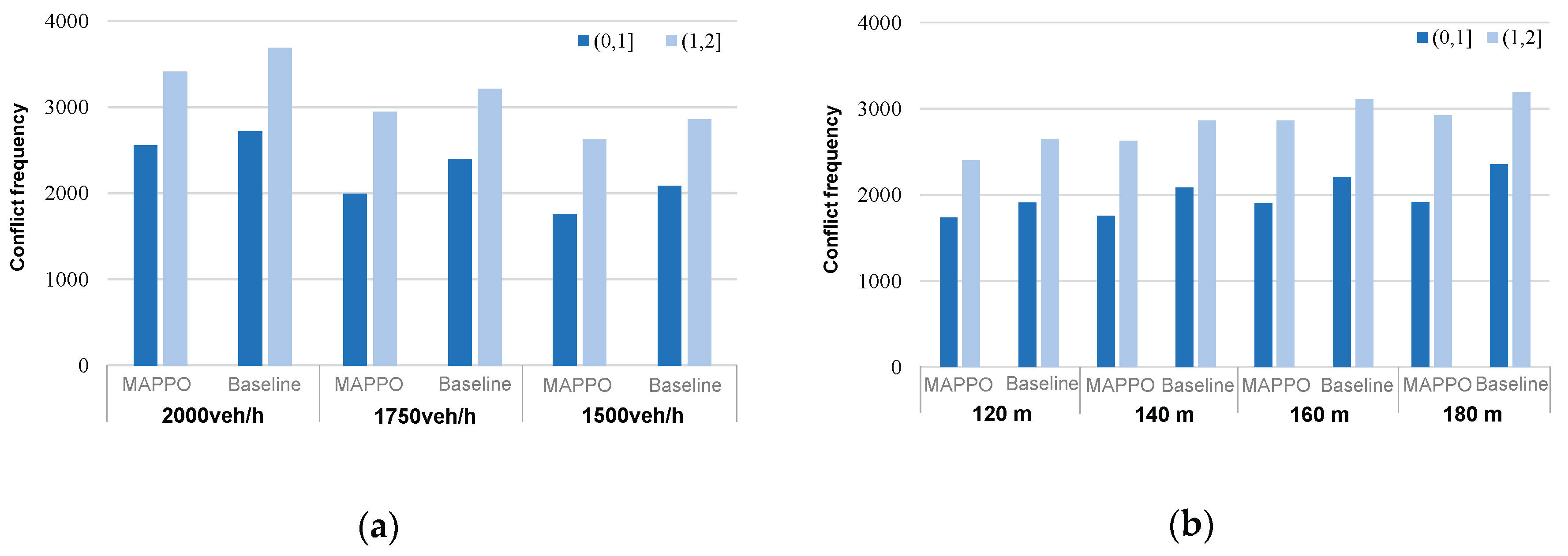

Table 1.
Variable definition.
| Variable | Description | |
| Vehicle-related variables | Longitudinal position of SV at time step . | |
| Lateral position of SV at time step . | ||
| The velocity of SV in X direction at time step . | ||
| The velocity of SV in Y direction at time step . | ||
| Longitudinal acceleration of SV at time step . | ||
| The current toll collection type of SV, 0 for a MTC vehicle, 1 for an ETC vehicle. | ||
| The initial lane of SV before it enters the diverging area. | ||
| Presence of another vehicle in the left area at time . (1 = Yes, 0 = No) | ||
| Presence of another vehicle in the right area at time . (1 = Yes, 0 = No) | ||
| Presence of another vehicle in the right-behind area at time . (1 = Yes, 0 = No) | ||
| Presence of another vehicle in the left-behind area at time . (1 = Yes, 0 = No) | ||
| Path-related variables |
Available longitudinal distance on path at time . | |
| Required steering magnitude for selecting path at time (positive: leftward turn, negative: rightward turn) | ||
| The number of vehicles queued on path at time | ||
Table 2.
Vehicle counts by entry lanes and toll lanes.
| Mainline lane | Lane ID | 1 | 2 | 3 | Total | ||||
| Toll type | ETC | MTC | ETC | MTC | ETC | MTC | ETC | MTC | |
| Vehicle counts | 115 | 29 | 202 | 54 | 122 | 106 | 439 | 189 | |
| Toll lane | Lane ID | 1 | 2 | 3 | 4 | 5 | 6 | 7 | 8 |
| Toll type | ETC | ETC | ETC | ETC | ETC | MTC | MTC | MTC | |
| Vehicle counts | 165 | 128 | 94 | 42 | 10 | 94 | 69 | 26 | |
Table 3.
Simulation parameters for MAPPO.
| Parameters | Values | Parameters | Values | |
| Number of hidden layers | 2 | Learning rate | 0.001 | |
| Number of units per layer | 256 | Learning rate | 0.001 | |
| Entropy coefficient | 0.1 | Batch size | 128 | |
| Discount coefficient | 0.98 | Buffer size | 20000 | |
| coefficient | 0.2 |
Disclaimer/Publisher’s Note: The statements, opinions and data contained in all publications are solely those of the individual author(s) and contributor(s) and not of MDPI and/or the editor(s). MDPI and/or the editor(s) disclaim responsibility for any injury to people or property resulting from any ideas, methods, instructions or products referred to in the content. |
© 2026 by the authors. Licensee MDPI, Basel, Switzerland. This article is an open access article distributed under the terms and conditions of the Creative Commons Attribution (CC BY) license (http://creativecommons.org/licenses/by/4.0/).
Copyright: This open access article is published under a Creative Commons CC BY 4.0 license, which permit the free download, distribution, and reuse, provided that the author and preprint are cited in any reuse.


