

Submitted:
13 March 2026
Posted:
20 March 2026
You are already at the latest version
Abstract
Human skin nicotinamide adenine dinucleotide (NAD+) levels decrease with age, likely contributing to the aging skin phenotype. It is hypothesized that topically applied NAD+ precursors, including niacinamide (nicotinamide) riboside (NR), may benefit skin aging. Three human clinical trials of topical Niagen®, NR chloride, were convened in healthy participants to evaluate its irritation potential; acute cosmetic NR alone and in formulation with Niagen NanoCloudTM sachet (NCS) did not result in significant irritation nor sensitization potential. Acute skin moisture content and skin barrier integrity significantly improved at ≥1.5% and ≥2.5% NR concentrations, respectively. Participant-reported outcomes included improvements to skin redness, moisture, and smoothness. These trials demonstrated that NR was nonirritating when applied topically, as a single ingredient product or when delivered in a dry, multi-ingredient product dissolved in a vehicle. As a single ingredient, NR significantly improved skin moisturization, skin smoothing, and skin barrier integrity, which may support the use of NR as a topical ingredient.
Keywords:
niacinamide
; nicotinamide riboside (NR)
; primary dermal irritation
; repeat insult patch testing
; topical
; nicotinamide adenine dinucleotide
; cosmetic
; skin hydration
; skin smoothness
; transepidermal water loss (TEWL)
1. Introduction
Nicotinamide adenine dinucleotide (NAD+) is a central metabolic cofactor in skin cells, and there is clinical evidence that its levels decline with age [1]. As an essential coenzyme, keratinocytes and dermal fibroblasts rely on NAD+-dependent pathways to support cellular energy metabolism, DNA repair, and resilience to metabolic stressors [2,3]. As in other tissues, NAD+ participates in oxidation–reduction reactions by cycling between its oxidized (NAD+) and reduced (NADH) forms, thereby facilitating electron transfer from the cytosol to the mitochondria and supporting mitochondrial ATP production [4,5,6]. Increases in reactive oxygen species in skin tissue have been linked to increases in cellular senescence and aging phenotypes [6]. Beyond its redox role, NAD+ serves as an essential cofactor for poly(ADP-ribose) polymerases (PARPs) and sirtuins, enzyme families that regulate genomic stability, chromatin remodeling, and stress-response signaling—processes highly relevant to cutaneous aging and barrier maintenance [7]. NAD+ homeostasis is maintained through three primary biosynthetic pathways: de novo synthesis from tryptophan via quinolinic acid; Priess-Handler pathway for nicotinic acid (NA); salvage pathways utilizing nicotinamide (NAM, also known as niacinamide for topical applications) or niacinamide riboside [8,9].
Although NAD+ is essential for cellular function in skin, its tissue-specific regulation during aging has not been elucidated. Accumulating evidence indicates that NAD+ levels across multiple tissues are implicated in both aging and age-related disease [10,11]. Numerous studies have reported age-associated declines in NAD+ concentrations and associations between reduced NAD+ availability and several hallmarks of aging, including mitochondrial dysfunction, impaired DNA repair, and chronic inflammation [12,13].
Age-associated reductions in NAD+ levels have been attributed, in part, to increased activity of NAD+-consuming enzymes such as CD38, whose expression and activity increase with age and promote accelerated NAD+ degradation across tissues [14,15]. Elevated CD38 levels in systemic sclerosis patients have been correlated with disease severity and fibrotic signaling activity in the skin [16]. Additional mechanisms contributing to declining NAD+ pools include reduced biosynthesis due to decreased expression or activity of nicotinamide phosphoribosyl transferase (NAMPT), increased NAD+ consumption during chronic metabolic stress or inflammation, and increased consumption by NAD+-dependent enzymes under degenerative conditions [8,17]. NAMPT has been shown to benefit keratinocytes in damage prevention with NAD+ [18].
Given the fundamental role and importance of NAD+ in cellular metabolism, genomic maintenance, and stress resilience, strategies to elevate NAD+ levels have gained significant attention in the context of aging and age-related disease [19,20,21,22]. NAD+ augmentation through supplementation with vitamin B3 derivatives—including NAM, NR, and nicotinamide mononucleotide (NMN)—has been investigated across a wide range of physiological systems, including neurological, cardiovascular, musculoskeletal, and metabolic health, which are particularly vulnerable to age-related decline [23,24,25,26,27,28]. In contrast, less attention has been directed toward the role of NAD+ metabolism in skin biology and skin aging.
The skin is a highly dynamic organ characterized by continuous cellular turnover, repair, and regeneration, processes that require substantial metabolic energy and efficient DNA repair and stress-response mechanisms [29,30]. Environmental stressors—including ultraviolet (UV) radiation, air pollution, and oxidative stress—alongside intrinsic aging processes can disrupt epidermal homeostasis, leading to visible and functional manifestations of skin aging such as wrinkle formation, hyperpigmentation, reduced elasticity, impaired barrier function, and reduced wound healing [31]. UV exposure can cause a decline in cellular ATP levels and cell viability, and lower intracellular NAD+ levels in epidermal keratinocytes [18]. A study evaluating epidermal NAD+ levels during UV exposure demonstrated that inhibiting NAMPT, which prevents ATP loss via the NAD+ salvage pathway to protect the cells from UV stress, aggravated these conditions further, and abolished the restoration of NAD levels [17]. Given the central role of NAD+ in cellular energy metabolism and DNA repair, age-associated declines in cutaneous NAD+ availability may contribute to diminished skin resilience and impaired recovery from environmental insults [32]. Consistent with this framework, reductions in NAD+ levels have been observed in aged human skin, suggesting a potential metabolic constraint on age-related skin function [1].
Recent research has begun to explore whether interventions that support NAD+ production can preserve skin function and mitigate age-related cutaneous impairments [2,33]. Topical NAM, or niacinamide, a form of vitamin B3, has demonstrated clinical efficacy across multiple dermatologic indications and areas of cosmetic improvement including fine lines, wrinkles, hyperpigmentation, texture, sallowness, hydration, elasticity, photoprotection, and overall complexion [16,34,35]. Randomized controlled trials showed that 4% NAM gel significantly reduced inflammatory acne lesion counts and improved acne severity over 8 weeks [34]. Beyond acne, twice-daily application of 5% niacinamide has been shown to significantly improve features of facial photoaging, including fine lines, dyspigmentation, and skin elasticity [16]. Collectively, these findings establish topical NAM as a well-tolerated and clinically active dermatologic intervention, supporting continued exploration of strategies aimed at enhancing cutaneous NAD+ metabolism. Randomized, placebo-controlled trials demonstrated that oral NAM supplementation attenuated UV radiation–induced immunosuppression in the skin, a key mechanism implicated in impaired DNA repair and increased skin cancer risk [36]. Despite this clinical precedent with NAM, considerably less is known about the dermatologic effects of other NAD+ precursors, including NR.
NR has emerged as a well-characterized NAD+ precursor with demonstrated capacity to increase systemic NAD+ levels following oral administration in humans [37]. These systemic findings, combined with the established dermatologic precedent of topical NAM, provide a mechanistic rationale for evaluating whether NR may confer similar or distinct benefits when delivered directly to the skin [38]. However, the dermatologic effects of NR—particularly via topical application—remain comparatively underexplored.
At present, there is a lack of direct clinical evidence evaluating the impact of topical NR on skin biology, including epidermal NAD+ metabolism, barrier function, hydration, or cellular resilience to environmental stressors. This gap in literature highlights an important opportunity to investigate whether NR, when delivered topically, may offer distinct or complementary benefits to established NAD+ precursors such as NAM, particularly given NR’s unique metabolic entry point into the NAD+ salvage pathway.
Niagen® is a patented chloride salt of NR that has been evaluated as an oral supplement [21,38,39,40,41]. Oral administration of NR has been shown to be well tolerated and clinically effective at elevating systemic NAD+ in a dose responsive manner in various populations [19,21,22,40,42,43,44,45,46,47,48,49,50]. These data establish NR as a rigorously validated NAD+ precursor with a strong safety and mechanistic foundation. Despite the robust evidence base, the effects of NR delivered via topical application have yet to be evaluated in controlled clinical trials.
Three clinical trials were conducted to evaluate the irritation/allergic potential of NR, as well as quantitative acute efficacy with supporting participant reported outcomes (PRO). Irritation profiles were assessed through primary and repeated exposure of NR and Niagen NanoCloud™ sachet (NCS) [51]. With the established role of NAD+-dependent pathways in supporting cellular energy metabolism, stress resilience, and epidermal homeostasis, biophysical parameters reflecting barrier integrity and water content were selected as clinically relevant functional endpoints. Skin hydration, transepidermal water loss (TEWL), erythema, and surface gloss were assessed using validated, non-invasive dermatologic instrumentation, along with subjective assessments of perceived skin moisturizing, smoothing, and protecting effects.
2. Materials and Methods
2.1. Materials
NR chloride (food grade Niagen®) was supplied by ChromaDex, Inc., a Niagen Bioscience company (Los Angeles, California, USA). NCS (contains: sodium hyaluronate, pullulan, squalane, cetearyl olivate, tocopherol, cetearyl alcohol, sorbitan olivate, helianthus annuus seed oil) (Stellenbosch Nanofiber Company, Cape Town, South Africa) were formulated with or without 50 mg of NR. Glycerin was supplied by Avantor (Radnor Township, Pennsylvania, USA). Webril/adhesive patches were used in the irritation and sensitization trials. The irritation trials utilized tap water with or without glycerin, efficacy trial utilized an aqueous solution and 8% glycerin (for positive control in one study) provided by a contracted third-party vendor who conducted the three acute clinical efficacy assessments in China.
2.2. Methods: Ethics Approval and Participant Selection for Clinical Irritation and Sensitization Trials
Clinical irritation and sensitization trials were conducted according to the requirements outlined by the International Conference on Harmonization Good Clinical Practice (ICH GCP), the Declaration of Helsinki, and the United States Code of Federal Regulations (21 CFR Parts 50 and 56, and 45 CFR 46). The protocol, informed consent forms, and all addenda were approved by the Clarus Institutional Review Board (CIRB, which is an OHRP/FDA IRB (# IRB00007343)). The authors declare that the privacy rights of the trial participants have been observed, and no personal identifiable information was shared. All participants provided written informed consent in conformity with 21 CFR 50.25, Subtitle A, Protection of Human Subjects. Testing was conducted under the supervision of a board-certified dermatologist.
Healthy adult participants were recruited via a text blast message sent to a pool of panelists who had completed a medical history form and were deemed eligible for safety testing of topical cosmetic products according to the SOP of SGS North America, Union, New Jersey. This recruitment effort was conducted for screening purposes only; final trial enrollment included only those individuals who met the trial inclusion and exclusion criteria at the time of screening. Participants were excluded if they exhibited any dermatological or other medical or physical condition that would preclude topical application of the test materials. Upon enrollment, no participant reported using any medication that would interfere with the sensitization results. Pregnant and nursing individuals were excluded from participation, as the risks to topically applied NR were not yet characterized, clinically.
2.2.1. Primary Dermal Irritation (PDI)
A prospective, single arm, single site evaluated NR (50 and 100 mg), the NCS alone or the NCS containing NR (50 mg) dissolved in water or 50:50 glycerin-water, added to semi-occlusive Webril/adhesive patches administered on dorsum (back). A total of 0.2 ml of each test material was applied to the designated 2x2 cm patches (4 cm2), corresponding to approximately 50 µL/cm2, which were to remain in place and dry for 48 hours. Upon removal, the test sites were scored and graded for irritation 20 minutes after removal by a board-certified dermatologist. The participants returned to the facility approximately 72 hours post-patching for additional irritation scoring.
2.2.2. Repeated Insult Patch Test (RIPT)
Topically applied NR (50 mg) freshly dissolved in water to a concentration of 0.5% or a NCS containing 50 mg of NR dissolved in 50/50 solution of glycerin-water to reach a concentration of 0.5% was tested utilizing a standardized repeat insult patch test.
Induction Phase: A volume of 0.2 ml of each test material was applied to a semi-occlusive Webril/adhesive patch, which was subsequently applied to the left dorsal region of the trial participant. The participant’s skin was marked with a skin marker on the left side of the test site. The test site was recorded on the anatomical diagram of each participant’s individual Data Form. The prospective placement of the challenge test site was also recorded on the anatomical diagram.
Participants were instructed to keep the patch dry and in place for 24 hours, at which time the patch was to be removed by the participant. The weekday patch removals were followed by an approximate 24-hour period during which no test material was applied. Weekend patch removals were followed by an approximate 48-hour period without test material.
Participants returned to the facility on the appropriate day. The test sites were evaluated by expert graders who were blinded to the treatment assignments, and any skin reactions were scored and recorded. The identical test site was then repatched until 9 induction patchings were completed over a period of approximately 3 weeks.
Rest Period: A rest period of approximately 2 weeks followed the last induction patching. Participants were instructed to notify the facility if they experienced any reaction during the rest period.
Challenge Phase: Immediately prior to the challenge phase, the induction test site was observed, and subjective participant irritation during the rest period was documented. Freshly prepared test material on a semi-occlusive Webril/adhesive patch was applied to naive skin, typically on the right dorsal region, opposite the induction site location, for 24 hours.
The first challenge assessment was conducted by an expert grader who was blinded to the treatment assignments, approximately 24 hours after application, upon removal of the patch. A second assessment was conducted approximately 72 hours after the removal of the patch. Grading was assessed as follows: if a 1-level erythema reaction or greater was observed at challenge reading 1 (24 hours post application) or reading 2 (72 hours post application), the participant was requested to return to the facility the following day for additional scoring(s). These additional scorings are shown in Table 2 as 48 and 96 hours post-challenge patch application, respectively. The test sites were scored using the modified scoring scale of the International Contact Dermatitis Research Group System [52].
2.3. Methods: Clinical Acute Efficacy of NR
2.3.1. Ethical Approval and Trial Participants
The efficacy trial protocol was reviewed by a Cosmetics Efficacy Ethics Committee prior to trial initiation. Based on the ethical principles of the Declaration of Helsinki (2013), the Regulations for Ethical Review of Biomedical Research (2023), and the Guidelines for Ethical Review of Drug Clinical Trials (2010), the Ethics Committee approved the trial.
Healthy Chinese female and male participants, ages 18-50, with normal, dry or combination skin were recruited into the trial. Participants agreed not to use any cosmetics, drugs, or health supplements that may affect the results during the evaluation period. Exclusion criteria included use of antihistamines in the week prior to participation, corticosteroid use in the prior 2 months, anti-cancer therapy in the prior 6 months, and immunosuppressants in the last month. Additional exclusion criteria included individuals with inflammatory skin conditions, diabetes, asthma, chronic respiratory diseases, immunodeficiency, auto immune disease, have undergone bilateral mastectomy and bilateral axillary lymph node removal, or are pregnant or lactating. Additionally, those with scars, pigmentation, atrophy, or other blemishes on the skin that may affect evaluation were also excluded from the trial. All participants provided informed consent for participation in the trial.
NR dissolved in 100 ml of room temperature water was prepared at concentrations of 0, 0.5, 1.0, 1.5, 2.5, 5.0, and 10.0%. The forearms of the test participants were cleaned and dried, and participants were acclimated to the laboratory at 21 ± 1 °C, 50 ± 10% relative humidity (RH) for 30 minutes prior to test material application.
The 16 cm2 (4 x 4 cm) test material locations were randomly selected on participants’ inner forearms. Participants did not know which test material was applied to each area. All participants received a single application of each dose for each assessment. For skin moisturizing, both blank and positive controls were also incorporated into the assessment design, while only a blank control was used in the skin protecting and skin smoothing assessments. Technicians collected baseline measurements for all areas before applying the test materials. Endpoint assessments were conducted at 1, 4, and 8 hours after application. Visual and instrument evaluations were carried out under constant fluorescent tube lighting with a color temperature of 5500-6500K.
2.3.2. Skin Moisturizing
A Corneometer® CM825 Probe measured capacitance in the stratum corneum, to assess the effect of skin moisturization at the application site, relative to the vehicle-only (blank) control. Participant-reported outcomes of subjective perception of hydration, smoothness, skin moisture, and softness using a 10-point scale (0 = extremely, 9= not at all) at 1, 4, and 8 hours after application were incorporated into corresponding clinical assessments.
2.3.3. Skin Protecting
To assess the acute potential for skin protecting, a hypoallergenic medical tape (3M) was applied to the test site for 15 seconds and then removed 10-15 times. Each test area was evaluated for transepidermal water loss (TEWL) and skin hemoglobin content using the Tewameter® TM Hex and Mexameter® MX 18 probe, respectively. At the 1, 4-, and 8-hour time points, participants completed subjective assessments of improvements in areas of skin sensitivity, redness, smoothing, skin condition and skin barrier using a 6-point scale (1= strong disagreement, 2= moderate disagreement, 3= mild disagreement, 4=mild agreement, 5=moderate agreement, 6=strong agreement). Additionally, at those same time points, participants completed subjective assessments on moisture locking effect (0 = hydrated skin texture, 9 = dry, dehydrated skin texture) and redness (0 = normal skin tone, 9 = red skin tone).
2.3.4. Skin Smoothing
Skin smoothing was assessed relative to an untreated area for skin glossiness using the Skin Glossymeter GL200. Participants also completed subjective assessments of brightness (0=bright, 9=dark), moisture (0= high, 9=low), oiliness (0= high, 9=low), heaviness (0=heavy, 9=light), stickiness (0=low, 9=high), and ease of finger glide (0=strong, 9=weak) at 1-, 4-, and 8-hour time points.
2.4. Statistics
Statistical analyses were conducted using GraphPad Prism version 10.4.2. Data from the clinical efficacy trial were analyzed using two-way ANOVA with Tukey’s post-hoc correction for multiple comparisons. Area under the curve was analyzed using the 95% confidence intervals to determine significant differences between curves. Results reported as mean ± SEM (standard error of the mean) unless otherwise indicated, with alpha of 0.05 for significance.
2.5. AI Use
AI was used to improve readability and grammar in the preparation of the manuscript. Information was written, revised with AI, and further edited prior to inclusion. The entire manuscript was further edited by authors and those indicated in the acknowledgement section.
3. Results
3.1. Irritation
A total of 30 participants (6 male, 24 female, ages 23-68) were enrolled in and completed (Figure 1(a)) the PDI assessment of the 8 test materials applied to their back. No adverse events or reactions were reported. The dermal irritation potential was determined by the number and the degree of irritation experienced by the trial participants at 24 and 72 hours (Table 1). The 50 and 100 mg doses of NR applied with water or water and glycerin resulted in negligible dermal irritation potential. NR in the NCS applied with water was determined to have minimal dermal irritation after 10 and 6.67% of participants had mild reactions at 24 and 72 hours, respectively. An outcome of no dermal irritation was observed for the NCS (without NR) when applied with water or water-glycerin, as well as for the NCS containing NR using the water-glycerin vehicle.
A total of 137 and 128 participants were enrolled in the NR-only and NR NCS RIPT, respectively, resulting in a respective 104 (28 male and 76 female, ages 19-70) and 106 (30 male and 76 female) participant completions as detailed in Figure 1(b) and (c) respectively. In the NR-only trial, 6 participants were discontinued due to a protocol violation, 9 were discontinued due to screen failure, and 18 participants discontinued due to personal reasons/investigator termination. In the NR NCS RIPT trial, 1 participant was discontinued due to protocol violation, 3 were discontinued due to screen failure, and 18 participants discontinued due to personal reasons/investigator termination.
The induction phase consisted of 9 applications of the test material, which was assessed for irritation by expert graders. Following a 2-week rest period (allowing sufficient time for potential immune sensitization (Type IV hypersensitivity), naive skin was exposed to the test material, and reactions were clinically evaluated at various time points. The application test sites were clinically scored after 24 and 72 hours under the supervision of a board-certified dermatologist (Table 2). No adverse reactions or adverse events related to the test materials were observed at 0.5% (0.25 mg NR/sq.cm).
3.2. Efficacy
Two of the three acute, single application efficacy assessments utilized the same cohort of 31 participants (skin moisturizing and skin smoothing, mean age = 35.48 ± 9.20) who completed the assessments. The skin protecting efficacy assessment included a different cohort of 31 participants (mean age = 38.06 ± 8.44), all of whom completed the assessment.
3.2.1. Skin Moisturizing
Capacitance measurements demonstrated peak moisturization at 1 hour for all tested products, with the exception of blank control. A dose-responsive increase in the moisturization pattern was observed from 0.5-5% NR. As shown in Figure 2(a), at 1 hour, the stratum corneum moisture levels of the positive control (8% glycerin solution) and all NR concentrations significantly varied from the blank control (p<0.0001). Further, the 5% NR concentration did not significantly differ from the positive control (p=0.2231).
At 4 hours after application, the stratum corneum moisture levels of the positive control and all NR concentrations significantly varied from the blank control (0.5% NR p=0.0031, all other concentrations p<0.0001). After 4 hours, the 5% NR and 10% NR concentrations did not significantly differ from the positive control (p=0.4518 and p=0.1048 respectively). At 8 hours, all but the 0.5% and 1% NR concentrations were significantly different from the blank control (p=0.005-p<0.0001), and the 0.5% and 1% NR concentrations significantly differed from the positive control (p=0.0027 and p=0.0184 respectively). A pharmacokinetic area under the curve assessment determined that 1.5% (CI 102.4-122.0), 2.5% (CI105.5-126.2), 5% (CI 110.0-132.1), and 10% (CI 108.9-129.4) NR resulted in a statistically significant increase in skin moisture content compared to the blank control (CI 84.37-100.4).
3.2.2. Participant Reported Outcomes Related to Skin Moisturizing
Participant-reported perception of skin hydration/plumpness, smoothness, moisture, and softness were determined using a Griffith 10-point rating scale (0= highest and 9=lowest agreement). The participant-reported scores are presented in Supplementary Tables 1–4. A group consensus score was calculated to reflect the endpoint perception of the assessment population, using a scale of 0-900, where lower scores indicate agreement with the preferred outcome.
The peak perceived benefit for all endpoints was observed at 1 hour and generally corresponded to the quantitative Corneometer results. At 1 hour, the 2.5-, 5.0, and 10.0% NR received consensus scores of less than 80 for all endpoints (Table 3), indicating consistently high perceived benefits of NR at these concentrations.
3.2.3. Skin Protecting
TEWL reflected dose-responsive average decrease of 4.51(±0.76) , 5.43(±0.63), 6.21(±0.55), 6.94(±0.49), 7.85(±0.43), 9.80(±0.34), and 12.03(±0.27) % of water loss over 8 hours for the vehicle (blank) control, 0.5,1.0, 1.5, 2.5, 5.0, and 10% of NR, respectively. While the average epidermal water loss decrease was dose-responsive (Figure 2(b)), statistical significance was not reached when compared to the blank control at any concentration.
In Figure 2(c), at 1-, 4-, and 8 hours, 1-10% NR significantly decreased the amount of hemoglobin in the skin compared to blank control (p=0.0353-p<0.0001). The area under the curve (AUC) of 2.5% (CI 657.7-746.5), 5% (CI 629.0-715.8), and 10% (CI 619.5-701.2) NR showed statistical significance when compared to the blank control (CI 748.2-844.4). When the decreases in TEWL and stratum corneum hemoglobin levels were evaluated collectively, NR improved the skin barrier, particularly at higher concentrations.
3.2.4. Participant Reported Outcomes Related to Skin Protection
Participant-reported perception of skin protection was assessed in two parts. Part one evaluated moisture locking and skin redness/blushness, while part two assessed skin sensitivity relief, improvement in skin redness, skin smoothness, maintenance of skin condition, and overall skin barrier enhancement.
The individual score percentages for both part one and two can be found in Supplementary Tables 5 and 6, respectively. 10.0% NR concentration at the 1-hour time point yielded the lowest consensus score for both assessments, presented in Table 4: a score of 48.5 for each, leading to the conclusion that participants felt a high degree of moisture-locked skin texture, and did not experience a reddish skin tone.
Part two asked participants a series of five questions on skin protection to which they reported a score from 1-6, with 1 being “strong disagreement” and 6 “strong agreement”. These results were then calculated into an acceptance rate, grouping scores 4-6 or “agreement” and comparing the combined score to the rest of the cohort. These percentages are shown in Table 5. Agreement rates were generally high across all five questions on skin protection, with the lowest reported percentage being 83.9% in any category.
3.2.5. Skin Smoothing
Skin glossiness or light reflected was measured over time with higher values indicating increased skin smoothness. Skin smoothness shown in Figure 2(d) significantly increased after 1 hour of NR application at 2.5%, 5%, and 10% NR when compared to blank control (2.5% NR p=0.0040, 5% and 10% NR p<0.0001). Skin smoothness was shown to be significantly improved after 4 hours compared to blank control at 1.5%, 2.5%, 5%, and 10% NR (1.5% NR p=0.0031, 2.5% NR p=0.0002, 5% and 10% NR p<0.0001). After 8 hours from application of 1%, 1.5%, 2.5%, 5%, or 10% NR, skin smoothness was significantly improved compared to blank control (1% NR p=0.0084, 1.5% NR p=0.0006, all other treatments p<0.0001).
3.2.6. Participant Reported Outcomes Related to Skin Smoothing
Participant-reported perception of skin brightness, moisture, oiliness, heaviness, stickiness, and slipperiness were determined using the Griffith 10-point rating scale. The percentage of each score on each assessment can be found in Supplementary Tables 7–15, along with the definitions of the Griffith scale endpoints (0 and 9) for each question.
A group consensus score was then calculated for each time point (Table 6) and concentration of NR with a scale of 0-900, in which lower scores represented more agreement with the preferred outcome, apart from heaviness where the scale endpoints were inverted. Skin brightness, degree of hydration, degree of oiliness, degree of stickiness, and degree of slipperiness all had the same point of lowest scores, at 10.0% concentration of NR after 1-hour. The same trend occurred with heaviness, which had the highest score of 829.8, after 1 hour when using the 10.0% concentration, meaning the participants felt the product was the lightest.
4. Discussion
The present work represents an early translational step toward evaluating the suitability of topical NR chloride as an intervention to support skin health through modulation of NAD+ metabolism. While prior research has extensively characterized the safety, tolerability, and NAD+-elevating capacity of orally administered NR [38,41,53,54], the cutaneous safety profile of NR delivered via topical application has not previously been examined in controlled human trials based on a thorough search of the literature. The findings from the current clinical investigations provide important foundational evidence supporting the dermal tolerability of topical NR and informs its potential for future efficacy-focused investigations.
Acute irritation assessments of NR alone and in a formulation with NCS demonstrated dermal tolerability and minimal to no dermal sensitization. These findings suggest that topical NR, under the tested conditions, does not provoke acute irritant responses in healthy human skin. The favorable cutaneous irritation profile of topical NR is further supported by the findings of the RIPT experiment. In this investigation, repeated application of NR in water and formulated with the NCS delivery system in a glycerin-water matrix did not induce dermal sensitization in human participants. The absence of sensitization across these formulations indicates a low likelihood of delayed hypersensitivity reactions associated with repeated topical exposure to NR, either alone or incorporated into the NCS delivery system. Collectively, these results indicate that topical NR is well tolerated under both acute and repeated exposure paradigms, with no evidence of irritation or sensitization relative to formulation controls.
Irritation from topical NR was not anticipated, as NR is a form of vitamin B3 [55], with established safety profiles in multiple clinical trials at oral doses of 2000 mg/day in healthy adults [41,53,54,56]. Additionally, NAM, another NAD+ precursor in the NAD+ salvage pathway, has known safety [57] and efficacy [16,58] profiles for topical applications. However, NR differs from NAM in its increased safety profile [37] and metabolic entry point into the NAD+ salvage pathway and may therefore offer distinct biological effects within cutaneous cells [8]. The inclusion of NR as a topical ingredient supports the growing interest in NAD+ biology as it relates to skin aging and skin barrier function [33,59,60]. Demonstrating that NR can be delivered to the skin without eliciting adverse responses supports continued investigation into whether these mechanistic differences translate into functional advantages for parameters such as barrier function, hydration, and recovery from environmental stress.
The epidermis is characterized by high cellular turnover and continuous exposure to environmental stressors, necessitating robust metabolic capacity and efficient DNA repair mechanisms [29,30]. Age-associated declines in NAD+ availability have been reported in skin and may contribute to reduced skin resilience and repair capacity [1,7,61]. Skin homeostasis depends not only on epithelial cells but also on immune cells of the myeloid lineage, particularly macrophages, which regulate tissue repair, inflammation, and communication with mesenchymal stromal cells during regeneration [62]. Declining NAD+ levels have been linked to impaired metabolic fitness and migration of macrophages, thereby reducing their ability to support wound-healing responses and tissue repair (e.g., NR-mediated macrophage migration and repair signaling studies). Disruption of the myeloid-mesenchymal signaling axis has been shown to contribute to impaired skin healing during aging, highlighting the importance of these immune-stromal interactions for maintaining regenerative capacity [62]. Given that human skin is continuously exposed to environmental stressors such as ultraviolet radiation and mechanical insults, NAD+ depletion in myeloid cells may therefore contribute to impaired tissue maintenance and potentially exacerbate age-related and UV-associated skin damage. Establishing that a NAD+ precursor such as NR can be applied to human skin with no or limited irritation is therefore a critical prerequisite for future trials aimed at evaluating its functional and clinical benefits.
The favorable tolerability profile observed for topical NR aligns with, but is distinct from, the extensive safety literature supporting oral NR supplementation. Unlike systemic administration, topical application introduces considerations unique to the skin, including barrier penetration, local metabolism, and the potential for irritation or sensitization [63,64,65]. The absence of both primary irritation and dermal sensitization in the present trials suggests that NR, despite being metabolically active, does not inherently disrupt epidermal homeostasis when delivered topically in aqueous or glycerin-containing formulations.
Beyond topical irritation considerations, clinical studies of NAD+ precursors provided additional context supporting the relevance of NAD+ modulation in skin biology. In a separate trial, individuals with a history of non-melanoma skin cancer who received daily oral NAM experienced a significantly reduced incidence of new non-melanoma skin cancers and actinic keratoses during the intervention period compared with placebo [66]. These findings demonstrate that systemic modulation of NAD+-dependent pathways can influence clinically meaningful dermatologic outcomes.
Similarly, a clinical trial demonstrated that oral NR supplementation improved wound healing in individuals with Werner syndrome, a rare progeroid disorder characterized by accelerated aging and premature cellular senescence [28]. Cutaneous manifestations of Werner syndrome include skin tightening, thinning, pigmentary abnormalities, and chronic, non-healing ulcers, which may be explained by impairments in NAD+ synthesis, DNA repair capacity, and mitochondrial function [67]. The observed improvement in wound healing suggests that systemic NAD+ repletion may support skin repair under conditions of pathological or accelerated aging.
Following the dermal irritation assessments, a human efficacy trial was conducted to evaluate the effects of a single application of NR to the forearm on functional indicators of skin health. This trial assessed multiple objective measures of skin function, including stratum corneum hydration, TEWL, cutaneous hemoglobin content, and surface smoothness utilizing different doses of NR. These endpoints were selected based on the central role of NAD+ metabolism in supporting epidermal integrity, cellular energy balance, and homeostatic water regulation.
Skin hydration was assessed using the Corneometer CM 825 by measuring stratum corneum hydration which increases with water content due to water’s higher dielectric constant (81) compared to other materials (< 7) [68]. Higher readings indicate better skin hydration. In a concentration-dependent manner from 0.5-5%, NR increased stratum corneum moisture. All concentrations produced significant increases in hydration relative to blank control, and higher concentrations achieved moisture levels comparable to the positive control (8% glycerin) at select time points. Although hydration responses declined over time across all groups, concentrations ≥1.5% maintained significantly greater cumulative moisture relative to blank control. Collectively, these findings indicated that topical NR enhanced acute skin hydration in a dose-responsive manner, with higher concentrations approaching the magnitude of effect observed with a well-established humectant [69].
In contrast, NR did not significantly alter transepidermal water loss (TEWL) over the 8-hour period, suggesting that the observed hydration effects were not accompanied by measurable acute changes in epidermal water permeability under these conditions, consistent with the results of the irritation trial, which showed no significant irritation following application of NR. TEWL is the amount of moisture lost from the skin per unit area per unit time. The Tewameter method, an open-cavity testing method, is the only way to continuously measure TEWL values without affecting the skin’s surface microenvironment [70]. TEWL is an important parameter for evaluating skin barrier function within a certain range, the lower the value, the better the skin’s water retention capacity and the better its skin barrier function. In this case, while the reduction in TEWL was dose-responsive, the 12.03% reduction in water loss at 8 hr for 10% NR was not statistically significant (p=0.4190).
While TEWL provides one endpoint related to skin protection, stratum corneum hemoglobin provides an indication of erythema, vascularity, and is used as a proxy for inflammation, which helps to inform how sensitive skin may be to a product and the capacity of a product to reduce redness [71]. Skin hemoglobin content was measured using a Mexameter probe emitting light with wavelengths of 568nm, 660nm, and 880nm, while the receiver measured light reflected from the skin between 0-999, which is based on the principle of spectral absorption (RGB) [72]. It determines the content of melanin and hemoglobin in the skin by measuring the amount of light reflected after a specific wavelength of light shines on the skin. The instrument’s probe shines on the skin’s surface, and the receiver measures the light reflected from the skin. Since the amount of emitted light is constant, the amount of light absorbed by the skin can be measured, thus determining the hemoglobin content. The smaller the value, the greater the improvement in redness.
A decrease in skin hemoglobin levels indicates reductions in erythema, inflammation [73], a lower likelihood of inducing an irritation response, or an ability to decrease the redness or blushing appearance related to some skin conditions [74,75].
Skin glossiness was determined based on the reflection of light from the skin surface. Parallel white light emitted from the measuring device’s LED probe at 0° is redirected at 60°, and reflected light is measured by two separate channels. The gloss value corresponds to the intensity of directly reflected light, and a higher value indicates higher skin gloss and smoother skin texture. NR significantly reduced stratum corneum hemoglobin levels at concentrations ≥1.5% and improved skin smoothness in a concentration-dependent manner. When considered together, decreased TEWL, decreased hemoglobin, and increased skin smoothness findings suggest that topical NR produced measurable acute improvements in skin health with higher concentrations showing the most consistent responses.
Subjective assessments of skin texture and appearance were generally consistent with the objective findings. Participant ratings of hydration, smoothness, softness, gloss, and overall skin appearance were highest shortly after application and tended to decline over time across concentrations, paralleling the temporal pattern observed in instrumental hydration measurements. Perceptions of product absorption, skin feel, and glide similarly diminished as the acute effects subsided. These findings suggest that the sensory experience of topical NR aligns with its transient improvements in surface hydration and smoothness observed in the instrumental analyses.
Further clinical trials of topical NR designed to evaluate its effects on skin barrier integrity, hydration, and other functional markers of cutaneous health that are known to decline with age are supported by the negligible to minimal irritation and sensitization observed in these trials. Future trials are recommended to evaluate higher doses for longer durations, ocular safety, and topical NAD+ boosting in the skin for the promotion of NR as an anti-aging topical ingredient.
The present work has several limitations that should be acknowledged. First, the trials reported here were designed specifically to assess dermal irritation and were not intended to evaluate changes in skin NAD+ levels, barrier function, hydration, or clinical signs of skin aging. Second, the trial populations consisted of healthy adult participants, and the findings may not fully extrapolate to populations with compromised skin barriers, underlying dermatologic conditions, or heightened sensitivity. Third, while multiple formulations were assessed, the results do not address the influence of dose, frequency, or long-term use beyond the trial durations employed. Despite these limitations, the data presented here provides an essential foundation for subsequent efficacy-focused investigations.
In conclusion, NR is well tolerated and does not induce primary skin irritation or dermal sensitization under the tested conditions. A single topical application of NR exhibited a significant benefit to skin moisturization, decreased transepidermal water loss, significantly reduced skin redness, and improved skin smoothness. This research supports the development of NR as an ingredient in topical cosmetic products and longer duration clinical trials.
Supplementary Materials
The following supporting information can be downloaded at the website of this paper posted on Preprints.org.
Author Contributions
Conceptualization, E.S.; methodology, S.A.N. and SGS; validation, S.A.N. and SGS; formal analysis, R.I. and J.M.; investigation, S.A.N.; translation, E.S.; writing—original draft preparation, R.I., J.M., Y.N.E., J.D., and E.S.; writing—review and editing, R.I., S.A.N., J.M., Y.N.E., J.D., and E.S.; visualization, R.I. and J.M.; supervision, Y.N.E.; project administration, E.S.; All authors have read and agreed to the published version of the manuscript. SGS, North America, was contracted for the PDI and RIPT trials, and they were responsible for protocol development, IRB approval, participant recruitment and consent, data collection, data analysis, and data interpretation. A contracted third-party vendor conducted the three acute clinical efficacy assessments in China, utilizing their own proprietary methods. They were responsible for method and protocol development, ethics approval, participant recruitment and consent, data collection, data analysis, and interpretation. Their report was provided to ChromaDex in Chinese, which required translation. This organization has requested that their information be excluded from this manuscript. .
Funding
All trials were funded by Chromadex, Inc., a Niagen Bioscience company.
Institutional Review Board Statement
Clinical irritation and sensitization trials were conducted according to the requirements outlined by the International Conference on Harmonization Good Clinical Practice (ICH GCP), the Declaration of Helsinki, and the United States Code of Federal Regulations (21 CFR Parts 50 and 56, and 45 CFR 46). The protocol, informed consent forms, and all addenda were approved by the Clarus Institutional Review Board (CIRB, which is an OHRP/FDA IRB (# IRB00007343)). The authors declare that the privacy rights of the trial participants have been observed, and no personal identifiable information was shared. All participants provided written informed consent in conformity with 21 CFR 50.25, Subtitle A, Protection of Human Subjects. Testing was conducted under the supervision of a board-certified dermatologist. The efficacy trial protocol was reviewed by a Cosmetics Efficacy Ethics Committee prior to trial initiation. Based on the ethical principles of the Declaration of Helsinki (2013), the Regulations for Ethical Review of Biomedical Research (2023), and the Guidelines for Ethical Review of Drug Clinical Trials (2010), the Ethics Committee approved the trial.
Informed Consent Statement
Informed consent was obtained from all subjects involved in the study.
Data Availability Statement
Restrictions apply to the availability of these data. Data were obtained from 3rd party and are available from the authors with the permission of 3rd party.
Acknowledgments
We would like to thank the trial participants for their generous participation in the trials. Additionally, we would like to thank the Stellenbosch Nanofiber Company, for the manufacturing of the Niagen Nanocloud used in the trials. We would like to thank Aron Erickson, Amanda Storjohann, and Ryan Knauf for providing calculations and stability assessments of the ingredients and products used in the trials. Thank you to Andrew Shao for manuscript review and approval to submit as a preprint and for peer-review.
Conflicts of Interest
RI, ES, JM, JD, and YNE are employees and shareholders of ChromaDex, Inc. YNE is a co- investigator on a Niagen(R) patent.
Abbreviations
The following abbreviations are used in this manuscript:
| 3M | Medical tape brand |
| ADP-ribose | Adenosine diphosphate-ribose |
| AI | Artificial Intelligence |
| ANOVA | Analysis of variance |
| ATP | Adenosine triphosphate |
| AU | Arbitrary Units |
| AUC | Area Under the Curve |
| CD38 | NADase |
| CFR | Code of Federal Regulations |
| CI | Confidence Interval |
| DNA | Deoxyribonucleic Acid |
| GCP | Good Clinical Practice |
| GU | Glossymeter Units |
| ICH | International Council for Harmonization |
| IRB (HSS/OHRP) | Institutional Review Board (Health and Human Services/Office for Human Research Protections) |
| LED | Light Emitting Diode |
| N | Number of participants |
| NA | Nicotinic acid |
| NAD+ | Nicotinamide adenine dinucleotide |
| NADH | Reduced nicotinamide adenine dinucleotide |
| NAM | Nicotinamide (niacinamide) |
| NAMPT | Nicotinamide phosphoribosyl transferase |
| NCS | NanoCloud™ sachet |
| NMN | Nicotinamide mononucleotide |
| NR | Nicotinamide (niacinamide) riboside |
| PARP | Poly (ADP-Ribose) Polymerase |
| PDI | Primary Dermal Irritation |
| PRO | Participant Reported Outcome |
| RH | Relative Humidity |
| RIPT | Repeat Irritation Patch Test |
| SD | Standard Deviation |
| SEM | Standard Error of the Mean |
| TEWL | Transepidermal water loss |
| Type IV hypertension | Isolated systolic hypertension |
| UV | Ultra Violet |
References
- Massudi, H.; Grant, R.; Braidy, N.; Guest, J.; Farnsworth, B.; Guillemin, G.J. Age-Associated Changes In Oxidative Stress and NAD+ Metabolism In Human Tissue. Plos One 2012, 7, e42357. [Google Scholar] [CrossRef]
- Kang, S.; Park, J.; Cho, E.; Kim, D.; Ye, S.; Jeong, E.T.; Jun, S.-H.; Kang, N.-G. Distinctive Gene Expression Profiles and Biological Responses of Skin Fibroblasts to Nicotinamide Mononucleotide: Implications for Longevity Effects on Skin. Biomedicines 2025, 13, 2395. [Google Scholar] [CrossRef]
- Tan, C.L.; Chin, T.; Tan, C.Y.R.; Rovito, H.A.; Quek, L.S.; Oblong, J.E.; Bellanger, S. Nicotinamide Metabolism Modulates the Proliferation/Differentiation Balance and Senescence of Human Primary Keratinocytes. J Invest Dermatol 2019, 139, 1638–1647.e3. [Google Scholar] [CrossRef]
- Cantó, C.; Menzies, K.J.; Auwerx, J. NAD+ Metabolism and the Control of Energy Homeostasis: A Balancing Act between Mitochondria and the Nucleus. Cell Metab 2015, 22, 31–53. [Google Scholar] [CrossRef]
- Papaccio, F.; D′Arino, A.; Caputo, S.; Bellei, B. Focus on the Contribution of Oxidative Stress in Skin Aging. Antioxidants 2022, 11, 1121. [Google Scholar] [CrossRef] [PubMed]
- Velarde, M.C.; Flynn, J.M.; Day, N.U.; Melov, S.; Campisi, J. Mitochondrial Oxidative Stress Caused by Sod2 Deficiency Promotes Cellular Senescence and Aging Phenotypes in the Skin. Aging (Albany NY) 2012, 4, 3–12. [Google Scholar] [CrossRef]
- Verdin, E. NAD+ in Aging, Metabolism, and Neurodegeneration. Science 2015, 350, 1208–1213. [Google Scholar] [CrossRef]
- Amjad, S.; Nisar, S.; Bhat, A.A.; Shah, A.R.; Frenneaux, M.P.; Fakhro, K.; Haris, M.; Reddy, R.; Patay, Z.; Baur, J.; et al. Role of NAD+ in Regulating Cellular and Metabolic Signaling Pathways. Mol Metab 2021, 49, 101195. [Google Scholar] [CrossRef] [PubMed]
- Boo, Y.C. Mechanistic Basis and Clinical Evidence for the Applications of Nicotinamide (Niacinamide) to Control Skin Aging and Pigmentation. Antioxidants 2021, 10, 1315. [Google Scholar] [CrossRef] [PubMed]
- Bhasin, S.; Seals, D.; Migaud, M.; Musi, N.; Baur, J.A. Nicotinamide Adenine Dinucleotide in Aging Biology: Potential Applications and Many Unknowns. Endocr. Rev. 2023. [Google Scholar] [CrossRef]
- Iqbal, T.; Nakagawa, T. The Therapeutic Perspective of NAD+ Precursors in Age-Related Diseases. Biochem. Biophys. Res. Commun. 2024, 149590. [Google Scholar] [CrossRef] [PubMed]
- Fang, E.F.; Lautrup, S.; Hou, Y.; Demarest, T.G.; Croteau, D.L.; Mattson, M.P.; Bohr, V.A. NAD+ in Aging: Molecular Mechanisms and Translational Implications. Trends Mol Med 2017, 23, 899–916. [Google Scholar] [CrossRef] [PubMed]
- Covarrubias, A.J.; Perrone, R.; Grozio, A.; Verdin, E. NAD+ Metabolism and Its Roles in Cellular Processes during Ageing. Nat Rev Mol Cell Bio 2021, 22, 119–141. [Google Scholar] [CrossRef]
- Camacho-Pereira, J.; Tarragó, M.G.; Chini, C.C.S.; Nin, V.; Escande, C.; Warner, G.M.; Puranik, A.S.; Schoon, R.A.; Reid, J.M.; Galina, A.; et al. CD38 Dictates Age-Related NAD Decline and Mitochondrial Dysfunction through an SIRT3-Dependent Mechanism. Cell Metab 2016, 23, 1127–1139. [Google Scholar] [CrossRef]
- Chini, C.; Hogan, K.A.; Warner, G.M.; Tarragó, M.G.; Peclat, T.R.; Tchkonia, T.; Kirkland, J.L.; Chini, E. The NADase CD38 Is Induced by Factors Secreted from Senescent Cells Providing a Potential Link between Senescence and Age-Related Cellular NAD+ Decline. Biochem Bioph Res Co 2019, 513, 486–493. [Google Scholar] [CrossRef]
- Bissett, D.L.; Oblong, J.E.; Berge, C.A. Niacinamide: A B Vitamin That Improves Aging Facial Skin Appearance. Dermatol Surg 2005, 31, 860–866. [Google Scholar] [CrossRef] [PubMed]
- Strømland, Ø.; Diab, J.; Ferrario, E.; Sverkeli, L.J.; Ziegler, M. The Balance between NAD+ Biosynthesis and Consumption in Ageing. Mech Ageing Dev 2021, 199, 111569. [Google Scholar] [CrossRef]
- Katayoshi, T.; Nakajo, T.; Tsuji-Naito, K. Restoring NAD+ by NAMPT Is Essential for the SIRT1/P53-Mediated Survival of UVA- and UVB-Irradiated Epidermal Keratinocytes. J Photochem Photobiology B Biology 2021, 221, 112238. [Google Scholar] [CrossRef] [PubMed]
- Zhou, B.; Wang, D.D.; Qiu, Y.; Airhart, S.; Liu, Y.; Stempien-Otero, A.; O’Brien, K.D.; Tian, R. Boosting NAD Level Suppresses Inflammatory Activation of PBMC in Heart Failure. J. Clin. Investig. 2020, 130, 6054–6063. [Google Scholar] [CrossRef] [PubMed]
- Wu, J.; Singh, K.; Lin, A.; Meadows, A.M.; Wu, K.; Shing, V.; Bley, M.; Hassanzadeh, S.; Huffstutler, R.D.; Schmidt, M.S.; et al. Boosting NAD+ Blunts Toll-like Receptor-4 Induced Type-I Interferon in Control and Systemic Lupus Erythematosus Monocytes. J. Clin. Investig. 2022, 132, e139828. [Google Scholar] [CrossRef]
- Martens, C.R.; Denman, B.A.; Mazzo, M.R.; Armstrong, M.L.; Reisdorph, N.; McQueen, M.B.; Chonchol, M.; Seals, D.R. Chronic Nicotinamide Riboside Supplementation Is Well-Tolerated and Elevates NAD+ in Healthy Middle-Aged and Older Adults. Nat. Commun. 2018, 9, 1286. [Google Scholar] [CrossRef]
- Presterud, R.; Deng, W.H.; Wennerström, A.B.; Burgers, T.; Gajera, B.; Mattsson, K.; Solberg, A.; Fang, E.F.; Nieminen, A.I.; Stray-Pedersen, A.; et al. Long-Term Nicotinamide Riboside Use Improves Coordination and Eye Movements in Ataxia Telangiectasia. Mov. Disord. 2024, 39, 360–369. [Google Scholar] [CrossRef]
- Vallbona-Garcia, A.; Tribble, J.R.; Gustavsson, S.T.; Benedikter, B.J.; Lindsey, P.J.; Webers, C.A.B.; Smeets, H.J.M.; Jóhannesson, G.; Gorgels, T.G.; Williams, P.A. Short-Term High-Dose Nicotinamide Treatment across Glaucoma Subtypes Reveals Increased mtDNA Content and Minimal Metabolomic Change in Blood. Exp. Eye Res. 2025, 263, 110807. [Google Scholar] [CrossRef]
- Wu, C.; Kupferschmid, A.C.; Chen, L.; McManus, A.J.; Kivisäkk, P.; Galler, J.A.; Schwab, N.A.; DesRuisseaux, L.A.; Williams, V.J.; Gerber, J.; et al. Cognitive and Alzheimer’s Disease Biomarker Effects of Oral Nicotinamide Riboside (NR) Supplementation in Older Adults with Subjective Cognitive Decline and Mild Cognitive Impairment. Alzheimer’s Dement.: Transl. Res. Clin. Interv. 2025, 11. [Google Scholar] [CrossRef]
- Ahmadi, A.; Valencia, A.P.; Begue, G.; Norman, J.E.; Fan, S.; Durbin-Johnson, B.P.; Jenner, B.N.; Campbell, M.D.; Reyes, G.; Kapahi, P.; et al. A Pilot Trial of Nicotinamide Riboside and Coenzyme Q10 on Inflammation and Oxidative Stress in Chronic Kidney Disease. JAMA 2025, 267, 1844–1844. [Google Scholar] [CrossRef]
- Berven, H.; Kverneng, S.; Sheard, E.; Søgnen, M.; Geijerstam, S.A.A.; Haugarvoll, K.; Skeie, G.-O.; Dölle, C.; Tzoulis, C. NR-SAFE: A Randomized, Double-Blind Safety Trial of High Dose Nicotinamide Riboside in Parkinson’s Disease. Nat. Commun. 2023, 14, 7793. [Google Scholar] [CrossRef] [PubMed]
- Akasaka, H.; Nakagami, H.; Sugimoto, K.; Yasunobe, Y.; Minami, T.; Fujimoto, T.; Yamamoto, K.; Hara, C.; Shiraki, A.; Nishida, K.; et al. Effects of Nicotinamide Mononucleotide on Older Patients with Diabetes and Impaired Physical Performance: A Prospective, Placebo-controlled, Double-blind Study. Geriatr. Gerontol. Int. 2023, 23, 38–43. [Google Scholar] [CrossRef] [PubMed]
- Morifuji, M.; Higashi, S.; Ebihara, S.; Nagata, M. Ingestion of β-Nicotinamide Mononucleotide Increased Blood NAD Levels, Maintained Walking Speed, and Improved Sleep Quality in Older Adults in a Double-Blind Randomized, Placebo-Controlled Study. GeroScience 2024, 46, 4671–4688. [Google Scholar] [CrossRef]
- Wagner, R.N.; Hofbauer, J.P.; Wally, V.; Kofler, B.; Schmuth, M.; Rosa, L.D.; Luca, M.D.; Bauer, J.W. Epigenetic and Metabolic Regulation of Epidermal Homeostasis. Exp. Dermatol 2021, 30, 1009–1022. [Google Scholar] [CrossRef] [PubMed]
- Moriwaki, S.; Takahashi, Y. Photoaging and DNA Repair. J. Dermatol. Sci. 2008, 50, 169–176. [Google Scholar] [CrossRef]
- Hussein, R.S.; Dayel, S.B.; Abahussein, O.; El-Sherbiny, A.A. Influences on Skin and Intrinsic Aging: Biological, Environmental, and Therapeutic Insights. J. Cosmet. Dermatol. 2025, 24, e16688. [Google Scholar] [CrossRef]
- Furman, D.; Auwerx, J.; Bulteau, A.-L.; Church, G.; Couturaud, V.; Crabbe, L.; Davies, K.J.A.; Decottignies, A.; Gladyshev, V.N.; Kennedy, B.K.; et al. Skin Health and Biological Aging. Nat. Aging 2025, 5, 1195–1206. [Google Scholar] [CrossRef]
- Nguyen, D.D.N.; Vu, D.M.; Vo, N.; Tran, N.H.B.; Ho, D.T.K.; Nguyen, T.; Nguyen, T.A.; Nguyen, H.; Tu, L.N. Skin Rejuvenation and Photoaging Protection Using Adipose-derived Stem Cell Extracellular Vesicles Loaded with Exogenous Cargos. Ski. Res. Technol. 2024, 30, e13599. [Google Scholar] [CrossRef]
- SHALITA, A.R.; SMITH, J.G.; PARISH, L.C.; SOFMAN, M.S.; CHALKER, D.K. TOPICAL NICOTINAMIDE COMPARED WITH CLINDAMYCIN GEL IN THE TREATMENT OF INELAMMATORY ACNE VULGARIS. Int. J. Dermatol. 1995, 34, 434–437. [Google Scholar] [CrossRef]
- Marques, C.; Hadjab, F.; Porcello, A.; Lourenço, K.; Scaletta, C.; Abdel-Sayed, P.; Hirt-Burri, N.; Applegate, L.A.; Laurent, A. Mechanistic Insights into the Multiple Functions of Niacinamide: Therapeutic Implications and Cosmeceutical Applications in Functional Skincare Products. Antioxidants 2024, 13, 425. [Google Scholar] [CrossRef] [PubMed]
- Yiasemides, E.; Sivapirabu, G.; Halliday, G.M.; Park, J.; Damian, D.L. Oral Nicotinamide Protects against Ultraviolet Radiation-Induced Immunosuppression in Humans. Carcinogenesis 2009, 30, 101–105. [Google Scholar] [CrossRef] [PubMed]
- Conze, D.; Brenner, C.; Kruger, C.L. Safety and Metabolism of Long-Term Administration of NIAGEN (Nicotinamide Riboside Chloride) in a Randomized, Double-Blind, Placebo-Controlled Clinical Trial of Healthy Overweight Adults. Sci. Rep. 2019, 9, 9772. [Google Scholar] [CrossRef] [PubMed]
- Trammell, S.A.J.; Schmidt, M.S.; Weidemann, B.J.; Redpath, P.; Jaksch, F.; Dellinger, R.W.; Li, Z.; Abel, E.D.; Migaud, M.E.; Brenner, C. Nicotinamide Riboside Is Uniquely and Orally Bioavailable in Mice and Humans. Nat. Commun. 2016, 7, 12948. [Google Scholar] [CrossRef]
- Conze, D.; Brenner, C.; Kruger, C.L. Safety and Metabolism of Long-Term Administration of NIAGEN (Nicotinamide Riboside Chloride) in a Randomized, Double-Blind, Placebo-Controlled Clinical Trial of Healthy Overweight Adults. Sci. Rep. 2019, 9, 9772. [Google Scholar] [CrossRef]
- Elhassan, Y.S.; Kluckova, K.; Fletcher, R.S.; Schmidt, M.S.; Garten, A.; Doig, C.L.; Cartwright, D.M.; Oakey, L.; Burley, C.V.; Jenkinson, N.; et al. Nicotinamide Riboside Augments the Aged Human Skeletal Muscle NAD+ Metabolome and Induces Transcriptomic and Anti-Inflammatory Signatures. Cell Rep. 2019, 28, 1717–1728.e6. [Google Scholar] [CrossRef]
- Airhart, S.E.; Shireman, L.M.; Risler, L.J.; Anderson, G.D.; Gowda, G.A.N.; Raftery, D.; Tian, R.; Shen, D.D.; O’Brien, K.D. An Open-Label, Non-Randomized Study of the Pharmacokinetics of the Nutritional Supplement Nicotinamide Riboside (NR) and Its Effects on Blood NAD+ Levels in Healthy Volunteers. PLoS ONE 2017, 12, e0186459. [Google Scholar] [CrossRef]
- Airhart, S.E.; Shireman, L.M.; Risler, L.J.; Anderson, G.D.; Gowda, G.A.N.; Raftery, D.; Tian, R.; Shen, D.D.; O’Brien, K.D. An Open-Label, Non-Randomized Study of the Pharmacokinetics of the Nutritional Supplement Nicotinamide Riboside (NR) and Its Effects on Blood NAD+ Levels in Healthy Volunteers. PLoS ONE 2017, 12, e0186459. [Google Scholar] [CrossRef]
- Remie, C.M.; Roumans, K.H.; Moonen, M.P.; Connell, N.J.; Havekes, B.; Mevenkamp, J.; Lindeboom, L.; de Wit, V.H.; de Weijer, T. van; Aarts, S.A.; et al. Nicotinamide Riboside Supplementation Alters Body Composition and Skeletal Muscle Acetylcarnitine Concentrations in Healthy Obese Humans. Am. J. Clin. Nutr. 2020, 112, 413–426. [Google Scholar] [CrossRef] [PubMed]
- Veenhuis, S.J.G.; van Os, N.J.H.; Janssen, A.J.W.M.; van Gerven, M.H.J.C.; Coene, K.L.M.; Engelke, Udo.F.H.; Wevers, R.A.; Tinnevelt, G.H.; Heine, R. ter; de Warrenburg, B.P.C. van; et al. Nicotinamide Riboside Improves Ataxia Scores and Immunoglobulin Levels in Ataxia Telangiectasia. Mov. Disord. 2021, 36, 2951–2957. [Google Scholar] [CrossRef] [PubMed]
- Brakedal, B.; Dölle, C.; Riemer, F.; Ma, Y.; Nido, G.S.; Skeie, G.O.; Craven, A.R.; Schwarzlmüller, T.; Brekke, N.; Diab, J.; et al. The NADPARK Study: A Randomized Phase I Trial of Nicotinamide Riboside Supplementation in Parkinson’s Disease. Cell Metab. 2022, 34, 396–407.e6. [Google Scholar] [CrossRef]
- Lapatto, H.A.K.; Kuusela, M.; Heikkinen, A.; Muniandy, M.; der Kolk, B.W. van; Gopalakrishnan, S.; Pöllänen, N.; Sandvik, M.; Schmidt, M.S.; Heinonen, S.; et al. Nicotinamide Riboside Improves Muscle Mitochondrial Biogenesis, Satellite Cell Differentiation, and Gut Microbiota in a Twin Study. Sci. Adv. 2023, 9, eadd5163. [Google Scholar] [CrossRef]
- McDermott, M.M.; Martens, C.R.; Domanchuk, K.J.; Zhang, D.; Peek, C.B.; Criqui, M.H.; Ferrucci, L.; Greenland, P.; Guralnik, J.M.; Ho, K.J.; et al. Nicotinamide Riboside for Peripheral Artery Disease: The NICE Randomized Clinical Trial. Nat. Commun. 2024, 15, 5046. [Google Scholar] [CrossRef]
- Berven, H.; Svensen, M.; Eikeland, H.; Tvedten, N.; Sheard, E.V.; Geijerstam, S.A.A.; Søgnen, M.; McCann, A.; Arnsten, L.; Årseth, O.; et al. The NAD-Brain Pharmacokinetic Study of NAD Augmentation in Blood and Brain Using Oral Precursor Supplementation. iScience 2026, 114764. [Google Scholar] [CrossRef]
- Shoji, M.; Kato, H.; Koshizaka, M.; Kaneko, H.; Baba, Y.; Ishikawa, T.; Teramoto, N.; Kinoshita, D.; Yamaguchi, A.; Maeda, Y.; et al. Nicotinamide Riboside Supplementation Benefits in Patients With Werner Syndrome: A Double-Blind Randomized Crossover Placebo-Controlled Trial. Aging Cell 2025, 24, e70093. [Google Scholar] [CrossRef] [PubMed]
- Wu, C.-Y.; Reynolds, W.C.; Abril, I.; McManus, A.J.; Brenner, C.; González-Irizarry, G.; Gutiérrez-Martínez, L.; Sun, O.; Rosand, J.; Tanzi, R.E.; et al. Effects of Nicotinamide Riboside on NAD+ Levels, Cognition, and Symptom Recovery in Long-COVID: A Randomized Controlled Trial. eClinicalMedicine 2025, 89, 103633. [Google Scholar] [CrossRef]
- Boshi Resources. Available online: https://boshibeauty.com/resources/ (accessed on 7 March 2026).
- Jr., M.D.J.F.F. Fisher’s Contact Dermatitis, 6th ed.; Rietschel, R.L., Ed.; Pmph Usa: Philadelphia, 2008; ISBN 978-1550093780. [Google Scholar]
- Dollerup, O.L.; Christensen, B.; Svart, M.; Schmidt, M.S.; Sulek, K.; Ringgaard, S.; Stødkilde-Jørgensen, H.; Møller, N.; Brenner, C.; Treebak, J.T.; et al. A Randomized Placebo-Controlled Clinical Trial of Nicotinamide Riboside in Obese Men: Safety, Insulin-Sensitivity, and Lipid-Mobilizing Effects. Am. J. Clin. Nutr. 2018, 108, 343–353. [Google Scholar] [CrossRef]
- Wang, D.D.; Airhart, S.E.; Zhou, B.; Shireman, L.M.; Jiang, S.; Rodriguez, C.M.; Kirkpatrick, J.N.; Shen, D.D.; Tian, R.; O’Brien, K.D. Safety and Tolerability of Nicotinamide Riboside in Heart Failure With Reduced Ejection Fraction. JACC: Basic Transl. Sci. 2022, 7, 1183–1196. [Google Scholar] [CrossRef]
- Bieganowski, P.; Brenner, C. Discoveries of Nicotinamide Riboside as a Nutrient and Conserved NRK Genes Establish a Preiss-Handler Independent Route to NAD+ in Fungi and Humans. Cell 2004, 117, 495–502. [Google Scholar] [CrossRef]
- Council for Responsible Nutrition (CRN);© Copyright 2025 Council for Responsible Nutrition; Published by; Washington, D.C.
- Panel, C.I.R.E. Final Report of the Safety Assessment of Niacinamide and Niacin1. Int J Toxicol 2005, 24, 31–Jan. [Google Scholar] [CrossRef]
- Bissett, D.L.; Miyamoto, K.; Sun, P.; Li, J.; Berge, C.A. Topical Niacinamide Reduces Yellowing, Wrinkling, Red Blotchiness, and Hyperpigmented Spots in Aging Facial Skin1. Int. J. Cosmet. Sci. 2004, 26, 231–238. [Google Scholar] [CrossRef] [PubMed]
- Zhang, H.; Wang, L.; Huang, J.; Zhao, L. Skin-Condition-Improving Effects of Nicotinamide Riboside Contained Supplement: A Randomized Clinical Trial in Naturally Aged Asian Women. Curr. Dev. Nutr. 2024, 8, 102227. [Google Scholar] [CrossRef]
- Shoji, M.; Kato, H.; Koshizaka, M.; Kaneko, H.; Baba, Y.; Ishikawa, T.; Teramoto, N.; Kinoshita, D.; Yamaguchi, A.; Maeda, Y.; et al. Nicotinamide Riboside Supplementation Benefits in Patients With Werner Syndrome: A Double-Blind Randomized Crossover Placebo-Controlled Trial. Aging Cell 2025, 24, e70093. [Google Scholar] [CrossRef]
- Yoshino, J.; Baur, J.A.; Imai, S. NAD+ Intermediates: The Biology and Therapeutic Potential of NMN and NR. Cell Metab 2017, 27, 513–528. [Google Scholar] [CrossRef] [PubMed]
- Amini-Nik, S.; Abdullahi, A.; Vinaik, R.; Yao, R.J.R.; Yu, N.; Datu, A.; Belo, C.; Jeschke, M.G. Aging Impairs the Cellular Interplay between Myeloid Cells and Mesenchymal Cells during Skin Healing in Mice. Aging Dis. 2022, 13, 540–551. [Google Scholar] [CrossRef]
- Taburet, A.M.; Singlas, E.; Glass, R.C.; Thomas, F.; Leutenegger, E. Pharmacokinetic Comparison of Oral and Local Action Transcutaneous Flurbiprofen in Healthy Volunteers. J. Clin. Pharm. Ther. 1995, 20, 101–107. [Google Scholar] [CrossRef]
- Baker, P.; Huang, C.; Radi, R.; Moll, S.B.; Jules, E.; Arbiser, J.L. Skin Barrier Function: The Interplay of Physical, Chemical, and Immunologic Properties. Cells 2023, 12, 2745. [Google Scholar] [CrossRef]
- Martin, R.J.; Denyer, S.P.; Hadgraft, J. Skin Metabolism of Topically Applied Compounds. Int. J. Pharm. 1987, 39, 23–32. [Google Scholar] [CrossRef]
- Chen, A.C.; Martin, A.J.; Choy, B.; Pablo, F.-P.; Dalziell, R.A.; McKenzie, C.A.; Scolyer, R.A.; Dhillon, H.M.; Vardy, J.L.; Kricker, A.; et al. A Phase 3 Randomized Trial of Nicotinamide for Skin-Cancer Chemoprevention. N. Engl. J. Med. 2015, 373, 1618–1626. [Google Scholar] [CrossRef] [PubMed]
- Gudmundsrud, R.; Skjånes, T.H.; Gilmour, B.C.; Caponio, D.; Lautrup, S.; Fang, E.F. Crosstalk among DNA Damage, Mitochondrial Dysfunction, Impaired Mitophagy, Stem Cell Attrition, and Senescence in the Accelerated Ageing Disorder Werner Syndrome. Cytogenet Genome Res 2021, 161, 297–304. [Google Scholar] [CrossRef]
- Clarys, P.; Clijsen, R.; Taeymans, J.; Barel, A.O. Hydration Measurements of the Stratum Corneum: Comparison between the Capacitance Method (Digital Version of the Corneometer CM 825®) and the Impedance Method (Skicon-200EX®). Ski. Res. Technol. 2012, 18, 316–323. [Google Scholar] [CrossRef] [PubMed]
- Christman, J.C.; Fix, D.K.; Lucus, S.C.; Watson, D.; Desmier, E.; Wilkerson, R.J.J.; Fixler, C. Two Randomized, Controlled, Comparative Studies of the Stratum Corneum Integrity Benefits of Two Cosmetic Niacinamide/Glycerin Body Moisturizers vs. Conventional Body Moisturizers. J. drugs Dermatol.: JDD 2012, 11, 22–29. [Google Scholar] [PubMed]
- Fluhr, J.W.; Wiora, G.; Nikolaeva, D.G.; Miséry, L.; Darlenski, R. In Vivo Transepidermal Water Loss: Validation of a New Multi-sensor Open Chamber Water Evaporation System Tewameter TM Hex. Ski. Res. Technol. 2023, 29, e13307. [Google Scholar] [CrossRef] [PubMed]
- Anqi, S.; Xiukun, S.; Ai’e, X. Quantitative Evaluation of Sensitive Skin by ANTERA 3D® Combined with GPSkin Barrier®. Ski. Res. Technol. 2022, 28, 840–845. [Google Scholar] [CrossRef]
- Matias, A.R.; Ferreira, M.; Costa, P.; Neto, P. Skin Colour, Skin Redness and Melanin Biometric Measurements: Comparison Study between Antera® 3D, Mexameter® and Colorimeter®. Ski. Res. Technol. 2015, 21, 346–362. [Google Scholar] [CrossRef]
- Kollias, N.; Gillies, R.; Muccini, J.A.; Uyeyama, R.K.; Phillips, S.B.; Drake, L.A. A Single Parameter, Oxygenated Hemoglobin, Can Be Used to Quantify Experimental Irritant-Induced Inflammation. J. Investig. Dermatol. 1995, 104, 421–424. [Google Scholar] [CrossRef]
- Nisbet, S.J.; Targett, D.; Rawlings, A.V.; Qian, K.; Wang, X.; Lin, C.B.; Thompson, M.A.; Bulsara, P.A.; Moore, D.J. Clinical and in Vitro Evaluation of New Anti-redness Cosmetic Products in Subjects with Winter Xerosis and Sensitive Skin. Int. J. Cosmet. Sci. 2019, 41, 534–547. [Google Scholar] [CrossRef] [PubMed]
- Moy, A.J.; Tunnell, J.W.; Author 1, A.B.; Author 2, C.D.; Imaging in Dermatology. Title of the article. In Abbreviated Journal Name Year, Volume; page range, 2016; pp. 203–215. [Google Scholar] [CrossRef]
Figure 1.
Study flow diagram for (a) PDI, (b) RIPT NR-only, and (c) RIPT NR NCS irritation studies.
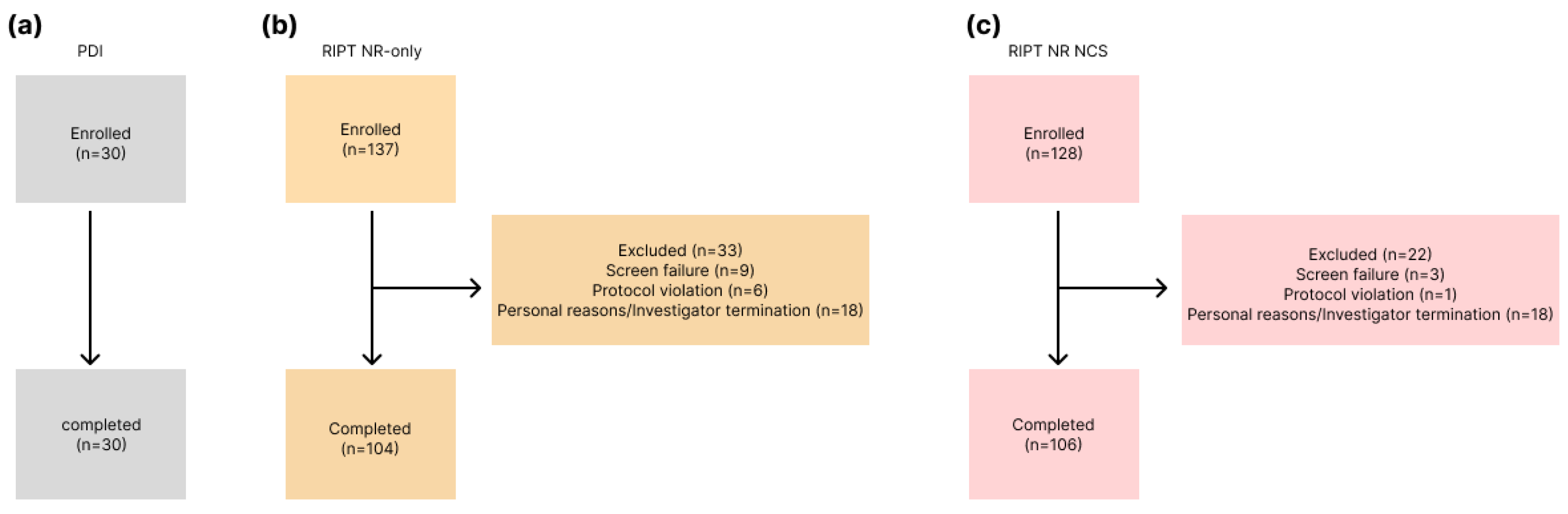
Figure 2.
Acute efficacy of NR through acute moisture, TEWL, skin redness, and smoothness. (a) Average Corneometer measurements of skin moisture content from baseline (T=0) to 8 hours after application (n=31, mean +/- SEM, * = p<0.05 relative to blank control). (b) Average Tewameter measurements of skin moisture loss from baseline (T=0) to 8 hours after application (n=31, mean ± SEM, * = p<0.05 relative to blank control). (c) Average Mexameter measurements of skin hemoglobin from baseline (T=0) to 8 hours after application (n=31, mean ± SEM, * = p<0.05 relative to blank control).(d) Indication of skin glossiness from baseline (T=0) to 8 hours after application (n=31, mean +/- SEM, * = p<0.05 relative to blank control). GU – glossymeter units, AMU – arbitrary Mexameter® units, AU – arbitrary units.
Figure 2.
Acute efficacy of NR through acute moisture, TEWL, skin redness, and smoothness. (a) Average Corneometer measurements of skin moisture content from baseline (T=0) to 8 hours after application (n=31, mean +/- SEM, * = p<0.05 relative to blank control). (b) Average Tewameter measurements of skin moisture loss from baseline (T=0) to 8 hours after application (n=31, mean ± SEM, * = p<0.05 relative to blank control). (c) Average Mexameter measurements of skin hemoglobin from baseline (T=0) to 8 hours after application (n=31, mean ± SEM, * = p<0.05 relative to blank control).(d) Indication of skin glossiness from baseline (T=0) to 8 hours after application (n=31, mean +/- SEM, * = p<0.05 relative to blank control). GU – glossymeter units, AMU – arbitrary Mexameter® units, AU – arbitrary units.
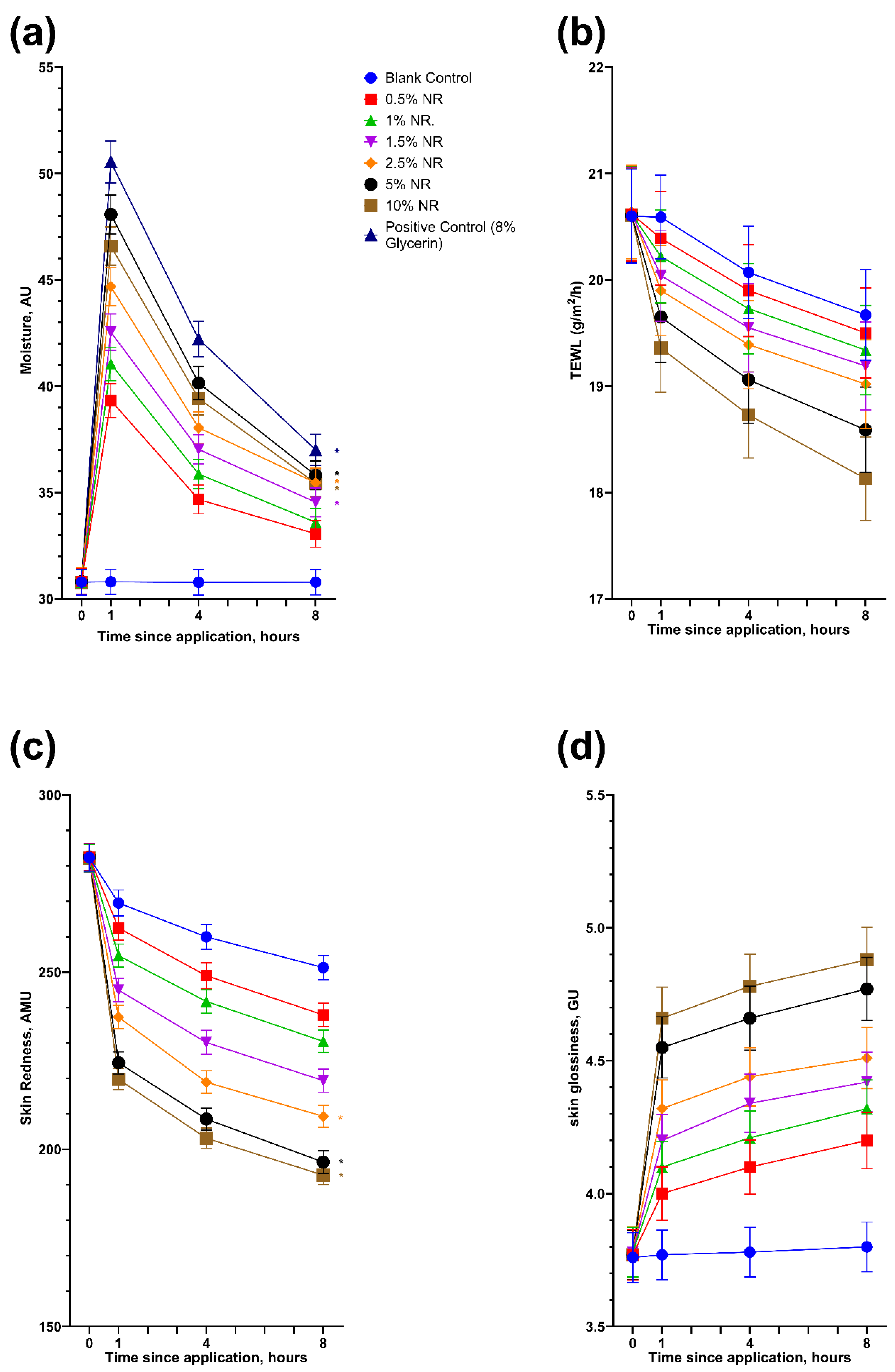

Table 1.
Percentage of participants experiencing irritation at 24 and 72 hours following application of the test materials.
Table 1.
Percentage of participants experiencing irritation at 24 and 72 hours following application of the test materials.
|
Test Material# |
Test Material |
24 hr |
72 hr |
Outcomes |
| 1 | 100 mg NR + Water | 3.30% | 3.30% | negligible dermal irritation potential |
| 2 | 50 mg NR + Water | 0.00% | 3.33% | negligible dermal irritation potential |
| 3 | 50 mg NR + Glycerin + Water | 3.30% | 0.00% | negligible dermal irritation potential |
| 4 | NR (50 mg) NCS + Water | 10.00% | 6.67% | minimal dermal irritation potential |
| 5 | NR (50 mg) NCS + Glycerin + Water | 0.00% | 0.00% | no dermal irritation |
| 6 | Glycerin + Water | 0.00% | 0.00% | no dermal irritation |
| 7 | Plain NCS + Water | 3.30% | 3.30% | negligible dermal irritation potential |
| 8 | Plain NCS + Glycerin + Water | 6.67% | 3.33% | negligible dermal irritation potential |
All = 0, no dermal irritation <10%, ±/ 1-level, negligible dermal irritation potential 10% to 24.9%, ±/ 1-level, minimal dermal irritation potential.
Table 2.
Number of participants experiencing erythema following each induction and in the challenge phase.
Table 2.
Number of participants experiencing erythema following each induction and in the challenge phase.
| Induction reading | Challenge reading | Outcomes | ||||||||||||
| 50 mg of NR applied with water | ||||||||||||||
| Grade | 1 | 2 | 3 | 4 | 5 | 6 | 7 | 8 | 9 | 24 hr | 48 hr | 72 hr | 96 hr | Did not induce dermal sensitization in participants |
| 0 | 119 | 113 | 112 | 110 | 110 | 110 | 111 | 110 | 110 | 106 | 104 | |||
| ± | 1 | 1 | 1 | 1 | 1 | |||||||||
| 1 | 1 | |||||||||||||
| Total | 120 | 114 | 113 | 111 | 111 | 111 | 111 | 110 | 110 | 106 | 104 | |||
| NR in NCS applied with 50/50 glycerin-water | ||||||||||||||
| Grade | 1 | 2 | 3 | 4 | 5 | 6 | 7 | 8 | 9 | 24 hr | 48 hr | 72 hr | 96 hr | Did not induce dermal sensitization in participants |
| 0 | 116 | 114 | 112 | 113 | 113 | 112 | 111 | 111 | 110 | 109 | 14 | 104 | 9 | |
| ± | ||||||||||||||
| 1 | 1 | |||||||||||||
| - | 92 | 97 | ||||||||||||
| Total | 116 | 114 | 113 | 113 | 113 | 112 | 111 | 111 | 110 | 109 | 106 | 106 | 106 | |
O: No visible reaction; +/-: faint, minimal erythema; 1: Erythema; -: No reading.
Table 3.
Group consensus score for time-point rating of skin plumpness, smoothness, moisture, and softness.
Table 3.
Group consensus score for time-point rating of skin plumpness, smoothness, moisture, and softness.
| NR, % | Time (hr) | Plumpness | Smoothness | Moisture | Softness |
| 0.50% | 1 | 112.8 | 116.2 | 106.4 | 112.8 |
| 4 | 222.6 | 225.8 | 216.2 | 222.6 | |
| 8 | 332.2 | 335.8 | 325.8 | 325.8 | |
| 1.00% | 1 | 93.5 | 103.3 | 93.5 | 103.3 |
| 4 | 203.4 | 212.7 | 203.4 | 212.7 | |
| 8 | 312.6 | 322.6 | 312.6 | 322.6 | |
| 1.50% | 1 | 80.7 | 83.9 | 83.9 | 83.9 |
| 4 | 193.5 | 203.4 | 203.4 | 193.5 | |
| 8 | 306.4 | 306.4 | 306.4 | 312.6 | |
| 2.50% | 1 | 74.1 | 74.1 | 67.7 | 77.5 |
| 4 | 177.5 | 187.1 | 187.1 | 183.9 | |
| 8 | 293.5 | 297.1 | 287.1 | 297.1 | |
| 5.00% | 1 | 70.6 | 67.7 | 67.7 | 77.5 |
| 4 | 167.7 | 177.5 | 177.5 | 183.9 | |
| 8 | 273.9 | 283.9 | 277.5 | 283.9 | |
| 10.00% | 1 | 67.7 | 74.1 | 67.7 | 77.5 |
| 4 | 177.5 | 187.1 | 177.5 | 183.9 | |
| 8 | 287.1 | 297.1 | 287.1 | 297.1 |
The score was calculated as a summation of the percentage of participants multiplied by the score. Score = (X0 x 0)+(X1 x 1)+(X2 x 2)+(X3 x 3)+(X4 x 4)+(X5 x 5)+(X6 x 6)+ (X7 x 7)+ (X8 x 8)+(X9 x 9) where X indicates the percentage of participants that gave the score Scale: 0-900, where lower scores indicate a collective agreement of benefits.
Table 4.
Group consensus on moisture locking and skin redness.
| NR, % | Time (hr) | Moisture Locking | Redness |
| 0.50% | 1 | 135.4 | 138.6 |
| 4 | 238.5 | 242.0 | |
| 8 | 348.4 | 348.4 | |
| 1.00% | 1 | 122.6 | 125.8 |
| 4 | 229.0 | 229.0 | |
| 8 | 329.0 | 332.2 | |
| 1.50% | 1 | 112.8 | 116.2 |
| 4 | 212.7 | 219.4 | |
| 8 | 322.6 | 319.4 | |
| 2.50% | 1 | 93.6 | 93.6 |
| 4 | 203.2 | 200.0 | |
| 8 | 309.6 | 309.6 | |
| 5.00% | 1 | 71.1 | 67.8 |
| 4 | 177.6 | 180.6 | |
| 8 | 286.8 | 286.8 | |
| 10.00% | 1 | 48.5 | 48.5 |
| 4 | 154.9 | 154.9 | |
| 8 | 264.5 | 258.1 |
The score was calculated as a summation of the percentage of participants multiplied by the score. Score = (X0 x 0)+(X1 x 1)+(X2 x 2)+(X3 x 3)+(X4 x 4)+(X5 x 5)+(X6 x 6)+ (X7 x 7)+ (X8 x 8)+(X9 x 9) where X indicates the percentage of participants that gave the score Scale: 0-900, where lower scores indicate a collective agreement of benefits.
Table 5.
Percentage of participants agreement with skin protection assessments.
| NR, % | Time (hr) | Relieves skin sensitivity after use | Improves skin Redness after use | Reported smoothing skin after use | After use, the effect of maintaining skin condition | After use, it can enhance the overall skin barrier |
| 0.50% | 1 | 87.1% | 87.1% | 87.1% | 87.1% | 87.1% |
| 4 | 87.1% | 87.1% | 83.9% | 87.1% | 87.1% | |
| 8 | 83.9% | 87.1% | 83.9% | 87.1% | 87.1% | |
| 1.00% | 1 | 87.1% | 87.1% | 90.3% | 90.3% | 90.3% |
| 4 | 87.1% | 87.1% | 90.3% | 87.1% | 90.3% | |
| 8 | 87.1% | 87.1% | 87.1% | 87.1% | 90.3% | |
| 1.50% | 1 | 90.3% | 90.3% | 90.3% | 90.3% | 93.5% |
| 4 | 90.3% | 90.3% | 90.3% | 90.3% | 90.3% | |
| 8 | 87.1% | 90.3% | 90.3% | 90.3% | 90.3% | |
| 2.50% | 1 | 93.5% | 93.5% | 90.3% | 93.5% | 93.5% |
| 4 | 93.5% | 90.3% | 90.3% | 93.5% | 93.5% | |
| 8 | 90.3% | 90.3% | 90.3% | 93.5% | 93.5% | |
| 5.00% | 1 | 96.8% | 93.5% | 96.8% | 93.5% | 93.5% |
| 4 | 93.5% | 93.5% | 96.8% | 93.5% | 93.5% | |
| 8 | 93.5% | 93.5% | 93.5% | 93.5% | 93.5% | |
| 10.00% | 1 | 96.8% | 96.8% | 96.8% | 96.8% | 96.8% |
| 4 | 96.8% | 93.5% | 96.8% | 96.8% | 96.8% | |
| 8 | 96.8% | 93.5% | 96.8% | 96.8% | 93.5% |
1= strong disagreement, 2= moderate disagreement, 3= moderate disagreement, 4=mild agreement, 5=some agreement, 6=strong agreement Acceptance rate = (Number of participants with a score ≥ 4 / Number of valid participants) × 100%".
Table 6.
Participant-reported perceived benefits of a single application of various concentrations of NR on categories of skin smoothing.
Table 6.
Participant-reported perceived benefits of a single application of various concentrations of NR on categories of skin smoothing.
| NR, % | Timepoint(hr) | Brightness | Moisture | Oiliness | Heaviness | Stickiness | Slipperiness |
| 0.50% | 1 | 122.6 | 119.4 | 109.6 | 771.8 | 122.6 | 119.4 |
| 4 | 229.0 | 225.8 | 219.4 | 664.5 | 229.0 | 225.8 | |
| 8 | 342.0 | 335.4 | 329.0 | 561.3 | 339.0 | 339.0 | |
| 1.00% | 1 | 106.4 | 96.9 | 103.3 | 778.2 | 116.1 | 109.7 |
| 4 | 212.7 | 206.4 | 203.4 | 674.9 | 219.4 | 219.7 | |
| 8 | 316.2 | 312.6 | 316.2 | 571.6 | 329.0 | 325.8 | |
| 1.50% | 1 | 93.5 | 87.1 | 93.5 | 786.3 | 116.1 | 106.4 |
| 4 | 203.4 | 197.0 | 203.4 | 683.9 | 219.4 | 212.7 | |
| 8 | 309.7 | 306.4 | 312.6 | 578.0 | 322.6 | 322.6 | |
| 2.50% | 1 | 87.1 | 80.7 | 90.3 | 800.0 | 109.7 | 100.0 |
| 4 | 197.0 | 193.6 | 200.0 | 693.6 | 212.7 | 212.7 | |
| 8 | 306.4 | 306.4 | 312.6 | 590.4 | 319.4 | 319.4 | |
| 5.00% | 1 | 80.7 | 77.5 | 87.1 | 812.1 | 80.7 | 87.1 |
| 4 | 187.1 | 193.5 | 193.5 | 706.4 | 203.4 | 206.4 | |
| 8 | 306.4 | 306.4 | 312.6 | 603.2 | 306.4 | 316.2 | |
| 10.00% | 1 | 64.5 | 67.8 | 74.2 | 829.8 | 61.2 | 64.5 |
| 4 | 180.6 | 174.2 | 183.8 | 723.3 | 174.2 | 177.6 | |
| 8 | 290.4 | 283.8 | 296.8 | 616.1 | 287.4 | 296.8 |
Score = (X0 x 0)+(X1 x 1)+(X2 x 2)+(X3 x 3)+(X4 x 4)+(X5 x 5)+(X6 x 6)+ (X7 x 7)+ (X8 x 8)+(X9 x 9) where X indicates the percentage of participants that gave the score Scale: 0-900, where lower scores indicate a collective agreement of benefits.
Disclaimer/Publisher’s Note: The statements, opinions and data contained in all publications are solely those of the individual author(s) and contributor(s) and not of MDPI and/or the editor(s). MDPI and/or the editor(s) disclaim responsibility for any injury to people or property resulting from any ideas, methods, instructions or products referred to in the content. |
© 2026 by the authors. Licensee MDPI, Basel, Switzerland. This article is an open access article distributed under the terms and conditions of the Creative Commons Attribution (CC BY) license (http://creativecommons.org/licenses/by/4.0/).
Copyright: This open access article is published under a Creative Commons CC BY 4.0 license, which permit the free download, distribution, and reuse, provided that the author and preprint are cited in any reuse.