

Submitted:
20 March 2026
Posted:
20 March 2026
You are already at the latest version
Abstract
Legionnaires’ disease is a rare cause of atypical pneumonia associated with a high mortality rate among untreated patients. In Romania, the disease has historically been underreported due to insufficient surveillance and limited diagnostic capacity. The aim of this study was to describe the characteristics of Legionnaires’ disease cases admitted to a specialized infectious diseases hospital between 2023 and 2024, with particular focus on a cluster associated with travel to a spa resort. Most cases included in our study (31/36) were confirmed by urinary antigen testing, while one case was confirmed by a significant increase in the level of specific antibodies against Legionella pneumophila serogroup 1 in paired serum samples. The most frequently reported symptom was fever (28/32), followed by chills (24/32). Among the 32 confirmed cases, three patients died. Two cases were identified as part of a family cluster involving a father and son who had undergone physiotherapy at a balneary resort. Both patients presented with fever and gastrointestinal symptoms, and radiological investigations confirmed mixed pneumonia associated with an intense inflammatory syndrome. In the father’s case, hepatic involvement and interstitial nephritis were also identified. Early diagnosis based on epidemiological data, clinical predictive scores, and laboratory investigations would allow timely administration of targeted antibiotic therapy and may contribute to reduced mortality.
Keywords:
Legionnaires’ disease
; cluster
; travel-associated infectious diseases
1. Introduction
Legionnaires’ disease continues to be a public health problem because of the high potential for transmission through inhalation of contaminated particles from man-made water systems. Legionnaires’ disease can affect a large number of vulnerable individuals, is associated with high mortality in untreated cases, and is often difficult to diagnose clinically.
L. pneumophila is an environmental Gram-negative bacterium that persists within biofilms and multiplies inside free-living protozoa. When aerosols contaminated with bacteria are inhaled, this opportunistic pathogen infects alveolar macrophages in the lungs, leading to severe pneumonia [1].
Legionella pneumophila was first identified following an outbreak of pneumonia in 1976 during an annual convention of the American Legion in Pennsylvania, United States. During this outbreak, an unknown respiratory disease affected 221 participants, resulting in 34 deaths. Since the identification of this pathogen many more serogroups have been described [2].
L. pneumophila serogroup 1 is responsible for 80–90% of the cases reported in Europe and the United States. L. longbeachae accounted for approximately 1% of the cases worldwide at the beginning of 2000 but was on the rise in Europe, accounting for 50–60% of the cases in Australia and New Zealand [3] L. pneumophila serogroups 3 and 6, as well as species such as L. bozemanii or L. micdadei, which are rare and are isolated mainly from immunocompromised patients [3].
The characteristics of Legionella pneumophila bacteria include multiplication in stagnant water, intrinsic resistance to biocides, biofilm formation, a symbiotic relationship with protozoa, and intracellular multiplication, all of which contribute to increased antibiotic resistance and diagnostic difficulties, which are correlated with the high mortality rate of untreated cases. Clinical manifestations can include infection of other organs in addition to the respiratory tract, such as the heart, nervous system, liver and soft tissues [4].
Affected patients exhibit elevated serum levels of inflammatory cytokines, such as TNFα, IFN-γ, IL-12, IL-6, IL-8, and granulocyte-colony stimulating factor, with the level of IL-12 remaining high even during the convalescent phase. The magnitude of this cytokine response closely reflects the severity of the disease [5].
As a facultative intracellular organism, L. pneumophila avoids the host’s bactericidal endocytic pathway after uptake and establishes a replication-permissive, endoplasmic-reticulum-derived compartment known as the Legionella-containing vacuole (LCV) [6].
During the acute inflammatory phase, L. pneumophila infection triggers strong cellular immune responses, marked by the rapid recruitment of immune cells, including neutrophils, monocytes, and dendritic cells, and various lymphocyte populations, such as NK, NKT, B, and T cells, to the lungs. This response is followed by bacterial elimination, a pronounced reduction in inflammatory cytokine levels, and the eventual resolution of immune cell infiltration in immunocompetent hosts [1].
Legionellosis is widely regarded as both underdiagnosed and underreported throughout the entire European region. Limited recognition of the disease by clinicians and the general public is viewed as the main driver of this issue. The standard diagnostic methods primarily target Legionella pneumophila serogroup 1 through urinary antigen testing and thus also contribute to reduced detection rates.
Outbreaks of Legionnaires’ disease are mainly caused by Legionella pneumophila serogroup 1 and cause high levels of morbidity and mortality.
L. pneumophila is also a priority pathogen that causes health care-acquired pneumonia, particularly in vulnerable and immunocompromised patients.
In 2023, a total of 14,537 cases of Legionnaires’ disease, with an incidence rate of 3.2 per 100 000 people (the highest rate ever), were reported in 30 countries from the European Union and European Economic Area. Four states (France, Germany, Italy and Spain) accounted for 72% of all reported cases [7].
The majority of cases (77%) reported in 2021 were community-acquired, 10% were travel-associated, 5% were nosocomial cases, 5% were of unknown origin and 3% were reported as “other”.
Eight countries (Belgium, Germany, Italy, Finland, France, the Netherlands, Portugal and Spain) reported at least one outbreak in 2021, with 3–18 cases each (137 cases in total). More than one-third of the outbreaks were community-acquired, which is a marked increase compared with previous years [8].
The mortality rate in European countries reported in 2021 was 9% [9]. At the global level, the reported mortality rate varies between 4% and 14% but can reach as high as 75% in vulnerable populations and specific contexts [10].
Data from Romania are scarce, mainly because of insufficient surveillance and diagnostic capacity. According to the National Centre for Surveillance and Control of Communicable Diseases (NCSCCD) reports, during 2023–2024, 113 cases of pneumonia with Legionella pneumophila were reported in Romania, with an incidence of 0.3%000 inhabitants [11,12]. / Most of the reported cases occurred sporadically and were locally acquired. A single outbreak was reported, with 2 cases from the same family and 7 imported cases (2 cases had exposure in Italy and 3 cases in the United Arab Emirates, one each in Turkey and Albania)
Only one case was reported in a child, and the rest were adults.
However, infection with L. pneumophila has rarely been proven in children, representing less than 0.02% of every 100,000 individuals in most countries, including Romania. For example, the incidence of legionellosis in children reported in European countries was less than 0.25% for 100,000 individuals in 2021 [9,13].
The latest medical literature highlights the risk of underestimation of legionellosis, as many countries do not have adequate diagnostic methods. The detection of Legionella spp. antigen in urine samples constitutes the primary diagnostic technique used in our country. In addition, bacteria from patient samples are difficult to isolate because of inhibition of growth by the background flora [14].
An accurate method to identify contamination in water systems is quantitative polymerization chain reaction (v-q-PCR) using cryopreserved samples, even when conventional bacterial cultures commonly used for testing water systems via classic culture methods are negative [15,16].
The aim of this study is to present the characteristics of Legionnaires’ disease cases admitted to a specialized infectious disease hospital for two years, 2023 and 2024, and to describe a cluster of two severe cases, a father and son, associated with travel to a spa resort.
2. Materials and Methods
A retrospective descriptive study was conducted using epidemiological surveillance data and medical records of patients diagnosed with legionellosis and admitted to the largest infectious diseases hospital in Romania [17] between January 2023 and December 2024. In addition, two epidemiologically linked severe cases of Legionella pneumophila pneumonia occurring in a father and his son following exposure at a balneotherapy resort were analyzed in detail.
In Romania, healthcare professionals are legally required to immediately report all suspected and confirmed cases of legionellosis to district public health authorities to facilitate epidemiological investigation and the implementation of prevention and control measures [18]. A single reported case represents the threshold for an epidemiological alert and triggers immediate public health intervention. Public health authorities subsequently perform a risk assessment and notify accommodation facilities potentially associated with the reported exposure.
Cases of legionellosis are classified at the local public health department level as probable or confirmed according to the national surveillance methodology and the European Union case definitions for legionellosis [19].
A confirmed case represents any person presenting with pneumonia and at least one of the following laboratory criteria for case confirmation: isolation of Legionella spp. from respiratory secretions or any normally sterile site, detection of Legionella pneumophila antigen in urine or a significant rise in specific antibodies against Legionella pneumophila serogroup 1 in paired serum samples.
A probable case represents any person presenting with pneumonia and at least one of the following laboratory criteria for a probable case: detection of Legionella pneumophila antigen in respiratory secretions or lung tissue, for example, by direct fluorescent antigen staining using monoclonal antibody-derived reagents; detection of Legionella spp. nucleic acid in respiratory secretions, lung tissue or any normally sterile site; a significant increase in specific antibody levels to Legionella pneumophila other than serogroup 1 or other Legionella spp. in paired serum samples; and a single high level of specific antibody against Legionella pneumophila serogroup 1 in serum.
The national surveillance methodology defines a cluster of Legionnaires’ disease cases in accordance with the European Legionnaires’ Disease Surveillance Network as two or more cases of travel-associated Legionnaires’ disease in which the patients stayed at or visited the same commercial accommodation site within a 2–10-day incubation period before illness onset, with onset dates occurring within the same 2-year period [20].
The diagnosis of pneumonia was based on the presence of respiratory symptoms and positive findings on chest X-ray and/or CT. Cases were confirmed by a urinary antigen test for Legionella pneumophila serogroup 1 (Immuview, SSI Diagnostica A/S, Hillerod, Denmark) or by nucleic acid amplification tests (Allplex Respiratory Panel, Seegene, Seoul, South Korea).
To assess severity, we used the A-Drop score, in which the cutoff for severe outcomes was at least three points [21].
Statistical analysis was performed using Excel Microsoft. We described continuous variables using interquartile range or range values and categorical variables using frequencies.
Ethical Considerations
The study protocol was approved by the Institutional Bioethics Committee (approval number C14682/19.12.2025). Written informed consent was obtained from all participants or their legal guardians. Access to patient data was restricted to the infection prevention and control team and treating clinicians to ensure confidentiality.
3. Results
A total of 36 patients who were diagnosed with legionellosis were hospitalized at the NIID for two years, 2023 and 2024, and were reported to the local health department. Most of the cases, 31 out of 36 (86.11%), were confirmed by urinary antigen testing; one case was confirmed by a significant increase in the specific antibody level to Legionella pneumophila serogroup 1 in paired serum samples, whereas 4 cases were classified as probable on the basis of laboratory criteria and were detected as Legionella spp. nucleic acid in respiratory secretions. The characteristics of the 32 confirmed cases are presented below.
Figure 1.
Distribution of hospitalized legionellosis cases by season during 2023-2024 (N=32).
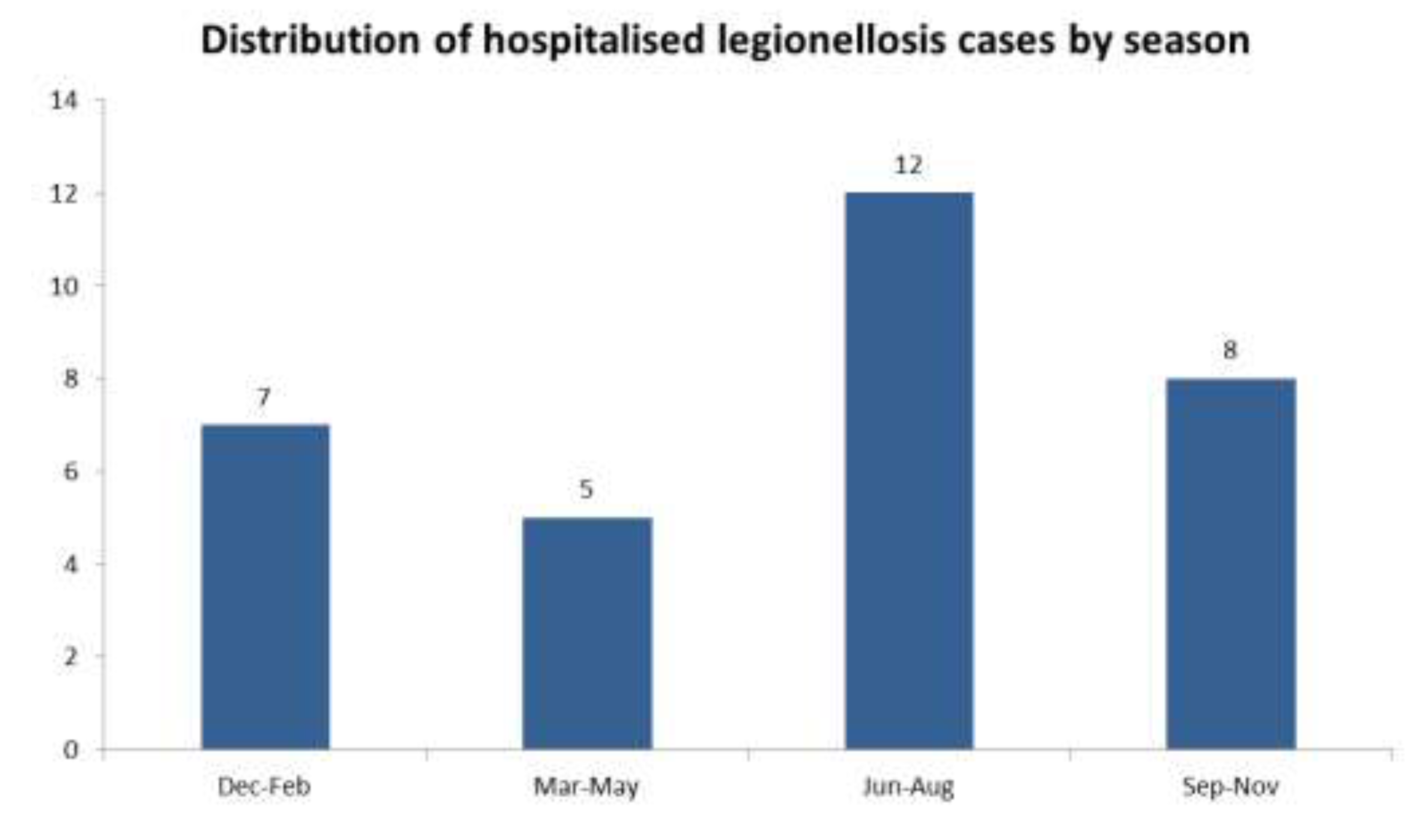
Seventeen cases were reported in 2023, and 15 were reported in 2024. The number of cases reported in the two years peaked during the month of June (6 cases in total), followed by August and October, with 5 cases. More than one-third of the cases (12/32) were reported during the summer (June–August), followed by 8 cases during autumn (September–November), 7 cases during the winter (December‒February) and 5 cases during the spring (March‒May). The ages of the patients ranged from 5 to 87 years, with a median age of 60 years (IQR=18.5). For the follow-up investigation, the cases were reported to the public health departments of 6 counties on the basis of the home address of the infected individuals, but most of the cases were reported to the Bucharest public health departments (15/32). Characteristics of hospitalized legionellosis cases are presented in Table 1.
The most common symptom reported was fever (28/32), followed by chills (24/32). Dyspnea and cough were present in 20/32 patients. Four patients presented with chest pain. Hepatic involvement was reported in 3 patients (elevated liver enzymes, jaundice, coagulation abnormalities). Gastrointestinal symptoms were reported in 5 patients (diarrhea, abdominal pain and vomiting), whereas renal involvement was present in 2 patients (oliguria and hematuria). One case presented with exanthem. Among the 32 patients with confirmed legionellosis, 3 died.
Possible exposure based on patient declaration was identified in 18/32 cases. The most common was exposure to air conditioning, either at home or at the workplace (8/32) followed by occupational exposure (plumbing, 4/32), travel associated (5/32) and exposure to natural sources of water (fishing, 1/32). Four cases were associated with travel to spa resorts in Romania. One case was associated with travel to Dubai, United Arab Emirates and was classified as an imported Legionnaire’s disease case. Two of the cases were reported as part of a family cluster and are presented below. No nosocomial cases were reported.
3.1. Case Description
3.1.1. Patient 1
A 51-year-old patient with a six-day history of fever, headache and abdominal pain, dizziness and fatigability was admitted to our hospital on June 12, 2023. On the fourth day of illness, the patient was seen at the Emergency Department of Tertiary Hospital in Bucharest for headache, nausea and abdominal pain. The leucogram revealed leucocytosis, neutrophilia. The rapid SARS-CoV-2 antigenic test was negative. Abdominal sonography revealed hepatic steatosis, lipomatous infiltration of the pancreas, and otherwise normal cardiothoracic X-rays. He received saline solution (0,9% NaCl) via intravenous perfusion for dehydration, and he was discharged with the recommendation of symptomatic treatment.
The patient continued to experience chills, dizziness, pulsatile frontal headache, periumbilical colic and associated dry cough, myalgias, fatigability, vomiting, and loose stools; thus, he was admitted to our hospital on the sixth day of the disease.
His medical history revealed paroxysmal supraventricular tachycardia corrected with ablation more than eight years ago, which was stable with 50 mg of metoprolol daily.
The patient stated that he spent 3 days with his family at a spa resort where he was exposed to aerosols from a thermal bath and the sauna. The first symptoms (fever and gastrointestinal symptoms) appeared 3 days after the patient returned from the resort. At the time of presentation at the hospital, none of the family members (wife and 5-year-old son) showed any signs of illness.
Clinical examination at admission revealed an unwell patient with a low-grade fever of 37.3° Celsius, overweight (body weight = 96 kg, height = 1,78 m, body mass index = 30,29 kg/m2), normal mental status, paleness, no cyanosis, a normal respiratory rate of 21/min, a normal peripheral oxygen level of 97% in ambient air, no dyspnea, fine rales at the basal right hemithorax, normal clinical cardiac auscultation, and normal arterial pressure, with no significant variation following position changes (standing at 120/75 mmHg and laying down at 130/80 mmHg, pulse at 80–85/minute), normal diuresis, and no meningeal signs. Neurologic consultation revealed no abnormal findings.
Investigations performed at admission revealed leucocytosis, neutrophilia, a high neutrophil/lymphocyte ratio, markedly elevated inflammatory markers, hepatic cytolysis, and hematuria, suggesting sepsis. (Annex1)
An X-ray performed at admission revealed a reticulonodular pattern associated with diffuse alveolar opacities, which were greater on the right side than on the left side. (Figure 2)
Considering the patient’s signs and symptoms and the fact that he visited a commercial balneotherapy accommodation site 7 days before illness onset, the clinical diagnosis was acute pulmonary legionellosis complicated with nephritis and hepatitis. He was tested for the detection of Legionella pneumophila antigen in urine, and he received a course of ampicillin sulbactam iv plus doxycycline.
Microbiologic tests revealed positive results for L. pneumophila serogroup 1 urinary antigen. The A Drop score in the adult patients suggested moderate disease. (Table 2).
After 24 hours of antibiotic therapy, the patient became afebrile, and most symptoms improved, except for the cough. The follow-up laboratory tests are included in Annex 1 and revealed improved inflammatory syndrome and imaging findings.
The patient was discharged after eight days of hospitalization, with the recommendation to continue antibiotic treatment with oral ampicillin sulbactam (1.5 g) every 8 hours plus doxycycline (100 mg) every 12 hours for seven more days. At the follow-up visit, the patient had completely recovered.
3.1.2. Case 2
Two weeks later, on the 27th of June, a 5-year-old male child was admitted to our clinic for a clinical picture that began two weeks earlier, with a high fever, a maximum temperature of 40 °C and abdominal pain. Prior to admission, the child had been evaluated by a pediatrician in a pediatric emergency department at a pediatric tertiary hospital and was discharged with antibiotic treatment (cefixime) and antipyretics. After one week, the symptoms persisted; at the second evaluation, the antibiotic therapy was changed, and clarithromycin was initiated. Since the fever remained high and was accompanied by chills and profuse night sweats, after 36 hours—during which he received three doses of clarithromycin—he presented to our clinic, and hospitalization was decided.
In terms of medical history, we noted that he was diagnosed with chickenpox two months before admission as well as with histamine intolerance. No other chronic conditions were mentioned.
On physical examination of the child at the time of admission, the patient appeared acutely ill, well nourished (body weight of 19 kg), and febrile (39 °C), with pale skin with no rashes and a rare dry cough. His heart sounds were rhythmic and regular. Pulmonary auscultation revealed that the vesicular murmur presented bilaterally without additional crackles, a congestive pharynx, normal bowel transit, soft and mobile abdominal respiration, normal diuresis, consciousness, cooperation, and no meningeal signs.
It was further noted that the child’s father was hospitalized in our clinic two weeks earlier with a diagnosis of legionellosis (Legionella pneumonia).
The family had undergone physiotherapy treatment at a balneary resort approximately 14 days prior to the first symptoms (high fever and abdominal pain) and three weeks prior to admission to our hospital. (Figure 3)
Laboratory tests at admission revealed increases in the following inflammatory markers: leukocytosis (11.500/mm3), neutrophilia (6.900/mm3), monocytosis (900/mm3), CRP (53.6 mg/L), procalcitonin (0.73 ng/ml), ESR (46 mm/h), fibrinogen (405.2 mg/dL), mild hepatic cytolysis (ALT at twice the upper limit of normal), and LDH (302 U/L).
Considering the similar spa aerosol exposure and father’s diagnosis, the child underwent serologic testing, and the results revealed positive IgM antibody for Legionella pneumophila and a negative urinary antigen test.
Tests for Mycoplasma pneumoniae IgM antibodies and Chlamydia pneumoniae IgM antibodies were negative.
Other possible viral etiologies of pneumonia were excluded via the use of a multiplex respiratory virus panel, which was negative.
Two blood cultures were collected during the febrile episode prior to antibiotic administration, as were nasal and pharyngeal exudates, both of which were negative.
Chest radiography revealed bilateral enlarged hila, predominantly on the right, with hilar and latero-basal alveolar and interstitial infiltrates, and abdominal ultrasound examination revealed mild hepatosplenomegaly, aerocolia, biliary sludge, and 10 mm fluid collection in the Douglas pouch and an accessory spleen. Echocardiography excluded possible cardiac malformation, pericardial effusion or any evidence of pulmonary hypertension. (Figure 4)
Given that the patient had been treated with a third-generation cephalosporin for 7 days prior to admission and that biliary sludge was present, empiric antibiotic therapy with meropenem associated with clarithromycin was initiated. After 24 hours, the fever began to decrease. Following positive Legionella spp. serology results, clarithromycin therapy was continued for up to 10 days. The outcome was clinically and biologically favorable. A follow-up evaluation at 7 days after discharge revealed normal clinical and biological parameters. The child had A-DROP scores corresponding to a mild form of pneumonia (Table 2).
4. Discussion
Legionnaires’ disease remains an underdiagnosed and underreported infectious disease in Romania despite mandatory notification requirements. According to national legislation, all suspected and confirmed cases must be immediately reported to public health authorities and subsequently entered into the European Surveillance System (TESSy). Nevertheless, the incidence reported in Romania (0.3 cases per 100,000 inhabitants) remains substantially lower than the European average (3.2 cases per 100,000 inhabitants), suggesting considerable underdiagnosis.
The increasing development of tourism infrastructure, including spa resorts and balneotherapy facilities, as well as the widespread use of air-conditioning and cooling systems, may contribute to favorable environmental conditions for Legionella proliferation. These factors increase the risk of sporadic cases and clusters associated with travel or recreational activities. The number of Legionnaires’ disease cases correctly diagnosed and reported remains low because there is no diagnostic capacity at the level of all hospitals or public health laboratories [22].
Our retrospective analysis revealed a relatively stable number of hospitalized cases during the two consecutive years analyzed (17 cases in 2023 and 15 cases in 2024). These findings are consistent with national surveillance data reporting 56 cases in 2023 and 57 cases in 2024. However, the national epidemiological trend between 2014 and 2024 shows considerable variation, with peaks reported in 2018 and 2024, while fewer than 20 cases were reported in several other years [11,12].
The age distribution observed in our study is consistent with international epidemiological data. Most patients (78.1%) were older than 50 years, reflecting the known increased susceptibility among older adults and individuals with underlying comorbidities. European surveillance data similarly indicate that more than 90% of reported cases occur in individuals older than 45 years [7]. Comparable results were also published in the national annual surveillance reports for Legionnaire’s disease, with a median of 57 for both 2023 and 2024 [11,12]. Legionellosis remains rare in children, which often leads to delayed diagnosis in pediatric populations. The pediatric case described in our study was the only pediatric case reported nationally during the two-year study period, highlighting the rarity of this infection in children [23].
The sex distribution of the studied patients revealed a predominance of males (20 out of 32, 62.5%). The male/female ratio in our study (1.66) was similar to the national data (1.1), while the ECDC annual epidemiological report showed a higher male/female ratio (range 2.3–2.4:1, from 2017-2021) [7,11,12].
The distribution of the studied cases by the month of diagnosis showed a peak in summer (June to August), whereas the national data showed peaks in April, August and December [11,12]. The same seasonality was observed at the EU level, with 61% of Legionnaires’ diseases being reported between June and October in 2021.
Information regarding possible risk exposures in the 2-10 days prior to onset was obtained for 66.3% (75 cases) of the confirmed cases (113) at the national level in 2023-2024. The majority of cases (31 / 75%) reported living or working in buildings with air conditioning systems, 14 cases (18.7%) had visited swimming pools or spa areas, 11 cases (14.7%) had been in contact with natural water sources (lakes, ponds). Ten cases (13.4%) had occupational exposure [11,12]. The observed seasonality could be correlated both in our study and at the national level with the most common exposure declared by patients, as air conditioning exposure and exposure to natural water sources are more prevalent during the summer months.
Regarding the presented cases, initially, a potential connection between the father’s recent infection and the child’s symptomatology was not considered. For this reason, the patient received a broad-spectrum beta-lactam antibiotic as the first-line therapy.
On the other hand, pediatricians are not clinically familiar with Legionnaires’ disease because it is a rare cause of pneumonia in children. The most important clinical clue for an infection with atypical bacteria is the persistence of fever and respiratory signs in children despite treatment with beta-lactam antibiotics. [23].
The clinical picture of Legionella spp. pneumonia in both patients revealed extrapulmonary manifestations, such as chills, fever, nausea, abdominal pain, vomiting, watery diarrhea, anorexia, myalgias and confusion.
Physical examination of both patients at the time of admission revealed nonspecific symptoms, including fever and intermittent abdominal pain, which can occur in the clinical manifestation of Legionella pneumonia.
The diagnostic approach for the adult patient revealed that the following clinical signs were suggestive of atypical bacterial or viral pneumonia: gradual onset, dry cough, headache, and low-grade fever. Patient age, age younger than 65 years and digestive symptoms support atypical bacterial infection [24].
In the pediatric case, the pulmonary manifestations were subtle: a rare dry cough with normal pulmonary auscultation and a hyperemic pharynx. The diagnosis of pneumonia was confirmed by imaging investigations.
With respect to the biological investigation, while inflammatory tests revealed more important changes in the adult patient, despite the low-grade fever associated with hepatic and renal involvement, in the child patient, the inflammatory tests revealed less increased levels in the context of a very high fever. (Annex 1).
An analysis of the leucograms revealed that in adults, a neutrophil/lymphocyte count greater than 3 points was strongly associated with severe infection. Moreover, in the child case, this rate was lower [25].
Moreover, in the child, microcytic anemia and mild thrombocythemia were found, whereas in the adult patient, the platelet count and hemoglobin level were normal.
Chest radiographs in Legionella pneumonia patients typically reveal alveolar infiltrates rather than interstitial patterns. The infection generally presents as a unilateral disease, although it can progress to bilateral involvement, as noted in both presented cases [26].
In accordance with the JRS guidelines for the management of pneumonia, the Legionella pneumonia suspicion score comprises 6 items: 1. Male, 2. No coughing; 3. Difficulty breathing, 4. CRP ≥18 mg/dL; 5. Na value ≤ 134 mmol/L, 6. LDH value ≥260 U/L. Each item is assigned a score of 1 point. When the score is 3 or higher, Legionella pneumonia is suspected [21].
In both cases, the score was 3; both were male, the CRP concentration was 53.6 mg/dl in the child and 206 mg/dl in the adult, the LDH concentration was 302 U/L in the child and 272 U/L in the adult, and the diagnosis of Legionella pneumonia was considered; however, other etiologies could not be excluded. In both cases, antibiotics were used. In the adult patient, beta-lactam plus doxycycline was started on the first day of hospitalization. In child care, carbapenem plus macrolide was initiated on the second day of hospitalization; on the first day, the patient received no antimicrobial treatment. Both studied patients became afebrile after 24 hours of antibiotic therapy. In the adult patient, the etiology was proven by the rapid Legionella spp. antigen test from the first day, whereas in the child patient, the rapid test was negative, and a positive result of the serologic test was available on the fourth day after admission.
Abdominal pain in the child may have been present from the onset as a manifestation of the disease, but its persistence may be explained by the presence of biliary sludge, which frequently occurs following treatment with cephalosporins, and by the presence of fluid in the rectouterine pouch. In the adult patient, abdominal ultrasound did not reveal any abnormal findings; therefore, we considered this case to be an extrapulmonary manifestation of the disease.
The urinary antigen test was negative in the child, but the IgM serological test was positive, which confirms the usefulness of using combined methods to identify Legionella pneumophila. The use of PCR tests to identify the etiology would be beneficial for increasing the accuracy of the diagnosis.
The presence of the two cases of Legionella pneumonia in the same family may suggest the possibility of human-to-human transmission of the infection. Although Legionella pneumophila infection is transmitted through contaminated aerosols, there is a case of human-to-human transmission in the same family, described in an article published in 2016 [27].
However, we do not have enough data to support this hypothesis. The presence of both family members in the same environment represented by a warm water system makes the transmission of infection through aerosols and water droplets much more likely [27].
The introduction of macrolide treatment at the second consultation prevented progression to a severe form of the disease. Even though the fever persisted for another two days, the child developed a moderate form of pneumonia without the need for oxygen therapy or corticosteroid therapy.
The specific aspects of the cases included a family cluster affecting a five-year-old boy, extrapulmonary manifestations, the need for hospitalization despite the initial appropriate antibiotic choice for the child, and the lag between admission to the hospital, raising the suspicion of interhuman transmission.
Our study provides information about the clinical and epidemiological characteristics of patients, the importance and difficulty of diagnosis, and the necessity of quickly initiating specific antibiotic therapy. Importantly, doctors from all specialties have the necessary knowledge to recognize a suspected case of Legionnaires’ disease, considering that the disease can begin with hepatic dysfunction, gastrointestinal symptoms, and renal involvement. Since antimicrobial therapy with beta-lactams, which are often used empirically for community-acquired pneumonia, is not effective against atypical bacteria, Legionnaires’ disease pneumonia can progress to severe, even life-threatening, forms, both in children and in adults. Legionella pneumophila is difficult to isolate on culture media, and the molecular method of PCR is expensive and not accessible to everyone; thus, the most common diagnostic methods involve the detection of urinary antigens and IgM antibodies. However, Legionella infection is considered to be underdiagnosed. In Japan, a clinical predictive score was created that is useful for guiding antibiotic therapy [21].
The strengths of our study were the ability to share data on a topic with little data from Romania and the presentation of clinical and epidemiological aspects regarding Legionnaires’ disease in hospitalized patients, including a child, which is rarely described in the literature. Moreover, the patients included in the study represented 28% of the total national reported cases because of laboratory capabilities to diagnose legionellosis.
The limitations of our study were related to its retrospective design, with a high rate of missing data and the inclusion of only hospitalized patients.
5. Conclusions
The family cluster described in this study illustrates the potential role of spa and balneotherapy facilities as sources of aerosolized Legionella spp. Such environments are recognized risk settings because warm water systems and aerosol-generating devices can facilitate bacterial proliferation and transmission. Early recognition of legionellosis based on epidemiological exposure, clinical presentation, and rapid diagnostic testing is crucial for initiating appropriate antimicrobial therapy. Prompt administration of targeted treatment has been shown to significantly reduce mortality, especially in severe cases. Improving diagnostic capacity, increasing clinician awareness, and strengthening environmental surveillance of water systems remain essential measures for improving the detection and prevention of Legionnaires’ disease in Romania.
Author Contributions
Conceptualization C.A.V., A. M.T.; Methodology, C.A.V., A.M.T, D.P.; Investigation G.F., C.C.V., A.C.D., G.J.; Data curation, G.F.,C.C. V.; Writing—original draft preparation C.A.V., A. M.T., D.P., C.C.V. Writing—review and editing, C.A. V., A. M.T., G.F., C.C.V., A.C.D., A.S.C., D.P, A.T., L.M.S. Supervision: A. S.C., D. P.
Funding
This research received no external funding.
Institutional Review Board Statement
The study was conducted in accordance with the Declaration of Helsinki, and approved by the Ethics Committee of National Institute for Infectious Diseases “Prof. Dr. Matei Balș” (C14682/19.12.2025).
Informed Consent Statement
Informed consent was obtained from all subjects involved in the study.”.
Data Availability Statement
The original contributions presented in this study are included in the article. Further inquiries can be directed to the corresponding author.
Conflicts of Interest
The authors declare no conflicts of interest.
Appendix A
Appendix A.1 Laboratory Test Results for Case 1 & 2 Described
| Test |
Normal value reference |
Adult Patient Results Day 1 |
Adult Patient Results Day 4 |
Adult Patient Results Day 8 |
Child Patient Results Day 1 |
Child Patient Results Day 5 |
Child Patient Results Day 8 |
| Seric glucose | 74 - 106 mg/dL | 99 | - | 100 | 87 | - | 82 |
| Blood urea nitrogen | 19.26 - 42.8 mg/dL | 52 | - | 33 | 16 | 26 | 30 |
| Seric creatinine | 0.66 - 1.25 mg/dL | 0.8 | - | 1.0 | 0.3 | 0.4 | 0.3 |
| Total Serum Protein | 6.3 - 8.2 g/dL | 7.1 | - | - | 7.3 | - | - |
| Sodium serum | 137 - 145 mmol/L | 139 | - | - | 137 | - | - |
| Potassium serum | 3.6 - 5.0 mmol/L | 4.6 | - | - | 4.0 | - | - |
| CKMB | 1-16 U/L | <3 | - | - | - | - | - |
| AST/TGO | 17 - 59 U/L | 105 | - | 79 | 61 | 46 | 40 |
| ALT/TGP | 4 - 50 U/L | 94 | - | 219 | 46 | 46 | 45 |
| LDH | 120 - 246 U/L | 272 | - | - | 302 | - | - |
| CK | 55 - 170 U/L | 132 | - | - | 82 | - | - |
| GGT | 15 - 73 U/L | 108 | - | 133 | - | - | - |
| Serum Lipase | 23 - 300 U/L | 63 | - | - | - | - | - |
| Serum albumin | 3.5 - 5 g/dL | 3.8 | - | - | 4.1 | - | - |
| Urine Erythrocytes | 1 - 17 /uL | 206 | - | - | - | - | - |
| Urine Leucocytes | 1 – 40 /uL | 5 | - | - | - | - | - |
| Urine Mucus | 0 – 4 /uL | 212 | - | - | 6 | - | - |
| Urine Epithelial Cells | 1 – 28 /uL | 3 | - | - | <1 | - | - |
| Urine Bacteria | Absent | relative frequent | - | - | - | - | - |
| Urine Ketones | Negative | Trace | - | - | Negative | - | - |
| Urine Nitrites | Negative | Negative | Negative | - | - | ||
| Urine Urobilinogen | Normal | Normal | Normal | - | - | ||
| Urine biliary | Negative | Negative | Negative | - | - | ||
| Urine Glucose | Normal | Normal | Normal | - | - | ||
| Urine Protein | Normal | Small | Normal | - | - | ||
| Urine Density | 1.015 - 1.030 | 1.025 | - | - | 1.010 | - | - |
| Urine pH | 5.5 - 6.5 | 5.5 | - | - | 5.5 | - | - |
| Urine Ascorbic Acid | Negative | Negative | - | - | Negative | - | - |
| C-reactive protein | 0 - 3.00 mg/l | 178 | 204 | 27 | 53.6 | 23.3 | 17.3 |
| White Blood Cells | 3.6 - 9.6 X10³/µL | 14. 23 | 11.04 | 7.84 | 11.5 | 12.1 | 11.9 |
| Neutrophils Count | 1.4 - 6.5X 10³/µL | 11.6 | 7.56 | 4.66 | 6.9 | 6.4 | 5.1 |
| Lymphocytes Count | 1.2 - 3.4 X10³/µL | 1.57 | 2.23 | 2.56 | 3.7 | 4.8 | 5.3 |
| Neutrophil / lymphocyte count rate | <3 | 7.42 | 3.39 | 1.82 | 1.82 | 1.33 | 0.96 |
| Monocytes Count | 0 - 0.7 X10³/µL | 0.72 | 0.85 | 0.35 | 0.9 | 0.9 | 1.3 |
| Eosinophils Count | 0 - 0.7 X10³/µL | 0.13 | 0.14 | 0.15 | 0.0 | 0.0 | 0.2 |
| Basophils Count | 0 - 0.2 X10³/µL | 0.01 | 0.03 | 0.02 | 0.1 | 0.1 | 0.1 |
| Red Blood Cells | 3.9 - 5.7 X100³/µL | 4.81 | 4.66 | 4.94 | 4.39 | 4.60 | 4.46 |
| Hemoglobin | 12.1 - 17.2 g/dl | 13.5 | 13.1 | 13.7 | 10.4 | 10.9 | 10.6 |
| HCT | 36.1 - 50.3% | 41.1 | 39.8 | 42.5 | 31.6 | 32.8 | 31.8 |
| MCV | 82 - 97.4 fL | 85.6 | 85.3 | 86.2 | 71.9 | 71.3 | 71.4 |
| MCH | 27.6 - 33.3 pg | 28.2 | 28.0 | 27.8 | 23.7 | 23.6 | 23.7 |
| MCHC | 33 - 34.8 g/dl | 32.9 | 32.8 | 32.2 | 32.9 | 33.0 | 33.2 |
| RDW | 11.6 - 13.7% | 13.8 | 14.1 | 13.9 | 16.4 | 16.4 | 16.6 |
| Platelets | 200 - 400 X10³/µL | 199000 | 217000 | 329000 | 299000 | 468000 | 501000 |
| MPV | 7.8 - 11 fl | 7.6 | 8.1 | 7.5 | 6.5 | 6.2 | 6.0 |
| HDW | 0 - 99.9% | 2.87 | 3.05 | 2.97 | - | - | 0.1 |
| PDW | 0 - 99.9% | 58.8 | 57.2 | 60.4 | 16.4 | 15.8 | 15.7 |
| PCT | 0 - 0.99% | 0.15 | 0.17 | 0.25 | - | 0.29 | 0.30 |
| APTT (sec) | 24 - 38 sec | 27.1 | - | - | - | - | - |
| PT (sec) | 10.5 - 13 sec | 11.4 | 11.4 | 11.0 | - | - | - |
| PT (%) | 80 - 115% | 99 | 99 | 104 | - | - | - |
| INR | 0.90 - 1.15 | 0.96 | 0.96 | 0.93 | - | - | - |
| FIBRINOGEN | 200 - 393 mg/dl | 963 | 919 | 535 | 405 | 328 | - |
| Procalcitonin | 0-0.5 pg | - | - | - | 0.73 | - | - |
| Urinary Legionella spp. antigen / Streptococcus pneumoniae | Negative | Urinary Legionella spp. Antigen - Positive Urinary Antigen Streptococcus pneumoniae- Negative |
- | - | Negative | - | - |
| Blood Culture | Negative | Negative | - | - | Negative- 2 samples | - | - |
- The results marked in red are out of normal reference levels.
References
- Personnic, N.; Striednig, B.; Hilbi, H. Legionella Quorum Sensing and Its Role in Pathogen–host Interactions. Curr. Opin. Microbiol. 2018, 41, 29–35. [CrossRef]
- García-Rodríguez, F.J.; Buchrieser, C.; Escoll, P. Legionella and Mitochondria, an Intriguing Relationship. Int. Rev. Cell Mol. Biol. 2023, 374, 37–81. [CrossRef]
- Whiley, H.; Bentham, R. Legionella Longbeachae and Legionellosis. Emerg. Infect. Dis. 2011, 17, 579–583. [CrossRef]
- Viasus, D.; Gaia, V.; Manzur-Barbur, C.; Carratalà, J. Legionnaires’ Disease: Update on Diagnosis and Treatment. Infect. Dis. Ther. 2022, 11, 973–986. [CrossRef]
- Liu, X.; Shin, S. Viewing Legionella Pneumophila Pathogenesis through an Immunological Lens. J. Mol. Biol. 2019, 431, 4321–4344. [CrossRef]
- Mascarenhas, D.P.; Zamboni, D.S. Innate Immune Responses and Monocyte-Derived Phagocyte Recruitment in Protective Immunity to Pathogenic Bacteria: Insights from Legionella Pneumophila. Curr. Opin. Microbiol. 2024, 80, 102495. [CrossRef]
- Surveillance Atlas of Infectious Diseases Available online: https://atlas.ecdc.europa.eu/public/index.aspx?Dataset=27&HealthTopic=30 (accessed on 4 March 2026).
- Prevalence of Legionella as a Waterborne Pathogen and Its Health Impacts in the Pan-European Region Available online: https://www.who.int/europe/publications/i/item/9789289062572 (accessed on 4 March 2026).
- European Centre for Disease Prevention and Control. Legionnaires’ Disease. ECDC. Annual Epidemiological Report 2021.
- Cooley, L.A.; Pondo, T.; Francois Watkins, L.K.; Shah, P.; Schrag, S.; Active Bacterial Core Surveillance Program of the Emerging Infections Program Network Population-Based Assessment of Clinical Risk Factors for Legionnaires’ Disease. Clin. Infect. Dis. 2020, 70, 2428–2431. [CrossRef]
- Institutul Național de Sănătate Publică Available online: https://insp.gov.ro/centrul-national-de-supraveghere-si-control-al-bolilor-transmisibile-cnscbt/rapoarte-anuale/ 2023 (accessed on 18 February 2026).
- Institutul Național de Sănătate Publică Available online: https://insp.gov.ro/centrul-national-de-supraveghere-si-control-al-bolilor-transmisibile-cnscbt/rapoarte-anuale/ 2024 (accessed on 9 February 2026).
- Shim, J.Y. Current Perspectives on Atypical Pneumonia in Children. Clin. Exp. Pediatr. 2020, 63, 469–476. [CrossRef]
- CDC National Center for Immunization and Respiratory Diseases (NCIRD) Available online: https://www.cdc.gov/ncird/index.html (accessed on 9 February 2026).
- Redwitz, J.; Streich, P.; Zamfir, M.; Walser-Reichenbach, S.M.; Seidel, M.; Herr, C.E.W.; Heinze, S.; Quartucci, C. Verification and Application of qPCR and Viability-qPCR for Legionella Monitoring in Evaporative Cooling Systems Complementing the Conventional Culture Method. Sci. Total Environ. 2024, 953, 176011. [CrossRef]
- Dörrie, B.; Nogueira, R. Lessons Learned from a One-Year Study of Legionella Spp. Cultivation from Activated Sludge Samples. J. Environ. Manage. 2024, 369, 122266. [CrossRef]
- Vasile, C.-C.; Gheorghe, L.-A.; Chivu, C.-D.; Anghel, M.A.M.; Mîinea, Ștefan E.; Pițigoi, D.; Crăciun, M.-D. Clostridioides Difficile Infections and Antibiotherapy: Results of Four Years of Observation in a Romanian Tertiary Hospital. Microorganisms 2024, 12, 2490. [CrossRef]
- HOTARARE 657 18/05/2022 - Portal Legislativ Available online: https://legislatie.just.ro/Public/DetaliiDocument/255558 (accessed on 24 January 2026).
- EUR-Lex. Commission Implementing Decision (EU) 2018/945 of 22 June 2018 on the communicable diseases and related special health issues to be covered by epidemiological surveillance as well as relevant case definitions. https://eur-lex.europa.eu/.
- European Legionnaires’ Disease Surveillance Network (ELDSNet) Available online: https://www.ecdc.europa.eu/en/about-us/partnerships-and-networks/disease-and-laboratory-networks/eldsnet (accessed on 24 January 2026).
- Mukae, H.; Iwanaga, N.; Horita, N.; Komiya, K.; Maruyama, T.; Shindo, Y.; Imamura, Y.; Yatera, K.; Yamamoto, Y.; Yanagihara, K.; et al. The JRS Guideline for the Management of Pneumonia in Adults 2024. Respir. Investig. 2025, 63, 811–828. [CrossRef]
- Institutul Național de Sănătate Publică Available online: https://insp.gov.ro/centrul-national-de-supraveghere-si-control-al-bolilor-transmisibile-cnscbt/metodologii/ (accessed on 18 February 2026).
- Legionella.org. Legionnaires’ Disease in Children Available online: https://legionella.org/legionnaires-disease-in-children/ (accessed on 6 March 2026).
- van der Poll, T.; Opal, S.M. Pathogenesis, Treatment, and Prevention of Pneumococcal Pneumonia. Lancet 2009, 374, 1543–1556. [CrossRef]
- Orfanu, A.; Popescu, C.; Tilişcan, C.; Streinu-Cercel, A.; Aramă, V.; Aramă, Ş.S. The Usefulness of Neutrophil/lymphocyte Count Ratio in the Diagnosis and Prognosis of Bacterial Sepsis – An Old Parameter with New Implications. Rev. Romana Med. Lab. 2020, 28, 39–48. [CrossRef]
- Kline, M.W.; Orange, J.S.; Giardino, A.P.; Rathore, M.; Harris, Z.L.; Cabrera, A. Rudolph’s Pediatrics; 24th ed.; McGraw-Hill Education: Columbus, OH, 2026; ISBN 9781264277582.
- Correia, A.M.; Ferreira, J.S.; Borges, V.; Nunes, A.; Gomes, B.; Capucho, R.; Gonçalves, J.; Antunes, D.M.; Almeida, S.; Mendes, A.; et al. Probable Person-to-Person Transmission of Legionnaires’ Disease. N. Engl. J. Med. 2016, 374, 497–498. [CrossRef]
Figure 2.
Anteroposterior cardiothoracic radiography, Case 1.
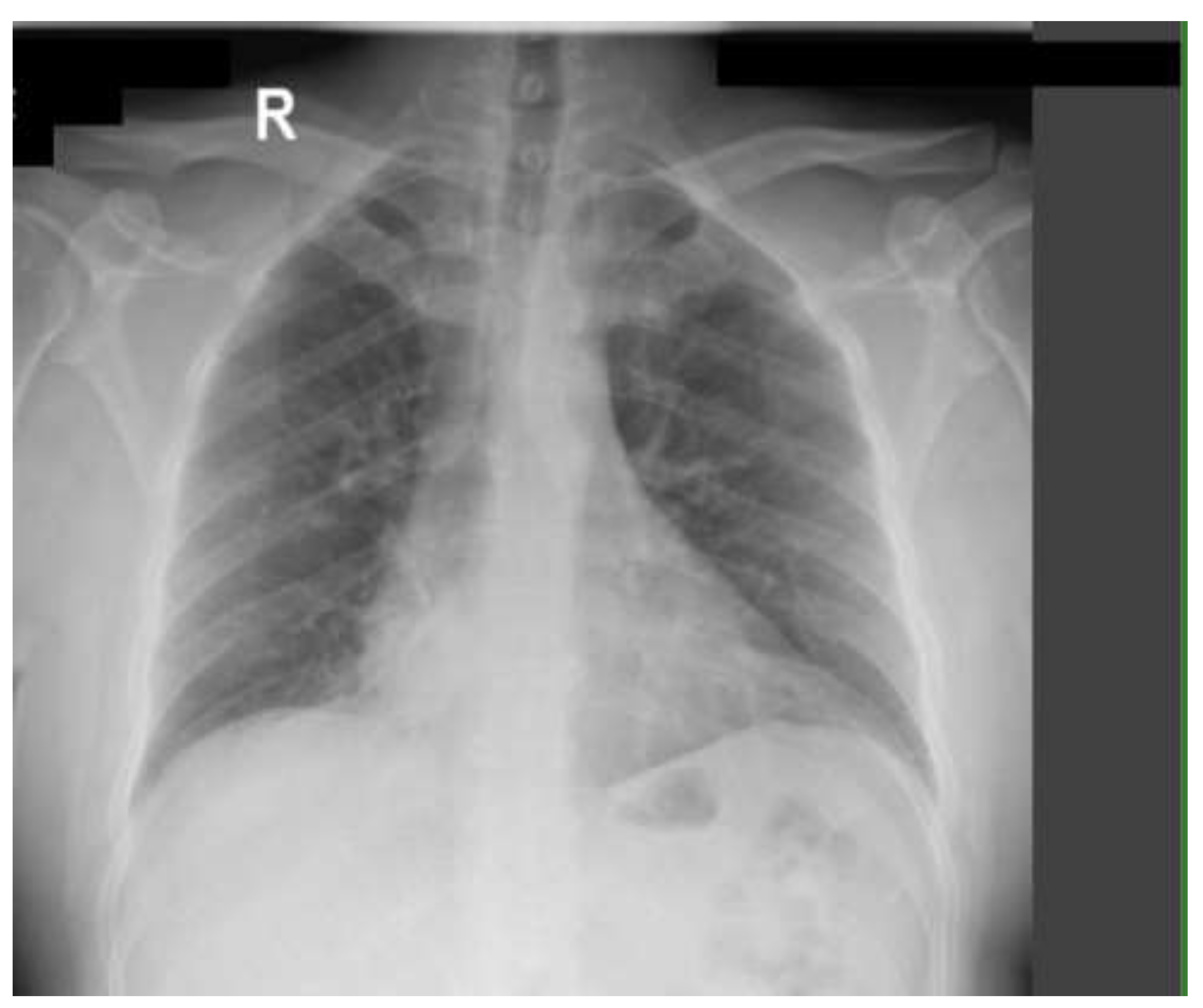
Figure 3.
Timeline of clinical cases of father and son legionellosis.

Figure 4.
Anteroposterior cardiothoracic radiography, Case 2.
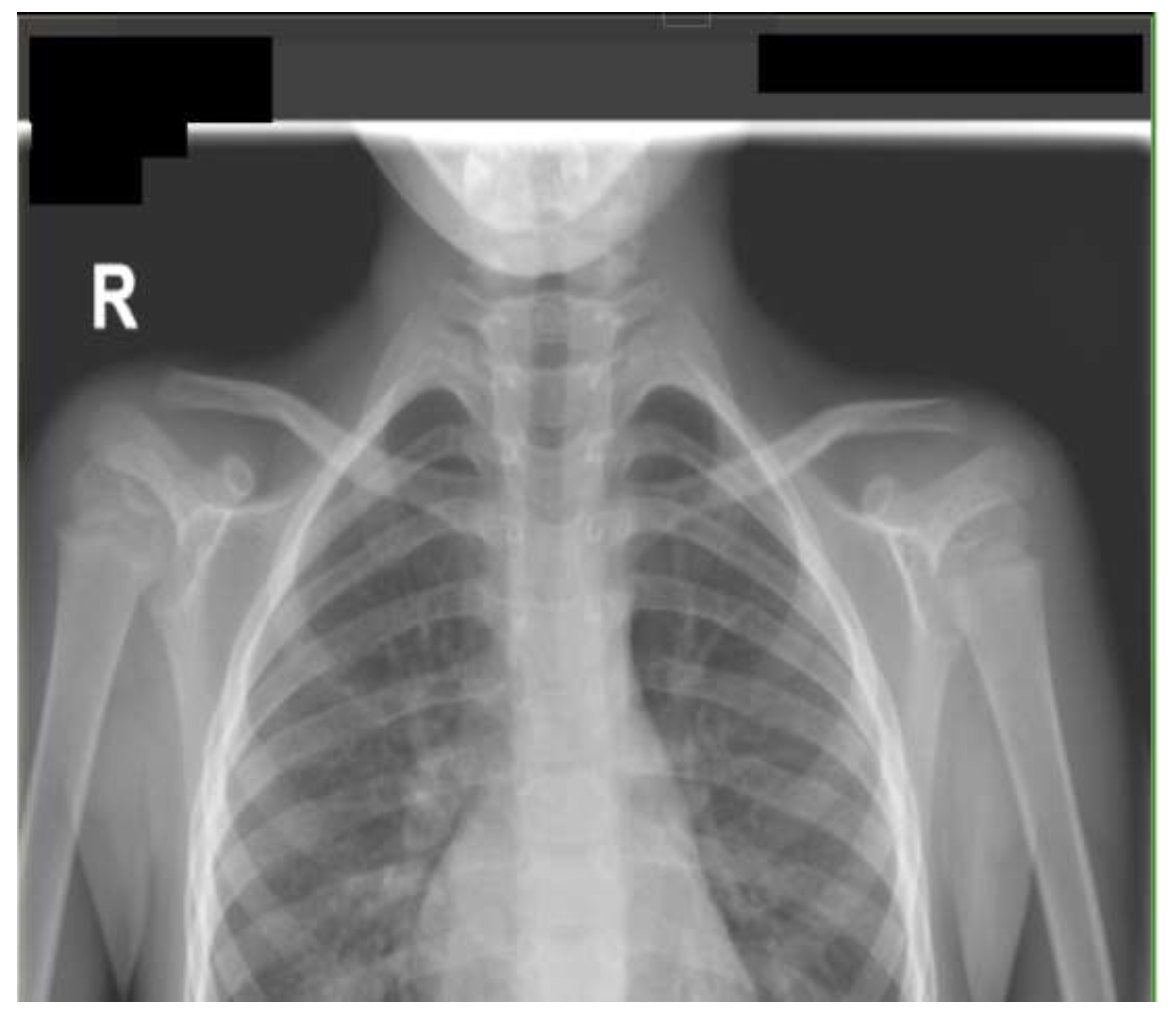

Table 1.
Demographic characteristics of patients with confirmed legionellosis, 2023--2024 (n=32).
| Characteristic | Number of cases |
| Male | 20/32 |
| Female | 12/32 |
| Age group (years) | |
| 1-9 | 1/32 |
| 10-29 | 0/32 |
| 30-39 | 4/32 |
| 40-49 | 2/32 |
| 50-59 | 8/32 |
| 60-69 | 9/32 |
| >70 | 8/32 |
| Residence | |
| Bucharest (capital city) | 15/32 |
| Other districts | 17/32 |
Table 2.
A-DROP severity score in the studied patients at admission.
| Variable | Cut offs |
Adult scoring |
Child scoring |
|
| A | Age | Male- over 65, Female over 75 | 0 | 0 |
| D | Dehydration | BUN over 21 mg/dl | 1 | 0 |
| R | Respiration | SO2 90% or less, PaO2 60 or less | 0 | 0 |
| O | Orientation | Affected consciousness | 0 | 0 |
| P | Systolic Blood Pressure | BP 90 mmHg or less | 0 | 0 |
The results marked in red are out of normal reference levels.
Disclaimer/Publisher’s Note: The statements, opinions and data contained in all publications are solely those of the individual author(s) and contributor(s) and not of MDPI and/or the editor(s). MDPI and/or the editor(s) disclaim responsibility for any injury to people or property resulting from any ideas, methods, instructions or products referred to in the content. |
© 2026 by the authors. Licensee MDPI, Basel, Switzerland. This article is an open access article distributed under the terms and conditions of the Creative Commons Attribution (CC BY) license (http://creativecommons.org/licenses/by/4.0/).
Copyright: This open access article is published under a Creative Commons CC BY 4.0 license, which permit the free download, distribution, and reuse, provided that the author and preprint are cited in any reuse.


