

Submitted:
19 March 2026
Posted:
23 March 2026
You are already at the latest version
Abstract
Background: Central sensitization (CS) has been held responsible for both persistent pain and high disease activity score in Spondyloarthritis (SpA). Central Sensitization In-ventory (CSI) is a questionnaire used to determine CS frequency: a score of at least 40 is as-sociated with a high likelihood of CS.
Objectives: To investigate the prevalence of CS in our cohort and its association with clinical characteristics of patients and their quality of life.
Methods: Adult patients with a diagnosis of Psoriatic Arthritis (PsA) or Axial Spon-dyloarthritis (AxSpA) and also classifiable according to ClASsification criteria for Psoriatic Arthritis (CASPAR) and Assessment of SpondyloArthritis international Society (ASAS) criteria respectively, regularly followed at the SpA outpatients clinic of our Unit, were con-secutively enrolled from April to November 2023. Their epidemiologic, clinic and clinimet-ric data were collected, as well as patient reported outcome measures (PROMs) [CSI, Health Assessment Questionnaire (HAQ), FACIT-Fatigue (FACIT-F), SHORT-FORM 36 (SF-36), Hospital Anxiety and Depression Scale (HADS)].
Considering the definition of a “difficult to treat” rheumatoid arthritis, we defined as “multi-failure” those patients who were treated with more than 2 biologic disease modifying anti- rheumatic drugs (bDMARDs) with different mechanisms of action.
Intergroups comparisons were assessed by using Chi-square, t-test and ANOVA. P values < 0.05 were considered signif-icant.
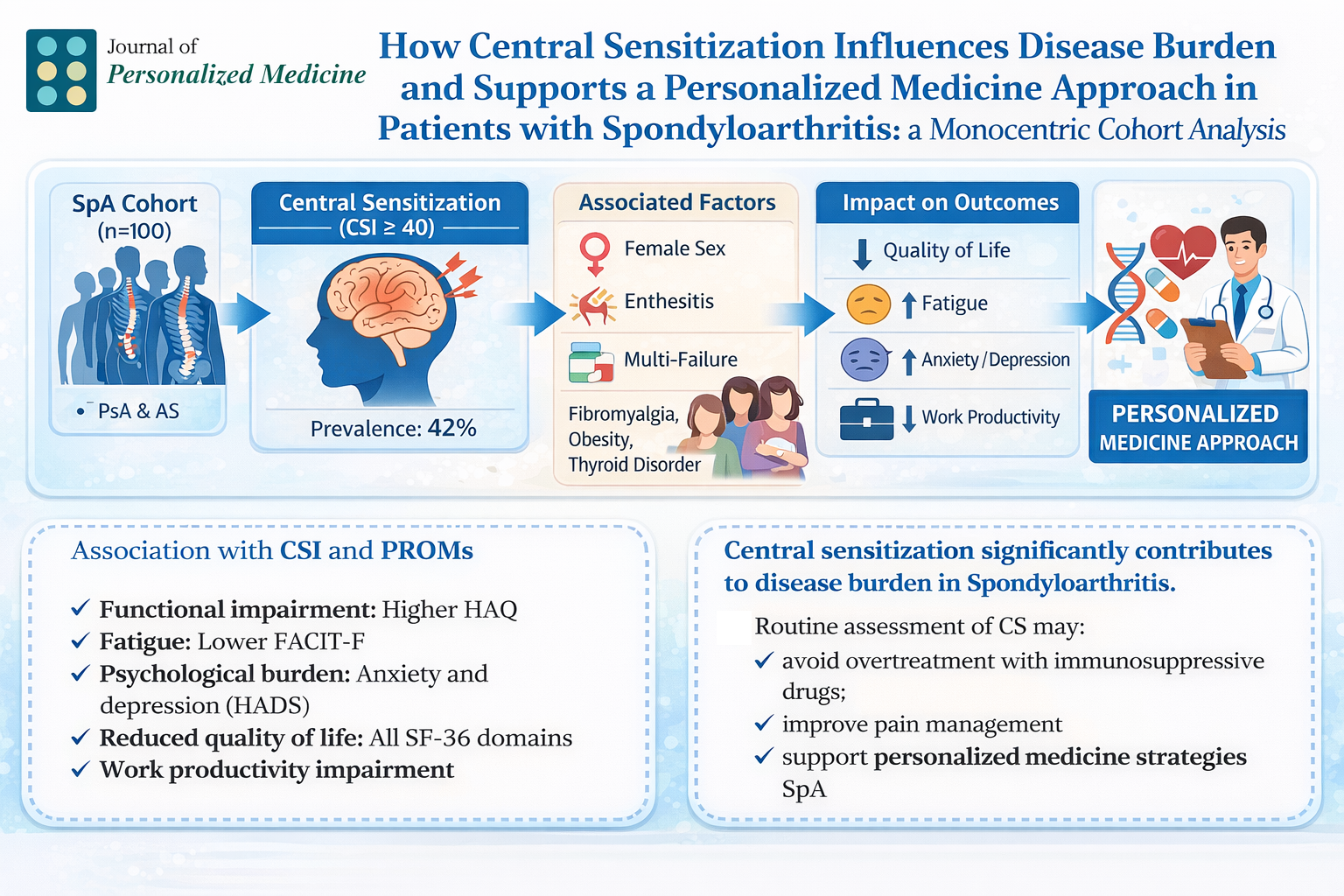
Results: A total of 100 patients were enrolled, 46 male (46.0%) and 54 female (54.0%) with a mean age of 59,4±9.8 years and a mean disease duration of 14.8±10.1 years; 79 patients (79%) had a diagnosis of PsA and 21 (21%) of SA. Forty-two pa-tients (42.0%) had a CSI score ≽40. Significant correlations were found among CSI score ≽40 and female sex (p=0.004), the occurrence of enthesitis (p=0.05), DAPSA-CRP (p=0.02) and ASDAS scores (p=0.03), a multi-failure condition (p=0.01), fibromyalgia (FM) (p=0.004), thyroid disease (p=0.016) and obesity (p=0.047). Re-garding PROs, significant correlations were found between CSI and values of HADS (both anxiety and depression), FACIT-F, HAQ and all the domains of SF-36 (p value < 0.0001).
Conclusions: Our data confirmed that more than 40% of SpA patients had CSI values ≥ 40 and underlined how CS could widely impair their disease burden. A routinary evaluation of CS and a multifactorial biopsychosocial perspective in the diagnosis and management of chronic pain in patients with SpA could help rheu-matologists in improving their quality of care.
Keywords:
spondyloarthritis
; central sensitization
; quality of life
1. Introduction
Spondyloarthritis (SpA) is a group of inflammatory diseases involving both peripheral and axial joints and extra-articular domains.
Five major subtypes of SpA are recognized: Ankylosing Spondylitis (AS), Reactive Arthritis (ReA), Psoriatic Arthritis (PsA), Arthritis associated with Inflammatory Bowel Disease (SpA-IBD), and Undifferentiated Spondyloarthritis (uSpA) [1]. More recently, a classification into axial and peripheral diseases has been proposed [2].
A regular monitoring of disease activity and a shared decision-making approach are critical for the long-term management of chronic disease as SpA [3]. Different kinds of inflammatory involvement in SpA tend to be associated with pain, in particular synovitis, tenosynovitis and enthesitis. A few new targeted therapies have been approved in recent years with good efficacy and safety data that, in a future perspective, could be able to significantly improve the control of disease activity and consequently patients’ Quality of Care (QoC). In this context, the progressive shift toward personalized medicine in rheumatology highlights the need to better characterize the heterogeneous mechanisms underlying pain and disease burden in SpA patients, in order to tailor therapeutic strategies to individual patient profiles.
However, it is reasonable to postulate that patients’ pain is not only related to joint or peri-articular structures inflammation, but also to other processes, associated with pain perception, in particular neuroinflammation and related pain-processing mechanisms, such as central sensitization (CS) [4]. The International Association for the Study of Pain (IASP) defined CS as “an increased responsiveness of nociceptive neurons in the central nervous system (CNS) to their normal or subthreshold afferent input”. Therefore, CS encompasses various related dysfunctions within the CNS, including an altered sensory processing in the brain in areas known to be involved in acute pain sensations and an altered activity in brain-orchestrated nociceptive facilitatory pathways [5].
CS has been held responsible for both persistent pain and high disease activity scores in SpA [6] and has recently been recognized as a potential pathophysiological mechanism underlying a group of chronic pain disorders including fibromyalgia (FM), temporomandibular joint disorder (TMJD), irritable bowel syndrome (IBS), interstitial cystitis, tension-type headache (TTH), chronic low-back pain, chronic neck pain and myofascial pain syndrome [7].
To assess the presence of CS, the questionnaire Central Sensitization Inventory (CSI) has been administered to patients with different pathologies as migraine [8], chronic plaque psoriasis [9], irritable bowel syndrome, chronic pain syndromes and inflammatory bowel disease [10]: a score of at least 40 has been associated with a high likelihood of CS [11]. CSI has proven to be a tool able to reliably determine the presence of CS; moreover, it can be useful for highlighting the presence of CS-associated syndromes [12].
Indeed, the CSI consists of two sections: parts A and B. CSI-A contains 25 items exploring emotional and somatic disorders associated with CS. Each response is scored from 0 to 4, yielding a total score of 0 to 100: a higher score indicates a more severe symptomatology. The second part of the inventory, CSI-B, explores CS Syndromes (CSSs), conditions associated with CS that cannot be precisely defined, but that share symptoms, such as restless leg syndrome, chronic fatigue syndrome, FM, TMJDs, migraine/TTH, IBS, multiple chemical sensitivity, whiplash, anxiety/panic attacks and depression [7].
The aim of our study was to investigate the prevalence of CS in our cohort of SpA patients and its association with clinical characteristics of patients and their Quality of Life (QoL), evaluated with patient-reported outcomes (PROs) measures.
2. Materials and Methods
2.1. Study Design and Population
For this cross-sectional study, consecutive adult outpatients evaluated at the SpA Clinic of the Rheumatology Unit of Pisa were included. All patients had a diagnosis of PsA or AS and were also classifiable according to CASPAR (ClASsification criteria for Psoriatic ARthritis) and ASAS (Assessment of SpondyloArthritis international Society) criteria respectively. They were regularly followed-up at the SpA outpatients clinic of our Unit and consecutively enrolled from April to November 2023.
2.2. Data Collection
The following epidemiologic, clinic and clinimetric data were collected: age, gender, diagnosis, age at onset, symptom at onset, extra-articular manifestations [Inflammatory Bowel Diseases (IBD), uveitis or psoriasis], joint involvement (axial, peripheral arthritis), entheseal involvement, dactylitis, disease activity (ASDAS-CRP, DAPSA), comorbidities [osteoporosis (OP), osteoarthritis (OA) relevant or symptomatic, hypertension, chronic obstructive pulmonary disease (COPD), interstitial lung disease, ischemic heart disease, FM, diabetes, hyperuricemia, thyroid disorders, metabolic syndrome, dyslipidemia, obesity, psychiatric diseases].
Furthermore, the complete drug history of the patients [non-steroidal anti-inflammatory drugs (NSAIDs), glucocorticoids (GCs), conventional synthetic disease-modifying antirheumatic drugs (csDMARDs) biological disease-modifying antirheumatic drugs (bDMARDs), targeted synthetic disease-modifying antirheumatic drugs (tsDMARDs)] was collected.
Considering the definition of a “difficult to treat” rheumatoid arthritis [13], we defined as “multi-failure SpA” those patients who were treated with more than 2 bDMARDs, with different mechanisms of action.
The following PROs were also administered to patients: CSI, Patient Global Assessment (PGA), Health Assessment Questionnaire (HAQ), FACIT-Fatigue (FACIT-F), SHORT-FORM 36 (SF-36), Hospital Anxiety and Depression Scale (HADS) and Work Productivity and Activity Impairment Questionnaire (WPAI).
We divided our study population into subgroups using a CSI cut-off score of 40, indicating a high likelihood of CS.
2.3. Statistical Analysis
Population characteristics are shown as numbers of patients (%), mean ± standard deviation or median (IQR) for categorical, continuous normally distributed and continuous non-normally distributed variables, respectively. Intergroups comparisons were assessed by using Chi-square, t-test and ANOVA; p values <0.05 were considered significant.
2.4. Ethical Considerations
This cross-sectional, observational study was planned under the Declaration of Helsinki, and it received local ethics committee approval (Comitato Etico di Area Vasta Nord Ovest), and the committee’s reference number is 20070, date of approval 9 September 2021. An informed consent was signed by every enrolled patient. Minors and patients who did not sign the informed consent form were excluded from the study.
Furthermore, every patient signed an informed consent for data publication.
3. Results
A total of 100 patients were enrolled, 54 female (54%), with a mean age of 59,4±9.8 years and a mean disease duration of 14.8±10.1 years; 79 patients (79%) had a diagnosis of PsA and 21 (21%) of AS. Demographic characteristics of patients are reported in Table 1.
The mean value of CSI was 35.9 ±16.9; 42 patients (42%) had a CSI score ≽40. Demographic, clinical, and clinimetric characteristics of patients with a CSI ≥ or <40 have been compared (Table 2).
Among demographic and clinical characteristics, a significant correlation was found between CSI score ≽40 and female sex (p=0.004) and entheseal involvement (p=0.045).
Considering clinimetric indices, SpA patients with CS≥40 exhibited significantly higher ASDAS-CRP (p=0.031) and DAPSA (p=0.019) scores than those with CS score<40. Moreover, a multifailure status was significantly more frequent in patients with a higher CSI; accordingly, in this subgroup, patients had been treated with a higher number of immunosuppressive drugs (see Figure 1).
On the contrary, the two subgroups were comparable in terms of age, diagnosis, disease duration, history of SpA or psoriasis, peripheral arthritis, sacroiliitis, dactylitis, or tenosynovitis.
Regarding comorbidities, FM (p=0.004), thyroid diseases (p=0.016) and obesity (p=0.047) were significantly associated with higher CSI scores (Table 3).
No statistically significant differences in the mean CSI values emerged among the different drug classes.
Regarding PROs, significant direct correlations were found between CSI and PGA, scores of HADS (both anxiety and depression), FACIT-F and HAQ, while a significant indirect correlation was observed with all the domains of SF-36 and WPAI presenteeism, work productivity loss and limitation in non-work daily activities (p <0.0001) (Table 4).
After univariate correlation analysis, multiple linear regression analysis was performed. In the multivariate analysis, the CSI score remained significantly associated with multi-failure patients (p=0.02), female sex (p=0.01), HAQ (p=0.005) and PGA (p=0.03).
4. Discussion
In a large cross-sectional study on patients with axSpA, van der Kraan and colleagues demonstrated that the CSI could be useful to assess the potential presence of CS both in daily clinical practice and for research purposes. Patients with CSI≥40 exhibited a significantly higher hyperalgesia and an increased pain facilitation [14].
4.1. Prevalence of CS≥40
The prevalence of CS in inflammatory arthritis is around 31–45% [6], being much higher than that reported in the general population (about 5-15% [7,15]).
Guler et al. assessed CS in patients with different rheumatic diseases using the CSI, highlighting a prevalence of 45% in SpA, 41% in RA, 62% in OA and 94% in FM [15]. In a recent Turkish study, the prevalence of CS in axSpA was confirmed at 41%, similar to that found in Familiar Mediterranean Fever patients [16].
The prevalence of CS in our case cohort appears to be consistent not only with these already mentioned results, but also with some other data from the literature [6,17,18,19,20]. On the contrary, Sariyildiz and colleagues found a prevalence of CS in axSpA patients around 60% (see also Table 5) [19].
4.2. Clinical Association with CSI≥40
The already available data from the literature showed that Salaffi et al. found an association among CSI ≥ 40 and a higher disease activity [18], as also confirmed by Karlibel [6], who also observed an association between CS and female sex. Accordingly, data from Kieskamp [21] showed an association among CS and female sex, enthesitis and comorbidities as obesity and depression, while in the cross-sectional study by Sariyildiz, CSI score correlated with enthesis involvement and anxiety [19] (see Table 6).
In agreement with Kieskamp [21] and Karlibel [6] our data confirmed the correlation between higher CSI values and female sex. Several studies indicate the existence of a sexual dimorphism in chronic pain, with women showing a greater susceptibility to pain than men in most chronic pain conditions [22]. Despite a comparable control of inflammation, female axSpA patients tend to show higher disease activity and pain scores, with worse QoL outcomes than men [23].
As already demonstrated by Salaffi [18] and Karlibel [6], and also confirmed in our cohort, pain sensitivity and neuropathic-like pain are related to a higher disease activity, reported in terms of clinimetric indices (i.e. DAPSA and ASDAS-CRP).
Moreover, we also observed that a “multi-failure” status was more frequently exhibited by patients with a CSI ≥40. A remarkable proportion of patients with SpA remains resistant to DMARDs with different mechanisms of action and a recent GRAPPA review24 showed that the failure to achieve remission in PsA is influenced by a persistent inflammatory activity and a scarce adherence to treatments. However, also the presence of a chronic pain due to structural damage or hypersensitisation seems to reduce the efficacy of different therapies; furthermore, it could distort the estimate of disease activity. Therefore, the association between CSI≥40 and a multifailure condition could depend on an insufficient control of pain sensitization, rather than a persistent disease activity. From this perspective, the identification of CS may represent an important step toward a more personalized medicine approach, helping clinicians to distinguish inflammatory-driven symptoms from pain amplification mechanisms and to better tailor pharmacological and non-pharmacological interventions.
Newly in agreement with Kieskamp [21], we also found a significant association between obesity and CSI scores [25]. Some already published results showed the relationship between obesity and higher values of both CRP and ASDAS-CRP [26].
In fact, adipose tissue can be considered as an active endocrine organ, excreting adipocytokines or adipokines like TNF-α, which may at least partially explain the proinflammatory state characterizing obese people [26]. Moreover, obesity may impair the assessment of swollen joint count, thus further increasing the risk to fail in estimating disease activity in this subgroup of patients [27]. CSI score in our cohort correlated with FM, a frequent comorbidity in patients with SpA, especially in peripheral forms. FM is characterized by chronic widespread pain, fatigue and sleep disturbances, is driven by the effects of chronic pain and inflammation and could be influenced by patients’ psychoemotional background. It could be another cause of an overestimation of disease activity, thus leading to possibly inappropriate treatment escalation.[28]
Interestingly, our results highlighted thyroid disorders (TDs) seemed associated with a higher risk of CS. This relationship is poorly explored in the literature: a possible mechanism of pain generation could be related with an acquired “channelopathy”, involveing ion channels, that has been already described in TDs and in FM [29]. The presence of thyroid autoantibodies seemed to worsen the symptoms of FM, thus strengthening the theory of a possible pathogenic role of thyroid dysfunctions in CS development [30].
4.3. CS, QoL and Work Ability
Functional disability, poor QoL and worse mental health are also related to pain sensitivity and neuropathic-like pain. Persistent pain significantly reduces QoL and, particularly if widespread, it may lead to unnecessary anti rheumatic treatment and increased rates of emotional distress, including depression and anxiety [31].
The association between poorer QoL outcomes and CS was highlighted in our SpA cohort, in line with the findings in the literature.
Indeed, Salaffi [18], Karlibel [6] and colleagues observed an association among CS, a worse functional ability and a worse QoL. Moreover, Karlıbel also found a close relationship between CS severity and sleep disorders [6].
Accordingly, our results highlighted that CS was able to widely impair both mental and physical components in QoL outcomes.
Finally, SpA affect the working ability of patients, increasing absenteeism and work productivity loss, with possible psychosocial repercussions. Tekaya and colleagues used WPAI to evaluate CS impact on work ability, highlighting that high CSI scores were correlated with work activity limitations [32]. Similarly, we found correlations among higher CSI scores and presenteeism, work productivity loss and limitation in non-work daily activities, as evaluated by WPAI.
Our work is one of the few that evaluate CS in Italian SpA patients, also exploring the relationship with work productivity.
These data suggest that CS might significantly worsen the disease’s burden of pa-tients with SpA; therefore, it would be recommendable that rheumatologists could regularly assess its occurrence in clinical practice, thus aiming at improving patients’ quality of care. In addition, incorporating CS assessment into routine evaluation may contribute to a more individualized management strategy, consistent with the principles of personalized medicine, allowing clinicians to better stratify patients ac-cording to pain mechanisms and optimize therapeutic decisions.
In our opinion, this work analyses the impact of CS on SpA patients from a very wide perspective, starting from epidemiologic characteristics, passing by clinical features and finishing with QoL outcomes, being able to highlight some not already explored relation-ships among CSI results and SpA phenotypes.
The major limitation of our study was a relatively small sample size. Longitudinal studies with a higher number of patients are needed to further investigate this issue.
Finally, we did not collect treatment duration, enabling any evaluation of specific drugs on pain and, consequently, on CSI. However, we did not observe any significant differences among mean CSI values and the drug class administered. This result can be associated with the relatively low number of patients comprised in the different drug class subgroups, thus strengthening the need to increase the sample of analyzed patients.
5. Conclusions
CS is frequent among SpA patients, and it seems to be associated with female sex, a higher level of disease activity and a multi-failure status. Furthermore, obese patients and patients with FM are at higher risk of developing a significant CS; interestingly, TDs seem to significantly favour its onset. Finally, CS has been confirmed as a cause of a wide compromission of QoL outcomes, both physical and psychological, together with a consistent worsening in patients’ work productivity. The recognition of CS in clinical practice may also support the development of more personalized management strategies, integrating inflammatory disease control with targeted approaches to pain modulation.
In our opinion it is possible to highlight some “key” messages about this issue:
- -
- CS should be regularly evaluated during the assessment of SpA patients, to reduce the risk of an unwarranted immunosuppression and to optimize the management of their pain within a personalized medicine framework
- -
- Imaging techniques (namely ultrasound and on a lesser extent MRI) could be of help in the management of patients with higher CSI values, to confirm the presence of disease activity (especially for evaluating enthesitis)
- -
- It is important to adopt a multifactorial biopsychosocial perspective in the diagnosis and management of chronic pain in patients with SpA, aiming at optimizing their quality of care
Author Contributions
LC concept, method, writing, review&edit, formal analysis, supervision, visualization; FF concept, method, writing original draft, formal analysis, data curation, investing; CC, LE investing, data curation; MDB formal analysis, visualization; MM, ADS supervision, project administration, review&edit. All authors have read and agreed to the published version of the manuscript.
Funding
This research received no external funding. Institutional Review Board Statement: The study was conducted according to the guidelines of the Declaration of Helsinki, and approved by the local Ethics Committee (Comitato Etico di Area Vasta Nord Ovest) (the committee’s reference number: 20070, approved on 9 September 2021).
Informed Consent Statement
Informed consent was obtained from all subjects involved in the study. Patient consent for publication: all patients provided consent for data publication.
Data Availability Statement
The raw data supporting the conclusions of this article will be made available by the authors on request.
Conflicts of Interest
The authors declare no conflicts of interest.
Abbreviations
The following abbreviations are used in this manuscript
- ANOVA – Analysis of Variance
- AS – Ankylosing Spondylitis
- ASAS – Assessment of SpondyloArthritis International Society
- ASDAS-CRP – Ankylosing Spondylitis Disease Activity Score with C-reactive Protein
- AxSpA – Axial Spondyloarthritis
- bDMARDs – Biologic Disease-Modifying Anti-Rheumatic Drugs
- BMI – Body Mass Index
- CASPAR – ClASsification Criteria for Psoriatic Arthritis
- COPD – Chronic Obstructive Pulmonary Disease
- CNS – Central Nervous System
- CRP – C-reactive Protein
- CS – Central Sensitization
- CSI – Central Sensitization Inventory
- csDMARDs – Conventional Synthetic Disease-Modifying Anti-Rheumatic Drugs
- DAPSA – Disease Activity index for Psoriatic Arthritis
- FM – Fibromyalgia
- FACIT-F – Functional Assessment of Chronic Illness Therapy–Fatigue
- GCs – Glucocorticoids
- HAQ – Health Assessment Questionnaire
- HADS – Hospital Anxiety and Depression Scale
- HADS-A – Hospital Anxiety and Depression Scale – Anxiety
- HADS-D – Hospital Anxiety and Depression Scale – Depression
- IBD – Inflammatory Bowel Disease
- IASP – International Association for the Study of Pain
- MRI – Magnetic Resonance Imaging
- NSAIDs – Non-Steroidal Anti-Inflammatory Drugs
- OA – Osteoarthritis
- OP – Osteoporosis
- PGA – Patient Global Assessment
- PROMs – Patient-Reported Outcome Measures
- PsA – Psoriatic Arthritis
- QoC – Quality of Care
- QoL – Quality of Life
- ReA – Reactive Arthritis
- SF-36 – Short Form-36 Health Survey
- SpA – Spondyloarthritis
- SpA-IBD – Spondyloarthritis associated with Inflammatory Bowel Disease
- TMJD – Temporomandibular Joint Disorder
- TTH – Tension-Type Headache
- tsDMARDs – Targeted Synthetic Disease-Modifying Anti-Rheumatic Drugs
- uSpA – Undifferentiated Spondyloarthritis
- WPAI – Work Productivity and Activity Impairment Questionnaire
References
- Gomariz EM, del M, Guijo VP, Contreras AE, Villanueva M, Estévez EC. The potential of ESSG spondyloarthropathy classification criteria as a diagnostic aid in rheumatological practice. J Rheumatol. 2002 Feb;29(2):326-30. [PubMed]
- Akkoc N, Khan MA. ASAS classification criteria for axial spondyloarthritis: time to modify. Clin Rheumatol. 2016 Jun;35(6):1415-23. Epub 2016 Apr 19. [CrossRef] [PubMed]
- Kumthekar A, Sanghavi N, Natu A, Danve A. How to Monitor Disease Activity of Axial Spondyloarthritis in Clinical Practice. Curr Rheumatol Rep. 2024 May;26(5):170-177. Epub 2024 Feb 19. [CrossRef] [PubMed]
- Sariyildiz A, Coskun Benlidayi I, Turk I, Zengin Acemoglu SS, Unal I. Biopsychosocial factors should be considered when evaluating central sensitization in axial spondyloarthritis. Rheumatol Int. 2023 May;43(5):923-932. Epub 2023 Mar 26. [CrossRef] [PubMed] [PubMed Central]
- Nijs J, Lahousse A, Kapreli E, Bilika P, Saraçoğlu İ, Malfliet A et al. Nociplastic Pain Criteria or Recognition of Central Sensitization? Pain Phenotyping in the Past, Present and Future. J Clin Med. 2021 Jul 21;10(15):3203. [CrossRef] [PubMed] [PubMed Central]
- Aykurt Karlıbel I, Kasapoğlu Aksoy M. The relationship between central sensitization and disease activity, quality of life, and sleep quality among patients with axial spondyloarthritis. Ir J Med Sci. 2023 Feb;192(1):481-489. Epub 2022 Feb 28. [CrossRef] [PubMed]
- Woolf CJ. Central sensitization: implications for the diagnosis and treatment of pain. Pain. 2011 Mar;152(3 Suppl):S2-S15. Epub 2010 Oct 18. [CrossRef] [PubMed] [PubMed Central]
- Sennholz A, Szikszay TM, Marusich T, Luedtke K, Carvalho GF. Association between central sensitization, pain sensitivity and balance control in patients with migraine. Eur J Pain. 2024 May;28(5):786-796. Epub 2023 Dec 15. [CrossRef] [PubMed]
- Bellinato F, Gisondi P, Fassio A, Girolomoni G. Central Pain Sensitization in Patients with Chronic Plaque Psoriasis. Dermatol Ther (Heidelb). 2023 May;13(5):1149-1156. Epub 2023 Mar 29. [CrossRef] [PubMed] [PubMed Central]
- Midenfjord I, Grinsvall C, Koj P, Carnerup I, Törnblom H, Simrén M. Central sensitization and severity of gastrointestinal symptoms in irritable bowel syndrome, chronic pain syndromes, and inflammatory bowel disease. Neurogastroenterol Motil. 2021 Dec;33(12):e14156. Epub 2021 Apr 16. [CrossRef] [PubMed]
- Neblett R, Cohen H, Choi Y, Hartzell MM, Williams M, Mayer TG et al. The Central Sensitization Inventory (CSI): establishing clinically significant values for identifying central sensitivity syndromes in an outpatient chronic pain sample. J Pain. 2013 May;14(5):438-45. Epub 2013 Mar 13. [CrossRef] [PubMed] [PubMed Central]
- Schuttert I, Wolff AP, Schiphorst Preuper RHR, Malmberg AGGA, Reneman MF, Timmerman H. Validity of the Central Sensitization Inventory to Address Human Assumed Central Sensitization: Newly Proposed Clinically Relevant Values and Associations. J Clin Med. 2023 Jul 23;12(14):4849. [CrossRef] [PubMed] [PubMed Central]
- Nagy G, Roodenrijs NMT, Welsing PM, Kedves M, Hamar A, van der Goes MC et al. EULAR definition of difficult-to-treat rheumatoid arthritis. Ann Rheum Dis. 2021 Jan;80(1):31-35. Epub 2020 Oct 1. [CrossRef] [PubMed] [PubMed Central]
- van der Kraan YM, Paap D, Timmerman H, Wink F, Arends S, Reneman M et al. Value of the central sensitisation inventory in patients with axial spondyloarthritis. RMD Open. 2024 Oct 28;10(4):e004528. [CrossRef] [PubMed] [PubMed Central]
- Guler MA, Celik OF, Ayhan FF. The important role of central sensitization in chronic musculoskeletal pain seen in different rheumatic diseases. Clin Rheumatol. 2020 Jan;39(1):269-274. Epub 2019 Aug 24. [CrossRef] [PubMed]
- Kaya MN, Kılıç Ö, Doğan A, Yılmaz S, Tecer D. Effect of Central Sensitization in Patients with Familial Mediterranean Fever, Axial Spondyloarthritis, and Both Diseases. Cureus. 2023 Sep 18;15(9):e45459. [CrossRef] [PubMed] [PubMed Central]
- Aicha BT, Ines C, Olfa S, Selma B, Leila R, Rawdha T et al. Central Sensitization in Spondyloarthritis: The Crossroads between Disease Activity, Health-related Quality of Life and Fibromyalgia. Curr Rheumatol Rev. 2023;19(4):479-487. [CrossRef] [PubMed]
- Salaffi F, Farah S, Bianchi B, Di Carlo M. Central Sensitization in Psoriatic Arthritis: Relationship With Composite Measures of Disease Activity, Functional Disability, and Health-Related Quality of Life. J Rheumatol. 2024 Feb 1;51(2):144-149. [CrossRef] [PubMed]
- Sariyildiz A, Coskun Benlidayi I, Turk I, Zengin Acemoglu SS, Unal I. Biopsychosocial factors should be considered when evaluating central sensitization in axial spondyloarthritis. Rheumatol Int. 2023 May;43(5):923-932. Epub 2023 Mar 26. [CrossRef] [PubMed] [PubMed Central]
- Bazancir-Apaydin Z, Apaydin H, Armagan B, Orhan K, Erten S. The Role of Central Sensitization in Autoimmune Connective Tissue Diseases: A Comparative Cross-Sectional Study. Int J Rheum Dis. 2025 Jan;28(1):e70069. [CrossRef] [PubMed] [PubMed Central]
- Kieskamp SC, Paap D, Carbo MJG, Wink F, Bos R, Bootsma H et al. Central sensitization has major impact on quality of life in patients with axial spondyloarthritis. Semin Arthritis Rheum. 2022 Feb;52:151933. Epub 2021 Dec 30. [CrossRef] [PubMed]
- Barcelon E, Chung S, Lee J, Lee SJ. Sexual Dimorphism in the Mechanism of Pain Central Sensitization. Cells. 2023 Aug 9;12(16):2028. [CrossRef] [PubMed] [PubMed Central]
- Rusman T, van Vollenhoven RF, van der Horst-Bruinsma IE. Gender Differences in Axial Spondyloarthritis: Women Are Not So Lucky. Curr Rheumatol Rep. 2018 May 12;20(6):35. [CrossRef] [PubMed] [PubMed Central]
- Ribeiro AL, Singla S, Chandran V, Chronis N, Liao W, Lindsay C et al. Deciphering difficult-to-treat psoriatic arthritis (D2T-PsA): a GRAPPA perspective from an international survey of healthcare professionals. Rheumatol Adv Pract. 2024 Jun 19;8(3):rkae074. [CrossRef] [PubMed] [PubMed Central]
- Kieskamp SC, Paap D, Carbo MJG, Wink F, Bos R, Bootsma H et al. Central sensitization, illness perception and obesity should be considered when interpreting disease activity in axial spondyloarthritis. Rheumatology (Oxford). 2021 Oct 2;60(10):4476-4485. [CrossRef] [PubMed] [PubMed Central]
- Maas F, Arends S, van der Veer E, Wink F, Efde M, Bootsma H et al. Obesity Is Common in Axial Spondyloarthritis and Is Associated with Poor Clinical Outcome. J Rheumatol. 2016 Feb;43(2):383-7. Epub 2015 Dec 15. [CrossRef] [PubMed]
- Levitsky A, Brismar K, Hafström I, Hambardzumyan K, Lourdudoss C, van Vollenhoven RF et al. Obesity is a strong predictor of worse clinical outcomes and treatment responses in early rheumatoid arthritis: results from the SWEFOT trial. RMD Open. 2017 Aug 9;3(2):e000458. [CrossRef] [PubMed] [PubMed Central]
- Wach J, Letroublon MC, Coury F, Tebib JG. Fibromyalgia in Spondyloarthritis: Effect on Disease Activity Assessment in Clinical Practice. J Rheumatol. 2016 Nov;43(11):2056-2063. Epub 2016 Sep 15. [CrossRef] [PubMed]
- Ahmad J, Tagoe CE. Fibromyalgia and chronic widespread pain in autoimmune thyroid disease. Clin Rheumatol. 2014 Jul;33(7):885-91. Epub 2014 Jan 18. [CrossRef] [PubMed]
- Bazzichi L, Rossi A, Zirafa C, Monzani F, Tognini S, Dardano A et al. Thyroid autoimmunity may represent a predisposition for the development of fibromyalgia? Rheumatol Int. 2012 Feb;32(2):335-41. Epub 2010 Nov 18. [CrossRef] [PubMed]
- Rutter-Locher Z, Arumalla N, Norton S, Taams LS, Kirkham BW, Bannister K. A systematic review and meta-analysis of questionnaires to screen for pain sensitisation and neuropathic like pain in inflammatory arthritis. Semin Arthritis Rheum. 2023 Aug;61:152207. Epub 2023 Apr 26. [CrossRef] [PubMed]
- Ben Tekaya A, Ben Said H, Yousfi I, Ben Dhia S, Bouden S, Rouached L et al. Burden of disease, pain catastrophizing, and central sensitization in relation to work-related issues in young spondyloarthritis patients. Reumatologia. 2024;62(1):35-42. Epub 2024 Mar 18. [CrossRef] [PubMed] [PubMed Central]
Figure 1.
relationship between CSI score and number of cumulative DMARDs (biological or targeted synthetic).
Figure 1.
relationship between CSI score and number of cumulative DMARDs (biological or targeted synthetic).
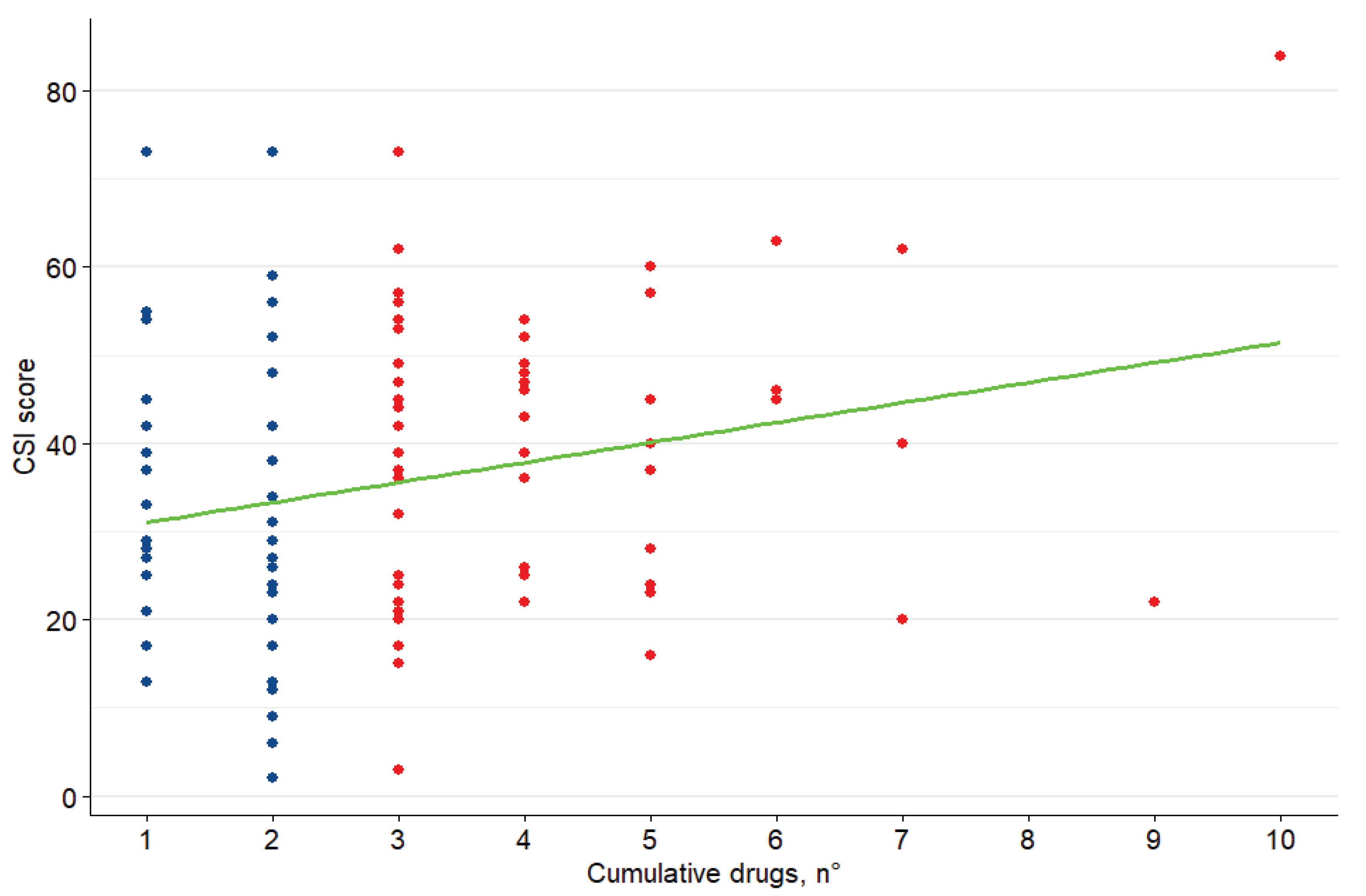

Table 1.
n (%), Mean (DS).
| Characteristic | N=100 | |
| Sex N (%) | F 54.0 (54.0%) | M 46 (46.0%) |
| Age (yrs) | 59.4 (9.8) | |
| Diagnosis N (%) | PsA 79 (79.0%) | AS 21.0 (21.0%) |
| Disease duration (yrs) | 14.8 (10.1) | |
Table 2.
n (%); Mean (SD). p-value calculated with Pearson’s Chi-squared test, Welch Two Sample t-test; Fischer’s exact test.
Table 2.
n (%); Mean (SD). p-value calculated with Pearson’s Chi-squared test, Welch Two Sample t-test; Fischer’s exact test.
| CSI value <40, N=58 | CSI value ≥40, N=42 | p-value | |
|---|---|---|---|
| Female Sex | 24.0 (41.4%) | 29.0 (69.0%) | 0.004 |
| Age | 60.6 (9.1) | 57.6 (10.6) | N.S. |
| Diagnosis AP Diagnosis AS |
45.0 (77.6%) 13.0 (22.4%) |
34.0 (80.9%) 8.0 (19.1%) |
|
| Disease duration | 196.1 (136.6) | 153.5(91.5) | N.S. |
| Family history of SpA | 0.0 (0%) | 3.0 (7.3%) | N.S. |
| Family history of psoriasis | 4.0 (6.9%) | 4.0 (9.8%) | N.S. |
| Artrhitis | 36.0 (62.1%) | 30.0 (73.2%) | N.S. |
| Dactilitis | 9.0 (15.5%) | 2.0 (4.9%) | N.S. |
| Enthesitis | 4.0 (9.8%) | 15.0 (25.9%) | 0.045 |
| Tenosynovitis | 11.0 (19.0%) | 6.0 (14.6%) | N.S. |
| Ultrasound synovitis | 16.0 (27.6%) | 5.0 (12.2%) | N.S. |
| Utrasound dactilitis | 1.0 (1.7%) | 0.0 (0%) | N.S. |
| Ultrasound enthesitis | 4.0 (6.9%) | 4.0 (6.9%) | N.S. |
| Ultrasound tenosynovitis | 3.0 (5.2%) | 3.0 (7.3%) | N.S. |
| Sacroileitis on MRI | 16.0 (27.6%) | 14.0 (34.1%) | N.S. |
| Spondylitis on MRI | 3.0 (5.2%) | 1.0 (2.4%) | N.S. |
| ASDAS-CRP | 0.30 (0.20) | 3.02 (0.99) | 0.031 |
| DAPSA | 16.4 (6.7) | 6 (5.1) | 0.019 |
| Multi-failure | 28.0 (48.3%) | 30.0 (73.2%) | 0.013 |
| Total of drugs | 2.7 (1.6) | 3.7 (2.0) | 0.009 |
Table 3.
n (%); Mean (SD). p-value calculated with Pearson’s Chi-squared test, Welch Two Sample t-test; Fischer’s exact test.
Table 3.
n (%); Mean (SD). p-value calculated with Pearson’s Chi-squared test, Welch Two Sample t-test; Fischer’s exact test.
| CSI value <40, N=58 | CSI value ≥40, N=42 | p-value | |
|---|---|---|---|
| Extra-skeletal manifestations | |||
| Uveitis | 4.0 (6.9%) | 2.0 (4.9%) | N.S. |
| Psoriasis | 35.0 (60.3%) | 24.0 (58.5%) | N.S. |
| Inflammatory Bowel Diseases | 3.0 (5.2%) | 1.0 (2.4%) | N.S. |
| Comorbidities | |||
| Osteoporosis | 11.0 (19.0%) | 7.0 (17.1%) | N.S. |
| Osteoartrhitis | 21.0 (36.2%) | 19.0 (46.3%) | N.S. |
| Ischemic heart disease | 12.0 (20.7%) | 10.0 (25.0%) | N.S. |
| Arterial hypertension | 17.0 (29.3%) | 8.0 (19.5%) | N.S. |
| Chronic renal failure | 3.0 (5.2%) | 5.0 (12.2%) | N.S. |
| COPD | 3.0 (5.2%) | 2.0 (4.9%) | N.S. |
| Interstitial lung disease | 5.0 (8.6%) | 1.0 (2.4%) | N.S. |
| BMI >30 | 3.0 (5.2%) | 8.0 (19.5%) | 0.047 |
| Thyroid disorders | 6.0 (10.3%) | 12.0 (29.3%) | 0.016 |
| Psychiatric disorders | 4.0 (6.9%) | 7.0 (17.1%) | N.S. |
| Hyperuricemia | 3.0 (5.2%) | 3.0 (7.3%) | N.S. |
| Diabetes mellitus | 6.0 (10.3%) | 1.0 (2.4%) | N.S. |
| Dyslipidaemia | 9.0 (15.5%) | 13.0% | N.S. |
| Metabolic syndrome | 4.0 (6.9%) | 4.0 (9.8%) | N.S. |
| Fibromyalgia | 7.0 (12.1%) | 15.0 (36.6%) | 0.004 |
| Total comorbidities | 2.7 (1.9) | 3.6 (2.2) | N.S. |
Table 4.
n (%); Mean (SD).p-value calculated with Pearson’s Chi-squared test, Welch Two Sample t-test; Fischer’s exact test.
Table 4.
n (%); Mean (SD).p-value calculated with Pearson’s Chi-squared test, Welch Two Sample t-test; Fischer’s exact test.
| CSI value<40, N=58 | CSI value≥40, N=42 | p-value | |
|---|---|---|---|
| PGA | 3.7 (2.4) | 6.7 (1.6) | <0.001 |
| HAQ | 0.2 (0.3) | 0.8 (0.4) | <0.001 |
| FACIT-F | 41.4 (7.5) | 28.7 (8.6) | <0.001 |
| SF36-PF | 77.4 (22.3) | 52.7 (20.8) | <0.001 |
| SF36-RP | 66.4 (41.0) | 20.7 (31.1) | <0.001 |
| SF36-RE | 77.6 (35.5) | 38.3 (41.2) | <0.001 |
| SF36-VT | 58.2 (17.8) | 34.9 (15.2) | <0.001 |
| SF36-MH | 68.5 (18.8) | 54.2 (17.1) | <0.001 |
| SF36-SF | 77.2 (19.5) | 53.7 (17.3) | <0.001 |
| SF36-BP | 64.7 (21.4) | 37.7(14.5) | <0.001 |
| SF36-GH | 54.3 (17.1) | 27.6 (15.3) | <0.001 |
| HADS-A | 5.6 (3.3) | 8.7 (3.6) | <0.001 |
| HADS-A>10 | 9.0 (15.5%) | 22.0 (53.7%) | <0.001 |
| HADS-D | 4.7 (3.1%) | 8.3 (3.7%) | <0.001 |
| HADS-D>10 | 7.0 (12.1%) | 20.0 (48.8%) | <0.001 |
| WPAI- Presenteeism | 0.6 (1.7) | 2.6 (3.0) | <0.001 |
| WPAI- Work productivity loss | 0.7 (1.7) | 3.1 (3.3) | <0.001 |
| WPAI - Limitation in non-work daily activities | 1.8 (2.1) | 5.4 (3.1) | <0.001 |
Table 5.
Prevalence of a CSI ≥40 in different cohorts of SpA patients.
| Author | Year | N° patients | Diagnosis | CSI≥40 |
|---|---|---|---|---|
| Guler [15] | 2019 | 42 | SpA | 45.2% |
| Salaffi [18] | 2024 | 157 | PsA | 45.2% |
| Kaya [16] | 2023 | 35 | AxSpA | 41.0% |
| Sariyildiz [19] | 2023 | 108 | AxSpA | 57.4% |
| Kieskamp [21] | 2022 | 178 | AxSpA | 45% |
| Karlibel [6] | 2023 | 82 | AxSpA | 45.1% |
Disclaimer/Publisher’s Note: The statements, opinions and data contained in all publications are solely those of the individual author(s) and contributor(s) and not of MDPI and/or the editor(s). MDPI and/or the editor(s) disclaim responsibility for any injury to people or property resulting from any ideas, methods, instructions or products referred to in the content. |
© 2026 by the authors. Licensee MDPI, Basel, Switzerland. This article is an open access article distributed under the terms and conditions of the Creative Commons Attribution (CC BY) license (http://creativecommons.org/licenses/by/4.0/).
Copyright: This open access article is published under a Creative Commons CC BY 4.0 license, which permit the free download, distribution, and reuse, provided that the author and preprint are cited in any reuse.


