

Submitted:
19 March 2026
Posted:
19 March 2026
You are already at the latest version
Abstract
In this study, extracts of metallurgical slags of the former lead plant in Shymkent and Zhezkent Mining and Processing Plant are used as a liquid mineral fertilizer for growing corn. Slag extraction was carried out by the method of chemical leaching with potassium sulfate and ammonia solution in hydrogen peroxide medium. Macro- and microelement analysis of extracts from slag was carried out. Among the obtained extracts, the slag extract of the second slag store of the former lead plant is the least toxic and the richest in macro- and microelements (27.605 Са 2+; 5.959 Mg2+; 423.751 Cu2+; 86.649 Zn2+; 5.567 Fe2+,3+; 22.652 Mn mg/L). The studied solution was diluted in the ratio of extract: distilled water 1:10 for the extract based on potassium sulfate and 1:200 for the extract based on ammonia and used to evaluate the initial development of seeds and yield of corn. Germination of seed corn and its development after 90 days did not differ from the control variant. The concentration of potentially toxic elements in the dry mass of the plant does not exceed the permissible concentration. The results showed the potential of safe application of this fertilizer in agriculture and rational utilization of industrial waste.
Keywords:
metallurgical slag
; mineral fertilizer
; chemical leaching
; waste utilization
; corn
1. Introduction
Processing of metal-containing mineral waste [1] is a global challenge, as the metallurgical industry is a significant source of environmental pollution by highly toxic metals (Pb, As, Cd) and gases (H2S, SO2, etc.) [2]. Large volumes of solid waste are generated at former and operating metallurgical enterprises, among which slags form extensive slag heaps [3]. One of the largest slag dumps in Europe and the world, located in Poland, the volume of waste, even with regular processing, reaches more than 600 million tons [4]. Currently, in Kazakhstan, the total volume of waste from various branches of non-ferrous metallurgy reaches more than 5 billion tons, occupying over 13 thousand hectares of land [5]. The volume of accumulated metallurgical waste in the tailing dump of the Zhezkent Mining and Processing Plant (MPP) is over 1 billion tons [4], while the former lead plant in Shymkent contains approximately 1.9 million tons [6,7].
The quantity of slag produced depends on the amount of ferrous or non-ferrous metal produced. Non-ferrous metallurgy is associated with high levels of slag formation [8,9]. Table 1 presents the volumes of slag generated per ton of metal produced.
The main chemical components of slags (wt.%) from Zn and Pb production are FeOtotal 0.88–59.6; SiO2 2.04–57.1; CaO 0.18–32.23; MgO 0.61–15.9; ZnO 0.03–47.3; PbO 0.002–6.4 [20,21]. Table 2 shows the concentrations of chemical elements potentially toxic to soils and plants, contained in metallurgical slags [3].
According to Table 2, non-ferrous metallurgy slags may have a significantly greater negative environmental impact than ferrous metallurgy slags. To mitigate these impacts and ensure waste-free production, slags can be used as a secondary raw material source for metal recovery through hydrometallurgical methods and bioleaching [20,24]. The hydrometallurgical method is based on leaching slags with solutions of acids, salts, or alkalis, resulting in the transfer of metals into solution in the form of Meⁿ⁺ ions (Reactions 1, 2):
ZnFe2O4 + 4H2SO4 = ZnSO4 + Fe2(SO4)3 + 4H2O
Ca[Zn(OH)3]2 · H2O + 3H2SO4 = CaSO4 + 2ZnSO4 + 8H2O
During bioleaching, metals are transferred into solution by microorganisms under acidic conditions at pH 1.5–3.0 (reactions 3, 4) [25]:
4FeS₂ + 14O₂ + 4H₂O → 4FeSO₄ + 4H₂SO₄
4FeSO₄ + O₂ + 2H₂SO₄ → 2Fe₂(SO₄)₃ + 2H₂O
In both approaches, metals are subsequently extracted from solution by solvent extraction, electrolysis or precipitation.
In addition, metallurgical slags are used as fillers in building materials (for road construction, concrete, cement, etc.) due to their favorable physical and mechanical properties (density, hardness, melting point) [20,26].
Metallurgical slags represent a practical and affordable solution to wastewater treatment. They have been used to treat acid mine drainage in the Witwatersrand basin and the Mpumalanga coalfields in South Africa, and as a substrate in vertical flow-through wetlands for municipal wastewater treatment in La Motte d'Aigues, France [27].
Studies of the positive effects of physicochemical modification of various types of slags on crop yields and soil fertility are presented in Table 3.
Based on the studies presented in Table 3, it can be concluded that metallurgical slags possess several agronomically valuable properties, including the content of macro- and microelements in their chemical composition, improvement of soil moisture and structure, stimulation of plant growth, and improved stress resistance. Macro- and microelements such as Ca, Mg, Cu, Fe, Mn, Si and Zn are of key importance for plant growth and development [37,38,39]. Further study of the possibility of using slag in agriculture contributes to both environmentally friendly disposal and a reduction in the amount of industrial waste, as well as to an increase in soil fertility and the sustainability of crop production. Currently, two main methods are used for applying metallurgical slags as fertilizer: the application of solutions and the application of liquid or solid mixtures. When processing slags into liquid fertilizers, metals are converted into soluble forms, which are more easily absorbed by plants [20].
This paper examines the production of solutions through chemical leaching (extraction) of metallurgical slags and their use as alternative liquid fertilizers. The bioactivity of the resulting extracts was assessed using bioassays (various organs) of the maize plant Zea mays L. This high-biomass species is commonly used in ecotoxicological studies due to its sensitivity to chemical pollutants and its ability to accumulate heavy metals [40,41,42,43]. Bioassays of the developed fertilizer allow the evaluation of the bioavailability of metal compounds present in Zea mays L. plants.
2. Results
2.1. Characteristics of the Granulometric Composition of Metallurgical Slags
According to literature data [44,45,46], slag particle size has a significant impact on the efficiency of leaching processes, since it is related to both the contact surface area and the distribution pattern of mineral phases. Thus, a decrease in fraction size to d₈₀< 10 μm leads to a 7% increase in Cu2+ recovery during slag flotation [44]. A similar relationship was also found for electric arc slags [45], where a change in fraction size in the range from 4 to 10 mm resulted in a decrease in the concentrations of Ba2+, Ca2+, and Sr2+ in aqueous extracts. According to [46], a clear correlation is observed between the size of steelmaking slag fractions and their chemical and phase composition: large particles are predominantly enriched in Fe and Si due to the presence of the minerals magnetite (Fe₃O₄) and fayalite (Fe₂SiO₄). Whereas smaller fractions contain elevated concentrations of Mg2+ and Al3+, which is due to the presence of amorphous and glassy phases, including aluminosilicates and magnesium-containing compounds. The grinding process produces a significant amount of dust-like and finely dispersed particles, which can also influence the intensity of leaching along with the phase and chemical composition of the material.
Thus, particle size analysis allows us to draw preliminary conclusions about the mineralogical and chemical composition of the slag, which is important for selecting effective processing methods. The particle size distribution of the slags studied prior grinding is shown in Table 5.
According to Figure 1 and Table 4, the slags from slag dumps 2 and 3 of the former lead smelter are finer (fraction size <5 mm—57.82% and 58.65%, respectively) and visually characterized by a solid structure and sharp particle edges, indicating their mechanical strength. Among the four samples, the slag from slag dump 1 of the former lead smelter is the most fragmented into fractions < 2 mm (4.66%). The slags from the Zhezkent MPP consist of large particles with a diameter of 5–15 cm and easily disintegrate with under minimal mechanical impact, which may indicate their low density and high porosity content. This material also differs from other slags in its loose internal structure and light brown color.
The studied non-ferrous metallurgical slags may contain significant amounts of macro- and microelement chemical compounds valuable for plants. Thus, according to literature [5], the slags of the Zhezkazgan MPP are characterized by a high content of copper minerals, including chalcopyrite (CuFeS₂, 30 - 50%) of the mineral composition, covellite (CuS 5 - 20%), chalcocite (Cu₂S, 20%), and bornite (Cu₅FeS₄, 4 - 25%). In addition, they contain galena (PbS), sphalerite (ZnS), and smaller amounts of pyrite (FeS₂), hematite (Fe₂O₃), magnetite (Fe₃O₄), arsenopyrite (FeAsS), rutile (TiO₂) and inclusions of native gold (Au). Also, the slags of the former lead plant, according to data [7], contain up to 22.2% SiO₂, 46% metal oxides and 17.8% C, as well as significant amounts of Zn (9.08%) and Pb (4.22%). In [12], it is indicated that lead slags consist of 80% glassy matrix CaO–FeO–SiO₂. However, during long-term storage, slags may undergo chemical changes under enviromental influence such as solar radiation, precipitation, temperature fluctuations. Therefore, macroelements (Ca, Mg), microelements (Cu, Zn, Fe, Mn) and potentially toxic elements (As, Cd, Cr, Pb) were analyzed in the studied slags to confirm the feasibility of their chemical leaching for the purpose of obtaining liquid fertilizers. The results of the elemental analysis of the slags are presented in Table 6 [47].
As can be seen from Table 6, the elemental composition of slags collected from three slag dumps of the former lead smelter and from the Zhezkent Mining and Processing Plant demonstrates significant differences in elemental content. All slag samples showed the highest concentration of Fe, ranging from 150,900 to 261,000 mg/kg. Significant amounts of Ca, Mg, and K were found in the slag from slag dump 1, indicating its potential agronomic value as a fertilizer, provided that Pb is excluded or immobilized. Heavy metals Pb (17,500 and 2,200 mg/kg), Cd (37 and 19 mg/kg), and As (79 and 110 mg/kg), indicating a potential environmental hazard, were found in the slags from slag dump 3 and the Zhezkent Mining and Processing Plant. To carry out chemical leaching and use the obtained extracts as fertilizer, according to the results of elemental analysis, a sample with the lowest concentration of potentially toxic elements (PTE) was selected, taken from slag storage facility 2 of the former lead plant.
The next stage of this study involved selective extraction of valuable elements from metallurgical slags. Chemical leaching, which involves the use of acids, salts, and alkalis as leaching agents, was chosen as an energy-saving and environmentally friendly technology for slag processing. Two leaching agents were tested. The first reagent, 15% K2SO₄, reacts with metal oxides contained in the slag to form KOH, which acts as a source of K, as well as metal sulfates, which are sources of trace elements (Reaction 5). The second reagent, 25% NH4OH, is more widely used in hydrometallurgical processes for metal extraction and serves as a source of the nutrient nitrogen N (reactions 6–9) [48]. Chemical leaching in both cases was carried out in the presence of H₂O₂ as an oxidizing agent. H₂O₂ plays a key role in the acid leaching process, as it promotes iron oxidation and its efficient removal from the system. The presence of H₂O₂ enhances the oxidative environment, thereby increasing the solubility of metal components and improving the overall leaching efficiency [49].
FeO + K2SO4 + H2O2 = Fe2O3 + H2SO4 + KOH
2CuFeS2 + 16NH3 + 8,5O2 + (n + 2)H2О= 2Cu(NH3)4SO4 + 2(NH4)2SO4 + +Fe2O3·nH2О
Cu2AsS4 +16NH3+8.75O2+2.5H2O=3Cu(NH3)4SO4+(NH4)2SO4+(NH4)2HAsSO4
CuS+4NH3+2O2=Cu(NH3)4SO4
Cu2S+6NH3+(NH4)2SO4+2.5O2=2Cu(NH3)4SO4+H2O
According to Table 7, leaching with K2SO4 solution extracts more Ca, Zn, Mn, and Pb than with NH4OH. A key advantage of ammonia leaching is that Cu forms soluble complex ions [Cu(NH3)4]2+. Leaching with NH4OH solution extracts four times more Cu than K2SO4. The resulting extracts have similar concentrations of Mg, Fe, and Cd, while Cr and As remain below the detection limit. Possibly due to the presence of poorly soluble oxides and silicates (e.g., fayalite, magnetite), the low recovery at high element concentrations in the slag is confirmed.
The degree of leaching may be related to the composition of the vitreous and crystalline phases, slag cooling conditions (rapid quenching or slow cooling), and the content of residual sulfur or other fluxes. A common factor complicating the recovery of metals from slag by acid solvent extraction is silica precipitation [50]:
2FeO·SiO2+2H2SO4 -> 2FeSO4+H4SiO4 ↓
Thus, the obtained results indicate the possibility of selective element extraction using the selected reagents. Extraction efficiency depends on the chemical composition of the slag and the nature of the reagent.
The resulting metallurgical slag extracts were tested as mineral fertilizers for yield in Zea Mays L. maize plants. To assess fertility, the agrochemical composition of the applied soil was analyzed. The results of soil texture analysis are presented in Table 8.
As shown in Table 8, according to Kachinsky's classification, the soil under study is classified as loose sand in terms of mechanical composition [51]. Loose sandy soils are characterized by low strength and weak structural stability, which limits their water-holding capacity and increases erosion [52]. Nutrients are rapidly leaching, limiting plant yields and the effectiveness of fertilizers [53].
The results of the agrochemical analysis of the soil before planting, on which the pot experiments were conducted, are presented in Table 9.
The presented agrochemical parameters indicate low contents of organic matter as well as macro- and microelements. According to [55], deep loamy and loam-clay soils are most favorable for growing corn, providing more stable yields. To improve seed viability in loose sandy soils, corn seeds were subjected to pre-sowing treatment with fertilizer solutions to enhance the early availability of macro- and microelements from slags.
The laboratory germination results (Figure 2) showed good germination and full germination of corn seeds in all three experimental conditions: 18 seeds germinated on the 4th day, i.e., the germination energy was 81%, and 22 seeds germinated on the 7th day (germination rate was 100%). This indicates that fertilizer solutions do not negatively affect the initial germination rates of seeds and provide additional nutrients at an early stage, which is particularly important for loose sandy soils prone to rapid nutrient leaching.
After 7 days, the germinated seeds were transplanted into soil. Morphometric growth parameters 90 days after planting are presented in Table 10.
Plants grown with an ammonia extract demonstrated the highest values for stem height, diameter, stem length, ear diameter, and root wet and dry biomass. This is due to the fact that the plant received N early in growth, when it is most needed by corn. N supports root development and healthy seedling growth. The use of a K2SO4-based extract promoted long ear formation and the accumulation of plant dry biomass [57]. A study [60] demonstrated a direct relationship between the concentration of applied K and ear length. The potassium extract, along with K, contained Ca, Mg, and Cu compounds, which promoted better absorption of other elements [58].
Fertilizer use affects the elemental composition of plant organs. Furthermore, the widespread use of NPK fertilizers leads to increased yields. However, the use of micronutrient fertilizers is associated with certain difficulties, as plants require low concentrations of micronutrients. Therefore, micronutrients are most often added directly to basic fertilizers during their production. The results of elemental analysis of corn plant organs are shown in Table 11.
For elemental analysis, toxicants with low MAC values in plant tissues according to Kabata-Pendias (Table 15) were selected, to assess an assessment of the potential phytotoxicity of the studied fertilizer.
As shown in Table 11, the concentrations of the studied elements in corn organs does not exceed the established MACs values. When soaking seeds in an extract containing K2SO4 with elevated levels of K, Ca, Mg, Cu, Zn, Fe, and Mn, plants accumulated Cu and Pb in the roots, stems, and leaves, and Cr in the leaves. Soaking seeds in an extract containing NH4OH promoted the accumulation of Zn in the stems of mature plants.
3. Discussion
In accordance with the recommendations of Kabata-Pendias and Pendias [22] (Table 12), the translocation coefficient (TC) of elements is calculated to assess the degree of accumulation of chemical elements in plant organs (Table 13).
TC confirmed the general distribution pattern for Cr, Pb, and Cu in plants: roots > stems > leaves. When seeds were treated with K₂SO₄, intensive Cr accumulation was observed in the stems relative to the roots. Cr translocation is likely related to the presence of mobile ions in the K₂SO₄ extract. The TC of Pb in stem cells was significantly lower than in leaves, reflecting the limited mobility of Pb. When seeds were treated with NH₄OH, intensive accumulation was observed for Zn, which is related to the synergistic interaction between Zn and N.
4. Materials and Methods
4.1. Sampling and Sample Preparation of Metallurgical Slags
Slag samples were collected from three slag dumps of the former Shymkent lead smelter and from one slag dump of the Zhezkent MPP in October 2024 (Figure 1). Spot samples were collected according to a route pattern at a depth of 0–10 cm. The combined sample weight from each slag dump was 8–10 kg. After collection, the slag was mixed on a clean surface using a spatula, then air-dried and stored in a dry, ventilated area. The air-dried samples were subjected to particle size distribution and elemental analysis.
4.2. Slag Granulometric Analysis
The slag granulometric composition of the slag was determined using the sieve method with a sieve analyzer (MITR ZDS-200W, China). A 200 g sample of the average slag mass was placed on the top sieve and sifted through sieves with aperture diameters of >5; 5-2; 2-1; 1-0.75; 0.75-0.5; 0.5-0.25; and <0.25 mm for 10 minutes. After sifting, each fraction was weighed on an analytical balance with an accuracy of ±0.0001 g. The mass fraction of each fraction was calculated using the following formula (1):
where ω is the mass fraction (%); m is the fraction mass (g); M is the total slag sample mass (g).
4.3. Elemental Analysis of Slags
Elemental analysis of solid slags was performed using atomic emission spectroscopy with an Agilent 7700x mass spectrometer (Agilent Technologies, USA) and an iCAP 6300 Duo inductively coupled plasma atomic emission spectrometer (Thermo Scientific, USA), following the method described in article by Sabitova A. et al. [44].
4.4. Chemical Leaching of Slags and Elemental Analysis of Leachates
Chemical leaching was performed using a 15% K2SO4 solution and a 25% NH4OH solution following the study by Katarzyna M. et al. [35]. To prepare a 15% K2SO4 solution, 150 g of salt was dissolved in 0.85 L of distilled water. To obtain 10% H2O2, 1 L of a 37% H2O2 solution was diluted in 2.7 L of distilled water. A 25% NH4OH solution was used without further dilution.
A 50 g slag sample with a particle size of <1.0 mm obtained after preliminary grinding was mixed with 100 mL of leaching agent in a 10% H2O2 medium at a 1:1 volume ratio in 500 mL conical flasks (in triplicate). The flasks were placed on a laboratory shaker (Ikeme Lab, China) for 1 hour and subsequently centrifuged using a centrifuge (ELMI SkyLine CM-6M, Latvia). After separation of the solid residue, the resulting extract was diluted with distilled water at a 1:10 volume ratio and analyzed for elemental composition using an inductively coupled plasma mass spectrometer (ICP-MS, Varian 820, Australia) [44].
4.5. Soil Sampling and Sample Preparation
Soil sampling was carried out in a residential area of Semey, Republic of Kazakhstan. Sampling was performed using the quadrat method over a total area of 16 m². Within each quadrat, soil samples were collected from five points at a depth of 0–20 cm (surface horizon) and combined to obtain a composite sample weighing approximately 100 g. The samples were air – dried, homogenized, and sieved. The mechanical (particle-size) composition of the soil was determined by the dry sieving method using a set of laboratory sieves with mesh sizes ranging from 5.0 to 0.25 mm, arranged sequentially from coarse to fine fractions.
Soil agrochemical properties, including hygroscopic moisture content, actual pH, organic matter content, total nitrogen (Kjeldahl method), and elemental composition, were determined using standard physicochemical methods. The 1-2 mm air-dried soil fraction was used for all analyses.
For pH determination, a soil suspension was prepared in distilled water at a soil-to-solution mass ratio of 1:2.5. The suspension was shaken for 60 min using a laboratory shaker (Ikeme Lab, China) and allowed to settle for 60 min. It was then stirred again for 10 s, after which the pH was measured using a pH meter (INESA ZDJ-4A, China) equipped with a glass electrode.
The organic matter content was determined by the gravimetric loss-on-ignition method. Soil samples were calcined in a muffle furnace (SNOL LSF01, Lithuania) at 525-550oC until constant mass was achieved. The organic matter content was calculated according to Equation (2).
where m1 is the dry sample mass, g; m2 is the sample mass after ignition, g.
For elemental analysis, acid digestion of dry soil was performed. A 2.00 g sample of soil was placed in a round-bottomed flask, 20 ml of 3% HNO3 solution was added, and the mixture was shaken on a reciprocating shaker (Ikeme Lab, China) for 60 minutes. After settling, the resulting soil suspension was filtered through blue ribbon filter paper. The filtrate was then diluted with distilled water at a 1:50 volume ratio and analyzed using a ICP-MS (VARIAN 820, Australia). Formula (3) was used to calculate the concentration of chemical elements in the sample:
where C is the element concentration, mg/g; a is the element concentration value displayed by the instrument, mg/L; 50 is the extract volume, mL; 2 is the soil sample weight, g; 1000 is the conversion factor for converting volume from mL to L.
4.6. Determining the Laboratory Germination of Zea mays L. Seeds.
To determine the bioactivity of metallurgical waste extracts, they were diluted with distilled water. Filter paper in plastic containers was then sprayed with 10.5 mL of the solution using a spray bottle. The following conditions were used: 1 – control (H2O), 2 – with a 1:200 solution (NH4OH), 3 – with a 1:10 solution (K2SO4). The elemental composition (mg/L) of the extracts after dilution is shown in Table 4.
Corn seeds (22 seeds per 17 x 26 cm container) were placed between layers of moistened filter paper rolled into roll. The hermetically sealed containers with seeds were germinated in a light-tight growbox at a temperature of 20–25°C. The containers were ventilated once daily for 30 minutes and moistened as needed with distilled water [45]. Germination energy was determined on the 4th day, and germination rate on the 7th day, according to formulas (4) and (5):
where E is the seed germination energy, %; G is the laboratory germination rate, %.
4.7. Elemental Analysis of Zea mays L. Plant Organs.
To study the subsequent development of the plants, small-plot field pot experiments were conducted. Plant seedlings obtained from the laboratory germination experiment were transplanted into open field conditions and grown for 90 days, with regularly irrigation and mechanical weed removal. Field experiment variants: 1) seeds treated with an NH4OH-based extract; 2) seeds treated with a K2SO4-based extract; 3) seeds without extract treatment (control). At the end of the experiment, plant height, stem diameter, number of leaves and cobs, and fresh and dry biomass of the aboveground parts and roots were determined.
Samples of leaves, stems, roots, and cobs were washed and dried in a drying oven (SNOL 58/350, Lithuania) at 105°C to constant weight, after which they were ground to a homogeneous state in a coffee machine. For dry ashing, a 5-g portion of the dried sample was transferred to porcelain crucibles and calcined in a muffle furnace (SNOL LSF01, Lithuania) at 450-500°C for 5-8 hours. Ash extraction was performed in concentrated HNO3 (65%), at a solid phase (g) to solution (mL) ratio of 1:10. The reaction was carried out in an ADS Multi Acid Digestion System (Spectromart, Russia) at 120°C for 2 h. The extraction solutions were passed through blue ribbon filters and their volume was adjusted to 50 ml with distilled water. The concentrations of Ca, Mg, Cu, Zn, Fe, Mn, Cr, Cd, Pb, As, and Cd in the resulting extracts were determined using a ICP-MS (VARIAN, Australia) [44].
The translocation coefficient (TC), defined as the ability of PTE to be transferred from the roots to the aboveground parts of agricultural crops, was calculated using formula (6):
where c1 is the average concentration of PTE in the aboveground parts of the plant, mg/kg; c2 is the average concentration of PTE in the root, mg/kg.
5. Conclusions
Elemental analysis revealed the lowest PTE content in metallurgical slags from the former Shymkent lead smelter and the Zhezkent mining and processing plant. Chemical leachates from these metallurgical wastes with potassium sulfate contained more than threefold higher concentration of Ca, Zn, and Mn contents compared to the ammonia extract. In contrast, the ammoniaextractant demonstrated more than fourfold highter Cu extraction efficiency.
The bioactivity of the obtained extracts was assessed using bioassays (seeds and various organs) of the Zea mays L. corn plant. A 100% laboratory germination rate was established after pre-sowing treatment by soaking in diluted extracts of 1:10 K2SO4 : H2O and 1:200 NH4OH : H2O. Seed treatment with the ammonia extract had the greatest positive effect on the root system, stems, and ears of the mature plant. Elemental analysis of plant organs revealed the accumulation of Cu after seed treatment with the K2SO4 extract and Zn after using the NH4OH extract, as well as the absence of toxic metal concentrations. The experiment demonstrates the potential of using metallurgical slag extracts in the production of liquid mineral fertilizers.
Author Contributions
“Conceptualization, methodology, Zh. Kassymova.; validation, Zh. S. Kassymova, B.B. Bayakhmetova and A.N. Sabitova.; formal analysis, A.N. Sabitova; investigation, R.M. Mukiyanova; resources, A.N. Sabitova; data curation, R.M. Mukiyanova; writing—original draft preparation, R.M. Mukiyanova; writing—review and editing, Zh.S.Kassymova; supervision, A.N. Sabitova.; project administration, A.N. Sabitova; funding acquisition, A.N. Sabitova All authors have read and agreed to the published version of the manuscript.” Please turn to the CRediT taxonomy for the term explanation. Authorship must be limited to those who have contributed substantially to the work reported.
Funding
“This research was funded by Science Committee of the Ministry of Science and Higher Education of the Republic of Kazakhstan, grant number BR24993178 “Development of innovative technology for processing secondary resources—waste from metallurgical industries, by-products of oil refining and oil production”.
Conflicts of Interest
The authors declare no conflicts of interest.
Abbreviations
The following abbreviations are used in this manuscript:
| MPP | Mining and Processing Plant |
| ICP-MS | Inductively coupled plasma mass spectrometer |
| MAC | Maximum allowable concentration |
| TC | Translocation coefficient |
References
- Spooren, J.; Binnemans, K.; Björkmalm, J.; Breemersch, K.; Dams, Y.; Folens, K.; González- Moya, M.; Horckmans, L.; Komnitsas, K.; Kurylak, W.; Lopez, M.; Mäkinen, K.; Onisei, S.; Oorts, K.; Peys, A.; Pietek, G.; Pontikes, Y.; Snellings, R.; Tripiana, M.; Variad, J.; Willquist, K.; Yurramendi, L.; Kinnunen, P. Near-zero-waste processing of low-grade, complex primary ores and secondary raw materials in Europe: Technology development trends. Resources, Conservation and Recycling 2020, 155, 104919. [Google Scholar] [CrossRef]
- Jin, Z.; Liu, T.; Yang, Y.; Jackson, D. Leaching of cadmium, chromium, copper, lead, and zinc from two slag dumps with differernt environmental exposure periods under dynamic acidic condition. Ecotoxicology and Enviromental Safety 2014, 104, 43–50. [Google Scholar] [CrossRef]
- Piatak, N. M.; Parsons, M.B.; Seal, R.R. Characteristics and environmental aspects of slag: A review. Applied Geochemistry 2015, 57, 236–266. [Google Scholar] [CrossRef]
- Duczmal-Czernikiewicz, A; Baibatsha, A; Bekbotayeva, A; Omarova, G; Baisalova, A. Ore Minerals and Metal Distribution in Tailings of Sediment-Hosted Stratiform Copper Deposits from Poland and Kazakhstan. Minerals 2021, 11(7), 752. [Google Scholar] [CrossRef]
- TransformNation. Chapter 2. Analysis of the current situation in Kazakhstan. TransforNation. 2024. Available online: https://transfornation.kz/tpost/oczcbs0jb1-glava-2-analiz-tekuschei-situatsii-v-kaz (accessed on 6 March 2026).
- Abilda, Z.; Daurov, D.; Daurova, A.; Zhapar, K.; Sapakhova, Z.; Zhambakin, K.; Shamekova, M. Construction of a geoecological map of dust particles transfer from the surface of the shymkent lead (plumbum) factory dump. Eurasian Journal of Ecology 2023, 74(1), 4–15. [Google Scholar] [CrossRef]
- Jiaqing, Z.; Luo, X.; Cheng, Y.; Ke, W.; Hartley, W.; Li, Ch.; Jiang, J.; Zhu, F.; Xue, Sh. Spatial distribution of toxic metal (loid)s at an abandoned zinc smelting site, Southern China. Journal of Hazardous Materials 425 2022, 127970. [Google Scholar] [CrossRef]
- Liu, X; Zhang, C; Yu, H; Qian, G; Zheng, X; Zhou, H; Huang, L; Zhang, F; Zhong, Y. Research on the Properties of Steel Slag with Different Preparation Processes. Materials 2024, 17(7), 1555. [Google Scholar] [CrossRef] [PubMed]
- Gabasiane, TS; Danha, G; Mamvura, TA; Mashifana, T; Dzinomwa, G. Environmental and Socioeconomic Impact of Copper Slag—A Review. Crystals 2021, 11(12), 1504. [Google Scholar] [CrossRef]
- Du, C.; Gao, X.; Kitamura, Sy. Measures to Decrease and Utilize Steelmaking Slag. J. Sustain. Metall 2019, 5, 141–153. [Google Scholar] [CrossRef]
- Talodhikar, V.P. Study of iron and steel slag as a product with respect to physical-chemical properties. IJAET 2016, 7(3), 224–227. [Google Scholar] [CrossRef]
- Pan, D.; Li, L.; Tian, X.; Wu, Y.; Cheng, N.; Yu, H. A review on lead slag generation, characteristics. and utilization. Resources, Conservation and Recycling 2019, 146, 140–155. [Google Scholar] [CrossRef]
- Tsakiridis, P.E. Aluminium salt slag characterization and utilization – a revew. Journal of Hazardous Materials 2012, 217-218, 1–10. [Google Scholar] [CrossRef]
- Sariev, O.; Kelamanov, B.; Dossekenov, M.; Davletova, A.; Kuatbay, Y.; Zhuniskaliev, T.; Abdirashit, A.; Gasik, M. Environ mental characterization of ferrochromium production waste (refined slag) and its carbonization product. Helion 2024, 10(9), e30789. [Google Scholar] [CrossRef]
- SMM. Lead and Zinc Summit: Hematite process – the best choice for the reduction of soplid waste from zinc smelting and the new technology of resource utilization. Metal New (SMM). 2020. Available online: https://news.metal.com/newscontent/101218816/lead-and-Zinc-Summit-Hematite-process-the-best-choice-for-the-reduction-of-solid-waste-from-zinc-smelting-and-the-new-technology-of-resource-utilization.
- Madheswaran, C.K.; Ambily, P.S.; Dattatreya, J.K.; et al. Studies on use of Copper Slag as Replacement Material for River Sand in Building Constructions. J. Inst. Eng. India Ser. A. 2014, 95, 169–177. [Google Scholar] [CrossRef]
- Gorai, B.; Jana, R.K. Characteristics and utilisation of copper slag—a review. Resources, Conservation and Recycling 2003, 39(4), 299–313. [Google Scholar] [CrossRef]
- Lu, P; Zhao, Y; Zhang, N; Wang, Y; Zhang, J; Zhang, Y; Liu, X. Structural Characteristics and Cementitious Behavior of Magnesium Slag in Comparison with Granulated Blast Furnace Slag. Materials 2024, 17(2), 360. [Google Scholar] [CrossRef] [PubMed]
- Zhang, G.; Wang, N.; Chen, M.; Cheng, Y. Recycling nikel slag by aluminum dross: Iron – extraction and secondary slag stabilization. ISIJ International 2020, 60(3), 602–609. [Google Scholar] [CrossRef]
- Nowińska, K; Adamczyk, Z. Zinc and Lead Metallurgical Slags as a Potential Source of Metal Recovery: A Review. Materials 2023, 16(23), 7295. [Google Scholar] [CrossRef] [PubMed]
- De Andrade Lima, L.R.P.; Bernardez, L.Z. Characterization of the lead smelter slag in Santo Amaro, Bahia, Brazil. Journal of Hazardous Materials 2011, 189(9), 692–699. [Google Scholar] [CrossRef]
- Kabata-Pendias, Alina. Trace Elements in Soil and Plants; CRC press: Boca Raton, FL, USA, 2000. [Google Scholar]
- Ministry of Justice of the Republic of Kazakhstan. Adilet: Information and Legal System of Regulatory Legal Acts of the Republic of Kazakhstan. Available online: https://adilet.zan.kz/rus/docs/V2100022595 (accessed on 19 February 2026).
- Sabitova, A.; Ualikhanov, A.; Klivenko, A.; Kabysheva, Zh.; Aitkaliyeva, G.; Kassymova, Zh. Microbiological Extraction of Copper and Zinc from Metallurgical Waste. Engineered Science 2025, 1579. [Google Scholar] [CrossRef]
- Bosecker, K. Bioleaching: metal solubilization by microorganisms. FEMS Microbiology Reviews 1997, 20(3-4), 591–604. [Google Scholar] [CrossRef]
- Onisei, S.; Pontikes, Y.; Van Gerven, T.; et al. Synthesis of inorganic polymers using fly ash and primary lead slag. Journal of Hazardous Materials 2012, 205-206, 101–110. [Google Scholar] [CrossRef]
- Chowdhury, S. Recycled Smelter Slags for In Situ and Ex Situ Water and Wastewater Treatment—Current Knowledge and Opportunities. Processes 2023, 11(3), 783. [Google Scholar] [CrossRef]
- Ouala, O.; Essadki, Y.; Khalisse, H.; Chagiri, H.; Meddich, A.; El Khalloufi, F.; Oudra, B. Evaluation of slag fertilizer potential in Capsicum annuum L. cultivation and production. Journal of Agriculture and Environment for International Development (JAEID) 2024, 118(2), 119–138. [Google Scholar] [CrossRef]
- Zakharova, O.; Baranchikov, P.; Chebotaryova, S.; Grigoriev, G.; Strekalova, N.; Grodetskaya, T.; Burmistrov, I.; Volokhov, S.; Kuznetsov, D.; Gusev, A. Metallurgical Waste for Sustainable Agriculture: Converter Slag and Blast-Furnace Sludge Increase Oat Yield in Acidic Soils. Agronomy 2024, 14(11), 2642. [Google Scholar] [CrossRef]
- Das, S.; Gwon, H.S.; Khan, M.I.; et al. Steel slag amendment impacts on soil microbial communities and activities of rice (Oryza sativa L.). Sci Rep 2020, 10, 6746. [Google Scholar] [CrossRef]
- Wang, X.; Xue, J.; He, M.; Qi, H.; Wang, S. The Effects of Vermicompost and Steel Slag Amendments on the Physicochemical Properties and Bacterial Community Structure of Acidic Soil Containing Copper Sulfide Mines. Appl. Sci. 2024, 14, 1289. [Google Scholar] [CrossRef]
- Radić, S.; Sandev, D.; Maldini, K.; Vujčić Bok, V.; Lepeduš, H.; Domijan, A.-M. Recycling Electric Arc Furnace Slag into Fertilizer: Effects of “Waste Product” on Growth and Physiology of the Common Bean (Phaseolus vulgaris L.). Agronomy 2022, 12, 2218. [Google Scholar] [CrossRef]
- Zhang, M.; Liang, Y.; Chu, G. Applying silicate fertilizer increases both yield and quality of table grape (Vitis vinifera L.) grown on calcareous grey desert soil. Scientia Horticultura 2017, 225, 757–763. [Google Scholar] [CrossRef]
- Zakharova, O.; Baranchikov, P.; Grodetskaya, T.; Kuznecov, D.; Gusv, A. Highly dispersed blast-furnace sludge as a new micronutrients fertilizer: promising result on rapeseed. Agronomy 2022, 12(12), 2929. [Google Scholar] [CrossRef]
- Mikula, K.; Skrzypczak, D.; Izydorczyk, G.; et al. From hazardous waste to fertilizer: Recovery of high-value metals from smelter slags. Chemosphere 2022, 297, 134226. [Google Scholar] [CrossRef]
- Xia, D. H.; Ren, L.; Chen, L. Z. Study of Ca-Mg-S-Si Fertilizer Produced by Magnesium Slag. Advanced Materials Research 2011, 347–353, 3166–3170. [Google Scholar] [CrossRef]
- Sagwal, A.; Wadhwa, P.; Shubham; Kaushal, S. Essentiality of Micronutrients in Soil: A Review. International of Plant & Soil Science 2023, 35(24), 56–65. [Google Scholar] [CrossRef]
- Assunção, A. G. L.; Cakmak, I.; Clemens, S.; González-Guerrero, M.; Nawrocki, A.; Thomine, S. Micronutrient homeostasis in plants for more sustainable agriculture and healthier human nutrition. Journal of Experimental Botany 2022, 73(6), 1789–1799. [Google Scholar] [CrossRef]
- Hänsch, R.; Mendel, R. Physiological functions of mineral micronutrients (Cu, Zn, Mn, Fe, Ni, Mo, B, Cl). Current Opinion in Plant Biology 2009, 12(3), 259–266. [Google Scholar] [CrossRef]
- Gautam, S.; Paudel, M.R.; Devkova, A. Heavy Metal Pollution and Phytoremediation-A Review. Nepal Journal of Botany 2025, 2(01), 33–50. [Google Scholar] [CrossRef]
- Retamal-Salgado, J.; Hirzel, J.; Walter, I.; Matus, I. Bioabsorption and Bioaccumulation of Cadmium in the Straw and Grain of Maize (Zea mays L.) in Growing Soils Contaminated with Cadmium in Different Environment. Int. J. Environ. Res. Public Health 2017, 14, 1399. [Google Scholar] [CrossRef] [PubMed]
- Elik, Ü.; Gül, Z. Accumulation Potential of Lead and Cadmium Metals in Maize (Zea mays L.) and Effects on Physiological-Morphological Characteristics. Life 2025, 15, 310. [Google Scholar] [CrossRef]
- Figlioli, F.; Sorrentino, M.C.; Memoli, V.; et al. Overall plant responses to Cd and Pb metal stress in maize: Growth pattern, ultrastructure, and photosynthetic activity. Environ Sci Pollut Res 2019, 26, 1781–1790. [Google Scholar] [CrossRef]
- Sabitova, A.; Mukhamediyarov, N.; Mussabayeva, B.; Rakhadilov, B.; Aitkazin, N.; Bayakhmetova, B.; Sharipkhan, Z.; Gaisina, B. The Effect of the Granulometric Composition of Slags on the Efficiency of Non-Ferrous Metal Extraction. Processes 2025, 13, 2113. [Google Scholar] [CrossRef]
- Khaeim, H.; Kende, Z.; Jolánkai, M.; Kovács, G.P.; Gyuricza, C.; Tarnawa, Á. Impact of Temperature and Water on Seed Germination and Seedling Growth of Maize (Zea mays L.). Agronomy 2022, 12, 397. [Google Scholar] [CrossRef]
- Riboldi, A.; Cornacchia, G.; Gelfi, M.; Borgese, L.; Zacco, A.; Bontempi, E.; Boniardi, M.V.; Casaroli, A.; Depero, L.E. Grain Size Effect in Elution Test of Electric Arc Furnace Slag. Appl. Sci. 2020, 10, 477. [Google Scholar] [CrossRef]
- Herbelin, M.; Bascou, J.; Lavastre, V.; Guillaume, D.; Benbakkar, M.; Peuble, S.; Baron, J.-P. Steel Slag Characterisation—Benefit of Coupling Chemical, Mineralogical and Magnetic Techniques. Minerals 2020, 10, 705. [Google Scholar] [CrossRef]
- Sabitova, A.; Kassymova, Zh.; Mukiyanova, R.; Bayahmetova, B.B.; Nurgaliev, N. Investigation of the Effectiveness of Metallurgical Slags in Fertilizer Production. Academic Scientific Journal of Chemistry 2025, 3(464), 233–242. [Google Scholar] [CrossRef]
- Mikula, K.; Izydorczyk, G.; Skrzypczak, D.; Moustakas, K.; Witek-Krowiak, A.; Chojnacka, K. Value-added strategies for the sustainable handling, disposal, or value-added use of copper smelter and refinery wastes. Journal of Hazardous Materials 2021, 403, 123602. [Google Scholar] [CrossRef] [PubMed]
- Banza, A.; Gock, E.; Kongolo, K. Base metals recovery from copper smelter slag by oxidising leaching and solvent extraction. Journal of Hazardous Materials 2002, 67(1-3), 63–69. [Google Scholar] [CrossRef]
- Kachinsky, K.N. Fizika pochv [Soil Phisics]; Vissshaya Shkola: Moscow, Russia, 1965. [Google Scholar]
- Wang, Y.; Li, Y.; Li, Y. Land Engineering Consolidates Degraded Sandy Land for Agricultural Development in the Largest Sandy Land of China. Land 2020, 9, 199. [Google Scholar] [CrossRef]
- Serrapica, F.; Di Mola, I.; Cozzolino, E.; Ottaiano, L.; Sarubbi, F.; Pezzullo, G.; Di Francia, A.; Mori, M.; Masucci, F. Sustainable Maize Forage Production: Effect of Organic Amendments Combined with Microbial Biofertilizers Across Different Soil Textures. Sustainability 2025, 17, 9617. [Google Scholar] [CrossRef]
- Amissah, S.; Ankomah, G.; Agyei, B.K.; Lee, R.D.; Harris, G.H.; Cabrera, M.; Franklin, D.H.; Diaz-Perez, J.C.; Habteselassie, M.Y.; Sintim, H.Y. Nutrient Sufficiency Ranges for Corn at the Early Growth Stage: Implications for Nutrient Management. Plants 2023, 12, 713. [Google Scholar] [CrossRef] [PubMed]
- Oberle, S.; Keeney, D. Soil type, precipitation, and fertilizer N effects on хcorn yields. Journal of Production Agriculture 1990, 3(4), 283–289. [Google Scholar] [CrossRef]
- Siatwiinda, S.M.; Ros, G.H.; Yerokun, O.A.; et al. Options to reduce ranges in critical soil nutrient levels used in fertilizer recommendations by accounting for site conditions and methodology: A review. Agron. Sustain. Dev. 44 2024, 9. [Google Scholar] [CrossRef]
- Yin, M.; Li, Y.; Hu, Q.; Yu, X.; Huang, M.; Zhao, J.; Dong, S.; Yuan, X.; Wen, Y. Potassium Increases Nitrogen and Potassium Utilization Efficiency and Yield in Foxtail Millet. Agronomy 2023, 13, 2200. [Google Scholar] [CrossRef]
Figure 1.
Metallurgical slags: 1) slag storage 1 of the former lead plant, 2) slag storage 2 of the former lead plant, 3) slag storage 3 of the former lead plant, 4) slag storage of the Zhezkent MPP.
Figure 1.
Metallurgical slags: 1) slag storage 1 of the former lead plant, 2) slag storage 2 of the former lead plant, 3) slag storage 3 of the former lead plant, 4) slag storage of the Zhezkent MPP.
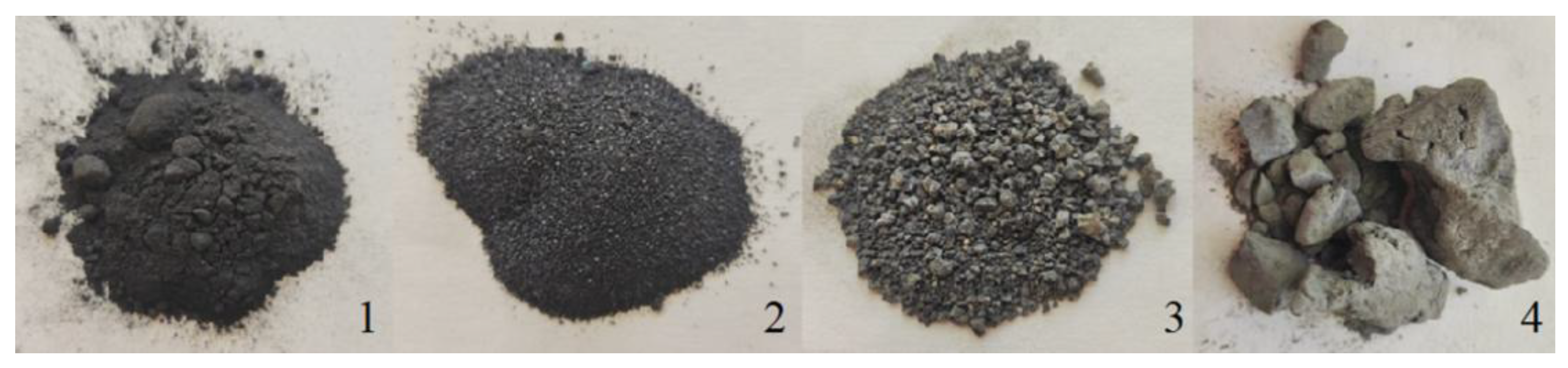
Figure 2.
Laboratory germination assessment of corn seeds using different extractants: 1 - control (distilled water), 2 - 1:200 extract with NH4OH solution, 3 - 1:10 extract with K2SO4 solution.
Figure 2.
Laboratory germination assessment of corn seeds using different extractants: 1 - control (distilled water), 2 - 1:200 extract with NH4OH solution, 3 - 1:10 extract with K2SO4 solution.
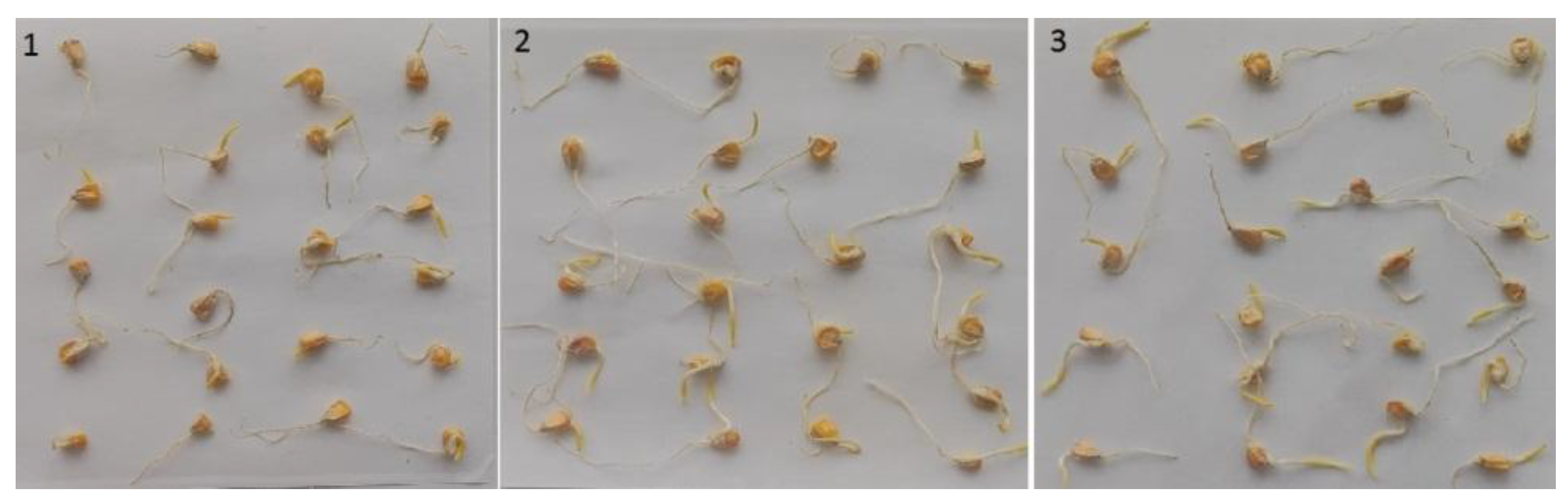

Table 1.
Volumes of metallurgical slags from non-ferrous and ferrous metallurgy.
| Produced Metal | Volume of Generated Slag, t | Reference |
|---|---|---|
| Iron (steel) | 0.12 | [10] |
| Iron (cast iron) | 0.22-0.37 | [11] |
| Lead | 0.6-0.7 | [12] |
| Aluminum | 0.2-0.5 | [13] |
| Ferrochrome | 1.1-3.5 | [14] |
| Zinc | > 2 | [15] |
| Copper | 2.2 | [9,16,17] |
| Magnesium | > 6 | [18] |
| Nickel | 6-16 | [19] |
Table 2.
Comparative content of potentially toxic chemical elements in metallurgical slags, mg/kg.
| Element | Ferrous Metallurgy Slag | Non-Ferrous Metallurgy Slag | Maximum Allowable Concentration (MAC) in Soil [22,23] |
|---|---|---|---|
| Сd | ≤128 | ≤14000 | 5 |
| Pb | 0.2-126 | ≤319190 | 32 |
| As | ≤244 | 75865 | 2 |
| Cr | 0.1-32700 | ≤7510 | 6 |
| Сo | 0.03-210 | 0.97-24104 | 5 |
| Zn | 0.15-11000 | 13-379694 | 23 |
| Cu | 0.13-540 | 5-353580 | 3 |
| Fe | 0.02-61.8 | 0,67-62,0 | 2000-15000 |
Table 3.
Studies on the use of metallurgical wastes to improve crop yields and soil fertility.
| Metallurgical Slag | Effects of Application in Agriculture |
|---|---|
| Steel slag | Application at 20 g/kg of soil enhanced the growth parameters of Capsicum annuum L. by 2 or more times, with sulfur (S) content in fruits exceeding that of the positive control by fourfold. Concentrations of other macro- and microelements (N, P, K, Ca, Mg, Zn, Fe, Si) in fruits remained comparable to those in the positive control [28] |
| Dried sludge from wet gas cleaning in a blast furnace shop and converter slag | The application increased the field yield of Avena sativa L. by more than 30%, with plant height increased by an average of 18% [29] |
| Linz-Donawitz converter slag | The addition increased soil organic carbon by 14%, readily mineralizable carbon by 42%, microbial biomass carbon by 30%, available phosphorus by 33%, exchangeable Ca2+ by 47%, and exchangeable Mg2+ by 65%. It also enhanced the rate of photosynthesis in Oryza sativa L. by 21.1 and 18%, and increased the contents of N, P and Si in straw by 20.1 and 22.2%, 17 and 18.4%, and 29.9 and 30.5% in Japonica and Indica rice varieties, respectively. Grain yield increased by 15.2 and 13.6%, straw biomass by 19.9 and 22%, and root biomass by 17.2 and 19.4% in the two varieties [30] |
| Steel slag | The simultaneous application of steel slag (2% by weight) and vermicompost (4% by weight) increased soil electrical conductivity by 34% compared to the control, microbial growth rate by 119%, while Cu bioavailability in contaminated soils decreased by 72%. In addition, the biomass of Lolium Perenne L. under the combined application of vermicompost and steel slag exceeded that of the variant with vermicompost alone by 15% [31] |
| Electric arc furnace (EAF) slag | The introduction of low-slag EAF additives into the soil, a combination of EAF slag and NPK, improved gas exchange parameters, with the net rate of photosynthesis being 30% higher under the combined use of NPK fertilizer and slag compared to NPK alone. It also enhanced the activity of nitrate reductase in the bean plant Phaseolus vulgaris L. [32] |
| Steel slag | The use of water-cooled slag or steel slag fertilizer over two years of testing increased the yield of table grapes Vitis vinifera L. by 13.5% compared to the control [33] |
| Blast furnace gas cleaning sludge | The introduction of highly dispersed blast furnace gas cleaning sludge (at a dosage of 0.5 to 2 t/ha) stimulated the photosynthetic activity of Brassica napus L. plants, increasing the average root length by 50% and stem length by 15%. Maximum seed germination was also recorded, being 7% higher than the control values [34] |
| Lead slag | The introduction of a 20% dose of lead slag extract increased the biomass of Cucumis sativus L. seedlings by 11% compared to the control [35] |
| Magnesium slag | Application of magnesium slag fertilizer increased lodging resistance, enhanced late-stage growth, and shortened the growing season of agricultural crops, including Zea diploperenni L., Raphanus sativus L. [36] |
Table 5.
Results of particle size analysis of slags.
| Fraction size, mm | Content, % | |||
|---|---|---|---|---|
| Slag from former lead plant, storage facility 1 | Slag from former lead plant, storage facility 2 | Slag from former lead plant, storage facility 3 | Slag from Zhezkent MPP | |
| >5 | 83.,32 | 42.18 | 41.35 | 89.30 |
| 5-2 | 11.31 | 22.31 | 23.95 | 0.27 |
| 2-1 | 1.66 | 18.06 | 16.72 | 0.60 |
| 1-0,75 | 1.63 | 9.93 | 10.05 | 0.25 |
| 0,75-0,5 | 0.68 | 4.24 | 4.35 | 0.75 |
| 0,5 - 0,25 | 0.61 | 2.05 | 2.15 | 4.07 |
| <0,25 | 0.80 | 1.25 | 1.45 | 4.77 |
| Total | 100.01 | 100.02 | 100.02 | 100.01 |
Table 6.
Elemental analysis of metallurgical slags before chemical leaching, mg/kg.
| Element | Slag from former lead plant, storage facility 1 | Slag from former lead plant, storage facility 2 | Slag from former lead plant, storage facility 2 | Slag from Zhezkent MPP |
|---|---|---|---|---|
| K | 10600±1400 | 7500±980 | 4000±540 | 6100±830 |
| Ca | 93800±12200 | 92800±12000 | 40500±5400 | 19400±2500 |
| Mg | 17800±2300 | 15400±2000 | 13900±1900 | 18700±2500 |
| Cu | 5100±670 | 7200±940 | 3700±500 | 1800±250 |
| Zn | < d.l. | < d.l. | 87400±15600 | 4400±650 |
| Fe | 256000±33000 | 259000±34000 | 261000±34700 | 150900±19800 |
| Mn | 4400±5800 | 4900±640 | 3800±510 | 400±50 |
| Na | 10700±1400 | 9200±1200 | 5100±670 | 2600±360 |
| Pb | 860±110 | 460±60 | 17500±2300 | 2200±290 |
| Cr | < d.l. | < d.l. | 65±11 | 10±1 |
| Cd | < d.l. | 1,4±0,2 | 37±6 | 19±3 |
| As | < d.l. | 8±1 | 110±19 | 79±12 |
* Note: “< d.l. ” – below the detection limit.
Table 7.
Elemental analysis of metallurgical slag extracts, mg/L.
| Element | K2SO4 | NH4OH |
|---|---|---|
| Ca | 27.605±0.199 | 9.398±0.084 |
| Mg | 5.959±0.064 | 6.088±0.046 |
| Cu | 91.365±4.327 | 423.751±5.750 |
| Zn | 86.649±1.094 | 34.352±0.882 |
| Fe | 5.567±0.025 | 5.028±0.013 |
| Mn | 22.652±0.163 | 0.185±0.001 |
| Pb | 3.343±0.108 | <d.l. |
| Cr | <d.l. | <d.l. |
| Cd | 0.393±0.050 | 0.269±0.001 |
| As | <d.l. | <d.l. |
Table 8.
Texture of the surface soil layer.
| Fraction size, mm | >5 | 5-2 | 2-1 | 1-0,75 | 0,75-0,5 | 0,5 - 0,25 | <0,25 |
| Mass fraction, % | 12,03 | 9,29 | 9,24 | 14,30 | 24,62 | 22,97 | 7,56 |
Table 9.
Chemical characteristics of the soil.
| Parametr | Measured value | Optimum value [54] |
|---|---|---|
| рН in water | 8,5 | 6-7 |
| Organic matter, % | 1,2573 ± 0,5157 | >5 |
| N, g/kg | 11,9 ±0,03 | 30-40 |
| K, g/kg | 0,0386 ± 0,00015 | 20-30 |
| P, g/kg | 0,2286±0,0086 | 3-5 |
| Ca, g/kg | 0,4853 ±0,0051 | 2,5-8 |
| Mg, g/kg | 0,0531 ±0,0001 | 1,5-6 |
| Cu, mg/kg | 0,8±0,05 | 5-25 |
| Zn, mg/kg | 8,4±0,09 | 20-70 |
| Fe, mg/kg | 396,5±7,5 | 30-250 |
| Mn, mg/kg | 3,0±0,1 | 20-150 |
| Pb, mg/kg | 2,3±0,027 | - |
| Cr, mg/kg | 12,1±0,01 | - |
| Cd, mg/kg | <п.o. | - |
| As, mg/kg | <п.o. | - |
Note: «-»-no data available.
Table 10.
Biometric growth parameters of Zea mays L. plants.
| Biometric parameter | Seed treated with K2SO4 –based extract | Seed treated with NH4OH – based extract | Control (no fertilizer extract treatment) |
|---|---|---|---|
| Plant height, cm | 158,5±10,14 | 167,5±7,31 | 165±9,72 |
| Stem length, cm | 149,5 ±15,53 | 155,5±13,82 | 154,7±14,35 |
| Root length, cm | 25±1,68 | 22±1,43 | 24±1,54 |
| Stem diameter, cm | 1,56±0,02 | 1,62±0,01 | 1,59±0,02 |
| Number of leaves, pcs | 13±1 | 9±1 | 13±1 |
| Number of cobs, pcs | 1 | 1 | 1 |
| Cob diameter, cm | 4,9±0,15 | 5,1±0,09 | 4,9±0,16 |
| Cob length, cm | 29±0,71 | 28±0,49 | 28±0,65 |
| Fresh plant biomass, g | 379,39±29,61 | 338,93±27,15 | 381,0791±31,67 |
| Dry aboveground biomass, g | 115,53±14,67 | 73,6151±8,96 | 100,3553±8,61 |
| Fresh root biomass, g | 10,89±0,83 | 12,4506±0,71 | 8,9676±0,75 |
| Dry root biomass, g | 10,85±0,21 | 11,0562±0,84 | 8,1235±0,54 |
Table 11.
PTE concentrations in Zea mays L. plant organs (dry weight, mg/kg).
| Roots | Solution | Cr | Pb | Cu | Zn |
|---|---|---|---|---|---|
| K2SO4 | 1,515± 0,0174 | 6,554 ±0,387 | 12,490±0,470 | 53,146±0,852 | |
| NH4OH | 0,9617± 0,017 | 6,847±0,501 | 6,090±0,522 | 45,348±2,909 | |
| H2O | 3,029±0,149 | 10,382±0,350 | 9,262±0.172 | 70,218±2,716 | |
| Stems | K2SO4 | < п.o. | 6,520± 0,710 | 10,328±1.8 | 41,971±1,619 |
| NH4OH | < п.o. | < п.o. | 1,423± 0,1317 | 80,627±2,599 | |
| H2O | < п.o. | < п.o. | 0,446±0,0422 | 104,281± 4.978 | |
| Leaves | K2SO4 | 2,319±0,054 | < п.o. | 4,341± 0,067 | 44,324±1,116 |
| NH4OH | < п.o. | 3,179±0,595 | 3,078±0,328 | 53,979±2,827 | |
| H2O | < п.o. | 3,359±0,053 | 2,491±0,126 | 34,112±1,190 | |
| Cobs | K2SO4 | < п.o. | < п.o. | 1,220±0,221 | 45,438±0,857 |
| NH4OH | < п.o. | < п.o. | 2,739±0,239 | 55,661±2,233 | |
| H2O | < п.o. | < п.o. | 3,506±0,199 | 46,382±5,331 | |
| MAC in plants, mg/kg [22] |
5-30 | 30-300 | 5-30 | 100-400 | |
Table 12.
The degree of accumulation of pollutants depending on the TC.
| TC value | Degree of uptake |
|---|---|
| КТ < 0,01 | no uptake |
| 0,01 ≤ КТ≤0,1 | weak uptake |
| 0,1 ≤ КТ≤ 1,0 | moderate uptake |
| 1,0 ≤ КТ | intensive uptake |
Table 13.
Translocation coefficients of the plant Zea mays L.
| Element | average concentration in stems / average concentration in roots | average concentration in leaves / average concentration in roots | average concentration in cobs / average concentration in roots | ||||||
|---|---|---|---|---|---|---|---|---|---|
| K2SO4 | NH4OH | H2O | K2SO4 | NH4OH | H2O | K2SO4 | NH4OH | H2O | |
| Cr | 1,531* | — | — | — | — | — | — | — | — |
| Pb | 0,995 | — | — | 0,485 | 0,464 | 0,324 | — | — | — |
| Cu | 0,827 | 0,233 | 0,048** | 0,347 | 0,505 | 0,269 | 0,097** | 0,449 | 0,378 |
| Zn | 0,789 | 1,778* | 1,485* | 0,834 | 1,190* | 0,486 | 0,855 | 1,227* | 0,661 |
Note: «—» - concentration below detection limit. *- intense accumulation. ** - weak accumulation.
Table 4.
Composition of metallurgical waste extracts.
| Element | Ca | Mg | Cu | Zn | Fe | Mn | Pb | Cr | Cd | As |
|---|---|---|---|---|---|---|---|---|---|---|
| K2SO4 | 2,509 | 0,542 | 8,306 | 7,877 | 0,506 | 2,059 | 0,304 | <п.o. | 0,0357 | <п.o. |
| NH4OH | 0,047 | 0,030 | 2,108 | 0,171 | 0,025 | 0,0009 | <п.o. | <п.o. | 0,001 | <п.o. |
Disclaimer/Publisher’s Note: The statements, opinions and data contained in all publications are solely those of the individual author(s) and contributor(s) and not of MDPI and/or the editor(s). MDPI and/or the editor(s) disclaim responsibility for any injury to people or property resulting from any ideas, methods, instructions or products referred to in the content. |
© 2026 by the authors. Licensee MDPI, Basel, Switzerland. This article is an open access article distributed under the terms and conditions of the Creative Commons Attribution (CC BY) license (http://creativecommons.org/licenses/by/4.0/).
Copyright: This open access article is published under a Creative Commons CC BY 4.0 license, which permit the free download, distribution, and reuse, provided that the author and preprint are cited in any reuse.


