

Submitted:
16 March 2026
Posted:
19 March 2026
You are already at the latest version
Abstract
While there is some agreement on estimating construction cost contingency for “known unknowns,” there is little consensus on management reserves for “unknown unknowns.” Also, definitions of risk and uncertainty differ between the economics and finance literature and the cost engineering literature. This paper examines how cost engineering guidance on estimating management reserves is interpreted in government-sponsored project cost estimates. This lack of consensus is evident in a specific program: managing, treating, and disposing of 212,000 cubic meters of mixed radioactive and hazardous chemical waste generated by plutonium production at the Hanford Site. Over $30 billion has been invested in treatment facilities, vitrification plants, and laboratories analyzing gases, liquids, sludges, and salt cake from 177 aging storage tanks. The remaining construction and operating costs are highly uncertain, with estimates ranging from $300 billion to $640 billion. Analyses of alternatives for constructing Hanford waste treatment facilities assume 15% contingencies and 40% management reserves. A method is presented to compute the implicit moments of Extreme Value distributions of cost estimates for different options, helping determine whether one alternative’s cost estimate stochastically dominates others. Adopting industry definitions of contingency and management reserves by government agencies could improve construction cost estimation in government-financed programs.
Keywords:
cost contingency
; radioactive waste
; hazardous waste
; stochastic dominance
; extreme value
; Hanford
1. Introduction: Estimating “Known Unknowns” and “Unknown Unknowns”
There is an intellectual gap between the fields of economics and finance, on the one hand, and other fields, regarding the definitions of “risk” and “uncertainty.” This gap makes it difficult to apply modern finance theory to estimating a risk-adjusted construction cost. In economics and finance, the consensus definitions of risk and uncertainty are based on the work of Frank Knight (1921, p. 20 [1]; cited at least 36,000 times according to Google Scholar): “The crucial character of the distinction between measurable risk and unmeasurable uncertainty will become apparent in this discussion.” Alhabeeb (2021) [2] writes, “(De Groot and Thurik, 2018 [3]) reported that 88.3% of articles in this topic, across the related fields, did not adhere to the distinction between risk and uncertainty, rendering all the undesirable theoretical and empirical consequences.”
In everyday language, the concepts of risk and uncertainty are framed as “known unknowns” and “unknown unknowns.” Former U.S. Secretary of Defense Donald Rumsfeld (Rumsfeld, 2010 [4]) famously said,
“because as we know, there are known knowns: there are things we know we know. We also know there are known unknowns: that is to say, we know there are some things (we know) we do not know. But there are also unknown unknowns—the ones we don’t know we don’t know …, it is the latter category that tends to be the difficult one.”
Žižek (2006) [5] notes, “In March 2003, Donald Rumsfeld engaged in a little bit of amateur philosophizing about the relationship between the known and the unknown… What he forgot to add was the crucial fourth term, the ‘unknown knowns,’ things we don’t know that we know,” for example, incidents of cognitive dissonance.
Thus, Knightian risk and uncertainty can be translated into Rumsfeld’s language: risks are known unknowns that can be managed, for example, through diversification (covered by cost contingency, and under the control of a funder), while uncertainties are unknown unknowns, covered by management reserve, MR (Prieto, 2021 [6]), and under the control of the contractor with funder oversight. Lee et al. (2017) [7]:
“Since estimating an MR is difficult because the inherent risks are unpredictable, the traditional percentage method is still used for this purpose. To address this shortcoming, this study proposes an MR estimation method based on the cost and schedule performance ratios of international construction projects.”
This and other papers use empirical data and statistical methods to estimate the costs of unknown unknowns. However, for megaprojects (> $1 billion), the sample is too heterogeneous to support statistical analysis. See Locatelli and Denicol (2024) [8] on megaprojects.
On the other hand, GAO (2009, p. 17) [9] and GAO (2020, p. 13) [10] contradict these interpretations of MR (emphasis added),
“For our purposes in this Cost Guide, contingency reserve represents funds held at or above the government program office for ‘unknown unknowns’ that are outside a contractor’s control… Management reserve funds, in contrast, are for ‘known unknowns’ that are tied to the contract’s scope and managed at the contractor level… The value of the contract includes these known unknowns in the budget base, and the contractor decides how much money to set aside. We recognize that other organizations may use the terms differently.”
(A GAO official verified these definitions in a personal communication on 21 January 2026.)
Further, GAO (2018, p. 22) [11] adds, “The cost guide further states that [MR] funds should be included in the budget to cover uncertainties such as unanticipated effort resulting from accidents, errors, technical redirections, or contractor-initiated studies,” i.e., unknown unknowns. As Kwon and Kang (2018) [12] point out,
“Previous studies on this topic have only addressed estimation methods that consider project budget reserves against identified risks [known unknowns]. As a result, project managers still face the challenge of completing projects within given budgets but without the relevant tools to deal with unidentified risks [unknown unknowns]. This study proposes an approach for estimating reserves for both identified and unidentified risks separately. The study also suggests using the three-point estimation technique…”
The three-point estimation technique is a weighted average of (1) optimistic, O, (2) realistic, R, and (3) pessimistic, P, project cost estimates. The three-point “program evaluation and review technique” estimate is [(O + 4R + P)/6], and its standard deviation is [(P − O)/6].
The project management and cost engineering literatures generally follow the definitions of risk and uncertainty in the Association for the Advancement of Cost Engineering, International (AACEI) recommended practices, RPs (AACEI 2008, p. 2 [13]):
“It is AACE’s recommended practice that whenever the term ‘risk’ is used, that the term’s meaning be clearly defined for the purposes at hand… risk means ‘an undesirable potential outcome and/or its probability of occurrence,’ i.e., ‘downside uncertainty (a.k.a. threats).’ Opportunity, on the other hand, is ‘a desirable potential outcome and/or its probability of occurrence,’ i.e., ‘upside uncertainty’… Range estimating is a risk analysis technology that combines Monte Carlo sampling, a focus on the few critical items, and heuristics (rules of thumb) to rank critical risks and opportunities.”
According to AACEI recommended practices, cost-estimating guidance on contingency and MR for Department of Energy contractors is provided in DOE-Office of Project Management, OPM (2018, pp. 51–52) [14]:
“This section is compatible with the guidance provided in DOE G 413.3-7A, Risk Management Guide, dated January 2011, for the consistent use and development of Contingency and Management Reserve (MR) in capital asset projects’ cost estimates. Contingency and MR are project cost elements directly related to project risks and are an integral part of project cost estimates… Use of MR should follow [Earned Value Management, EVM, System] rules as per ANSI/EIA-748A.”
On EVM, see GAO (2020, pp. 207–304) [10]. On ANSI/EIA-748 (American National Standards Institute/Electronic Industries Alliance-748), see ASTM (2017) [15]: “Reserve… used to provide insurance against a project or program failing to complete on budget or for the revision of a budget in the case of changed management or program direction and requirement.” AACEI (2020, Table 1, p. 3) [16] provides a comparison of reserve terms:
To make this literature even more confusing, Hollmann (2022) [17] notes, “One of the more complete treatments of long-range estimates found (in nuclear decommissioning) took” a definitional approach. Hollmann cites NEA/IAEA (2017, p. 15) [18], which introduces new definitions:
“While ‘contingency’ is a commonly used generic term in cost estimation for any financial provision that is above an estimated base cost, contingency may also be given a specific, more limited meaning in particular contexts, for example, in the ISDC [International Structure for Decommissioning Costing]. Therefore, in order to reduce possible ambiguity and confusion, instead of the term ‘contingency,’ the terms ‘estimating uncertainty’ and ‘funded risk’ are used in this report. The term ‘estimating uncertainty’ is used in this report for the provision related to uncertainties within the defined project scope…”
Unfortunately, the term “estimating uncertainty” can be misinterpreted as “estimate uncertainty,” creating ambiguity. NEA/IAEA (2017, p. 57) [18] illustrates this ambiguity in Table B-3.
Alternative methods for MR estimation have been proposed. For example, Yahia et al. (2020) [19] states, “The [Management Reserve Estimation] model consists of three modules: (1) risk identification, (2) risk uncertainty treatment using a hybrid system that combines fuzzy logic and Monte Carlo simulation techniques, and (3) MR quantification using an integration of Monte Carlo simulation and the expected monetary value. The model has been validated using a real estate development project.”
Given the confusion surrounding definitions of cost contingency and management reserve, and the lack of a literature review on the estimation and use of management reserves in government-financed megaprojects, this paper reviews federal government, project management, and cost engineering guidance on estimating MR. The model introduced in Rothwell (2005) [20] was extended to incorporate risk aversion in Rothwell (2025) [21] and, in Rothwell (2026) [22], further extended to compute confidence intervals for cost contingency estimates. Section 2 reviews the cost engineering literature as interpreted in government cost-estimating guidelines regarding MR. Section 3 reviews MR in construction cost estimates for the remediation of the Hanford Nuclear Site, the U.S. government’s largest environmental liability. Section 4 applies an Extreme Value statistical model to compute the implied standard deviations of cost estimates, given the assumed contingency and MR rates, enabling tests of implicit statistically significant differences between alternatives. Section 5 discusses these results, offers conclusions, and suggests future research.
2. A Review of Federal and Industry Management Reserve Guidelines
According to GAO (2025) [23], the five U.S. federal departments with the highest contractor funding are the Department of Defense ($445 billion in FY 2024; the largest program is the missile defense system, with a $151 billion ceiling over 10 years); the Department of Veterans Affairs ($67 billion; the largest construction project is the Louisville Medical Center, at $970 million); the Department of Energy ($48 billion; the largest program is the cleanup of the Hanford Site outside Richland, Washington, estimated to cost at least $300 billion); the Department of Health and Human Services ($37 billion, of which less than $10 billion was spent on construction projects in FY2024); and the General Services Administration ($27 billion, with $1.8 billion in direct investments in new construction and in federal building repair and alteration projects).
The majority of contracts in both the military and civilian sectors are awarded through market competition (competed), and the majority of competed and noncompeted contracts are fixed-price contracts, as GAO (2020, p. 230) [10] notes:
“Research has found that programs typically set their contract value so they can set aside 5 to 10 percent as a management reserve. This amount may not be sufficient for some programs and may be more than others need. One way to derive the amount of management reserve needed is to conduct a risk analysis for schedule (to determine the schedule reserve needed) and for cost (to determine the management reserve for cost). Risk and uncertainty analysis should be used to specify the probability that work will be performed within budget. The likelihood of meeting the budget can then be increased by establishing a sufficient management reserve budget.”
Department of Defense (DOD) cost estimators and contractors rely on DOD (2022) [24], GAO (2020) [10], and U.S. Army Corps of Engineers (USACE) guidelines. (Much of the DOD guidance is available through the Defense Acquisition University (https://www.dau.edu), which requires trainee registration to access it.) DOD (2022, p. 20) [24] discusses risk and uncertainty:
“Analysts often use the terms risk and uncertainty interchangeably. In fact, they are distinct from one another. Uncertainty is the indefiniteness of the outcome of a situation. Uncertainty captures the entire range of possible positive and negative outcomes associated with a given value or calculated result. In a cost estimating model, an analyst generally addresses uncertainty first. The analyst then addresses risks/opportunities if and only if the uncertainty assessment has not already captured them.”
Christensen and Templin (2000) [25] analyzed the use of MR in Department of Defense contracts:
“This paper provides [an analysis of] the amount and use of MR budget on hundreds of defense acquisition contracts from 1975 to 1998. Results indicate statistically significant differences in the median MR budget percentage across contract types (cost-reimbursable and [fixed-]price) and the military services managing the contracts (Army, Air Force, Navy)…”
Further, USACE (2020, p. A-9-3) [26] states, “Planning, pre-concept, concept, and final design cost estimates shall be thoroughly documented to explain the basis of the estimate and to include contingencies associated with any unknowns or risk factors.” However, these documents do not define management reserves or specify how to estimate them.
The Department of Veterans Affairs (VA) also relies on USACE. According to GAO (2017) [27], “the VA has 26 ongoing medical-facility construction projects… [T]his report assesses… opportunities for improvements in managing these projects, particularly VA’s medical facility in Denver, the only project outsourced to USACE that is under construction.” GAO (2017, p. 22) [27]:
“A cost estimate is considered credible when any limitations of the analysis are discussed, and the estimate’s results are cross-checked. We found USACE’s estimate substantially meets this characteristic. A formal cost risk and uncertainty analysis was performed, and it was used to set the amount needed for cost contingency for the program.”
However, GAO (2017, p. 26) [27] states (emphasis added), “Contingency is a reserve of extra time to account for known and quantified risks and uncertainty,” i.e., known unknowns, which appears to contradict GAO (2009, p. 17) [9] and GAO (2020, p. 13) [10], quoted above.
In general, the Department of Health and Human Services (HHS) follows the GAO cost-estimating guidelines and Government Services Administration (GSA) reporting regulations (GSA 2025) [28]. HHS-specific guidance is provided in HHS (2025) [29]. Guidance on determining contingency, but not management reserve, is available in GSA (2024) [30]. Robert-Santiago et al. (2024) [31] explain, “Contingencies should be determined by the level of Risk in a Project. Currently, GSA uses 7% for new Capital Construction and 10% for [Repair and Alteration] work. This might change in the future if we successfully deploy a Risk-Based Contingency Model,” for example, as proposed in Ordóñez and Park (2011) [32].
For projects funded by the U.S. Department of Energy (DOE), cost-estimating guidance on risk and uncertainty analysis is provided in DOE-OPM (2018) [14] and DOE-OPM (2021) [33]. The DOE Cost Estimating Guides describe how to estimate project costs in accordance with GAO (2009) [9]: “An independent cost review is a vital step in providing consistent, professionally prepared cost estimates (Step 7, GAO 12 Key Steps Development Process, GAO (2009) [9]).” DOE-OPM (2021, p. 11-1) [33] discusses confidence levels for cost contingency and MR, stating, “At a minimum, project performance baselines should be estimated, budgeted, and funded to provide a range of 70–90 percent confidence level for DOE capital asset projects.”
DOE-OPM (2018, p. 61) [14] notes, “One approach to account for estimate uncertainty is to use uncertainty ranges established by professional societies such as AACE International [AACEI].” (These “uncertainty ranges” are likely “accuracy ranges.”) Each DOE Cost Estimating Guide includes AACEI Recommended Practice No. 18R-97 as an appendix. Also, DOE-OPM (2018, p. 54) [34]:
“The DOE Contingency discussed here is the contingency needed to mitigate project risks that are within the project baseline but are generally beyond the contractor’s control. It is additive to the MR… The steps to follow for DOE Contingency are similar as for MR.”
Regarding total contingency, DOE-OPM (2021, p. 54) [33] states, “Add the cost contingency (derived from the risk analysis) to the cost estimate uncertainty contingency, at the same confidence levels, to derive the total MR for the contractor.” Table 2 lists cost estimate classes, project stages, and accuracy ranges.
DOE-OPM (2019, p. 2–3) [36] discusses confidence levels for project cost approvals:
“When the Office of Project Management (PM) completes an independent cost review (ICR) or an independent cost estimate (ICE) report, the team often refers back to [AACEI (2020, Table 1) [35]] to determine the estimate class, and based on the estimate class determination, it assigns expected estimate uncertainty ranges.”
However, DOE-OPM (2018, p. 64) [14] warns, “It should be cautioned that the recommended contingency levels in these documents do not provide a basis for the recommended confidence levels (70–90 percent) in this Guide for the derivation of contingency and management reserve by quantitative risk analysis.”
The DOE-National Nuclear Security Administration (NNSA) follows guidance similar to that of DOE-EM. In DOE-CF (2025, p. 538) [37], regarding the design and construction of the Naval Reactors Facility Project in Idaho,
“The cost range approved with CD-1 [Critical Decision 1: Approve Alternate Selection and Cost Range] is $1,630,000,000 to $5,000,000,000 (then-year dollars). The point estimate associated with the current stage of the project (conceptual design) is $3,228,500,000 (then-year dollars). The management reserve and government contingency included in the cost estimate provides approximately 80% confidence in the project cost.”
On the other hand, other offices within DOE have different understandings of contingency and MR. For example, DOE-LM (2023, p. 79) [38], which manages historic sites and remediation projects, states, “The methodology used for calculating management reserve, otherwise known as contingency dollars for each site, is documented within the appropriate risk register.”
Federal government and industry guidelines do not distinguish between cost-uncertainty analysis for estimating contingency funds under the program office’s control (known unknowns at the time of contract signing) and management reserve funds under the contractor’s control (unknown unknowns at the time of contract signing). An interpretation of the guidance suggests that either both contingency and MR cover “known unknowns,” but are controlled by different parties, or that contingency covers “probable unknowns” and MR covers “improbable unknowns.” In government cost-estimating guidance, there is confusion about whether management reserves are intended to ensure against “known unknowns” or “unknown unknowns.” This confusion is evident in the cost estimates for the Hanford Nuclear Site cleanup.
3. A Review of Management Reserves in Hanford Cost Estimates
Hanford remediation is the U.S. federal government’s largest environmental liability. DOE-RL (2019, p. 2–6) [39], Table 2.2, “Hanford Site Remaining Cleanup Cost Estimated Ranges by [Project Baseline Summary] (Billions $),” reports “Total Remaining Estimated Costs $323.2–$677.0.” The Hanford cleanup is the responsibility of DOE-EM’s Hanford Field Office (HFO), formed in October 2024 by merging the Office of River Protection (DOE-ORP) and the Richland Operations Office (DOE-RL).
HFO oversees the management and disposal of approximately 212,000 cubic meters (56,000,000 gallons) of mixed waste, including gases, liquids, sludges, and salt cake, that contain dozens of radioisotopes and hazardous chemicals. (Compare with other nuclear site decontamination and demolition (D&D) projects in Invernizzi et al., 2020 [40].) It is estimated that 90% of this waste is Low Activity Waste (LAW). This waste, stored in 177 single- and double-shell tanks, was generated during the reprocessing of spent nuclear fuel to produce weapons-grade plutonium (Silverio and de Queiroz Lamas, 2011 [41]). The Pacific Northwest National Laboratory (PNNL) provided an assessment of Hanford remediation for the DOE-RL in Wood et al. (2001, p. 1.2) [42]:
“The sheer expanse of the Hanford Site [1518 square km or 586 square miles], the inherent hazards associated with the significant inventory of nuclear materials and wastes, the large number of aging contaminated facilities, the diverse nature and extent of environmental contamination, and the proximity to the Columbia River [the largest river in the Western Hemisphere flowing into the Pacific Ocean] make the Hanford Site perhaps the world’s largest and most complex environmental cleanup project.”
Andrews (2015) [43] suggests that project complexity depends on life-cycle size and duration, Technology Readiness Levels, risk (as described in DOE-OPM, 2021 [33]), and regulatory requirements.
As noted in DOE-RL’s Hanford Lifecycle Scope, Schedule and Cost Reports (2011, p. ES-1 [44]), “The 2011 Lifecycle Report is based on scope, schedule, and cost estimate information and incorporates regulatory milestones from the Consent Decree [settling State of Washington v. Chu] and TPA [Tri-Party Agreement] Settlement Package that became effective 25 October 2010.” The three parties to the TPA are DOE-EM, the Environmental Protection Agency (EPA), and the Washington State Department of Ecology. The TPA was initially signed in 1989, amended multiple times (DOE-HFO, 2025 [45]), and updated in 2025 (Ecology, 2025 [46]).
Rothwell (2026) [22] models cost contingency estimates for a specific construction project in the HFO portfolio under the DOE-EM account ORP-0060 (GAO, 2023 [47]): the Waste Treatment Plant (WTP), which includes the High-Level Waste (HLW) facility, the Pre-Treatment (PT) facility, the Direct-Feed Low Activity Waste (DFLAW, GAO, 2022 [48]) system, the Analytical Laboratory (LAB), and the Balance of Facilities (BOF, including the Tank-Side Cesium Removal, TSCR, facility).1 Table 3 lists the projects in the Hanford remediation program.
The DFLAW complex was not part of the original program to meet the TPA requirements. Construction of the original WTP began in 2000, but by 2012, significant technical uncertainties had emerged regarding HLW and PT technologies. In response, DOE-EM shifted its focus to vitrifying LAW by constructing the LAW-Vit plant and associated facilities and infrastructure.2 The TSCR facility was built between 2019 and 2021 by Washington River Protection Solutions (WRPS, owned by Amentum and BWX Technologies, BWXT) and has operated since 2022 (Marcial et al., 2024 [55]). DOE-EM (2023) [56] stated, “The team completed TSCR construction and started operations three months ahead of schedule and $29 million under the approved total project cost of $164 million.” Regarding the DFLAW system cost, GAO (2022) [48] notes, “DOE estimates that it will complete the work to start DFLAW operations by 31 December 2023, at a cost of approximately $8.3 billion.”
Bechtel National, Inc. (BNI) is the prime contractor responsible for designing, constructing, and commissioning the WTP, including DFLAW. Hanford Tank Waste Operations and Closure, LLC (H2C, a joint venture of Amentum, BWXT, and Fluor) began vitrifying LAW in October 2025 (ANS, 2025 [57]). Table 4 lists the DFLAW subsystems. H2C operates under an Indefinite Delivery/Indefinite Quantity (IDIQ) contract with a maximum value of $45 billion over 10 years (DOE-EM, 2024 [58]). (CRS, 2024 [59], defines “an IDIQ contract as one that provides for an indefinite quantity, within stated limits, of supplies or services during a fixed period”). HLW will be stored onsite until the HLW vitrification facility (HLW-Vit in Table 4) is completed, as mandated by 2033. It will then be vitrified and shipped to a geologic repository, such as the Waste Isolation Pilot Project in New Mexico.
Regarding Hanford remediation, the Project 2025 Advisory Board (2023, p. 395) [61] proposed,
“The Hanford site in Washington State is a particular challenge. The [TPA] has hampered attempts to accelerate and innovate the cleanup. A central challenge at Hanford is the classification of radioactive waste. High-Level Waste (HLW) and Low-Level Waste (LLW) classifications drive the remediation and disposal process… changes in waste classification from HLW to LLW… would allow LLW to be grouted rather than vitrified.”
On the use of grouting instead of vitrification, see Stang (2025) [62].
In DOE-CF (2017, p. 87) [63], spending in the WPT account (ORP-0060: Major Construction—Waste Treatment Plant) from 1997 to 2016 totaled $10.2 billion, with projected lifecycle costs in the “low range” of $11.2 billion and the “high range” of $11.2 billion, implying a remaining cost of $1 billion. In DOE-CF (2024, p. 39) [64], expenditures from 1997–2023 reached $14.8 billion, with a projected total lifecycle cost from FY 2024–2091 in the “low range” of $30.2 billion and the “high range” of $31.6 billion (melters will need to be replaced periodically). Thus, the remaining cost was estimated to be between $15.4 billion and $16.8 billion, requiring more spending than what had already been spent. The estimated cost of the “Radioactive Liquid Tank Waste Stabilization and Disposition” project (account ORP-0014) increased from a total cost between $53 billion and $61 billion in DOE-CF (2017, p. 87) [63] to between $178 billion and $329 billion in DOE-CF (2024, p. 39) [64], with additional spending of between $165 billion and $316 billion.
Estimating Hanford remediation costs is difficult because the mission is a large-scale Research, Development, Demonstration, Decontamination, and Demolition (RDDD&D) project. As Alexander (2018, pp. vii–viii) [65] explains,
“Design, performance, or technical requirements, which drive traditional parametric models or translate analogous system costs, are often unavailable in the early life-cycle stages of basic or applied technology development… Researchers have proposed or developed frameworks, analyses, and modeling concepts that apply predictors such as Technology Readiness Levels (TRL).”
TRLs are outlined in DOE-OPM (2015) [66] and GAO (2020, Appendix VIII) [67]: TRL-1 is “basic principles reported,” TRL-4 is “laboratory validation,” TRL-7 is “prototype demonstration,” and TRL-9 is “successful mission operation.” In other words, “Research” spans TRL-1 through TRL-3, “Development” includes TRL-4 and TRL-5, “Demonstration” spans TRL-6 through TRL-8, and “Deployment” occurs at TRL-9. Fraizinger (2019) [68] discusses the relationships between the estimate classes in Table 2 and TRLs. However, the literature linking TRL levels to cost contingencies or management reserves is limited.
DOE-RL provided estimates of Hanford remediation costs, along with an uncertainty analysis to determine contingency and MR, for the Hanford Lifecycle Scope, Schedule and Cost Reports (LCRs). DOE-RL (2011, p. E-10) [44], “Table E-6. [Spent Nuclear Fuel] Stabilization and Disposition (PBS RL-0012) Near-Term Schedule and Costs, Level 3, by Fiscal Year ($1000, Escalated),” projected a total D&D spending for the K Basin, including the area known as “K West,” at $571,600,000, with 12% ($68,800,000) allocated to “Cost and/or Schedule Uncertainty” and 19% ($107,520,000) to “Management Reserve–Basins Operations and Maintenance.” (According to Prieto (2021) [6], “Typically, management reserves for large, long-duration projects tend to fall within the 5–15 percent range, dependent on project complexity.”)
DOE-RL (2013, p. D-1) [69] states, “cost and/or schedule uncertainty [is] also referred to as contingency.” In the 2011 and 2012 LCRs, MR was reported for various accounts, whereas from 2013 to 2015, MR was combined with contractor fees.3 In DOE-RL (2014, , p. 3–5) [72], the MR category includes “contractor’s fee, management reserve, and Government & Administrative allocations.” In Table 3, “[Usage-Based Services], [General and Administrative,] and Direct Distribution” includes the contractor’s fee and management reserve. DOE-RL (2022, p. 1–12) [73] describes management reserve:
“Cost and schedule uncertainty are included in the development of Total Project Cost and… are reserved to accommodate additional work scope related to risk events that may occur from conditions and events that were not known during project planning and other unanticipated changes or uncertainties [unknowns unknows]. This includes estimates for cost and schedule uncertainty based on risk analysis methods that comply with DOE guidelines and orders.”
This text was revised in DOE-HFO (2025, p. 1–12) [74]: “Quantitative risk analysis is used to estimate the impact of estimation uncertainty and risks in terms of joint cost and schedule, as outlined in the [10] Cost Estimating and Assessment Guide.”
“To accommodate the possible deficiencies identified by the [Office of Project Management] review of the USACE parametric analysis [USACE, 2018 [76]], the AoA estimate includes slightly higher allowances for MR and DOE Contingency than those used by USACE. The adders included by the AoA Team are 40% (compared to 36.3% by USACE) and 15% (compared to 13.4% by USACE), respectively, for MR and DOE Contingency.”
Although DOE-ORP (2023) [75] did not conduct a quantitative risk analysis, it identified uncertainties stemming from the limited technological readiness of Hanford vitrification technologies (DOE-ORP, 2023, p. 4 [75]; on vitrification technologies, see Goel, 2019 [77] and ANS, 2025 [78]):
“[DOE-OPM, 2018 [34]] requires that critical technologies for Major System Acquisition (MSA) projects achieve Technical Readiness Level TRL-4 prior to [Approval of the Alternative Selection and Cost Range]… [DOE-OPM, 2018 [34]] also requires that all critical technologies achieve TRL-7 prior to [the Approval of the Performance Baseline]. Given the difficulty that DOE has had in resolving the [issues] associated with the new tank mixing technologies for the WTP PT Facility, the AoA Team will not evaluate HLW processing alternatives that use critical technologies that have not been demonstrated for HLW processing.”
The lack of transparency in the use of MR prompted a DOE-OIG audit of a Hanford contractor. DOE-OIG (2017, p. 3) [79] states,
“During the course of the audit, we held discussions with the [OPM] concerning the proper use of management reserve, and the unique facts and circumstances associated with the Sludge Removal Project. The [OPM] agreed that the use of management reserve to reset the baseline for already completed work scope would, under normal circumstances, be noncompliant with the American National Standards Institute 748-C Earned Value Management Intent Guide.”
DOE-OAM (2014) [80] states, “Burden of proof is on the contractor to demonstrate it is an authorized use [of MR].” Given conflicting guidance on whether MR covers “measurable risks” or “unmeasurable uncertainties,” there is confusion at Hanford about how to estimate and apply MR. In fact, Hanford cost estimators calculate contingency and MR in the same way; they simply add them together under the heading “Cost and Schedule Uncertainty.” When added together, what might be the implicit probability distributions of the resulting construction cost estimates?
4. A Method of Determining the Implicit Statistical Significance of Differences in Cost Estimates
DOE-RL (2022) [73] summarizes the 2019 LCR results in Table 2.2, “Hanford Site Remaining Cleanup Cost Estimated Ranges by [Project Baseline Summary],” for ORP-0060, with estimated construction costs ranging from $19.6 billion to $31.1 billion (DOE-RL, 2022, p. C-69). The report notes that “Cost ranges are shown in this table to reflect cost and schedule uncertainty; the lower number is used throughout this report.”
DOE-RL (2022) [73] does not provide an uncertainty analysis for any account. Additionally, in the most recent LCR (DOE-HFO, 2025, p. v [74]), the estimated construction cost for ORP-0060 is between $10.1 billion and $20.3 billion: “The contingency for the [WTP] is contained within the total project cost; the high-range includes the Pretreatment Facility.” However, there is no explanation of the origins of these values, nor is there an uncertainty analysis, as in DOE-RL (2019) [39]. Moreover, DOE-HFO (2025, p. 1–12) [74] might be using “estimating uncertainty” as defined in NEA/IAEA (2017) [18]: “Estimating uncertainty refers to the fact that because a cost/schedule estimate is a forecast, the actual cost/schedule will likely differ from the original base estimate.”
Does the estimation of MR follow DOE guidelines? DOE-RL (2019) [39] does not mention MR. However, DOE-ORP (2023, pp. 161–164) [75], i.e., AoA-2023, presents “DOE Contingency” and MR for various Hanford cleanup scenarios. Table 5 summarizes Table 73, Table 74, Table 75 and Table 76 from AoA-2023. (The contractor’s fee is excluded from calculations of MR or contingency values.) The values of 15% for DOE Contingency and 40% for MR are based on USACE (2018) [76], as cited in DOE-ORP (2023, p. 159) [75]. However, AoA-2023 did not conduct a probability analysis because the values for DOE Contingency and MR are identical across all alternatives. (One would expect MR to be lower in alternatives without a PT because they would be less complex.) Without an uncertainty analysis, DOE-HFO cannot determine which alternative is (first-order) stochastically dominant (Wolfstetter, 1996 [81]).
A Monte Carlo simulation yields an expected mean cost estimate, CE, and a standard deviation, SD, for a given probability distribution. (Rothwell (2025) [21] reconstructs a Monte Carlo simulation of the Work Breakdown Structure (WBS) for the decommissioning cost of the Kewaunee Nuclear Power Plant, yielding an expected cost and a standard deviation; this entails assigning a cost and a probability distribution to each input for every task in the WBS.) Equation (1) in Rothwell (2025) [21] defines the contingency rate, CON%, as a function of (1) the ratio of the standard deviation to the expected cost, (2) a multiplier that “stretches” the ratio, and (3) a measure of Absolute Risk Aversion (ARA):
where the [80%-Interval] multiplies the (SD/CE), so the result covers 80% of the accuracy range, and ā is the Absolute Risk Aversion constant, with ā > 0 (Rothwell (2016, p. 120) [82] and Rao, 2020 [83]).4 However, if the contingency rate is known and (SD/CE) is unknown, one can solve for (SD/CE) as a function of CON%:
CON% = (SD/CE) ∙ [80%-Interval] ∙ ā,
(SD/CE) = CON%/([80%-Interval] ∙ ā).
The probability distribution and density of the cost estimate can be modeled using closed-form, positively skewed Extreme Value functions (Johnson et al., 1995, p. 2 [85]):
where m is the mode and b (a “shape” parameter) equals [SD · (6½/π)] ≈ SD · 0.78. The mean is approximately [m + (b · 0.577)] from Johnson et al. (1995, p. 17) [84]. The median (P50) is [m − (b · ln(– ln(0.5))] ≈ [m + (b · 0.3665)] from Johnson et al. (1995, p. 13) [84]. Thus, mean > median > mode, P(80) equals {m − b ⋅ ln [– ln(0.8)]} ≈ [m + (b · 1.5)], and P(95) ≈ [m + (b · 2.97)].
F(x) = exp {−exp {−A}},
f(x) = (1/b) · exp {−A } · F(x),
A = (x − m)/b, where b > 0, and
P(x) = m − b ⋅ ln {−ln[F(x)]},
Assuming CON% is 55% from Table 6, [80%-Interval] is 2.4 from Rothwell (2025) [21], and risk neutrality (ā = 1 for an 80% confidence interval), Table 6 presents the implicit parameter values. Figure 1 shows the resulting probability densities. It is apparent that “Base Case: HLW and PT Completion (Table 73)” is similar to “HLW and Re-Purposed PT (Table 75),” and that “HLW Completion Only (no PT) Table 74” is similar to “Minimal Direct Feed HLW Completion (no PT) Table 76,” as shown in Table 6, where the columns from Table 5 have been rearranged in order of total cost.
Further, as shown in Figure 2 and using Equation (6), (1) the alternative in Table 73 is significantly different from the case in Table 74 (95% of the distribution exceeds $9040, placing it in the highest 5% of the distribution in Table 74), and (2) the alternative in Table 75 is significantly different from the case in Table 76 of the distribution in Table 75 (94.6% of the distribution exceeds $8235, where {$8235 = $10475 − [$2088 ⋅ (ln(−1 · ln(0.0537)))]}, placing it in the highest 5.4% of the distribution in Table 75). The alternatives in Table 74 and Table 76 stochastically dominate those in Table 73 and Table 75, respectively, i.e., are less expensive. However, there may be technical, contractual, or policy reasons for selecting the alternatives in Table 73 or 75. (Compare with Vinueza (2019, p. 5) [86]: “The difference between P80 and the mean is the total contingency. The difference between the P95 limit of the distribution and the P80 is the management reserve… [The] project has no protection after P95: Allocated for force majeure or acts of God.”)
It is often assumed that an 80% confidence interval (CI-80) corresponds to risk neutrality, as captured by ā in Equation (1). As Rothwell (2026) [22] shows, the 70% confidence interval (0.80 · CI-80) can represent risk-tolerant preferences, and the 90% confidence interval (1.69 · CI-80) can represent risk-averse preferences. Figure 3 compares Table 73 and Table 76 (the most and least expensive alternatives) across 70%, 80%, and 90% confidence intervals. With respect to risk tolerance, the implied densities for Table 73 and Table 76 overlap (as shown by the dashed lines): the alternatives are not significantly different at the 95% level (from Table 73: $8218 < $8852 in Table 76). With risk aversion, the implied densities for Table 73 and Table 76 do not overlap (as shown by the dotted lines): the alternatives are significantly different at the 95% level (from Table 73: $10,805 >> $7227 in Table 76). With greater risk aversion, there is an increased concern that the costs differ. Without uncertainty analyses and an understanding of the parties’ risk tolerances, it is not possible to determine which alternatives are stochastically dominant or significantly different.
5. Discussion and Conclusions
While there is some consensus on how to estimate contingency in project cost estimation (for “known unknowns”), there is little consensus on how to estimate management reserve (for “unknown unknowns”). Also, definitions of risk and uncertainty differ between the economics and finance literature, on the one hand, and the project management/cost engineering literature, on the other hand, making it difficult to develop risk-adjusted or certainty-equivalent construction cost estimates (GAO, 2009, p. 10) [9]. This paper (1) has shown that general guidance is lacking for estimating management reserves to cover uncertainties (unknown unknowns) in large, complex, and technically challenging government construction programs with limited data on similar projects, and (2) has derived the cost estimate’s implicit standard deviation as a function of the assumed total contingency and management reserve rates, thereby enabling the determination of whether one estimate is significantly different from another. Further research should show how risk aversion relates to project size, technological readiness, and changing regulatory requirements.
To examine how the lack of consensus on defining and using management reserves affects cost estimation in complex programs, the paper focused on the DOE’s Office of Environmental Management’s remediation of the Hanford Nuclear Site, the largest environmental liability of the U.S. government. Because DOE guidance treats management reserve and cost contingency similarly (although DOE controls cost contingency and the contractor controls management reserve with DOE oversight), the two have been combined to quantify cost risk and uncertainty. Of this total, 40% could be allocated to a management reserve for technologically challenging programs (much higher than the literature suggests), and 15% could be designated as cost contingency, similar to many other cost contingency estimates. However, overall guidance on determining an appropriate management reserve is lacking, given the magnitude of costs and uncertainties in government-funded programs.
To clarify underlying cost uncertainties, the next Hanford Analysis of Alternatives should complete the GAO-prescribed risk and uncertainty assessments to determine whether the alternatives’ costs differ significantly, i.e., whether one alternative stochastically dominates the others. With the revised TPA finalized (Ecology, 2025 [46]), we can expect “System Plan, Revision 11” (in late 2026 or 2027) to be updated to reflect the TPA’s modifications.
All TPA parties can learn from one another to improve their cost-estimating methods. This might require the GAO, DOE-EM, or another federal agency to form an ad hoc working group focused on the cost-estimating economics of Hanford remediation and/or remediation-related construction. The group’s goal would be to develop a transparent, risk-adjusted cost-estimating method that TPA members can review and the public can understand. The group could also suggest ways to standardize cost-estimating methods across DOE and EPA programs, such as conducting a cost-benefit analysis of Hanford remediation similar to an EPA cost-benefit analysis and offering a method for setting management reserves based on statistical analysis. Finally, the GAO should align with industry standards for the definitions of cost contingency and management reserves to reduce confusion in cost estimation for government-funded projects.
Funding
This research did not receive funding from any source; however, NASEM reimbursed travel expenses for attending committee meetings in Richland, Washington, from June 2021 to June 2023, with most meetings held online.
Institutional Review Board Statement
This research did not involve human or other living subjects.
Data Availability Statement
All data are presented in the text.
Acknowledgments
This research is based on committee work for the National Academies of Sciences, Engineering, and Medicine (NASEM). All errors are the responsibility of the author, who thanks N. Anderson, J. Applegate, L. Dysert, S. Fraizinger, G.E. Gibson, R. Graber, J. Hollmann, D. Korn, D. Melamed, P. O’Sullivan, C. Pescatore, R. Prieto, W.G. Ramsey, and T. Wood, committee members for their comments and support, and reviewers of this and companion papers. This paper reflects the views and conclusions of the author, not those of NASEM committee members or staff.
Conflicts of Interest
The author declares no competing interests.
Abbreviations
| ARA | Absolute Risk Aversion |
| D&D | Decontamination and Demolition |
| HLW | High-Level Waste |
| LAW | Low Activity Waste |
| MR | Management Reserve |
| PT | Pre-Treatment Facility |
| TPA | Tri-Party Agreement |
| TRL | Technical Readiness Level |
| TSCR | Tank-Side Cesium Removal facility |
| WTP | Waste Treatment Plant |
References
- Knight, F. Risk, Uncertainty, and Profit; Houghton Mifflin: New York, NY, USA, 1921; Available online: https://fraser.stlouisfed.org/files/docs/publications/books/risk/riskuncertaintyprofit.pdf (accessed on 17 January 2026).
- Alhabeeb, M.J. Risk and uncertainty revisited: A clarification of theory and application. Int. J. Econ. Financ. 2021, 14, 1–15. [Google Scholar] [CrossRef]
- De Groot, K.; Thurik, R. Disentangling risk and uncertainty: When risk-taking measures are not about risk. Front. Psychol. 2018, 9, 2194. [Google Scholar] [CrossRef] [PubMed]
- Rumsfeld, D. Known and Unknown: Author’s Note. The Rumsfeld Papers. 2010. Available online: https://papers.rumsfeld.com/about/page/authors-note (accessed on 18 January 2026).
- Žižek, S. Philosophy, the “unknown knowns,” and the public use of reason. Topoi 2006, 25, 137–142. Available online: https://www.scribd.com/document/175287547. [CrossRef]
- Prieto, R. Contingency vs. Management Reserves. In National Academy of Construction Executive Insights; National Academy of Construction: Austin, TX, USA, 2021; Available online: https://www.naocon.org/wp-content/uploads/Contingency-vs.-Management-Reserves.pdf (accessed on 4 January 2026).
- Lee, K.-P.; Lee, H.-S.; Park, M.; Kim, D.Y.; Jung, M. Management-reserve estimation for international construction projects based on risk-informed k-NN. J. Manag. Eng. 2017, 33, 04017002. [Google Scholar] [CrossRef]
- Locatelli, G.; Denicol, J. Reconceptualising megaproject success: Insights from the Sustainable Development Goals. In Research Handbook on Sustainable Project Management; accessed on; Silvius, G., Huemann, M., Eds.; Edward Elgar Publishing Limited: Cheltenham, UK, 2024; pp. 373–385. (accessed on 23 January 2026). [Google Scholar] [CrossRef]
- GAO. GAO Cost Estimating and Assessment Guide Best Practices for Developing and Managing Capital Program Costs; GAO-09-3SP; U.S. Government Accountability Office: Washington, DC, USA, 2009; Available online: https://www.gao.gov/products/gao-09-3sp (accessed on 21 May 2025).
- GAO. Cost Estimating and Assessment Guide: Best Practices for Developing and Managing Program Costs; GAO-20-195G. U.S. Government Accountability Office: Washington, DC, USA, 2020. Available online: https://www.gao.gov/products/gao-20-195g (accessed on 7 February 2022).
- GAO. Project Management: DOE and NNSA Should Improve Their Lessons-Learned Process for Capital Asset Projects; GAO-19-25; U.S. Government Accountability Office: Washington, DC, USA, 2018; Available online: https://www.gao.gov/assets/gao-19-25.pdf (accessed on 1 May 2025).
- Kwon, H.; Kang, C.W. Improving project budget estimation accuracy and precision by analyzing reserves for both identified and unidentified risks. Proj. Manag. J. 2018, 50, 86–100. [Google Scholar] [CrossRef]
- AACEI. Risk Analysis and Contingency Determination Using Range Analysis; Recommended Practice No. 41R-08; Association for the Advancement of Cost Engineering. International: Morgantown, WV, USA, 2008. Available online: https://www.wsdot.wa.gov/publications/fulltext/cevp/RangeEstimating.pdf (accessed on 13 April 2022).
- DOE-OPM. Cost Estimating Guide; DOE G 413.3-21A; U.S. Department of Energy, Office of Project Management Oversight & Assessments: Washington, DC, USA. 2018. Available online: https://www.directives.doe.gov/directives-documents/400-series/0413.3-EGuide-21A/@@images/file (accessed on 27 July 2023).
- ASTM Subcommittee. E2168-01; Standard Classification for Allowance, Contingency, and Reserve Sums in Building Construction Estimating. ASTM International: West Conshohocken, PA, USA, 2017. Available online: https://store.astm.org/e2168-01.html (accessed on 4 January 2026).
- AACEI. Schedule and Cost Reserves within the Framework of EIA-748; Recommended Practice No. 75R-13,19 Nov.; Association for the Advancement of Cost Engineering, International: Morgantown, WV, USA, 2020; Available online: https://web.aacei.org/docs/default-source/toc/toc_75r-13.pdf (accessed on 18 January 2026).
- Hollmann, J.K. Risk Analysis and Contingency Estimating for Class 10 Estimates; RISK-3908; Association for the Advancement of Cost Engineering; International: Morgantown, WV, USA, 2022; Available online: https://validest.com/uploads/1/3/6/0/136072948/risk-3908.pdf (accessed on 18 January 2026).
- NEA; IAEA. Addressing Uncertainties in Cost Estimates for Decommissioning Nuclear Facilities; OECD: Paris, France, 2017; Available online: https://www.oecd-nea.org/jcms/pl_15036 (accessed on 3 November 2017).
- Yahia, M.; Saad, D.; El-Behairy, H.; El-Said, M. Management Reserve Estimation Model for Real Estate Development Projects. In Construction Research Congress 2020; American Society of Civil Engineers: Reston, VA, USA, 2020; Available online: https://ascelibrary.org/doi/10.1061/9780784482889.117 (accessed on 16 January 2026).
- Rothwell, G.S. Cost Contingency as the Standard Deviation of the Cost Estimate. Cost Eng. 2005, 47, 22–25. Available online: https://www.researchgate.net/publication/237635336_Cost_Contingency_as_the_Standard_Deviation_of_the_Cost_Estimate_for_Cost_Engineering (accessed on 26 September 2005).
- Rothwell, G.S. Contingency in nuclear power plant decommissioning cost estimation. Energy Econ. 2025, 149, 108721. [Google Scholar] [CrossRef]
- Rothwell, G.S. Contingency in Hanford Cost Estimation, 2026. Available online: https://papers.ssrn.com/sol3/papers.cfm?abstract_id=5743646 (accessed on 13 November 2025).
- GAO. A Snapshot of Government-Wide Contracting for FY 2024; U.S. Government Accountability Office: Washington, DC, USA, 2025. Available online: https://www.gao.gov/blog/snapshot-government-wide-contracting-fy-2024-interactive-dashboard (accessed on 21 January 2026).
- DOD. DOD Cost Estimating Guide; Version 2.0, January; U.S. Department of Defense, Cost Assessment and Program Evaluation: Washington, DC, USA, 2022; Available online: https://www.cape.osd.mil/files/otherGuides/DoD_CEGuidev2_FINAL_PR.pdf (accessed on 18 January 2026).
- Christensen, D.; Templin, C. An analysis of management reserve budget on defense acquisition contracts. Acquis. Rev. Q. 2000, 7, 191. [Google Scholar]
- USACE. Chapter A-9: Cost Estimating. In Savannah District Design Manual for Military Construction; U.S. Army Corps of Engineers: Savannah, GA, USA, 2020; Available online: https://www.sas.usace.army.mil/Portals/61/docs/Engineering/EngineeringCriteria/ (accessed on 18 January 2026).
- GAO. VA Construction: Improved Processes Needed to Monitor Contract Modifications, Develop Schedules, and Estimate Costs; GAO-17-70. U.S. Government Accountability Office: Washington, DC, USA, 2017. Available online: https://www.gao.gov/assets/d1770.pdf (accessed on 2 February 2026).
- GSA. Construction Contract Administration; U.S. Government Services Administration: Washington, DC, USA, 2025. Available online: https://www.gsa.gov/policy-regulations/policy/acquisition-policy/construction-contract-administration (accessed on 29 January 2026).
- HHS. Chapter 8. HHS Facility Design and Construction. In HHS FACILITIES Program Manual; Department of Health and Human Services: Washington, DC, USA, 2025; Available online: https://www.hhs.gov/about/hhs-manuals/hhs-facilities-manual/index.html (accessed on 29 January 2026).
- GSA. Cost Estimating and Cost Management Principles; U.S. Government Services Administration: Washington, DC, USA, 2024. Available online: https://www.gsa.gov/system/files/31.%20Kahua_QRG_Risk_Register__092024.pdf (accessed on 29 January 2026).
- Robert-Santiago, R.; Cook, J.; Peragine, J. Cost Estimating and Cost Management Principles; U.S. Government Services Administration: Washington, DC, USA, 2024. Available online: https://www.gsa.gov/system/files/Q%26A%20-%20Cost%20Estimating%20and%20Cost%20Management%20Principles%201-18-24.pdf (accessed on 29 January 2026).
- Ordóñez, J.; Park, B. Intuitive and Usable Risk-Based Cost Contingency Estimation Model for General Contracting Firms. In 28th International Symposium on Automation and Robotics in Construction; accessed on; Seoul, Republic of Korea, Kwon, S., Ed.; Curran Associates, Inc.: Red Hook, NY, USA, 29 June 2011; pp. 193–198. (accessed on 30 January 2026). [Google Scholar] [CrossRef]
- DOE-OPM. Risk Management Guide . DOE G 413.3-7A; U.S. Department of Energy, Office of Project Management Oversight & Assessments: Washington, DC, USA. 2021. Available online: https://www.directives.doe.gov/directives-documents/400-series/0413.3-EGuide-07a-chg2-ltdchg (accessed on 3 May 2025).
- DOE-OPM. Program and Project Management for the Acquisition of Capital Assets; DOE Order 413.3B; U.S. Department of Energy, Office of Project Management Oversight & Assessments: Washington, DC, USA, 2018; Available online: https://www.directives.doe.gov/directives-documents/400-series/0413.3-BOrder-b (accessed on 28 December 2025).
- AACEI. Cost Estimate Classification System as Applied in Engineering, Procurement, and Construction for the Process Industries; Recommended Practice No. 18R-97; Association for the Advancement of Cost Engineering, International: Morgantown, WV, USA, 2020; Available online: https://web.aacei.org/docs/default-source/rps/18R-97.pdf (accessed on 26 February 2022).
- DOE-OPM. Cost estimate classification and maturity of design deliverables, and how cost ranges are derived. Project Management News; U.S. Department of Energy, Office of Project Management Oversight & Assessments: Washington, DC, USA, 2019. Available online: https://www.energy.gov/sites/prod/files/2019/12/f69/PM%20Newsletter%20December%202019.pdf (accessed on 12 March 2024).
- DOE-CF. 2026 Congressional Justification, National Nuclear Security Administration Vol. 1; DOE/CF-0221; U.S. Department of Energy, Office of the Chief Financial Officer: Washington, DC, USA, 2025 . 2025; Vol. 1. Available online: https://www.energy.gov/sites/default/files/2025-06/doe-fy-2026-vol-1.pdf (accessed on 29 January 2026).
- DOE-LM. Legacy Management: Program Management Plan for Formerly Utilized Sites Remedial Action Program; LM-Plan-3-22-1-1.2; U.S. Department of Energy, Office of Legacy Management: Washington, DC, USA, 2023. Available online: https://www.energy.gov/sites/default/files/2023-11/S16063-PMP.pdf (accessed on 4 January 2026).
- DOE-RL. 2019 Hanford Lifecycle Scope, Schedule and Cost Report; DOE/RL-2018-45; U.S. Department of Energy, Richland Operations Office: Richland, WA, USA, 2019. Available online: https://www.hanford.gov/pageAction.cfm/calendar?&IndEventID=10367 (accessed on 4 February 2022).
- Invernizzi, D.; Locatelli, G.; Brookes, N. Characterizing nuclear decommissioning projects: An investigation of the project characteristics that affect the project performance. Constr. Manag. Econ. 2020, 38, 947–963. [Google Scholar] [CrossRef]
- Silverio, L.B.; de Queiroz Lamas, W. An analysis of development and research on spent nuclear fuel reprocessing. Energy Policy 2011, 39, 281–289. [Google Scholar] [CrossRef]
- Wood, T.W.; Johnson, W.L.; Kreid, D.K.; Walton, T.L. Hanford Site Cleanup Challenges and Opportunities for Science and Technology—A Strategic Assessment; DOE/RL-2001-03. U.S. Department of Energy, Richland Operations Office: Richland, WA, USA, 2001. Available online: https://www.pnnl.gov/main/publications/external/technical_reports/pnnl-13568.pdf (accessed on 28 January 2026).
- Andrews, T.D. Using project complexity determinations to establish required levels of project rigor. PMI Global Congress 2015—North America, Orlando, FL, 2015; Project Management Institute: Newtown Square, PA, USA. Available online: https://www.pmi.org/learning/library/project-complexity-determine-rigor-9874 (accessed on 22 February 2026).
- DOE-RL. 2011 Hanford Lifecycle Scope, Schedule and Cost Report; DOE/RL-2010-25; U.S. Department of Energy, Richland Operations Office: Richland, WA, USA, 2011. Available online: https://www.hanford.gov/pageAction.cfm/calendar?&IndEventID=2803 (accessed on 4 February 2022).
- DOE-HFO. TPA Amendment/Revision History (As of November 16, 2023); U.S. Department of Energy, Hanford Field Office: Richland, WA, USA, 2025. Available online: https://www.hanford.gov/files.cfm/TPA_Amendment-Revision_History.pdf (accessed on 28 January 2026).
- Ecology. State of Washington and Federal Agencies Finalize Agreement on the Future of Tank Waste Cleanup at the Hanford Site, Press Release 10 January; Washington State Department of Ecology: Olympia, WA, USA, 2025 . Available online: https://ecology.wa.gov/about-us/who-we-are/news/2025/hanford-site-holistic-agreement-finalized (accessed on 28 December 2025).
- GAO. Hanford Cleanup: DOE Should Consider Including Expedited Nuclear Waste Treatment Alternatives in Upcoming Analysis; GAO-23-106151; U.S. Government Accountability Office: Washington, DC, USA, 2023; Available online: https://www.gao.gov/products/gao-23-106151 (accessed on 16 May 2024).
- GAO. Hanford Cleanup: DOE Has Opportunities to Better Ensure Effective Startup and Sustained Low Activity Waste Operations; GAO-22-104772; U.S. Government Accountability Office: Washington, DC, USA, 2022; Available online: https://www.gao.gov/assets/gao-22-104772.pdf (accessed on 2 August 2023).
- ANS. DNFSB Spots Possible Bottleneck in Hanford’s Waste Vitrification. NuclearNewswire. 15 December 2025. Available online: https://www.ans.org/news/2025-12-15/article-7616/dnfsb-spots-possible-bottleneck-in-hanfords-waste-vitrification/ (accessed on 4 January 2026).
- NASEM. Review of the Continued Analysis of Supplemental Treatment Approaches of Low-Activity Waste at the Hanford Nuclear Reservation: Review #3; National Academies of Science, Engineering, and Medicine, National Academies Press: Washington, DC, USA, 2023. [Google Scholar] [CrossRef]
- Bates, W.F.; Herman, D.T.; Langston, C.A.; McCabe, D.T.; Ramsey, W.G.; Stone, M.E. SRNL STI-2023-00007; Follow-On Report of Analysis of Approaches to Supplemental Treatment of Low-Activity Waste at Hanford Nuclear Reservation, Volumes I and II. Savannah River National Laboratory: Aiken, SC, USA, 2023. [CrossRef]
- EPA. Low-Activity Radioactive Wastes; US Environmental Protection Agency: Washington, DC, USA, 2024; Available online: https://www.epa.gov/radiation/low-activity-radioactive-wastes (accessed on 3 December 2024).
- NRC. Waste Incidental to Reprocessing; US Nuclear Regulatory Commission: Washington, DC, USA, 2024; Available online: https://www.nrc.gov/waste/incidental-waste.html (accessed on 12 April 2024).
- Greenberg, M.; Burger, J.; Powers, C.; Leschine, T.; Lowrie, K.; Friedlander, B.; Faustman, E.; Griffith, W.; Kosson, D. Choosing Remediation and Waste Management Options at Hazardous and Radioactive Waste Sites. Remediat. J. 2003, 13, 39–58. [Google Scholar] [CrossRef]
- Marcial, J.; Riley, B.; Kruger, A.; Lonergan, C.; Vienna, J. Hanford low-activity waste vitrification: A review. J. Hazard. Mater. 2024, 461, 132437. [Google Scholar] [CrossRef] [PubMed]
- DOE-EM. Hanford Resumes Tank Waste Processing; U.S. Department of Energy, Office of Environmental Management: Washington, DC, USA, 2023; Available online: https://www.energy.gov/em/articles/hanford-resumes-tank-waste-processing (accessed on 21 December 2025).
- ANS. After Decades, Hanford’s WTP Begins Vitrifying Tank Waste. NuclearNewswire. 17 October 2025. Available online: https://www.ans.org/news/2025-10-17/article-7465/after-decades-hanfords-wtp-begins-vitrifying-tank-waste (accessed on 28 January 2026).
- DOE-EM. DOE Awards Integrated Tank Disposition Contract at the Hanford Site; U.S. Department of Energy, Office of Environmental Management: Washington, DC, USA, 2024. Available online: https://www.energy.gov/em/articles/doe-awards-integrated-tank-disposition-contract-hanford-site (accessed on 28 January 2026).
- CRS. Indefinite Delivery, Indefinite Quantity Contracts; IF 12558. U.S. Library of Congress, Congressional Research Service: Washington, DC, USA, 2024. Available online: https://www.congress.gov/crs-product/IF12558 (accessed on 31 January 2026).
- DOE-HFO. Direct-Feed Low-Activity Waste Program: Fact Sheet; U.S. Department of Energy, Hanford Field Office: Richland, WA, USA, 2024. Available online: https://www.hanford.gov/files.cfm/DFLAW_Fact_Sheet.pdf (accessed on 28 January 2026).
- Project 2025 Advisory Board. Mandate for Leadership: The Conservative Promise; The Heritage Foundation: Washington, DC, USA, 2023 . Available online: https://www.documentcloud.org/documents/24088042-project-2025s-mandate-for-leadership-the-conservative-promise/?q=Hanford&mode=search (accessed on 10 June 2025).
- Stang, J. As feds talk of changing course on Hanford nuclear cleanup, Washington state officials get heated. Oregon Public Broadcasting. 14 September 2025. Available online: https://www.opb.org/article/2025/09/14/hanford-nuclear-cleanup-washington-officials/ (accessed on 10 September 2025).
- DOE-CF. FY 2018 Congressional Budget Request Budget Highlights; DOE/CF-0134; U.S. Department of Energy, Office of the Chief Financial Officer: Washington, DC, USA. 2017. Available online: https://www.energ53y.gov/sites/prod/files/2017/05/f34/FY2018BudgetinBrief_0.pdf (accessed on 21 July 2023).
- DOE-CF. 2025 Congressional Justification, Environmental Management; DOE/CF-0207; U.S. Department of Energy, Office of the Chief Financial Officer: Washington, DC, USA, 2024. Available online: https://www.energy.gov/sites/default/files/2024-03/doe-fy-2025-budget-vol-6-v2.pdf (accessed on 17 May 2024).
- Alexander, C. Parametric Cost and Schedule Modeling for Early Technology Development; The Johns Hopkins University Applied Physics Laboratory: Laurel, MD, USA, 2018; Available online: https://www.jhuapl.edu/sites/default/files/2022-12/ParametricCostScheduleModeling.pdf (accessed on 3 February 2026).
- DOE-OPM. Technology Readiness Assessment Guide; DOE G 413.3-4A. U.S. Department of Energy, Office of Project Management Oversight & Assessments: Washington, DC, USA, 2015. Available online: https://www.directives.doe.gov/directives-documents/400-series/0413.3-EGuide-04a-admchg1 (accessed on 23 February 2026).
- GAO. Technological Readiness Assessment Guide: Best Practices for Evaluating the Readiness of Technology for Use in Acquisition Programs and Projects; GAO-20-48G. U.S. Government Accountability Office: Washington, DC, USA, 2020. Available online: https://www.gao.gov/assets/gao-20-48g.pdf#page=126.04 (accessed on 22 February 2026).
- Fraizinger, S. What if the system doesn’t fit? (A proposal for Classifying Nuclear Tooling & Maintenance Project Estimates Using GAO’s Technical Readiness Assessment). Presented at the 2019 AACE International Conference & Expo, New Orleans, LA, USA, 16–19 June 2019; Available online: https://www.pathlms.com/aace/courses/3169/video_presentations/136421 (accessed on 23 February 2026).
- DOE-RL. 2013 Hanford Lifecycle Scope, Schedule and Cost Report; DOE/RL-2012-13; U.S. Department of Energy, Richland Operations Office: Richland, WA, USA, 2013. Available online: https://www.hanford.gov/pageAction.cfm/calendar?&IndEventID=3539 (accessed on 4 February 2022).
- DOE-RL. 2015 Hanford Lifecycle Scope, Schedule and Cost Report; DOE/RL-2014-11; U.S. Department of Energy, Richland Operations Office: Richland, WA, USA, 2015. Available online: https://www.hanford.gov/pageaction.cfm/calendar?IndEventId=4629 (accessed on 4 February 2022).
- DOJ. United States Settles Lawsuit Against Energy Department Contractors for Knowingly Mischarging Costs on Contract at the Nuclear Waste Treatment Plant; U.S. Department of Justice, Office of Public Affairs: Washington, DC, USA, 2016; Available online: https://www.justice.gov/opa/pr/united-states-settles-lawsuit-against-energy-department-contractors-knowingly-mischarging (accessed on 27 April 2025).
- DOE-RL. 2014 Hanford Lifecycle Scope, Schedule and Cost Report; DOE/RL-2013-02 Rv. 1. U.S. Department of Energy, Richland Operations Office: Richland, WA, USA, 2014. Available online: https://www.hanford.gov/pageAction.cfm/calendar?&IndEventID=4104 (accessed on 4 February 2022).
- DOE-RL. 2022 Hanford Lifecycle Scope, Schedule and Cost Report; DOE/RL-2021-47; U.S. Department of Energy, Richland Operations Office: Richland, WA, USA, 2022. Available online: https://www.hanford.gov/pageAction.cfm/calendar/rl?&IndEventID=15637 (accessed on 4 February 2022).
- DOE-HFO. 2025 Hanford Lifecycle Scope, Schedule and Cost Report; DOE/HFO-2025-13. U.S. Department of Energy, Hanford Field Office: Richland, WA, USA, 2025. Available online: https://www.hanford.gov/files.cfm/HMIS_LCR_2025_Compiled_2-27-25_Public.pdf (accessed on 17 April 2025).
- DOE-ORP. Waste Treatment and Immobilization Plant High-Level Waste Treatment Analysis of Alternatives: Final Report; Parsons Corporation for the U.S. Department of Energy, Office of River Protection: Richland, WA, USA, 2023. Available online: https://www.hanford.gov/files.cfm/2023-01-12_-_WTP_HLW_AoA_Final_Report_Rev0.pdf (accessed on 8 July 2023).
- USACE. Parametric Evaluations of the Waste Treatment and Immobilization Plant; Not publicly available; U.S. Army Corps of Engineers: Washington, DC, USA, 2018. [Google Scholar]
- Goel, A.; McCloy, J.S.; Pokorny, R.; Kruger, A.A. Challenges with vitrification of Hanford High-Level Waste (HLW) to borosilicate glass—An overview. J. Non-Cryst. Solids 2019, 4, 100033. [Google Scholar] [CrossRef]
- ANS. Collaborative R&D Effort Buttresses Hanford Vitrification. NuclearNewswire. 18 April 2025. Available online: https://www.ans.org/news/2025-04-18/article-6788/ (accessed on 10 June 2025).
- DOE-OIG. Audit Report: Follow up on the K Basin Sludge Removal Project; OAI-L-17-04. U.S. Department of Energy, Office of the Inspector General: Washington, DC, USA, 2017. Available online: https://www.energy.gov/sites/prod/files/2017/04/f34/OAI-L-17-04.pdf (accessed on 7 January 2026).
- DOE-OAM. Management Reserve Versus Contingency and Budget Versus Funds; U.S. Department of Energy, Office of Acquisition and Project Management: Washington, DC, USA, 2014. Available online: https://www.energy.gov/sites/prod/files/2015/12/f27/Snippet_4.3.pdf (accessed on 20 January 2026).
- Wolfstetter, E. Stochastic dominance: Theory and applications. In Topics in Microeconomics; Cambridge University Press: Cambridge, UK, 1996; Available online: https://www.researchgate.net/publication/2290304_Stochastic_Dominance_Theory_and_Applications (accessed on 20 January 2026).
- Rothwell, G.S. Economics of Nuclear Power; Routledge Publishers, Francis and Taylor Group: London, UK, USA, 2016; Available online: https://www.routledge.com/Economics-of-Nuclear-Power/Rothwell/p/book/ (accessed on 6 October 2016).
- Rao, A. Understanding Risk-Aversion Through Utility Theory. Institute for Computational and Mathematical Theory, Stanford University. 3 February 2020. Available online: https://web.stanford.edu/class/cme241/lecture_slides/UtilityTheoryForRisk.pdf (accessed on 11 May 2020).
- Zarghami, S.A. “There are also unknown unknowns”: A resilience-informed approach for forecasting and monitoring management reserve in projects. Int. J. Prod. Res. 2025, 63, 220–240. [Google Scholar] [CrossRef]
- Johnson, N.; Kotz, S.; Balakrishnan, N. Continuous Univariate Distributions, 2nd ed.; John Wiley & Sons: New York, NY, USA, 1995; Volume 2, Available online: https://www.wiley.com/en-us/Continuous+Univariate+Distributions%2C+Volume+2%2C+2nd+Edition-p-9780471584940 (accessed on 1 September 2020).
- Vinueza, G. Optimizing Your Management Reserve. In Proceedings of the 2019 AACE International Conference & Expo, New Orleans, Louisiana, 16–19 June, 2019; Available online: https://www.pathlms.com/aace/courses/3169/video_presentations/136422 (accessed on 18 February 2026).
Figure 1.
Implicit Probability Densities for Estimated Total Spending Plans. Source: Calculated from (1b) through (5).
Figure 1.
Implicit Probability Densities for Estimated Total Spending Plans. Source: Calculated from (1b) through (5).
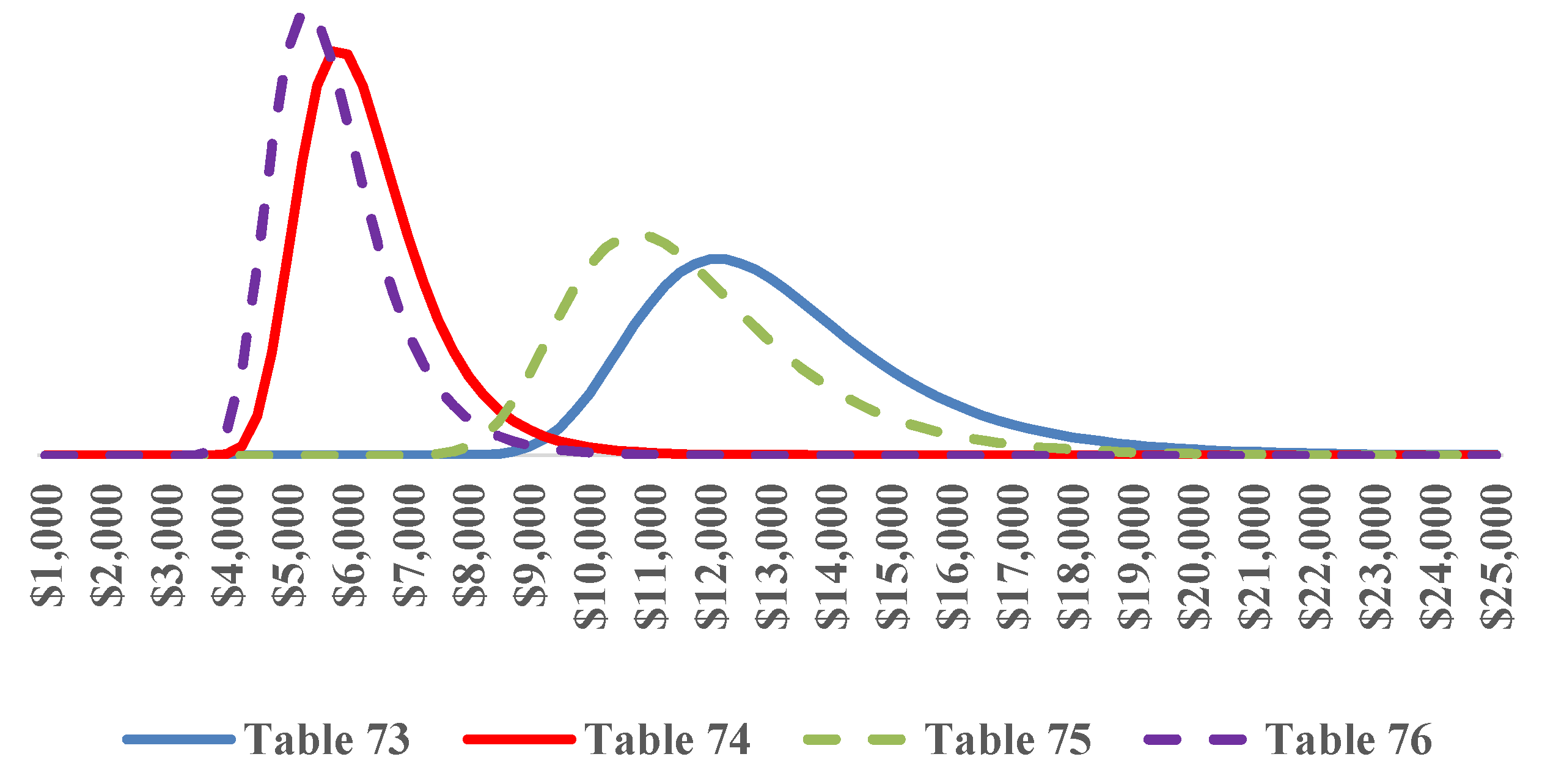
Figure 2.
Implicit Probability Distributions for Estimated Total Spending Plans. Source: Calculated from Equation (6).
Figure 2.
Implicit Probability Distributions for Estimated Total Spending Plans. Source: Calculated from Equation (6).
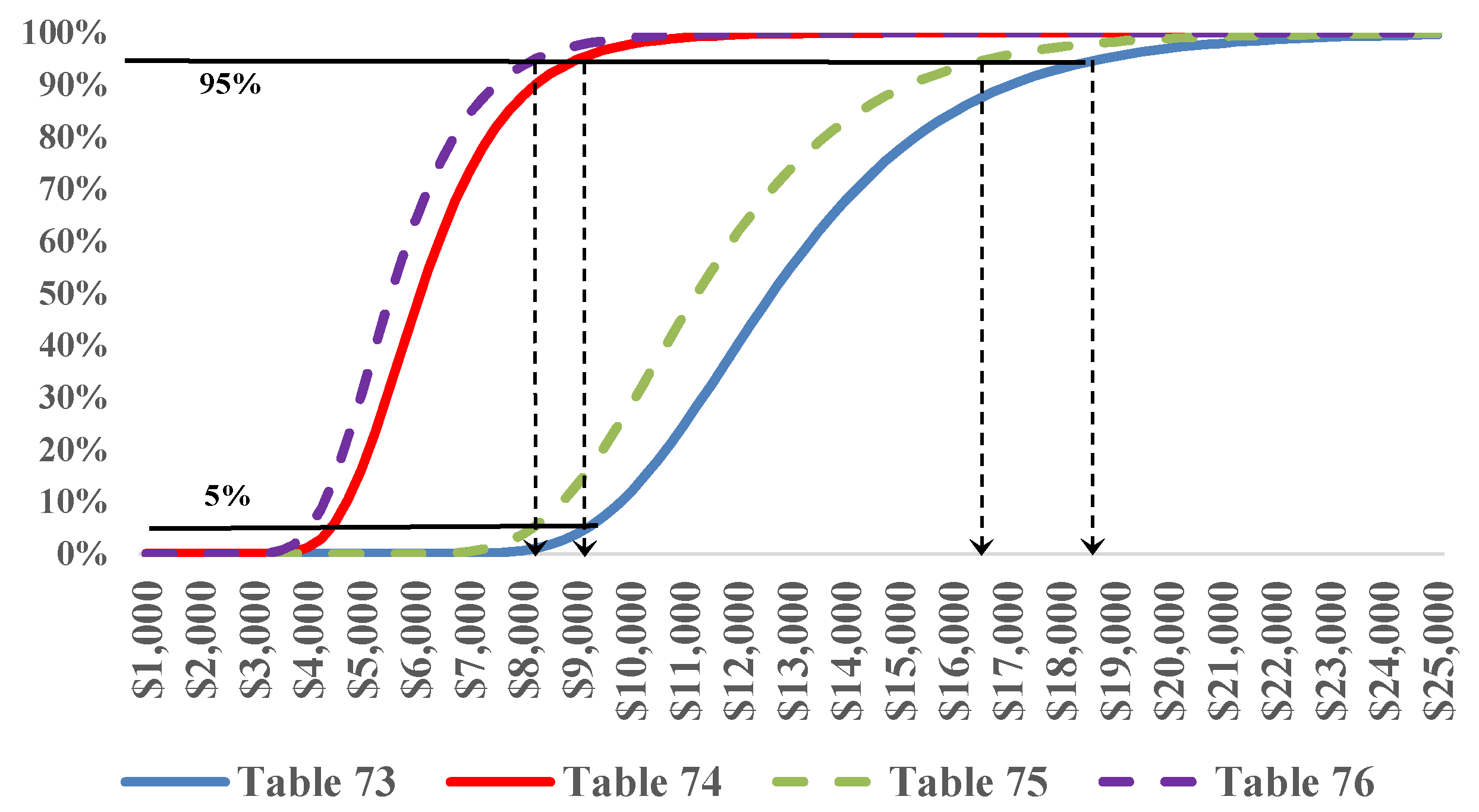
Figure 3.
Risk-Tolerant, Risk-Neutral, and Risk-Averse Probability Densities. Source: Calculated from Equations (2)–(6).
Figure 3.
Risk-Tolerant, Risk-Neutral, and Risk-Averse Probability Densities. Source: Calculated from Equations (2)–(6).
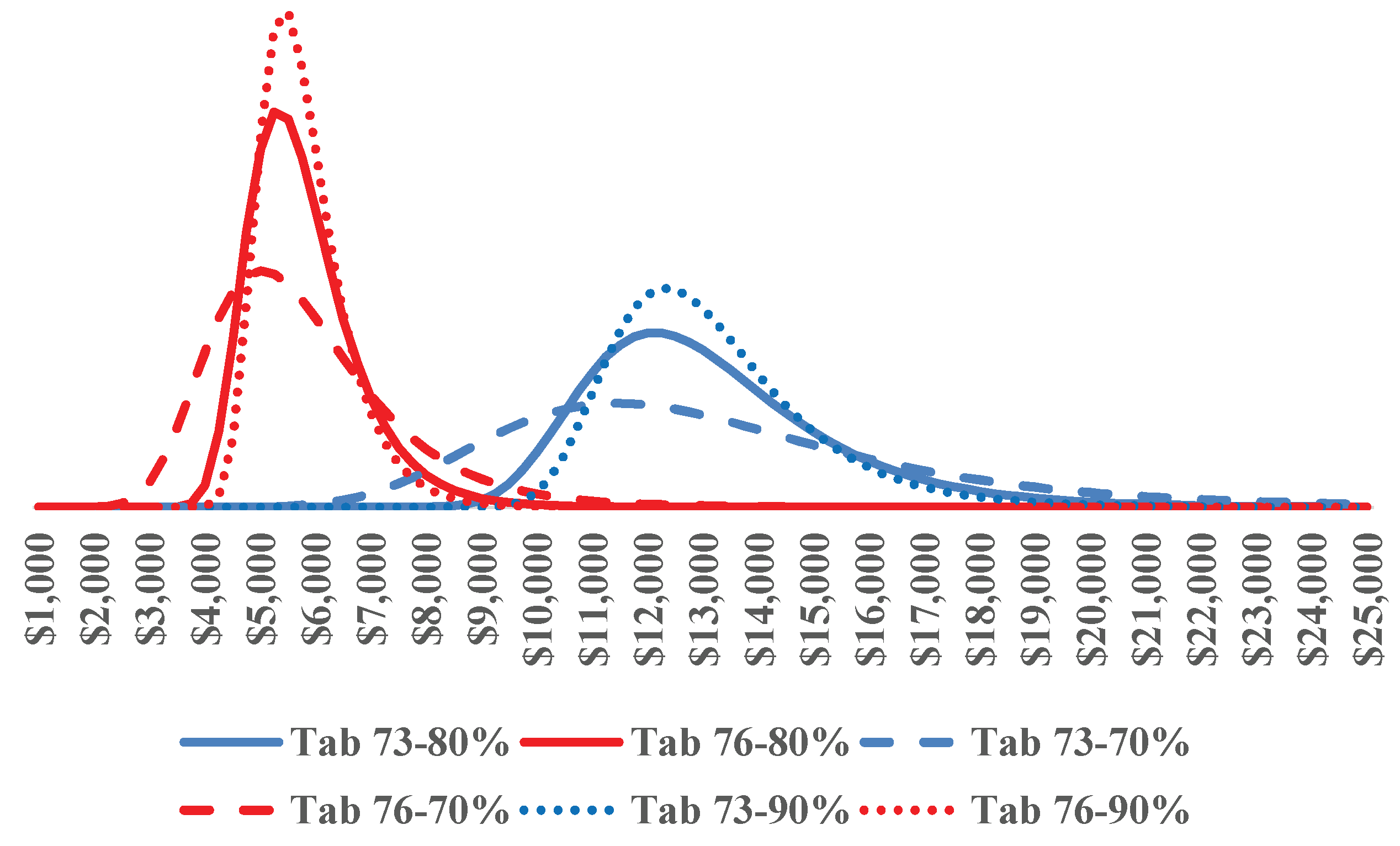

Table 1.
Translating U.S. Government Contracting Terms into Common Practice.
| Terms Used in EIA-748/ | Terms Used in Common | |
|---|---|---|
| Level/Type of Cost | Capital Programming Guide | Commercial Practice |
| Reference | ||
| Owner Cost Contingency | Contingency | Management Reserve |
| Owner Schedule Contingency | Contingency | Schedule Contingency |
| Contractor Cost Contingency | Management Reserve | Cost Contingency |
| Contractor Schedule Contingency | Schedule Margin | Schedule Contingency |
Table 2.
AACEI (2020) [35] Estimate Classes and Accuracy Ranges.
Table 2.
AACEI (2020) [35] Estimate Classes and Accuracy Ranges.
| Estimate | Estimate | AACEI Low-End | AACEI High-End | Narrow | Wide |
|---|---|---|---|---|---|
| Class | Designation | Accuracy Range | Accuracy Range | Accuracy | Accuracy |
| 5 | Conceptual Screening | −50% to −20% | +30% to +100% | −20% to +30% | −50% to +100% |
| 4 | Feasibility Study | −30% to −15% | +20% to +50% | −15% to +20% | −30% to +50% |
| 3 | Budget Authorization | −20% to −10% | +10% to +30% | −10% to +10% | −20% to +30% |
| 2 | Control or Bid | −15% to −5% | +5% to +20% | −5% to +5% | −15% to +20% |
| 1 | Check Estimate | −10% to −3% | +3 to +15% | −3% to +3% | −10% to +15% |
| Table | Account | Base Cost (Billions) | Title |
|---|---|---|---|
| D-02 | RL-0013C | $9.40 | Solid Waste Stabilization and Disposition-200 Area |
| D-03 | RL-0030 | $10.10 | Safeguards and Security |
| D-04 | RL-0030 | $7.90 | Soil and Water Remediation-Groundwater/Vadose Zone |
| D-05 | RL-0040 | $13.70 | Nuclear Facility D&D-Remainder of Hanford |
| D-06 | RL-0041 | $1.40 | Nuclear Facility D&D-River Corridor Closure Project |
| D-07 | RL-0042 | $0.70 | Nuclear Facility D&D-Fast Flux Test Facility Project |
| D-08 | RL-0100 | $1.07 | Richland Community and Regulatory Support |
| D-09 | RL-0201 | $20.40 | Hanford Sitewide Services |
| D-10 | RL-LTS | $12.22 | Long-Term Stewardship |
| D-11 | ORP-0014 | $213.90 | Radioactive Liquid Tank Waste Stabilization and Disposition |
| D-12 | ORP-0060 | $15.50 | Major Construction-Waste Treatment Plant (WTP) |
| Total | Base Cost | $306.29 |
Source: DOE-RL (2019, Appendix D) [39]; these values were not updated in later DOE-RL reports.
Table 4.
The Direct Feed Low Activity Waste (DFLAW) Complex.
| Facility | Function |
|---|---|
| Tank Farm | Double-shell Tank AP-107 collects and transfers liquid waste to TSCR |
| TSCR | Filters cesium, strontium, and suspended transuranic solids from liquid waste |
| IXC | Ion Exchange Column (IXC) stores wastes removed by TSCR |
| HLW-Vit | The High-Level Waste Vitrification facility will vitrify waste from IXC and ETF |
| Tank Farm | TSCR-treated LAW is stored in Tank AP-106 and transferred to the LAW-Vit Facility |
| 222-S Lab | Provides analytical services for Tank Farms and LAW-Vit feed qualification |
| LAW-Vit | Mixes LAW with glass-forming materials in two high-temperature melters |
| EMF | Concentrates liquid secondary waste from LAW-Vit through evaporation |
| ETF | Treats concentrated liquid from EMF and other sources to remove contaminants |
| LAB | Provides laboratory services to confirm that the LAW-Vit Facility is operating properly |
| ILAW-Trans | Transports ILAW glass-filled containers from LAW-Vit to IDF |
| IDF | Accepts containers of vitrified LAW for disposal and other solid LAW waste forms |
| BOF | Provides essential services to support DFLAW system operations |
| Infrastructure | Provides electricity, water, sewage, security, emergency, and IT services, and roads |
Notes: AP refers to the newest 4200-cubic-meter (1,000,000-gallon) double-shelled tanks at the Hanford tank farm, built between 1982 and 1986; TSCR is the Tank Side Cesium Removal facility; ILAW is Immobilized LAW; and IDF is the Integrated Disposal Facility (~1,500,000 m3). Source: DOE-HFO (2024) [60].
Table 5.
Estimated Total Spending Plan to Complete HLW with and without PT Facilities.
| Table 73 | Table 74 | Table 75 | Table 76 | |
|---|---|---|---|---|
| Base Case: | HLW | HLW and | Minimal Direct Feed | |
| HLW and PT | Completion | Re-Purposed | HLW Completion | |
| Element | Completion | Only (no PT) | PT | Only (no PT) |
| PT | $3569 | $0 | $2904 | $0 |
| HLW | $1829 | $1829 | $1829 | $1829 |
| Melter | $68 | $68 | $68 | $0 |
| BOF | $180 | $162 | $180 | $146 |
| LAB | $100 | $90 | $100 | $81 |
| Added Scope: DFHLW | $0 | $480 | $0 | $318 |
| Project + Facility Services | $2422 | $1116 | $2151 | $1006 |
| ORP Direct Support | $330 | $330 | $330 | $330 |
| Base Costs | $8497 | $4074 | $7561 | $3708 |
| Escalation | $3904 | $1906 | $3470 | $1739 |
| Escalation % | 45.95% | 46.78% | 45.89% | 46.89% |
| Fee | $729 | $352 | $649 | $320 |
| Fee% | 5.88% | 5.88% | 5.88% | 5.88% |
| Escalated Base Cost | $13,130 | $6332 | $11,679 | $5767 |
| MR%—Fee | 40.0% | 40.0% | 40.0% | 40.0% |
| MR | $4960 | $2392 | $4412 | $2179 |
| CON%—Fee | 15.0% | 15.0% | 15.0% | 15.0% |
| DOE Contingency | $1860 | $897 | $1655 | $817 |
| Total | $19,951 | $9621 | $17,746 | $8763 |
Notes: PT is the Pre-Treatment Facility; HLW is the High Level Waste Facility; the Melter mixes molten glass with radioactive waste; BOF is the Balance of Facilities; LAB is the Analytical Laboratory; DFHLW is a Direct Feed High Level Waste Facility; ORP is the Office of River Protection (a precursor to HFO), and CON% is the cost contingency percentage. Source: DOE-ORP (2023, pp. 161–164) [75].
Table 6.
Estimated Extreme Value Parameters for Total Spending Plans (in order of decreasing cost).
| Element | Table 73 | Table 75 | Table 74 | Table 76 |
|---|---|---|---|---|
| Mean = CE | $13,130 | $11,679 | $6332 | $5767 |
| MR% + CON% | 55% | 55% | 55% | 55% |
| SD = (55%/2.4) × CE | $3009 | $2677 | $1451 | $1322 |
| b = SD × 0.78 | $2347 | $2088 | $1132 | $1031 |
| mode = CE − (b × 0.577) | $11,776 | $10,475 | $5679 | $5173 |
| median = m − (b × 0.577) | $12,879 | $11,456 | $6210 | $5657 |
| 5% with CI-70 | $8218 | $7310 | $3963 | $3610 |
| 95% with CI-70 | $20,151 | $17,925 | $9717 | $8852 |
| 5% with CI-80 | $9201 | $8184 | $4437 | $4042 |
| 95% with CI-80 | $18,747 | $16,676 | $9040 | $8235 |
| 5% with CI-90 | $10,805 | $9611 | $5210 | $4746 |
| 95% with CI-90 | $16,454 | $14,636 | $7934 | $7227 |
Notes: CE is the expected cost; MR% is the management reserve percentage; CON% is the cost contingency rate; SD is the standard deviation; b and m are Extreme Value parameters; and CI is the confidence interval. Source: Equations (2)–(6).
| 1 | When designed, the TSCR was intended to be a temporary facility. A replacement facility will address a problem, as noted by ANS (2025) [49], “According to a November 7 activity report by the [Defense Nuclear Facilities Safety Board], the TSCR system may not be able to produce waste feed fast enough to keep up with the LAW Facility’s vitrification rate.” To accelerate disposal, the latest TPA envisions “grouting” to solidify “supplemental” LAW by mixing it with cement-like materials for off-site disposal, e.g., at the Clive Radioactive Waste Disposal Facility in Utah or the Waste Control Specialists’ facility in Texas. See NASEM (2023) [50] reviewing Bates et al. (2023) [51]. |
| 2 | LAW is not “Low-Activity Radioactive Waste” (LARW) as defined by EPA (2024) [52]. The U.S. Nuclear Regulatory Commission (NRC, 2024 [53]) states, “DOE may determine that certain wastes resulting from reprocessing spent nuclear fuel can be managed as low-level waste (LLW) (i.e., Waste Incidental to Reprocessing, WIR), rather than managed as HLW.” (See discussion in Greenberg et al., 2003 [54]). Hence, LAW is WIR from which cesium, strontium, and transuranics have been removed. |
| 3 | Some “Cost and/or Schedule Uncertainty” percentages for 2017 and 2018 were negative, with “Negative numbers are [BNI] planned givebacks” (DOE-RL, 2015, p. C-57 [70]). BNI was to return $49,000 to the DFLAW and $45,000 to the BOF in 2020. Compare these amounts to the $125M in DOJ (2016) [71]. |
| 4 | Zarghami (2025, p. 227) [84] does not specify the type of risk aversion in his model, e.g., whether it is constant with respect to project or firm size. A risk aversion constant, α, is introduced with “This can be interpreted as the fact that a higher value of α indicates a higher level of risk aversion, implying a tendency to suggest a larger value of management reserve.” Zarghami (2025, p. 222) [84] finds “the methods for determining management reserves have seldom progressed beyond the traditional percentage estimation approach.” Zarghami notes the exceptions to this are Lee et al. (2017) [7], Yahia et al. (2020) [19], and Zarghami (2025) [84]. |
Disclaimer/Publisher’s Note: The statements, opinions and data contained in all publications are solely those of the individual author(s) and contributor(s) and not of MDPI and/or the editor(s). MDPI and/or the editor(s) disclaim responsibility for any injury to people or property resulting from any ideas, methods, instructions or products referred to in the content. |
© 2026 by the author. Licensee MDPI, Basel, Switzerland. This article is an open access article distributed under the terms and conditions of the Creative Commons Attribution (CC BY) license.
Copyright: This open access article is published under a Creative Commons CC BY 4.0 license, which permit the free download, distribution, and reuse, provided that the author and preprint are cited in any reuse.


